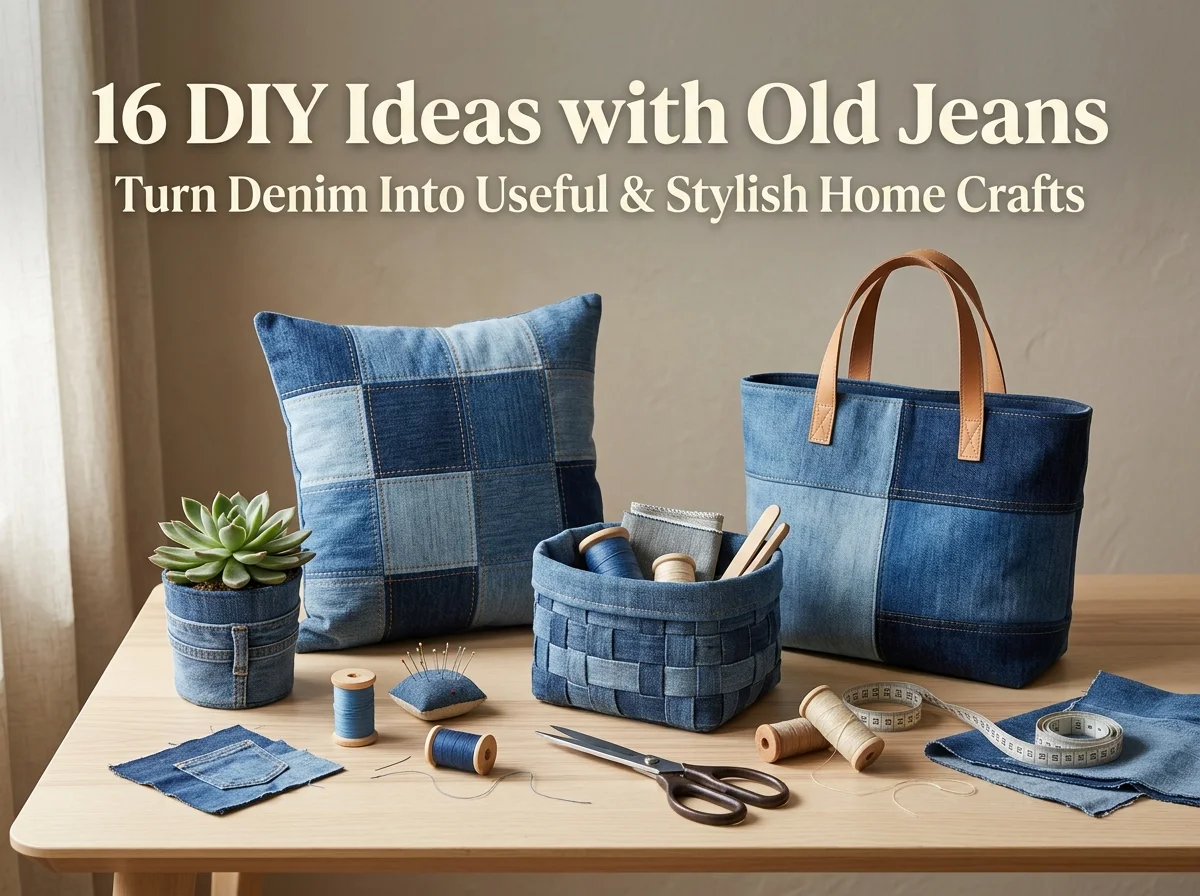
16 DIY Ideas with Old Jeans: Turn Denim Into Useful & Stylish Home Crafts
Introduction
diy with old jeans turn worn denim into useful and stylish pieces is one of the most creative ways to refresh your home while reducing waste. Old denim is strong, versatile, and full of character, making it perfect for endless DIY transformations. From home décor to storage solutions, even worn-out jeans can become something beautiful and functional.
In this article, you’ll discover 16 inspiring ideas that turn basic denim into practical, aesthetic creations for everyday life. These projects are simple, budget-friendly, and perfect for beginners who love handmade crafts. Whether you enjoy decorating, organizing, or gifting, these ideas will help you see old jeans in a completely new way.
Denim Storage Baskets
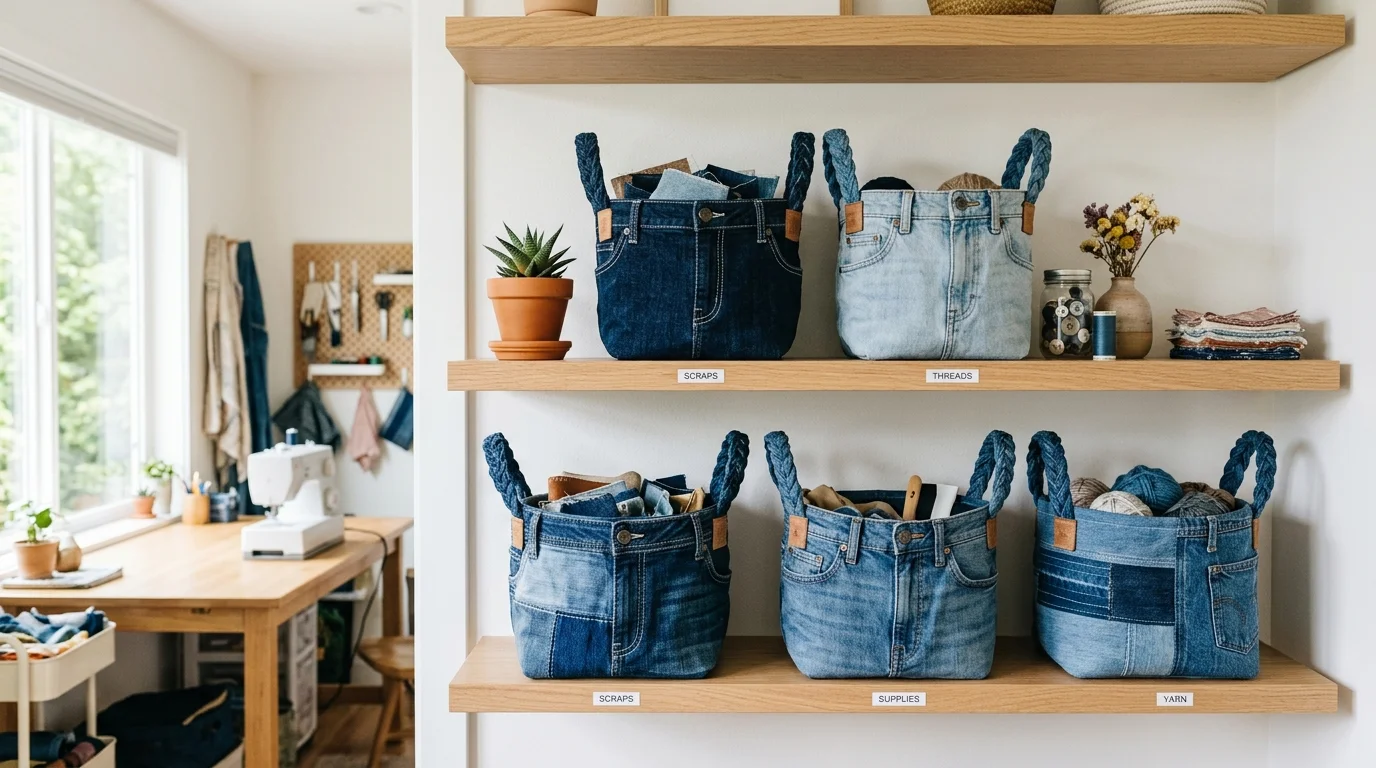
Nothing feels more satisfying than turning old jeans into practical storage that looks surprisingly polished. Denim baskets work well because the fabric is durable, flexible, and already designed to handle years of wear. By combining different shades of blue denim, you create visual depth that resembles high-end woven containers. These baskets can hold everything from yarn and sewing tools to remote controls and magazines. I’ve noticed that mixing light and dark washes adds extra dimension, making the finished piece feel more intentional and decorative rather than simply recycled.
A well-made denim basket instantly brings texture into a room without overwhelming the existing decor. The visible seams, pockets, and stitching become attractive design details that add personality. This project is especially useful for anyone looking for diy with old jeans turn worn denim into useful and stylish pieces while keeping costs low. Smaller versions fit neatly on shelves, while larger baskets can store blankets or children’s toys. The result feels both functional and creative, proving that everyday materials can be transformed into something beautiful and genuinely useful around the home.
Pocket Wall Organizer
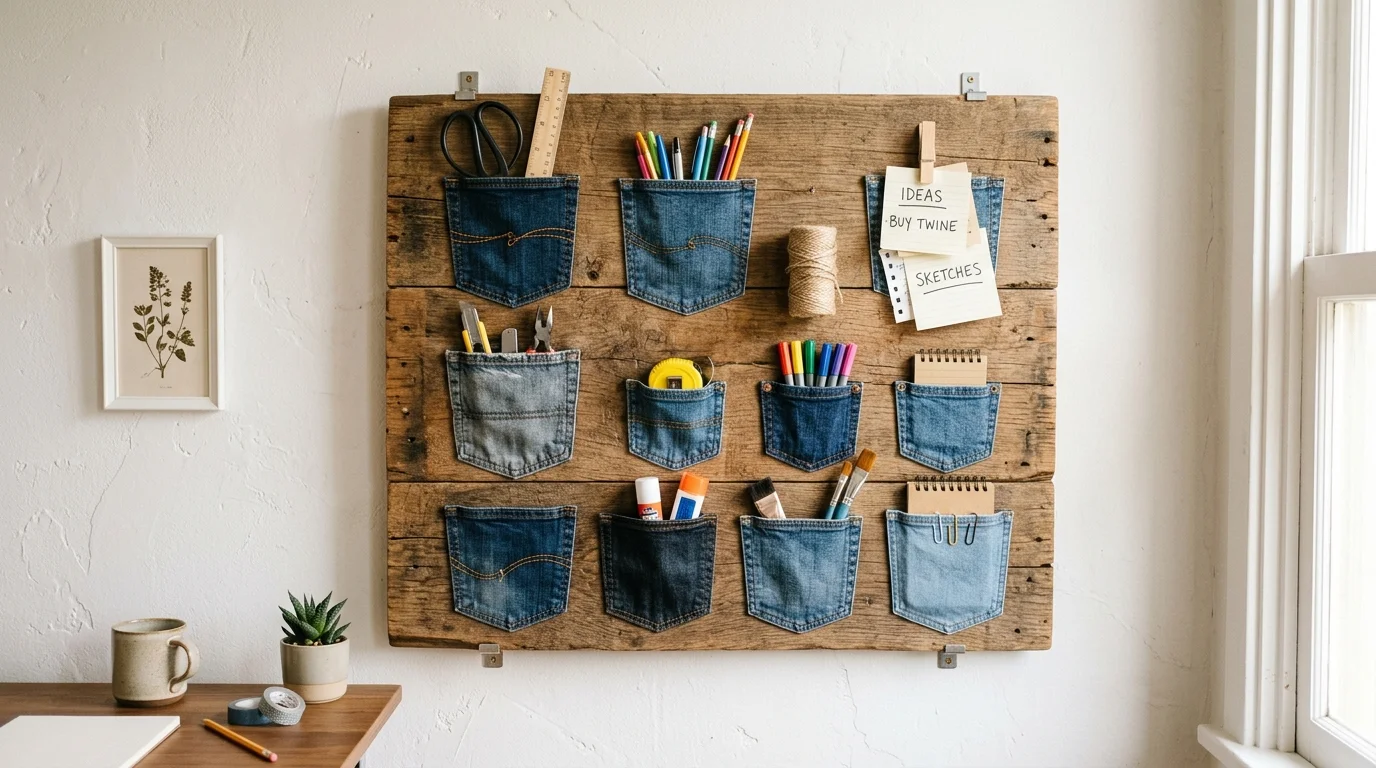
One of the easiest ways to reuse denim is by turning jean pockets into a vertical storage solution. The pockets are already perfectly shaped for holding small items, which means much of the work is done before the project even begins. Mounted on fabric, wood, or a sturdy frame, they create a practical organizer that helps reduce clutter. Different pocket sizes provide flexibility for storing various items, from stationery to gardening tools. This simple transformation delivers both convenience and visual interest while giving old materials a meaningful second life.
What makes this idea especially appealing is its versatility across different rooms and lifestyles. A pocket organizer can work beside a desk, near an entryway, or inside a craft area where supplies tend to accumulate. The worn denim texture adds character that brand-new organizers often lack. In my experience, keeping frequently used items visible encourages better organization habits because everything remains within easy reach. The finished organizer feels casual yet purposeful, combining creativity with everyday practicality in a way that makes recycled decor feel genuinely valuable.
Denim Tote Bag
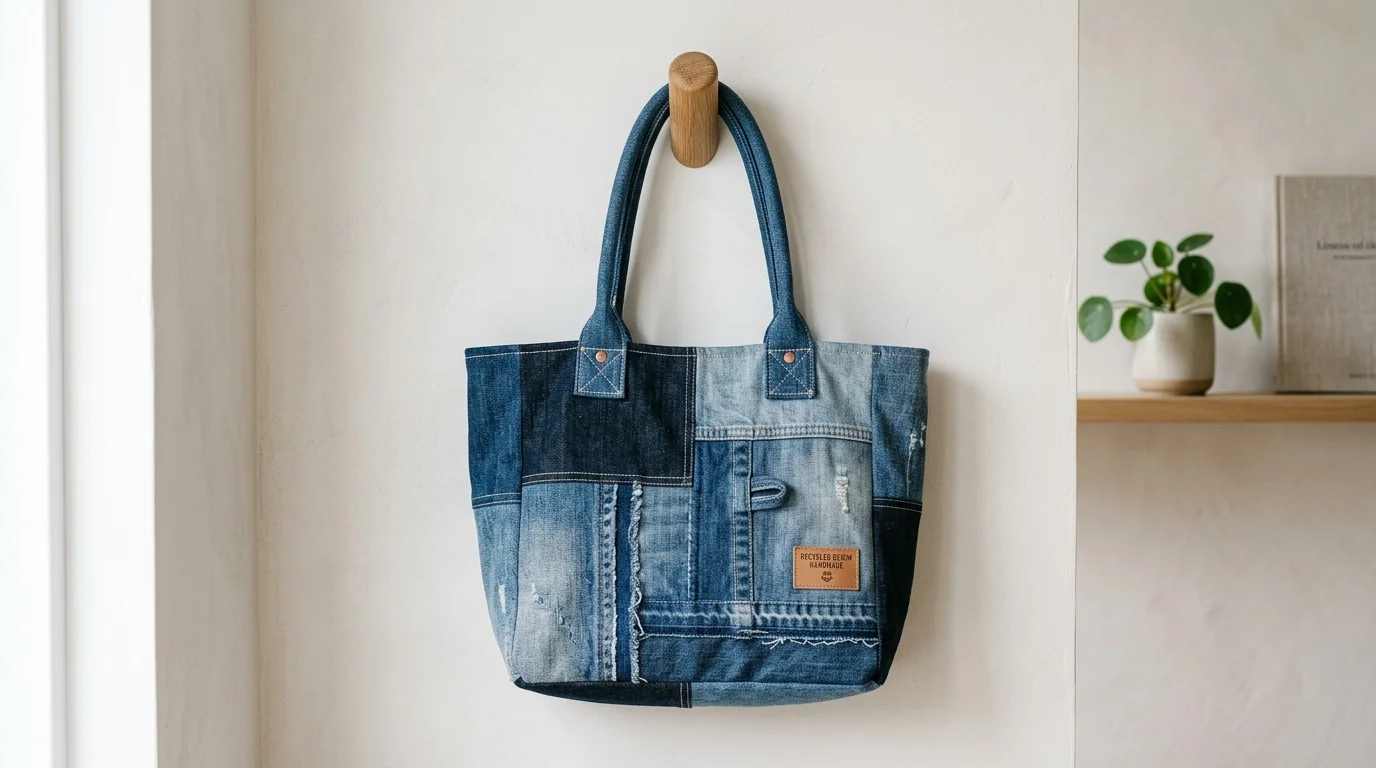
A denim tote bag is one of those projects that combines style, sustainability, and practicality in a single creation. Old jeans already provide strong fabric that can easily support daily essentials, making them ideal for reusable bags. The existing seams and pockets add interesting visual elements that would otherwise require extra design work. Many people appreciate how each tote develops its own personality depending on the original jeans used. That uniqueness gives the bag a handcrafted feel that stands out from mass-produced alternatives found in stores.
The beauty of a denim tote lies in how effortlessly it fits into everyday life. Whether carrying books, groceries, craft supplies, or travel necessities, it offers reliable functionality while reducing the need for disposable bags. I’ve seen this work well because denim naturally balances durability with casual style. Adding contrasting denim shades or decorative stitching can elevate the design even further. For anyone exploring creative ways to reuse fabric, this project demonstrates how simple materials can become attractive accessories that remain useful for years while reflecting personal creativity.
Patchwork Cushion Covers
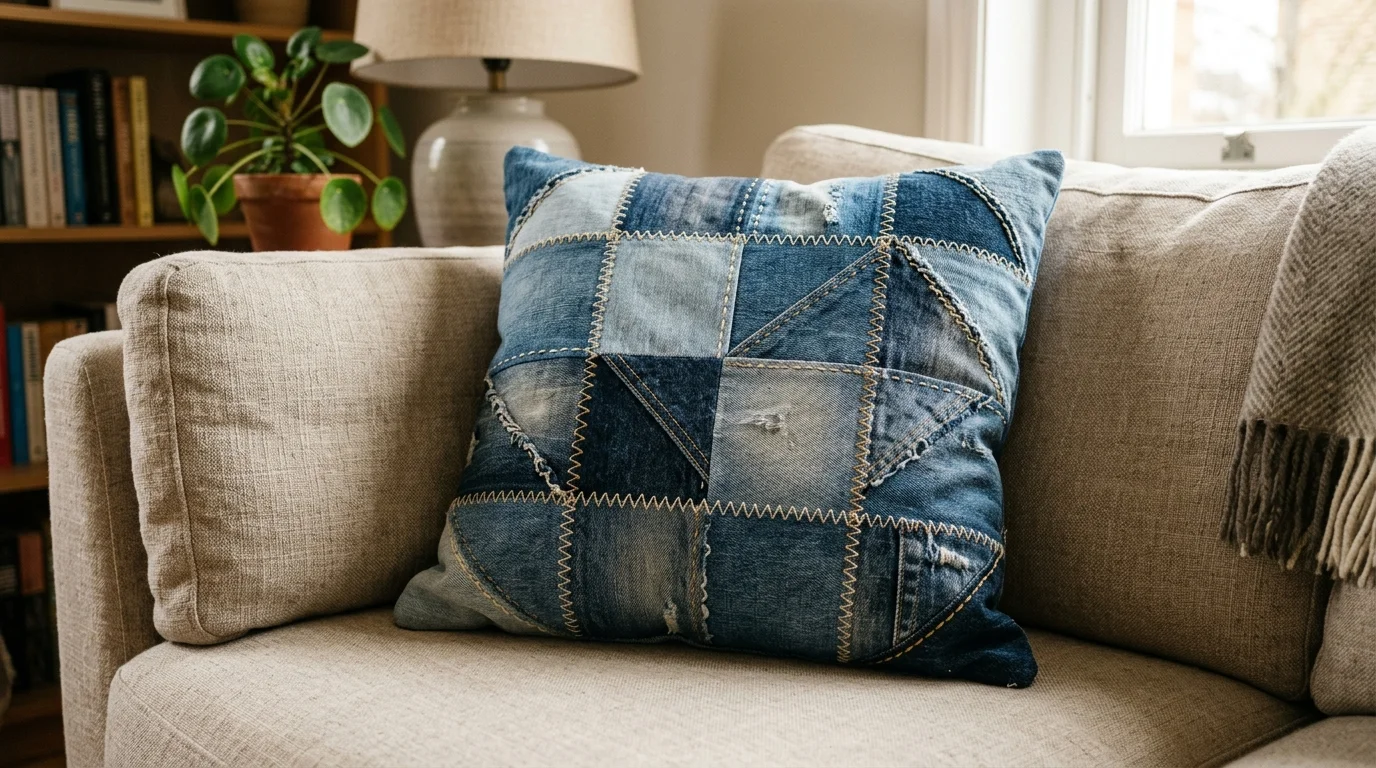
A collection of denim cushion covers can completely refresh a room without requiring a major decorating budget. The combination of various blue tones creates depth and texture that feels relaxed yet stylish. Patchwork designs are especially effective because they celebrate the natural differences between denim pieces rather than trying to hide them. Visible seams and stitching become part of the aesthetic, adding character and authenticity. This approach allows even small fabric scraps to contribute to a finished project that feels intentional, cohesive, and visually appealing within many home styles.
What makes denim cushions particularly practical is their ability to balance comfort with durability. The fabric stands up well to daily use while maintaining its shape and appearance over time. I’ve noticed that mixing faded and darker washes often creates the most attractive results because the contrast adds subtle dimension. These covers pair beautifully with neutral furnishings, helping a space feel layered and inviting. They also offer an easy seasonal update that can transform the atmosphere of a room while keeping beloved materials in use rather than sending them to waste.
Braided Denim Rug
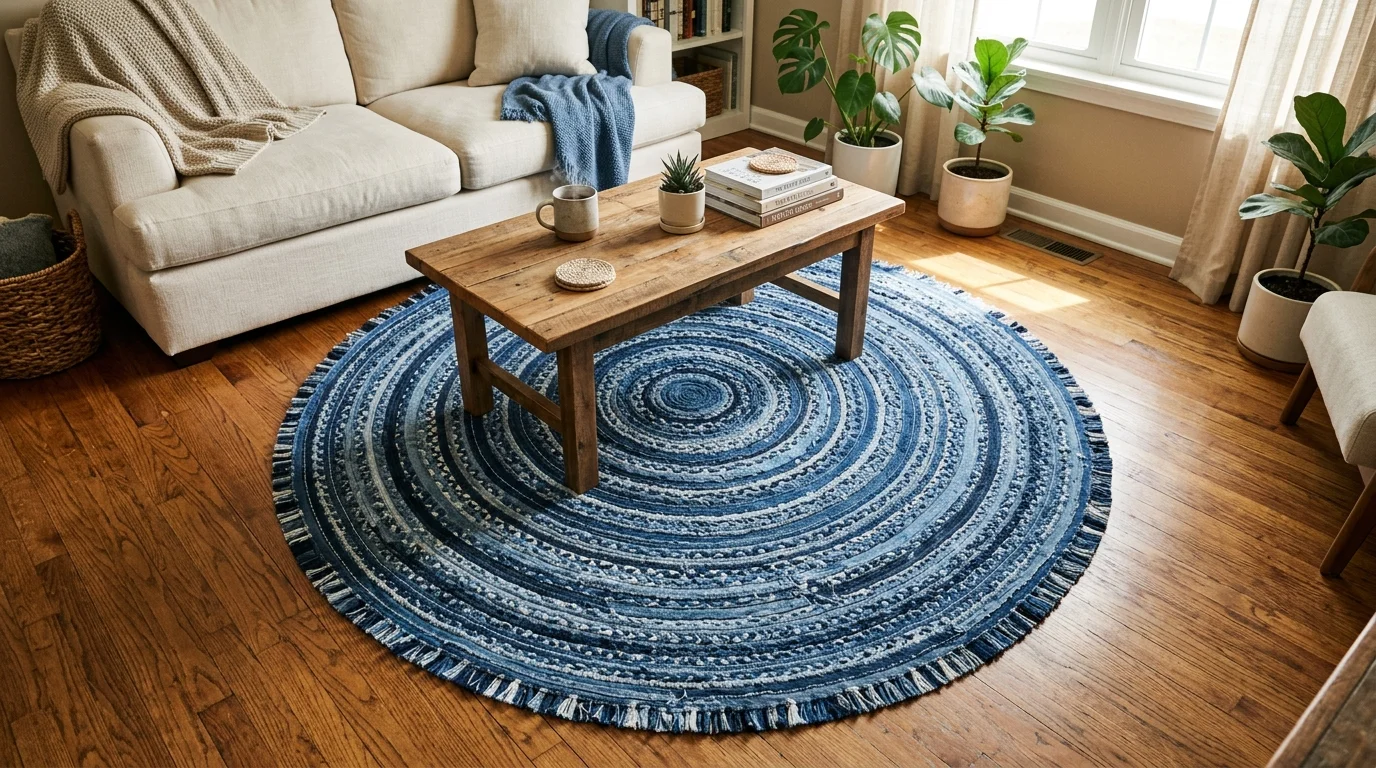
Few recycled projects make as strong a visual statement as a braided denim rug. Long strips cut from old jeans can be braided and stitched together to form a sturdy floor covering with remarkable texture. The natural variation between denim shades creates beautiful patterns that emerge as the rug grows larger. Because denim is designed to endure constant wear, it performs surprisingly well in active spaces. The finished result feels substantial and handcrafted, offering a distinctive alternative to store-bought rugs while giving old fabric a meaningful new purpose.
A braided rug brings warmth and character to living rooms, bedrooms, or craft spaces without looking overly homemade. The texture softens hard flooring surfaces and adds visual interest that helps anchor furniture arrangements. In my experience, larger rugs benefit from combining multiple jean washes because the color variation highlights the braided design. This project requires patience, but the final transformation is incredibly rewarding. It demonstrates how materials that might seem worn out can become attractive home accents that provide both comfort and durability for years of everyday use.
Denim Plant Holders
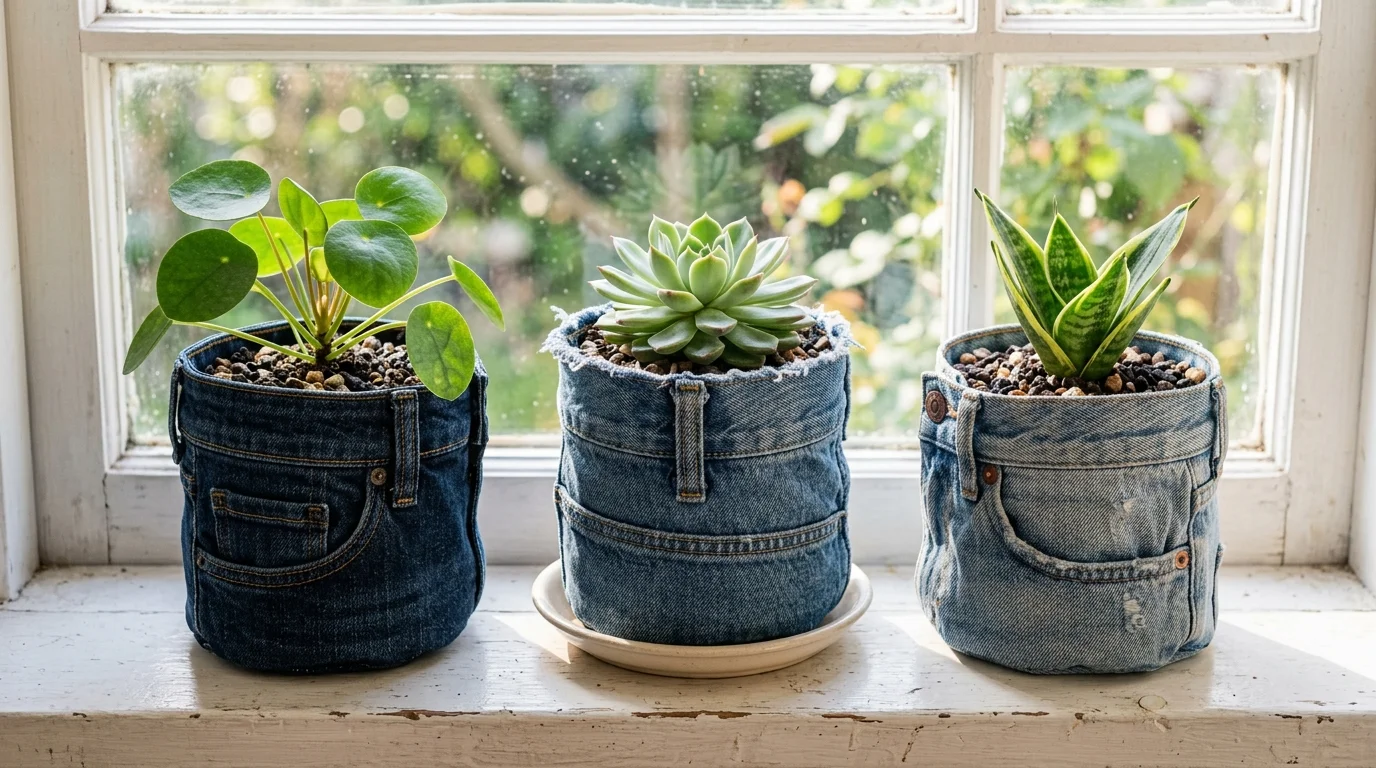
Houseplants instantly feel more personalized when displayed inside creative denim holders. Old jean pockets, seams, and fabric panels can be wrapped around containers to create unique decorative coverings that soften the appearance of plain pots. The blue tones of denim pair beautifully with green foliage, creating a balanced color combination that feels fresh and relaxed. This project is also highly adaptable because it can be customized for different plant sizes and decorating styles. Even simple designs add texture and visual interest while making recycled materials part of everyday decor.
The appeal of denim plant holders comes from their ability to blend practicality with creativity. They introduce a handcrafted element that helps plants feel integrated into the room’s overall design. I’ve seen this work especially well in bright spaces where natural light highlights the fabric texture and stitching details. For readers looking for diy with old jeans turn worn denim into useful and stylish pieces, this idea offers a simple yet impactful transformation. Small changes like these can make plant displays feel more intentional while adding warmth and personality throughout the home.
Jean Apron Design
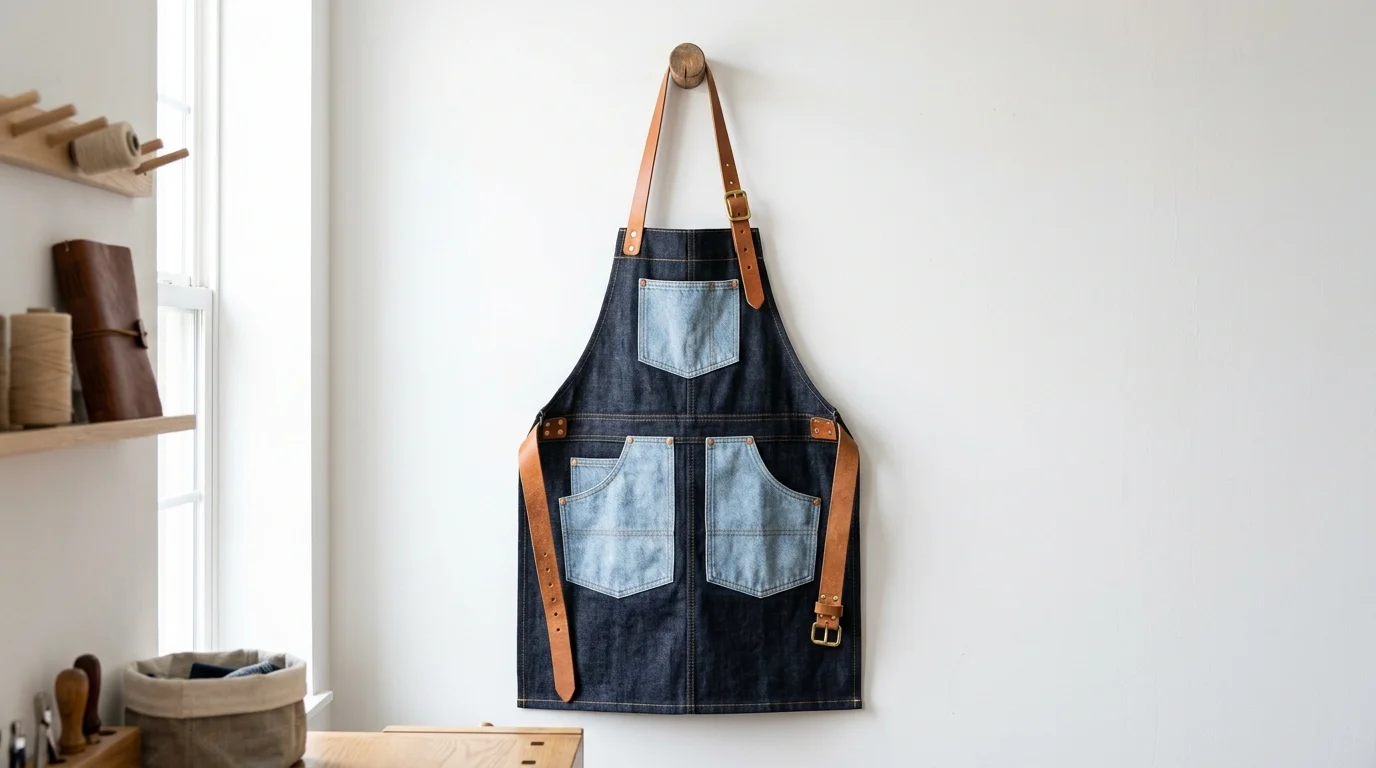
A denim apron transforms worn jeans into something useful that can serve for years. The strong fabric naturally resists wear, making it ideal for cooking, gardening, woodworking, or crafting projects. Existing pockets become practical storage spaces for tools, utensils, or small supplies, reducing the need for additional construction. The familiar texture of denim also gives the apron a relaxed and approachable appearance. Instead of purchasing a new apron, repurposing old jeans creates a personalized piece that combines functionality with sustainability in a surprisingly stylish and practical way.
One reason this project remains popular is its versatility across different hobbies and routines. A well-made denim apron feels comfortable while offering dependable protection from spills, dirt, and daily messes. I’ve noticed that incorporating original seams and pockets often makes the finished piece look more professional and distinctive. Different denim washes can even be combined to create subtle design contrasts. The result is a hardworking accessory that turns discarded materials into something genuinely useful, proving that simple creative projects can deliver both long-term value and visual appeal.
Denim Table Runner
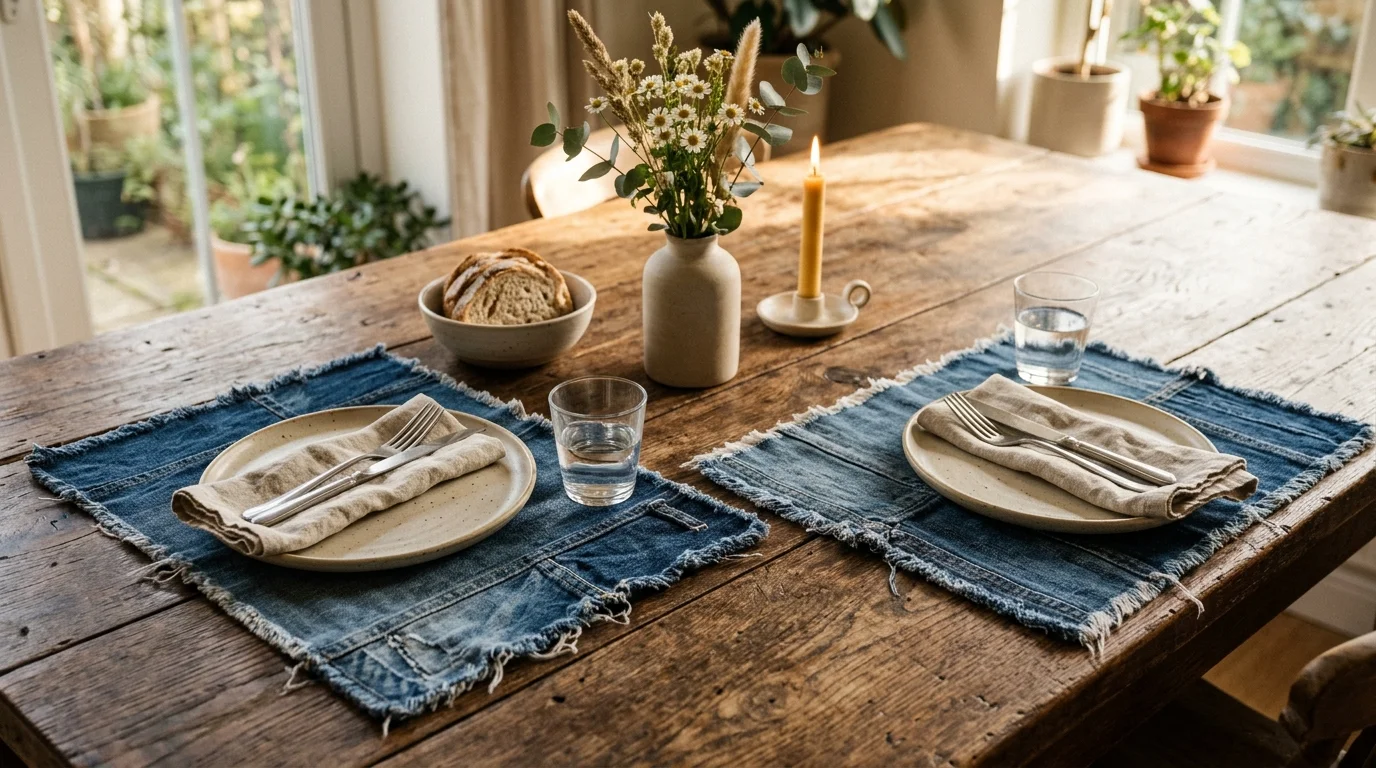
A denim table runner brings unexpected texture to dining spaces while maintaining a clean and stylish appearance. Combining strips of different jean washes creates subtle visual movement across the table, making the arrangement feel layered and thoughtfully designed. The durability of denim also makes it practical for everyday use, especially in busy households. Decorative stitching, patchwork layouts, and visible seams add handcrafted character without overwhelming the setting. This simple project demonstrates how everyday materials can become sophisticated home accents when arranged with creativity and attention to detail.
The finished runner pairs particularly well with natural wood, neutral ceramics, and greenery. These combinations allow the rich blue tones of the denim to stand out while still feeling cohesive within the room. In my experience, incorporating a variety of fabric shades creates the most visually interesting result because the contrast highlights the handcrafted nature of the piece. The table instantly feels warmer and more personalized, encouraging gatherings and everyday enjoyment. It’s a practical project that blends function, sustainability, and decorative appeal in a beautifully balanced way.
Pocket Phone Charger
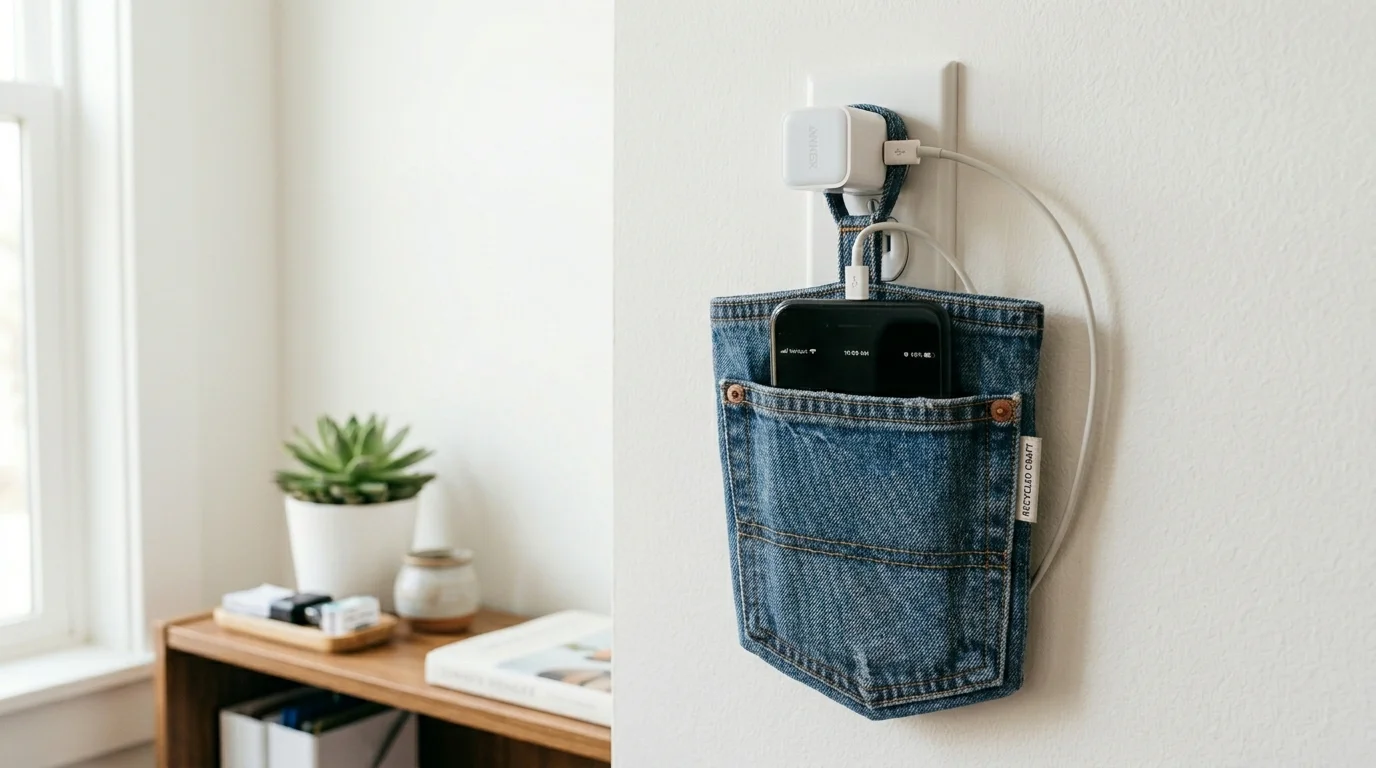
Sometimes the simplest projects offer the most immediate benefits, and a denim phone charging holder is a perfect example. By repurposing a jean pocket, you can create a convenient place for a phone to rest while connected to a wall charger. The pocket naturally supports the device, helping reduce strain on charging cables and preventing phones from sitting on floors or nearby furniture. Because the project requires very little material, it is an excellent option for beginners interested in exploring creative fabric reuse without committing to a larger undertaking.
What makes this idea especially appealing is its practicality in everyday life. The holder helps organize charging areas while adding a small handmade touch to bedrooms, offices, or family spaces. I’ve seen this work well because the sturdy construction of denim provides dependable support without requiring complicated techniques. Decorative stitching or contrasting fabric details can personalize the finished design even further. This project proves that thoughtful recycling does not always require extensive effort; sometimes a small adjustment can create a useful solution that improves daily routines and reduces household clutter.
Denim Wall Art
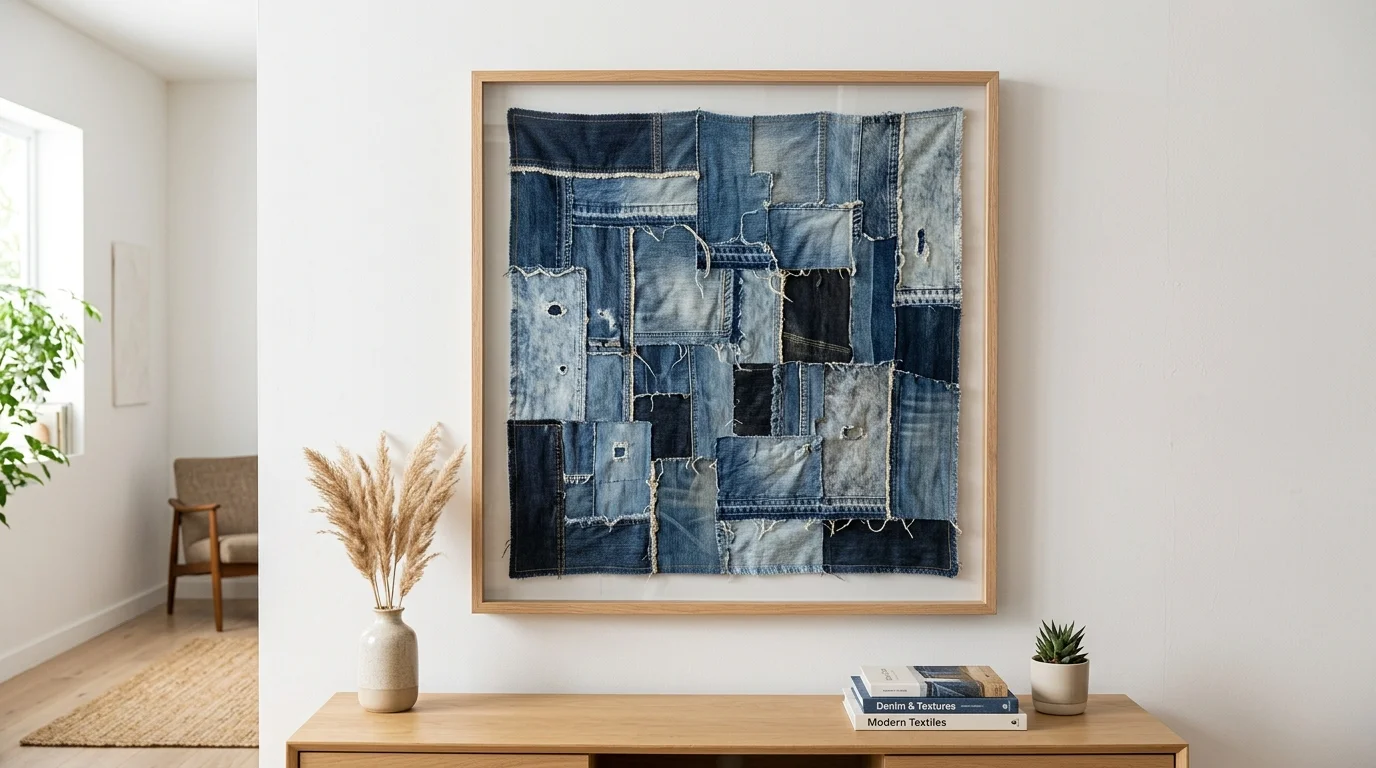
Denim wall art is a creative way to transform simple fabric into something that feels almost gallery-worthy. By cutting and arranging different denim shades into geometric or abstract designs, you can create visually striking compositions that instantly elevate a room. The natural texture of jeans adds depth that paint or prints often cannot replicate. This idea works especially well in modern interiors where clean lines and subtle contrast are valued. Even small pieces of leftover fabric can contribute to a larger artistic statement that feels both intentional and expressive.
What makes this project especially appealing is its flexibility in style and complexity. You can keep it minimal with simple panels or experiment with layered patchwork for a more dynamic effect. I’ve noticed that combining faded denim with darker indigo tones creates a beautiful sense of dimension on the wall. Framed pieces or stretched canvas designs both work well depending on the desired finish. This approach allows worn materials to be reimagined as meaningful decor, turning everyday fabric into a focal point that feels personal, creative, and visually engaging.
Denim Storage Pouches
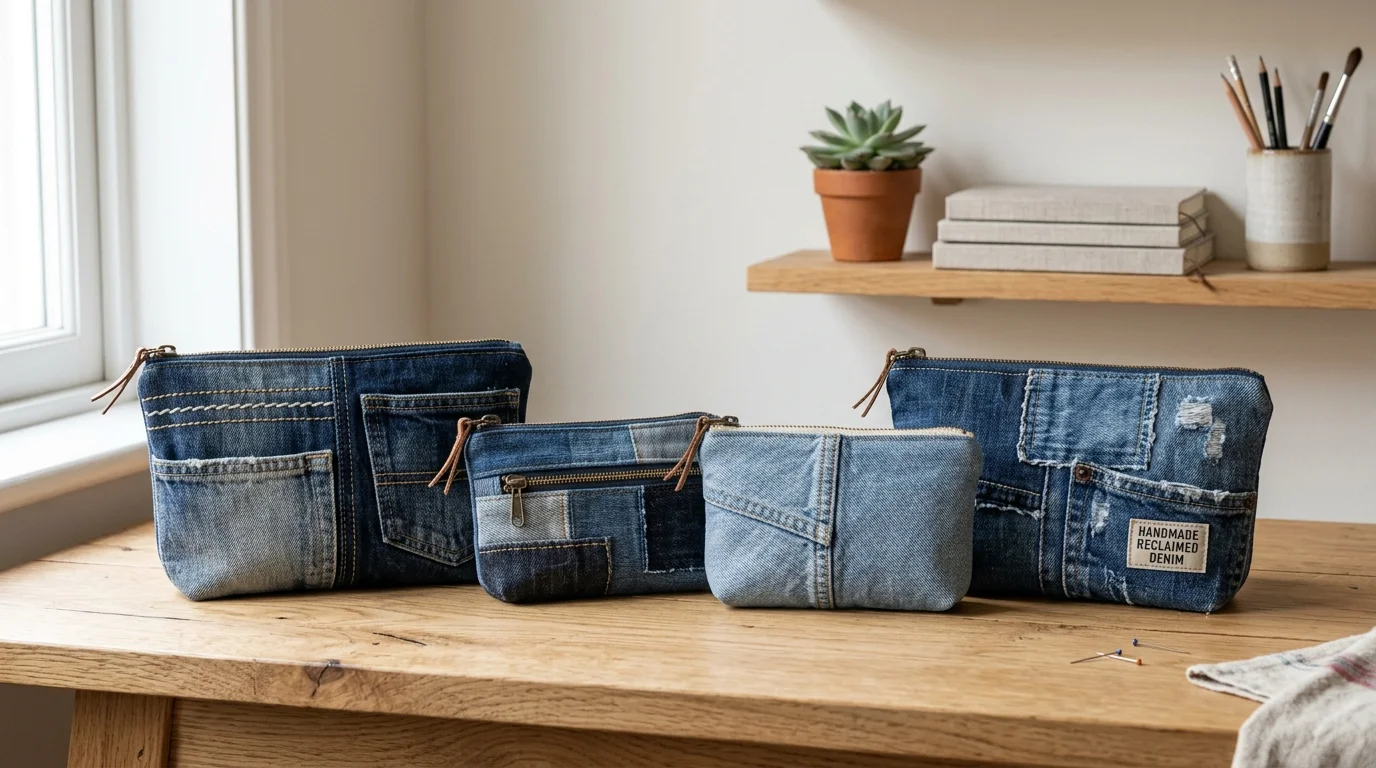
Denim storage pouches are a simple yet highly useful way to repurpose old jeans into compact organizers. Their small size makes them ideal for storing everyday essentials such as makeup, cables, stationery, or travel items. Because denim is naturally strong, these pouches offer durability while maintaining a soft, flexible structure. The fabric’s texture also gives each pouch a handmade aesthetic that feels more personal than mass-produced alternatives. Even beginners can create functional designs using basic sewing techniques, making this project both accessible and rewarding.
The versatility of denim pouches is what makes them especially practical for modern living. They can be slipped into handbags, backpacks, or drawers to keep items neatly separated and easy to find. I’ve found that mixing different denim shades and adding small details like visible stitching or fabric patches enhances their visual appeal. This project also aligns perfectly with diy with old jeans turn worn denim into useful and stylish pieces, as it combines sustainability with everyday functionality. The result is a set of charming, durable organizers that reduce clutter while showcasing creative reuse.
Denim Photo Frame
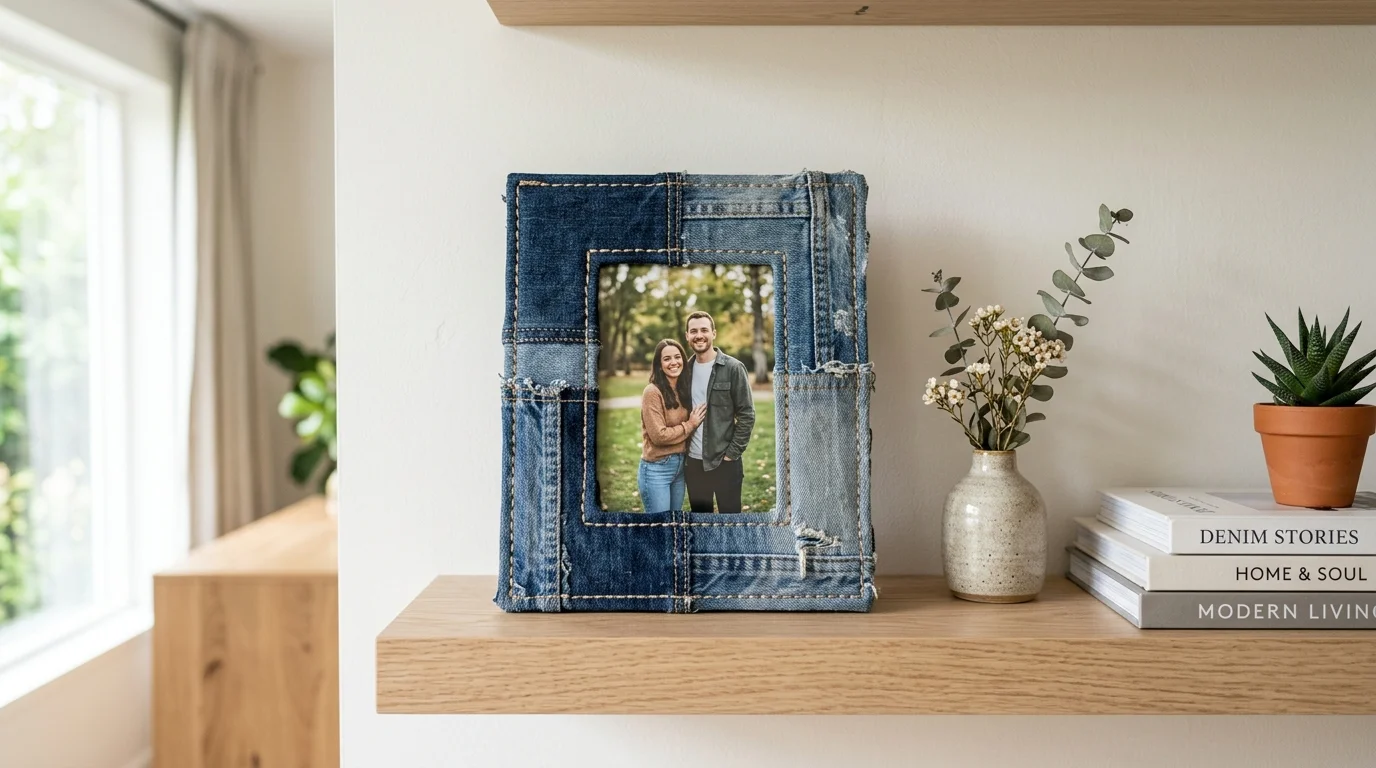
A denim photo frame brings warmth and personality to everyday memories by combining fabric texture with meaningful imagery. Wrapping or layering thin strips of old jeans around a basic frame instantly transforms it into a handcrafted decor piece. The natural variation in denim shades adds subtle depth that makes each frame unique. This simple idea works especially well for showcasing family photos, travel memories, or special occasions. It also allows even small scraps of fabric to be repurposed in a way that feels thoughtful and visually appealing.
What makes this project stand out is how easily it fits into different interior styles. Whether placed on a desk, shelf, or wall, the denim frame blends casual charm with sentimental value. I’ve seen this work beautifully in both modern and rustic spaces because the texture softens the overall look while still keeping things visually interesting. Adding small embellishments like stitching or patches can further personalize the design. The result is a meaningful decorative item that preserves memories while giving old materials a second life.
Denim Book Covers
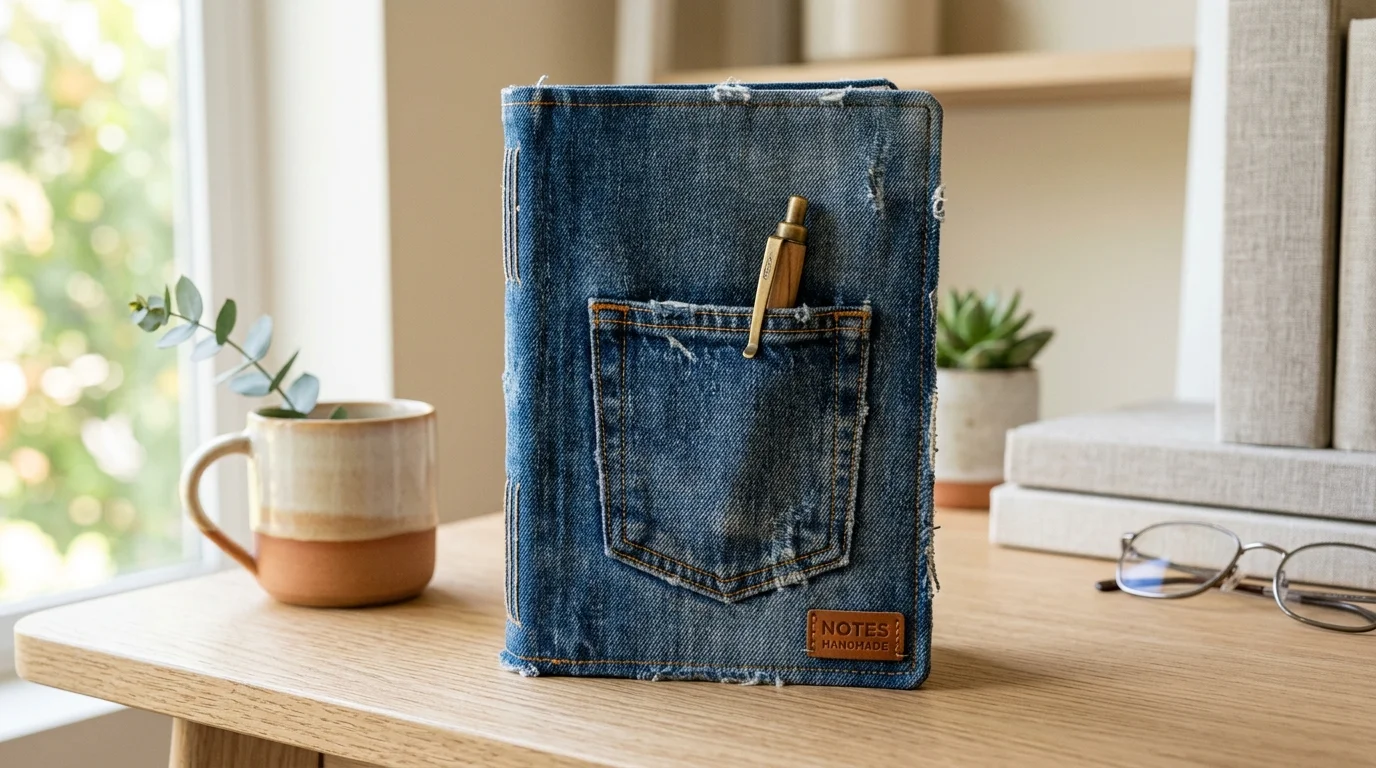
Denim book covers turn simple notebooks into stylish, durable accessories that feel personal and creative. Old jeans provide strong fabric that protects book surfaces from wear and tear while adding a distinctive textured finish. Because denim naturally varies in shade and softness, each cover ends up looking slightly different, which adds charm and individuality. This idea is especially useful for students, writers, or anyone who enjoys journaling. It transforms ordinary stationery into something visually appealing and enjoyable to use every day.
What makes denim covers particularly engaging is how easily they can be customized. You can add stitched labels, patchwork accents, or pocket details for extra functionality. I’ve noticed that combining lighter and darker denim tones creates a more refined, layered appearance. The finished covers not only protect books but also encourage more frequent use because they feel special and thoughtfully designed. This project shows how even small fabric pieces can be transformed into practical, long-lasting items that enhance everyday routines.
Denim Gift Wrap
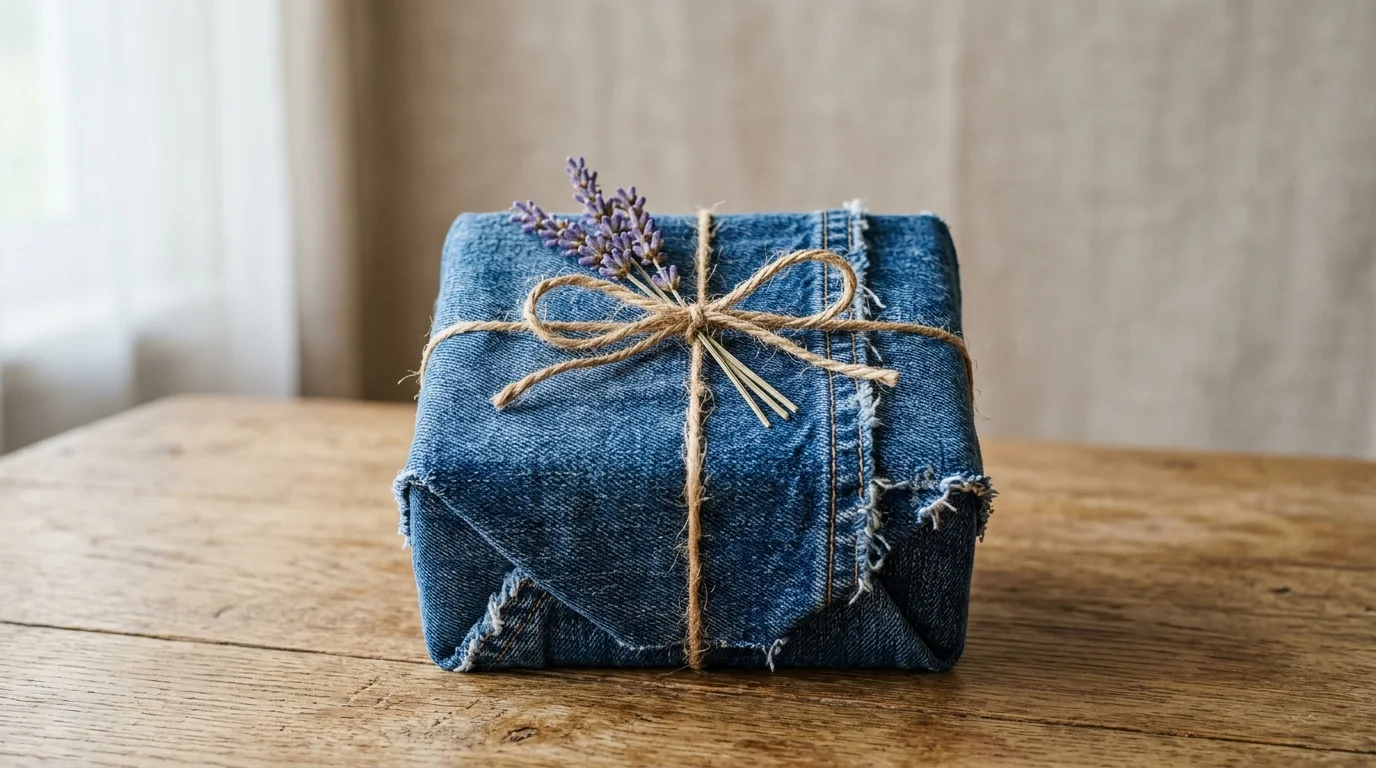
Denim gift wrap is a creative and sustainable way to present gifts while reducing waste. Instead of using traditional paper that gets thrown away, old jeans can be repurposed into reusable fabric wraps that feel thoughtful and unique. The sturdy texture of denim allows it to hold shape beautifully around boxes or objects, creating a more dimensional and tactile presentation. This approach also adds a handmade touch that immediately makes any gift feel more personal and memorable.
The beauty of this idea lies in its versatility and reusability. After unwrapping, the recipient can reuse the denim fabric for storage, crafts, or future gifting, which adds long-term value. I’ve seen this technique work especially well when paired with natural twine, dried flowers, or simple tags for a rustic finish. It aligns perfectly with diy with old jeans turn worn denim into useful and stylish pieces, showing how sustainability and creativity can blend seamlessly in everyday life.
Denim Key Holders
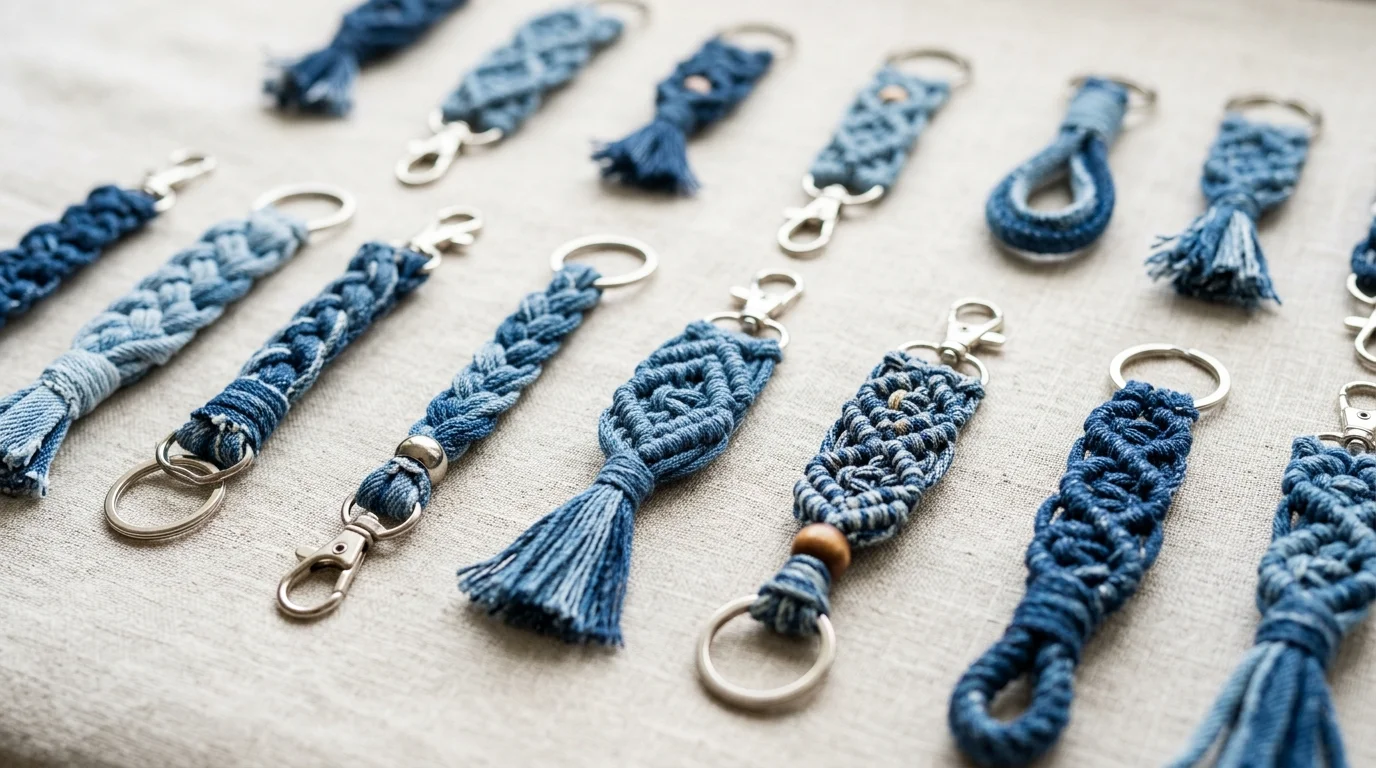
A denim key holder is a smart way to bring both organization and style to an entryway. By attaching hooks to a reinforced denim panel, you create a functional space for storing keys, small accessories, or lightweight items. The texture of denim adds warmth to an often-overlooked area of the home, making it feel more welcoming and thoughtfully designed. Because jeans already have strong fabric structure, they serve as a reliable base for this kind of functional decor project.
This idea is especially useful for maintaining daily organization in busy households. Having a designated spot for keys reduces clutter and saves time during rushed mornings. I’ve noticed that adding contrasting stitching or pocket details can make the design more visually interesting while still keeping it practical. The final result is a compact, attractive organizer that blends everyday functionality with creative reuse, turning discarded denim into a useful home essential that supports better habits.
Denim Wall Pocket
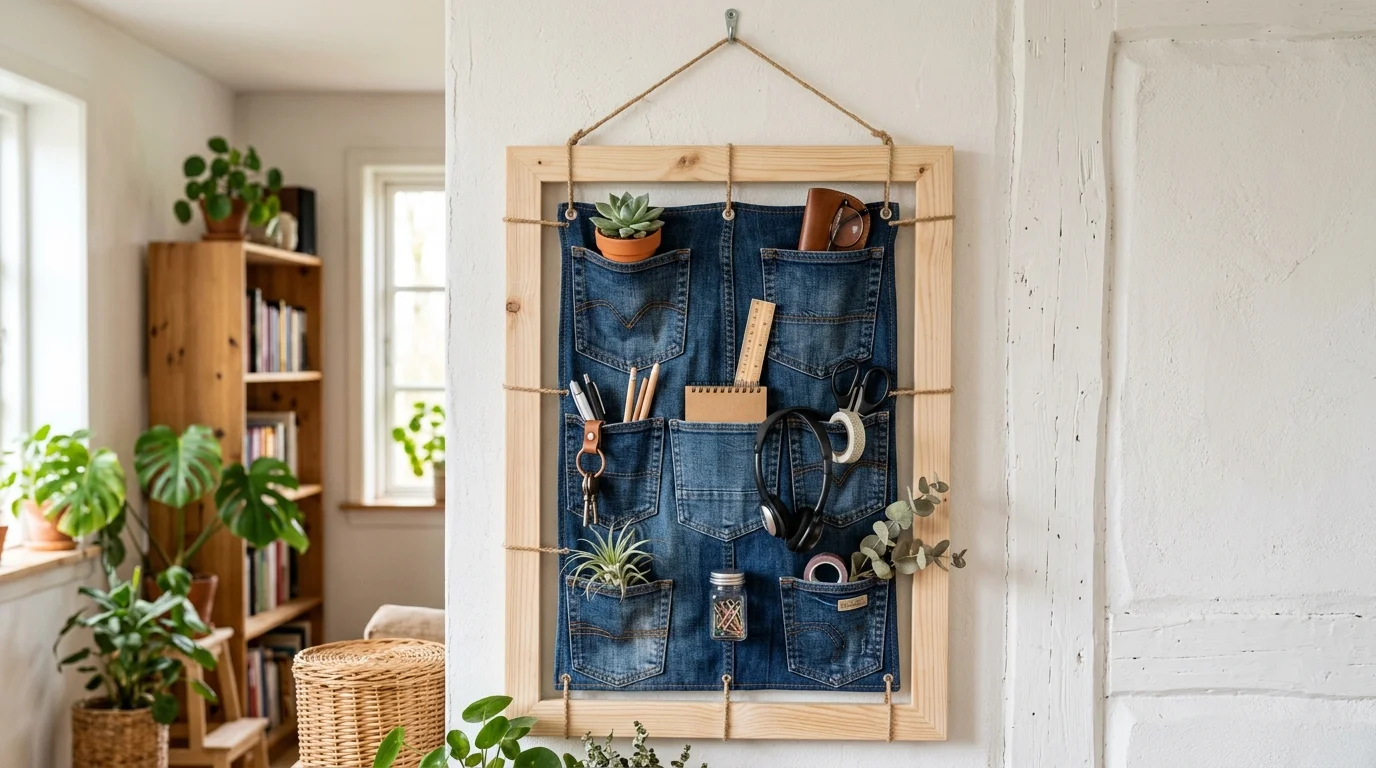
A denim wall pocket is a clever way to turn old jeans into a vertical storage solution that saves space while adding style. By cutting out full sections of denim with intact pockets, you can create a hanging organizer that holds small essentials like pens, glasses, or even mini plants. The natural strength of denim ensures it can support lightweight items without losing shape. This idea works especially well in small rooms where surface space is limited but wall space is available for practical use.
What makes this project visually appealing is how it turns everyday fabric into a structured design element. The stitched seams and pocket shapes create natural compartments that already look intentional and organized. I’ve noticed that layering multiple pockets in different denim shades adds depth and personality to the wall. This is another great example of diy with old jeans turn worn denim into useful and stylish pieces, combining function and creativity in a way that feels modern, minimal, and highly practical for daily life.
Conclusion
Old denim doesn’t lose its value—it only changes its purpose. As you’ve seen, diy with old jeans turn worn denim into useful and stylish pieces can completely transform your home, lifestyle, and creativity. From storage solutions to decorative accents, each idea proves that sustainable crafting can be both beautiful and practical.
Try a few of these projects and see how even small changes can refresh your space. Save these ideas on Pinterest, share them with friends, and start turning your old jeans into something meaningful. I’ve seen how simple DIY reuse projects like these can truly change the way a space feels.