20 Velvet Curtain Ideas That Make Rooms Feel Warm and Luxe
Introduction

No window treatment changes a room mood faster than velvet, and these velvet curtain ideas show how one pair of panels can add warmth, color, and quiet luxury to living rooms, bedrooms, and dining rooms alike. Velvet catches light softly, falls in deep folds, and makes even simple furniture look considered.
Start with the practical bones before the pretty color. Velvet is heavy, so choose a sturdy rod and brackets, and fix them into wall studs where you can or into anchors rated for the load, following the hardware maker guidance. Hang panels high and wide so the fabric stacks clear of the glass and the room feels taller.
Two safety habits matter with any curtains. In homes where young children live or visit, choose cordless styles and keep any cords, chains, or tieback cords out of reach, following general CPSC guidance, and never tie cords into loops. Keep velvet panels clear of radiators, space heaters, fireplaces, and open flame, and let the fabric hang free of heat sources.
Then have fun with it: a jewel tone for drama, a pale neutral for calm, sheers underneath for soft daytime light. The twenty ideas ahead move room by room and detail by detail, so you can copy one window exactly or mix three into your own look.
1. Emerald Panels as the Living Room Statement
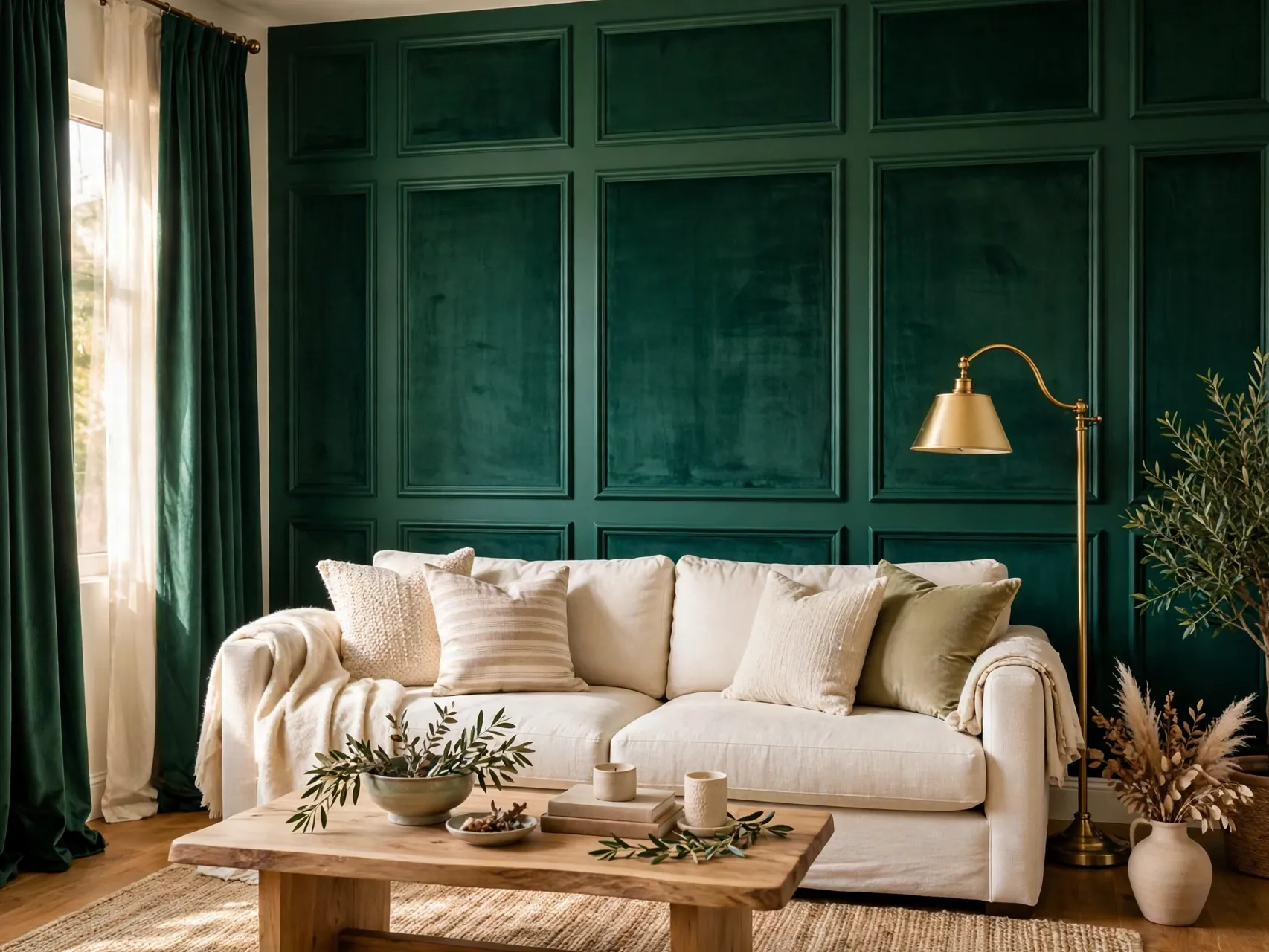
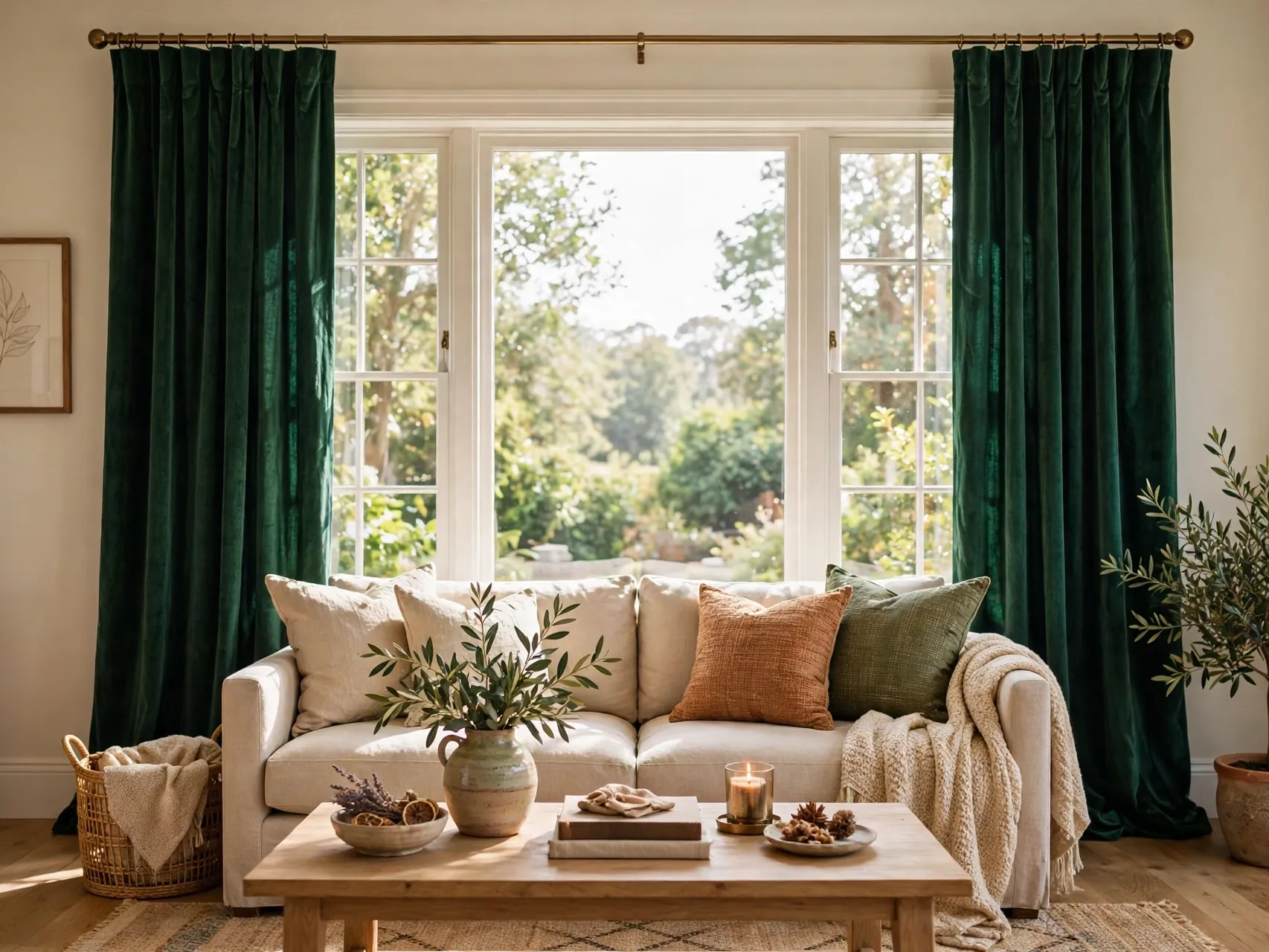
Emerald is the classic velvet curtains living room move: deep, rich, and flattering beside cream sofas, warm wood, and brass lamps. Let the panels be the strongest color in the room and keep cushions and rugs quieter so the green reads as luxury, not noise.
Choose pinch pleat or rod pocket panels for full, even folds, and hang them a few inches above the frame so the color runs nearly to the ceiling. Tip: repeat the emerald once, in a cushion or a plant pot across the room, and the window wall will feel planned from every seat.
2. Navy Velvet for a Calm, Sleep Ready Bedroom
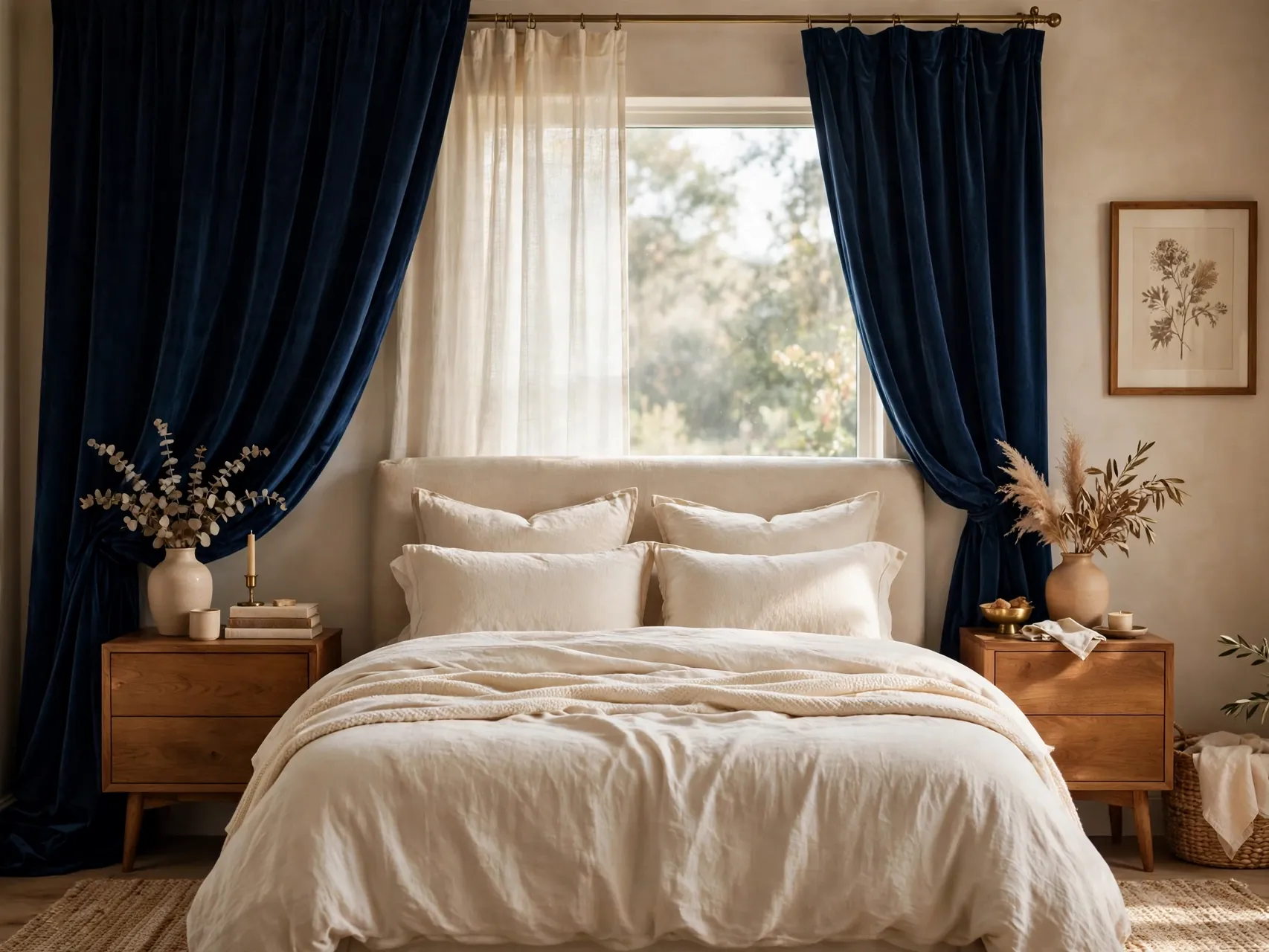
Navy velvet drapes bedroom ideas start here, with panels that make the bed wall feel deep and restful. Navy pairs with white and cream bedding, pale oak, and warm metal lamps, and it holds its color beautifully in lamplight at night.
Add a blackout or room darkening lining if your room faces morning sun or street lights, and extend the rod well past the frame so the lined panels can close fully without gaps at the sides. Tip: test navy fabric beside your bedding before ordering, since some navies lean purple in warm light.
3. Burgundy Drapes for a Formal Dining Room
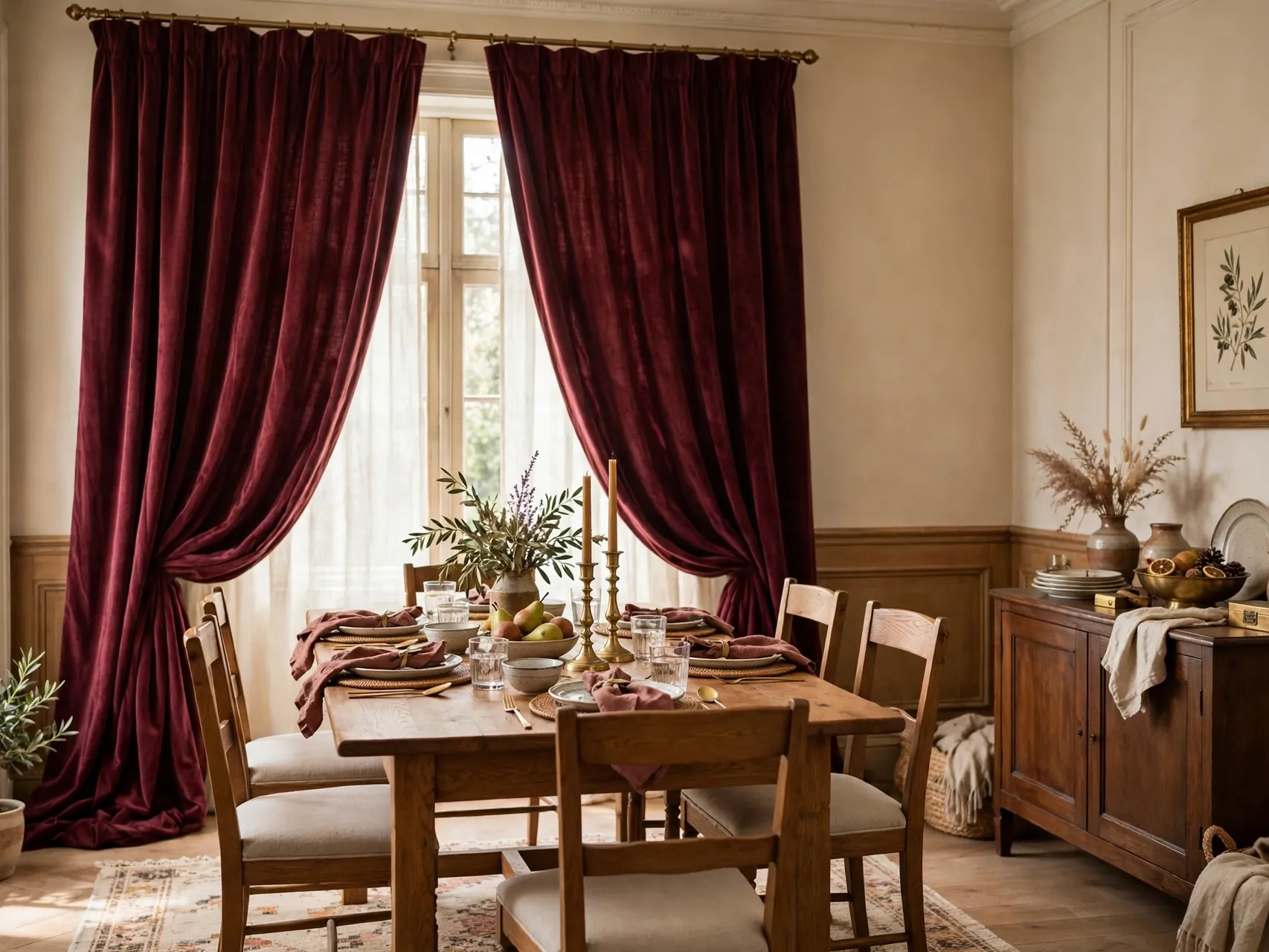
Burgundy velvet brings instant occasion to a dining room, echoing wood tones and making brass, crystal, and candlelight look richer. It is a natural partner for holiday dinners, but it earns its keep all year in rooms that feel a little plain.
Style burgundy with tiebacks during the day so light reaches the table, and let the panels fall closed for evening meals. Tip: keep the table linens cream or soft white, because burgundy plus busy patterns is the one pairing that can tip a dining room from formal to heavy.
4. Blush Velvet for a Soft and Romantic Bedroom
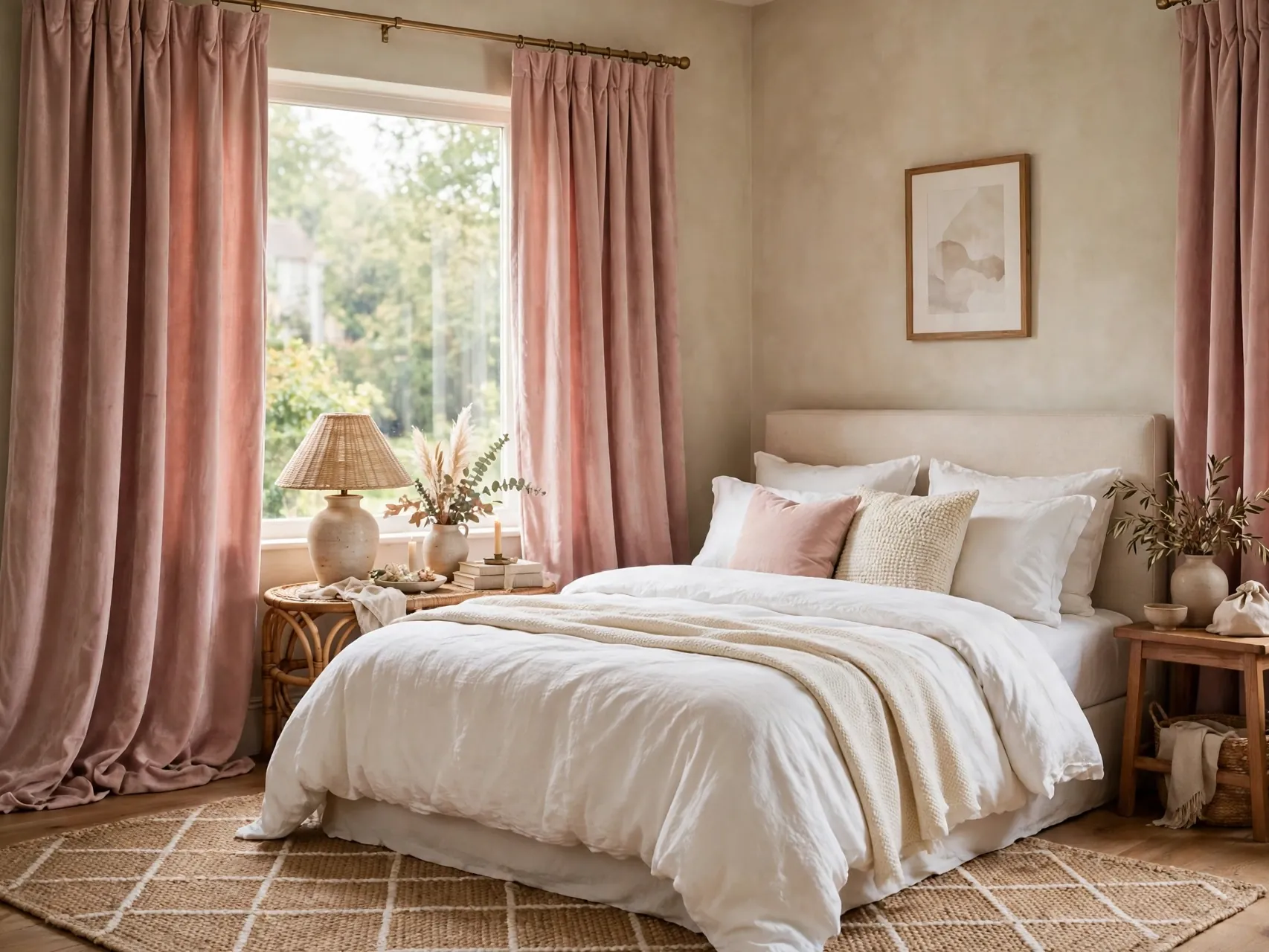
Blush velvet gives you the texture and glow of velvet without the drama of a dark color. In a bedroom with white bedding, light wood, and a woven rug, blush panels read warm and romantic rather than sweet, especially in a matte cotton velvet.
Balance the softness with one grounded element, a charcoal throw, black picture frames, or a dark wood bench, so the room keeps its grown up edge. Tip: blush shows dust and marks more than deep colors, so choose a washable or easy care velvet look fabric for busy homes.
5. Charcoal Velvet in a Modern Living Room

Charcoal is the modern way into velvet: nearly black in low light, soft gray in daylight, and endlessly compatible with pale rugs, leather chairs, and black metal frames. It suits rooms where color feels risky but flat gray paint feels cold.
Use a black or brushed nickel rod to keep the mood tailored, and add warmth with wood side tables and a textured throw so charcoal stays cozy rather than corporate. Tip: charcoal velvet loves contrast beside it, so keep the wall color a clear step lighter than the fabric.
6. Mustard Velvet for a Warm Retro Corner

Mustard and ochre velvet bring a cheerful retro note to reading corners, breakfast nooks, and guest rooms. The color glows in afternoon sun and pairs happily with walnut wood, cream walls, and black and white photographs.
Because mustard is a confident color, one window is usually enough, with the tone echoed in a single cushion or lampshade. Tip: hang mustard panels where they get daylight if you can, because their warmth is a daylight effect and they can look flat in a dark corner.
7. Floor to Ceiling Panels That Stretch the Wall
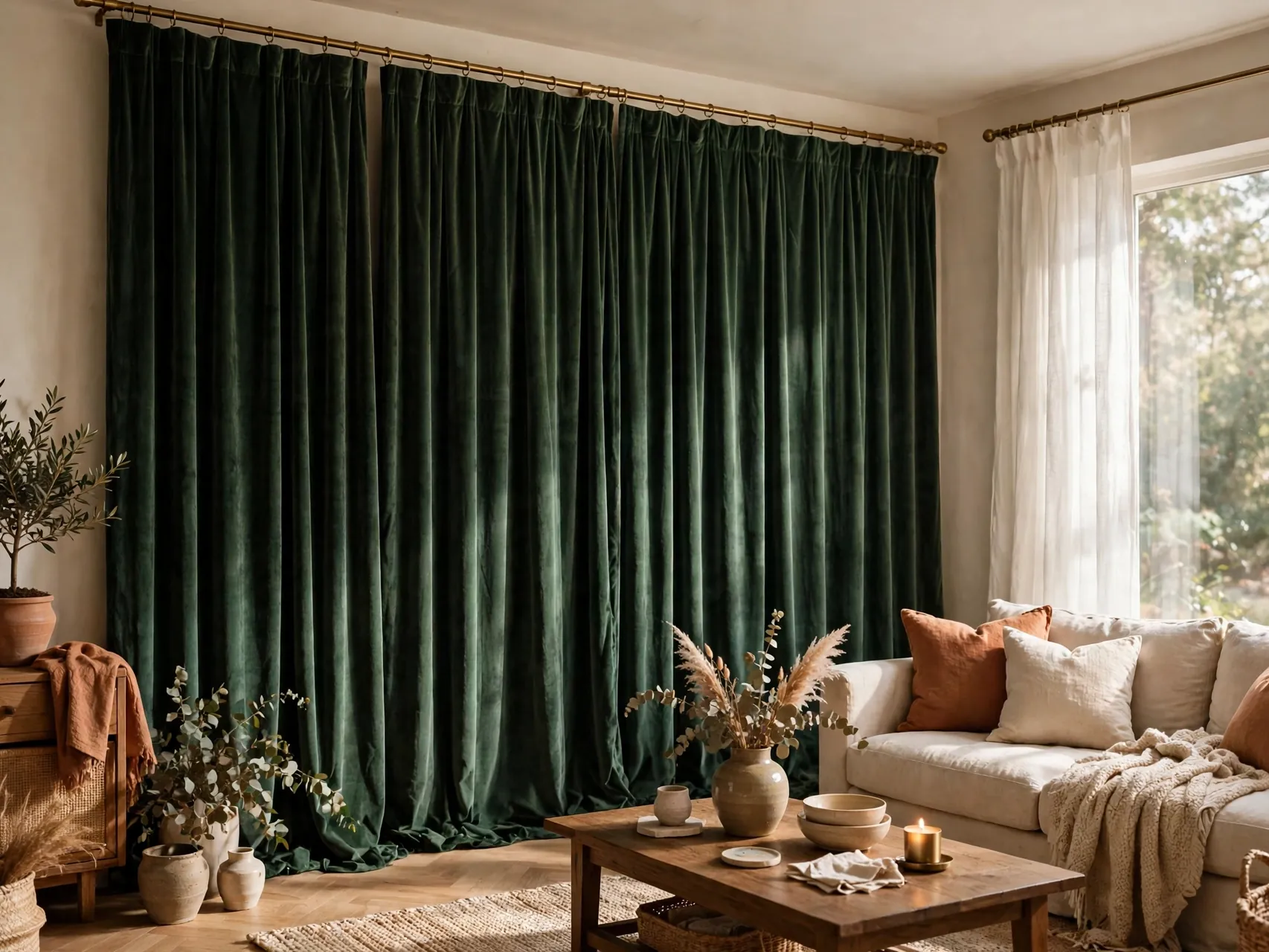
Hanging velvet from just below the ceiling to the floor is the single most transformative of all velvet window treatments. The long unbroken fall makes ceilings feel higher and windows feel grander, even on a standard 8 foot wall.
This height asks more of your hardware. Use a rod rated for heavy drapes, add a center bracket on wide windows, and fix brackets into studs or rated anchors, since a full pair of lined velvet panels is genuinely heavy. Tip: extend the rod 8 to 12 inches beyond each side of the frame so open panels stack on the wall, not the glass.
8. A Gentle Puddle for Formal Rooms
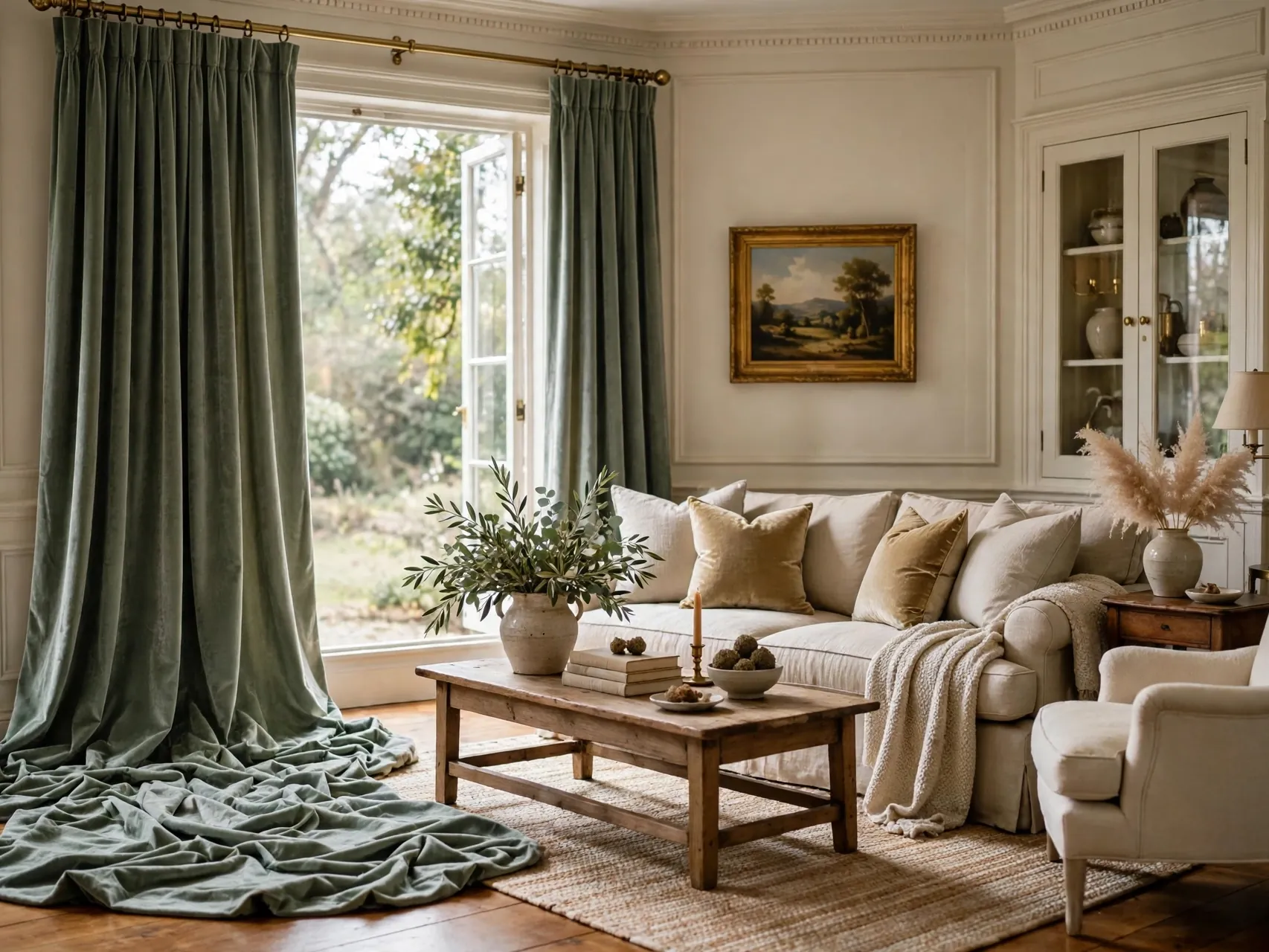
A gentle puddle, where the fabric breaks and pools an inch or two on the floor, is the most romantic way to finish velvet. It suits formal living rooms, dining rooms, and primary bedrooms where the curtains mostly stay in place and the mood is dressed up.
Choose common panel lengths like 96 or 108 inches to create the extra fabric, and arrange the folds by hand after hanging so the pool looks soft rather than slumped. Tip: skip the puddle in high traffic spots and homes with robot vacuums or curious pets, where a clean floor kiss length is the kinder choice.
9. A Clean Floor Kiss Length for Busy Family Rooms

When panels just touch the floor, called a kiss length, you get velvet polish that survives daily life. The hem stays cleaner, panels open and close without dragging, and the look stays tailored in family rooms and rental homes alike.
Measure from the rod to the floor in three places, because floors are rarely perfectly level, and order or hem to the longest measurement minus a whisper. Standard lengths like 84 and 96 inches cover most windows. Tip: hang the rod first, then measure, since guessing the rod height is where most length mistakes begin.
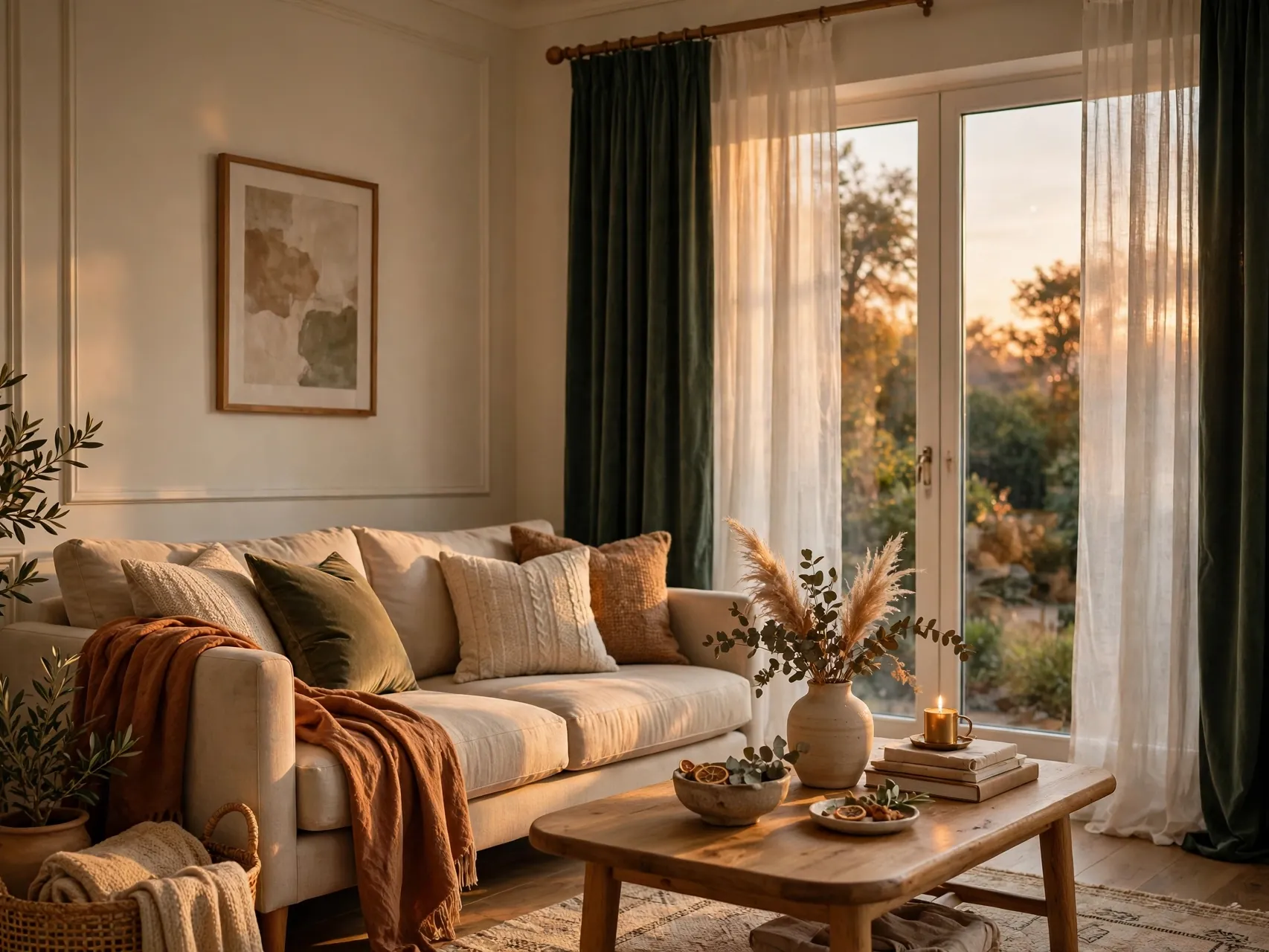
10. Velvet Layered Over Sheers for Soft Daytime Light
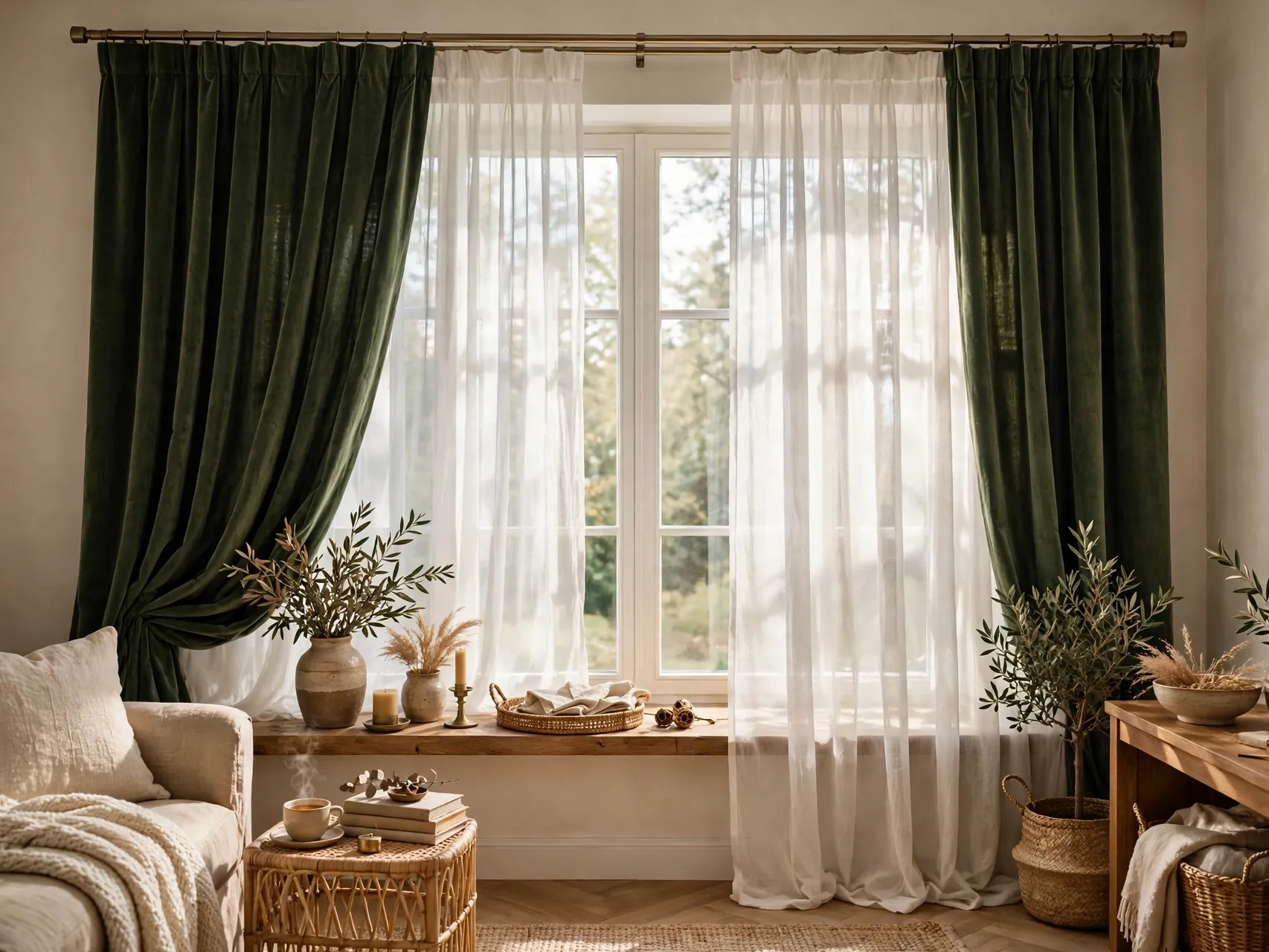
Layering velvet over sheers on a double rod gives you two rooms in one: soft filtered light and privacy by day with the sheers closed, then full velvet warmth and darkness in the evening. It is the most flexible of all jewel tone curtains pairings, whatever your velvet color.
Keep the sheer a clean white or ivory so it does not tint the daylight, and let the velvet carry all the color. Tip: mount the double rod brackets with the same stud and anchor care as a single rod, because two layers of fabric add real weight.
11. Blackout Lined Velvet for Better Sleep
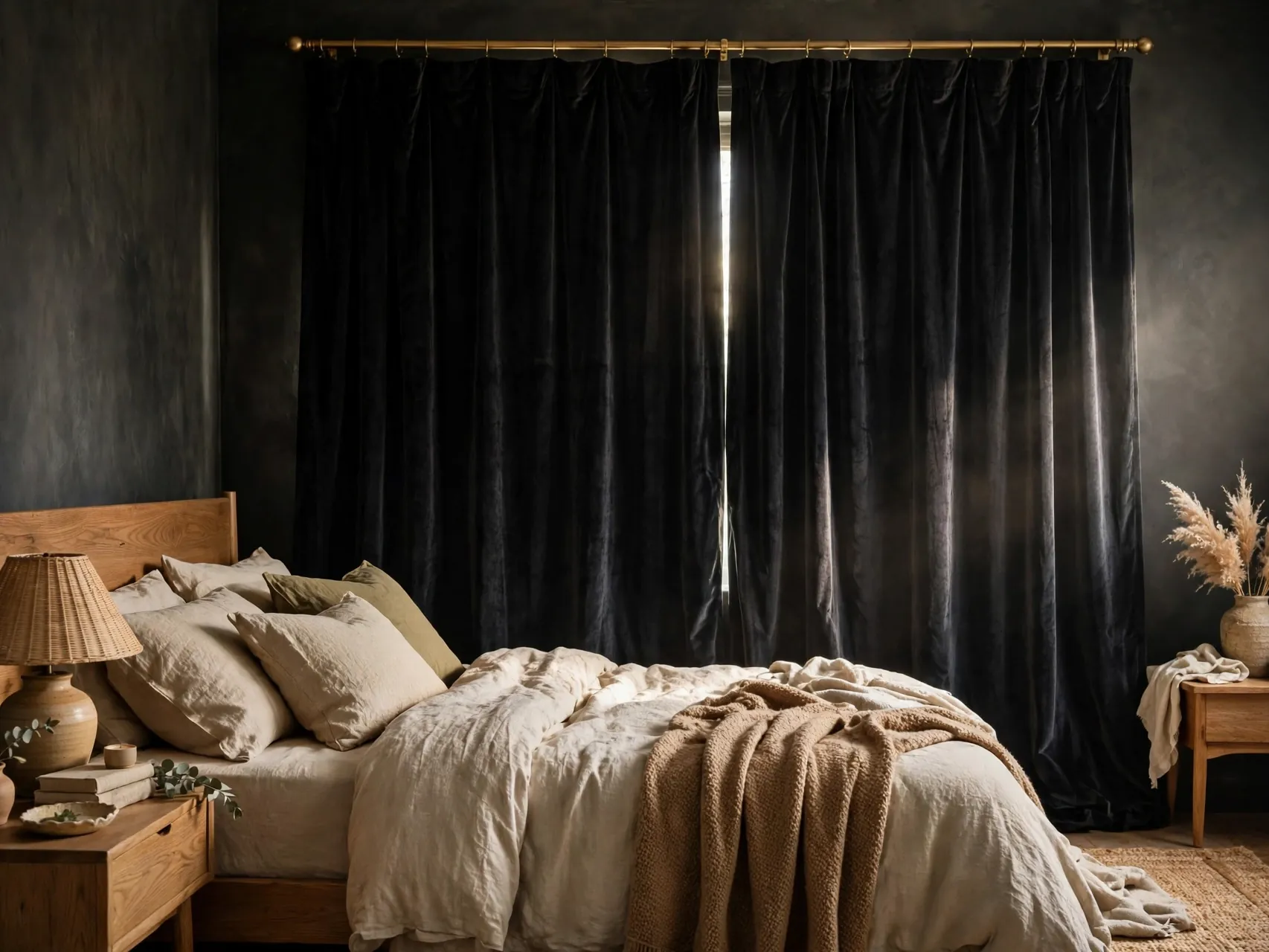
Velvet already blocks a good deal of light with its dense pile, and a blackout lining turns bedroom panels into a proper sleep tool. The room darkens more fully, mornings feel gentler, and the lining also helps the fabric hang in smoother, heavier folds.
Pair lined panels with a rod that returns to the wall at the ends, or add side coverage, so light does not spill around the edges. Tip: lined velvet is the heaviest option of all, so this is the window where rated brackets, a strong rod, and a helper for hanging day really matter.
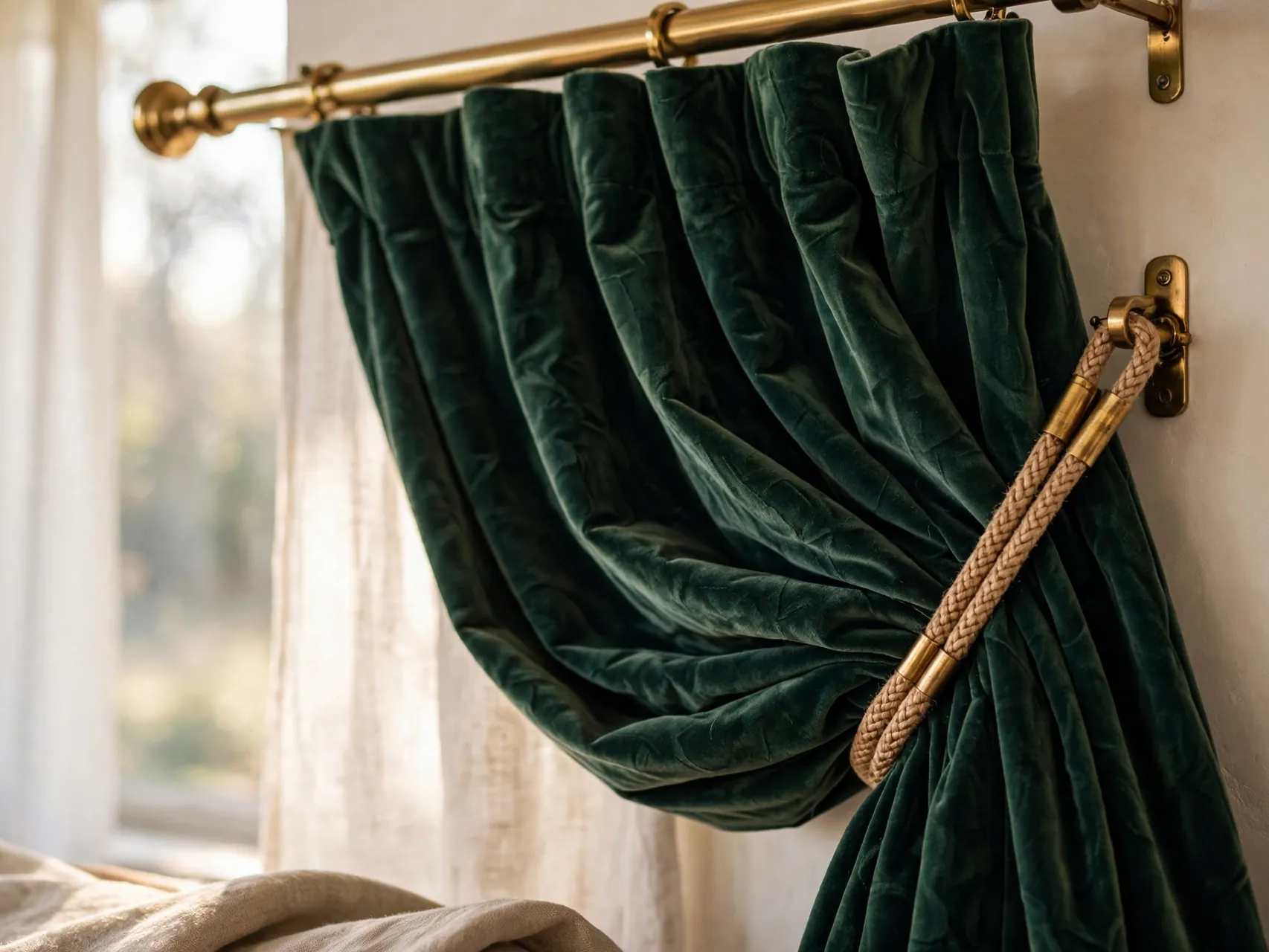
12. Velvet With Brass Rods and Rings
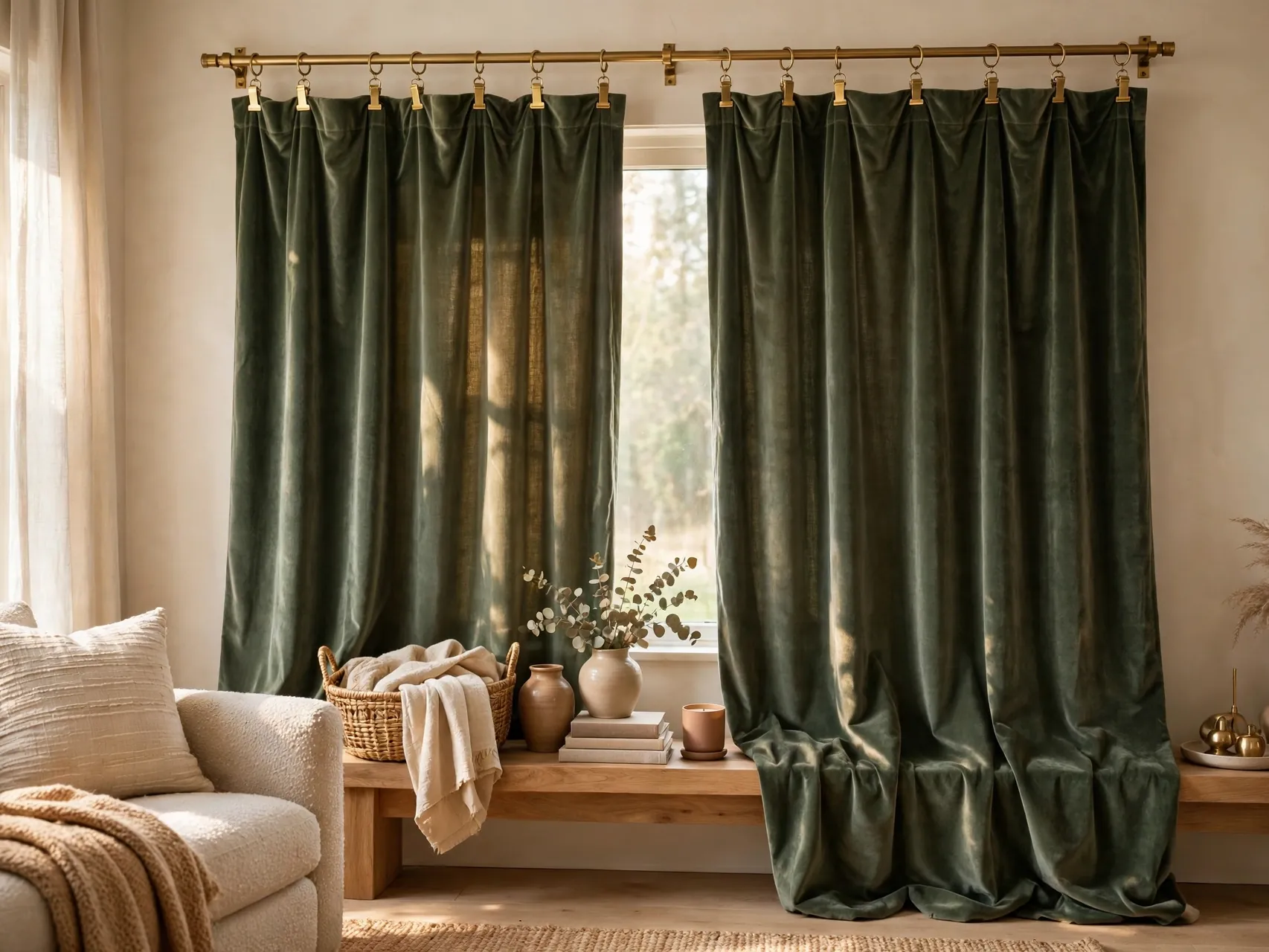
Brass and velvet are old friends. A brass rod with rings gives jewel tones a warm frame, lets heavy panels glide open with one hand, and adds a line of shine at exactly the height where a room needs it.
Rings also add a little length and make removing panels for cleaning far easier than rod pocket styles. Choose rings rated for the panel weight and space them evenly, roughly every 4 to 6 inches, so the folds fall in rhythm. Tip: matte or antique brass hides fingerprints better than polished brass in sunny windows.
13. Tiebacks That Shape a Graceful Sweep
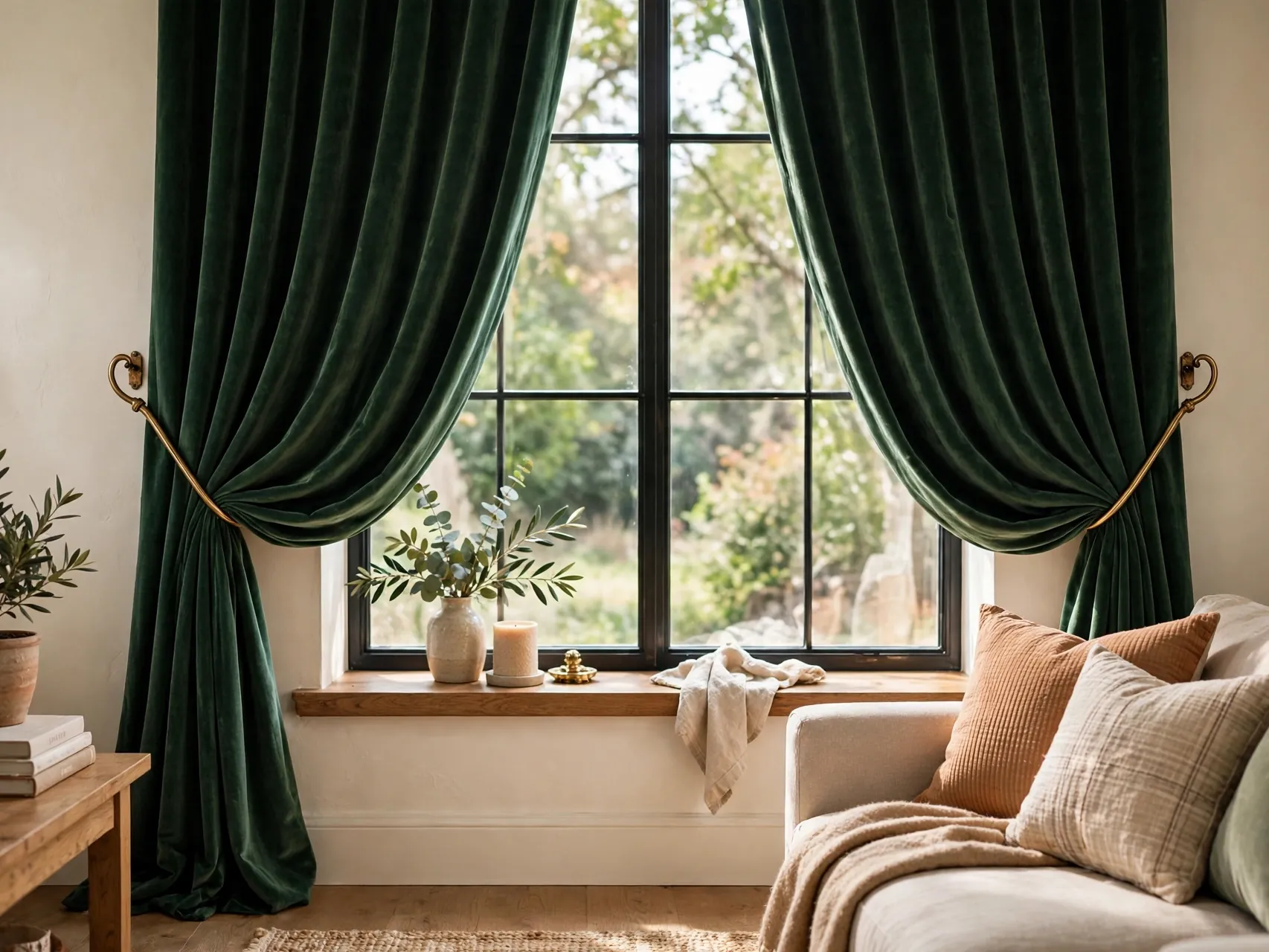
Tiebacks turn straight hanging velvet into architecture, pulling each panel into a curved sweep that shows off the window and lets in daylight. Metal holdbacks in brass or black feel tailored, while rope or fabric ties feel softer and more traditional.
Mount holdbacks securely into a stud or a rated anchor, since a gathered velvet panel pulls harder than it looks. Keep tieback cords and tassels out of reach of young children, and choose fixed metal holdbacks in family rooms. Tip: place tiebacks about one third of the way down from the top of the panel for the most graceful curve.
14. Velvet as a Doorway or Closet Curtain
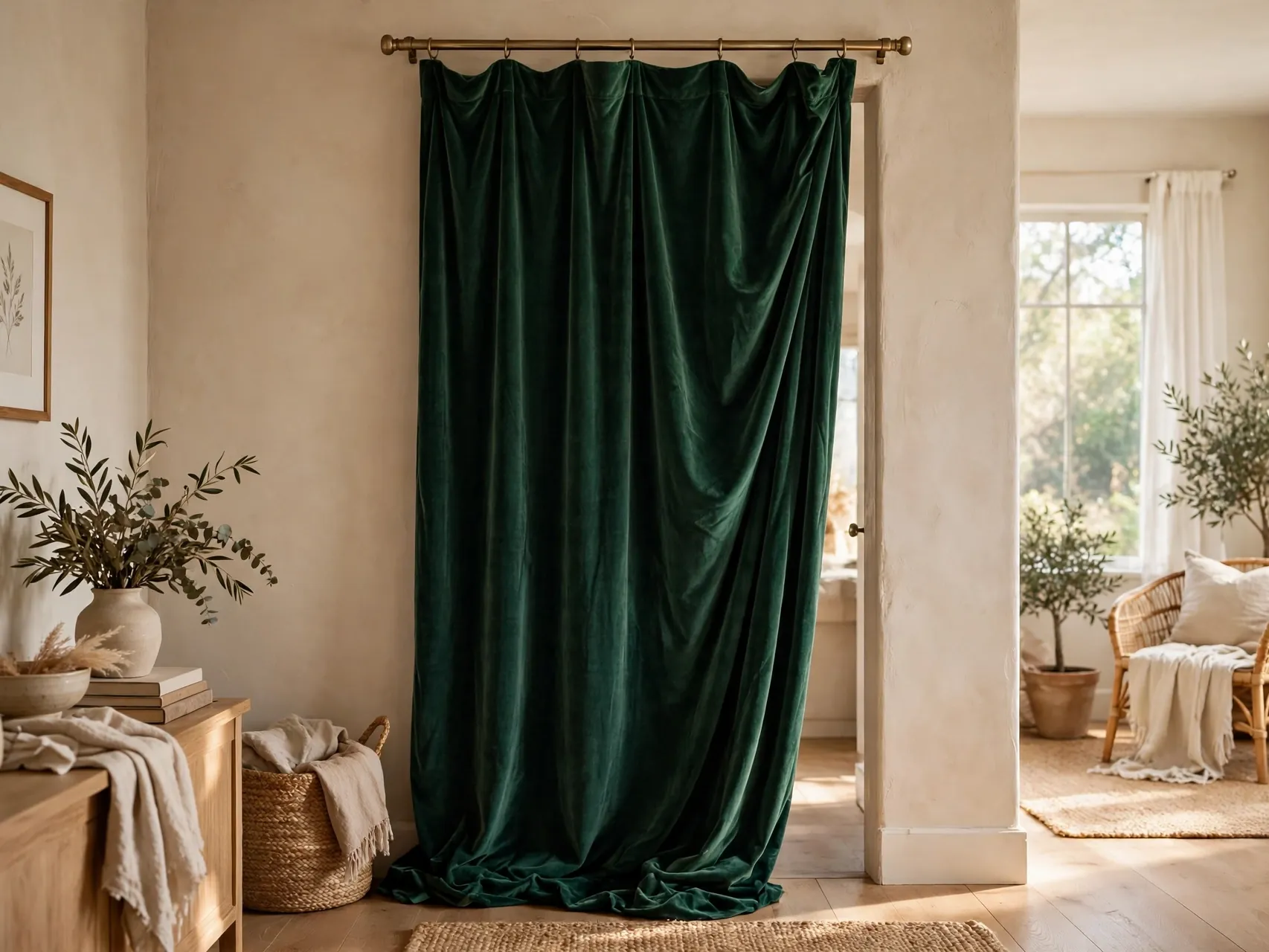
A velvet panel on a doorway or across an open closet adds color, softens sound a little, and hides visual clutter in the kindest way. It is a beloved renter trick for closets without doors and for studio apartments that need gentle zoning.
Use a tension rod inside the frame for a no drill option, or a small mounted rod for a fuller look, and size the panel to fall just clear of the floor so it swings freely. Tip: choose a color already present in the room textiles, so the doorway curtain reads as design rather than storage camouflage.
15. Velvet Panels as a Room Divider

In studios and open plan rooms, a run of velvet panels on a ceiling track or a long rod divides sleeping from living without a wall. The fabric absorbs a little echo, adds a rich backdrop on both sides, and slides away completely when you want the full space.
Ceiling mounts must be fixed into joists or with anchors rated for the load, following the track maker guidance, since the whole weight hangs overhead. Tip: choose the same velvet color on both faces by picking panels with a finished back or a lining, so neither side looks like the wrong side.
16. A Contrasting Border for a Custom Look
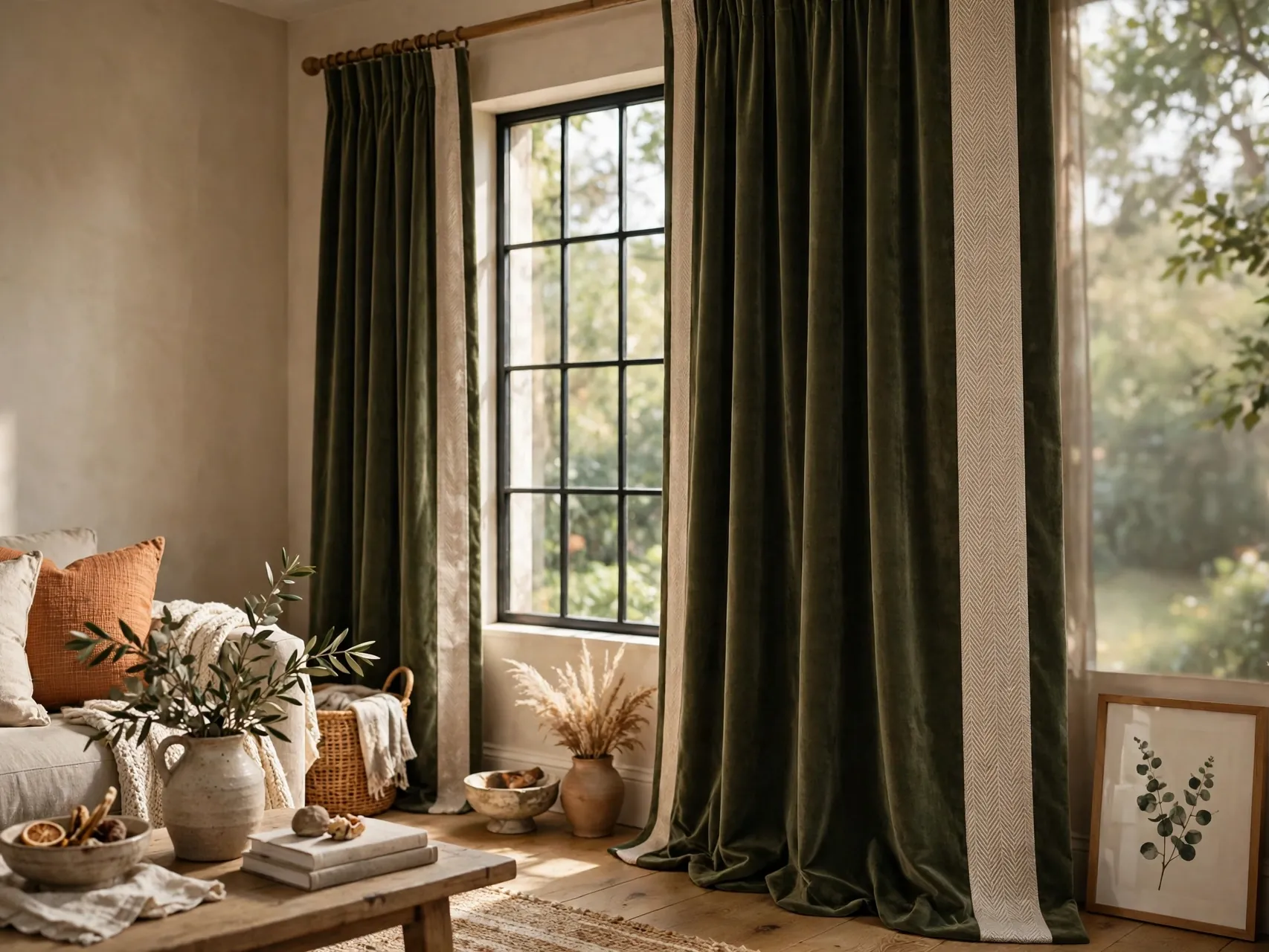
A border of contrasting fabric along the leading edge makes ready made velvet look tailored. Think emerald with a cream band, navy with a brass toned trim, or blush with a deeper rose edge, stitched or applied with careful iron on work where the fabric allows.
The border also solves a styling problem, tying the curtain color to a second color in the room so the window joins the scheme. Tip: keep the border modest, about 2 to 4 inches wide, because velvet is the star and the trim is only the frame.
17. Sage and Olive Velvet With Natural Wood
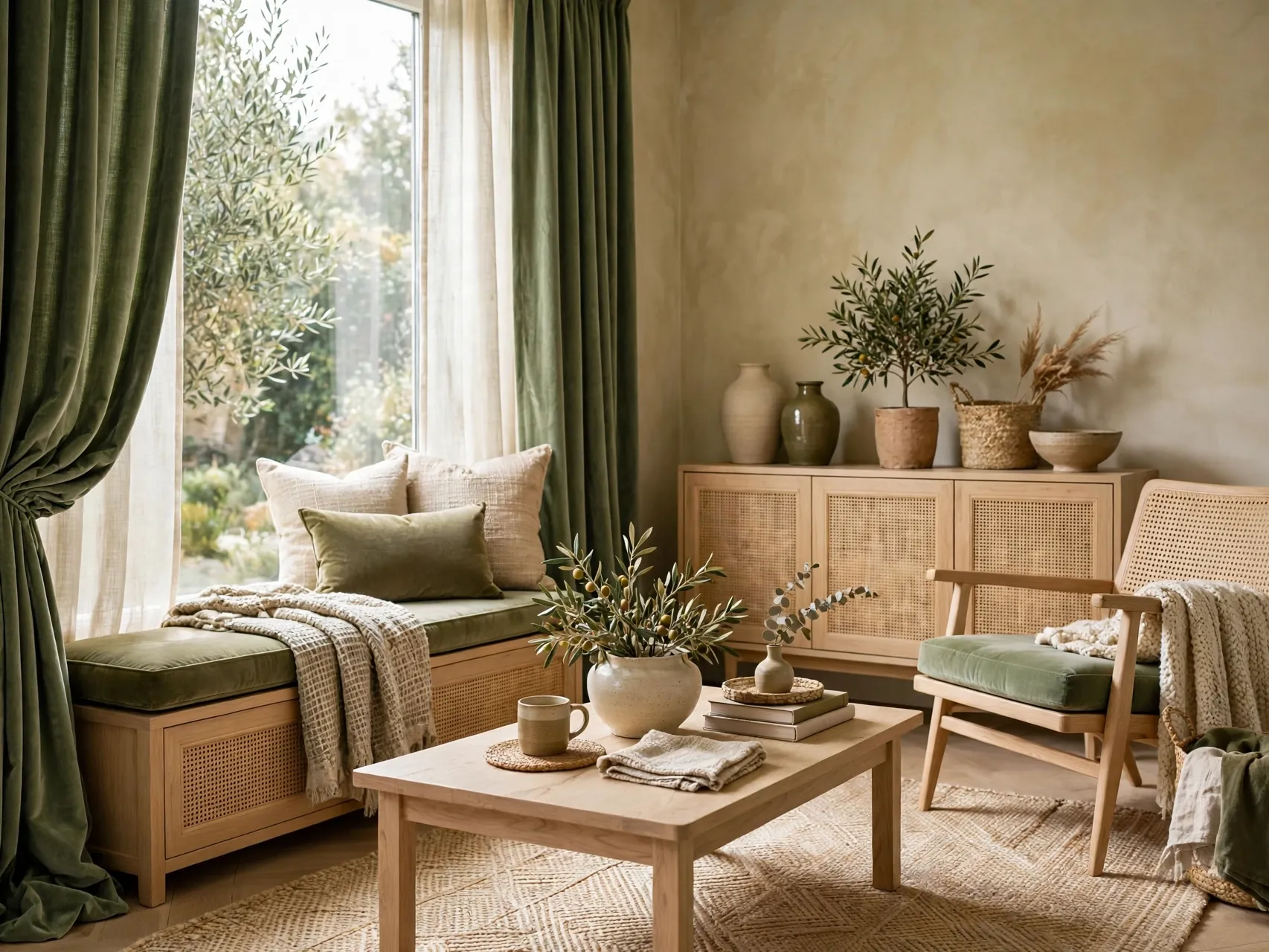
Sage and olive velvet bring the jewel tone family down to earth. Beside pale wood, cane, linen, and cream walls, green velvet feels calm and organic, a lovely choice for rooms that want color without formality.
These mid tone greens forgive fading better than the deepest shades and work in both bright and north facing rooms. Tip: pair sage velvet with warm white sheers rather than bright white, because the softer sheer keeps the whole window in the same gentle register.
18. Cream and Ivory Velvet for Light, Airy Rooms

Velvet does not have to be dark. Cream and ivory panels give you the folds, texture, and softness of velvet while keeping a bright room bright, and they are a beautiful answer for Scandinavian and calm neutral spaces that feel flat with plain linen.
The texture does the decorating here, so keep the rod simple and let light rake across the pile during the day. Tip: choose a slightly warm ivory over a blue white, and plan on liners, because pale velvet shows outdoor dust and marks sooner than deep colors do.
19. Velvet in a Home Office for a Focused Backdrop
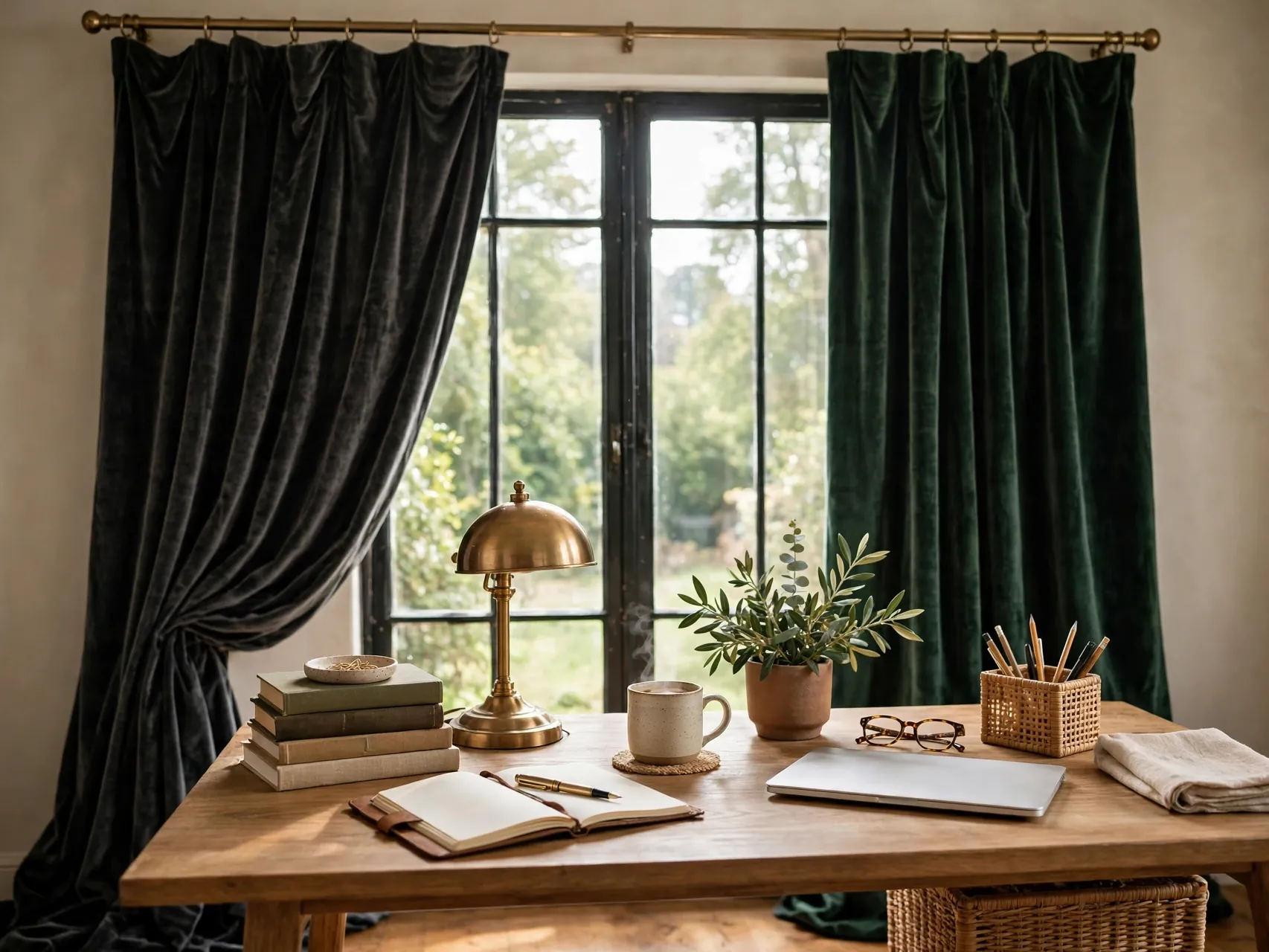
A wall of velvet behind a desk makes video calls look polished and the workday feel calmer. Deep green, charcoal, and navy panels soften glare on screens, add a professional backdrop, and bring a little acoustic softness to hard, echoing rooms.
Hang office panels wide enough to close against afternoon sun if your desk faces the window. Tip: keep the color matte and mid to deep in tone, because very pale or shiny fabrics can flare brightly on camera under ceiling lights.
20. Mix Velvet Curtains With Linen and Wood Textures
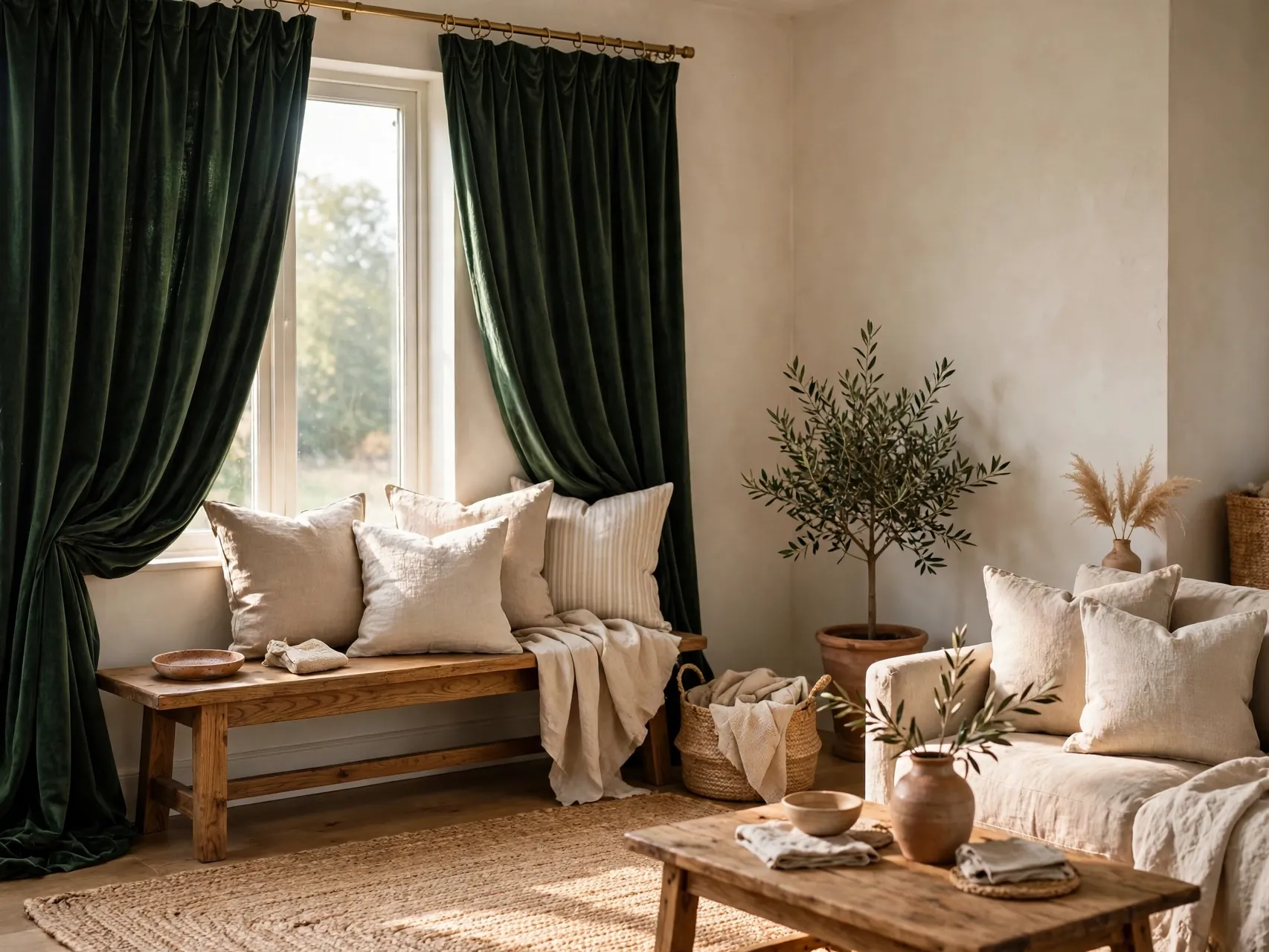
The rooms that wear velvet best balance it. Linen cushions, a raw wood bench, a jute rug, and matte ceramics keep velvet from feeling formal or heavy, because the eye reads luxury in the mix of textures rather than in any single fabric.
Use this rule when a velvet window feels like too much on its own: add two natural, matte textures nearby and the whole scheme relaxes. Tip: repeat the pattern in every velvet room, window in velvet, seating in linen or cotton, surfaces in wood, and your home will feel pulled together.
FAQ
How long should velvet curtains be?
For most rooms, hang the rod high and wide and choose panels that just kiss the floor for a clean look, or pool an inch or two for formal rooms. Common lengths like 84, 96, and 108 inches fit most windows. Measure after the rod is mounted, from the rod to the floor, and check in three places because floors vary.
How do I hang heavy velvet curtains safely?
Treat velvet like the heavy fabric it is. Choose a rod and brackets rated for heavy drapes, add a center bracket on wide spans, and fix brackets into wall studs where possible or into anchors rated for the load. Follow the hardware maker guidance, lift lined panels with a helper, and check fixings after the first week.
Are velvet curtains safe in a home with young children?
Yes, with the standard window covering care the CPSC recommends in general terms. Choose cordless styles where you can, keep any cords, chains, and tieback cords out of reach, never tie cords into loops, and keep furniture children climb on away from windows. Fixed metal holdbacks are a safer choice than long tasseled ties in family rooms.
How do I clean and care for velvet curtains?
Follow the fabric maker care label first, since velvet varies by fiber. In general, shake and vacuum panels gently with an upholstery attachment to lift dust, steam lightly from the back to refresh the pile if the maker allows, and keep panels clear of radiators and heaters. Many velvet look polyester panels can be washed gently, while true cotton or silk velvet often needs professional cleaning.
Which velvet curtain colors work best in small rooms?
Lighter and mid tones keep small rooms open: cream, ivory, blush, sage, and soft gray give you velvet texture without visual weight. If you love a deep jewel tone in a small room, use it on one window, hang it high and wide so the panels stack on the wall, and balance it with pale walls and a light rug.
Key Takeaways
- Color is the shortcut: Emerald, navy, burgundy, and blush velvet each set a whole room mood from one window, while cream and sage keep things calm.
- Hang high, hang honest: Floor to ceiling placement stretches the wall, but velvet weight demands a rated rod, center brackets, and fixings into studs or rated anchors.
- Length sets the tone: A floor kiss reads tailored and family friendly, a gentle puddle reads formal, and lined panels darken bedrooms best.
- Layer for real life: Sheers under velvet, blackout lining behind it, and tiebacks or holdbacks shape light from morning to movie night.
- Safety stays in the plan: Cordless styles and cords kept out of reach around children, and panels always clear of heaters, fireplaces, and open flame.
Save this guide to Pinterest and pin the velvet look you will hang first.