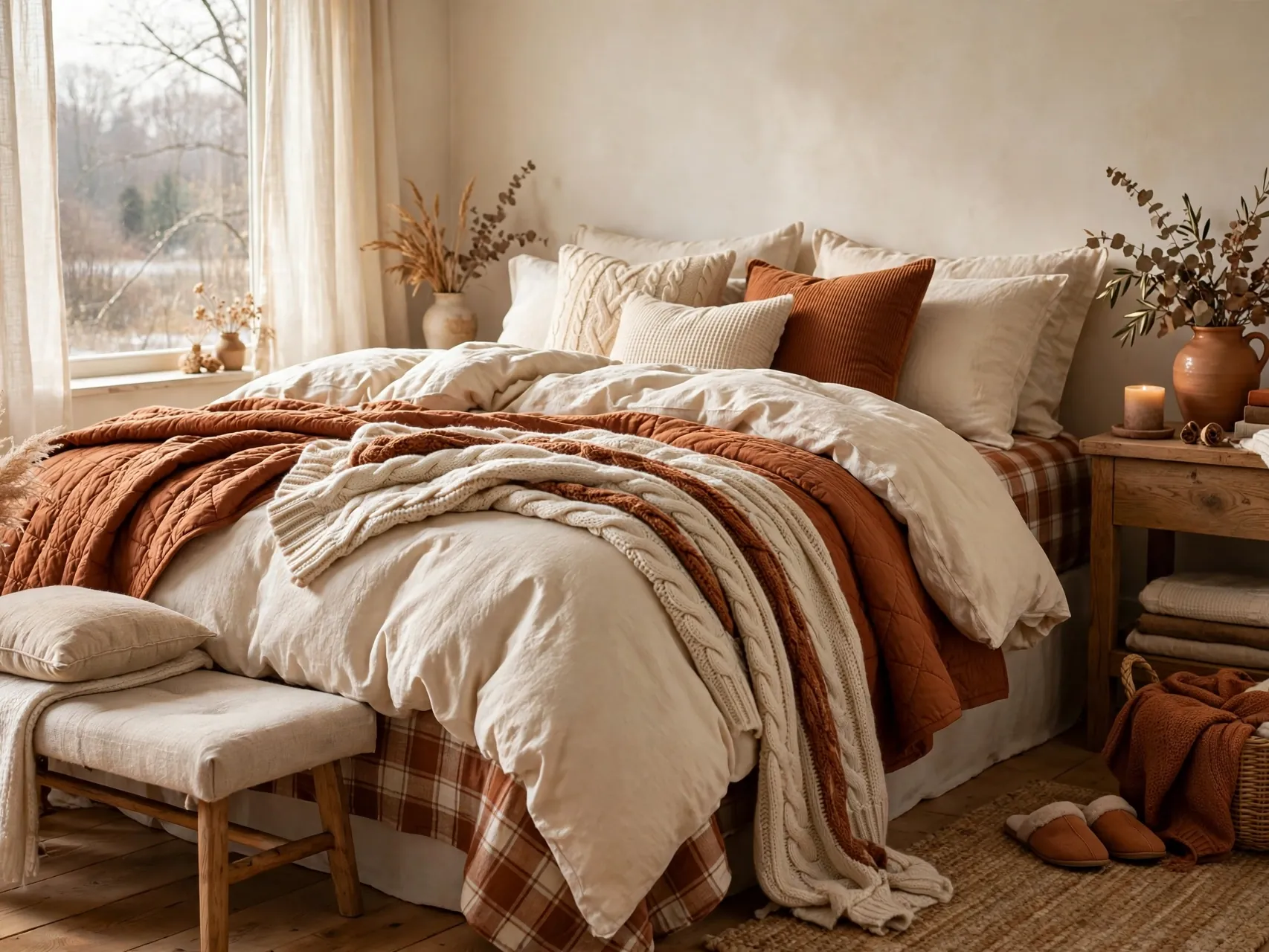
22 Layered Winter Bedding Ideas for the Coziest Sleep of the Year
Introduction

A cold bedroom does not need a hotter thermostat. It needs better winter bedding layering ideas that trap warmth in light, adjustable layers you can peel back at midnight and pull up again before dawn.
The secret is order. Start with a warm base that touches your skin, add one insulating middle, finish with a lofty top layer, and keep a throw within reach for feet and shoulders. That simple stack is how to layer a bed for winter without waking up sweaty under one giant comforter.
This guide mixes cozy winter bedding ideas for every kind of sleeper: couples who disagree on temperature, guest rooms that sit chilly, and primary beds that need to look beautiful in daylight too.
Two safety notes belong up front. Follow the maker directions for any heated bedding, inspect it before the season, and never use a damaged electric blanket. For babies and young children, keep bedding age appropriate, avoid overheating, and skip loose heavy layers in a crib or bassinet.
1. Start With Flannel Sheets as Your Warm Base
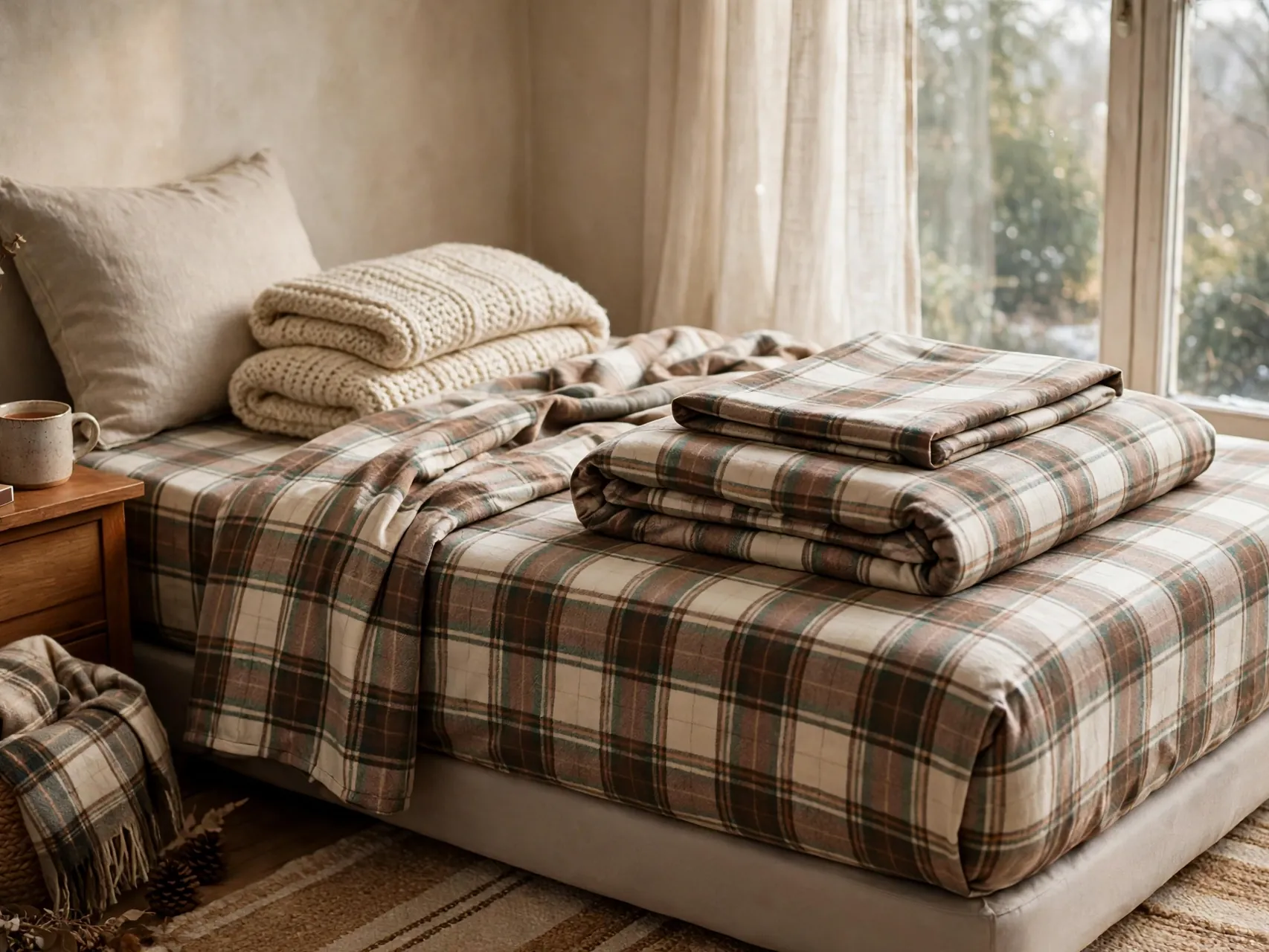
Flannel is the fastest winter upgrade because it feels warm the second you climb in, unlike crisp cotton that starts cold. Choose a fitted sheet and flat sheet in brushed cotton flannel for the base of your warm winter bedding layers.
Wash flannel by the care label, dry it fully, and expect a little softness to build with each wash. If you sleep warm, use flannel only on the fitted sheet and keep a smooth cotton flat sheet on top. That split gives you cozy feet without a fully fuzzy bed.
2. Add a Cotton Blanket Between Sheet and Duvet
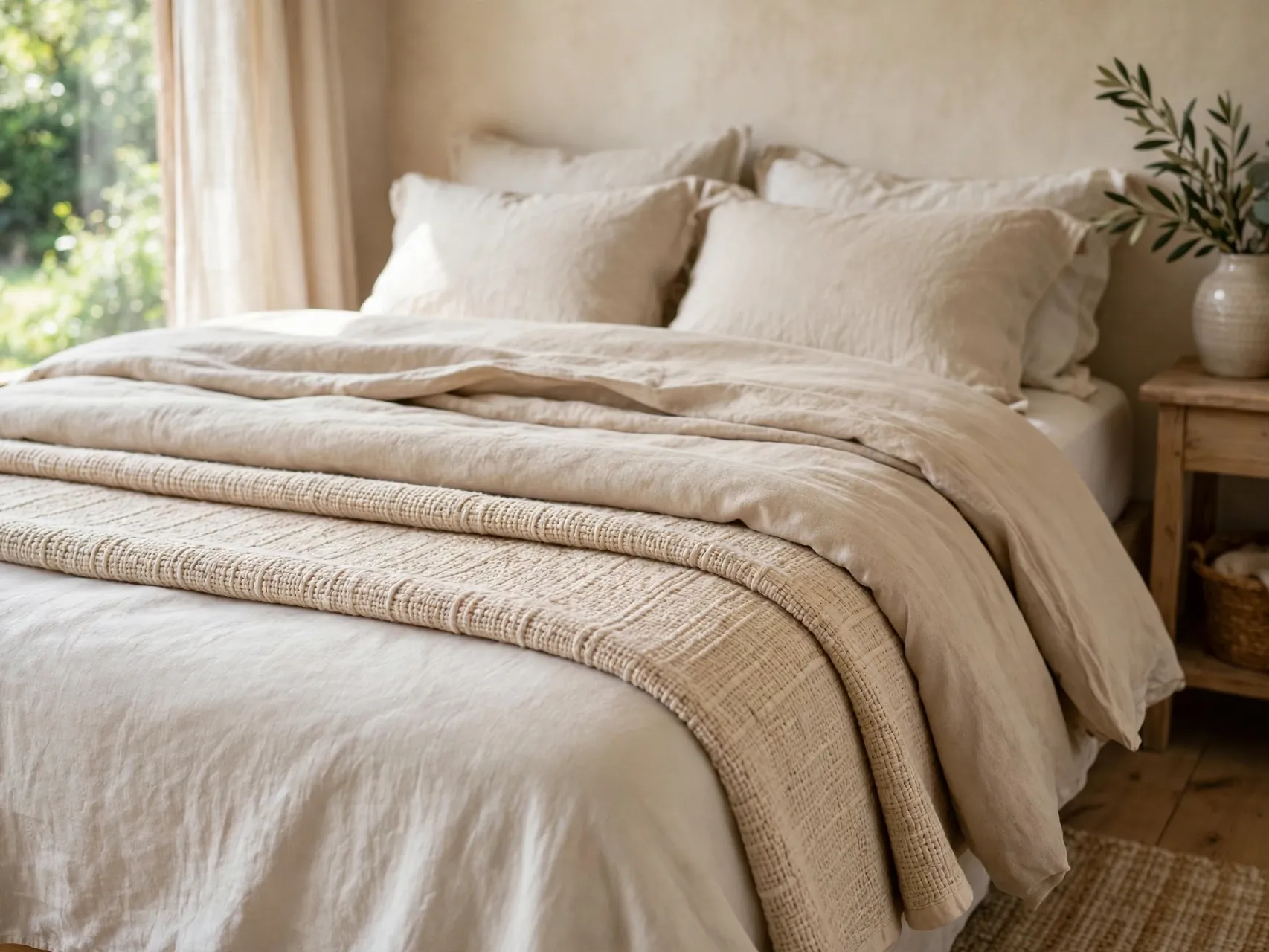
A medium weight cotton or waffle weave blanket tucked between the flat sheet and the duvet adds insulation without bulk. It also gives you a perfect in between layer for nights that start cold and warm up by morning.
Fold the top of the blanket down over the duvet edge for that styled hotel look, or keep it hidden if you prefer a clean surface. Choose cream, oatmeal, or soft gray so the blanket works under any duvet cover you rotate through winter.
3. Use a Wool Blanket for Serious Warmth Without Weight

Wool holds warmth, breathes well, and handles temperature swings better than many thick synthetics. Lay a wool blanket over the duvet or under it, depending on whether you want its texture on show or its warmth kept quiet.
Keep wool off direct skin if you find it scratchy by sandwiching it between cotton layers. Air it on a dry day, follow the care label for washing, and store it in a breathable bag in spring. One good wool layer often replaces two thin fleece layers.
4. Pick a Lofty Winter Duvet and Fold It Back

Your duvet does most of the heating work, so choose a winter weight insert that feels light but looks plump. Shake it out, let it loft for a few hours after unpacking, and use a duvet cover you can wash easily.
Fold the top third back toward the foot of the bed. The fold shows off the sheet and blanket beneath, makes the bed look styled for photos, and gives hot sleepers an easy escape hatch. Fluff the insert weekly by the care guidance so the fill stays even corner to corner.
5. Layer a Quilt Over the Duvet for Color and Hold

A quilt over the duvet adds color, pattern, and just enough weight to keep the duvet from sliding. It is also the layer guests recognize first, so pick a design that carries your room palette: plaid, small floral, or a calm stripe.
Let the quilt hang a little longer on the sides than the duvet for a tailored edge. On milder nights, sleep under the quilt alone and fold the duvet to the foot. That flexibility is the whole point of layered flannel bedding ideas done well.
6. Try the Quilt Under the Duvet for a Smooth Top

Flip the usual order and put the quilt under the duvet when you want a smooth, calm top surface. The quilt still adds warmth close to your body, while the duvet brings the soft, cloud like finish on top.
This order suits patterned quilts you love for warmth but not for the main color story. It also helps in guest rooms, where a plain duvet looks fresh for everyone and the hidden quilt does the winter work quietly underneath.
7. Drape a Chunky Knit Throw Across the Foot

A chunky knit throw at the foot is equal parts style and strategy. Feet get cold first, and an extra layer exactly there warms the whole bed without covering your shoulders in extra heat.
Drape it at an angle for a relaxed look or fold it into a neat band for a tidy room. Keep one color in the family of your quilt so the bed reads as one plan. Shake knits out outdoors and spot clean or wash only as the label directs.
8. Add a Faux Fur Throw for Cabin Level Texture
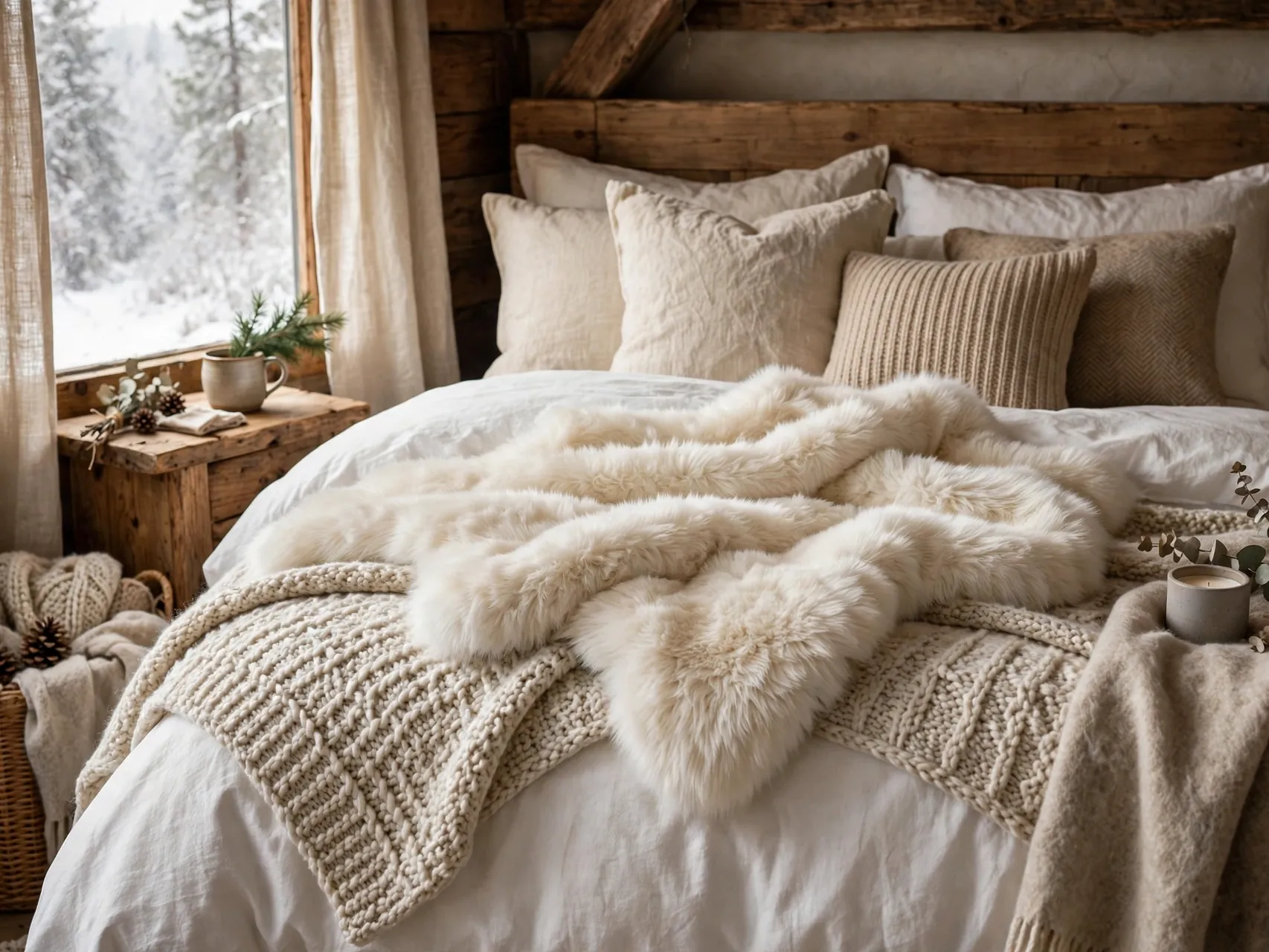
Faux fur brings instant cabin coziness and photographs beautifully, which is why it stars in so many cozy winter bedding ideas. Lay it over one corner, across the foot, or along one side for reading time.
Keep faux fur as a top accent rather than a sleeping layer, since it can feel too warm against skin all night. Brush it gently with your hands to keep the pile smooth, keep it away from direct heat sources, and check the care label before washing.
9. Build a Tonal Bed in Creams, Oatmeal and Stone

A tonal stack proves layers do not need loud color to look rich. Mix cream sheets, an oatmeal blanket, a stone colored quilt, and a white duvet, then let texture do the talking: flannel, waffle, knit, and smooth cotton in one family.
This palette calms a small bedroom and hides the mix and match reality of bedding you already own. Add one warm wood or leather accent nearby so the pale bed feels grounded rather than washed out on gray winter days.
10. Go Deep and Moody With Forest, Navy or Charcoal

Deep colors make a winter bed feel like a retreat. Try forest green flannel, a navy quilt, or charcoal linen look layers, balanced with warm white sheets so the bed still feels fresh rather than heavy.
Test deep colors in your evening light before committing to a full set. Start with the quilt or throw in the dark shade and keep the duvet light. If the room feels smaller, add a warm lamp and a light rug to lift the mood.
11. Warm Up White Bedding With Rust and Camel Accents
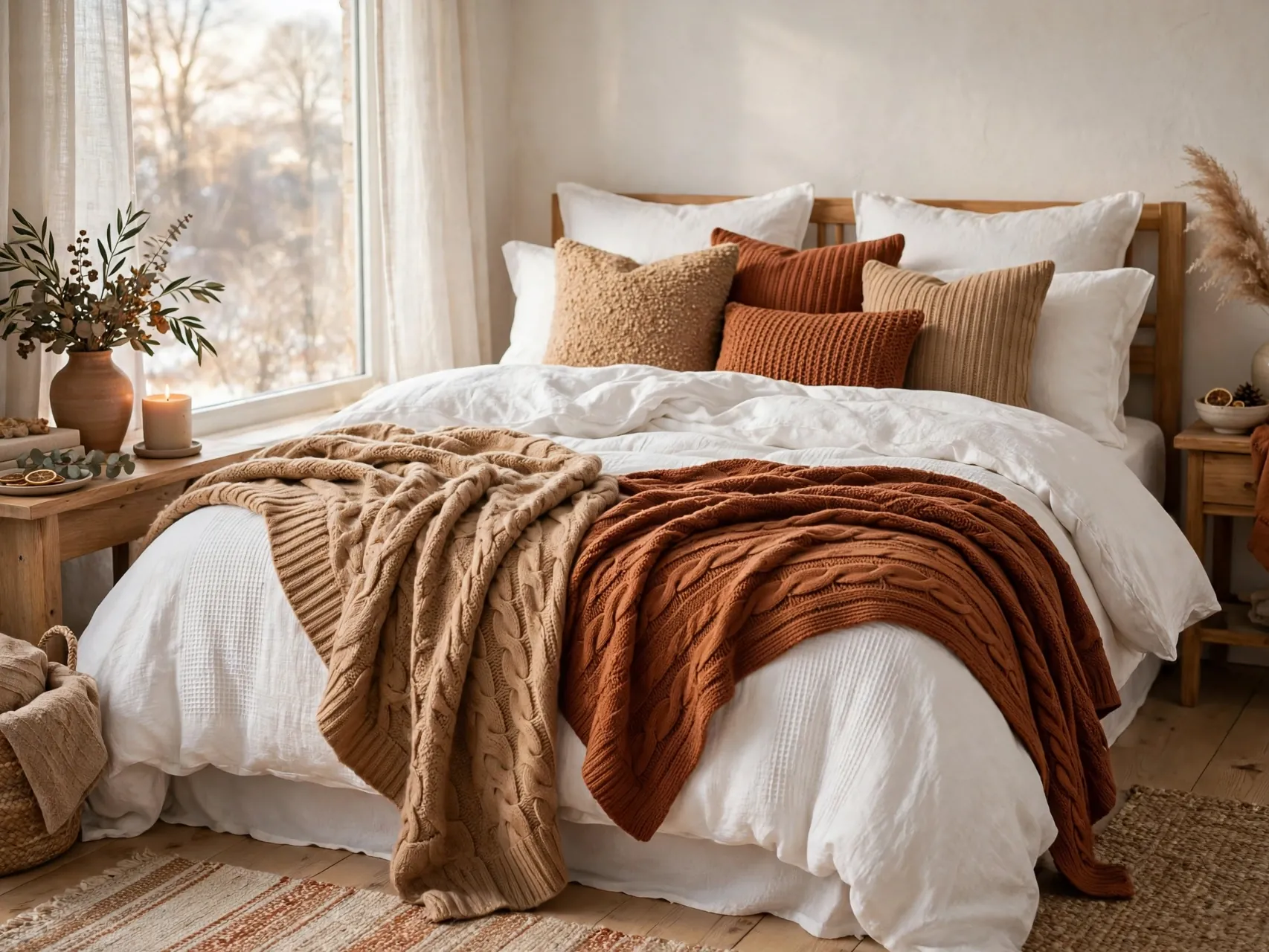
If you love white bedding year round, winterize it instead of replacing it. Keep the white duvet and sheets, then layer a rust quilt, a camel wool throw, and cushions in warm plaid or corduroy.
The white base keeps laundry simple and the room bright on short days, while the warm accents do the seasonal storytelling. Swap only the top two layers in spring and the whole bed feels new again for very little storage space.
12. Layer Two Thin Blankets Instead of One Thick One

Two thin blankets trap air between them and beat one thick blanket for adjustability. Use a cotton waffle under a light wool or fleece layer, and you can drop one blanket to the foot on a warmer night without remaking the bed.
This is a smart pick for shoulders and older kids rooms too, where one heavy comforter often ends up on the floor. Label which blanket goes where with a quick photo after you make the bed once, and laundry day gets easier.
13. Add a Mattress Topper to Block the Cold From Below
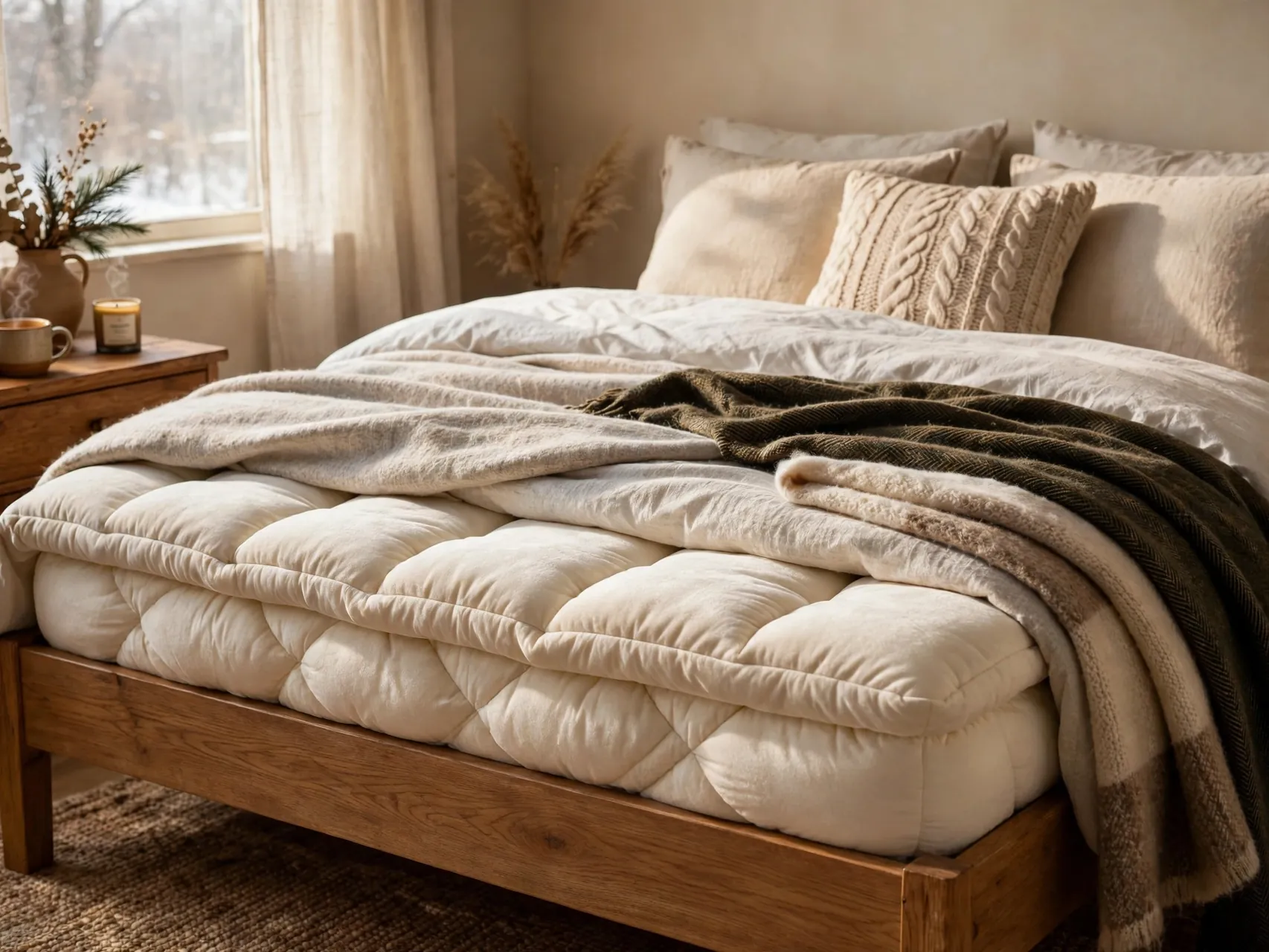
Cold rises from a chilly mattress and floor, so the layer under you matters as much as the layers over you. A plush topper or a warm mattress pad adds softness and a buffer between your body and a cold bed frame.
Fit it snugly, smooth out lumps, and put the fitted sheet firmly over the top so nothing shifts at the corners. Follow the care label for washing, and rotate or fluff it when you change sheets so it wears evenly through the season.
14. Try Heated Bedding the Safe and Simple Way
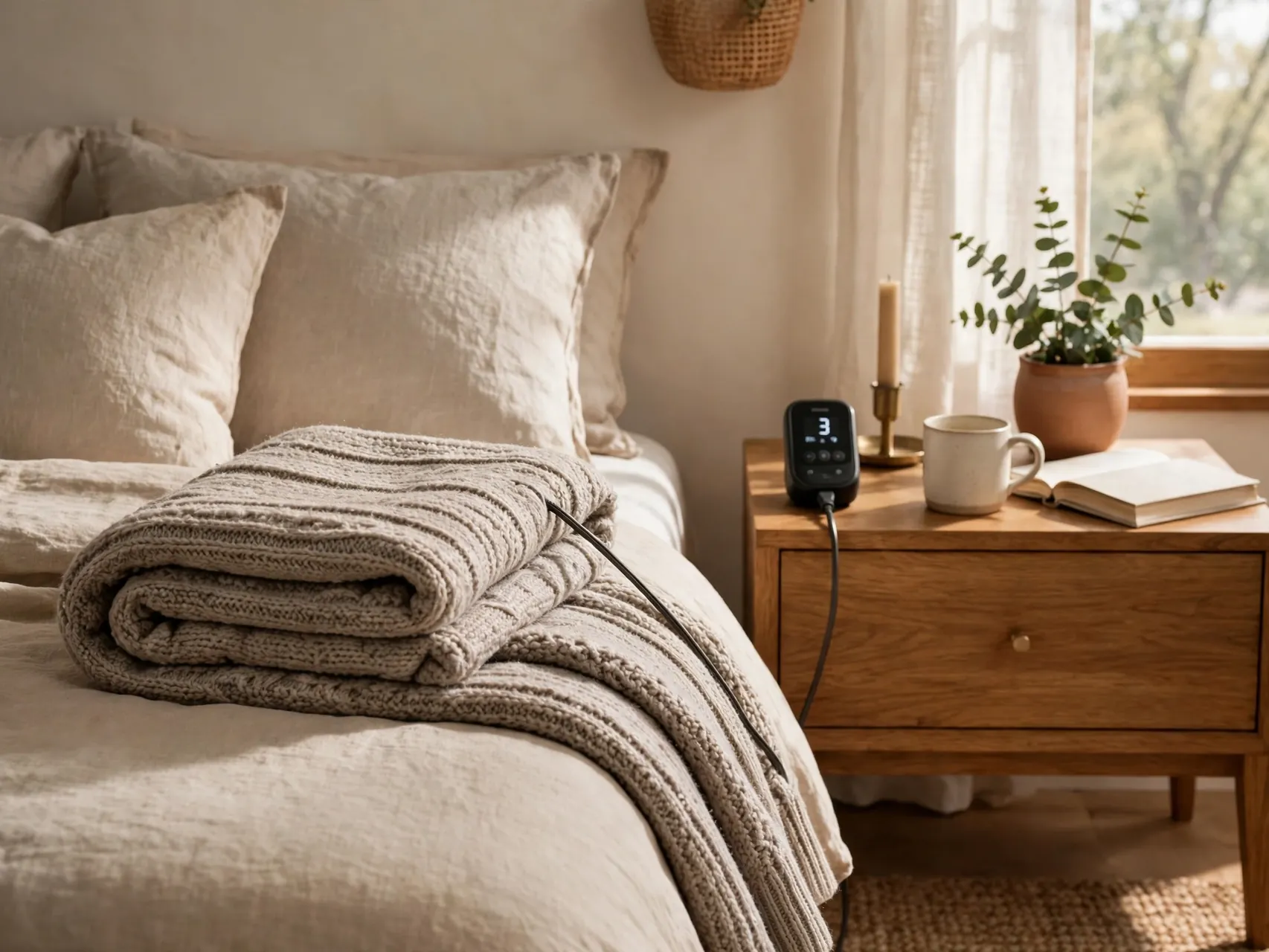
A heated mattress pad or electric blanket can prewarm the bed beautifully, but only when used exactly as the maker directs. Inspect the fabric, cord, and controller before first use, check that the product has not been recalled, and plug it directly into a wall outlet.
Keep the blanket flat without bunching or heavy objects on top, and turn it off or to the setting the instructions allow for sleep. Never use heated bedding for infants, for anyone who cannot respond to overheating, or with a damaged cord. When in doubt, warm the bed, then switch it off.
15. Solve the Hot and Cold Couple Problem With Split Layers
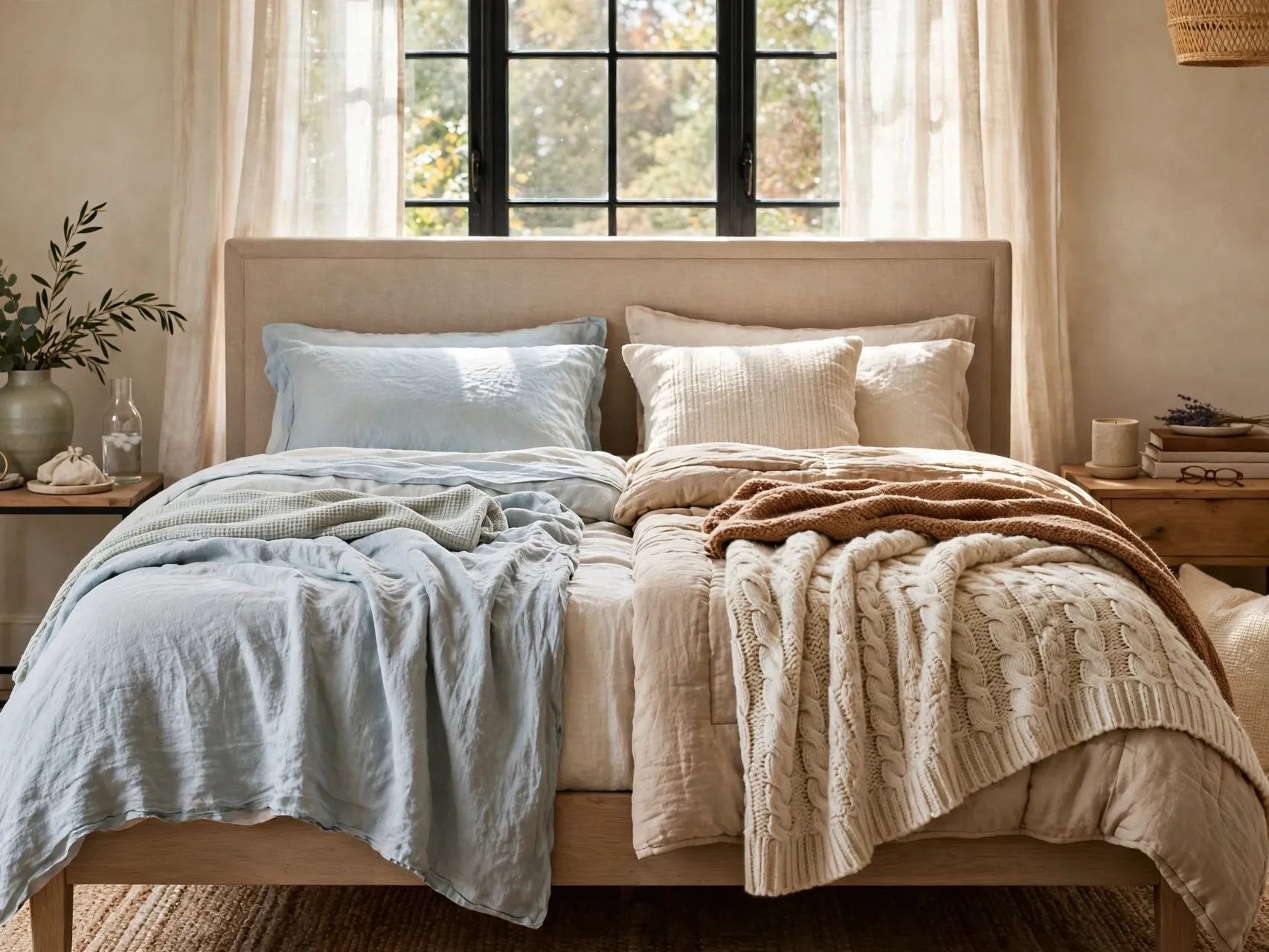
Sharing a bed should not mean sharing one temperature. Make a shared base of sheets and a light blanket, then give each side its own top layer: a heavier quilt folded on the cold sleeper side and a lighter throw on the warm sleeper side.
Two smaller quilts or throws side by side look intentional when they share a color family. This split system ends the midnight tug of war and lets each person adjust without stripping the whole bed. It is one of the most practical winter bedding layering ideas for real life.
16. Stack Pillows in Layers for Reading and Sleep

Pillows are layers too. Place firm sleeping pillows at the back for sitting up, softer sleeping pillows in front, and one or two cushions in velvet, wool, or plaid at the very front for the winter look.
Keep the stack honest: if you have to move six cushions to get into bed, you have too many. Two decorative cushions plus your sleeping pillows is the sweet spot for most queen beds. Use washable covers on the front cushions since they collect dust fastest.
17. Tuck Layers Tightly for Kids Who Kick Them Off

For school age kids, choose light layers tucked firmly on three sides so the bed stays made even with a restless sleeper. A flannel fitted sheet, a cotton blanket, and one medium quilt usually beat a single bulky comforter that slides off.
Keep extra throws and heavy blankets out of cribs and away from babies, and dress infants for warmth in age appropriate sleep clothing instead of loose bedding. For older kids, let them pick the top quilt color so making the bed feels like their choice, not a chore.
18. Make the Guest Bed Warm Without Overheating Anyone

Guests sleep at mystery temperatures, so build the guest bed in clear, removable layers. Use smooth cotton sheets, one blanket, a medium duvet, and a folded extra quilt at the foot with a small note that it is there if they need it.
Leave the room a touch cool and let layers do the work. That setup suits almost everyone and avoids the awkward too hot night guests never mention. Wash sheets and pillowcases between guests, air the duvet, and restack the layers fresh each time.
19. Add a Bed Runner or Folded Coverlet for a Finished Edge

A runner or coverlet folded across the lower third of the bed gives you the boutique hotel finish and one more warm layer over legs and feet. Choose a contrasting weave, a subtle stripe, or a reversible pattern for two looks in one piece.
This layer is also your pet and luggage buffer, catching the wear that would otherwise hit your duvet cover. Shake it out weekly, wash it as the label directs, and rotate it so fading, if any, stays even across the fabric.
20. Mix Plaid, Stripe and Solid Like a Stylist

Pattern mixing works when the colors agree and the scales differ. Pair a large plaid throw with a fine stripe quilt and a solid duvet, all sharing two or three colors, and the bed looks collected rather than chaotic.
Start with the pattern you own and love, then add solids in its colors before buying anything new. Keep pillowcases mostly solid so the bed still feels restful. Photograph the bed from the door: if your eye rests calmly, the mix is right.
21. Freshen Layers With a Weekly Air and Fluff Routine

Layers stay cozy when they stay clean and lofty. Strip the bed weekly, wash sheets and pillowcases by their labels, shake blankets outdoors when weather allows, and give the duvet a good fluff before you remake everything.
Dry bedding fully before putting it back on the bed or into storage, since damp layers feel cold and smell stale fast. In spring, store heavy pieces clean in breathable bags in a dry place. A ten minute routine protects the whole stack you invested in.
22. Finish With Warm Light, a Rug and Warm Feet

The coziest beds sit in cozy rooms. Add a warm toned bedside lamp, a soft rug where your feet land, and warm socks or slippers waiting by the bed, and the layers on the mattress feel twice as inviting.
Keep a small basket for the throw you use for reading so it does not live on the floor. Set the bed up in the afternoon when light is good, and by bedtime the room already feels calm. Great sleep is a whole room habit, not just a blanket choice.
FAQ

What is the correct order for winter bedding layers?
Start with a fitted sheet, add a flat sheet, then a light blanket, then your duvet or comforter, and finish with a quilt or throw on top or at the foot. Lighter layers sit closer to your body and heavier or decorative layers sit on top, so you can remove one layer at a time as you warm up.
Which fabric is warmest for winter sheets?
Flannel is the classic warm choice because its brushed surface feels warm on contact and holds body heat well. Cotton sateen is a smoother, slightly warm option, while regular cotton and linen suit warm sleepers who still want winter layers above the sheet. Choose by how warm you sleep, not by the label alone.
How do I layer bedding if one partner runs hot?
Share the sheets and one light blanket, then split the top layers by side. Give the cold sleeper a heavier quilt or extra throw on their half and keep the hot sleeper with the light blanket only. Two smaller top layers in matching colors keep the bed looking neat while each person controls their own warmth.
Are electric blankets safe to sleep with?
Use heated bedding only exactly as the maker directs. Inspect it for damage, check recall status, plug it directly into a wall outlet, keep it flat, and stop using it if the cord, controller, or fabric is damaged. Many people prewarm the bed and then turn the blanket off or down as the instructions allow. Never use one for infants or anyone who cannot respond to overheating.
How often should I wash winter bedding layers?
Wash sheets and pillowcases about weekly, blankets and duvet covers every few weeks, and duvet inserts and quilts by their care labels, usually a few times a season unless soiled. Always dry pieces fully before remaking the bed or storing them, and air blankets and quilts between washes to keep them fresh and lofty.
Key Takeaways
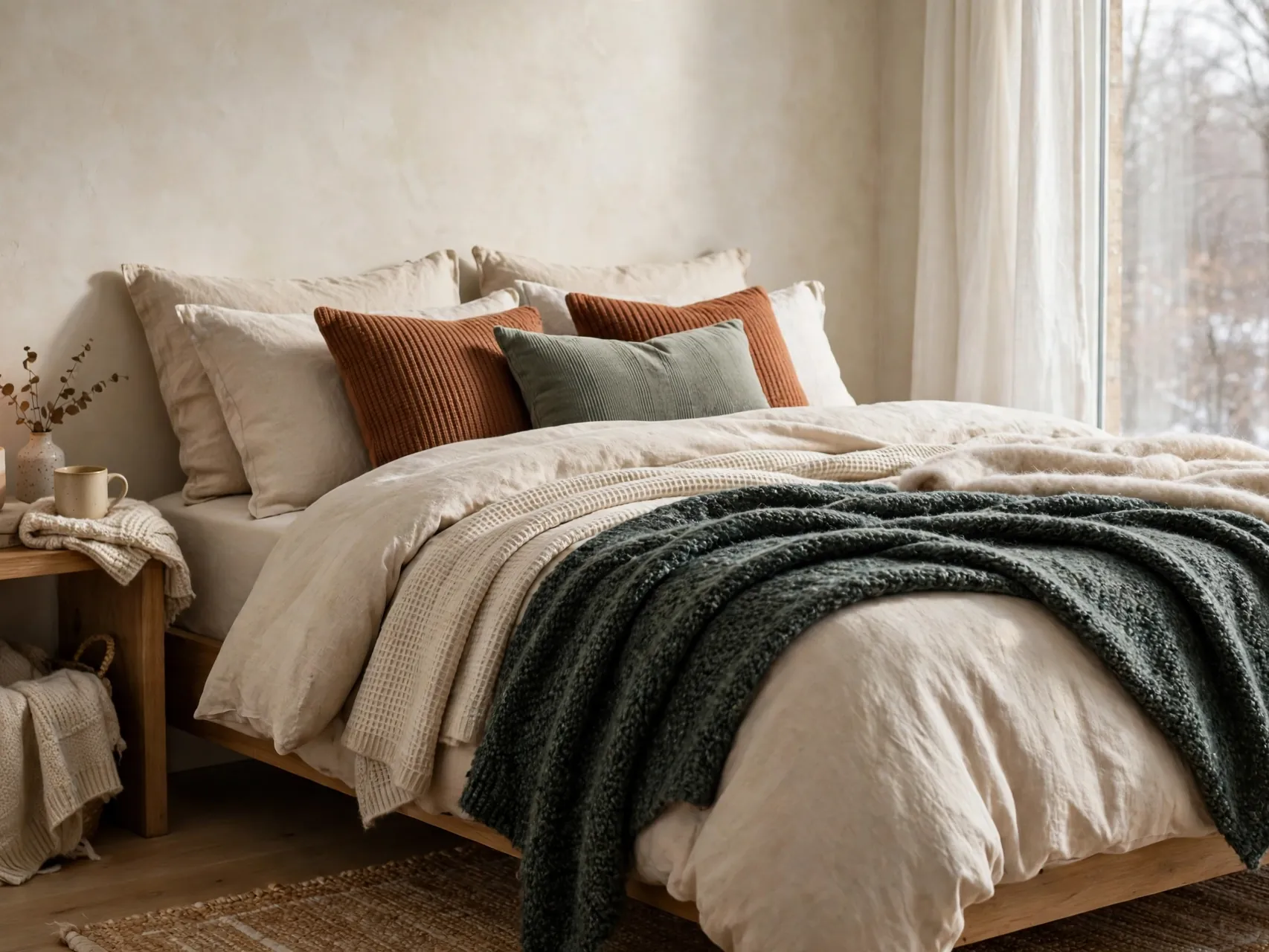
- Order is everything: Fitted sheet, flat sheet, light blanket, duvet, then quilt or throw gives you warmth you can adjust layer by layer.
- Fabric does the work: Flannel for instant warmth, wool for breathable insulation, and cotton for the flexible middle layers in your stack.
- Split for couples: Shared base layers plus separate top layers on each side end the hot and cold sleeper tug of war.
- Heated bedding, maker rules only: Inspect it, keep it flat, plug it into a wall outlet, and never use damaged heated bedding or use it for infants.
- Care keeps it cozy: Wash by the label, dry fully, fluff the duvet, and store clean bedding in breathable bags between seasons.
Ready to build your warmest bed yet? Save this guide to Pinterest and pin the layer combination you will try first.