
23 Linen Closet Organization Ideas for Calm, Tidy Shelves
Introduction
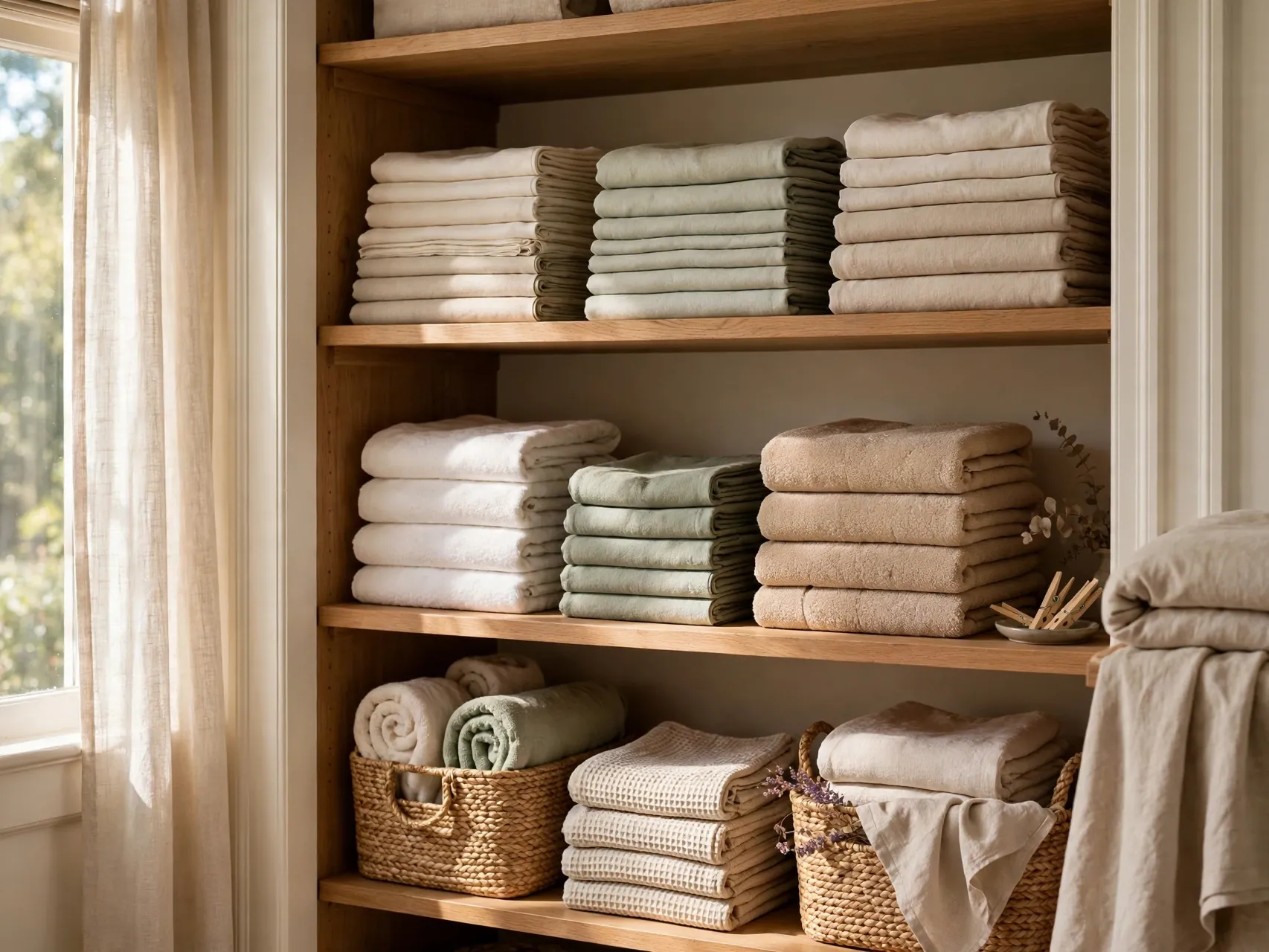
A linen closet should be the calmest cupboard in the house, yet for most of us it is the one that spills towels the moment the door opens. These linen closet organization ideas fix that in a simple order: empty and edit first, give everything a zone, then add the small helpers that keep stacks neat without any daily effort.
January is the natural moment for this reset. Fresh towels and sheet sets rotate in, worn ones rotate out, and a closet set up now will stay easy through guest season and spring cleaning alike. You do not need matching everything or a big closet. You need honest quantities, consistent folding, and a home for every category.
Work shelf by shelf and finish in one session if you can. Wipe shelves while they are empty, let them dry, and only put back what is clean, fully dry, and actually used. That last rule matters more than any basket you will ever buy.
1. Empty Everything Out and Sort by Category

Start by taking every single item out, then sort into clear piles: sheet sets by bed size, bath towels, hand towels and washcloths, blankets and throws, guest linens, beach towels, toiletries, and first aid. Sorting is where the real organizing happens, because you finally see duplicates, missing pillowcases, and the sheet set nobody has used in a year.
Check each piece as you sort. Set aside anything stained, thinning, scratchy, or with worn elastic for donation, textile recycling, or the rag bag. Wipe the empty shelves and let them dry fully before anything goes back in.
2. Set Honest Limits for Sheets and Towels
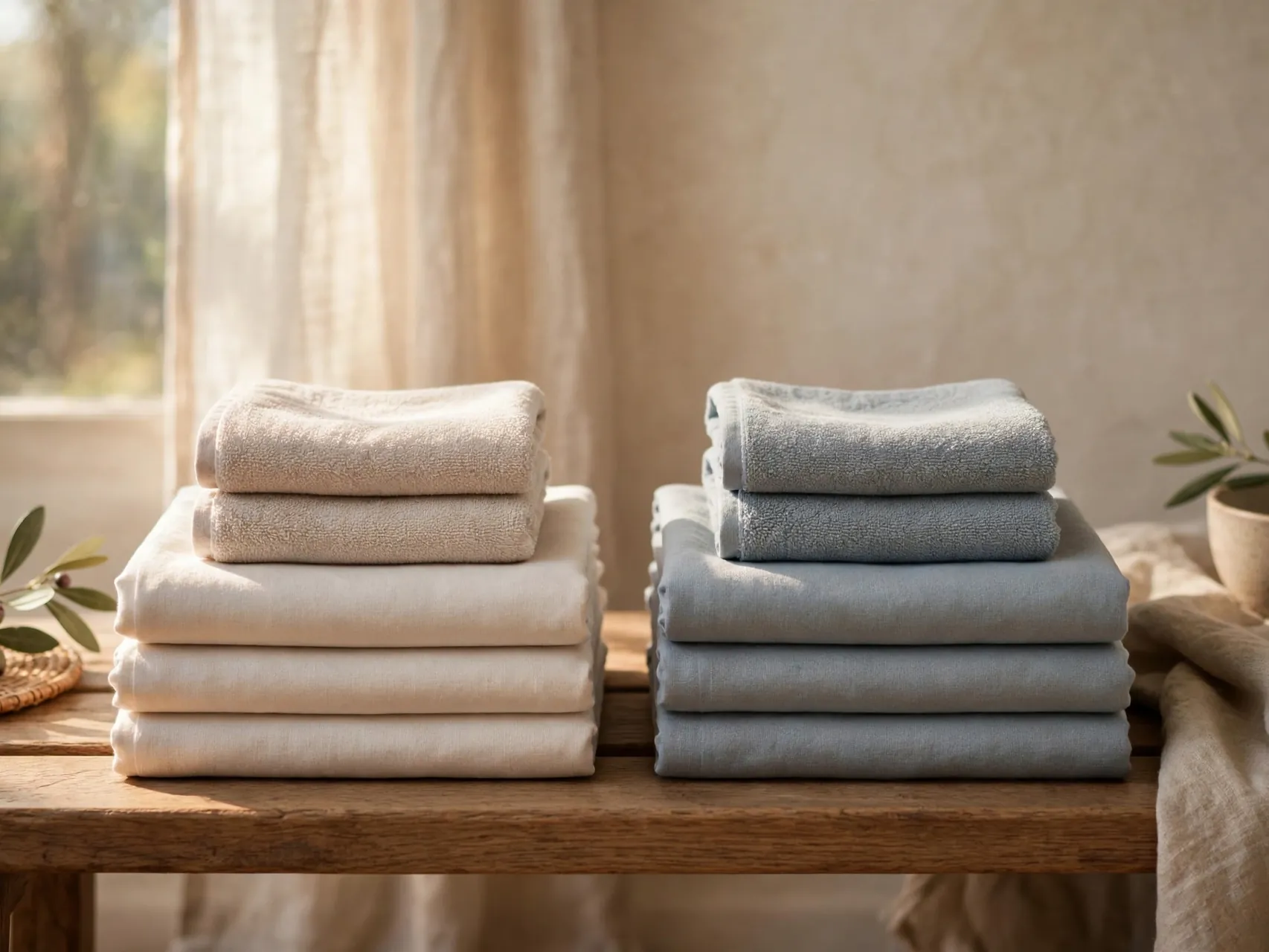
The simplest of all linen closet storage ideas is owning less to store. A workable guideline most organizers use is two to three sheet sets per bed: one on the bed, one in the wash, and one ready in the closet. For towels, two to three bath towels per person is plenty for most homes.
These are guidelines, not rules, so adjust for kids, guests, and laundry habits. The point is that a closet stuffed past its limit will never stay tidy, no matter how beautifully you fold. Edit first, and every idea after this one gets easier.
3. Bundle Each Sheet Set Inside Its Pillowcase

Fold the fitted sheet, flat sheet, and extra pillowcase, then tuck the whole set inside the remaining pillowcase and fold the opening under. You now have one neat parcel per bed change, with no hunting for matching pieces at bedtime.
This single habit transforms how to organize a linen closet, especially with several bed sizes in the house. Stack parcels by bed, keep the pillowcase edge facing out for a clean look, and teach everyone in the house the trick so sets stay together after laundry day too.
4. Label Sheet Sizes on the Tag or Shelf Edge
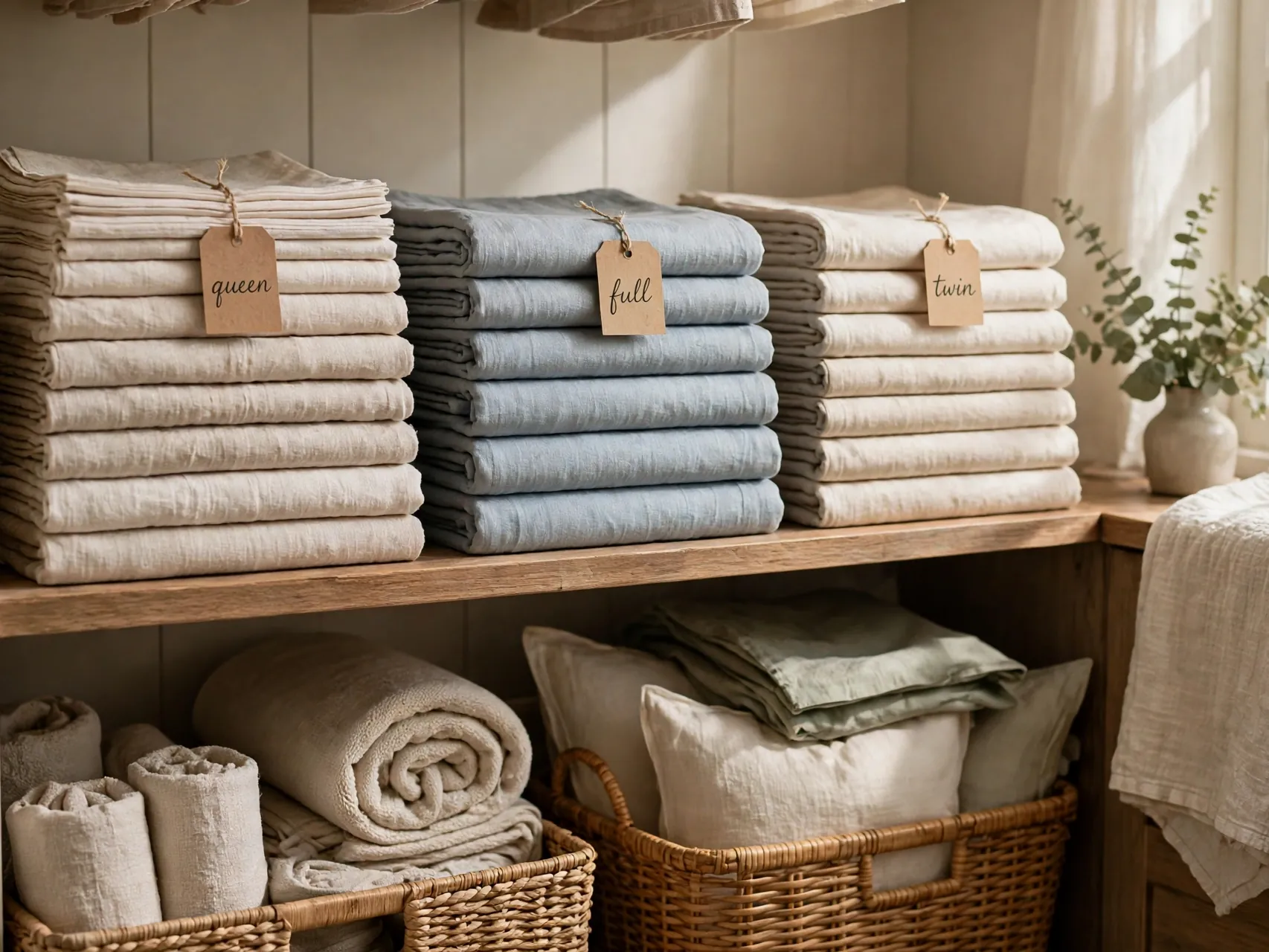
Sheet sizes look identical once folded, which is why closets unravel one wrong grab at a time. Solve it two ways: write the size on the care tag with a fabric safe marker, and add a simple label to the shelf edge or basket for each size, such as Queen, Full, or Twin.
Labels feel fussy for one afternoon and helpful for years. They also help guests and family put laundry back in the right place without asking, which is how an organized linen closet stays organized between your own resets.
5. Give Everyday Towels the Eye Level Shelf
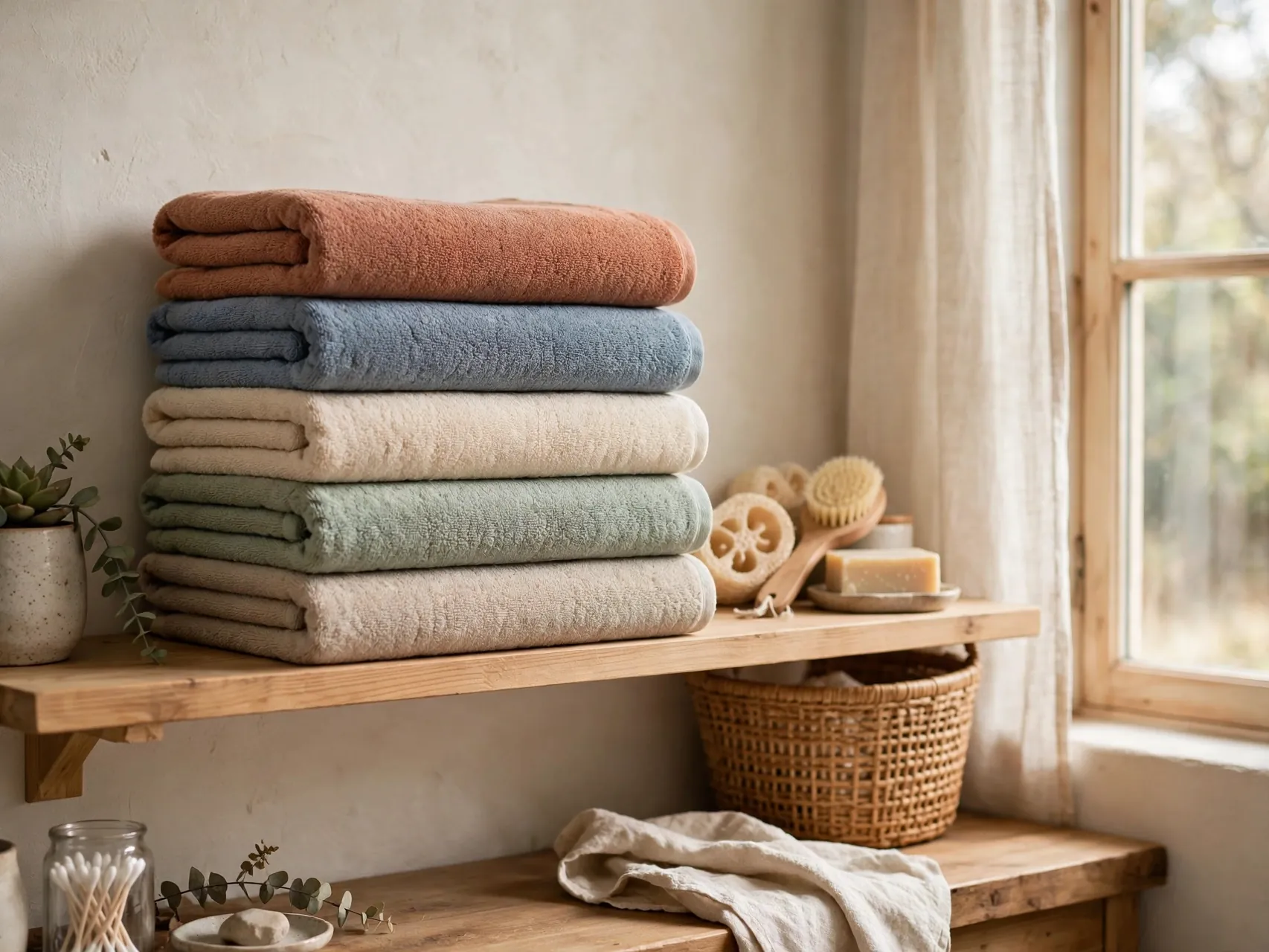
Place what you use daily where your hands naturally land: everyday bath towels and the current sheet sets on the middle, eye level shelves. Reaching up or crouching down for daily items is small friction that quietly turns into mess, because things get shoved back wherever they fit.
Keep heavy and high use items between knee and shoulder height where possible. Reserve the top shelf for light, seasonal things, and lower shelves for backups and bins. Zones matched to reach are the quiet secret behind every calm closet photograph.
6. Roll Towels for Deep or Narrow Shelves

Rolling suits deep shelves, narrow closets, and baskets, because a roll never topples the way a soft stack can. Roll bath towels tightly from one short end, line them up with the roll edge showing, and you can pull one out without disturbing the rest.
Rolling also shows you exactly how many towels you have at a glance, which helps on laundry day. Try rolling for beach towels and guest towels too, and keep folded stacks for the shelves where you prefer that crisp hotel look. Mixing both methods by zone is perfectly fine.
7. Fold Towels in Thirds for Neat, Even Stacks

For folded stacks, fold each bath towel in thirds lengthwise, then fold it into a rectangle, and stack with the folded edge facing out. Folding every towel the same way, to the same width, is what makes stacks stand straight instead of leaning by Friday.
Keep stacks short, around four to six towels, and start a new stack rather than building a tower. Hand towels fold smaller and sit happily in front or beside the bath towels. Consistency is the whole trick, so pick one fold for the household and stick with it.
8. Use Shelf Dividers to Stop Stacks Toppling
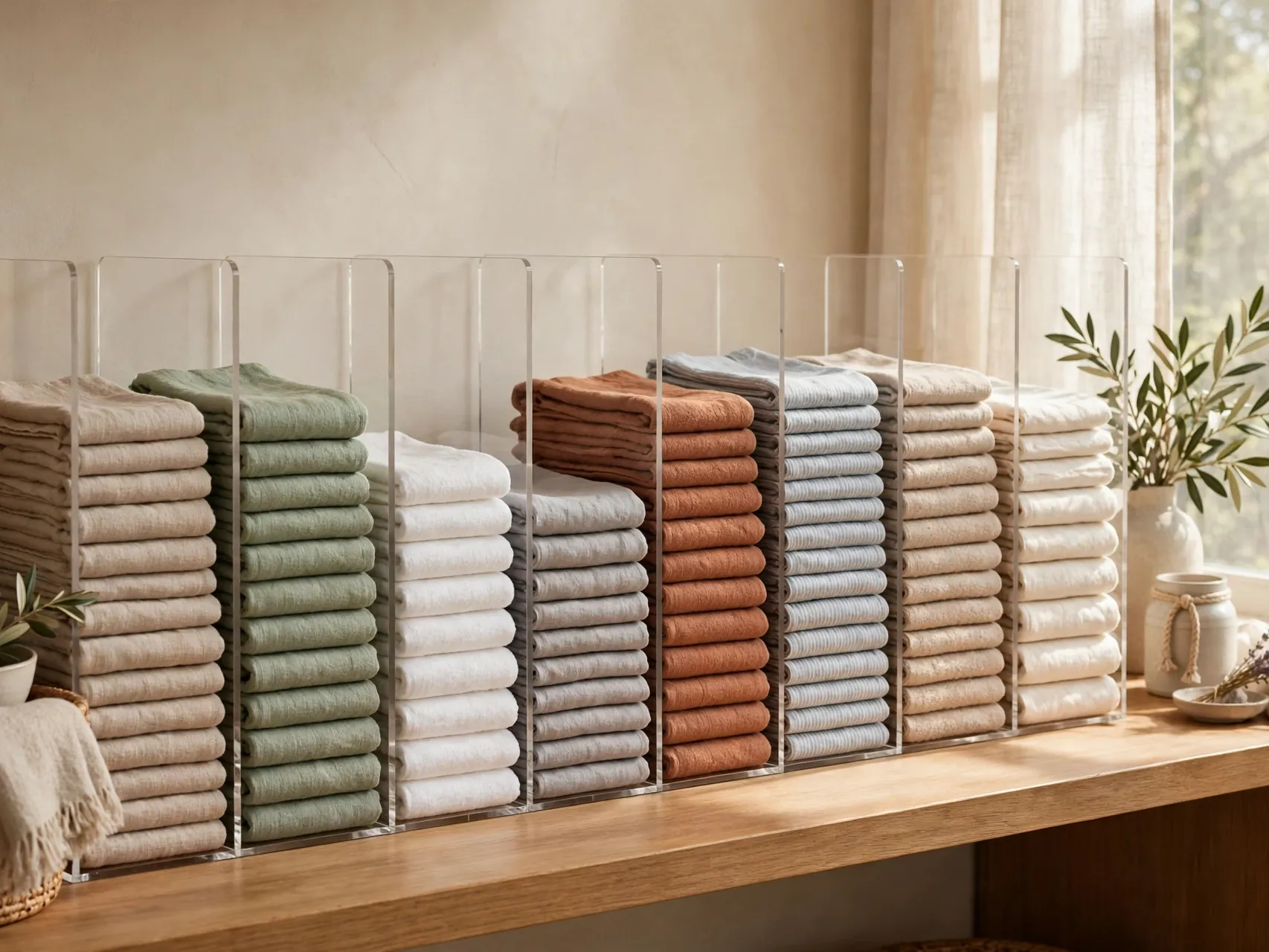
Slide on shelf dividers are the small hardware that saves big stacks. They clip onto the shelf and hold piles of sheets, towels, and blankets upright and separated, so pulling one set does not drag its neighbor into a heap.
Place a divider every stack or two, and use them to mark zones on a long shelf: towels on one side, sheets on the other. Dividers are renter friendly, need no tools, and move in seconds when your categories change with the seasons.
9. Add Baskets for Washcloths and Hand Towels
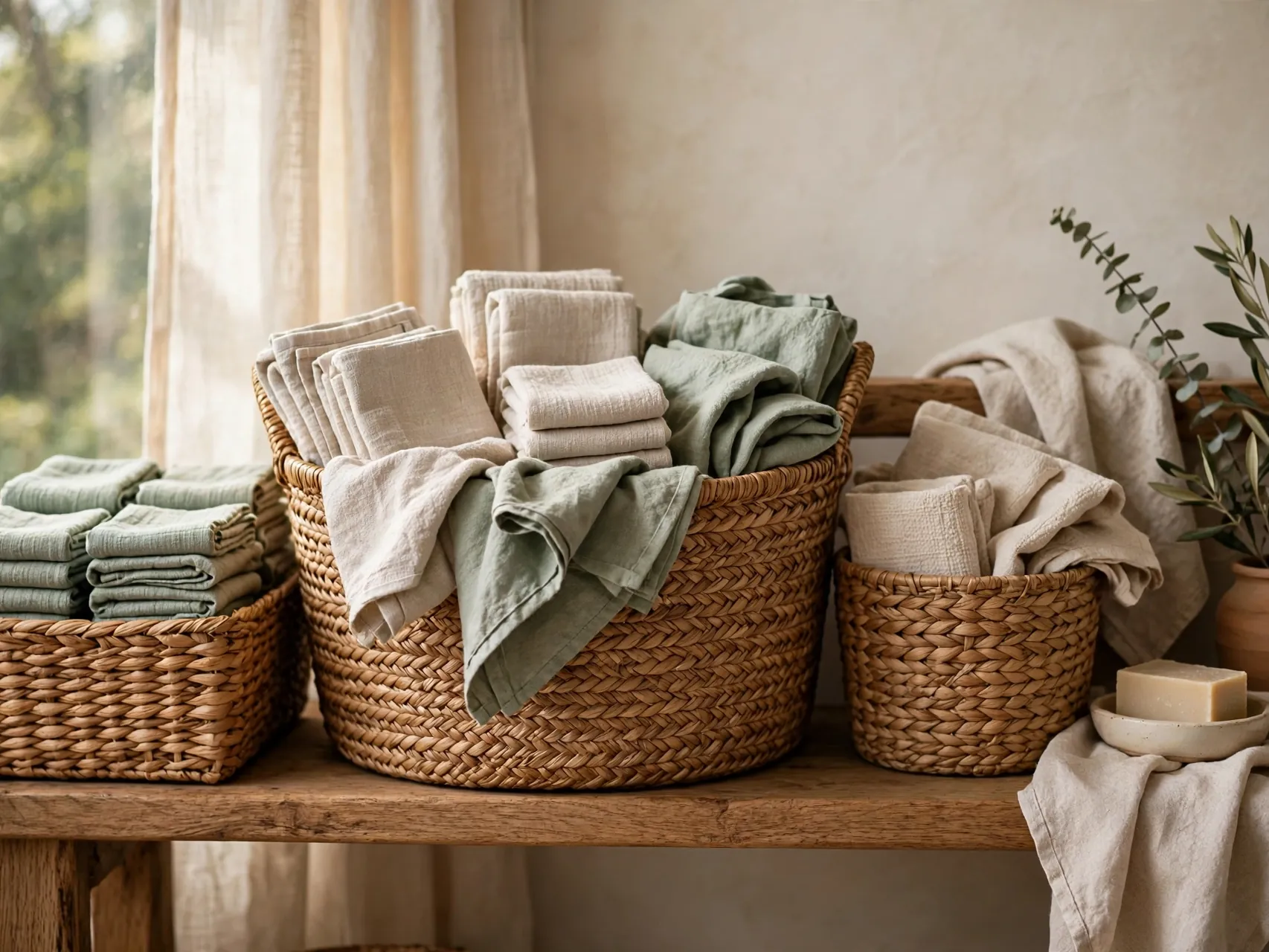
Small items are the first to scatter, so give washcloths, hand towels, and face cloths a basket or open bin of their own. Contained, they look tidy. Loose, they migrate into every stack and make the whole closet feel messy even when the big items are perfect.
Choose one basket style and repeat it across the closet for a calm, matching look. Label the basket if other people restock the closet. A small basket also travels: carry it to the bathroom for a full swap of fresh cloths in one trip.
10. Keep Guest Linens Together as a Ready Set

Bundle guest bedding and towels as one complete set: sheets, two bath towels, hand towels, and washcloths, stored together on one shelf section or in one basket. When guests arrive, you grab the whole set in one motion instead of gathering pieces from four shelves.
Add the small extras to the same spot if space allows, such as a spare blanket and an extra pillowcase. After guests leave, wash, dry fully, re bundle, and return the set to its place. This is small linen closet organization at its most satisfying, because one shelf quietly handles every visit.
11. Keep Beach and Pool Towels in Their Own Basket
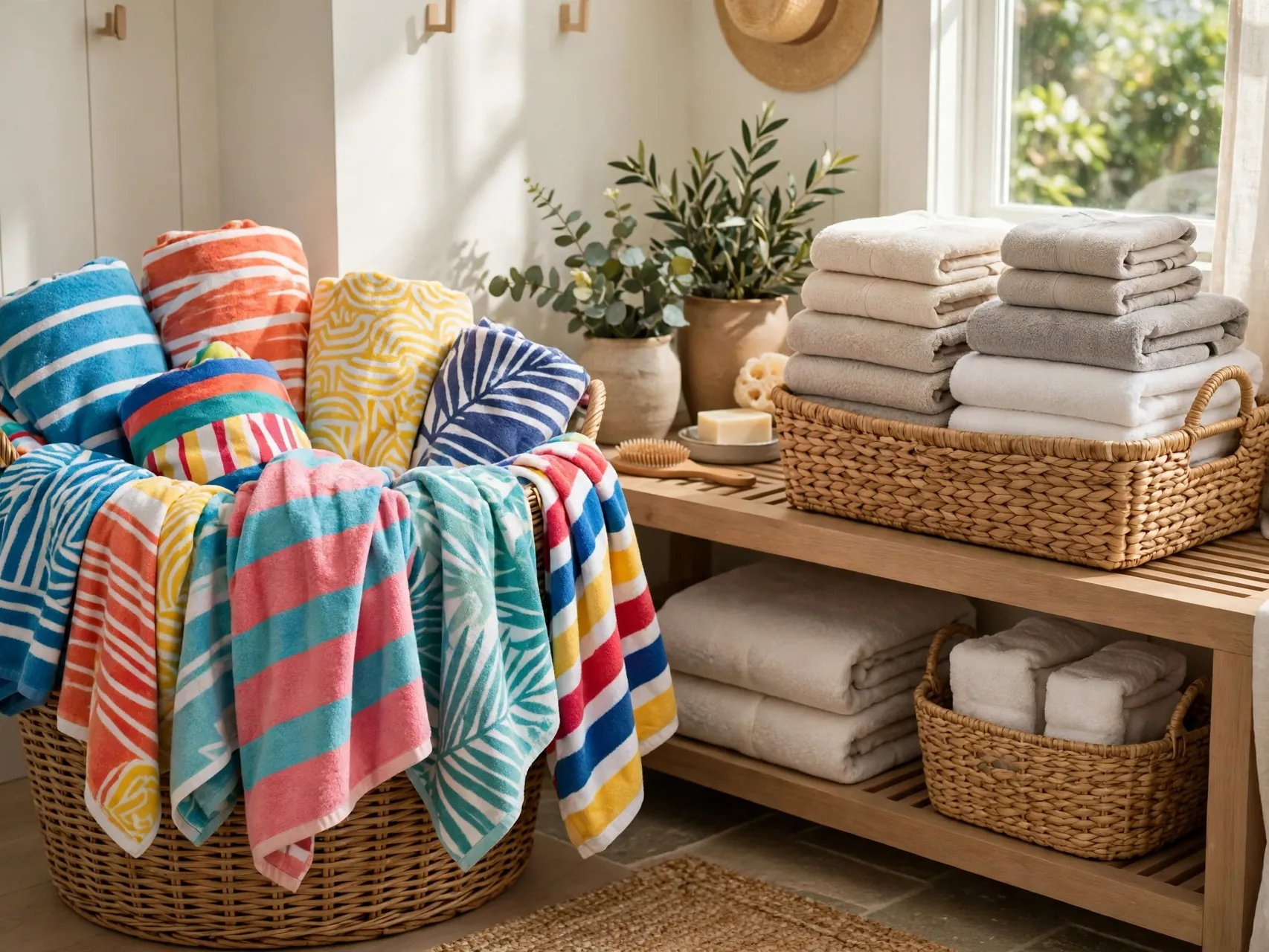
Beach and pool towels are bulky, bright, and used in bursts, and mixing them with bath towels jams both stacks. Give them their own large basket on the floor or a low shelf, rolled so you can see each one.
In summer the basket can live nearer the door or in the laundry area, then return to the closet in fall. Keeping seasonal towels separate also protects your everyday rotation: you always know the bath towel stack is complete, and sandy towels never end up folded in with the good white ones.
12. Use the Top Shelf for Seasonal and Rarely Used Items

The top shelf is hard to reach, so let it hold what you touch a few times a year: out of season blankets, spare pillows, holiday table linens, and the air mattress for guests. Store these in labeled bins or fabric bags so dust stays off and you can identify contents without pulling everything down.
Keep the top shelf light. Heavy bins overhead are awkward and unsafe to lift down, so bulky heavy items belong low. Step stools wobble and arms tire, and a calm closet should never require a risky reach for a heavy box.
13. Vacuum Pack Bulky Comforters and Extra Pillows
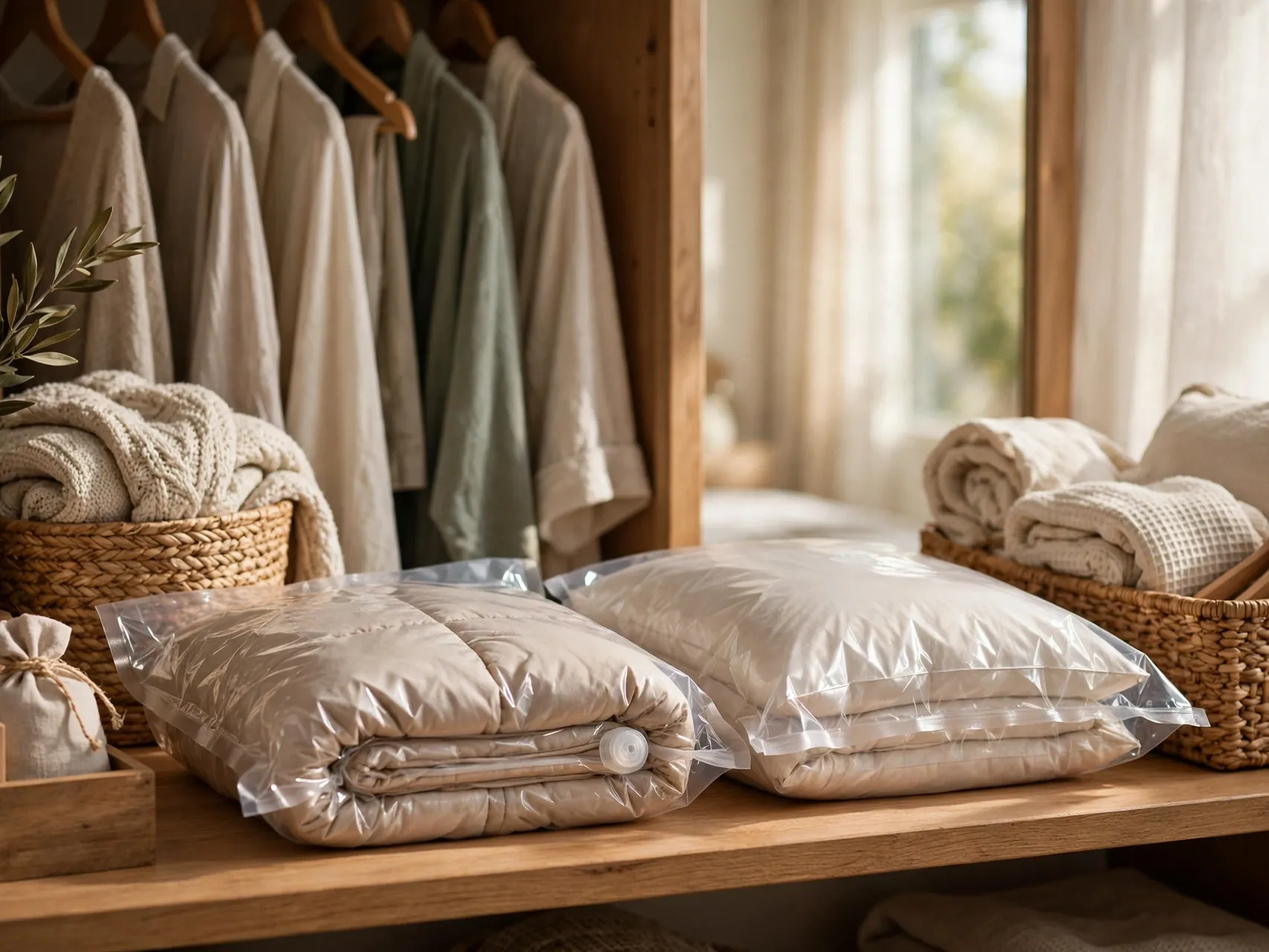
Vacuum storage bags shrink spare comforters, duvets, and pillows to a fraction of their size, which can free an entire shelf in a small closet. Label each bag with the contents and bed size before you store it, and keep bags on the top or bottom shelf where their firm shape stacks well.
Follow the bag maker directions, and avoid over compressing delicate natural fills for very long periods. When you open a bag, let the item air out and fluff back up before use, and wash or air it as the care label directs.
14. Use the Floor for One Large Basket of Bulky Items

Closet floors often become the dumping zone, so claim yours on purpose with one large basket or tote for the bulkiest overflow: spare blankets, extra pillows, or the beach towel collection. One generous container reads as a decision. Loose piles read as clutter.
Keep the rest of the floor clear so the door closes easily and air can move. If your closet is tiny, skip the floor basket and protect that space for a small step stool instead, which you will use weekly to reach the top shelf safely.
15. Add an Over the Door Organizer for Small Items

The inside of the closet door is free storage most closets waste. A clear pocket organizer or a slim rack holds the small things that otherwise vanish: spare toothbrushes, cotton supplies, hair ties, travel bottles, and sewing basics.
Clear pockets matter, because you can see contents at a glance and nothing expires forgotten at the back of a shelf. Check the door still closes fully with the organizer loaded, and keep heavy bottles low or on shelves instead, since door hinges prefer light loads.
16. Corral Toiletries and Backstock in Clear Bins
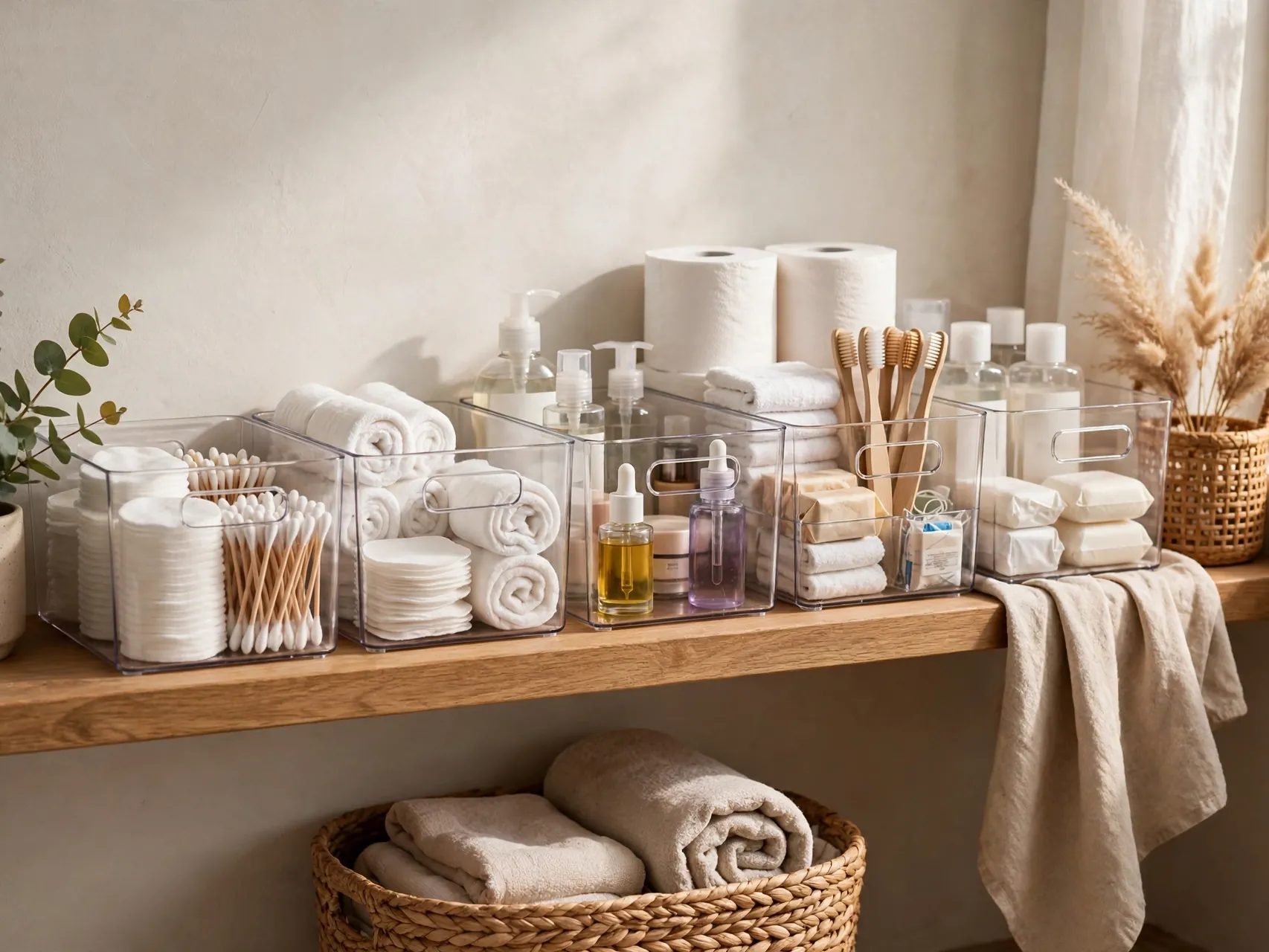
Backstock belongs in the linen closet, but loose bottles and boxes create visual noise and duplicate buying. Group toiletries and supplies in clear bins or drawers by type: one for dental, one for hair, one for first stock of soap and tissues, and so on.
Clear bins let you see when you are running low before you run out. Keep one bin only per category, and let the bin size set your buying limit. When the bin is full, you do not need more, however good the sale looks.
17. Create a Small First Aid and Medicine Zone

Give first aid and everyday medicines one small, labeled bin or caddy of their own, grouped simply: bandages and basics in one spot, cold and flu items in another. A defined zone ends the midnight scramble through three shelves for a thermometer or bandage.
Store medicines as their labels direct, out of reach of small children, and check the bin every few months for expired items, disposing of them as local guidance directs. Keep this zone small and current rather than a deep stockpile, and restock basics right after you use the last one.
18. Keep Cleaning Supplies in a Portable Caddy

If bathroom cleaning supplies live in your linen closet, keep them together in one portable caddy you can carry to the job and return in one trip. A caddy contains drips, keeps bottles upright, and stops cleaners spreading across a shelf meant for clean linens.
Follow every product label, keep lids closed, and store products away from items children can reach. Never mix cleaning products together, and keep the caddy on a low shelf separate from towels and bedding, so a small leak can never reach fabric.
19. Add Shelf Risers or Under Shelf Baskets

Tall shelves waste the air above short stacks. A shelf riser creates a second level for hand towels or pillowcases, while an under shelf basket clips beneath a shelf to hold washcloths, spare pillowcases, or small supplies.
Measure your shelf height and the height of your stacks before buying, and leave a little clearance so items slide in and out easily. These helpers shine in small linen closet organization, where one extra level per shelf can equal a whole extra shelf of storage.
20. Line Shelves for a Clean, Calm Finish
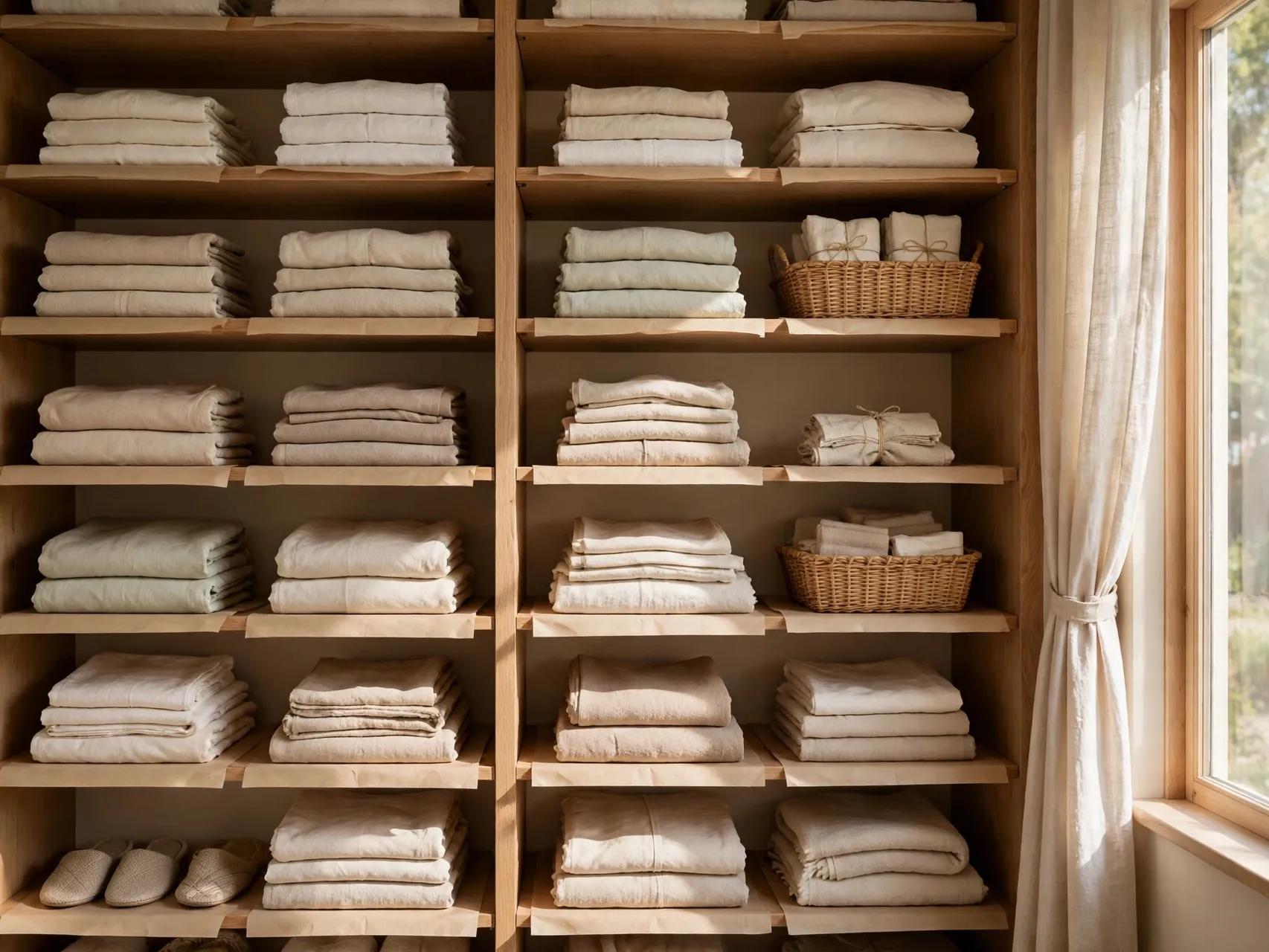
Shelf liner gives a finished look, protects shelves from rough baskets, and makes wiping crumbs and dust quick. Choose a simple, wipeable liner, cut it to fit while shelves are empty, and let any adhesive style air out as the maker directs before linens go back.
A plain, light liner also brightens a deep closet and makes stacks look intentional. Skip heavily scented liners on shelves that hold face towels and bedding if strong fragrance bothers your household. Neutral and clean beats perfumed when the items touch skin all night.
21. Keep Linens Fresh and Fully Dry Before Storing

Musty closet smell almost always starts at the laundry, not the shelf. Only store linens that are completely dry, since even slightly damp folds trap moisture and turn stale in a closed closet. Move laundry promptly from washer to dryer, dry loads fully, and fold once fully dry.
Follow care labels for water temperature and cycle, and wash sheets and towels in separate loads where you can, since they clean and dry at different rates. If towels already smell musty, rewash and dry them thoroughly before they return to the closet, and let the closet air out with the door open for an afternoon.
22. Leave Breathing Room Between Stacks

A calm closet is not a packed closet. Leave small gaps between stacks and bins so air can circulate and you can slide a hand in to take one item without pulling three. Aim for shelves that look about three quarters full rather than stuffed edge to edge.
Breathing room also protects your system. When there is nowhere to put the clean laundry, it gets shoved, and shoving is how tidy shelves unravel. If everything no longer fits with gaps, that is your honest signal to edit quantities again, not to fold tighter.
23. Do a Quick Ten Minute Reset Every Few Months

Organization holds when maintenance is tiny and regular. Every three to four months, spend ten minutes on the closet: refold any leaning stacks, wipe one shelf, check the first aid bin for expired items, move dwindling backstock to your shopping list, and pull anything that has not been used since the last reset.
Tie the reset to something you already do, such as the season change or the guest bed linen swap. A closet reset this small never becomes a dreaded project, and your shelves stay calm all year instead of only on the day you organized them.
FAQ

How many sheet sets and towels do I actually need?
A practical guideline is two to three sheet sets per bed and two to three bath towels per person: one in use, one in the wash, and one ready. Add one guest set if you host often. More than that usually creates clutter rather than comfort, especially in a small closet.
How do I organize a very small linen closet?
Edit harder, then go vertical. Keep only one backup sheet set per bed, roll towels, add shelf risers and an over the door organizer, and vacuum pack bulky comforters. Store out of season bedding under a bed if the closet still overflows, and keep only daily and weekly items in the closet itself.
How do I keep stored linens from smelling musty?
Store only fully dry linens, leave breathing room between stacks, and keep the closet door open for an afternoon now and then to air it. Wash sheets and towels according to their care labels, dry loads completely, and rewash anything that already smells stale before it goes back on the shelf.
Is it better to roll or fold towels?
Both work, so match the method to the shelf. Rolling suits deep shelves, baskets, and narrow closets because rolls do not topple and pull out one at a time. Folding in thirds suits open shelves where you want a crisp, even stack. Whichever you choose, use one method consistently per zone.
What should not be stored in a linen closet?
Avoid damp items, heavy bins on high shelves, and large quantities of strong cleaning chemicals mixed in among fabrics. Medicines need label directed storage out of reach of small children. If space is tight, move rarely used items such as luggage, bulk paper goods, or out of season gear to another spot first.
Key Takeaways
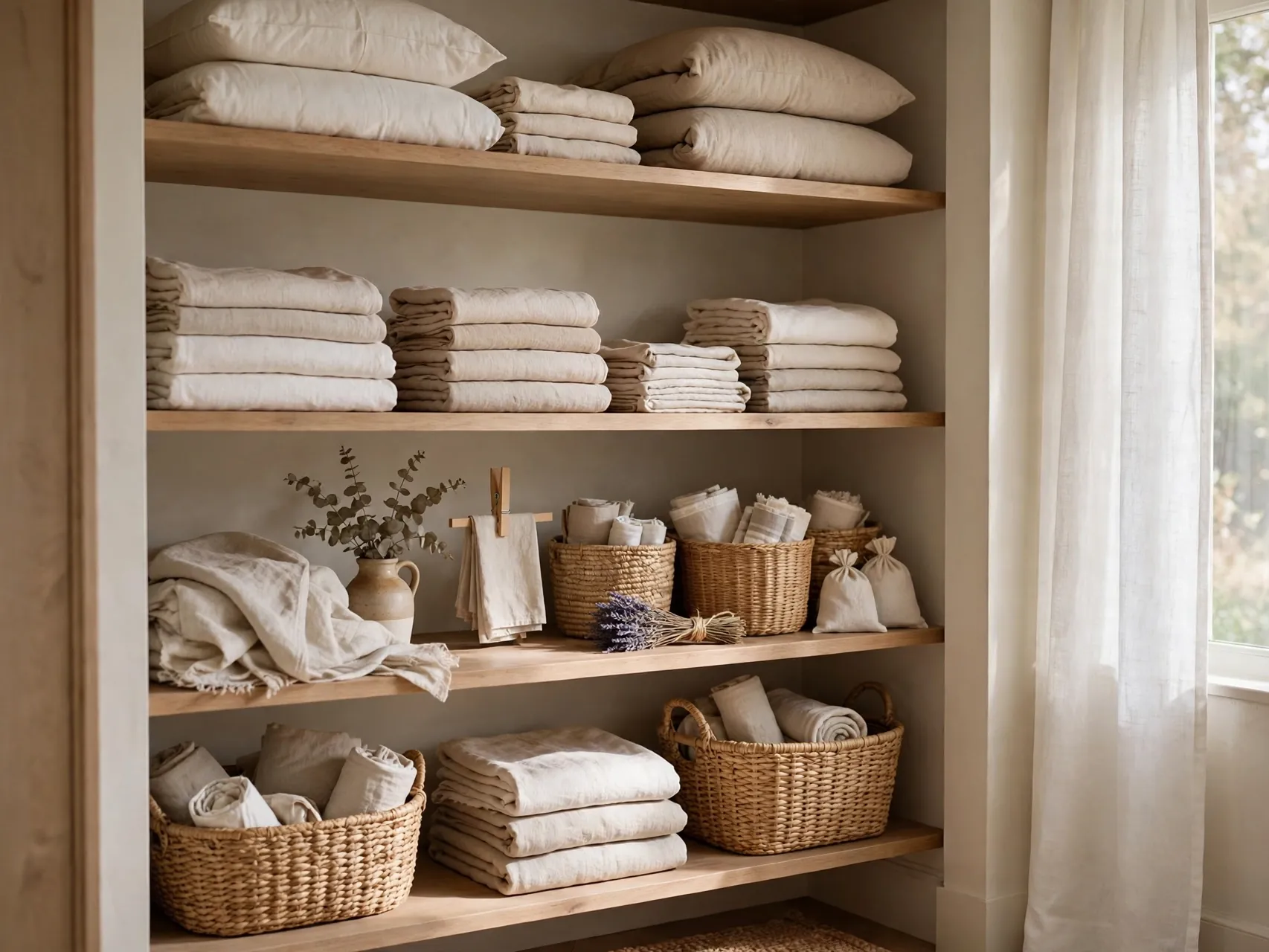
- Edit before you organize: Two to three sheet sets per bed and two to three towels per person keep any closet workable.
- Bundle and label: Sheet sets tucked in their pillowcase, with sizes labeled, end the matching game for good.
- Zone by reach: Everyday towels and sheets at eye level, seasonal and light items up top, heavy bins down low.
- Contain the small things: Baskets, clear bins, dividers, and a door organizer stop small items scattering.
- Fresh means fully dry: Store only completely dry linens with breathing room between stacks to prevent musty smells.
- Maintain in minutes: A ten minute reset every few months keeps calm, tidy shelves all year.
Love a closet that stays this calm? Save these linen closet organization ideas to Pinterest and pin your favorite shelf setup to try first.