23 Living Room Curtain Ideas That Instantly Elevate a Room
Introduction
Curtains are the hardest working soft furnishing in a living room. They frame the view, soften hard walls, control light and privacy, and add the tall vertical lines that make ceilings feel higher. These living room curtain ideas start with placement, because the most expensive fabric hung too low and too narrow will still look wrong.
The designer rule is simple to copy: hang curtains for living room windows high and wide, choose floor length panels, and give the fabric enough fullness to fold beautifully. Get those three things right and even budget panels look tailored. Get them wrong and no pattern can save the window.
Fabric and color come next. Linen for relaxed light, velvet for drama, sheers for glow, and blackout lining where movie nights or street lights demand it. The Department of Energy notes that window treatments can also help manage heat gain and loss, so looks and comfort can genuinely work together here.
Work through these ideas in order: placement first, then fabric, then color and pattern, then the special cases like small windows, large windows and safety. By the end you will know exactly what your windows need, and what they do not.
1. Hang Curtains High and Wide

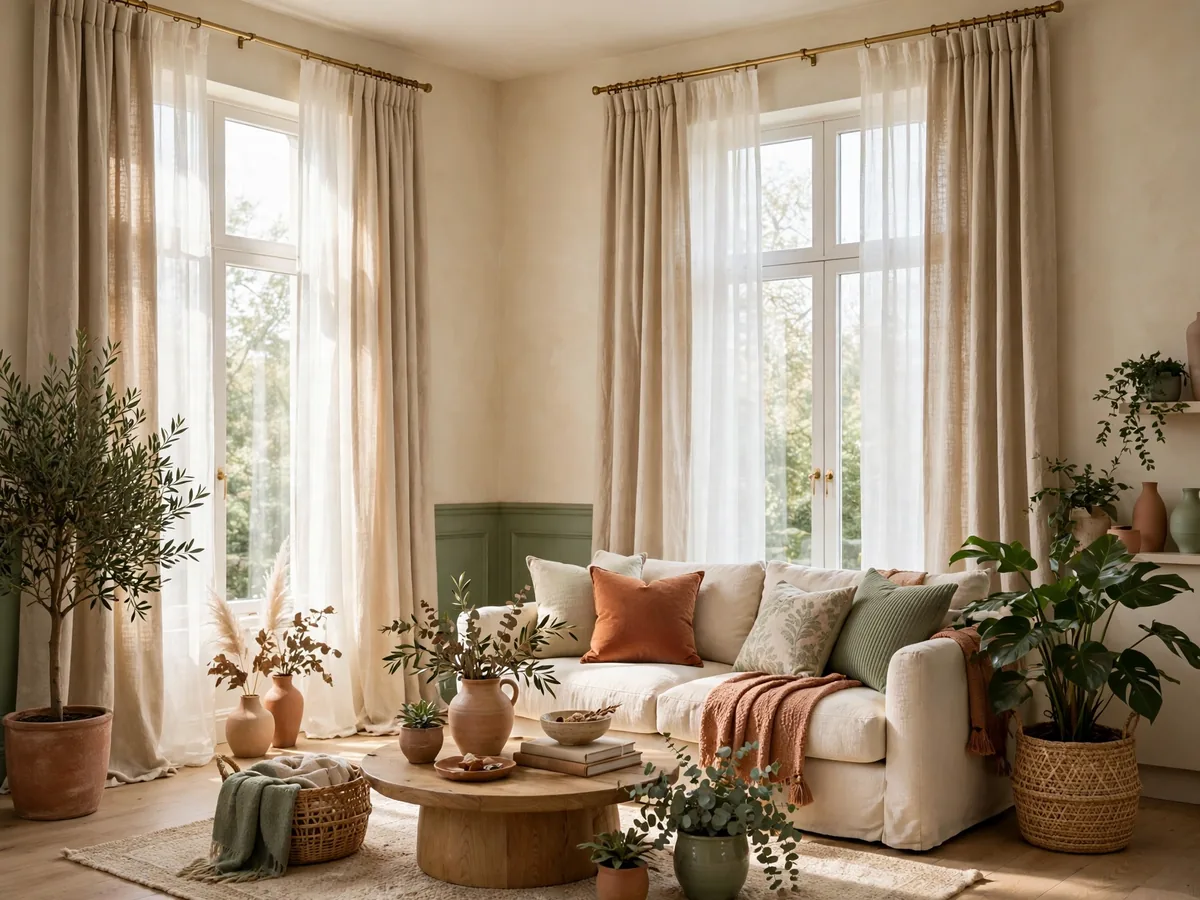
Mount the rod close to the ceiling and extend it well beyond the window frame on both sides. Panels then stack mostly on the wall, the window looks larger, and maximum daylight enters when curtains are open.
This single change lifts a whole room, because the eye reads the curtain height as ceiling height. Measure from your high rod position to the floor before ordering panels, not from the top of the window frame.
2. Choose Floor Length Panels That Kiss the Floor

Floor length curtains living room stylists swear by should just touch the floor or break very slightly on it. Panels that stop at the sill or hover above the floor cut the wall visually and make ceilings feel lower.
A gentle puddle suits formal, traditional rooms, while a clean kiss length suits busy family rooms where fabric must stay out of the vacuum path. When between sizes, go longer. A simple hem fixes extra length easily.
3. Layer Sheers Under Heavier Drapes

Sheers behind drapes give you two rooms in one: soft, glowing, private daylight with sheers closed, and full darkness or insulation with drapes drawn. The layered look also adds depth that a single panel never achieves.
Use a double rod or two rods mounted together. Keep sheers in warm white and let the outer drape carry your color or texture, so the combination works in every season without changing both layers.
4. Add Velvet Drapes for Warmth and Drama
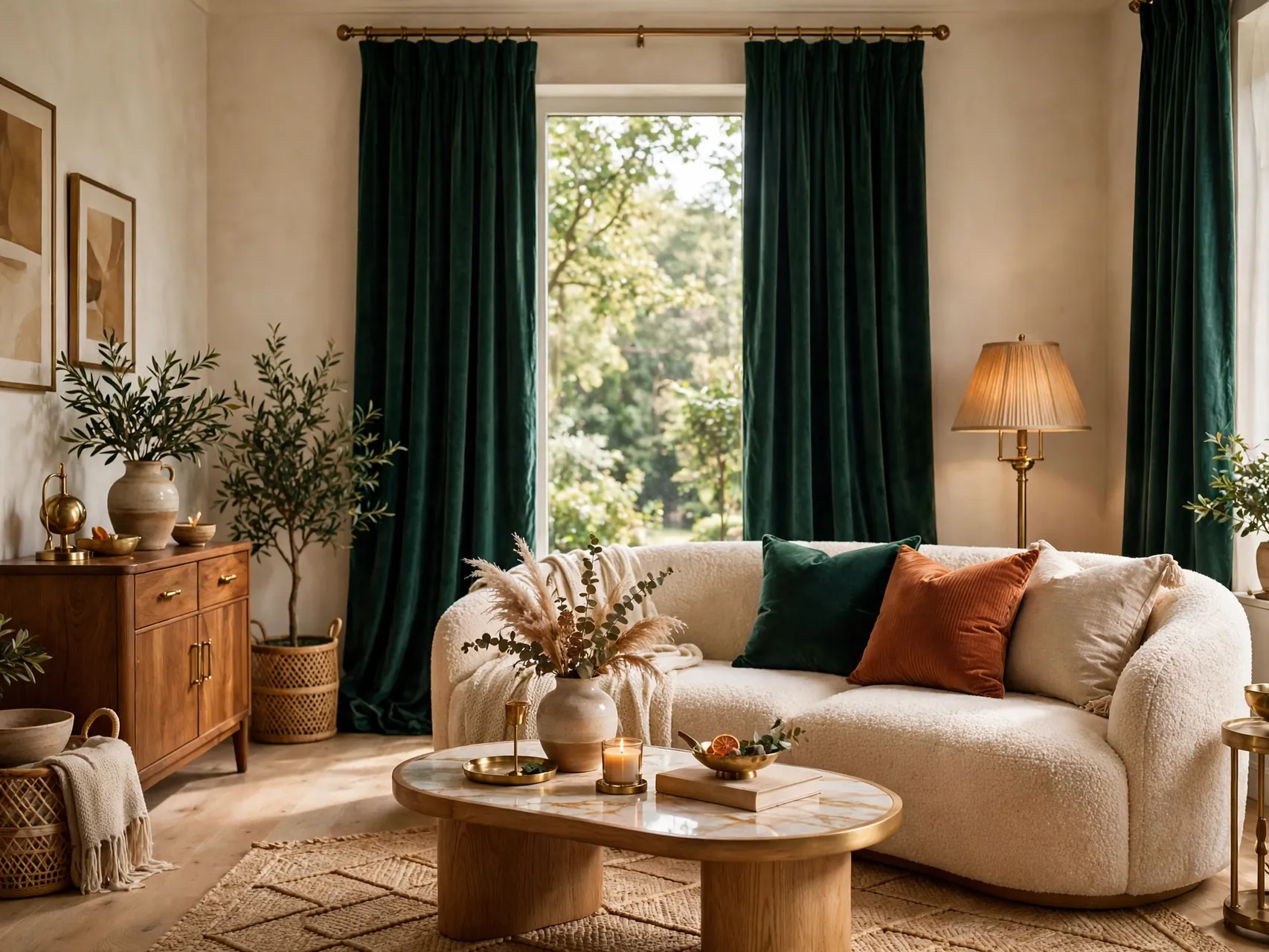
Velvet brings instant richness, beautiful folds and real light blocking weight. Deep green, navy, rust or charcoal velvet panels can become the color anchor of a neutral living room all on their own.
Balance velvet with lighter textures nearby, like linen cushions and a pale rug, so the room feels luxurious rather than heavy. Velvet suits north facing and formal rooms especially well, where its depth flatters cool light.
5. Go Tone on Tone for a Calm, Tailored Look
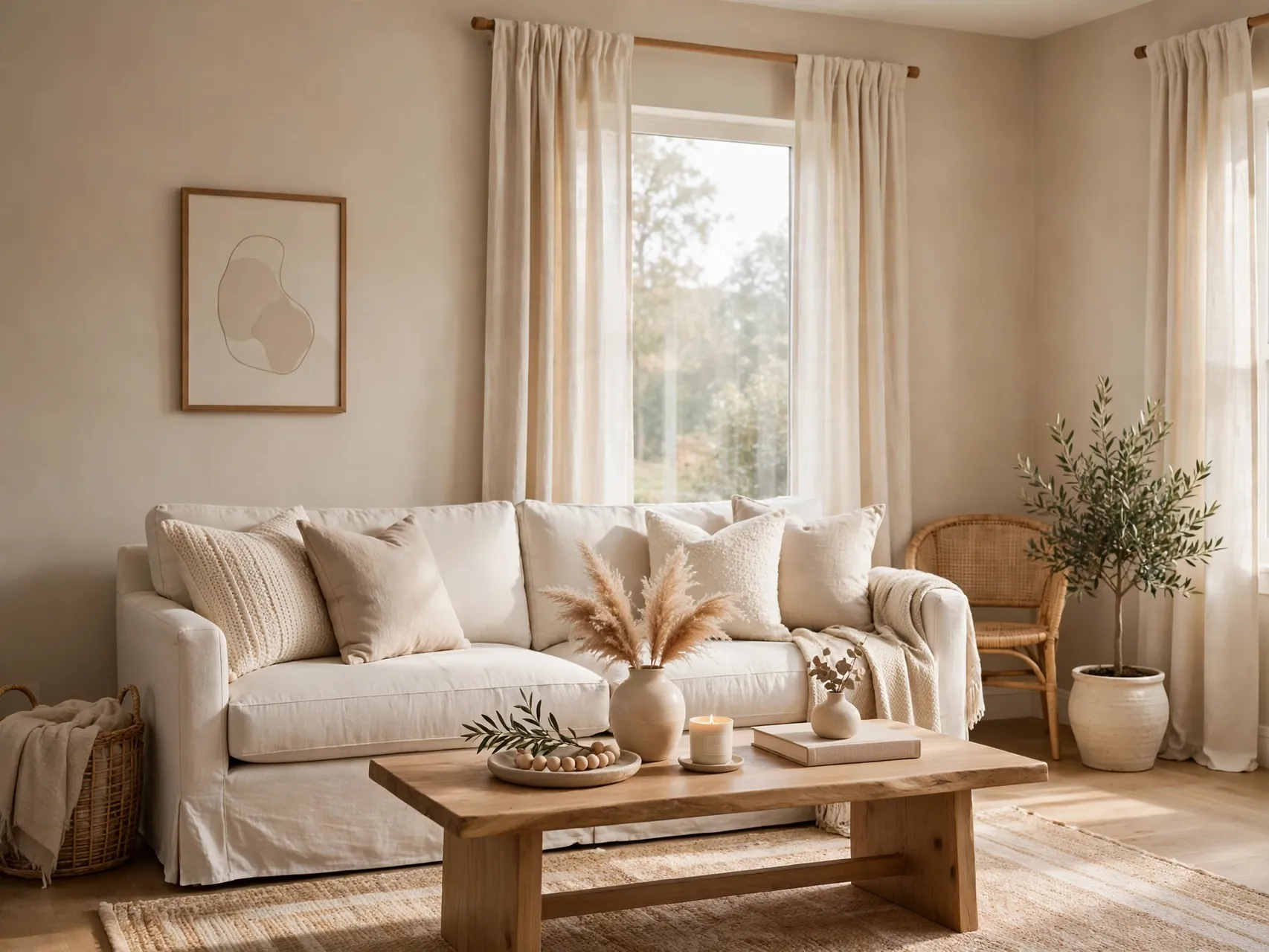
Curtains a shade deeper or lighter than your walls create a serene, expensive looking envelope. The window wall reads as one calm surface, furniture takes the focus, and pattern elsewhere in the room gets room to breathe.
Texture becomes your design tool in a tone on tone scheme. Choose slubby linen, a subtle weave or a faint stripe so the panels still show beautiful folds and shadow play in daylight.
6. Use Curtains as the Bold Color Moment

In a neutral room, curtains are the safest place to try a strong color, because they are large, soft and changeable. Terracotta, forest, ochre or deep blue panels wake up beige sofas and wood floors instantly.
Repeat the curtain color twice more in the room, in a pillow, a throw or art, so the choice looks planned. One lonely bold element reads as an accident. Three quiet repeats read as design.
7. Try Patterned Panels in the Right Scale
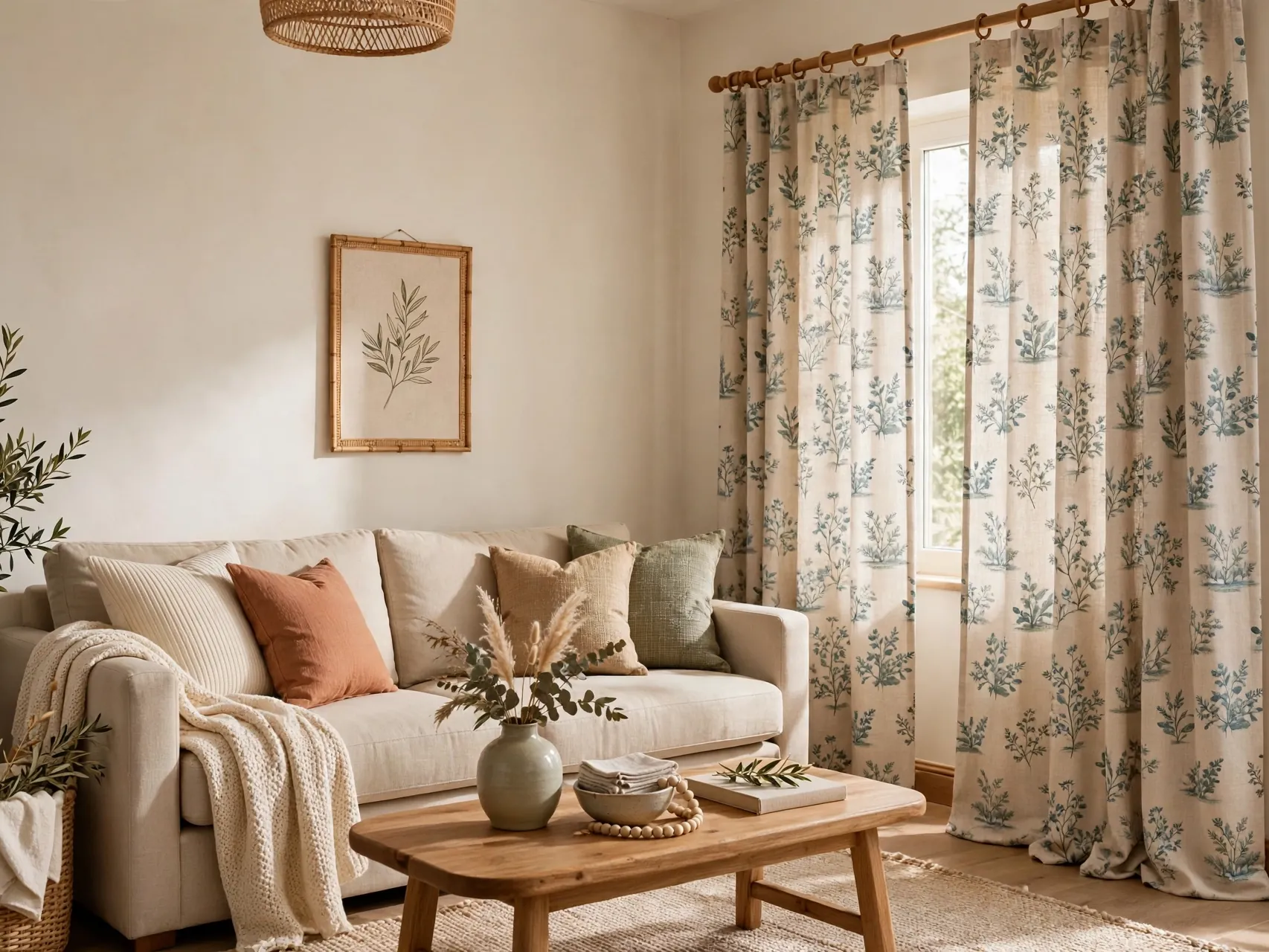
Patterned curtain ideas for living room windows work when scale matches window size. Large windows carry large botanical or geometric prints, while small windows suit finer stripes, checks and small repeats that will not overwhelm the glass.
Keep the rest of the window wall quiet when pattern leads. Solid sofas and simple rugs let printed curtains star, and mixing one pattern with plenty of solids keeps the room calm rather than busy.
8. Line Curtains for Light Control and Better Drape

Lining changes everything behind the scenes. Blackout lining serves movie rooms and street facing windows, thermal lining helps with drafts, and a simple cotton lining gives lightweight fabrics a richer fall and protects them from sun fading.
Ask about lining before falling for a fabric, because retrofitting is awkward. Lined panels also hang in fuller, more even folds, which is a big part of why showroom curtains always look better than unlined budget ones.
9. Use Cafe Curtains for Charm and Privacy
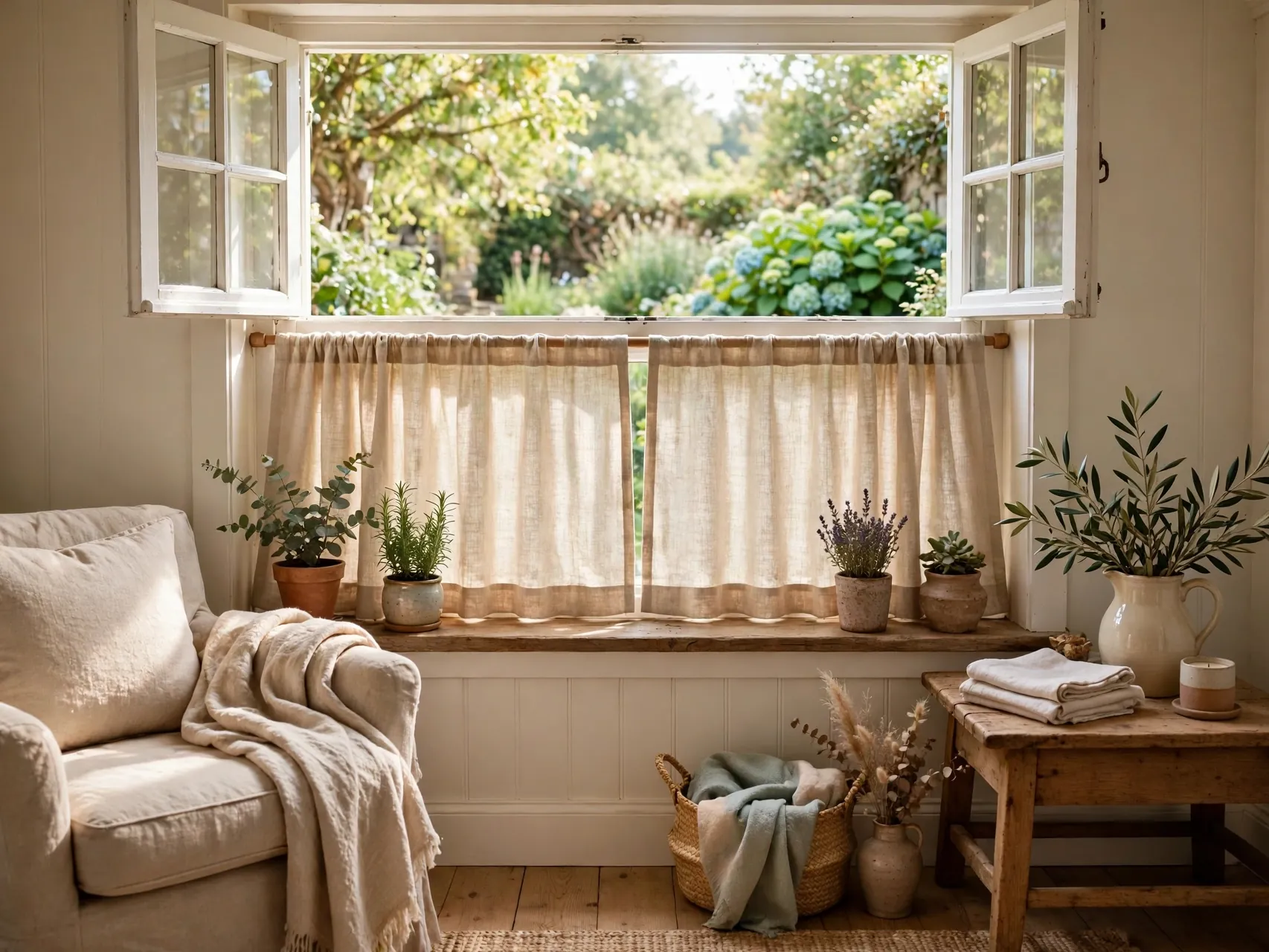
Cafe curtains cover the lower half of the window, giving privacy and a cottage or bistro feeling while daylight pours over the top. They suit living rooms facing close neighbors, busy streets or a fence you would rather not study.
Choose linen, cotton or a small check for the classic look. Cafe panels also solve windows behind sofas, where full length fabric would bunch awkwardly against furniture backs all day long.
10. Pair Curtains With Roman Shades

A Roman shade inside the frame, with curtain panels framing the outside, gives layered control and a tailored, finished wall. The shade handles daily light and privacy, while the panels add height, softness and color.
This pairing suits windows where full curtains alone feel heavy, like small rooms and windows crowded by furniture. Coordinate fabrics within one palette and let the shade stay plain if the panels carry pattern, or the reverse.
11. Install a Ceiling Mounted Track for a Modern Line

Ceiling tracks create the clean, hotel style wall of fabric that defines many modern living room curtains photos. The hardware disappears, panels glide quietly, and wide or corner windows become easy to cover evenly.
Tracks shine on very large windows and sliding doors, where rods sag and rings fight. Wave style headings on a track give those even, architectural folds that make simple fabric look custom made.
12. Choose Natural Woven Textures

Linen, cotton slub, jute blends and woven wood style shades bring the organic texture that modern, rustic and Scandinavian rooms all run on. Natural weaves filter light into a soft glow rather than a flat wash.
Expect gentle imperfection. Slubs, slight color variation and relaxed wrinkles are the character of natural fibers, not flaws. If you want crisp perfection, choose a smooth cotton sateen instead and save woven texture for rugs and baskets.
13. Layer With a Double Rod Like a Pro

A double rod is the simplest hardware upgrade with the biggest payoff. Sheers on the back rod, drapes on the front, and you control light in stages through the day without ever leaving the window fully bare or fully dark.
Keep hardware finishes consistent with other metal in the room, like lamps and cabinet pulls. It is a small detail, but matching metals are one of those quiet signals that make a room feel professionally finished.
14. Try Sage, Olive or Soft Green Panels

Green curtains connect the room to the garden outside the glass, which is why sage and olive panels feel calm in almost every living room. They pair beautifully with warm wood, cream sofas and brass or black hardware.
Choose muted, gray leaning greens for longevity. Bright greens date quickly and fight with plants and art. A dusty sage in linen reads fresh in summer light and cozy beside lamps in winter, a rare two season win.
15. Keep It White and Airy for Small Rooms

Warm white curtains on white or pale walls make small living rooms feel larger, because the window wall stops chopping itself into pieces. Light fabric keeps daylight bouncing, and the whole room reads as one bright volume.
Add interest with weave and heading style rather than color: a linen texture, a ripple fold or simple pleats. In tiny rooms, that subtle shadow play is enough decoration, and it never overwhelms limited wall space.
16. Mix in Classic Plaid, Stripe or Check

Timeless patterns like ticking stripe, soft plaid and windowpane check bring farmhouse and traditional rooms to life without the risk of trendy prints. Their geometry also emphasizes curtain height, drawing the eye up the lines.
Keep pattern colors inside your existing palette and scale the repeat to the panel size. A stripe that is too thin turns to visual noise from across the room, while a bold, simple rhythm reads clearly and calmly.
17. Choose a Decorative Rod That Earns Its Place
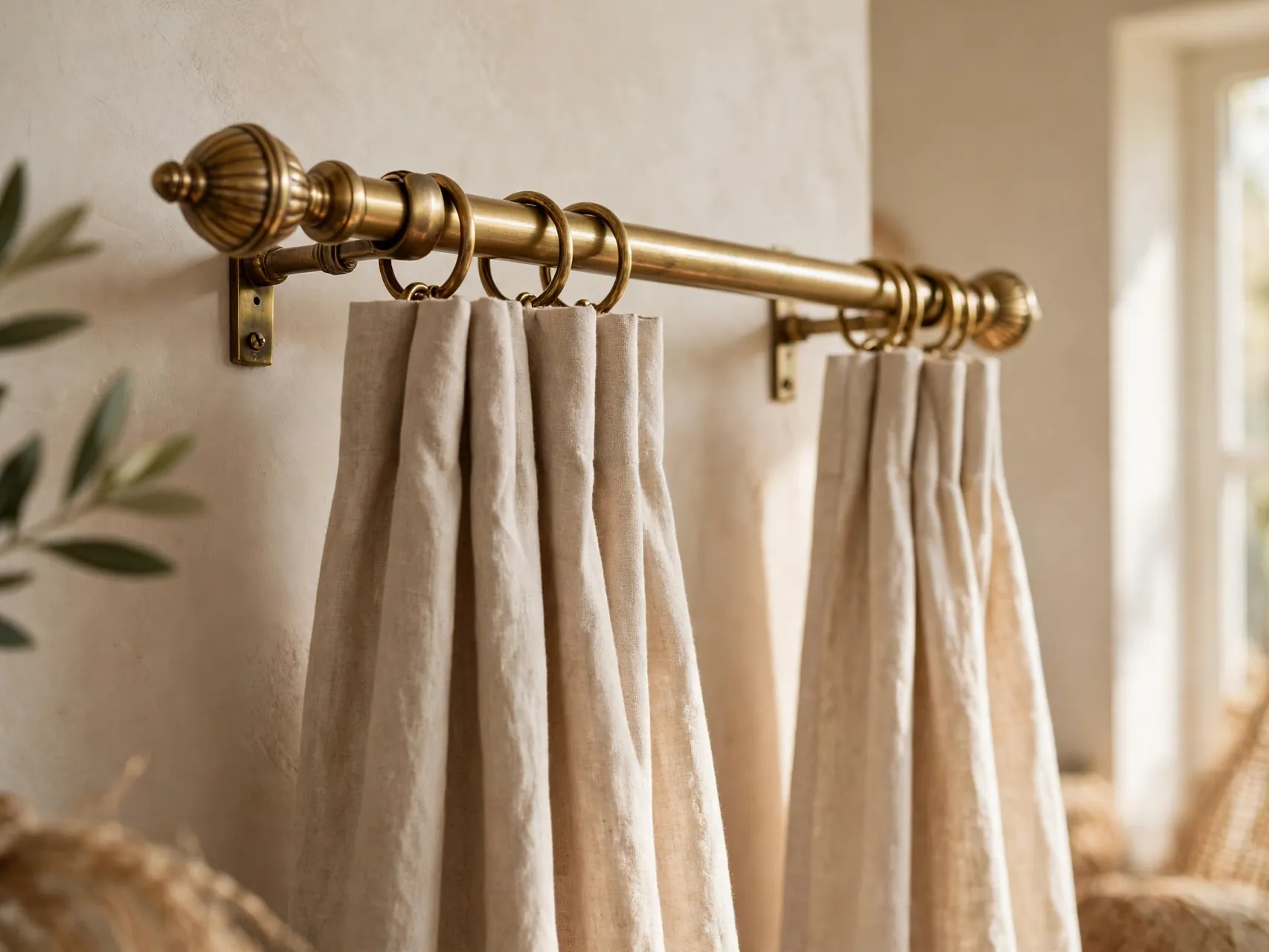
When curtains hang from a visible rod, the hardware is part of the decor. A substantial rod in matte black, aged brass or warm wood, with simple finials, frames the window like trim and finishes the top edge of your panels.
Size the rod diameter to the fabric weight and window width so it never bows. Extend it past the frame as the high and wide rule requires, and match its finish to one other metal already living in the room.
18. Add Tiebacks or Holdbacks for Shaped Light

Tiebacks sweep panels into a graceful curve, let in more light and show off the window shape during the day. Simple fabric ties suit relaxed rooms, while metal holdbacks mounted on the wall suit tailored, traditional spaces.
Position holdbacks roughly a third of the way down from the top or at sill meeting height, and experiment before fixing. The right height makes the fabric swag look generous. The wrong height makes it look strangled, so test with a ribbon first.
19. Make Small Windows Look Bigger

Small windows grow with three tricks used together: rod mounted near the ceiling, rod extended wide so panels cover wall rather than glass, and floor length panels even when the window itself is short. The fabric creates the window you wish you had.
Use two panels, not one, for symmetry and fullness, and keep fabric light in color and weight. Dark, heavy panels on a small window swallow it. Pale linen makes the whole wall feel like one tall opening.
20. Dress Large Windows and Sliding Doors Simply

Wide glass needs wide thinking: multiple panels that stack fully clear of the opening, a ceiling track or a strong long rod, and enough fullness that closed curtains still fold instead of stretching flat like a sheet.
As a general guide, plan fabric width at roughly one and a half to two times the span you are covering for pleasing folds. For sliding doors, ensure panels clear the handle and the walking path, and choose washable fabric at traffic height.
21. Pick Cordless and Safe Options for Family Homes
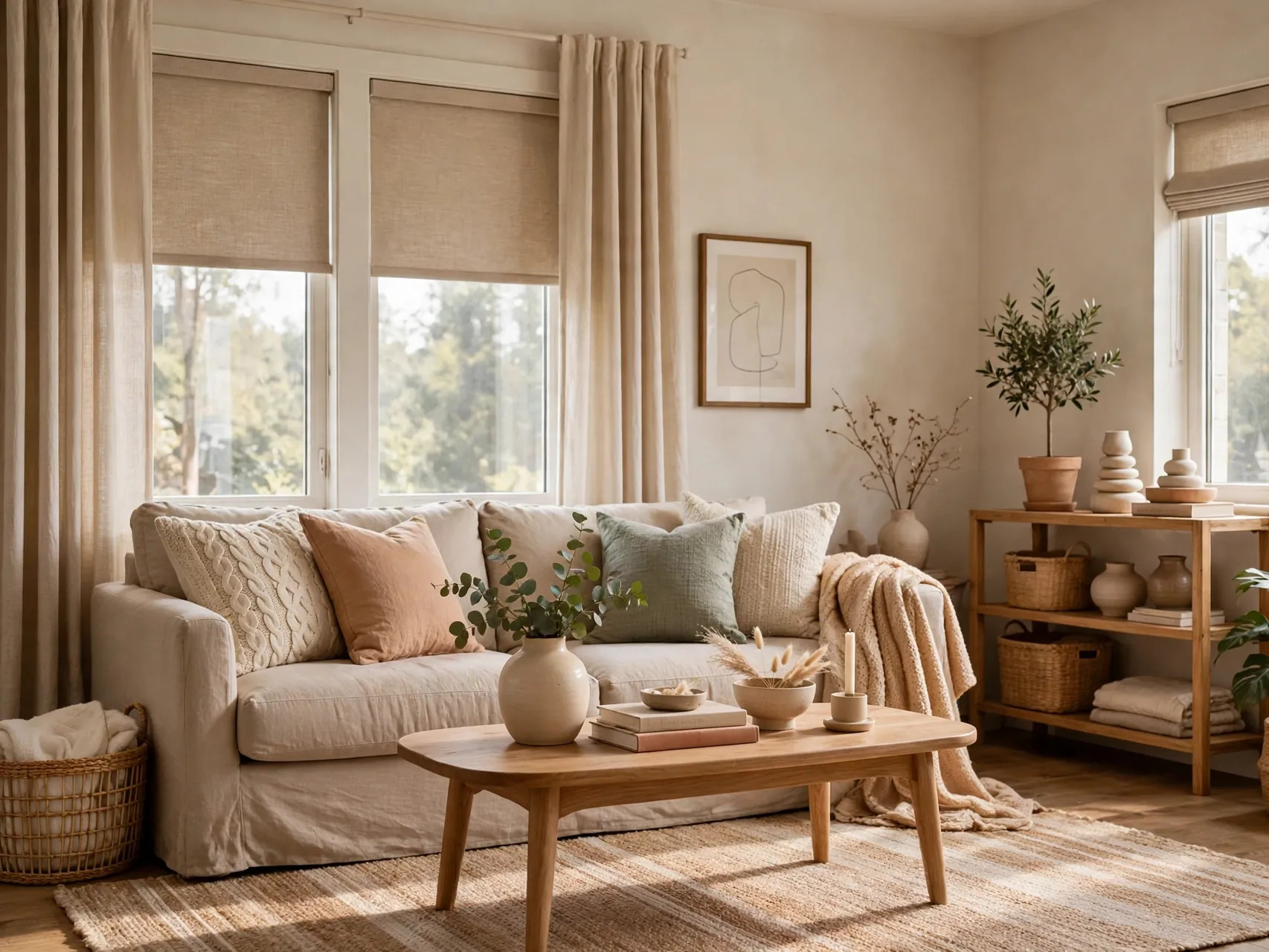
In homes with young children and pets, safety shapes the shortlist. The US Consumer Product Safety Commission warns about corded window coverings, so choose cordless shades, wand controls and curtains without looped cords wherever possible.
Keep cords on any existing treatments tied up and out of reach, and place cribs and climbable furniture away from windows. Beautiful window dressing should never trade against a basic home safety check like this one.
22. Swap Curtains With the Seasons

Two sets of panels, light linen for spring and summer and a warmer, heavier pair for fall and winter, keep a living room feeling fresh and help manage light and drafts as the year turns. It is an old habit worth reviving.
Store the off season set clean and folded with a note of its rod pocket or ring setup, so swapping takes twenty minutes. Photograph both looks. Seeing the room in its two moods helps you shop for pillows that serve both.
23. Get the Look on a Budget With Smart Panels

Budget panels look expensive when you fix the details: buy longer than you think, add clip rings for height and easy gliding, hem with iron on tape if needed, and steam or hang out wrinkles before judging them in place.
Spend first on correct rod placement and length, then on fabric. Nobody in the history of living rooms has noticed a bargain fabric hung perfectly at the ceiling. Everyone notices lovely fabric hung too short above the window frame.
FAQ
How long should living room curtains be?
Floor length is the standard for a polished look. Panels should kiss the floor or break slightly on it. Sill length suits cafe styles and radiators, but short curtains on tall windows usually make the room feel smaller.
How high and wide should I hang the curtain rod?
Mount the rod a few inches below the ceiling or crown molding, and extend it beyond the window frame on each side so open panels rest mostly on the wall. This makes windows look larger and lets in more light.
What fabric is best for living room curtains?
Linen and linen blends for relaxed, light filled rooms, cotton for crisp everyday use, velvet for drama and light control, and sheers for soft daylight with privacy. Line panels if you need darkness, insulation or a richer drape.
Should curtains match the wall color or contrast it?
Both work. Tone on tone curtains create calm and make rooms feel bigger, while contrasting color or pattern makes the window a focal point. Decide based on whether the window view and shape deserve the spotlight.
Are cordless curtains and shades safer for kids?
Yes. Safety guidance from the US Consumer Product Safety Commission flags corded window coverings as a hazard for young children. Cordless, wand operated and motorized options remove looped cords from reach and are the safer default.
Key Takeaways
- Placement beats fabric: High, wide rods and floor length panels make even simple curtains look custom and expensive.
- Layer for control: Sheers plus lined drapes on a double rod or track handle daylight, privacy and movie nights in one setup.
- Fullness matters: Plan generous fabric width so closed panels fold beautifully instead of stretching flat across the glass.
- Match scale and palette: Large prints for large windows, fine patterns for small ones, and colors repeated quietly around the room.
- Safety first in family homes: Choose cordless options and keep any cords out of reach, as national safety guidance advises.
- Ready to give your windows the tall, tailored treatment? Save this post to Pinterest and pin the curtain idea you will measure for first.