25 Bookshelf Ideas That Look Styled, Not Cluttered
Introduction
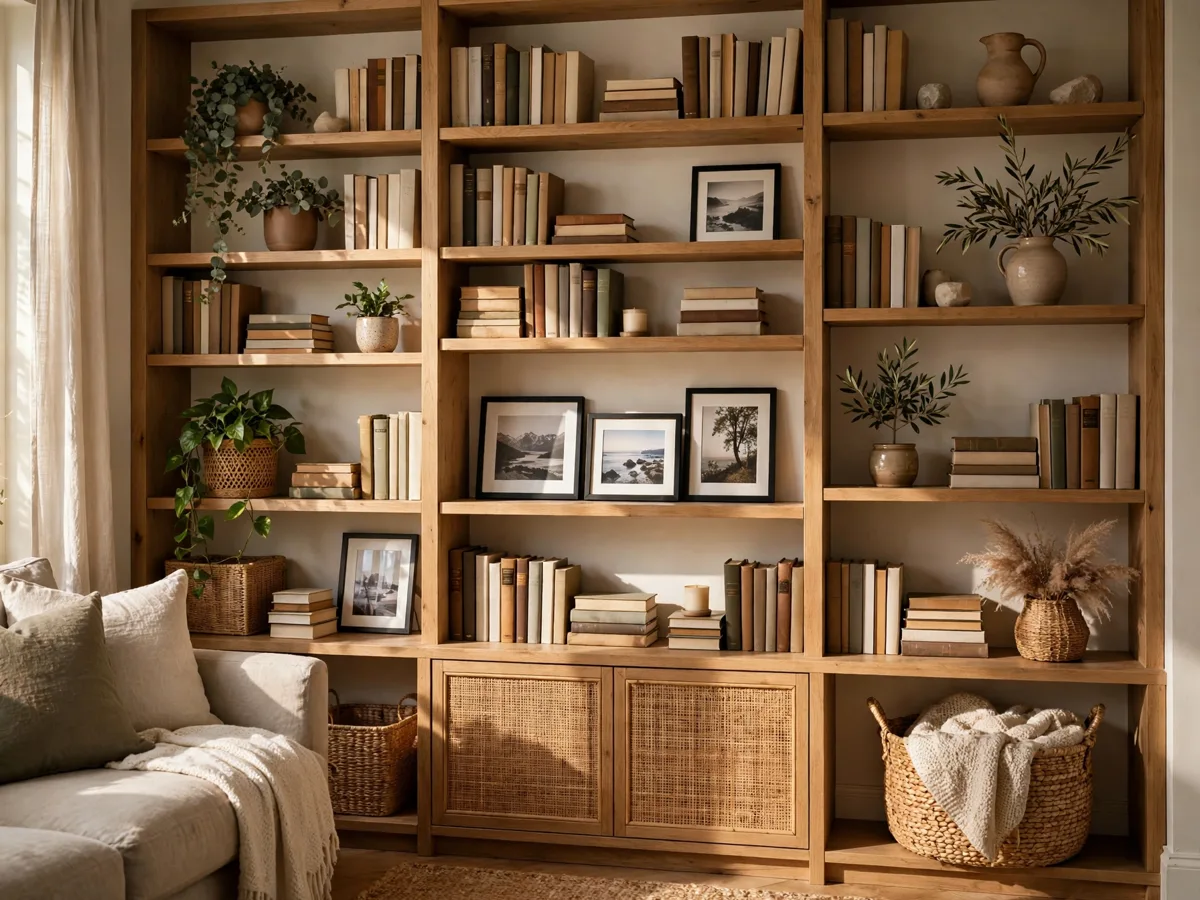
A bookshelf can be the most beautiful wall in a room or the place where clutter quietly gathers. The difference is rarely the shelf itself. It is how much you keep, how you group it, and how much empty space you leave around it. These bookshelf ideas focus on that styled, calm feeling.
Start by taking everything off and editing honestly. Keep the books you love, the objects with a story, and a few useful baskets. Everything else can move to storage or a new home. Styling is much easier when you begin with less.
Safety comes before styling for tall cases. Anchor tall bookcases to the wall, keep heavy books low, and never let children climb shelves. With that base secure, every idea below is about balance, breathing room, and personality.
1. Leave Real Breathing Room on Every Shelf

Styled shelves are never packed edge to edge. Aim to leave part of each shelf empty so the eye can rest between groups. That white space is what separates a library look from a storage look, even when both hold the same books.
Work shelf by shelf and stop before it feels full. Step back often, because a shelf that looks balanced up close can feel crowded from across the room. Removing just two or three items per shelf often transforms the whole case.
2. Group Books in Small, Varied Clusters

Instead of one long row, break books into clusters of different heights and widths, separated by objects or space. A tall cluster, a short stack, then a plant or vase creates rhythm that a single row never has.
Keep clusters uneven in number where you can, because odd groupings tend to look natural. Vary cluster sizes across shelves so the pattern does not repeat in a stiff grid. The result feels collected rather than arranged by a store display team.
3. Mix Vertical Rows With Horizontal Stacks

Horizontal stacks are the secret tool of bookshelf styling ideas everywhere. A stack of two to four books works as a pedestal for a small object, a pair of glasses, or a framed photo, and it breaks up vertical lines.
Alternate the direction across the case: a vertical row on one shelf, a stack on the next. Keep stacks low and stable, especially in homes with children or pets. This simple mix adds architecture to even the plainest bookcase.
4. Anchor Tall Bookcases to the Wall First

Before you style a single shelf, secure tall bookcases to the wall with the anti-tip hardware the maker provides or suitable wall straps into studs. The US Consumer Product Safety Commission Anchor It campaign urges anchoring bookcases and dressers because tip over accidents are preventable.
Place the heaviest books and storage on the lowest shelves to keep the case stable. Check fixings when you rearrange, and never treat a loaded tall case as a climbing frame. Safety is invisible in photos, but it is the foundation of every good bookshelf.
5. Sort Some Shelves by Color, Not All

A single shelf sorted by color can look like art, while a whole rainbow case can feel busy. Try color grouping on one or two shelves where spines are similar in size, and keep the rest sorted by subject or size.
If full color sorting feels playful in a child room or studio, enjoy it there. For living rooms, a softer version works well: group warm tones together and cool tones together, then mix in neutral objects to calm the effect.
6. Turn the Prettiest Covers Facing Out

A few books displayed cover out, like art, add instant personality. Choose covers with strong art, a favorite title, or colors that match the room, and lean them on a small stand or against a stack.
Rotate the facing out books with seasons or reading moods so the shelf stays fresh without buying anything. Keep this trick to one or two spots per case. Used everywhere, covers out display wastes storage and starts to look like a shop window.
7. Add One Plant Moment Per Case

Greenery softens rows of spines like nothing else. A trailing plant on a high shelf, a small potted herb style plant at eye level, or a vase of eucalyptus adds life and a different shape to the geometry of books.
Choose plants for the light the shelf actually gets, and use saucers or liners so water never touches books or wood. Faux plants are a fine choice for dark corners. One green moment per case is enough; more can turn styling into a jungle.
8. Use Baskets and Boxes for the Messy Middle
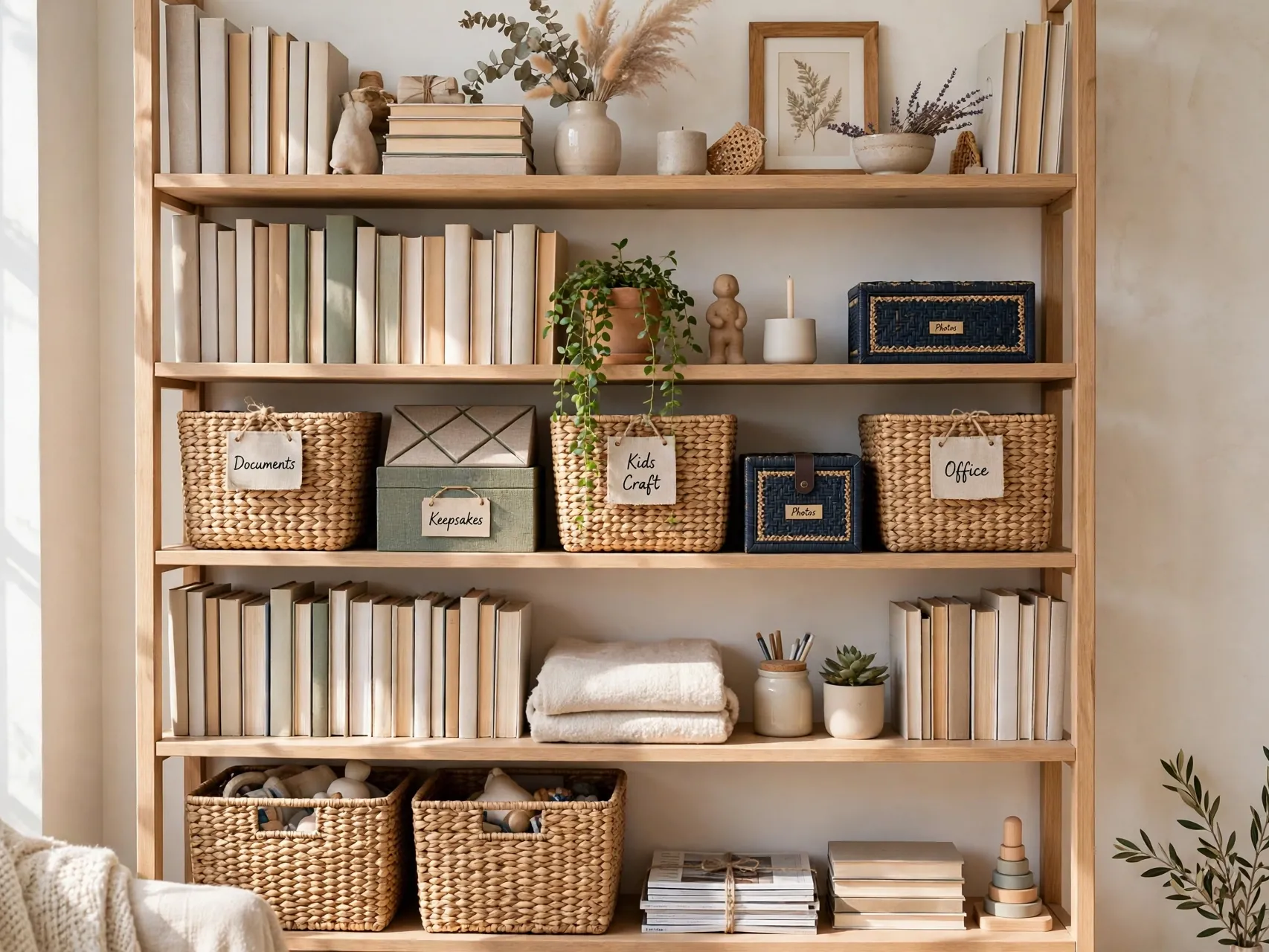
Every collection has an untidy middle: chargers, notebooks, games, and small tools. Lidded boxes and baskets hide that layer while keeping it close. Matching baskets on one low shelf look intentional and make tidying fast.
Label the inside lid if family members forget what lives where. Keep baskets light enough to lift safely, and store the heaviest contents on the bottom shelf. This is how styled shelves survive real life instead of collapsing into clutter by Friday.
9. Style the Top Shelf Light and Simple

The top shelf is the hardest to reach and the easiest to overload. Keep it light: a low stack, one object, and plenty of space. Heavy items belong low for safety, and visual weight belongs low too, so the case does not look top heavy.
If your case reaches near the ceiling, a calm top shelf makes the whole wall feel taller and cleaner. Dust this shelf when you style it, because a clean top line is very visible from a seated view across the room.
10. Build a Built In Look With Paint

Painting a freestanding case the same color as the wall gives a soft built in effect without construction. It works especially well for basic flat pack cases, turning them into background architecture so the books and objects carry the color.
Use a durable paint suited to furniture, prepare the surface as the maker directs, and let it cure fully before loading shelves. Add simple trim to the front edges if you want a more finished frame. This is one of the most affordable built in bookshelf ideas to copy.
11. Add Picture Lights or LED Strips for Evening Glow

Low voltage LED strip lights under shelf fronts or a picture light above a case make shelves glow in the evening and highlight your best pieces. Choose warm light for living spaces, and keep cords tidy and out of reach.
Follow maker instructions, use listed products, and keep lighting away from heat sources. Battery or plug in options suit renters. Light also helps practically, making titles easier to read. A lit shelf at night turns a storage wall into the focal point of the room.
12. Create a Reading Corner Beside the Case

A bookshelf works hardest when someone can sit beside it. Place a comfortable chair, a small side table, and a reading lamp next to the case, with current reads on the lowest reachable shelf.
Keep a throw over the chair arm and a basket for returns to the library. This pairing turns styling into a habit: books get read, reshelved, and rotated. A shelf beside a chair also stays tidier, because it is used daily rather than forgotten in a spare room.
13. Use Bookends as Sculpture

Good bookends do two jobs: they hold a short row upright and they act as small sculpture. Stone, metal, wood, or ceramic bookends add weight and a finished stop to a row that would otherwise lean.
One pair per case is usually enough. Place them where rows end mid shelf, and choose a shape that echoes something else in the room, like a brass lamp or black frames. In homes with small children, choose heavy, stable bookends and keep them on secure shelves.
14. Fill an Awkward Corner With a Corner Case

Corners collect dead space in many rooms, and a corner bookcase turns that gap into storage. Style corner cases simply, with larger books and fewer small objects, because deep corners are harder to reach and dust.
Anchor corner units to the wall like any tall case. A corner shelf beside a sofa makes a natural end table alternative, holding a lamp and current reads. Corners also suit a rotating display, like seasonal decor, because the spot feels like a small stage.
15. Go Floor to Ceiling for a Library Wall

A full wall of shelves, whether built in or made from tall matching cases, gives a room a library heart. Keep styling consistent across the wall: similar spacing, repeated baskets, and a limited color palette for objects.
Use a sturdy step stool for high shelves and store only light, rarely used items up high. Anchor every tall unit. A library wall works best when you edit more, not less, because the scale multiplies clutter fast. Done calmly, it is the most timeless of all bookshelf ideas.
16. Style Low and Long With a Console Case
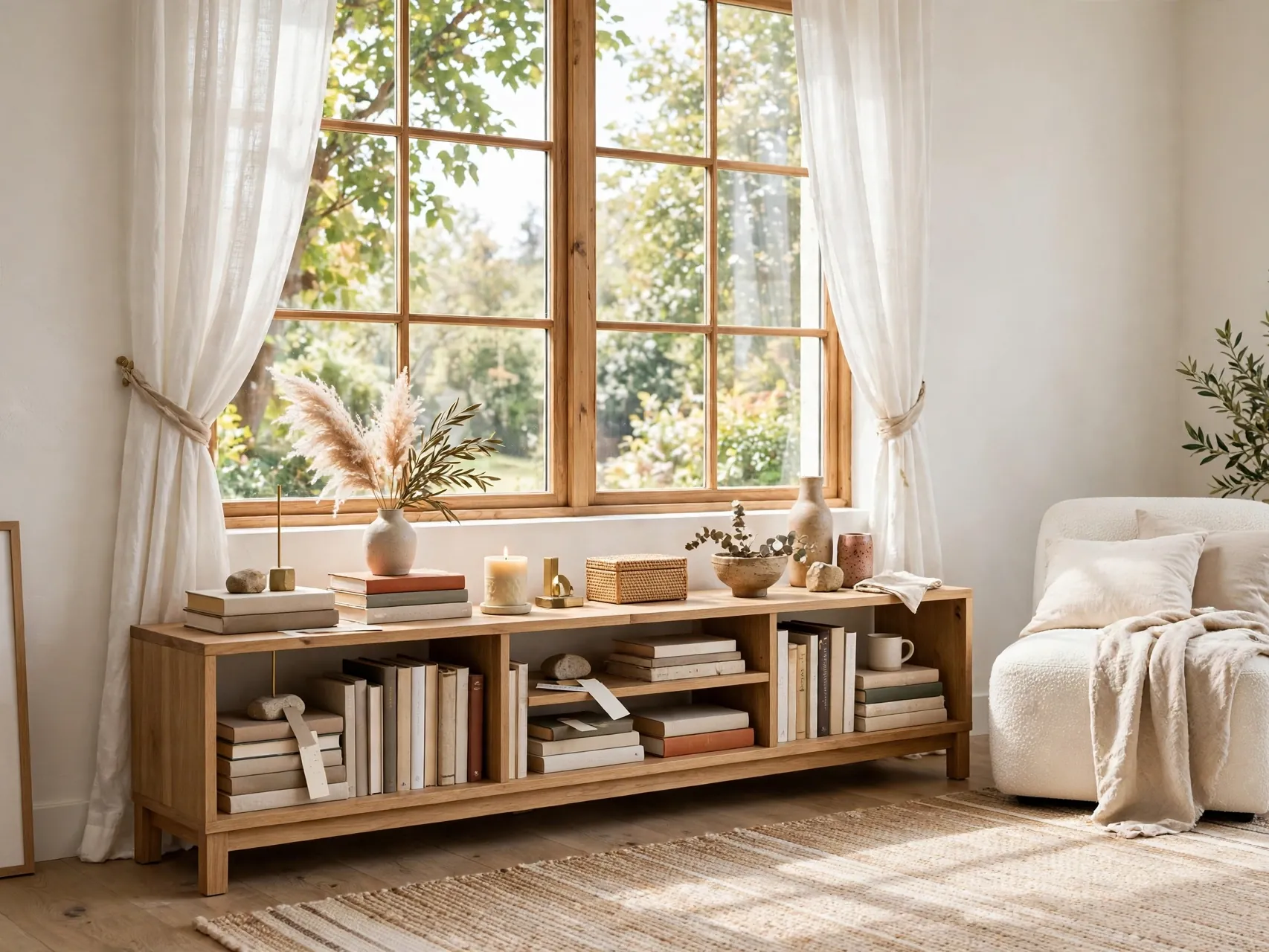
A low, long bookcase under a window or behind a sofa gives display space without visual height. Style the top like a console: a lamp, a tray, and one stack of large books, with shelves below kept simple.
Low cases suit homes with children because favorite picture books can live at child height, anchored securely to the wall all the same. Keep the top mostly clear so it can hold a drink or a plant. This shape also works as a room divider in open plan spaces.
17. Mix in Framed Art and Family Photos
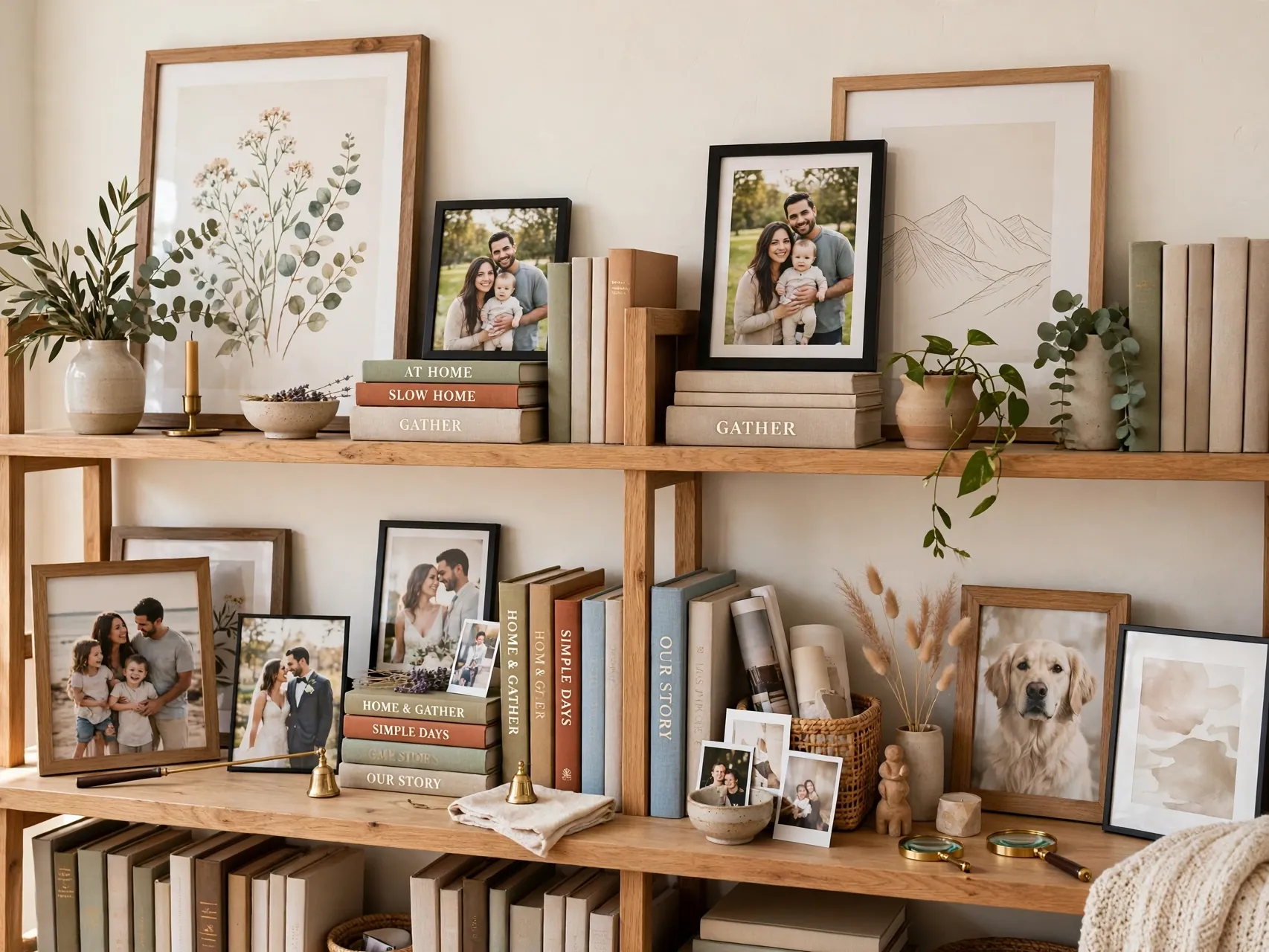
Leaning a small framed print against the back of a shelf, or hanging art on the front face of a built in, layers the case like a gallery. Photos and art break up spine patterns and make the shelf personal.
Keep frames to a few per case and vary their sizes. Leave space around each frame so it reads as art, not storage. Black and white photos in simple frames calm colorful shelves, while one bold print can wake up a neutral case. Rotate art seasonally for a fresh wall at no cost.
18. Keep a Simple System for What Stays
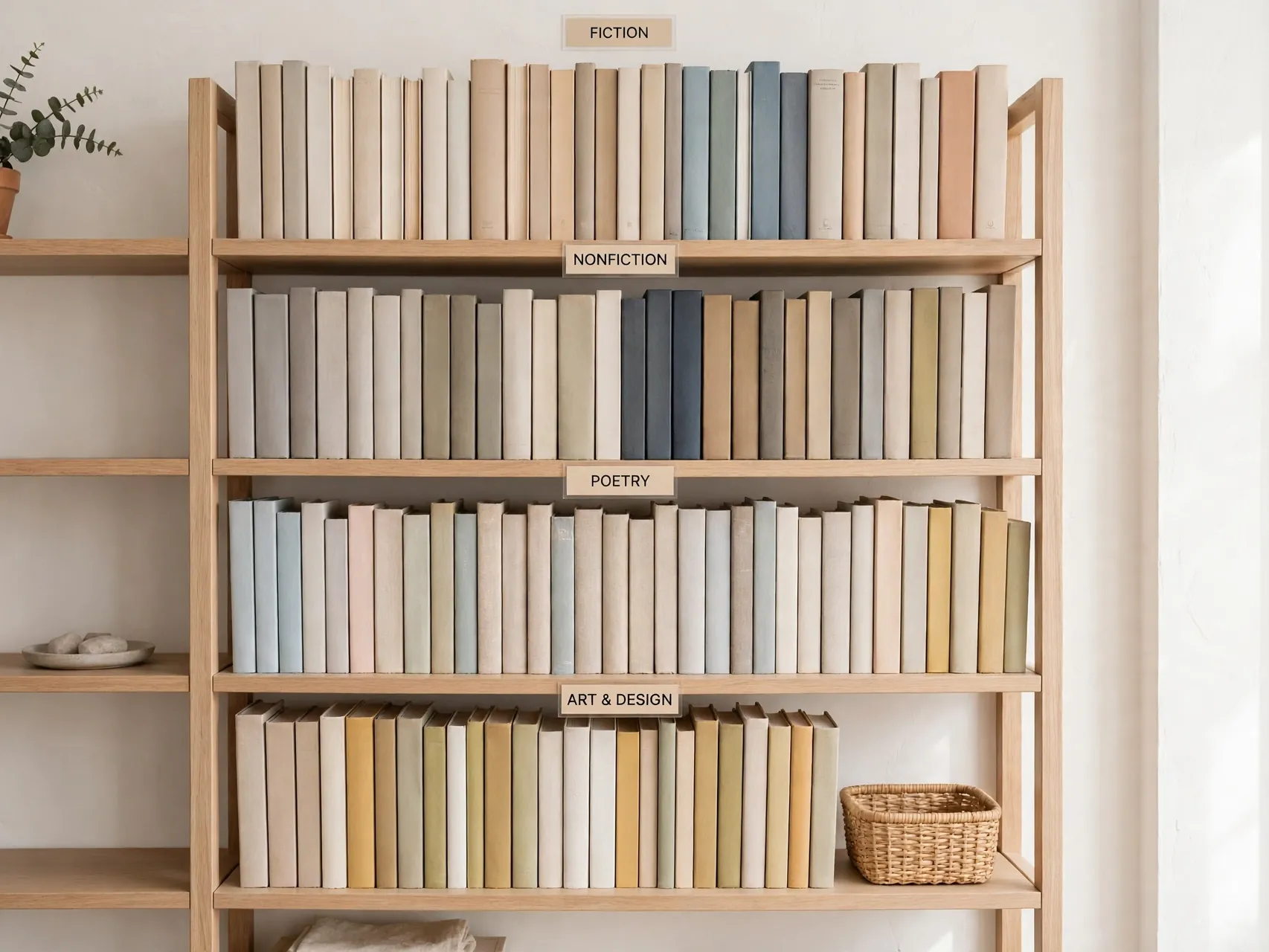
Styled shelves stay styled when there is a system behind them. Decide simple homes: fiction on two shelves, reference and cookbooks near the kitchen end, children books low, and a donation box in a closet for books you finish and do not keep.
Review the case a few times a year and let go of duplicates and unloved titles. A one in, one out habit for new books keeps shelves at the styled density you worked for. Systems sound strict, but they are what make the pretty version last.
19. Use the Rule of Varied Heights

Within each shelf, vary heights: tall books, a medium stack, a low object. A skyline effect keeps the eye moving and stops the flat, packed look. If everything on a shelf is the same height, it reads as storage no matter how tidy it is.
You can create height with a stack under an object, a tall vase, or a plant. Balance high points across the case rather than clustering them on one side. This small rhythm change is one of the fastest bookshelf decor ideas to try today.
20. Let One Shelf Tell a Story
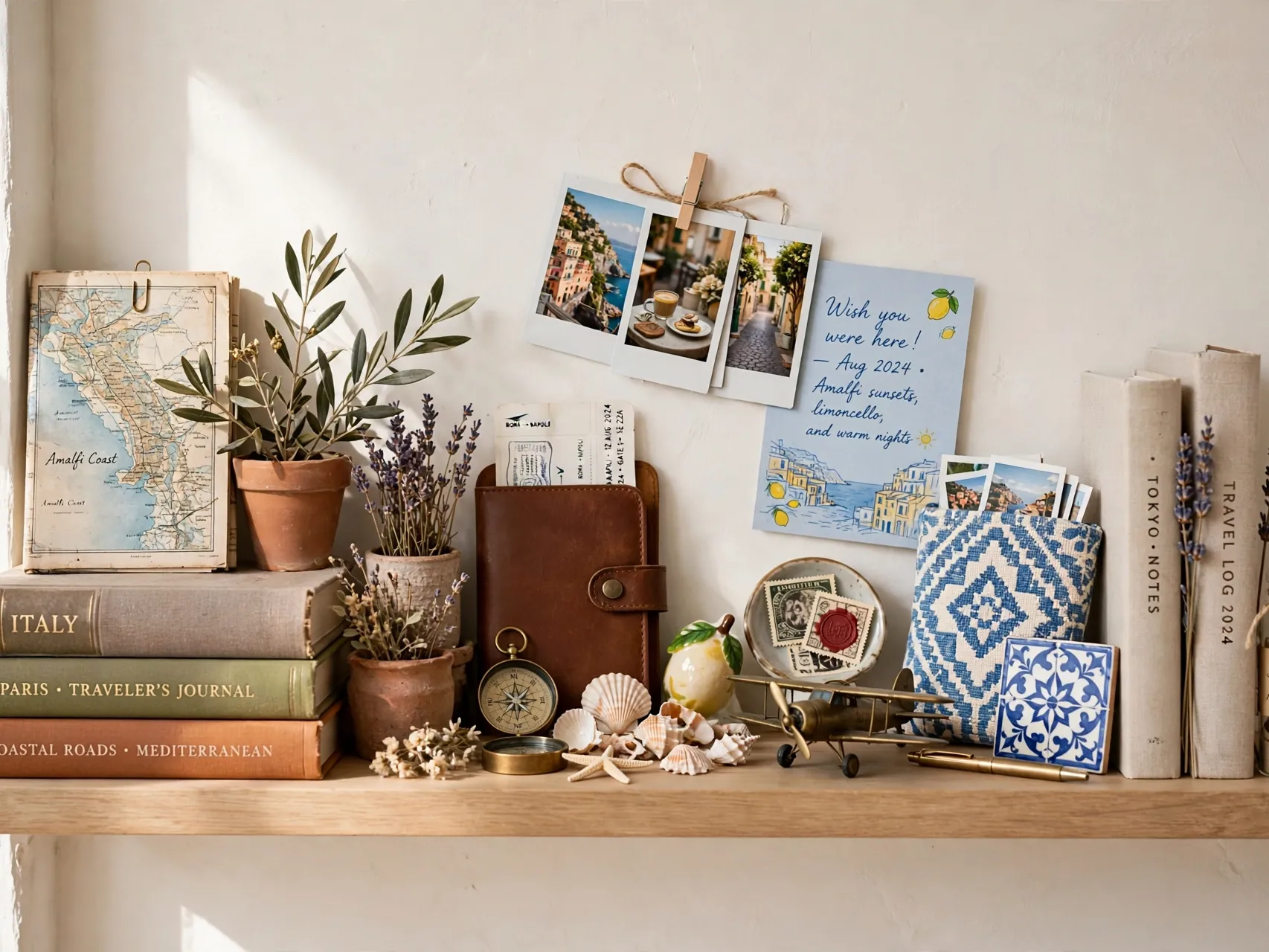
Give one shelf a theme: travel souvenirs with trip books, garden books with a small terracotta pot, or cookbooks with a pretty bowl. A story shelf gives guests something to discover and gives you a place where meaningful objects belong.
Keep the story shelf edited to its theme so it does not become the miscellaneous shelf. Rotate it when seasons or interests change. Children love a story shelf of their own, with their books, a drawing, and one treasure, placed low and safe.
21. Choose Closed Storage Below, Open Above
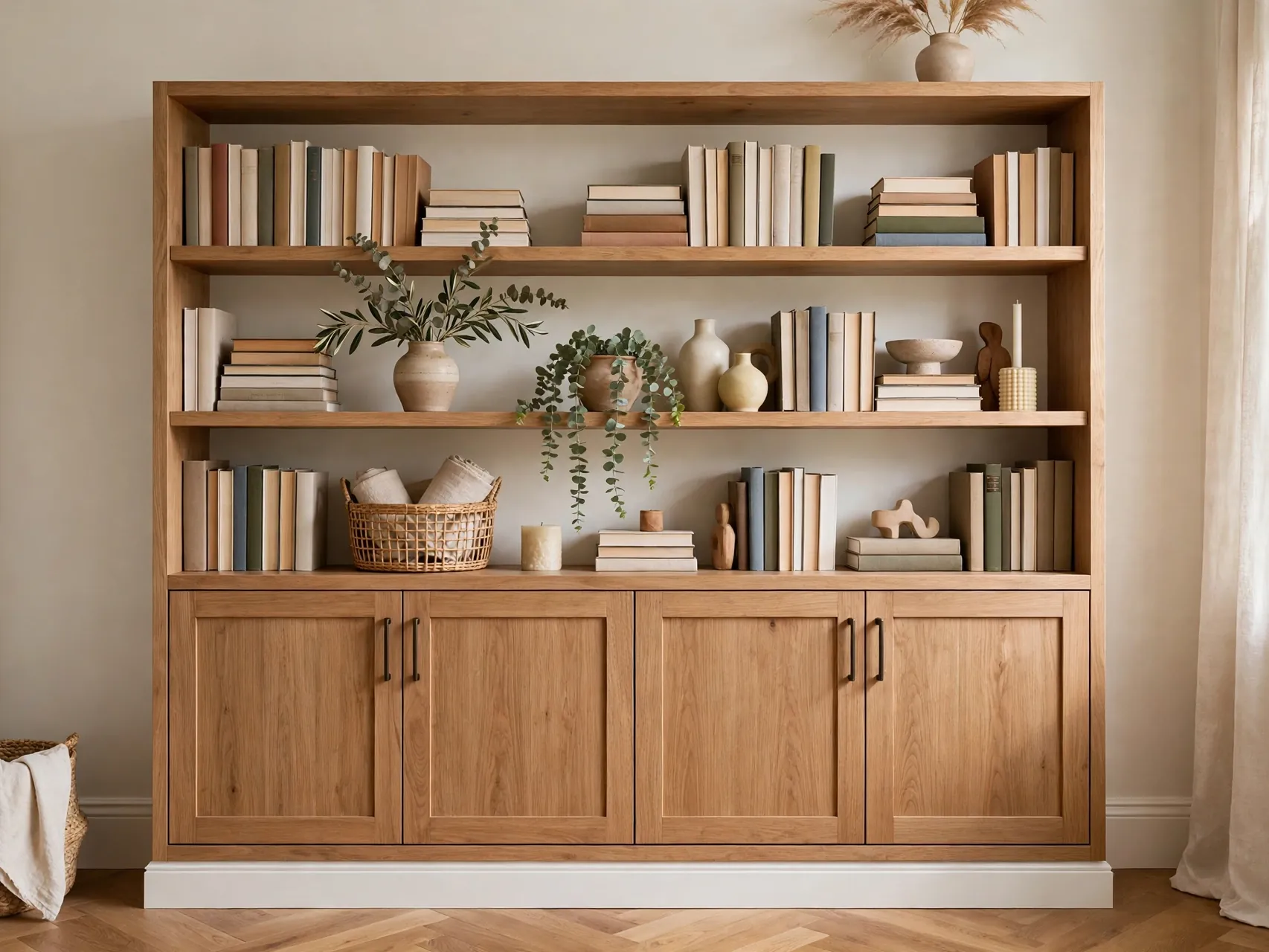
Cases with cabinets or drawers below and open shelves above give you the best of both worlds. Closed storage hides the visual noise, board games, cables, paperwork, while open shelves show the curated layer.
If your case is all open, create the same effect with baskets and boxes on the lower shelves. Keep open display at eye level, where you notice and enjoy it. This balance is especially helpful in living rooms that double as work or play spaces, where real life needs hiding places.
22. Repeat a Few Materials for Calm

Repeating two or three materials across the case, like wood, black metal, and woven baskets, creates calm even with many objects. Too many finishes competing at once is a common reason shelves look cluttered in photos.
You do not need to replace everything. Swap one shiny object for a matte one, trade a bright basket for a natural one, and the case settles. Repetition also makes new additions easy to judge: if a piece matches your materials, it will probably fit the shelf.
23. Style a Child Friendly Lower Zone

In family homes, give children the lowest shelf, anchored case and all, with board books, picture books facing out, and a soft basket for favorites. When children can reach and return their own books, shelves stay tidier and reading feels like their idea.
Keep heavy reference books and fragile objects well above this zone, and check that bookends and objects within reach are safe and stable. Rotate a few books weekly from a storage box to keep the small shelf feeling new without buying more.
24. Use Floating Shelves for a Light Look
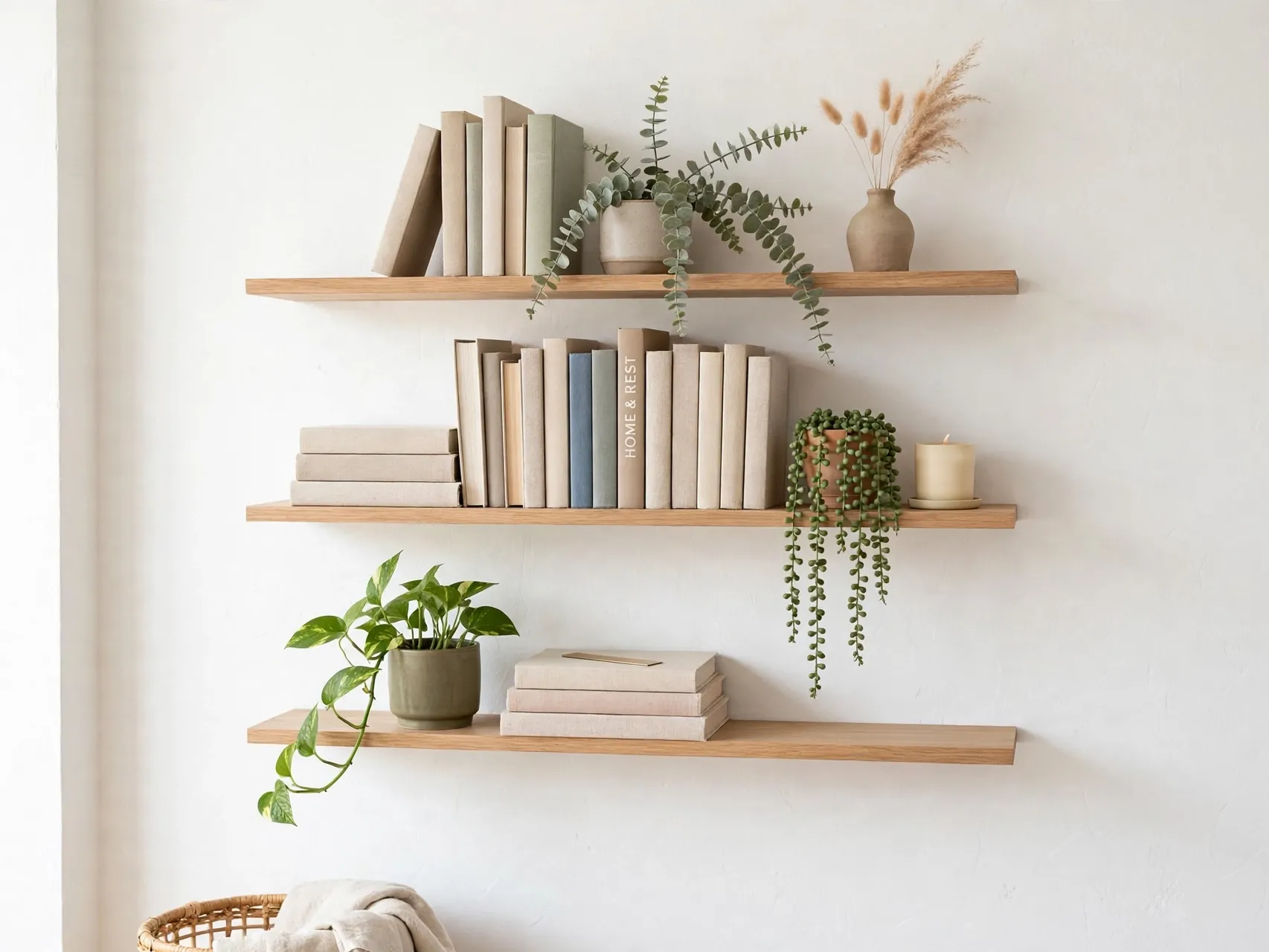
Floating shelves suit small rooms and renters with permission to fix into studs or rated anchors. Keep loads modest, because floating shelves hold less than full cases, and place heavy books low and over the strongest fixings.
Style floating shelves with even more restraint: a short row, one stack, one plant. Group two or three shelves with consistent spacing for a designed feel. Always follow maker load limits, and never use floating shelves for storage that children might pull or climb on.
25. Restyle Seasonally Instead of Buying More

The freshest shelves are usually restyled, not re-shopped. Swap objects between rooms, turn a stack to show different spines, move a plant, or change the facing out book. A short seasonal restyle keeps the case interesting at no cost.
Photograph a version you love so you can return to it after holidays or guests. Keep a small box for shelf decor you rotate, rather than displaying everything at once. Restraint, repeated through the year, is the real secret behind shelves that always look styled, not cluttered.
FAQ
How do I style a bookshelf without it looking cluttered?
Start with less. Empty the case, keep only books and objects you love, and leave empty space on every shelf. Group books in clusters, mix vertical rows with low horizontal stacks, and limit objects to a few repeated materials. Step back often while styling, and remove one more item from any shelf that still feels busy.
How should books and decor be balanced on shelves?
A calm balance is more books than objects, with decor used as punctuation between book groups. Use plants, frames, and boxes to break up long rows, but let books remain the main event. If you cannot read most titles at a glance, there is probably too much decor competing for attention.
Do tall bookcases really need to be anchored?
Yes. Tall bookcases should be anchored to the wall with the hardware the maker provides or suitable anti-tip straps fixed into studs, following the CPSC Anchor It guidance. Keep heavy books on low shelves, check fixings after moving a case, and never let children climb or hang on shelves, even anchored ones.
What can I put on a bookshelf besides books?
Plants, framed photos or art, baskets and lidded boxes, bookends, a small lamp or LED strip, ceramics, and meaningful souvenirs all work well. Keep the list short per shelf and repeat a few materials for calm. Useful storage in baskets counts as styling too, because it hides the clutter layer.
How often should I restyle my bookshelves?
A light restyle a few times a year is enough for most homes. Swap the facing out books, rotate a plant or object from another room, and edit out books you no longer want. Seasonal touches can be small: a different stack, a new photo, or a holiday object on one shelf only.
Key Takeaways
- Edit first, style second: Styled shelves start with fewer books and objects, plus real empty space on every shelf.
- Anchor and load low: Tall cases must be fixed to the wall, with the heaviest books on the lowest shelves for stability.
- Cluster and vary: Mix vertical rows, low horizontal stacks, plants, and frames in uneven groups for a collected rhythm.
- Hide the messy layer: Baskets and lidded boxes on lower shelves keep everyday clutter close but out of sight.
- Restyle, do not re-shop: Rotating objects and facing out books seasonally keeps shelves fresh without adding more stuff.
- Love these bookshelf ideas? Save this guide to Pinterest and pin your favorite shelf to style this weekend.