22 Entryway Decor Ideas That Make a Great First Impression
Introduction
Your entryway sets the tone in the first few seconds, for guests and for you coming home tired at the end of the day. The best entryway decor ideas do two jobs at once: they look welcoming, and they give coats, keys, shoes, and mail a clear place to land.
Start with function. A seat, hooks at a comfortable height, and one closed storage piece will solve most entryway chaos. Keep the door swing and walkway fully clear, and secure anything heavy on the wall into studs or rated anchors.
Then add the pretty layers: a mirror for light, a runner for softness, warm lighting, and personal touches in small, edited doses. Work through the ideas below and pick the few your space truly needs. A calm, working entry always beats a crowded, styled one.
1. Start With a Bench That Earns Its Place

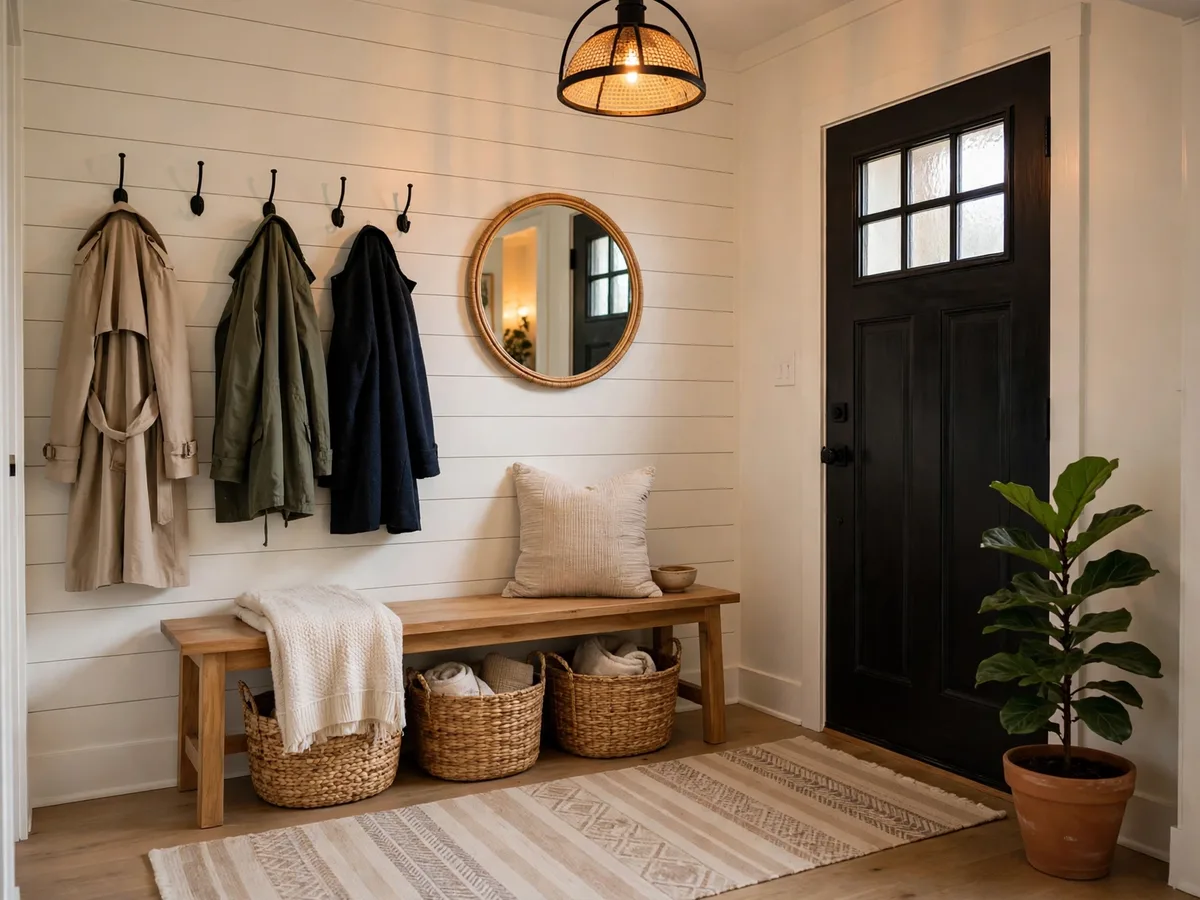
A bench is the hardest working piece in most entryways. It gives everyone a seat for shoes, a surface for bags while hands are full, and a visual anchor that says this spot is planned. Choose a depth that leaves the walkway comfortably clear.
Style the bench simply: one cushion or folded throw, not a pile. Keep the area beneath it working too, with baskets or a low shelf for everyday shoes.
2. Add Hooks at Two Heights for Adults and Kids

A row of sturdy hooks ends the coat-on-chair habit. Fix hooks into studs or use fixings rated for the weight of winter coats and full bags, because entry hooks carry more load than most wall decor. Space them so bulky items do not fight for room.
Add a lower row for children, leashes, and lighter bags if your household needs it. A peg rail suits traditional and farmhouse styles, while simple metal hooks fit modern entries.
3. Hang a Mirror for Light and Last Checks

A mirror is the classic entryway move for good reason. It bounces daylight into a space that often has no window, makes a small foyer feel larger, and gives you a final check before you walk out.
Hang it securely at a height that suits the adults in the house, fixed into studs or rated anchors, never just balanced on a console in a busy traffic spot. Keep the glass clean. A sparkling mirror quietly lifts every other piece around it.
4. Lay a Runner That Can Handle Real Life
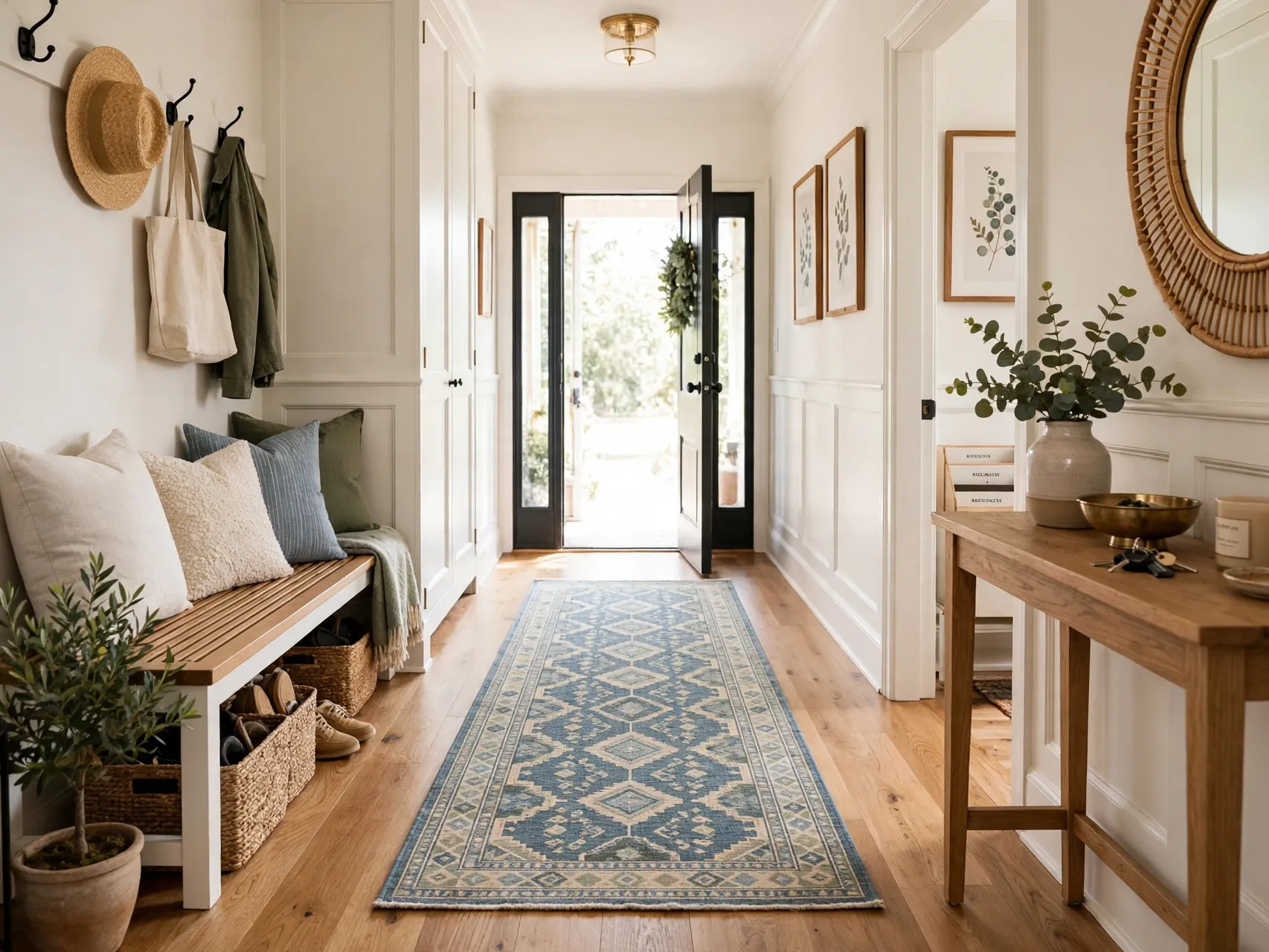
A runner defines the entry path, softens hard floors, and catches the first dirt of the day. Choose a low pile, washable style in a pattern that hides everyday dust between cleanings. Size it to the space: long enough to take two steps on, with floor showing at the edges.
Use a non slip pad underneath so the runner stays put when people and pets hurry through. Avoid thick rugs that block the door from opening fully.
5. Choose a Slim Console Table With a Drawer

A narrow console gives you a styling surface without stealing walking space. The best versions include a drawer or shelf, so keys, sunglasses, and mail have a hidden home and the top can stay pretty. Measure your wall and walkway before buying, and favor slim depths in hall style entries.
Style the top in zones: a tray for keys on one side, a lamp or plant for height, and clear space in the middle for the daily set down moment. A table that works this hard, storage plus surface, will earn its keep every single day.
6. Layer Lighting With Overhead, Lamp, and Glow

Entryways are often dim, and dim reads as unwelcoming. Layer your light: a ceiling fixture or pendant for general brightness, a small lamp on the console for warmth, and perhaps a night friendly glow near the floor for late arrivals. Warm bulbs feel friendliest in this space.
Consider a motion sensor or timer if your entry is dark when you come home, used as the maker directs. Keep cords tidy and out of the walkway. Good lighting is safety as much as style here, because everyone should see steps, shoes, and the door hardware clearly.
7. Give Every Person a Basket or Cubby of Their Own
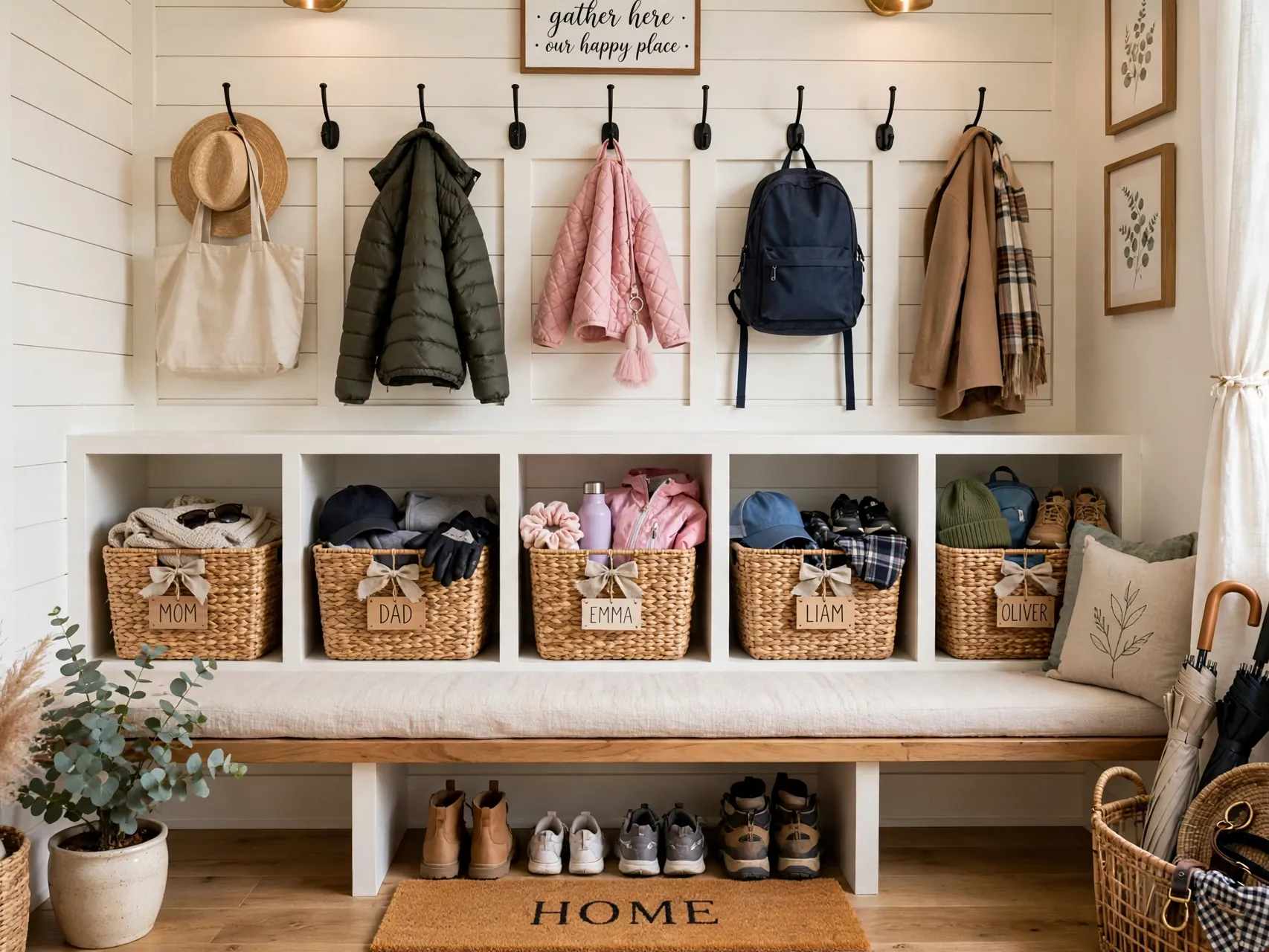
Shared entryways stay tidy when storage is personal. Assign each household member one basket, cubby, or cabinet section for hats, gloves, chargers, and the small clutter that otherwise colonizes the console. Label them if it helps younger family members keep the system.
Baskets in matching materials look calm even when contents are not. Choose sizes that fit your shelf or bench opening, and edit them seasonally: winter gear out, sunscreen and caps in. This one system prevents more entryway mess than any amount of reminding people to tidy up.
8. Paint the Inside of the Front Door a Welcoming Color

The inside face of your front door is a large, often ignored surface. Painting it in a warm, deep, or cheerful color gives the whole entry a designed feeling for the cost of a small can of paint. It also frames your wreath, console, and art more richly than plain white.
Test the color beside your floor and wall tones in daylight and evening light. Use paint suited to doors and trim, protect hardware and hinges, and allow proper drying time before closing the door against fresh paint. Renters can skip this one or ask permission first, in writing.
9. Create a Small Gallery Wall That Tells Your Story

Entry walls are perfect for a compact gallery: a few family photos, a favorite print, a small piece of art from a trip. Arrange the group on the floor first, then use paper templates on the wall to test spacing before making holes. Hang pieces securely, with the center of the group about eye level.
Keep frames in one or two finishes so the collection feels curated rather than random. Leave breathing room between pieces and avoid crowding the light switch or thermostat. A small, personal gallery makes guests feel they have entered a real home, not a showroom.
10. Add a Statement Light Fixture Overhead
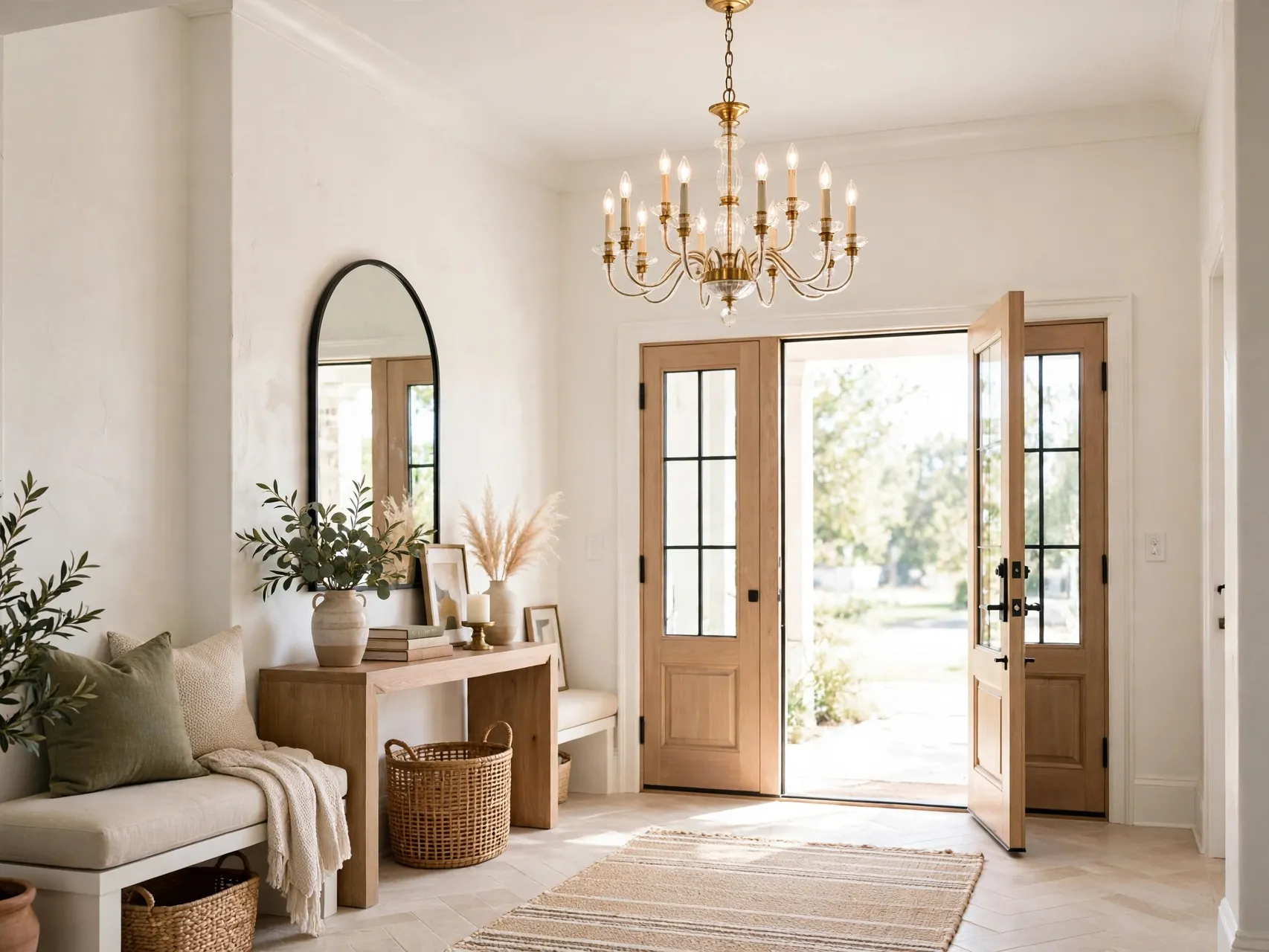
If your entry has a plain builder fixture, swapping it is a high reward weekend update. A pendant, small chandelier, or sculptural flush mount gives the space a focal point and better light in one move. Choose a size in proportion to the room, generous but not blocking sight lines or head clearance.
Turn off power at the breaker for any fixture work and follow the maker instructions, or hire a licensed electrician if you are not confident. Electrical work beyond a simple, permitted fixture swap belongs to a pro. The right fixture overhead makes even rental basics below it look intentional.
11. Use Wallpaper or a Paint Treatment on One Wall
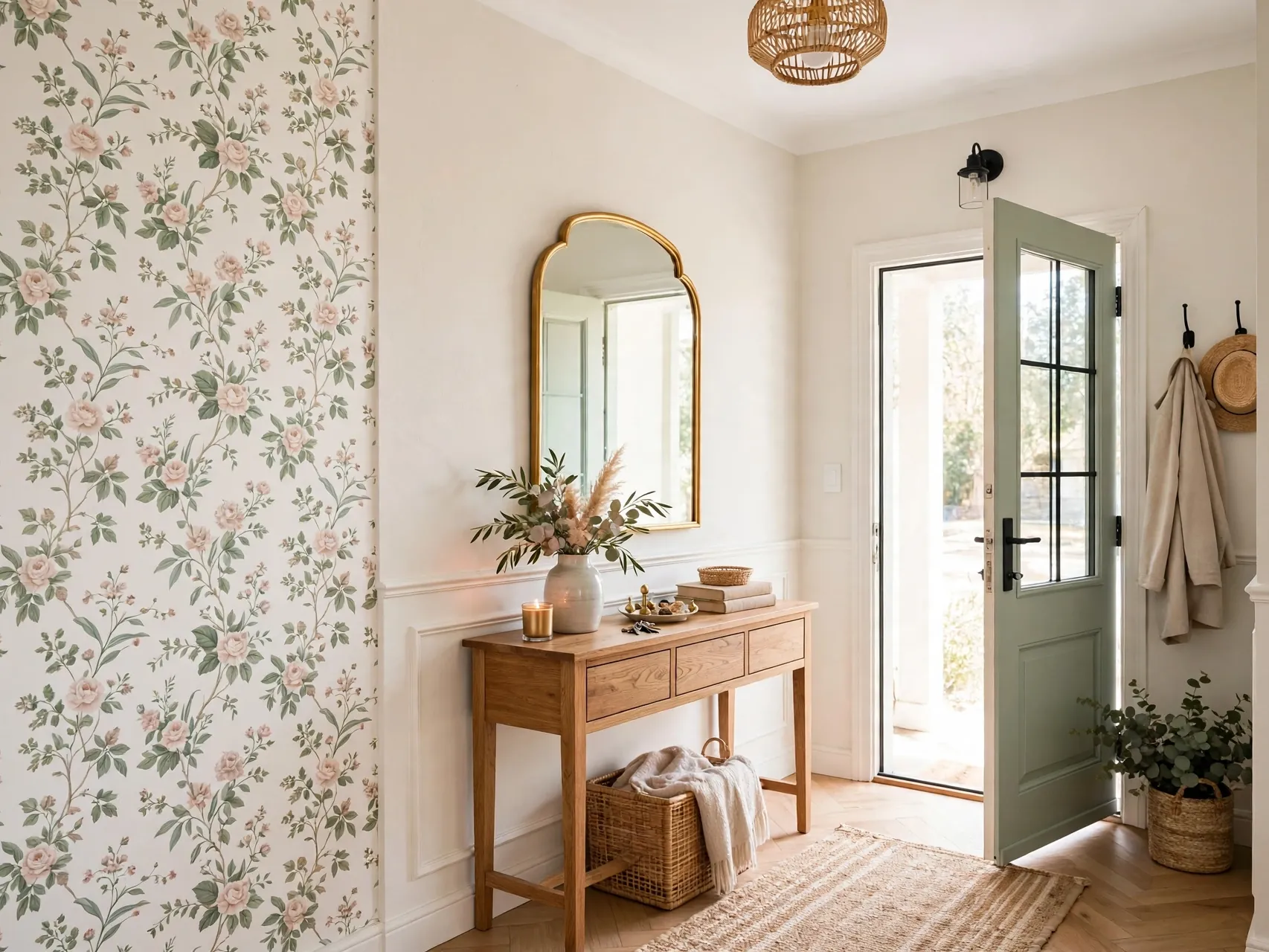
A single treated wall gives an entryway architecture. Options include a classic board and batten lower wall, a painted two tone split, or wallpaper on the wall facing the door. Small spaces handle pattern well because you see it briefly and in a contained dose.
Renters can choose peel and stick wallpaper, tested first in a hidden spot and removed as the maker directs. Keep the treatment color connected to the rooms beyond so the entry feels like a beginning, not a separate theme. One confident wall often removes the need for lots of smaller decor.
12. Style a Seasonal Wreath Inside and Out
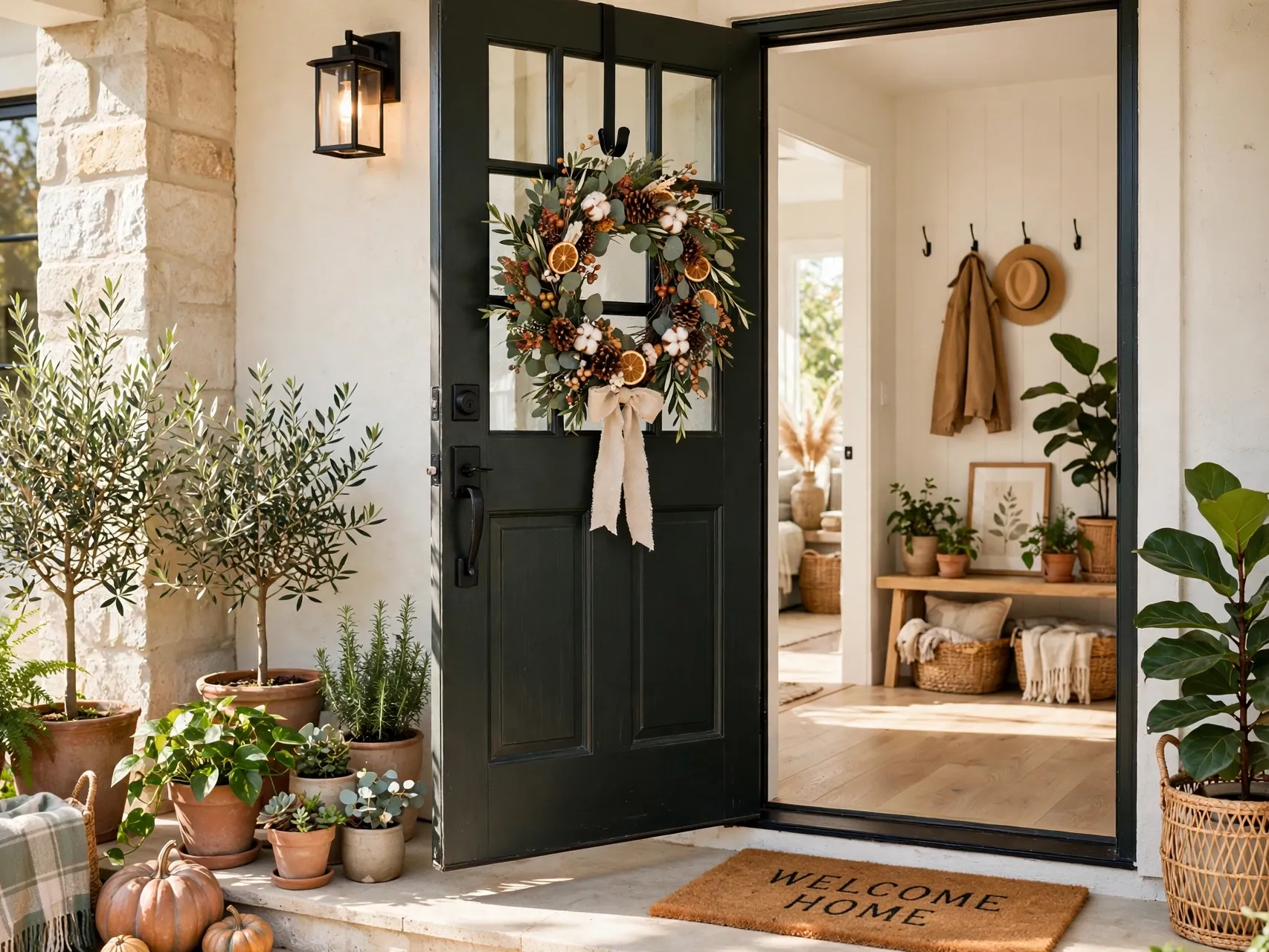
A wreath is the fastest seasonal refresh there is. Hang one on the outside of the door for the street, and consider a second, smaller one inside over the mirror or on an interior door for the view you enjoy daily. Swap greenery, ribbons, and accents with the seasons rather than buying new each time.
Use a secure hook or hanger rated for the wreath weight, and keep decorations clear of the door latch and swing. Battery powered micro lights can add evening sparkle without cords across the walkway. Small seasonal rituals like this keep an entry feeling loved all year.
13. Hide Shoes in Closed Storage for a Calmer Look
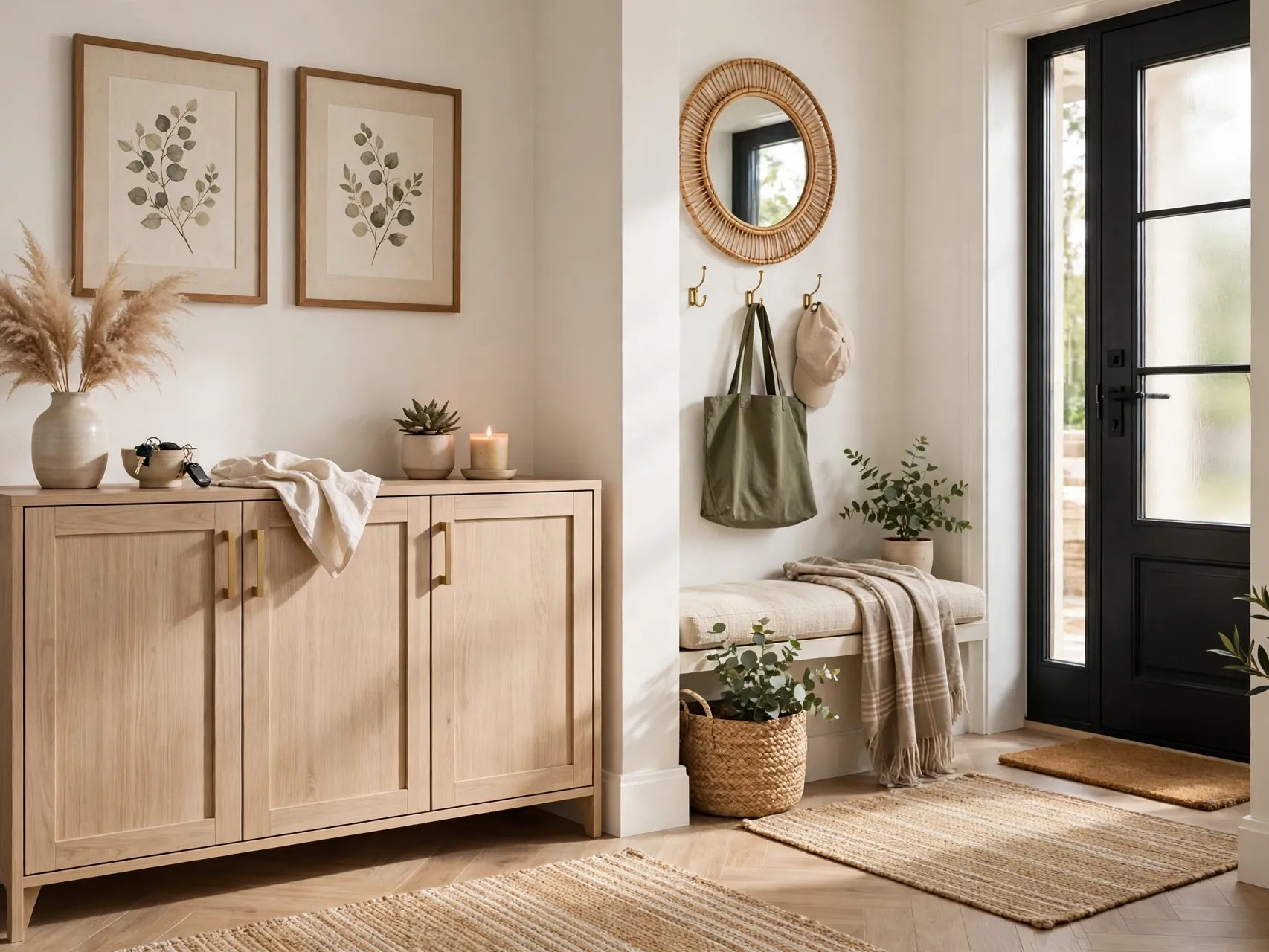
Open shoe piles are the number one reason pretty entryways feel messy. A slim closed shoe cabinet, a bench with a hinged seat, or baskets inside a console cabinet hide the daily lineup while keeping shoes easy to grab. Ventilation matters, so avoid sealing damp shoes in airtight boxes.
Set a household limit: everyday pairs in the entry, the rest in closets. Add a small boot tray in wet seasons to protect floors, placed where it will not trip anyone. Closed storage is the quiet secret behind most welcoming entryway ideas in magazines.
14. Add a Plant or Two for a Living Welcome
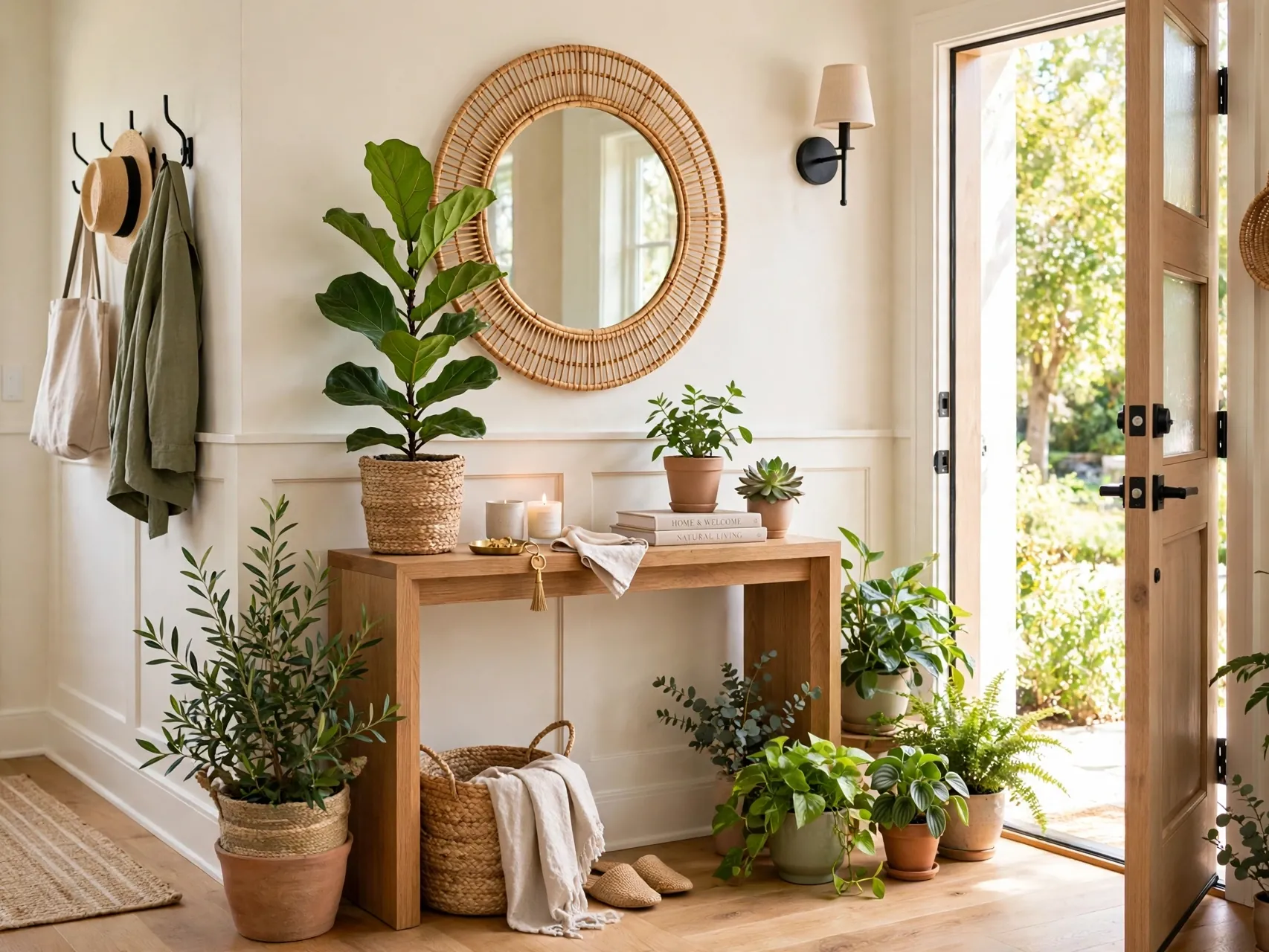
Greenery softens hard entry surfaces and signals care. Choose plants that match the light your entry actually gets, which is often low. Hardy, low light tolerant choices in sturdy pots work well, placed where they will not be knocked by bags, doors, or excited dogs.
If real plants struggle, one good quality faux stem arrangement in a nice vase can still give the effect without the upkeep guilt. Keep soil and water safely away from electrical outlets and cords. A living touch by the door makes coming home feel gentle, which is the whole point of the space.
15. Install a Wall Shelf and Mail Station by the Door
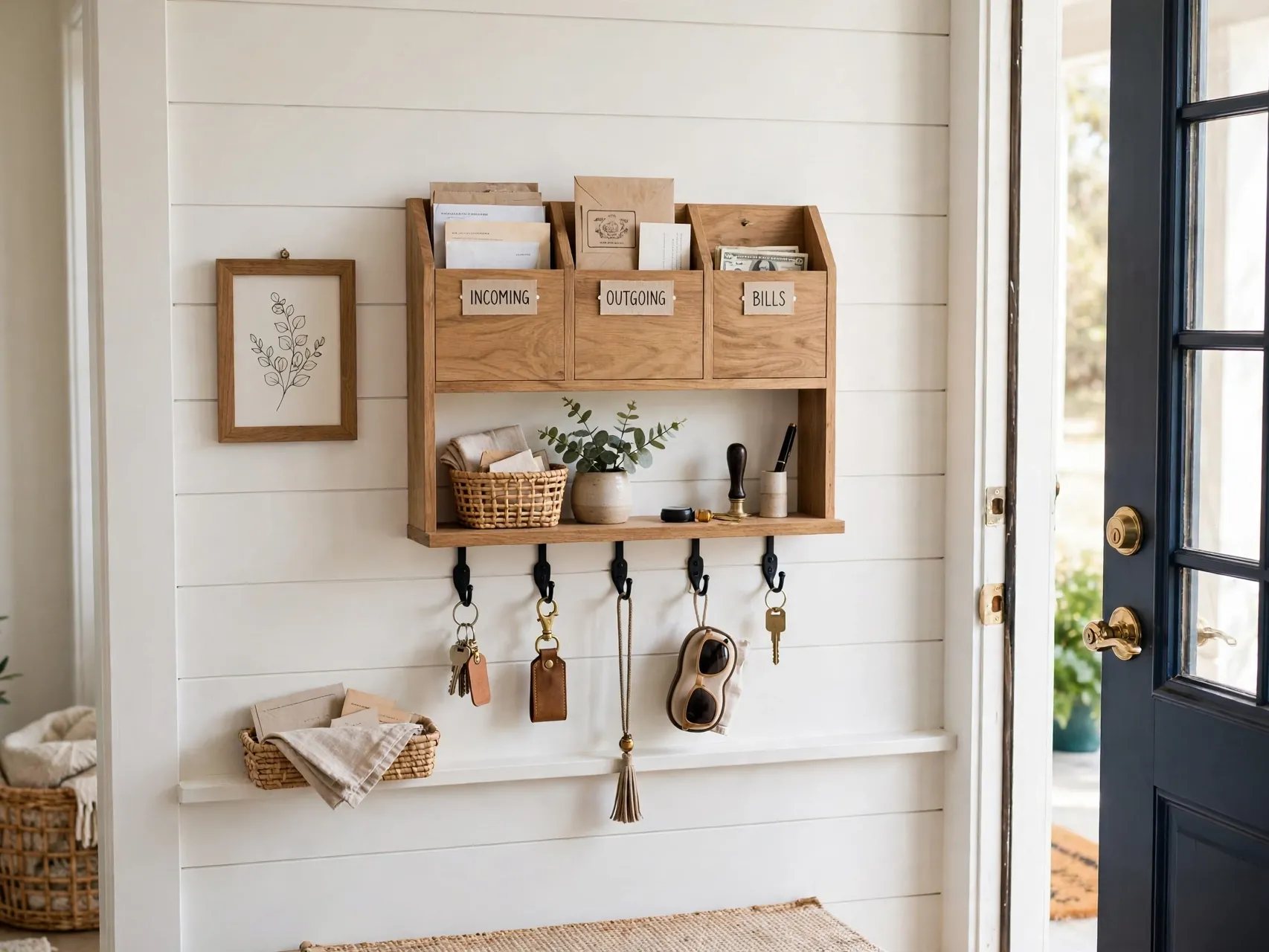
Mail and paperwork need a landing plan or they take the console. A small wall shelf with a mail slot, a vertical file, or a basket labeled for action papers gives post a single home. Add a tiny dish for stamps and a pen so sorting can happen right there.
Mount the shelf into studs or rated anchors, at a height that keeps paper away from small children and pets if needed. Empty the station weekly. Pair it with a small recycling bin nearby and junk mail never even reaches the table. Systems beat surfaces in busy entries, every time.
16. Warm the Space With Wood, Woven, and Linen Texture
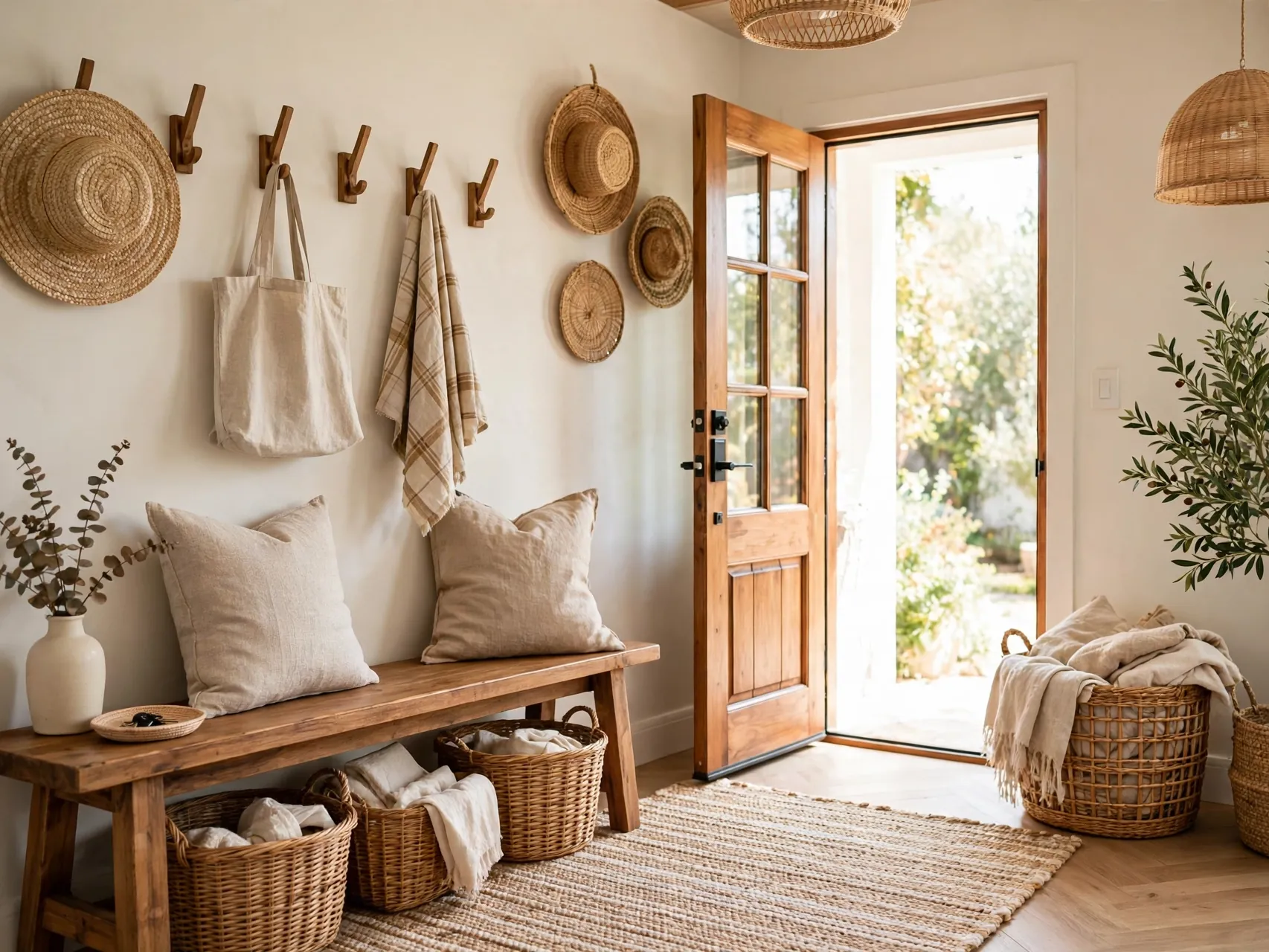
Entries collect hard materials: tile, metal hardware, painted doors. Balance them with texture. A wood bench, woven baskets, a linen cushion, and a wool look runner add the warmth that makes a first impression feel like a hug instead of a hallway.
Repeat each texture at least twice so it feels designed: wood in the bench and a frame, woven in baskets and a tray. Texture also hides the scuffs of real life better than glossy, perfect surfaces do. In a small entryway, texture delivers richness without adding a single extra object.
17. Make a No-Entryway Entry Beside the Door You Use

Many homes have no foyer at all, just a door opening into a room. Claim a small zone beside that door: a slim hook rail, a tiny shelf or wall mounted table, a mirror, and a mat to define the footprint. A rug edge or a painted wall section can mark the boundary.
Keep the zone shallow and disciplined so the living space still feels like itself. A rolling cart or lidded basket can hold the overflow and move when guests come. Small entryway ideas like this prove you need a system, not a spare room, to come home to order.
18. Add Seating for Guests With a Chair or Stools
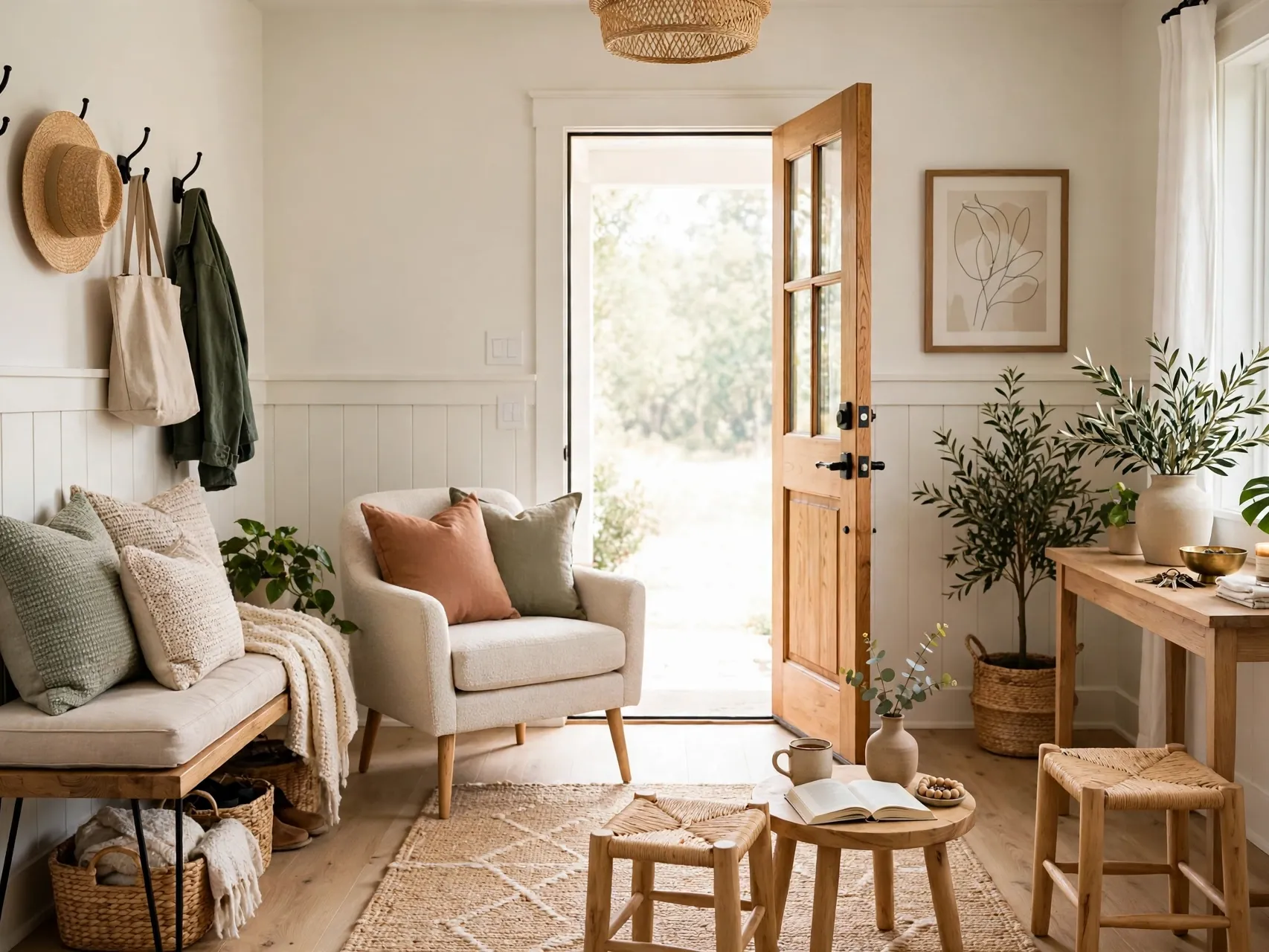
If your entry is wide enough, a small chair or a pair of stools tucked under the console gives guests a graceful place to sit, set down a bag, or manage winter boots. Extra seating also works as a styling surface for a folded throw or a basket between visits.
Keep the walkway rule firm: if seating narrows the path or crowds the door swing, skip it or choose slimmer pieces. Test with the door fully open and people passing with bags. Comfort that creates a bottleneck is not comfort. When the space allows it, though, a seat makes the entry feel like a room.
19. Use Scent and a Small Welcome Ritual
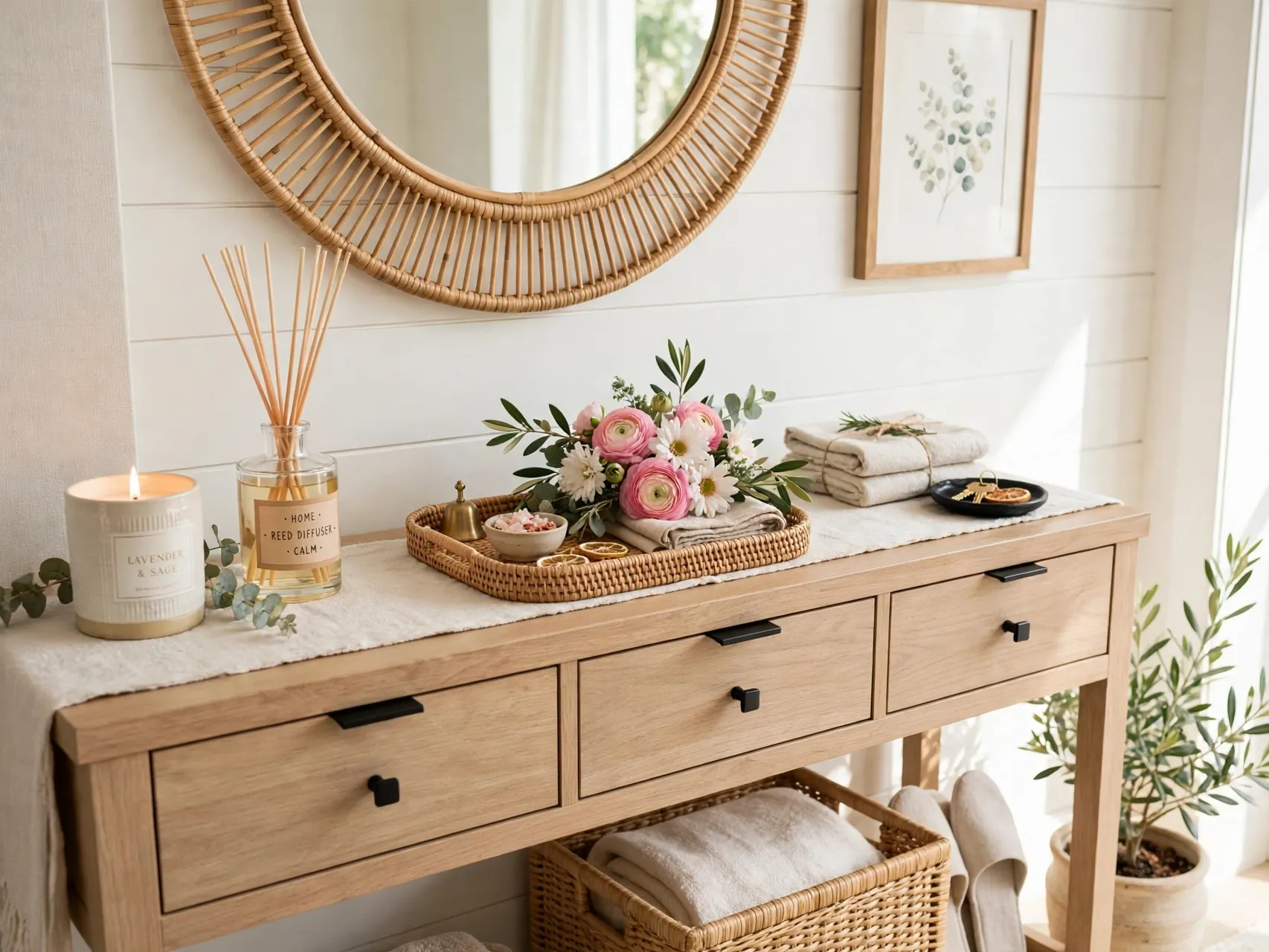
First impressions include scent. Keep the entry smelling fresh with good habits first: shoes aired, mats shaken, bins emptied. Then add a gentle scent if you like it, a reed diffuser on the console, a small bowl of dried botanicals, or a candle you light only when you are home and nearby.
Never leave candles burning unattended, and keep them away from coats, paper, and traffic. A tiny welcome ritual, lamp on at dusk, mat straightened, keys in the tray, takes under a minute and changes how the whole evening feels. Calm is a decor choice you make daily.
20. Anchor the Look With One Piece of Oversized Art
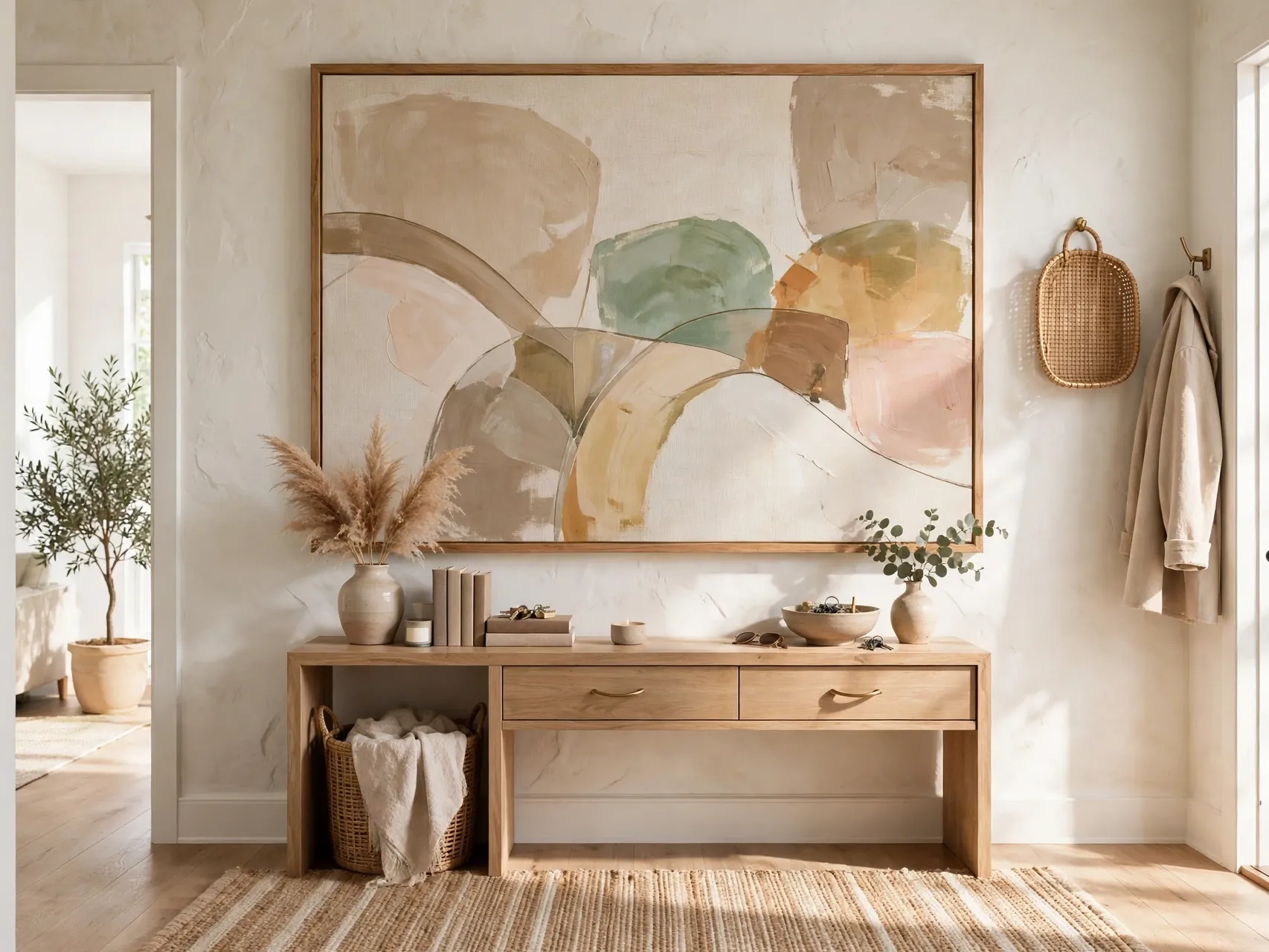
Instead of many small items, one large piece of art or a framed textile above the console can carry the whole entry. Oversized art looks confident, reduces visual clutter, and gives guests a single beautiful thing to remember. Choose colors that connect to the rooms beyond the entry.
Hang it securely into studs or with fixings rated for its weight, centered with the table or bench below. In a rental, a large leaning piece on a sturdy console can work if it is stable and out of the bump zone. Scale is a stylist secret: bigger and fewer beats smaller and many.
21. Keep the Floor Clear With a Weekly Five Minute Reset
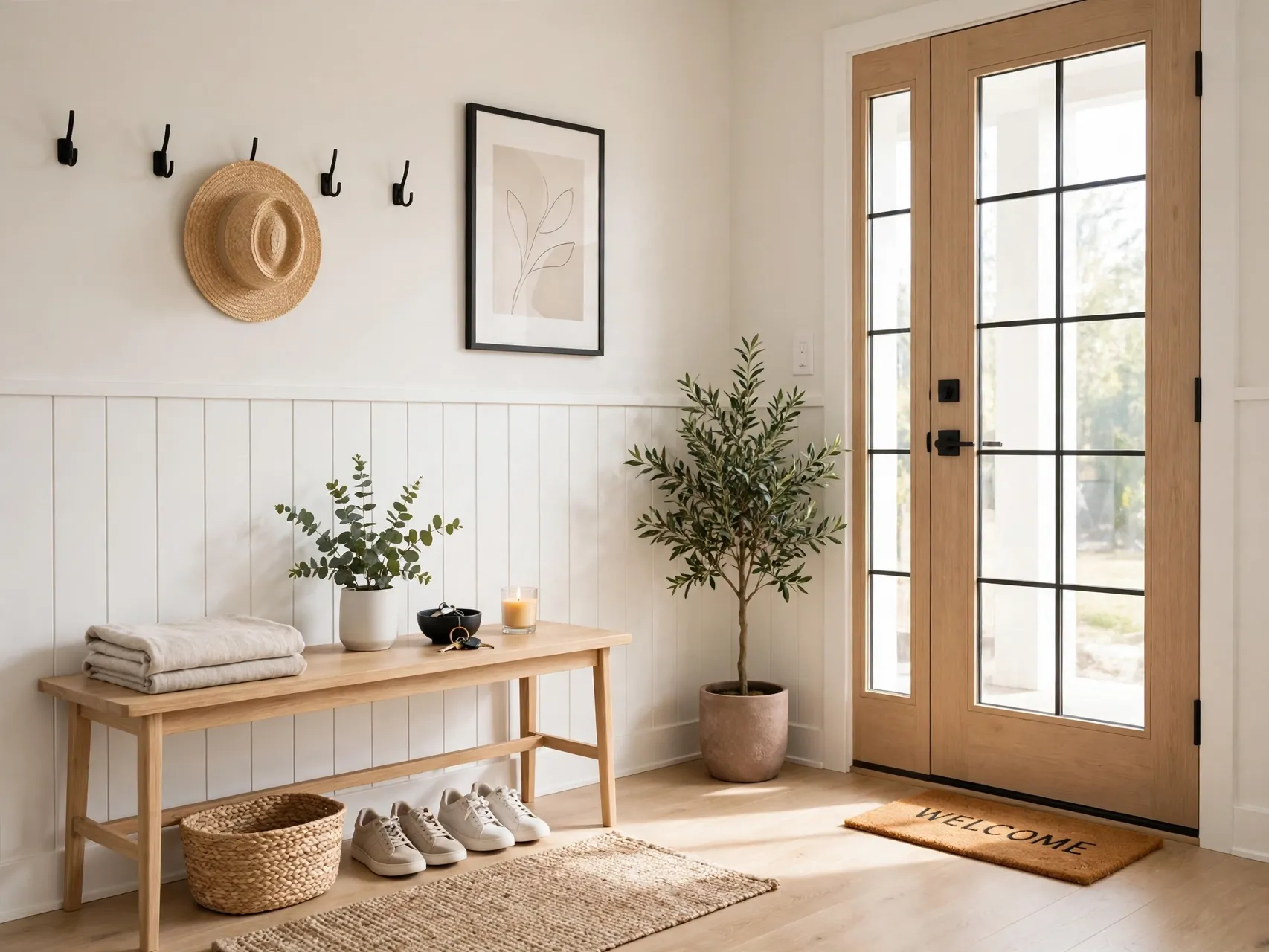
The most stylish entry fails if the floor disappears under bags and shoes. Build a five minute weekly reset: shoes back to their limit, baskets edited, mail sorted, mat shaken outside, mirror wiped. Put it on a set day so it becomes habit rather than a guilt project.
Daily, the rule is simpler: nothing lives on the floor that has a home. Hooks, baskets, and closed storage only work if the household uses them, so place them exactly where items naturally get dropped. Design follows behavior. When the system matches real life, the reset stays easy.
22. Finish With a Doormat That Works Inside and Out

Complete the entry with mats that do their job. Outside, a sturdy scraper mat catches grit before it enters. Inside, your washable runner or mat catches the rest and protects the floor in wet weather. Shake and wash them on a rhythm, because a dirty mat stops protecting anything.
Choose messages or patterns with a light touch if you enjoy them, and keep sizes in proportion to the door. Most of all, keep mats flat and secure so they never become a trip hazard at the threshold. The humble mat is the hardest working of all entryway decorating ideas, and the perfect finishing layer.
FAQ
What does every entryway need to function well?
Three things cover most homes: a seat for putting on shoes, hooks or a rail for coats and bags, and closed storage for shoes and small clutter. Add a surface or tray for keys and mail, plus good light. With those in place, decor choices like mirrors, runners, and art can make the space beautiful without fighting daily chaos.
How do I decorate a very small entryway?
Go vertical and slim. Use a hook rail instead of a coat tree, a narrow console or wall shelf instead of a wide table, and a mirror to add light and a sense of space. Choose a washable runner to define the zone and closed baskets to hide clutter. Keep the walkway and door swing fully clear, and edit ruthlessly: small spaces reward fewer, harder working pieces.
How can renters decorate an entryway without damage?
Choose reversible layers: a runner with a non slip pad, baskets, a mirror or art hung with approved removable fixings used as directed, peel and stick options tested first, and furniture that needs no fixing. Keep original hardware if you swap anything with permission. Photograph the space when you move in so you can return it to its original state with confidence.
What colors work best in an entryway?
Entries can handle more color than large rooms because you experience them briefly. Warm neutrals make a calm base, while a deeper door color, a patterned runner, or bold art adds personality. Connect at least one entry color to the rooms beyond so the home flows. Test paint in daylight and evening light, since many entries have little natural light of their own.
How do I keep my entryway tidy with kids and pets?
Give each person one basket or cubby, add a lower hook row kids can reach, set a firm shoe limit for the entry, and keep a washable mat and a towel for paws by the door. A five minute weekly reset keeps systems honest. The goal is a setup children can actually maintain, with storage at their height and clear, simple rules.
Key Takeaways
- Function first, always: A seat, hooks fixed securely, and closed storage solve most entryway problems before decor begins.
- Protect the path: Keep door swing and walkways clear, secure mirrors and art into studs or rated anchors, and keep cords out of traffic.
- Layer light and softness: Overhead light plus a warm lamp, a washable runner, and woven or wood texture make the welcome feel real.
- Give everyone a home base: One basket or cubby per person ends the daily clutter negotiation at the door.
- Small entries still work: Slim, vertical, renter friendly systems prove you need a plan, not a foyer, for a great first impression.
- Inspired to give your doorway a fresh welcome? Save these ideas to Pinterest and pin the first change you will make this week.