21 Ways to Keep House Warm Without Heating This Winter
Introduction
Whether the furnace is broken, the bill is frightening, or a storm has cut the power, there are nights when you need to keep house warm without heating, and you need a plan that actually works. The principle is simple: stop the warmth you have from escaping, gather everyone into a smaller space, and warm people directly with layers, bedding, food, and movement.
Most of this guide costs nothing. Drafts sealed with towels and tape, curtains closed at dusk, doors shut to cold rooms, and every blanket in the house put to work will carry a home a long way through a cold snap. Work through the ideas in order and your living room can feel like a different climate from the hallway outside it.
One section is not optional reading. The first idea covers the safety rules that matter most, including the carbon monoxide warnings from the CDC. Every winter, people die trying to heat homes with ovens, grills, and generators used indoors.
1. Start With the Safety Rules That Matter Most
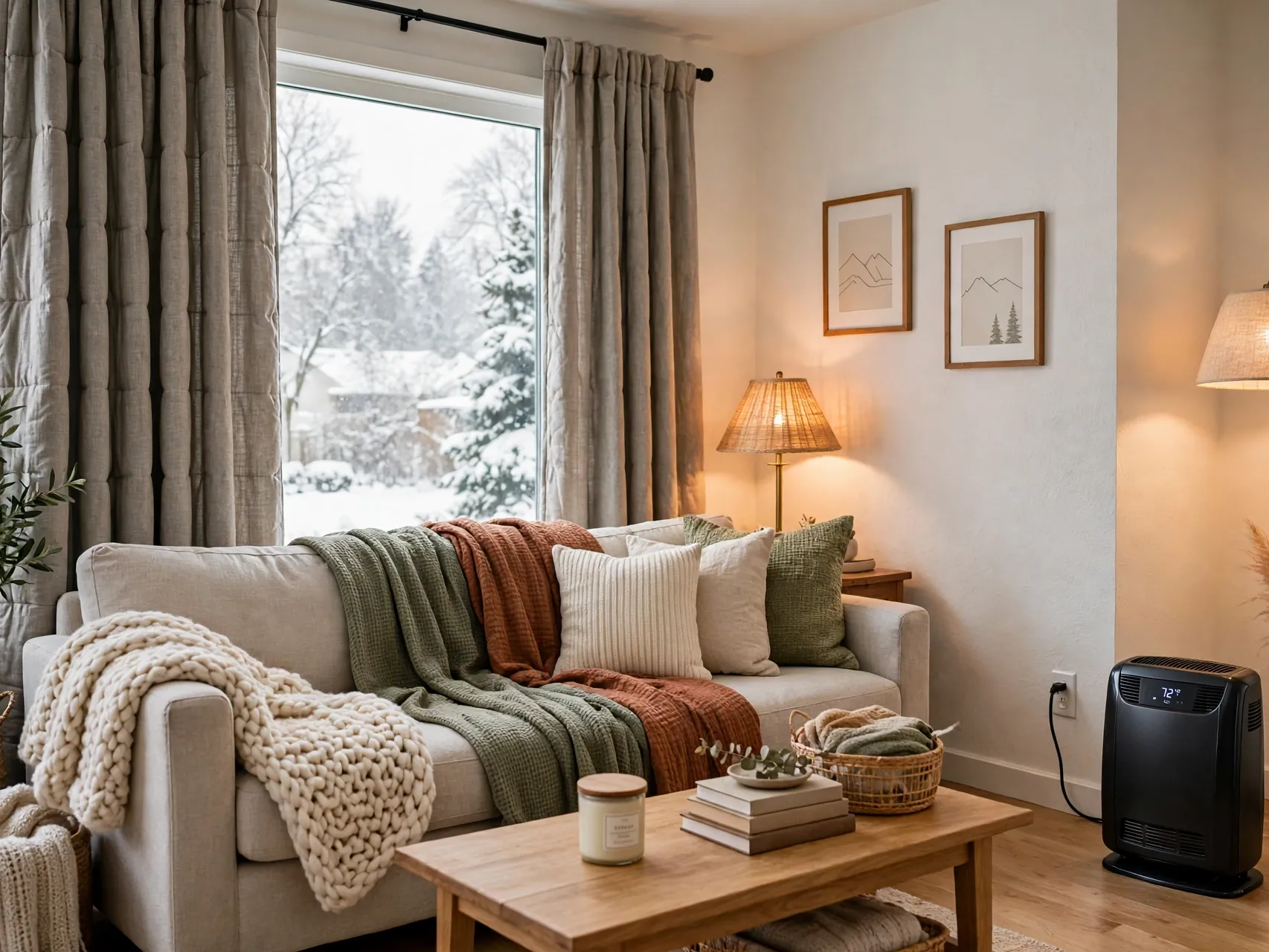
Memorize this before anything else. Never use an oven, a gas stovetop, a grill, charcoal, a camp stove, or a generator to heat your home indoors. The CDC is blunt about this: burning fuel devices produce carbon monoxide, an odorless, colorless gas that can kill people and pets before anyone feels seriously ill. Generators belong outside only, well away from doors, windows, and vents.
Keep working carbon monoxide alarms on every level of your home and test them. Early signs of CO poisoning include headache, dizziness, weakness, nausea, and confusion, and people who are sleeping may never wake up. If an alarm sounds or several people feel ill at once, get everyone outside into fresh air and call 911.
2. Seal Drafts Around Doors With Stoppers and Sweeps

Cold air pours under doors, so this is your first fix. Roll towels or blankets tightly and press them along the bottom of exterior doors, or fit a proper draft stopper or door sweep. Add self adhesive foam tape around frames where you feel air moving, and hang a heavy blanket over the coldest door at night if drafts persist.
Interior doors matter too.
3. Weatherstrip Windows and Lock Them Tight

Windows leak at the sash, the frame, and the meeting rail in the middle. Press removable rope caulk or foam tape into the gaps you can feel, and stuff narrow cracks with strips of cloth in an emergency. Then lock every window: a latched sash pulls the two halves together and seals far better than a closed but unlocked window.
Check for cracked panes and failed seals while you work.
4. Cover Windows With Film and Thermal Curtains

Glass loses heat fast, so cover it in layers. Clear window film kits, taped to the frame and shrunk smooth with a hair dryer, add a still air pocket over the pane. Over that, hang the heaviest curtains you own, thermal or blackout lined if you have them, fitted wide and long so cold air cannot spill easily around the edges.
A blanket pinned over a curtain rod works in a pinch for the coldest window in the house. Keep one window in each bedroom easy to uncover and open, because escape routes and ventilation still matter.
5. Use the Sun by Day and Close Up at Dusk
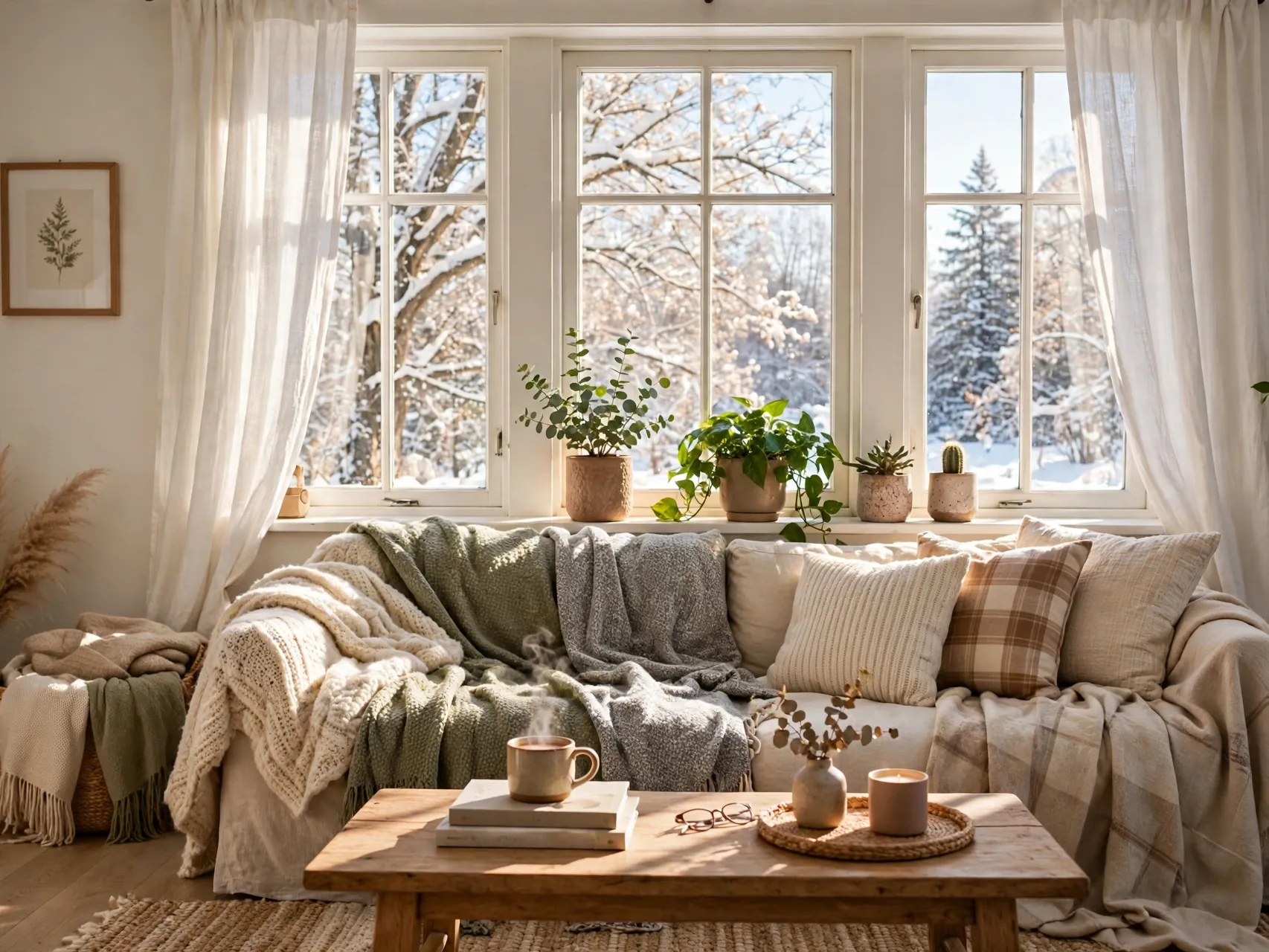
Sunlight through glass is free heat, so earn it. On sunny days, open curtains and blinds on the windows the sun hits, and let floors and furniture soak up the warmth. Move seating into the sun patch for the warmest seat in the house, and let pets do what they already know to do.
As soon as the sun leaves a window, close its coverings.
6. Shrink Your Living Space to One Warm Room
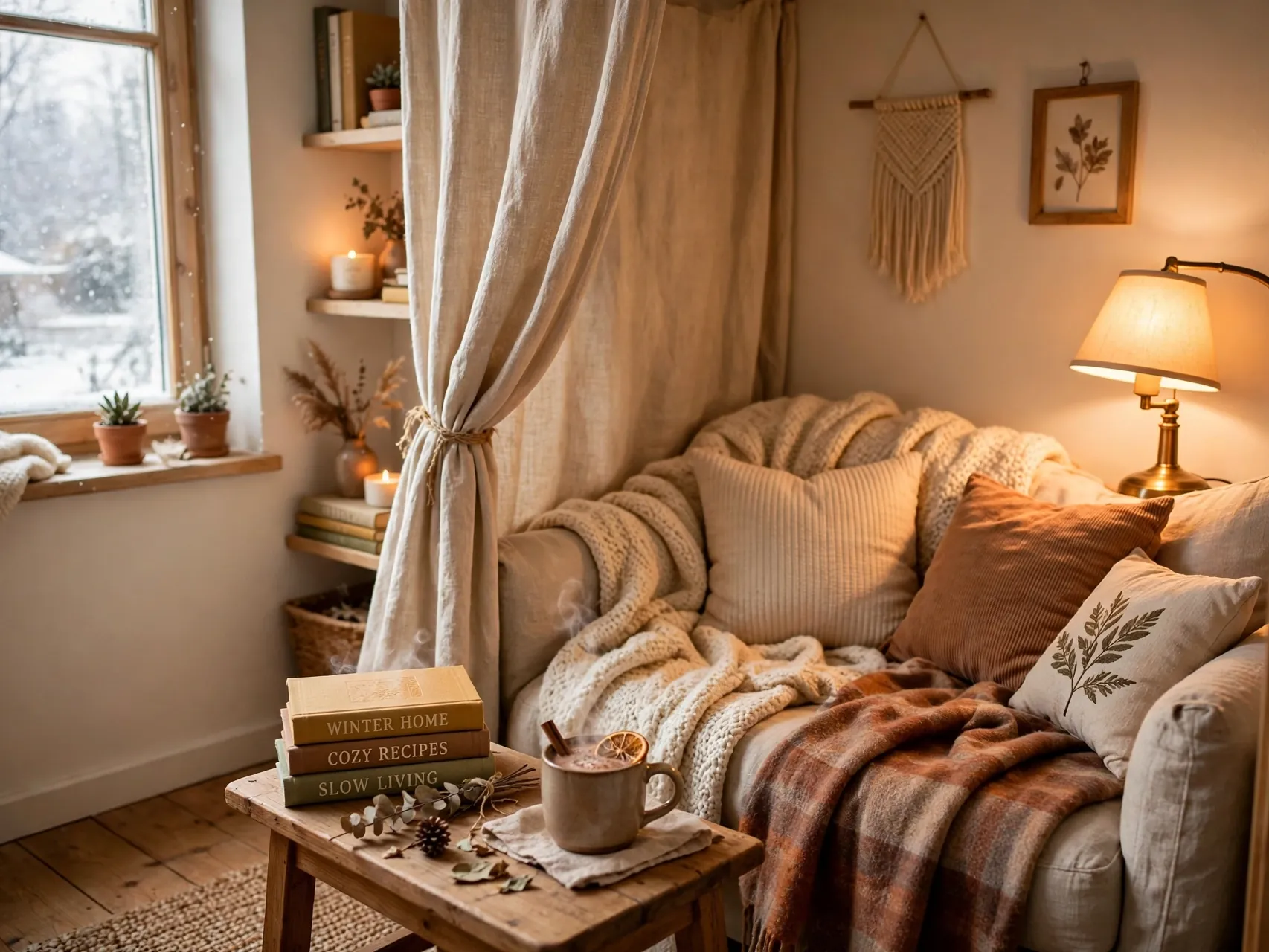
Heating people in one room is far easier than warming a whole house. Choose the smallest comfortable room with few windows, a door that closes, and space for everyone to sit and sleep if needed. A room away from exterior corners, with another room or a closet buffering its walls, holds warmth best.
Move in the sofa cushions, blankets, a kettle if you have power, books, games, and charging cables, then close the door and seal its gaps.
7. Close Doors and Curtains in Unused Rooms
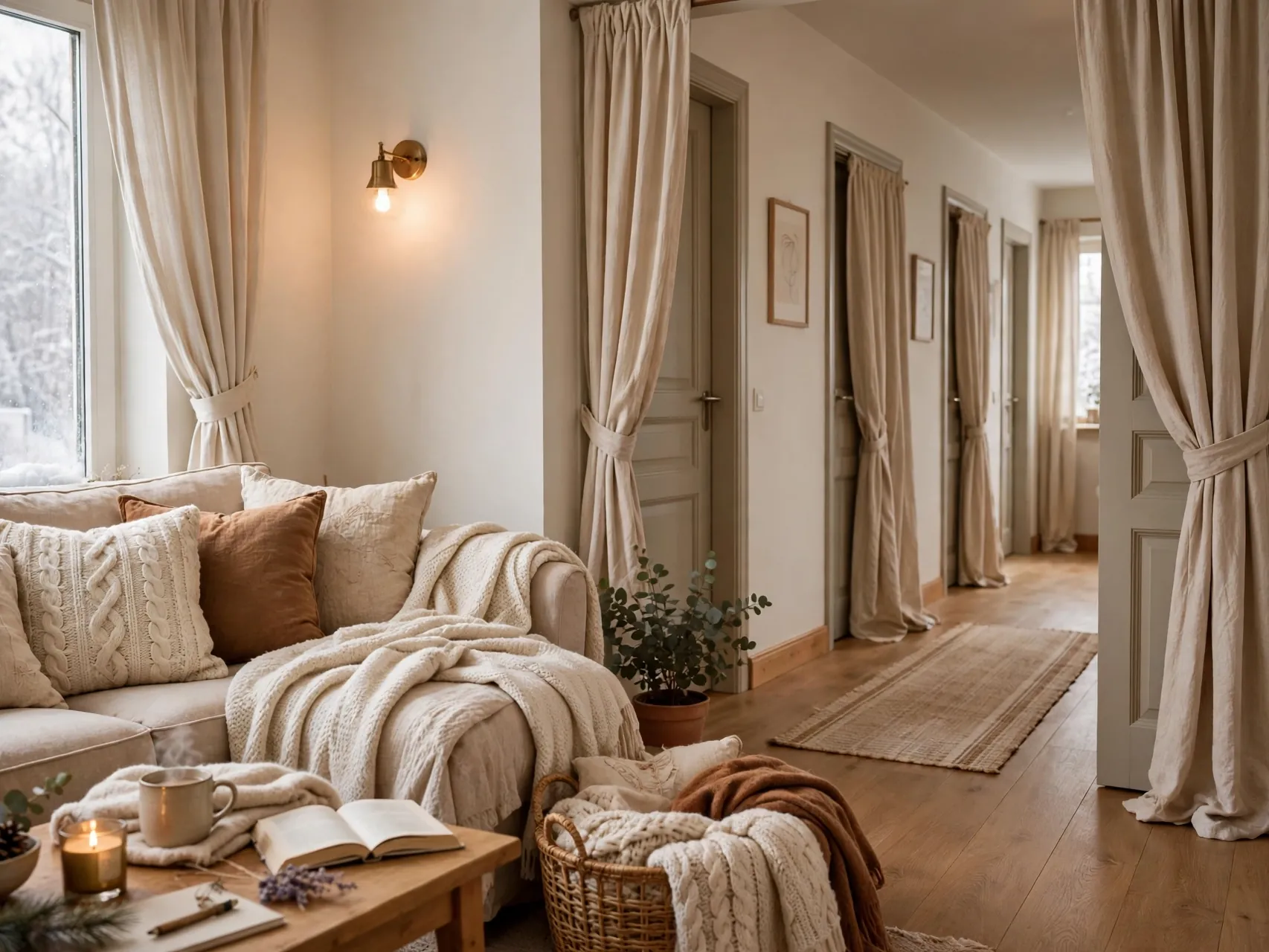
Every open door to a cold room is warmth leaving your living space. Walk the house and close doors to spare bedrooms, formal rooms, and storage spaces, then add a rolled towel at the base of each door. Those closed rooms become buffer zones of still air between you and the outdoors.
Close curtains in those rooms too, to slow heat loss through their windows. If your home has heating vents and the system is off, leave them as they are: vents are not a warmth strategy without heat.
8. Lay Rugs and Runners on Cold Floors

Cold floors drain warmth through your feet and make a whole room feel colder than the air really is. Cover hard floors in your warm room and bedrooms with the thickest rugs you have, and layer a blanket or an old duvet under a thin rug if the padding is poor. Runners in the hallway to the bathroom make night trips far less miserable.
Overlap rugs where you sit and stand most: by the sofa, the bed, and the sink.
9. Dress in Layers, Warm Socks, and Slippers

Warm the person, not just the room. Start with a close fitting base layer, add an insulating middle layer like fleece or wool, and finish with a loose outer layer or a blanket wrap. Layers trap warm air against your body, and you can adjust them as you move between cooking, resting, and sleeping.
Feet, hands, and head matter out of proportion to their size.
10. Warm the Bed With Flannel, Layers, and a Hot Water Bottle

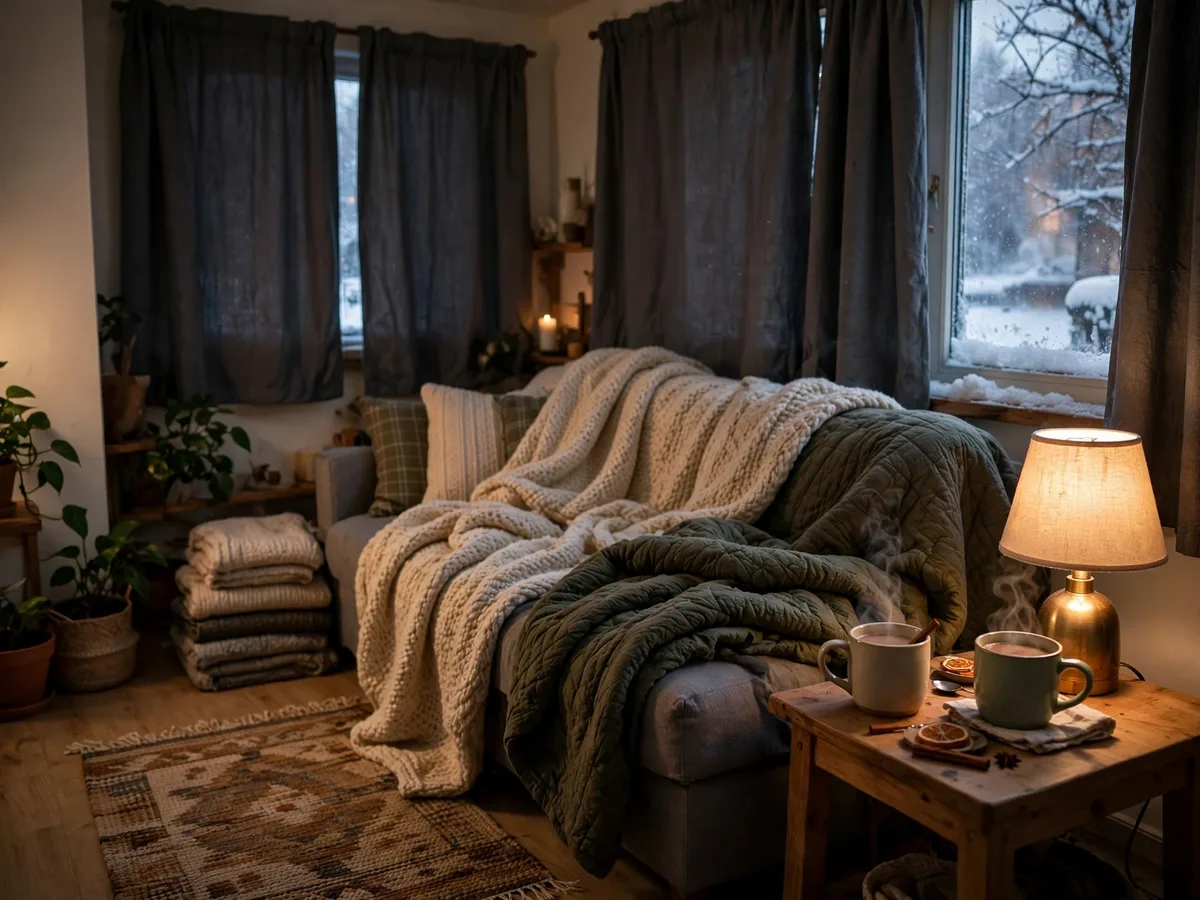
Sleep is when cold bites hardest, because your body cools as it rests. Make the bed a warm system: flannel or brushed cotton sheets, blankets layered so air is trapped between them, and a duvet on top. Wear socks and a warm layer to bed, and consider sleeping in the warm room together on mattresses on the floor.
A hot water bottle, filled carefully with hot but not boiling water, wrapped in a cover or towel, and placed in the bed before you get in, gives hours of gentle warmth. Check the bottle and stopper for damage, never sit or lie directly on it, and keep it away from babies and anyone who cannot move it away themselves if it feels too hot.
11. Use an Electric Blanket Safely and Then Switch It Off
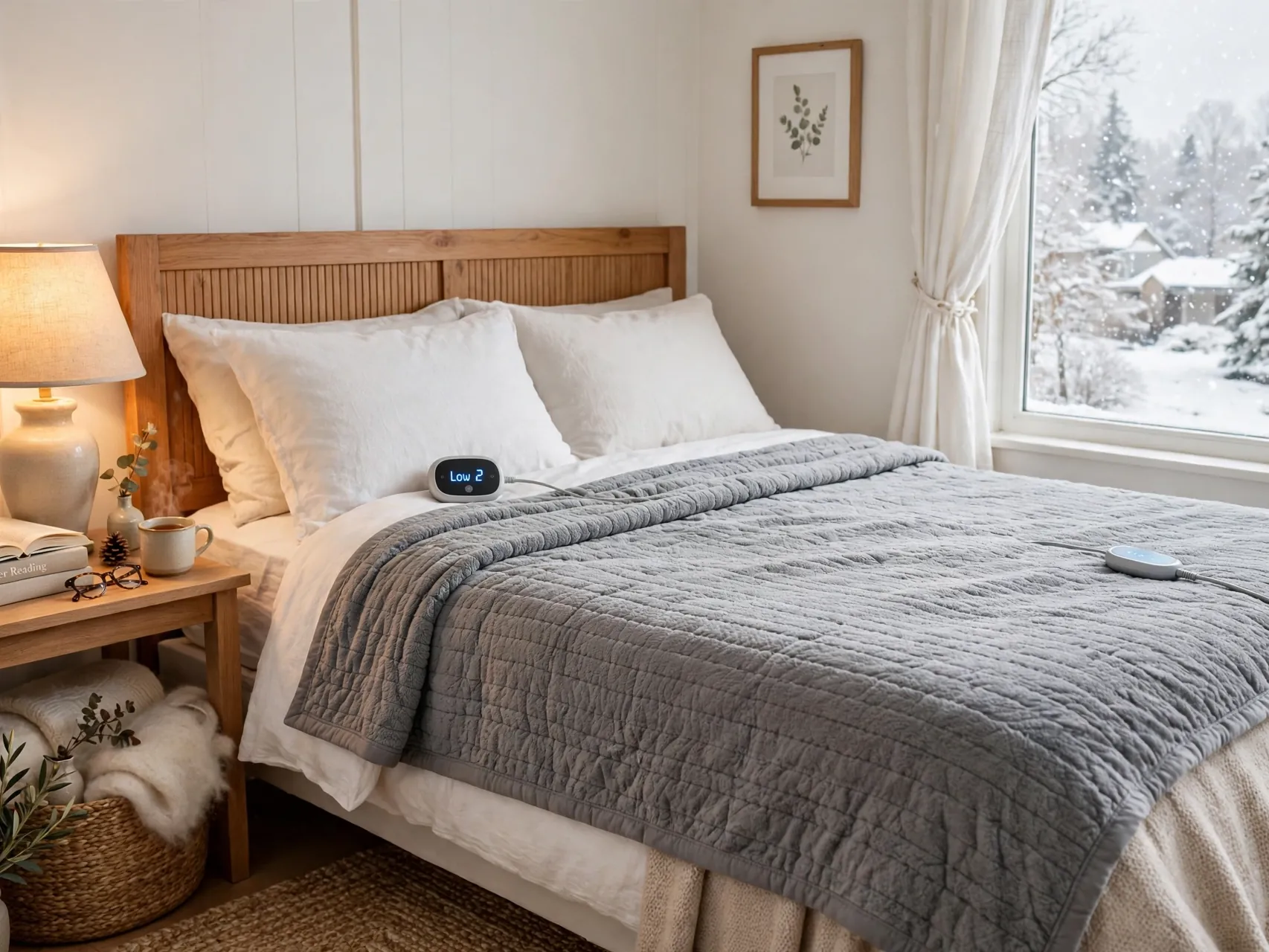
If you still have power, an electric blanket or heated throw is one of the most efficient ways to feel warm, because it heats you directly. Use it to pre warm the bed or while you sit in the evening, following the maker instructions closely. Inspect cords and fabric for damage, and never use a blanket that is frayed, scorched, or very old.
The safe habit is simple: warm the bed, then switch the blanket off before you sleep, unless the maker specifically designs and approves it for all night use. Never fold or bunch a running blanket, never place other bedding or items on top of it while it heats, and keep it away from water. Warmth first, switch off second, sleep third.
12. Cook and Bake, Then Enjoy the Kitchen Warmth You Already Made

Normal cooking warms a kitchen as a side effect, so plan hot meals and baking on the coldest days. A pot of soup on the stove, bread in the oven, and a kettle for drinks all add gentle heat and humidity to the room while they feed everyone. Eat in the kitchen while it is at its warmest.
Be clear about the line: cooking food is fine, heating the home with the oven is not. Never run an oven or stovetop as a heater, and never leave an oven door open to warm the room. When cooking ends, burners and oven go off. The CDC warning in the first idea applies here with full force, and no comfort tip in this guide overrules it.
13. Sip Warm Drinks and Eat Regular Warm Meals

Your body makes heat from food, so eat properly through a cold snap. Regular warm meals and hot drinks, soup, tea, cocoa, or simply hot water with lemon, help you feel warm from the inside and keep energy up for everything else on this list. Keep a thermos filled during the day so warm drinks are ready without reheating.
Feed children and older relatives on schedule even if appetites dip, and check that everyone is drinking enough water, since heated indoor air and heavy layers can hide dehydration.
14. Move Your Body Through the Day

Movement is a furnace you carry with you. Housework, stretching, dancing with the kids, and short exercise breaks all raise body heat quickly. Build little movement moments into the day, especially after long stretches of sitting, when hands and feet go cold first.
Keep it gentle and safe: clear a space, wear secure footwear, and stop if anyone feels dizzy or unwell.
15. Use a Space Heater Only With Strict Safety Rules

If you use a portable space heater for your one warm room, follow NFPA style safety rules without exception. Keep the heater on a flat, hard, nonflammable surface, at least 3 feet away from anything that can burn: bedding, curtains, furniture, clothing, and paper. Plug it directly into a wall outlet, never an extension cord or power strip.
Never leave a space heater unattended. Turn it off when you leave the room, when you go to sleep, and when you leave the house, no exceptions for tip over switches or timers. Keep children and pets at least 3 feet away, and keep the heater out of walkways. A heater used this carefully can take the edge off one room; used carelessly, it is a leading cause of winter house fires.
16. Reverse Ceiling Fans to Push Warm Air Down
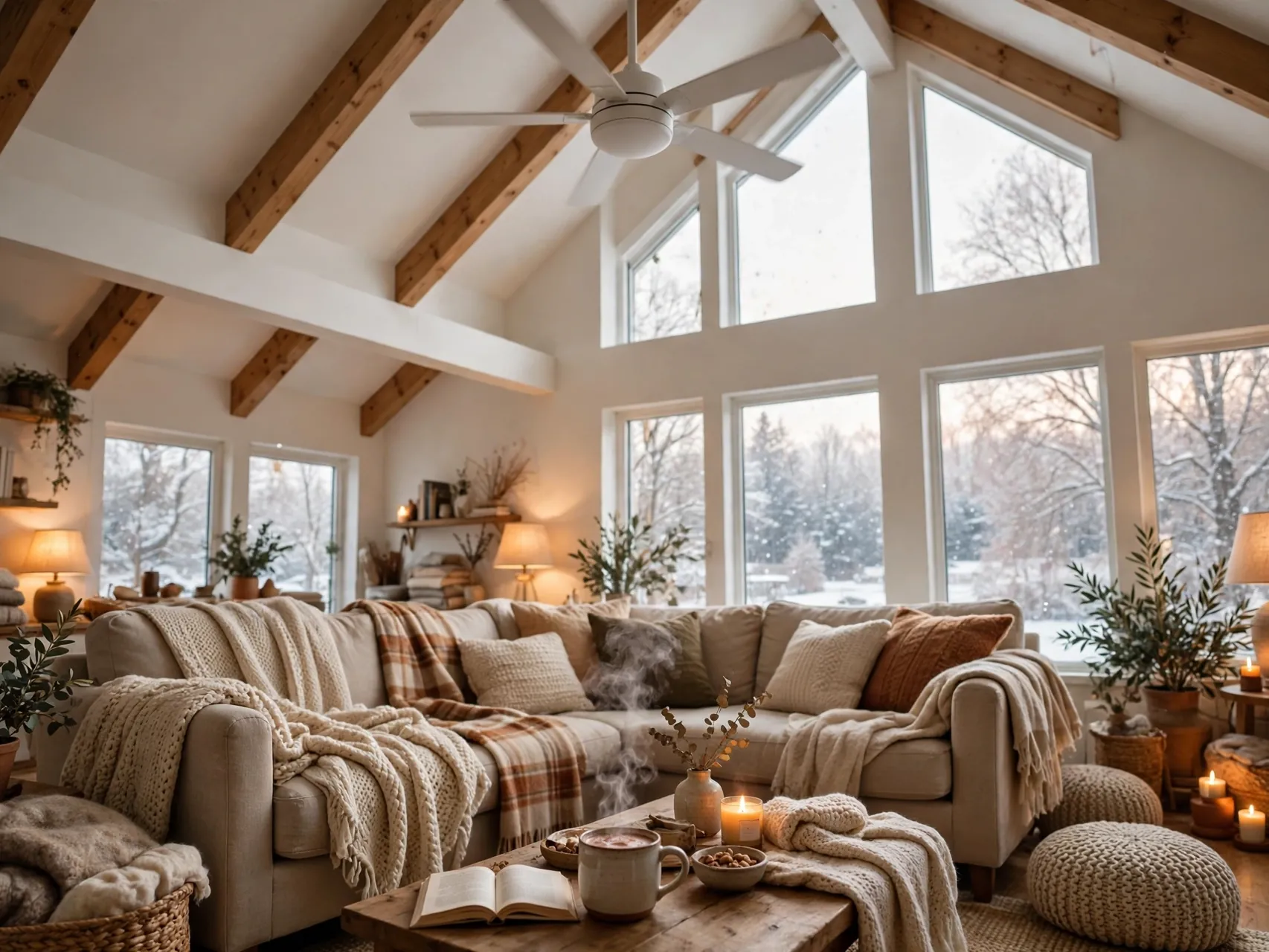
Warm air rises and pools at the ceiling, out of reach. If you have a ceiling fan and power, run it on the low, reversed setting made for winter, usually clockwise when viewed from below. The fan pushes the warm ceiling air gently down the walls without creating a cooling breeze on your skin.
Keep the speed low: a fast fan in winter feels like a draft and defeats the purpose. This trick helps most in rooms with high ceilings in your warm room. If the power is out, skip this idea and rely on layers and sealing instead, and never reach into a fan housing or change settings on a ladder in the dark.
17. Block Chimney and Fireplace Drafts Safely
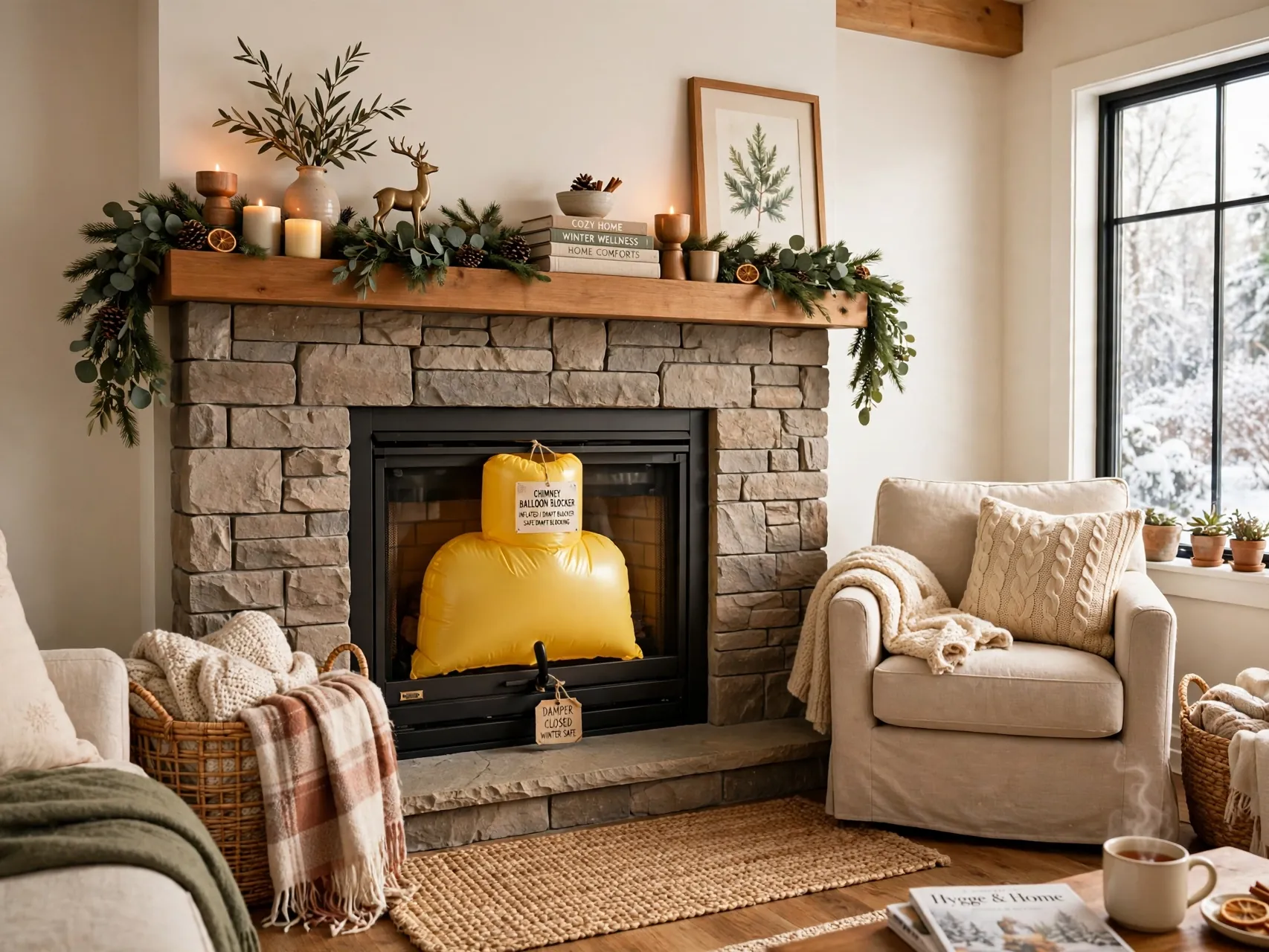
An unused fireplace is an open hole to the sky. When the fire is completely out and every ember is cold, close the damper. For a fireplace you are not using at all, a removable chimney balloon or flue plug, fitted as its maker directs, seals the draft far better than a damper alone.
Rules are strict: never seal the flue with a fire lit or ashes still warm, keep a visible reminder tag on any plug, and remove the plug and open the damper fully before anyone lights a fire. If you do use the fireplace, burn only proper firewood in a vented, inspected chimney, keep a screen in place, and never leave the fire unattended or burning while you sleep.
18. Protect Pipes From Freezing Before the Coldest Nights
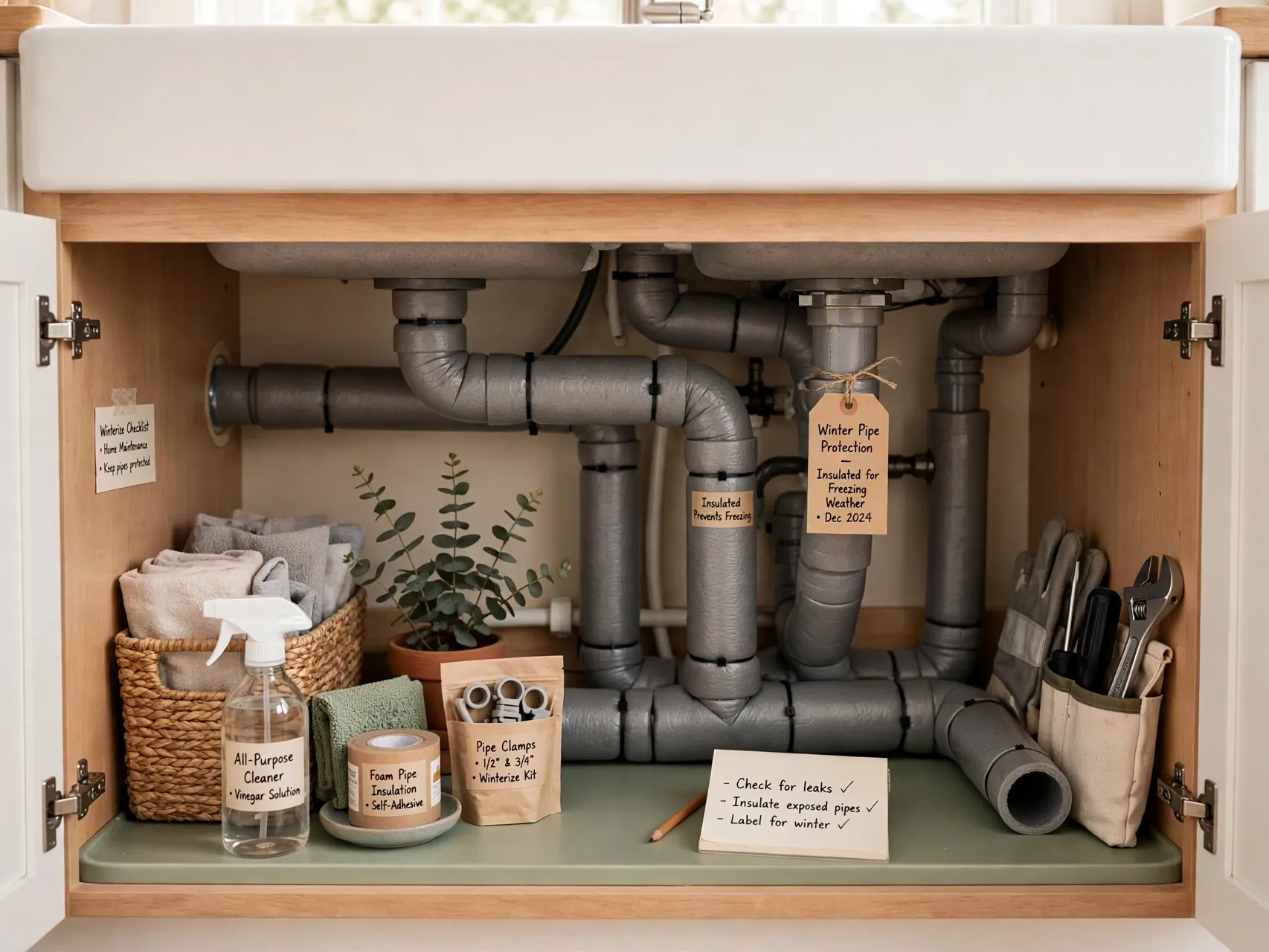
A burst pipe can turn a cold week into a disaster, so protect plumbing early. Insulate exposed pipes in basements, crawl spaces, and exterior walls with foam sleeves or wrapped towels and tape in an emergency. Open the doors of cabinets under sinks on exterior walls so warmer room air can reach the pipes.
Know where your main water shutoff valve is before you need it, and make sure it turns.
19. Let Faucets Drip and Watch for Trouble Signs

When temperatures fall well below freezing, let the faucet served by the most exposed pipes drip slowly, both hot and cold, or a single faucet at a slow trickle as local water guidance often suggests. Moving water is harder to freeze, and a drip also relieves pressure if ice does form inside a pipe.
Check pipes daily during the cold snap. A faucet that slows to nothing, frost on a pipe, or an unusual bulge are warning signs. If a pipe freezes, never use a torch or open flame to thaw it. Use a hair dryer or warm towels, and if a pipe has burst, shut off the main water valve and call a plumber.
20. Know When Cold Becomes a Health Emergency

Cold homes are a health risk, not just a discomfort, especially for babies, older adults, and anyone who is ill. Learn the warning signs of hypothermia from CDC style guidance: shivering, exhaustion, confusion, fumbling hands, memory problems, and slurred speech in adults. Babies may have bright red, cold skin and very low energy.
Confusion and the loss of shivering are danger signs that need emergency help: call 911.
21. Find a Warming Center or Stay With Others When Home Is Too Cold
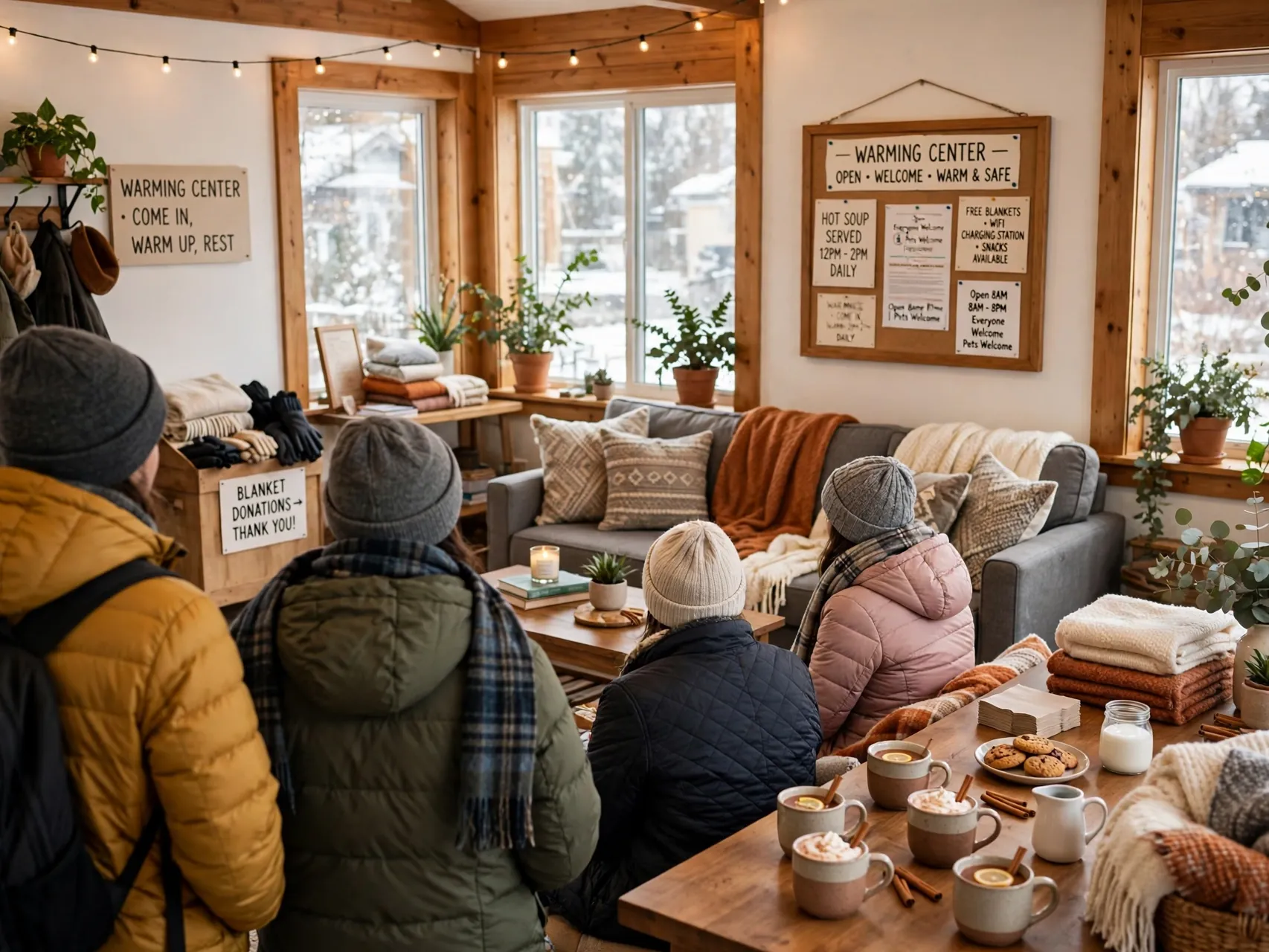
There is a point where blankets are not enough, and the right move is to leave. Many cities and counties open public warming centers in libraries, community centers, and shelters during extreme cold, and local news, city websites, and 211 helplines can tell you where they are. Friends or family with heat are another good option.
Go before anyone shows emergency symptoms, and take medications, warm clothes, chargers, and supplies for babies and pets arrangements where needed. Check on neighbors, especially older adults living alone, and share the warming center information with them.
FAQ
What is the cheapest way to keep warm without heating?
Seal the drafts and shrink your space. Close doors to unused rooms, block gaps under doors with rolled towels, cover windows with heavy curtains, and gather everyone into one small room with every blanket you own.
Can I use my oven or a grill to warm the house in an emergency?
No, never. The CDC warns that ovens, grills, charcoal, camp stoves, and generators used indoors produce carbon monoxide, an odorless and colorless gas that can kill quickly, including people who are asleep. Cook food normally if you like, with burners and oven switched off when cooking ends, but never run any fuel burning device as a heater. If your home is dangerously cold, go to a warming center or stay with someone who has heat.
How do I keep pipes from freezing when the heat is off?
Insulate exposed pipes with foam sleeves or wrapped towels, open cabinet doors under sinks on exterior walls, and let the most exposed faucets drip slowly during the coldest nights. Know your main shutoff valve location and check it works. If the house will sit empty and cold, shutting off the water and draining the lines is the safest option of all.
Are space heaters safe to run overnight?
No. NFPA style guidance is clear: turn space heaters off when you leave the room or go to sleep, and never leave one unattended. While it runs, keep it at least 3 feet from anything that can burn, on a flat hard surface, plugged directly into a wall outlet. For overnight warmth, rely on layered bedding, flannel sheets, warm sleepwear, and a hot water bottle used carefully instead.
When is a cold house dangerous enough to leave?
Leave, or call for help, when anyone shows hypothermia signs such as confusion, slurred speech, fumbling hands, or shivering that stops, and call 911 in an emergency. Babies and older adults are at risk sooner. Also leave if your carbon monoxide alarm sounds, if pipes burst and flood, or if indoor temperatures keep falling despite every step here. Warming centers, libraries, and friends with heat exist for exactly these nights.
Key Takeaways
- Safety outranks warmth: Never heat with an oven, grill, charcoal, camp stove, or generator indoors, keep CO alarms working, and space heaters run only 3 feet clear, supervised, and off at bedtime.
- Seal and shrink: Block drafts, cover windows, close off cold rooms, and live in one small warm room together.
- Warm the people: Layers, socks and slippers, flannel bedding, hot water bottles, warm meals, and gentle movement beat trying to heat empty space.
- Protect the pipes: Insulate exposed lines, open sink cabinets, and drip faucets on the coldest nights to avoid a burst.
- Know the exit plan: Learn hypothermia signs and your nearest warming center before you need either.
- Staying cozy through a cold snap? Save this guide to Pinterest and pin the first fix you will set up tonight.