25 Corner Closet Ideas That Maximize Every Inch of Space
Introduction
Every closet has that corner where clothes go to disappear. Rods crash into each other, shelves stop short, and the deepest part turns into a dark pile of things you forgot you owned. The right corner closet ideas turn that dead zone into some of the hardest working storage in the room.
Corner closets come in a few shapes. Some are L shaped reach in closets, some are walk in closets with two walls of storage meeting, and some are built into the corner of a bedroom itself. The fix is similar in each case: stop the two sides from fighting, give the corner itself one clear job, and use the full height of the walls.
Professional closet designers return to the same moves again and again: bridge the gap with corner shelves, use one hanging side and one shelving side, add rotating or pull out storage for deep spots, and light the corner so you can actually see what is there. None of these require a full renovation, and many cost less than a new set of matching bins.
The 25 ideas below move from big layout choices to small finishing touches. Start with the layout ideas at the top, because no accessory can rescue a corner where two crowded rods overlap. Then add the smaller pieces that match how you dress each day.
Bridge the Corner With Wrap Around Shelves
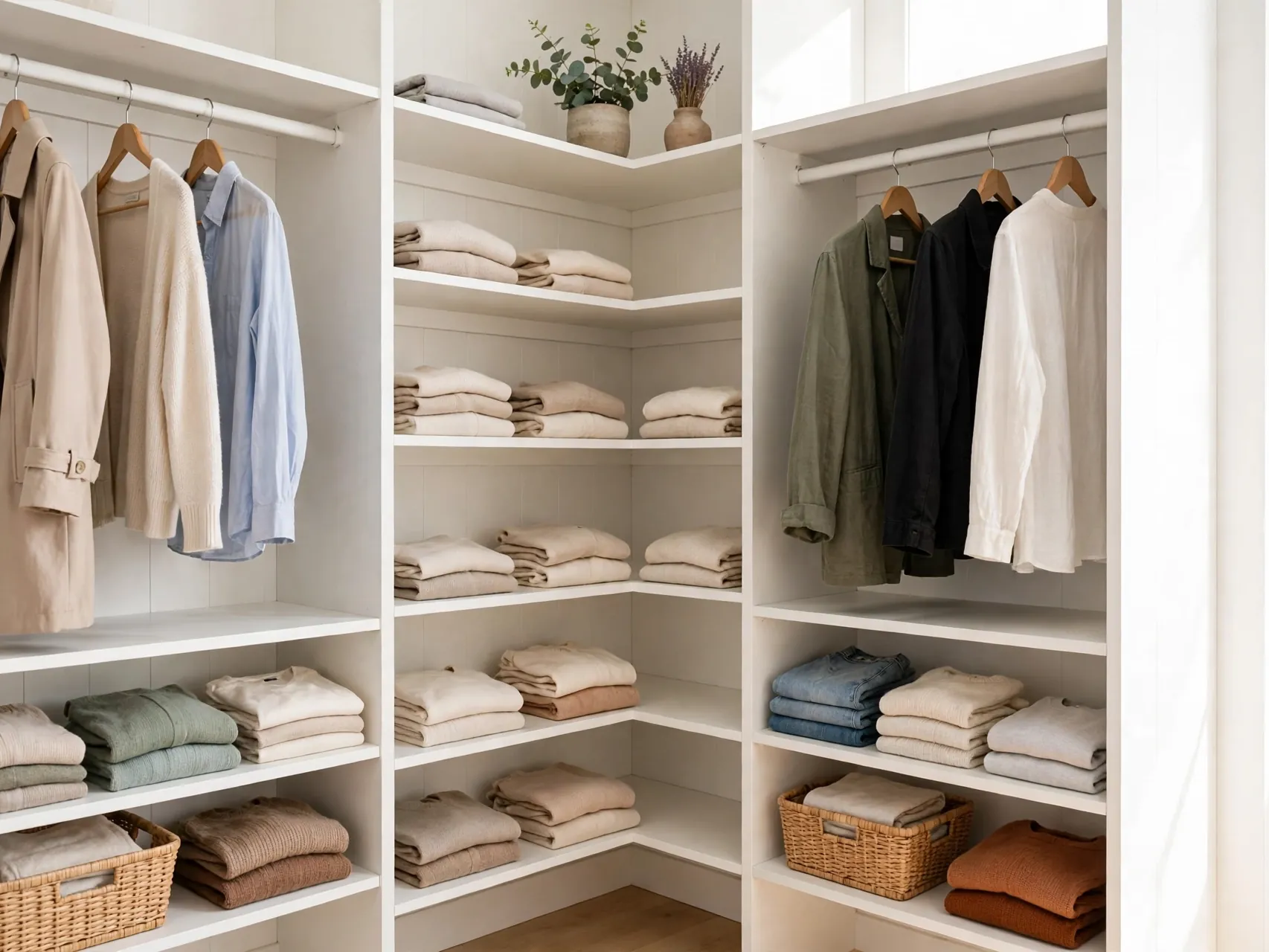
Bridge shelves connect the two walls in a V or curved shape, turning the gap between perpendicular shelves into usable surface. Use them for folded sweaters, handbags, or labeled bins. Because the shelf runs continuously, nothing falls into a crack between units. This is often the single best upgrade for an L shaped closet.
Measure the spot before you buy anything, and leave a little breathing room so containers slide in and out without catching. Put the things you.
Let One Side Hang and One Side Fold

Instead of running hanging rods into each other, let one wall carry all the hanging clothes and let the other wall run shelves and drawers into the corner. You reach folded items without pushing past hanging coats. Designers use this split often because it removes the blind spot where two rods cross and clothes tangle.
Group similar things together first, then give each group one home. When a category starts to overflow, that is your signal to edit it down.
Add a Rotating Lazy Susan Tower

A tall rotating unit, sometimes called a lazy Susan tower, brings shoes, bags, and folded items out of the deep corner with a spin. Stacked round shelves use the full height while keeping everything visible. It suits walk in closets best, but smaller versions fit reach in corners too. Keep heavier items on the lower levels for a steady spin.
Keep the setup easy to reset in under a minute. If returning an item takes several steps, it will end up on the floor or.
Install Corner Shelves From Floor to Ceiling

A narrow tower of corner shelves claims vertical space that usually sits empty above a single rod. Adjustable shelves spaced for shoes at the bottom, folded knits in the middle, and storage boxes at the top make the tower earn its footprint. Add a small light at the top if the corner sits in shadow.
Think about height as well as width. Most of these spaces waste the top half, so stacking, tiering, or hanging lifts items off the base.
Use an Angled Rod for the Corner Run
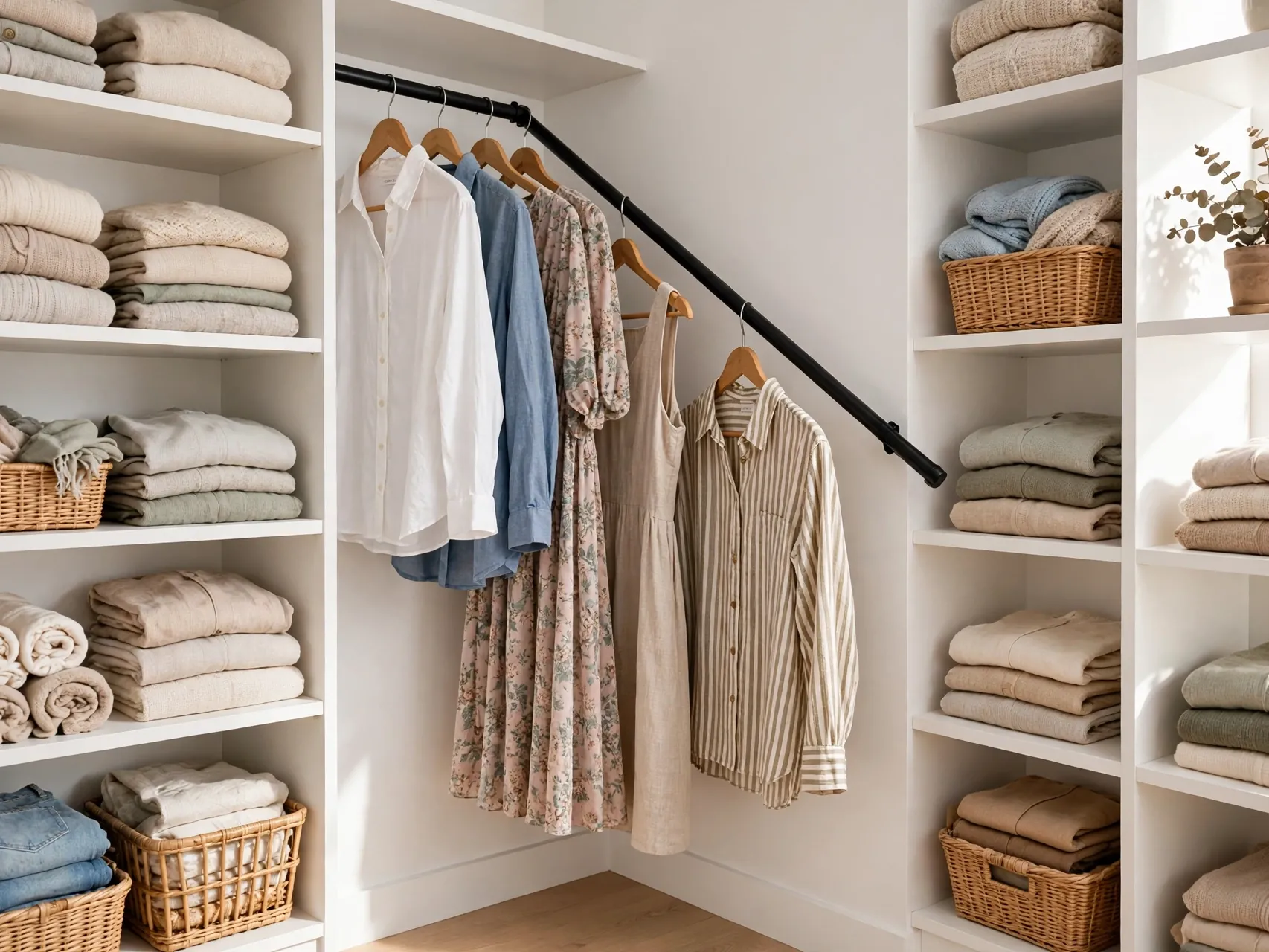
An angled or curved rod lets garments wrap the corner instead of stopping dead at the wall. Hang less used pieces, like formal wear or seasonal coats, in the angled section where access is a little slower. Daily clothes stay on the straight runs. Check that hangers can slide freely before you load the whole rail.
Test the layout for a week before you add anything else. Live with it, notice what you bump into, and move one or two pieces.
Fit Pull Out Baskets in the Deep Spot
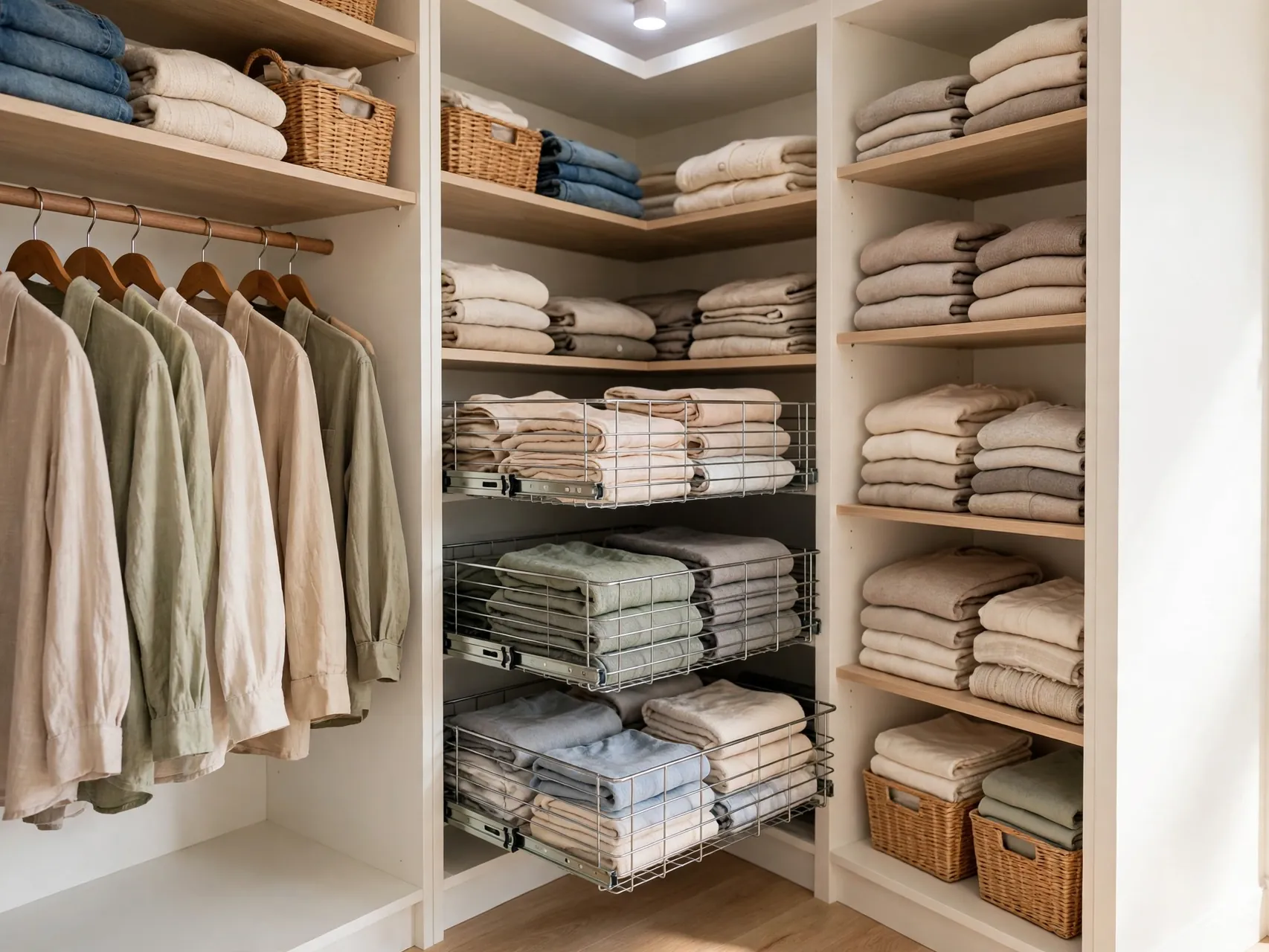
Wire or fabric pull out baskets on runners bring the back of a deep corner to you. They suit socks, workout clothes, scarves, and other soft items that tolerate a basket. Full extension runners matter here, because a basket that only opens halfway recreates the same lost back corner you were trying to fix.
Measure the spot before you buy anything, and leave a little breathing room so containers slide in and out without catching. Put the things you.
Build in Corner Drawers
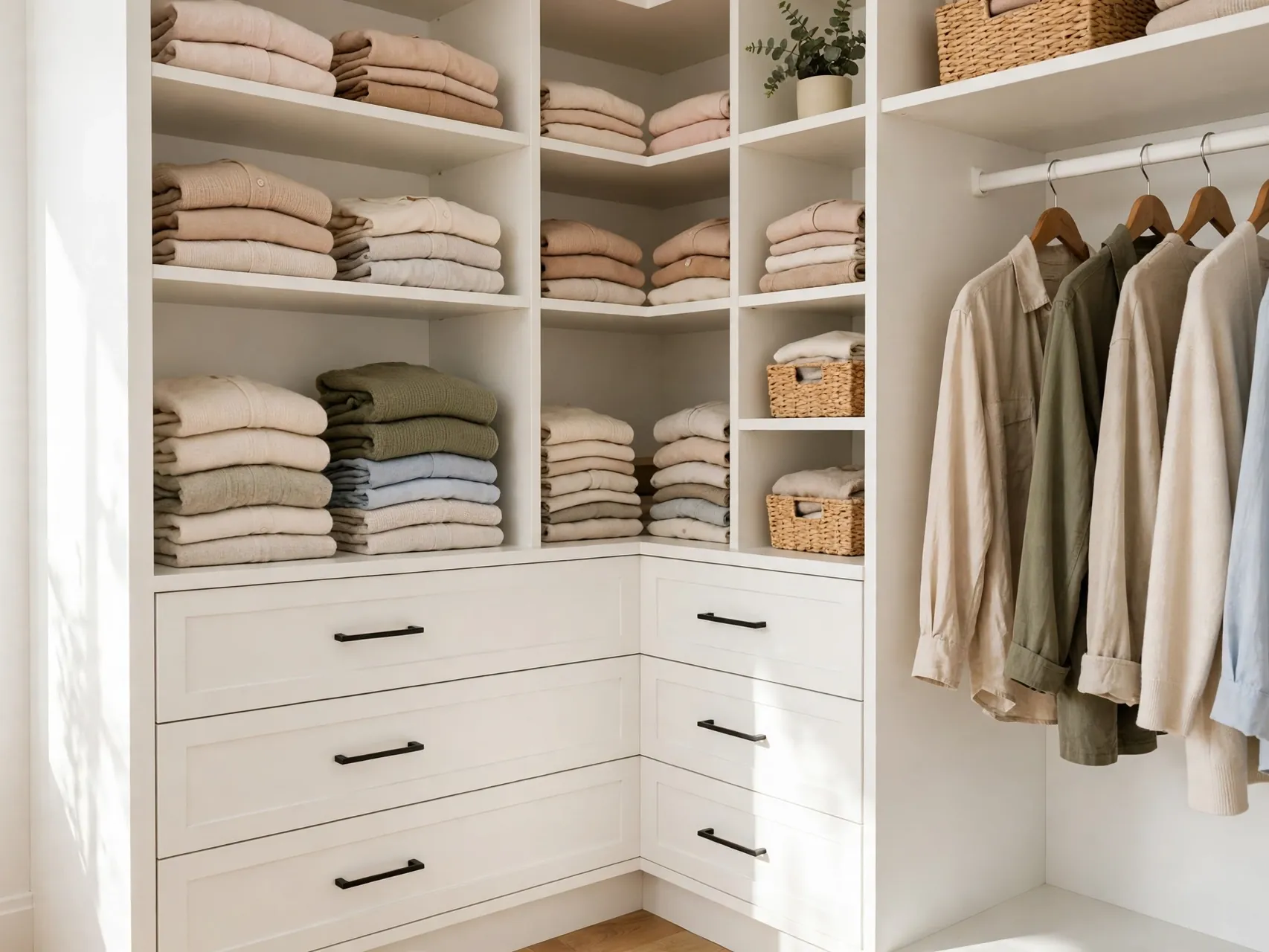
Angled or notched corner drawers hide smaller items and give the closet a built in, finished look. They work well for underwear, jewelry, and accessories that get messy on open shelves. If custom drawers are out of budget, stack two or three lidded boxes in the same footprint and label the fronts for a similar effect.
Group similar things together first, then give each group one home. When a category starts to overflow, that is your signal to edit it down.
Try a Shoe Carousel in the Corner
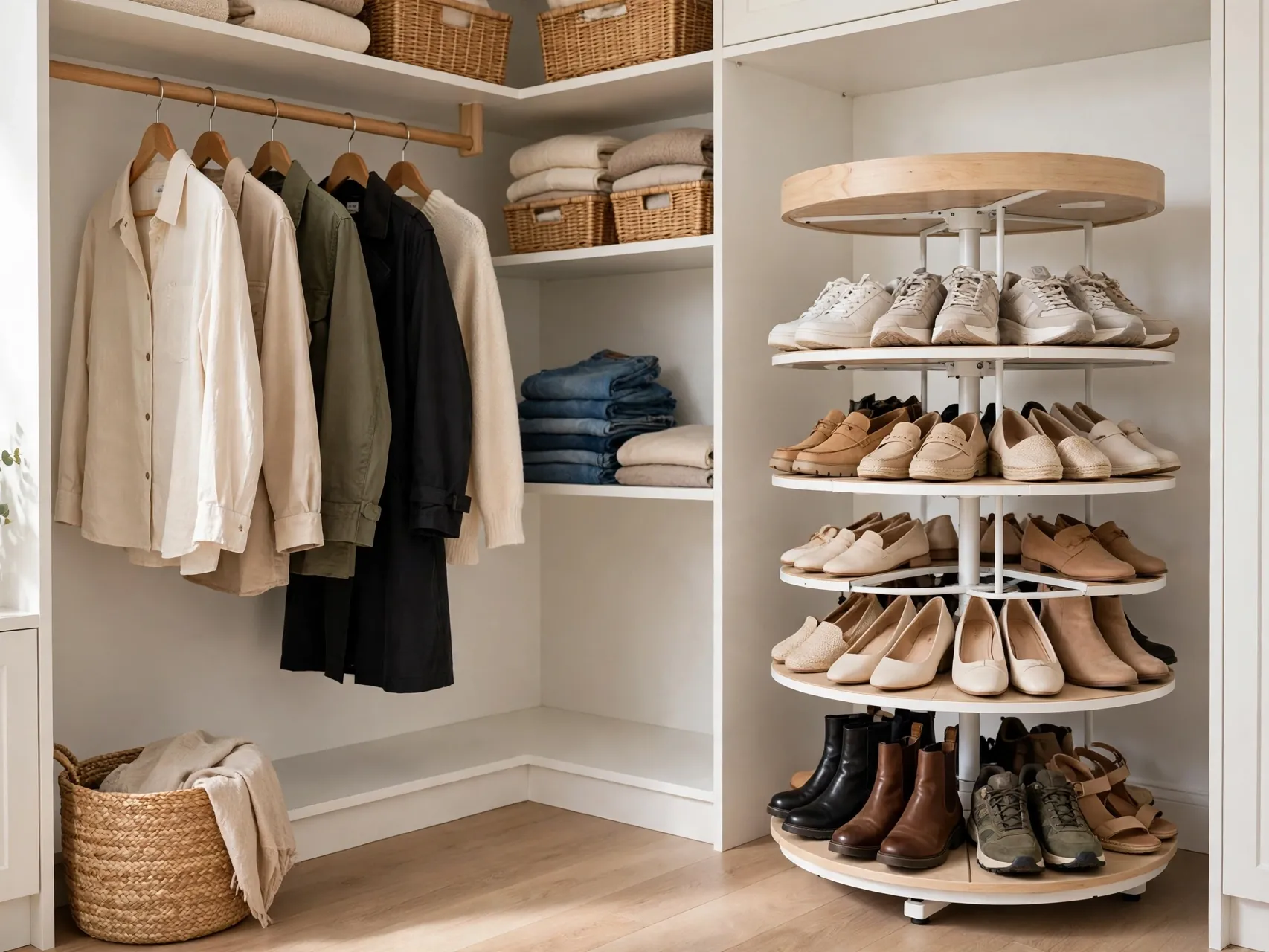
A rotating shoe rack uses the corner shape naturally, since pairs fan out around the center pole. You can see every pair at once, which ends the pile of single shoes at the closet floor. Keep everyday pairs at waist height and special occasion shoes higher up where you reach for them less often.
Keep the setup easy to reset in under a minute. If returning an item takes several steps, it will end up on the floor or.
Double Hang With Tiered Rods

Two shorter rods, one above the other, double hanging space for shirts, blouses, and pants. End the lower rod before the corner and let shelving take the turn instead. This keeps the corner clear while the straight wall works twice as hard. Slim hangers help here, because bulky hangers waste the inches you just gained.
Think about height as well as width. Most of these spaces waste the top half, so stacking, tiering, or hanging lifts items off the base.
Claim the High Corner With Cubbies
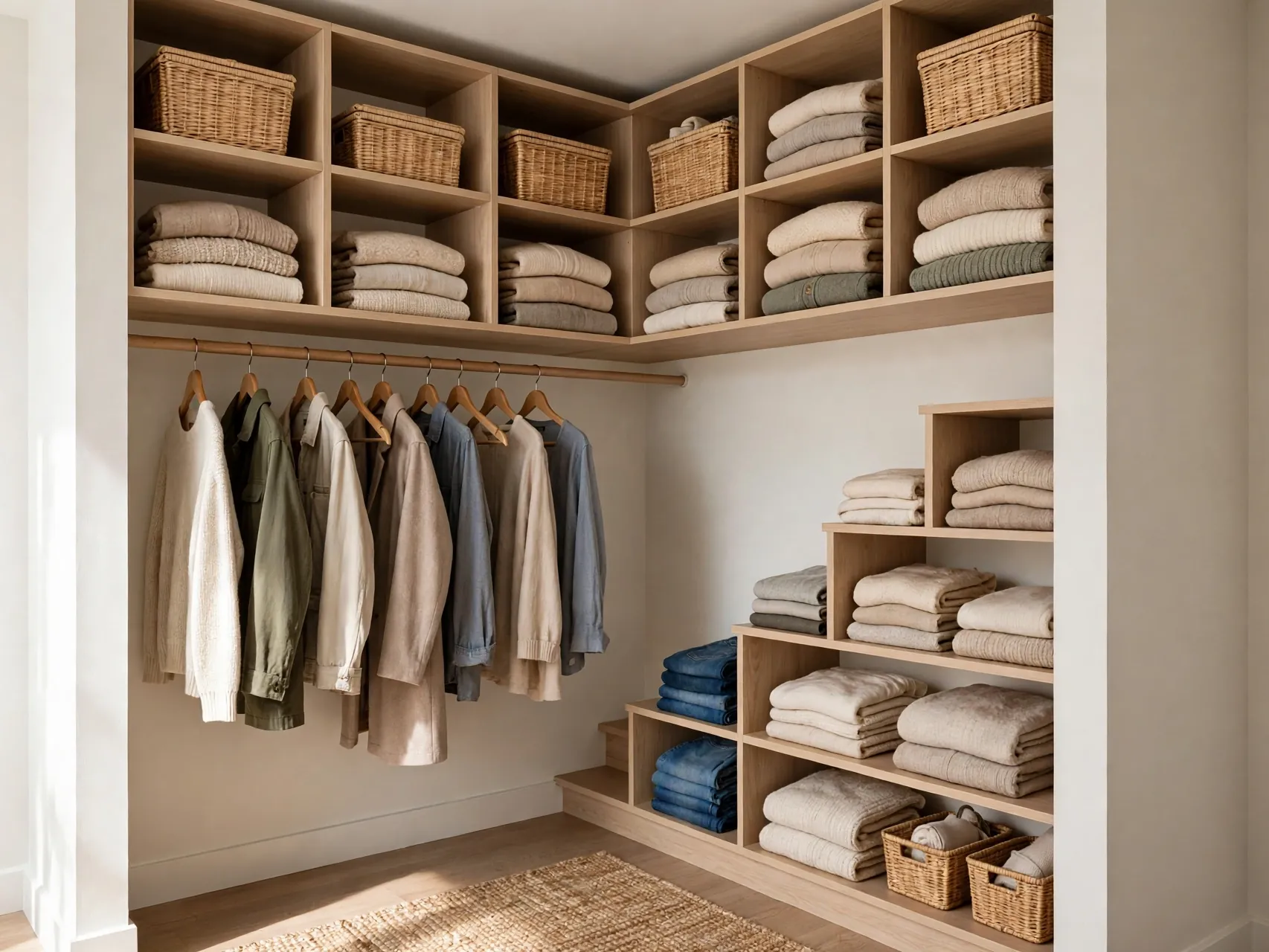
The space above the top rod is prime storage for things you need a few times a year. Add cubbies or a long shelf with dividers and store labeled boxes for seasonal clothes, extra bedding, or memory items. Keep a small folding step stool nearby so the high corner stays reachable and safe, not a stretch and grab hazard.
Test the layout for a week before you add anything else. Live with it, notice what you bump into, and move one or two pieces.
Light the Corner Properly

A dark corner will stay unused no matter how good the shelves are. Add a battery powered motion sensor light, an LED strip under a shelf, or simple puck lights. Closet guides consistently flag lighting as the cheapest high impact fix, because you cannot organize what you cannot see. Warm white light makes colors easier to tell apart in the morning.
Measure the spot before you buy anything, and leave a little breathing room so containers slide in and out without catching. Put the things you.
Tuck a Wedge Hamper Into the Floor Corner
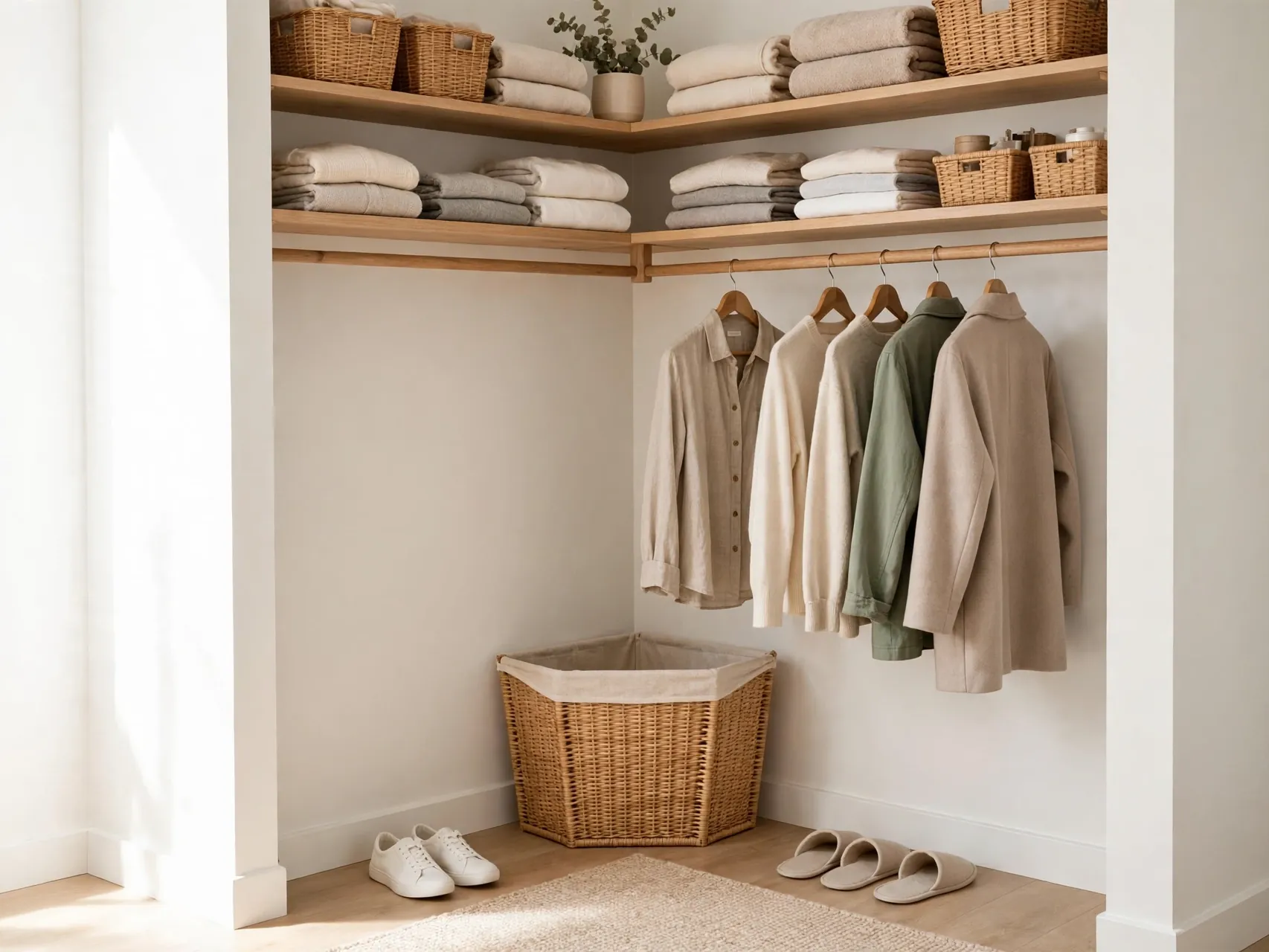
The floor corner often holds nothing but dust and a stray shoe. A triangular or wedge shaped hamper fits that footprint neatly and keeps dirty laundry off the hanging clothes. A two section hamper lets you sort lights and darks as you undress, which saves time on laundry day and keeps the corner looking intentional.
Group similar things together first, then give each group one home. When a category starts to overflow, that is your signal to edit it down.
Reserve the Deepest Corner for Seasonal Storage
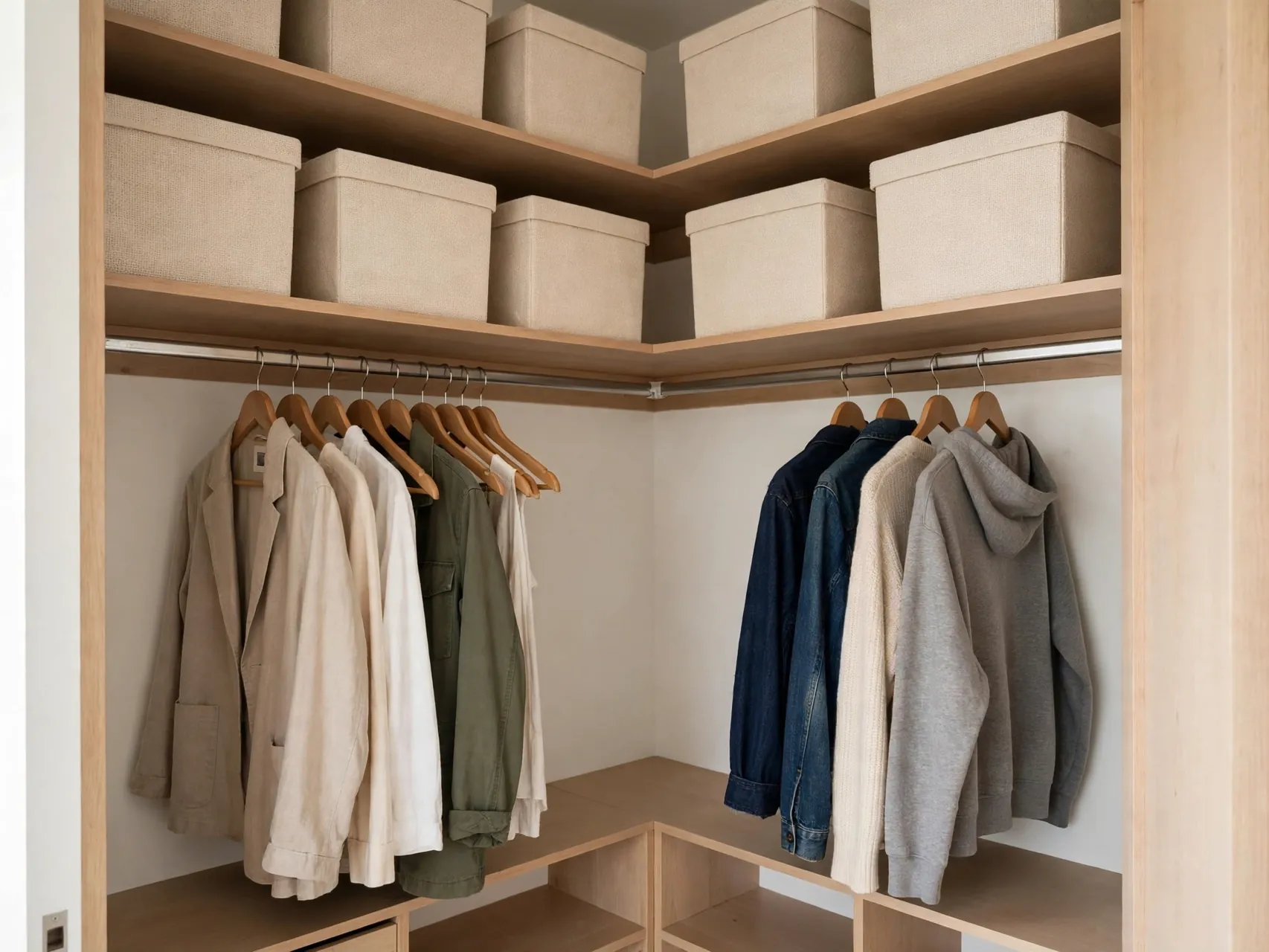
Not everything needs daily access. Give the hardest to reach corner to out of season clothes in sealed bins, spare blankets, or luggage. Label the front of each bin with the season and sizes inside. Rotating twice a year is manageable, and your daily clothes get the easy spots they deserve in a corner closet organizer layout.
Keep the setup easy to reset in under a minute. If returning an item takes several steps, it will end up on the floor or.
Display Handbags on Corner Shelves

Handbags lose their shape in piles and hide in dust bags you never open. Stand them upright on corner shelves, lightly stuffed to hold their form, with the ones you use most at eye level. Shelf dividers or clear acrylic stands keep them from toppling into each other, and the display makes the closet feel styled, not just stored.
Think about height as well as width. Most of these spaces waste the top half, so stacking, tiering, or hanging lifts items off the base.
Add Shelf Dividers to Stop the Slide

Stacks of folded clothes on a long corner shelf tend to lean and merge. Clip on shelf dividers create tidy bays for jeans, sweaters, and tees, so pulling one item does not drag the whole stack. Measure your shelf thickness before ordering dividers, and space them by category rather than squeezing in as many as possible.
Test the layout for a week before you add anything else. Live with it, notice what you bump into, and move one or two pieces.
Hang Hooks on the Inside Corner Wall
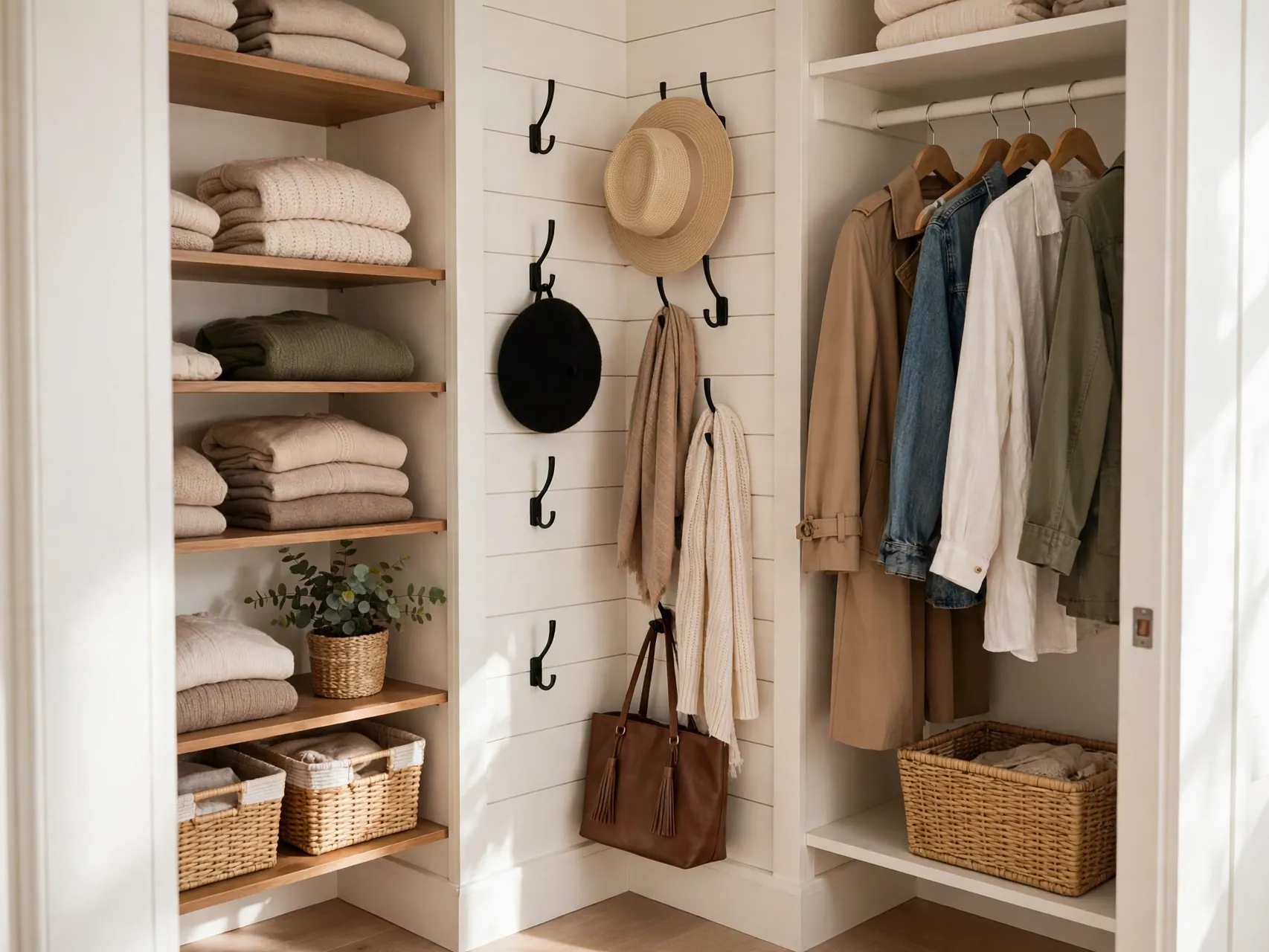
A short run of hooks on a narrow wall section holds belts, hats, tomorrow's outfit, or a robe. Hooks take almost no depth, so they suit the sliver of wall between a door frame and a shelf tower. Keep hooks to items you grab daily, or the corner becomes a dumping ledge in hook form.
Measure the spot before you buy anything, and leave a little breathing room so containers slide in and out without catching. Put the things you.
Use a Corner Valet Rod for Tomorrow
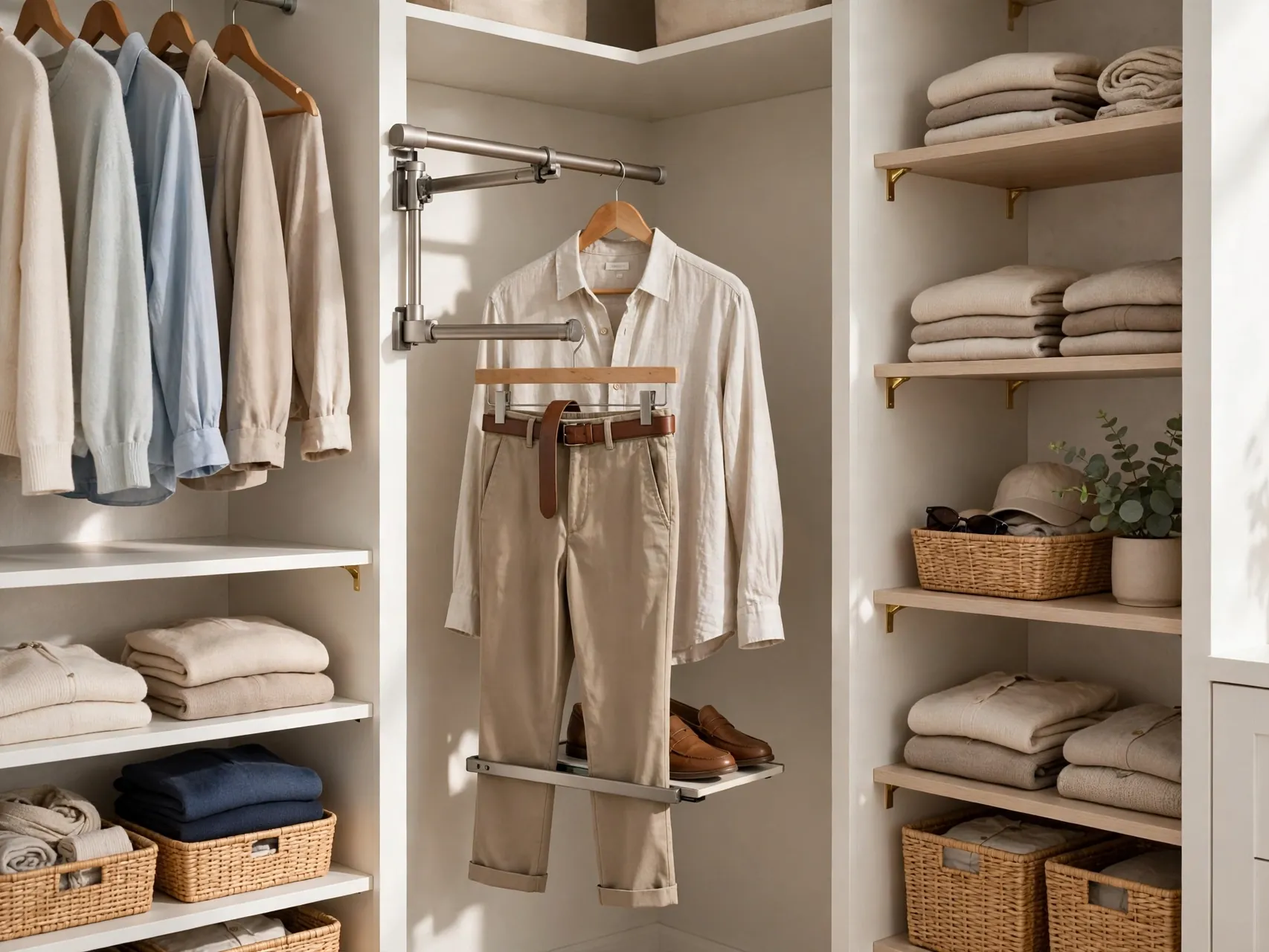
A pull out valet rod mounted near the corner gives you a place to stage the next day's clothes and air out worn once pieces. It folds away when not in use, so it costs no permanent space. Staging outfits the night before also keeps the rest of the closet calmer during rushed mornings.
Group similar things together first, then give each group one home. When a category starts to overflow, that is your signal to edit it down.
Choose a Diagonal Door for a Built In Corner Closet
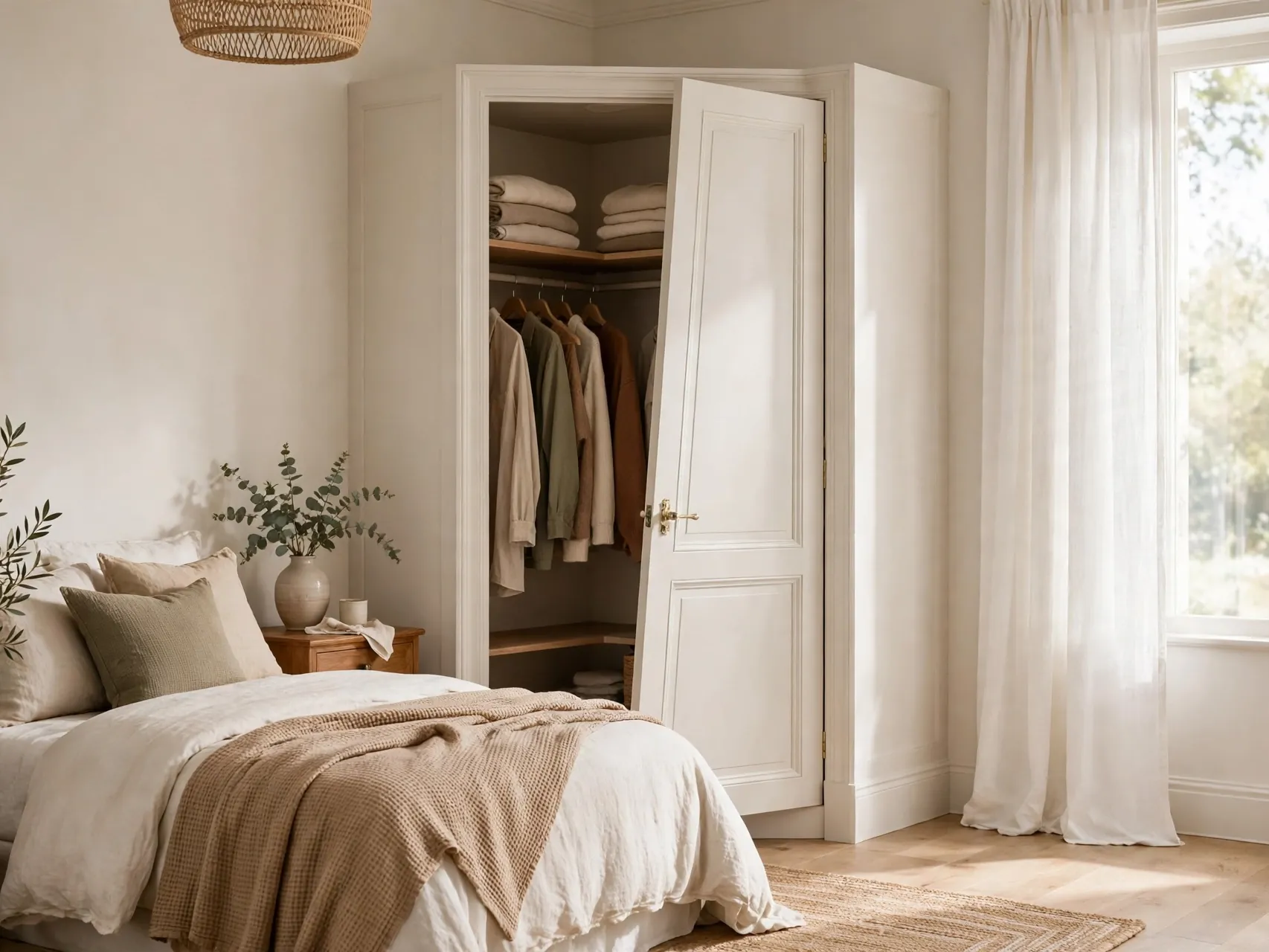
If you are building a closet into a bedroom corner, a door set on the diagonal creates a small pentagonal closet with surprisingly usable walls. It cuts the corner visually, softens the room, and gives you two longer wall runs inside. This is a bigger project, but it turns wasted room corners into real wardrobes for small bedrooms.
Keep the setup easy to reset in under a minute. If returning an item takes several steps, it will end up on the floor or.
Match Bins and Baskets for a Calm Look

Mismatched containers make even a smart layout look chaotic in photos and in person. Pick one family of bins for the corner shelves, in a color that works with your closet paint. Uniform bins also stack and align better, which quietly saves space. Leave one spare bin empty for new items so the system has room to breathe.
Think about height as well as width. Most of these spaces waste the top half, so stacking, tiering, or hanging lifts items off the base.
Keep a Small Step Stool in the Corner
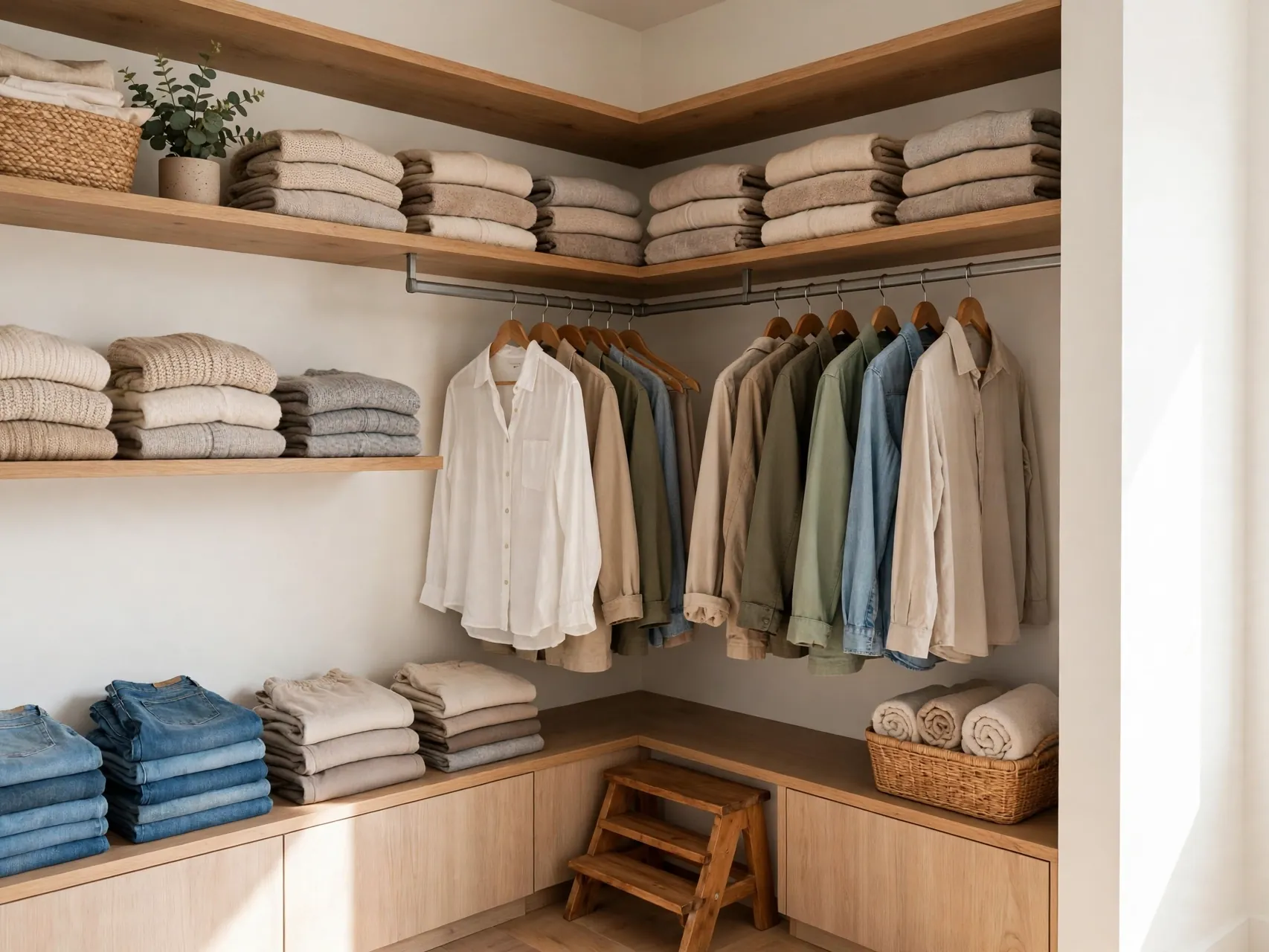
A folding step stool tucked into the floor corner pays for itself every time you reach the top shelf. Choose one that folds flat or doubles as a small seat while putting on shoes. When reaching is easy, high storage gets used properly instead of becoming a place where things are thrown and forgotten.
Test the layout for a week before you add anything else. Live with it, notice what you bump into, and move one or two pieces.
Try Modular Cubes You Can Rearrange

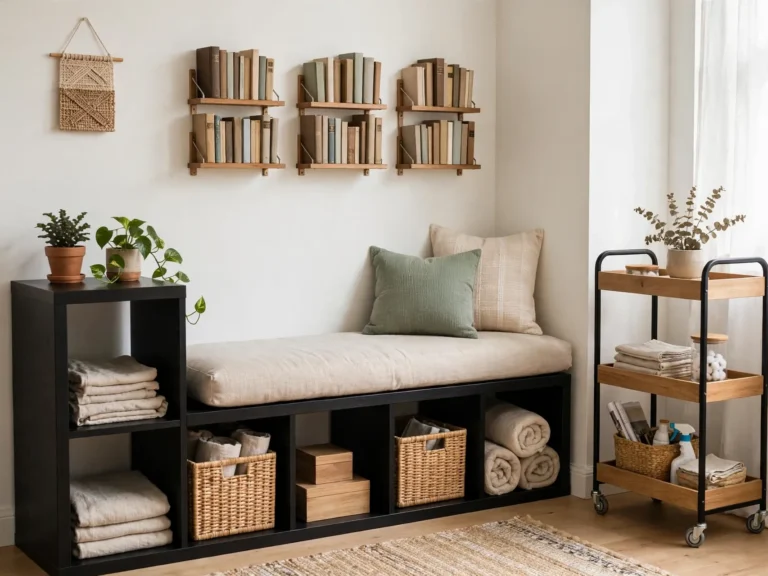
Modular cube units fit awkward corners because you can stack them in an L or step shape to match the space. Rearrange them as your wardrobe changes, moving a cube from shoes to bags in minutes. They suit renters and first closets well, since the whole setup leaves with you and needs no drilling or custom fitting.
Measure the spot before you buy anything, and leave a little breathing room so containers slide in and out without catching. Put the things you.
Separate His, Hers, or Shared Zones by Wall

In a shared corner closet, assign each person one wall and treat the corner itself as shared or seasonal space. This simple rule ends the morning hunt through a partner's clothes and makes laundry returns obvious. A different hanger color per person reinforces the zones without any labels or arguments about whose side is creeping.
Group similar things together first, then give each group one home. When a category starts to overflow, that is your signal to edit it down.
Add a Mirror Inside the Closet Door

A mirror on the inside of the door or on a flat corner panel helps you check an outfit where you dressed, and it bounces light into the dark corner too. Slim adhesive mirrors suit renters. Position it so it catches light from the room, and the whole closet will feel larger every time you open the door.
Keep the setup easy to reset in under a minute. If returning an item takes several steps, it will end up on the floor or.
Store Accessories in a Corner Drawer Tower
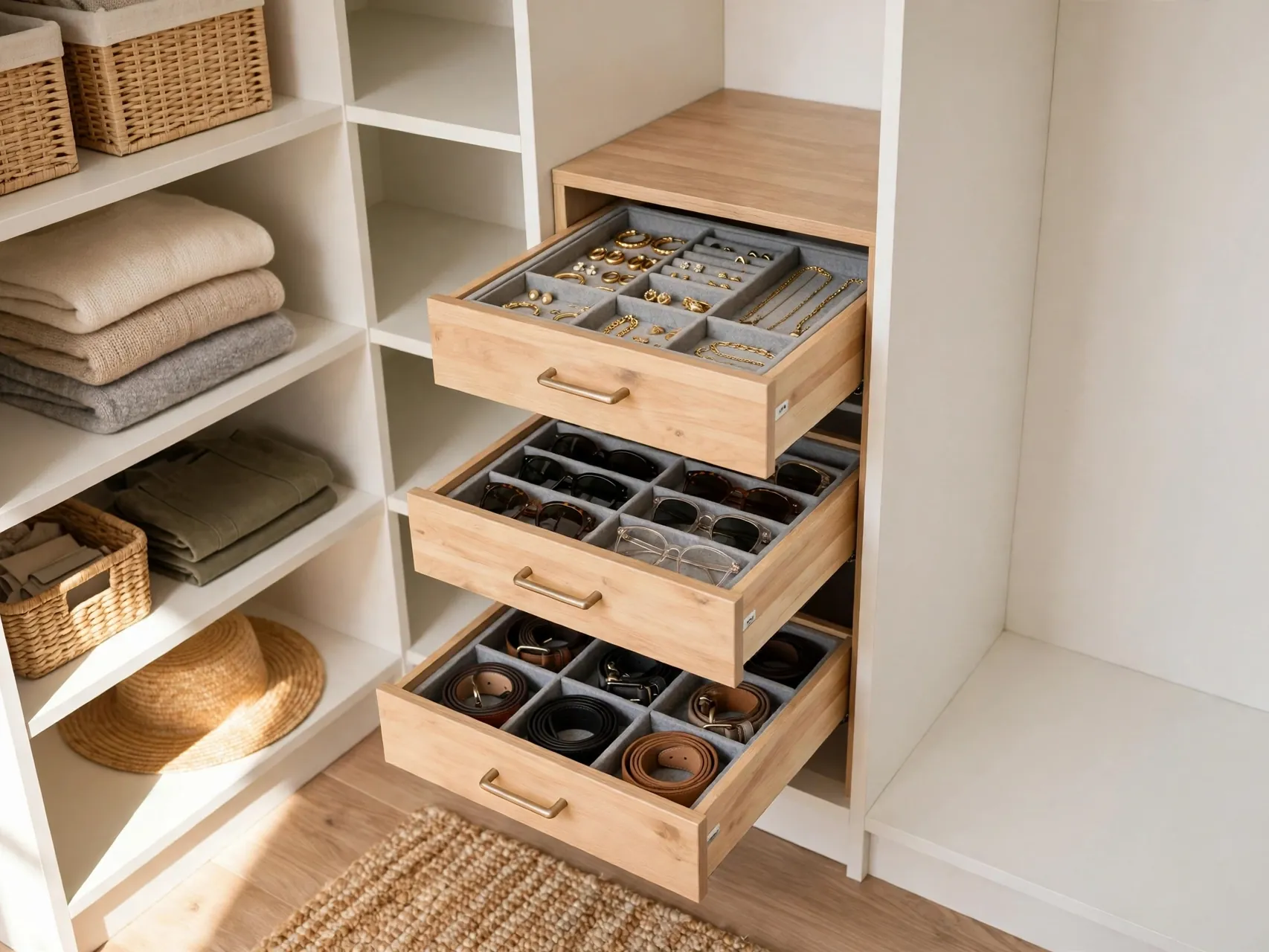
A slim tower of small drawers in the corner keeps sunglasses, watches, ties, and jewelry visible and separated. Shallow drawers beat one deep drawer, because small items vanish in deep piles. Line the drawers if pieces slide, and give each category its own level so getting ready becomes a quick top to bottom scan.
Think about height as well as width. Most of these spaces waste the top half, so stacking, tiering, or hanging lifts items off the base.
Review the Corner Twice a Year

Corners drift back into dumping zones slowly, so schedule a review when you swap seasonal clothes. Pull the corner bins out, check what you actually wore, and donate what stayed untouched. Wipe the shelves, replace any dead light batteries, and reset labels. Twenty minutes twice a year protects the whole L-shaped closet system.
Test the layout for a week before you add anything else. Live with it, notice what you bump into, and move one or two pieces.
FAQ
What is the best way to use a closet corner?
Give the corner one clear job instead of letting two systems collide. The most reliable setups use bridge shelves, a rotating tower, or pull out baskets in the corner, with hanging on one wall and folded storage on the other. Add light, because a corner you can see is a corner you will keep using.
Should hanging rods meet in the corner?
Usually no. Two rods crossing in the corner create a blind spot where clothes tangle and hide. Most designers run hanging on one side only and let shelves or drawers take the corner turn. If you must wrap hanging around, use an angled rod and reserve it for less used garments like coats or formal wear.
How do I organize a small corner closet in a bedroom?
Start with a diagonal or bifold door if you are building in, then use one tower of corner shelves, a single rod, and a wedge hamper on the floor. Keep only current season clothes inside and store the rest elsewhere. Modular cubes are a good renter friendly option because they shape into the corner without any fitting.
What can I put in a deep closet corner I cannot reach?
Use storage that moves, like pull out baskets on full extension runners or a rotating lazy Susan style unit. If neither fits, reserve the deep spot for labeled seasonal bins you open only a few times a year. Never put daily items there, because out of reach quickly becomes out of mind and wasted.
How can I make a corner closet look good for photos?
Use matching bins, keep stacks short with shelf dividers, and add light so the corner does not photograph as a dark hole. A mirror and a tidy handbag shelf add the styled touch that Pinterest readers love. Most importantly, edit first: a half full, well lit corner looks better than a packed one.
Key Takeaways
- Give the corner one job: Bridge shelves, a rotating tower, or pull out baskets beat two colliding rods every time.
- Split hang and fold: Hanging on one wall and shelves on the other removes the classic blind corner.
- Use the full height: Floor to ceiling corner shelves, high cubbies, and a step stool claim wasted vertical space.
- Light it up: Motion lights or LED strips are the cheapest fix that makes every other idea work better.
- Assign the deep spot to seasons: Labeled seasonal bins belong in the hardest reach, never your daily clothes.
- Review twice a year: A short seasonal reset keeps your small corner closet storage from drifting back into a pile.
Love these ideas? Save this post to Pinterest so you can find it later, and pin your favorite setup to your home organization board before you start.