22 IKEA Hacks for Small Spaces That Are Pure Genius
Introduction
Small homes do not need more furniture. They need furniture that works harder, fits in forgotten gaps, and can change jobs when life changes. That is why IKEA hacks for small spaces are so popular: simple, affordable pieces get turned sideways, mounted, stacked, or rolled into exactly the spot a small room was missing.
The best hacks share three traits. They use vertical or dead space, like walls, doors, and the gap beside the fridge. They do two jobs at once, such as a bench that stores or a cart that becomes a nightstand. And they stay reversible, which matters for renters and for anyone whose needs shift each year.
IKEA's own small space advice points the same way: use open shelves thoughtfully, add clip on lights where a lamp will not fit, hang folding chairs on wall hooks for guests, and treat walls as storage. This list builds on those principles with twenty two practical hacks, most needing basic tools only.
Measure every gap twice before you buy, check current product dimensions on ikea.com, and anchor anything tall or wall mounted following the instructions supplied. Start with the hack that fixes your most annoying daily moment and the rest will follow naturally.
KALLAX on Its Side as a Storage Bench

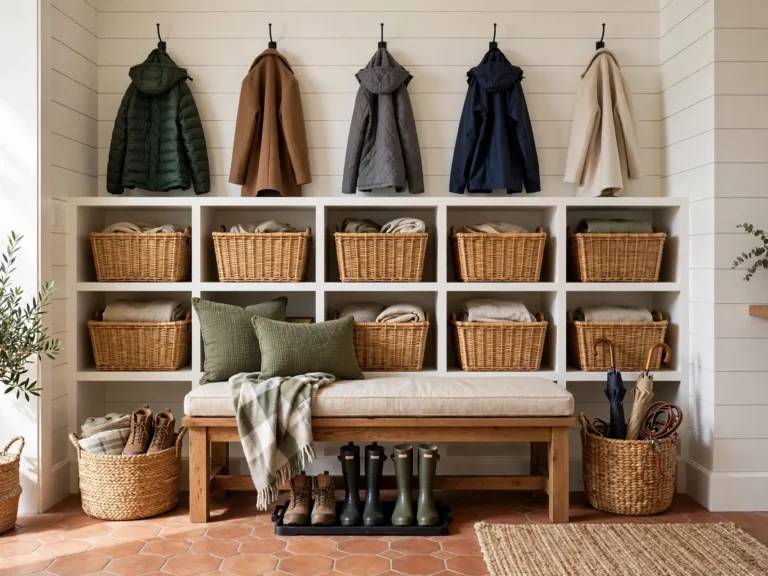
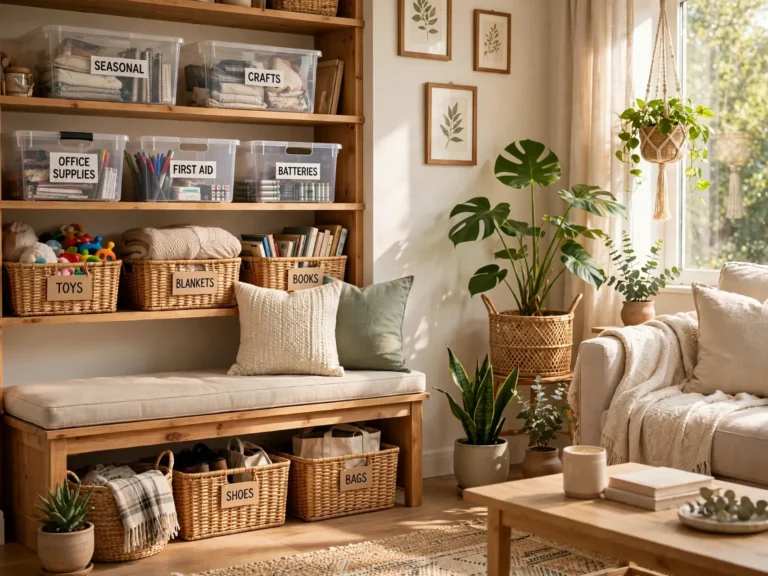
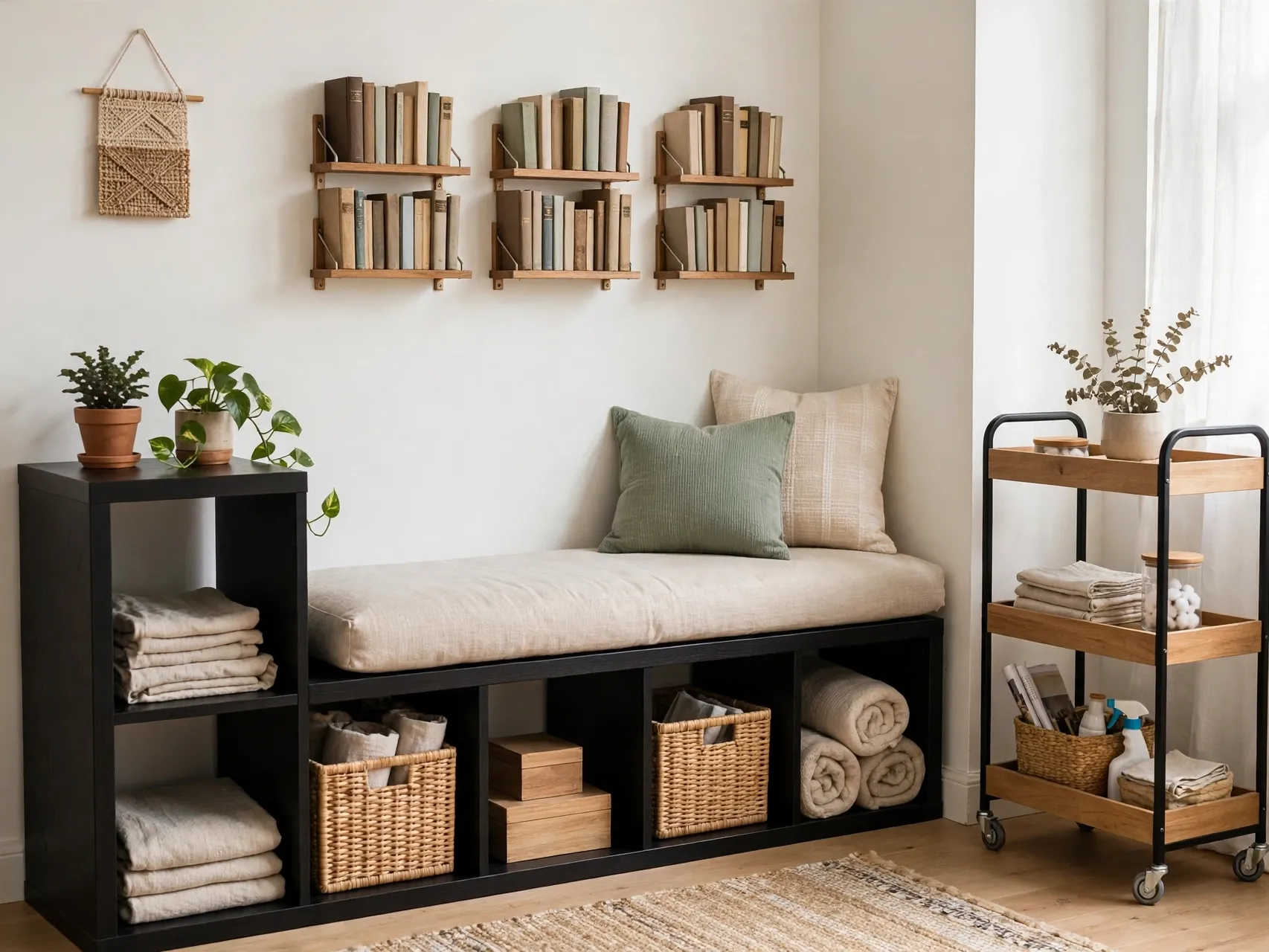
Turn a low cube shelf on its side, add a cushion on top, and you have a bench with storage inside every cube. IKEA confirms its KALLAX units can be used standing or lying down, which is what makes this hack work in an entry, a kids room, or under a window.
Fill the cubes with baskets for shoes, toys, or blankets. Add short legs or a base frame if you want the bench a little higher and easier to clean under. Keep heavy books in the end cubes so the middle stays comfortable.
BEKVAM Spice Racks as Mini Bookshelves

The small wooden spice rack is the most famous small space IKEA storage hacks starter because it mounts almost anywhere and holds far more than spices. Screwed to a wall or the side of a bookcase, it becomes a forward facing book rack for children, a recipe holder, or a bedside shelf for a phone and a paperback.
Paint or stain the racks to match your walls so they blend in. A row of three beside a child's bed creates a tiny library in space that was doing nothing, and books stored face out actually get chosen and read.
TRONES Cabinets Beyond the Hallway
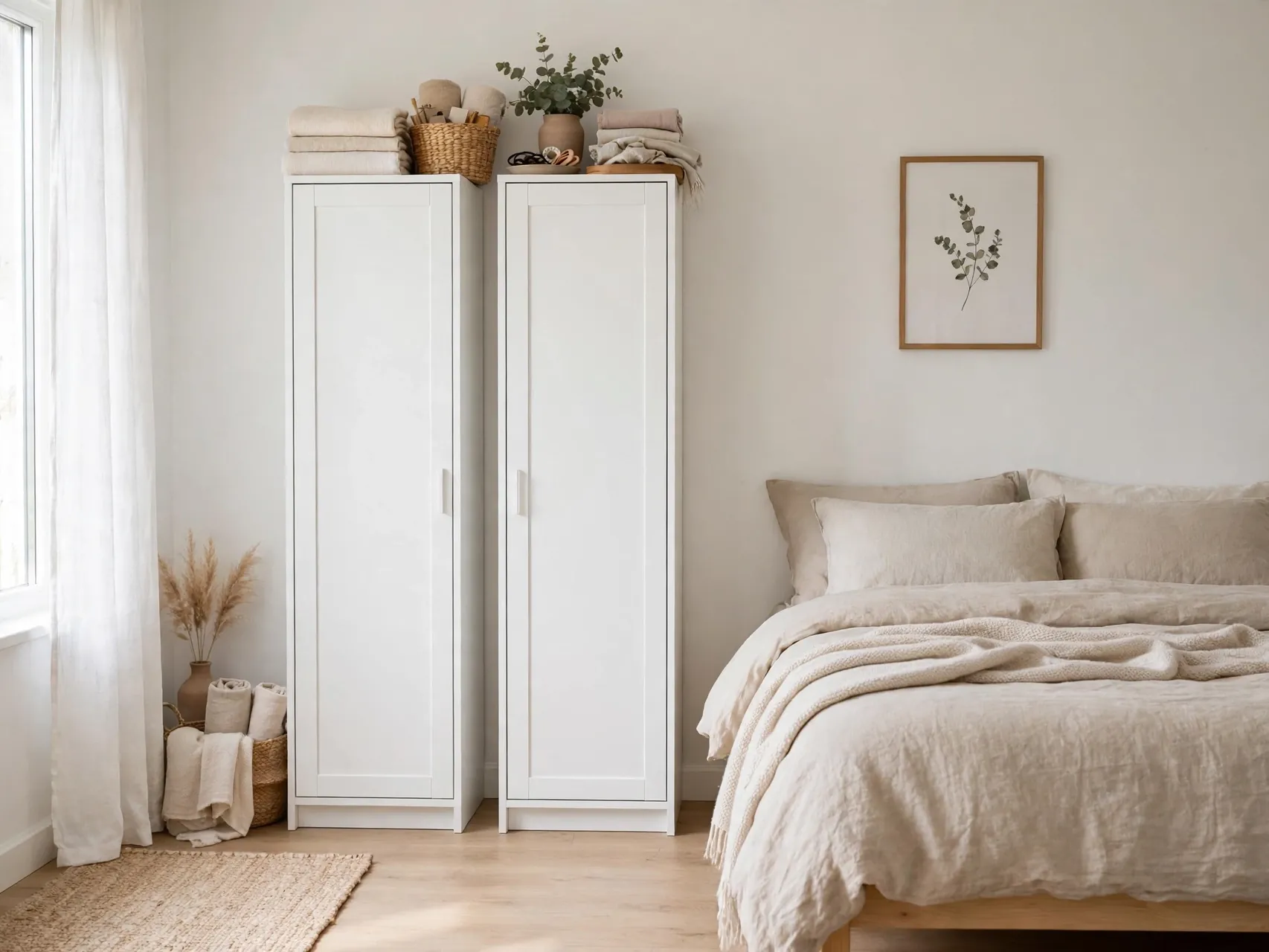
Slim tilt out cabinets are sold for shoes, but their shallow depth makes them useful in almost any tight room. Mount them in a bathroom for backup toiletries, in a home office for paper and cables, or in a craft corner for fabric and tools, all behind flat, tidy doors.
Because they sit close to the wall, they fit behind doors and along narrow landings where a normal cabinet would block the way. Label the inside of each door with its contents if several people share them, and follow the fixing instructions for your wall type.
LACK Shelves as a Floating Nightstand
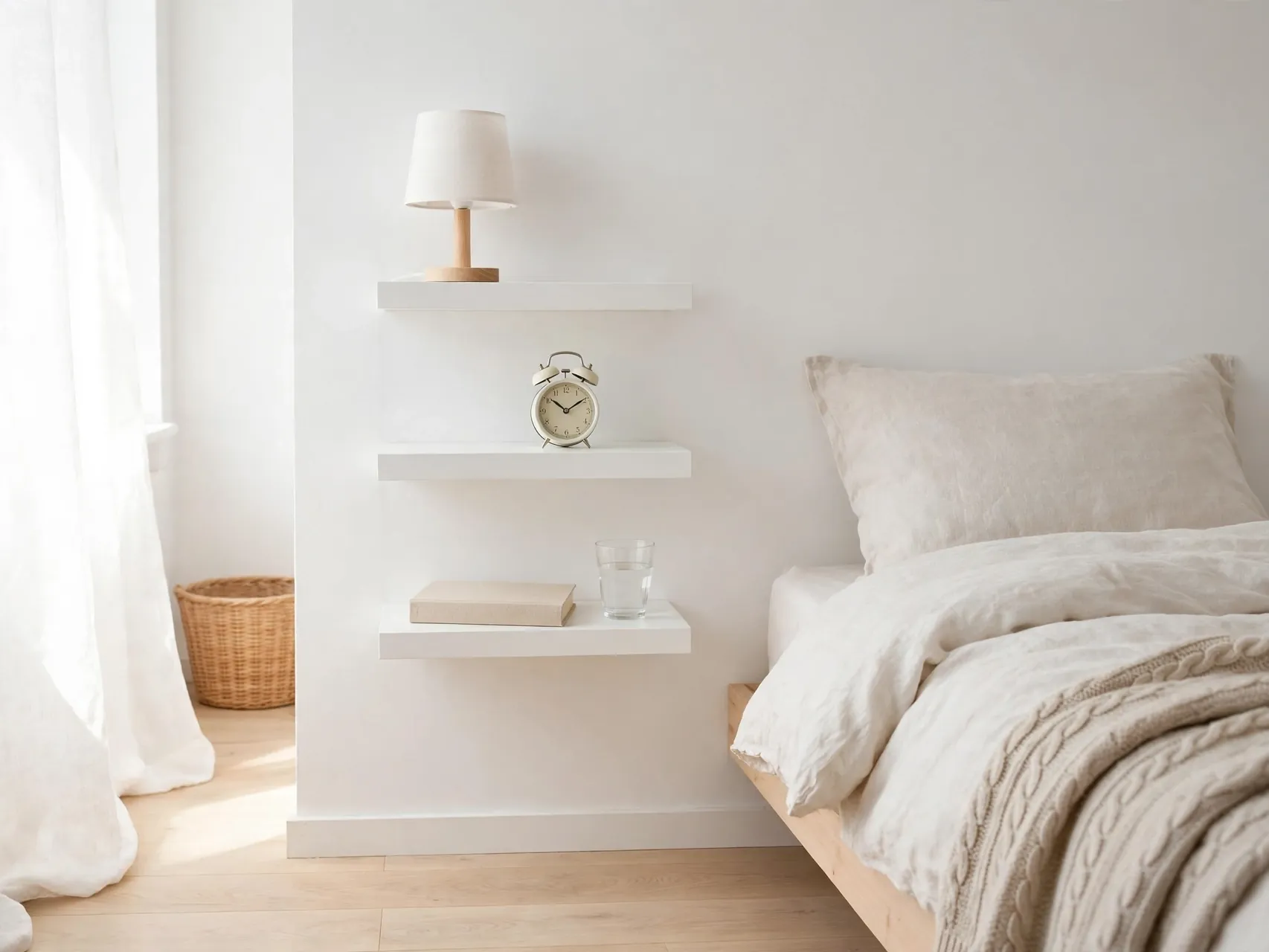
Where a nightstand will not fit beside the bed, one or two short floating shelves do the same job with zero floor space. The lower shelf holds a book and glasses, the upper one takes a small plant or an alarm clock, and a clip on light adds reading light without a lamp base.
IKEA's small space stories recommend clip on spotlights for exactly this kind of tight corner, since they clamp to a shelf or headboard and move whenever you rearrange. Keep the shelves minimal so the sleeping area still feels restful rather than stored.
RASKOG Cart as a Bedside Table
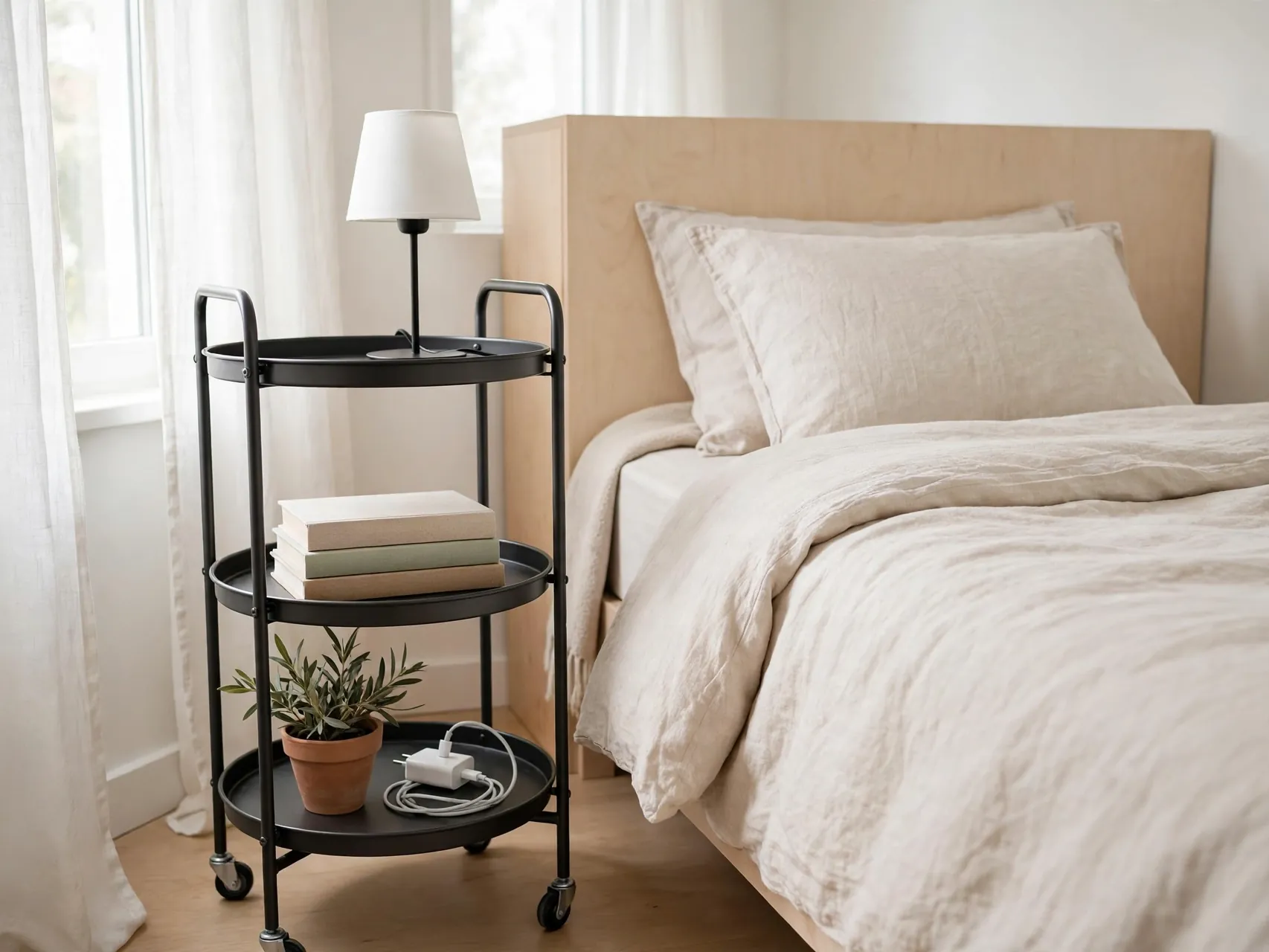
A rolling utility cart beside the bed holds more than most nightstands and adapts when you need it elsewhere. Top tier for water, book, and phone charger, middle tier for skincare or medicines stored per their labels, bottom tier for extra bedding or magazines.
The cart rolls out for cleaning and rolls to the sofa on a lazy Sunday. In a studio apartment, one cart can serve as nightstand at night and side table by day. Add small cups or boxes inside each tier so tiny items stop sliding around as it moves.
SKADIS Board as a Kitchen Command Wall

In a small kitchen, a pegboard on the wall replaces a drawer full of utensils and a counter full of clutter. Hooks take ladles and scissors, small shelves hold spices, and a container corrals cooking tools right beside the stove where you actually use them.
Keep the board edited to weekly tools only, or it becomes a wall of clutter instead of a command center. The same board works above a desk or inside a hall cupboard, which is why it appears in so many IKEA hacks for apartments roundups from real small homes.
Dresser Turned Rolling Kitchen Island
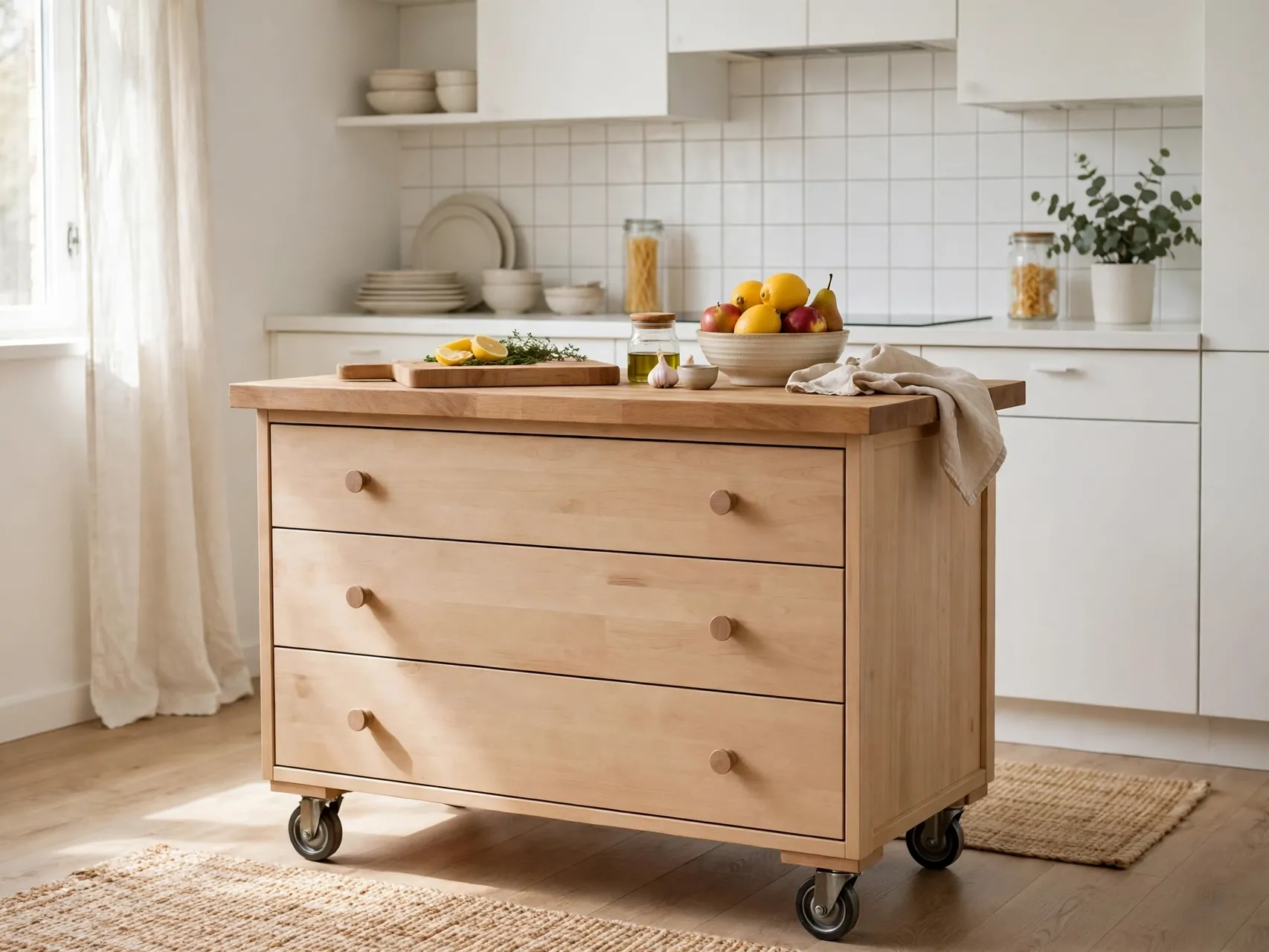
A compact dresser on locking caster wheels becomes a kitchen island with real drawer storage underneath, a trick many small kitchen owners use when built in islands are impossible. Roll it out for prep, roll it against the wall when you need the floor back, and top it with a large cutting board for a safer work surface.
Check the dresser height suits your counters, choose casters rated for the weight, and lock the wheels before chopping anything. Drawers hold linens, utensils, and gadgets, which often frees a whole base cabinet for pans.
Slim Cart in the Gap Beside the Fridge

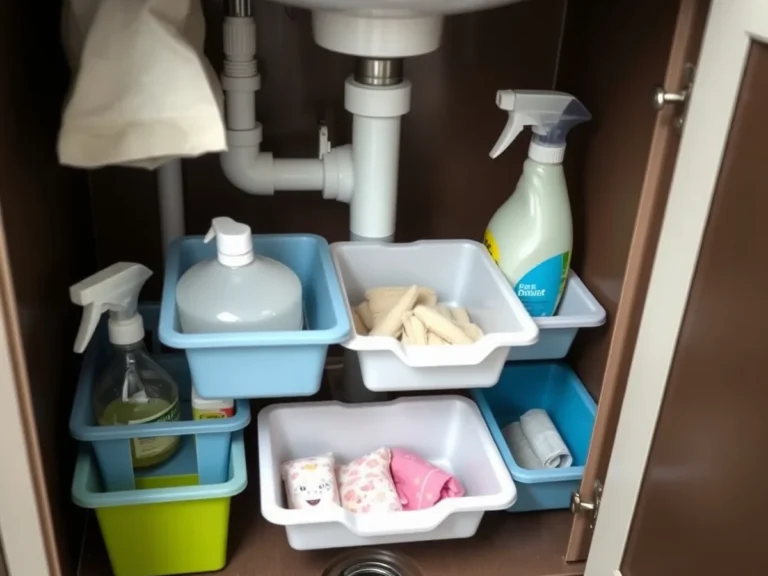
Almost every kitchen has a narrow, useless gap beside the refrigerator. A slim rolling cart that fits that gap turns it into a pull out pantry for spices, oils, canned goods, or cleaning bottles, using space that was previously collecting dust and lost lids.
Measure the gap at floor and counter height before buying, since walls and skirting boards can narrow it. Even a few inches of width stores a surprising amount when it runs the full depth of the fridge. This is the purest dead space win on the list.
TROFAST Frame as a Low Media Unit
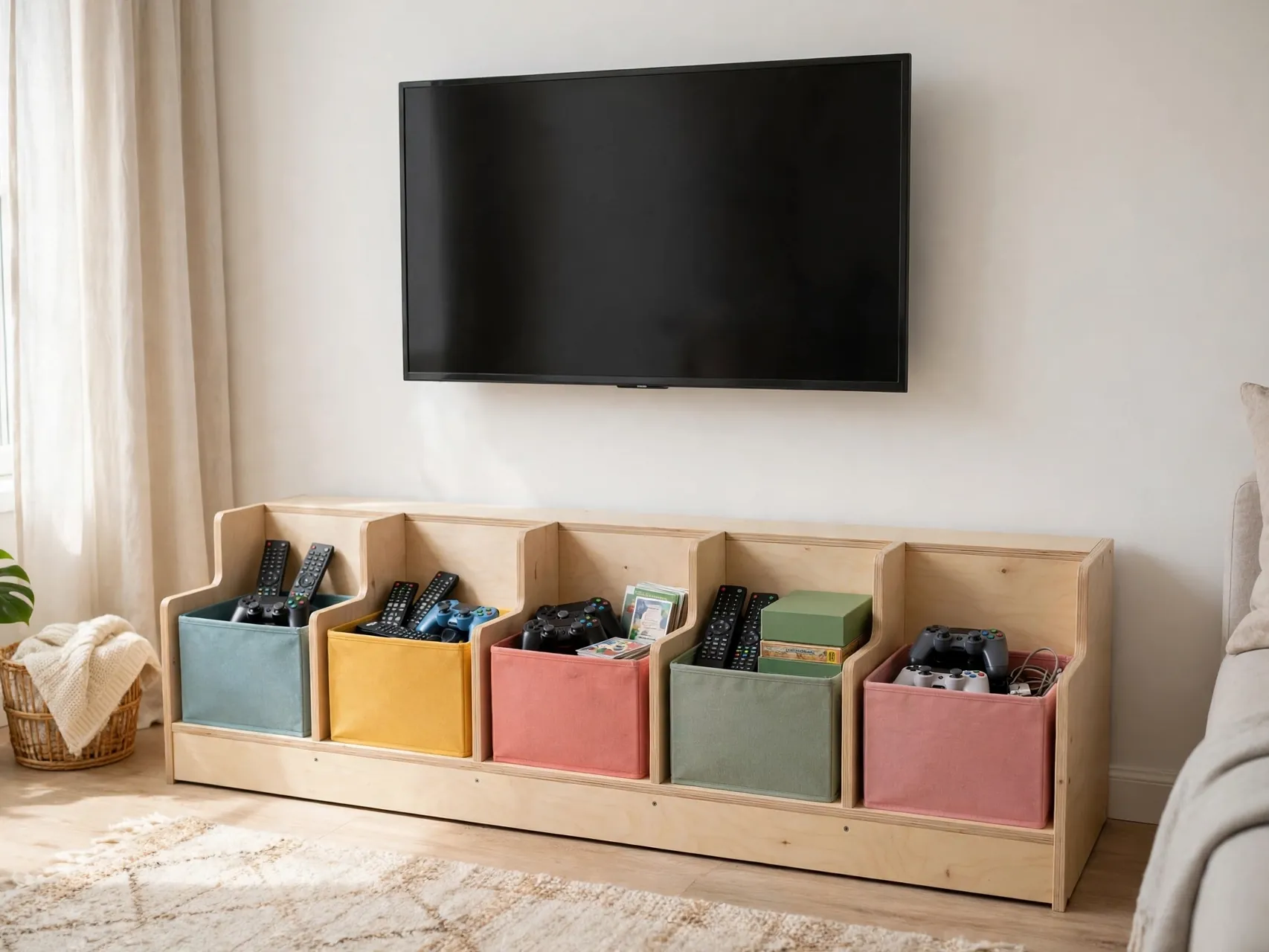
A low stepped storage frame with pull out bins makes a practical media unit in a small living room. Bins hide games, controllers, and cables, the flat top holds the television or a projector, and the whole unit stays low so the room feels open.
Wall mount a smaller frame if floor space is truly tight, following the product instructions. Sort bins by activity, one for gaming, one for craft or homework supplies, so the living room resets in minutes when guests arrive unexpectedly.
Hooks Under Shelves for Mugs and Bags
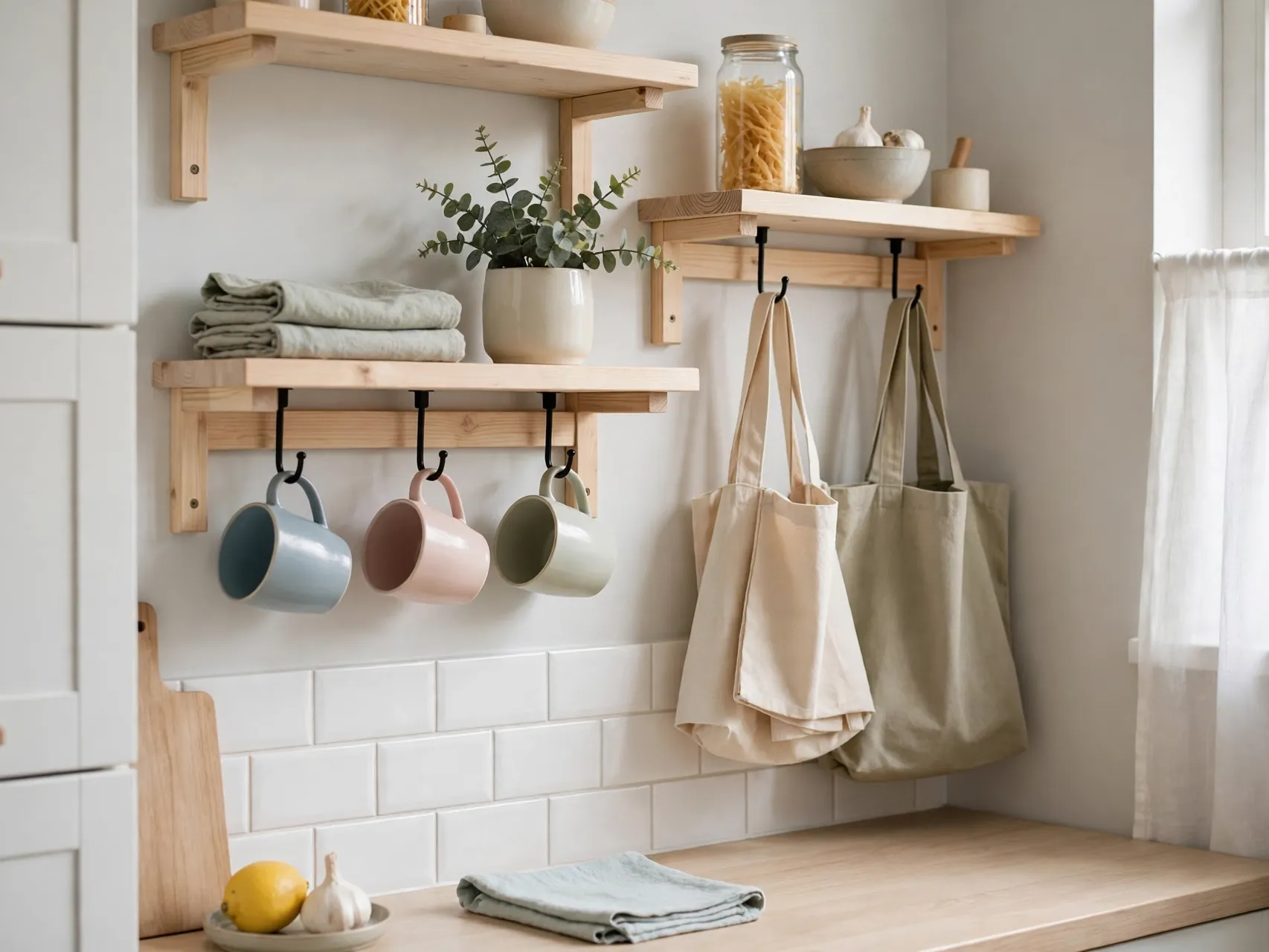
The underside of a shelf is free storage. Screw in a row of sturdy hooks under a kitchen shelf for mugs, under an entry shelf for bags and dog leashes, or under a bathroom shelf for hanging baskets, and you double the shelf without adding furniture.
Check the shelf material can take screws and keep loads light and sensible. This hack pairs beautifully with floating shelves in rentals where every inch counts, although renters should confirm what fixings their lease allows before drilling into anything.
Folding Chairs Hung on Wall Hooks

Extra seating eats small homes alive. IKEA's own small space home visit shows the fix: hang lightweight folding chairs on sturdy wall hooks when guests leave, so the floor stays clear and the chairs become part of the wall rather than a cupboard problem.
Choose hooks rated for the chair weight and fix them into studs or with suitable wall fixings. A neat row of two or three chairs reads as intentional, almost decorative, and hosting stops requiring a furniture shuffle before anyone can sit down.
Bed Frame With Storage Boxes Below

The space under a bed is the largest storage zone in most small bedrooms. Low lidded boxes or drawers on wheels slide under most frames and hold out of season clothes, spare bedding, or shoes, all labeled on the end facing out so you can find things without pulling every box out.
Raise a low frame with suitable risers if your boxes need an extra inch, checking stability carefully and following product guidance. Keep one box for guest bedding as a complete set, and the sofa bed or spare room is ready in minutes.
BILLY Doors to Hide Open Shelving
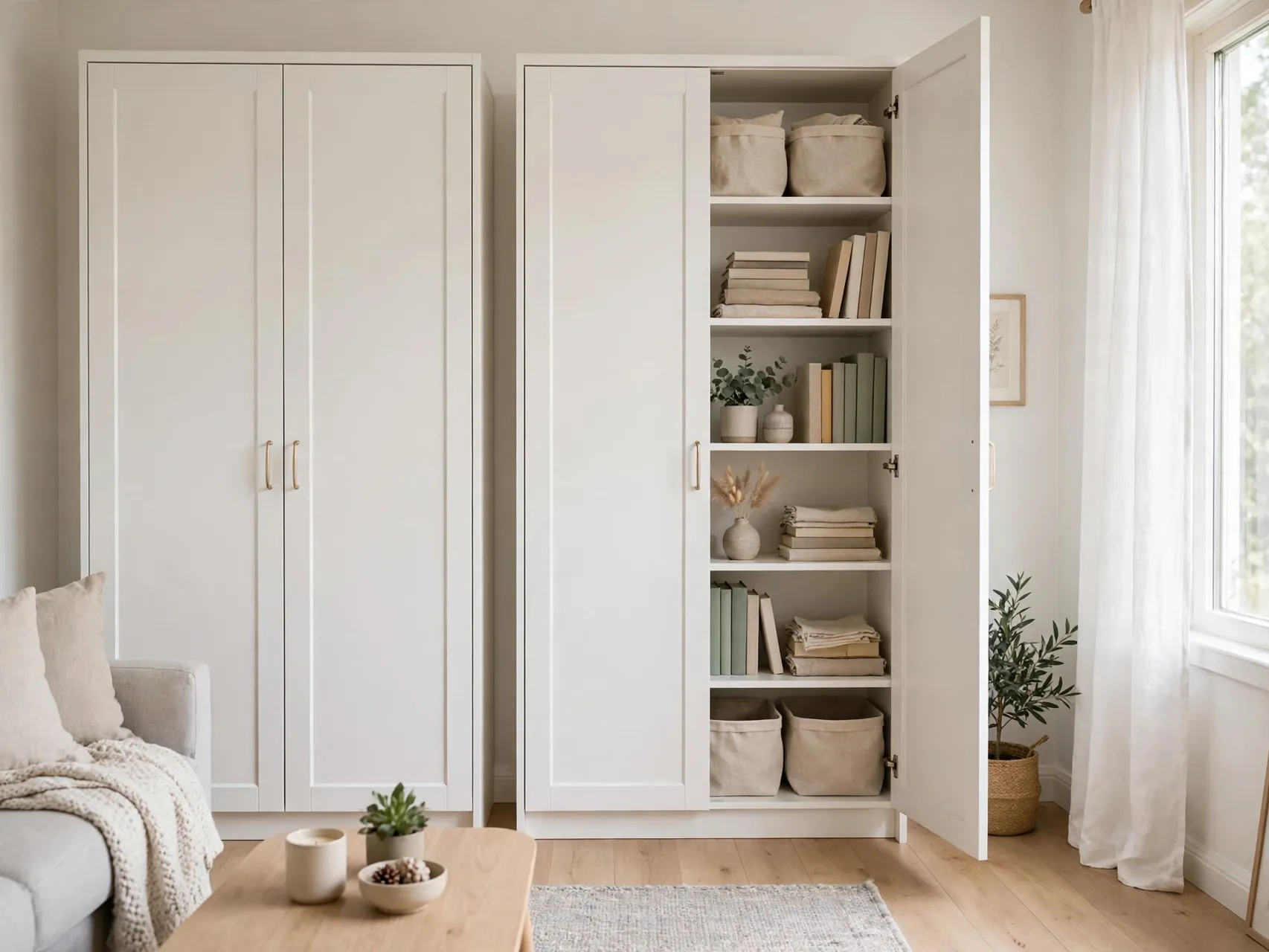
Open bookcases look great until life fills them with mixed clutter. Adding doors to the lower half of a tall bookcase hides boxes, files, and games while the open top half displays books and objects. The room instantly looks calmer without losing any storage.
This mix of open and closed is the visual trick behind many high end looking IKEA KALLAX hacks small rooms use too. If full doors feel heavy, glass doors offer a middle path. Either way, the messiest items go behind the doors and the pretty ones stay on show.
Cabinet Door Rails for Lids and Boards
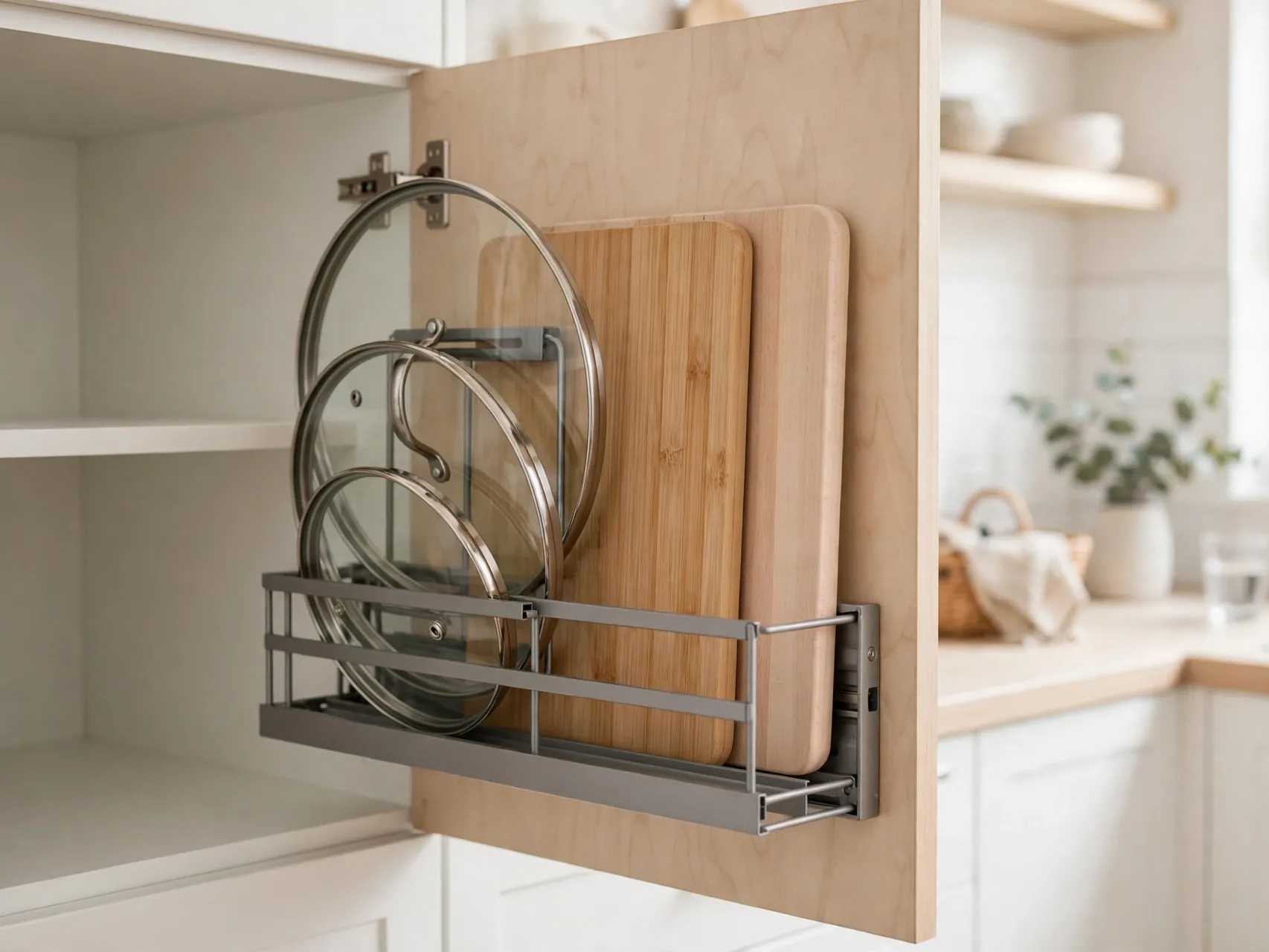
Pot lids, cutting boards, and baking trays waste cabinet space lying flat. A simple rail or rack fixed inside a cabinet door holds them upright against the door, so opening the cabinet presents everything at once instead of a sliding stack.
Measure the clearance between the door and your shelves with the lids in place before fixing, so the door closes fully. Keep sharp or heavy items stored safely per normal kitchen practice. This five minute fix often frees half a shelf in a small kitchen.
Pegboard Inside a Closet Door
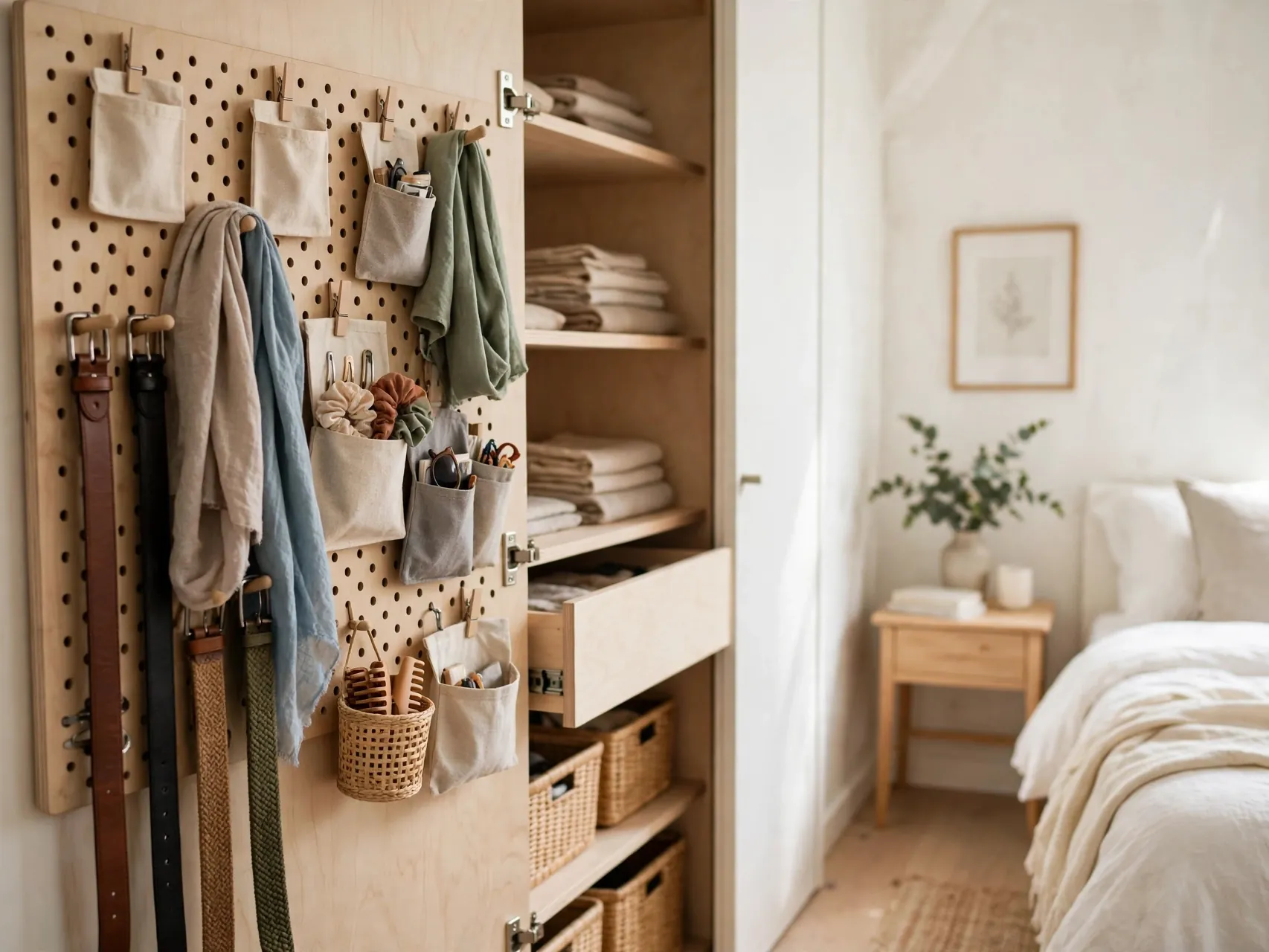
If wall space is gone, the inside of a closet or cupboard door is still available. A small pegboard or a set of hooks and pockets inside the door holds belts, scarves, cleaning tools, or gift wrap supplies in a layer that uses no shelf space at all.
Use adhesive or screw fixings appropriate to the door and keep the load light so hinges are not strained. This is a favorite trick in small wardrobes and utility cupboards, where one organized door can replace a whole drawer of tangled accessories.
Stacked Cabinets as a Room Divider

In a studio or open plan room, a low cabinet run or cube unit placed across the space creates two zones without a wall. One side faces the living area, the other serves the bed or desk, and both sides gain storage exactly where each zone needs it.
IKEA notes that its larger cube units can serve as room dividers, finished on both sides, which suits this hack well. Keep the divider low enough to preserve light, style the top sparingly, and anchor or stabilize the unit as instructed so it cannot tip.
Stool as Plant Stand and Extra Seat

A simple sturdy stool is the small home multitasker nobody appreciates enough. It works as a plant stand in a bright corner, a side table beside the sofa, a step for high shelves, and extra seating when friends visit, all in one small footprint.
Designers who shop IKEA's value ranges make the same point: a good stool is never wasted. Choose one that stacks or tucks under a table if space is severe. Because it moves in seconds, it earns its place in rooms where fixed furniture cannot.
Tray Table That Works Double Duty

A tray table with a removable top works as a side table all week, then carries drinks and snacks to the sofa, the balcony, or a bedside breakfast. When floor space gets tight, the tray stores flat or hangs on a hook and the frame folds away.
This is hosting equipment for homes without room for hosting furniture. Use the tray as a laptop stand or a plant tray between gatherings so it never becomes dead weight. Small, movable pieces like this are the backbone of flexible small space living.
Spice Racks for Bathroom Bottles
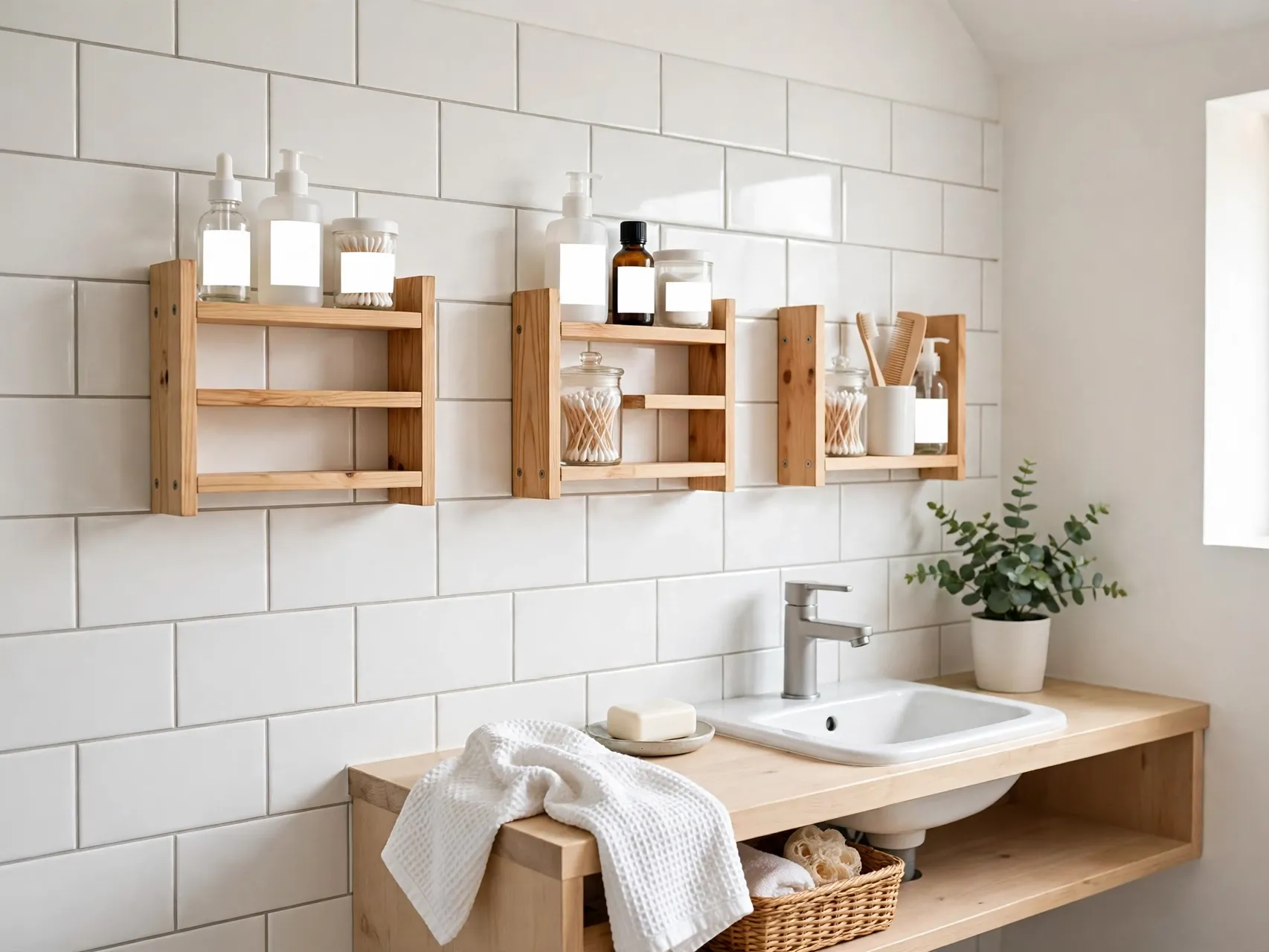
In a tiny bathroom, those same small wooden racks mount on the wall or inside a cabinet to hold skincare, hair products, and everyday toiletries in one visible layer. Shallow storage stops bottles hiding at the back of a deep cabinet, expiring quietly behind newer ones.
Install two or three racks at staggered heights to use a narrow wall beside the mirror. Keep heavy bottles on lower racks and follow normal safe storage for any medicines, ideally in a secured cabinet away from children rather than on open racks.
Clothing Rack Where No Closet Exists
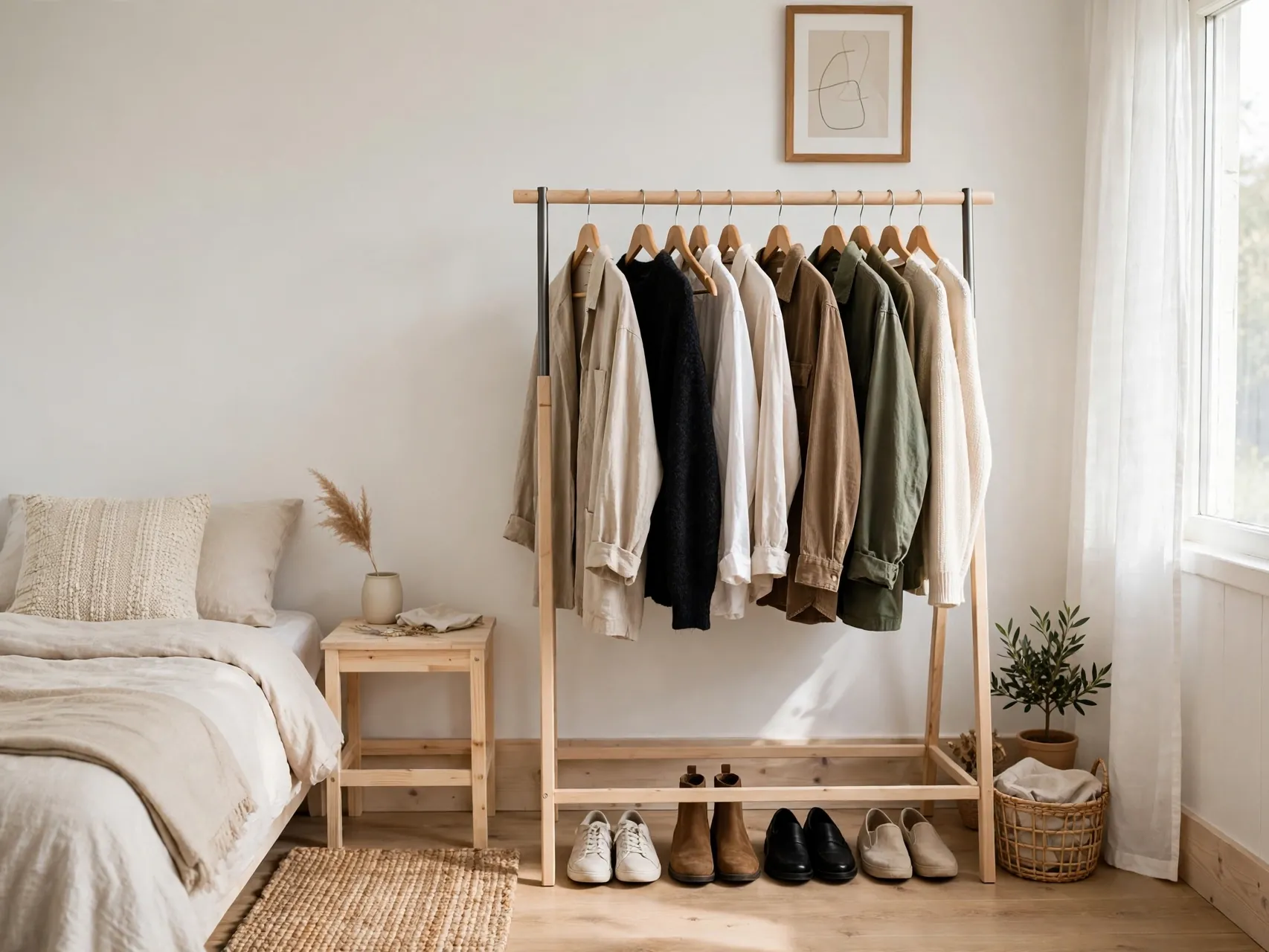
A simple garment rack creates a closet in a room that has none, common in older apartments and attic bedrooms. A rack in a corner with a curtain or a fabric cover in front looks intentional, and a shoe rack or boxes underneath complete a mini wardrobe zone.
Choose a sturdy rack, load it evenly, and keep it to current season clothes so it stays manageable. This hack also works as overflow during guests or while a real closet is being organized, which makes it a useful spare even in homes with closets.
Cube Inserts to Create Drawers Anywhere
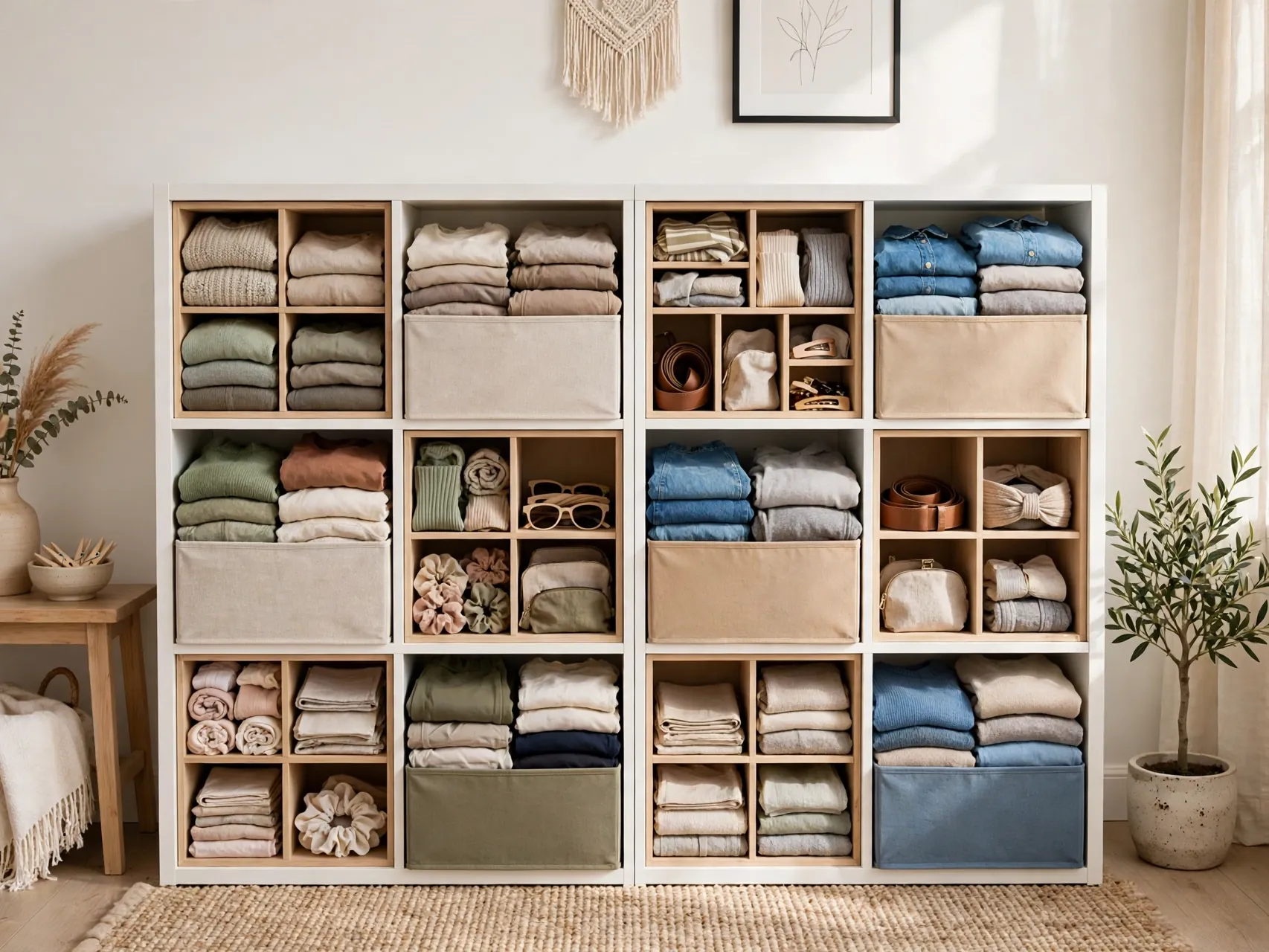
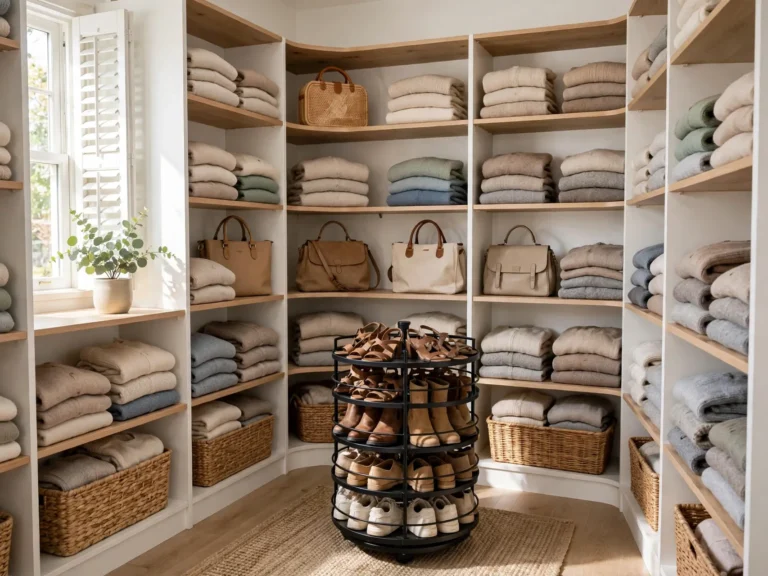
Plain cube shelves become far more useful with inserts: two drawer units, door inserts, and boxes that slide into individual cubes. A shelf that once held visible piles becomes a chest of drawers for clothes, a filing system for paperwork, or a toy store with doors that close.
Start with inserts only where clutter lives, usually the middle cubes at hand height, and leave display cubes open. Because inserts can be added one at a time, this is a budget IKEA small space ideas favorite: buy the frame once, upgrade it gradually.
Wall Cabinets Above the Door Frame
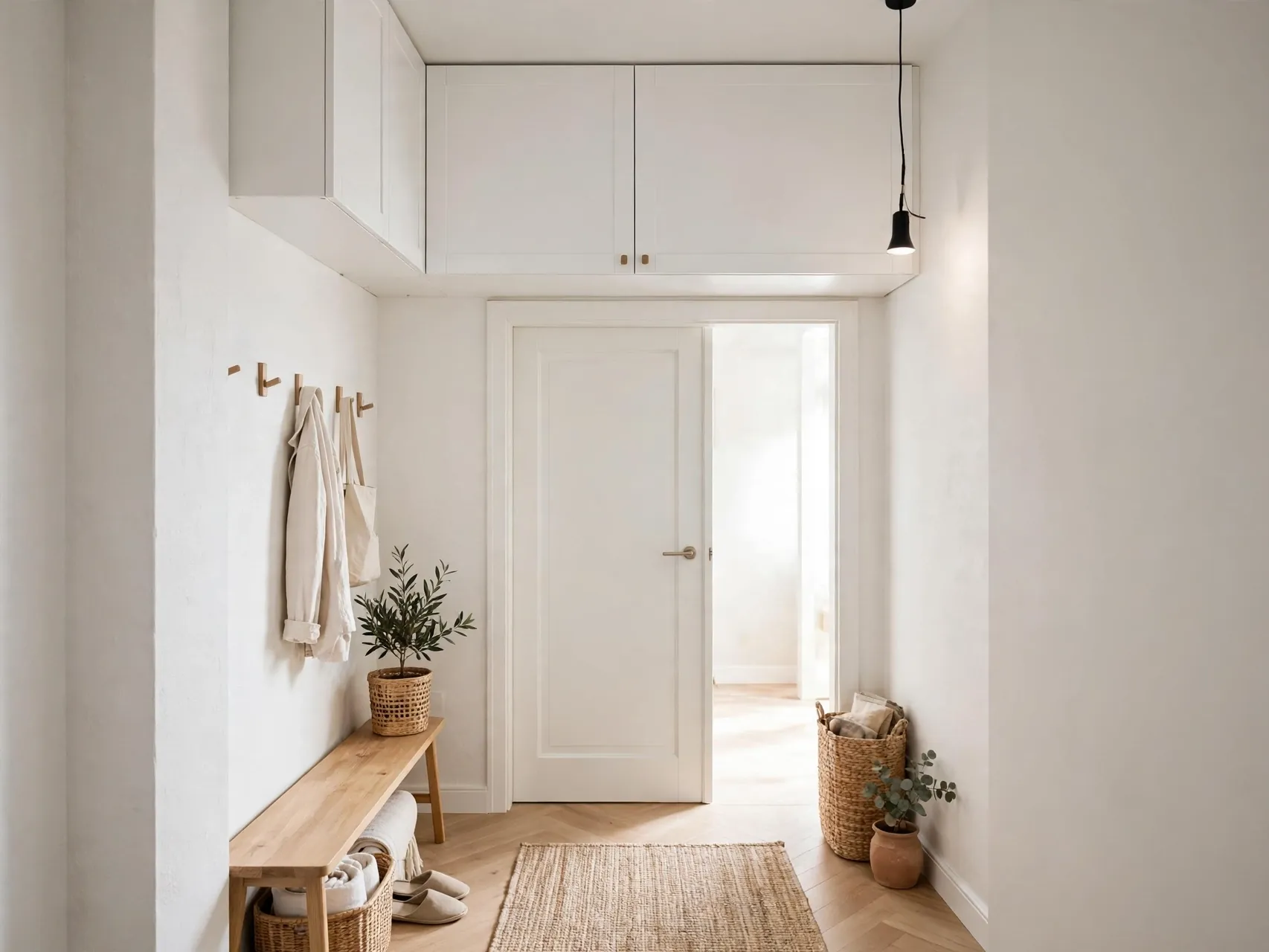
The strip of wall above a doorway is dead space in most rooms. One shallow wall cabinet or a short shelf fitted above the frame stores rarely used items, spare light bulbs, seasonal bits, or books, in a spot that asks for nothing from the floor or the main walls.
Use it only for light, infrequent items you can reach safely with a step stool, and never above a child's bed or play area. In a hallway this trick can hold an entire overflow category, which frees a whole shelf lower down for daily life.
FAQ
Are IKEA hacks safe and sturdy enough for daily use?
Most simple hacks, mounting racks, adding inserts, using carts and shelves in new rooms, are safe when you follow each product's assembly instructions, respect its stated use and load limits, and anchor tall or wall mounted pieces correctly. Avoid modifying anything in ways that affect structural parts, and get help if you are unsure about wall fixings.
What tools do I need for most small space hacks?
A tape measure, pencil, spirit level, screwdriver or drill, and suitable wall fixings cover most projects in this list. A step stool helps for high mounting. Always check what your wall is made of before choosing fixings, and renters should confirm what their lease allows before drilling.
Which hack gives the biggest impact in a studio apartment?
A low storage divider that creates zones, plus a rolling cart that changes jobs through the day, usually transform a studio most. Together they add separation, hidden storage, and flexible surfaces without any building work. Add wall hooks for chairs and bags and the floor stays clear for living.
How do I stop hacked furniture looking mismatched?
Repeat finishes and hardware across pieces, paint small wooden items to match your walls or trim, and use consistent boxes and baskets inside open units. A limited color palette makes different ranges read as one planned system, even when every piece started life doing a different job.
Where should I check sizes and availability before starting?
Check the product page for your country on ikea.com for current dimensions, availability, and care and safety instructions, since ranges and sizes change over time. Measure your space, including door swings and skirting boards, and compare both sets of numbers before buying anything for a tight gap.
Key Takeaways
- Use dead space first: Fridge gaps, door backs, under shelf space, and the wall above doors store more than most new furniture.
- Make pieces do two jobs: Benches that store, carts that travel, and stools that seat, step, and display earn their footprint.
- Go vertical in small rooms: Wall racks, pegboards, and hanging chairs keep floors clear and rooms feeling bigger.
- Upgrade gradually: Inserts, doors, and boxes turn basic frames into tailored storage one affordable step at a time.
- Measure and anchor carefully: Check dimensions on ikea.com and follow fixing instructions so every hack stays safe and snug.
- Pin these hacks for later: Save this list to your small spaces board on Pinterest so your next weekend project is ready to go.