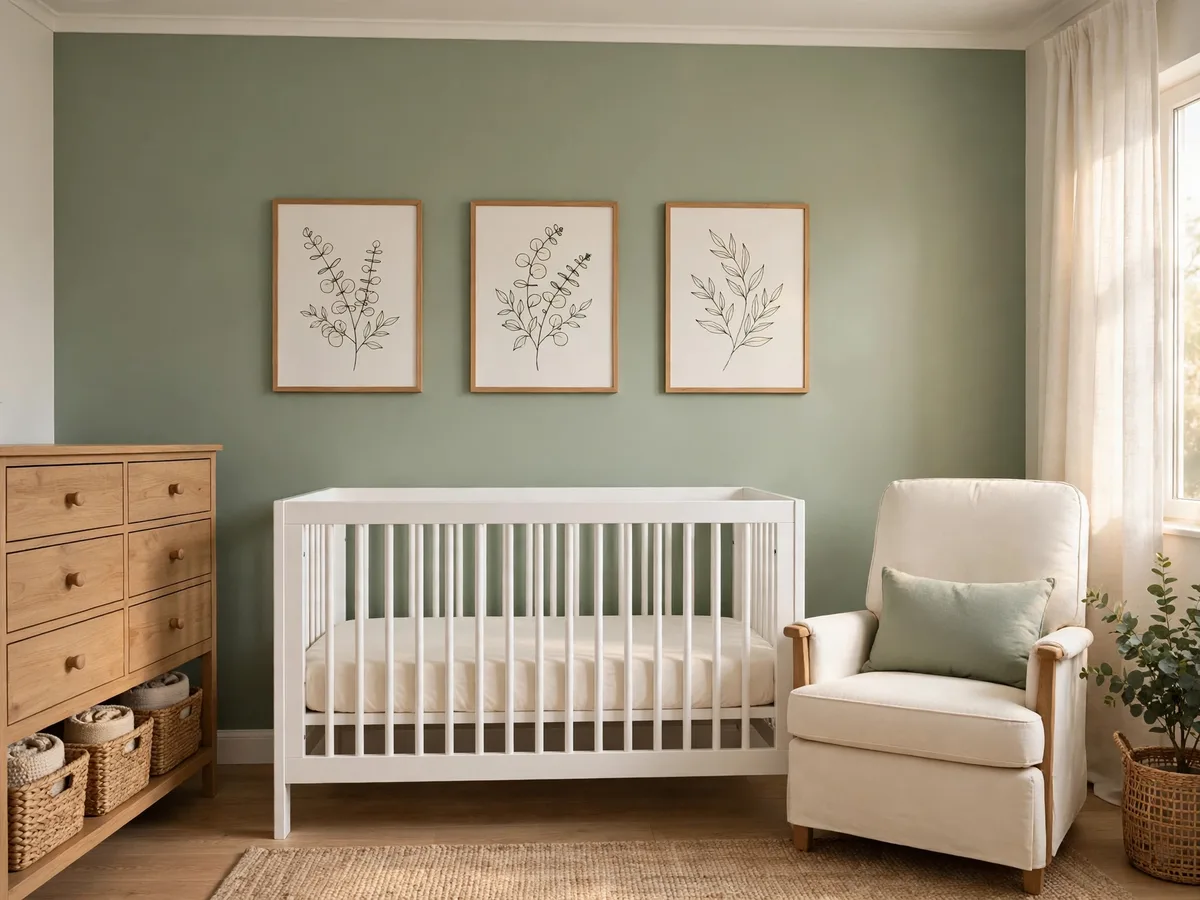
25 Sage Green Nursery Ideas That Feel Soft and Soothing
Introduction
Sage green has become the nursery color parents reach for when they want calm without bland. Soft, grayed, and a little bit herbal, a sage green nursery feels like a quiet walk outside: restful for sleep, gentle for play, and easy to live with through the long newborn days.
One rule shapes this whole list: sage belongs on the walls, the chair, the rug, and the storage, never as soft bedding inside the crib. Safe sleep means a bare crib with a firm, flat mattress and a fitted sheet only, with furniture anchored and window coverings cordless.
Use the ideas in order to build the room layer by layer: color decisions first, then furniture, then texture, storage, and light. Sample the paint, enjoy the process, and remember that the soothing part comes as much from restraint as from the color itself.
1. Paint a Single Sage Accent Wall Behind the Crib
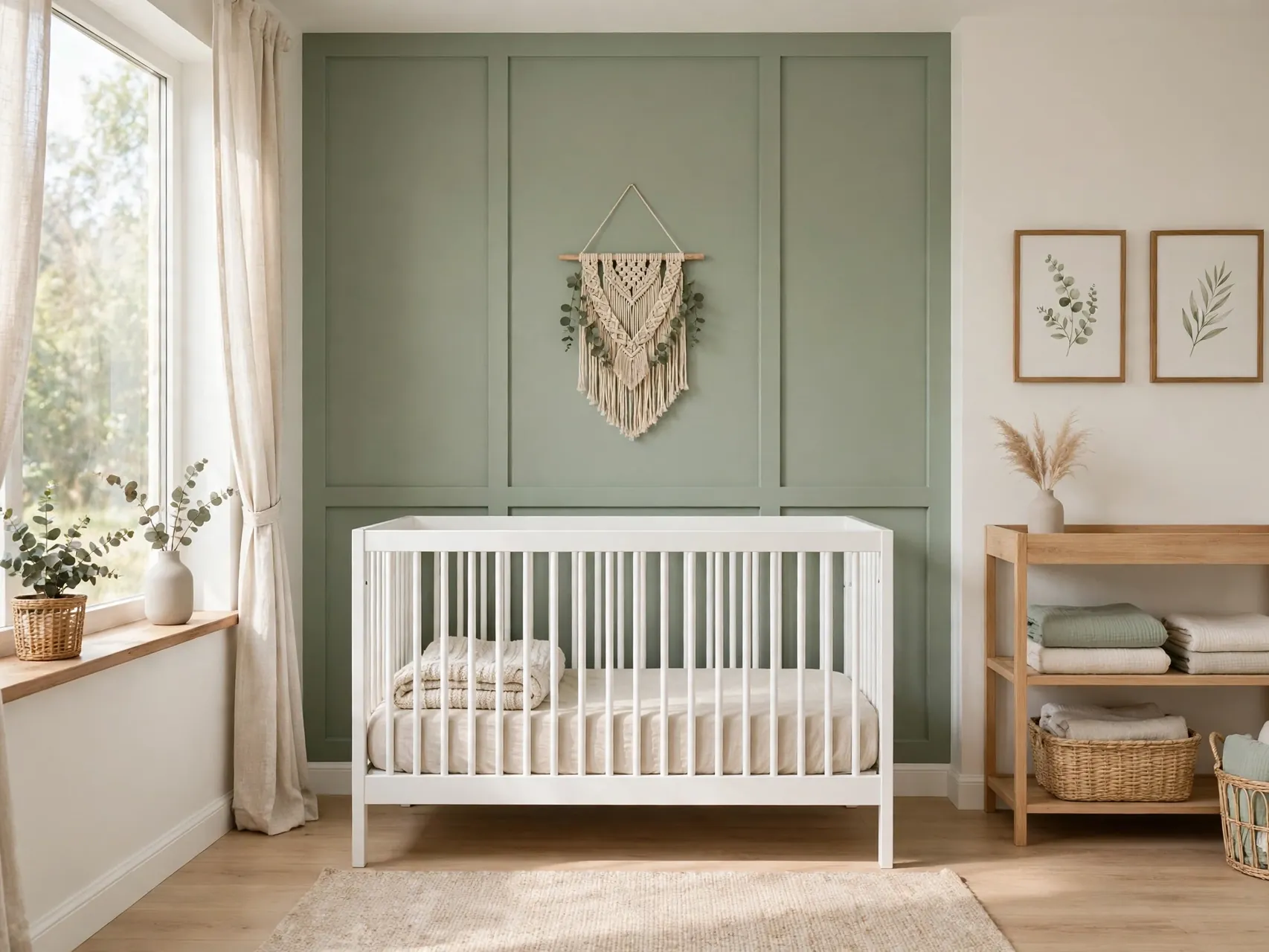
If you love sage but hesitate over four walls of it, paint the wall behind the crib first. You get the full calming effect where it matters most, the sleep zone, while the other walls stay warm white and keep the room bright.
Choose the crib wall because it is the natural focal point and the backdrop for a thousand photos. Keep the crib itself bare and safe in front of it, and let the color do the decorating.
2. Sample Two or Three Sage Shades in Your Light
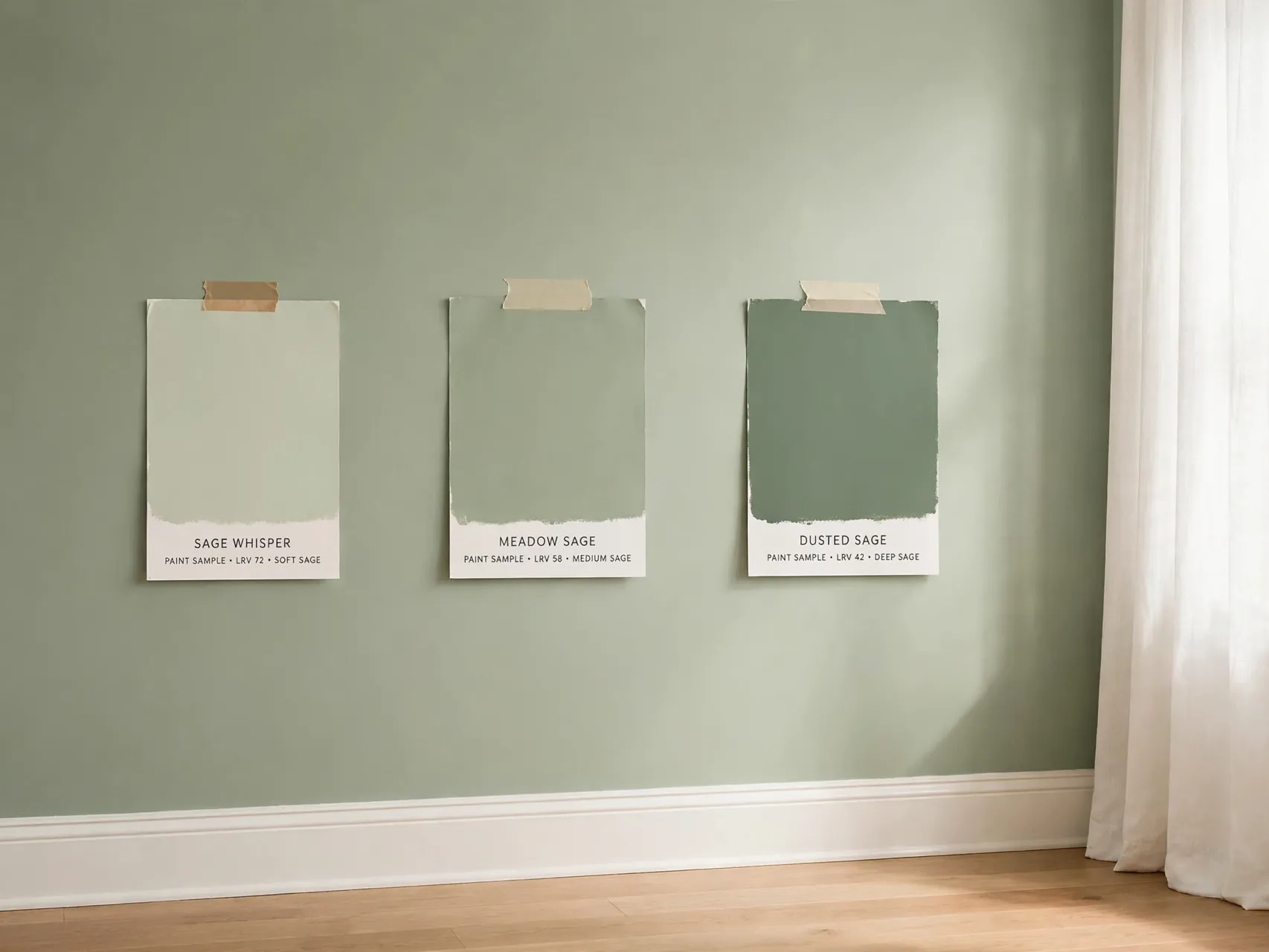
Sage is a shapeshifter. One shade reads soft and herbal in morning light, then turns gray or minty by evening, and store lighting lies completely.
Check your samples at nap time light, bright midday, and warm evening lamp light. The right sage should feel calm in all three.
3. Try a Smoky Sage for a Moodier Look

If pastel sage feels too expected, go deeper. A smoky, gray green on the walls creates a cocooning room that photographs beautifully and can help a bright room feel restful for daytime naps.
Balance smoky walls with cream textiles, pale wood, and warm lighting so the room feels moody rather than dark. This version of a sage green baby room grows up especially well, sliding into a toddler or child room with only bedding and art changes as your baby gets older.
4. Use Sage Peel and Stick Wallpaper When Renting
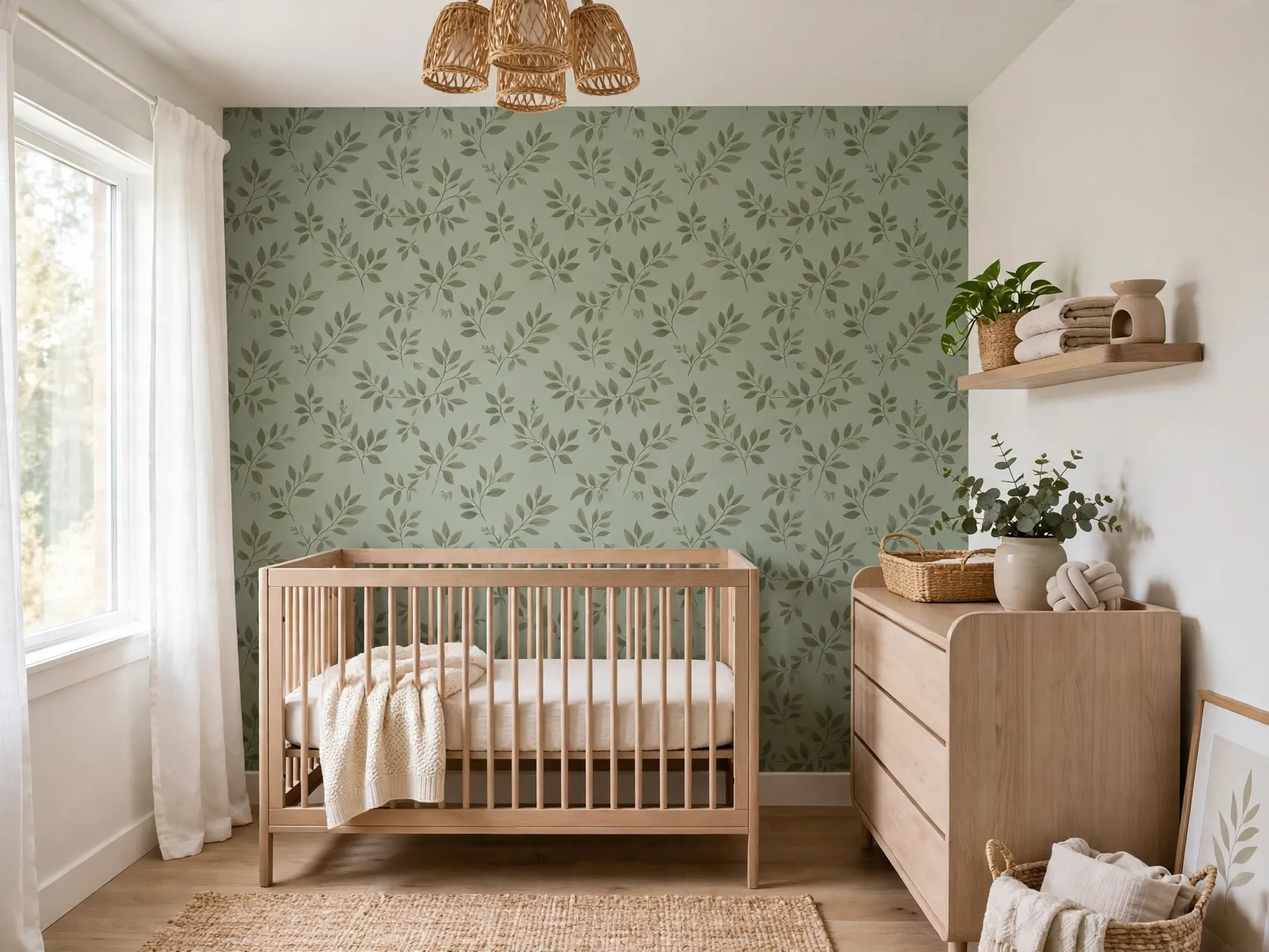
Renters can have the sage look too. Peel and stick wallpaper in a sage grasscloth texture, a small leaf print, or a soft plaid transforms one wall with no paint and no long term commitment.
Always test a small patch in a hidden spot first, because older paint can react unpredictably, and follow the maker removal guidance when you move. Keep furniture and textiles plain so the pattern can carry the room.
5. Pair Sage With Warm White and Cream
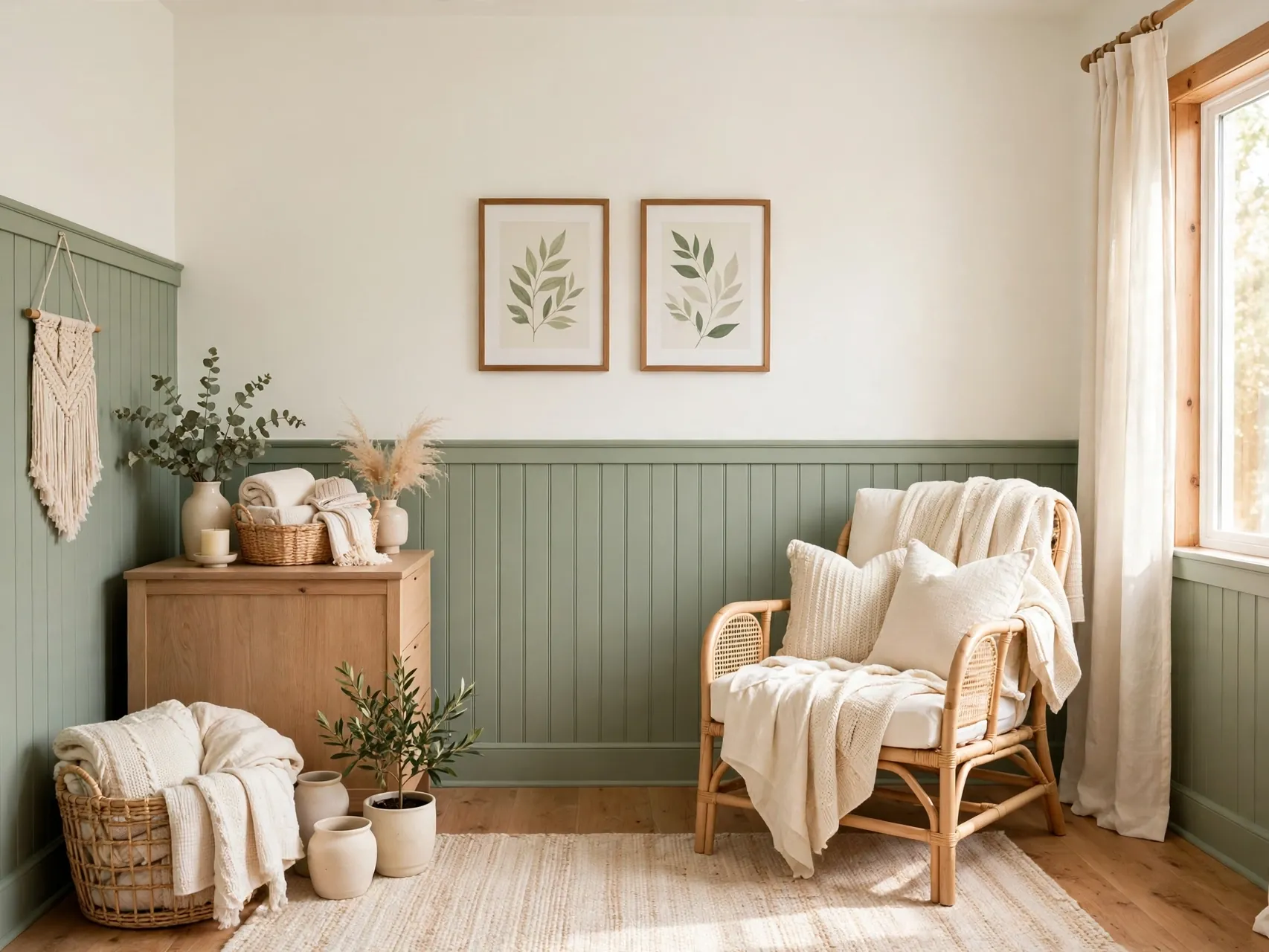
Sage needs warm companions. Warm white walls beside a sage accent, cream bedding tones outside the crib, and oatmeal textiles keep the green feeling soft and herbal rather than cold or clinical.
Use this pairing as your base ratio: roughly sage as the lead color, warm neutrals as the support, and wood as the bridge. With that balance settled, every later choice, rug, chair, art, becomes simpler, because anything warm and natural will probably belong in a sage green nursery palette.
6. Add Natural Wood Furniture for Warmth
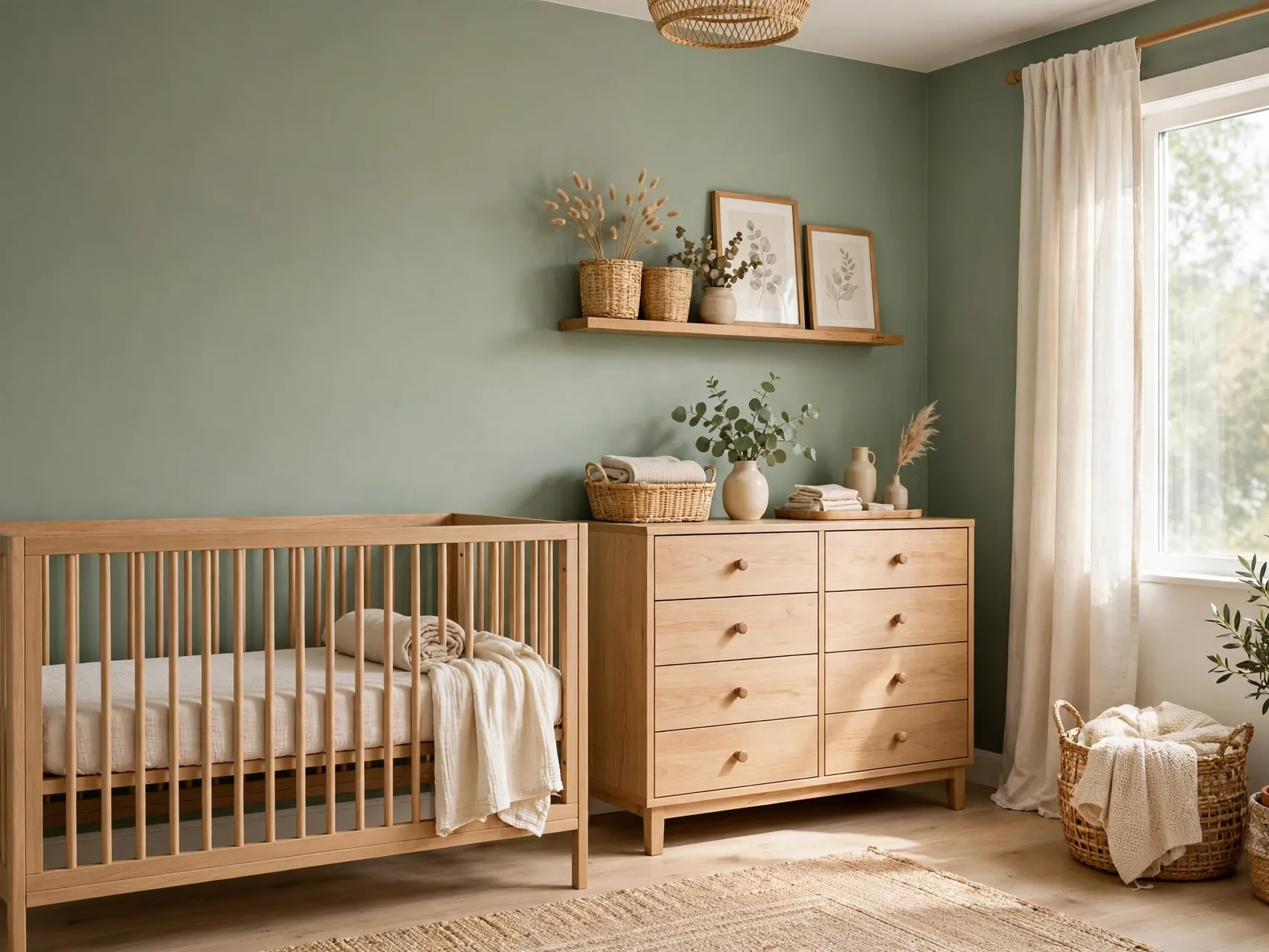
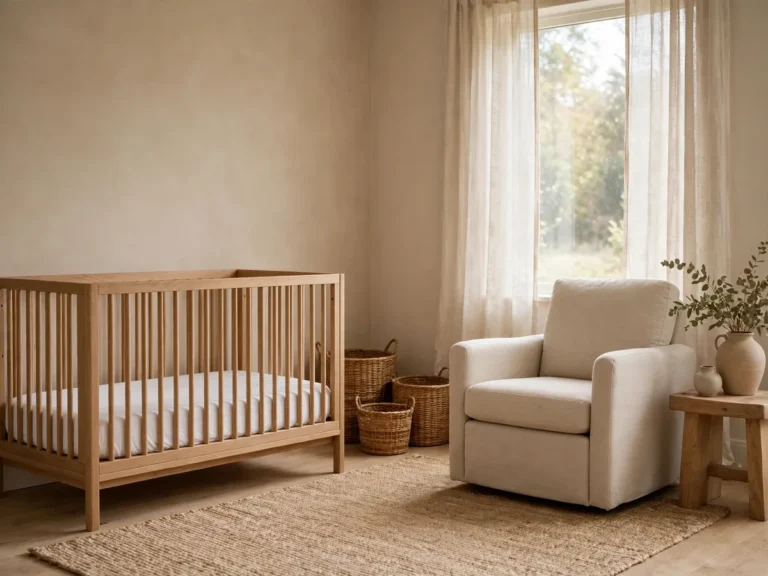
Natural wood is sage best friend. A light oak crib, a warm wood dresser, or a simple beech bookshelf keeps the green feeling earthy and prevents the room from drifting cool.
Repeat your main wood tone at least twice for a collected look. Choose furniture that meets current safety standards, with a crib that has slats spaced no more than 2 3/8 inches apart per CPSC guidance.
7. Choose a White Crib Against Sage Walls
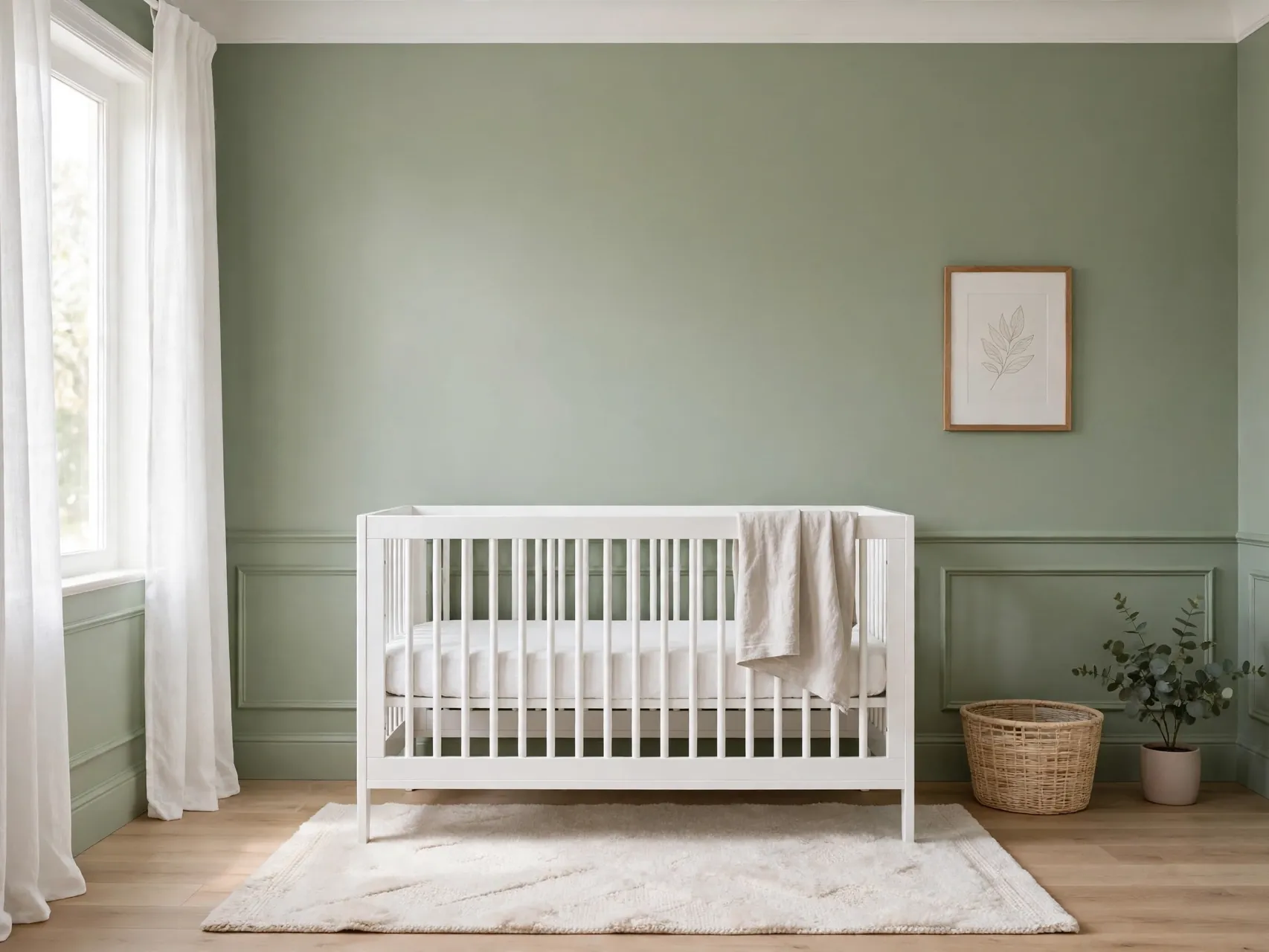
A white crib against a sage wall is a timeless combination: crisp, clean, and quietly classic. The contrast makes the sleep area the clear heart of the room and suits parents who prefer their furniture neutral and their color on the walls.
Keep the crib bare for safe sleep, with a firm, flat mattress and a fitted sheet only. No bumpers, pillows, loose blankets, or plush toys belong in the crib for infants, whatever the styled photos show.
8. Layer Sage Textiles on the Chair and Rug, Not in the Crib

Sage textiles are lovely, but placement matters. Put the color where it is safe and useful: a sage cushion and throw on the nursing chair for you, a sage toned rug on the floor, curtains at the window, and a sage changing pad cover that stays supervised in use.
The crib stays out of the textile story for infant sleep, because soft items in the crib are a safety risk. This is the honest secret of beautiful nursery photos: the styling lives around the sleep space.
9. Add Woodland Prints Hung Safely and Securely

A woodland theme and sage are made for each other. Simple prints of deer, foxes, owls, or forest trees in soft watercolor styles deepen the nature feeling without cartoon brightness.
Hang every frame with proper fixings for your wall type and check they are secure, and never hang anything above the crib where it could fall into the sleep space. Choose lightweight frames for nursery walls.
10. Bring in Botanical Line Art in Simple Frames
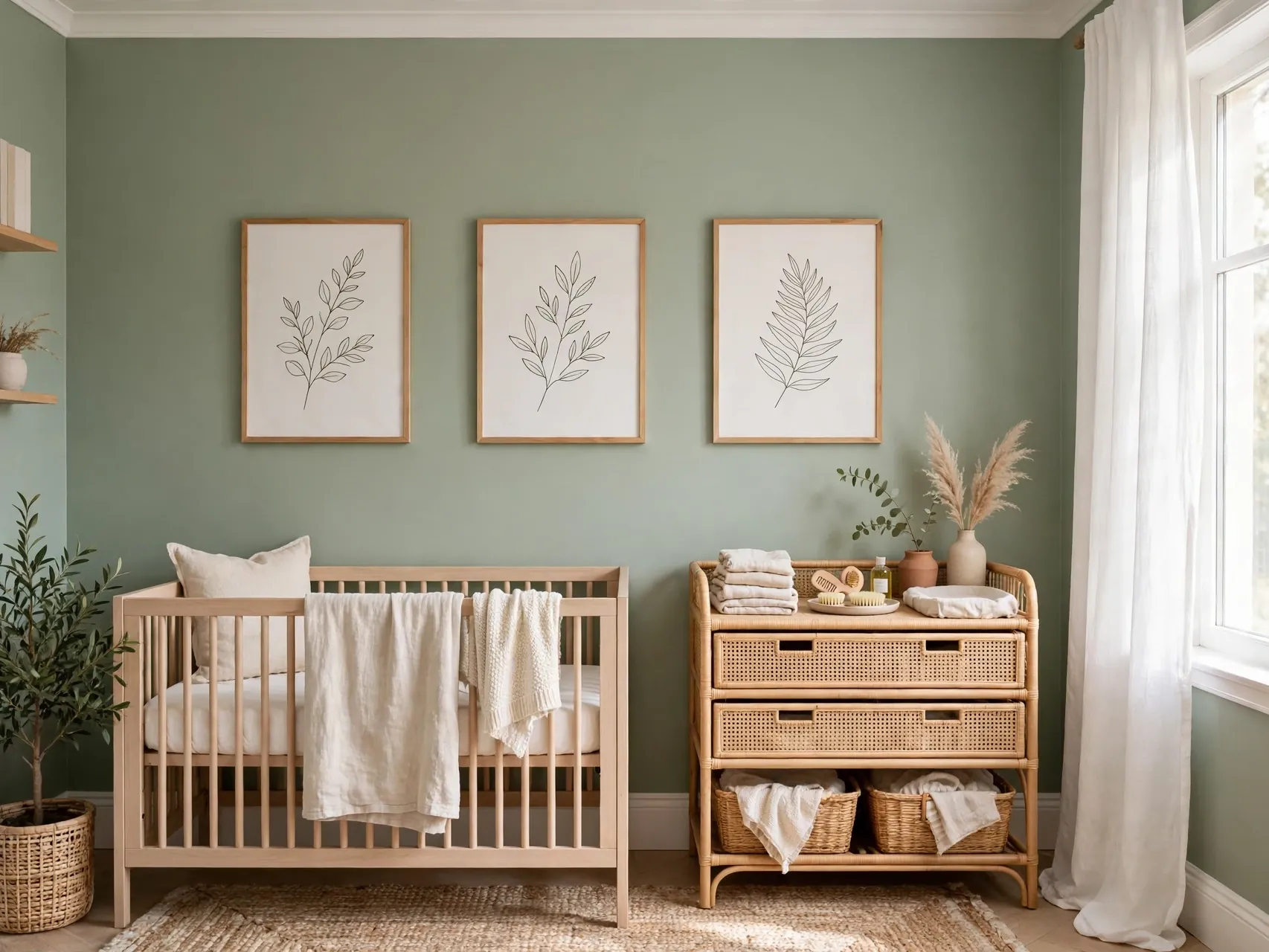
If woodland animals feel too themed, botanical line art gives the same nature note in a calmer register. Single leaf studies, fern prints, or simple branch drawings in thin wood or black frames look elegant against sage and warm white, and they will suit the room long after the baby stage.
Hang a small series at adult eye level near the chair or dresser rather than scattering many tiny frames. Botanical art also bridges beautifully into a child or guest room later, which makes it a smart buy.
11. Use Woven Baskets for Calm, Hidden Storage

Sage rooms look serene when the baby clutter disappears into beautiful storage. Woven baskets in seagrass, rattan, or cotton rope hold diapers, spare clothes, and toys while echoing the natural palette.
Keep everyday baskets where you can reach them easily, and move small or heavy items out of reach as your baby starts to pull up and explore. Closed, calm storage is not just styling; it keeps floors clear for safe movement during those half asleep night walks to the crib.
12. Add Rattan Details for Soft Texture
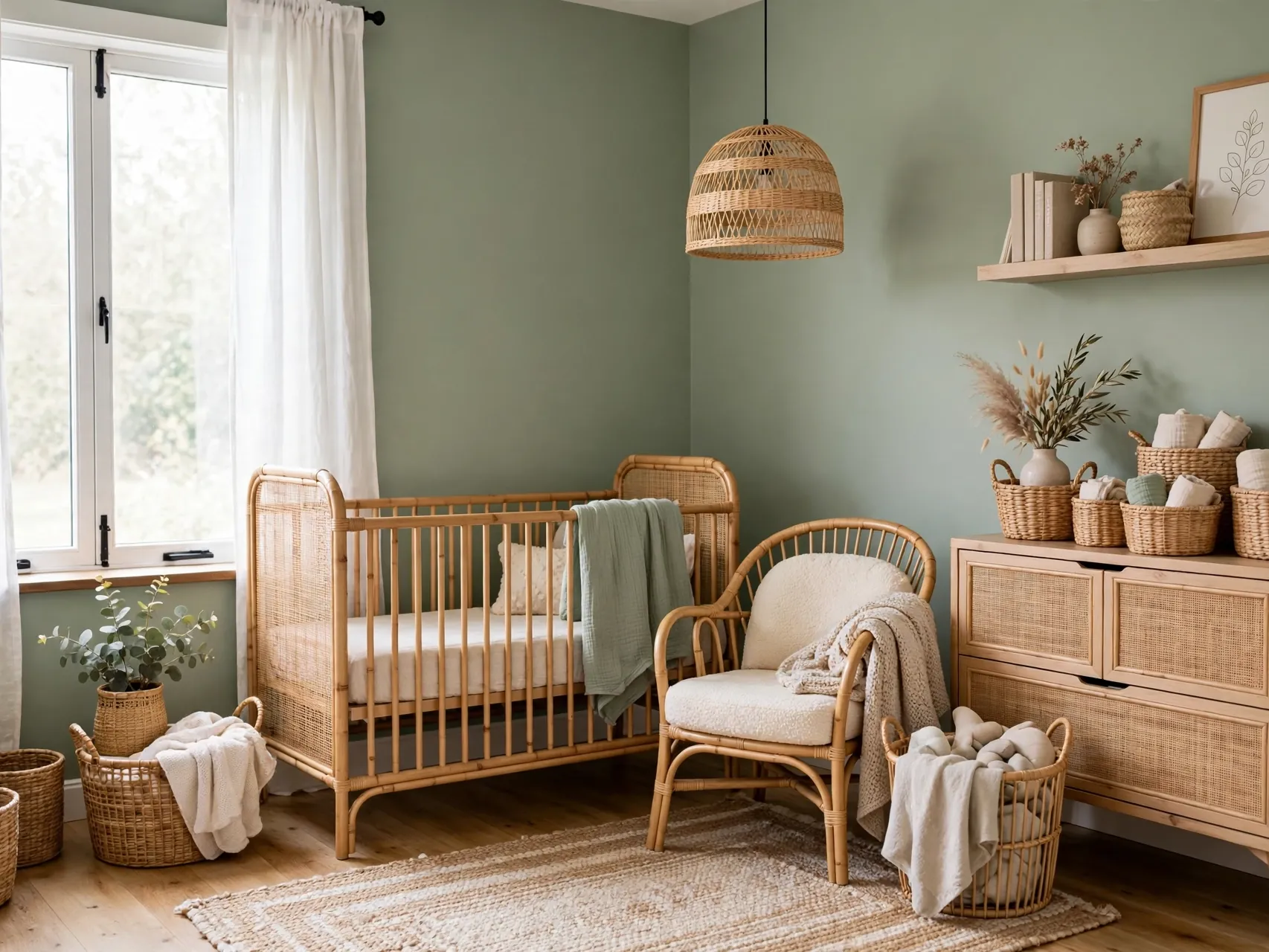
Rattan brings a handmade softness that suits sage perfectly. A rattan mirror frame, a woven pendant shade fitted safely by a qualified person, basket storage, or a rattan side table adds warm texture and gentle pattern without any extra color.
Use rattan in two or three places so it reads as a material choice, and check nursery pieces for sturdiness and smooth finishes. Keep decorative rattan items out of the crib and out of a baby reach.
13. Hang Cordless Blackout Shades for Better Sleep

Good sleep loves darkness, and sage rooms are built for sleep. Fit blackout shades or lined curtains to darken the room for naps, and choose cordless designs, because window covering cords are a strangulation hazard for babies and young children.
Position the crib away from windows when you can, and double check that no cord, chain, or tieback is reachable from the crib or the chair. Layer sheers over blackout coverage if you want soft daylight for play and real darkness for sleep in the same window.
14. Choose a Cream Glider With a Sage Cushion
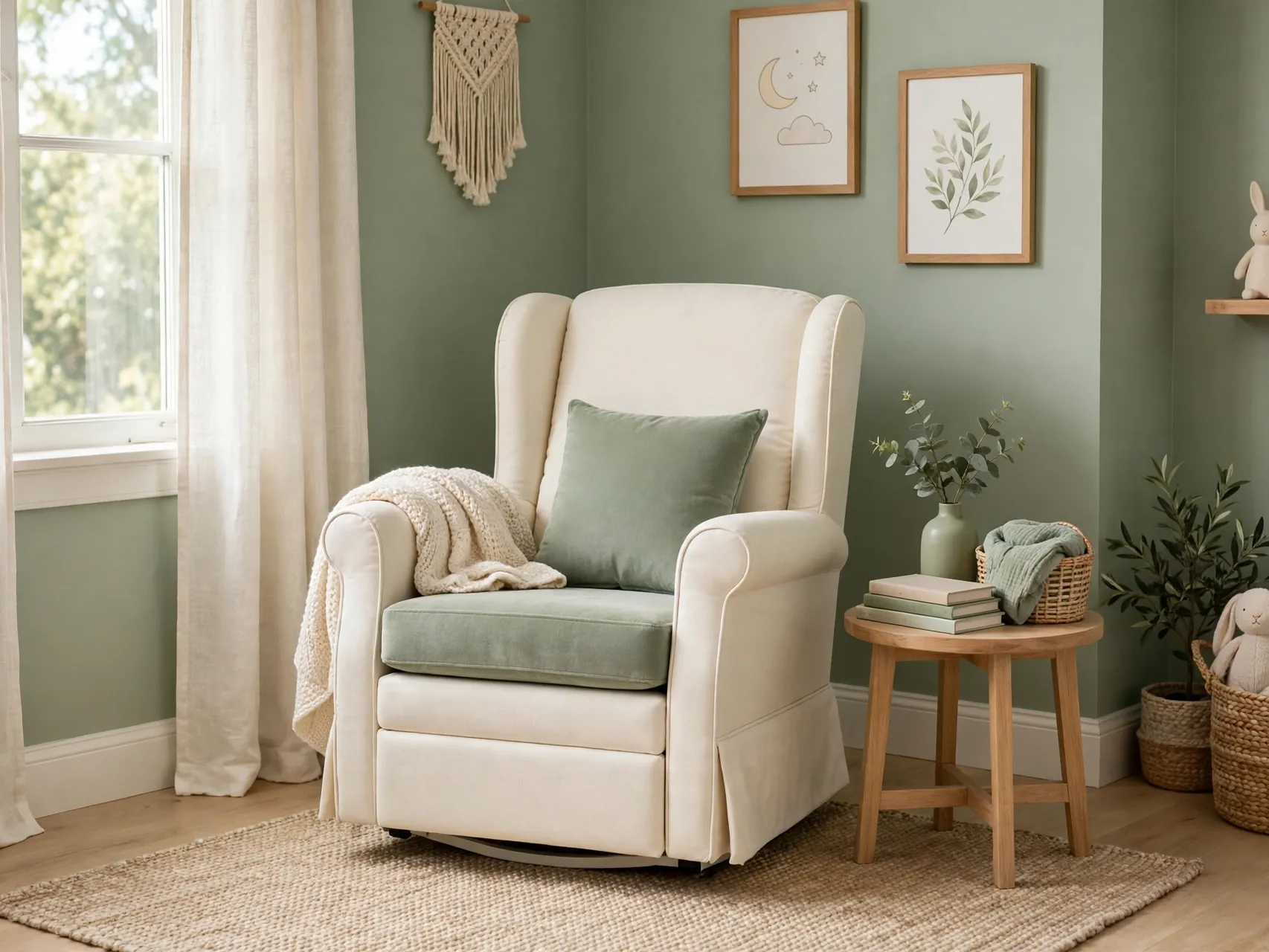
The nursing chair is where you will live for a season, so pick the most comfortable cream or oatmeal glider you can, then dress it with a sage cushion and a washable sage throw for yourself. Cream keeps the chair timeless, while the sage accents tie it into the room palette for almost no cost.
Set the chair in a calm corner near soft light, with a small table for water and a book. Keep lamps stable and cords out of reach.
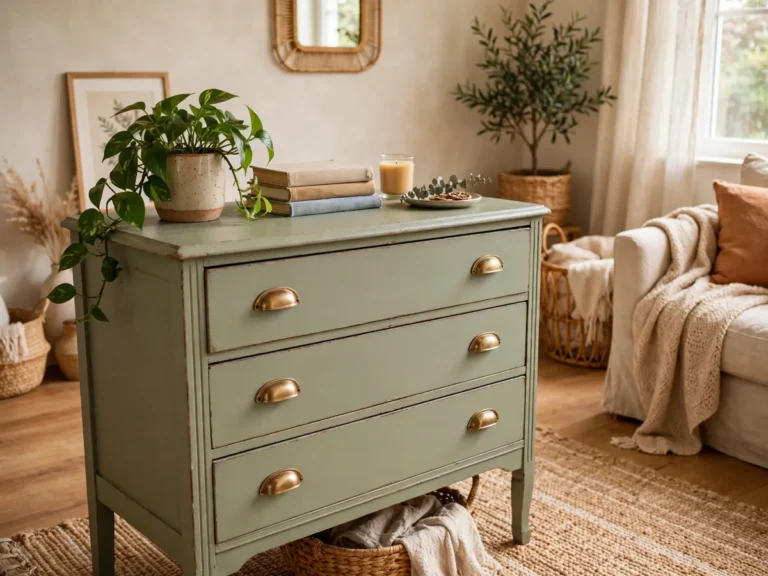
15. Add a Sage Dresser That Doubles as a Changing Table

A dresser in a soft sage finish is a beautiful way to bring the color into furniture, and a wide, sturdy dresser top works as a changing station with a secure changing pad. You get storage, a changing space, and a color statement in one hardworking piece that stays useful for years.
Anchor the dresser to the wall without exception, keep all changing supplies within your reach so you never step away, and always keep one hand on your baby on the raised surface. Use the safety strap on the pad.
16. Anchor the Dresser and Crib Area Furniture
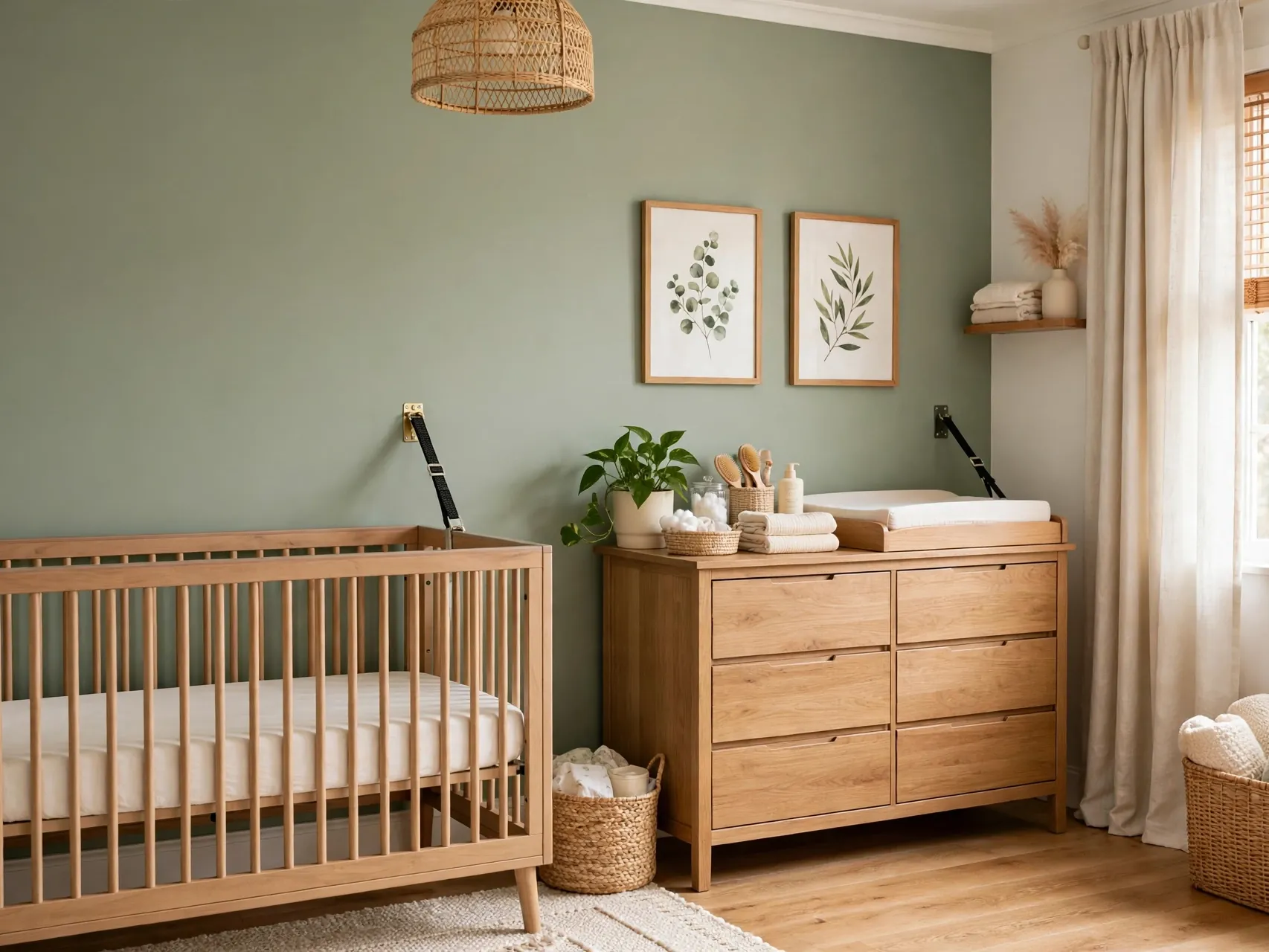
Furniture anchoring deserves its own moment in every nursery plan. Dressers, shelves, and wardrobes can tip when a child climbs or pulls, so secure every tall or heavy piece to the wall with anti tip hardware and follow CPSC guidance for your furniture type.
While you work, check the whole crib zone: nothing heavy above the crib, no reachable cords, no small items stored on open shelves a climbing toddler could pull down. A sage green nursery should be as safe as it is soothing, and anchoring is the invisible step that makes it true.
17. Use a Soft Area Rug for Tummy Time

A soft, low pile rug in cream, warm white, or a faded sage pattern warms the floor and gives you a comfortable base for tummy time and floor play beside your baby. Choose a washable or easy clean rug, because nursery floors meet everything, and use a non slip underlay so it stays firmly in place.
Keep the rug flat and free of loose tassels or edges a baby could chew during play, and always supervise floor time. The rug also softens sound, which helps the whole house at nap time.
18. Add Brass or Matte Black Hardware Accents

Small hardware choices sharpen a soft palette. Brushed brass pulls on a white dresser warm the sage around them, while matte black handles give a modern edge that suits a smokier sage scheme.
Check that any hardware you fit is secure and cannot loosen into a small part hazard, and keep spare screws out of the nursery entirely. These tiny repeats are what make a room feel designed.
19. Cluster Sage Decals Instead of Full Wallpaper
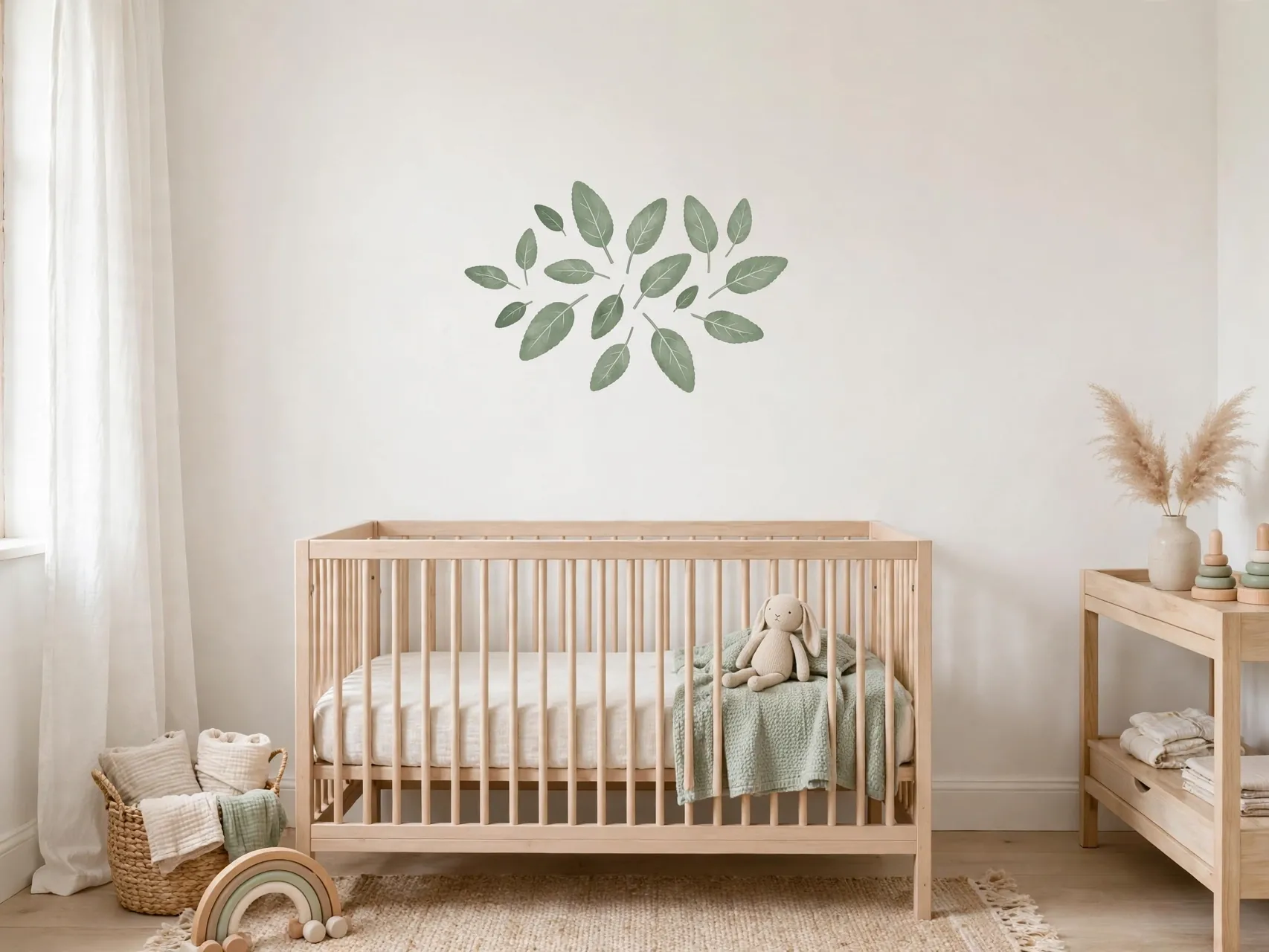
For the lowest commitment color of all, cluster sage wall decals, simple arches, leaves, or scallops, on one wall. Group them closer together low near the crib wall zone and let them drift apart as they rise, so the arrangement feels like growth rather than a sticker grid.
Decals are also a renter favorite, since most remove cleanly; still, test one in a hidden spot first. Keep decals on the wall only, never inside the crib, and press edges down firmly so nothing can peel within reach.
20. Keep a Small Reading Corner With Board Books
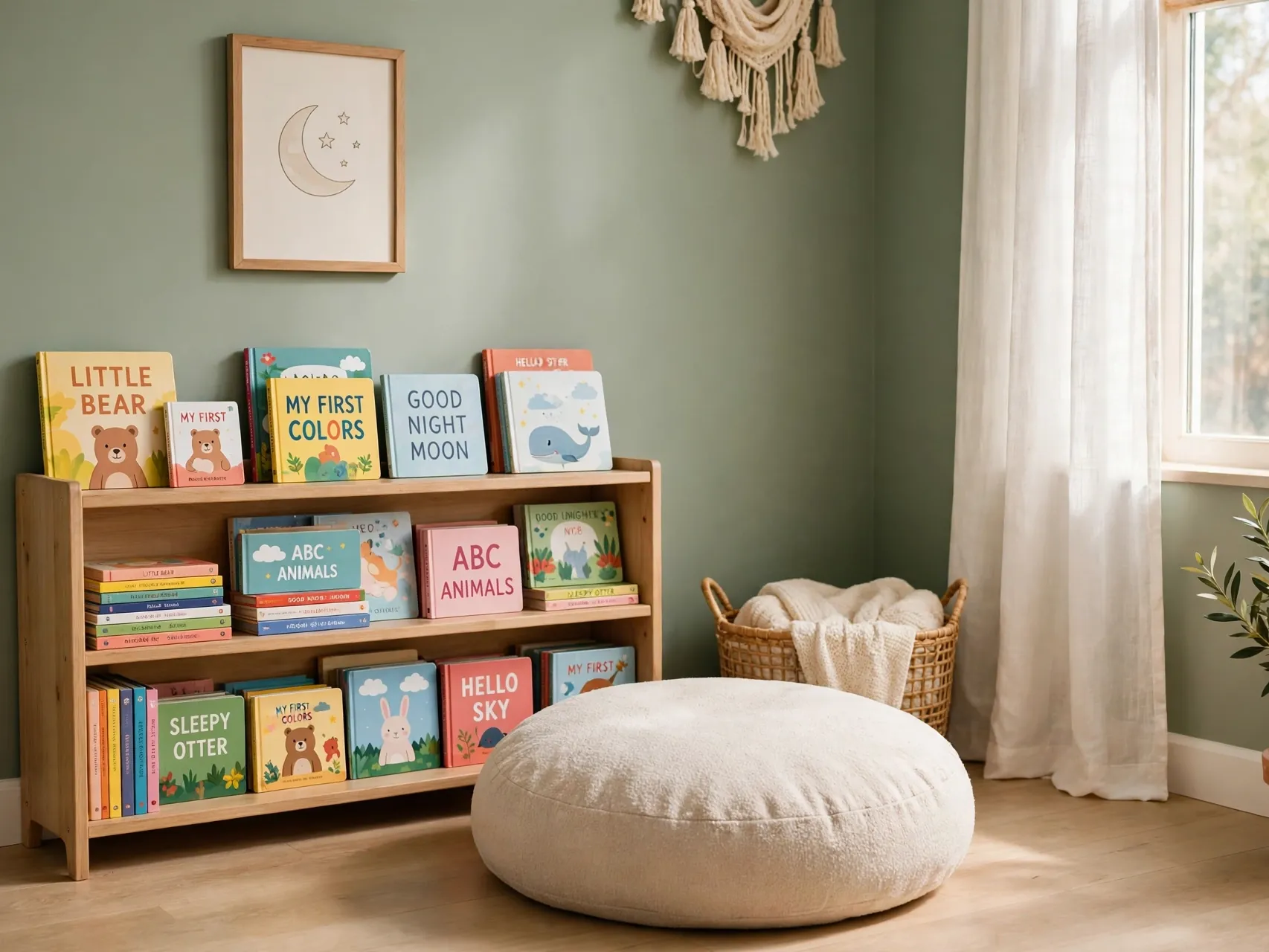
A cushion on the floor, a small basket of board books, and soft light near the chair create a reading corner that starts with newborn story time and grows into toddler independence. Sage rooms are calm by design, and a book corner gives that calm a daily purpose you will both love.
Keep the book basket small and rotate titles from storage elsewhere in the home. Choose sturdy board books that survive enthusiastic handling.
21. Add One Plant High and Out of Reach
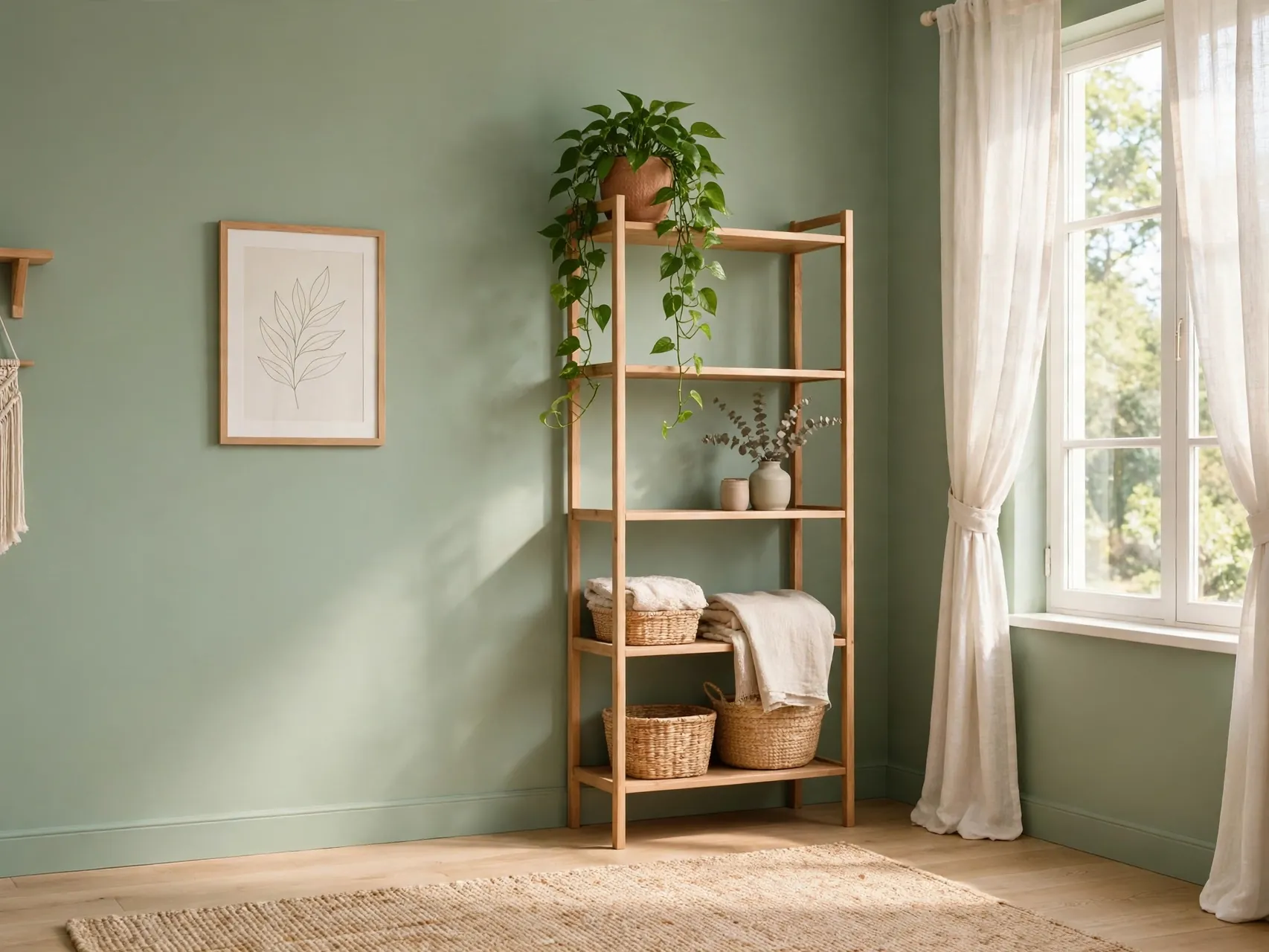
One living plant completes the garden feeling sage promises. Place a sturdy plant in a beautiful pot on a high, secured shelf or another spot completely out of reach, and check plant safety information for children and pets before choosing.
Keep soil inaccessible and never place plants on, in, or above the crib. If a real plant feels like one responsibility too many in the newborn season, a good faux stem in a stoneware pot gives the look without the care.
22. Use Warm, Layered Lighting on Dimmers

Sage changes with light more than most colors, so plan lighting in layers: a soft ceiling glow for play, a warm lamp by the chair for feeds, and a very low night light for checks that does not fully wake either of you. Warm bulbs keep sage looking herbal and calm; harsh white light can turn it cold and gray.
Dimmers are a nursery superpower if your fittings allow them. Keep lamps stable, cords secured and unreachable, and nothing hanging above the crib.
23. Mix Sage With Blush for a Gentle Contrast
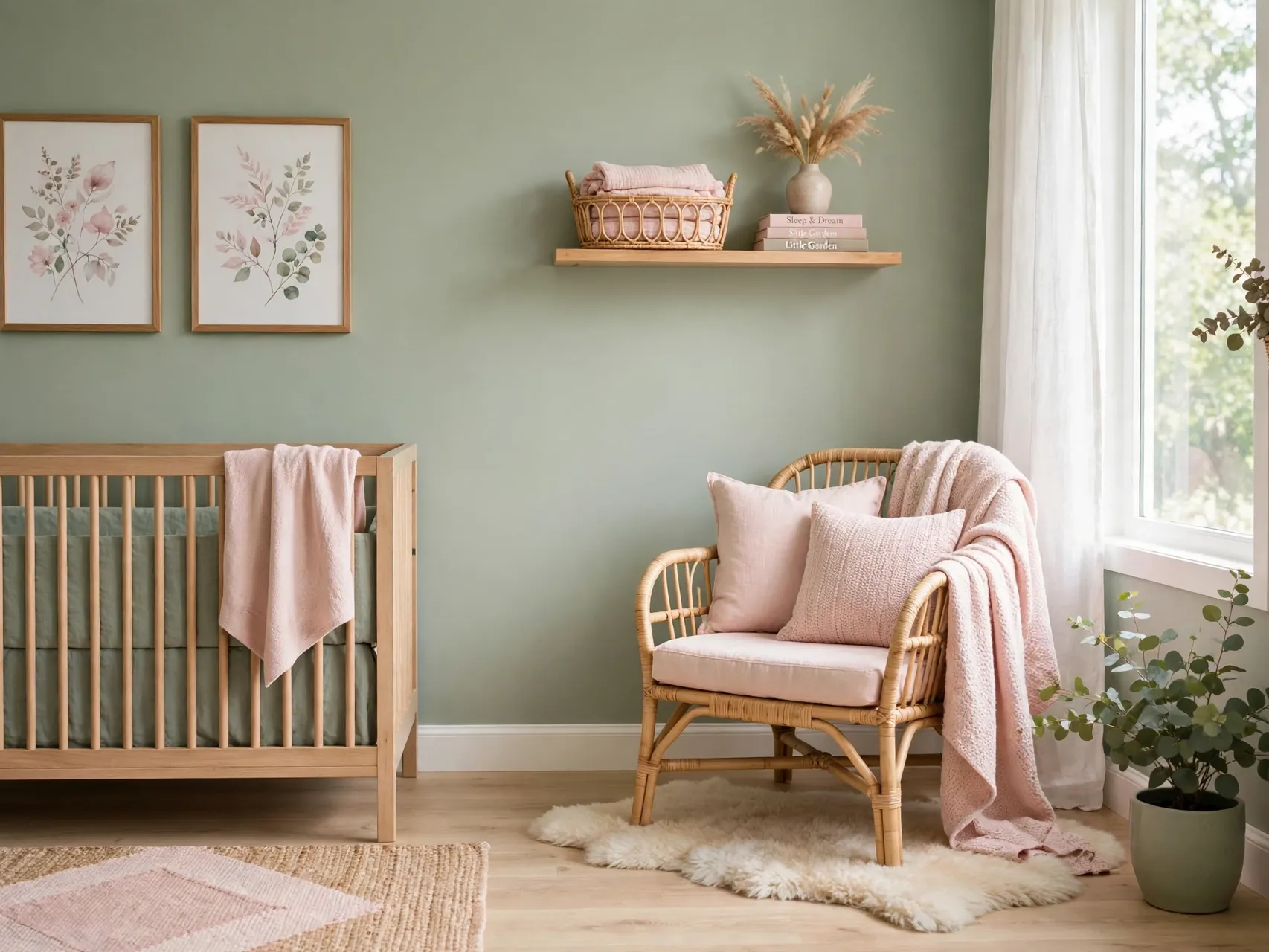
Sage and blush are the softest color marriage in nursery design. A blush cushion on the chair, a pale rose print, or a blush toned rug warms the cool green just enough and adds a hint of sweetness without tipping into sugary.
Let sage stay the lead and blush the accent, in roughly a three to one balance, with cream bridging the two. Keep the crib bare as always and let the contrast live in the room textiles and art.
24. Mix Sage With Mustard for a Sunny Accent

For a cheerier energy, touch sage with mustard or ochre. A mustard cushion, a golden toned print, or a warm ochre basket lifts the palette like sunlight through leaves and keeps a sage room from feeling sleepy during play hours.
This pairing loves natural wood and cream, which stop it from feeling busy. Keep patterns simple and let color blocks do the work.
25. Keep Decor Minimal So Sage Stays the Star
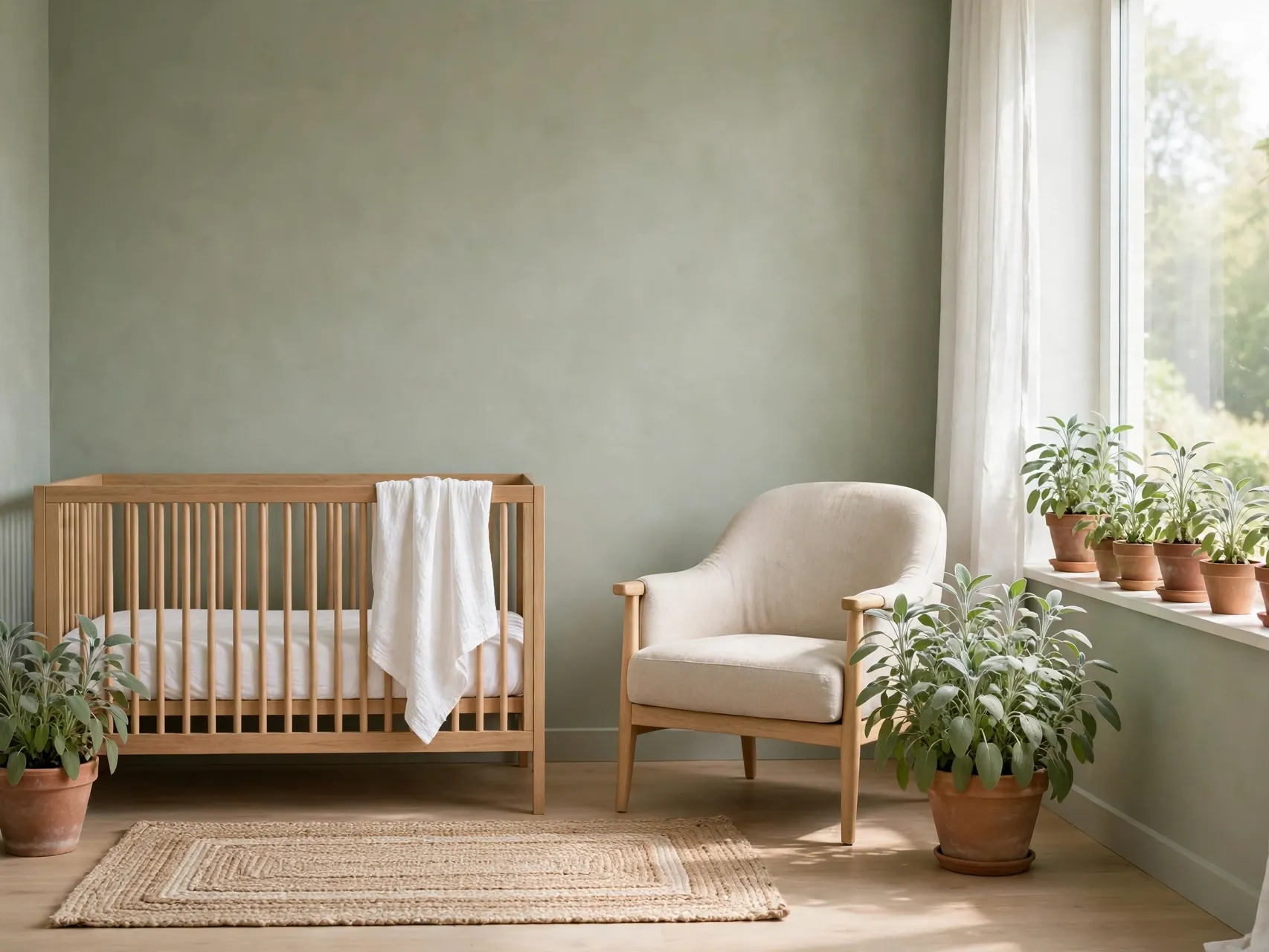
The last idea is an edit. A sage nursery works because the color has room to breathe: a safe bare crib, one beautiful dresser, a comfortable chair, storage that hides the clutter, and a few chosen pieces of art.
When you feel the urge to add, swap instead: one print replaces another, one cushion changes with the season. The room will stay serene from newborn nights to toddler mornings, and sage, soft, timeless, and quietly confident, will still be doing the soothing it promised on day one.
FAQ
Is sage green a good color for a nursery?
Yes. Sage is soft, calming, and gender neutral, and it pairs easily with warm white, cream, natural wood, blush, and mustard. It creates a restful backdrop for sleep while still feeling like a real color choice. Because it is muted and earthy, sage also grows with your child, suiting toddler and child rooms with only small decor changes.
How do I keep a sage green nursery safe for sleep?
Follow AAP safe sleep guidance: keep the crib bare with a firm, flat mattress and a fitted sheet only, with no pillows, loose blankets, bumpers, or plush toys in the crib. Use a crib that meets CPSC standards with slats no more than 2 3/8 inches apart, anchor tall furniture to the wall, and choose cordless window coverings.
What colors pair best with sage green in a nursery?
Warm white and cream are the base partners, natural wood adds warmth, and blush brings gentle sweetness. Mustard or ochre adds a sunny lift, while brass or matte black hardware sharpens the palette. Keep to one or two accent colors besides your neutrals so the room stays calm, and repeat each accent at least twice.
Can I create a sage nursery in a rental?
Yes. Use peel and stick wallpaper or clustered sage decals on one wall after testing a hidden patch, a sage toned rug, cushions, curtains, and basket storage for color, and a white crib you already own or can reuse. These reversible layers deliver the full sage feeling with no paint, and everything except the decals moves with you.
Which sage shade is best for a small or dark nursery?
Choose a lighter sage with warm, gray undertones, and test large samples on more than one wall for a full day. Pale sage keeps a small room feeling open, especially with warm white on the remaining walls and light wood furniture. Avoid very cool or blue leaning sages in low light, because they can read gray and chilly rather than soft and herbal.
Key Takeaways
- Start with one wall and real samples: A sage accent wall behind the crib plus day long sample testing prevents almost every nursery color regret.
- Safe sleep shapes the styling: A bare crib with a firm, flat mattress and fitted sheet only, per AAP guidance, with all sage textiles living on the chair, rug, and walls.
- Warm partners matter: Warm white, cream, and natural wood keep a sage green nursery soft and herbal instead of cold or gray.
- Safety is built in: CPSC standard crib spacing, anchored furniture, cordless window coverings, and art hung securely away from the crib.
- Restraint keeps it soothing: Minimal decor, hidden basket storage, and one or two accents like blush or mustard let sage stay the calm star.
- Saving sage inspiration for your baby room? Save this guide to Pinterest and pin the idea you will paint, hang, or style first.