23 IKEA Kids Room Ideas That Are Smart and Super Stylish
Introduction
A kids room has to work harder than any other room in the house: sleep, play, homework, dressing, and about a hundred hobbies all happen in one small footprint.
Start with the layout, not the shopping list. Decide where sleeping, playing, and creating will happen, then choose furniture that fits those zones and sits at a height your child can actually use. Storage they can reach is storage they will use, and that one idea fixes half the mess in most kids rooms.
Safety comes before style, always. Anchor dressers, bookcases, and storage units to the wall, choose age appropriate furniture, and keep heavier items low. The United States Consumer Product Safety Commission runs the Anchor It campaign for exactly this reason, and every idea below assumes tall pieces are secured before the pretty styling begins.
Finally, let your child help choose colors, bedding, and artwork. A room they helped design is a room they feel proud of, and proud kids tidy up more often than you would expect.
1. Anchor Every Tall Piece to the Wall First
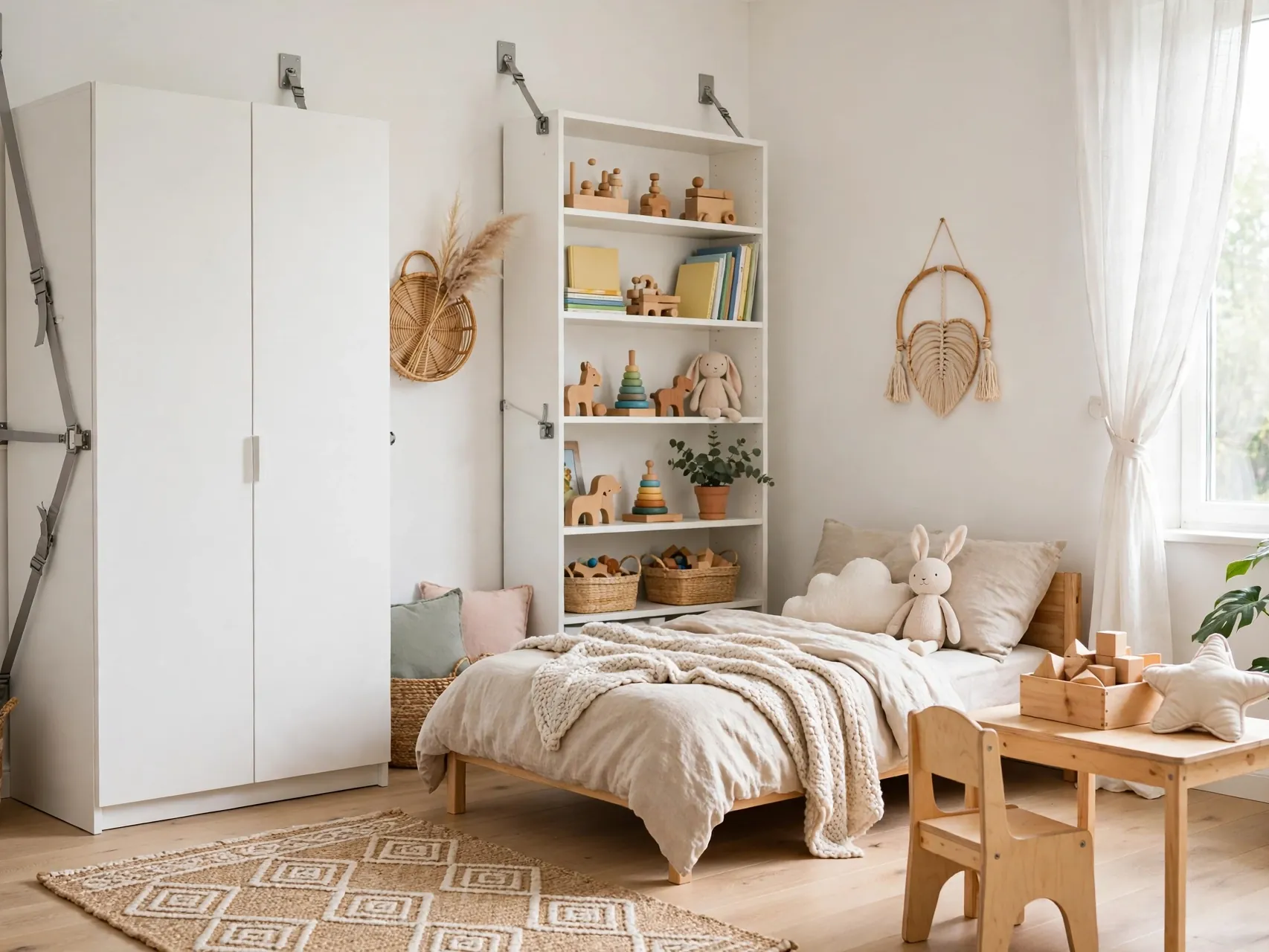
Before any styling, secure dressers, wardrobes, bookcases, and storage frames to the wall with the anti tip kits provided or proper anchoring hardware into studs where possible. The CPSC Anchor It guidance is clear: children climb, pull drawers out like steps, and lean on furniture, so anchoring is not optional in a kids room.
Store heavier items in lower drawers and on lower shelves, and never place tempting toys or remotes on top of tall furniture where a child might climb to reach them. Check anchors whenever you rearrange the room. This ten minute job is the foundation every other idea in this list stands on.
2. Zone the Room Into Sleep, Play, and Create

Divide the room into three simple zones, even if each one is tiny: a sleep zone around the bed, a play zone on the rug, and a create zone at a small desk or table. Zoning tells your child what happens where, which quietly reduces the toy drift that takes over whole rooms.
Use a rug, a low shelf, or a curtain to mark each zone without building anything. Keep the bed zone calm with soft colors and low light, and let the play and create zones carry the brighter colors and busier pieces.
3. Use TROFAST Frames With Labeled Bins
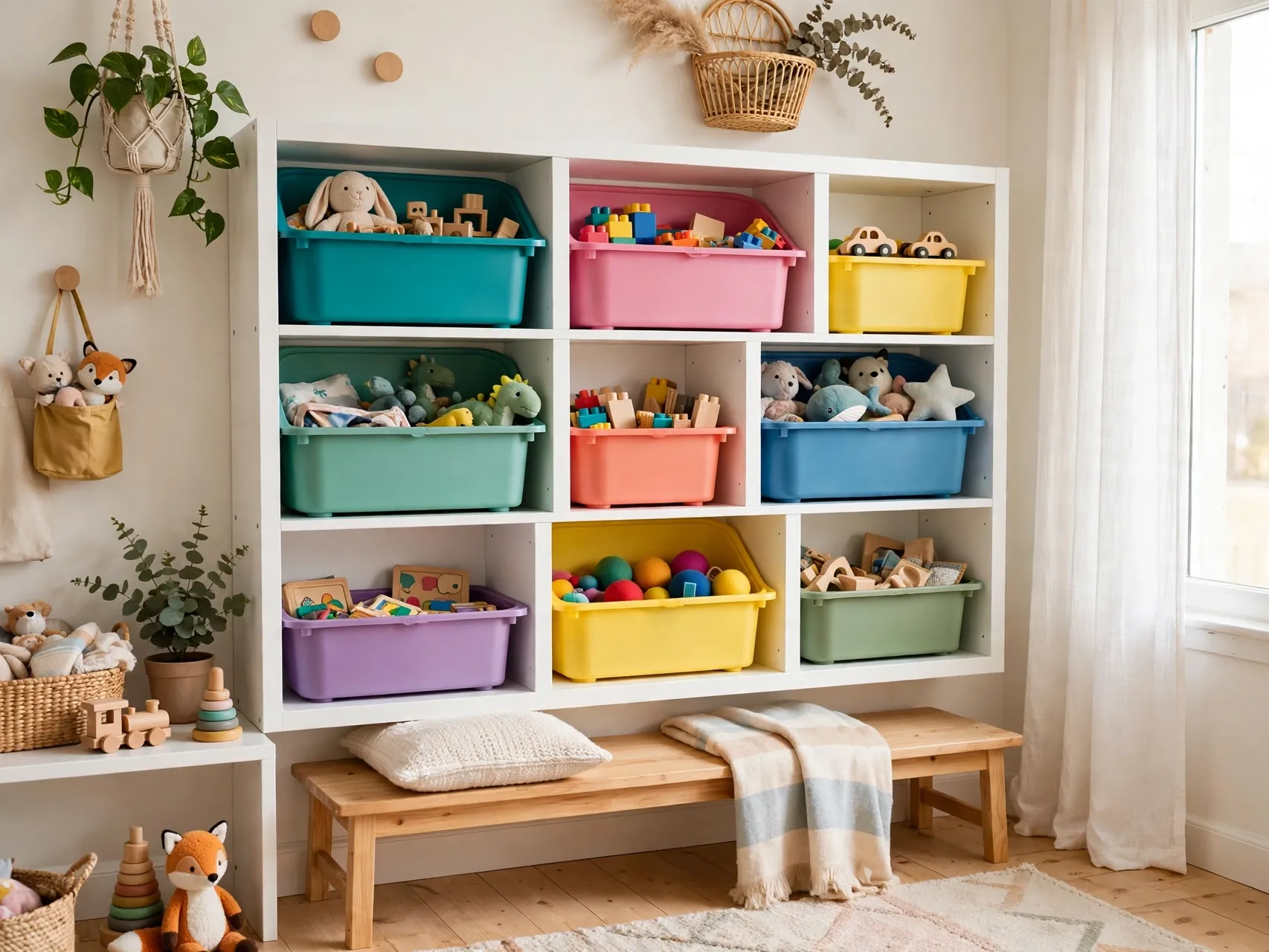
The TROFAST frame with stepped bins is a kids room classic because children can pull out a whole bin, play, and slide it back without help. Use shallow bins for art supplies and small toys, and deep bins for dress up clothes, blocks, and soft toys.
Label each bin with a picture and a word so even pre readers can tidy independently. Keep the frame anchored to the wall, and place the most used bins at the bottom where little arms reach easily.
4. Turn a KALLAX Shelf Into a Divider and Library

A low KALLAX unit placed across a room creates two zones in seconds, one side for sleeping and one side for playing, while every cube works as storage. Fill some cubes with fabric boxes, leave others open for books facing forward, and use the top as a display line for favorite treasures.
Anchor the unit securely, especially if a child might lean or climb on it, and keep heavier items in the lowest cubes. In a shared room, a KALLAX divider gives each child a side of their own. Add a small rug on each side and the single room suddenly feels like two little worlds.
5. Pick an Extendable Bed That Grows With Them
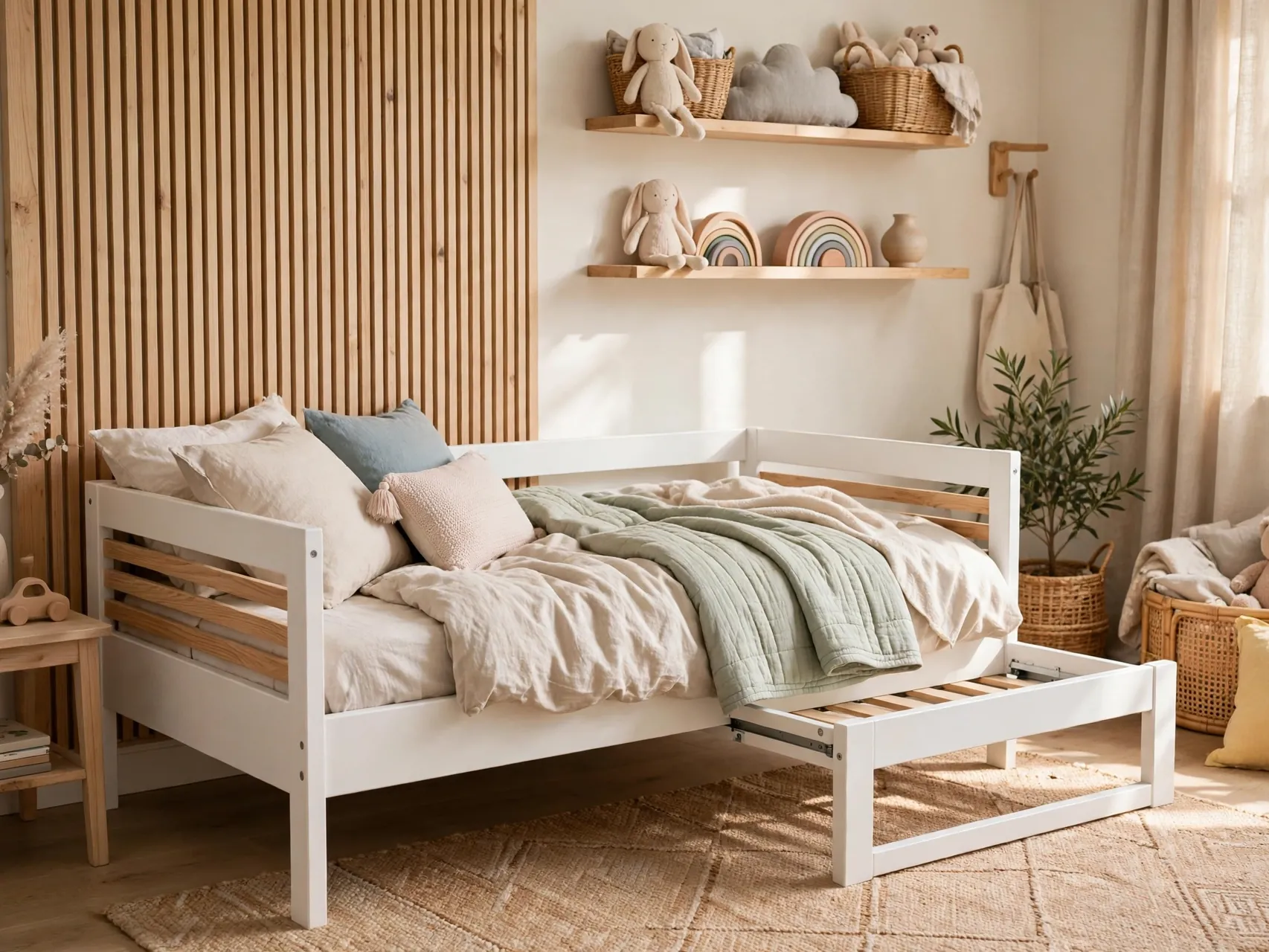
An extendable bed frame that pulls out to longer lengths saves you buying three beds in six years. Start short for a toddler who feels safer in a cozy space, then extend as legs grow, using the mattress sections designed for the frame.
Choose simple bedding you can buy in the next size up without changing the whole room. Pair the bed with a low, anchored nightstand or a bed pocket for a book and a water bottle.
6. Flip a KURA Bed Into a Cozy Fort
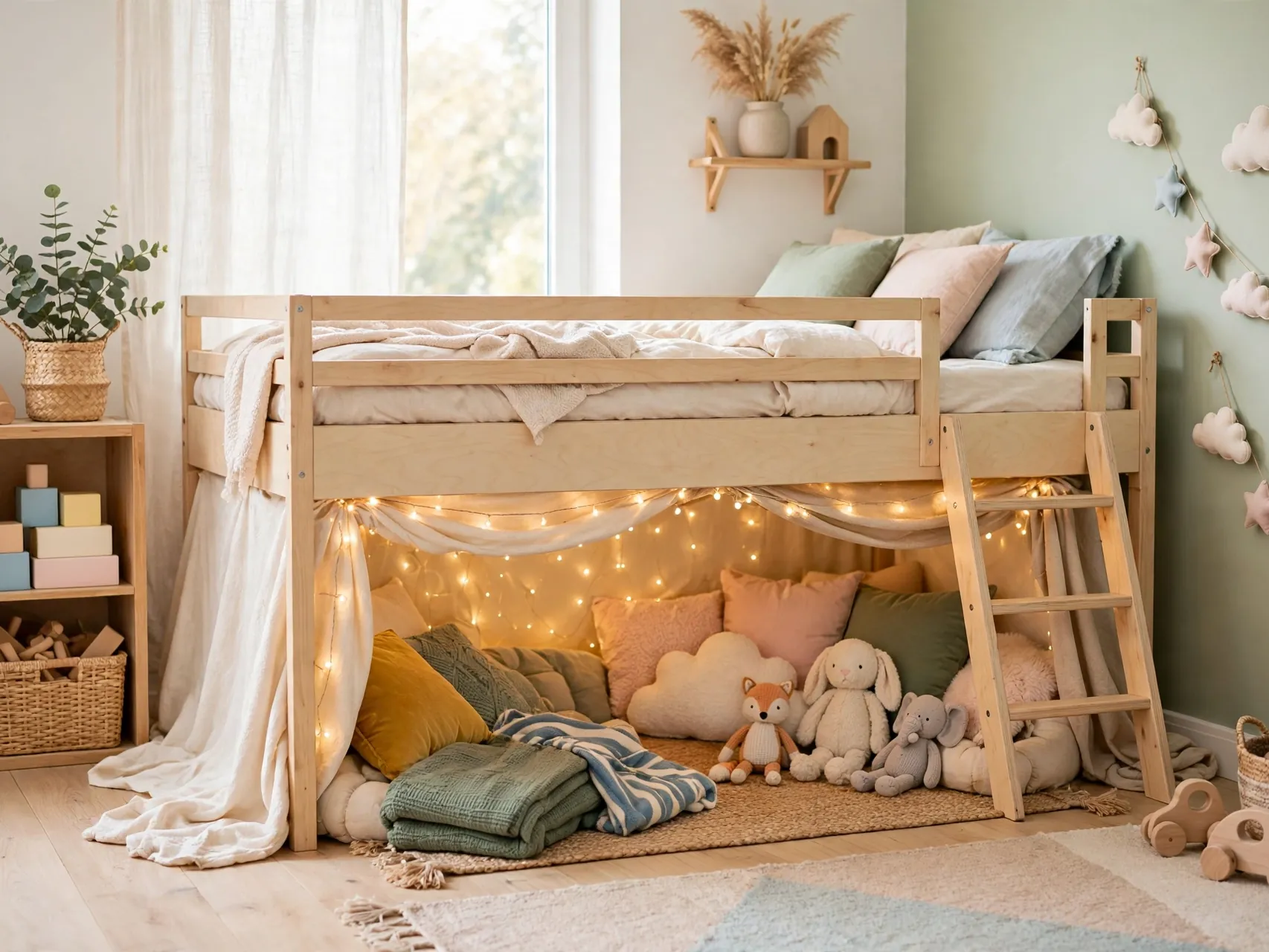
The reversible KURA bed can sit low with the mattress near the floor for younger children, or flip so the bed sits higher with a play space underneath for older kids who meet the maker guidance for raised sleeping.
Under the raised side, add cushions, a small rug, and a battery powered light to make a reading fort or hideaway. Keep the ladder area clear and teach safe climbing from day one.
7. Add a Reading Nook With Picture Ledges
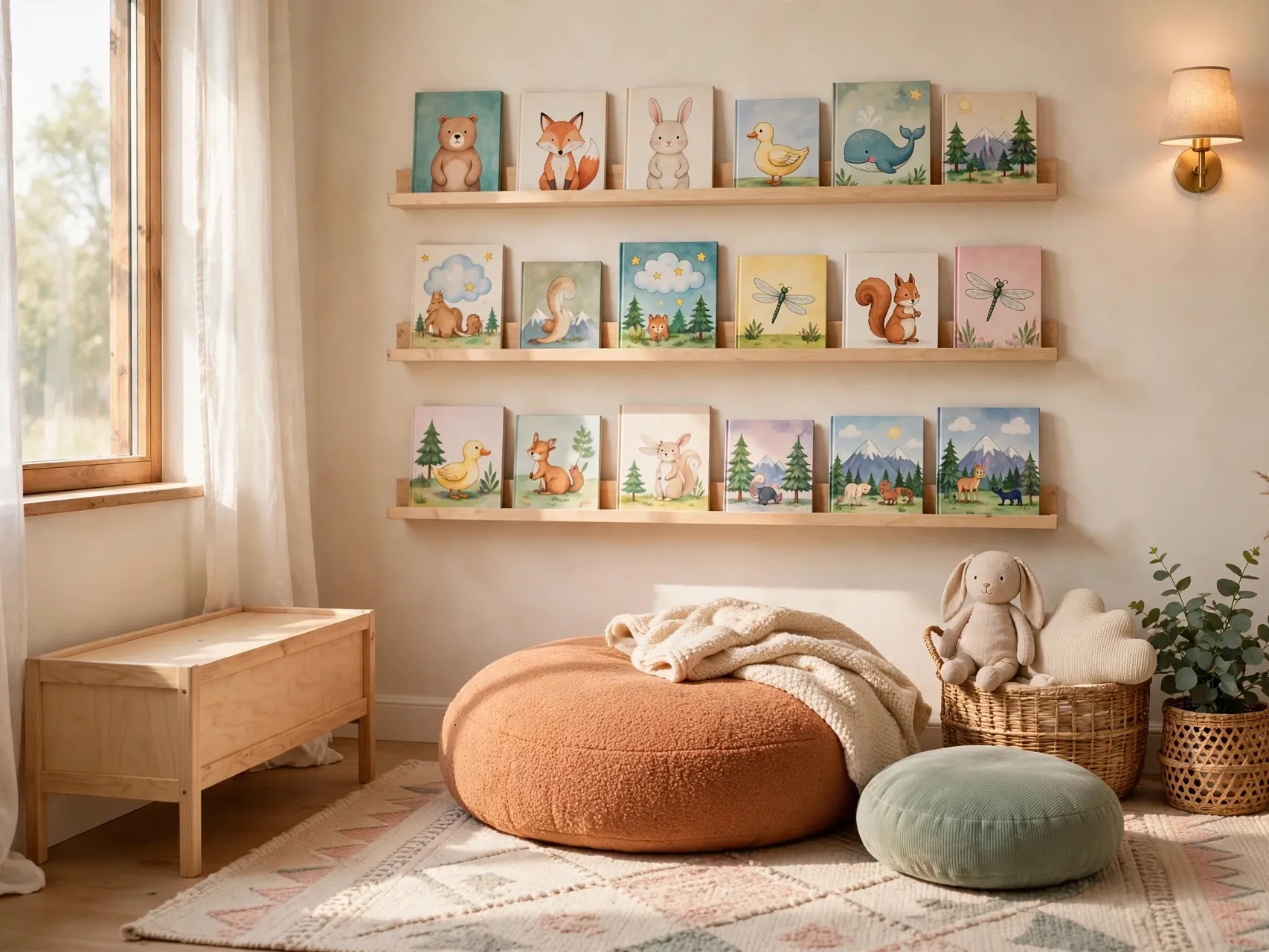
Picture ledges mounted at child height turn books into wall art, with covers facing out so little readers can choose by picture. Add a floor cushion, a soft throw, and a small basket for the current favorites, and you have a reading nook in one corner.
Keep the ledges low enough for independent reaching, and fix them securely into studs or with proper anchors. Rotate the books every week or two so the display always feels new without buying anything.
8. Set Up a Small Desk for Homework and Art
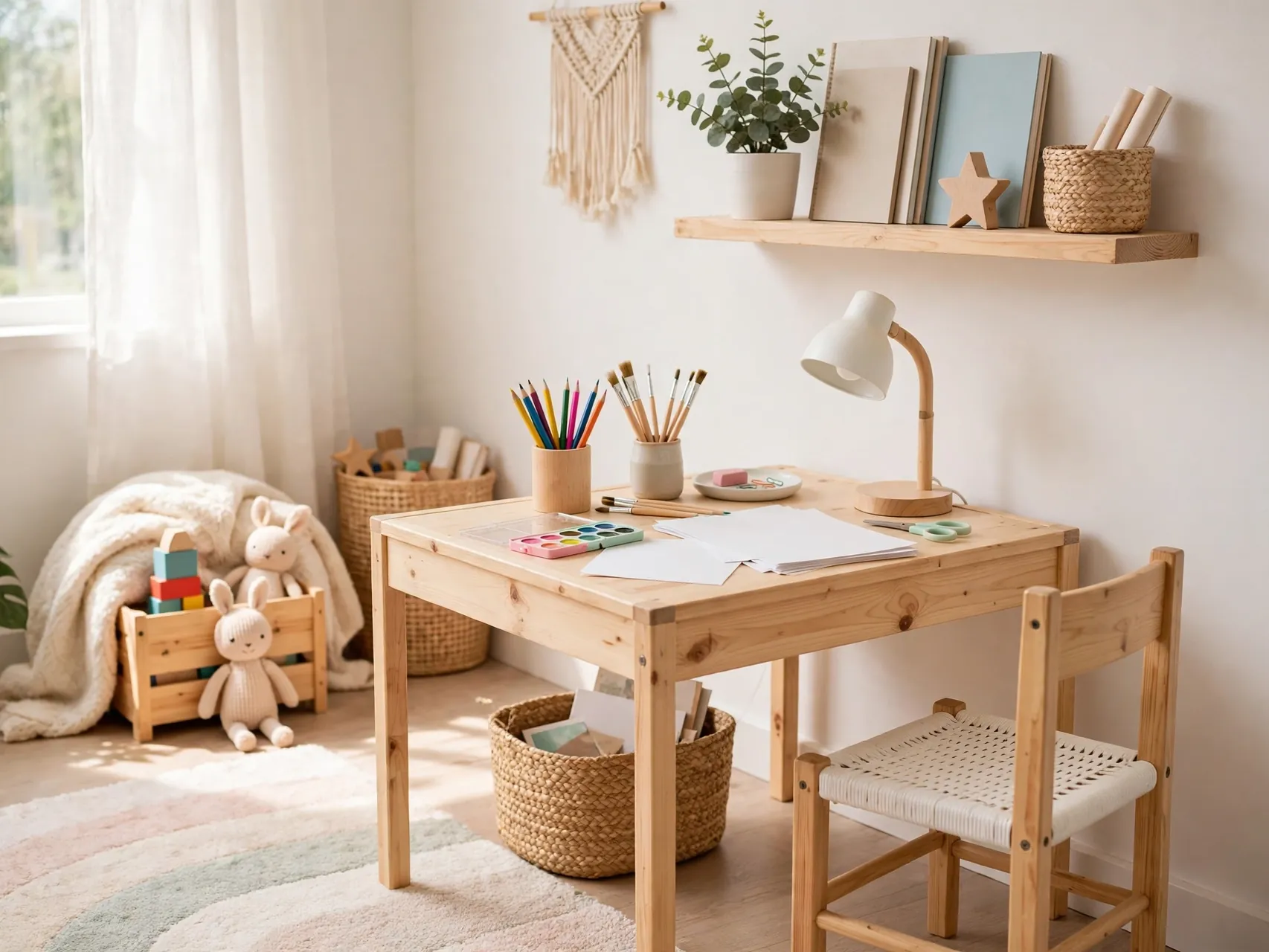
A child sized desk and chair, set at the right height so feet rest flat, makes homework and drawing feel like real, important work. Place the desk near natural light if you can, and add a small lamp for darker afternoons.
Use a desk organizer or a wall rail with cups above the desk to keep pencils, scissors, and glue off the work surface. Keep the chair light enough for your child to push in alone.
9. Use a Pegboard for Supplies Within Reach
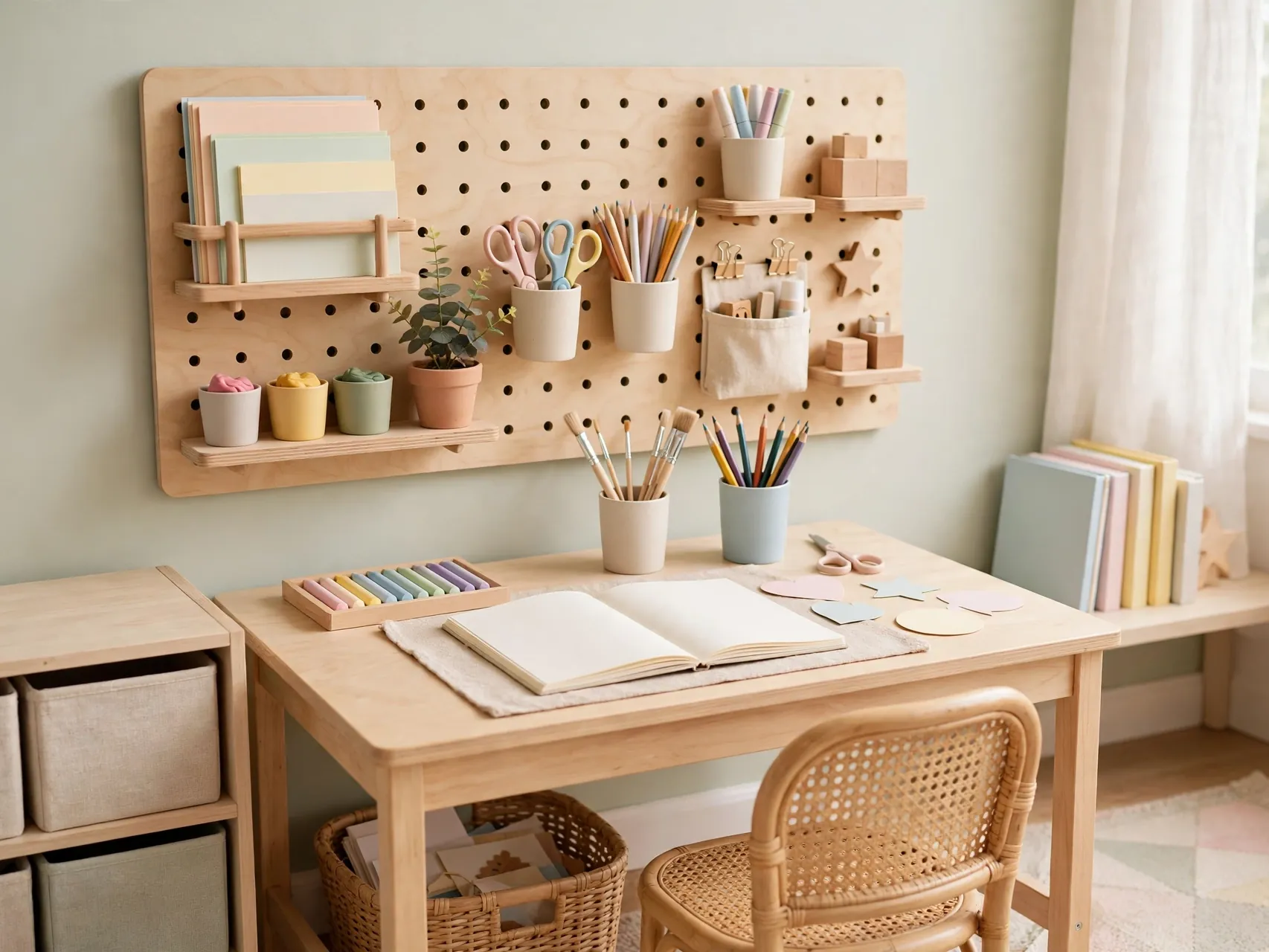
A pegboard above the desk or craft table keeps supplies visible, sorted, and off the floor. Hang small buckets for crayons and markers, a shelf for paper and sticker books, and hooks for scissors and rulers, all at a height your child can reach safely.
Fix the board firmly to the wall and keep anything sharp stored by an adult instead. The beauty of a pegboard is how fast it changes: swap buckets as hobbies change from coloring to model building to jewelry making.
10. Layer Rugs to Define the Play Space
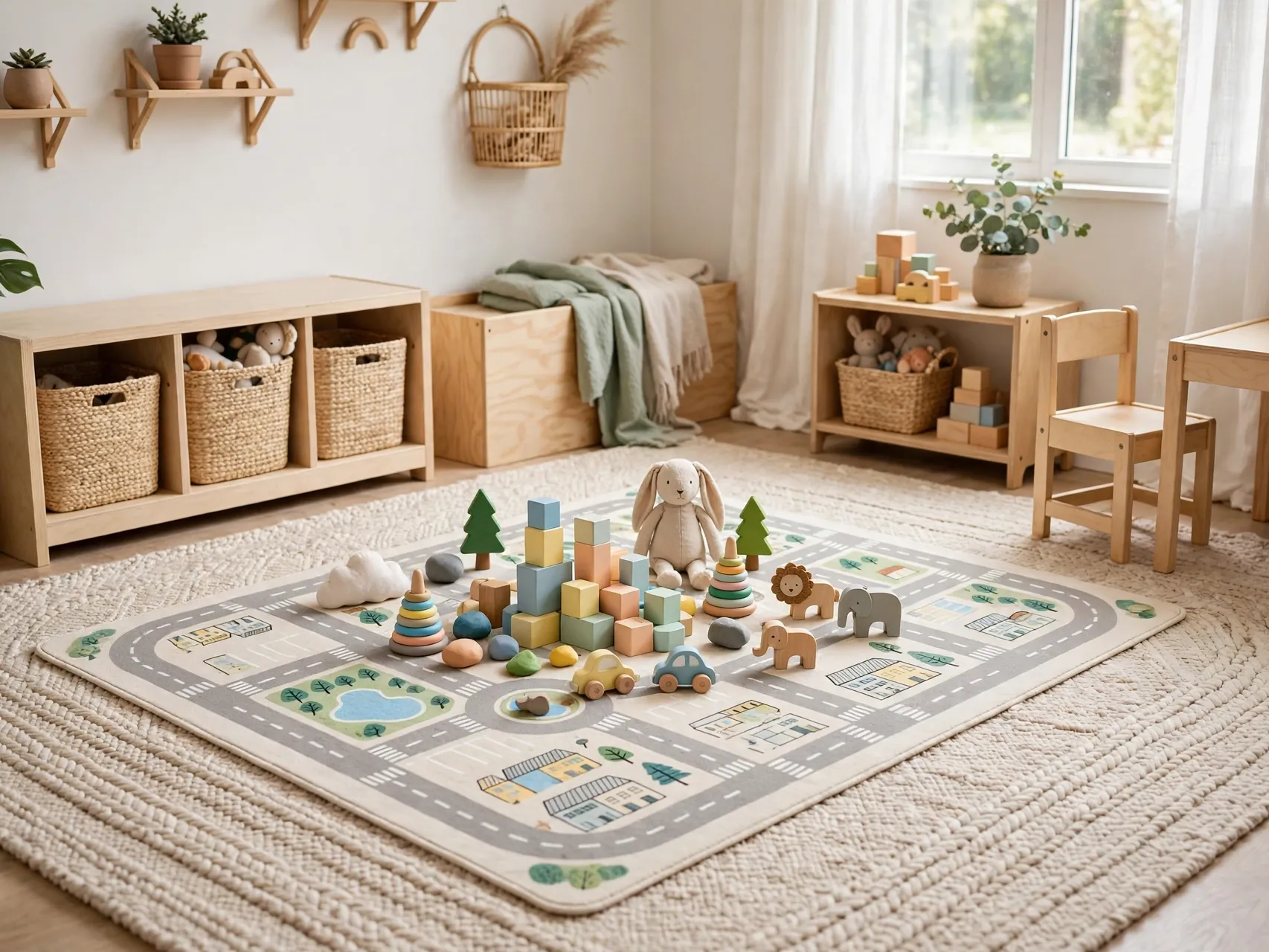
A large, low pile rug in the center of the room marks the play zone and softens both noise and tumbles. Layer a smaller, washable rug or play mat on top where messy or active play happens, so spills and wear land on the piece that is easiest to clean.
Choose rugs with a non slip backing or add a rug pad underneath, and keep edges flat so little feet do not trip. Road map and town designs turn the rug itself into a toy.
11. Choose Washable Textiles in Happy Colors
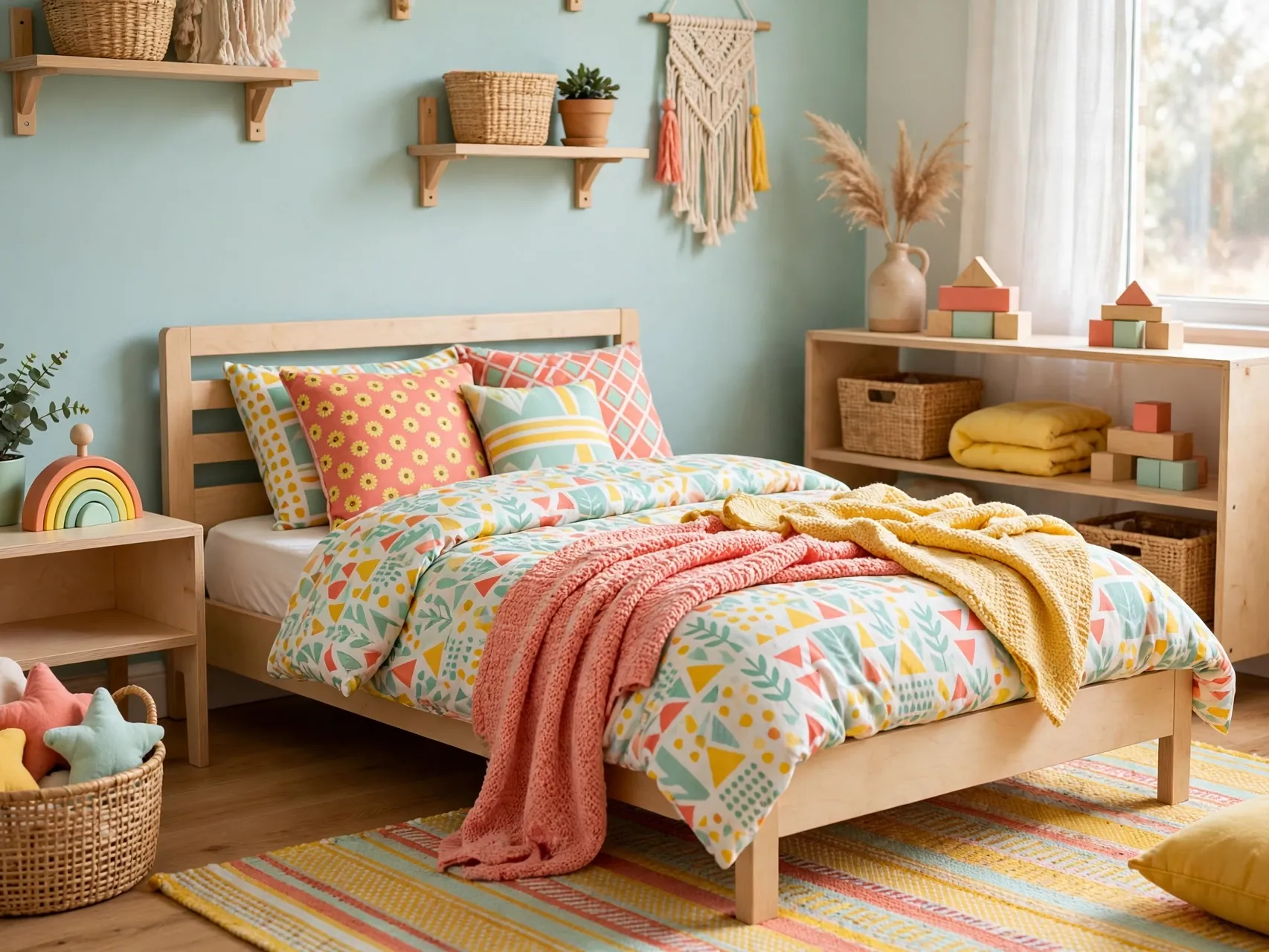
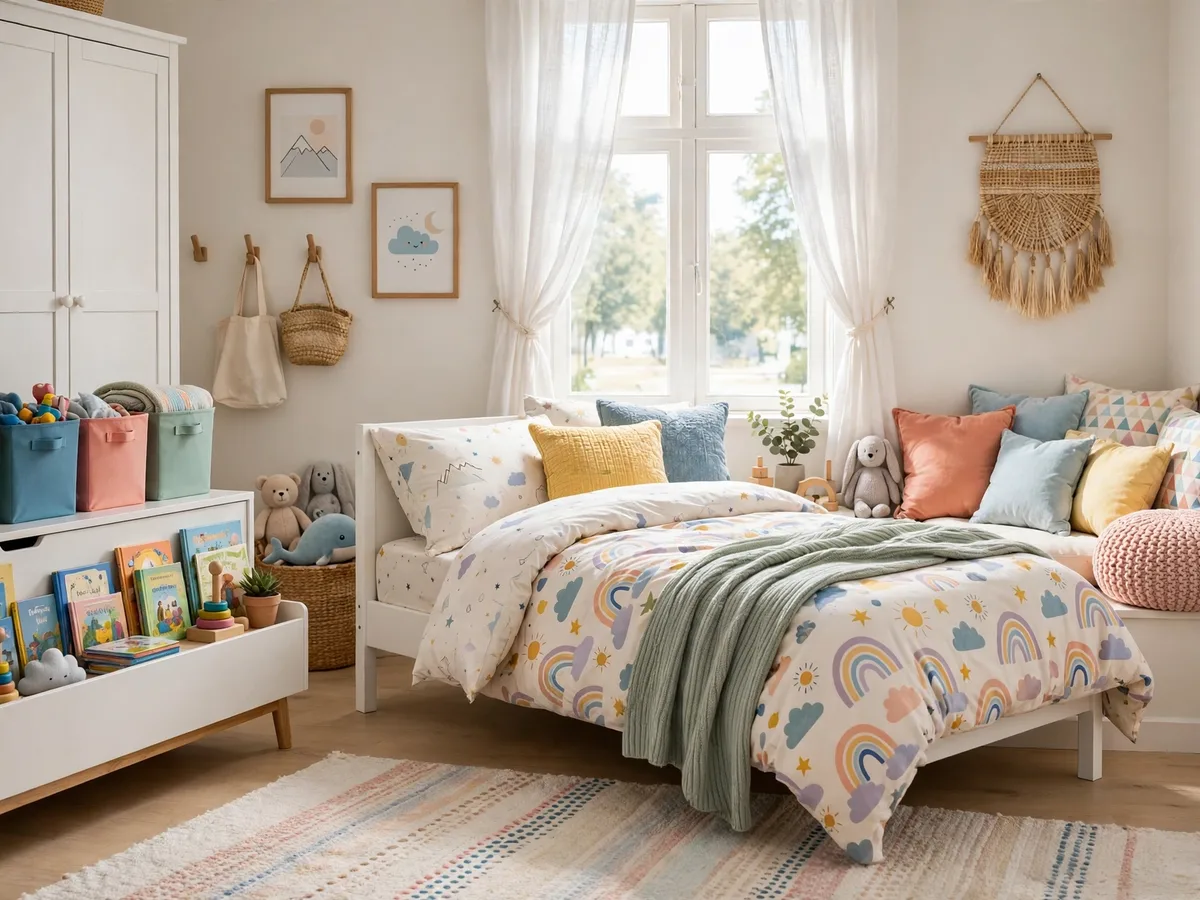
Kids rooms get sticky, so build the color story from textiles you can wash: duvet covers, cushion covers, throws, and curtains that come off in minutes. Bright, happy colors look best against simple white or pale furniture, and they are cheap to swap when tastes change.
Keep two sets of bedding if you can, so a midnight accident never becomes a crisis. Let your child pick the duvet pattern from a shortlist you approve, which gives them ownership without risking a room you cannot live with.
12. Hang Low Hooks Kids Can Reach Alone
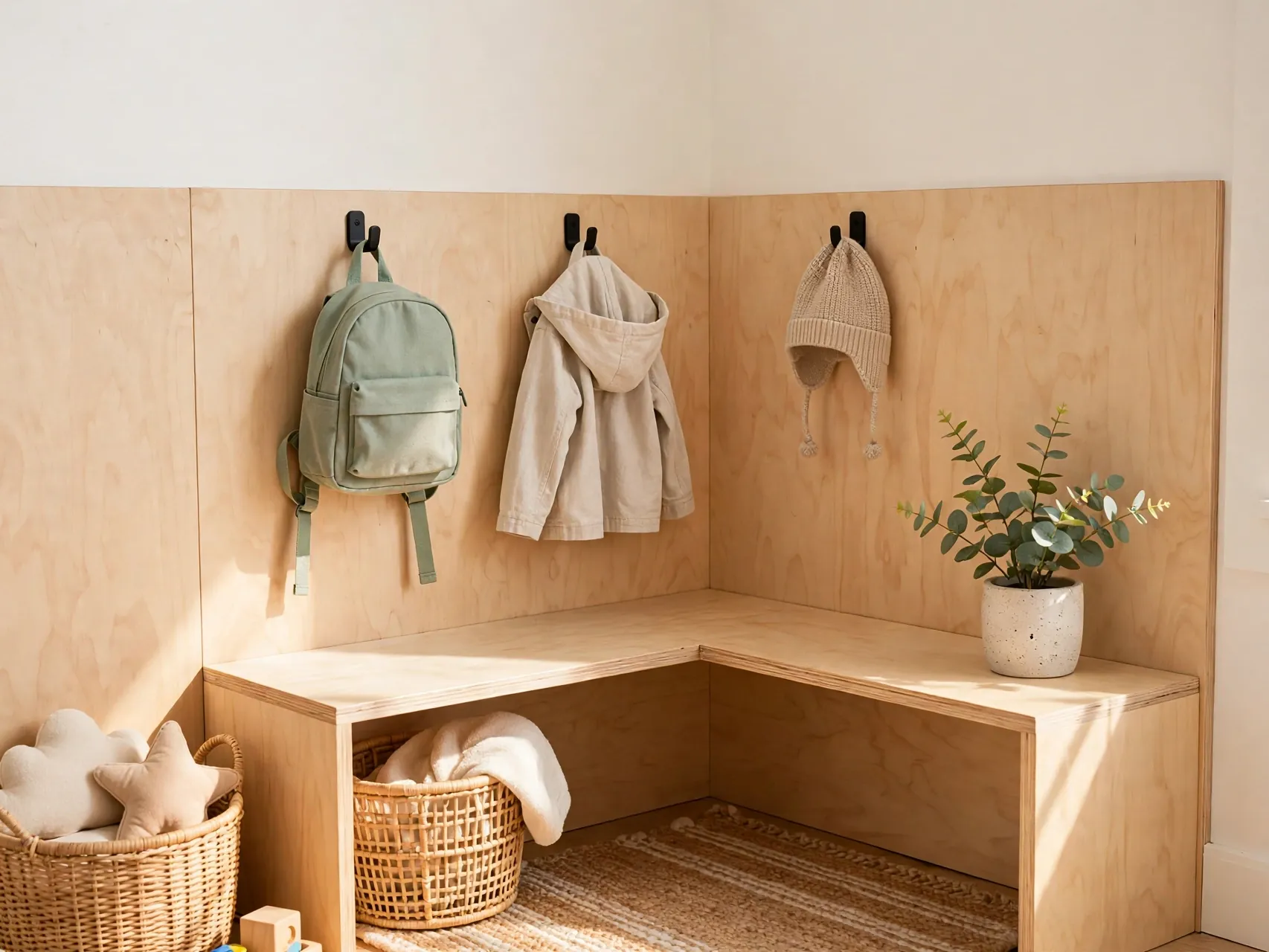
A row of sturdy hooks at child height, fixed securely into studs or proper anchors, lets kids hang their own backpack, jacket, robe, and dress up costumes without calling for help. Independence like this is built one hook at a time.
Space hooks wide enough for bulky coats, and add a second higher row later as they grow. Paint the wall behind the hooks in a wipeable finish, because small hands and wall scuffs travel together.
13. Add a Play Kitchen Corner for Imaginative Play
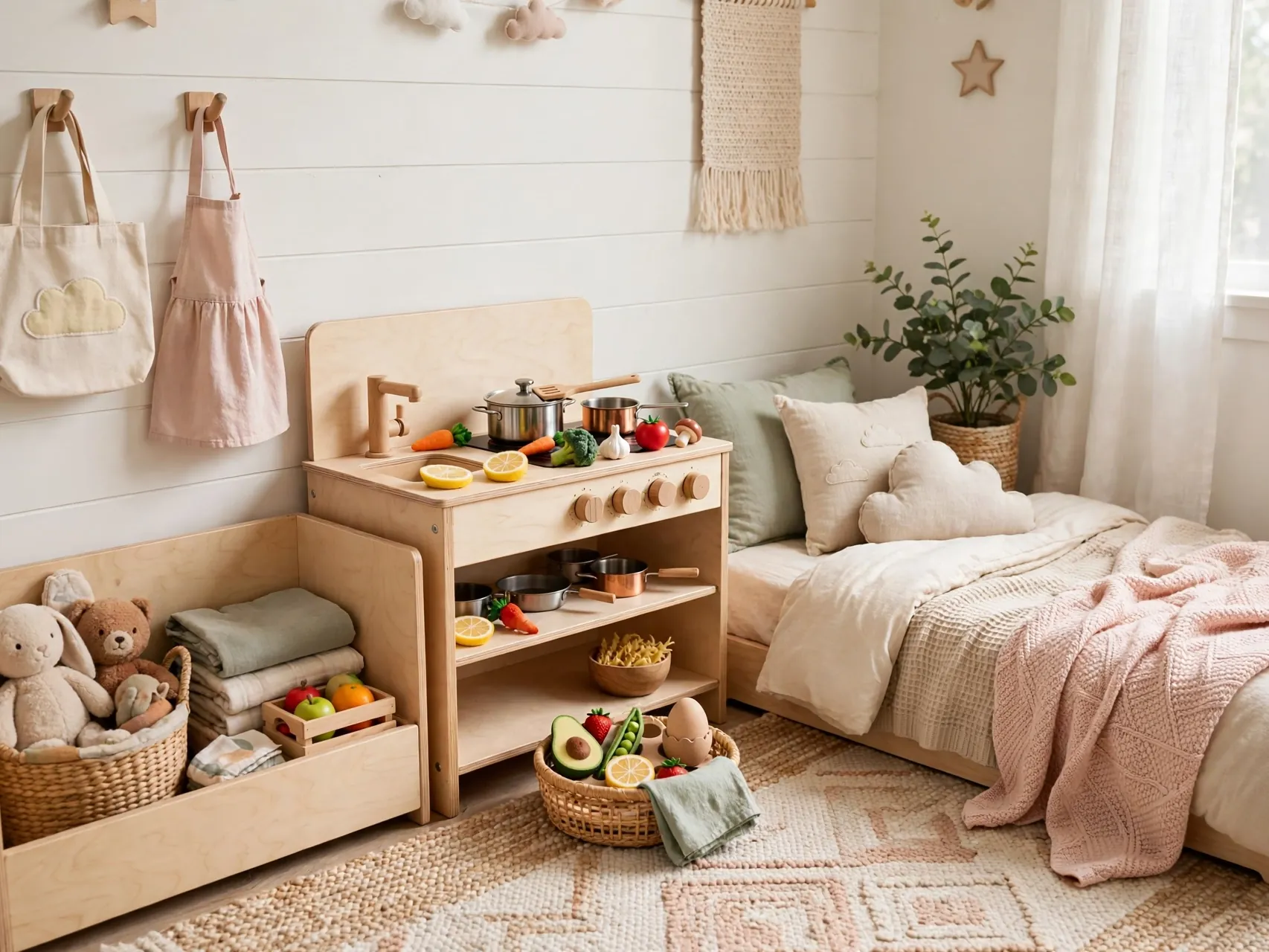
A small play kitchen in one corner anchors hours of imaginative play and gives toy food, pots, and dishes a single home. Place it on the play rug edge so cooking and serving flow naturally into the play zone.
Add a tiny shelf or crate beside it for ingredients and cookbooks, and rotate a few play food sets instead of owning them all at once. When the chef phase passes, the same corner becomes a shop, a vet clinic, or a reading nook with almost no effort.
14. Use Under Bed Storage for Seasonal Clothes
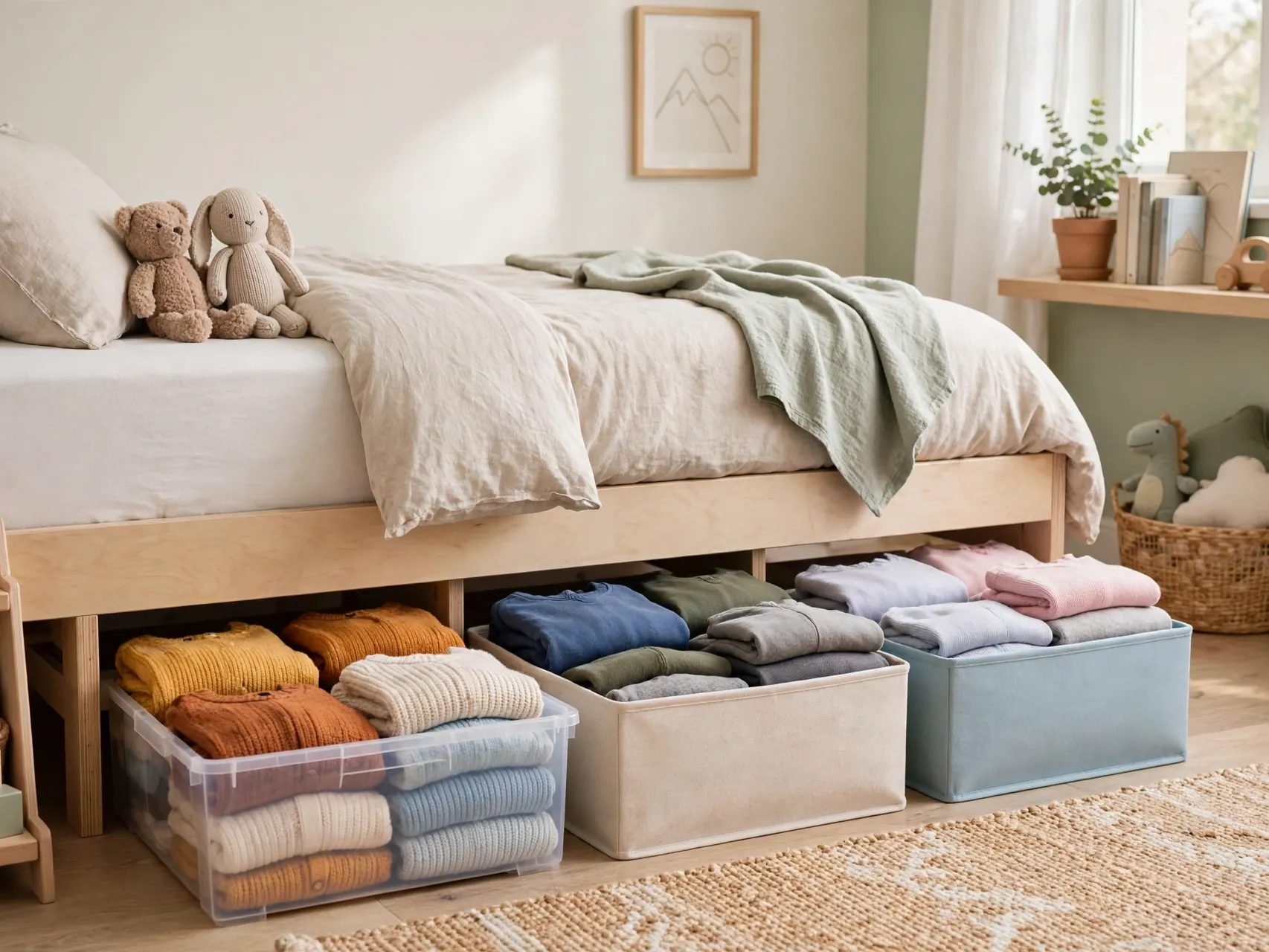
The space under the bed is prime storage for out of season clothes, spare bedding, and costumes that only appear once a year. Use low boxes or soft bags that slide easily, and label the end that faces out so you can find things without pulling everything into the room.
Keep everyday items elsewhere, because under bed storage works best for things you reach monthly, not daily. Vacuum bags help bulky winter items fit in smaller homes. Teach kids that this space is for storage, not hiding places for laundry or lost library books, and check it together during each seasonal clear out.
15. Create a Dress Up Rail at Child Height

A short clothing rail or a low closet rod section, loaded only with dress up clothes and favorite outfits, turns getting dressed into play and builds independence. Capes, tutus, and superhero gear on open display get used far more than costumes buried in a box.
Add a mirror at child height beside the rail, fixed flat and securely to the wall, plus a small basket for accessories like hats and crowns. Keep the rail load light and the stand stable, or choose a wall mounted rod installed by an adult.
16. Light the Room in Layers With a Night Light

One harsh ceiling light makes a kids room feel like a classroom. Layer the lighting instead: a ceiling light for play, a warm desk lamp for homework, and a soft night light near the bed for the walk to the bathroom and for comfort after lights out.
Choose cool running LED bulbs and keep lamps stable and cords out of reach and out of walkways. A fun shaped lamp adds personality without any decorating risk. Put the night light on the path between bed and door.
17. Use Curtains to Separate Sleep From Play
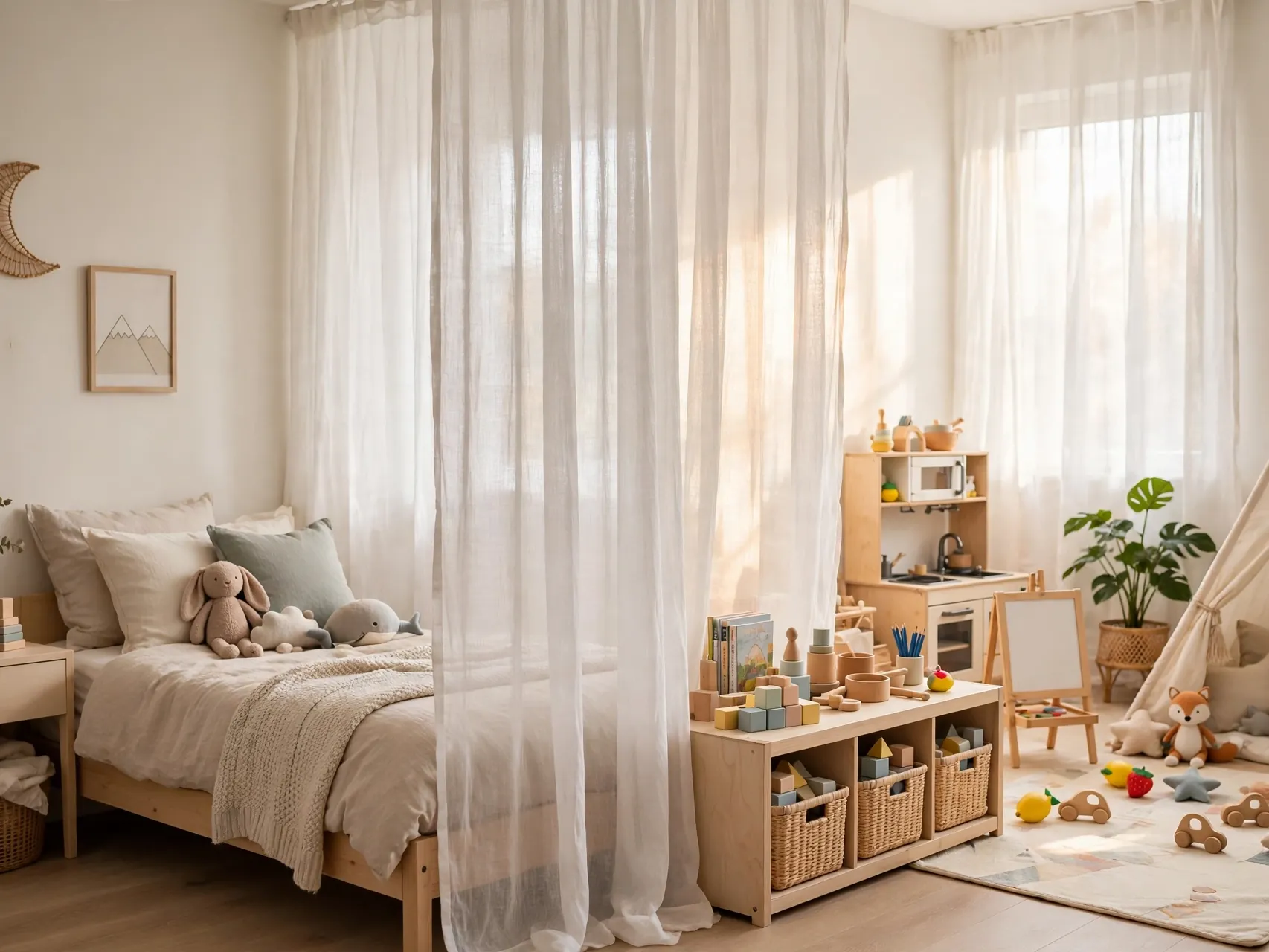
In a studio style kids room or a shared space, a curtain on a securely fixed rail can close off the bed zone at night, signaling that play time is over even in the same room. Choose a washable fabric in a calm color for the sleep side.
Make sure the rail is installed by an adult into solid fixings, cords are kept out of reach, and the curtain never hangs over a heater or lamp. During the day it ties back and the room opens up again.
18. Build a Gallery Wall of Their Own Artwork

Children produce art faster than any fridge door can hold, so give it a real gallery: simple frames, a wire with clips, or picture ledges where new masterpieces rotate in weekly. Displaying their work at their eye level tells them their creativity matters.
Keep a portfolio box for pieces that come down, and photograph favorites before recycling the rest, so nothing precious is truly lost. Let your child curate the wall themselves, choosing what stays and what goes.
19. Add a Small Table for Puzzles and Tea Parties

A child sized table with two small chairs becomes a puzzle station, a tea party venue, a Lego base, and a snack spot across a single week. Choose a sturdy set your child can move but that will not tip when leaned on, and place it on the rug in the play zone.
Add a tray or flat basket on top so unfinished projects can stay out without spreading. When friends visit, this table is mission control. As kids outgrow it, the same spot upgrades to a homework or craft table, keeping the create zone exactly where their habits already live.
20. Keep Books at Child Height in Forward Facing Bins

Forward facing book bins and low shelves let toddlers and early readers choose books by cover, the way they naturally browse. Store the main library here, with a small rotating selection in the reading nook and beside the bed.
Anchor bookcases to the wall without exception, and keep the heaviest picture books on the lowest shelf. A book corner that kids can use alone builds reading habits no app can match.
21. Use Rolling Crates for Fast Toy Cleanup

Wheeled crates and rolling boxes turn cleanup into a drive around the room: scoop, roll, park. Give each crate a job, one for cars and trains, one for dolls and figures, one for building toys, and park them along one wall or under a bench.
Choose crates with smooth wheels that will not scratch floors, and teach kids to park them in the same spots each night. The five minute tidy becomes a game instead of a battle.
22. Make a Calm Corner With Cushions and a Canopy
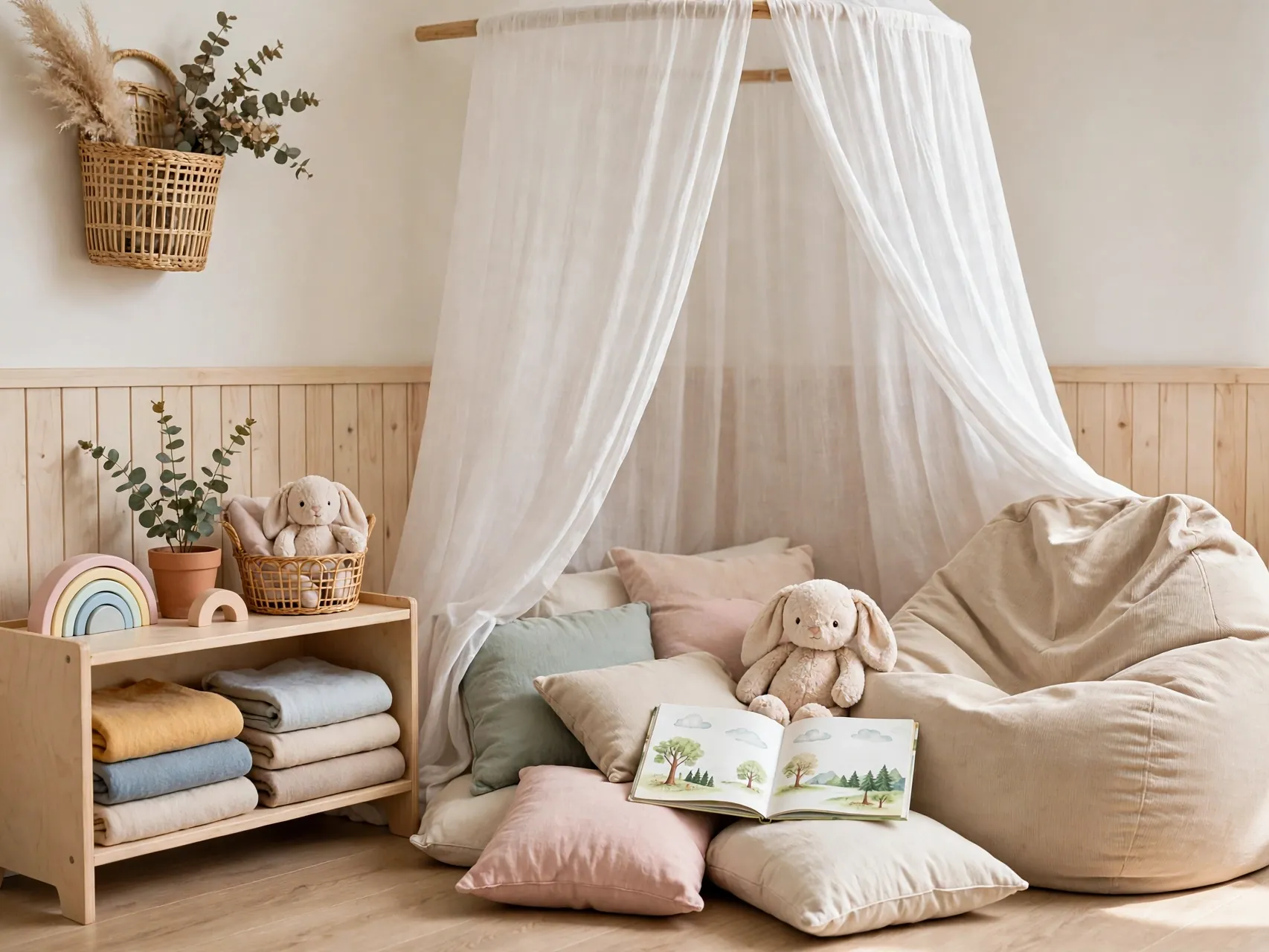
Every child needs a soft place to land when feelings run big. Build a calm corner with a pile of cushions, a stuffed friend or two, a feelings book, and a light canopy or draped fabric fixed securely by an adult, well away from lamps and heaters.
Keep this corner free of screens and loud toys. Show your child how to use it: go there, breathe, read, and come back when ready. A calm corner is not a punishment spot, it is a comfort spot, and naming it that way matters.
23. Review the Room Every Season and Rotate Toys
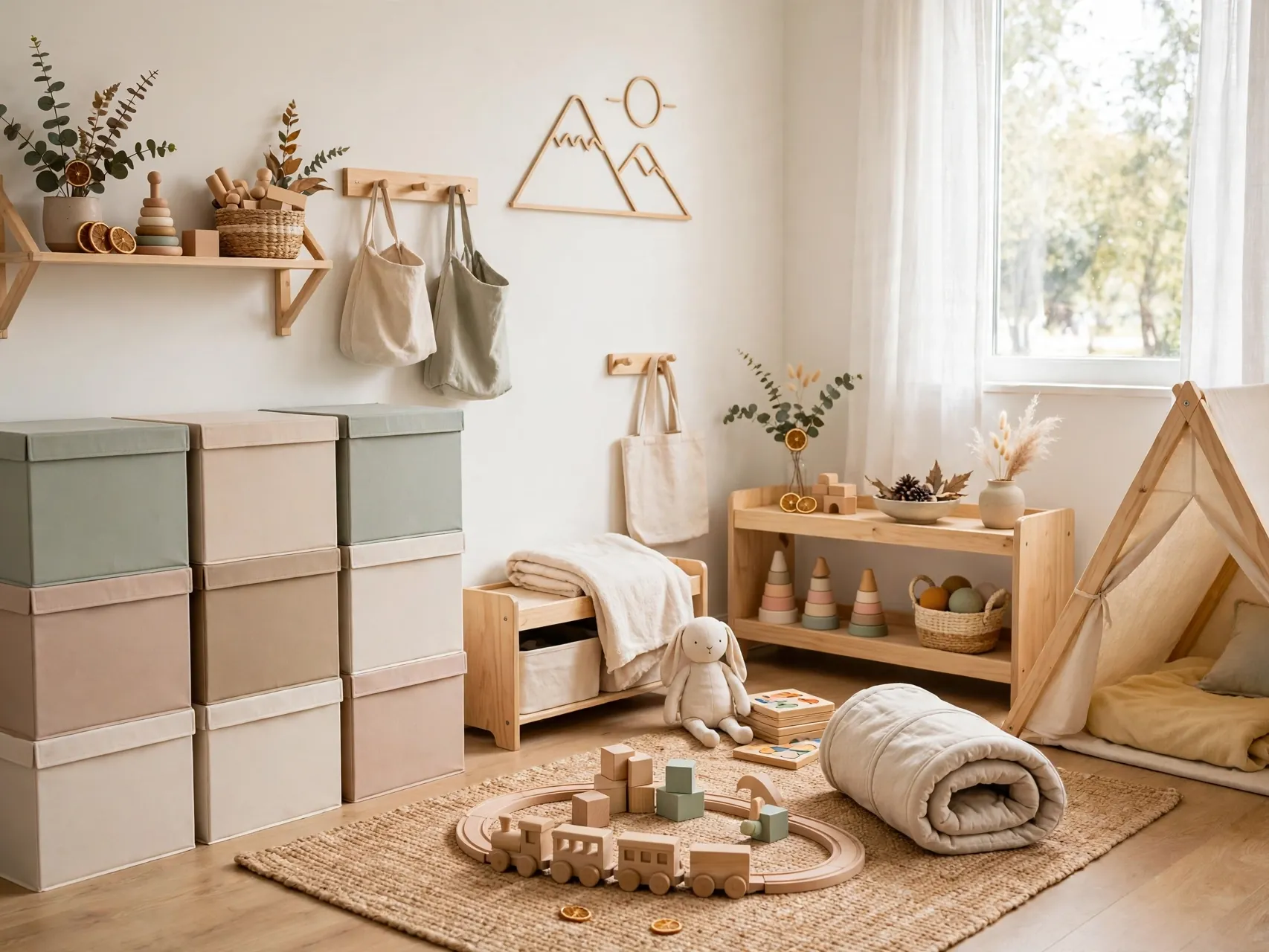
Kids rooms fail slowly, one outgrown toy and one too small shoe at a time. Every season, do a fast review together: pull out what no longer fits, donate what is no longer loved, and rotate stored toys back into the bins so old favorites feel new again.
Check anchors, tighten fixings, and move hooks and ledges up as your child grows. Update the gallery wall and the book bin.
FAQ
What are the most important IKEA pieces for a kids room?
Start with storage your child can reach: a TROFAST frame with bins, a low KALLAX unit, and picture ledges for books. Add an extendable or reversible bed that suits your child age and the maker guidance, a small desk and chair, and low hooks. Anchor every tall piece to the wall first, then add textiles and art for style.
How do I make a small IKEA kids room feel bigger?
Zone the space so each area has one job, use low furniture that keeps sight lines open, and store vertically with ledges and pegboards instead of floor pieces. Keep the palette light on walls and big furniture, bring color in through washable textiles, and rotate toys so only part of the collection is out at once.
How can I keep an IKEA kids room safe?
Anchor dressers, bookcases, wardrobes, and storage frames to the wall following CPSC Anchor It guidance, store heavy items low, and keep tempting objects off the tops of tall furniture. Choose age appropriate furniture, follow maker assembly and age guidance for raised beds, secure cords out of reach, and check fixings whenever you rearrange.
How do I help my child keep their room tidy?
Make tidying physically easy: bins at their height with picture labels, hooks they can reach, a book bin they can browse, and a rolling crate for fast pickups. Keep the number of toys out at one time modest through rotation, and build a five minute tidy into the bedtime routine so mess never builds into a weekend project.
How often should I update a kids room?
Plan on a light seasonal review rather than full makeovers. Swap textiles, rotate books and toys, refresh the art gallery, and adjust heights of hooks, rods, and ledges as your child grows. Bigger changes, like a larger desk or the next bed size, usually come every few years when furniture is chosen to adapt from the start.
Key Takeaways
- Safety first, always: Anchor dressers, bookcases, and storage to the wall with CPSC Anchor It guidance before any styling happens.
- Zones make small rooms work: Sleep, play, and create areas give every activity a home and make cleanup a simple sorting game.
- Reachable storage gets used: TROFAST bins, low KALLAX cubes, picture ledges, and low hooks let kids tidy and choose independently.
- Choose furniture that adapts: Extendable beds, reversible frames, and neutral big pieces survive years of growth spurts and taste changes.
- Color lives in textiles: Washable bedding, cushions, and curtains carry the fun and swap in minutes when interests change.
- Loved these ideas for your little one room? Save this guide to Pinterest and pin the first project you will try this weekend.