22 Japandi Nursery Ideas for a Calm and Minimal Baby Room
Introduction
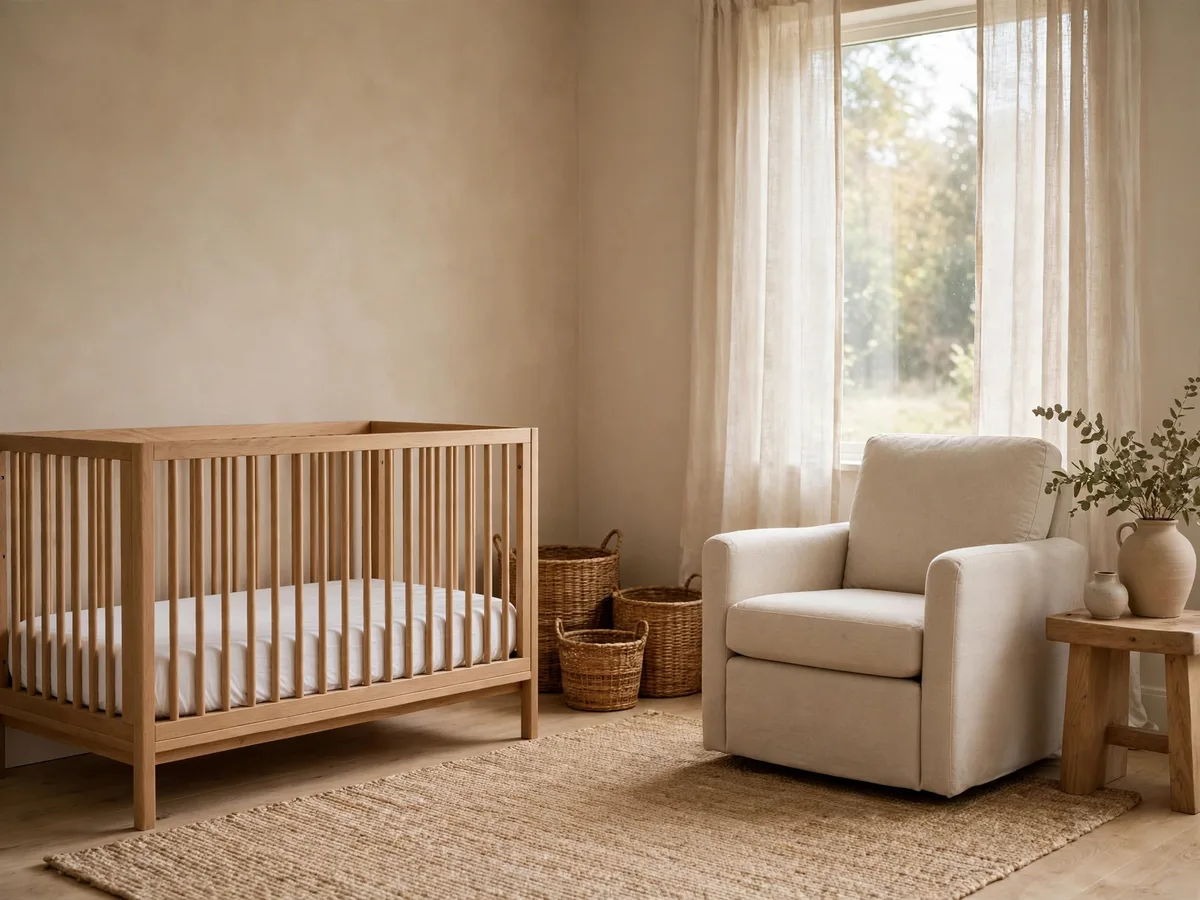
Japandi style blends Japanese calm with Scandinavian practicality, and it may be the most peaceful way to design a baby first room. A japandi nursery uses warm neutrals, natural wood, low uncluttered furniture, and texture instead of loud color, so the room feels like a deep exhale for both baby and parents. It is minimal nursery styling with warmth, not coldness.
Calm design and safety belong together here. Every idea in this list respects current safe sleep guidance: a bare crib with a firm, flat mattress for infants, furniture anchored to the wall, and cordless window coverings near the crib. Beauty never needs soft bedding in the crib or decor within a baby reach.
Build the room slowly and intentionally. Start with the palette, the crib, and safe sleep, then add storage, texture, and light in layers.
1. Start With a Warm White and Sand Palette
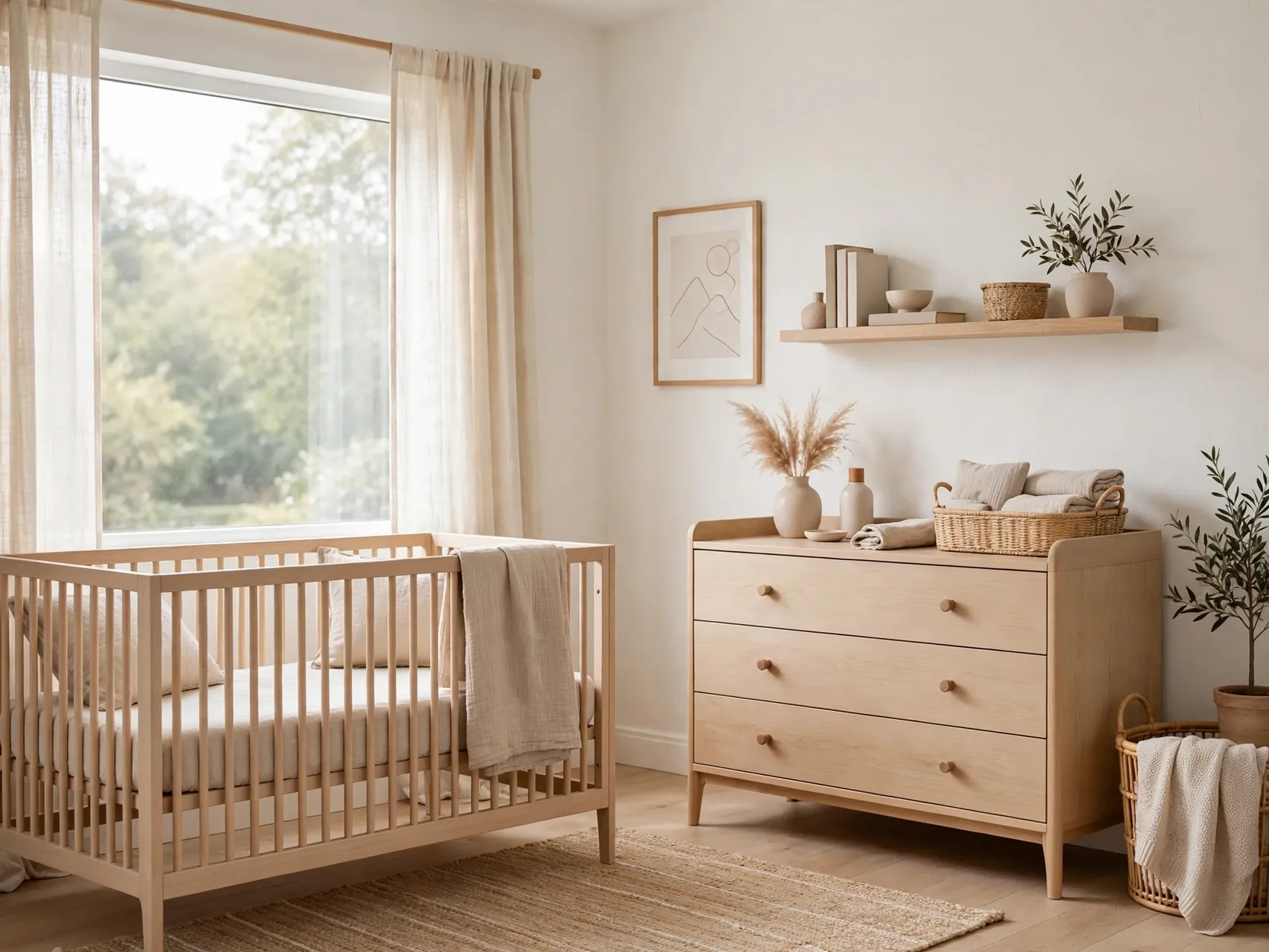
The Japandi palette begins with warm white, sand, oatmeal, and soft beige rather than stark bright white. These tones feel like morning light on wood: calm, warm, and easy to live with during night feeds. Paint walls in a warm white and let sand and cream appear in the rug, chair, and curtains for gentle depth without contrast that jars.
This neutral nursery decor base is forgiving, too. It hides the visual noise of baby gear, pairs with every wood tone, and never needs repainting when your taste shifts.
2. Choose a Low Profile Natural Wood Crib

The crib is the centerpiece of a japandi baby room, so choose it with care. A low profile crib in light oak, ash, or beech with clean lines and visible wood grain brings the honest craftsmanship this style celebrates. Simple spindles or plain panels both work; avoid heavy ornate shapes that fight the calm.
Choose a crib that meets current CPSC safety standards, with slats spaced no more than 2 3/8 inches apart and a snug fitting mattress with no gaps at the edges. Convertible models that later become a toddler bed suit the Japandi grow with them philosophy beautifully.
3. Keep the Crib Bare With a Firm Flat Mattress

Safe sleep is the foundation of every beautiful nursery. For infants, the AAP recommends a bare crib: a firm, flat mattress with a fitted sheet and nothing else. No pillows, loose blankets, bumpers, or plush toys belong in the crib during sleep, however photogenic they look in styled pictures. That empty crib is not unfinished; it is correct.
Get the soft, layered look around the crib instead: texture on the walls, a woven rug, a knit throw over the nursing chair, and cushions on a bench. If you worry about warmth, use an appropriate wearable blanket or sleep sack as guidance suggests.
4. Mix Light Oak and One Darker Wood Tone

Perfectly matched wood can make a nursery feel like a showroom set. Japandi rooms mix tones with confidence: a pale oak crib with a walnut dresser, or ash shelving beside a deeper stained chair. The mix adds the curated, collected depth that keeps minimal rooms from feeling flat or cold.
Keep the mix to two wood tones and repeat each at least twice so it reads as a decision. Light wood should dominate in a small room to keep it airy, with the darker tone as the accent.
5. Add a Tatami Style Play Mat for Tummy Time

A dedicated floor zone is a lovely Japandi touch. A tatami style mat or a firm, low pile play mat in a natural tone creates a defined space for tummy time, rolling practice, and quiet floor play with you beside your baby. The slightly firm surface supports early movement better than a deep plush rug.
Keep the mat clean and simple, and store it flat or rolled when not in use if space is tight. Place a few wooden or fabric toys on it during play, then clear it fully afterward, because the calm of Japandi comes from what you put away.
6. Use Rattan and Seagrass Baskets for Hidden Storage
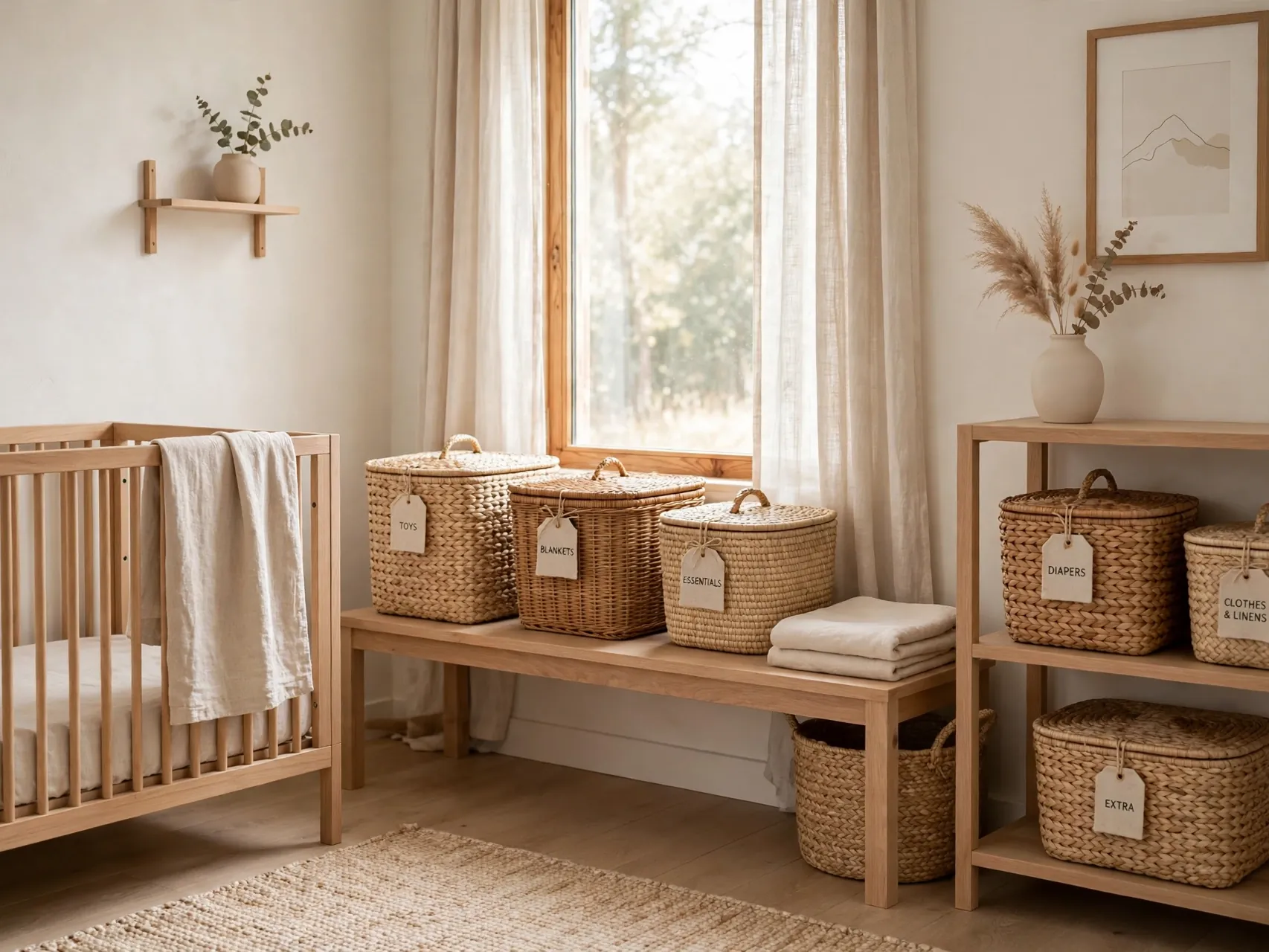
Babies arrive with surprising amounts of stuff, and Japandi calm depends on hiding it gracefully. Woven rattan and seagrass baskets with lids or liners hold diapers, clothes, and toys while adding the natural texture this style loves. A row of matching baskets on a low shelf looks serene even when the contents are pure practical chaos.
Choose sturdy baskets that keep their shape, and keep everyday baskets within your easy reach but out of a crawling baby reach as mobility grows. Label quietly if it helps partners and grandparents keep the system.
7. Hang Sheer Linen Curtains for Soft Daylight

Daylight should enter a Japandi nursery softly. Sheer linen or linen look curtains diffuse bright sun into a gentle glow, protect privacy, and move slightly with the air in a way that feels alive. Warm white or natural flax tones keep the palette calm while the weave adds the texture this style uses instead of pattern.
Hang curtains high and let them fall long for a serene line. For naps, layer them with blackout coverage behind or choose lined panels, because real darkness helps daytime sleep.
8. Choose Cordless Window Coverings Near the Crib
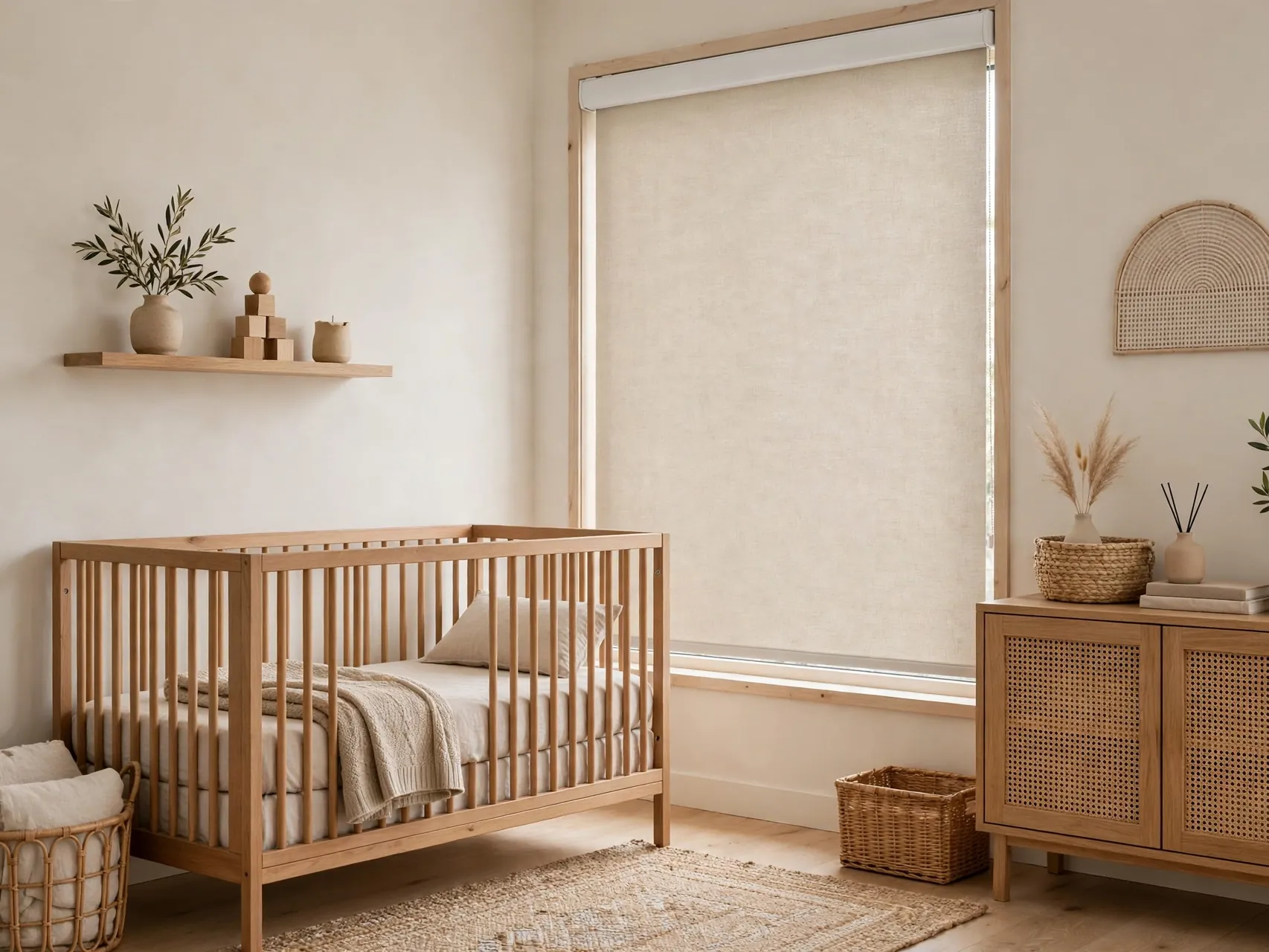
Window covering cords are a serious hazard for babies and young children, so a Japandi nursery should use cordless blinds or shades, or curtains with no accessible cords at all. This is one place where minimal design and CPSC safety guidance point in exactly the same direction: clean lines, nothing dangling, nothing within reach of the crib.
Position the crib away from windows where possible, and check that any older coverings in the room have cords secured fully out of reach or replaced with cordless versions. As your child grows and furniture moves, recheck every cord in the room.
9. Add a Paper Style Pendant With Warm Light

Soft, sculptural light is a Japandi signature. A paper style pendant shade, fitted by a qualified person where wiring is involved, casts a warm, diffused glow that suits night feeds far better than a harsh ceiling light. Choose a simple round or organic shape in warm white and pair it with a warm bulb.
Layer the lighting: the pendant for general glow, a small lamp near the nursing chair for feeds, and true darkness for sleep. Dimmers help if your fittings allow.
10. Layer Natural Textures Instead of Bright Color

In a Japandi nursery, texture does the work color usually does. Combine smooth wood, nubby wool, washed linen, woven rattan, and matte ceramic in the same warm neutral family, and the room gains depth without a single bright shade. This approach also gives babies gentle visual interest through material variation rather than overstimulation.
Layer texture where adults and babies actually touch: the chair fabric, the rug underfoot, a knit throw for the parent, curtains at the window. Keep crib bedding to the fitted sheet for safe sleep; the texture story lives in the room, not in the crib.
11. Create a Small Floor Level Reading Corner
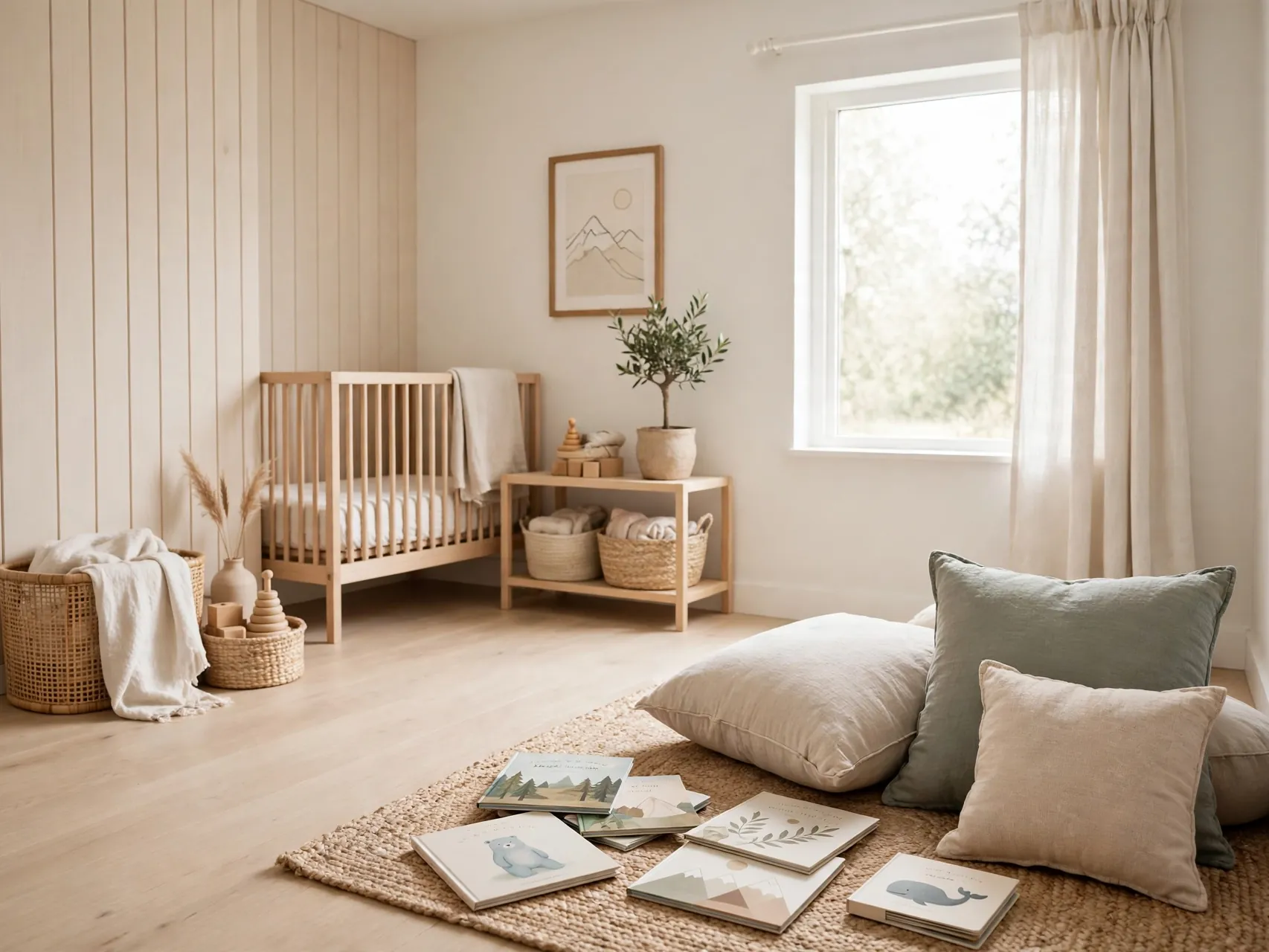
A floor cushion, a low basket of board books, and soft light make a reading corner that grows from newborn story time to independent toddler browsing. Floor level seating suits the grounded Japandi feeling and keeps everything accessible without climbing risks. Choose washable cushion covers, because this corner will see real life.
Keep the book collection small and rotated; a few beautiful board books in a basket look calmer than a crowded shelf, and babies engage more with fewer choices. This is a play and bonding zone, fully separate from the crib.
12. Use Low Open Shelves for a Few Wooden Toys

Low open shelving in natural wood lets a baby see and later choose a few toys independently, a practical idea Japandi borrows happily from Montessori thinking. Display a small rotation: wooden rings, a stacking toy, a soft ball, and one or two fabric books. The shelf looks like decor when styled sparsely, and tidying takes a minute.
Fix shelves securely to the wall at a height your child can reach when standing, and keep heavy items off them entirely. As your baby becomes mobile, check that nothing small or breakable sits within reach.
13. Anchor Every Tall Piece to the Wall

Furniture tip over is a preventable danger, and a Japandi room is the perfect place to get this right from day one. Anchor the dresser, bookshelf, wardrobe, and any tall storage to the wall with the anti tip hardware the maker provides or suitable straps, and follow CPSC guidance on placement and installation.
Anchoring also suits the style: Japandi rooms keep few, well chosen pieces, so securing them is a short job. Place the changing dresser so you face the room, use drawer locks as your baby grows curious, and recheck fixings after any move.
14. Add One Simple Nature Print, Hung Securely

Japandi walls stay mostly bare, which makes one chosen print feel like art in a gallery. A simple botanical line drawing, a soft landscape, or a minimal animal print in a light wood frame brings gentle focus without visual noise. Hang it where you and your baby can enjoy it from the chair, not over the crib.
Use proper fixings suited to your wall, check the frame is secure, and keep glass or heavy frames away from anywhere a child sleeps or plays beneath. In a rental, a print leaned on a secured shelf can work if it cannot fall.
15. Choose a Washable Natural Fiber Rug
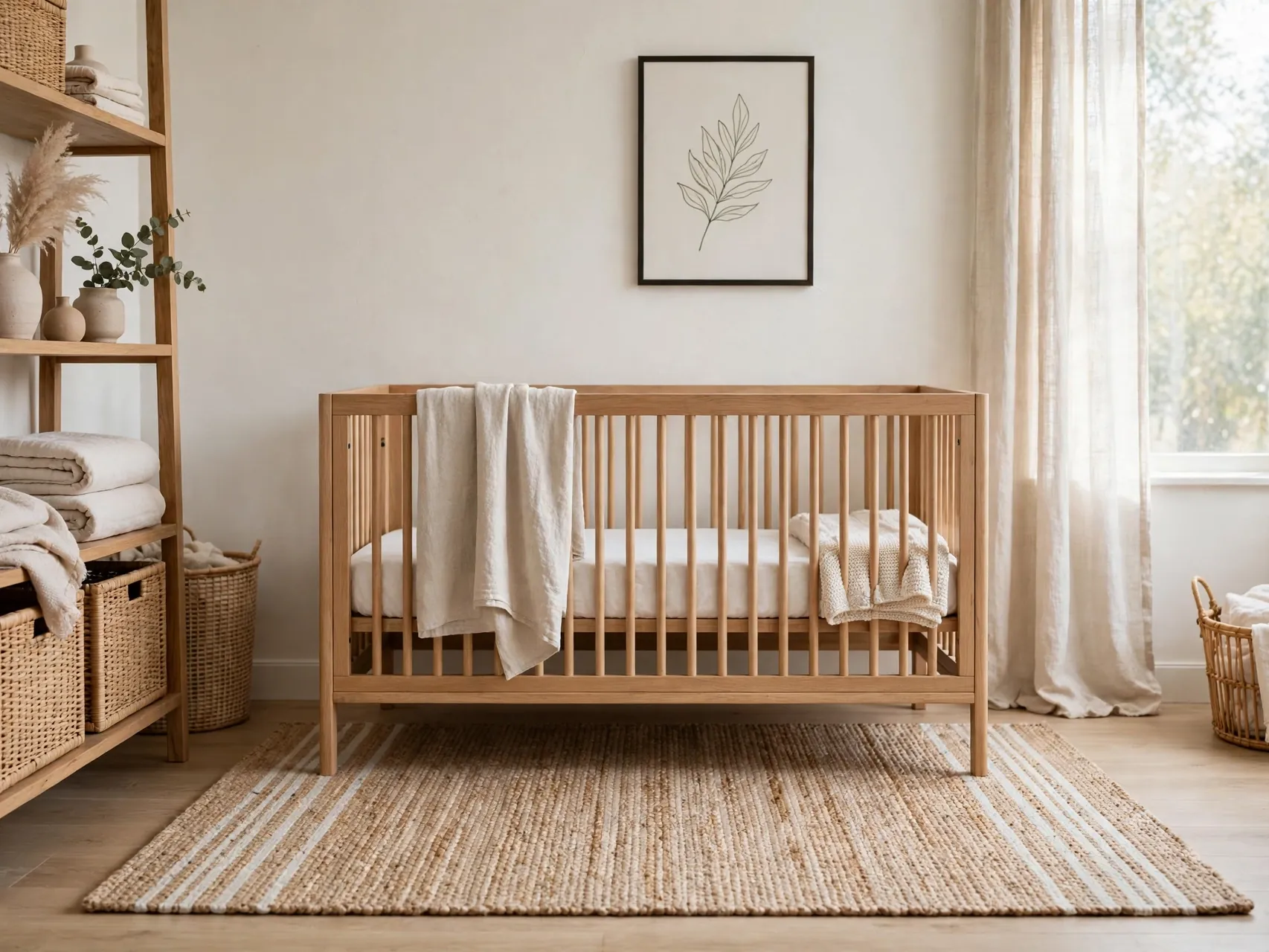
A rug softens sound, warms the floor, and defines the play zone in a Japandi nursery. Choose a low pile natural fiber or cotton rug in a warm neutral, ideally washable or easy to spot clean, because nursery floors meet every kind of spill. A firm, flat weave supports tummy time and early crawling better than deep pile.
Use a non slip underlay so the rug stays put under rocking chairs and busy feet. Keep rugs out of the crib entirely, obviously, and vacuum regularly to manage dust.
16. Keep a Comfortable Nursing Chair in a Calm Corner
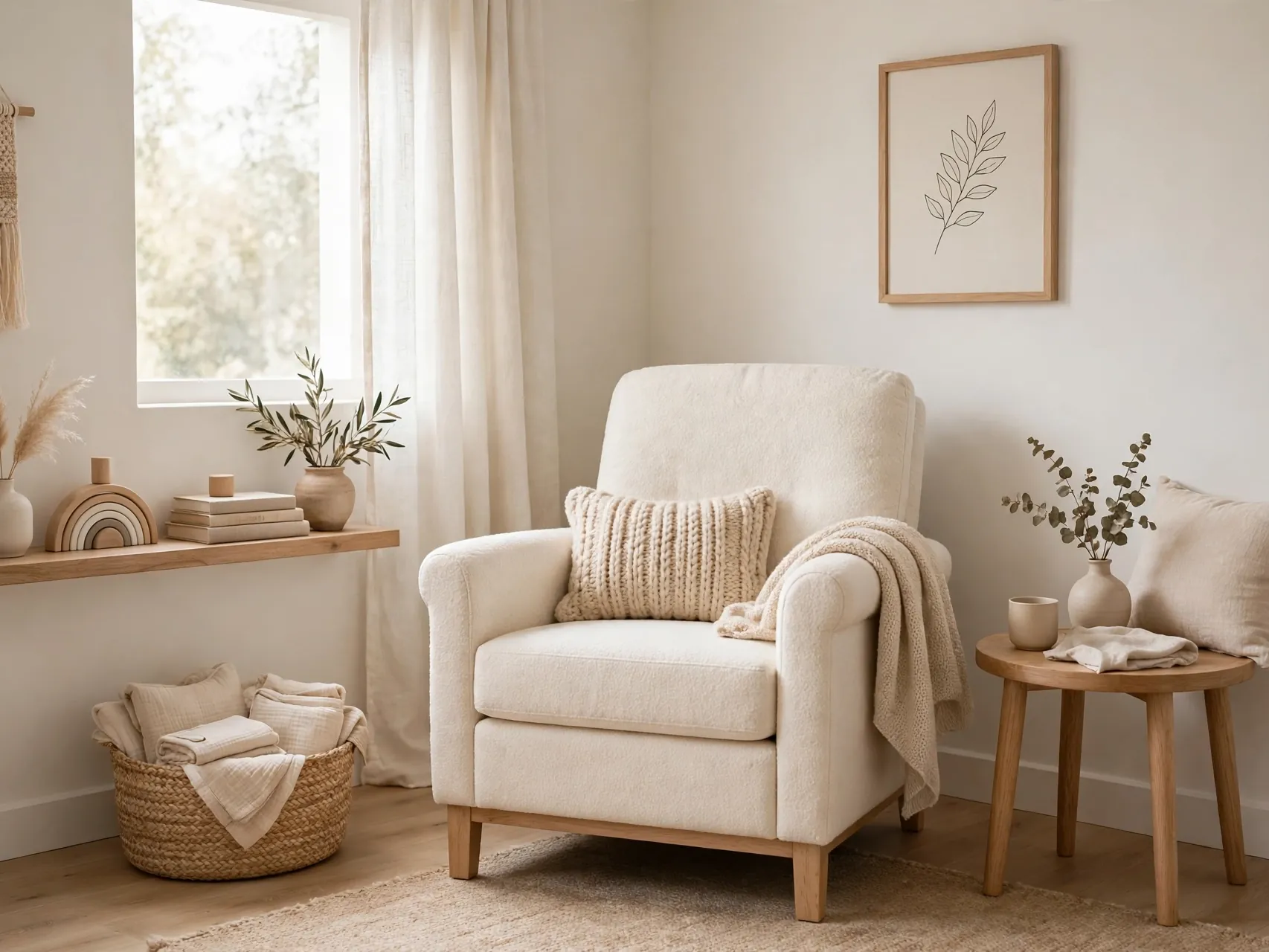
You will spend hundreds of hours in this chair, so choose comfort honestly. A simple upholstered chair or glider in oatmeal boucle, linen, or soft cotton, with a small cushion for your back and a footstool if space allows, becomes the emotional center of the room. Japandi styling keeps the shape clean; your body will thank you for the padding.
Place it near soft light and a small side table for water and a book, with cords and lamps kept stable and out of the baby space. A knit throw over the arm is for you, the parent, and should live on the chair, never in the crib.
17. Use Sliding or Simple Doors to Save Space

Small nurseries benefit from Japandi space discipline. Sliding wardrobe doors, or simply removing visual clutter around doorways, keeps floor space open and movement easy during night carries. If you cannot change doors, keep the swing path of existing doors completely clear of furniture, baskets, and the crib.
Open floor and clear paths are safety features as much as style ones: you will walk this room half asleep, holding a baby, many times. Keep the route from door to crib to chair unobstructed, and let the minimal layout do double duty.
18. Add Subtle Sensory Play With Natural Materials
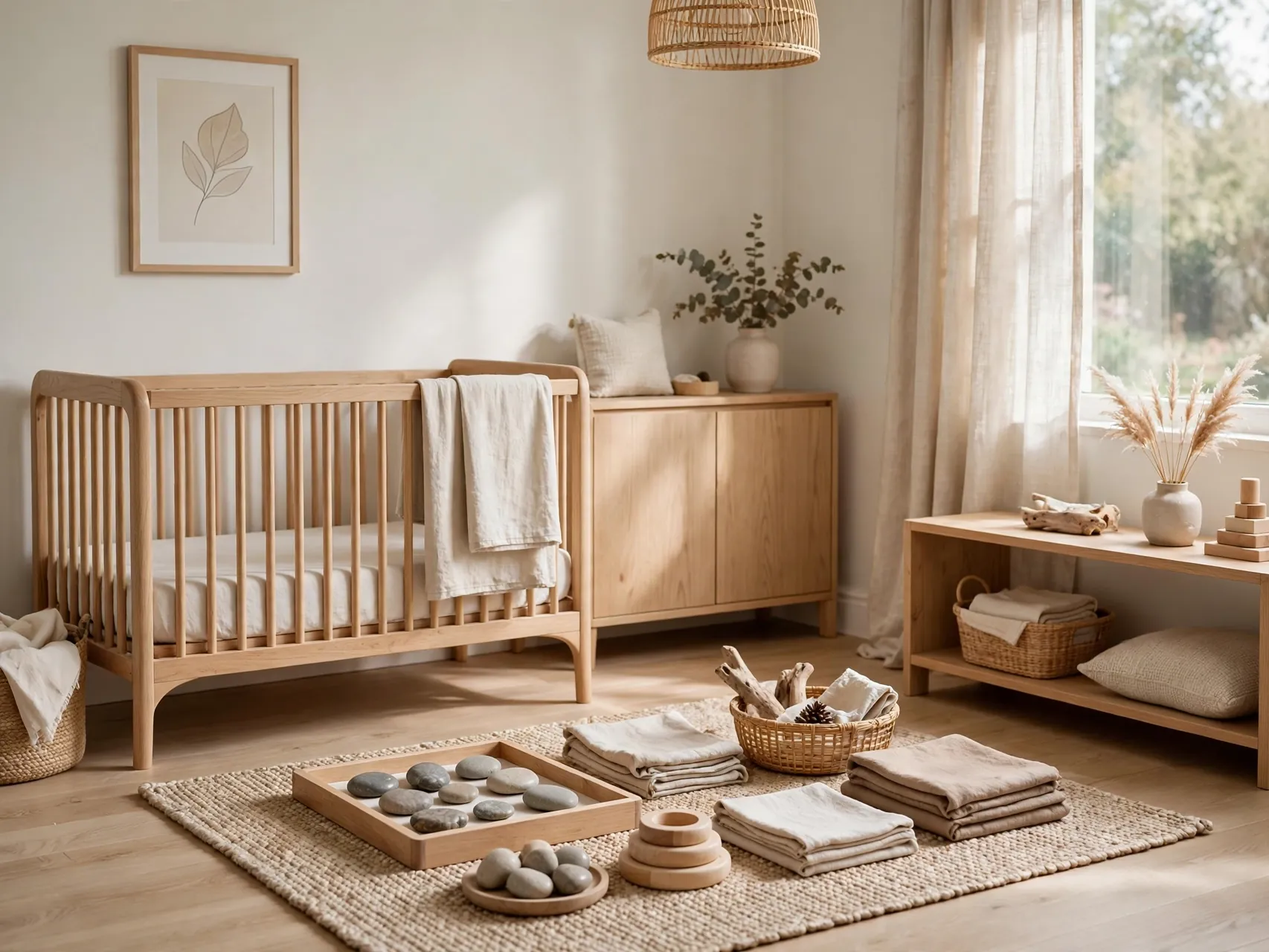
Babies need sensory input, and Japandi provides it quietly. Varied natural textures, smooth wooden toys, a nubby rug under supervision, linen curtains to watch, and the grain of wood itself give gentle stimulation without flashing lights or loud color. A simple mobile in natural tones can hang over the changing area for diaper change entertainment.
Keep mobiles and hanging toys out of the crib and remove any mobile once your baby can push up, following maker and AAP guidance. Offer sensory play during awake, supervised time on the mat or in your arms.
19. Keep the Changing Area Simple and Within Reach

A changing pad on top of a sturdy, anchored dresser is the classic Japandi changing setup: one piece doing two jobs, with supplies in the top drawer or a basket within your reach. Keep everything you need where you can reach it without stepping away, and always keep one hand on your baby on the raised surface.
Choose a pad with a safety strap and use it, on a dresser wide enough to hold it securely. Store creams and small items in closed drawers as your baby grows grabby.
20. Leave Generous Empty Floor Space

The boldest Japandi move is what you leave out. Generous empty floor in the center of the nursery makes the room feel bigger, calmer, and safer, and it gives you space for floor play, stretching during feeds, and the endless small dances of soothing a baby. Resist filling every corner just because it fits.
If a piece does not serve sleep, feeding, changing, storage, or play, question whether it belongs. A few beautiful essentials in an open room will always look more luxurious than a crowded room of lovely things.
21. Add a Single Plant Well Out of Reach
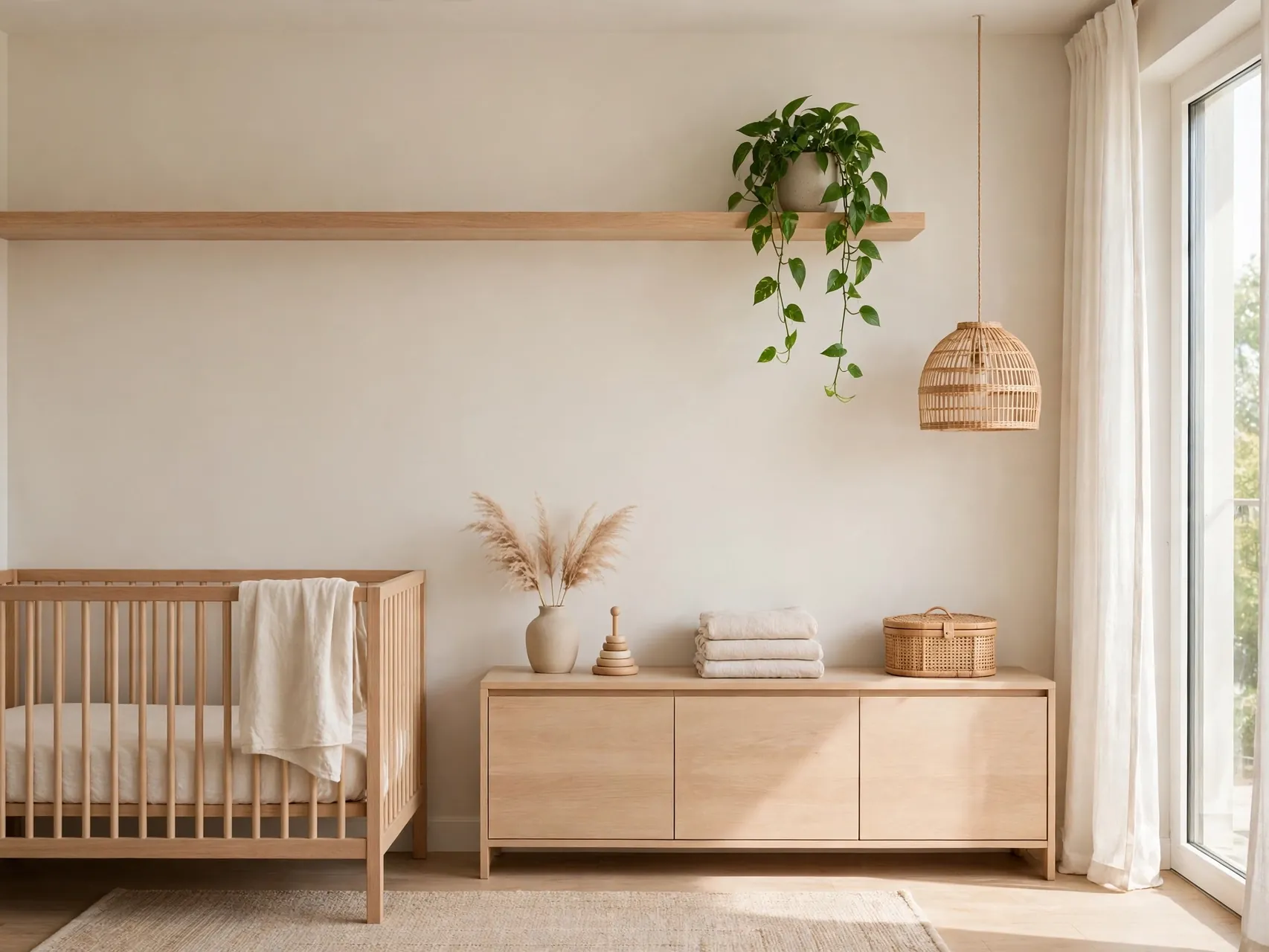
One plant brings the living note Japandi rooms love. Choose a sturdy plant in a beautiful matte pot and place it high on a secured shelf or in another spot completely out of a baby reach, now and as climbing begins. Check any plant for child and pet safety information before bringing it into a nursery, and keep soil covered or inaccessible.
If a real plant feels risky in this season of life, a quality faux stem in a ceramic vase gives the visual softness with zero maintenance, and there is no shame in that trade during the newborn months. Never place plants on or above the crib.
22. Let the Room Grow With Neutral, Timeless Pieces
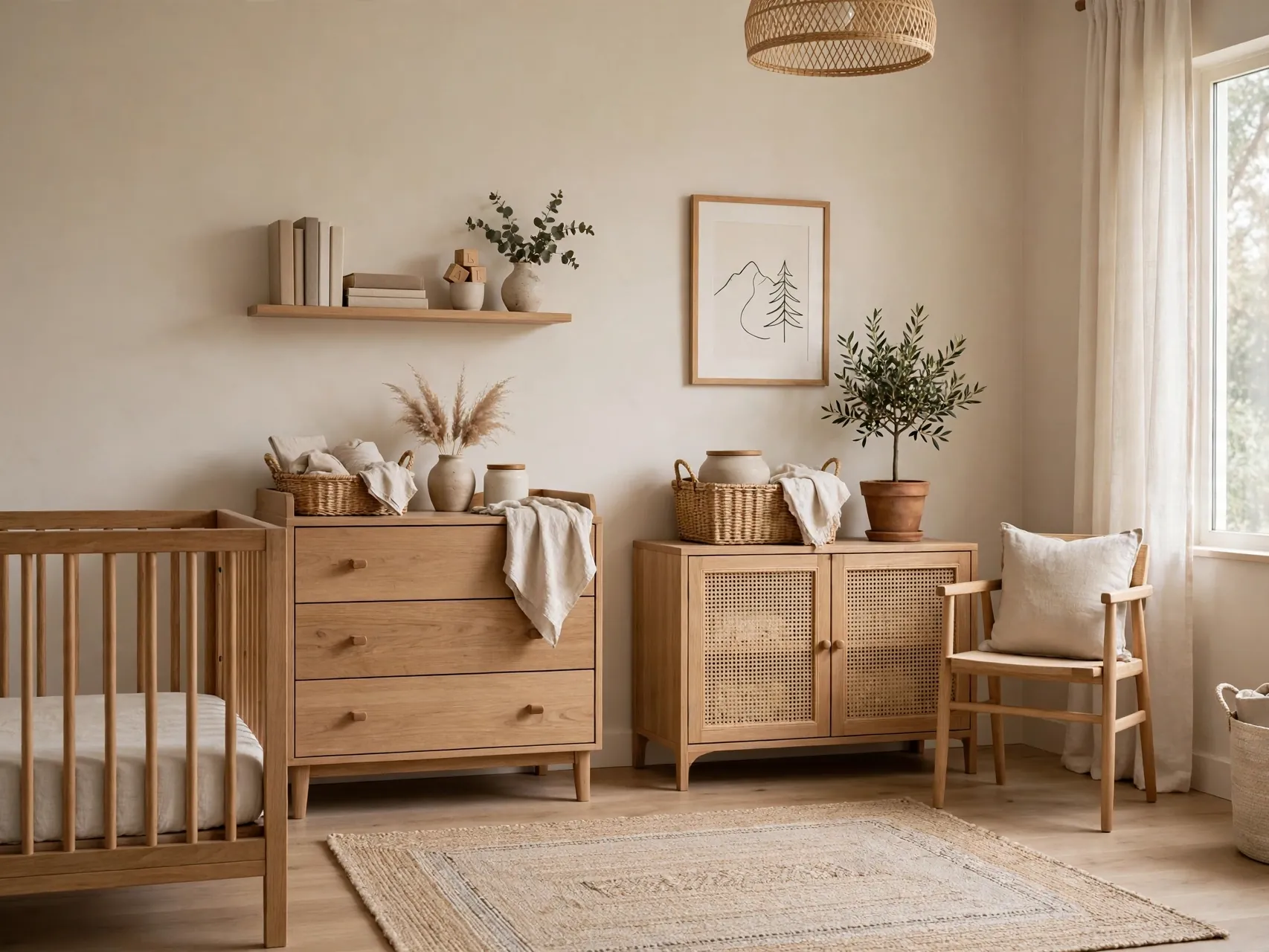
The final Japandi idea is a mindset: buy for the long arc. A convertible crib, a dresser that works at every age, neutral walls, and storage that suits toys now and books later mean the nursery becomes a toddler room, then a child room, with cushions and art swaps instead of full redecoration. That is both calmer and kinder to your budget.
Add age and personality through the small, changeable layer: books, art, a cushion, a lamp. The bones stay serene.
FAQ
What is Japandi style in a nursery?
Japandi blends Japanese minimalism and wabi sabi warmth with Scandinavian function. In a nursery that means warm white and sand tones, natural wood, low uncluttered furniture, natural textures instead of bright color, and only pieces that earn their place. The result is a calm, practical room designed to grow with your child rather than be redecorated every year.
How do I keep a Japandi nursery safe for sleep?
Follow AAP safe sleep guidance: a bare crib with a firm, flat mattress and a fitted sheet only, no pillows, loose blankets, bumpers, or plush toys in the crib. Choose a crib meeting CPSC standards with slats no more than 2 3/8 inches apart, anchor tall furniture, use cordless window coverings, and place the crib away from windows and cords.
Is a minimal nursery stimulating enough for a baby?
Yes, when stimulation is gentle and varied. Babies respond to texture, contrast in natural materials, faces, voices, and light patterns. Wooden toys, a nubby mat for supervised play, books, and a simple mobile over the changing area provide plenty of input without overwhelming. Calm rooms support the long, focused play and rest that developing babies need.
What wood tones work best in a Japandi nursery?
Light woods like oak, ash, and beech keep the room airy and pair beautifully with warm white walls. Mix in one darker tone, such as walnut, for depth, and repeat each tone at least twice. Visible grain and matte natural finishes suit the style better than painted or glossy pieces. Two tones are plenty; more starts to feel busy.
How can I create a Japandi nursery on a budget?
Start with paint in a warm white, a safe crib that meets current standards, and woven baskets for storage. Add texture with one washable rug, linen look curtains, and a comfortable secondhand chair with a washable cover. Shop slowly for wood pieces you will keep for years. Japandi rewards buying less, so a small budget handled patiently fits the style well.
Key Takeaways
- Palette first: Warm white, sand, and natural wood tones create the calm Japandi base, with texture doing the work of color.
- Safe sleep is the design: A bare crib with a firm, flat mattress and fitted sheet only, per AAP guidance, with all softness living outside the crib.
- Few pieces, well chosen: A low wood crib, an anchored dresser, a comfortable chair, and woven basket storage are the whole furniture story.
- Safety in the details: CPSC standard crib spacing, anchored furniture, cordless window coverings, and a crib placed away from windows and cords.
- Built to grow: Neutral, timeless pieces shift from nursery to child room with small swaps, not full redecoration.
- Planning a calm first room for your baby? Save this guide to Pinterest and pin the Japandi idea you will start with.