24 Ways to Keep House Cool Without AC All Summer Long
Introduction
A heat wave without air conditioning is a test of timing as much as tools. Homes without AC stay livable when you work with the day: block the sun before it gets in, flush the house with cool night air, and keep indoor heat sources off during the hottest hours. Learning to keep house cool without ac is mostly a set of habits, repeated daily, that cost little or nothing.
Start in the morning. The homes that cope best are shaded and closed up before the heat builds, then opened again the moment outside air turns cooler than the air inside. Fans, light bedding, cool showers, and smart cooking fill the gaps in between.
One honest warning runs through this guide. Shade and fans have limits, and extreme heat is a health emergency, not a comfort problem. You will find CDC style heat illness signs, hydration habits, and clear advice on when to leave for a cooling center below.
1. Know the Heat Safety Limits Before You Start

Heat safety comes before every trick on this list. Drink water regularly through the day, take breaks from any exertion, and treat headaches, nausea, and dizziness as signals to stop, cool down, and rest in the shadiest spot you have.
Older adults, babies and young children, pregnant people, and anyone with heart conditions or certain medications are at higher risk, even indoors.
2. Close Curtains and Blinds Before the Sun Hits
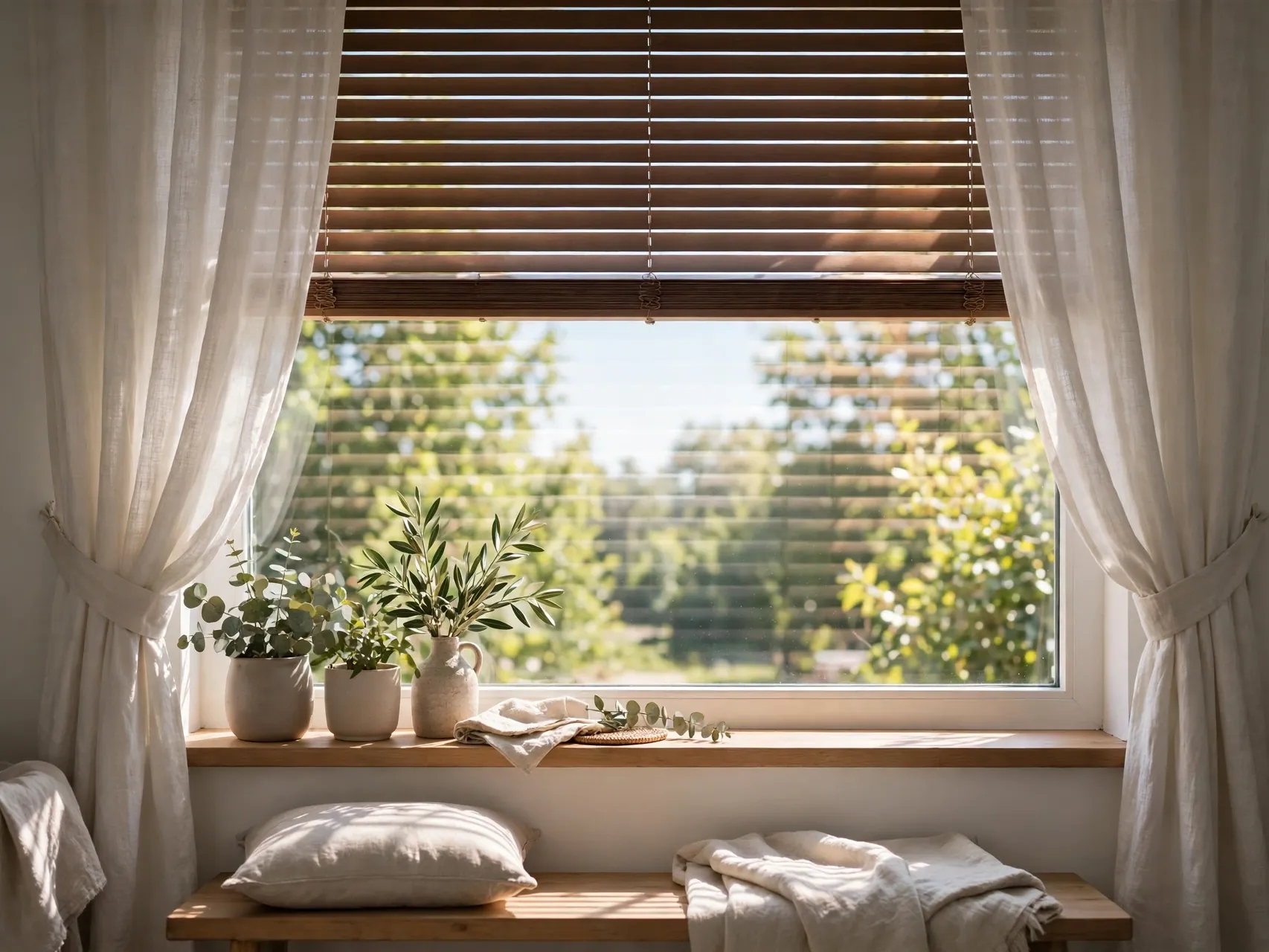
Sunlight through glass turns into heat inside the room, so stop it at the window. Close curtains and blinds on east facing windows in the morning and west facing windows in the afternoon, before the sun reaches them, not after the room is already hot.
Light colored linings and blackout curtains reflect and block the most.
3. Block Sun Outside the Glass With Shade

Shade that stops sun before it touches the glass works even better than indoor coverings. Awnings, exterior shutters, shade cloth, or a simple sheet fixed outside the sunniest windows all cut the heat that reaches the room. Renters can often use removable shade cloth or a patio umbrella angled against the worst window.
Trees, tall shrubs, and climbing plants shade walls and windows over time, and even potted plants on a sunny balcony help a little. Keep exterior shades secure against wind, and never block a window you need as an emergency exit.
4. Open Windows Only When Outside Air Is Cooler
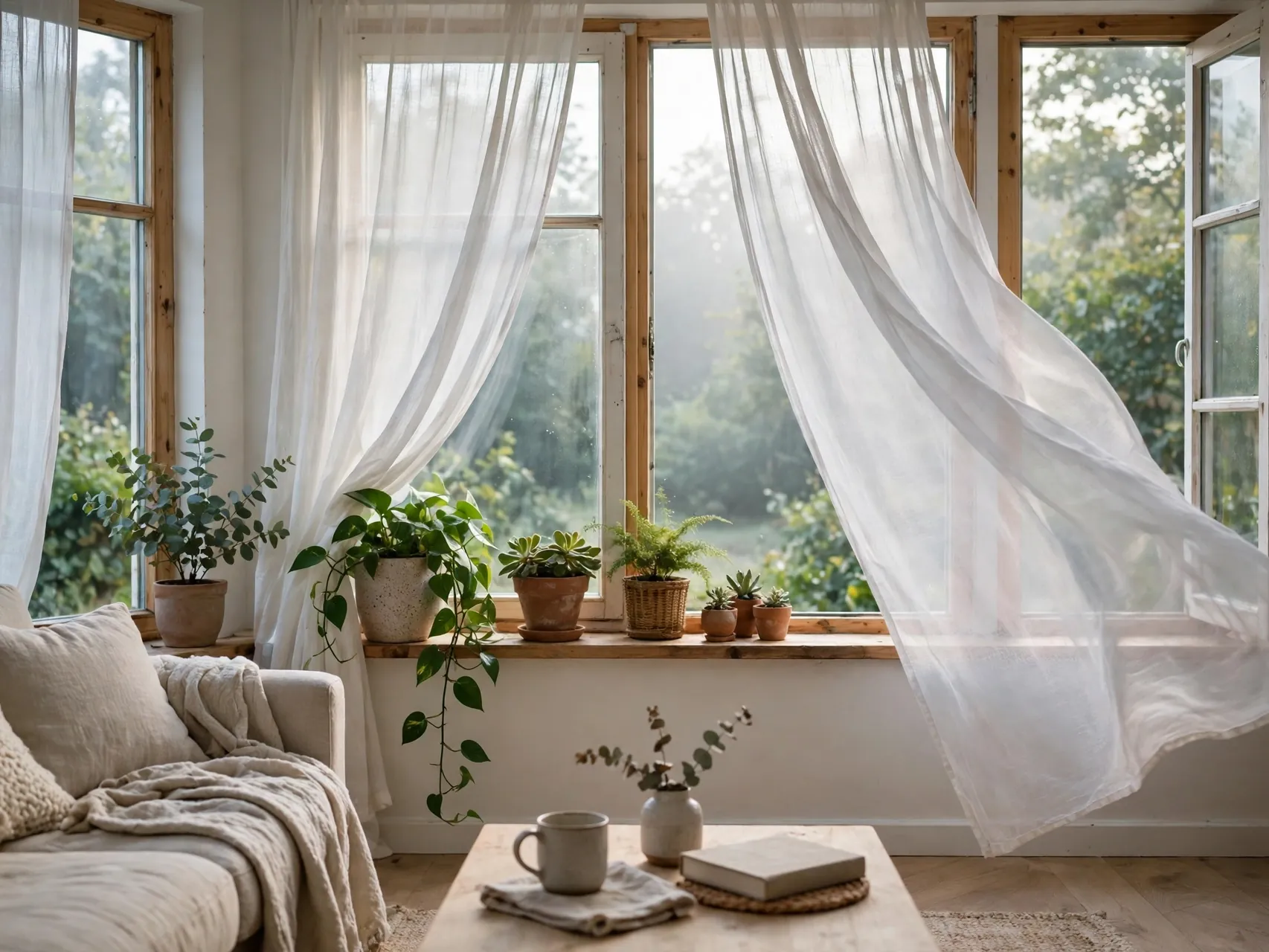
Ventilation only cools your home when the air coming in is cooler than the air inside. During the hot part of the day, open windows let heat pour in, so keep them closed and shaded instead. In the evening and early morning, when outside air drops below indoor temperature, open up wide.
A simple indoor and outdoor thermometer pair removes the guessing.
5. Create a Cross Breeze Between Opposite Windows

Moving air needs a path. Open windows or a window and a door on opposite sides of the home so air can travel through, and open interior doors along the route. A breeze that crosses the rooms you actually sit and sleep in cools both the space and your skin.
If your home has windows on only one side, open the top and bottom of a tall window if it allows, or use a fan to help pull air through, as the next idea covers. Keep the path clear of furniture where you can. Cross ventilation at night also cools walls, floors, and furniture, which then release less heat back to you the following day.
6. Use a Window Fan to Push Hot Air Out at Night
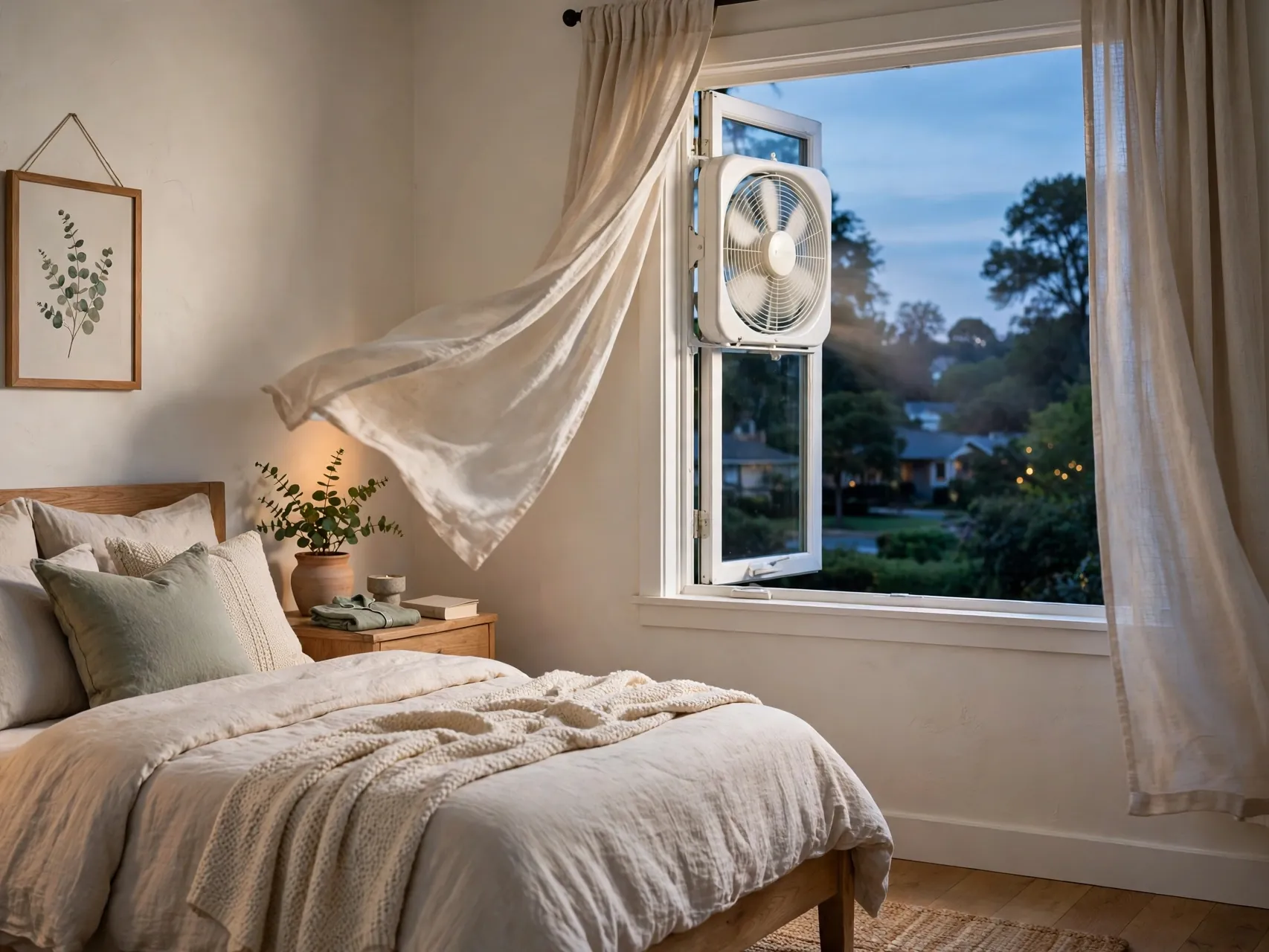
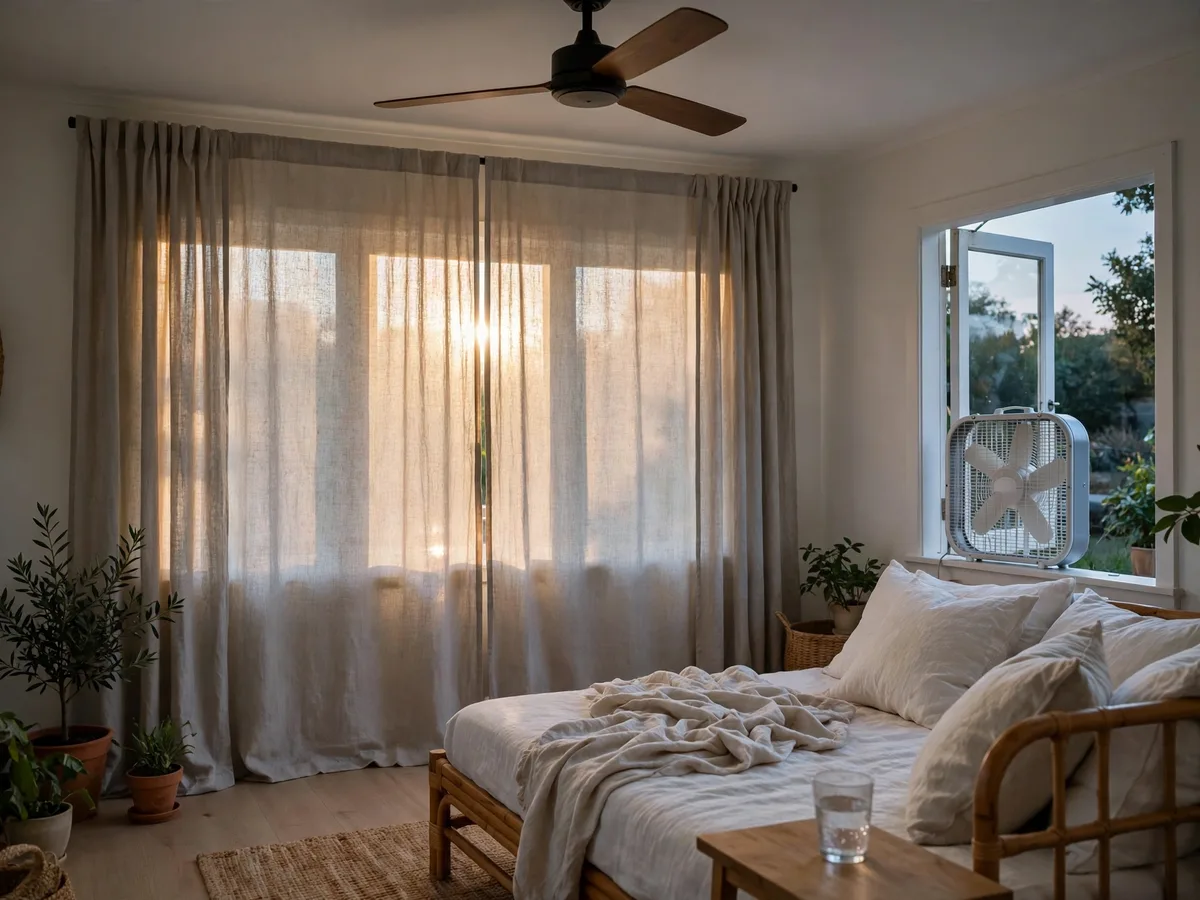
A box fan fitted snugly in a window, facing outward, exhausts hot indoor air and pulls cooler evening air in through windows on the other side of the home. Run it once outside air is cooler than inside, typically after sunset, and through the night if temperatures keep falling.
Fit the fan securely so it cannot fall, keep cords dry and out of walkways, and use a second fan facing inward on the far side if you have one.
7. Set Ceiling Fans to Spin the Cooling Direction
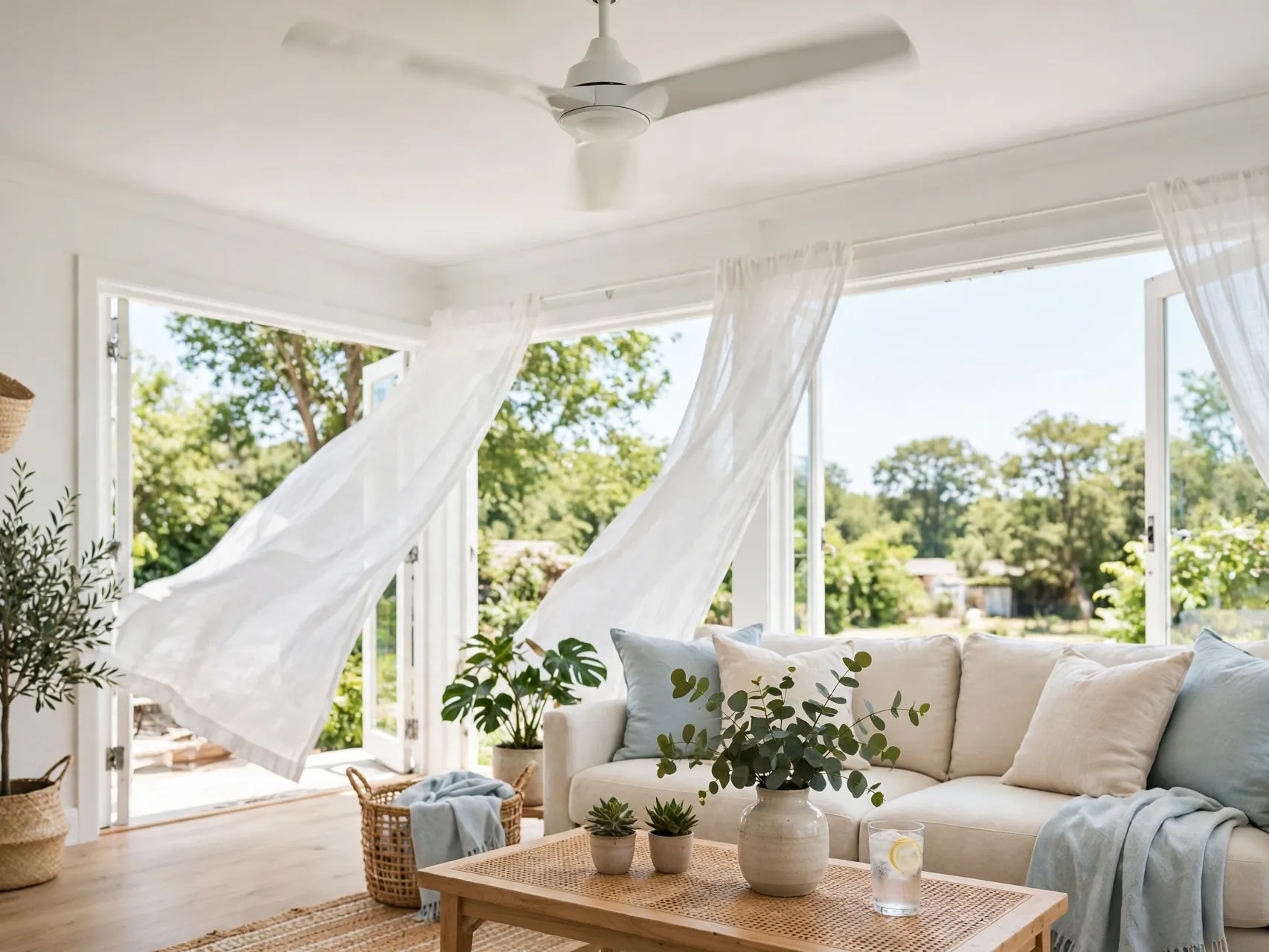
In summer, ceiling fans should spin counterclockwise when you look up at them, which pushes air straight down and creates a breeze you can feel on your skin. Most fans have a small switch on the motor housing to change direction. Turn the fan off before you reach for it.
That moving air helps sweat evaporate, which is how your body cools itself, so a fan in the room you occupy is worth more than three fans in empty rooms.
8. Add the Ice Bowl Trick for Short Relief
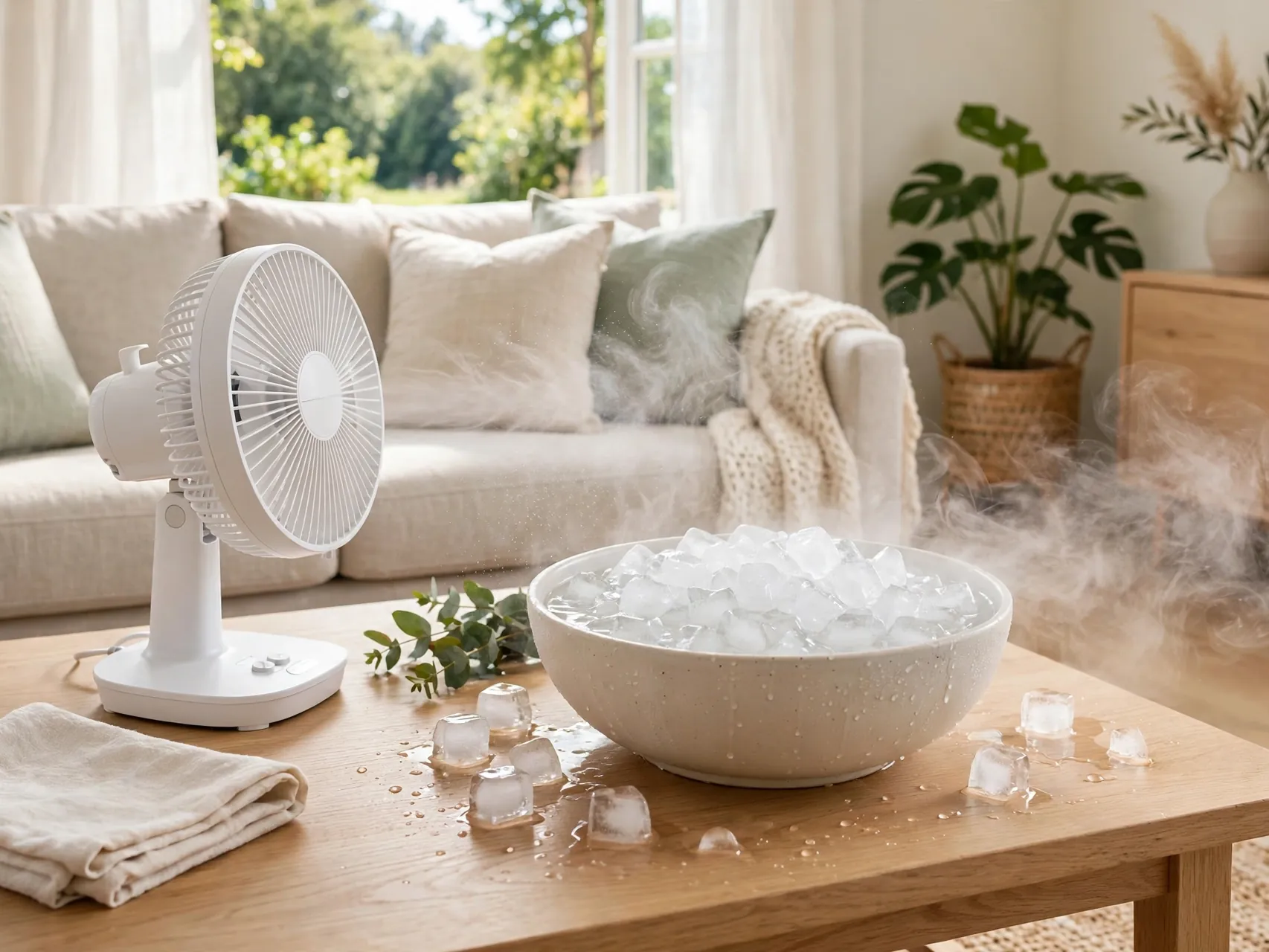
For a small, short term boost, set a wide bowl of ice or a couple of frozen water bottles in front of a fan and sit in the breeze. The air passing over the ice feels cooler for a while, which can make an evening at a desk or a hot hour before bed more bearable.
Keep the bowl stable, protect surfaces from melt water, and keep the fan and its cord well away from splashes.
9. Remember Fans Cool People, Not Rooms

Here is the limit that matters. A fan does not lower the temperature of a room, and in extreme heat, around 95F and above, the moving air can stop helping and may even add heat to your body, the way a convection oven cooks faster than a still one. Health guidance from the CDC and the National Weather Service makes this point clearly.
So use fans while the air is moderate and while cooler air is available at night, but do not trust a fan alone in a very hot room.
10. Turn Off Heat Making Appliances and Lights

Every appliance and bulb adds heat to the rooms you are trying to cool. Switch off what you are not using, unplug chargers and electronics that idle warm, and turn off lights in empty rooms, especially older bulbs that run hot. Run the television and computer hours earlier or later if you can.
Standby heat is sneaky: game consoles, set top boxes, and desktop computers warm a room all day. A power strip makes a one switch habit easy. None of this replaces shade or night ventilation, but in a small apartment the internal heat load is a real slice of the problem, and switching it off is free cooling you already own.
11. Cook Outside, in the Morning, or Without the Oven

An oven can heat a kitchen for hours, so move cooking out of the hot part of the day. Grill outside if you can do it safely, cook breakfast style meals early, and lean on no cook and low cook options at midday: salads, sandwiches, cold soups, and foods finished in a microwave or slow cooker, which add far less heat than an oven.
When you do bake or roast, batch it in the cool morning and run the kitchen exhaust if it vents outdoors.
12. Run Laundry and Dishes After Dark
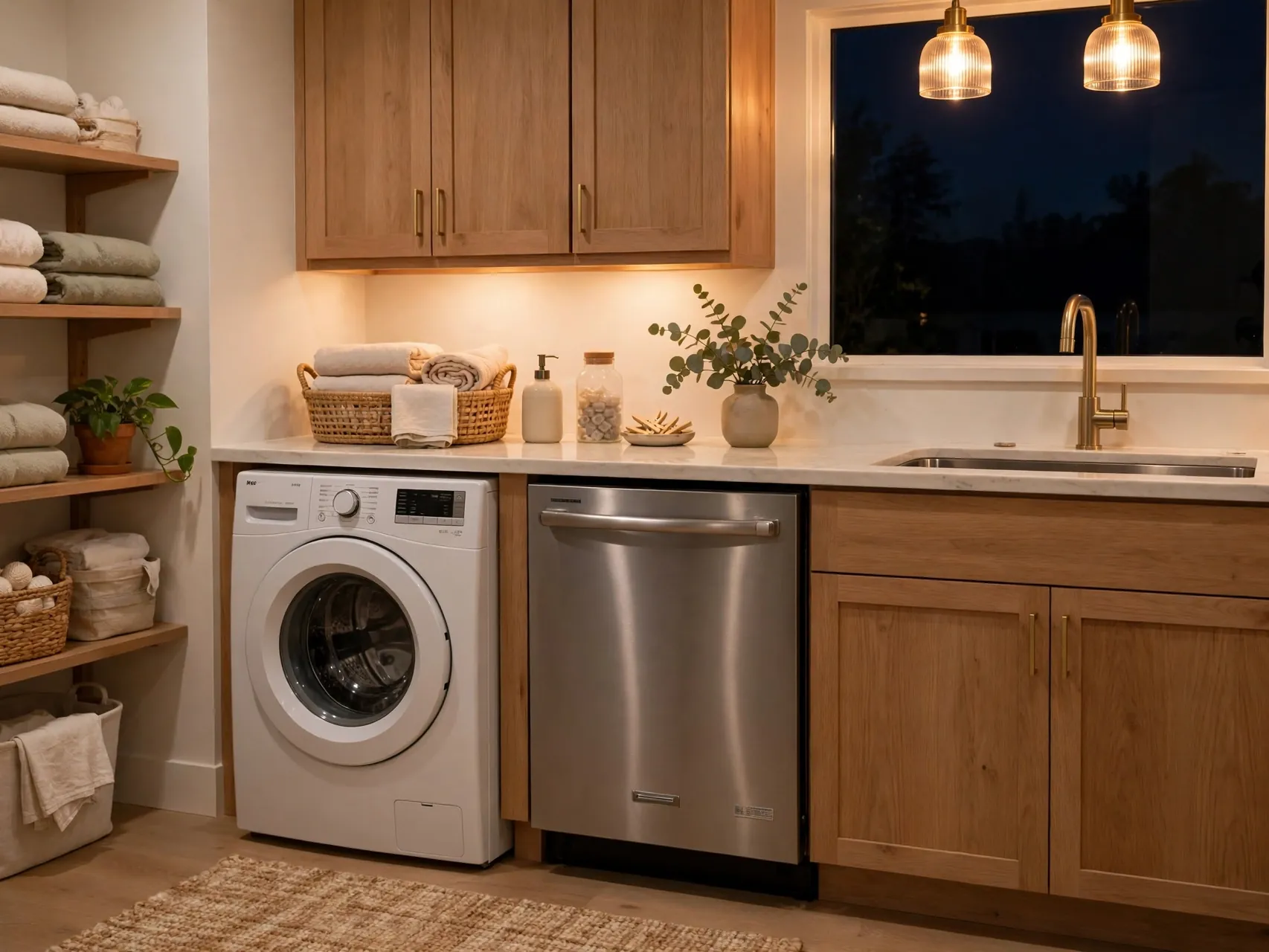
Dryers, washing machines, and dishwashers all release heat and humidity into the house. Shift these chores to the cool hours: run the dishwasher overnight, wash laundry in the early morning, and hang clothes to dry outside or in a shaded, breezy spot instead of tumble drying when you can.
If you must use a dryer, make sure it vents properly outdoors and close the laundry room door while it runs.
13. Switch to Light, Breathable Bedding
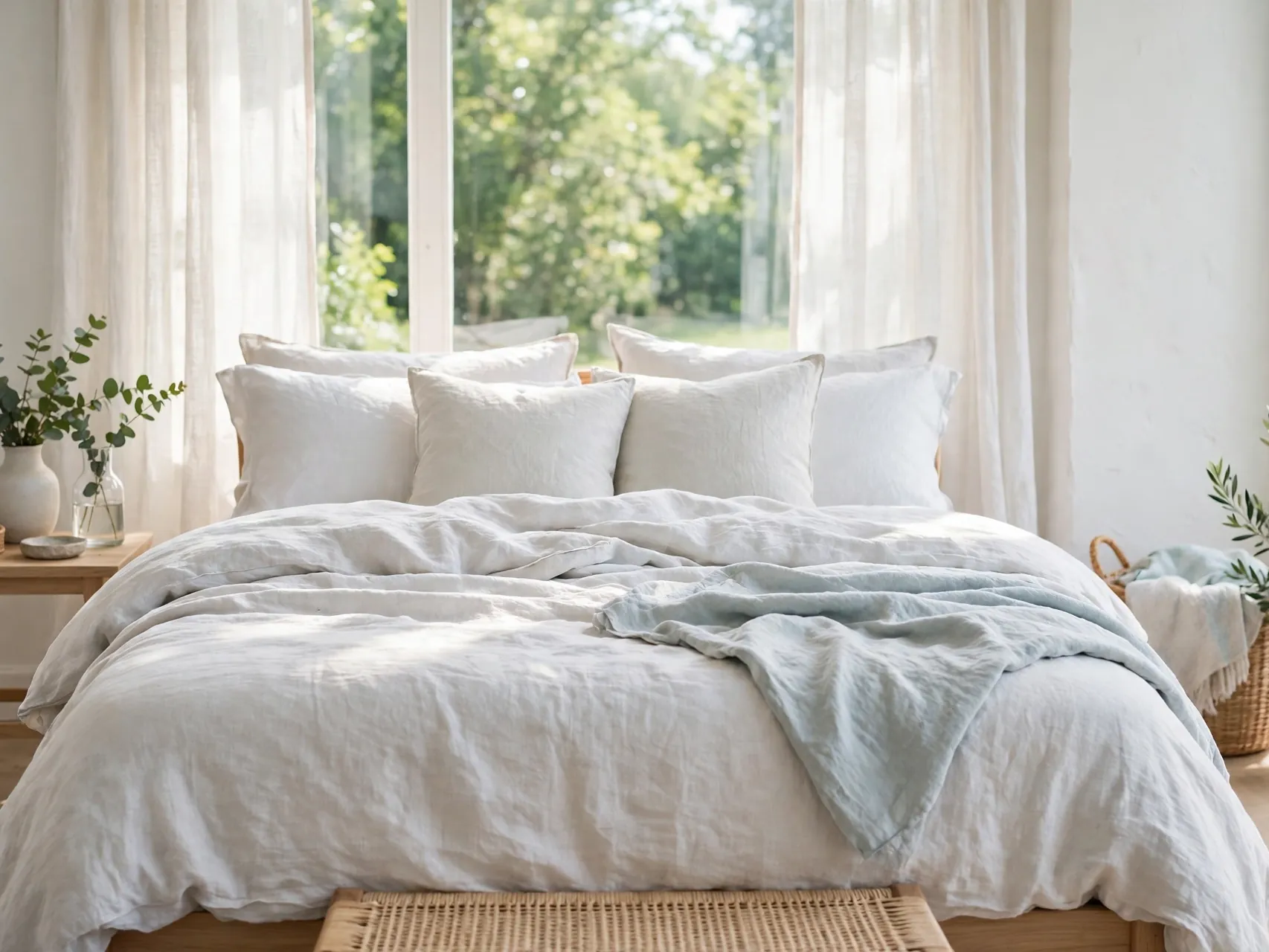
Hot nights ruin sleep, and sleep loss makes heat harder to cope with the next day. Strip the bed down to a light cotton or linen sheet, store the duvet, and choose the most breathable pillow you have. Natural fibers absorb moisture and feel cooler than heavy synthetic quilts.
Some people sleep better with a sheet slightly dampened, or with a cool pack or frozen water bottle wrapped in cloth at the foot of the bed. Keep the bedroom shaded all day, as covered in the next idea, so the bed itself never bakes. Comfortable sleep is not a luxury in a heat wave, it is part of staying healthy.
14. Sleep Low and Keep the Bedroom Shaded All Day

Warm air rises, so the coolest sleeping spot is low: a mattress on the floor, the lowest bunk, or the ground floor room. If your upstairs bedroom bakes, move sleep downstairs for the worst nights, even if it means a camp style setup in the living room.
Prepare the room from the morning: shades closed, door shut against hot hallways during the day, then windows and fan set for the night flush once outside air cools.
15. Take Cool Showers and Use Damp Cloths
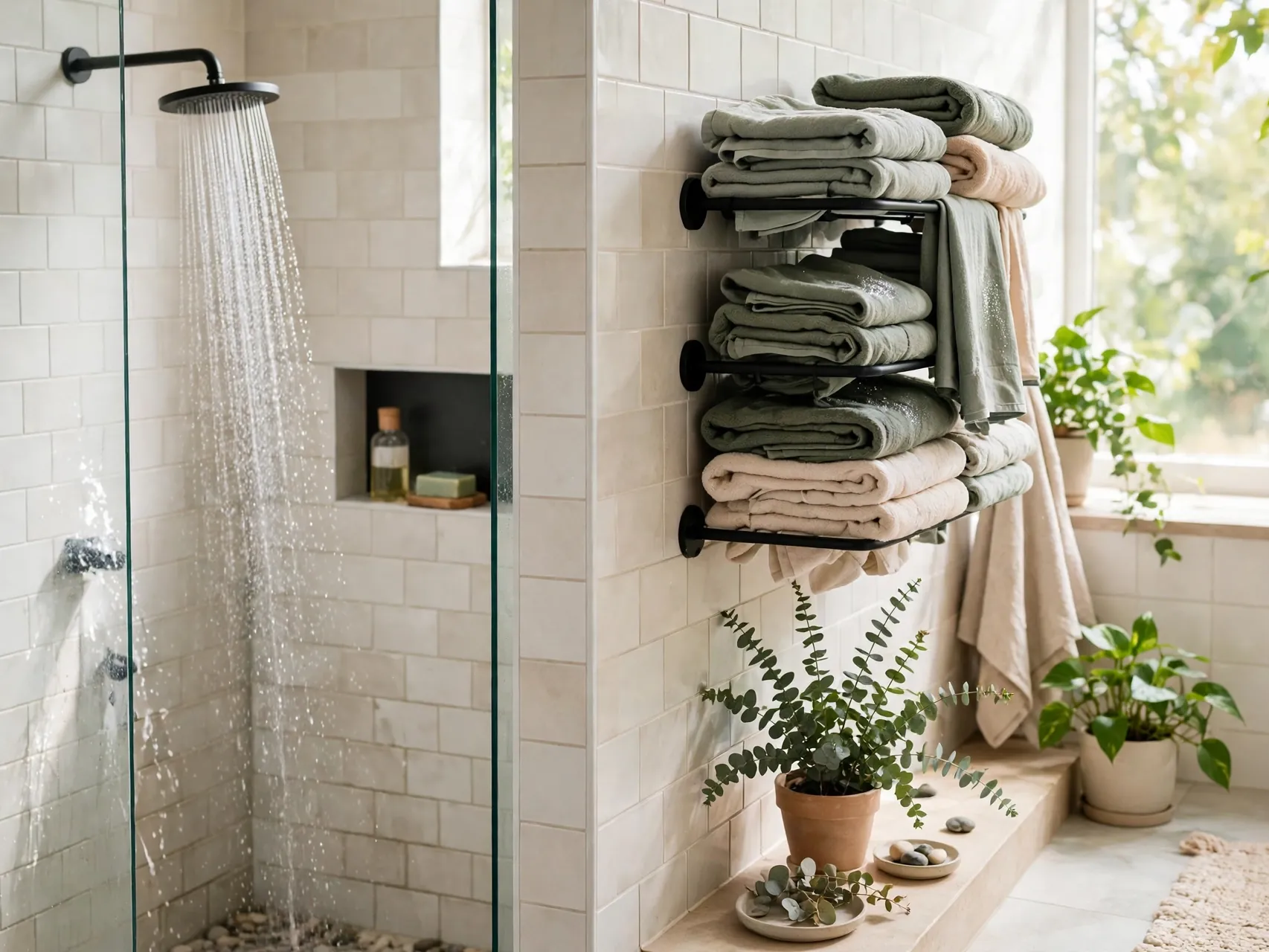
Cooling your skin cools you faster than cooling the room. A tepid or cool shower before bed, after coming home, or whenever you feel overheated lowers your body temperature directly. Between showers, a damp cloth on the neck, wrists, and forehead gives quick relief, because blood flows close to the skin in those spots.
A spray bottle of water plus a fan aimed at you works the same way, helping evaporation do its job.
16. Drink Water Regularly and Eat Light

Hydration is cooling from the inside. Drink water steadily through the day rather than waiting until you are very thirsty, and keep a bottle within reach at your desk, by the sofa, and beside the bed. The CDC advises sipping water regularly in heat and getting medical help if symptoms appear, rather than pushing through them.
Eat lighter meals in the hottest hours, favoring salads, fruit, and foods with high water content, and go easy on alcohol, which dehydrates you while making you feel warmer. If you are sweating heavily for hours, normal meals and a sports drink or salty snack help replace what sweat takes out. Never ignore thirst, dizziness, or a racing pulse.
17. Dress in Loose, Light Colored Clothing

What you wear indoors matters. Loose, light, breathable clothing in cotton or linen lets air move over your skin and sweat evaporate, while tight synthetic layers trap heat. Light colors help if you sit near sunny windows or step outside, since they reflect more sun than dark fabrics.
At night, choose the lightest sleepwear you own or none at all under a single sheet.
18. Move Rest and Sleep to the Coolest Room

Every home has a cool corner: often a north facing room, a lower floor, or a basement. Measure or simply feel your way around at the hottest hour and pick the winner, then move the day there: reading, work, naps, and play for children. Basements often stay far cooler than upstairs rooms, provided they are dry and safe to spend time in.
Set the room up properly with seating, water, and a fan, and close its door against hotter parts of the house.
19. Shade Walls and the Roof With Plants Over Time

Long term shade is an investment that pays every summer. A deciduous tree planted where it will shade the sunniest wall and windows loses its leaves in winter, letting welcome sun back in. Faster options include trellis vines on the hot wall, tall potted plants on a balcony, and exterior blinds or shutters fitted once and used for years.
While plants grow, temporary shade cloth over a patio or the worst windows does honest work. Keep roots and watering sensible for your home, and check local rules for trees near lines and boundaries. Each layer of shade outside the glass is heat that never enters, which is the cheapest cooling there is.
20. Add Reflective Film to the Sunniest Windows

Reflective or solar control window film, applied to the inside of the glass, bounces part of the sun energy back outside before it becomes room heat. It suits the one or two windows that take the worst sun, especially west facing glass with no outside shade. Follow the maker instructions and check compatibility with your window type, since some double pane units have film restrictions.
Renters should ask permission first, as film removal varies by product. Film works all day without any habit or effort, which makes it a good partner to curtains: film cuts the gain, curtains block the rest. Keep at least one window per room free of anything that would slow an emergency exit.
21. Seal Cool Air In and Hot Air Out

The air sealing you do for winter works in summer too. Weatherstripping and caulk keep hot outdoor air from leaking in around windows and doors during the closed up hours, and a sealed attic hatch stops super heated attic air from pressing into the rooms below. Door sweeps on exterior doors close the biggest gap of all.
Good sealing makes your nightly cool air last longer into the next day, like a cooler keeping ice. Check the seals on the doors you use most and on any window unit openings or vents you are not using.
22. Learn the Signs of Heat Exhaustion and Heat Stroke
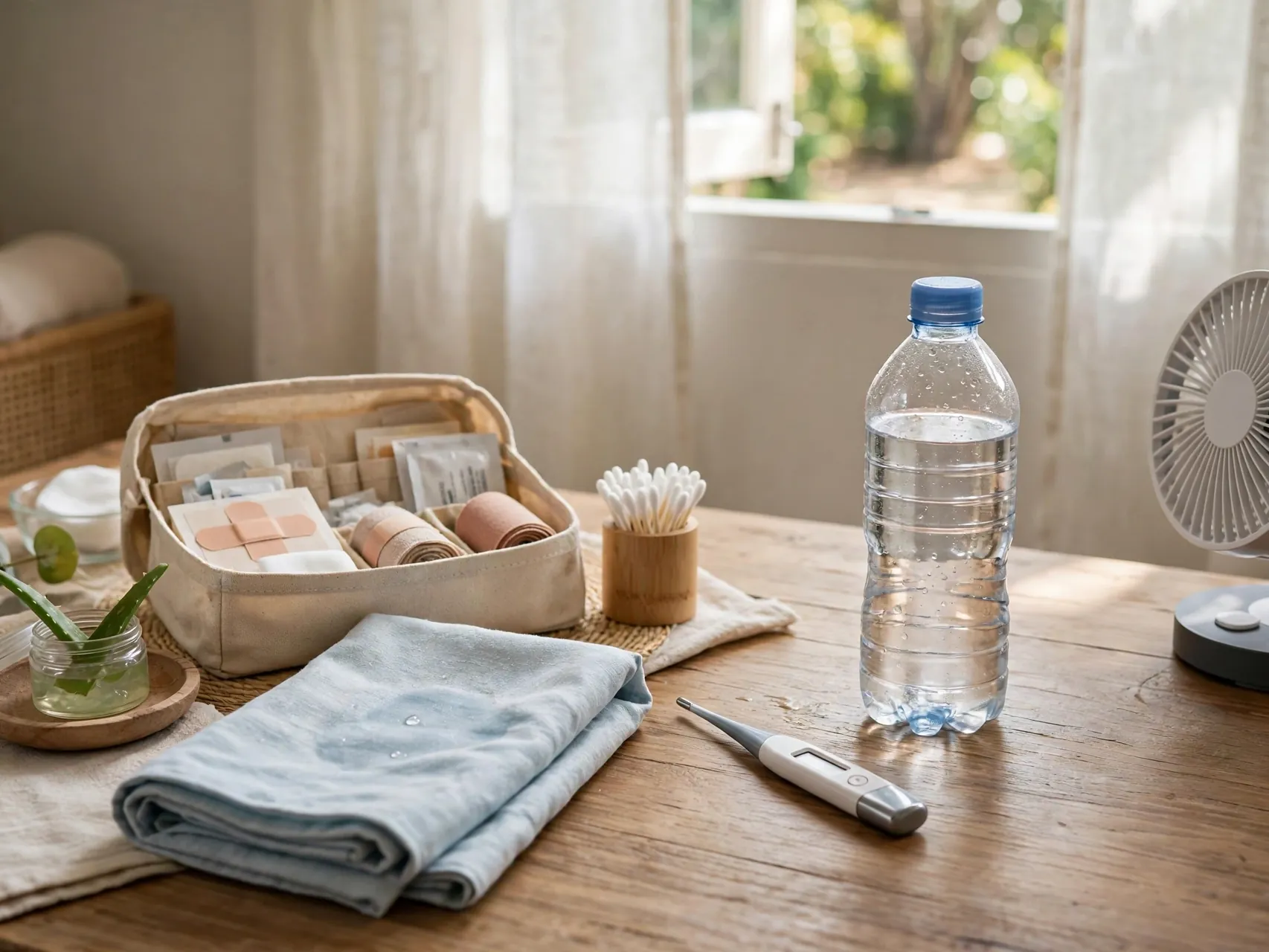
Know these two lists from CDC guidance, because heat illness can escalate fast. Heat exhaustion signs: heavy sweating, cold, pale, and clammy skin, a fast and weak pulse, nausea or vomiting, muscle cramps, tiredness or weakness, dizziness, headache, and fainting. Move to a cool place, loosen clothing, put cool wet cloths on the body or take a cool bath, and sip water. Get medical help right away if there is vomiting, symptoms worsen, or they last longer than one hour.
Heat stroke is different and deadly: high body temperature of 103F or higher, hot, red, dry, or damp skin, a fast and strong pulse, headache, dizziness, nausea, confusion, and passing out. Call 911 right away, because heat stroke is a medical emergency.
23. Check on Neighbors, Older Adults, and Kids Twice a Day
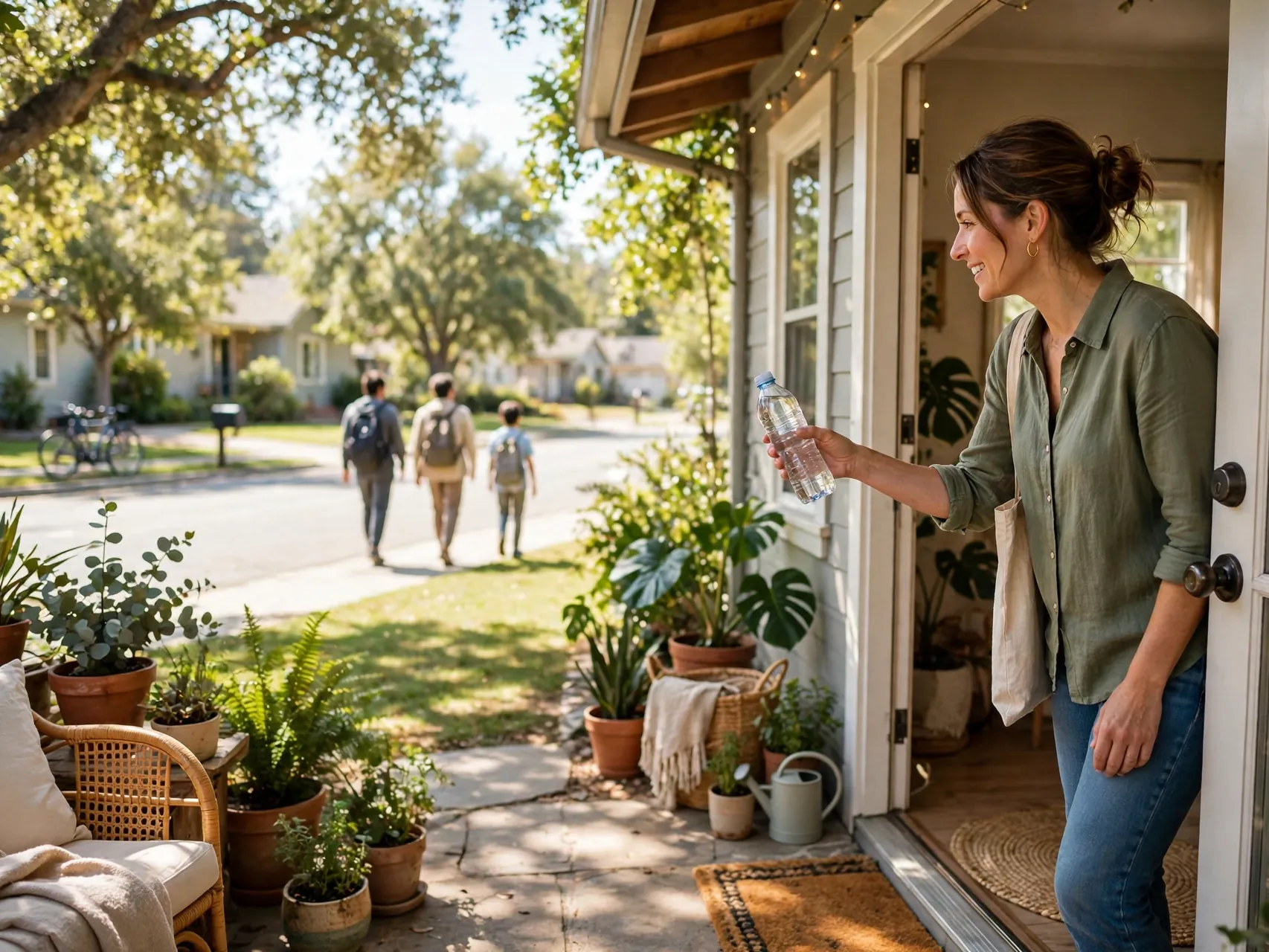
Heat waves are community events, and the people most at risk are often the least likely to ask for help. Set a simple routine: a morning and evening call or visit to older neighbors, relatives living alone, and anyone with health conditions. Know the signs from the previous idea so you can spot trouble early.
Children need watching too, since they overheat faster and may not describe symptoms well. Never leave children or pets in a parked car, even briefly, because car interiors heat to lethal levels fast. If you find someone confused, very hot, or unwell, treat it as the emergency described above and call 911.
24. Go to a Cooling Center, Library, or Mall When Home Stays Too Hot

When your home stays dangerously hot despite everything, leave for somewhere air conditioned. Public cooling centers open in many cities during heat waves, and libraries, malls, movie theaters, and community centers offer hours of relief even without a formal program. Local news, city websites, and 211 helplines list locations and hours.
A few hours in a cool place lowers your body temperature and makes the night at home safer.
FAQ
What is the fastest way to cool a house without AC?
Shade and timing.
Do fans really help when it is very hot?
Fans help while air is moderately warm, because moving air speeds sweat evaporation from your skin. But fans do not cool rooms, and around 95F and above they can stop helping and may add heat instead.
How can renters keep an apartment cool without AC?
Focus on reversible steps: blackout or thermal curtains, removable shade cloth, a box fan for the night flush, light bedding, and shifting cooking and laundry to cool hours.
What are the warning signs that heat has become an emergency?
Heat stroke signs are the emergency: body temperature of 103F or higher, hot red skin that may be dry or damp, a fast strong pulse, confusion, dizziness, nausea, or passing out. Call 911 right away, move the person somewhere cooler, cool them with wet cloths or a cool bath, and do not give them drinks. Heat exhaustion, heavy sweating with pale clammy skin, nausea, and weakness, needs rest, cooling, and sipped water, plus medical help if vomiting starts or symptoms pass one hour.
Where can I go if my home gets too hot?
Public cooling centers open during heat waves in many communities, and libraries, malls, community centers, and theaters are air conditioned and open to all.
Key Takeaways
- Shade first, ventilate on schedule: Block sun before it enters, then open windows and run a fan outward only when outside air is cooler than inside.
- Fans have a hard limit: They cool people, not rooms, and around 95F and above a fan alone can add heat, so pair fans with water, shade, and cool air.
- Cool the person directly: Cool showers, damp cloths, light clothing and bedding, steady hydration, and rest in the coolest room carry you through the peak.
- Cut indoor heat: Cook without the oven at midday, run laundry and dishes after dark, and switch off appliances and lights you are not using.
- Know the emergency signs: Heat stroke means 103F or higher, hot red skin, confusion, call 911 right away, and a public cooling center is always the right backup plan.
- Surviving the heat wave in style? Save this guide to Pinterest and pin the first tip you will set up before tomorrow gets hot.