24 Mudroom Ideas That Keep Mess and Clutter Under Control
Introduction
A mudroom is the hardest working few square feet in the house. It catches wet boots, muddy paws, backpacks, coats, sports gear, and everything else that should not travel into your living room. The best mudroom ideas are not really about looks. They are about stopping dirt and clutter at the door, in a way your whole family will follow on a rainy Tuesday.
You do not need a dedicated room to get the benefits. Mudroom designers regularly build the same function into an entryway nook, a garage wall, a laundry room corner, or a wide hallway. What matters is the kit: a place to sit, hooks at two heights, closed or open storage per person, a tray for wet shoes, and a mat that traps dirt before it spreads.
Maintenance is the other half of the design. Mudrooms fail when they hold a whole season of gear for every person at once. Pros advise keeping only weekly essentials here, rotating seasonal items out, labeling every bin, and doing quick regular resets. A beautiful mudroom with too much stuff in it becomes a storage room you squeeze through.
The 24 ideas below cover layout, storage, dirt control, and the small comforts that make a mudroom pleasant to use. Start with zones and hooks, add seating and shoe control, then finish with the details that keep the space clean week after week.
Give Every Person Their Own Zone

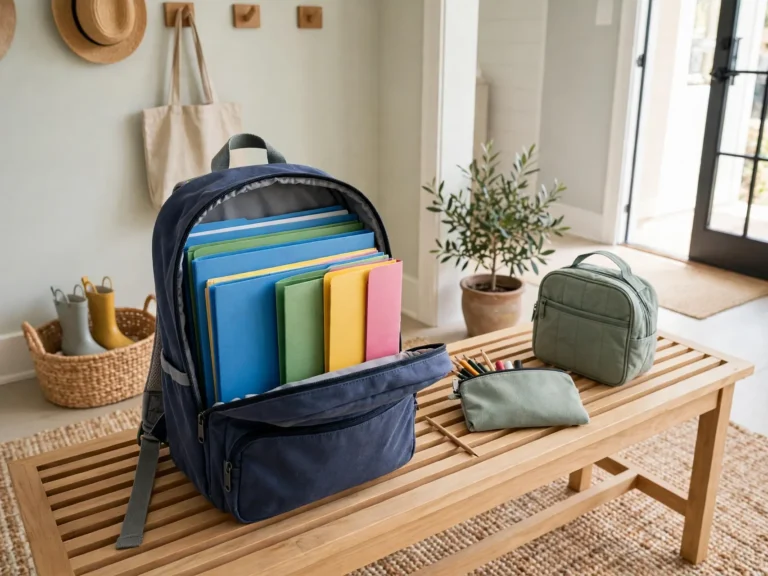
Assign each family member a hook, a cubby, or a locker style section of their own. Personal zones are the top rule in mudroom design because they end the pile up and the blame game. Label each zone with a name or color. Guests get one shared hook, so visitor coats do not swallow a child's spot during parties.
Measure the spot before you buy anything, and leave a little breathing room so containers slide in and out without catching. Put the things you.
Install Hooks at Two Heights
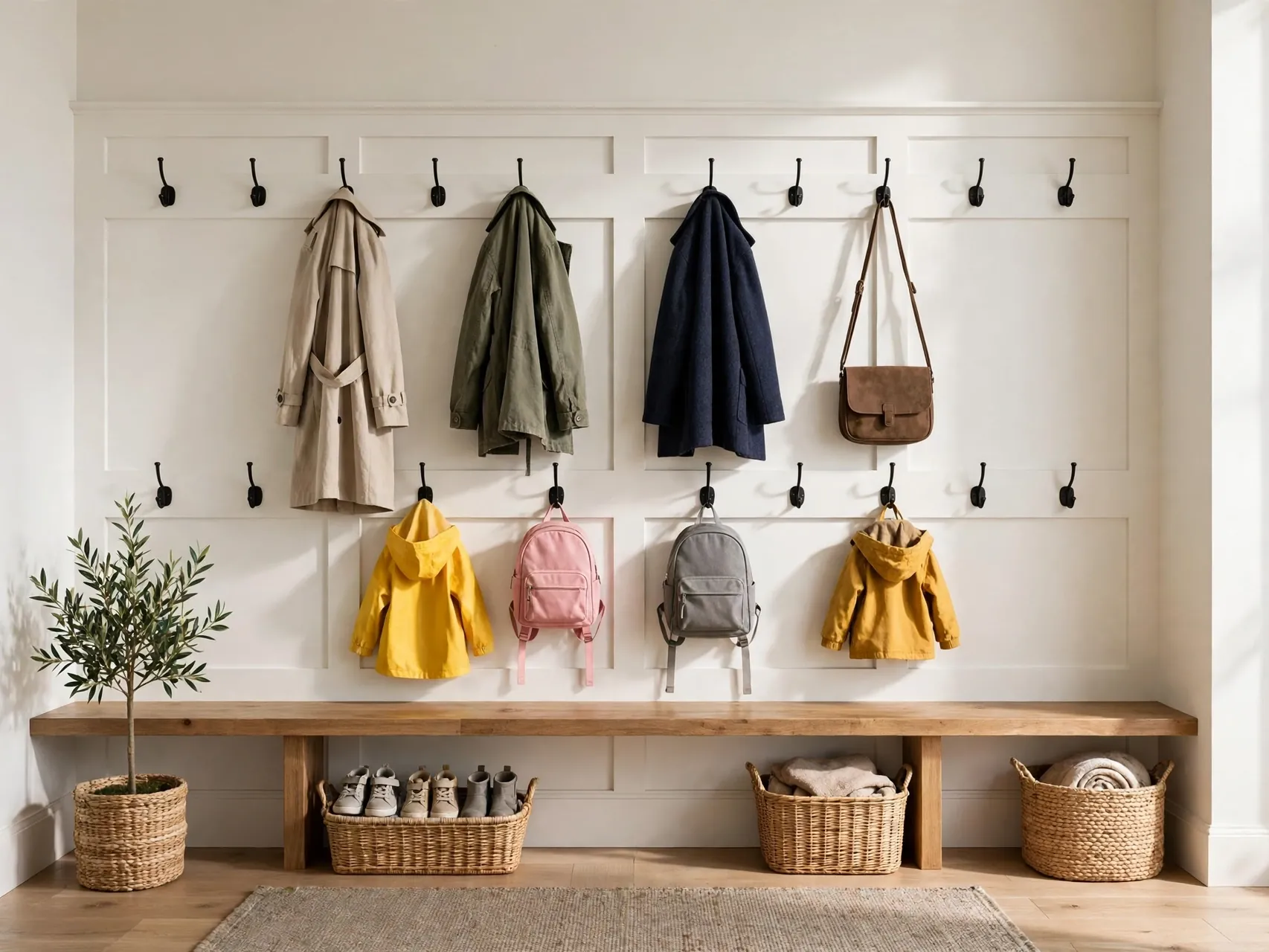
One row of hooks at adult height and a second lower row for kids keeps every coat and bag reachable. Hooks beat hangers for daily gear because a tired child will use a hook but not a closet rod. Fix hooks into studs or a backing board, and space them generously so bulky winter coats do not push each other off.
Group similar things together first, then give each group one home. When a category starts to overflow, that is your signal to edit it down.
Add a Storage Bench You Can Sit On

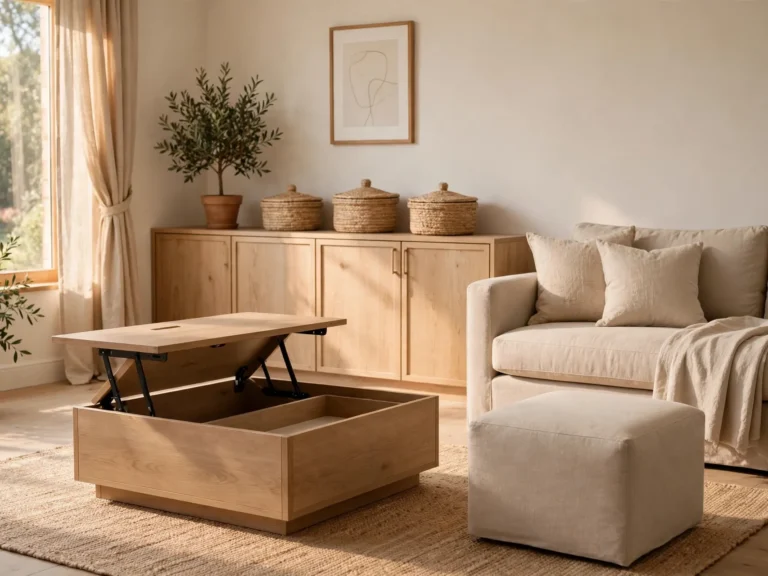
A bench makes people sit to remove shoes, which is when shoes actually come off at the door. Choose one with cubbies, drawers, or a lift up seat so the bench stores as well as it seats. Mudroom bench storage hides gloves, shoe care bits, and dog towels out of sight while keeping them within arm's reach of the door.
Keep the setup easy to reset in under a minute. If returning an item takes several steps, it will end up on the floor or.
Trap Dirt With Two Mats
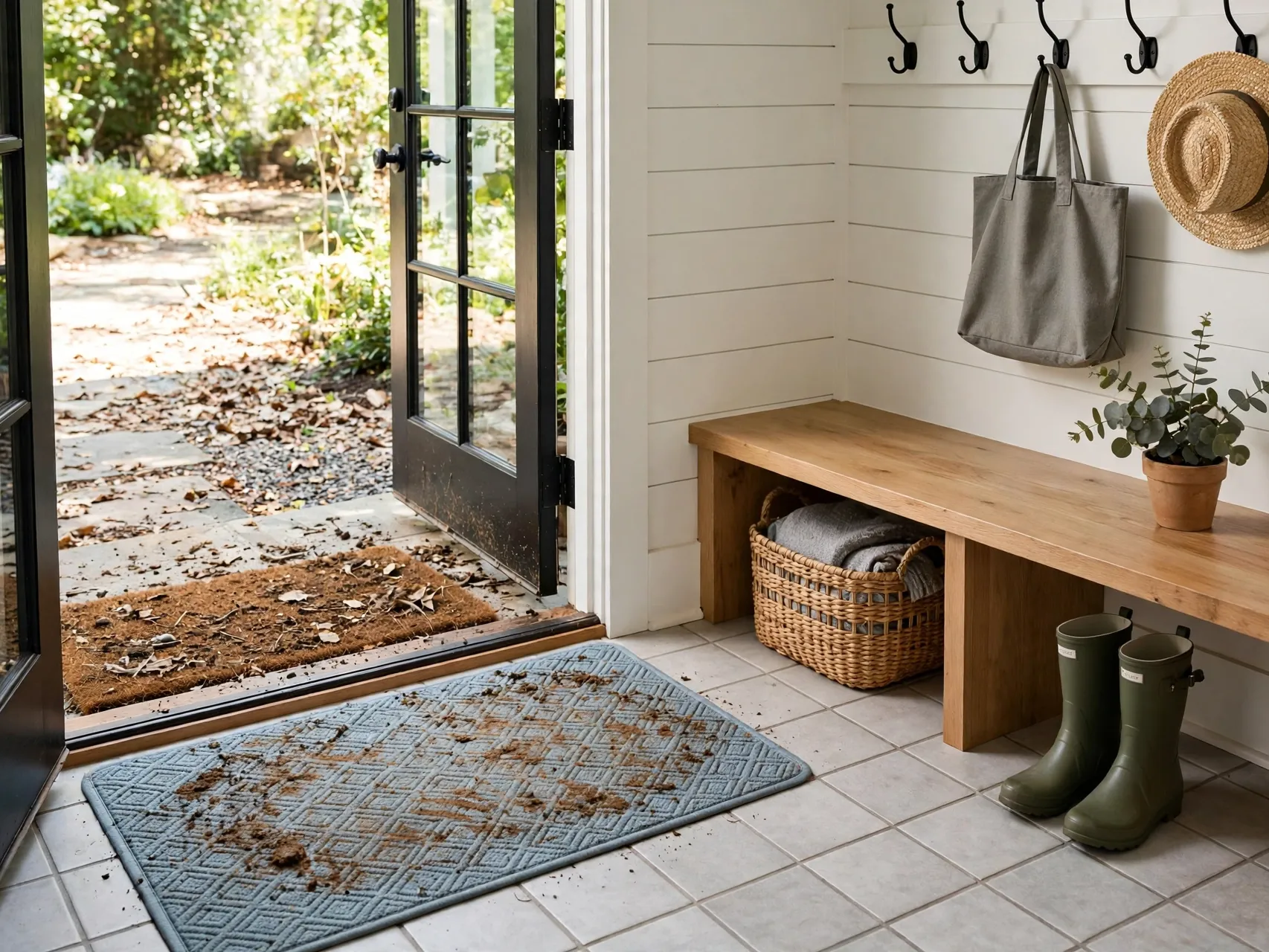
Place a coarse mat outside the door and a washable runner or mat inside it. Two mats in a row catch far more grit, snow, and mud than one, and cleaning sources recommend mats as the first line of defense for floors. Shake the outside mat weekly and wash the inside one often in muddy seasons.
Think about height as well as width. Most of these spaces waste the top half, so stacking, tiering, or hanging lifts items off the base.
Use a Boot Tray for Wet Footwear

A rimmed boot tray corrals melting snow, rain, and mud in one washable spot instead of letting puddles spread. Set it under or beside the bench where boots naturally come off. In dry months, the same tray holds everyday shoes and keeps the floor line tidy. Choose a tray you can carry to a sink for rinsing.
Test the layout for a week before you add anything else. Live with it, notice what you bump into, and move one or two pieces.
Build Cubbies or Lockers for a Clean Line

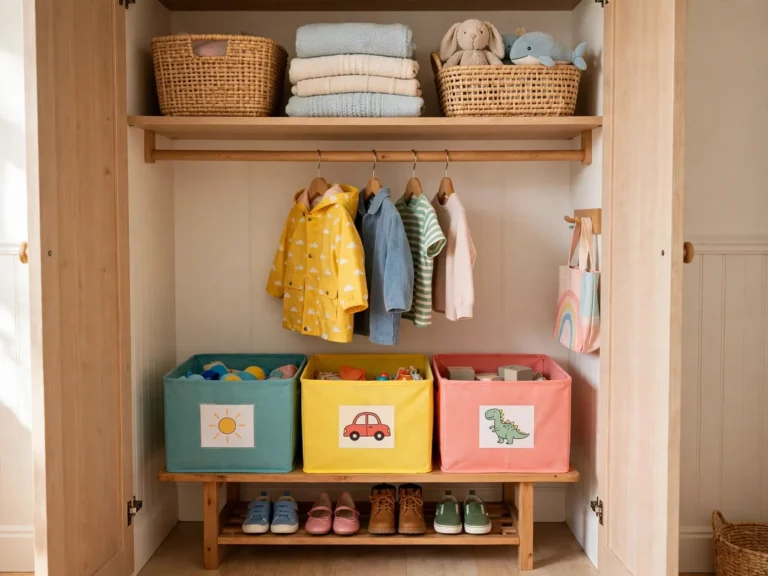
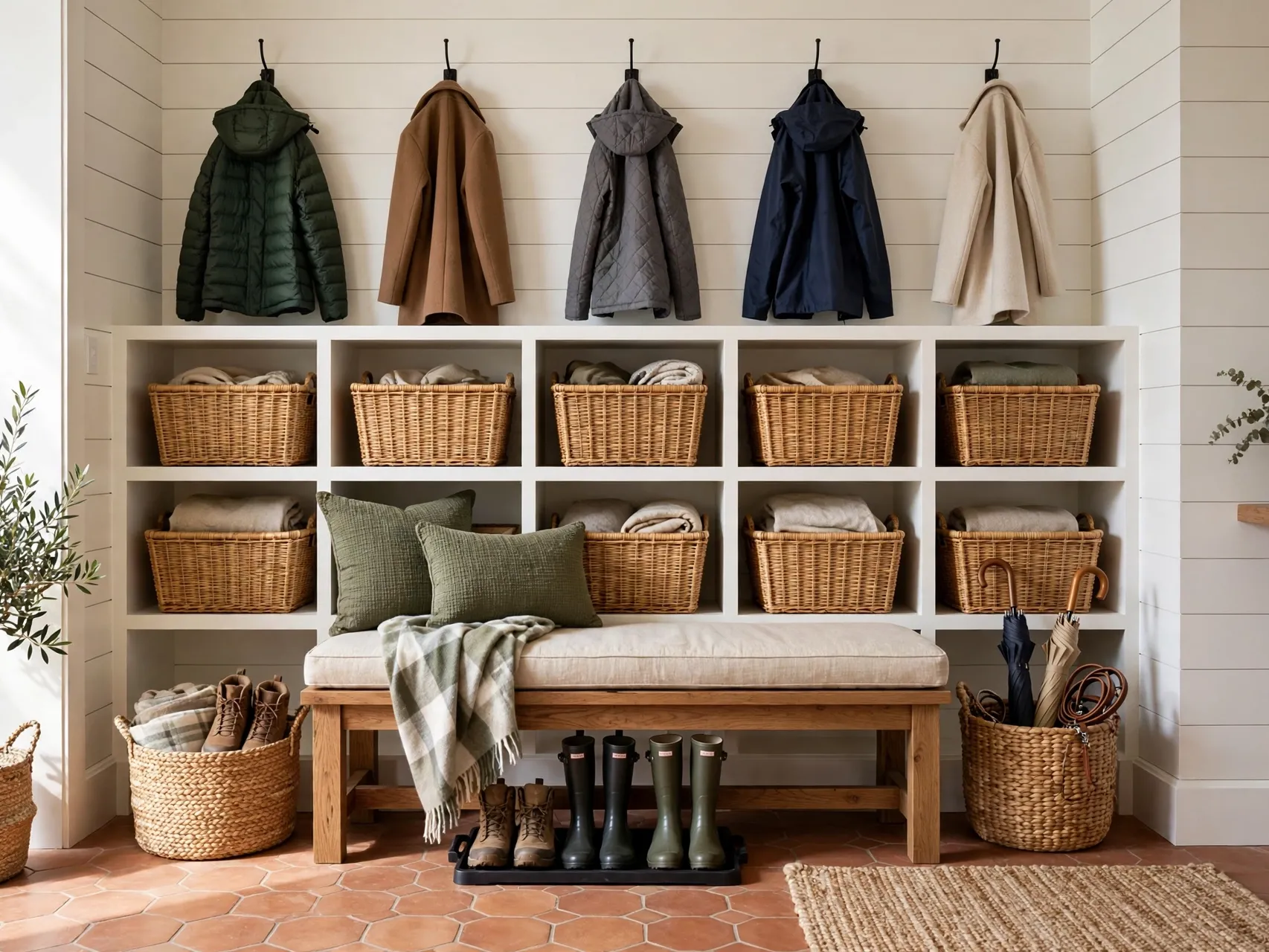
Open cubbies or locker style units with doors give the mudroom its classic, ordered look. Each person gets a tall section for coats, a shelf for hats, and a bin below for shoes. Doors hide visual clutter for a calmer entry, while open cubbies are faster for young kids. Many families mix both: open for kids, closed for adults.
Measure the spot before you buy anything, and leave a little breathing room so containers slide in and out without catching. Put the things you.
Label Every Bin and Basket
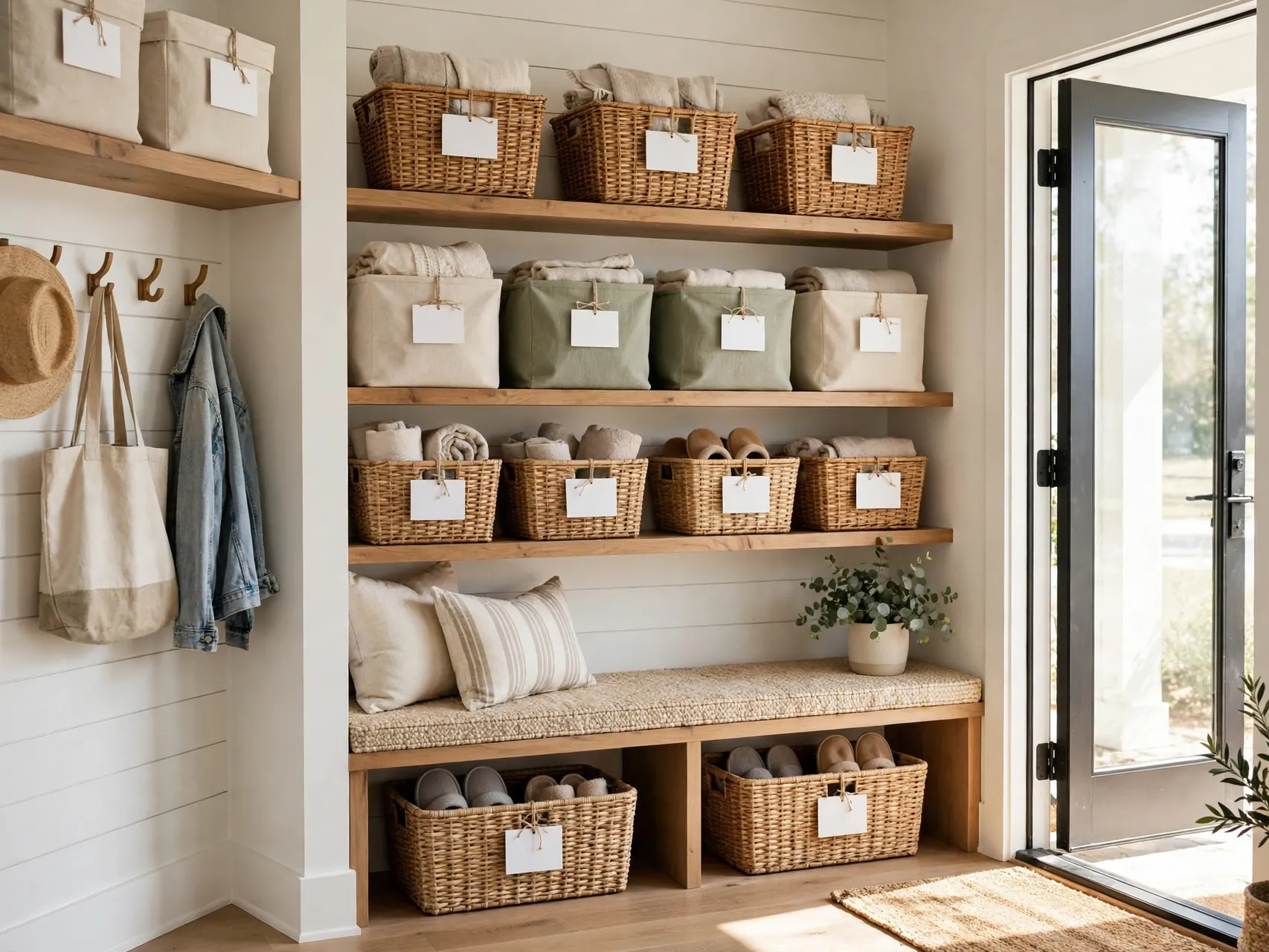
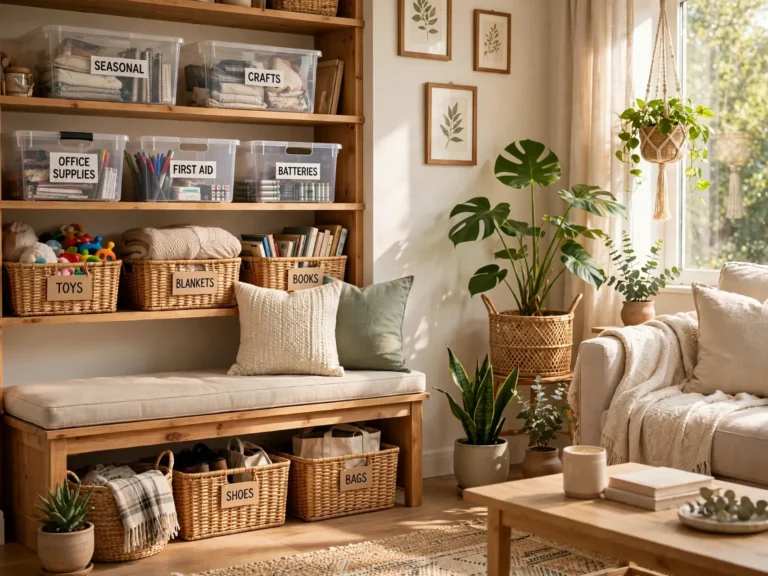
Unlabeled bins become catch alls within a month. Label each basket by person or by contents, like Hats, Gloves, Dog, or Sunscreen. Chalkboard or picture labels work for kids and are easy to update when seasons change. Labels are what turn a row of pretty baskets into a system that other people can maintain without asking you.
Group similar things together first, then give each group one home. When a category starts to overflow, that is your signal to edit it down.
Keep Only Weekly Essentials Here
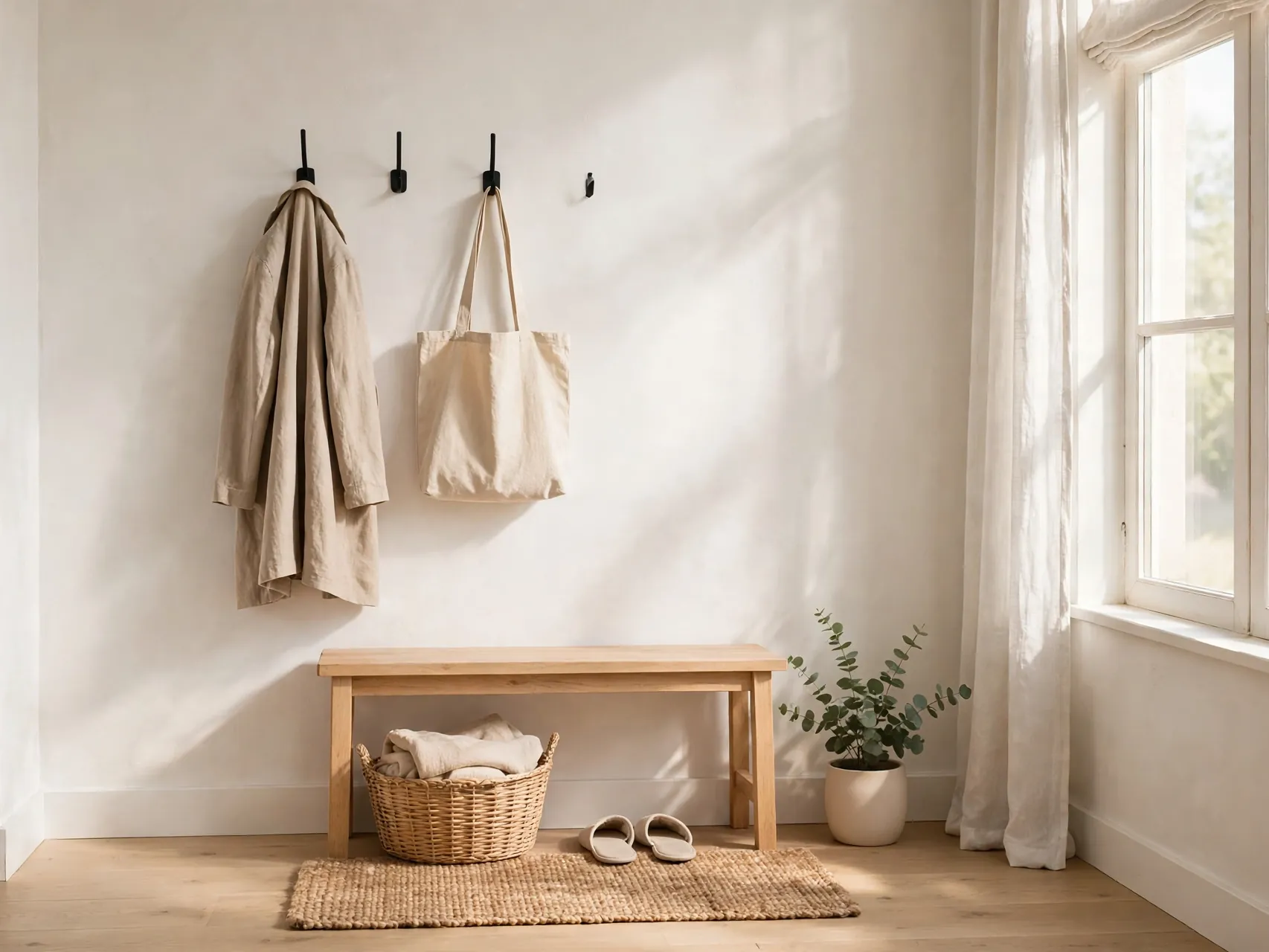
Limit each person to the coat, bag, and shoes they use this week, plus one backup pair. Everything else lives in bedroom closets or storage. Mudroom pros call this the overflow rule, and it is the difference between a mudroom that works in February and one you cannot walk through. Review the limit whenever the space starts to feel tight.
Keep the setup easy to reset in under a minute. If returning an item takes several steps, it will end up on the floor or.
Add Overhead Storage for Off Season Gear

Use the high wall and top shelves for labeled bins of off season items: winter accessories in summer, swim gear in winter. Keeping seasonal overflow up high leaves prime space at hand height for today's needs. A small step stool stored nearby makes the high shelf safe to reach, and clear bins help you find the right season fast.
Think about height as well as width. Most of these spaces waste the top half, so stacking, tiering, or hanging lifts items off the base.
Create a Pet Station by the Door
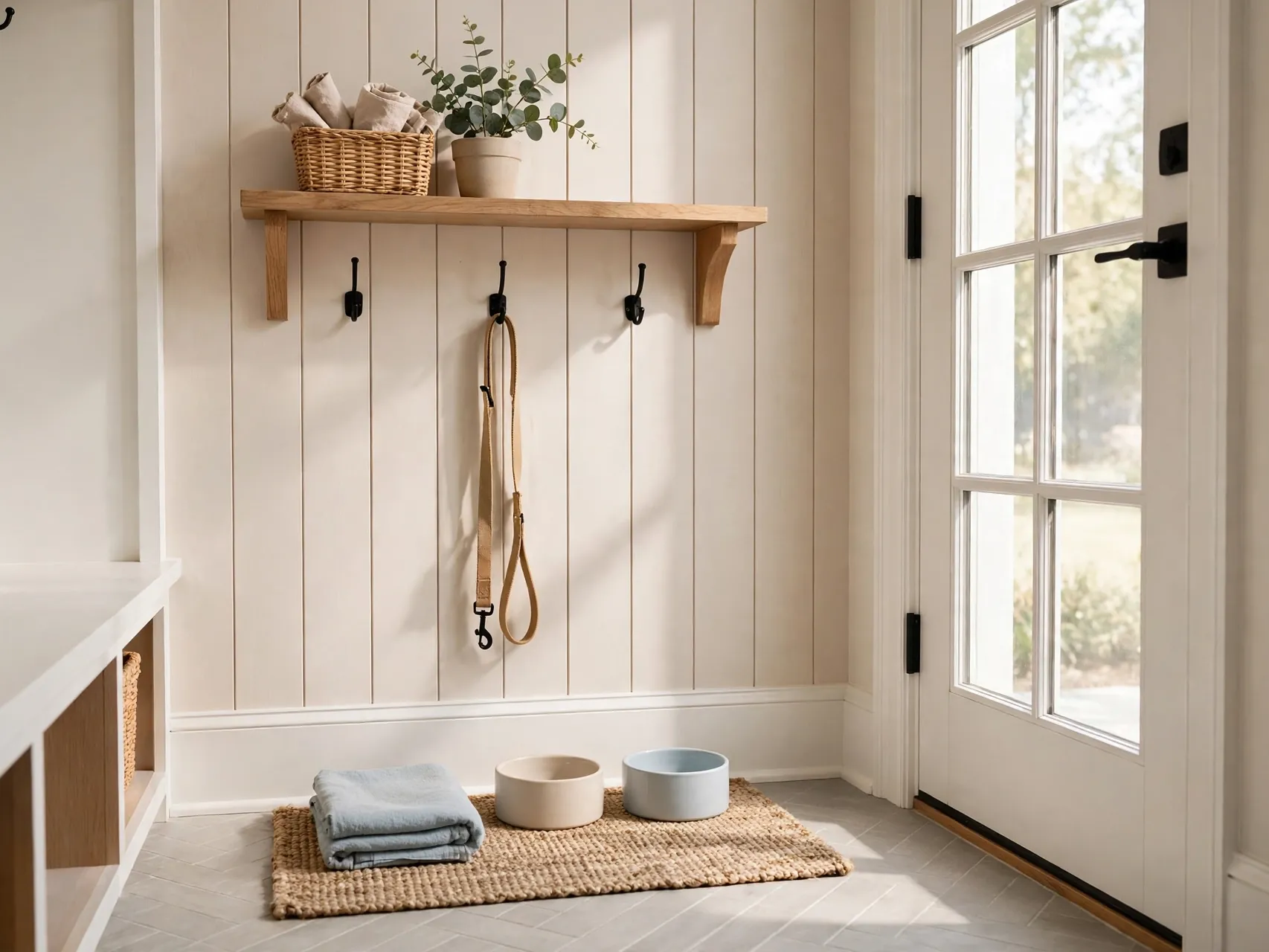
If you have a dog, the mudroom is where walks begin and muddy paws return. Add hooks for leashes, a bin for waste bags and towels, and a mat or washable rug at the door for paw wipes. A pet station keeps pet gear out of kitchen drawers and makes the post walk cleanup a one minute routine in one place.
Test the layout for a week before you add anything else. Live with it, notice what you bump into, and move one or two pieces.
Hang a Command Center for the Household

A board for calendars, keys, and notes turns the mudroom into the family's launch pad. Add key hooks so keys stop vanishing, a slot for mail and school papers, and a small whiteboard for reminders. Because everyone passes this wall twice a day, information posted here actually gets seen, unlike notes stuck on a fridge inside a busy kitchen.
Measure the spot before you buy anything, and leave a little breathing room so containers slide in and out without catching. Put the things you.
Choose Durable, Washable Flooring and Rugs
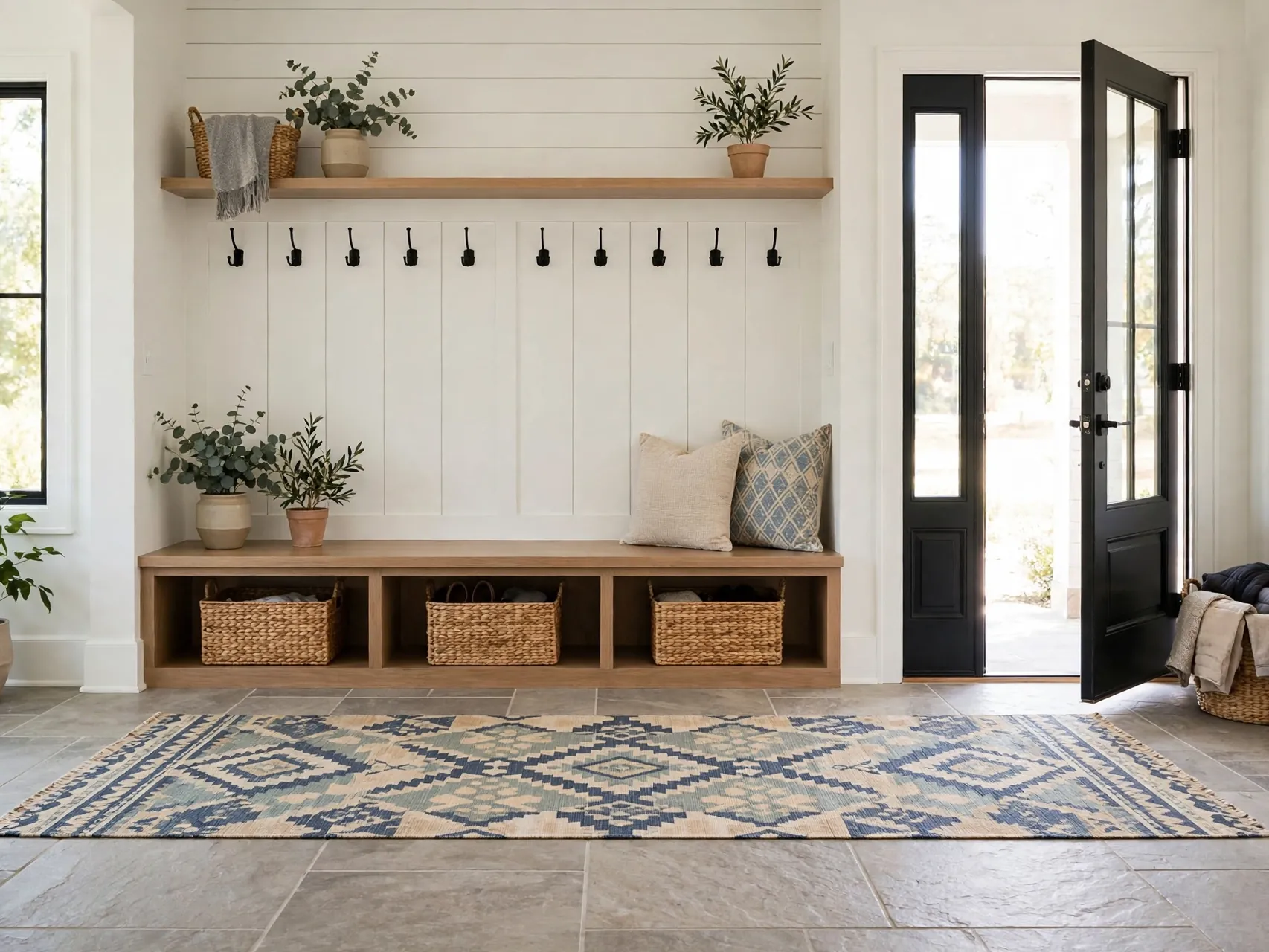
Mudrooms take water, grit, and salt, so surfaces need to handle it. Tile, vinyl, or sealed floors clean up fastest, and washable low pile rugs protect them while trapping dirt. Avoid thick rugs that stay damp underneath. Whatever you choose, test the simple question: can I mop or wash this in ten minutes on a muddy Sunday night?
Group similar things together first, then give each group one home. When a category starts to overflow, that is your signal to edit it down.
Add a Small Laundry Basket for Damp Items
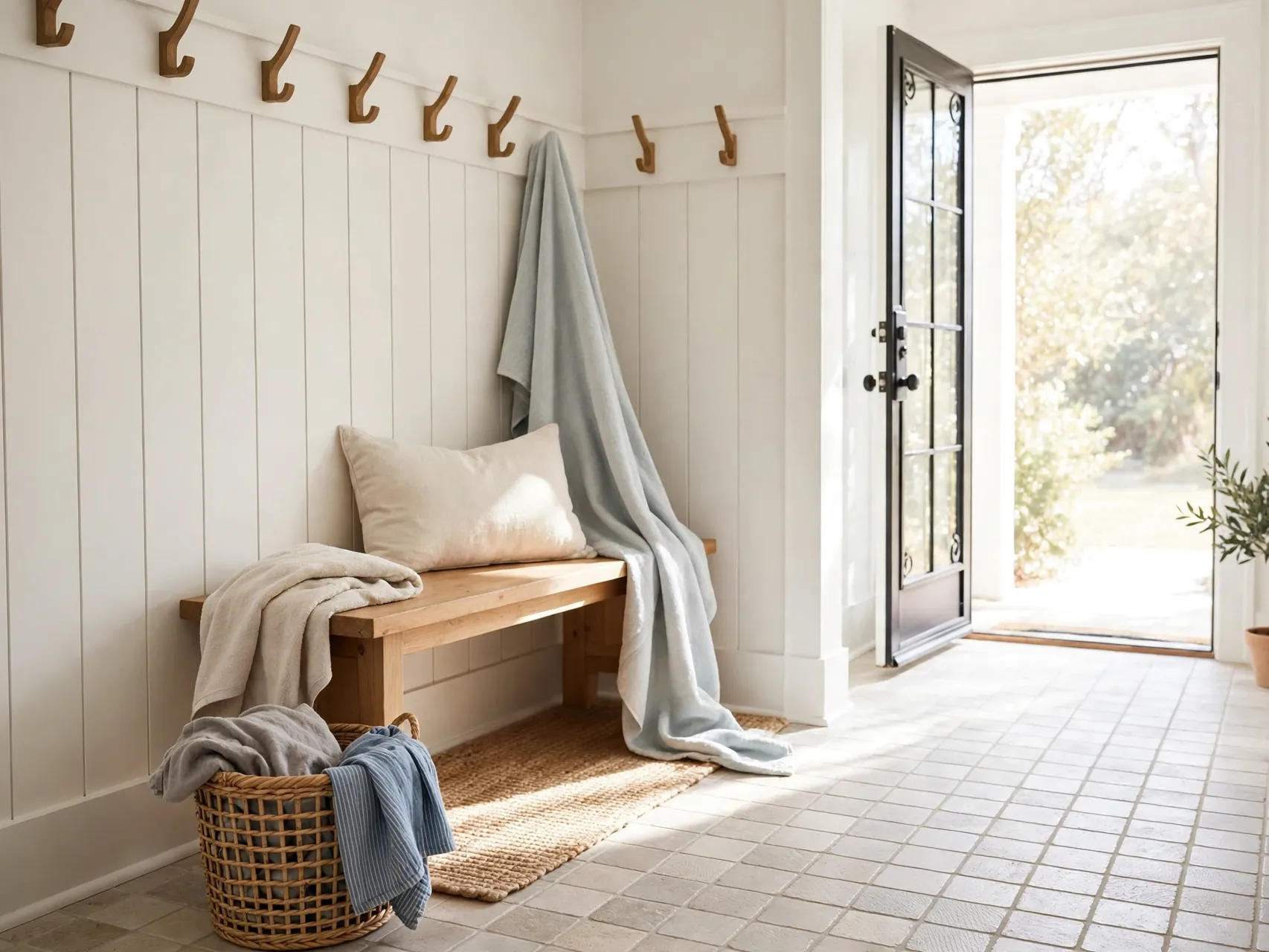
Wet socks, mittens, and sports kits dropped on the floor make the whole room smell. A small hamper or basket by the door catches damp items the moment people come in, as cleaning guides often suggest. Empty it into the wash regularly. This one basket quietly protects your floors, your bench cushions, and the air in the room.
Keep the setup easy to reset in under a minute. If returning an item takes several steps, it will end up on the floor or.
Use the Back of the Door

The inside of the mudroom or closet door is free storage. Add slim racks or pocket organizers for sunscreen, bug spray, small tools, or pet supplies. Door storage keeps small bottles visible and off bench surfaces. Just keep heavy items low or on shelves instead, because overloading a door can strain its hinges over time.
Think about height as well as width. Most of these spaces waste the top half, so stacking, tiering, or hanging lifts items off the base.
Set Up a Charging Drawer or Shelf

A charging spot in the mudroom corrals phones and school devices in one place overnight. A drawer with outlets built in, or a simple shelf with a power strip and a cord box, both work. Devices charge where bags get packed, so nothing is forgotten in a bedroom when the morning rush begins.
Test the layout for a week before you add anything else. Live with it, notice what you bump into, and move one or two pieces.
Carve Out a Sports Gear Corner
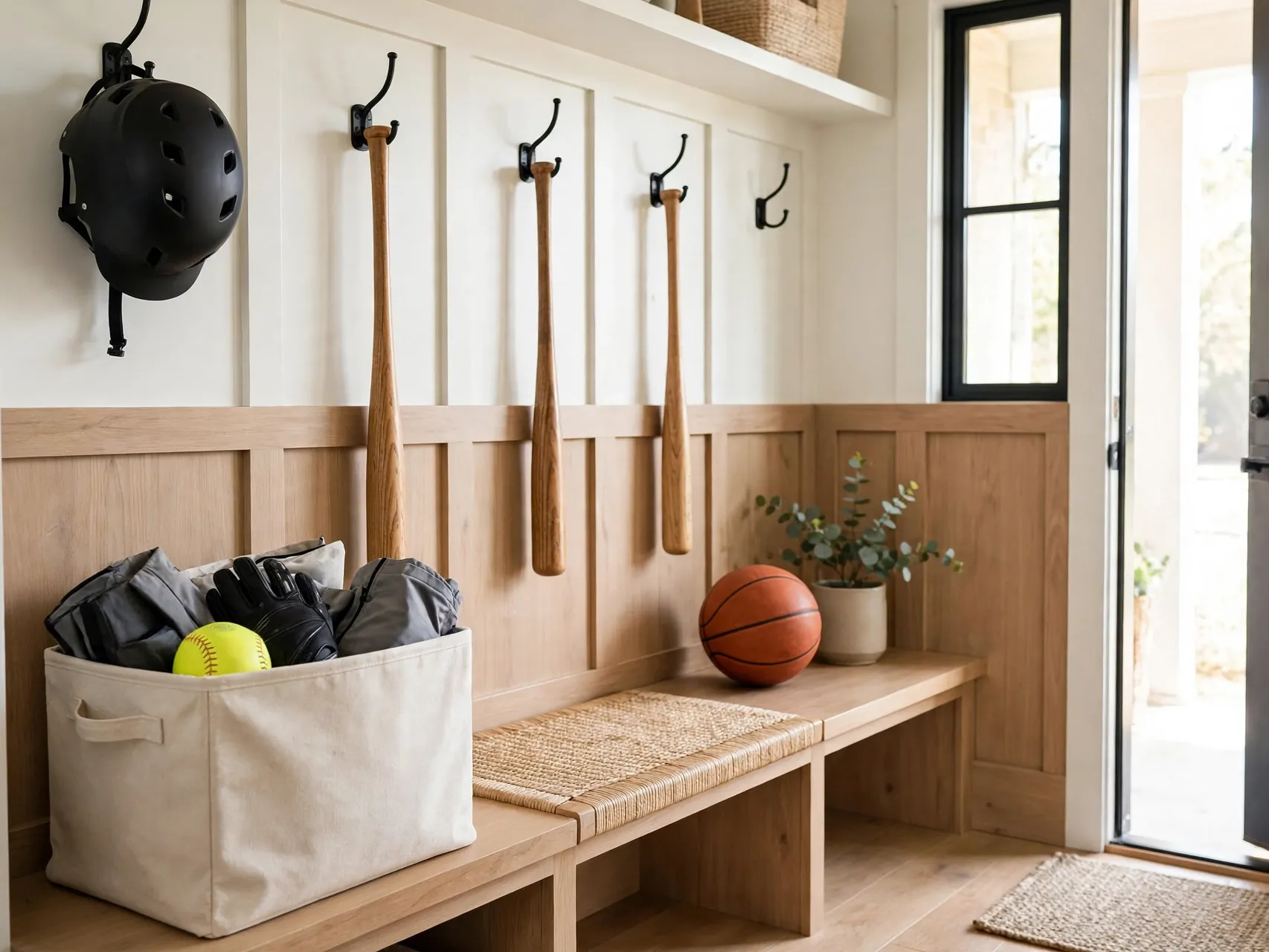
Sports equipment is bulky and oddly shaped, so give it one corner, one tall bin, or one set of heavy hooks of its own. Balls go in a bin, rackets and bats stand in a tall container, and each child's activity bag stays packed beside it. Separating sports gear stops helmets and cleats from burying the everyday coats and shoes.
Measure the spot before you buy anything, and leave a little breathing room so containers slide in and out without catching. Put the things you.
Add a Mirror and Good Lighting
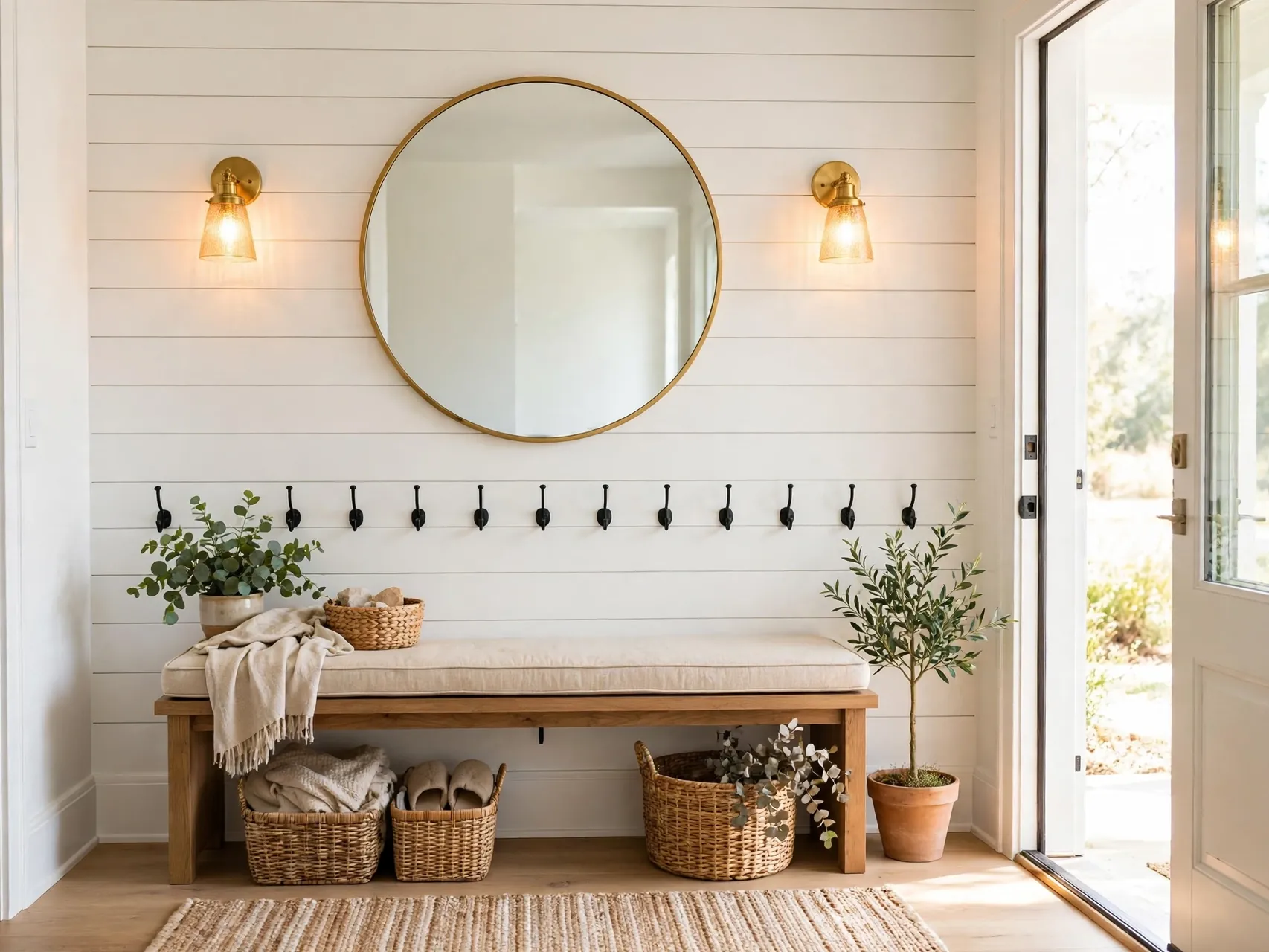
A mirror by the door is practical for last checks and makes a small mudroom feel bigger and brighter. Pair it with decent lighting, overhead or motion activated, so the room works on dark winter mornings. Bright, welcoming mudrooms get treated with more care than dim ones, which is a small but real effect on daily tidiness.
Group similar things together first, then give each group one home. When a category starts to overflow, that is your signal to edit it down.
Fake a Mudroom in an Entryway Nook

No spare room? Claim one wall of your entryway with a bench, a hook rail, bins, and a mat. Even a hallway wall or a corner of the laundry room or garage can run the full mudroom routine. Define the zone with the mat and paint or board on the wall if you like, so the space reads as one intentional station.
Keep the setup easy to reset in under a minute. If returning an item takes several steps, it will end up on the floor or.
Use Baskets to Add Warmth and Texture

Practical does not have to look cold. Woven or fabric baskets soften built ins, hide clutter, and make an entry feel welcoming in photos and in person. Keep basket styles consistent for a calm look, and line the muddiest jobs, like boot storage, with washable trays instead of pretty baskets that are hard to clean.
Think about height as well as width. Most of these spaces waste the top half, so stacking, tiering, or hanging lifts items off the base.
Install a Wall Mounted Drying Rack
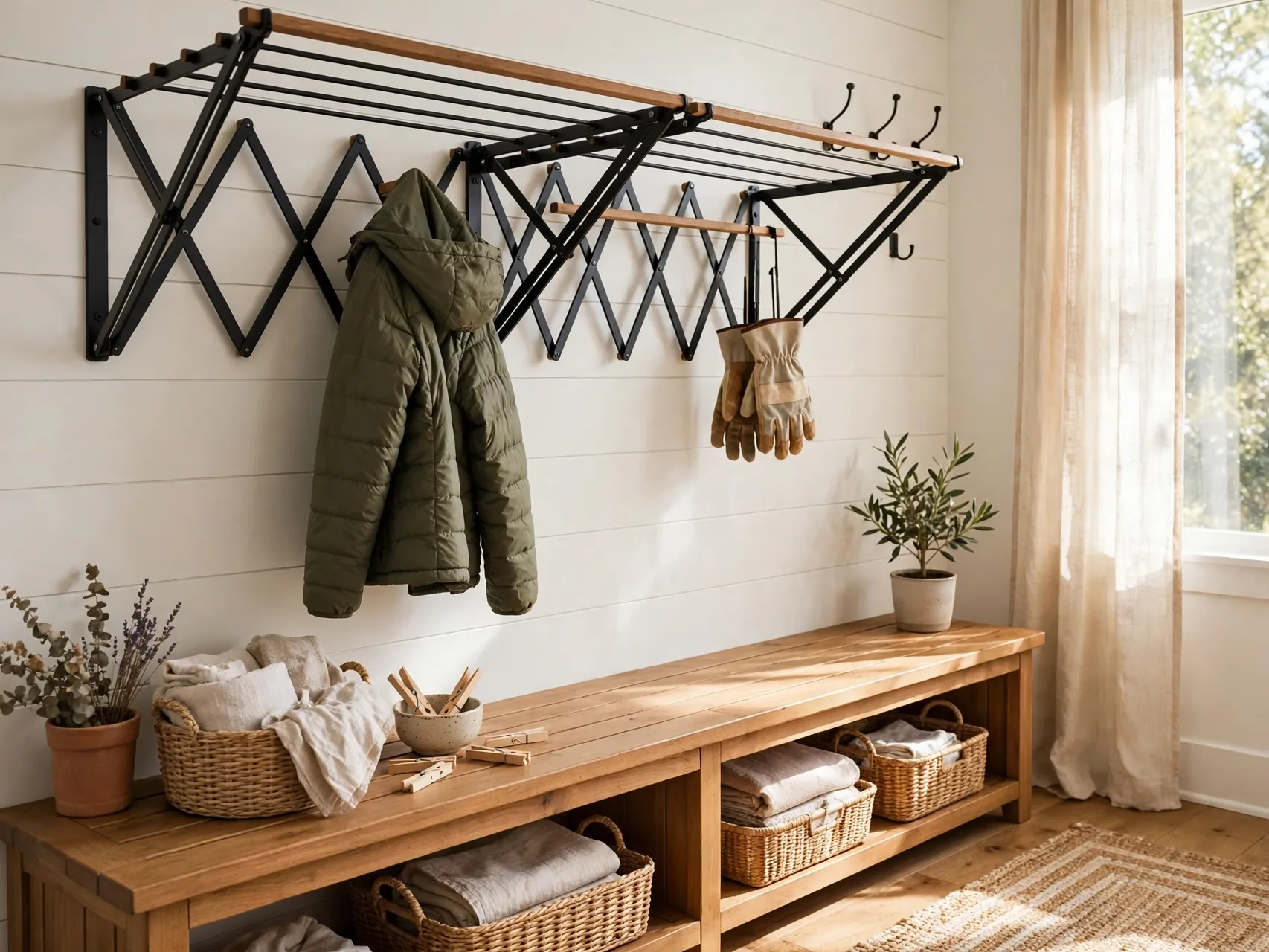
Wet gloves, hats, and rain gear need air, not a sealed bin. A fold down or peg style drying rack on the wall lets damp items dry overnight without spreading across radiators and chairs. In summer it handles swim towels and suits. When it is dry and empty, it folds flat and the wall looks clean again.
Test the layout for a week before you add anything else. Live with it, notice what you bump into, and move one or two pieces.
Add a Mudroom Sink If You Can
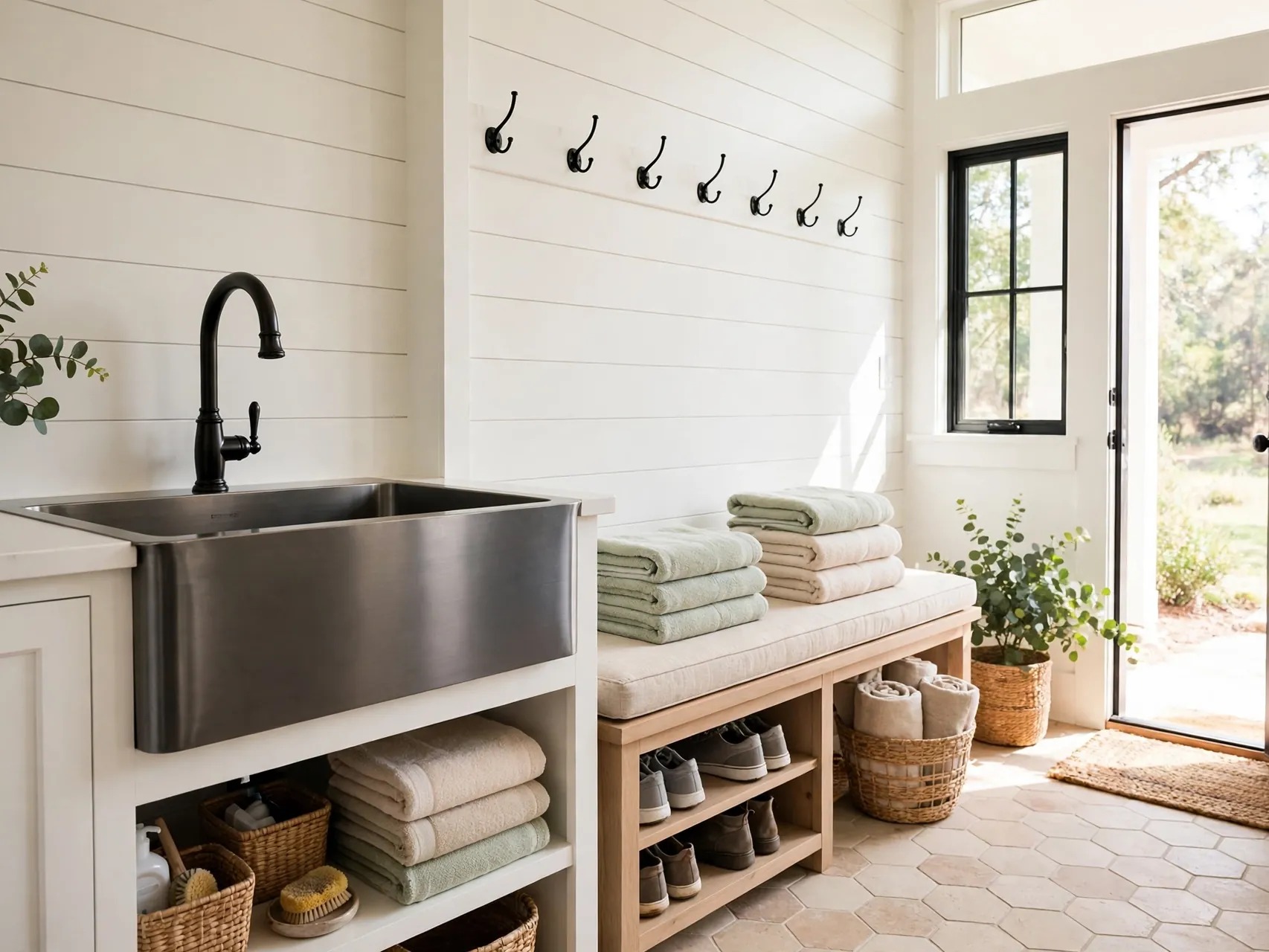
A small utility sink is a luxury that earns its space: rinsing boots, soaking sports kits, washing hands after gardening, and filling pet bowls all happen at the door instead of the kitchen. If plumbing a sink is not possible, keep a bucket and a stack of old towels in a cubby for the same jobs, just with a little more carrying.
Measure the spot before you buy anything, and leave a little breathing room so containers slide in and out without catching. Put the things you.
Keep Cleaning Basics in the Mudroom
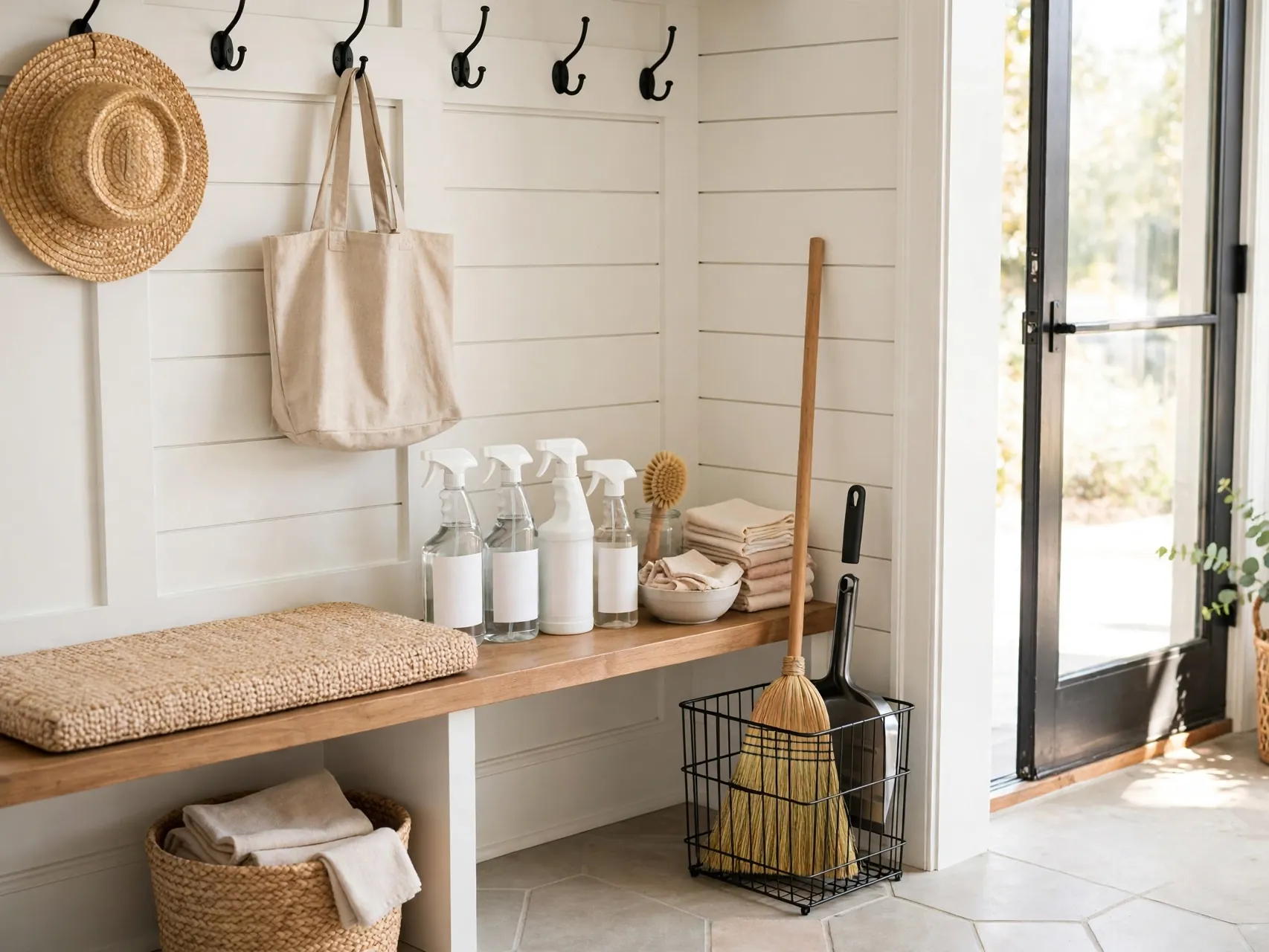
Store a broom, a small vacuum or cordless stick, floor cleaner, and old towels in the mudroom itself. Dirt is far more likely to get cleaned when the tools live where the dirt lands. A quick sweep takes two minutes, and a towel by the door handles wet paw prints before they become a trail through the house.
Group similar things together first, then give each group one home. When a category starts to overflow, that is your signal to edit it down.
Rotate Gear With the Seasons

Twice a year, empty the mudroom fully and swap the gear: coats, boots, and accessories out, or back in, with the weather. Clean mats and bins while they are empty, and donate outgrown kids items. Seasonal rotation is the maintenance habit that keeps even a small mudroom feeling spacious, because the room only ever holds one season at a time.
Keep the setup easy to reset in under a minute. If returning an item takes several steps, it will end up on the floor or.
Do a Weekly Reset and a Monthly Declutter
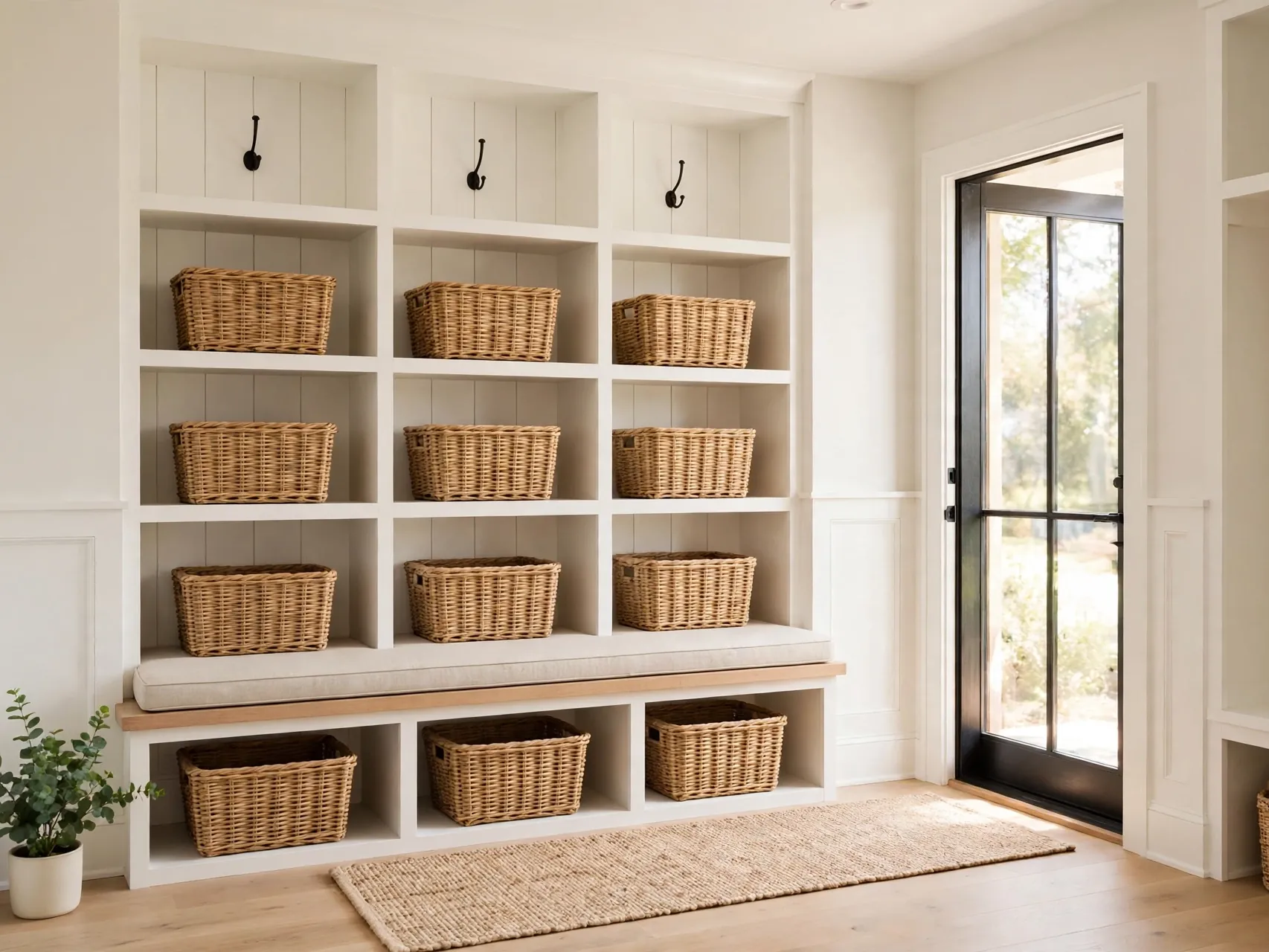
Sweep or vacuum weekly, wipe the bench and hooks, wash mats as needed, and empty the damp laundry basket. Once a month, pull everything from bins and cubbies, return wanderers to other rooms, and check labels still match contents. Short, regular resets beat one heroic clean, and they keep your mudroom organization working all year.
Think about height as well as width. Most of these spaces waste the top half, so stacking, tiering, or hanging lifts items off the base.
FAQ
How do I create a mudroom if my home does not have one?
Claim the wall nearest the door your family uses most, in an entryway, hallway, laundry room, or garage. Add the core kit: hooks at two heights, a bench, a bin or cubby per person, a boot tray, and two mats. That small station performs the same job as a full mudroom, stopping dirt and gear at the door.
What should every mudroom have?
At minimum: a place to sit, hooks for coats and bags, storage assigned per person, a tray or rack for shoes and boots, and mats to trap dirt. Add labels, a small laundry basket for damp items, and cleaning basics stored in the room itself, and the space can handle daily family traffic without constant tidying.
How do I keep a mudroom from getting cluttered again?
Limit what lives there. Keep only weekly essentials per person, move off season gear to high shelves or other closets, and label every bin so items return to the right place. Do a quick weekly reset and a monthly declutter, plus a full seasonal swap twice a year. Mudrooms stay tidy through rhythm, not through size.
What flooring is best for a mudroom?
Hard, water tolerant floors like tile, vinyl, or sealed stone clean up fastest and handle wet boots without damage. Pair them with a coarse mat outside, a washable mat or runner inside, and a rimmed boot tray for the wettest footwear. Avoid wall to wall carpet and thick rugs that hold moisture underneath and are hard to wash.
Where should I put sports gear and pet supplies in a mudroom?
Give each its own zone so it does not bury daily coats and shoes. Sports gear works well in one corner with a tall bin for balls and bats and hooks for activity bags. Pet supplies belong by the door in a small station: leash hooks, a towel and waste bag bin, and a washable mat for muddy paws after walks.
Key Takeaways
- Zones beat size: A labeled hook, cubby, and bin per person matter more than having a big room.
- Sit, hang, park: A storage bench, two heights of hooks, and a boot tray handle the daily routine in order.
- Stop dirt at the door: Two mats, a boot tray, and a damp laundry basket keep mud and smells contained.
- Limit the load: Only weekly essentials live here, with off season gear up high or stored elsewhere.
- Add the extras that help: A pet station, command center, and charging spot turn the room into a family launch pad.
- Reset on rhythm: Weekly tidies, monthly declutters, and seasonal swaps keep small mudroom ideas working all year.
Love these ideas? Save this post to Pinterest so you can find it later, and pin your favorite setup to your home organization board before you start.