23 Hidden Storage Ideas That Make Clutter Disappear
Introduction
Every home has a layer of everyday clutter that never looks good out in the open: remotes, chargers, blankets, board games, cleaning supplies and the paperwork pile that migrates around the kitchen. The most useful hidden storage ideas do not add more furniture to a room. They make the furniture and the awkward spaces you already have work harder, quietly.
Hidden storage works best when it matches how often you use something. Daily items need storage you can open with one hand and close in a second. Seasonal items can go deeper, under beds and inside benches. If a hiding place is annoying to use, things will stop being put away, and the clutter will simply move to the nearest surface.
The 23 ideas below move room by room, from easy furniture swaps to small built in projects. None of them turn your home into a puzzle house. Each one hides a specific category in a specific place, so you can pick the three or four that match the clutter you actually see every day.
Start With a Storage Ottoman in the Living Room

A storage ottoman is the easiest first swap because it replaces a piece you probably already own. The hinged or lift off lid hides blankets, throw pillows, board games or kids toys, while the top still works as a footrest or extra seat. Choose a fabric that matches your sofa so the storage reads as furniture, not as a box.
Keep the contents to one category and leave a little empty space inside.
Slide Low Drawers or Bins Under the Bed

The space under a bed is some of the largest hidden storage in any home, and in most homes it holds dust and one lost sock. Low rolling drawers or flat lidded bins turn it into a proper home for off season clothes, spare bedding or shoes. Measure the clearance under your frame before buying, since bed heights vary more than bin labels suggest.
Assign each side of the bed a category and label bin ends facing out.
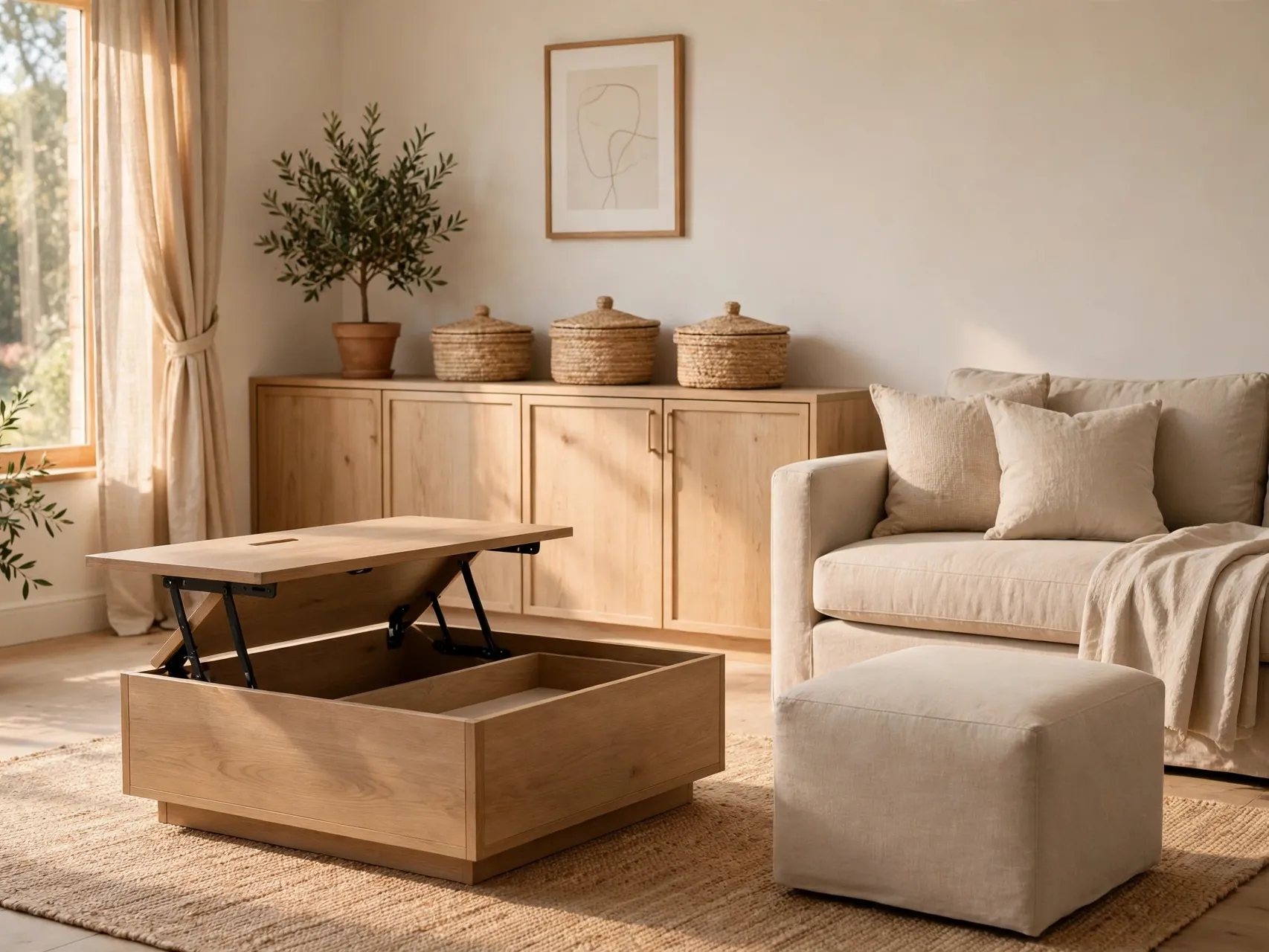
Pick a Lift Top Coffee Table
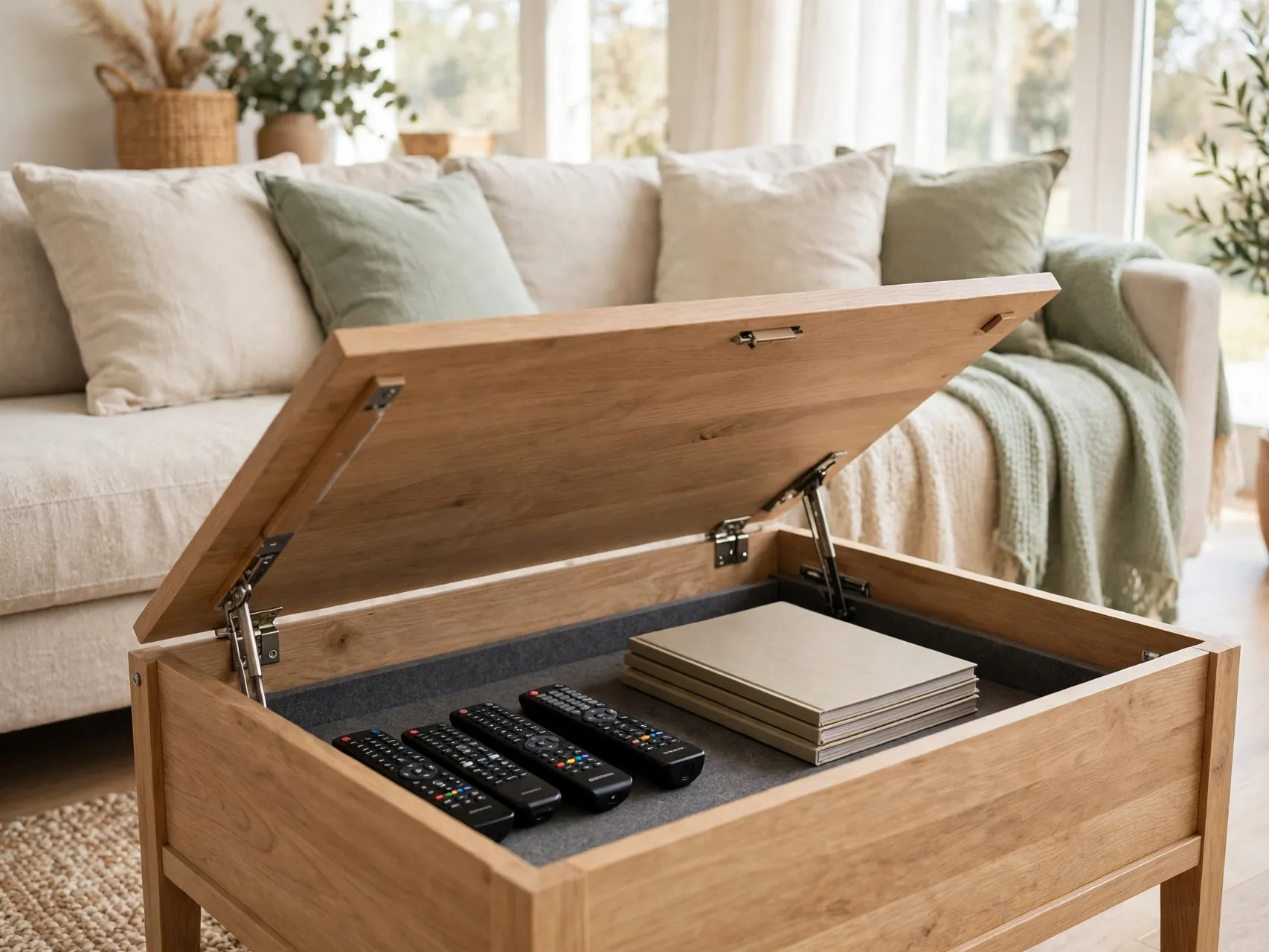
A lift top coffee table hides the living room small stuff that usually spreads across every surface: remotes, controllers, chargers, coasters and the book you are actually reading. The top rises to become a laptop or snack surface, and the compartment below closes over the mess when guests arrive or when you just want a calm room.
Divide the inside if the table allows it, or add two small trays, so the compartment does not become a junk drawer with a lid.
Choose an Entry Bench With Closed Cubbies
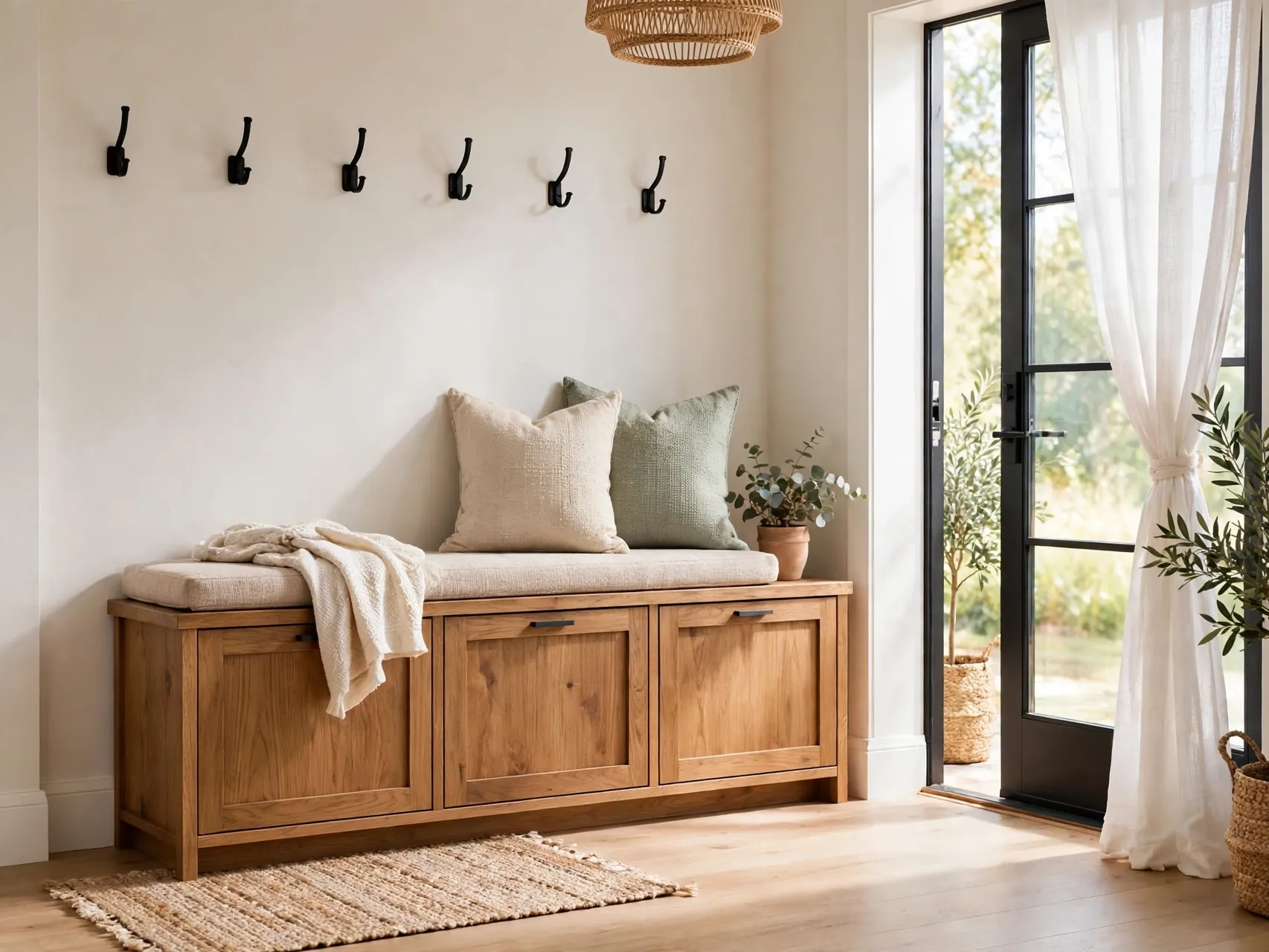
Entryways collect shoes, bags, gloves and mail in full view of every guest. A bench with closed cubbies or doors underneath gives that clutter a seat shaped hiding place. You sit to put shoes on, the shoes disappear below, and the entry looks calm instead of like a sale rack.
Keep one cubby per person if you can, plus one shared cubby for guest shoes or the dog leash and bags. Baskets inside open cubbies give a similar effect for less money.
Build Storage Into a Window Seat
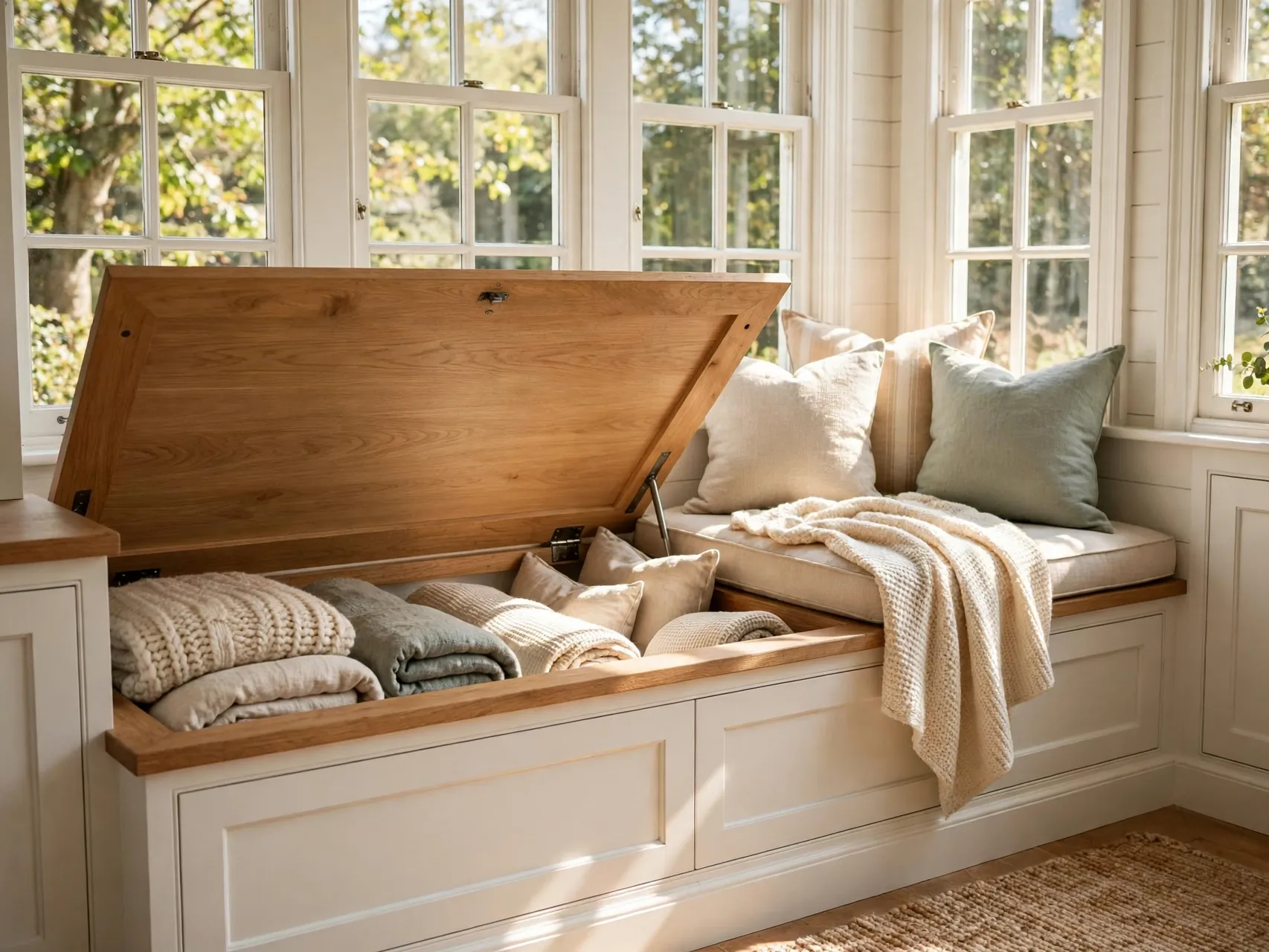
A window seat looks like a luxury and works like a chest. The space below the cushion is usually hollow, which makes it perfect for blankets, board games, photo albums or the toys that live in that room. A hinged top is the simplest access, while drawers suit seats you use daily, since you do not have to move cushions and people to open them.
If you are adding a seat under a window, measure what you plan to store before the carpentry is final.
Hide Bedside Clutter in a Storage Headboard

Nightstands overflow quickly, especially in small bedrooms. A headboard with shelves, cubbies or a sliding panel hides chargers, books, a water glass and bedtime clutter behind or beside the bed, so the room looks restful instead of busy. Some designs hide a slim shelf behind a panel, which suits things you want close but not on display.
Keep only true bedside items there. A headboard shelf that becomes general storage will look cluttered the moment its door or panel stays open.
Add Toe Kick Drawers in the Kitchen
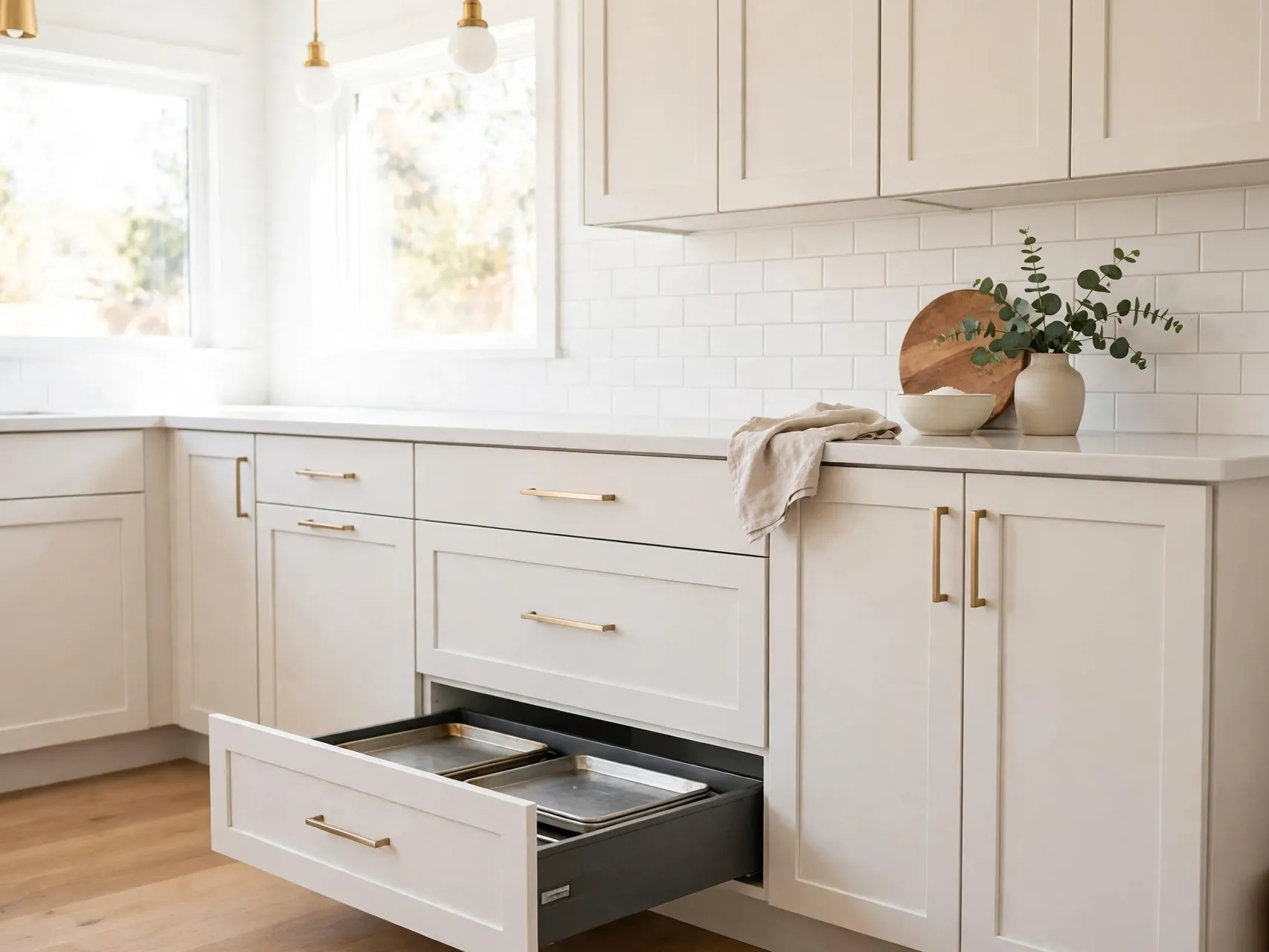
The recessed space under kitchen cabinets, called the toe kick, is wasted in most kitchens. Shallow drawers fitted there hold flat items perfectly: baking sheets, trays, cutting boards, table linens or a folding step stool. The drawers disappear completely when closed, because the front matches the cabinet base.
This is a carpentry project rather than a quick buy, so it suits a kitchen update or a handy homeowner.
Use the Inside of Cabinet Doors
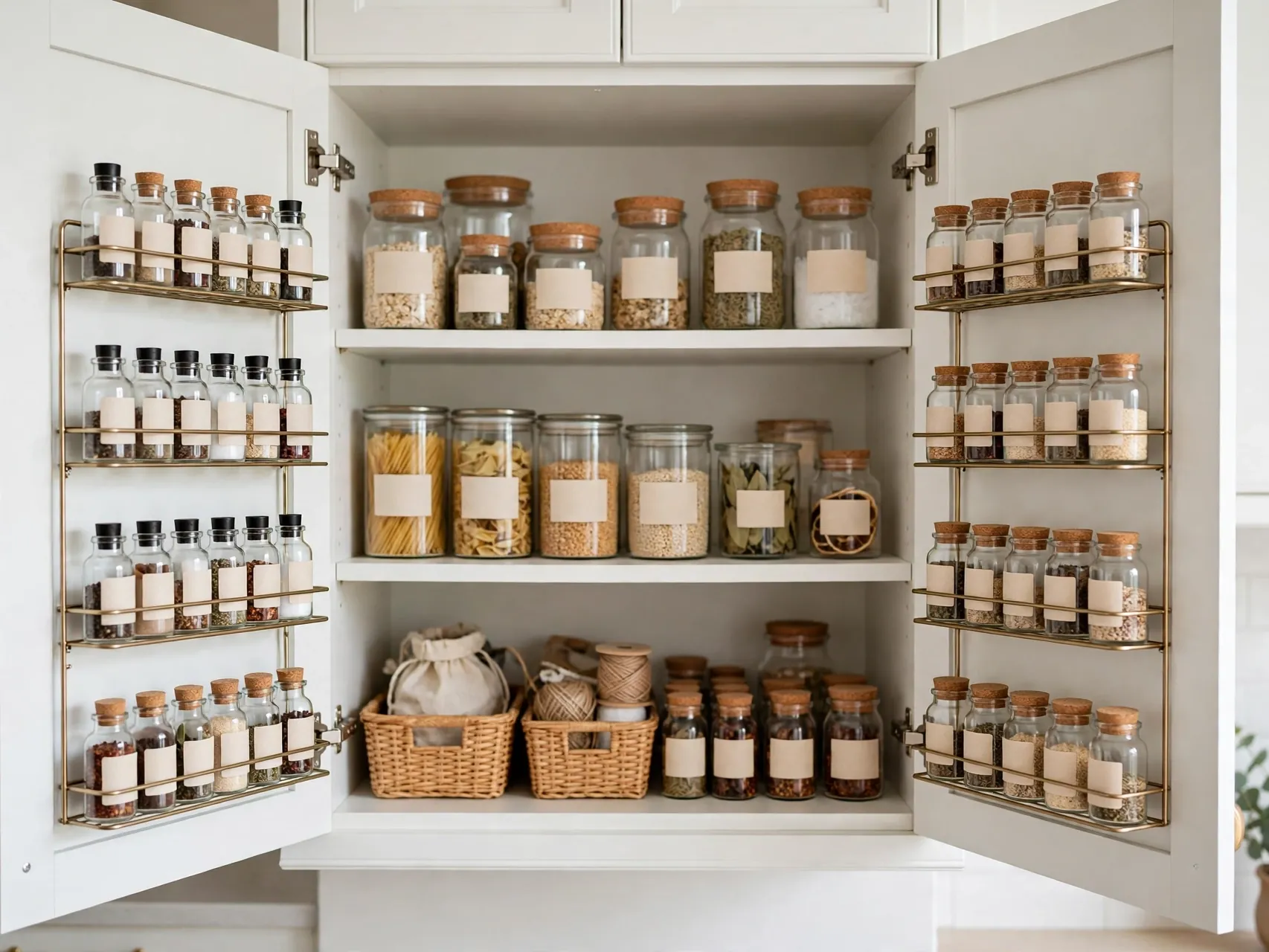
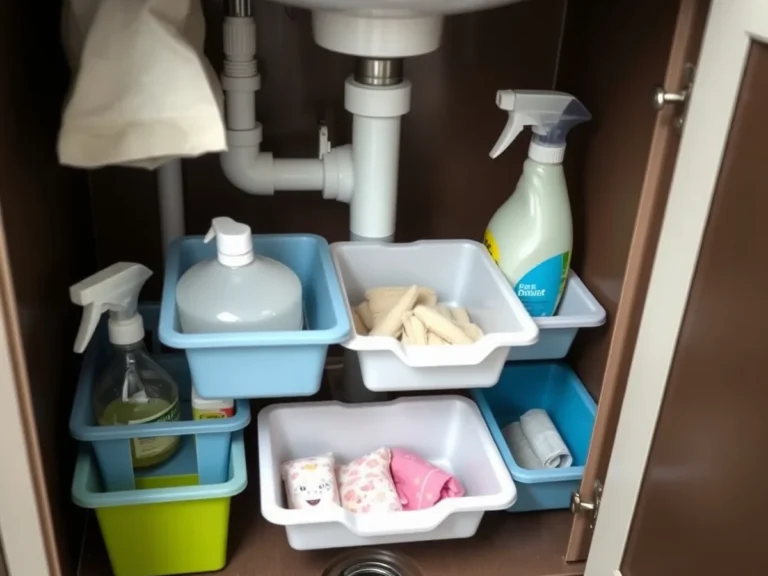
Cabinet doors have a flat inside surface that can hold a surprising amount. Slim racks or adhesive bins on a door hold wraps, spice packets, measuring cups, pot lids or under sink supplies like sponges and brushes. The storage is invisible when the door closes and instantly visible when it opens, which is the ideal pattern for daily items.
Check clearance before mounting anything, so racks do not hit shelves or stored items when the door shuts.
Fit Drawers or a Closet Under the Stairs

The space under a staircase is the classic wasted void. Pull out drawers built into the slope hold shoes, coats, sports gear or cleaning supplies in sections that match the stair height, while a simple door and closet layout suits bigger items like a vacuum or luggage. Even a curtain and bins are an improvement over a dark pile behind a small door.
Start with the simple version if budget matters: paint the space, add light, and use labeled bins on the floor.
Close the Lower Bookcase With Doors or Baskets

Open shelves display everything, including the parts of your collection that are not display worthy. Put cabinets, doors or matching baskets on the lower shelves of a bookcase and keep books and a few chosen objects at eye level. The room instantly looks calmer, and the hidden lower section holds games, chargers, paperwork or craft supplies.
This works in living rooms, bedrooms and home offices alike.
Hide Small Things Behind a Mirror

A mirror cabinet in a bathroom or entryway hides daily small items behind a surface you use anyway. In a bathroom it holds medicines and toiletries off the counter. In an entry it can hide keys, sunglasses and sunscreen by the door. Shallow depth is a feature here, because nothing can hide behind anything else in a slim cabinet.
If a cabinet is too much project, a hinged picture frame or mirror with a shallow box behind it gives a smaller version of the same idea.
Recess a Niche Between Wall Studs

Interior walls have hollow spaces between studs that can hold a shallow recessed shelf or cabinet. A niche between studs suits spices in a kitchen, toiletries in a bathroom, or cleaning supplies in a laundry area, all flush with the wall so the room loses no floor space. The front can be a door, a picture or an open shelf styled neatly.
This is a project to plan carefully. Check for wiring and plumbing before cutting, and never cut a load bearing wall without proper advice.
Slide a Pull Out Into a Narrow Pantry Gap
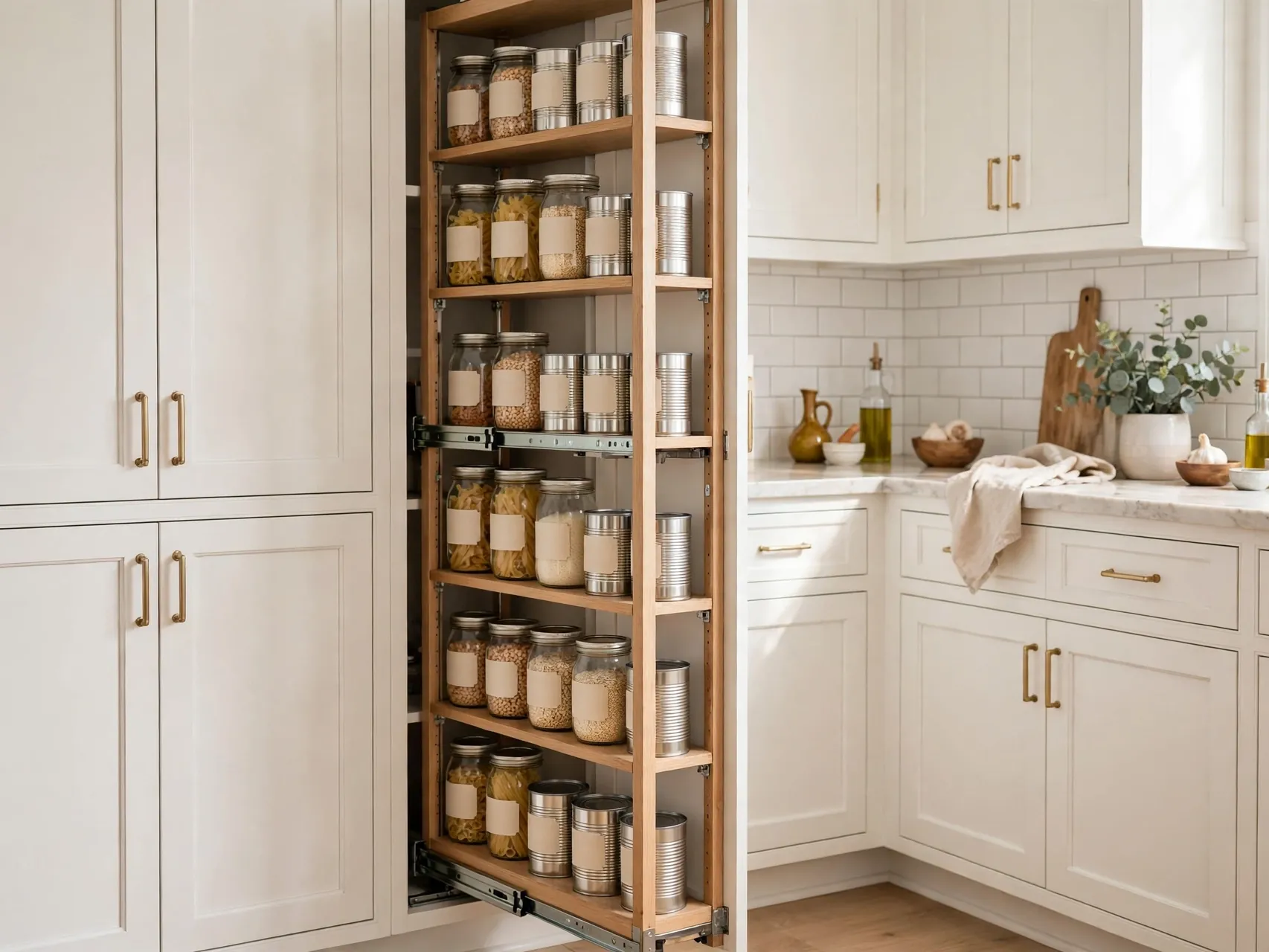
Kitchens often have a narrow gap beside the fridge or between cabinets that fits nothing standard. A slim rolling pull out turns that gap into vertical storage for spices, oils, canned goods or cleaning bottles. The unit rolls out for access and disappears completely when pushed back, handle and all.
Buy or build to your exact gap width, and keep the heaviest items low so the unit rolls steadily. In a rental, a narrow rolling cart gives a similar result without any fitting.
Roll a Slim Cart Between the Fridge and the Wall
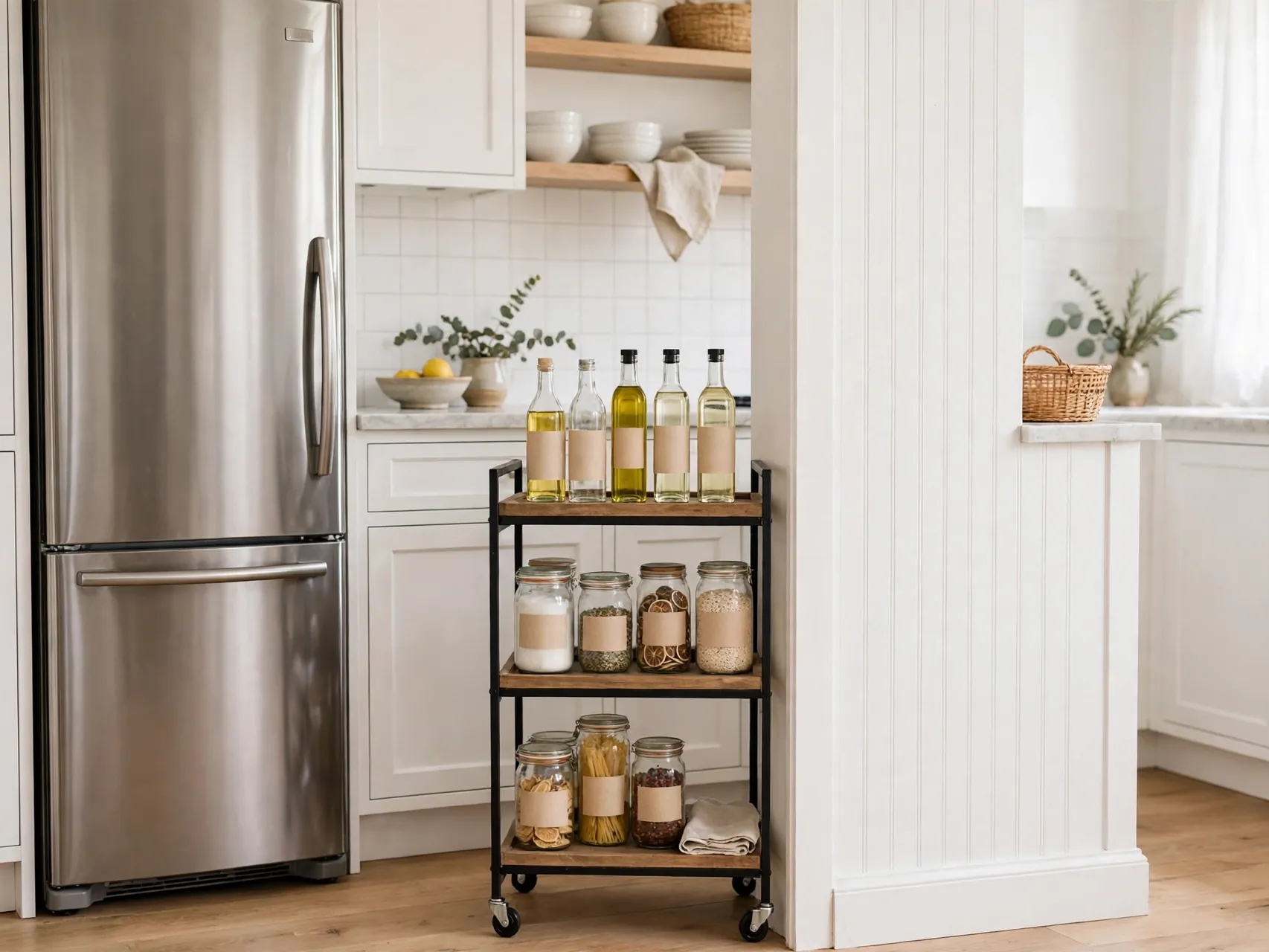
If a pull out unit is too permanent, a slim rolling cart in the same gap gives flexible hidden storage. From the front, the gap still looks empty. From the side, the cart holds spices, wraps, pet food or extra pantry staples in tidy tiers. Choose a cart slightly narrower than the gap so it rolls without scraping.
Give the cart one job. A cart that holds a bit of everything becomes hard to roll and harder to clean around.
Corral Counters With an Appliance Garage

Kitchen counters look cluttered because small appliances live on them permanently. An appliance garage, a cabinet section at counter level with a door that lifts or rolls, hides the toaster, coffee maker or blender while keeping them plugged in and ready. Close the door and the counter reads as clean, open workspace.
Renters can mimic the effect with a large lidded box, a tray with a cover, or by giving appliances a home inside one cabinet and accepting the daily lift.
Cover Open Shelving With a Curtain

Sometimes the fastest hidden storage is a curtain. Open shelves in a laundry room, garage entry, pantry or bedroom can be covered with a simple fabric panel on a rod or tension wire, turning visual chaos into one calm surface. It is cheap, renter friendly and easy to change when your style changes.
Choose a washable fabric in a color that matches the room, and hang it straight and full enough to look intentional. A curtain works best over storage that is organized behind it.
Lift the Seat of a Dining Bench
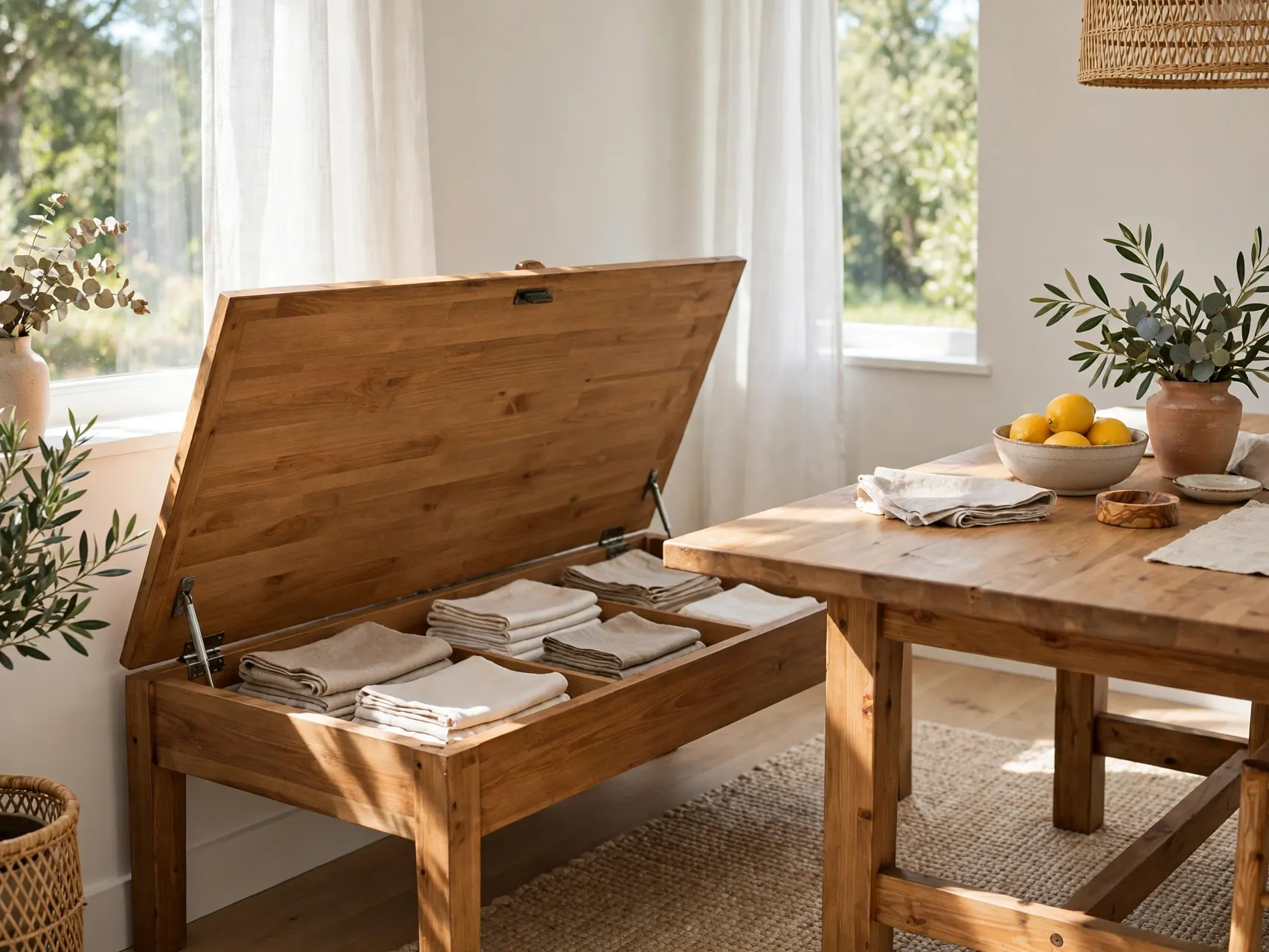
A dining bench with a lift up seat hides table linens, placemats, board games, craft supplies or seasonal table decor right where they are used. It suits dining rooms and kitchen nooks where a sideboard will not fit, and it seats people as well as any plain bench.
Keep the contents in one or two categories and add an interior divider or bins if the space is large, so smaller items do not slide into a heap.
Choose a Closed TV Console and Hide the Cables
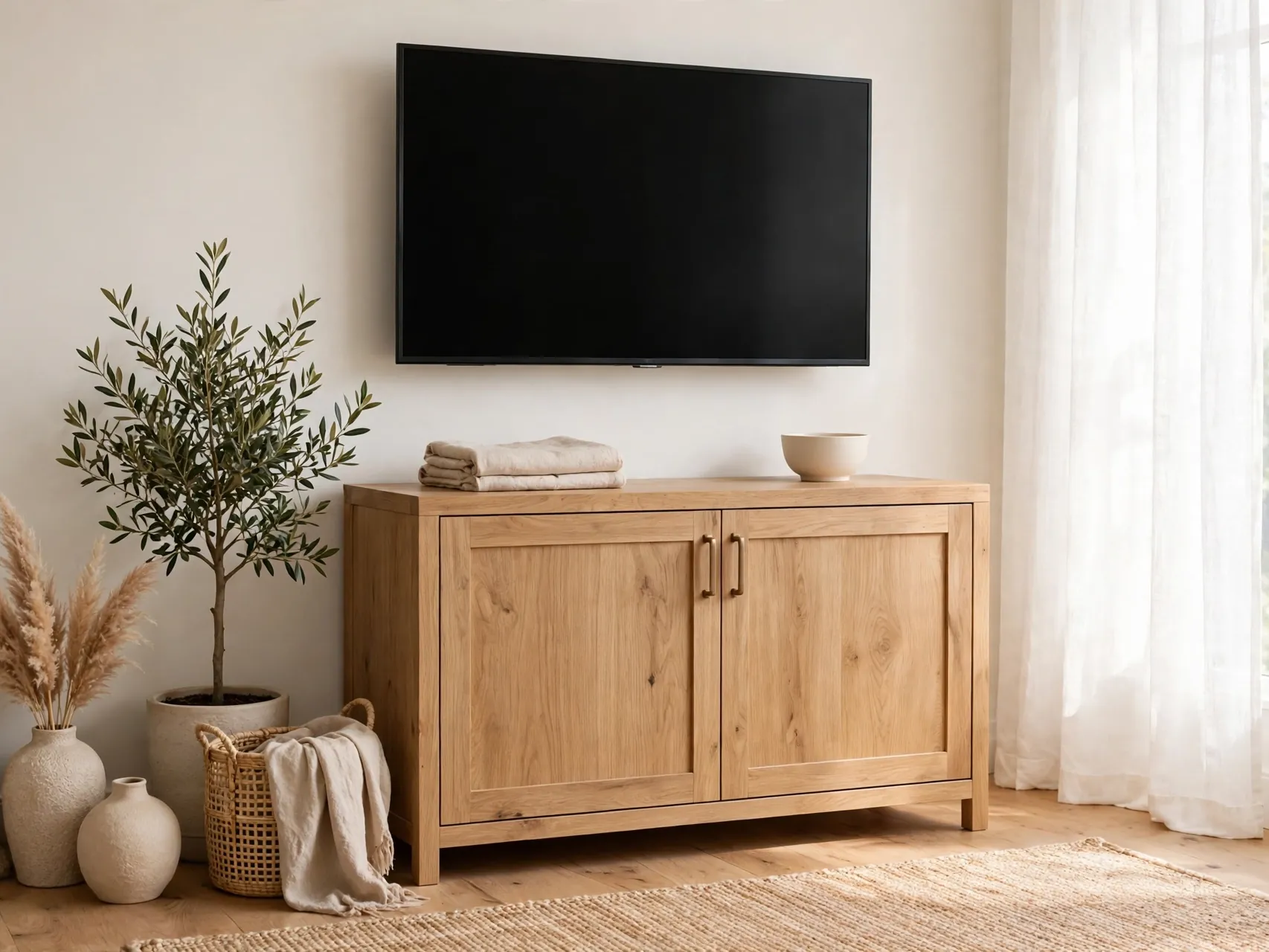
Entertainment clutter is mostly small: remotes, consoles, controllers, chargers and a knot of cables. A closed console hides all of it behind doors while the TV sits on a clean surface. Add a cable box or basket inside for cords, and use the back panel or a simple channel to route cables out of sight.
Ventilation matters for electronics, so choose a console with a vented back or leave space behind closed doors as the maker directs.
Fill an Unused Fireplace With Books or Baskets

A fireplace that is never lit is a ready made alcove at floor level. Fitted shelves turn it into a small bookcase, while stacked books, a basket of blankets or a neat pile of logs for a working fireplace elsewhere all read as decor instead of storage. The firebox hides depth, so items sit visually inside the room's architecture.
Make sure the chimney and firebox are clean and properly sealed before storing anything, and never store flammable materials in a fireplace that might be used.
Use Lidded Boxes That Look Like Decor

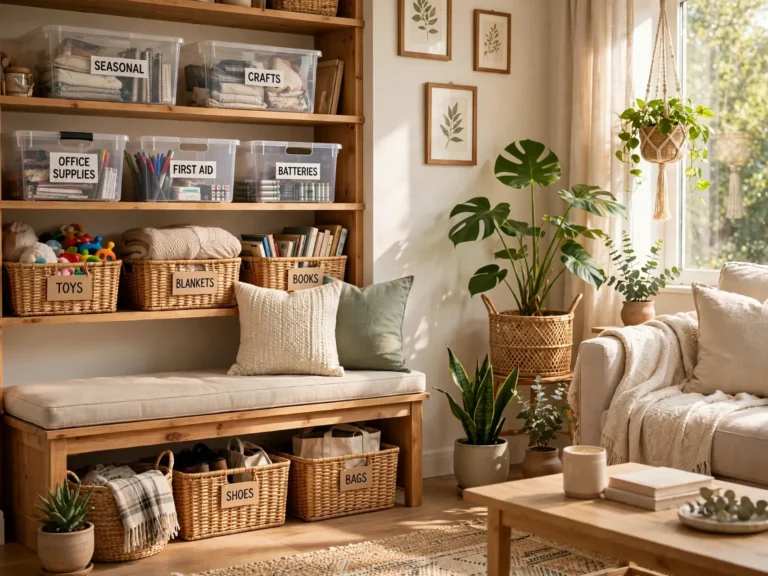
Decorative boxes with lids store small clutter in plain sight: remotes on a coffee table, chargers on a desk, jewelry on a dresser, coasters, matches, spare batteries. Because the boxes look like decor, the storage does not register as storage at all. A set in one material, like wood, woven fiber or linen, keeps the look cohesive across rooms.
Label the underside of each lid if several boxes look alike, so family members learn what lives where. Keep boxes small on purpose.
Pick a Hamper That Sorts and Hides Laundry
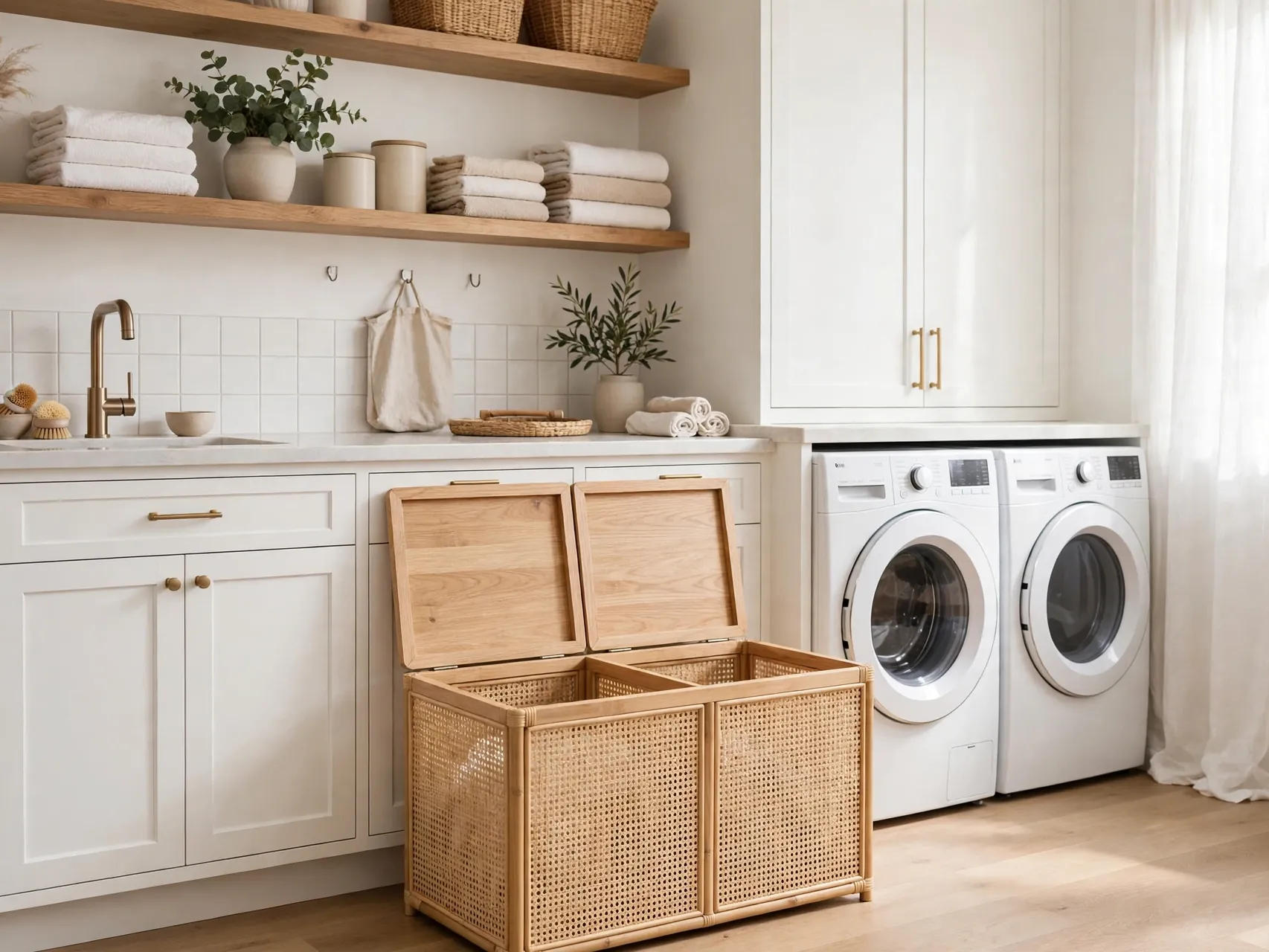
Laundry is clutter with a schedule. A lidded hamper with two or three sections hides dirty clothes completely and sorts lights, darks and delicates as you undress, which saves time on wash day. In a bathroom, bedroom or laundry area, a hamper that looks like furniture keeps the room calm between loads.
Choose a size matched to your wash rhythm. A hamper that overflows two days before laundry day will spill its contents onto the floor no matter how nice it looks.
Slide Flat Bins Under the Sofa

Like the bed, a sofa often has a few inches of clearance underneath that can hold flat storage. Low bins or trays there suit board games, puzzles, guest blankets, laptop sleeves or the craft project that lives in the living room. Measure the clearance first, because many modern sofas sit too low, and forcing bins under can damage fabric or flooring.
Keep under sofa storage to items used in that room, on a weekly rhythm at most.
Store Things Inside Empty Luggage
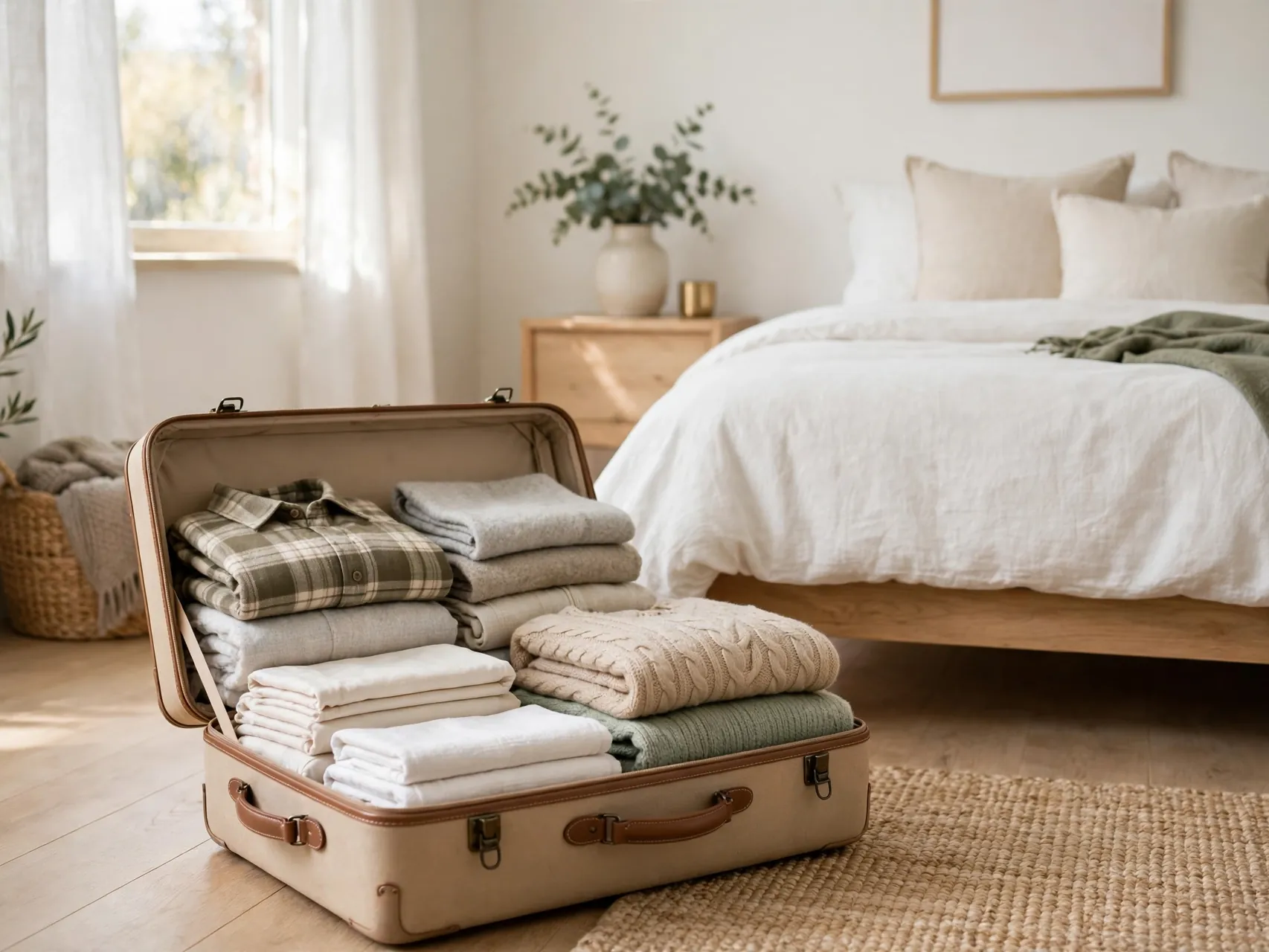
Suitcases sit empty for most of the year, taking up closet or under bed space while storing nothing but air. Fill them with the seasonal items that travel least: off season clothes, spare bedding for guests, holiday linens or the travel gear itself, like packing cubes and adapters. The luggage becomes its own labeled storage box.
Add a note inside the lid listing the contents, so a pre trip unpack does not become a treasure hunt.
FAQ
What is the difference between hidden storage and regular storage?
Regular storage contains things, often in visible bins and shelves. Hidden storage contains things behind a door, lid, curtain or panel, or inside furniture, so the room shows a calm surface instead of the contents. The organizing rules are the same: one category per place, labeled where needed, and a size that forces editing. Hidden storage just adds visual quiet on top.
Where is the most overlooked hidden storage in a home?
Under beds and sofas, inside the toe kick space under kitchen cabinets, behind doors, in the hollow under stairs, and inside empty luggage. Most homes also waste the inside of cabinet doors and the narrow gap beside the fridge. Walk your home looking at low, high and hollow spaces, and you will usually find at least three spots from this list within ten minutes.
Is hidden storage a good way to protect valuables?
No. Hidden storage is for reducing visual clutter, not for security. A storage ottoman or a mirror cabinet may delay a casual glance, but neither is a safe, and neither should hold cash, important documents or irreplaceable items. Use a proper rated safe or a bank deposit box for anything whose loss would really hurt, and let hidden storage do the job it is good at.
How do I stop hidden storage becoming forgotten storage?
Label what you cannot see, keep one category per hiding place, and rotate contents on a schedule you already have, like the seasonal clothing swap. A simple list inside a lid or on your phone for the deepest storage, like under bed bins and luggage, prevents duplicate buying. If you have not opened a hiding place in a year, its contents probably need editing, not a bigger hiding place.
What hidden storage works best in a rental?
Furniture based ideas: storage ottomans, lift top coffee tables, benches with cubbies, under bed bins and lidded decorative boxes. Curtains over open shelves and slim rolling carts in kitchen gaps are also renter friendly because they need no fitting and leave no marks. Save toe kick drawers, recessed niches and under stair drawers for a home you own, or get written permission first.
Key Takeaways
- Hide by frequency: Daily items need one handed hiding places like door racks and lift top tables, seasonal items can go deeper.
- Furniture should work twice: Ottomans, benches, headboards and consoles that store inside them beat single purpose pieces in small homes.
- Use the hollow spaces: Under beds, stairs, cabinets and even inside luggage is storage you already own and probably waste.
- Hidden still needs labels: One category per place and a label or list keeps hidden storage findable instead of forgotten.
- It is clutter control, not a safe: Keep chemicals in original containers and valuables in real secure storage, and let hidden storage handle the mess.
- Sort before you cover: A curtain or door over an unsorted pile only postpones the clutter, so organize first, then hide.
Love these ideas? Save this post to Pinterest so you can find it later, and pin your favorite hidden storage setup to your home organization board before you start.