20 Small Walk In Closet Ideas That Feel Twice as Big
Introduction
A small walk in closet can hold a surprising amount, but only if every wall has a job and nothing is stored just because it fits. The best small walk in closet ideas are not about buying more organizers. They are about layout, height and light, plus a strict rule about what earns a place inside.
Think of the closet as a tiny room you use twice a day, often while half awake. You should be able to see every category at a glance, reach daily clothes without moving anything else, and put laundry away in a couple of minutes. If any of those fail, the layout needs work, no matter how pretty the shelves look.
The ideas below start with layout choices, move through storage details, and end with the habits that keep a compact closet calm. Most are renter friendly or low cost, and none require knocking down a wall. Measure your closet first, note the door swing, and read with a tape measure nearby.
Choose One Layout and Commit to It
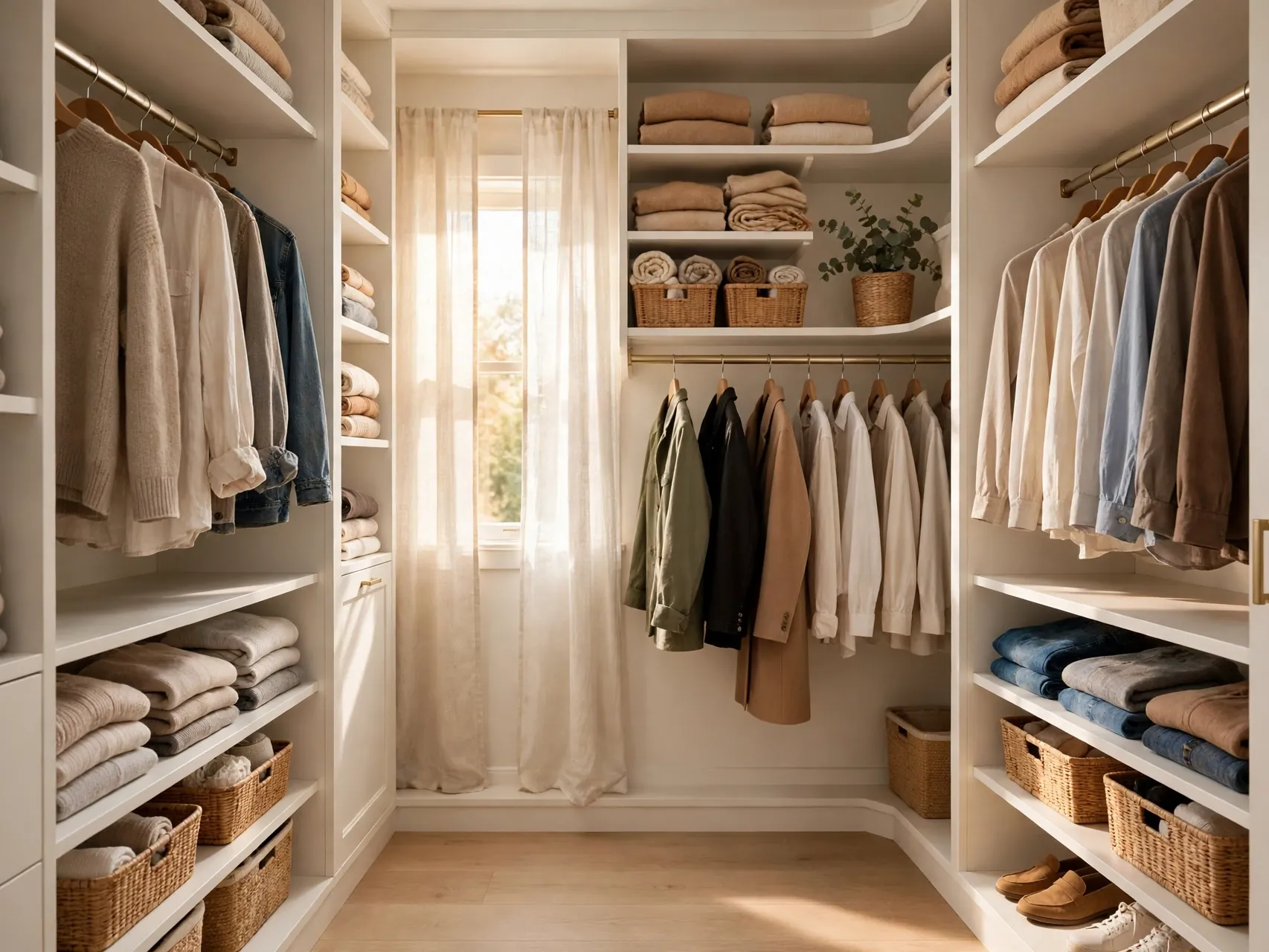
Small walk ins usually work best as a U shape, an L shape or a single wall with a short return. A U shape wraps storage around three walls and suits a closet that is roughly square. An L shape suits a narrow room, with hanging on the long wall and shelves or drawers on the short one. A single wall layout leaves the clearest floor space for dressing.
Sketch the layout before buying a system, and mark where you will stand and turn.
Double Hang Short Clothes on One Wall
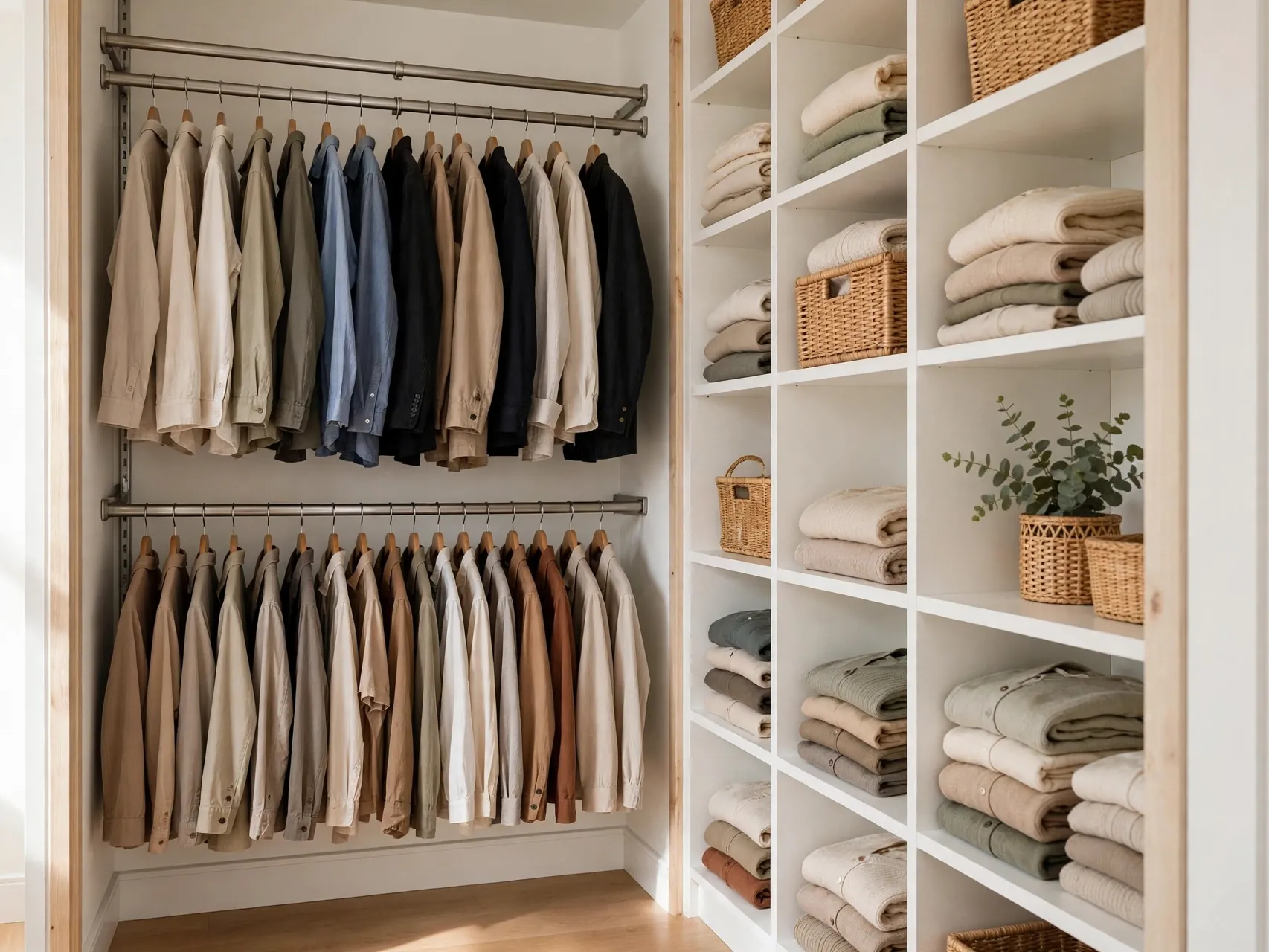
Two short rods, one above the other, roughly double the hanging space for shirts, blouses, folded pants and jackets. Most wardrobes are heavy on short items and light on full length pieces, so giving two thirds of your hanging wall to double rods matches real clothes better than one long rod does.
Keep a short section of single rod for dresses and long coats, ideally at the far end where it does not break up the double hang. Leave a small gap between the lower rod and the floor for shoes or a hamper.
Run Shelves All the Way to the Ceiling

The top two feet of most closets are empty air. Add a high shelf above the top rod and use it for labeled boxes of seasonal clothes, spare bedding, luggage or memory items. A small folding step stool stored in the closet makes that shelf genuinely usable instead of a place where things are thrown and forgotten.
Use sturdy boxes that are all the same size so the top row looks calm and stacks safely. Put the heaviest box in the easiest position to lift down, and never store anything up there that you need weekly.
Turn the Corner Into Shelves, Not a Collision

Corners are where small closet layouts fail, because two hanging rods pushed into a corner create a dark tangle where clothes hide. Let shelves take the corner instead. Corner shelves, a small tower or a set of cubbies give folded items and bags a home, while hanging stops cleanly on each wall before the turn.
If you truly need hanging in the corner, reserve it for rarely worn pieces and accept slower access. The general rule from closet designers is simple: one system turns the corner, the other stops.
Add a Slim Drawer Tower in the Middle

Drawers do work shelves cannot: they hide underwear, socks, workout clothes and tees completely, so the closet looks tidy even on a rushed morning. A slim tower in the center of a wall run, or between two hanging sections, adds drawers without taking much width. Shallow drawers on top suit jewelry and accessories, deeper ones below suit folded clothes.
If built in drawers are out of budget, a small freestanding drawer unit gives a similar result and can move with you. What matters is giving small items a closed home.
Use Matching Slim Hangers Throughout
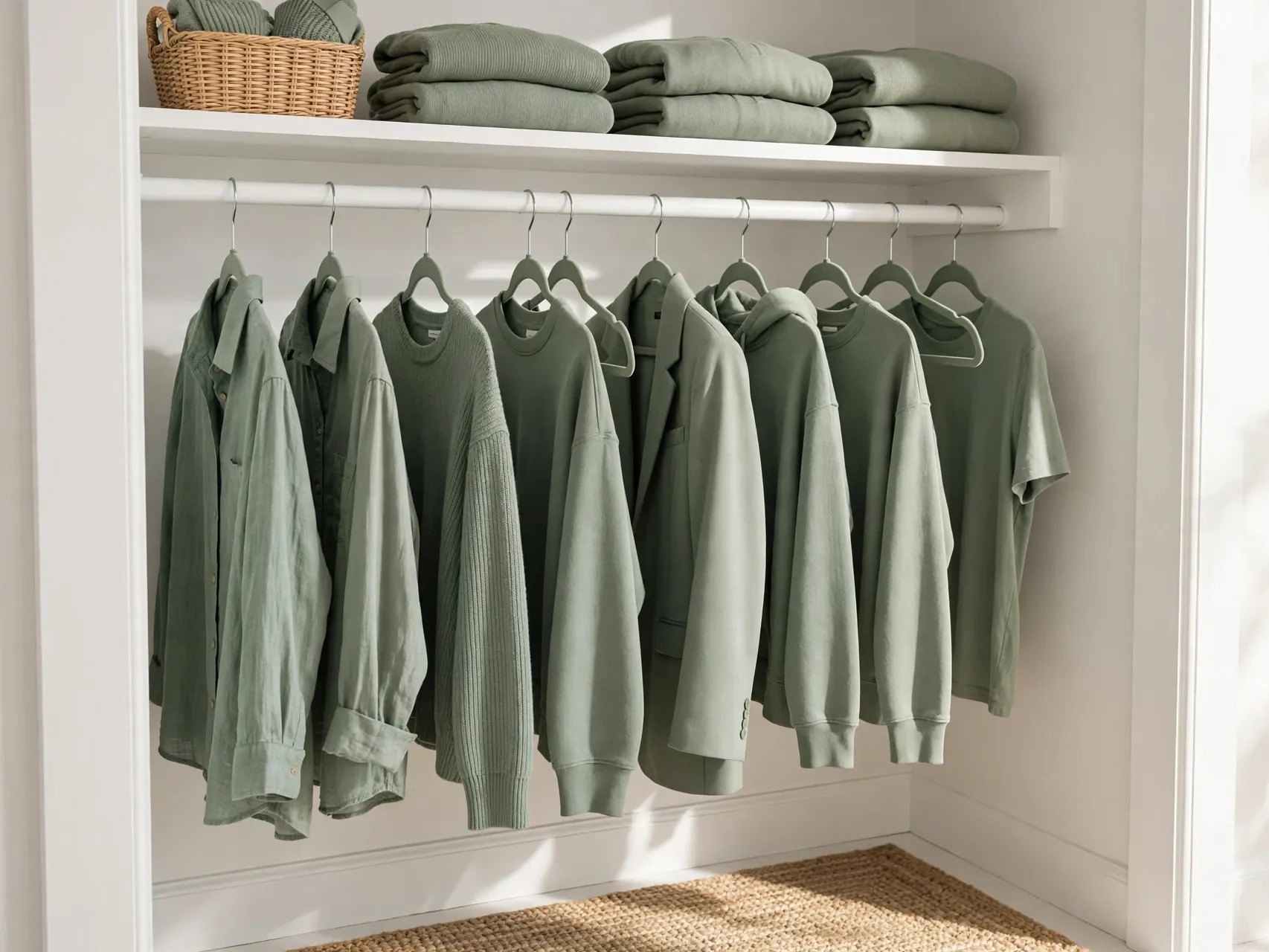
Swapping bulky mixed hangers for one set of slim hangers is the cheapest visible upgrade in this whole list. Slim hangers free real inches along the rod, let clothes hang at one even height, and remove the visual noise of wire, wood and plastic fighting each other. Velvet style hangers also stop silky tops sliding to the floor.
Do it in one pass for the biggest effect. Move section by section, rehang everything on the new hangers, and send the old mixed set out the same day.
Line Shoes on Angled or Tiered Shelves
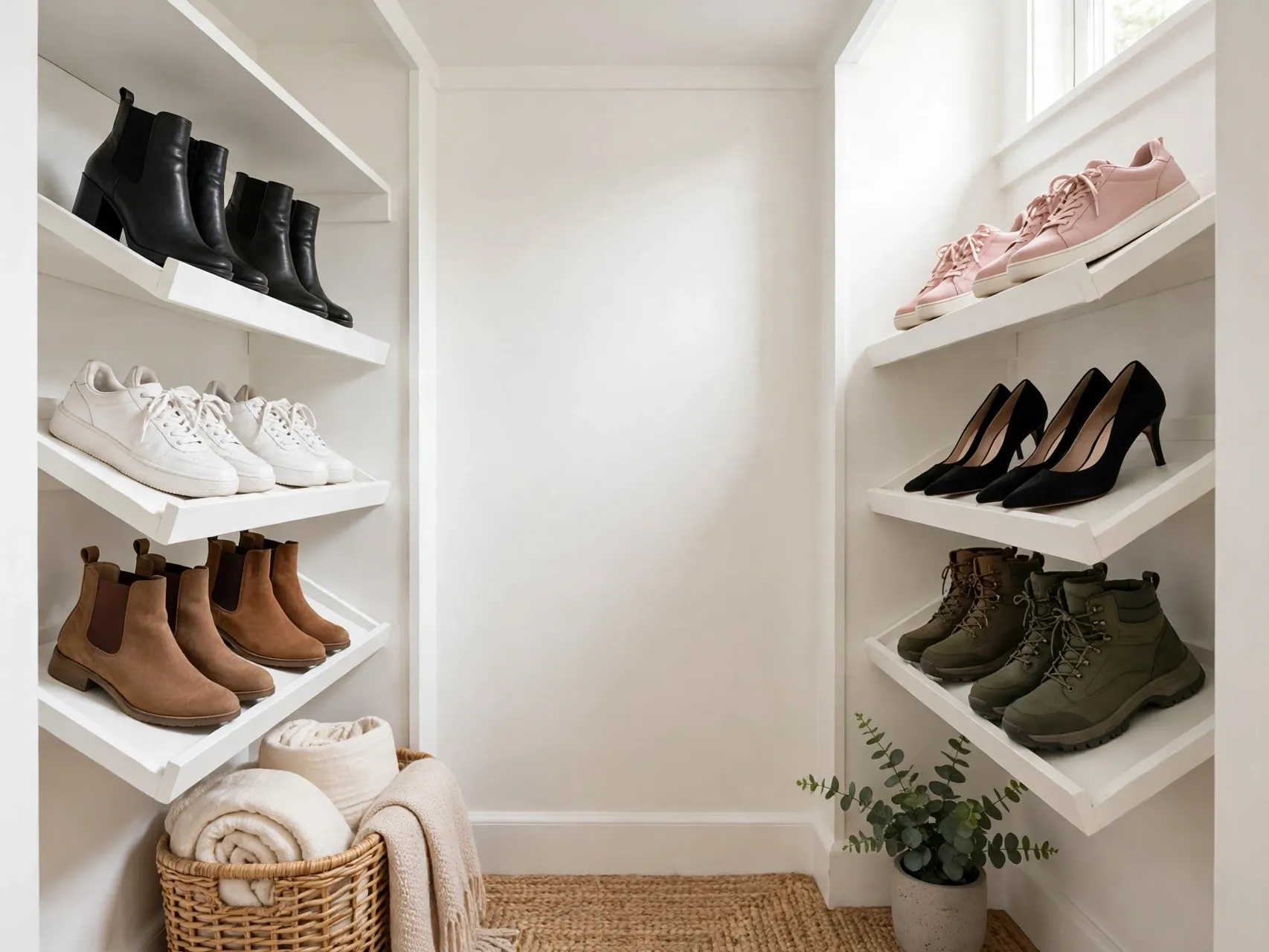
Shoes piled on the closet floor make the whole room feel smaller and dirtier than it is. Low angled shelves, a tiered rack or the bottom section of a shelf tower gets pairs off the floor and into a visible line up. Keep everyday pairs at the easiest level and special occasion shoes higher or deeper.
Only keep the current rotation inside if space is tight. Off season boots and rarely worn heels can live in labeled boxes on the high shelf.
Put a Mirror on the Door or End Panel
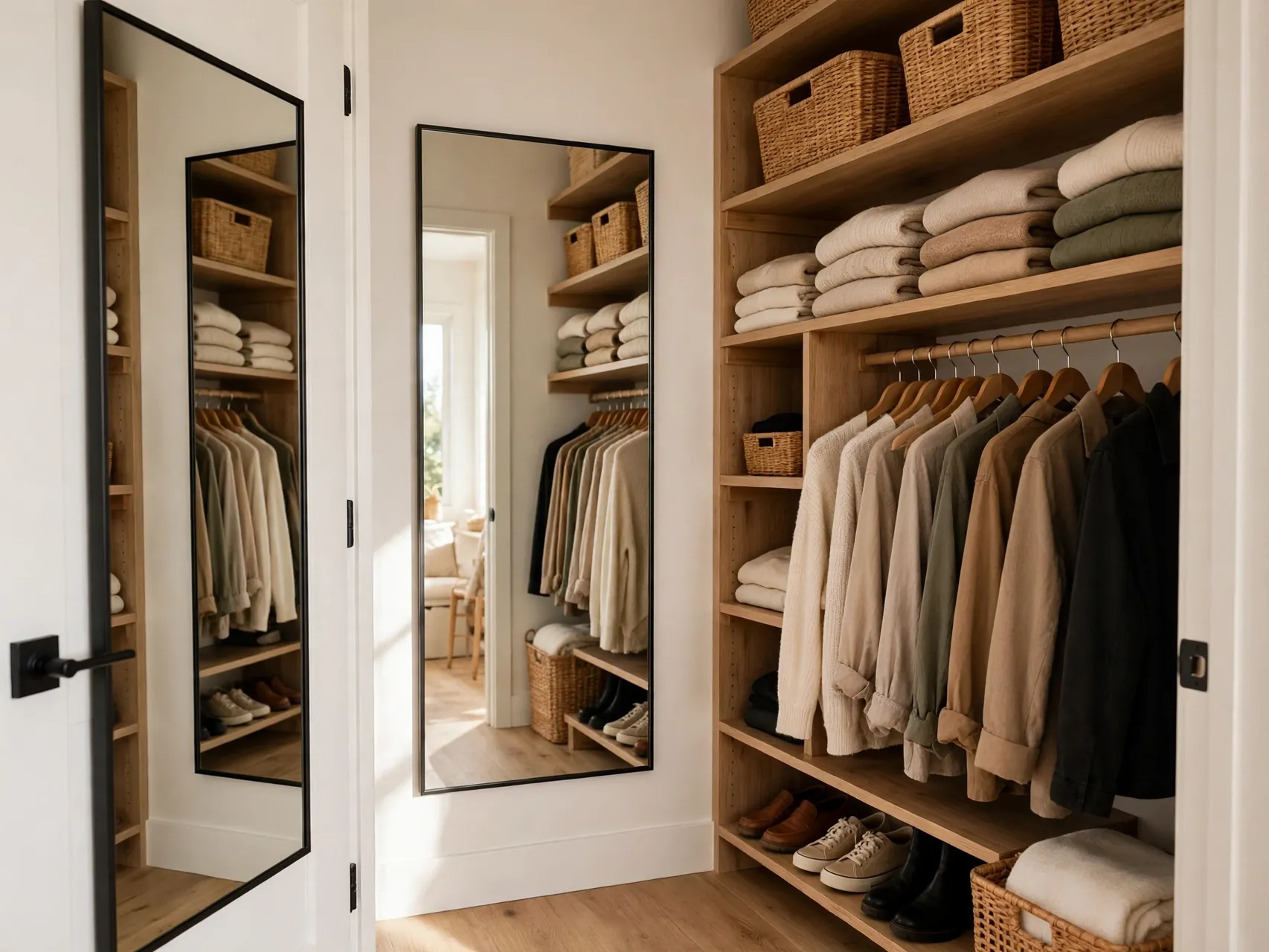
A mirror earns its place twice in a small closet. It lets you check an outfit where you got dressed, and it reflects light into a room that often has none to spare, which makes the space feel larger the moment you walk in. A slim mirror on the inside of the door costs no wall storage and suits renters if it hangs over the door.
Position the mirror to catch light from the bedroom or the closet light itself.
Light It Like a Small Room, Not a Cupboard
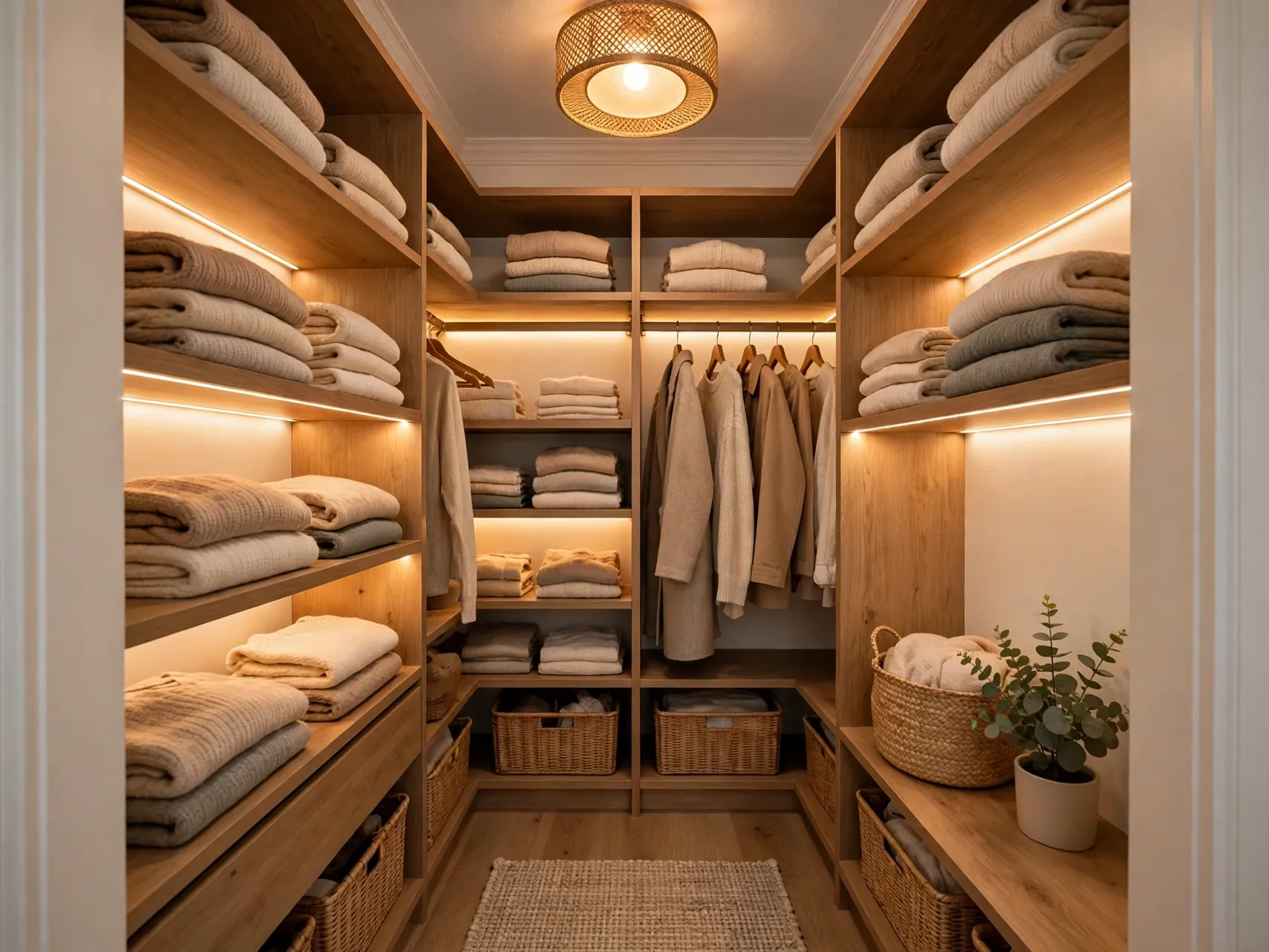
Many small walk ins rely on light spilling in from the bedroom, so half the closet sits in shadow. Add a proper ceiling light, a battery powered motion sensor light, or LED strips under shelves. Bright, even light makes colors easier to judge in the morning and stops dark corners from turning into dumping spots.
Choose a bulb or strip with a color close to daylight if you match outfits in the closet, and test it with navy and black clothes, which are the first to blur together in poor light. Good lighting is a small cost with an outsized effect on how big and usable the closet feels.
Keep Only the Current Season Inside
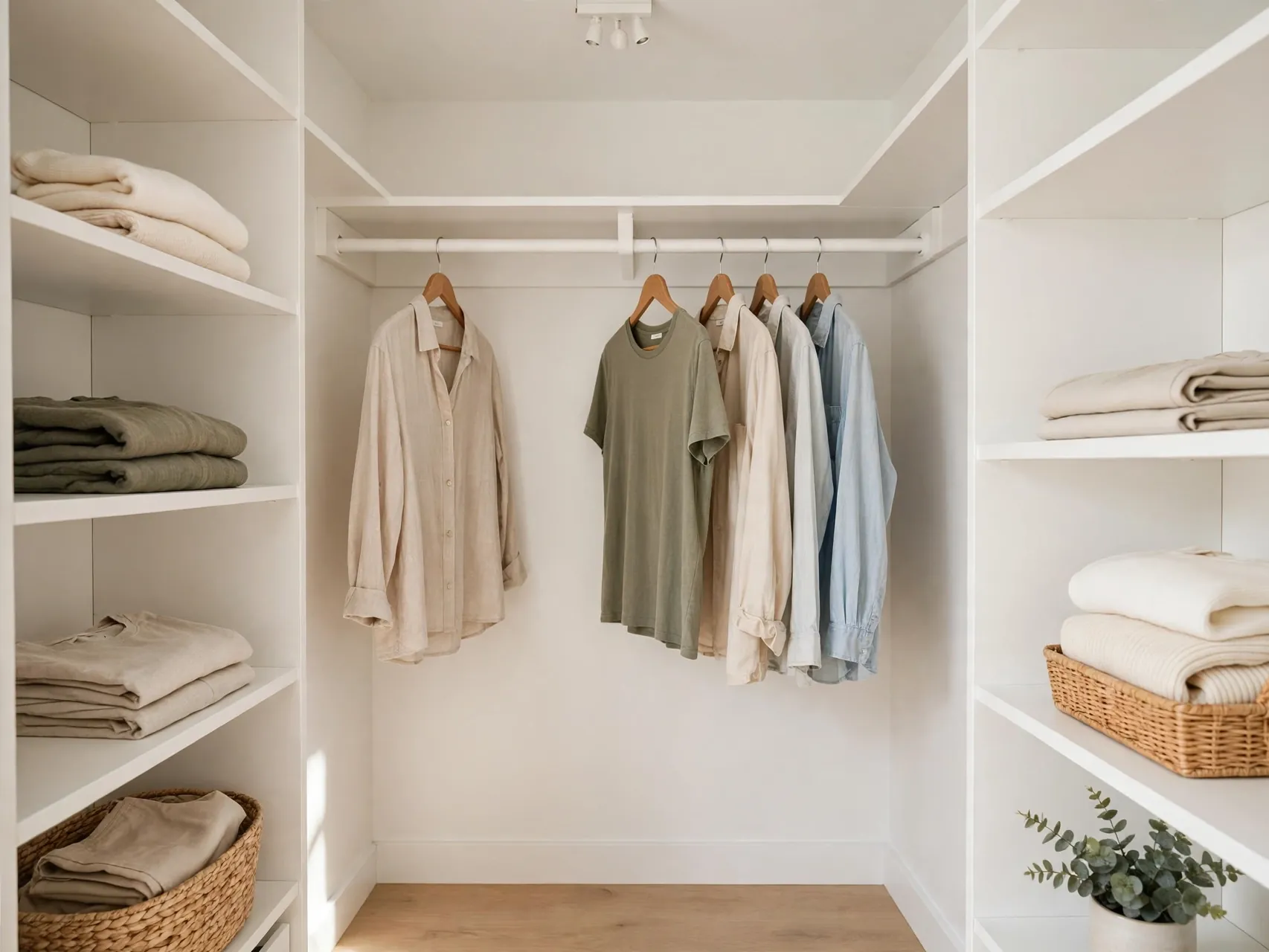
A small closet cannot be a four season warehouse. Store off season clothes in labeled boxes under the bed, on the closet's own high shelf, or in another room, and keep only what you are actually wearing in the prime hanging and drawer space. Rotating twice a year also forces a quick edit, because you handle every piece as it moves.
This habit is the difference between a closet that feels twice as big and one that feels half its size. Space is not created by organizers alone. It is created by deciding that some things, however nice, do not live in this small room right now.
Use the Back of the Door for Small Things
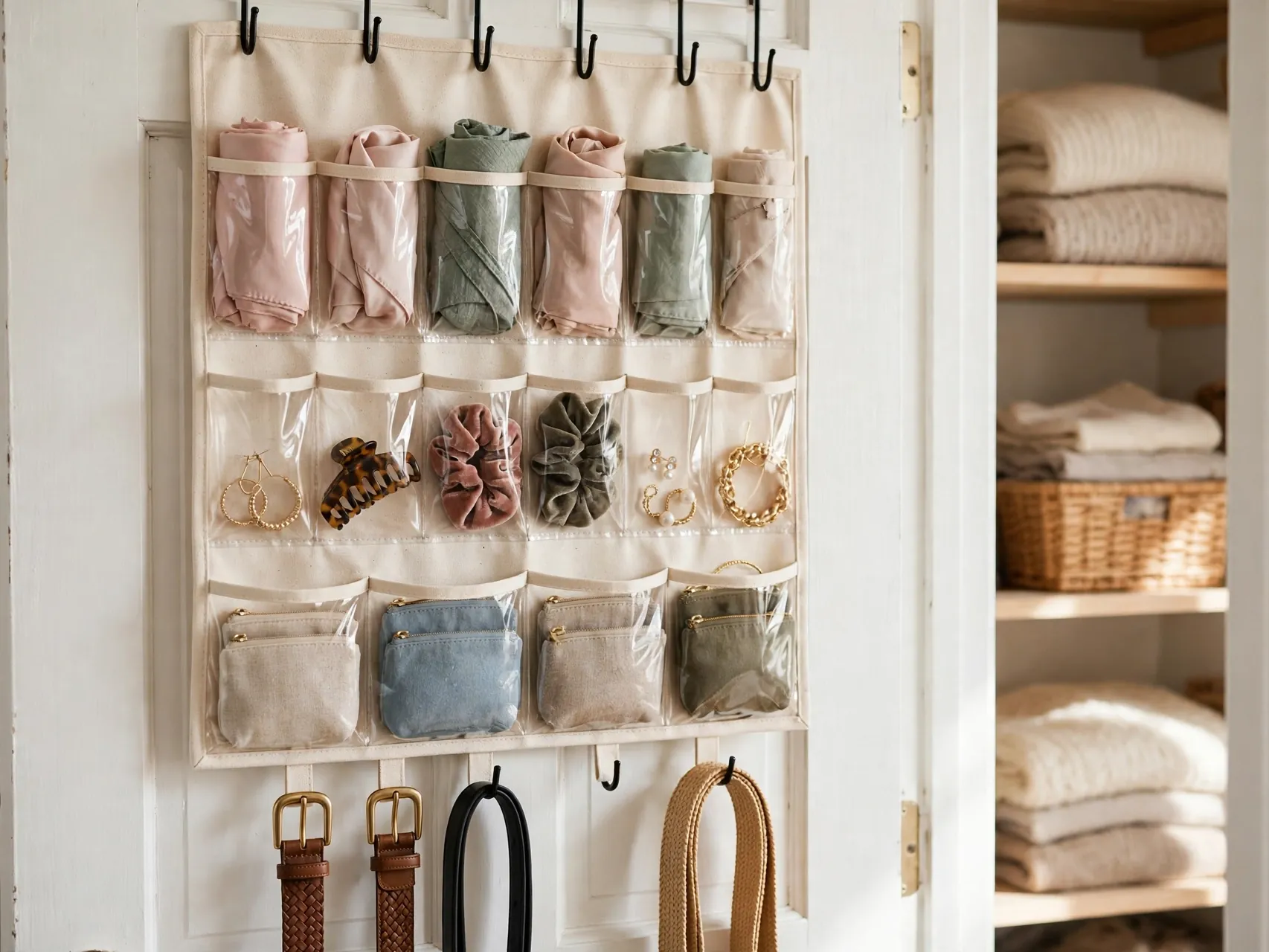
The inside of the closet door is flat, reachable and usually empty. A slim over door rack or a set of hooks there holds belts, scarves, hats, bags or tomorrow's outfit without touching your wall storage. Clear pocket organizers suit small accessories you want to see at once.
Check that the door still closes fully and that nothing bulky swings against hanging clothes. Keep this zone to light, flat items. The door is a bonus surface, not another shelf, and overloading it makes the whole closet feel cluttered every time you open it.
Divide Open Shelves With Baskets and Dividers

Open shelves turn messy when stacks lean and categories merge. Shelf dividers keep folded jeans, sweaters and tees in tidy bays, while matching baskets hide the categories that never fold neatly, like gym clothes, pajamas and accessories. One basket per category, labeled if your household shares the closet, keeps returns obvious.
Match the baskets and keep the palette simple. A small closet photographs and feels calmer when containers repeat. Leave one basket or shelf section partly empty on purpose, because a system with no spare room collapses the first week a few new items arrive.
Add Pull Out Trays for Jewelry and Watches
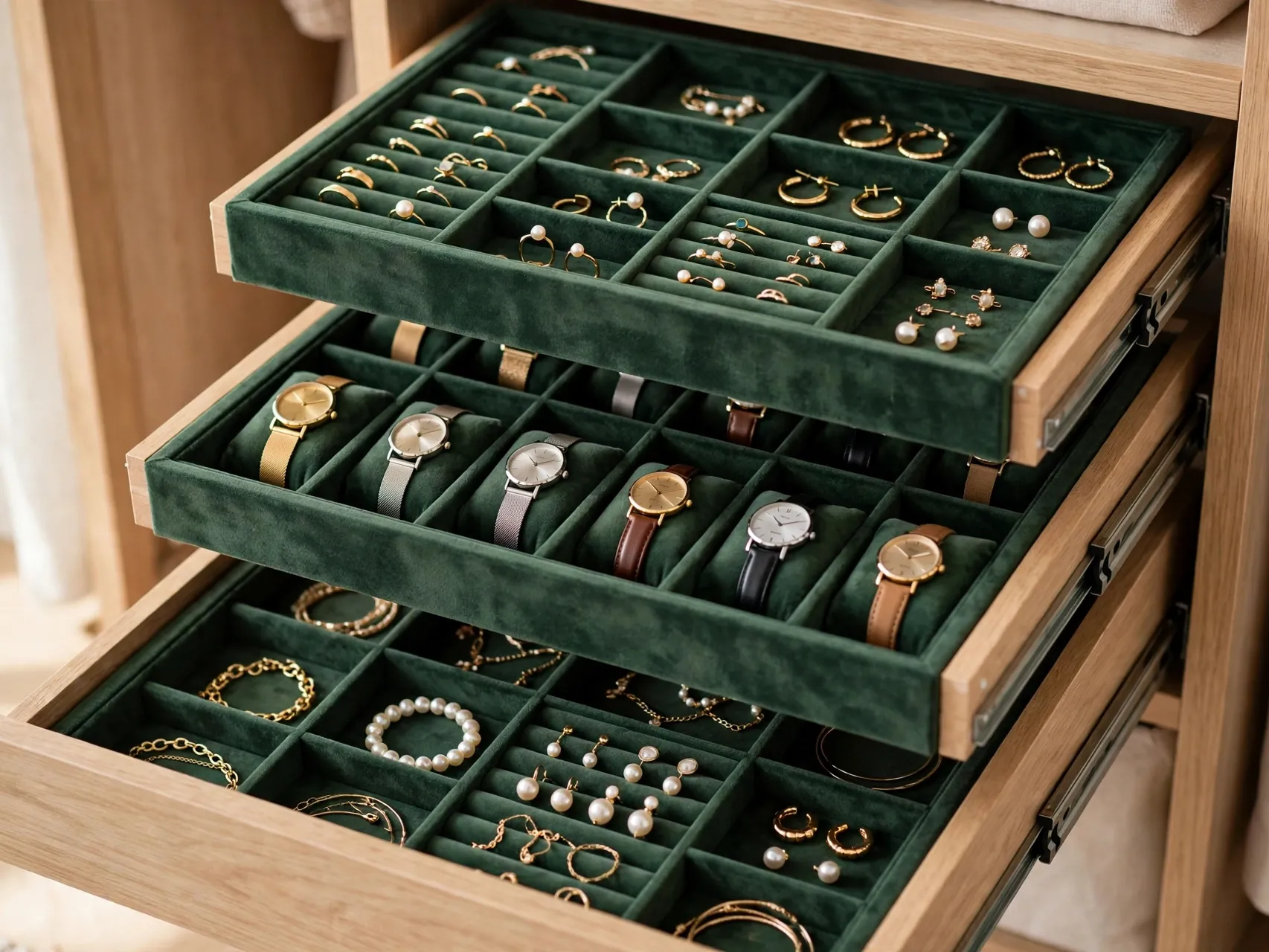
Small valuables and daily accessories get lost in deep drawers and dresser tops. A shallow pull out tray or a lined drawer insert with compartments keeps jewelry, watches, sunglasses and cufflinks visible in one scan. Place it at waist height in the drawer tower, where you finish getting ready.
This is a good place to be strict. If an accessory does not fit the tray, it needs another home or it does not stay. Containing a category to a fixed space is the quiet principle behind most small closet storage ideas that still work a year later.
Color Sort Hanging Clothes for Fast Mornings

Sorting hanging clothes by type first, then by color within each type, turns a crowded rod into a quick visual index. You can find the blue work shirt without sliding twenty hangers, and getting dressed in dim morning light gets noticeably easier. It also reveals duplicates at a glance, which helps the next edit.
There is no single correct order. Whites to darks is common, but the best order is the one you will maintain without thinking. Take ten minutes to set it up once, then return each item to its color group as laundry comes back, and the system maintains itself.
Reserve One Shelf for Bags, Displayed Upright
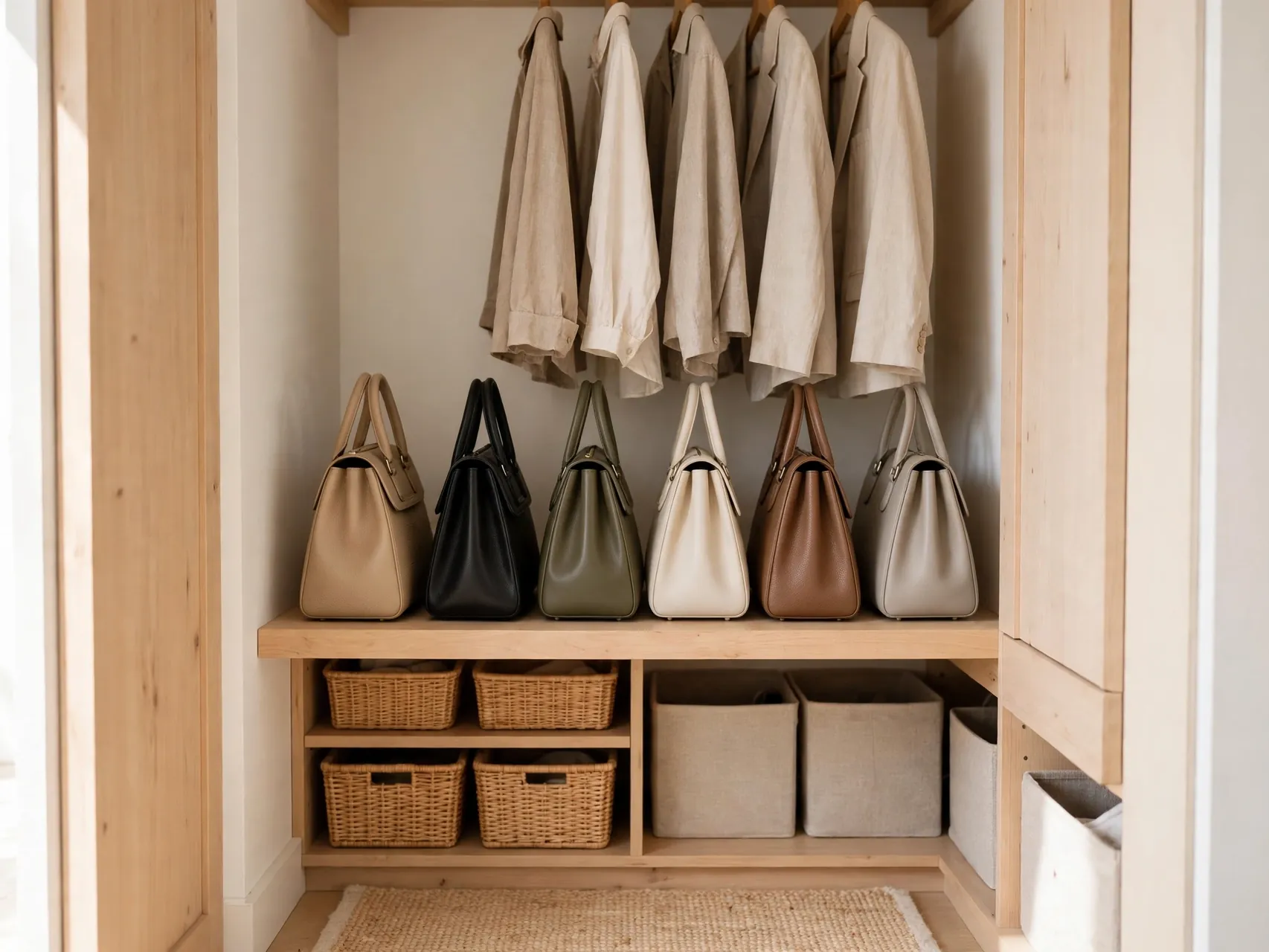
Handbags crushed in a pile lose their shape and get forgotten. Stand the bags you use on one open shelf, upright, lightly filled to hold their form, with the most used at the front. Shelf dividers or bookend style supports stop them toppling into each other.
Treat this shelf like a display, not a dumping ledge. Bags you have not carried in a year belong in the seasonal rotation or on the donation pile, not in prime closet space. One tidy bag shelf adds the styled, boutique feel that makes a small closet feel deliberate rather than squeezed.
Pick a Door That Does Not Steal Floor Space
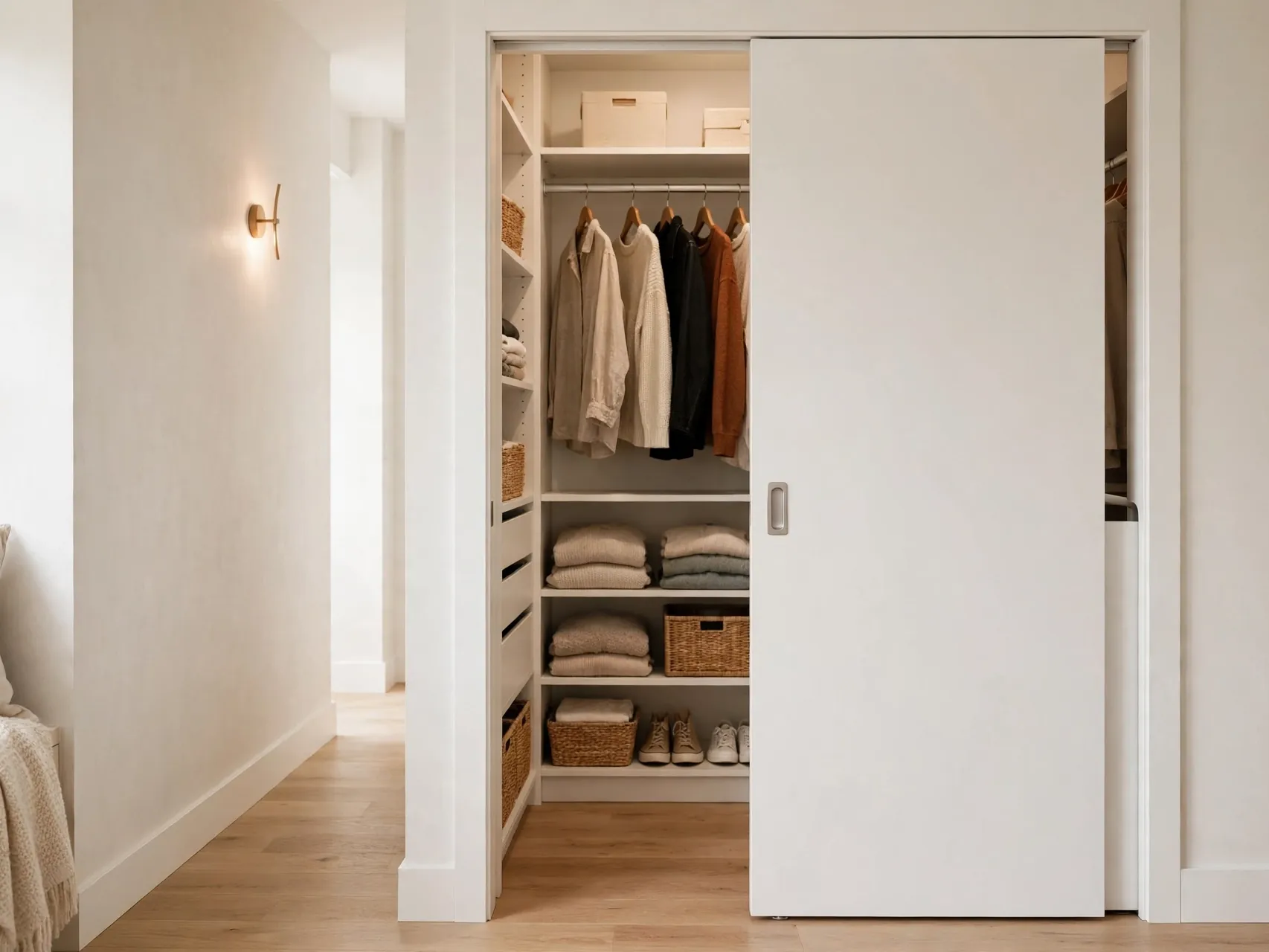
A standard hinged door swinging into a small closet can block a whole section of storage and eat the standing room. Sliding doors, bifold doors, a curtain, or even removing the door entirely can free that space. Renters can often use a curtain on a tension rod for a similar effect without any hardware changes.
Think about what the open door currently hides. If it blocks your shoe shelves every morning, changing the door may gain more usable storage than any organizer you could buy. Just keep the solution light and simple, so the closet still feels like a calm room, not a construction project.
Respect the Load Rating of Your System

Closet shelves and rods have real limits, and those limits are not the same for every system. To give one verified example, manufacturer Organized Living lists its freedomRail system at 170 lbs per linear foot, while its Lifetime wire shelving spec lists 75 lbs per linear foot. Two products from one maker, two very different numbers.
So do not copy a number from a blog post, including this one. Find the rating for your exact system, anchor rods and rails into studs where the instructions call for it, and spread heavy items like denim stacks and storage boxes across shelves instead of loading one short section. A sagging shelf makes a small closet feel broken fast.
Add a Small Stool or Storage Ottoman If It Fits
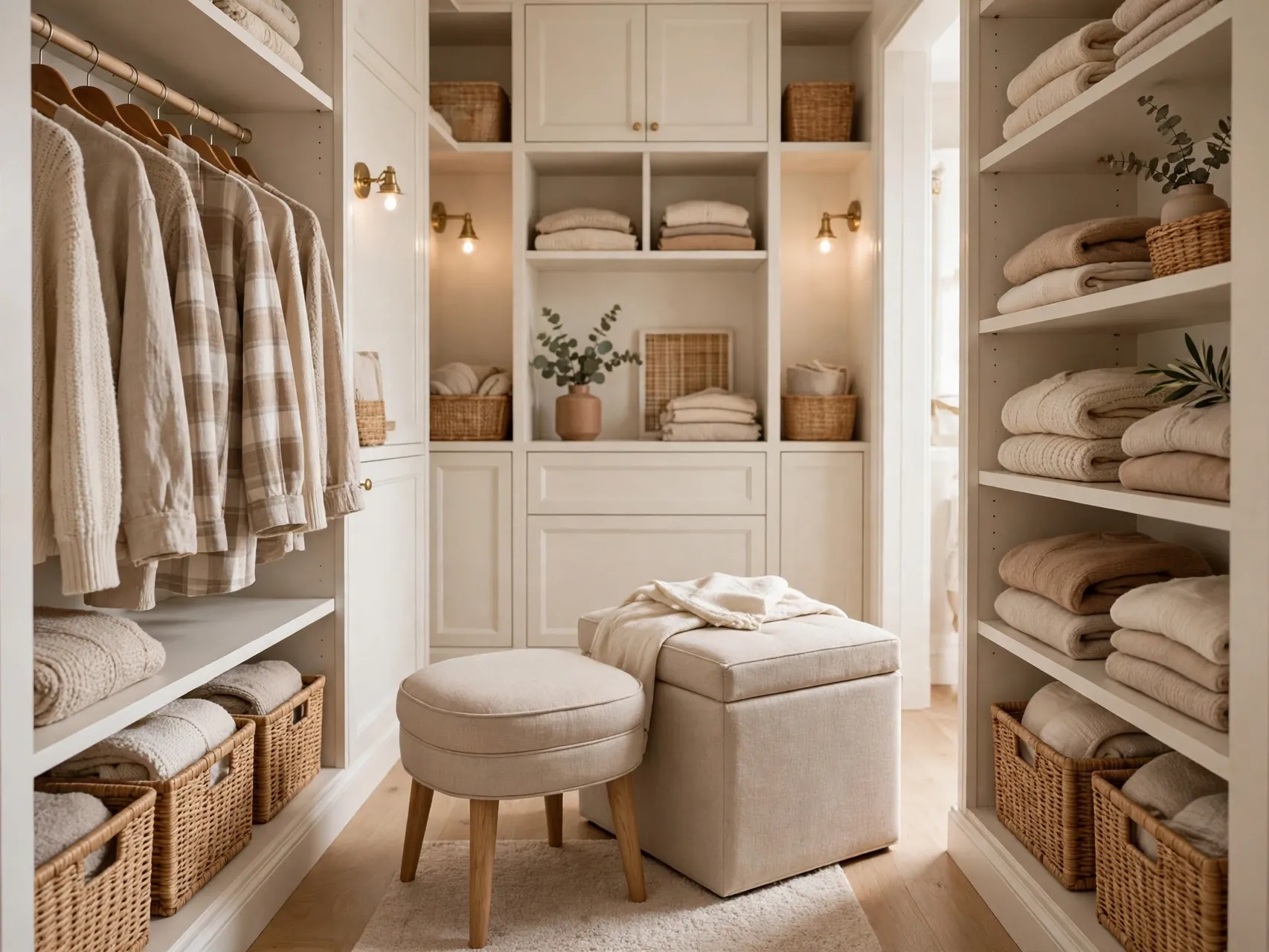
If your layout leaves a small patch of floor in the middle, a compact stool or storage ottoman can earn it. It gives you a seat for putting on shoes, a step up to the high shelf, and a hidden compartment for scarves, shoe care supplies or the donation bag you are filling.
Measure honestly first. If the stool blocks the door swing or a drawer, skip it, because open floor is also valuable in a tiny closet. This idea is a bonus for closets that can absorb it, not a requirement, and forcing furniture into a tight room works against every other idea here.
Paint It Light and Keep Finishes Consistent
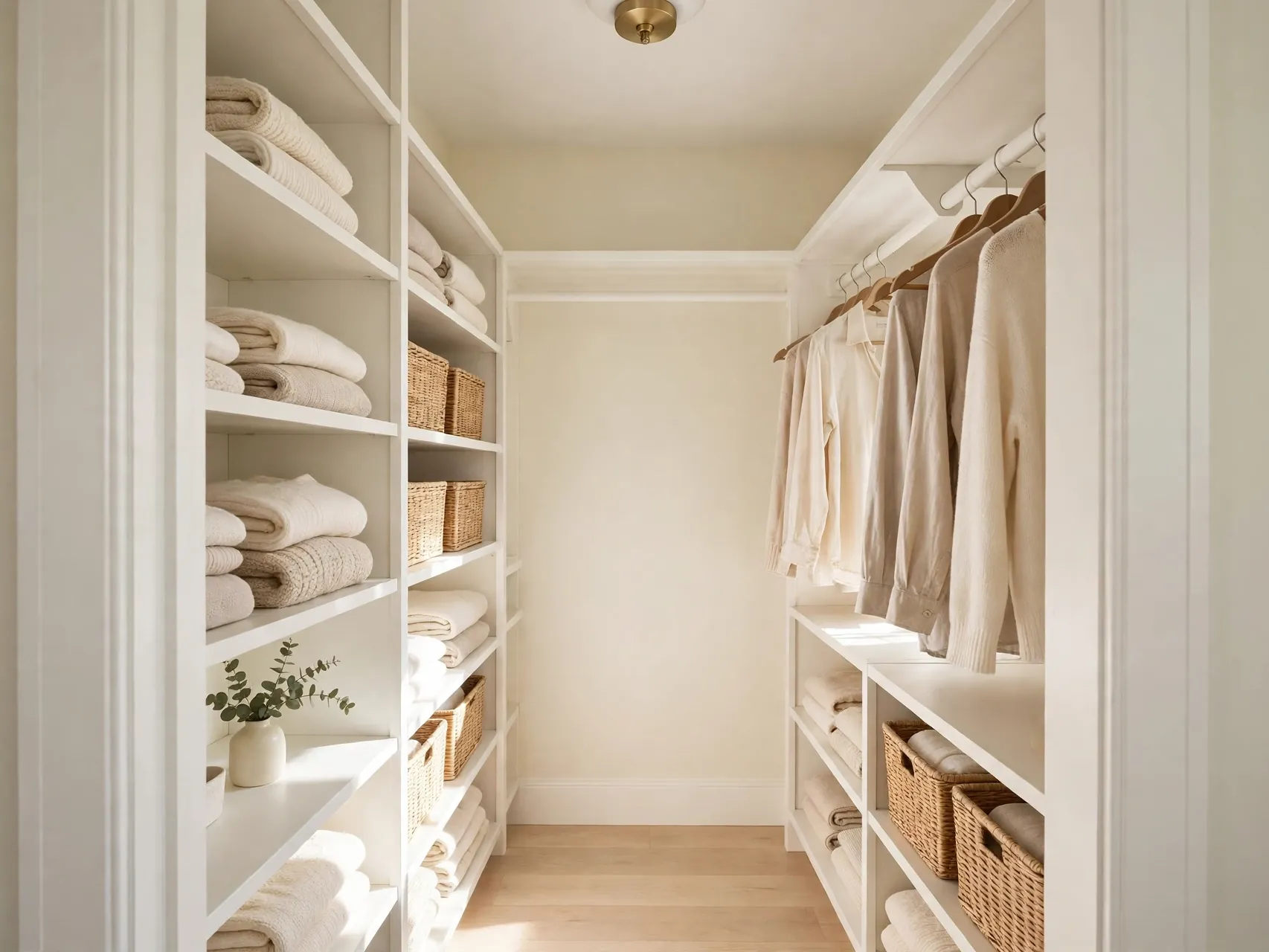
Color will not add inches, but it decides how the inches feel. Light walls, shelves and bins reflect the light you added and make the closet read as one calm space instead of a patchwork. If you love a darker mood, keep it to one accent and keep containers consistent so the look stays deliberate.
Repeat the same finish where you can: one hanger type, one basket family, one box style. Consistency is a visual trick with a practical payoff, because matching containers stack and align better too. It is the simplest way to get that tidy, styled finish Pinterest readers save.
Edit Monthly With a One In, One Out Rule
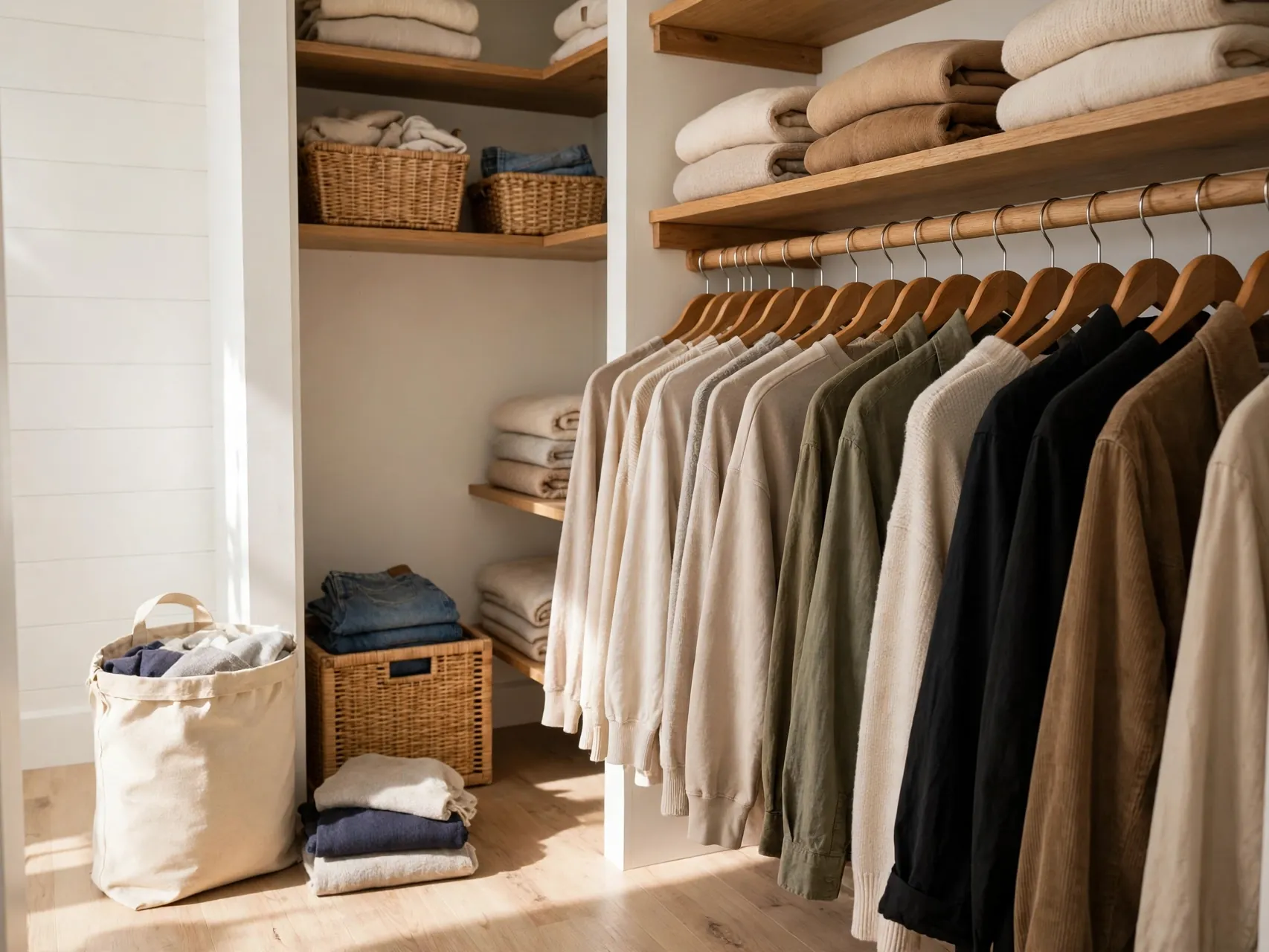
Small closets stay big feeling only if the volume stays stable. A simple one in, one out rule handles that automatically: a new sweater means an old one leaves. Pair it with a five minute monthly scan for items that migrated in from other rooms, laundry leftovers and hangers that need to go back to the main set.
Keep a small donation bag in the closet so editing happens in the moment, not during a rare full cleanout. When the bag fills, it leaves. This quiet habit protects all the layout work above, and it is why some compact closets feel calm for years while identical ones overflow.
FAQ
What is the best layout for a small walk in closet?
For a roughly square closet, a U shape uses three walls well. For a narrow closet, an L shape with hanging on the long wall and shelves or drawers on the short wall is usually better. A single wall layout suits the smallest rooms because it preserves dressing space. Sketch where you will stand before committing, since floor space to move matters as much as storage.
How can I make a small walk in closet look bigger?
Use light, consistent colors, add real lighting, put a mirror on the door or end panel, and keep the floor visible by lifting shoes and boxes onto shelves. Matching hangers and containers reduce visual clutter, which matters as much as physical space. Storing the off season elsewhere is the other big win, because a half full closet always reads larger.
How much weight can closet shelves hold?
It depends entirely on the system, which is why no single number is safe to quote. For example, one manufacturer lists a rail system at 170 lbs per linear foot and its wire shelving at 75 lbs per linear foot. Check the rating for your exact shelves and rods, anchor into studs as instructed, and spread heavy stacks out rather than loading one section.
Should a small walk in closet have drawers or shelves?
Both, if width allows. Drawers hide small and messy categories completely, which keeps the room looking calm, while shelves suit bags, folded knits and labeled boxes you want to see. A slim drawer tower between hanging sections is a common compromise. If you must choose one, choose drawers for a shared or rushed morning closet, and shelves for a single user who folds neatly.
What should I remove from a small walk in closet first?
Start with off season clothes, then duplicates revealed by color sorting, then anything you have not worn since the last seasonal rotation. Move luggage, spare bedding and memory boxes to the high shelf or out of the closet entirely. The goal is a closet that holds what you wear now, at a density where every item can be reached without moving another one.
Key Takeaways
- Layout before organizers: Pick a U, L or single wall plan and sketch your standing space before buying any system.
- Double hang and go high: Two short rods plus a shelf at the ceiling add more than any single accessory can.
- Give corners to shelves: Let one system turn the corner and stop hanging before it, so clothes stop hiding and tangling.
- Light, mirror, light colors: Bright even light and a mirror make the same square footage feel noticeably larger.
- Check your own load rating: Shelf limits vary widely by system, so follow the maker of your shelves, not a generic number.
- Edit on a rhythm: Current season only, one in and one out, and a donation bag that lives in the closet.
Love these ideas? Save this post to Pinterest so you can find it later, and pin your favorite closet layout to your home organization board before you start.