20 Junk Drawer Organization Ideas You Can Finish in 30 Minutes
Introduction
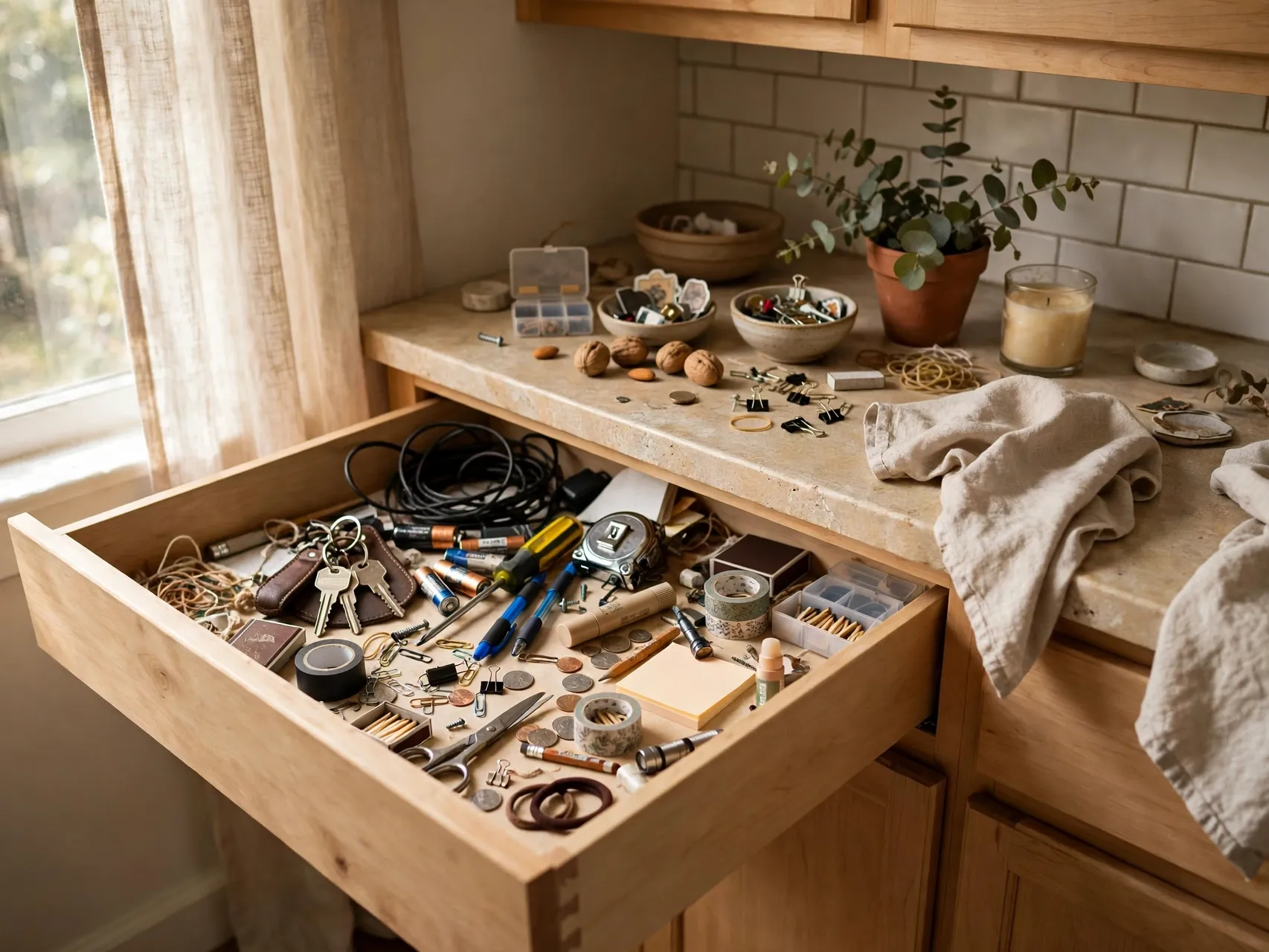
Every home has one drawer that collects everything with no clear home, and it always jams at the worst moment. These junk drawer organization ideas turn that drawer into a useful, findable spot in about 30 minutes, with no renovation, no perfect matching set, and no pressure to throw away things you actually use.
Set a timer, put a trash bag, a recycling bag, and a relocation basket beside you, and work in order. The first ideas clear and sort, the middle ideas give every group a container, and the last ideas keep the system alive in a shared house. If your drawer is very full, do the timed pass today and repeat the last few ideas next week.
You do not need to buy anything to start. Small boxes, jar lids, checkbook boxes, and sturdy food packaging you already own can prove the layout first. Buy drawer organizer ideas only after a week of living with the free version, when you know exactly which sections earn their space.
1. Empty Everything Onto a Clear Counter
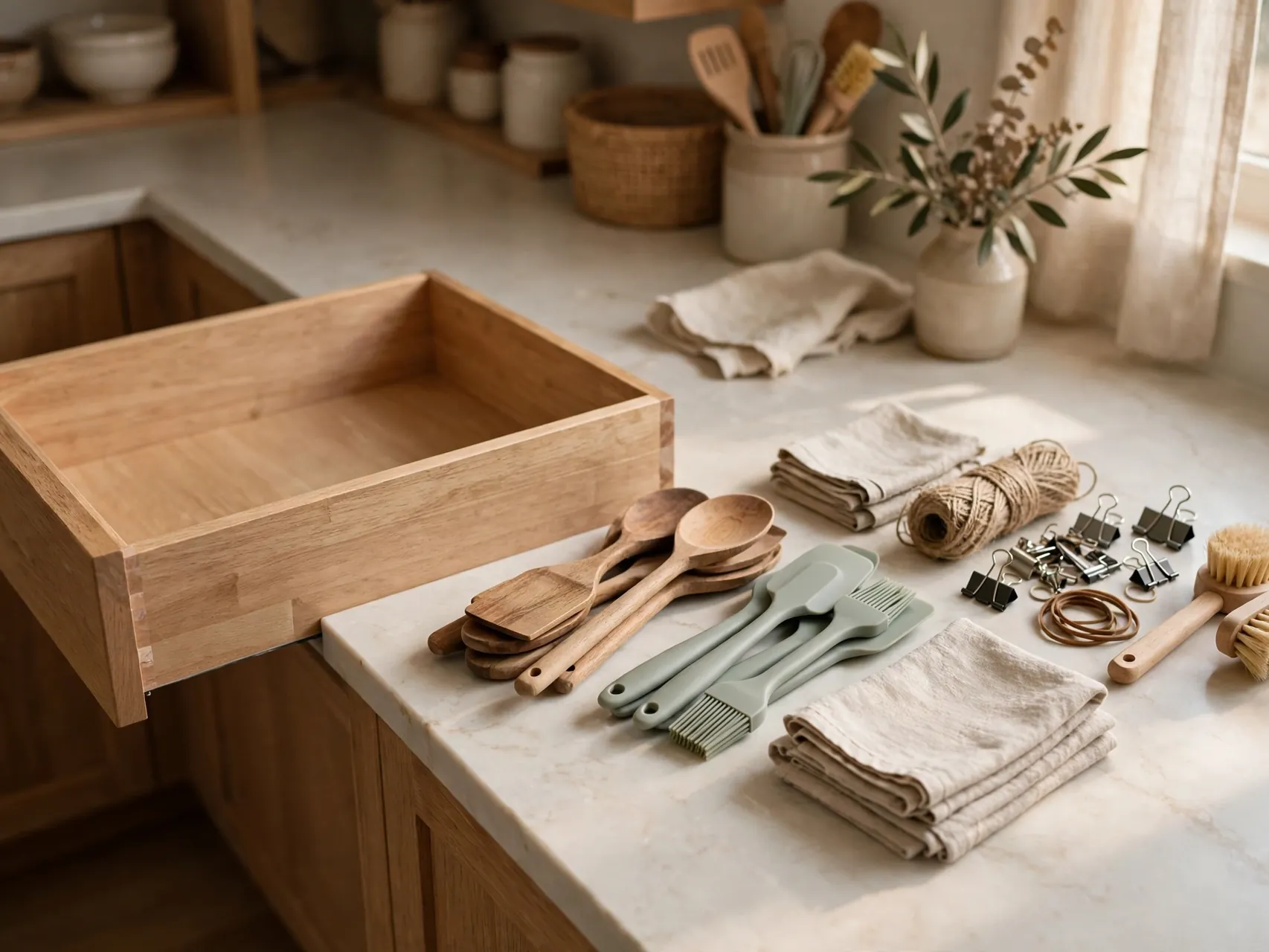
Take every single item out and lay it on a counter or table where you can see it all at once. An empty drawer tells the truth about crumbs, dust, leaking pens, and mystery items in a way that tidying in place never does, and it stops you simply rearranging the same clutter.
Tip the drawer over a trash bag if it lifts out easily, shake out crumbs, and wipe the inside clean. If you use a cleaner, follow the label, then dry the drawer fully before anything goes back. A clean, dry, empty box is the fresh start this whole project needs.
2. Sort Into Four Simple Piles

Sort fast into four piles: keep in this drawer, belongs somewhere else, recycle or discard, and not sure yet. Move quickly and trust your first instinct, because slow deciding is how a 30 minute job becomes an afternoon. Pens get tested as you sort, not later.
Limit the not sure pile to a handful of items. Anything broken, dried out, expired, or missing its partner leaves now. The goal of how to organize a junk drawer is not ruthless minimalism, it is a drawer where every remaining item has a reason and a section waiting for it.
3. Test Every Pen, Marker and Battery

Scribble with every pen and marker on scrap paper and discard the ones that skip, leak, or have dried out. Check flashlights and small devices too, and set dead batteries aside in a separate small container rather than loose in the drawer, ready for proper drop off.
Follow EPA guidance for batteries: keep button and coin batteries out of reach of young children, tape terminals or place batteries in separate plastic bags, and take lithium, button cell, and rechargeable batteries to a recycler, retailer takeback, or household hazardous waste program. Never drop those batteries loose in household trash or curbside recycling.
4. Move Out Everything That Belongs Elsewhere

Carry the belongs elsewhere pile to its real home right away: tools to the toolbox, medicines to the bathroom cabinet, documents to your files, cosmetics to the bathroom, and spare keys to a labeled hook or envelope. A kitchen junk drawer organization plan fails when the drawer tries to serve every room in the house.
Keep the drawer for daily grab and go items for the room it sits in, usually the kitchen or entry. One clear purpose makes sorting next time almost automatic, because an item either supports that purpose or it clearly lives somewhere else.
5. Keep Only Five or Six Categories

Look at what survived the sort and name five or six broad categories at most, such as writing supplies, tape and scissors, small tools, batteries and chargers, clips and fasteners, and one open catch spot. Broad groups survive real life, while fifteen tiny categories collapse the first busy week.
Write the categories on a sticky note before you choose containers. If a group is tiny, merge it with its nearest neighbor. If a group is overflowing, it may need its own home outside this drawer entirely. Fewer, clearer sections are the secret behind small drawer organization ideas that actually stay tidy.
6. Measure the Drawer Before Choosing Containers
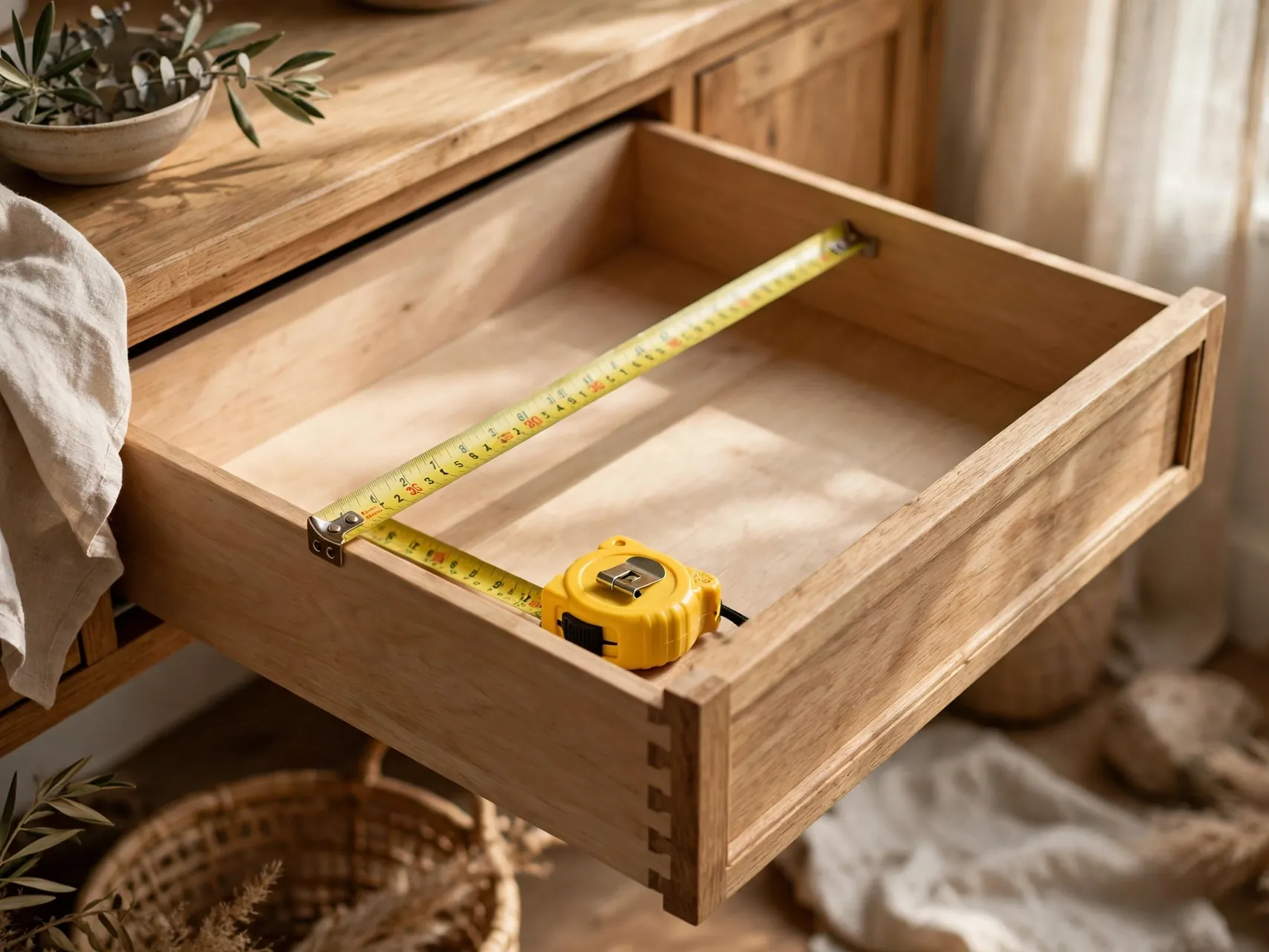
Measure the inside width, depth, and height of the drawer and write the numbers on your phone before you shop or hunt the house for boxes. Most failed drawer projects are really measuring projects, with trays that almost fit and lids that stop the drawer closing.
Leave a small margin so containers lift out easily and fingers can reach the back row. Note anything odd, like a sloped front or a handle screw inside. Good measurements turn a pile of random boxes into a calm grid, and they stop impulse buys that waste money and space.
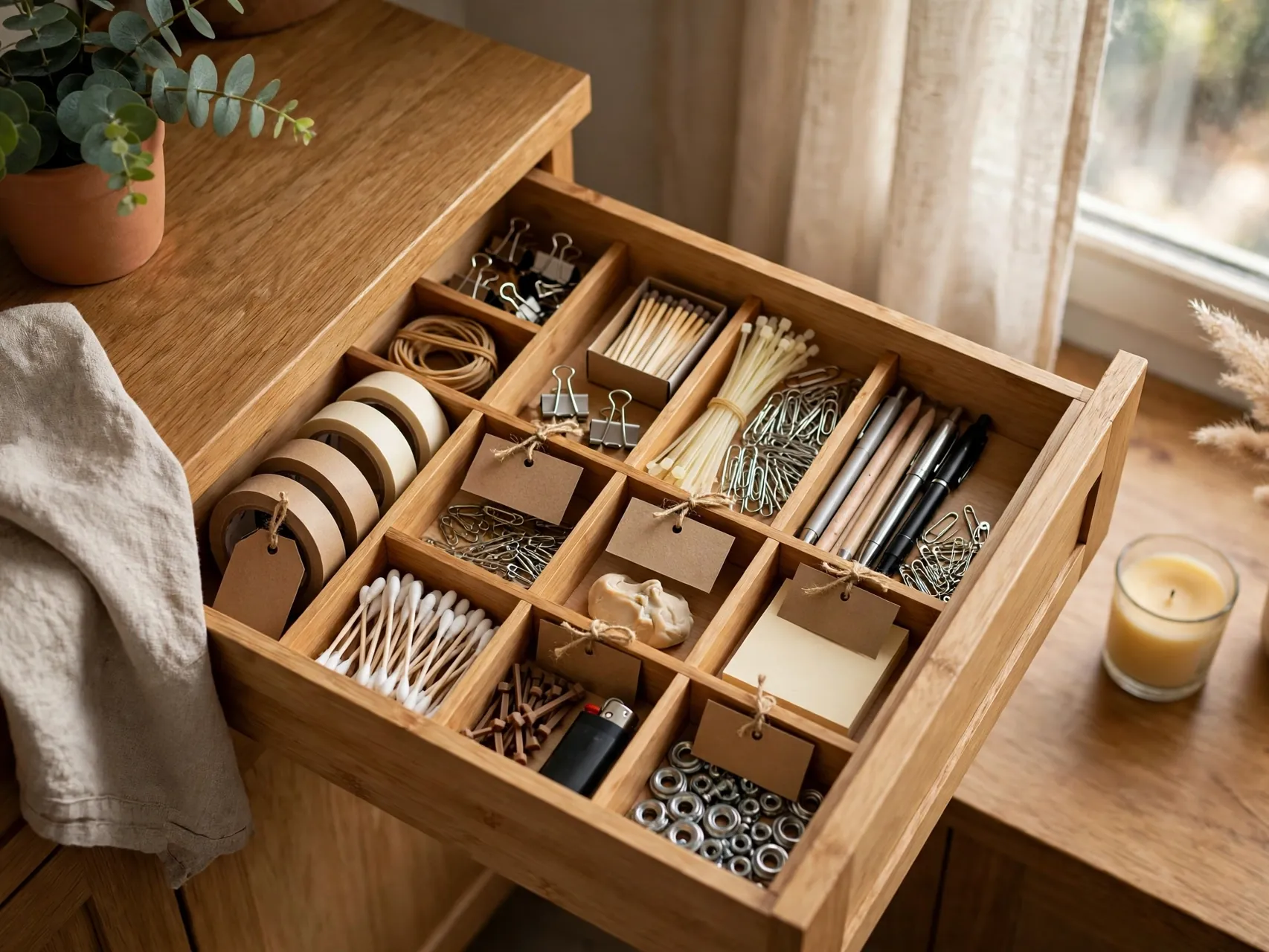
7. Use a Shallow Divided Tray as the Base

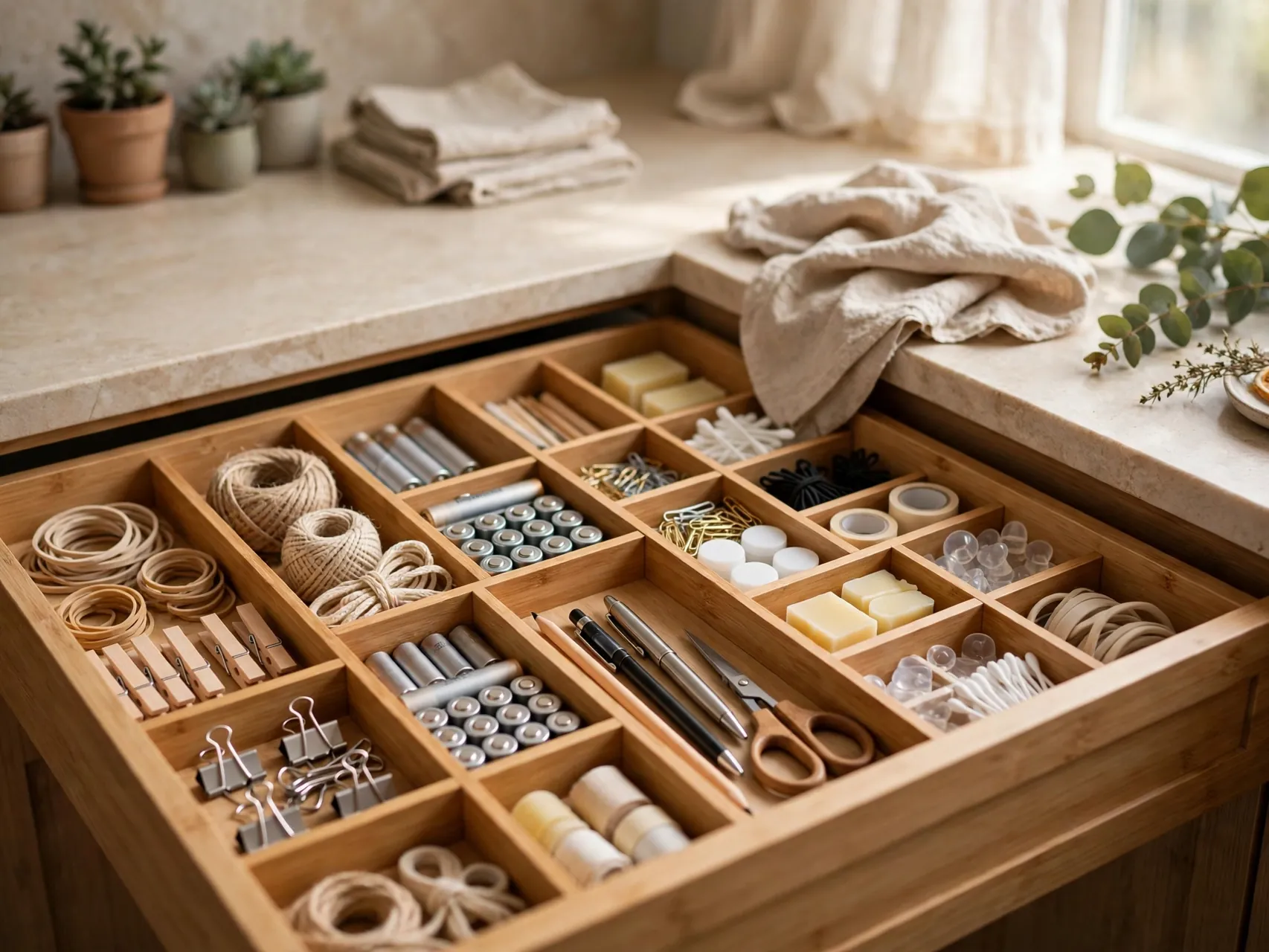
Start with one shallow divided tray for the items you reach for daily. Shallow beats deep in a junk drawer, because most contents are flat or small and deep bins just bury the bottom layer. Bamboo, clear plastic, and sturdy recycled trays all work if the size is right.
Place the tray at the front where hands land first, with pens, scissors, tape, and a notepad inside. If dividers slide, add a non slip liner underneath or a little reusable adhesive putty at the corners, following the product directions. One anchored tray makes the whole drawer feel intentional.
8. Add Small Containers for Tiny Loose Items

Give paper clips, rubber bands, screws, buttons, safety pins, and spare change their own tiny containers so they stop migrating into every corner. Small jars with lids, mint tins, and clear mini boxes all work, and clear sides mean you can find things without opening each one.
Keep lids on anything sharp or easy to spill, and store spare keys in a labeled envelope or small pouch rather than loose. This single idea removes most of the rummaging noise from a drawer, because tiny items are what make a tidy drawer feel messy again fastest.
9. Corral Cords and Chargers in One Pouch

Gather every loose cord, earbud, and charger into one zip pouch or small box, coil each cord loosely, and secure it with a twist tie or hook and loop strap. Label cords you cannot identify, test them within a week, and recycle cords for devices you no longer own through your local electronics options.
Loose cords are drawer tanglers that wrap around everything else, so containing them changes the feel of the whole drawer. Keep only the cords your household uses weekly here, and store specialty cables with the device they belong to instead.
10. Create One Small Catch Spot on Purpose
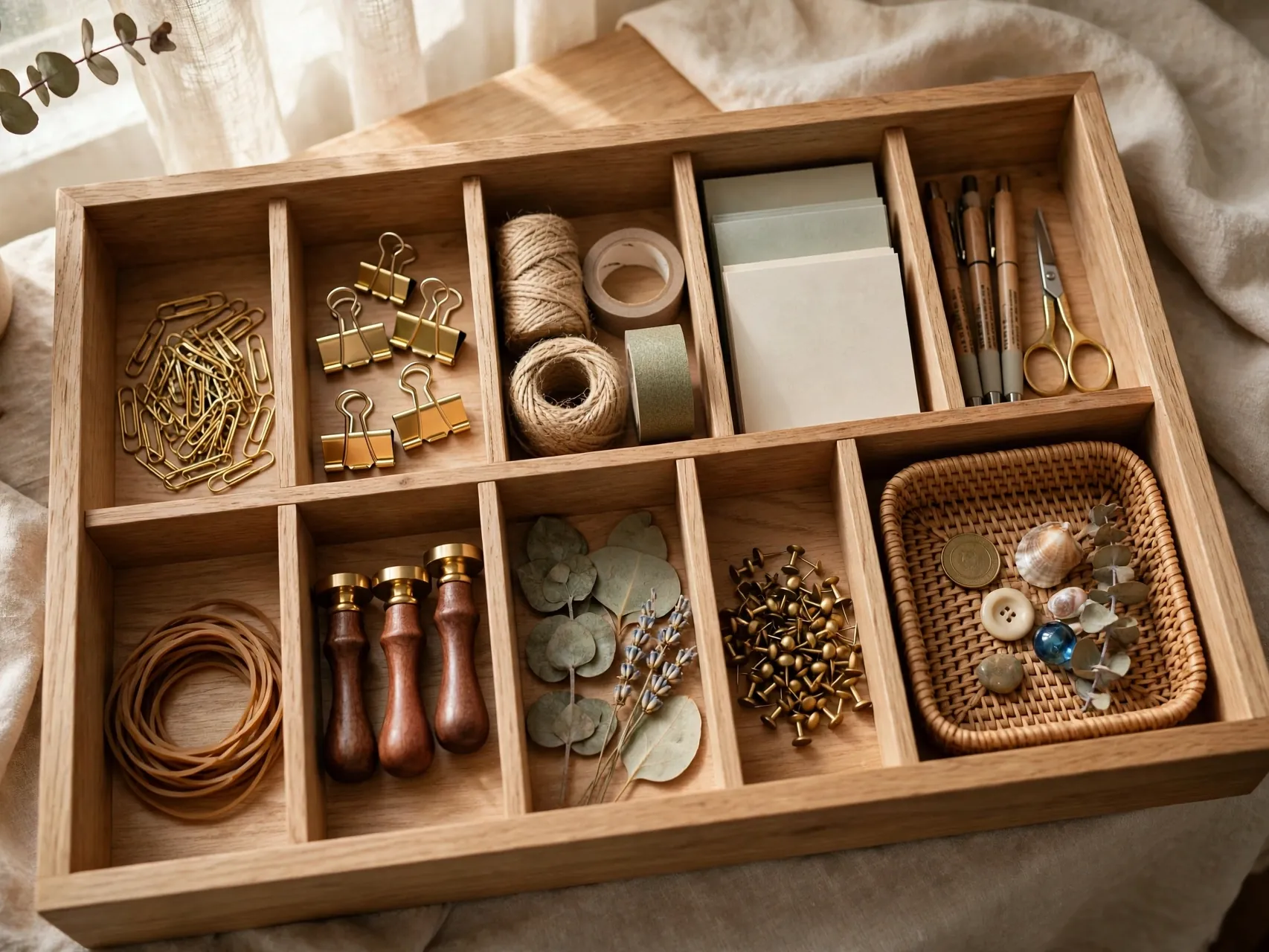
Leave one small open section as the official catch spot for undecided items: the odd screw, the mystery key, the coupon you might use. A planned catch spot protects the labeled sections, because the drop it here habit gets a legal home instead of spreading everywhere.
Keep the catch spot small, about the size of one tray section, and review it during your weekly tidy. When it overflows, that is the signal to sort, not to expand it. Naming the chaos honestly is what makes these junk drawer organization ideas survive a real household.
11. Store Batteries Upright in a Labeled Container
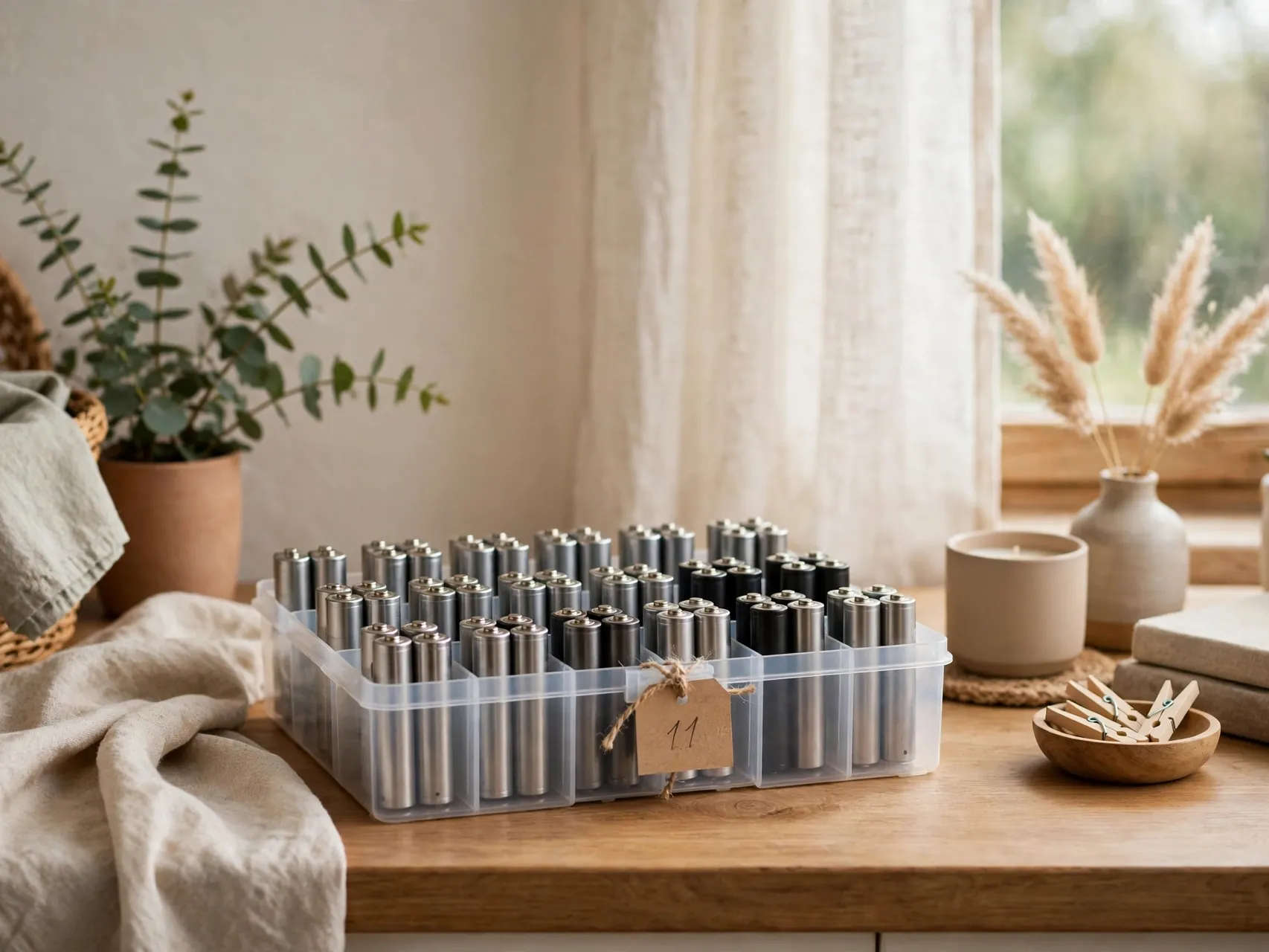
Keep spare batteries together in one small labeled container, ideally in original packaging or separated so terminals do not touch loose metal items like coins and keys. Store the container where children cannot reach it, especially button and coin batteries, which are a swallowing hazard for young children.
Check dates when you sort, move older batteries to the front, and set spent ones aside for proper drop off as described earlier, taped or bagged separately per EPA guidance. A dedicated battery spot also stops the classic drawer problem of buying more because the spares were impossible to find.
12. Add a Slim Notepad and Pen Station
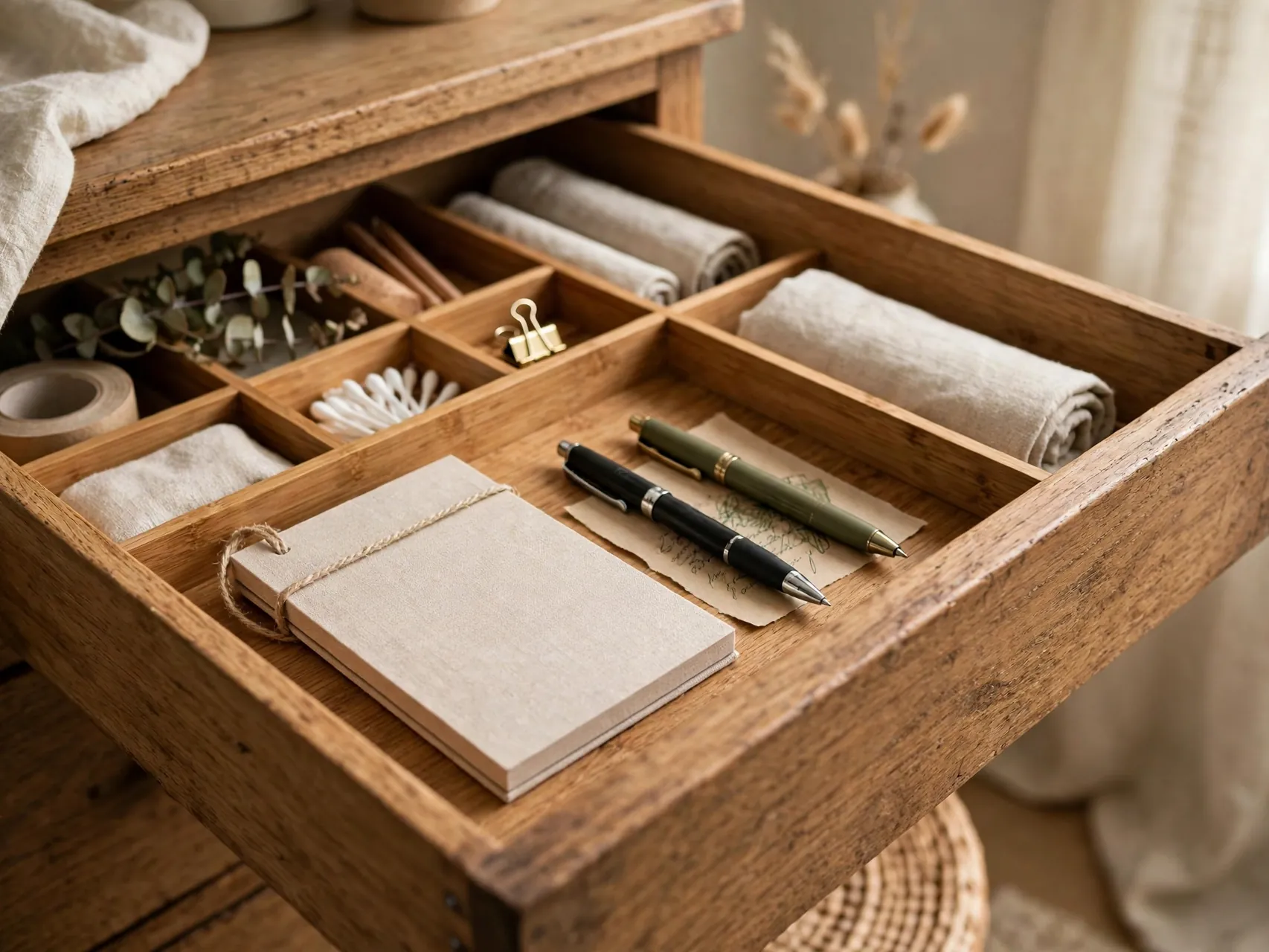
Reserve a slim space at the front for a notepad, sticky notes, and two pens that definitely work. Lists, measurements, and quick messages are half the reason people open this drawer, so serving that job well makes the whole system feel useful instead of precious.
Keep only one pad in the drawer and store refills elsewhere. Restock paper when the pad runs low rather than stacking three spares that crowd out tools. A tiny, reliable writing station is one of those drawer organizer ideas guests and family members quietly appreciate every single day.
13. Keep Scissors, Tape and a Box Cutter Together
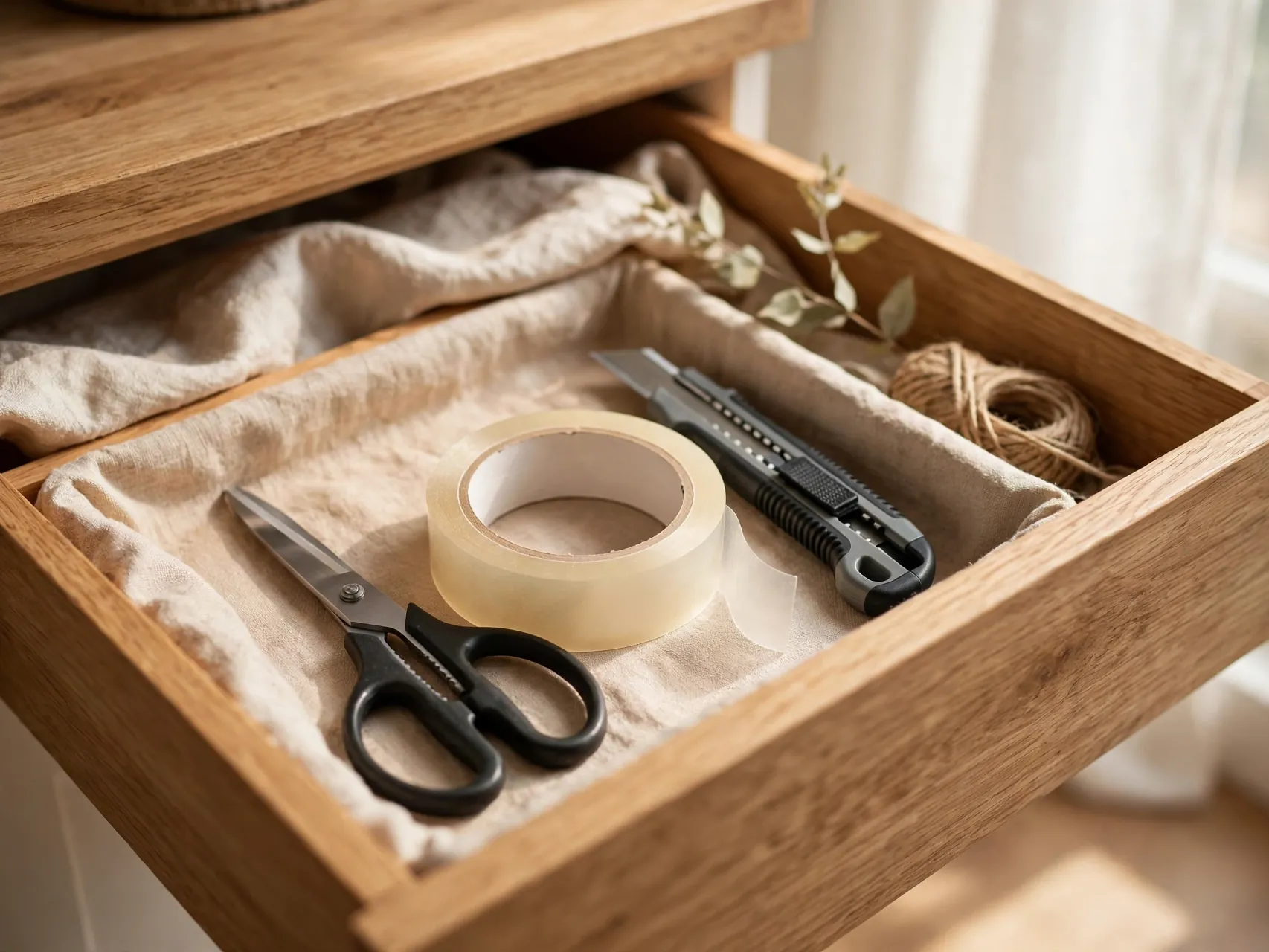
Group the opening and fixing trio together: scissors, clear tape, and a box cutter or package opener, plus a roll of painter tape if your household uses it often. Package opening happens daily in most homes, and hunting three separate drawers for it is pure friction.
Store blades safely with guards on or retracted, pointing away from where fingers reach in, and keep this section out of reach of young children or choose a higher drawer. When the trio lives together, returning it together becomes automatic, which is the real maintenance system.
14. Use the Drawer Sides for Flat Items

Slide flat items along the sides or underneath the trays: envelopes, a ruler, a folded set of appliance instructions, takeout menus you actually use, and a small calendar card. Flat storage uses the awkward edges that trays waste, without adding visual clutter on top.
Review paper ruthlessly. Photograph manuals and menus you can find online, recycle expired coupons, and keep only paper you reach for monthly or more. One slim paper zone keeps the drawer from becoming a filing cabinet, while still holding the few sheets that genuinely earn a place.
15. Label Every Section, Even Simply

Label each tray and container with a label maker, masking tape and a marker, or small tags. Labels feel optional for the person who organized the drawer and essential for everyone else in the house, because they teach the system without a lecture every time something is put away.
Keep labels short: Tools, Tape, Batteries, Writing, Catch. In a shared home, labels are what stop the slow drift back to one mixed pile. Replace a label when a category changes, and let the label, not memory, be the rule everyone follows.
16. Try a No Buy Layout With Boxes You Own

Before buying anything, build the whole layout from cut down cereal boxes, checkbook boxes, small shipping boxes, and jar lids. Trim boxes to drawer height with scissors, tape any rough edges, and live with the grid for a week to see which sections are too big or too small.
This free test is the most honest of all small drawer organization ideas, because it reveals your real categories before money is spent. When you do buy trays later, you will buy once, in the right sizes, for sections that have already proved they work.
17. Set a One In, One Out Rule

Adopt a simple one in, one out rule for the drawer: a new gadget, cord, or tool joins only when something similar leaves, gets relocated, or is recycled. Drawers do not explode in a day, they grow by one harmless addition at a time until nothing fits.
Make the rule visible with a small note inside the drawer lid or on the catch spot label. When a section overflows, edit that section the same day rather than wedging items in. Small, quick edits are far easier than another full clear out in six months.
18. Move Rarely Used Items Out Completely

Be honest about frequency. Furniture touch up kits, specialty tools, holiday items, and that one cable for a yearly task do not need daily real estate. Move them to a labeled box in a closet, garage, or utility space, and note the new home on your category sticky note if needed.
The junk drawer should serve the week you actually live, not every possible future. Clearing the rarely used layer is what leaves breathing room, and breathing room is what makes a drawer stay calm instead of jamming shut under pressure.
19. Do a Five Minute Friday Reset

Pick one weekly moment, Friday after dinner or Sunday during a wider reset, and give the drawer five honest minutes. Return strays to their sections, empty the catch spot decisions you can make, test any new pen that appeared, and toss obvious trash like twist ties and dead coupons.
Five minutes weekly beats an hour quarterly, because drift is tiny and easy to correct while it is small. Tie the habit to something you already do, like starting the dishwasher, so the reset happens without relying on memory or motivation.
20. Photograph the Finished Drawer for Reference

Take a clear photo of the finished drawer and save it where you can find it, on your phone or pinned inside a nearby cabinet door. The photo is your reset map: when life gets busy and sections blur, you can restore the layout in minutes without rethinking the whole system.
Share the photo with your household too, so everyone knows what tidy looks like here. Update it whenever you change a category or container. This simple closing step turns a one time tidy into a lasting kitchen junk drawer organization system the whole house can maintain.
FAQ
How long does it really take to organize a junk drawer?
About 30 minutes for most drawers if you sort into four piles, keep only five or six categories, and use containers you already own. Very full drawers or drawers shared by many people may need a second short session. Set a timer, finish the sort and layout first, and save fine tuning like new labels for later.
What should not stay in a junk drawer?
Remove medicines, important documents, broken or leaking items, dead batteries waiting loose, sharp tools without guards, and anything you use only once or twice a year. Those belong in a bathroom cabinet, a file, a toolbox, or a labeled storage box. Keeping the drawer to daily and weekly items is what keeps it useful.
How do I store batteries safely in a drawer?
Keep spares in one labeled container, in original packaging where possible, away from loose coins and keys, and out of reach of young children. Per EPA guidance, tape terminals or bag spent batteries separately, and take lithium, button cell, and rechargeable batteries to a recycler, retailer takeback, or household hazardous waste program instead of household trash.
Do I need to buy drawer organizers?
No. Cut down boxes, small jars, mint tins, and checkbook boxes can build the full layout for free. Live with that version for a week, note which sections work, and only then buy shallow divided trays in measured sizes if you want a longer lasting set. Measuring first prevents most wasted purchases.
How do I keep the junk drawer tidy in a shared house?
Label every section, keep categories broad, protect one small catch spot for undecided items, and do a five minute weekly reset to return strays. A photo of the finished drawer helps everyone restore the layout the same way. When a section overflows, edit it the same day instead of expanding it.
Key Takeaways

- Empty, sort, decide fast: Four piles and a timer turn a jammed drawer into a clear plan in minutes.
- Five or six categories only: Broad labeled groups with one small catch spot survive real household life.
- Contain the tiny things: Small jars and pouches for clips, cords, keys, and batteries stop the rummage factor.
- Handle batteries properly: Keep them out of reach of children, tape or bag spent ones, and use a proper drop off per EPA guidance.
- Maintain in five minutes: A weekly reset and a one in, one out rule prevent another full clear out.
Finished your 30 minute drawer win? Save this guide to Pinterest and pin your before and after photo to inspire your next small reset.