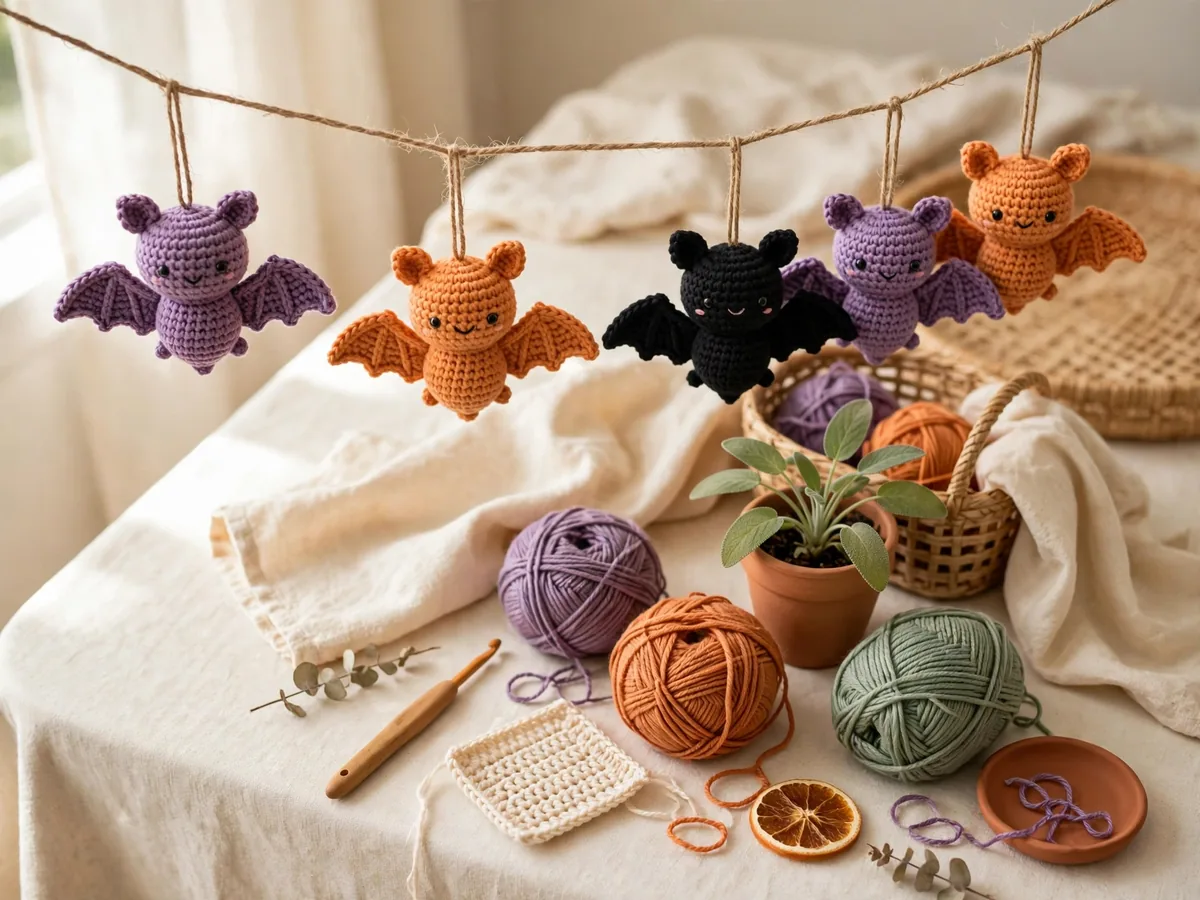
24 Crochet Bat Pattern Ideas for Cute Halloween Decor
Introduction
A tiny crochet bat can soften any Halloween display. Perched on a pumpkin, hanging from a garland, or peeking out of a candy bowl, it brings the cute side of the season into your home, and it uses up small balls of leftover yarn beautifully. That is why a good crochet bat pattern is worth saving every fall.
This guide is a collection of ideas, not a copy of any single pattern. It covers plush amigurumi bats, flat appliques, garlands, squares, and display ideas, with general and accurate guidance on stitches, shaping, and finishing that you can pair with any pattern you own or buy.
Most bat projects use basic stitches: magic circle, chain, single crochet, increase, invisible decrease, and slip stitch, worked in continuous rounds for plush toys. Keep tension tight for amigurumi so stuffing does not show, use a stitch marker, and choose embroidered eyes over safety eyes for toys for children under three.
1. Classic Amigurumi Bat Plush

The classic plush starts with a round head and body worked in single crochet in continuous spiral rounds, shaped with increases and invisible decreases. Separate wings, ears, and tiny feet are sewn on at the end, which keeps the main body simple for beginners.
Use a hook smaller than the yarn label suggests for a tight fabric, stuff firmly but not hard, and add a smiling mouth and tiny white fangs with embroidery or felt. This is the core amigurumi bat pattern most makers learn first.
2. No Sew Bat With Wings Worked In
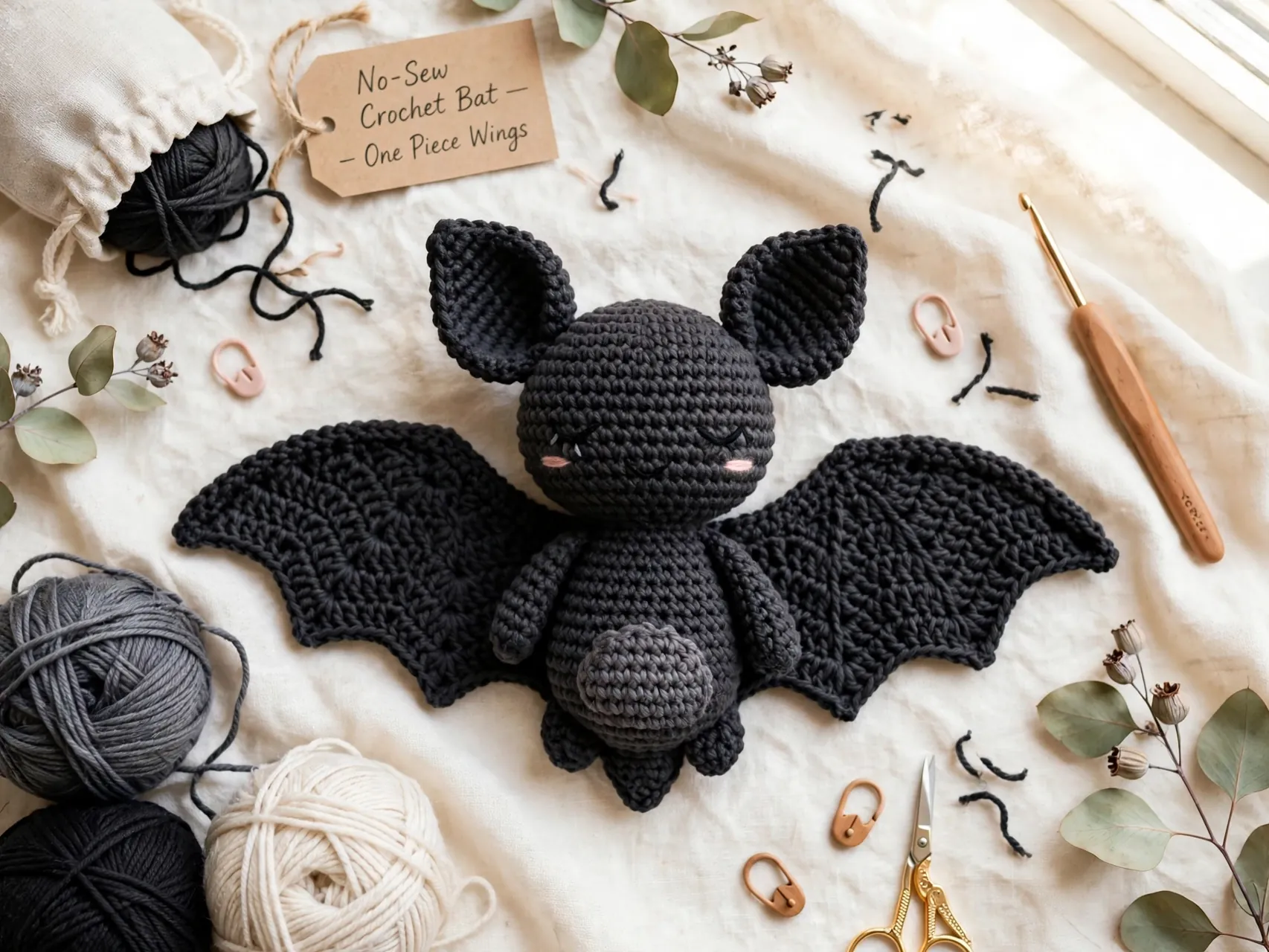
No sew designs shape the wings and ears as part of the body rounds, or pick them up from the body as you go, so there are no small pieces to attach at the end. They are faster, neater, and popular for market and gift making.
Follow your chosen pattern order carefully, because no sew shaping depends on stitch placement. Count rounds with a marker, try the piece in your hand as you go, and keep decreases invisible for a smooth, professional finish.
3. Tiny Bat Keychain
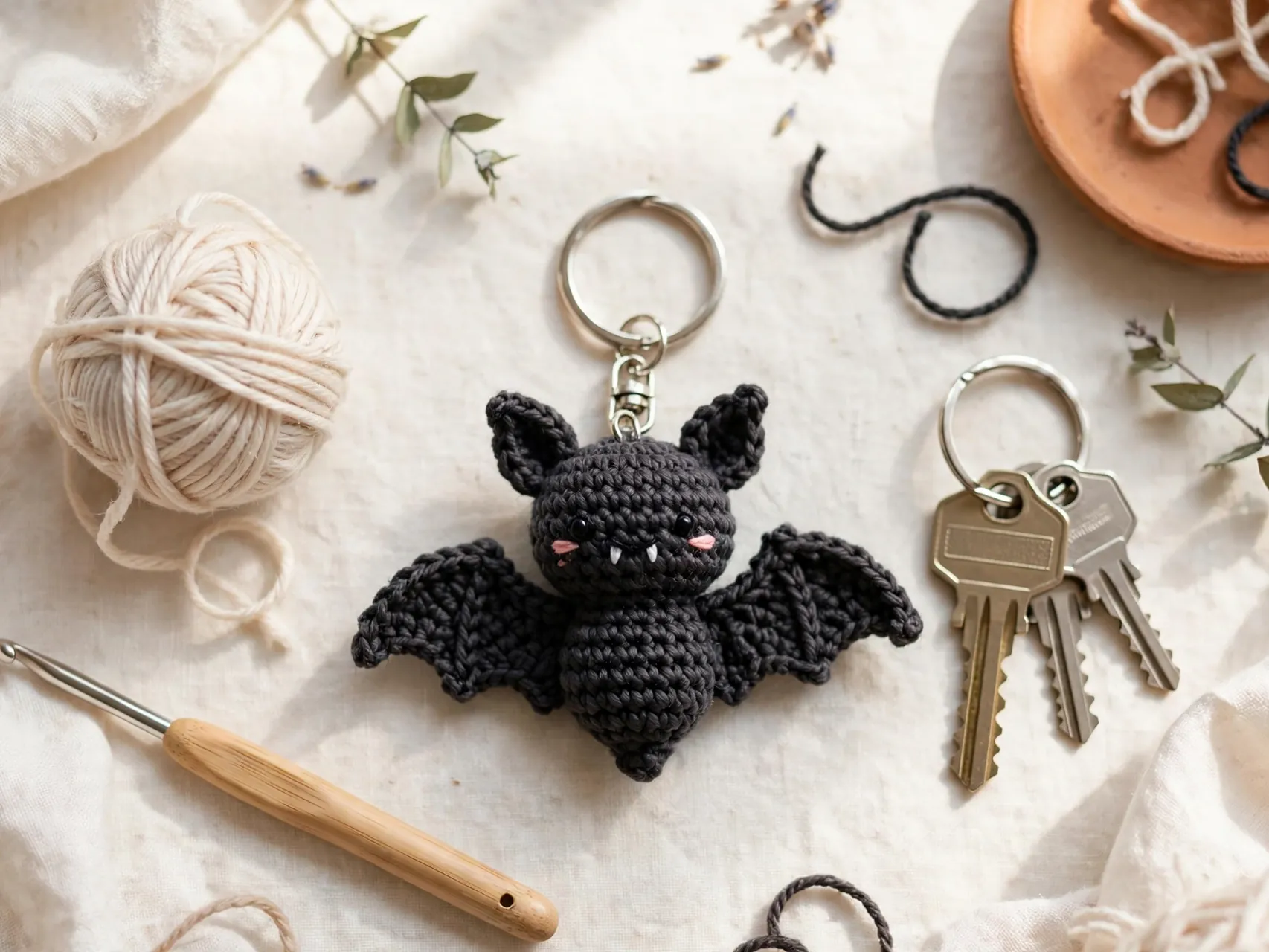
Work a mini version of the plush bat with sport or DK yarn and a small hook, then add a keyring or lobster clasp through a chain loop at the top. Tiny bats take very little yarn and finish in a short sitting.
Keep stuffing light so the keychain does not feel bulky in a pocket or bag. Embroidered eyes and mouth are best here, because small plastic parts can come loose with daily use, and a tight, secure finish matters most.
4. Chunky Chenille Bat for Cozy Decor
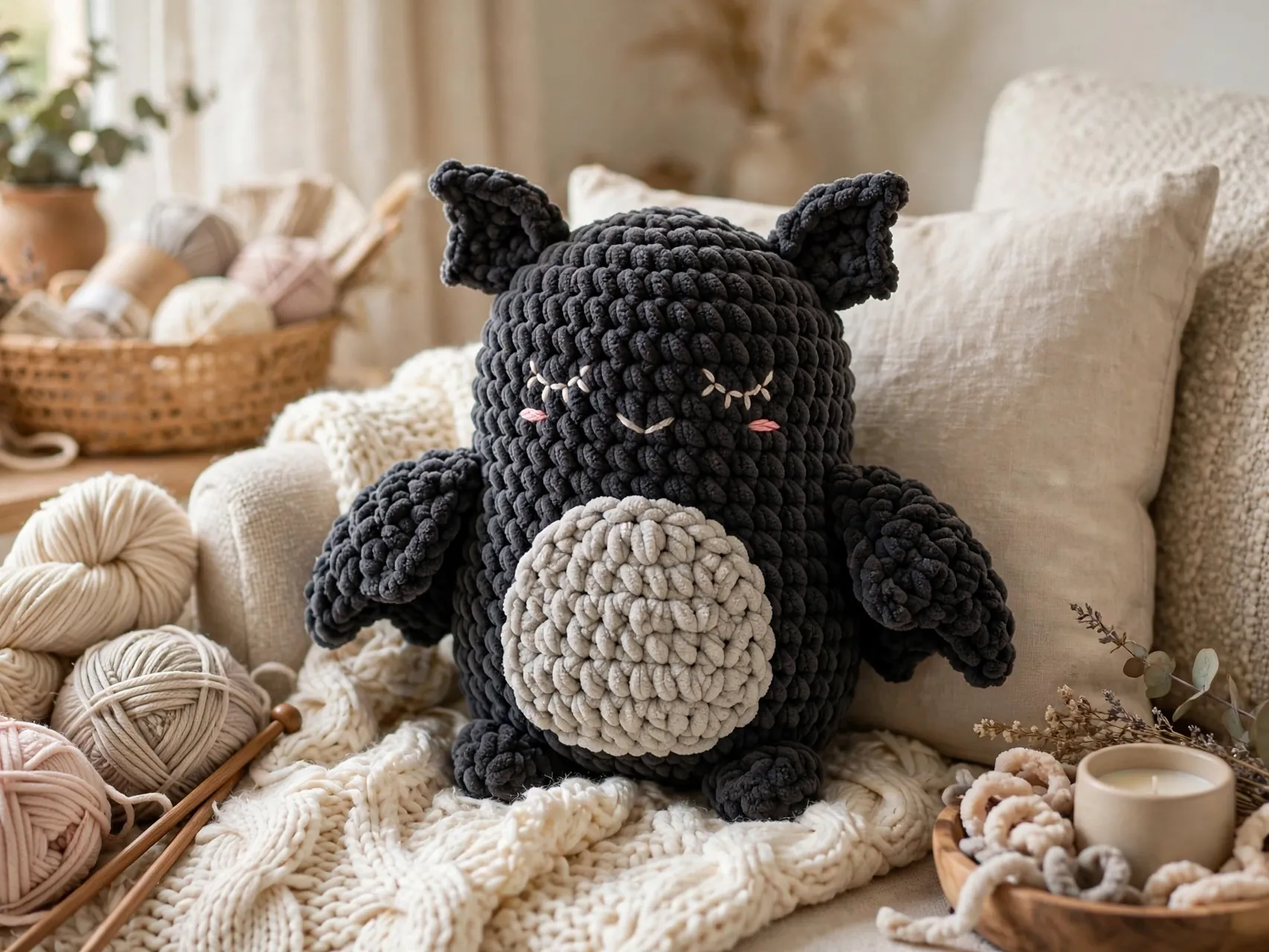
Bulky chenille or blanket yarn with a larger hook makes a soft, squishy bat much faster and much bigger than a standard yarn version of the same pattern. The stitches are easy to feel, which many beginners enjoy.
Chenille sheds if cut often, so plan color changes carefully and weave ends securely. A chunky bat works beautifully as a shelf sitter, a reading pillow companion, or a gentle Halloween toy for older children who no longer mouth toys.
5. Pastel Kawaii Bat
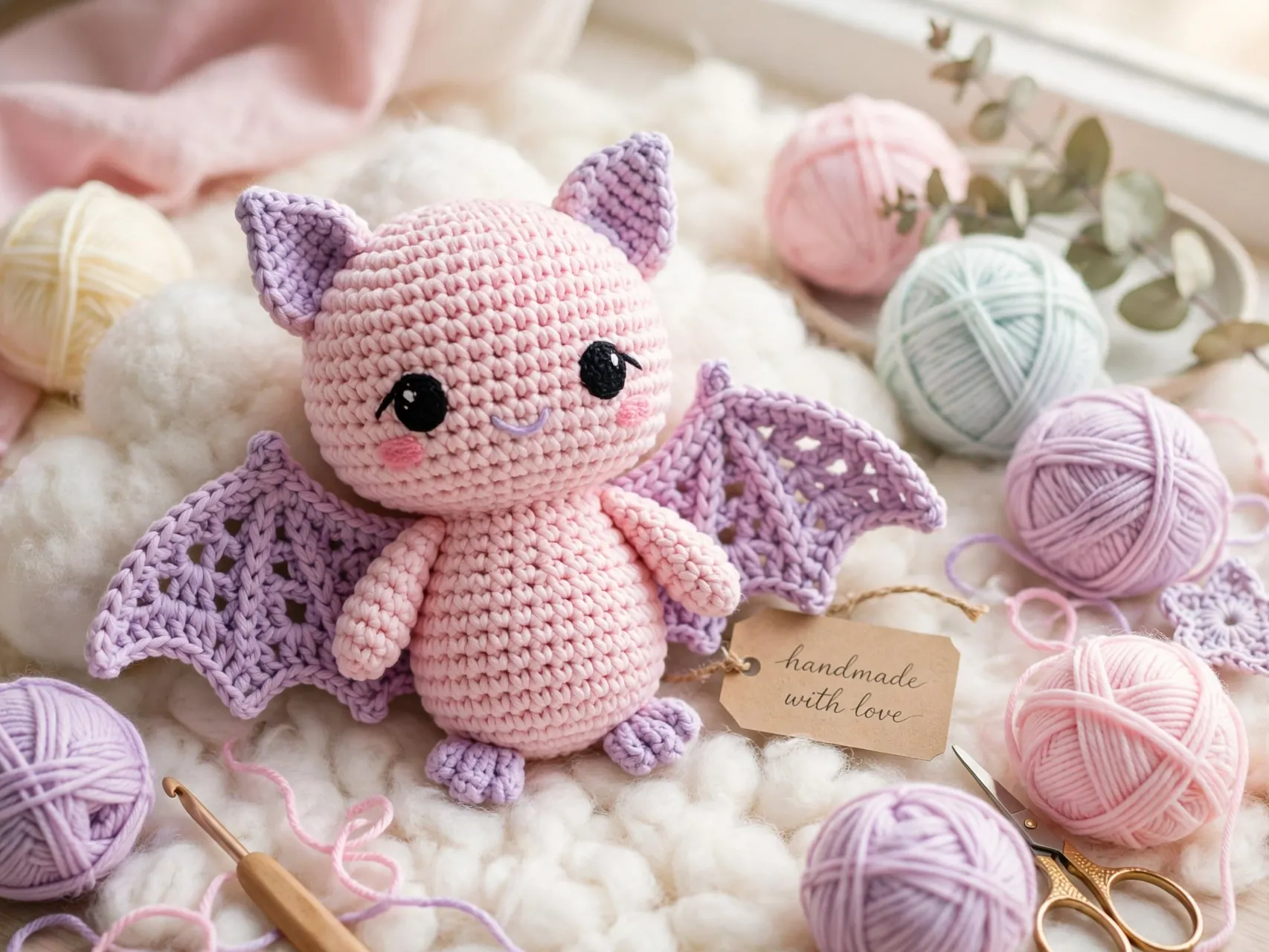
Swap black and gray for lavender, blush pink, mint, or cream, add rosy cheeks, and keep the face sweet with a small smile. Pastel bats suit cute Halloween decor, nurseries with a soft seasonal touch, and anyone who prefers pretty over spooky.
Pair pastel bats with white pumpkins and soft garlands for a calm display. If the bat is for a baby or toddler, embroider all features, skip safety eyes and small parts, and supervise play with any handmade toy.
6. Hanging Bat With Loop for Ceiling Decor

Add a strong chain loop or a length of yarn at the top of the head, or attach the bat upside down by its feet for a roosting pose. A group of hanging bats over a party table or in a window creates instant Halloween atmosphere.
Hang bats at different heights, keep them clear of light fittings and heat, and make sure strings are secure and out of reach of young children. Light stuffing helps hanging bats keep their shape without pulling.
7. Flat Bat Applique for Garlands and Cards

A flat applique bat is worked in rows or in a small oval with shaped wing edges, using chain, single crochet, half double crochet, and double crochet to form the wing curves. Appliques lie flat for sewing or gluing onto other projects.
Use appliques on garlands, tote bags, hats, cards, and wreaths. Block the finished piece flat if it curls, weave ends neatly, and choose a contrasting yarn color so the bat shape reads clearly against its background.
8. Bat Garland With Many Small Bats
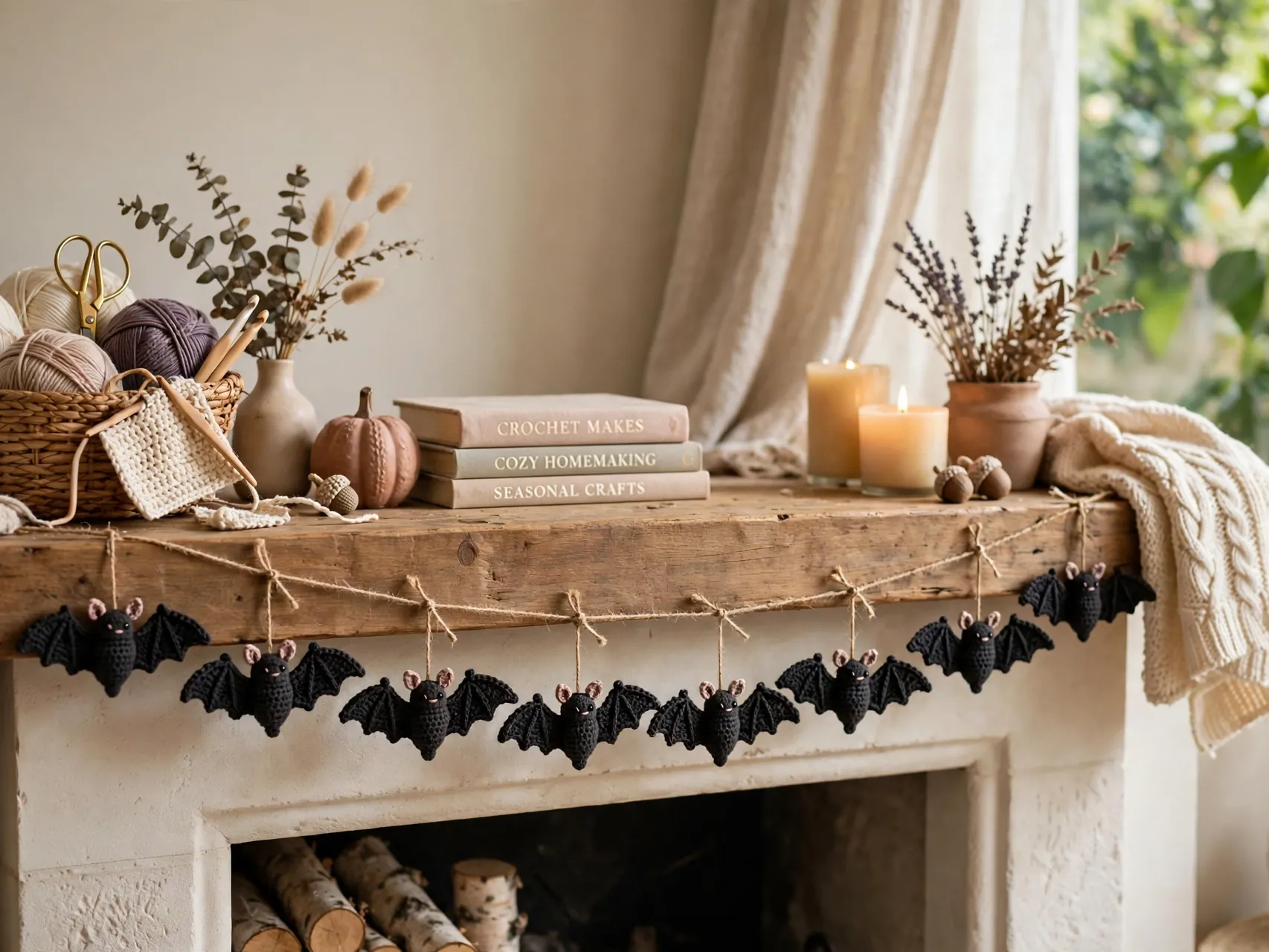
Make five to nine small flat or mini plush bats and string them on a crochet chain, twine, or yarn strand with small spaces between them. Alternate bat colors, like black, gray, and purple, for a playful rhythm.
Garlands suit mantels, windows, classroom walls, and party backdrops. Keep the strand secure at both ends, avoid hanging any garland near candles or heaters, and store it flat or loosely rolled so wings do not crush.
9. Bat Granny Square for Blankets and Cushions

A bat motif square places a bat shape in the center of a granny style square, worked with clusters and chain spaces, then squared off with plain rounds. Join many squares for a Halloween blanket, cushion cover, or table runner.
Keep your tension even so squares match in size, count corners carefully, and block finished squares to the same measurement before joining. Mix bat squares with plain purple, orange, and black squares to stretch a small motif across a big project.
10. Bat Wreath With a Plush Centerpiece Bat
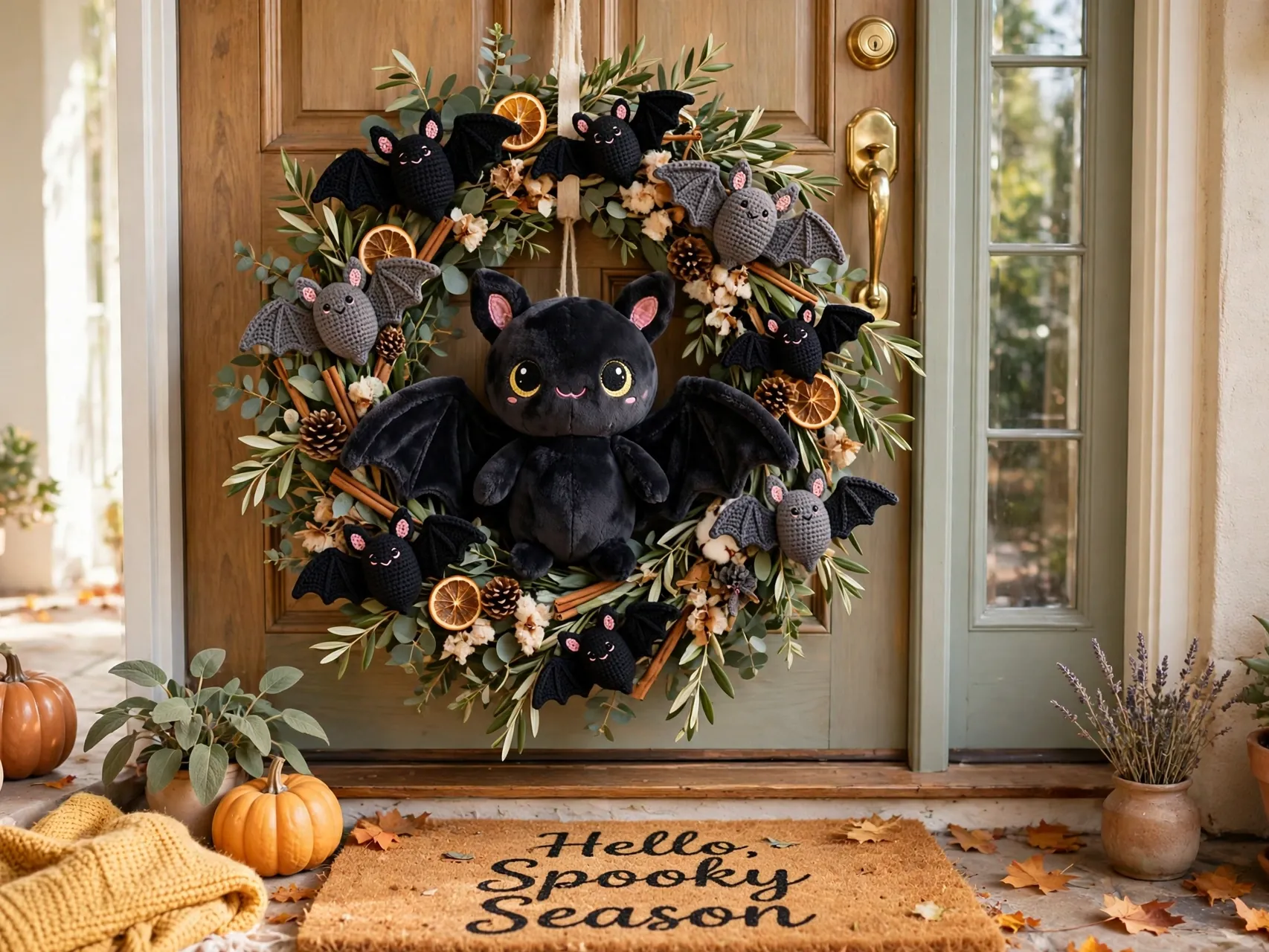
Attach one medium plush bat to a plain wreath base, then add small applique bats, crochet pumpkins, or felt leaves around it. The single bat becomes a friendly focal point for a front door or hallway wall.
Secure every piece firmly, because door wreaths move daily. Use this as indoor or covered porch decor, keep yarn decor out of rain, and check that no small parts can work loose where young children can reach them.
11. Vampire Bat With Cape Collar
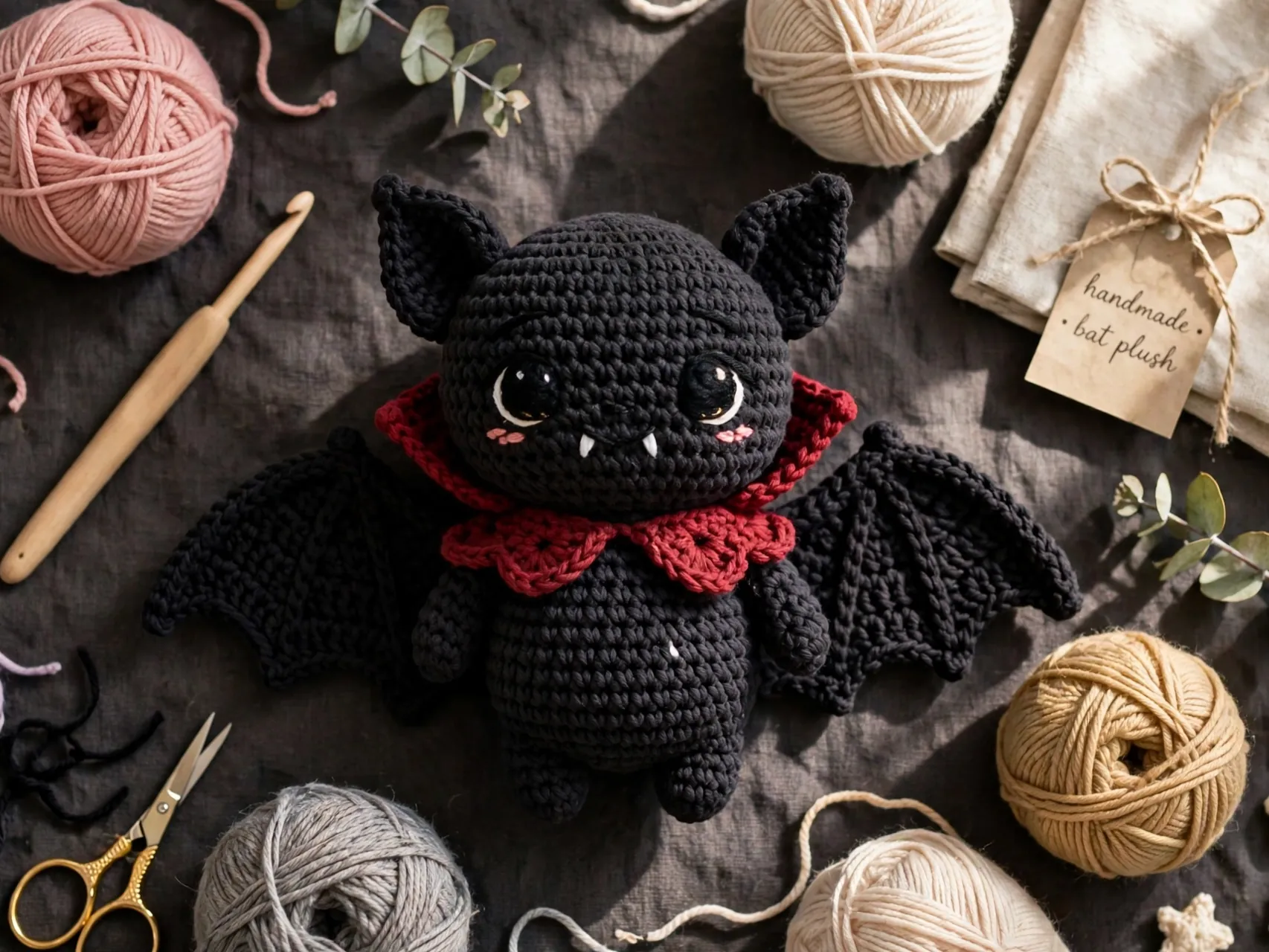
Add a small pointed collar in red or black, a tiny cape at the back, and a more dramatic grin with two clear fangs. This character version is a favorite for Halloween parties and photo props, and it starts conversations on a craft table.
Keep collar and cape pieces sewn flat and secure, so they do not flap loose. A vampire bat pairs well with a classic black bat and a pastel bat as a trio, giving you a full display from one basic body pattern.
12. Bat With Movable Wings on Buttons or Joints
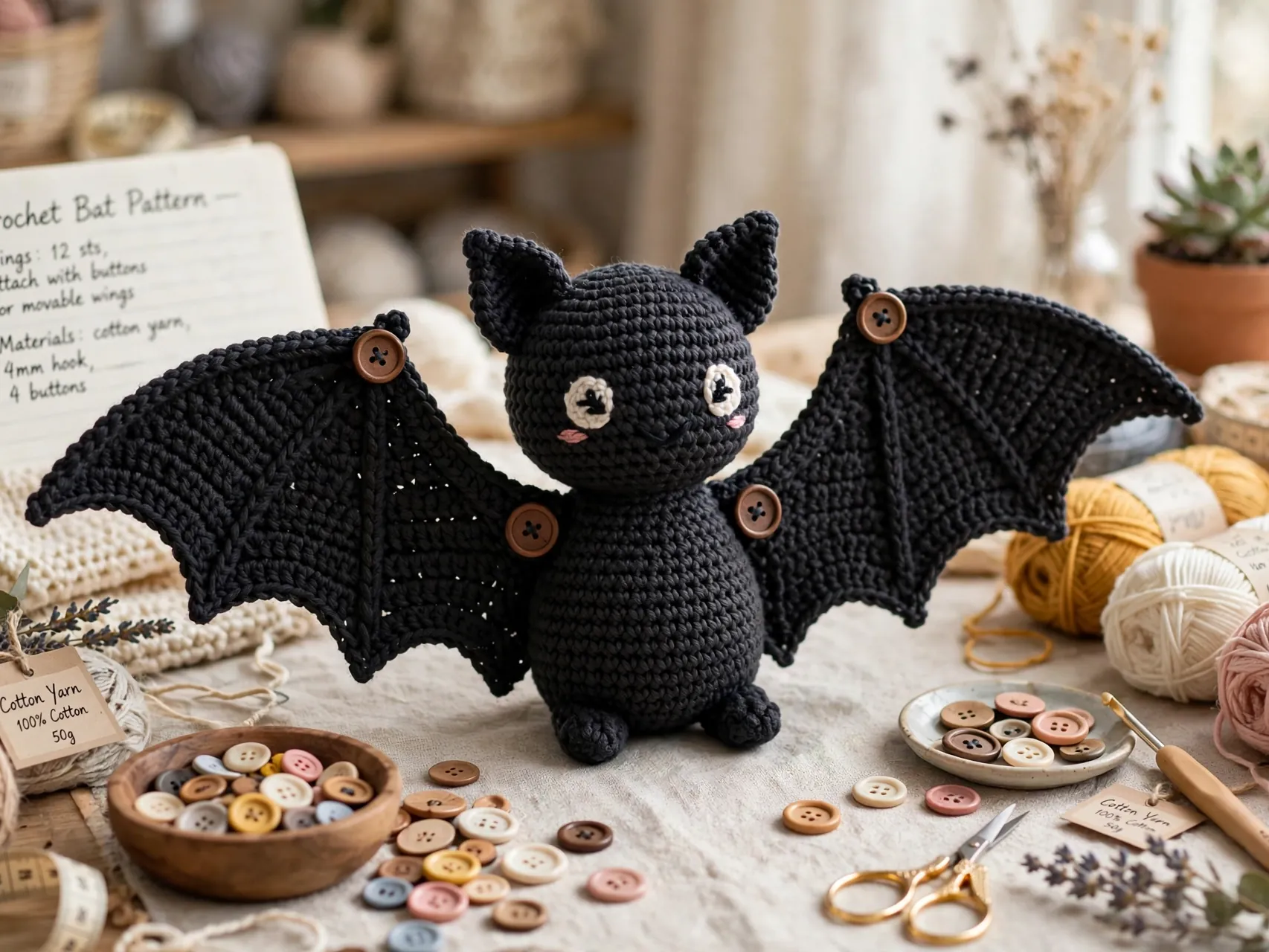
Some patterns attach wings with buttons or thread joints so the wings can fold and open. Children love posing these bats, and makers love showing them in photos with wings spread wide for full effect.
This version suits older children and display use, because button joints are small parts and need checking. Sew buttons on with strong thread and test the joint firmly. For young children, choose sewn fixed wings and embroidered features instead.
13. Mini Bat Dumpling Style Plush
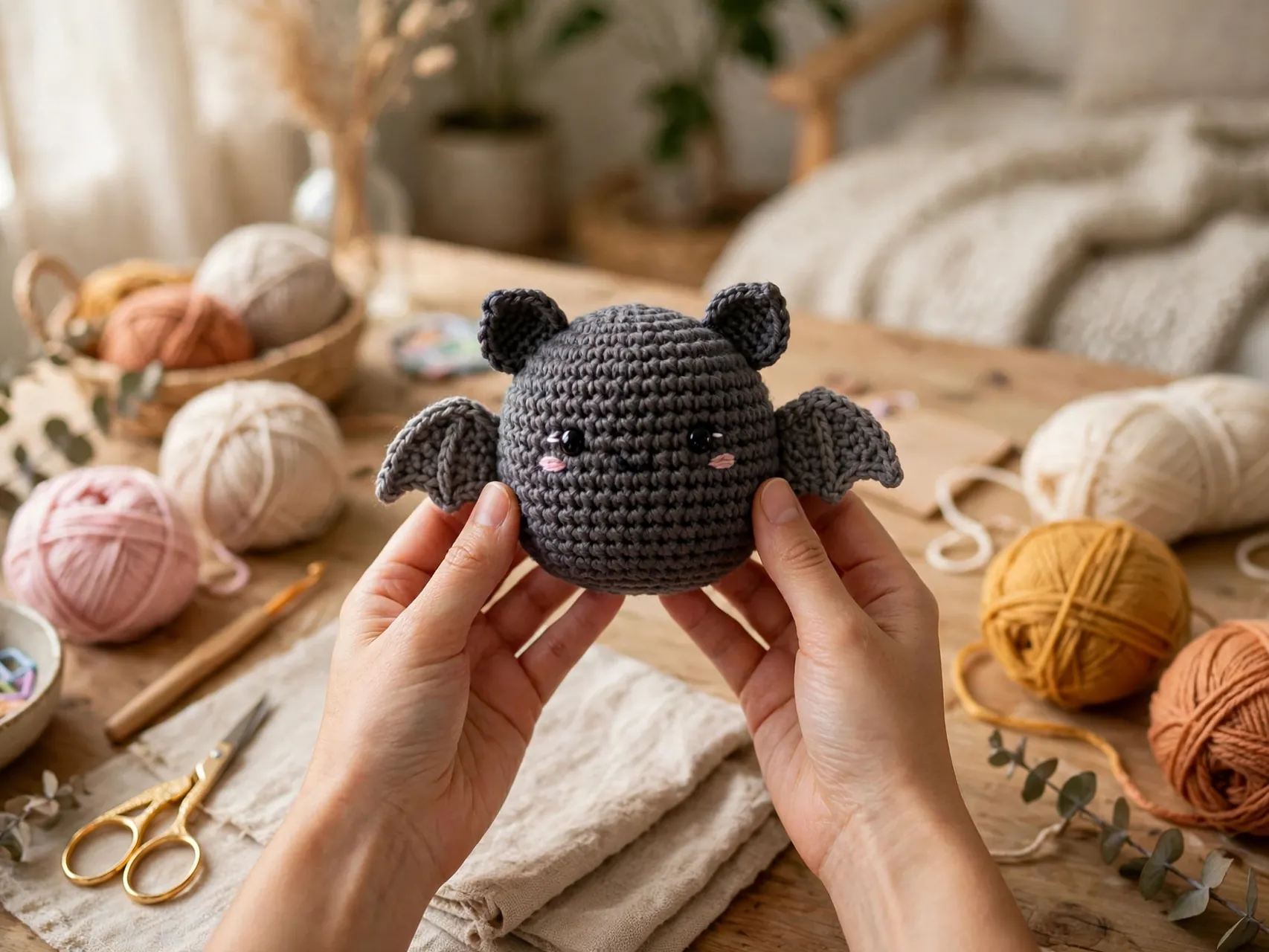
Dumpling style amigurumi uses a simple round body, tiny wings, and minimal features for a palm sized bat that works up very quickly. A set in Halloween colors makes a sweet bowl filler or a group of party favors.
Because these are small and fast, they are ideal for using scraps and for practicing even tension and invisible decreases. Add a different face to each one, sleepy, happy, surprised, so the set feels like a little bat family.
14. Bat Bookmark With Flat Wings
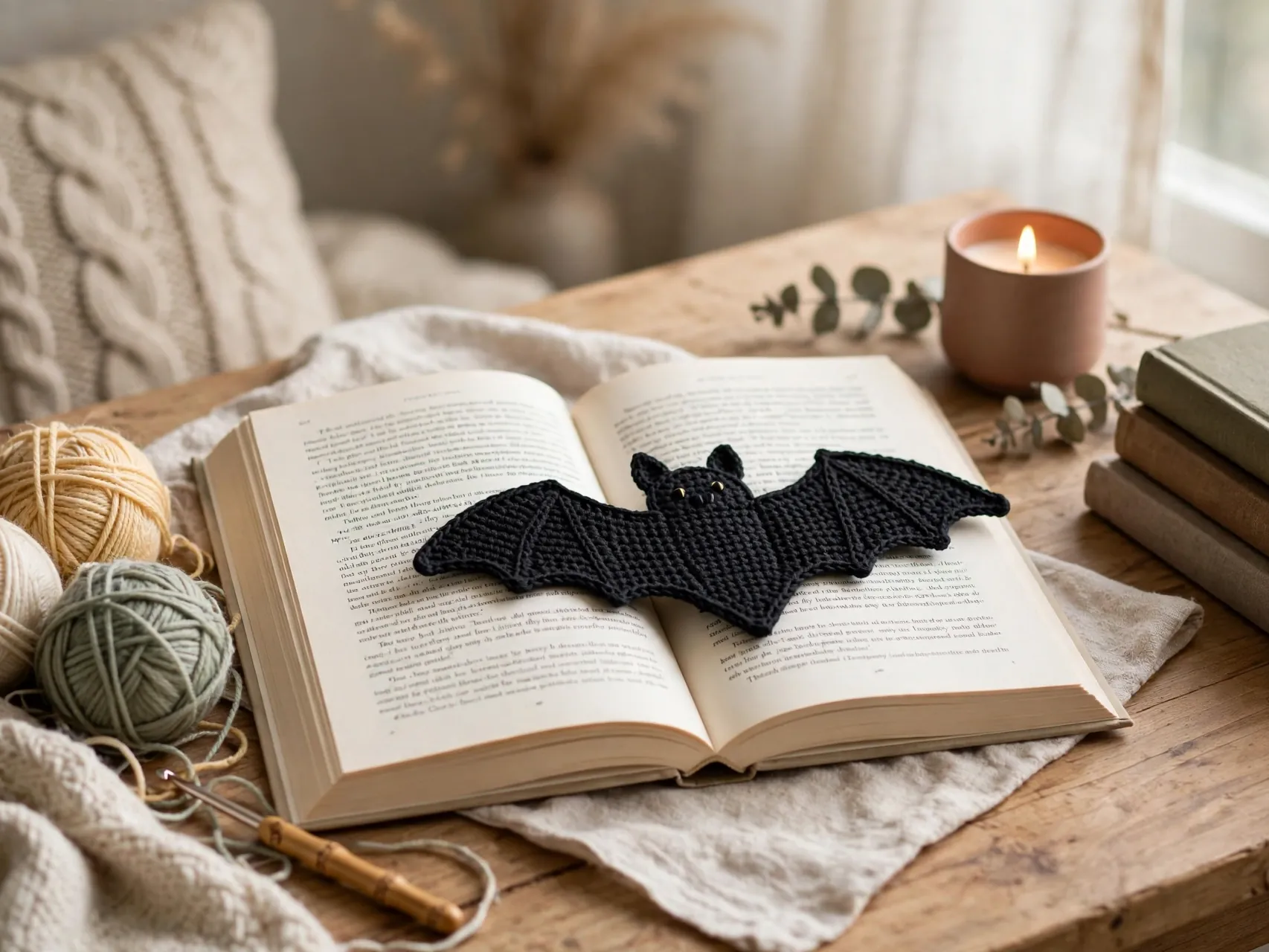
A flat bat body with long wings, or a bat head attached to a long crochet strip, makes a bookmark that peeks out of a book with its wings or ears showing. Use thin cotton yarn so the bookmark does not bulk out the pages.
Keep the strip smooth with no raised parts in the middle section, and add the face at the top end only. Bat bookmarks make thoughtful, non-candy Halloween gifts for teachers, classmates, and reading groups.
15. Bat Coaster Set for a Halloween Table
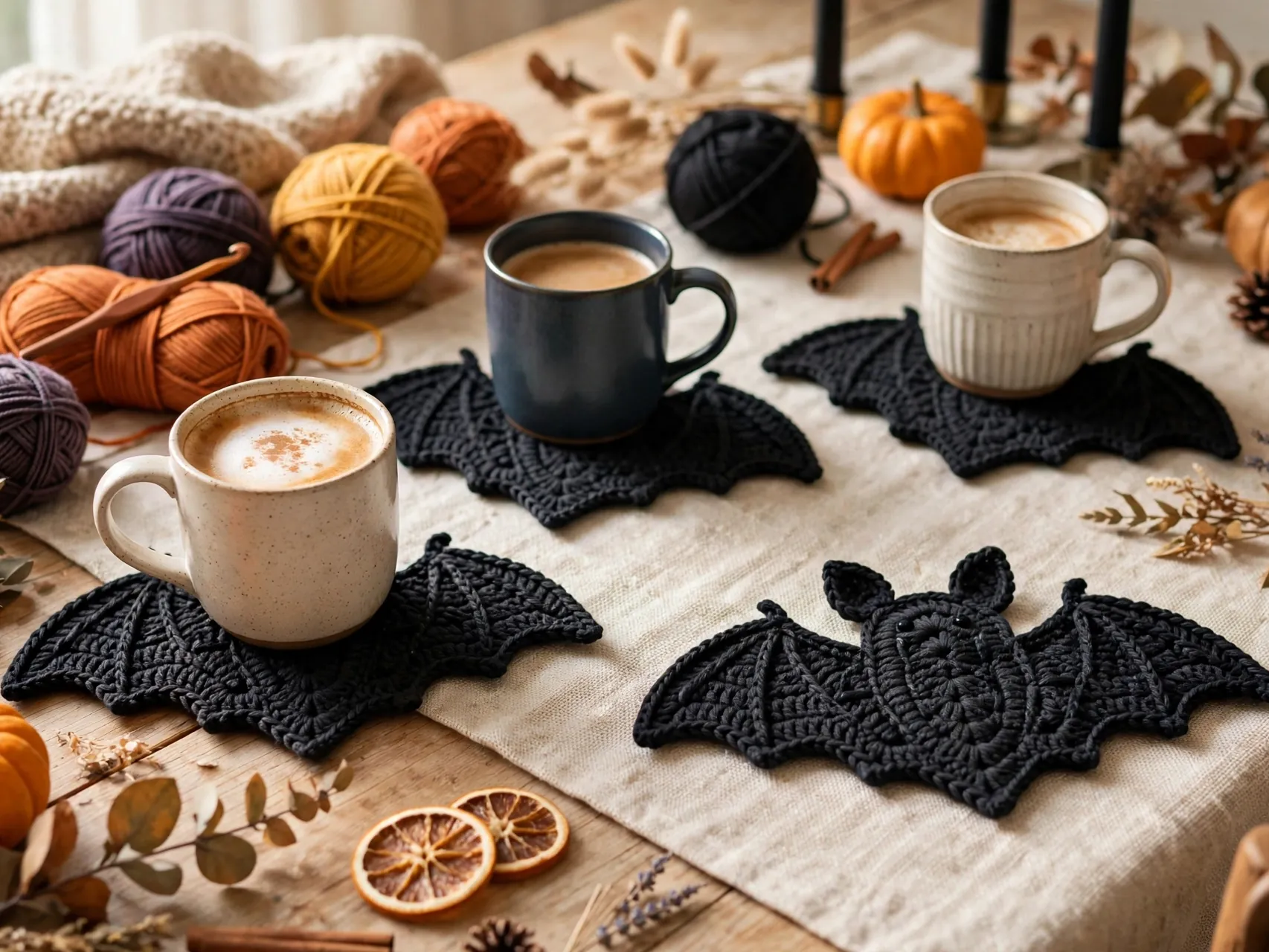
Work a flat round or bat shaped motif in cotton yarn, with wing points at the sides, to coaster size. Cotton handles heat and moisture better than acrylic for table use, and a set of four in mixed dark colors looks smart with fall tableware.
Keep stitches tight and even so cups sit flat, and test the finished coaster under a glass for wobble. Bat coasters are a subtle way to add a crochet halloween bat touch to a dinner party without full themed decor.
16. Glow Accent Bat With Neon or Light Yarn Details
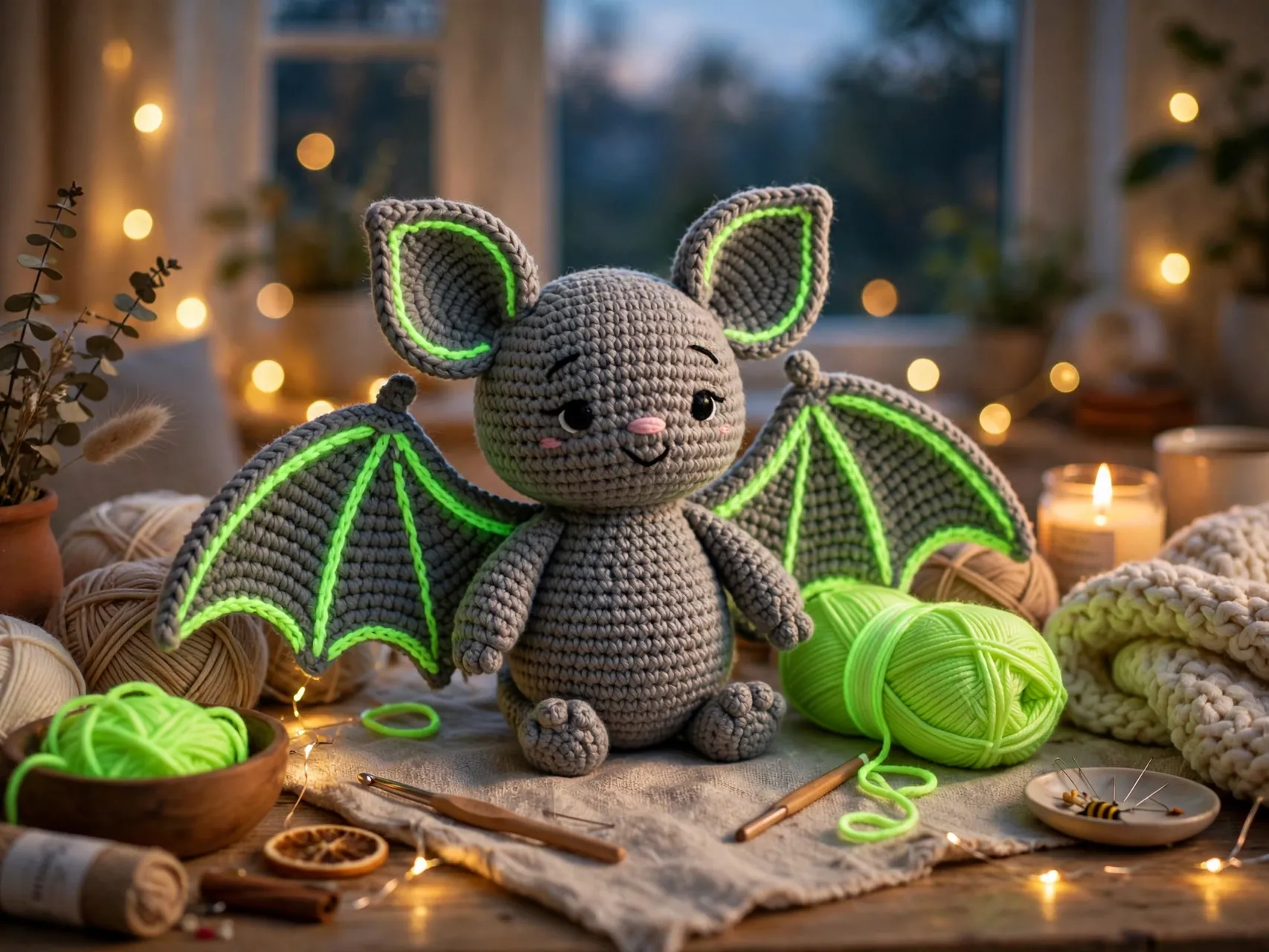
Use pale, neon, or glow style yarn for the eyes, wing edges, or a small moon companion piece to make a bat that stands out in dim party lighting. Even a light gray bat with white wing edging reads far better in a window display than an all black one.
Photograph light accented bats to check the contrast before making a full set. Keep the base pattern the same and change only the accent yarn, so your tension and sizing stay consistent across the group.
17. Bat and Pumpkin Pair Display
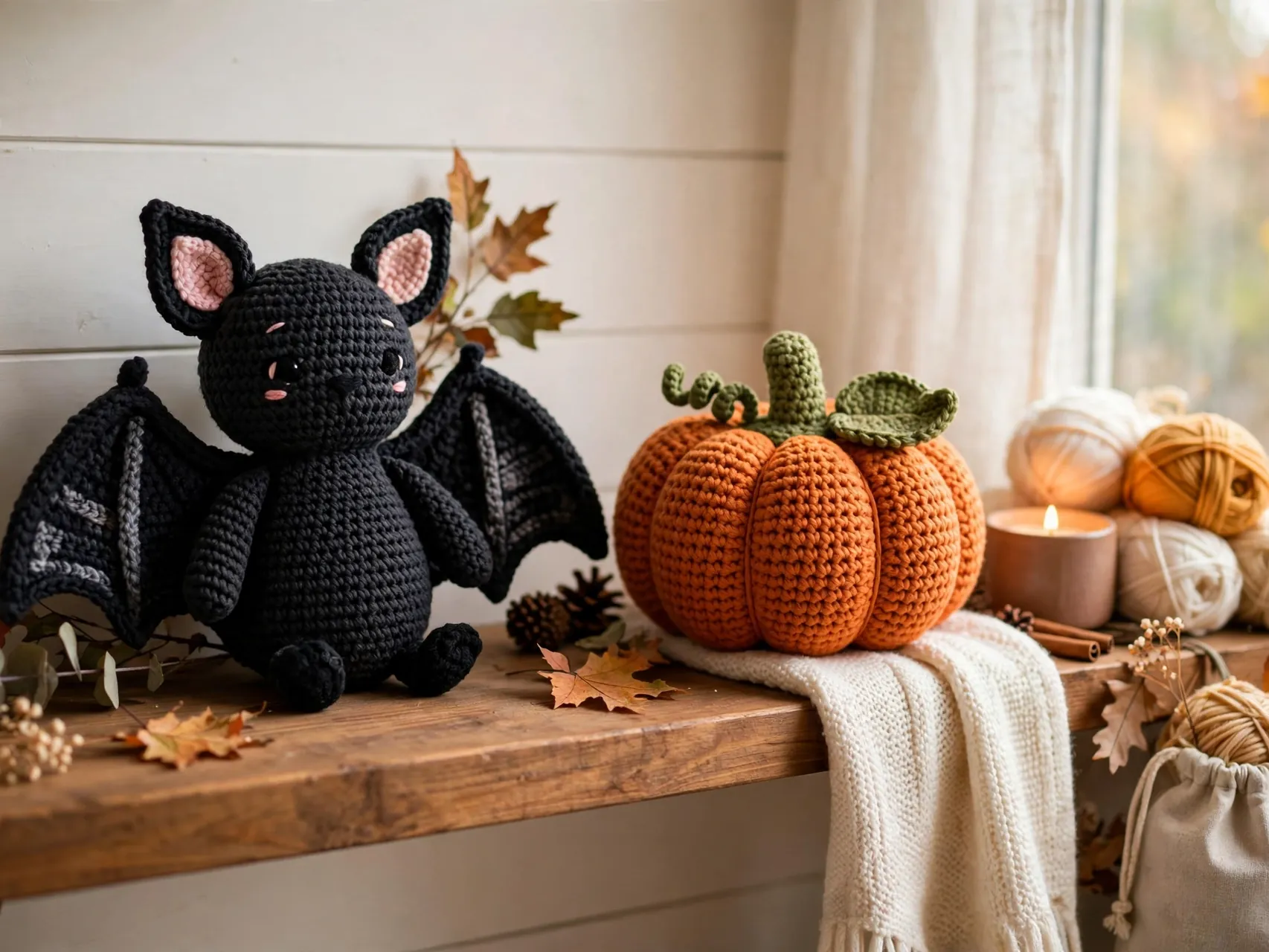
Pair a small bat with a simple crochet pumpkin, worked as a ribbed or round orange ball with a brown stem. Sitting a bat on top of a pumpkin is one of the most saved Halloween crochet photos, because the size contrast is charming.
Make the pumpkin firm enough to hold the bat without tipping, or sew the bat lightly in place for a fixed display. This pair works on mantels, desks, and party tables, and both pieces store well for next year.
18. Bat Mobile for a Nursery Corner
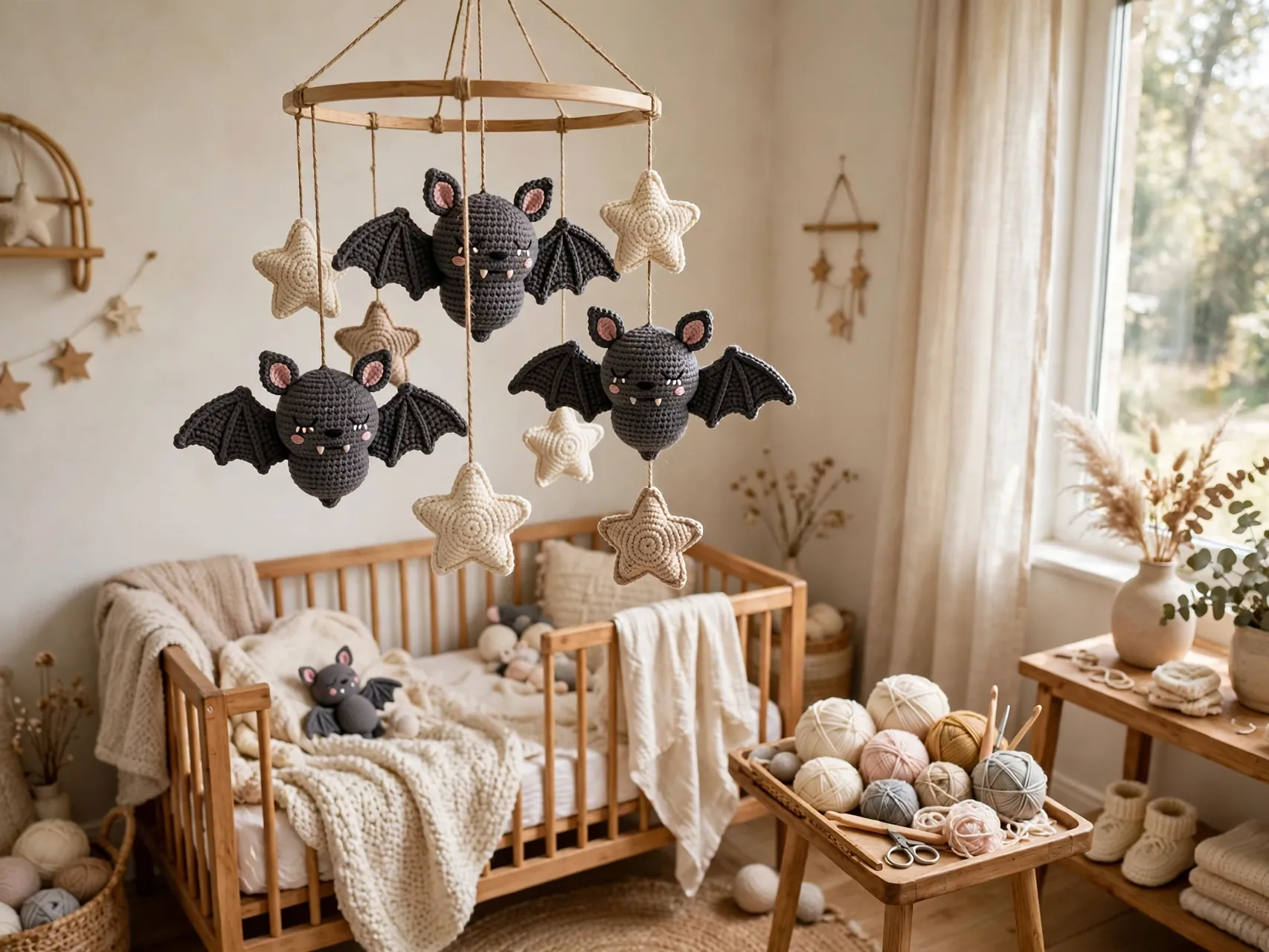
Hang three to five tiny bats, stars, and a moon from a hoop or branch at different lengths for a gentle mobile. Use pastel or classic colors to match the room, and keep all pieces light so the mobile turns slowly and safely.
Mobiles must hang well out of a baby reach, be secured firmly to a proper bracket or ceiling fixing, and be removed once a child can pull up or grab. Embroider all faces, use no small parts, and check strings and knots often.
19. Beginner Bat Using Only Single Crochet
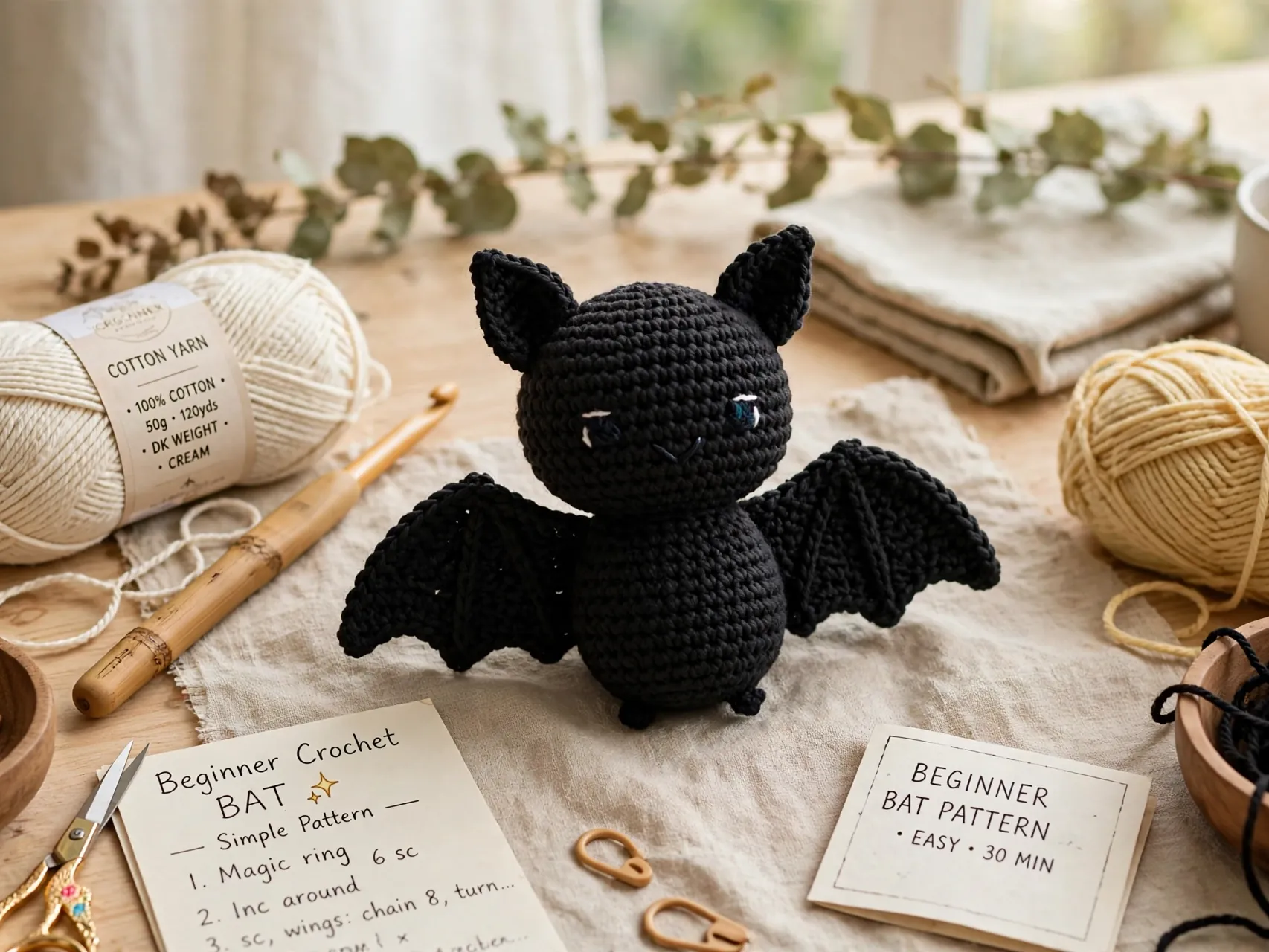
If you are new to amigurumi, choose a pattern that uses only single crochet, increases, and decreases, with simple flat wings. You will learn the magic circle, working in the round, stuffing, and sewing, which are the core skills for almost every plush pattern.
An easy crochet bat tutorial pace is one piece at a time: body today, wings tomorrow, face last. Mark the start of each round, count often, and do not worry about a visible seam on your first try. Skill grows with each finished piece.
20. Bat Hand Puppet for Story Time
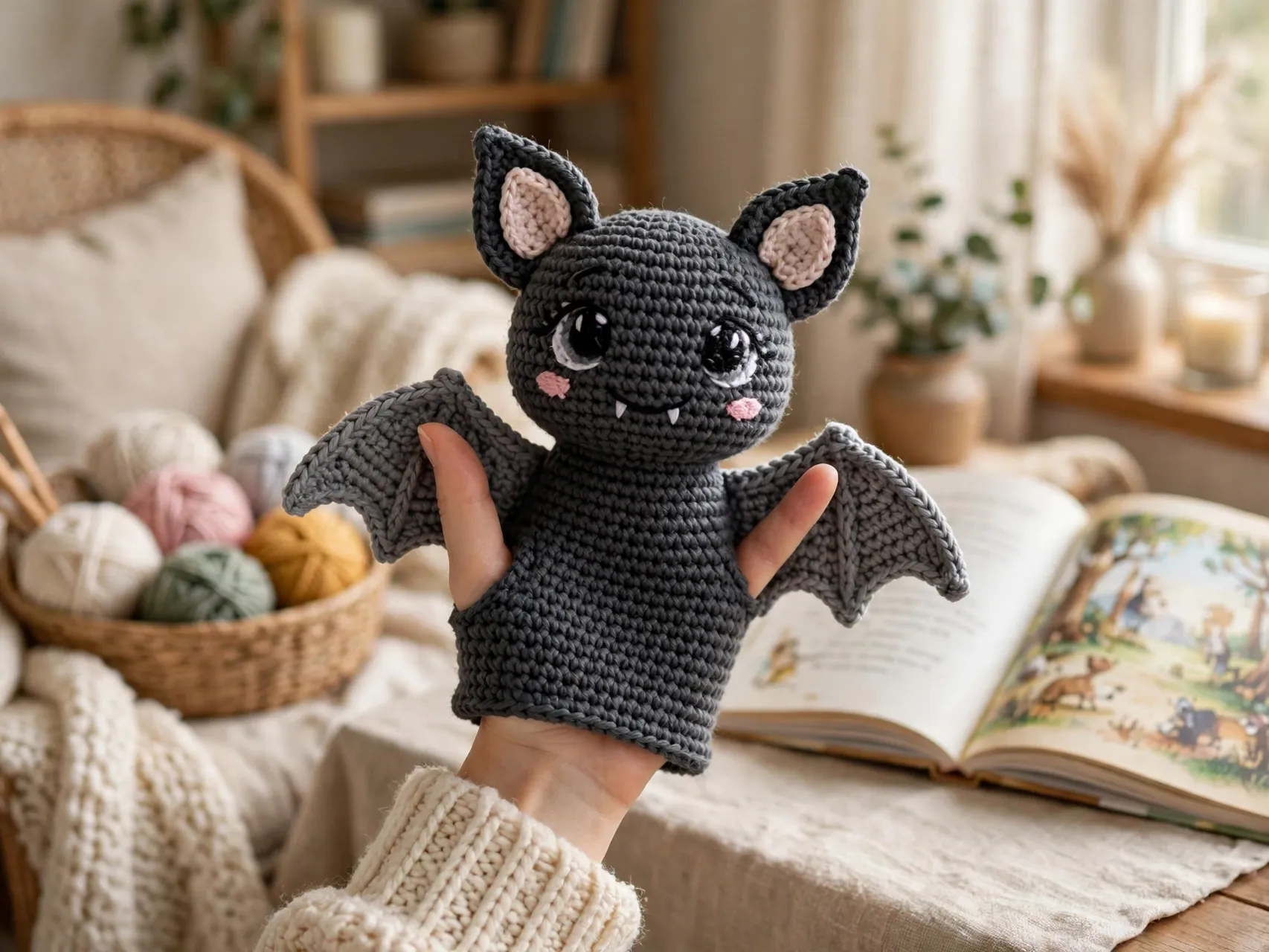
Work a larger flat or tube style body that fits over a hand, with wings at the sides that flap when fingers move. A puppet bat is wonderful for Halloween story time, classroom reading, and gentle, not scary Halloween fun for young children.
Use embroidered features only, keep the fit loose enough for an adult or older child hand, and check that wings are sewn strongly for repeated flapping. Puppets invite storytelling, which makes this a gift with lasting play value.
21. Bat Treat Bag Topper and Party Favor

Clip or tie a mini bat to the top of a treat bag, a favor box, or a wrapped cookie for a handmade finish guests can keep. A tiny flat applique bat works best here, because it adds no weight and lies neatly against the bag.
Attach bats with a small clothespin, ribbon, or a stitch of yarn, and make sure the attachment is secure if children will handle the bags. An adult should still check all Halloween treats for young children, and remove choking hazards before eating.
22. Oversized Statement Bat for a Porch Chair
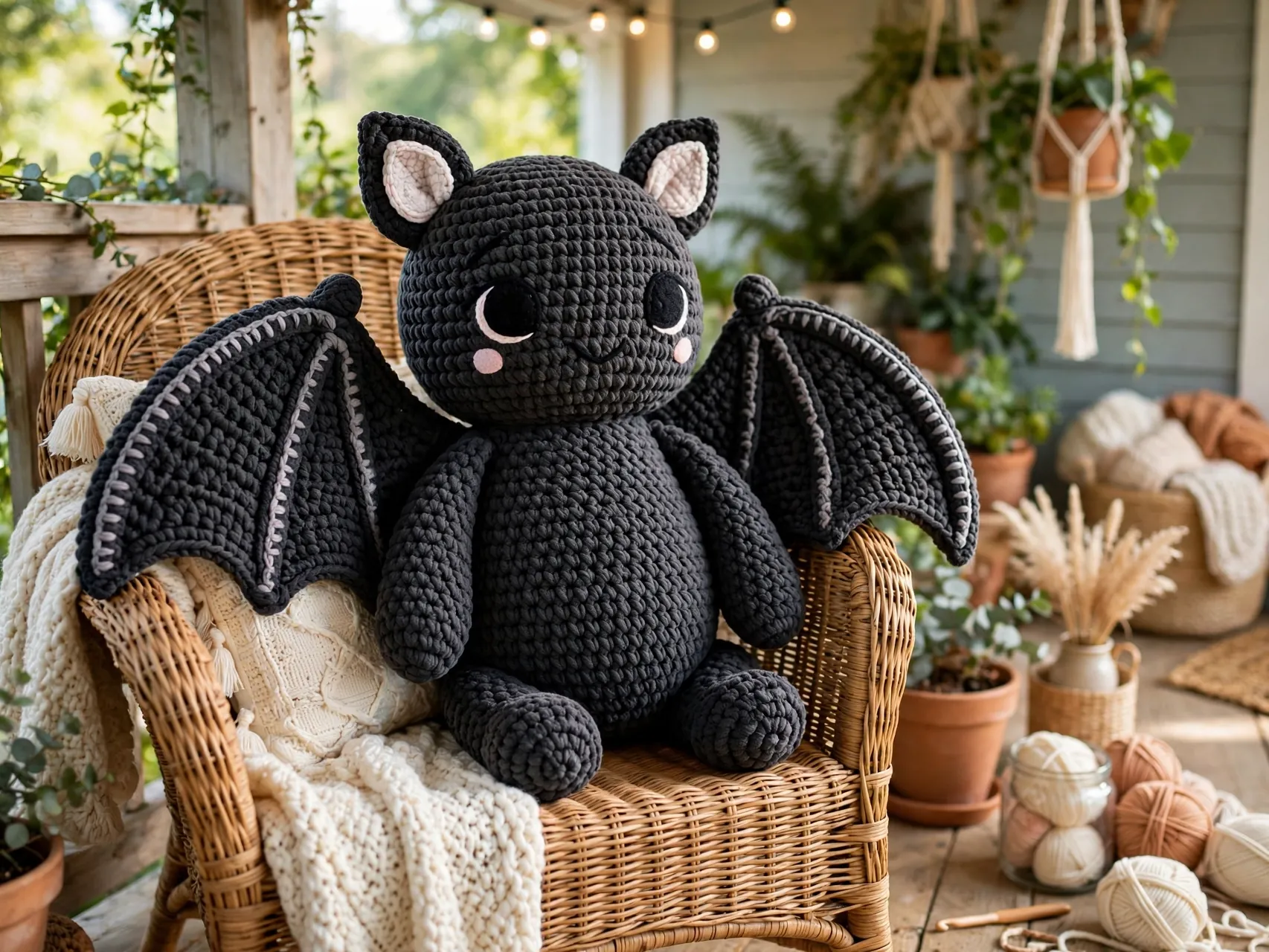
Scale a basic plush pattern up with super bulky yarn and a large hook for a statement bat that sits on a porch chair, a reading nook, or the end of a sofa. One big piece can carry a whole Halloween corner on its own.
Stuff in layers to avoid lumps, support large wings with firm stitching at the join, and expect the finished size to vary with your yarn and tension. Keep oversized yarn decor under cover outdoors, because most yarn does not handle rain well.
23. Bat in Different Yarn Weights for a Family Set
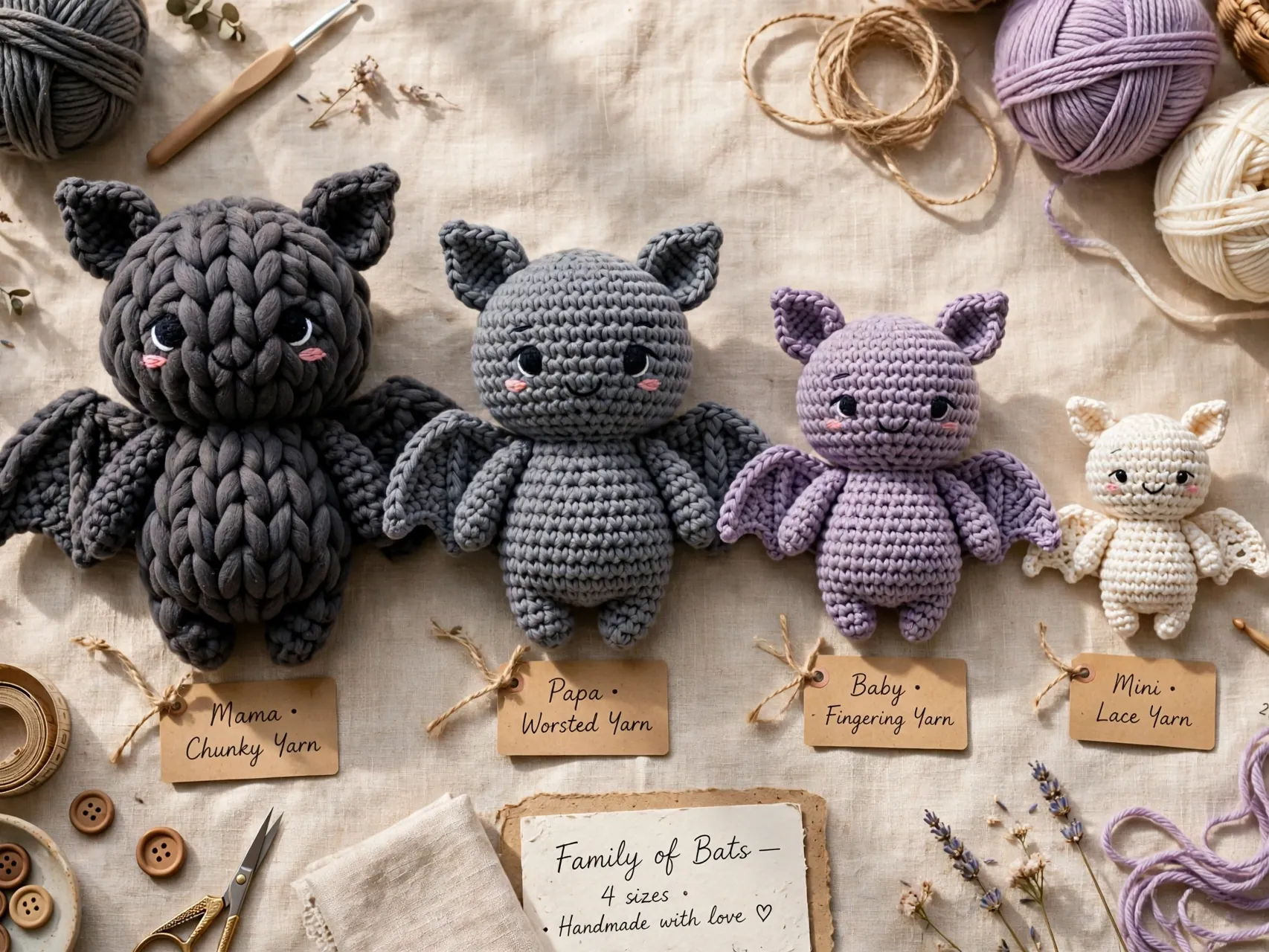
Use the same pattern with different yarn weights and matching hooks to create a bat family: a large parent bat in worsted yarn, a medium one in DK, and a tiny baby bat in sport or fingering yarn. Grouped together, they tell a sweet story on a shelf.
Keep hook size matched to each yarn for a tight fabric at every scale. This is a practical way to learn how yarn choice changes finished size, a key idea in almost every crochet bat plush pattern you will use later.
24. Caring for and Storing Your Crochet Bats

Handmade bats last for many Halloweens with simple care. Dust them with a soft dry cloth, spot clean marks with a damp cloth and mild soap if your yarn allows, and let them dry fully before storing. Always follow the care label of the yarn you used.
Store bats clean and dry in a box or bag away from heat and damp, with wings folded gently, not crushed. Check safety eyes, buttons, and sewn parts before giving a bat to a child again, and repair any loose piece first, or retire the toy to display only.
FAQ
What stitches do I need for a crochet bat?
Most plush bats need magic circle, chain, single crochet, increase, invisible decrease, and slip stitch. Flat appliques and squares may also use half double crochet and double crochet for wing shaping. All shaping is done with increases and decreases, worked in US terms in most English patterns.
What yarn and hook work best for amigurumi bats?
Worsted acrylic or cotton with a hook one or two sizes smaller than the label suggests gives a tight fabric that hides stuffing. Chenille and blanket yarn make larger, softer bats. Always match hook to yarn for dense stitches, and use a stitch marker when working in continuous rounds.
How do I make a crochet bat safe for young children?
Embroider eyes and mouth instead of using safety eyes, buttons, or other small parts, sew all pieces on very securely, and choose soft yarn with no loose fibers. Safety eyes and small parts are not suitable for babies and children under three. Supervise play and check handmade toys often for loose parts.
Can I sell bats made from a crochet bat pattern?
It depends on the pattern terms. Many designers allow selling finished items with credit, while the pattern itself may not be copied, shared, or resold. Always read the license in the specific pattern you used, follow it exactly, and never reproduce a designer pattern text as your own.
Why does my amigurumi bat show stuffing between stitches?
Stuffing shows when stitches are too loose for the yarn. Use a smaller hook, keep tension firm and even, stuff gradually in small pieces rather than large clumps, and choose a light colored stuffing for light yarns. A tight single crochet fabric is the goal for all plush work.
Key Takeaways
- Start with the classic plush: One round body, sewn wings and ears, and basic stitches teach every core amigurumi skill.
- Change yarn, change the bat: Yarn weight and hook size turn one pattern into keychains, chunky plush, and family sets.
- Flat bats multiply fast: Appliques, garlands, squares, coasters, and bookmarks stretch one motif across your whole home.
- Faces make the character: A smile, fangs, cheeks, or a cape collar turns the same body into a whole cast.
- Safety and care keep them lasting: Embroidered eyes for little ones, secure parts, gentle cleaning, and dry storage.
- Hooked on cute bats? Save this guide to Pinterest and pin the bat you will crochet first this Halloween.