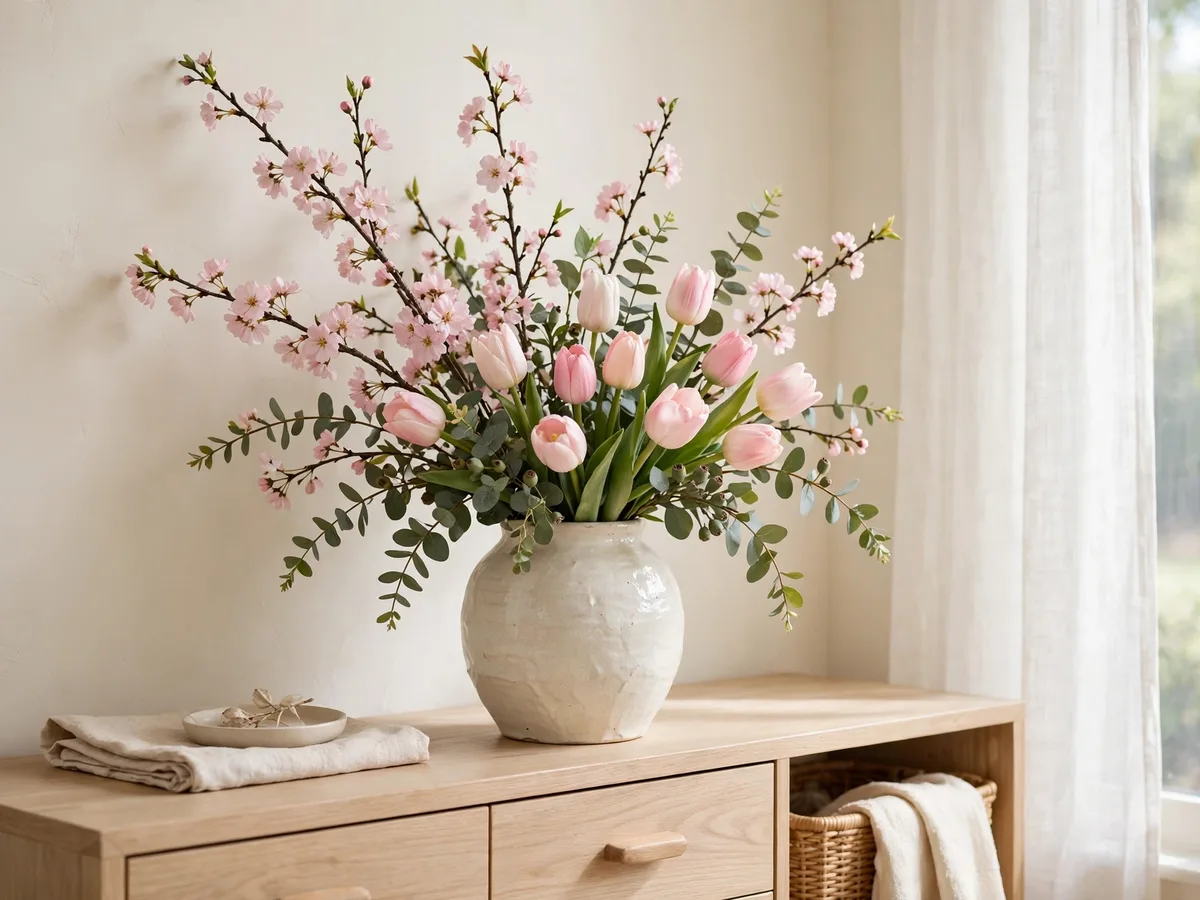
22 Faux Spring Stems That Look Real and Last All Season
Introduction
Fresh flowers are lovely for a week, and then the water clouds, the petals drop, and the vase sits empty until you remember to shop again. Good faux spring stems solve that problem quietly: they hold their color from the first warm day to the last, they never need water, and they welcome guests even in a busy month when nobody has time to arrange anything.
The secret is choosing stems that copy nature honestly. Look for color variation inside each petal, matte leaves instead of shiny ones, and wired stems you can bend into a soft curve. Real branches never stand in a perfect straight line, and your faux ones should not either.
This guide walks through twenty two stem types and styling ideas, from tall blossom branches for an entry to tiny bud vases for a bathroom shelf. You will also learn the simple tricks stylists use: fluffing, trimming to different heights, hiding stems in opaque vases, and mixing one real element in so the whole arrangement reads as fresh.
Pick two or three favorites to start. A small, well chosen collection in colors that suit your rooms will serve you for many springs, and you can add one new stem type each year instead of replacing tired fresh bouquets every single week.
1. Cherry Blossom Branches for Tall Entry Vases
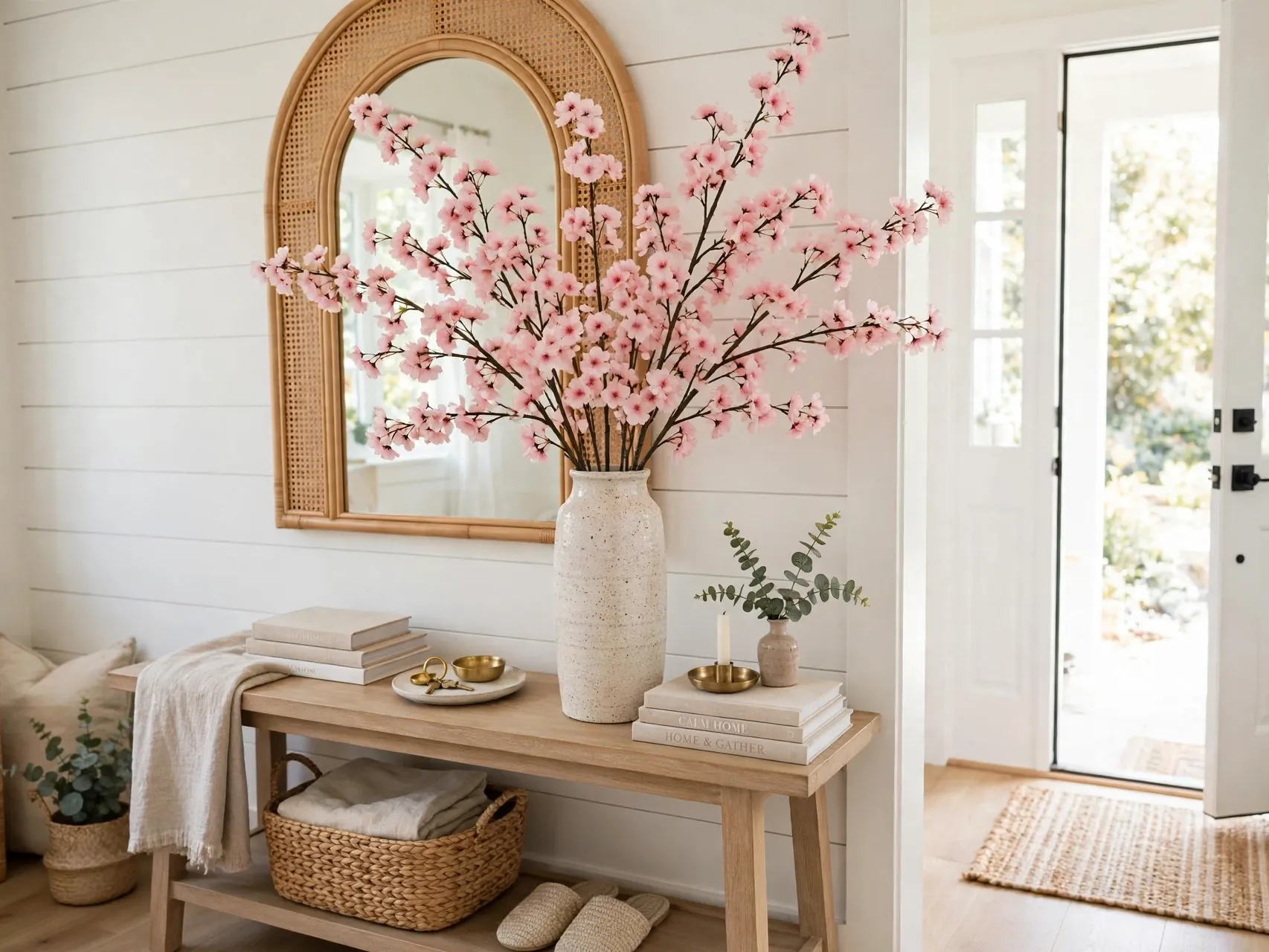
Cherry blossom branches are the height makers of spring. Two or three long branches in a tall, narrow vase give an entry or a bare corner instant architecture, with pale pink or cream blossoms that soften hard lines.
Bend each branch gently so the tips arc in different directions, just as they would on a real tree. Keep the vase simple and heavy enough to balance the height. A stoneware or ceramic floor vase works well and hides the stem ends completely.
2. Real Touch Tulips in a Kitchen Pitcher
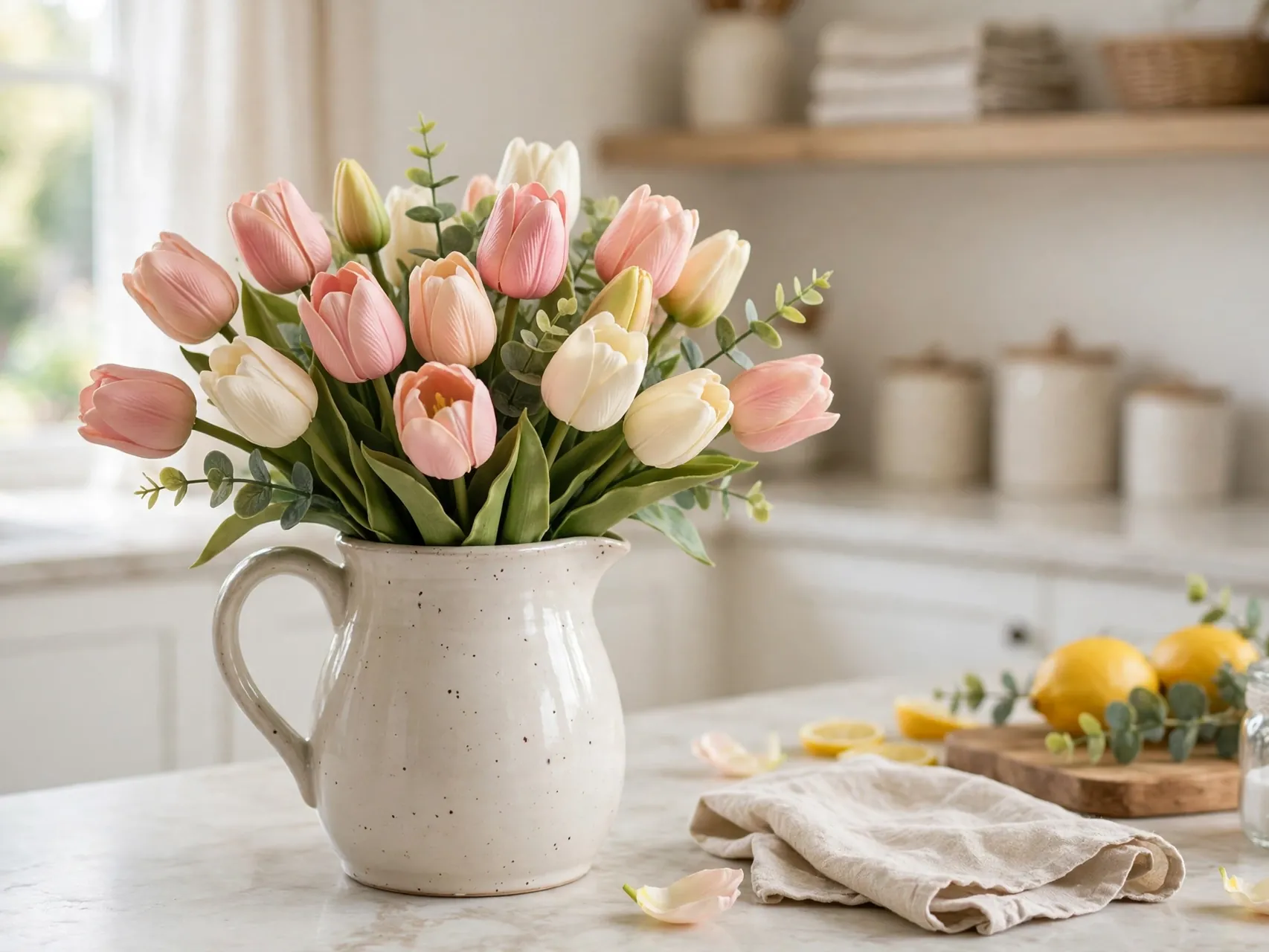
Tulips are the flower most people picture first in spring, and real touch versions with soft, slightly cool petals are the most convincing faux spring flowers you can buy. Choose a mix of open and closed blooms in one bunch, because a real bunch is never all at the same stage on the same day. Style them loosely in a pitcher or a wide jar on the kitchen counter, and let a few stems lean outward instead of standing straight up.
3. Ranunculus Stems for Soft Layered Color

Ranunculus brings those tight, layered petals that look expensive in a fresh bouquet and just as pretty in a good faux version. The heads are smaller than peonies, so ranunculus fills the middle of an arrangement without taking it over, and the colors, blush, cream, butter yellow, and coral, all suit spring palettes. Group five to seven stems in a low bowl or a compote for a dining table, where the layered petals reward a close look.
4. Pussy Willow Stems for Quiet Texture
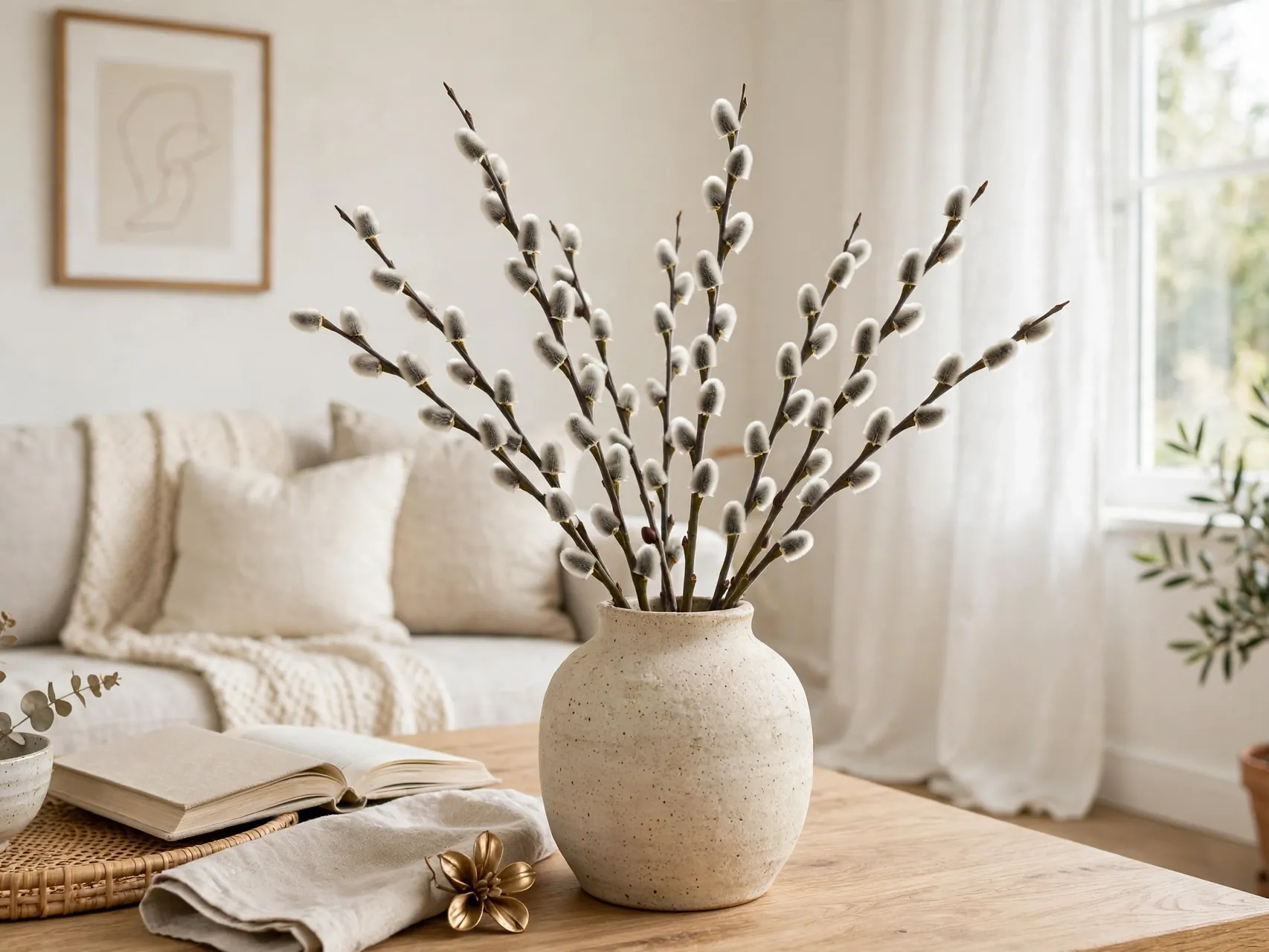
Pussy willow is the calm stem in a spring mix. The soft gray buds add texture without color competition, so these stems calm down brighter flowers and make neutral rooms feel seasonal without shouting. They are also one of the longest lasting choices, because there are no petals to fade or crush in storage. Stand a bundle in a tall crock on a mantel or hearth, or lay a single stem across a stack of books for a subtle nod to the season.
5. Forsythia Branches for a Burst of Yellow
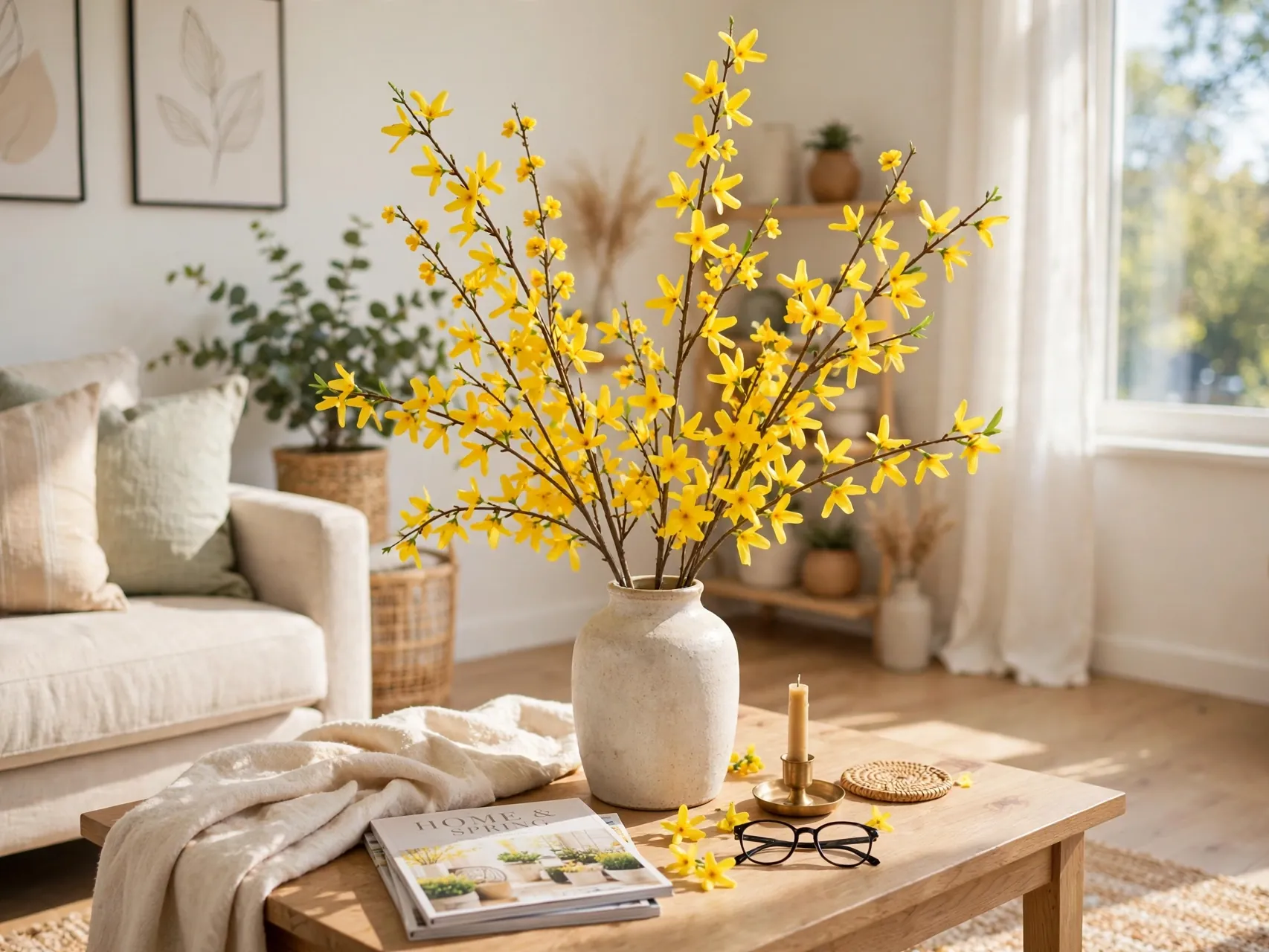
Nothing announces spring like forsythia, and faux forsythia branches let you enjoy that sunny yellow for weeks instead of days. The small blossoms cluster along arching brown stems, and that contrast between dark branch and bright flower is what makes the arrangement read as real from across the room. Use forsythia where a room needs energy: a dull hallway console, a kitchen corner, or beside a front door inside the house. Keep the vase plain, because the branches do all the talking.
6. Hydrangea Heads for Full, Generous Arrangements
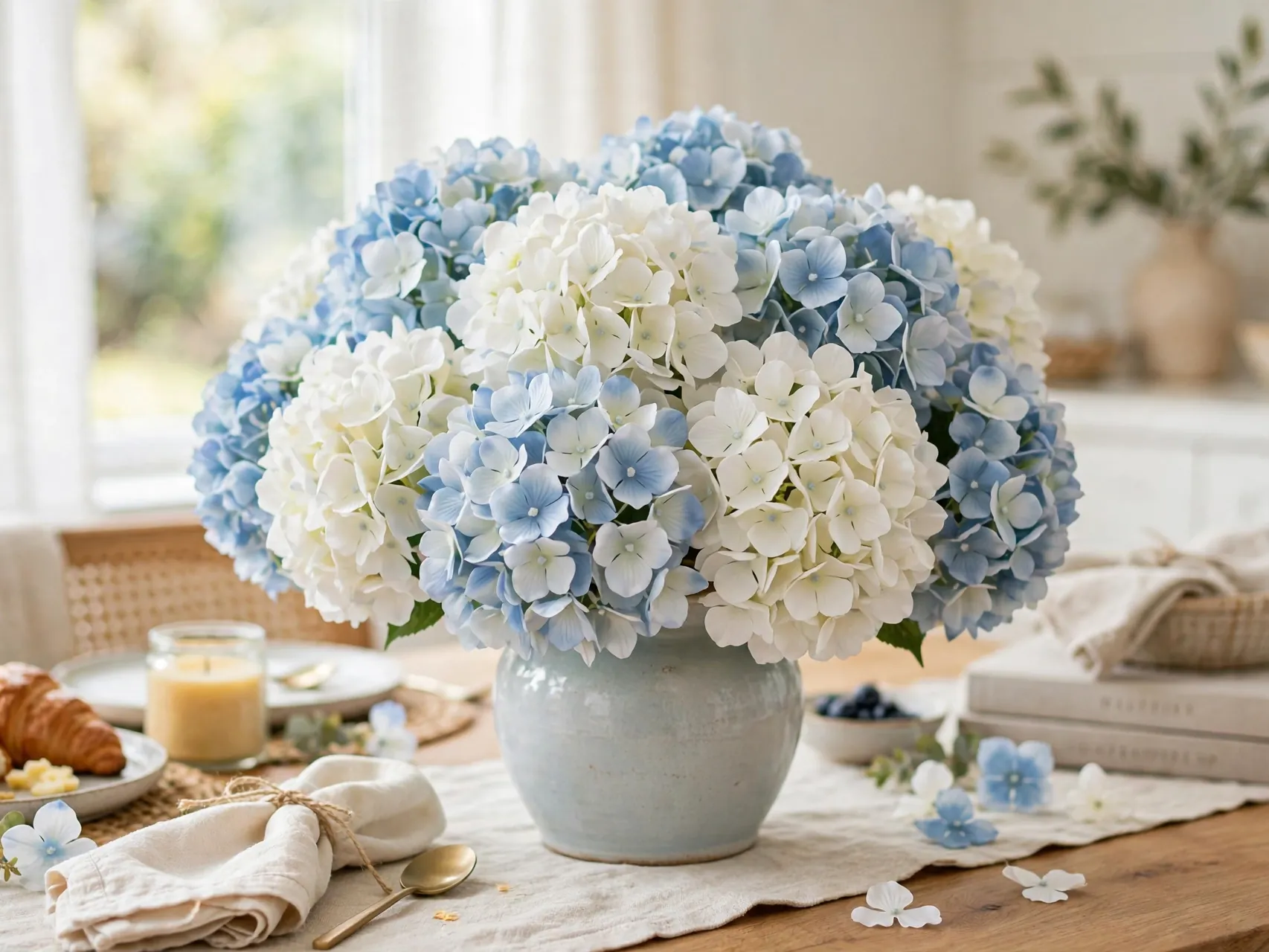
A single large hydrangea head can fill a wide vase on its own, which makes hydrangeas the best value stem for big impact. Look for heads with varied green and cream tones mixed into the main color, because solid, flat color is what gives lesser faux floral stems for vases away at a glance. Hydrangeas suit dining tables, kitchen islands, and mantels where you want softness and volume.
7. Eucalyptus Stems as the Year Round Base
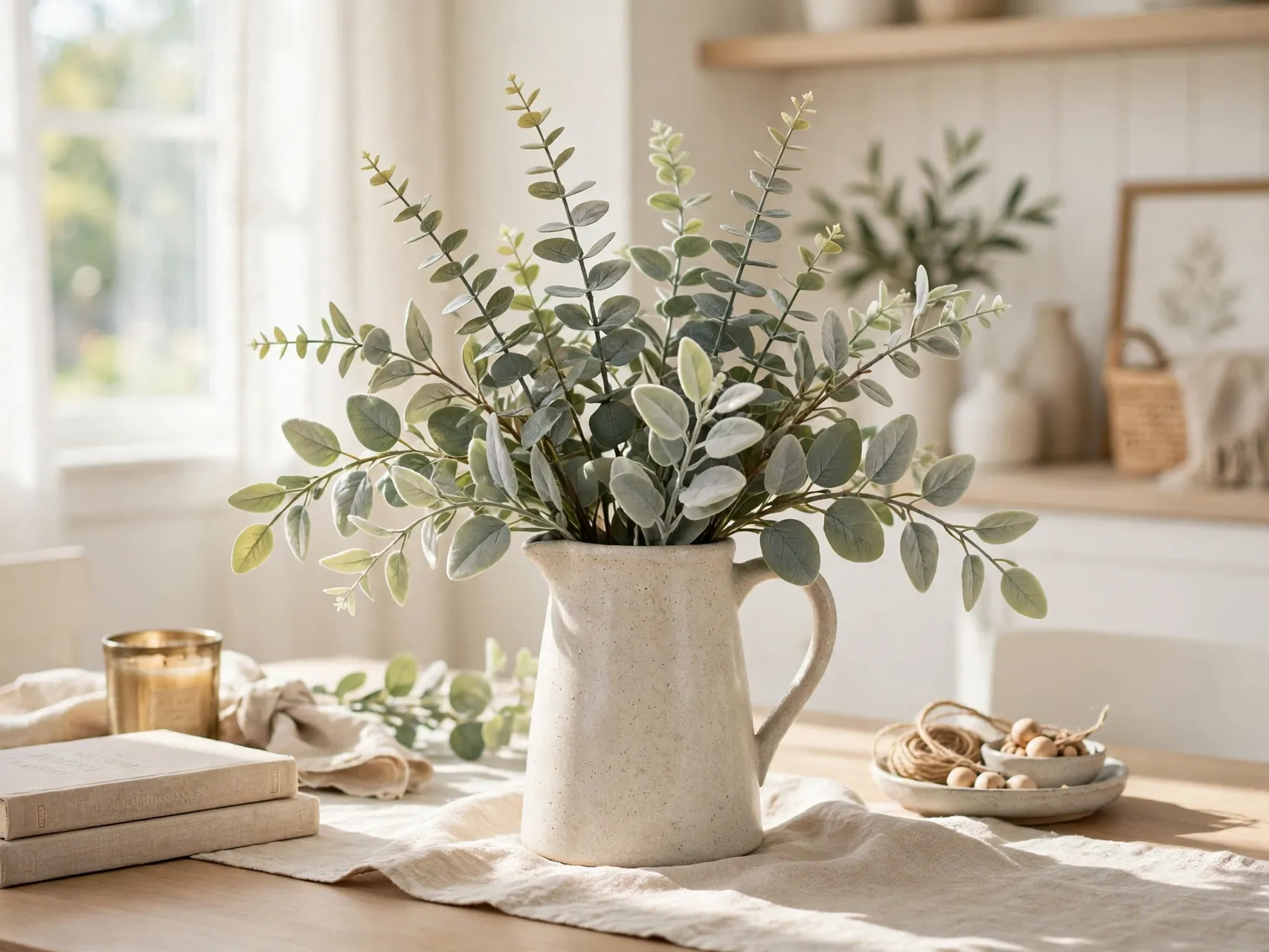
Eucalyptus is not a spring flower, and that is exactly why it matters. A few silver green stems tucked around your spring blooms make the whole arrangement look gathered from a garden instead of lifted from a store shelf, because real arrangements always contain more green than flower. Keep eucalyptus in your vases all year and simply swap the flowers around it each season. On its own in a small bud vase, it gives a bathroom or bedside table a calm, minimal moment.
8. Lilac Stems for Fragrance Free Romance
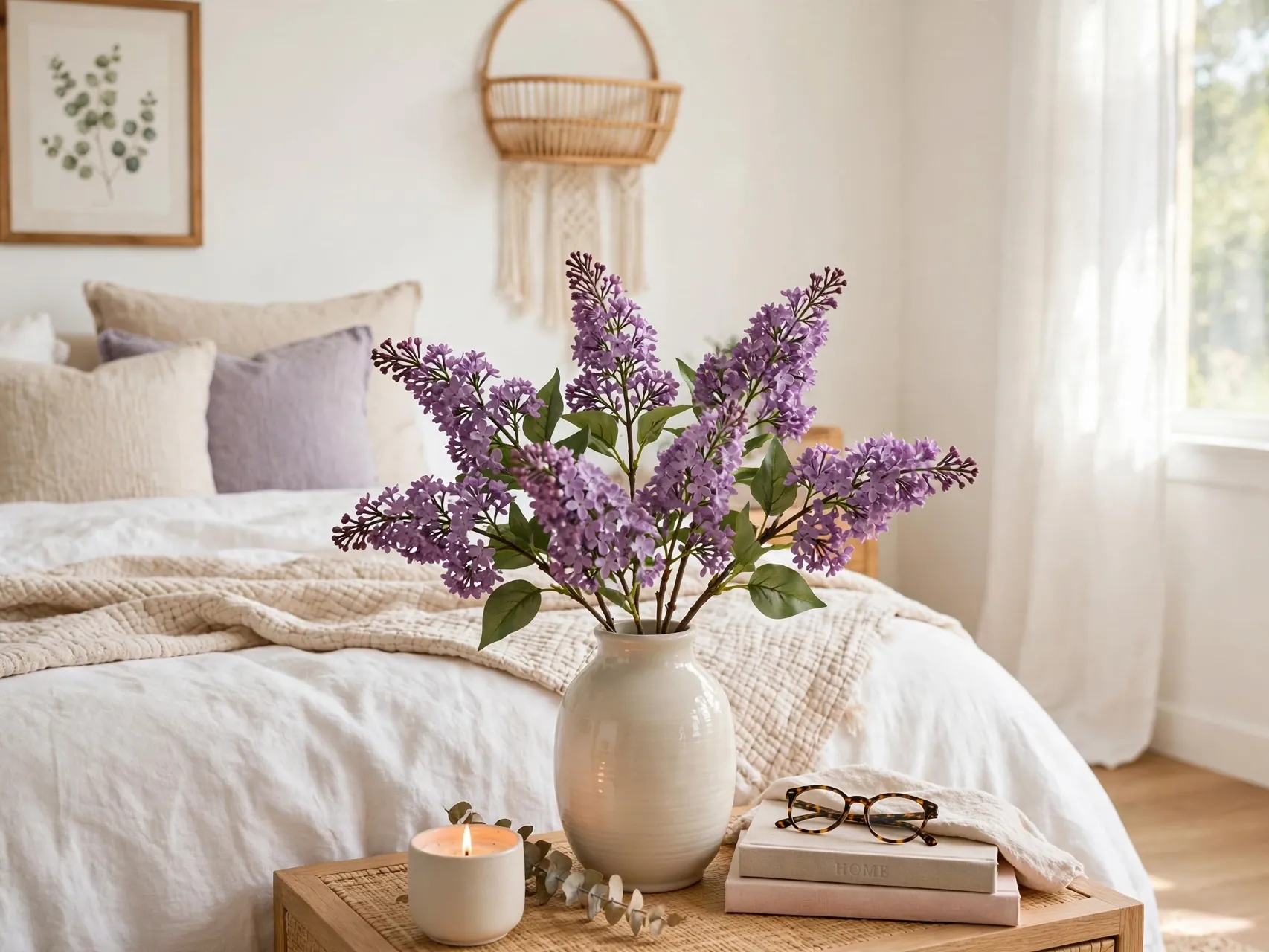
Fresh lilac is famously short lived in a vase, sometimes only a few days, which makes lilac one of the smartest flowers to buy faux. The clustered small blooms in lavender, pale purple, or white bring a romantic, cottage feeling to bedrooms and living rooms without the quick fade and without scent, which suits homes where fragrance bothers someone. Style lilac in a slightly taller vase so the heavy heads can nod a little, the way real lilac does.
9. Daffodil Stems for Cheerful Small Bunches

Daffodils carry spring in their shape alone, and faux daffodil stems let you keep that sunshine yellow on a windowsill long after the garden bunch would have finished. Their narrow green leaves are part of the charm, so choose stems where the leaves look soft and varied, not stiff and identical. Bunch daffodils tightly in a small jar or a vintage bottle for a kitchen window, a desk, or a guest bathroom.
10. Peony Stems for a Romantic Centerpiece
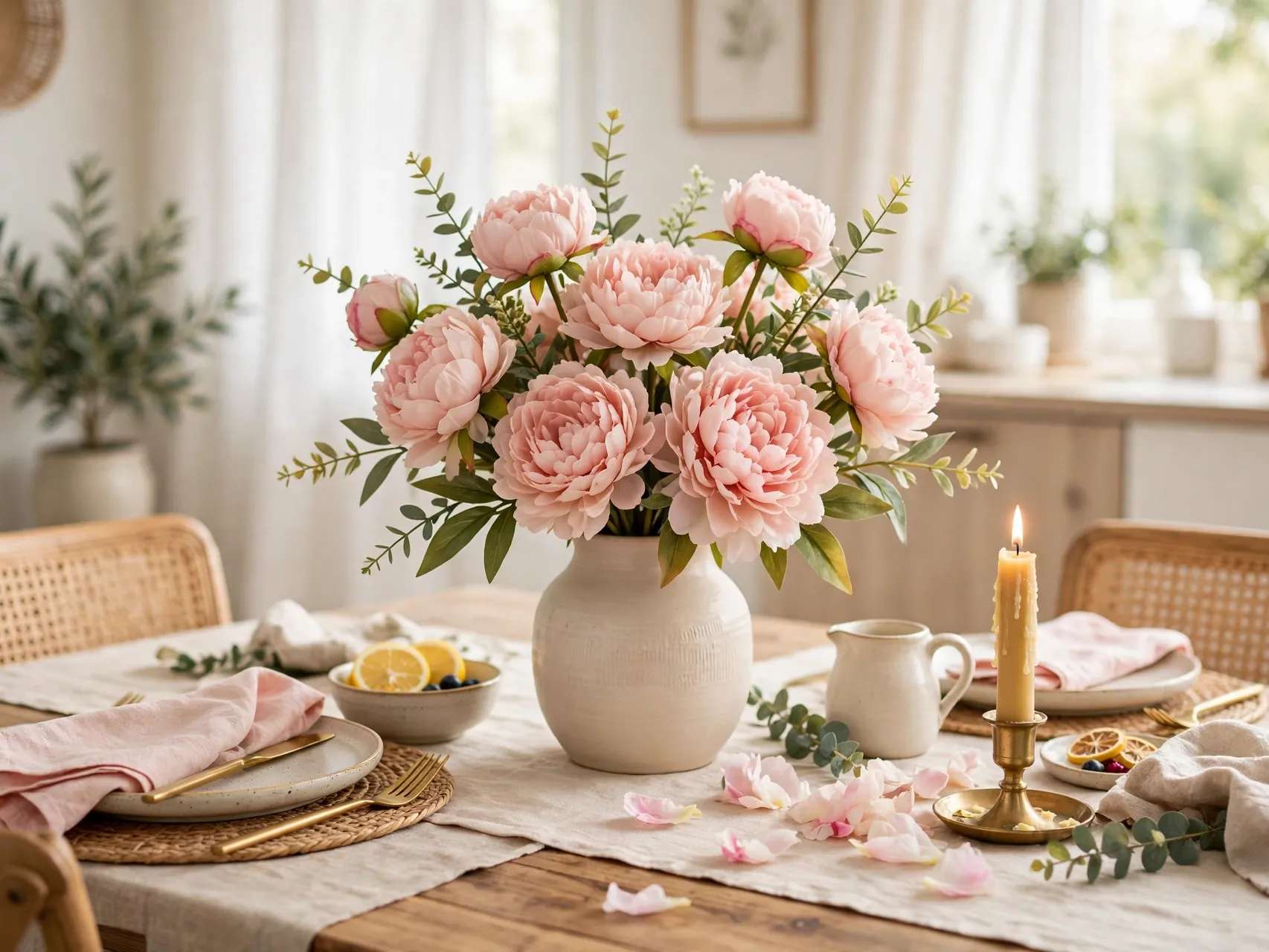
Peonies are the splurge flower of spring, and a good faux peony in blush or cream gives you that lush, romantic centerpiece without watching the budget or the calendar. Buy a mix of tight buds and open blooms in the same bunch, because that variety is the strongest realism signal of all. Peonies sit best in a wide, low arrangement for a dining or coffee table, where their full heads can rest near the rim of the vase.
11. Sweet Pea Stems for Delicate Trailing Lines
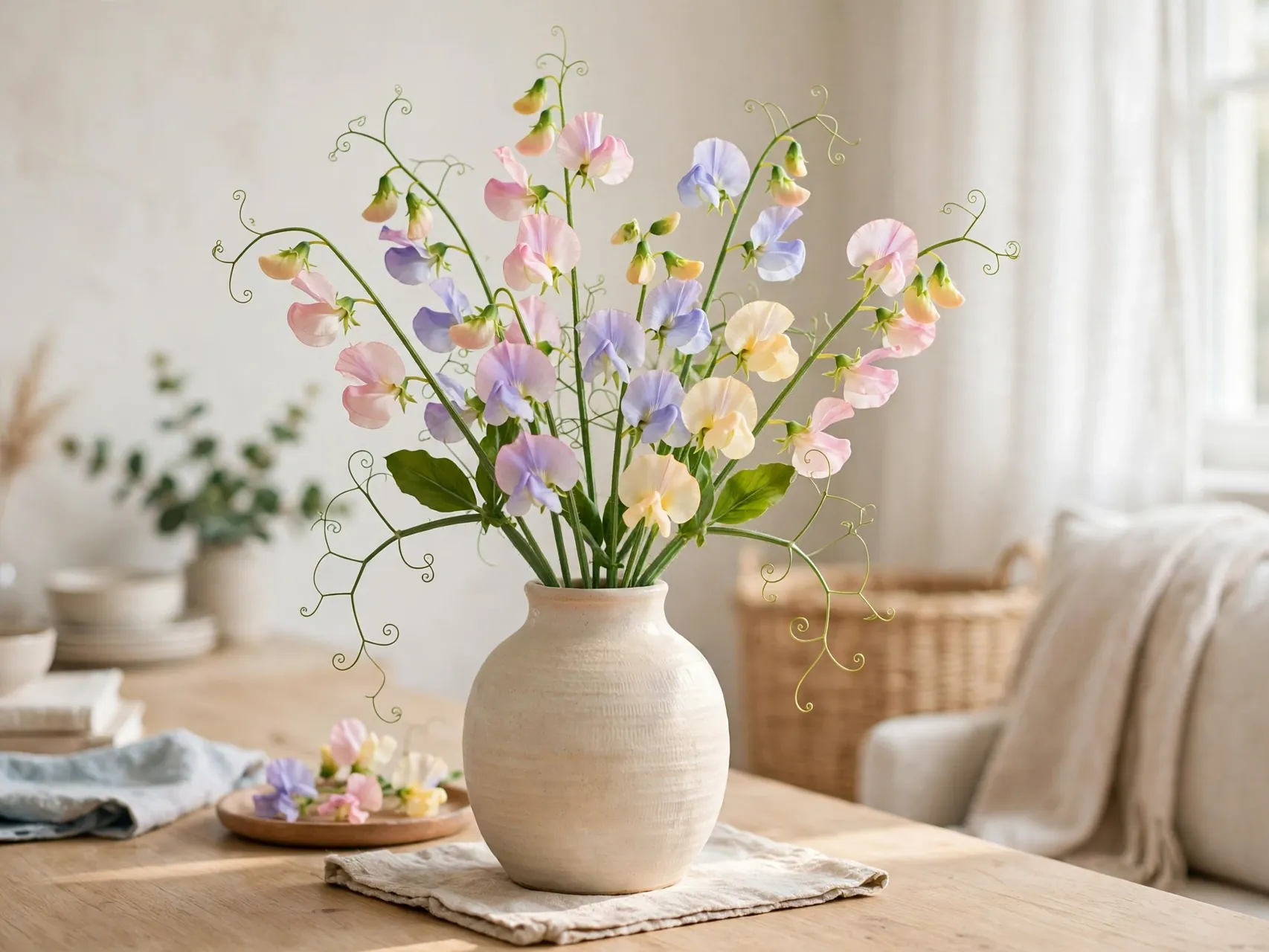
Sweet peas bring movement. Their thin, curling stems and small ruffled blooms trail over the edge of a vase in a way stiff stems never can, and that softness makes a formal arrangement feel relaxed and garden gathered. Colors are gentle: pale pink, lavender, white, and soft coral. Use sweet peas as the finishing layer in a mixed bunch, letting two or three stems spill forward over the vase rim.
12. Wildflower Mix Stems for a Just Picked Look

A mixed wildflower bunch, with small daisies, waxflower style sprigs, and tiny filler blooms in white, yellow, pink, and purple, gives you the just picked from the garden look in one purchase. The charm is in the irregularity, so resist arranging them into a neat dome. Drop the whole mix into a mason jar, a enamel jug, or a woven basket liner for a farmhouse table or a porch side table.
13. Magnolia Stems for Elegant Southern Spring

Magnolia stems bring a calm, elegant note with their large creamy blooms and glossy deep green leaves. One or two stems in a heavy vase make a complete arrangement for an entry or a dining sideboard, and the scale suits larger rooms where small flowers would get lost. The leaves matter as much as the blooms here, so choose stems where the leaf undersides have that warm brown tone real magnolia shows.
14. Baby Breath Sprigs as the Soft Filler
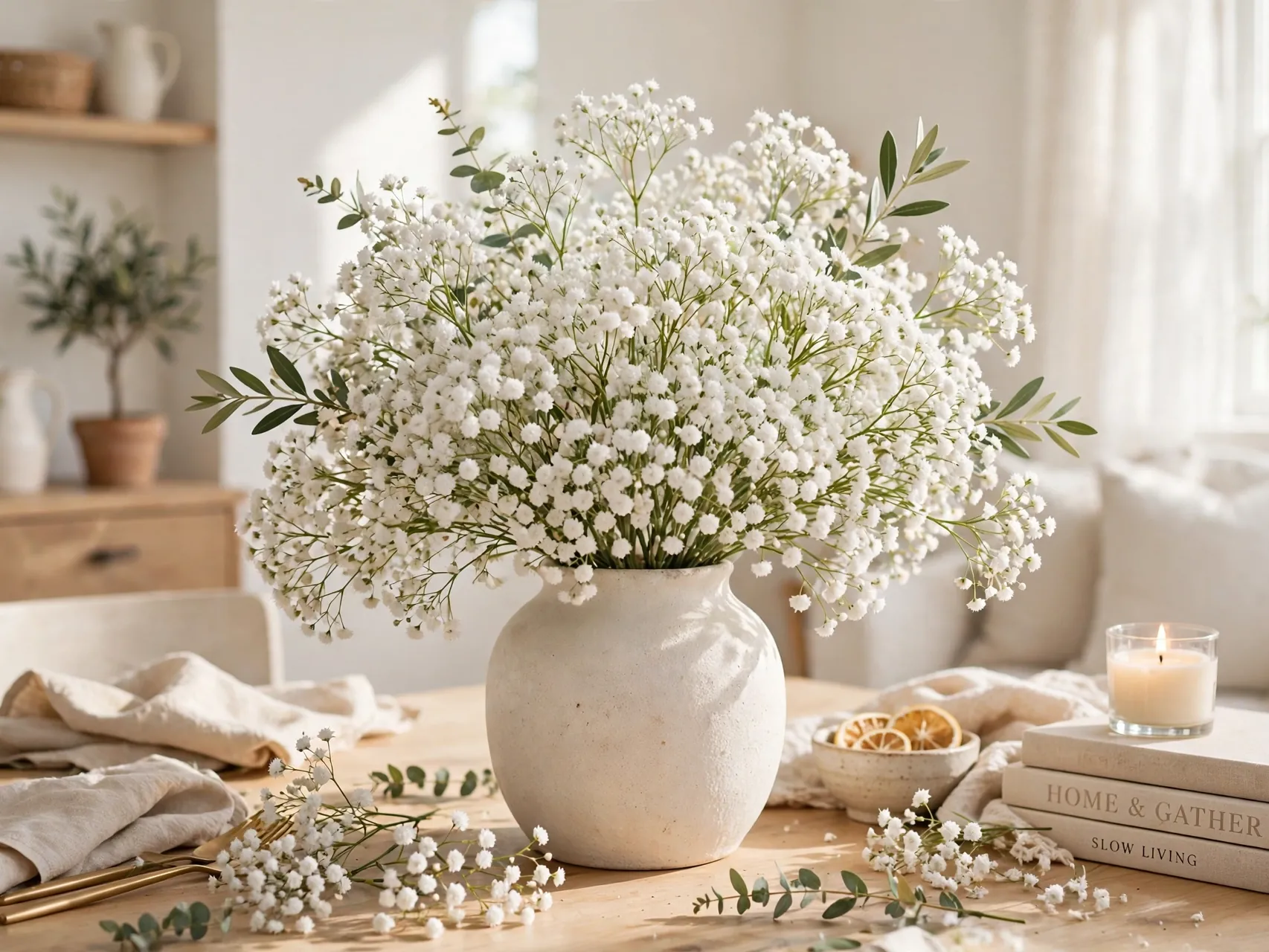
Baby breath is the quiet helper in spring styling. Small white sprigs fill gaps between bigger blooms, soften hard stem lines, and make a modest bunch look fuller and more generous. On its own, a cloud of baby breath in a glass bottle looks airy and romantic on a dresser or a wedding style table. Because the sprigs are inexpensive and light, they are also the easiest stem to practice arranging with.
15. Dogwood Branches for Soft White Blooms
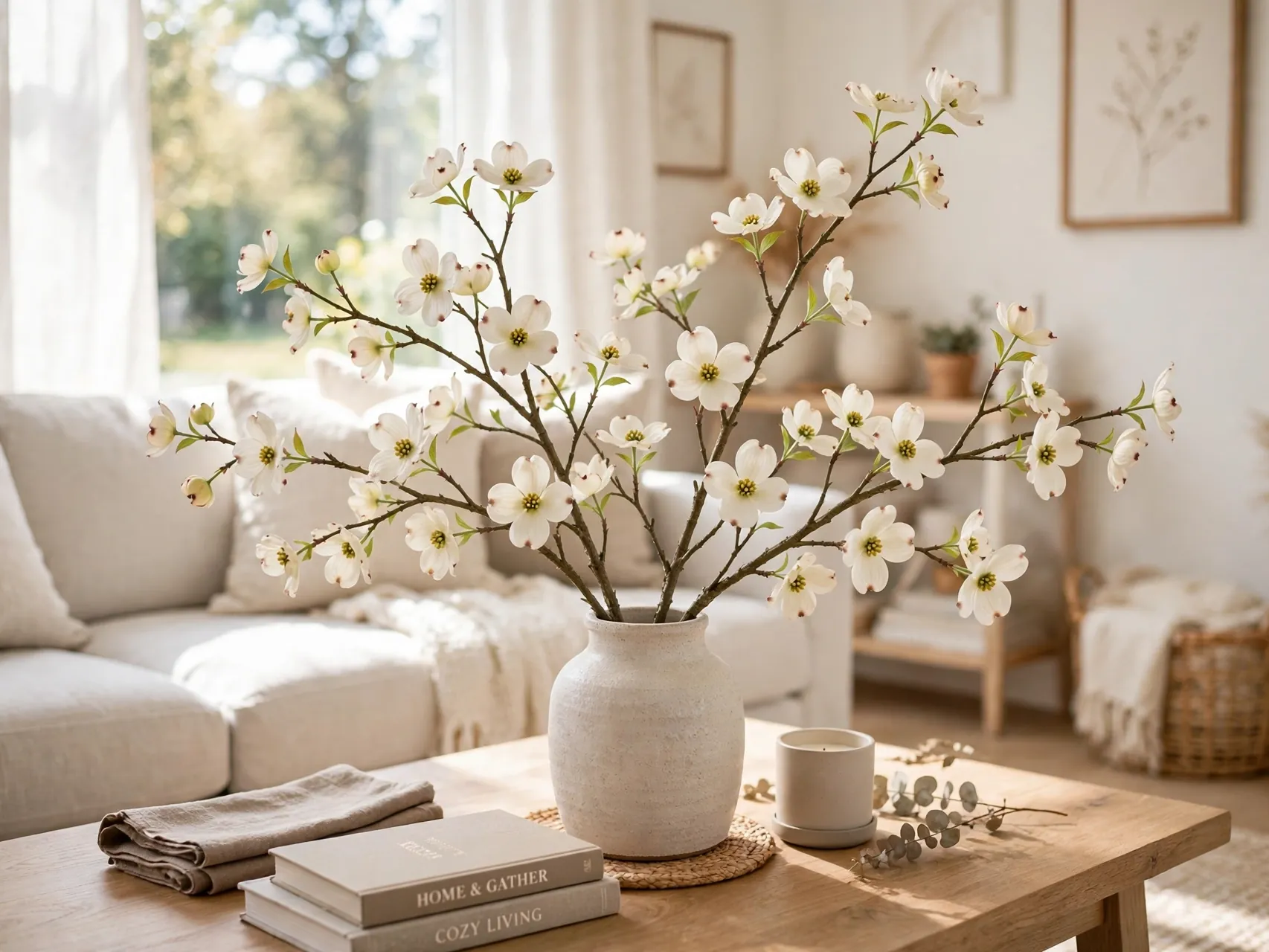
Dogwood branches offer flat, open white or pale pink blossoms spaced along real looking twiggy stems, and that spacing is what makes them feel so natural. They bring a woodland softness that suits living rooms with natural wood, stone, or woven textures. Style dogwood tall in a floor vase or cut shorter for a mantel jug. The blossoms read clearly from a distance, so dogwood works in larger spaces and in photos.
16. Lavender Stems for Calm Color and Line
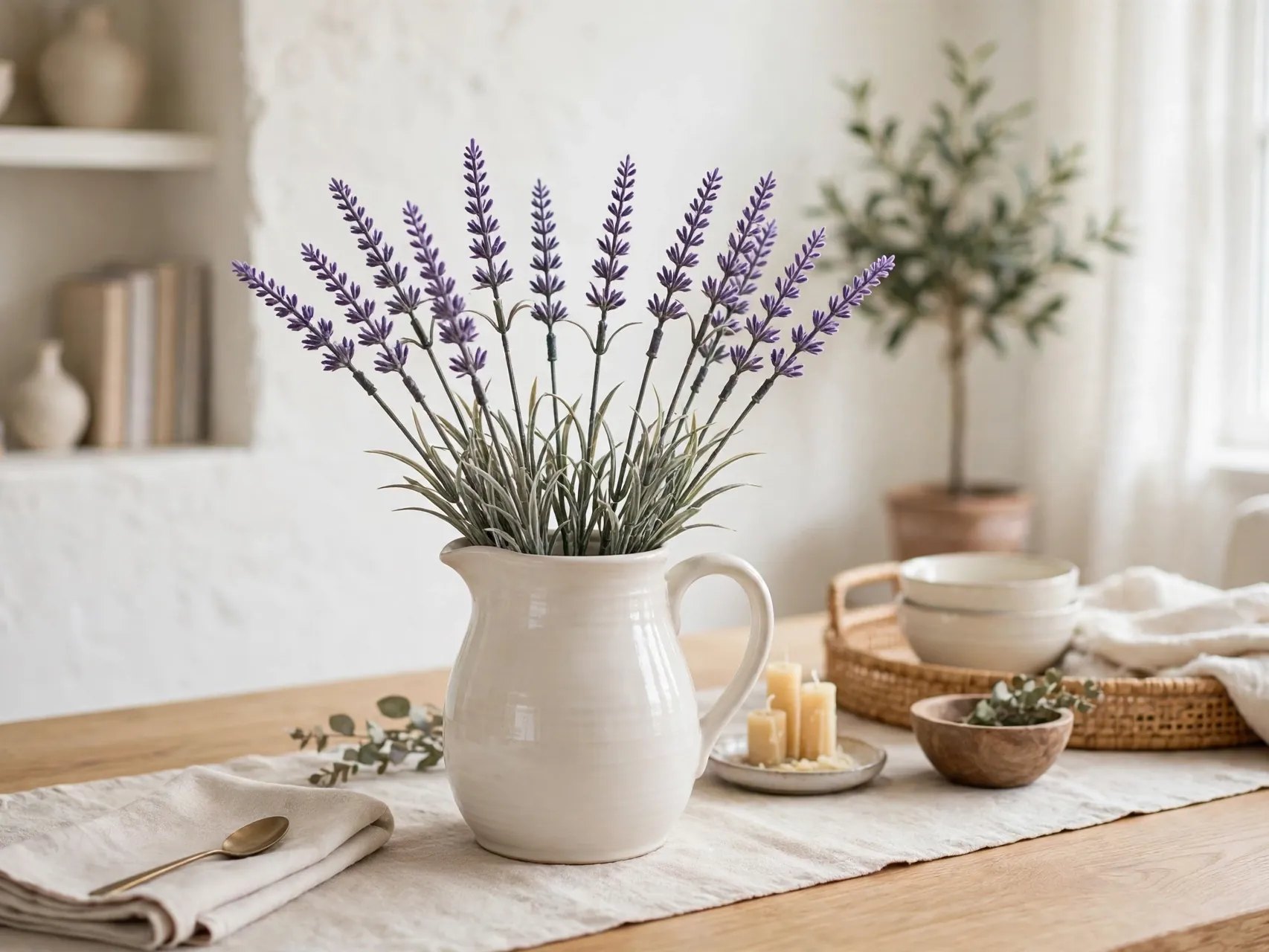
Lavender stems add slim vertical lines and a soft purple haze that calms a busy room. A simple bunch tied with twine and stood in a narrow jar suits kitchens, bathrooms, and entry consoles, and the color pairs with white, gray, sage, and natural wood without any effort. Faux lavender gives you the look without loose buds scattering across the counter, which is the one downside of the dried real thing. Group lavender in odd numbers and vary the heights slightly.
17. Anemone Stems for Bold Dark Centers
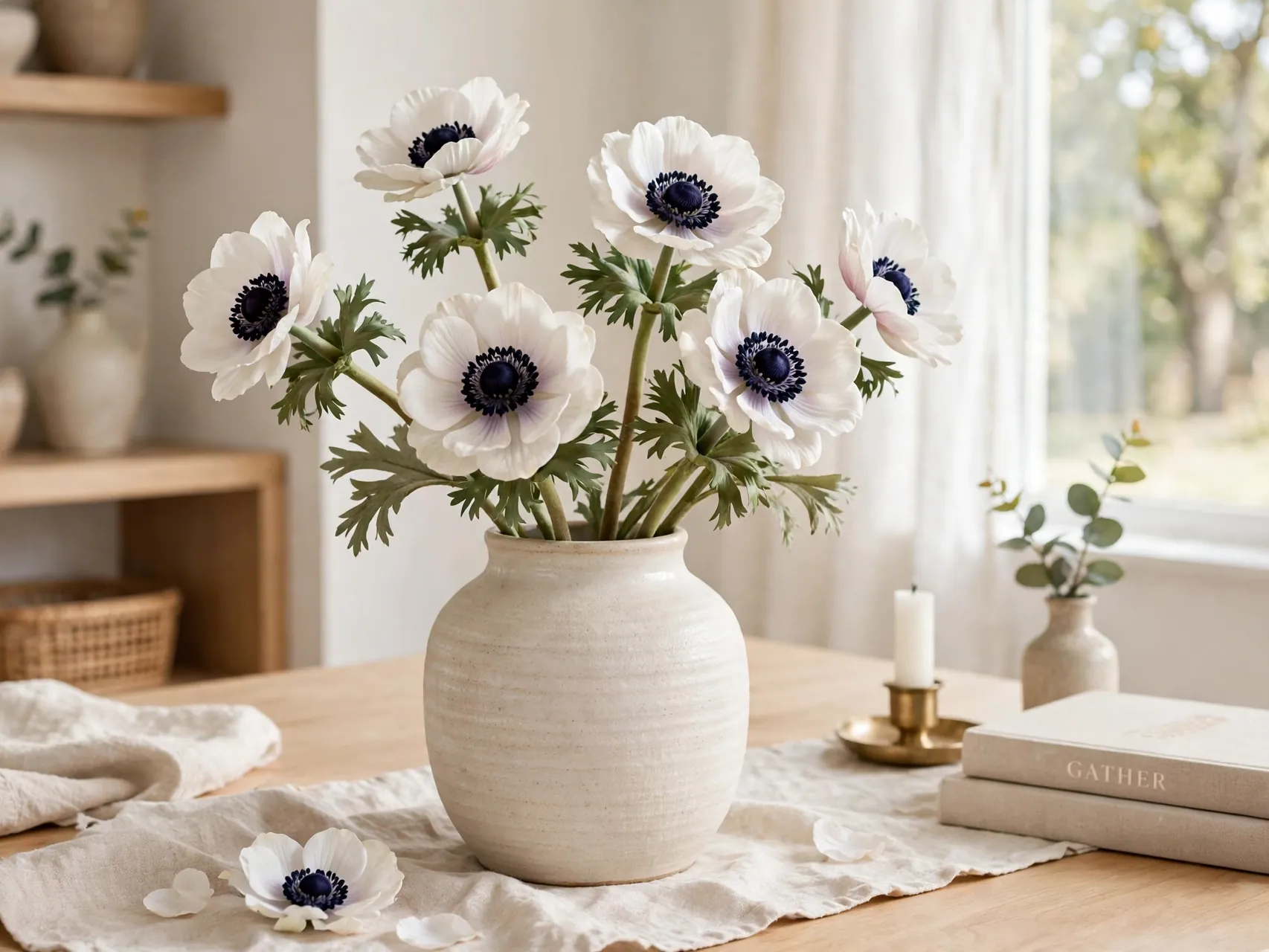
Anemones stand out because of their dark centers against white, blush, or red petals, and that contrast brings a modern edge to spring arrangements. A small bunch in a dark vase looks striking on a coffee table or a desk, especially in rooms with black accents, marble, or clean lines. Keep anemone arrangements simple, because the flowers are already dramatic. Five to seven stems with a little greenery are plenty.
18. Queen Anne Lace for Airy White Fill
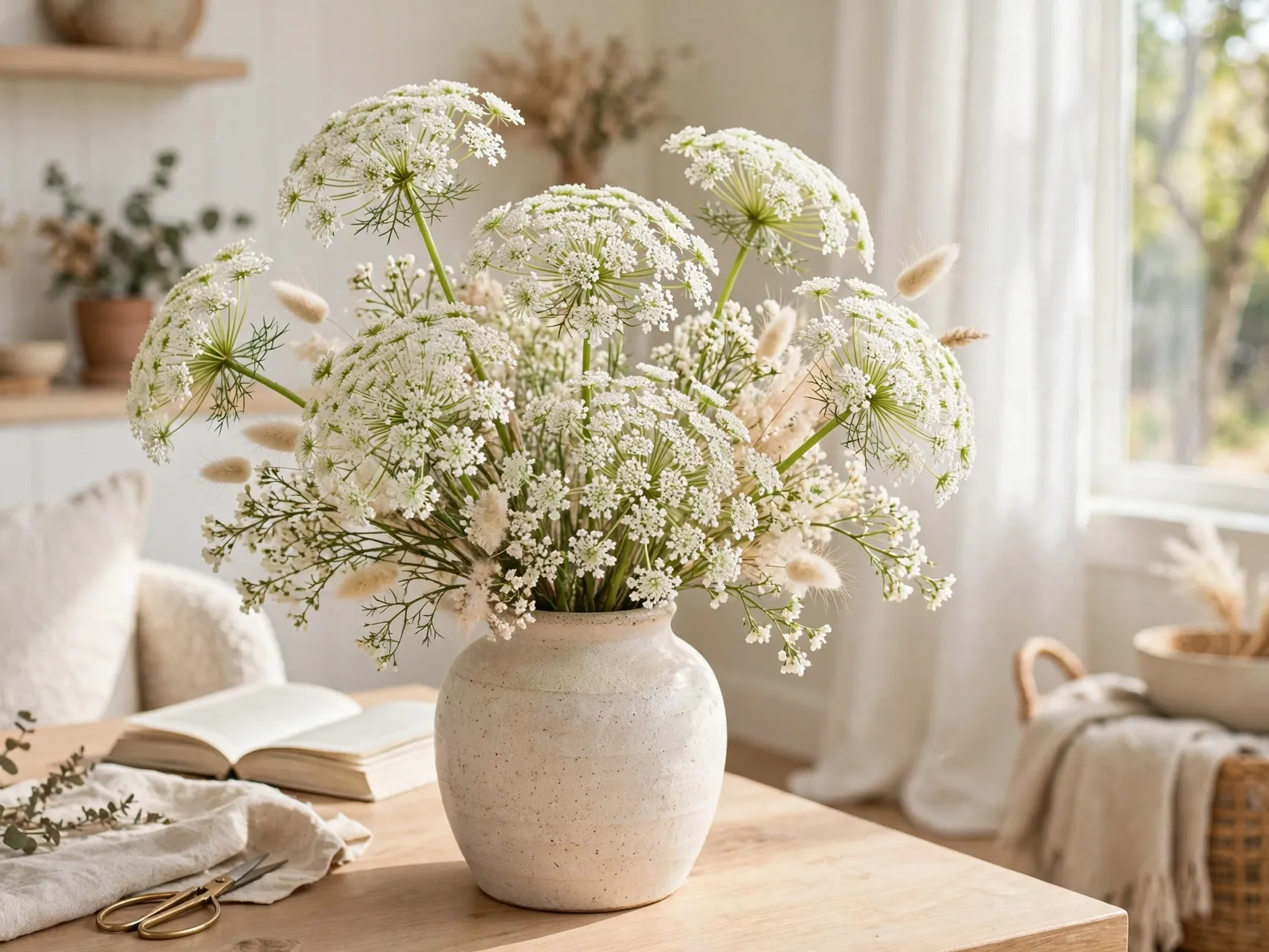
Queen Anne lace style stems give you flat, lacy white flower heads that lighten any arrangement they join. They work the way baby breath does, as filler, but with a wilder, meadow feeling that suits casual and cottage rooms especially well. Layer these stems behind tulips or daffodils so the lace sits like a soft halo, or gather a full bunch alone in a crock for a simple country table.
19. Bud Vases With Single Stems for Small Spaces

Not every spring moment needs a big bouquet. A row of small bud vases, each holding one stem, a tulip here, a ranunculus there, a sprig of eucalyptus between them, refreshes a windowsill, a bathroom counter, or a narrow shelf with almost no effort and very little storage needed later. Single stems are also the honest test of quality, since there is nowhere for a weak stem to hide. Buy your best stems for bud vases and use fuller bunches for hiding lesser ones.
20. Greenery Only Arrangements for a Calm Look
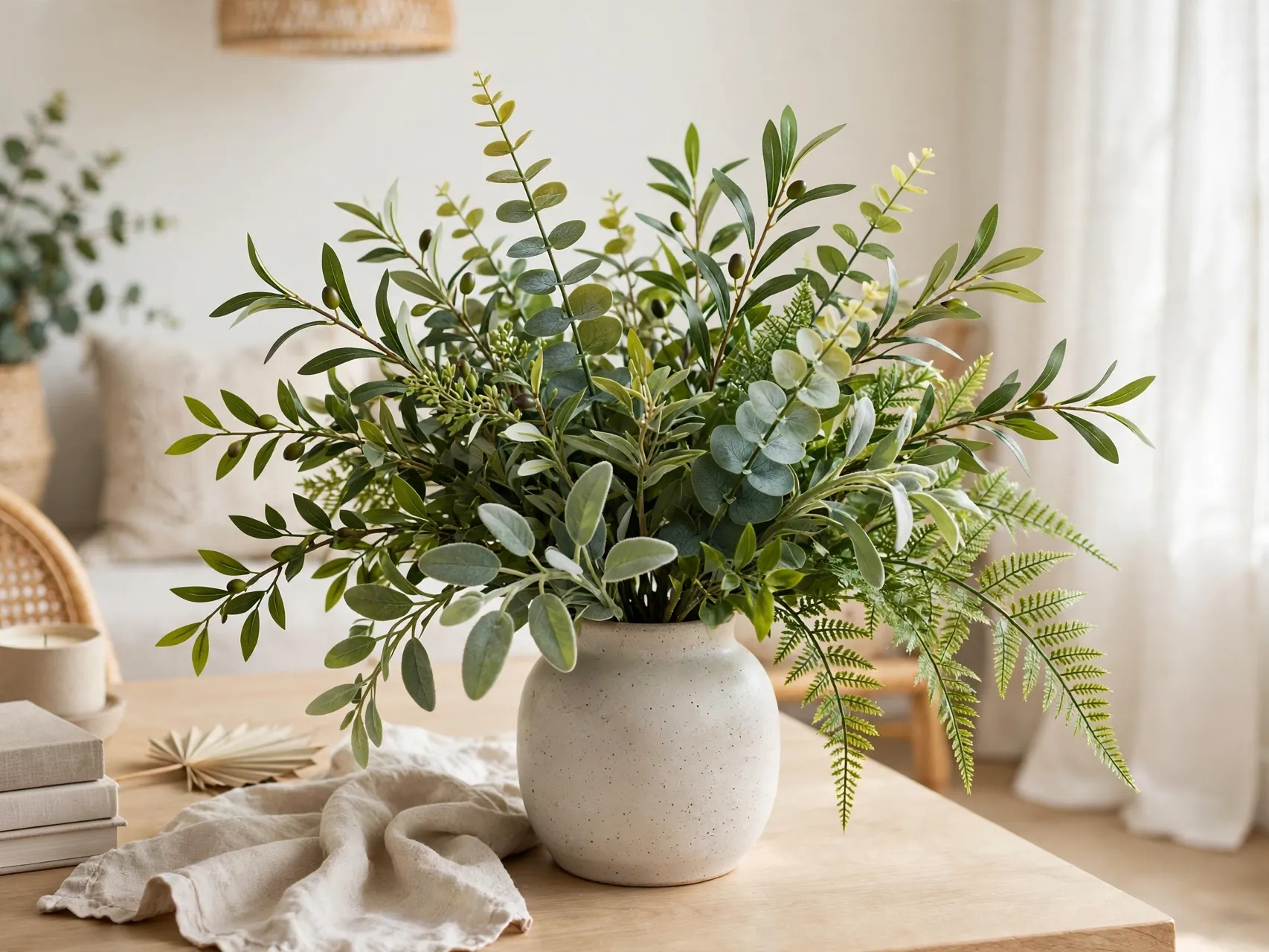
Sometimes the freshest spring look has no flowers at all. A vase of mixed faux greenery, eucalyptus, fern style fronds, and soft leafy stems in different greens, brings the new growth feeling of the season into rooms where color would fight with art, rugs, or bold furniture. Greenery only arrangements are the easiest to make look real, because leaves vary naturally and there are no petals to give the game away. Mix at least three textures and let some stems trail.
21. Mixing Faux Stems With One Real Element
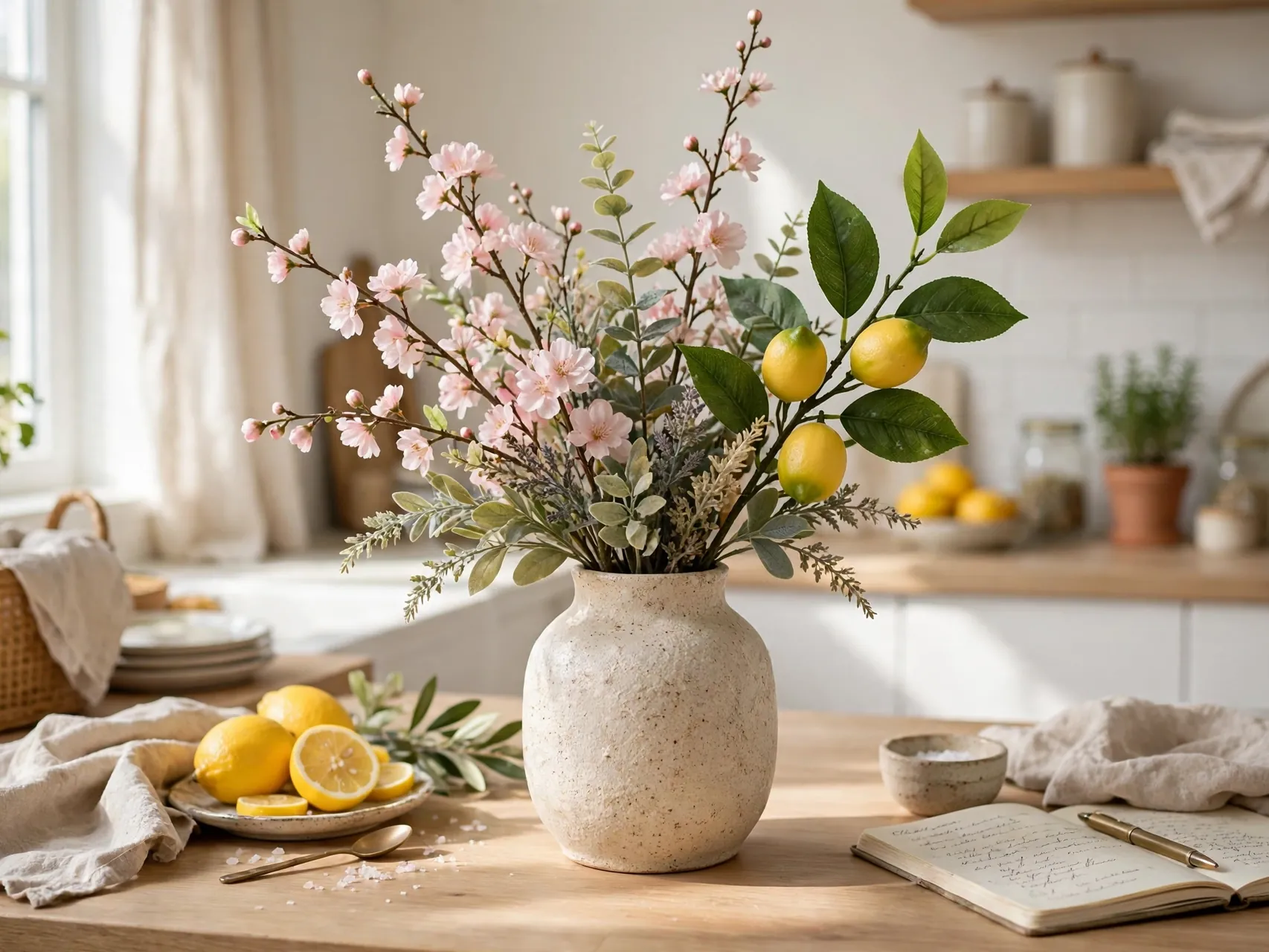
The oldest stylist trick in the book is to mix your faux spring stems with one real element: a few fresh greenery clippings, a real branch from the yard, or a small bunch of inexpensive fresh flowers tucked into the same vase. The real piece lends its scent and irregularity to the whole arrangement, and guests read everything as fresh.
22. A Storage and Rotation System That Keeps Stems Fresh
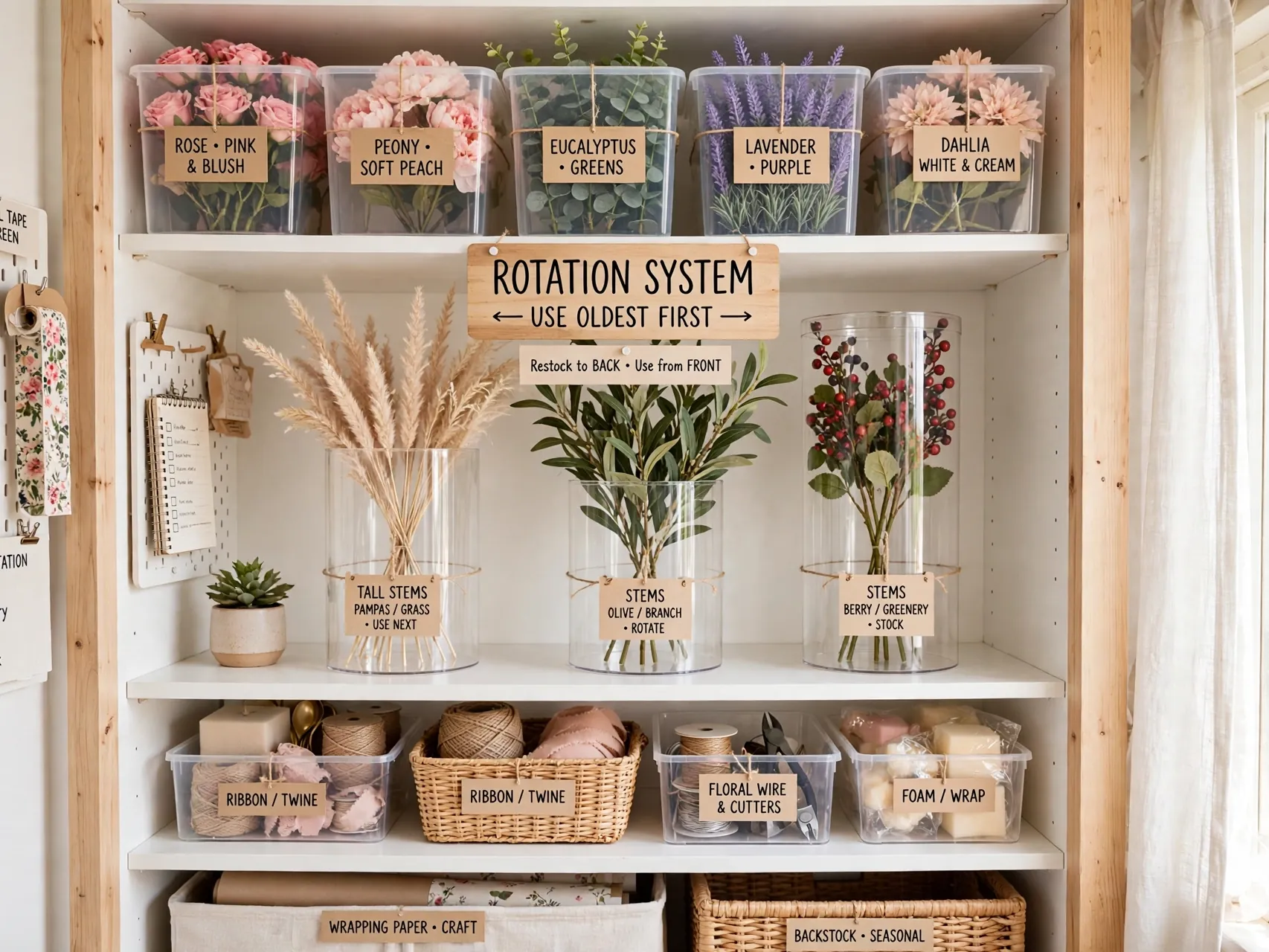
Faux stems last for years when they are stored with a little care, and a simple system makes seasonal decorating faster. Keep stems upright in a tall bin or box, grouped by type with a soft cloth or tissue between delicate heads, and store them in a cool, dry place out of direct sun, following any maker storage notes. Before each spring, lay everything out, dust each stem, steam out storage creases, and only then decide if anything new is truly needed.
FAQ
How do I make faux spring stems look real instead of fake?
Bend every stem into a soft, natural curve, trim stems to different heights, and mix open blooms with buds so nothing looks identical. Use an opaque vase so bent stems and wire ends stay hidden, fluff petals by hand or with gentle steam, and leave breathing room in the arrangement. A single real branch or a little real greenery mixed in adds irregularity that helps the whole vase read as fresh.
How many stems do I need for a full looking vase?
It depends on the vase opening and the size of the flower heads. As a simple guide, a medium vase usually looks full with five to nine medium stems, while large heads like hydrangea may need only three to five. When in doubt, buy a few more than you think you need, since sparse arrangements look unfinished. You can always move spare stems to a bud vase in another room.
How do I clean and store faux flowers between seasons?
Dust every few weeks with a soft brush, a microfiber cloth, or cool air from a hair dryer on a low setting. For washable stems, follow the maker guidance and let everything dry fully before storing. Store stems upright in a tall box with tissue between delicate heads, in a cool and dry place away from direct sun. Good storage prevents crushed petals and keeps colors true for the next spring.
Can I use faux spring stems outdoors on a porch?
Only use stems outdoors if they are labeled for outdoor or UV resistant use, and even then a covered porch is kinder than an open one. Sun, rain, and wind fade and wear fabric petals faster outside. Many people keep their best stems indoors and use sturdier greenery or a wreath made for outdoor use on the door, then bring porch stems in during severe weather to help them last.
What vase works best for faux arrangements?
Opaque ceramic, stoneware, metal, or woven vases are the easiest, because they hide bent stems, floral foam, or chicken wire supports. Clear glass can work if you keep stems neat, use clean lines, and accept that the stems will be seen, or fill the base with stones or moss. Match vase height to stem height: as a guide, the finished arrangement often looks balanced at about one and a half times the vase height.
Key Takeaways
- Variation is realism: Mixed open blooms and buds, color variation in petals, and matte leaves are what make faux stems read as real.
- Bend, trim, and fluff: Soft S curves, staggered heights, and a gentle steam or hand fluff turn shipped flat stems into a natural arrangement.
- Hide the mechanics: Opaque vases, chicken wire, and floral foam keep stems placed and stem ends invisible.
- Greenery does the quiet work: Eucalyptus and mixed leaves around your flowers make every bunch look garden gathered.
- Care keeps them lasting: Regular dusting and upright, dry storage protect your collection for many springs.
- Love a home that blooms without the weekly flower bill? Save this guide to Pinterest and pin your favorite stem to try first.