23 Japandi Decor Mistakes That Ruin the Calm, Minimal Look
Introduction
Japandi looks simple, which is exactly why small errors show up so fast. One loud wood tone, one crowded shelf, or one cold light bulb can undo the quiet feeling you worked hard to create. Most japandi decor mistakes are not big design failures. They are small habits that slowly push a calm room toward cluttered, chilly, or flat.
The good news is that every mistake on this list has an easy fix, and most fixes cost nothing. You will edit, warm up, ground, and simplify what you already own before you buy a single new piece.
Work through your room one mistake at a time. Photograph the space first, make one change, then live with it for a day. Japandi rewards patience, and a room fixed slowly always feels more collected than a room redone in one rushed weekend.
Start with the mistakes you can see from the doorway, because those shape how the whole room feels. Then move to the quiet details, like cords, lighting temperature, and what hides inside your storage.
1. Stripping the Room Until It Feels Cold and Empty

Minimal is not the same as bare. A room with white walls, one hard chair, and nothing soft in sight does not feel serene. It feels unfinished, and nobody relaxes in it for long.
Fix it by adding warmth back in layers. Start with one natural fiber rug, one soft throw, and one plant with real presence. Japandi keeps the Scandinavian love of comfort, so if a room feels like a waiting area, it needs texture and softness, not more empty space.
2. Mixing Five or Six Different Wood Tones

Wood is the main color in a Japandi room, so clashing tones create instant visual noise. A gray toned floor, a red toned table, a yellow pine shelf, and a dark walnut frame all fight each other in one glance.
Fix it by choosing one main wood tone per room and one supporting tone at most. Repeat that pair at least three times so it looks planned. Move the odd pieces to other rooms, or unify small items with a basket, tray, or textile so the mismatch stops shouting.
3. Painting Everything Bright, Cool White

Bright blue white paint makes natural wood look orange and makes a calm palette feel clinical. It also flattens linen, clay, and stone into one cold wash that changes harshly through the day.
Fix it with a warm white, soft greige, or pale clay tone instead. Test a large swatch on two walls and check it morning and evening. The right warm base makes wood glow, softens shadows, and does half the calming work before any furniture moves.
4. Filling Every Surface With Small Decor Objects

Japandi depends on empty space the way music depends on pauses. When every shelf, sill, and table holds three small objects, the eye never rests and the room reads as clutter, however pretty each piece is alone.
Fix it by editing each surface down to one or two pieces with real presence, then leaving honest gaps. Group what stays, give it breathing room, and store the rest. Rotating a few loved pieces seasonally keeps the room calm and still feels fresh.
5. Buying a Matching Set of Themed Asian Props
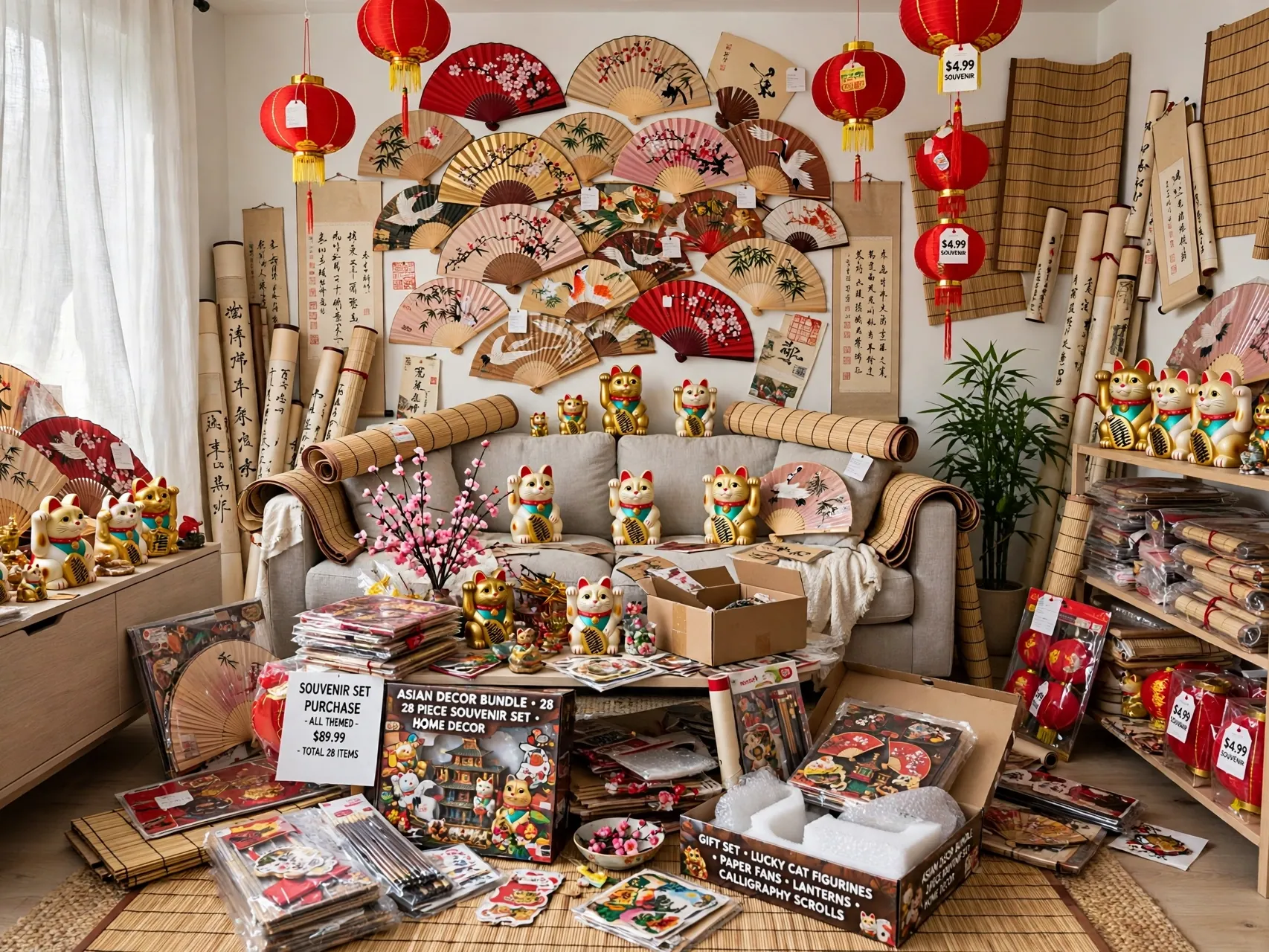
Fans on the wall, a row of statues, and novelty lanterns turn a design style into a theme party. The Japanese influence in Japandi lives in proportion, craft, and restraint, not in souvenir objects.
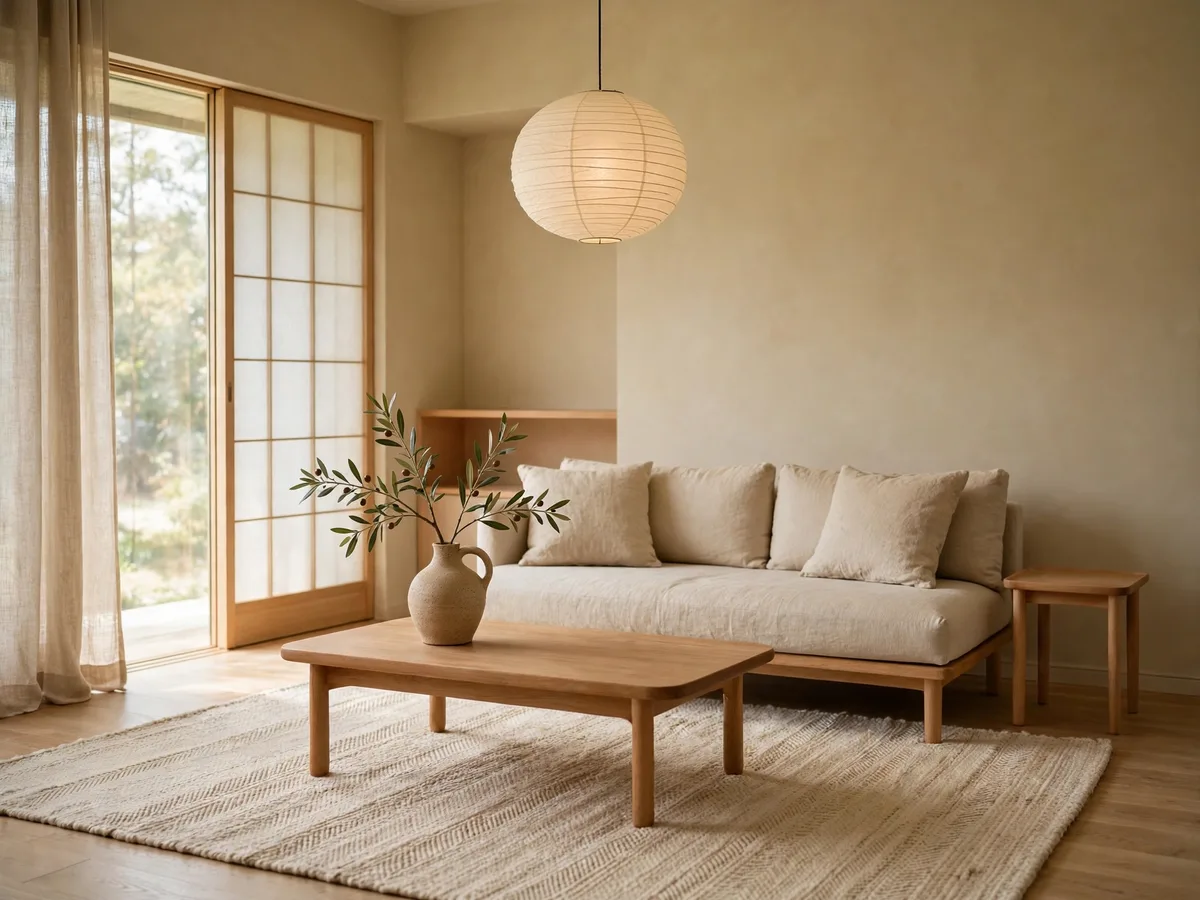
Fix it by removing themed props and letting materials carry the influence instead. Choose a low profile, a handmade ceramic, a paper shade, a simple branch in a vase. One quiet, well made piece says more than a shelf of symbols, and it will still suit your home in ten years.
6. Choosing Tall, Bulky Furniture That Breaks the Low Line

High backed sofas, tall armoires, and chunky raised beds lift the visual weight of a room and shrink the ceiling. Japandi rooms feel grounded because the furniture line stays low and horizontal.
Fix it by lowering the biggest pieces first. A low coffee table, a low platform bed, or a sofa with a lower back changes the whole room at once. Keep taller storage against one wall only, choose pieces with legs that show floor, and let the middle of the room breathe.
7. Using Only One Flat Texture Everywhere

A neutral room with smooth walls, smooth cushions, a smooth rug, and glossy ceramics has nothing for light or touch to play on. It reads flat and a little dull, even when the colors are right.
Fix it by layering contrasting natural textures in every zone. Pair matte ceramic with woven seagrass, nubby wool with washed linen, raw wood with soft cotton. You do not need more color or more objects. You need surfaces that feel different from each other when the light moves across them.
8. Lighting the Room With One Harsh Overhead Bulb

A single cool ceiling light casts hard shadows, grays out wood tones, and kills the evening calm Japandi is famous for. It is the fastest way to make good furniture look cheap.
Fix it with layered, warm light from several heights. Add a paper or fabric pendant, a low table lamp near seating, and one floor lamp in a dark corner. Choose warm bulbs, keep shades soft and natural, and turn the big overhead light off in the evening whenever you can.
9. Skipping Contrast So the Room Turns Beige and Flat
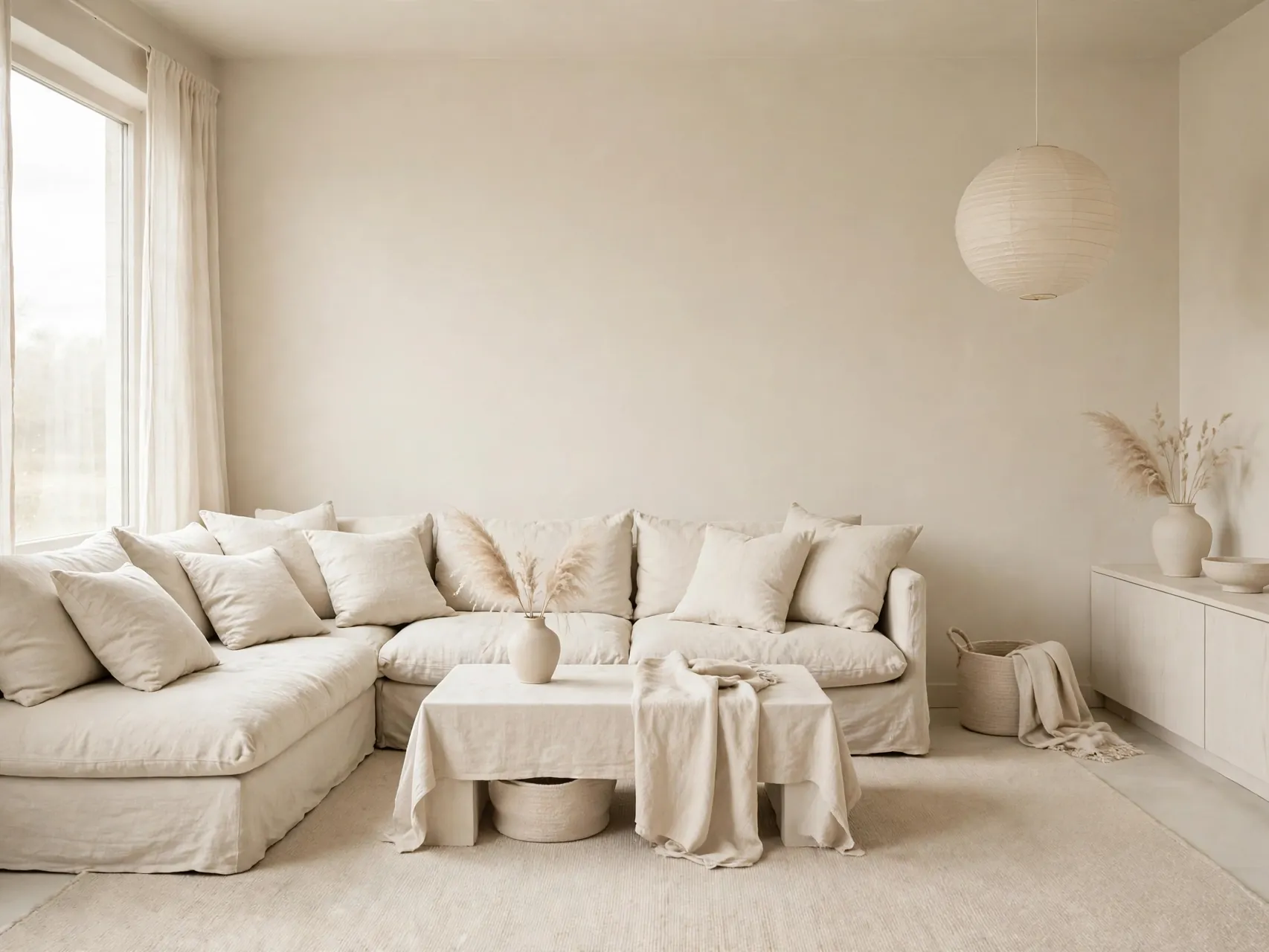
Fear of going too bold leaves many Japandi rooms in one soft beige note. Without a single dark or deep accent, nothing has definition and the room feels washed out by midday.
Fix it by grounding the palette on purpose. Add one charcoal or black element, like a thin framed print, a dark stained side table, or a deep brown cushion. Repeat that dark note twice more in small ways. The neutrals around it will suddenly look richer and calmer, not louder.
10. Chasing Perfection and Hiding Every Sign of Life

Japandi borrows the wabi-sabi idea that honest wear and slight imperfection are beautiful. A room polished until it looks untouched feels tense, and a handmade bowl with a wobble gets hidden in a cupboard.
Fix it by letting real life show in controlled ways. Display the handmade ceramic, keep the linen slightly rumpled, and choose natural materials that age well instead of finishes that must stay flawless. Calm comes from ease, not from a showroom standard nobody can maintain with kids, pets, or guests.
11. Leaving Cords, Chargers, and Daily Clutter in View
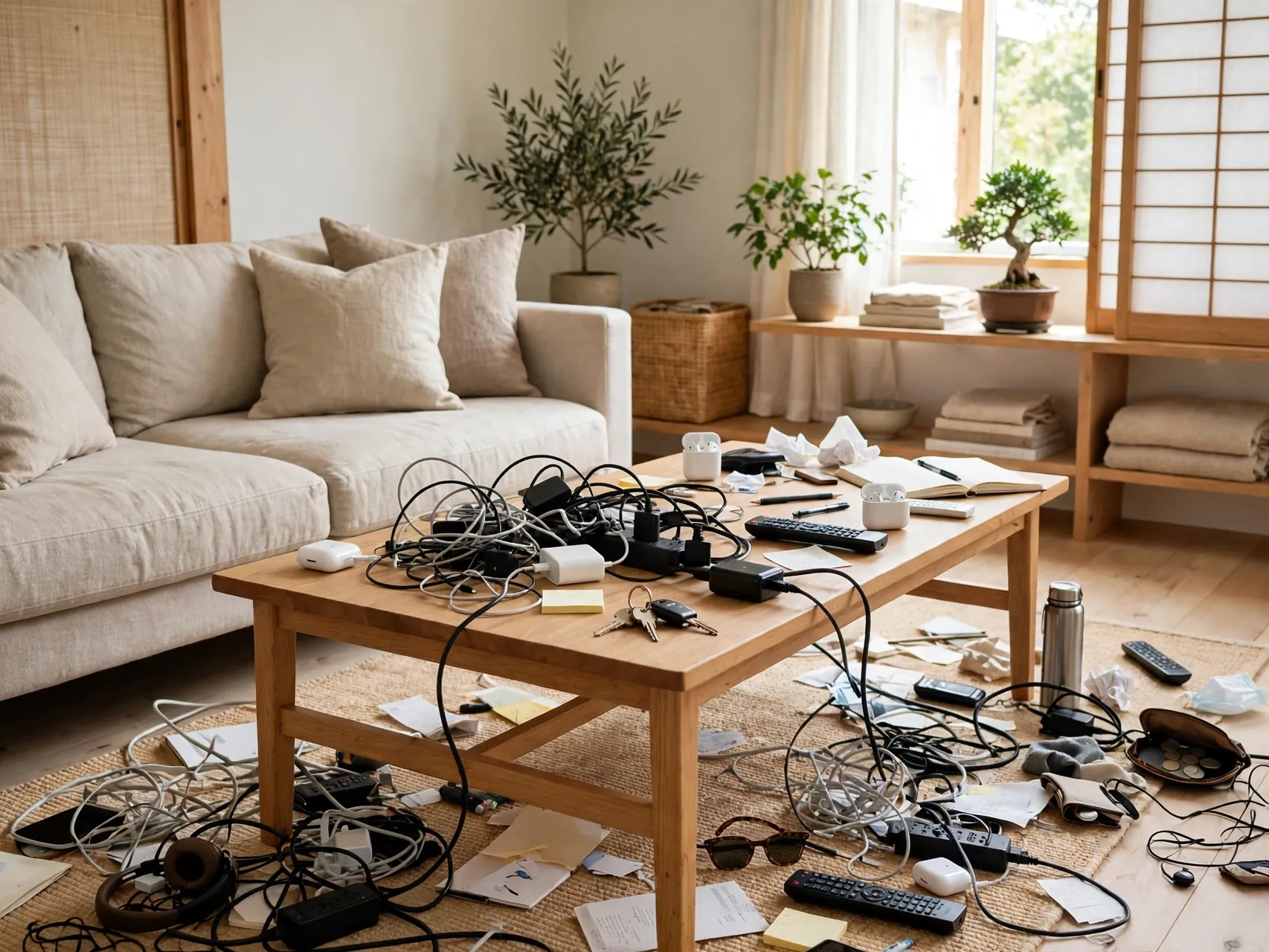
Nothing breaks the calm faster than a tangle of white cables, a pile of mail, and three chargers on the coffee table. Visible daily mess argues with every calm choice around it.
Fix it with closed storage and one hidden charging home. Use a lidded basket or drawer near the door for mail and keys, run cords in a simple tray or box behind furniture, and give remotes one tray. Japandi rooms are not tidier by magic. They simply hide the machinery of daily life well.
12. Choosing Furniture for Looks and Forgetting Comfort
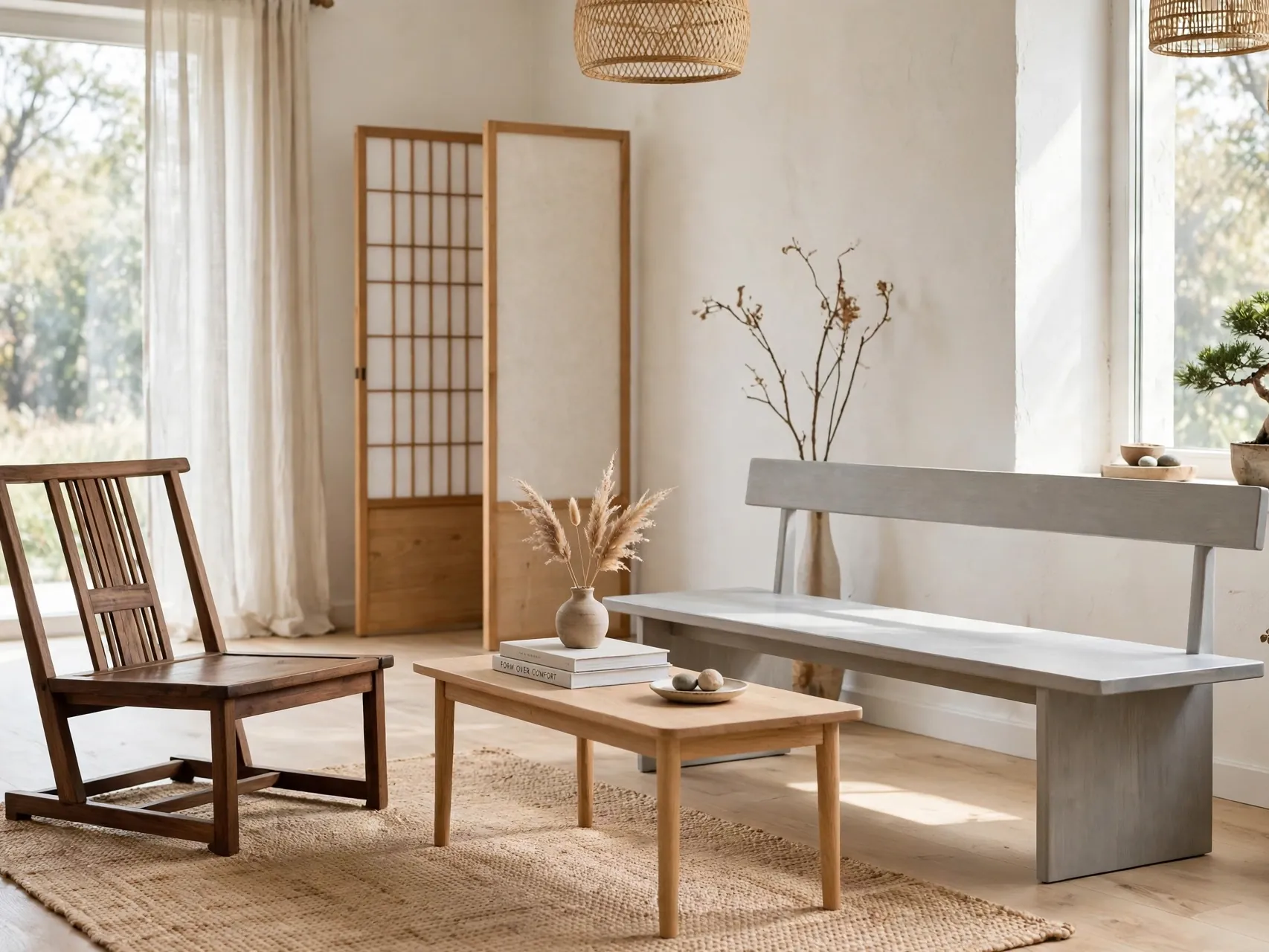
A sculptural chair nobody sits in and a low sofa that hurts your back fail the Scandinavian half of the style. Japandi is a way of living, not only a way of photographing a room.
Fix it by testing comfort before style points. Sit, lounge, and work in a piece before it stays. Add the cushions, footstool, or reading light that make the pretty piece usable. If a beautiful item stays uncomfortable after honest adjustment, it belongs in another home, and a simpler, kinder piece takes its place.
13. Hanging Art Too High, Too Small, or in Busy Groups
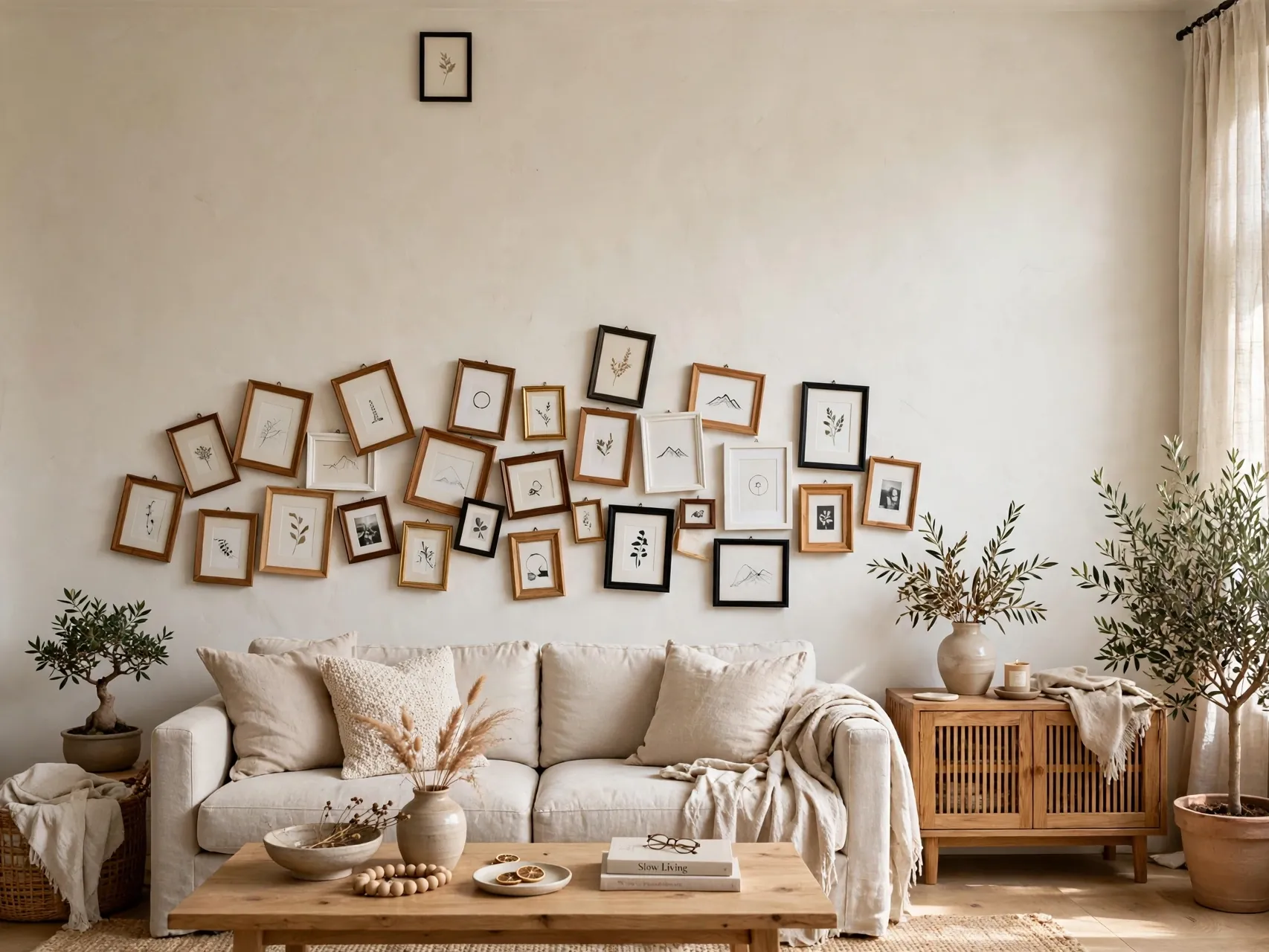
A tiny print floating near the ceiling and a tight cluster of five small frames both fight the calm. Japandi walls work like the furniture: low, spacious, and easy to read at a glance.
Fix it by going larger and quieter. Choose one generous piece per wall, hang its center near eye level when standing in the room, and use a thin wood or soft black frame with a wide mat. Leave at least one wall completely bare. That empty wall is not a gap. It is part of the design.
14. Using Glossy, Plastic, and Fake Finishes

High shine lacquer, chrome, and plastic that pretends to be wood all reflect light in a hard way and feel cold to the touch. Japandi relies on honest, matte, natural materials, so imitations stand out fast.
Fix it by swapping one fake finish at a time for the real texture, or for a simpler honest material. Painted metal, plain stone, unfinished wood, and real linen all beat a wood look sticker. When budget is tight, choose fewer pieces in true materials rather than a full room of lookalikes.
15. Blocking Natural Light With Heavy Window Treatments
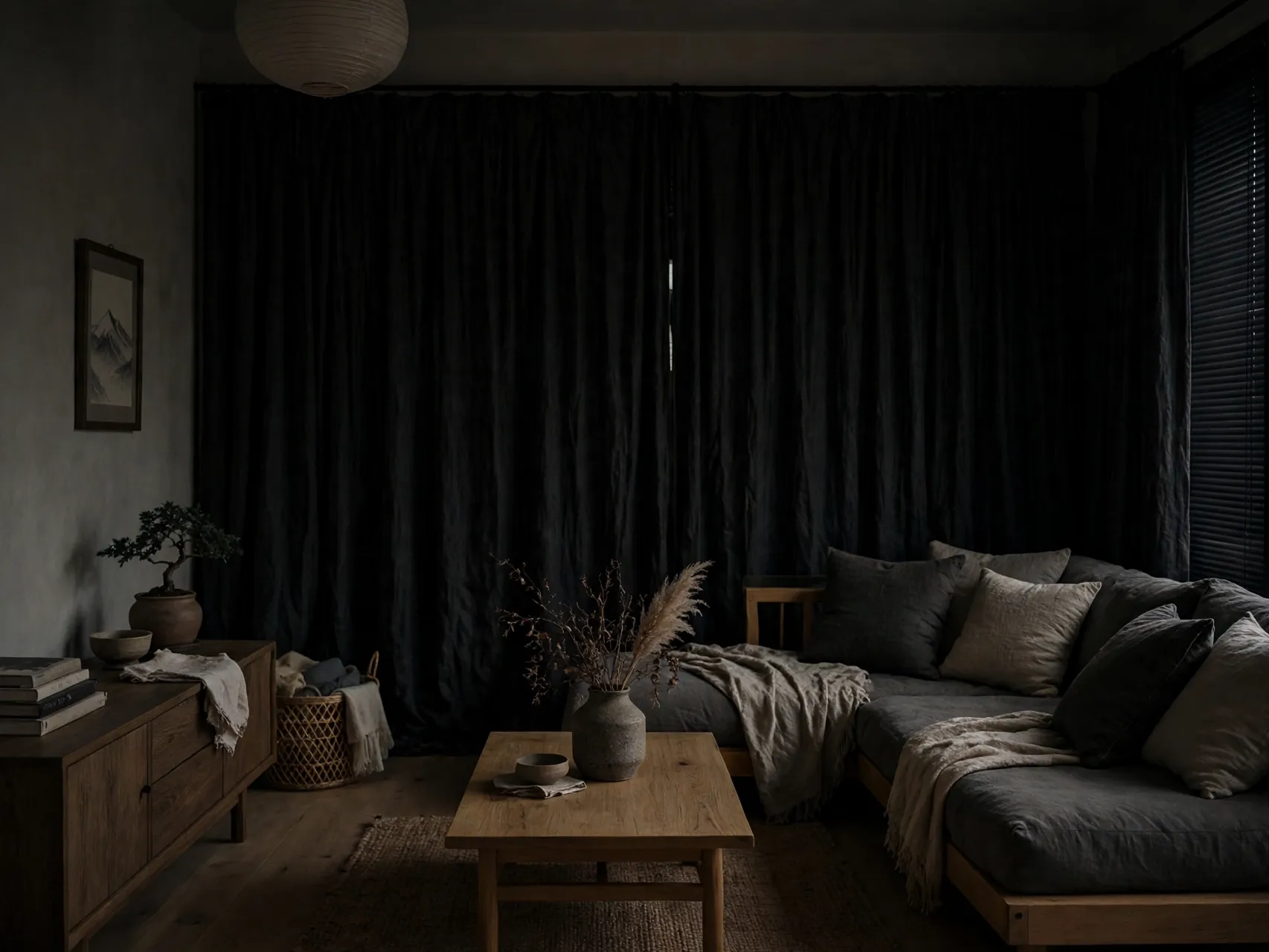
Thick dark drapes, fussy valances, and blinds kept half closed starve a Japandi room of its best feature. Soft daylight is what makes pale wood, clay, and linen look alive instead of dull.
Fix it with simple window coverings that open fully. Choose plain linen panels hung wide of the frame, a simple woven shade, or sheers that filter glare without sealing the room. Keep sills clear, clean the glass, and let furniture sit low so it never crowds the window line.
16. Adding Pattern in Too Many Places at Once

Japandi uses pattern the way it uses color: sparingly. A busy rug, printed cushions, patterned curtains, and a bold throw all in one room create restlessness, even in neutral colors.
Fix it by letting texture do the work and keeping pattern to one quiet moment per room. A subtle stripe in a throw, a faint check in one cushion, or the natural grain of wood is enough. If two patterns compete, remove the louder one and notice how quickly the room settles.
17. Forgetting Plants or Crowding in a Whole Jungle
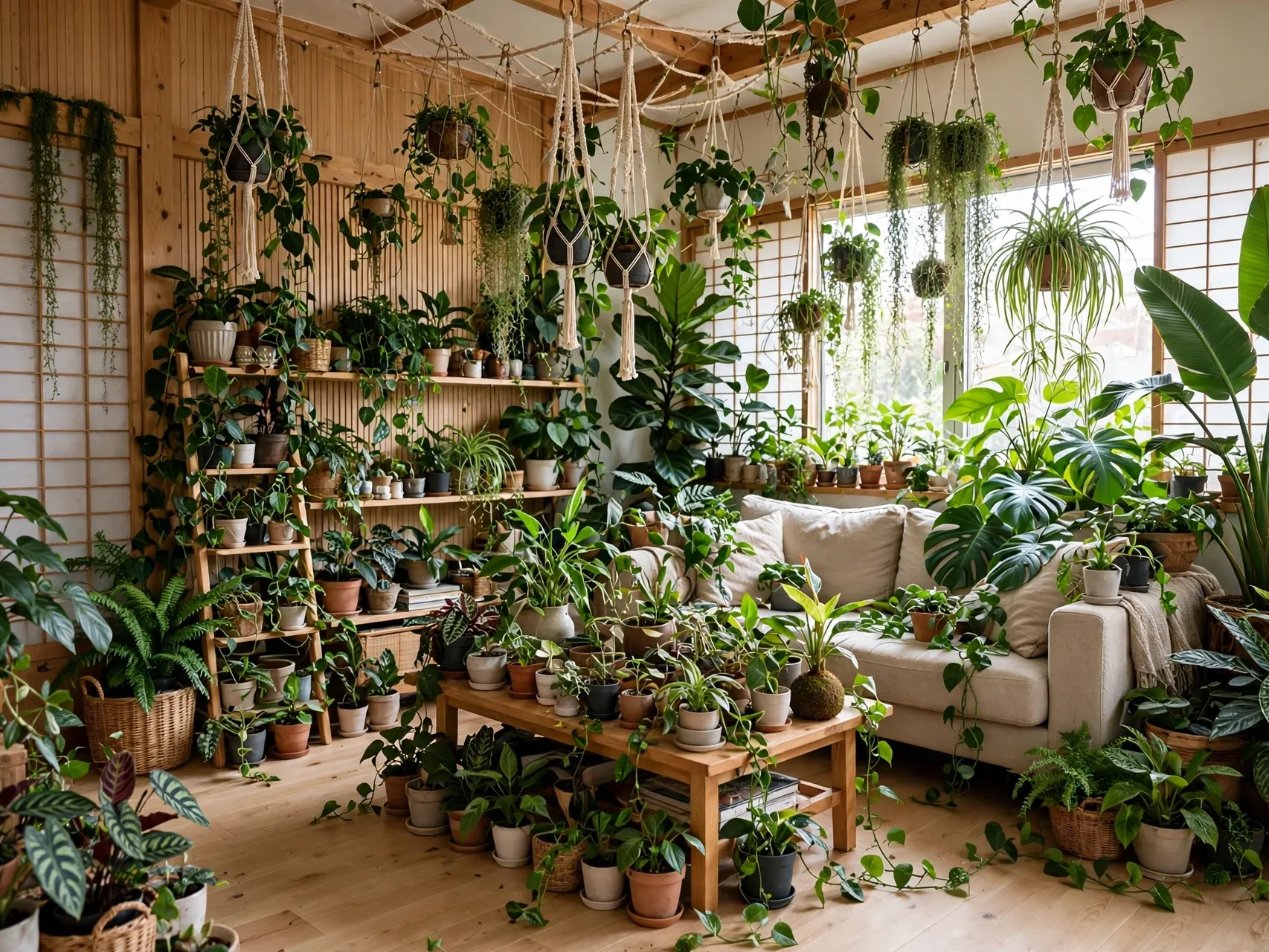
A room with no living green feels cut off from nature, while a shelf of fifteen small pots feels busy and demanding. Both extremes miss the sculptural calm a Japandi plant should bring.
Fix it with one or two plants chosen for shape. A small tree form, a single branch arrangement, or one fern in a plain ceramic pot gives height, shadow, and life without clutter. Group any extra plants in one calm corner, keep pots in matching natural materials, and let each plant have space around it.
18. Buying Everything New in One Big Shopping Trip
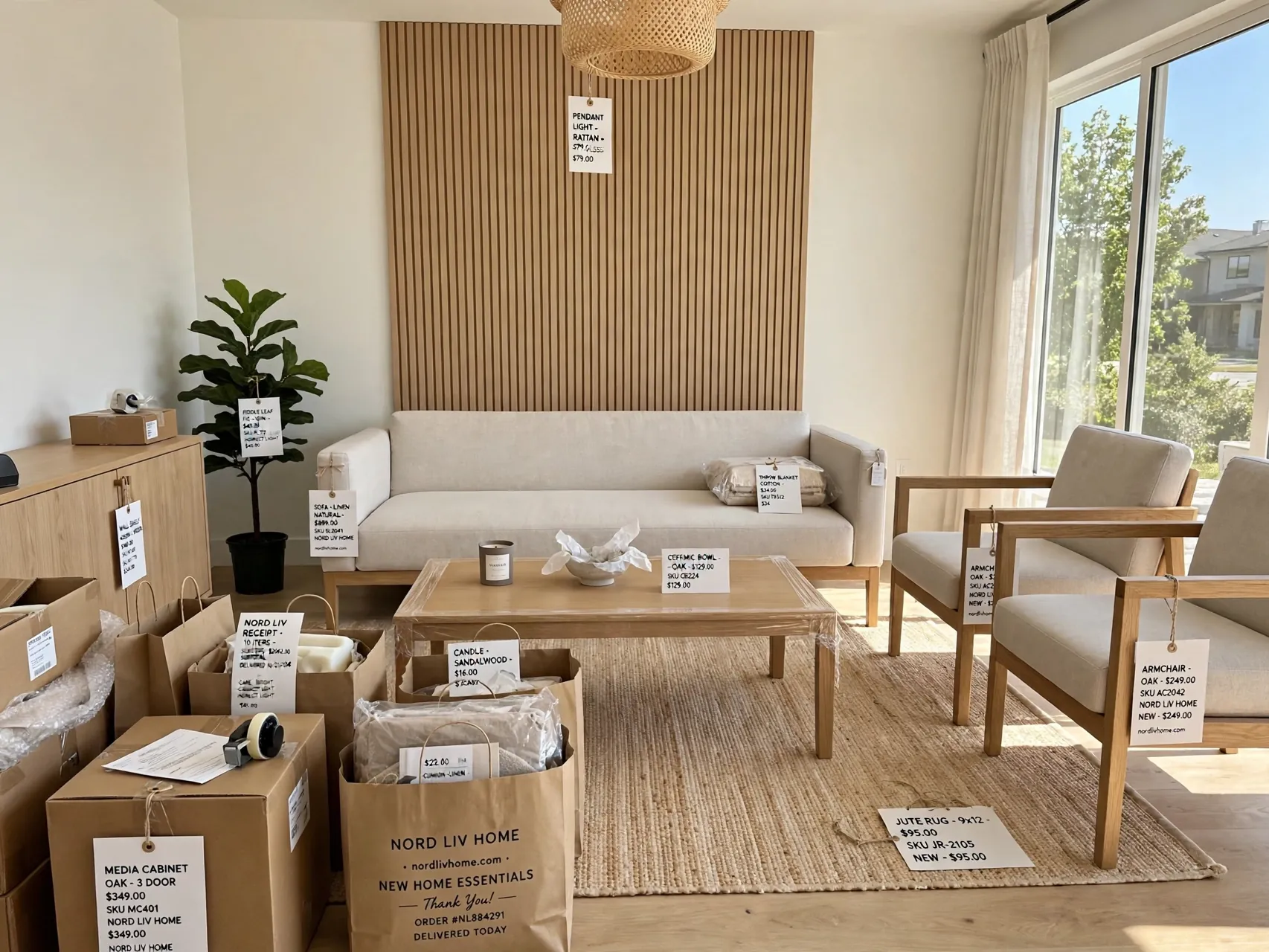
Rooms assembled in a single weekend of buying look staged, because every piece arrives at the same age, finish, and energy. Japandi rooms feel collected, and that feeling cannot be rushed into a cart.
Fix it by furnishing in layers over time. Start with the essential furniture in your chosen wood tones, live in the room, then add ceramics, textiles, and art one thoughtful piece at a time. A slower room costs less, wastes less, and ends up holding objects you genuinely love instead of filler you tolerate.
19. Ignoring How the Room Sounds and Smells
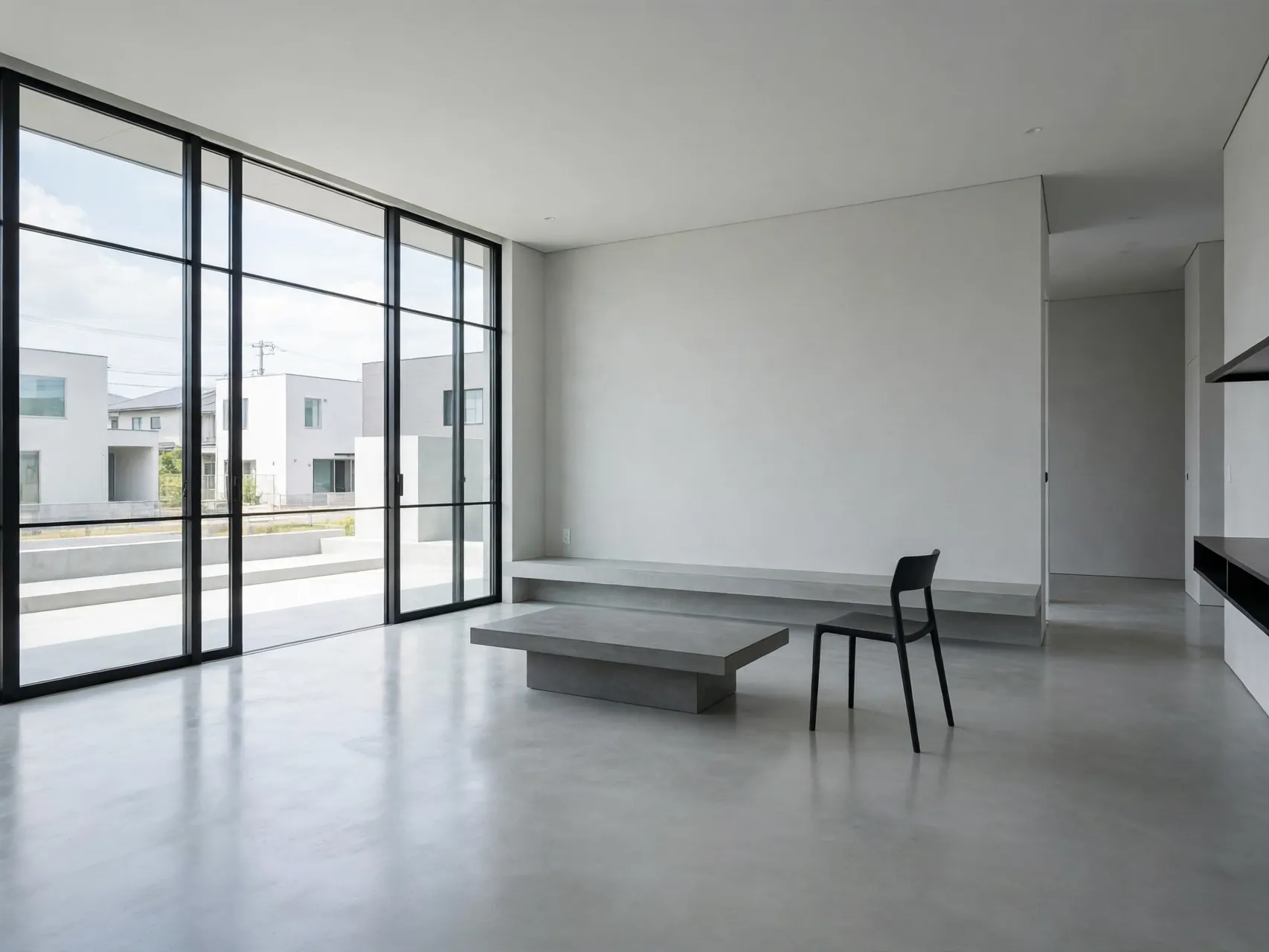
Hard floors, bare walls, and minimal furniture can make a room echo, and an echoing room never feels calm no matter how it looks. Scent matters too, because a stuffy or chemical smell fights the natural materials.
Fix it by softening sound and air quietly. A wool or jute rug, upholstered seating, full linen curtains, and one fabric wall hanging absorb echo. Open windows daily when weather allows, and keep scent simple and natural with fresh air, wood, or one subtle candle used safely, away from fabrics and never left unattended.
20. Keeping Closed Storage Out of the Plan

Open shelves look lovely in photos and dusty in real life, especially when they hold the everyday items a household actually uses. Without closed storage, clutter returns to every surface within a week.
Fix it by making most storage closed and calm. Choose flat front cabinets, a sideboard with doors, drawers under a bench, and lidded baskets for the small stuff. Save open display for one short shelf of favorite pieces. When everyday things have a hidden home, the visible room can stay as serene as the photos promise.
21. Copying a Photo Exactly Instead of Fitting Your Room
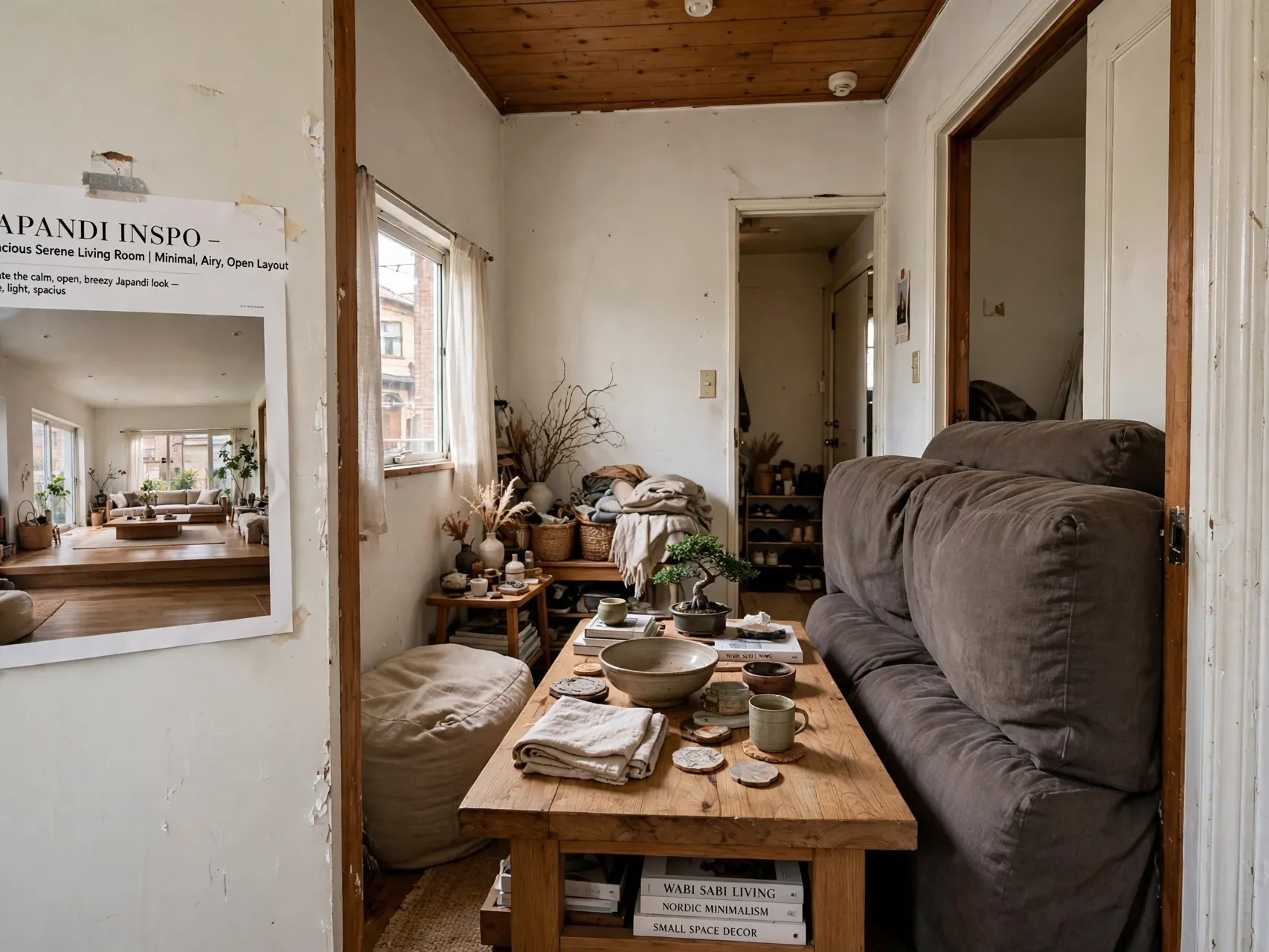
A copied layout rarely fits different light, ceiling height, or the way your family actually uses the space. The result looks almost right and feels quietly wrong, which is worse than an honest personal mix.
Fix it by borrowing principles, not pictures. Take the wood tone, the low line, the layered light, and the edited surfaces, then arrange them around your windows, doors, and habits. A Japandi room should serve your mornings and evenings first. When it works for your life, it will photograph beautifully as a side effect.
22. Letting the Entryway Stay Chaotic

The entry sets the emotional tone for the whole home, and it is where Japandi calm most often dies. Shoes in a heap, coats on a chair, and bags on the floor greet you before any serene room can.
Fix it with a small, strict system. Add a low bench, a few sturdy hooks at calm spacing, one basket for shoes, and a single tray for keys and mail. Keep the floor fully clear. Five tidy feet at the door protect the calm of every room beyond it, every single day.
23. Treating Japandi as a Trend Haul Instead of a Habit

The biggest of all japandi style mistakes to avoid is treating the style as a shopping list. Buying the look without changing daily habits means the clutter, noise, and rush quietly return within a month.
Fix it by adopting the routines behind the rooms. Put things back in their closed homes, edit one surface each week, buy slowly and well, and protect one quiet corner for rest. Minimalist japandi decor lasts when it is a way of living in your rooms, not a weekend theme you installed and then forgot.
FAQ
What is the most common Japandi mistake?
Going too stark is the most common one. People remove color, texture, and comfort in the name of minimalism and end up with a cold, empty room. Real Japandi keeps warmth through wood, wool, linen, plants, and soft layered light. If your room feels calm but a little bare in a photo, check whether it feels kind to sit in. Comfort is the test.
How many wood tones should a Japandi room have?
Aim for one main wood tone and one supporting tone in each room. Repeat each tone at least twice so the pairing looks intentional. Floors count as one tone, so choose furniture that sits happily with them. If a third tone sneaks in through a small item, soften it with a tray, basket, or textile so it stops competing with the main pair.
Can renters fix Japandi mistakes without renovating?
Yes, and most fixes here are renter friendly. Warm bulbs, layered lamps, natural fiber rugs, linen panels on existing rods, lidded baskets, and closed storage furniture change a room without touching walls. Swap cold white bulbs first, since lighting temperature alone can make a rental feel warmer in one evening. Keep original fittings labeled and stored so move out day stays simple.
Is Japandi the same as minimalism?
No. Minimalism is a broad approach to owning and showing less. Japandi is a specific blend of Japanese restraint and Scandinavian comfort, built on natural materials, low furniture, craftsmanship, and warmth. A minimalist room can feel cool and gallery like. A Japandi room should feel warm, lived in, and restful, with fewer things but softer ones. The overlap is editing, not the final feeling.
How do I add color to Japandi without ruining the calm?
Use muted, nature based color in small doses. A sage cushion, a clay vase, a deep green plant, or one charcoal accent adds depth while the wood and neutrals still lead. Keep the new color matte and repeat it twice in the room so it looks chosen. Avoid bright, saturated shades and busy pattern, which fight the quiet palette fastest.
Key Takeaways
- Warmth before emptiness: If a room feels cold or bare, add wood, wool, linen, plants, and layered warm light before removing anything else.
- Two wood tones per room: One main tone and one supporting tone, each repeated, keeps the palette calm instead of noisy.
- Edit every surface: One or two pieces with presence, honest empty space, and closed storage for daily clutter protect the serene look.
- Low, matte, and honest: Low profile furniture, natural matte materials, and real comfort beat tall, glossy, themed, or copied rooms.
- Habits hold the style: Slow buying, weekly mini edits, and a tidy entry keep japandi interior design tips working long after the first refresh.
- Love a calmer home? Save this guide to Pinterest and pin the first mistake you will fix this week.