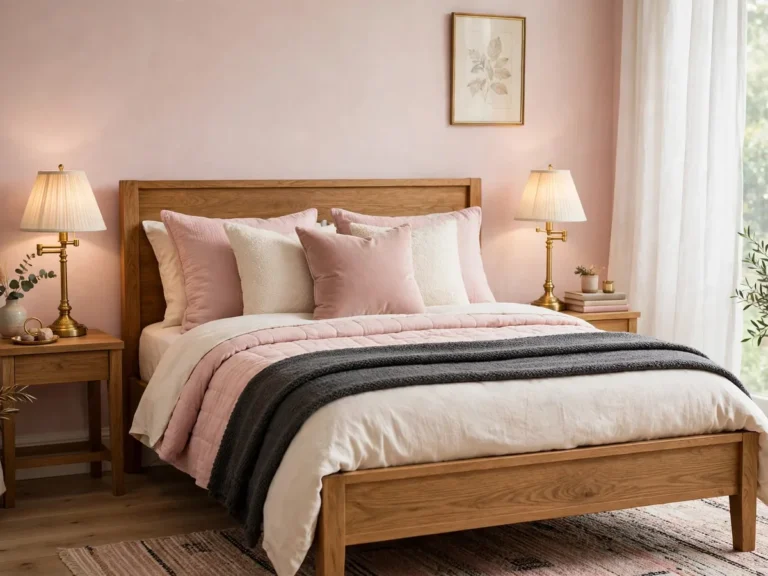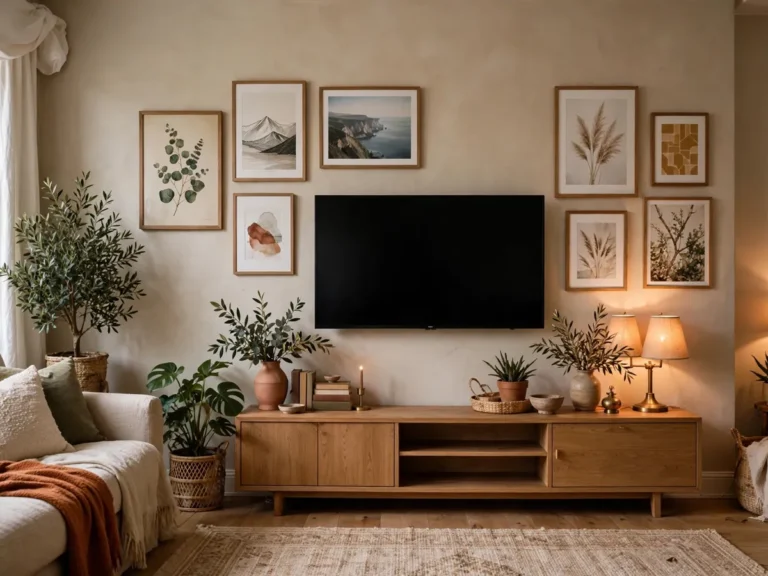

21 Japandi Home Decor Ideas for a Calm, Serene Space
Introduction
Some rooms lower your shoulders the moment you walk in. That is the quiet magic of japandi home decor, a blend of Japanese restraint and Scandinavian warmth that turns busy homes into calm ones without stripping away comfort or personality.
You do not need a full renovation to get there. Japandi grows from choices you can make one room at a time: warmer wood, lower furniture, softer light, fewer but better objects, and storage that hides the daily mess.
This list walks through the whole home, from the entry to the bathroom, with ideas renters and owners can both use. Start with the room you sit in every evening, because that is where calm pays you back fastest.
Keep one rule beside you as you read: every piece should be useful, beautiful, or loved, and ideally all three. That single filter makes every japandi decor idea below easy to copy in your own space.
1. Build a Warm Neutral Base With Wood as the Main Color

Every serene Japandi room starts with a quiet base: warm white or soft greige walls, pale natural flooring or a natural fiber rug, and wood treated as the lead color rather than an accent. This base lets texture and shape do the decorating.
Choose your main wood tone first, then let walls and large textiles support it. A light oak room feels airy and Nordic, while a walnut led room feels deeper and more grounded. Either works beautifully when the palette stays warm, matte, and consistent from wall to floor to furniture.
2. Choose Low Profile Furniture With Clean Lines
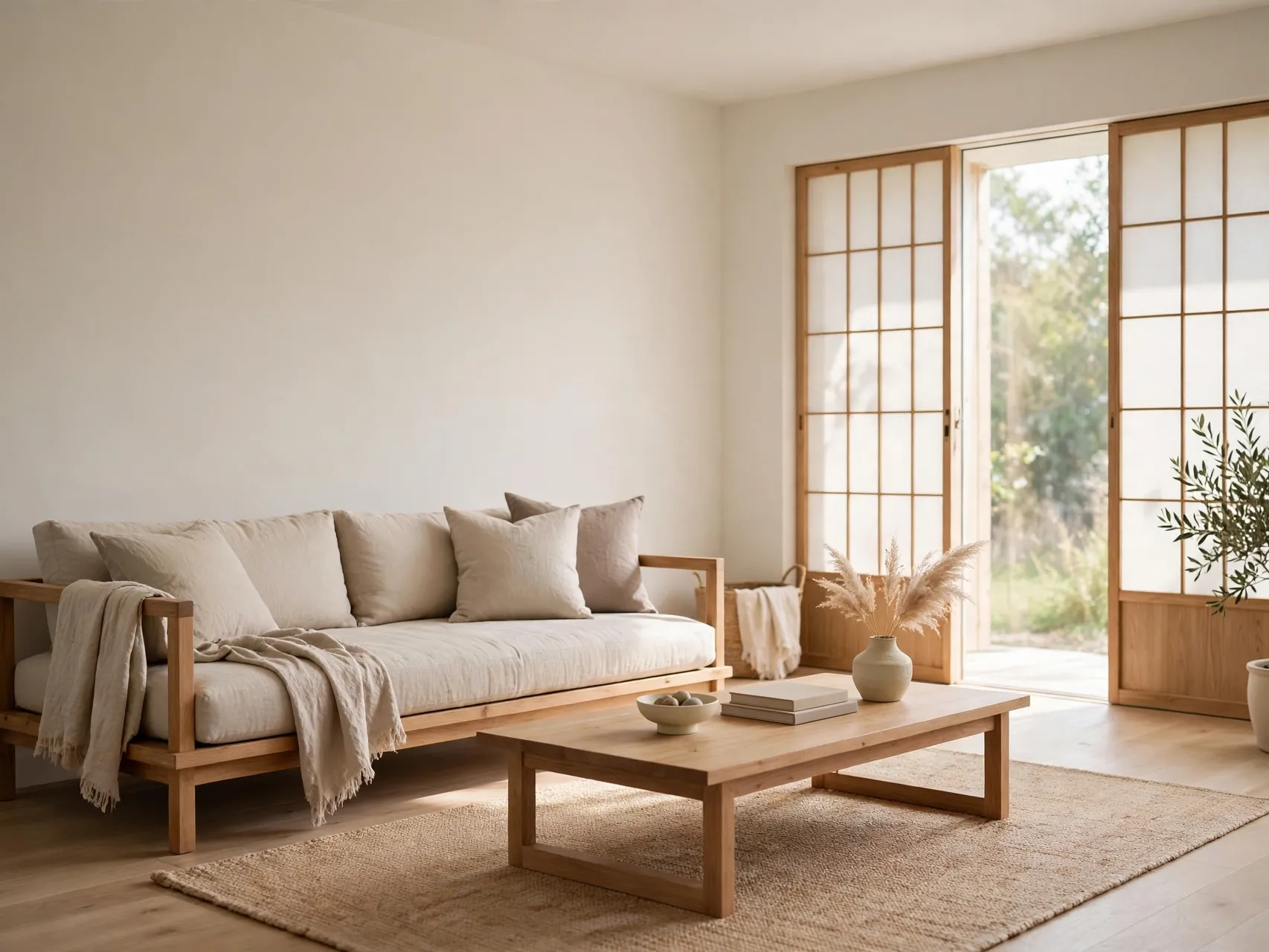
Low furniture is the signature silhouette of japandi interior design. A low sofa, a platform bed, and a simple coffee table keep sight lines open, make ceilings feel higher, and give a room its grounded, restful posture.
Look for clean lines, slim legs, and honest joinery instead of ornament. Comfort still matters, so pick deep seats, soft cushions, and a low back you can truly lounge against. In small rooms, low pieces with visible legs feel lighter than boxy furniture that sits heavy on the floor.
3. Layer Natural Textures in Every Single Room

When color stays quiet, texture becomes the decoration. Washed linen, nubby wool, woven seagrass, raw wood, matte clay, and smooth stone each catch light differently, so a neutral room feels rich instead of flat.
Work in threes per zone: a rug underfoot, a textile at touch height, and one hard natural material on a surface. A linen sofa with a wool throw and a ceramic bowl on a wood table is a complete Japandi moment. Repeat the same small family of textures through the home for a calm, connected feeling.
4. Let One Handmade Ceramic Piece Anchor Each Surface

Handmade ceramics carry the wabi-sabi heart of the style: slight wobbles, uneven glaze, and the visible touch of the maker. One generous vase, bowl, or teapot on a surface does more for a room than a crowd of small factory pieces.
Choose pieces in clay, stone, or soft white tones and let each one stand alone with space around it. A single branch, a small stack of books, or nothing at all beside it keeps the focus. Thrift stores and local makers are wonderful sources, and a collected piece always beats a matched set.
5. Add a Sculptural Plant Instead of a Busy Collection
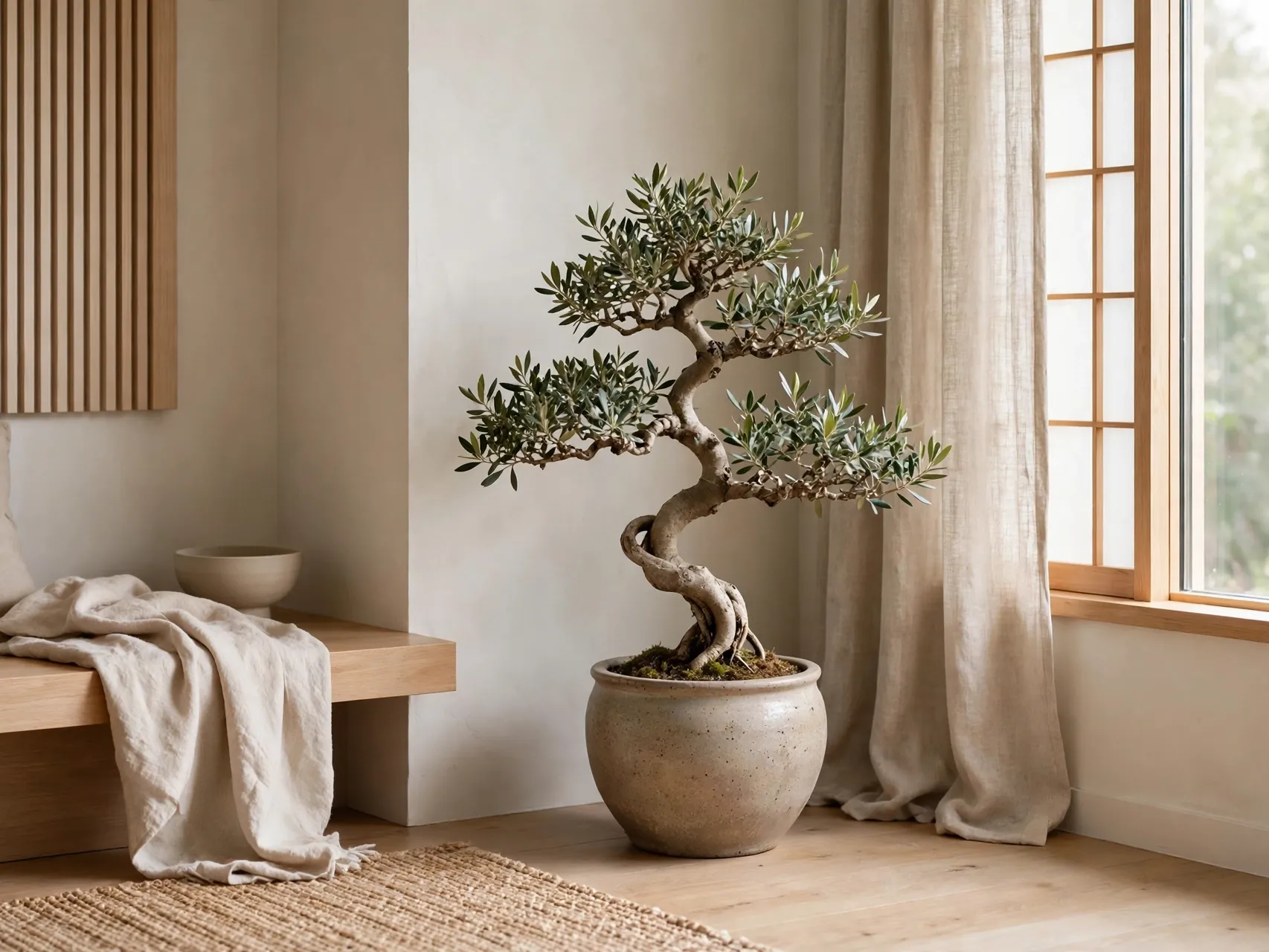
Japandi greenery is chosen like furniture: one plant with a beautiful shape, given room to be seen. A small olive style tree, a single fern, or a branch arrangement in a tall vase brings height, shadow, and living softness to a calm corner.
Keep pots simple in clay, stone, or woven baskets that match your wood tones. If you love many plants, gather them into one green corner rather than scattering pots on every sill. The edited approach keeps japandi living room decor serene, and watering day becomes much simpler too.
6. Soften Light With Paper, Linen, and Warm Bulbs

Light decides whether a Japandi room feels serene or stark. Paper pendants, linen shades, and frosted globes spread a soft glow, while warm bulbs keep wood and textiles looking golden instead of gray in the evening.
Layer three heights of light: a pendant or ceiling source for general glow, table lamps at seating level, and one low lamp or candle style light for evenings. Keep every bulb warm and let shades stay natural. On bright days, sheer linen panels filter sun without closing the room away from the garden.
7. Hide Daily Life in Beautiful Closed Storage
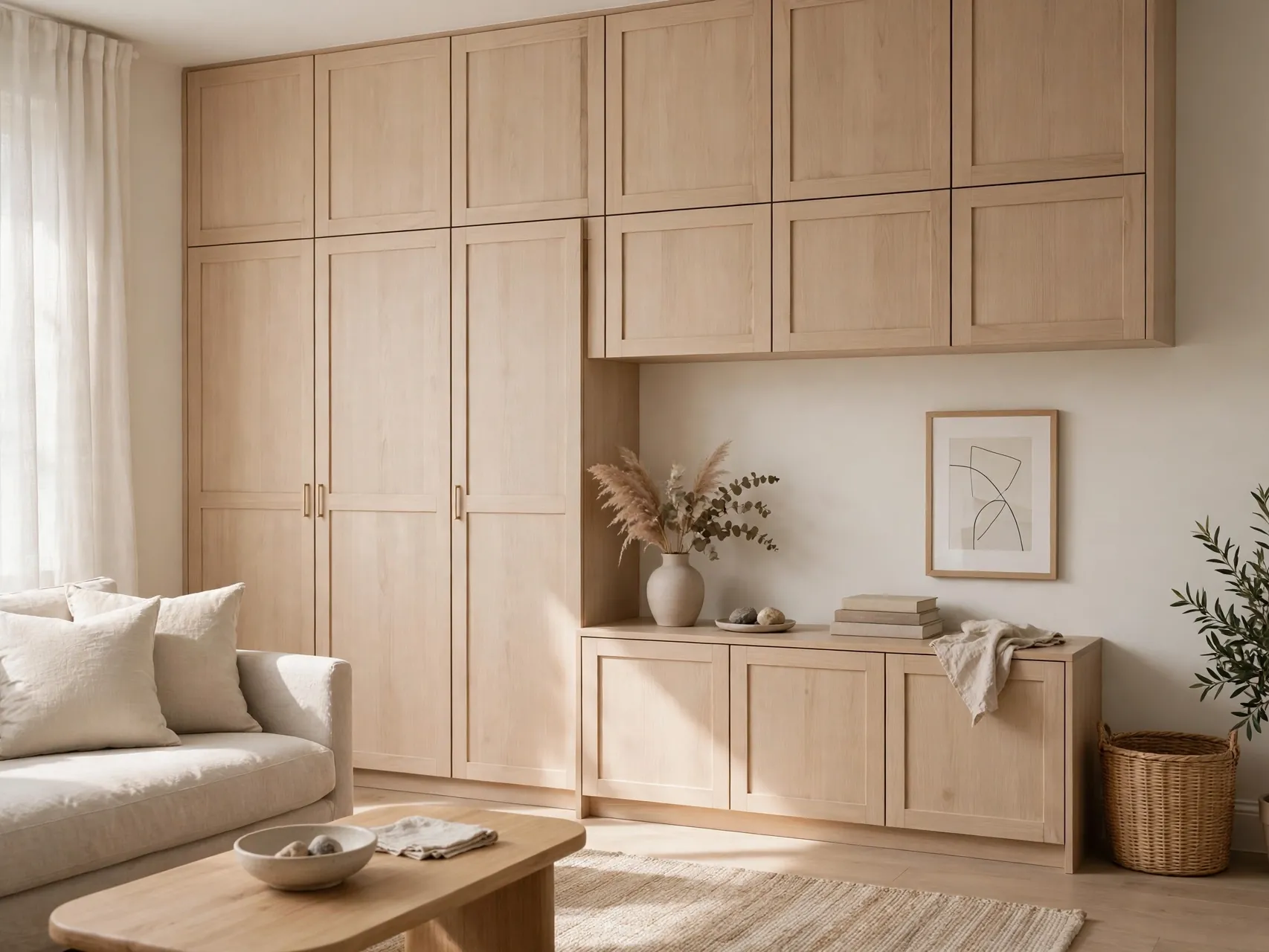
Calm surfaces need somewhere for real life to go. Flat front cabinets, a wood sideboard, drawers inside a bench, and lidded woven baskets swallow remotes, chargers, toys, and paperwork so the room can stay visually quiet.
Give every daily item a closed home near where it is used, and the tidying takes minutes. Save open shelves for one short run of favorite ceramics and books. This balance of hidden storage and tiny display is the practical engine behind every japandi style home you admire in photos.
8. Create a Low, Quiet Reading Corner

A calm home deserves one corner built only for rest. Start with a low lounge chair or a floor cushion with a backrest, a small side table, and a warm lamp placed so light falls gently over your shoulder onto the page.
Add a wool throw, a tiny shelf or basket for current books, and a plant nearby for softness. Keep phones and clutter out of this corner by rule. Ten quiet minutes here in the morning or evening does more for the mood of a home than any single decor purchase on this list.
9. Dress the Bed in Washed Linen and Low Layers
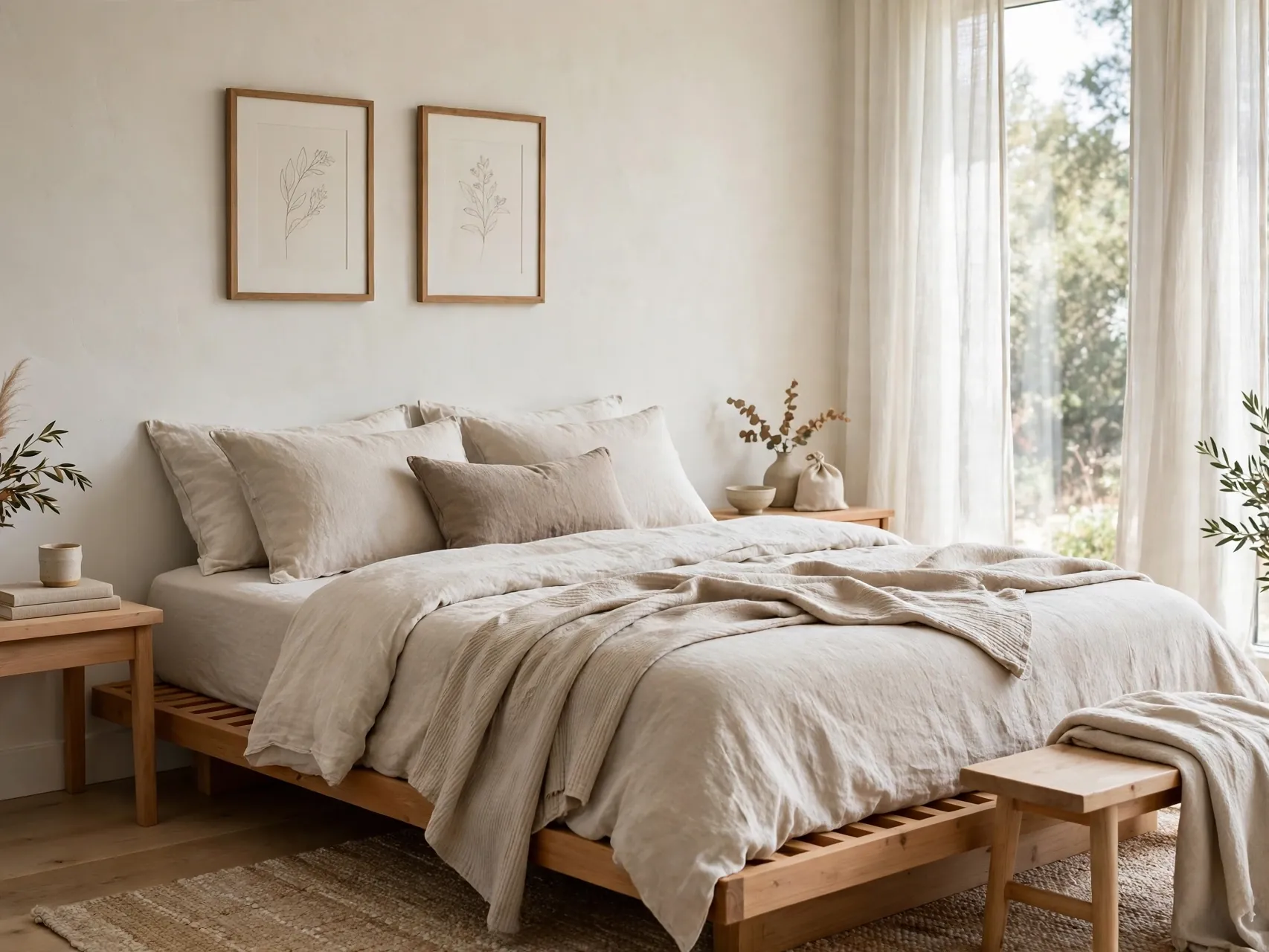
The Japandi bedroom centers on a low platform bed dressed simply and well. Washed linen in white, oatmeal, or soft clay tones brings texture without pattern, and it softens beautifully with every wash.
Layer lightly: a duvet, one folded throw at the foot, and cushions in two sizes at most. Keep the nightstands nearly bare with a lamp, a book, and a small dish. A low bench or woven basket at the foot of the bed holds the extra blanket, so the room wakes up as calm as it fell asleep.
10. Keep the Kitchen Calm With Wood, Stone, and Clear Counters
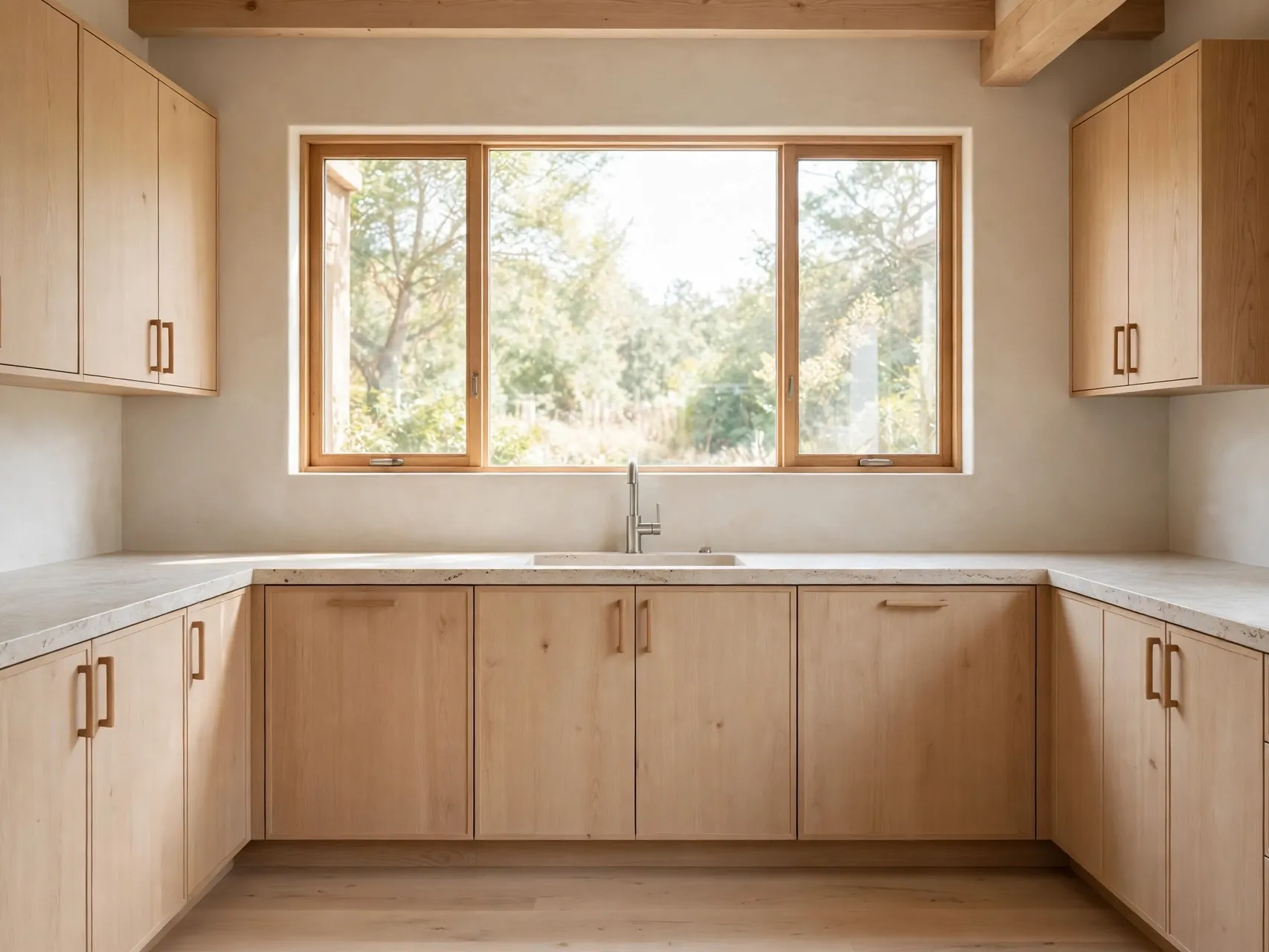
A Japandi kitchen pairs flat front wood cabinets or warm painted fronts with stone or stone look counters, simple hardware, and counters that stay mostly clear. The calm comes from what you cannot see: appliances and tools stored behind doors.
Style only one small working vignette, like a wood board, a ceramic jar, and a small plant near the sink. Use matching containers inside cabinets so opening a door feels tidy too. Open shelving, if you have it, should hold daily dishes in one quiet color family and nothing more.
11. Turn the Bathroom Into a Small Spa Moment

Wood, stone, and soft textiles turn an ordinary bathroom into the calmest room in the house. Start with a wood bath mat or stool, stone or ceramic trays for daily items, and towels in one warm neutral family, rolled or folded the same way.
Add a single plant that likes humidity, a simple vessel for a branch, and warm rather than bright white light near the mirror. Decant products into plain containers and hide the rest in a basket or cabinet. Five quiet minutes in a spa calm bathroom changes how the whole morning feels.
12. Hang One Large, Quiet Piece of Art Per Wall
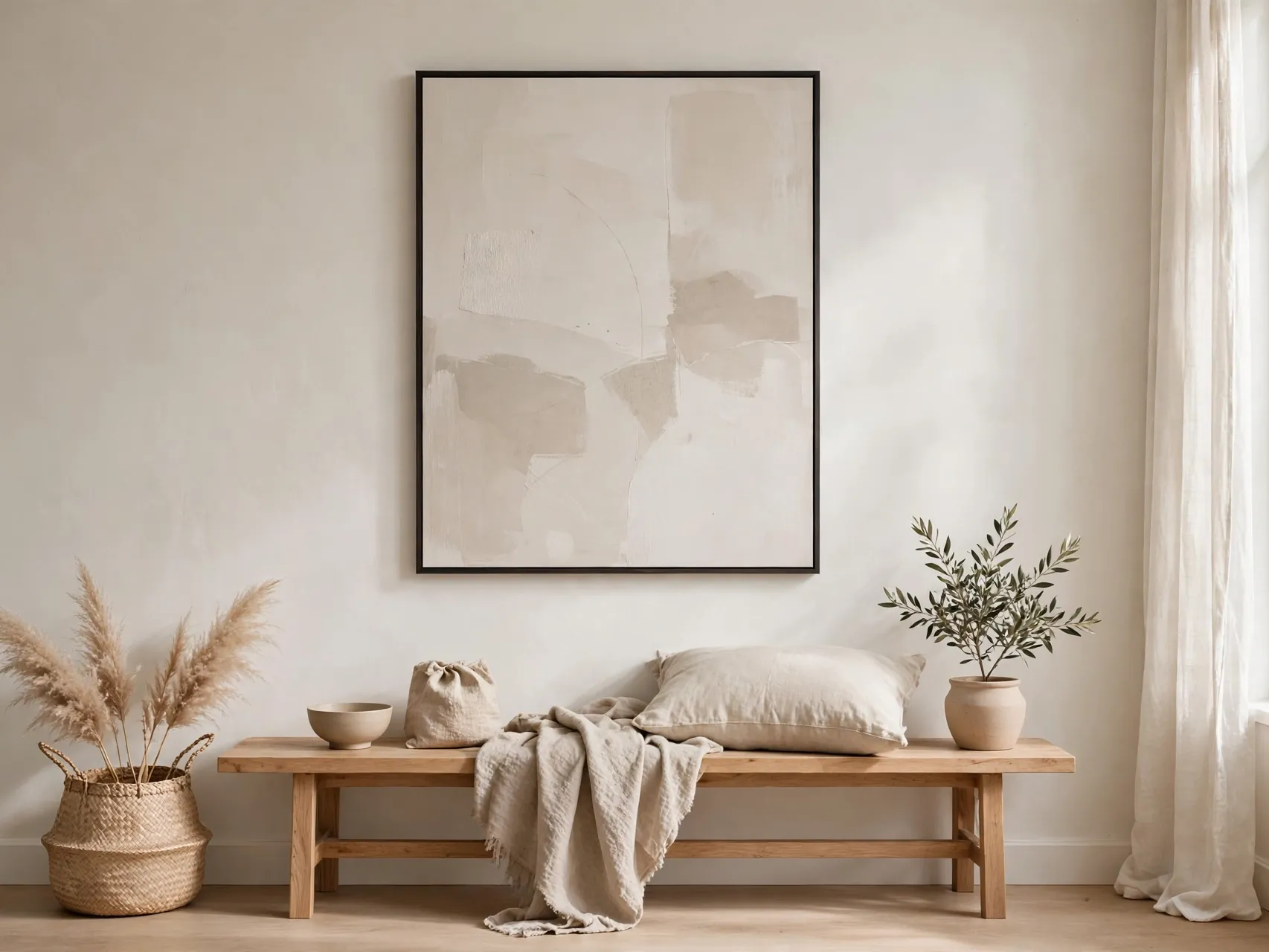
Japandi walls breathe. One large piece with a simple subject, like a line drawing, an ink wash style print, a woven textile, or a calm abstract in earthy tones, gives a wall presence without noise.
Use a thin natural wood or soft black frame and a wide mat so the art has air inside the frame as well as around it. Hang it a little lower than you first think, so it connects with the furniture below. Leave at least one wall in the room empty. That pause is what makes the decorated walls feel intentional.
13. Ground Seating Areas With a Natural Fiber Rug

A rug sets the temperature of a Japandi room. Jute, wool, or a woven cotton rug in a warm natural tone softens sound, warms the floor, and gathers low furniture into one calm island.
Choose a rug large enough for at least the front legs of the sofa and chairs to rest on, because a small floating rug makes a room feel unsettled. Keep the pattern plain or very subtle, and let the weave itself be the interest. In dining areas, a flat weave handles chairs and crumbs with the least fuss.
14. Style a Serene Entry With a Bench, Hooks, and a Tray

First impressions set the tone for the whole home, so give the entry the same calm treatment. A low wood bench, a short row of simple hooks, one shoe basket, and a ceramic tray for keys create beauty and order in a few square feet.
Add a round or arched mirror to bounce light and a small plant or branch for life. Keep the floor completely clear and limit the hooks to what the household truly uses daily. Guests feel the serenity before they even reach the living room, and so do you, every time you come home.
15. Use Sliding Style Partitions and Screens to Soften Zones

Open plan rooms can feel restless without any separation, while full walls close them down. A simple wood slat screen, a light folding screen, or a linen curtain on a rail divides zones the Japandi way: softly, and without blocking light.
Place a screen behind a reading chair, between a desk and a sofa, or at the edge of a dining area. Slatted wood adds texture and shadow play through the day. Renters love this idea because it changes how a room works without a single screw in a wall or ceiling.
16. Choose Curtains in Plain Linen That Pool Light Softly

Window dressings carry a lot of visual weight, so keep them as quiet as the walls. Plain linen panels in white, oatmeal, or pale clay soften daylight, add gentle movement, and bring the textile layer a calm room needs at its edges.
Hang the rod high and wide so panels clear the glass when open and the room keeps every bit of its natural light. Let panels finish at the floor in a clean line, and skip tiebacks, valances, and pattern entirely. In bedrooms, layer a simple blackout liner behind the linen rather than choosing a heavy dark fabric.
17. Set a Slow Dining Table With Wood, Clay, and Linen
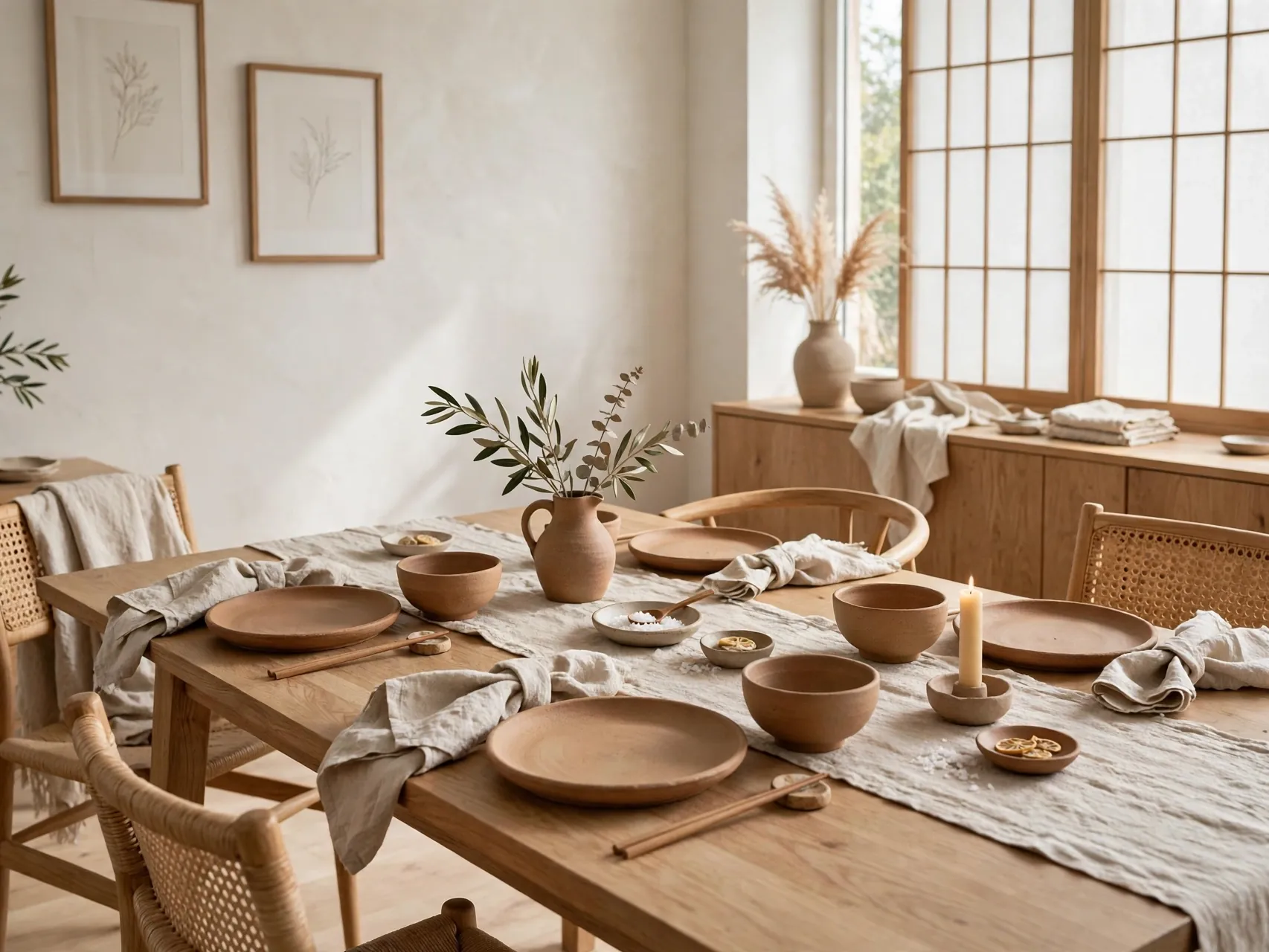
The Japandi dining table is built for lingering. A simple wood table, low profile chairs or a bench on one side, and a linen runner set the base. One ceramic centerpiece, like a bowl of fruit or a vase with branches, is all the decoration it needs.
For everyday meals, keep settings plain and tactile: stoneware plates, wood boards, cloth napkins. Store table decor on the table only, never homework, mail, or laptops. When a table is always ready, family meals happen more often, and that slow ritual is the true heart of japandi interior design.
18. Add Warmth With One Deep Accent Tone

A room of pure neutrals can feel washed out, so Japandi uses one deep note to ground the palette. Charcoal, deep brown, muted clay, or a soft black appearing in a cushion, a frame, a lamp base, or a dark stained stool gives every pale tone around it more depth.
Repeat the deep tone in two or three small places so it reads as a choice, not an accident. Keep it matte and natural. This single move stops a serene room from drifting into bland, and it photographs beautifully at every hour of the day.
19. Build a Tiny Tea or Coffee Ritual Spot

Small rituals make calm a daily habit instead of a decorating theme. Claim a tray sized corner of the kitchen or a small side table: one ceramic pot or brewer, two favorite cups, a folded cloth, and a tiny plant or branch.
Keep everything for the ritual on that one tray so it can move to a sunny chair or the garden step. Matching the cups and pot in one clay tone makes even a rental kitchen feel considered. It is the smallest idea on this list, and for many readers it becomes the most loved.
20. Keep a Guest Ready Corner Without Extra Furniture
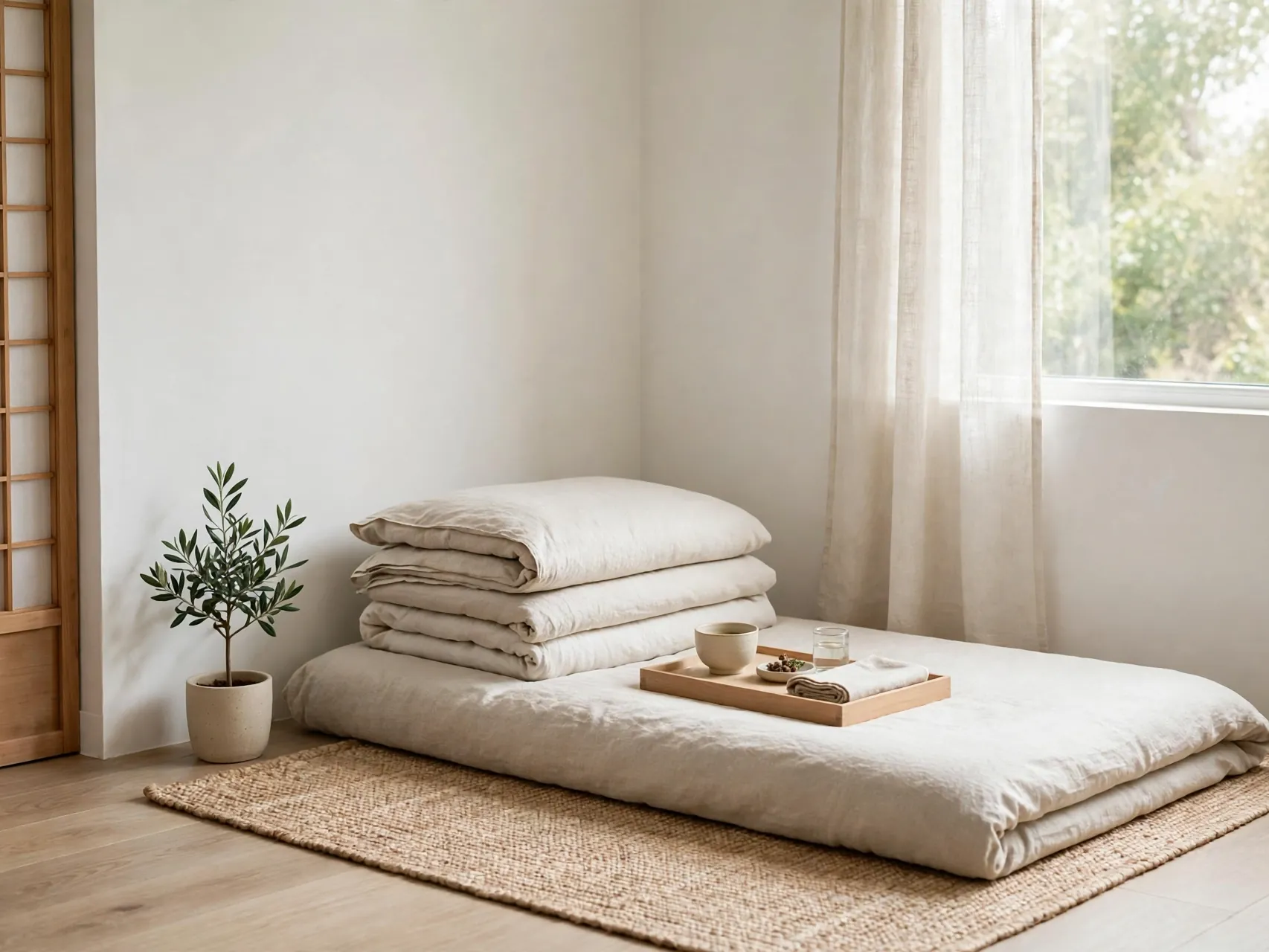
Japandi hospitality is simple: a calm place to sit, a surface for a cup, good light, and somewhere for a bag. A spare low chair, a small stool as a side table, and a basket with a folded throw cover every guest need without a dedicated guest room setup.
If guests stay overnight, a quality floor futon or a neat daybed with linen bedding suits the style far better than a bulky sleeper sofa. Add one empty drawer or shelf as a kindness. Guests relax faster in a serene, uncluttered space, and hosting stops feeling like a production.
21. Rotate a Few Pieces Seasonally Instead of Redecorating
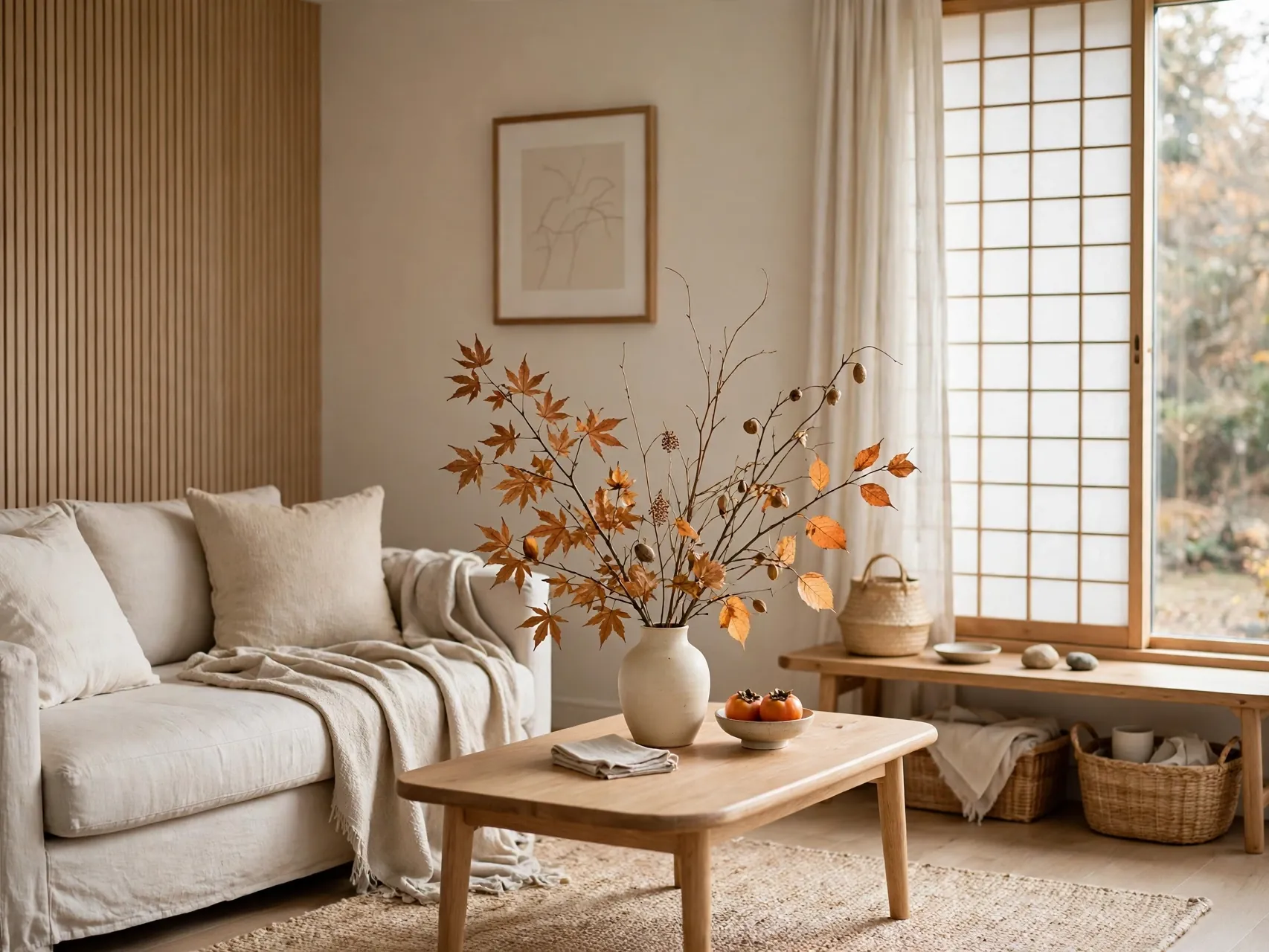
Calm homes stay interesting by changing small layers, not by replacing rooms. Store a tiny seasonal capsule: a darker wool throw and deeper ceramics for winter, lighter linen and a fresh plant or two for spring and summer.
The furniture, wood tones, and wall color never change, which is exactly why the room always feels settled. Rotation also gives stored decor a second life and ends the urge to buy new pieces for a refresh. This habit keeps japandi home decor feeling alive all year while the serene bones of every room stay peacefully the same.
FAQ
What colors define Japandi home decor?
Warm neutrals lead the palette: soft white, oatmeal, beige, warm gray, and pale clay, grounded by natural wood tones. One deep accent, like charcoal, deep brown, or muted black, adds definition, and soft sage or muted green can appear through plants and small textiles. Keep every color matte and nature based, and avoid bright white and saturated shades, which break the calm faster than any furniture choice.
How is Japandi different from Scandinavian style?
Scandinavian style is brighter and lighter, with pale woods, white walls, and cozy layers used generously. Japandi keeps that warmth but adds Japanese restraint: lower furniture, deeper wood tones beside the pale ones, fewer objects, and more empty space around each piece. Think of Japandi as Scandinavian comfort after a careful edit, with a stronger love of craft, shadow, and quiet.
Can I create a Japandi look on a small budget?
Yes, because the style is built on editing, not buying. Start free: clear surfaces, rearrange furniture lower and wider, and group what you own in natural materials. Then spend slowly on the pieces that touch you daily, like linen bedding, one good rug, warm bulbs, and a handmade ceramic. Thrift stores are ideal for solid wood and stoneware. One true piece per month beats a room of imitations.
Which room should I do first in Japandi style?
Start where you spend your quiet time: the living room corner you sit in each evening, or the bedroom you wake up in. A single calm room proves the style to your household and teaches you your wood tone, your light, and your storage needs. The entry is a smart second project because it is small, high impact, and it protects the calm of every room behind it.
Do Japandi rooms work for families with kids and pets?
They do, when you design for real life. Choose washable linen and cotton covers, flat weave rugs that hide crumbs and hair, closed storage for toys, and low sturdy furniture with no sharp fussiness. Keep one basket per room for a two minute tidy. Japandi is about calm, not preciousness, and a room children can actually use calmly is the style working exactly as intended.
Key Takeaways
- Start with the base: Warm neutral walls, one main wood tone, and low profile furniture set the serene structure of every Japandi room.
- Texture is the decoration: Linen, wool, seagrass, clay, stone, and wood layers keep a quiet palette rich without adding color or clutter.
- Edit, then add craft: Clear surfaces first, then let one handmade ceramic, one sculptural plant, and one large quiet artwork carry each space.
- Light low and warm: Paper and linen shades, warm bulbs, and light at three heights protect the calm from morning to evening.
- Slow habits, lasting calm: Closed storage, small daily rituals, and seasonal rotation keep japandi home decor serene all year, not just on photo day.
- Ready for a calmer home? Save this guide to Pinterest and pin the first room you will soften this weekend.