21 Spring Wreath Ideas That Make Your Front Door Pop
Introduction
A front door without a wreath in spring is a missed hello. Of all the spring wreath ideas you could try, the best one is simply the one that suits your door color, your home style, and the weather your entry actually gets, because a wreath you choose well will lift your curb appeal every single day of the season.
Start with size and base. As a general guide, a wreath looks balanced when it spans roughly half to two thirds of your door width, hung so its center sits near eye level. Grapevine bases give a rustic, forgiving foundation, hoop bases feel modern, and full floral bases make the boldest first impression from the street.
This guide covers twenty one spring front door wreaths, from a full tulip circle to a minimal hoop with three stems, plus herb, citrus, and nest styles, and indoor places to hang a second wreath. You will also find honest notes on weather, hanging without damage, and storage, so your favorite DIY spring wreath lasts for many springs, not just one.
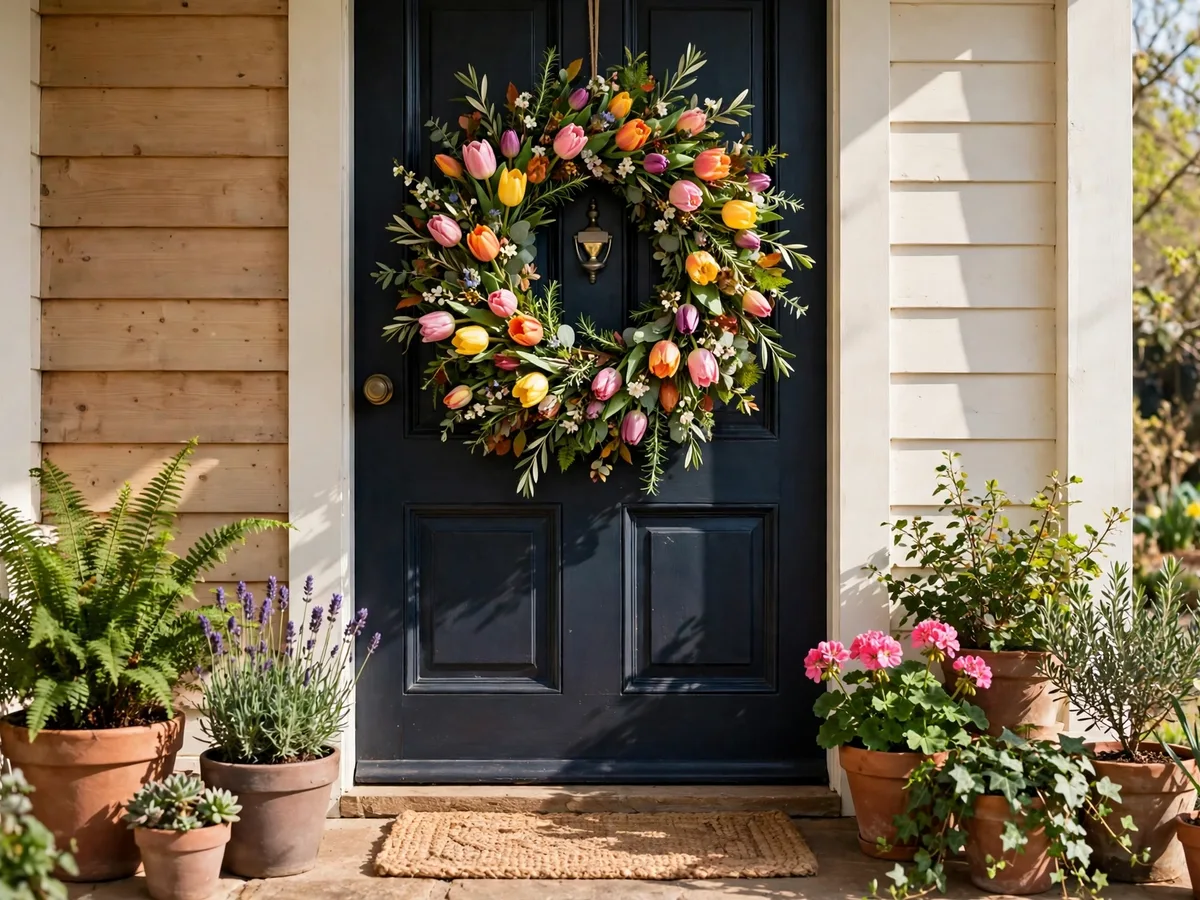
Pick one style to make or buy first, and let your door color lead the choice: soft pastels glow on dark doors, while deeper or brighter blooms hold their own on white and pale doors where pastels can disappear at a distance.
1. Full Tulip Wreath in Mixed Pastels
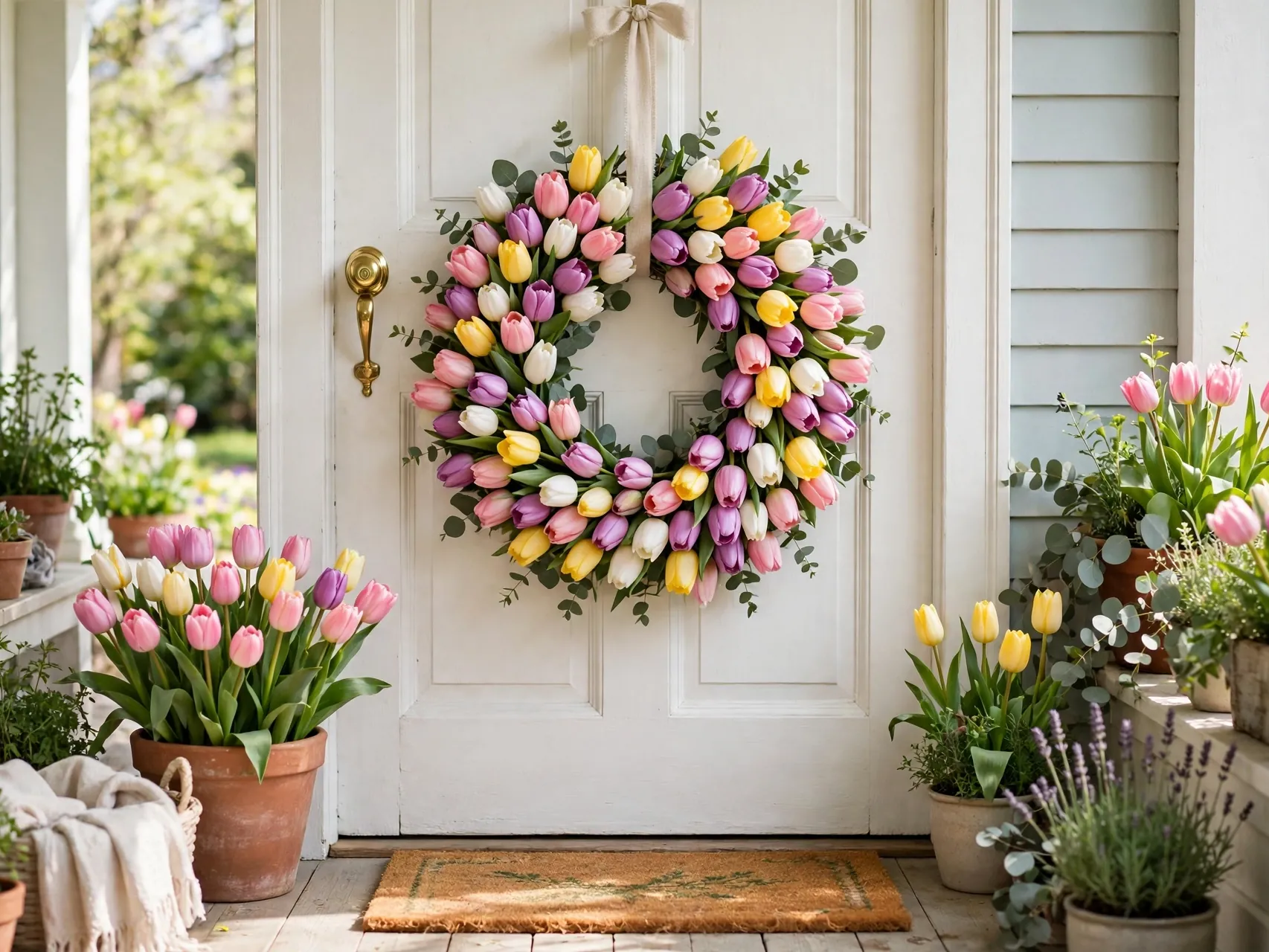
A full circle of tulips in blush, cream, soft yellow, and pale pink is the classic spring door statement, cheerful from the street and welcoming up close. Build it on a grapevine or foam base by tucking or wiring cut tulip stems in one direction, overlapping each bloom over the stem before it, until the base disappears under color. Mix open and closed blooms and add a few green leaves between clusters so the circle reads as gathered flowers, not a plastic ring.
2. Yellow Forsythia Wreath for Instant Sunshine

Forsythia makes the happiest door in the neighborhood. The small yellow blossoms cluster along arching stems, and on a wreath they create a glowing halo that pairs beautifully with navy, black, brick, and white doors. Weave flexible forsythia stems directly into a grapevine base, letting some tips arc outward for a natural, just grown shape. Because forsythia is all one joyful color, texture does the design work: vary the depth, push some clusters in and leave others proud, and resist making the circle perfectly even.
3. Half Wreath With Greenery on a Grapevine Base

The half wreath, with blooms and greenery clustered on the lower half or one side of an exposed grapevine base, is the modern favorite for good reason. The visible twiggy base adds texture and keeps the look light, while the floral cluster gives you color without the cost or storage bulk of a full wreath. Cluster eucalyptus, fern, and a few ranunculus or tulips at the bottom, finishing with a simple bow where the flowers end.
4. Minimal Hoop Wreath With Three Stems

A thin metal or wood hoop with just a small cluster of stems wired at the bottom, perhaps eucalyptus, one blossom branch, and a sprig of white flowers, is spring minimalism at its prettiest. The empty circle frames your door color like art, and the whole project can come together in under an hour with floral wire and wire cutters. Hoop wreaths suit modern, Scandinavian, and apartment doors especially well, and they store flat between seasons.
5. Lavender and Greenery Wreath for a Calm Welcome

Lavender brings soft purple color and slim, graceful lines to a door, and a wreath of faux lavender mixed with eucalyptus or lamb ear style leaves feels calm, cottage like, and a little more grown up than candy pastels. It suits white, gray, sage, and natural wood doors beautifully and photographs well in bright light. Build lavender on a grapevine base, angling stems in one direction and layering greenery behind the purple so the color floats on green.
6. White and Green Wreath for Every Home Style

White blooms with fresh greenery, hydrangea, ranunculus, small roses, eucalyptus, and fern, make the most versatile spring wreath of all. It suits every door color, every home style, and every week of the season, and it never competes with planters, a painted door, or holiday touches you add nearby. The secret is green variety: at least three different leaves or textures keep white from looking flat or bridal. Add a few cream or pale green blooms among the white for depth.
7. Wildflower Wreath With a Just Gathered Feel
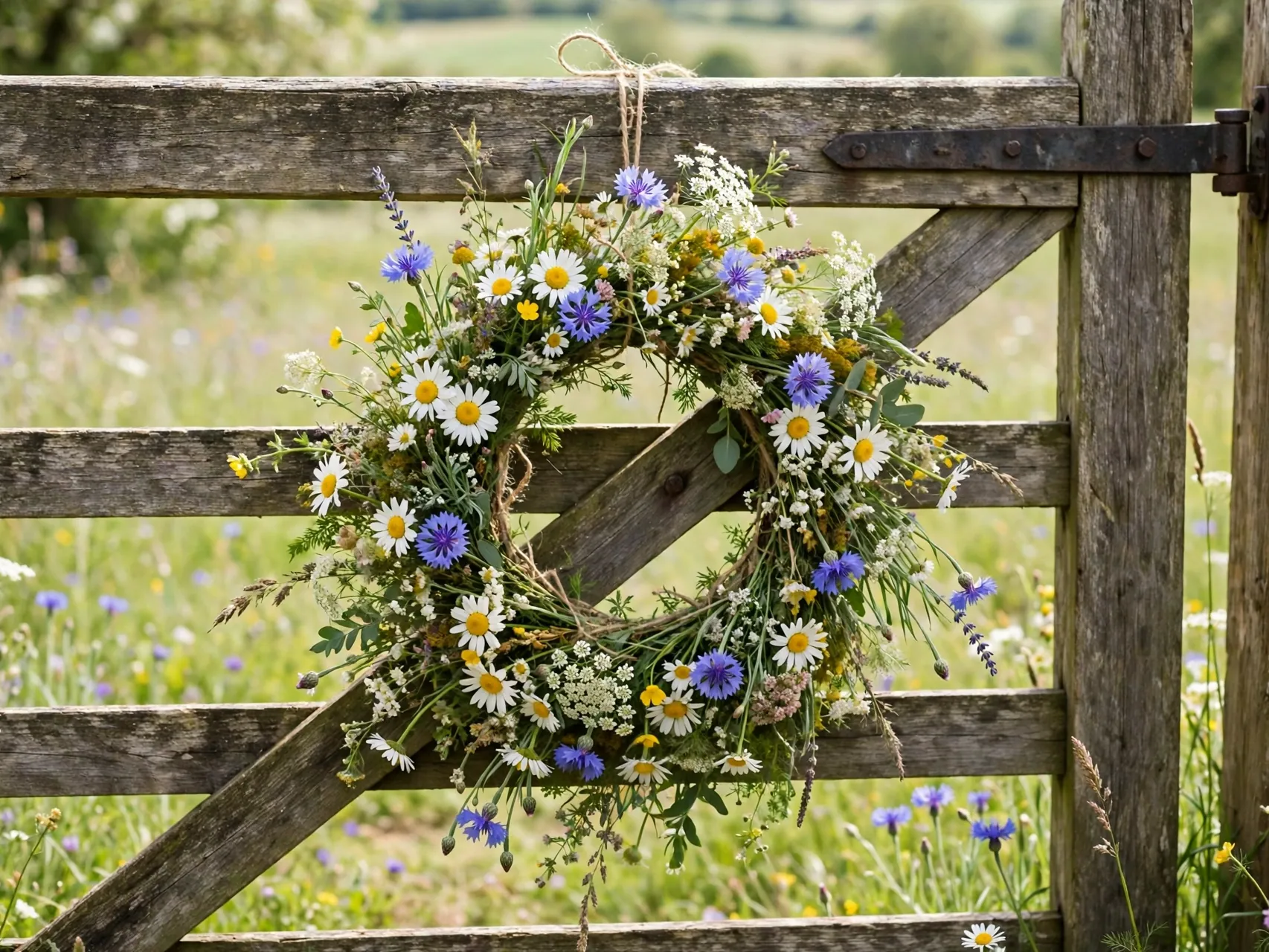
A wildflower wreath mixes small daisies, tiny filler blooms, and wispy greenery in white, yellow, pink, and purple for a meadow feeling that suits farmhouse, cottage, and casual homes. The charm is looseness: let stems sit at slightly different depths and angles, as if the bunch was gathered on a walk and wired on at the kitchen table. Use a grapevine base and keep the flower scale small, since large blooms overpower the wild look.
8. Hydrangea Wreath for a Full, Generous Look
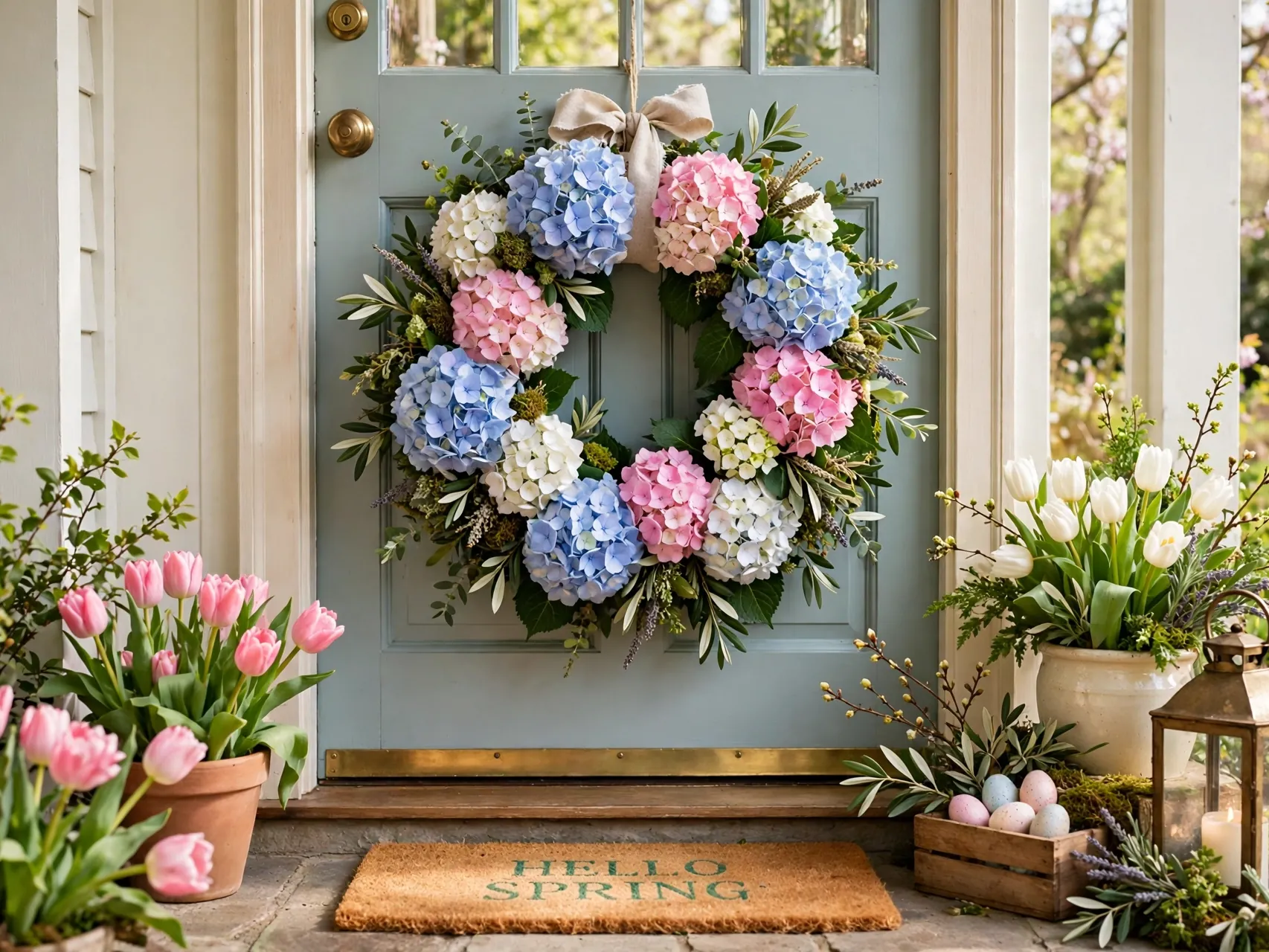
Large hydrangea heads build a lush wreath quickly, because each head covers serious ground on the base. Alternate two closely related colors, such as white and pale green, or blush and cream, and tuck eucalyptus leaves between heads to break up the round shapes and add a garden feel. Hydrangea wreaths look generous on larger doors and on doors set back from the street, where smaller blooms would get lost.
9. Citrus and Greenery Wreath for a Fresh Twist
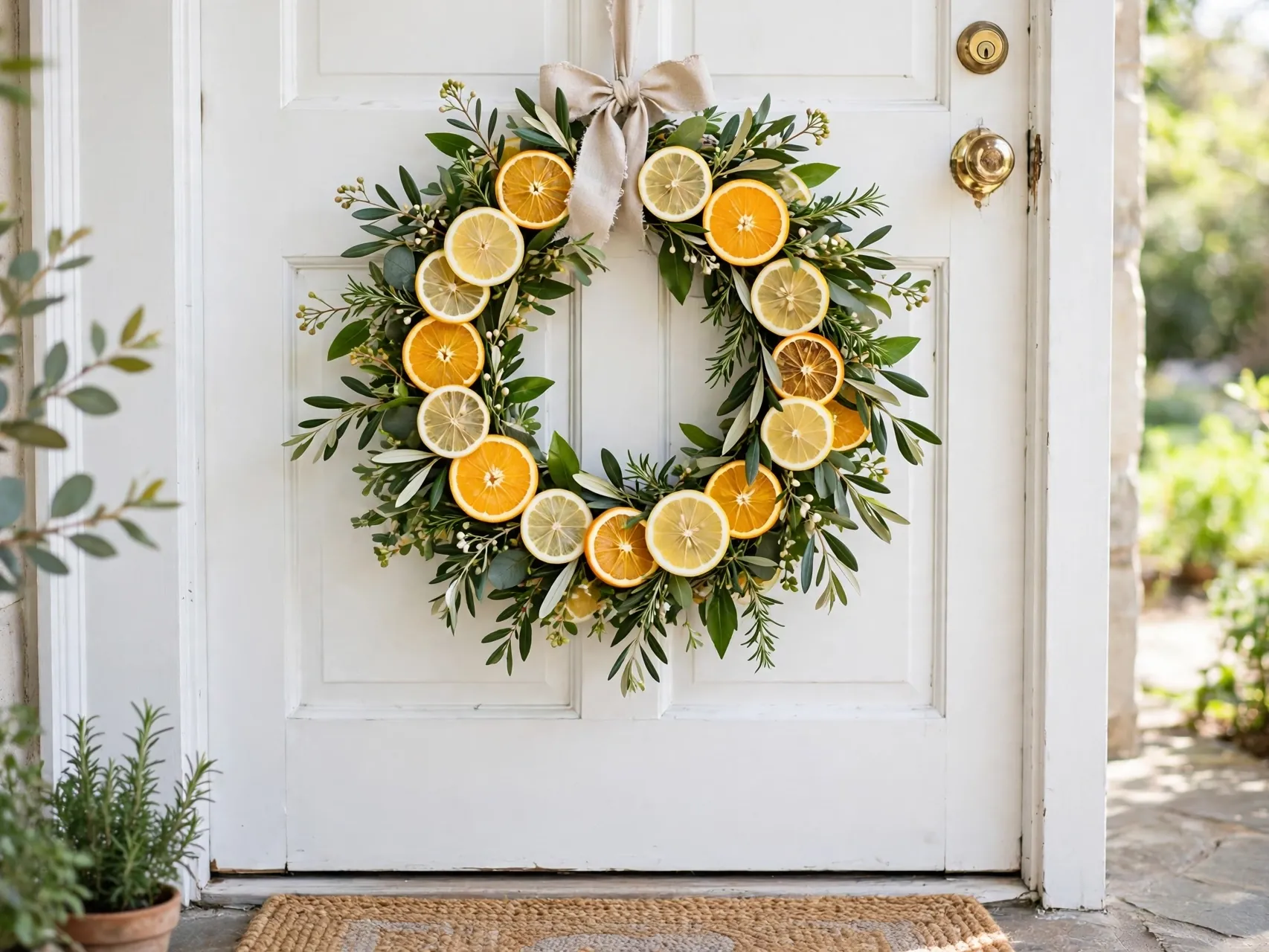
Faux lemon or orange stems tucked into deep green leaves make a wreath that feels fresh, a little unexpected, and perfectly poised between spring and summer. The fruit adds cheerful color and a kitchen garden story that suits cottage, Mediterranean, and casual homes, especially with a striped or gingham bow. Keep fruit as the accent, not the whole wreath: greenery should still dominate, with citrus clustered in three groups around the circle for rhythm. This style glows on white, black, and wood doors.
10. Herb Wreath for the Kitchen Door or Garden Gate
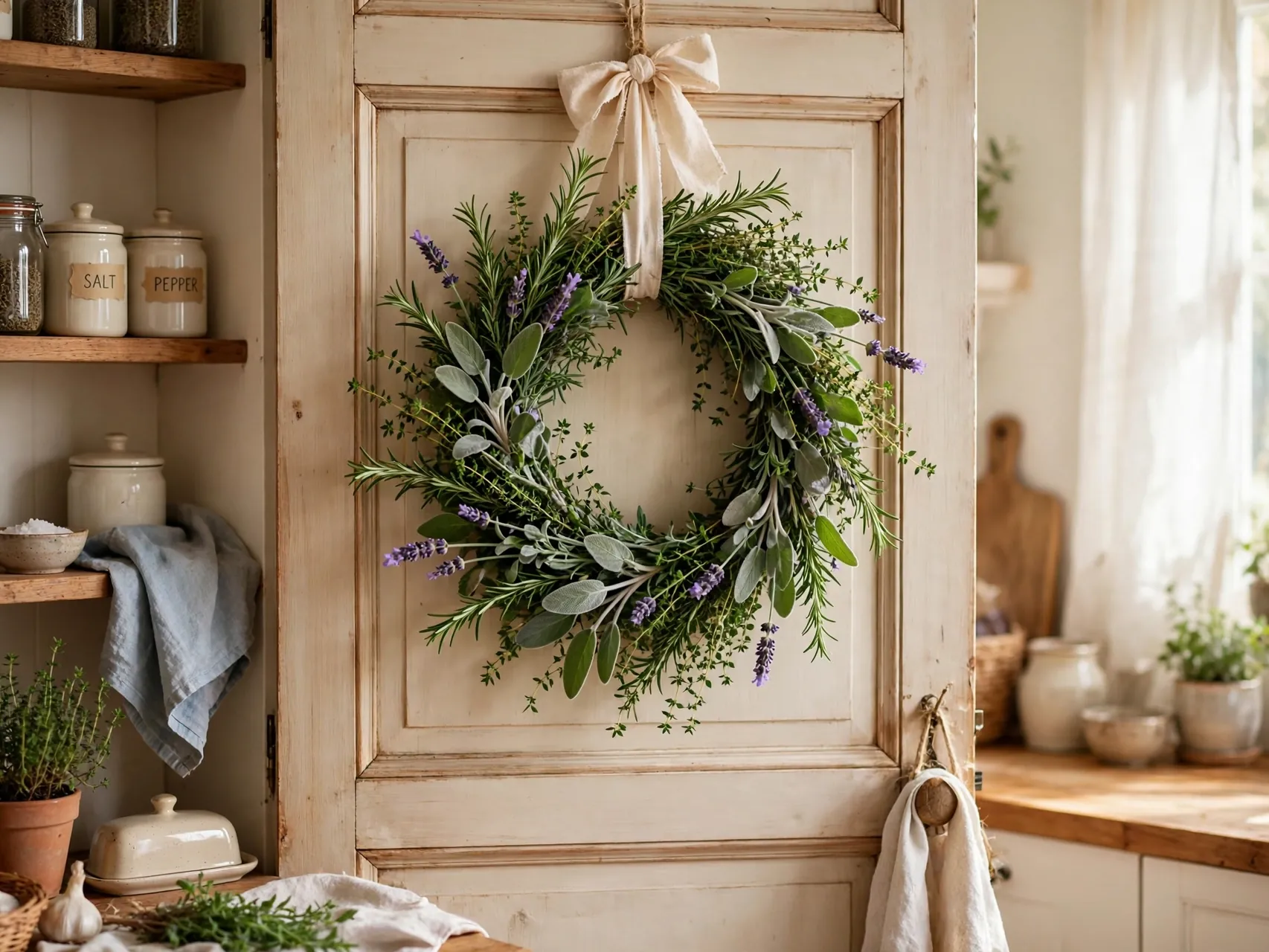
A wreath of rosemary, lavender, thyme style greenery, and sage tones brings a useful, fragrant story to a kitchen door, a pantry door, or a garden gate. Faux herb wreaths keep the look without drying out, while fresh herb wreaths are a short term pleasure best enjoyed for a gathering or a single fragrant week near the kitchen. Keep the herb look loose and a little wild, mixing several green tones and textures, and finish with twine rather than satin ribbon.
11. Nest and Egg Accent Wreath for Easter Weeks
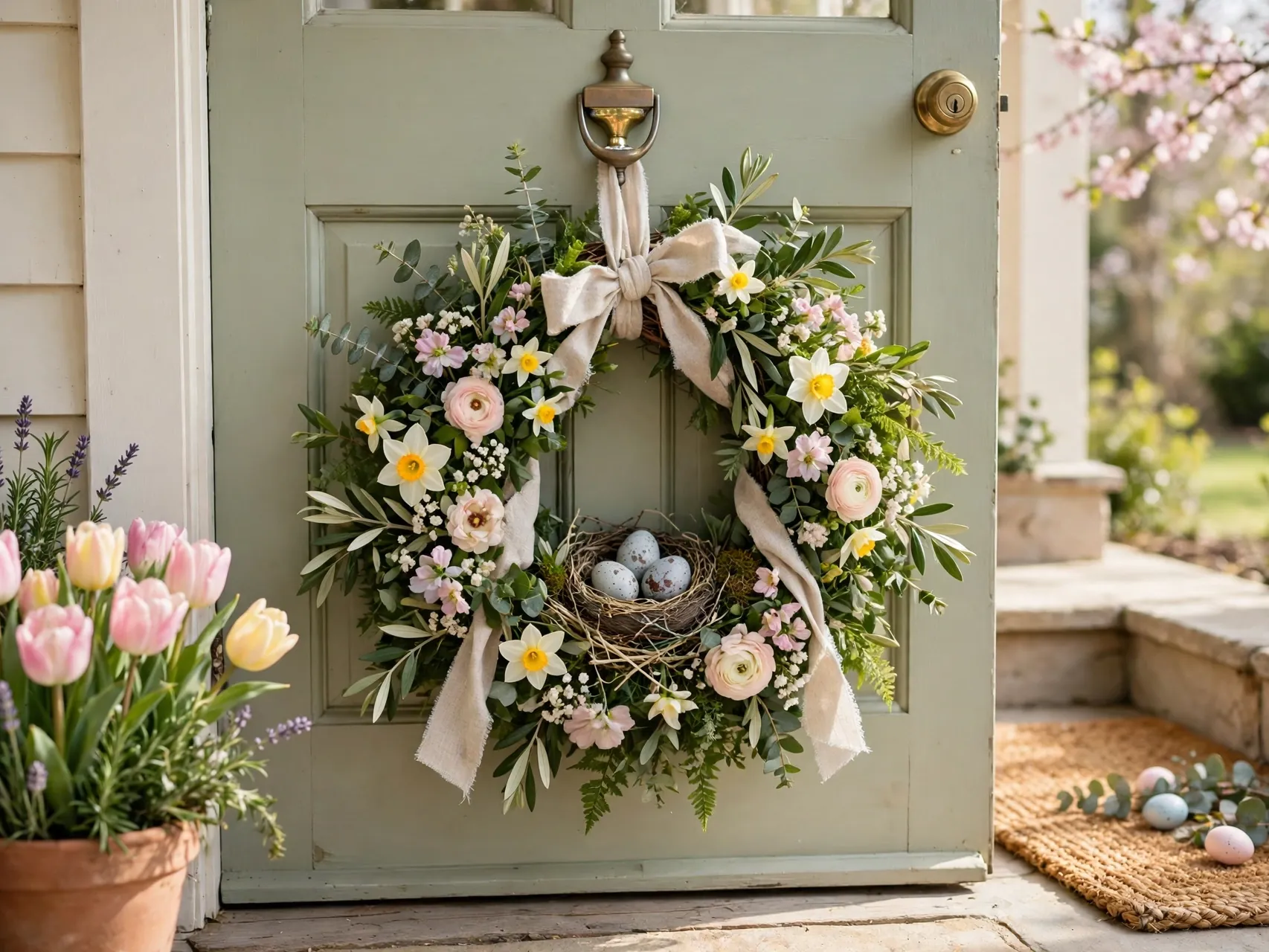
A simple greenery or blossom wreath gains an Easter chapter with one small nest tucked into the lower cluster, holding two or three speckled eggs. Used sparingly, the nest tells the spring story of return and new life without turning your door into a holiday display that expires the Monday after Easter. The smart move is removability: wire the nest on with a twist tie rather than glue, and remove it after the holiday weekend.
12. Ribbon First Wreath Built Around a Statement Bow

Sometimes the bow is the design. A wreath of plain greenery, boxwood style, eucalyptus, or mixed leaves, finished with one generous bow in a spring stripe, gingham, or floral ribbon, gives you a tailored door that is easy to update: change the ribbon and the wreath becomes summer, autumn, or holiday without rebuilding anything. Make the bow with wired ribbon so the loops hold their shape outdoors, and attach it at the bottom or lower side where it balances the hanger.
13. Boxwood Style Wreath for Clean, Classic Lines

A dense green boxwood style wreath is the tailored blazer of spring door decor: neat, classic, and right with almost everything. Its deep green circle frames a door with architecture, suits traditional and colonial homes especially well, and provides a calm base for a bow, a small sign, or a cluster of white blooms at one side. Boxwood style wreaths, real preserved or faux, ask for protection from harsh sun to hold their color, so a covered or shaded entry is ideal.
14. Cherry Blossom Wreath for Soft Romance

Cherry blossom branches wired onto a base create a wreath of pale pink clouds that feels romantic and unmistakably spring. Keep the blossoms airy rather than packed, letting the brown branch lines show between clusters, because that contrast is what makes blossom wreaths look real instead of sugary. This wreath suits sheltered doors best, since the delicate look deserves protection from driving rain and strong wind.
15. Burlap and Felt Flower Wreath With Handmade Charm
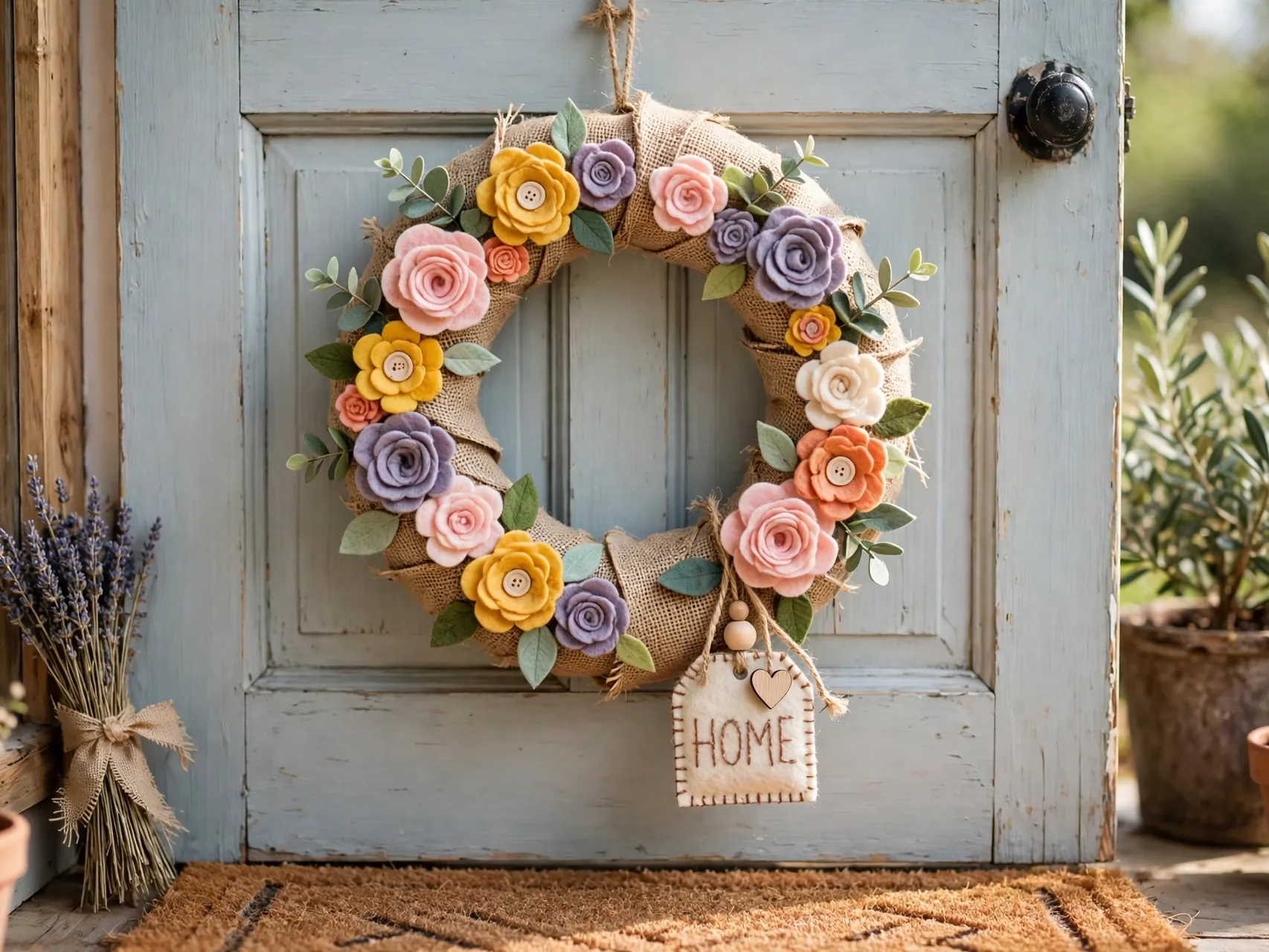
A wreath wrapped in burlap or built on a fabric base, finished with felt or fabric flowers, brings handmade warmth that suits craft loving and cottage homes. Felt flowers in cream, blush, and sage keep their shape beautifully, never wilt, and give the wreath a soft, storybook quality that guests comment on at close range.
16. Basket Wreath Alternative Filled With Spring Stems

A flat backed basket hung on the door, filled with spring stems, tulips, branches, and trailing greenery, is a charming alternative to the round wreath. The basket adds farmhouse texture, holds a generous arrangement that spills naturally, and can be refreshed stem by stem as your taste or the season changes. Arrange taller stems at the back and let a few blooms and trails fall forward over the basket edge.
17. Monogram or Welcome Sign Wreath for Personality
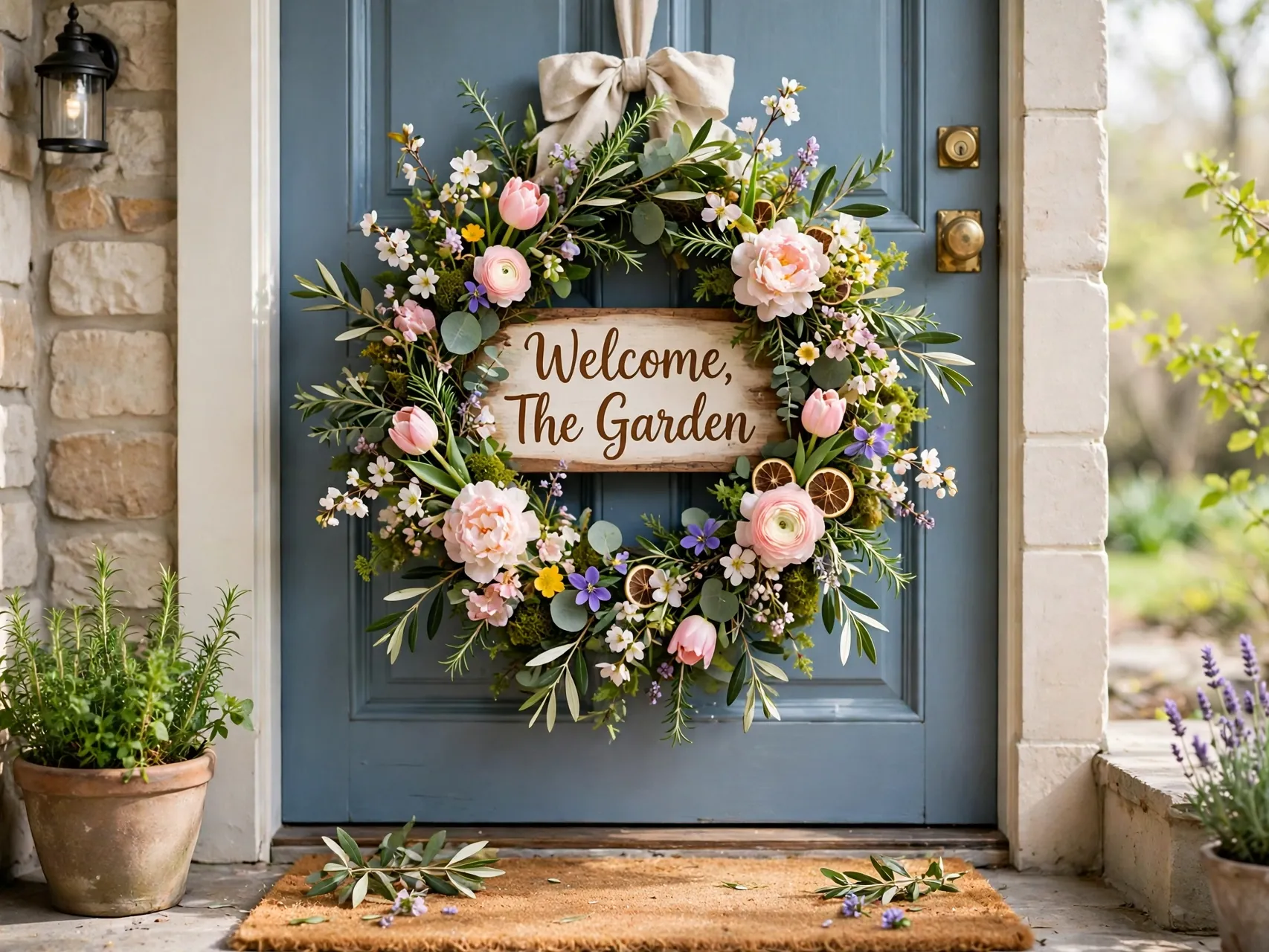
A greenery or blossom wreath with a small wooden monogram letter or a simple welcome sign at its center or base adds personal identity that plain floral wreaths cannot. Keep the sign small, in natural wood or white, and attach it with wire or twine so you can remove it for cleaning or a restyle later. Letter wreaths suit family homes and make thoughtful gifts for weddings, new homes, and spring birthdays.
18. Matching Wreath and Porch Planter Pairing

A door looks designed when the wreath and the porch planters agree with each other. Repeat one color or flower from the wreath in a pair of planters flanking the door, real blooms if you will water them, good faux if your porch bakes or your weeks run busy, and the whole entry reads as one intentional welcome. Keep the pairing simple: same color family, not identical flowers, is enough.
19. Double Door Wreaths in Perfect Balance

Double doors deserve double wreaths, one centered on each door, matched in size and style. The symmetry is striking and formal in the best way, making an ordinary entry feel grand in spring. Measure carefully so both wreaths hang at exactly the same height, and use identical hangers so the pair sits evenly when the doors move. Full floral or greenery wreaths both work; keep the style a touch simpler than you would choose for a single door, since two of anything doubles the visual weight.
20. Indoor Wreaths Over Mirrors, Mantels, and Windows
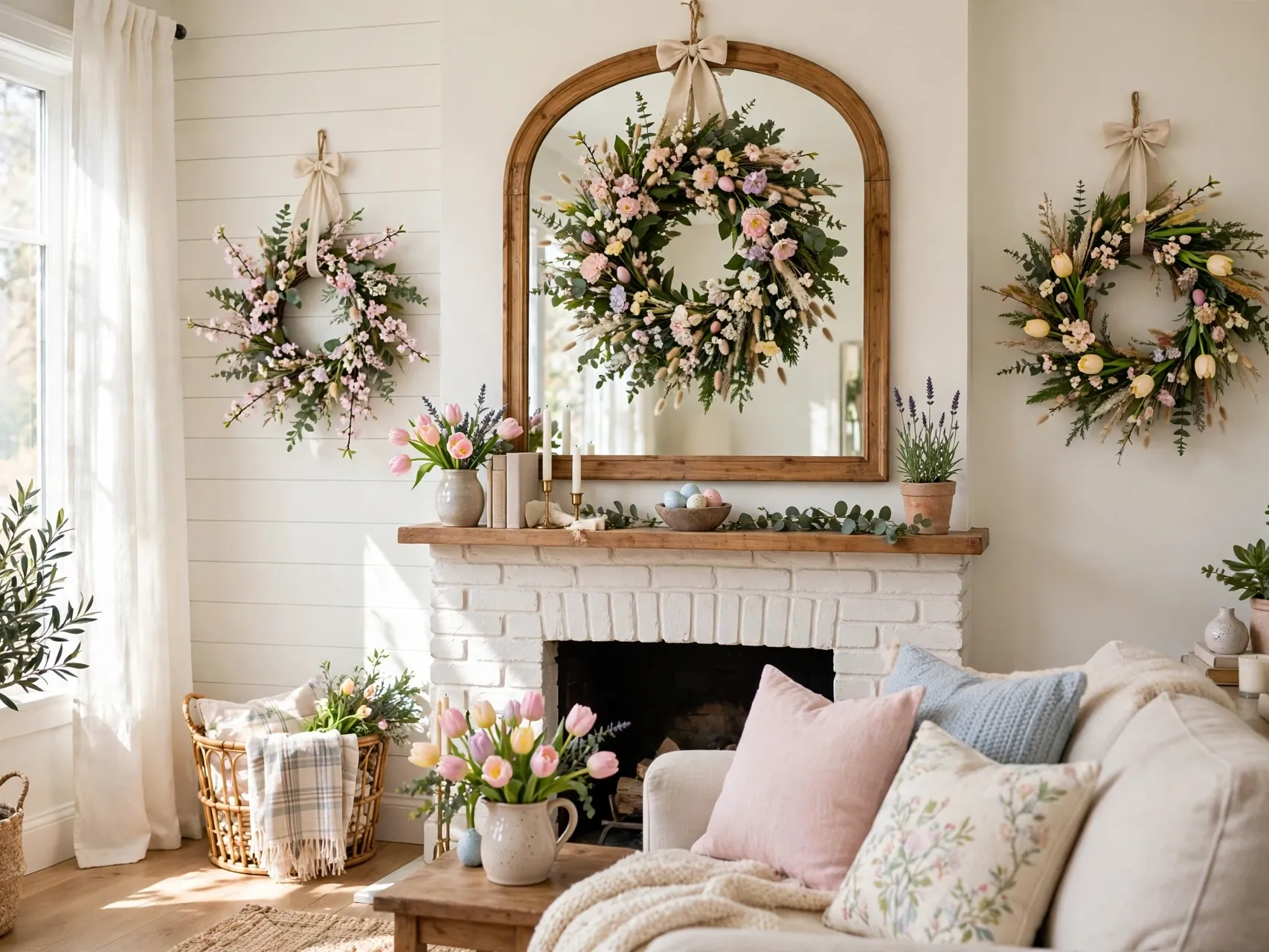
A spring wreath is too pretty to save for the front door alone. Hang a smaller wreath over a mirror with ribbon, center one above a mantel, layer one on a kitchen window, or place one flat on a dining table around a candle or a vase as a centerpiece ring. Indoor wreaths enjoy perfect weather all season, so delicate styles thrive inside. Ribbon hanging suits mirrors and windows, since it avoids new holes and adds a soft vertical line.
21. Choose, Hang, and Store Your Wreath the Smart Way

Finish with the practical habits that make any wreath a good purchase or project. Choose materials for your exposure: covered porches can host almost anything, while open, sunny doors need wreaths labeled for outdoor or UV resistant use. Bring any wreath in during severe weather, and dust it gently every few weeks so colors stay true. Hang with a sturdy over door hanger or a rated hook that suits your door, keeping clear of the door seal and checking that the door still closes fully.
FAQ
What size wreath looks best on a standard front door?
As a general guide, choose a wreath that spans about half to two thirds of your door width. On a standard single door, that often means a wreath in the low to mid twenty inch range, but measure your own door and any panels or glass before buying or building. Hang it so the center sits near eye level. When in doubt between two sizes, the slightly larger one usually reads better from the street.
How do I hang a wreath without damaging my door?
An over door hanger sized for your door thickness is the simplest damage free option; adhesive hooks rated for the wreath weight and outdoor use can also work on smooth doors when applied exactly as the maker directs, on a clean, dry surface. Ribbon over the top of the door, held by a hook inside, suits indoor wreaths on mirrors and windows. Always check that the door still closes and seals fully with the hanger in place.
Can I leave a faux spring wreath outside all season?
It depends on the materials and your exposure. Wreaths labeled for outdoor or UV resistant use handle a covered porch well for a season. Delicate fabric, paper, and felt wreaths belong indoors or under deep cover. Sun fades colors, and wind and rain wear petals, so bring any wreath inside during severe weather and store it dry at the end of the season. When in doubt, keep your best wreath under cover and choose sturdier greenery for open doors.
How do I make a DIY spring wreath look full and professional?
Start with a sturdy base, work stems in one direction so they overlap like shingles, and use at least three elements: a main flower, a filler, and greenery. Vary depth so some pieces sit proud and others tuck in, step back often to check the circle from a distance, and finish bare spots with greenery before adding more flowers. A bow or sign should be the last addition, sized to the wreath rather than overwhelming it.
How should I store a spring wreath until next year?
Clean and dust the wreath first and let it dry fully. Store it flat in a wreath storage box or hanging from a hook in a closet or storage area, in a cool, dry place away from direct sun and attic heat if possible. Protect delicate clusters with tissue, and avoid stacking heavy items on top. Label the storage so spring setup takes minutes. Good storage is what turns one season project into a many year tradition.
Key Takeaways
- Size and base first: A wreath at half to two thirds of your door width, on a base that suits your style, is the foundation of a door that pops.
- Green plus one flower story: Greenery variety with one main bloom, or one accent like citrus or a nest, keeps wreaths looking designed, not random.
- Match the wreath to the weather: Covered porches host delicate styles; open and sunny doors need outdoor rated, sturdier choices.
- Hang and store with care: A rated hanger, a door that still seals, and flat, dry storage make a wreath last for many springs.
- Let the entry agree: Repeating one wreath color in planters and a clean mat turns a single wreath into a whole welcome.
- Found the wreath your door has been waiting for? Save this guide to Pinterest and pin the style you will make or shop first.