20 Walk In Shower Tile Ideas That Look Totally Spa-Worthy
Introduction
A great walk in shower feels calm the moment you step in: beautiful tile, water that falls where it should and a floor that feels secure underfoot. These walk in shower tile ideas focus on the looks people save most, from marble look porcelain to pebble floors and quiet large format walls. First, one build truth that shapes every smart choice here: tile and grout are not the waterproofing layer. Water protection comes from the membrane system installed behind the tile, and grout itself is not waterproof. Choose installers who talk about waterproofing before they talk about tile patterns. For floors, grip matters as much as beauty. Choose floor tile with a maker rated slip resistance suitable for wet shower floors, favor smaller tiles or mosaics that offer more grout lines and flex with the sloped floor, and be cautious with polished stone underfoot. Waterproofing, drains and plumbing belong to licensed professionals, and in many places permits and inspections apply. Use this guide to arrive at those conversations with a clear design direction, then let qualified pros handle the build so your spa look lasts for decades, not seasons.
1. Go Large Format for Calm, Low Grout Walls
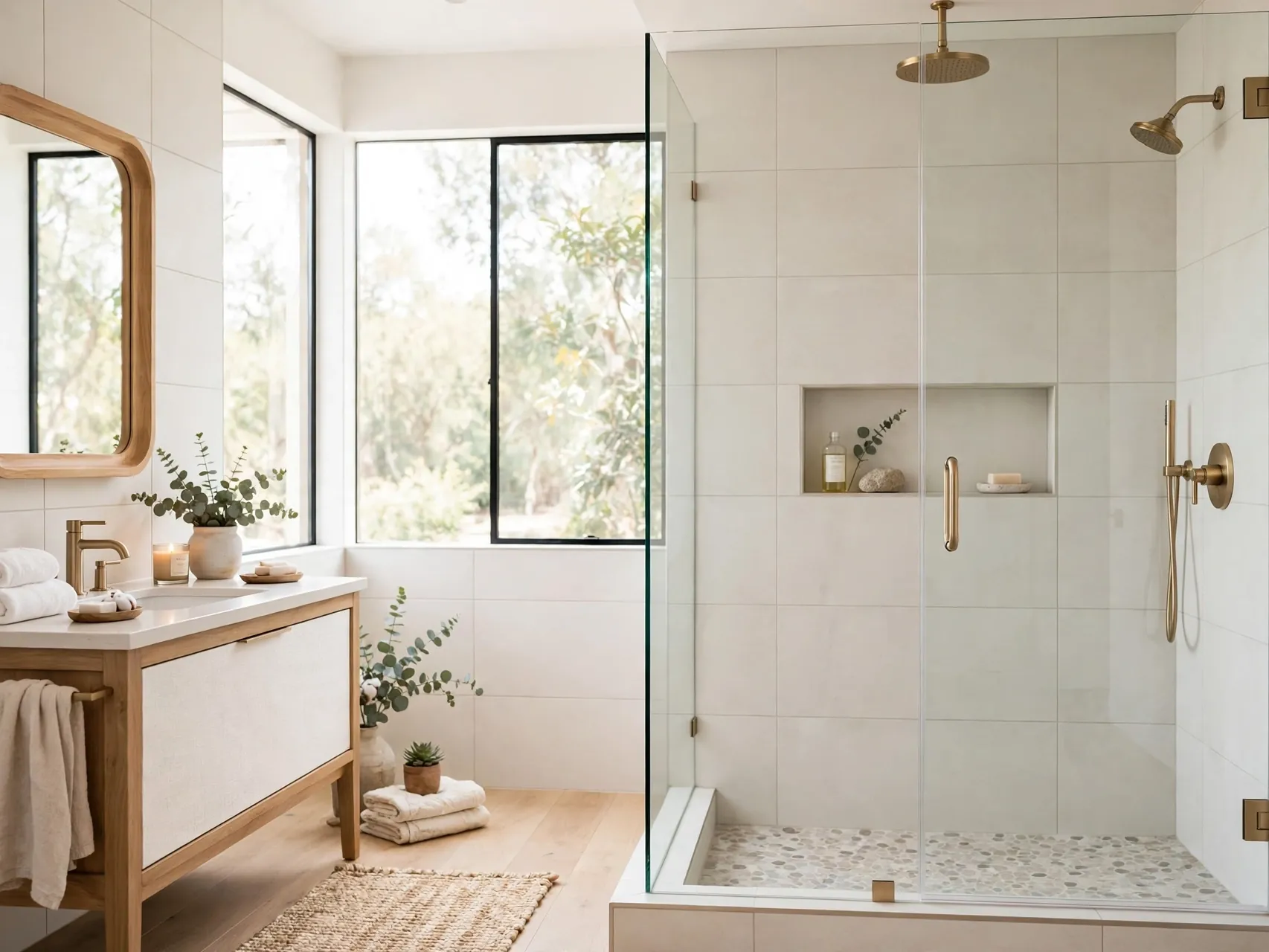
Large format porcelain tiles on shower walls create a serene, almost seamless backdrop with far fewer grout lines to clean. Soft white, warm stone or gentle concrete looks keep the focus on light, water and fixtures.
Large tiles demand flat walls and skilled setting, so this is professional work. They suit walls beautifully but are rarely the right choice for a sloped shower floor, where smaller tiles follow the fall to the drain. Pair large walls with a small mosaic floor for the classic spa combination that looks calm and performs safely.
2. Choose Marble Look Porcelain Over Real Marble
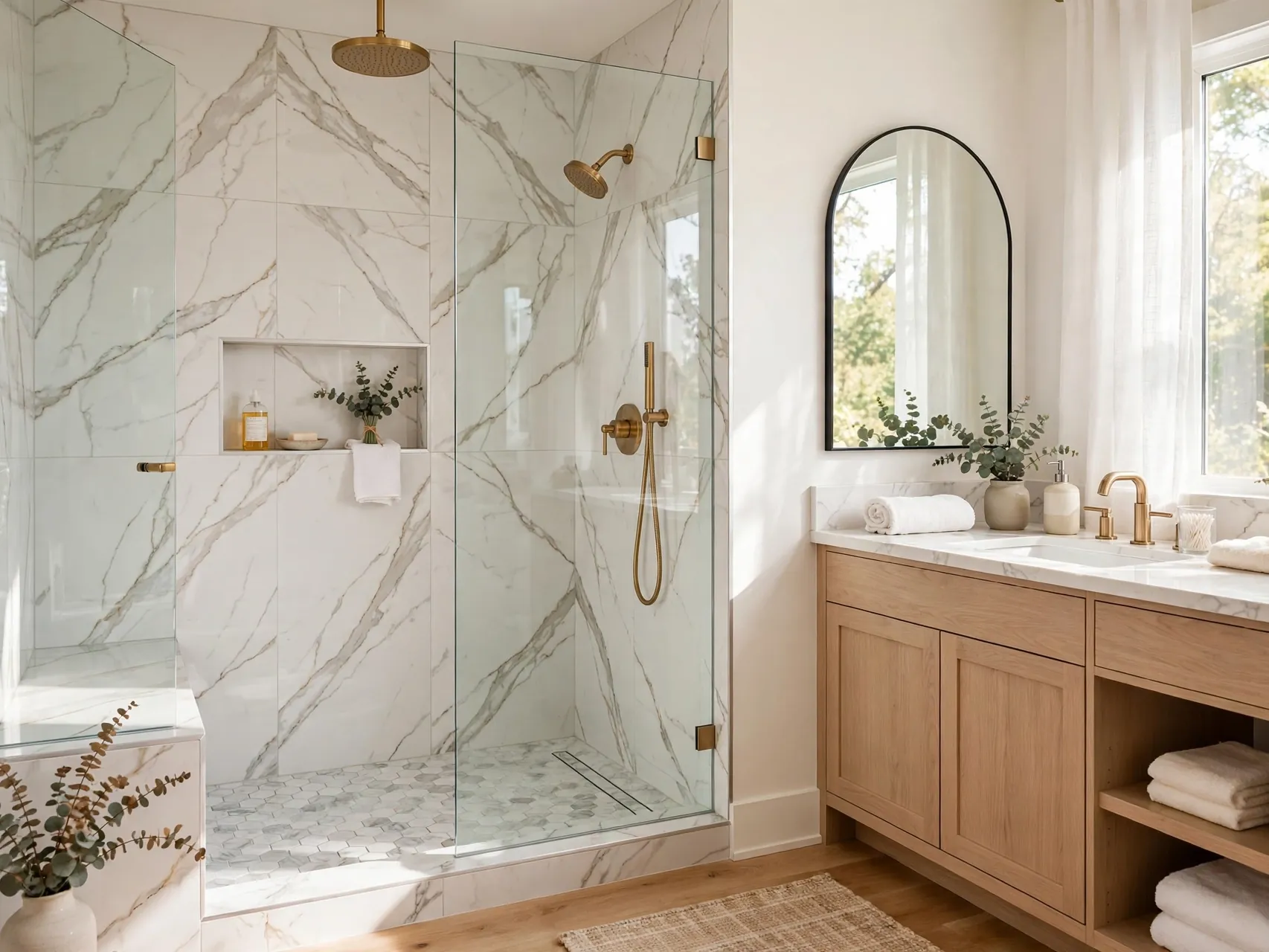
Marble look porcelain delivers the veining and softness of stone with far less sealing, staining worry and upkeep. Modern porcelain prints are convincing, consistent and available in large formats for walls and matching mosaics for floors.
Real marble in a shower needs sealing, careful cleaning products and acceptance of natural change over time. Many homeowners choose porcelain for exactly those honest reasons. Whichever you pick, remember the beauty lasts only if the waterproofing membrane behind it was installed correctly by your professional team.
3. Run Subway Tile Vertically for Height
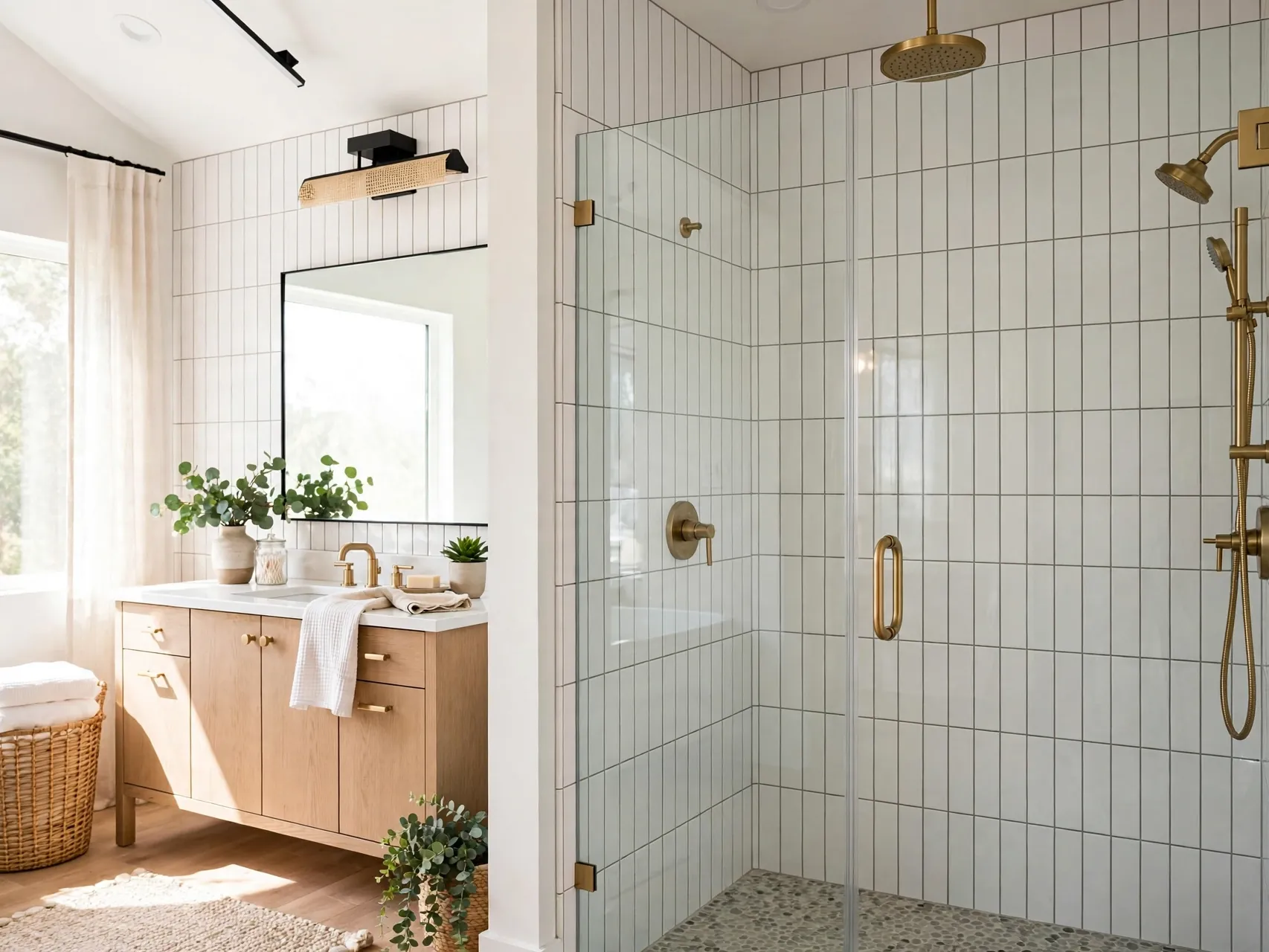
Classic subway tile feels fresh again laid vertically, in a stacked or offset pattern. Vertical lines draw the eye up and make a standard shower feel taller, while the familiar shape keeps the room timeless rather than trendy.
Choose a soft white or warm ceramic with a gentle glaze variation for a handmade spa feeling. Keep subway tile for walls and pair it with a properly rated mosaic floor tile. A contrasting grout shade will emphasize the vertical rhythm, while a matching grout keeps the wall quiet and lets fixtures shine.
4. Try Herringbone on One Feature Wall

A herringbone wall brings movement and craft to one end of the shower without overwhelming the space. Use it on the wall behind the fixtures or the back wall only, and keep surrounding walls plain.
Herringbone cutting and layout is precision work, so budget for professional installation and extra tile for cuts. Porcelain or ceramic herringbone mosaics on mesh sheets simplify the pattern while keeping the look. This is a feature, not a floor choice: shower floors still need small, grippy tile that handles the slope well.
5. Use Zellige Style Tiles for Soft Shine
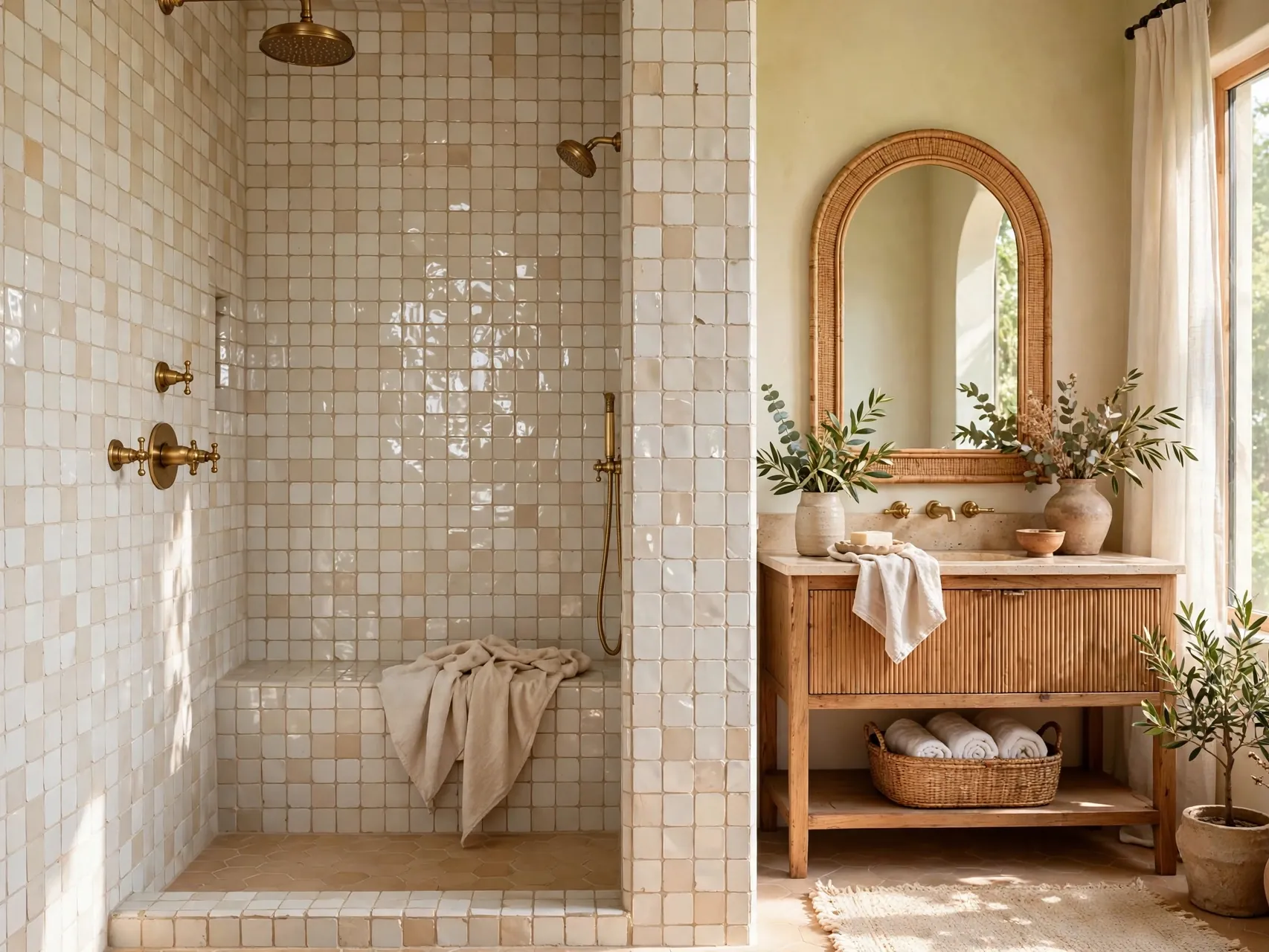
Zellige style ceramic tiles, with their uneven edges and shifting glaze, catch light in a way flat tiles cannot. In soft white, sand or pale sage they give a walk in shower a relaxed, handcrafted spa glow.
These tiles are intentionally irregular, so choose an installer experienced with them and expect wider, varied grout joints as part of the look. Keep them on walls where their texture delights without affecting footing. Their shimmer pairs beautifully with matte black or brushed brass fixtures and a simple mosaic floor in a matching tone.
6. Pick Pebble Mosaic for a Spa Floor
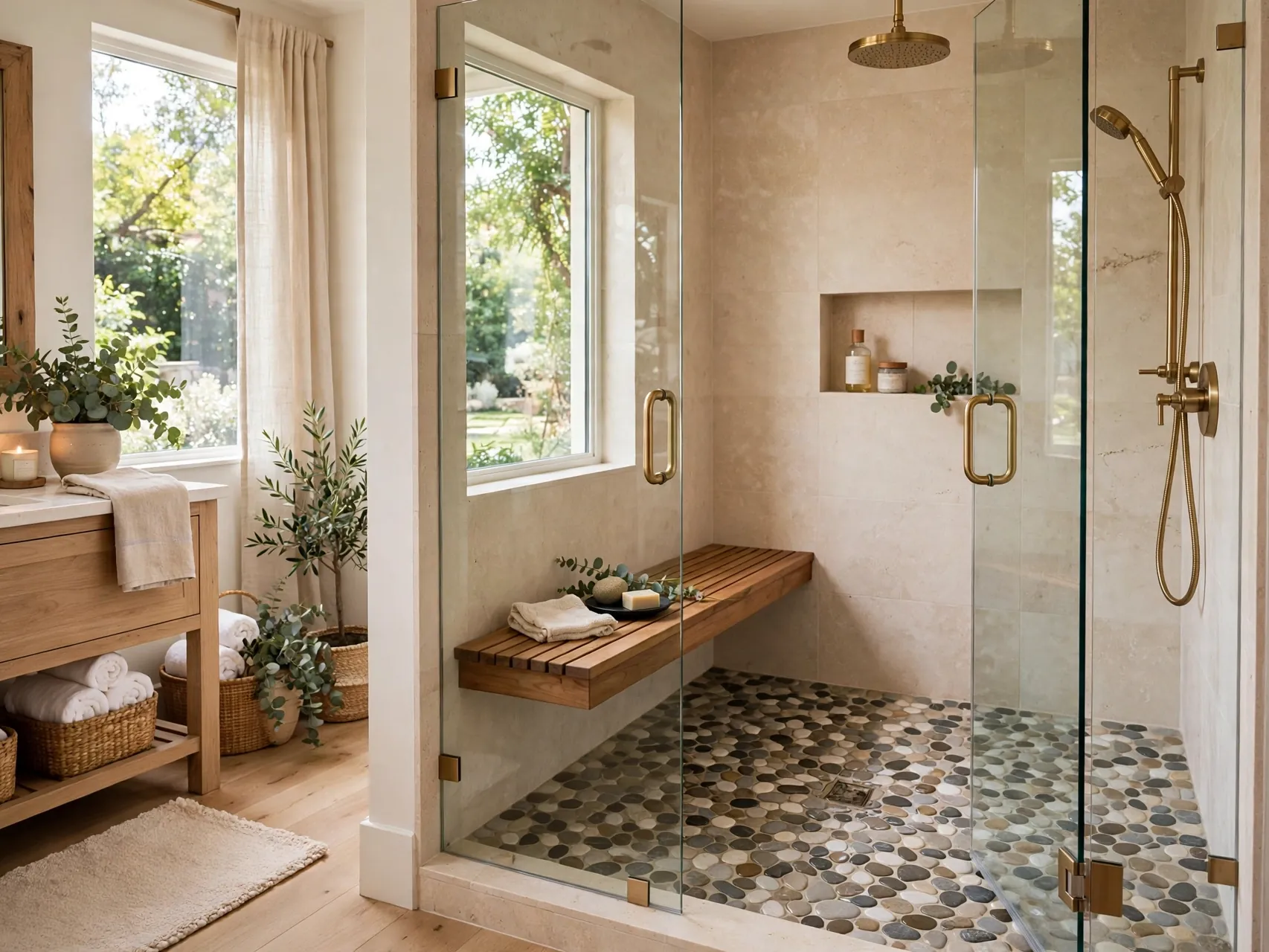
Pebble mosaic floors bring an organic, massaging texture underfoot and a true spa reference. Their many grout lines add grip, and the natural variation hides everyday water spots gracefully between cleans.
Choose flatter pebble mosaics for comfort, and know they need more grout care and regular cleaning than a smooth tile. Sealing natural stone pebbles as directed helps them resist staining. This is a floor where professional setting matters: pebbles must sit level and drain correctly, or water will pool in the low spots and spoil the experience.
7. Lay Hexagon Mosaics for Grip and Pattern
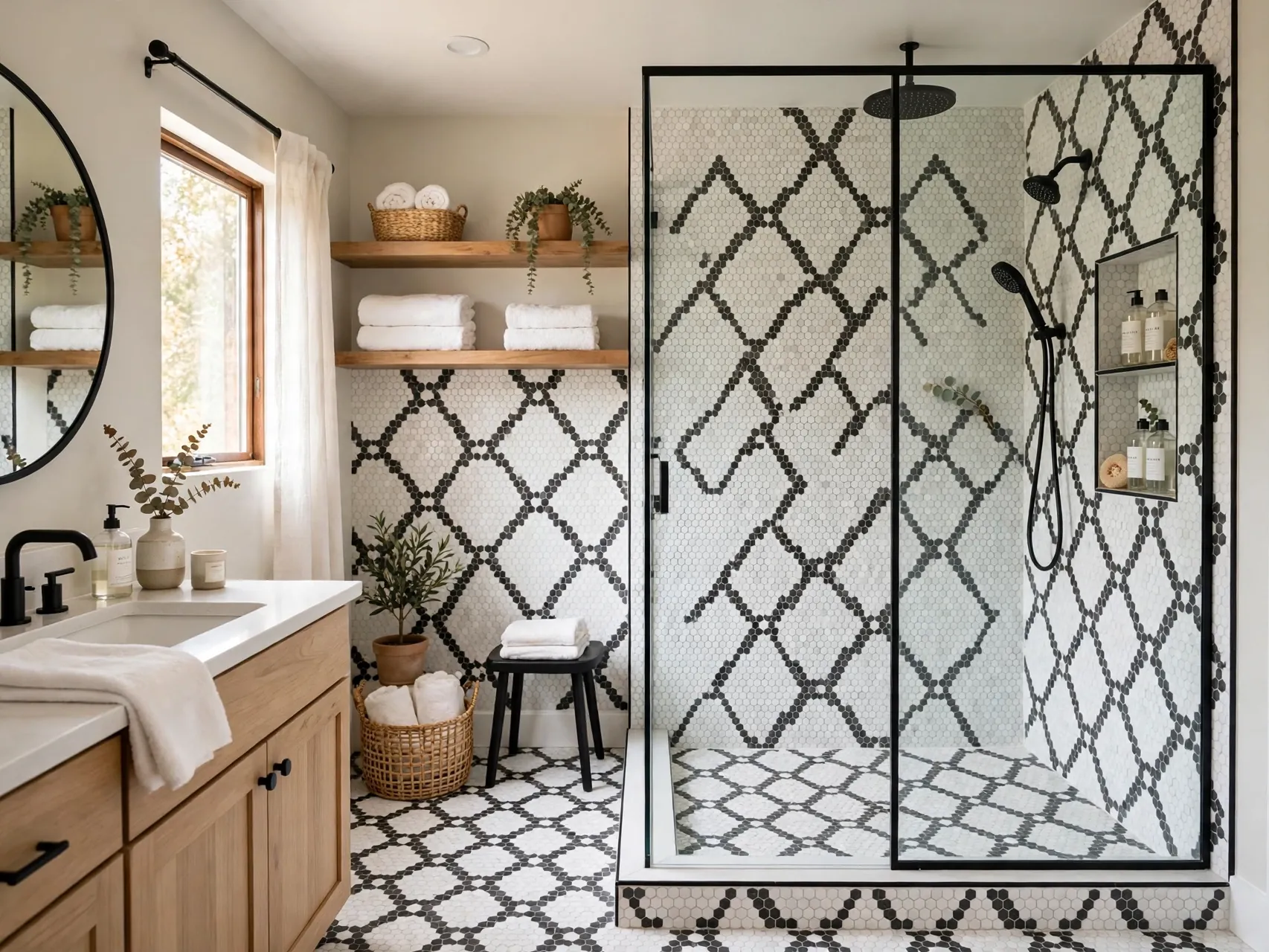
Small hexagon mosaics are a shower floor classic for good reason: the dense grout network adds traction, the small pieces follow the slope to the drain neatly and the pattern suits both modern and traditional rooms.
Matte porcelain hexagons in white, gray or black are low maintenance and widely rated for floors. On walls, larger hexagons can echo the floor at a calmer scale. Always confirm the specific product slip rating for wet floors with your supplier or installer rather than assuming every mosaic is automatically suitable for a shower base.
8. Create a Terrazzo Look With Porcelain

Terrazzo look porcelain brings speckled, stone rich character in a durable, low upkeep body. Large wall tiles feel modern and calm, while smaller matching pieces handle the floor slope and add pattern at your feet.
Real terrazzo and cement based tiles are heavier and need specialist care, so most walk in showers are better served by the porcelain version. The speckled pattern is forgiving in daily use, hiding water marks between cleans. Pair it with plain towels and simple fixtures so the stone fleck detail stays the quiet star of the room.
9. Add a Contrasting Niche Tile

A shower niche lined in a contrasting mosaic turns storage into a design feature. Try a small hexagon, a glass look mosaic or a stone look tile inside the niche while the main walls stay calm and large.
Niches must be waterproofed and sloped slightly so water runs out, which is another professional detail that decides whether a shower lasts. Keep niche tile small enough to wrap the shape neatly. One contrasting niche is usually enough: it gives the eye a focal point and makes daily bottles look intentionally placed.
10. Build a Tiled Bench in Matching Stone Look
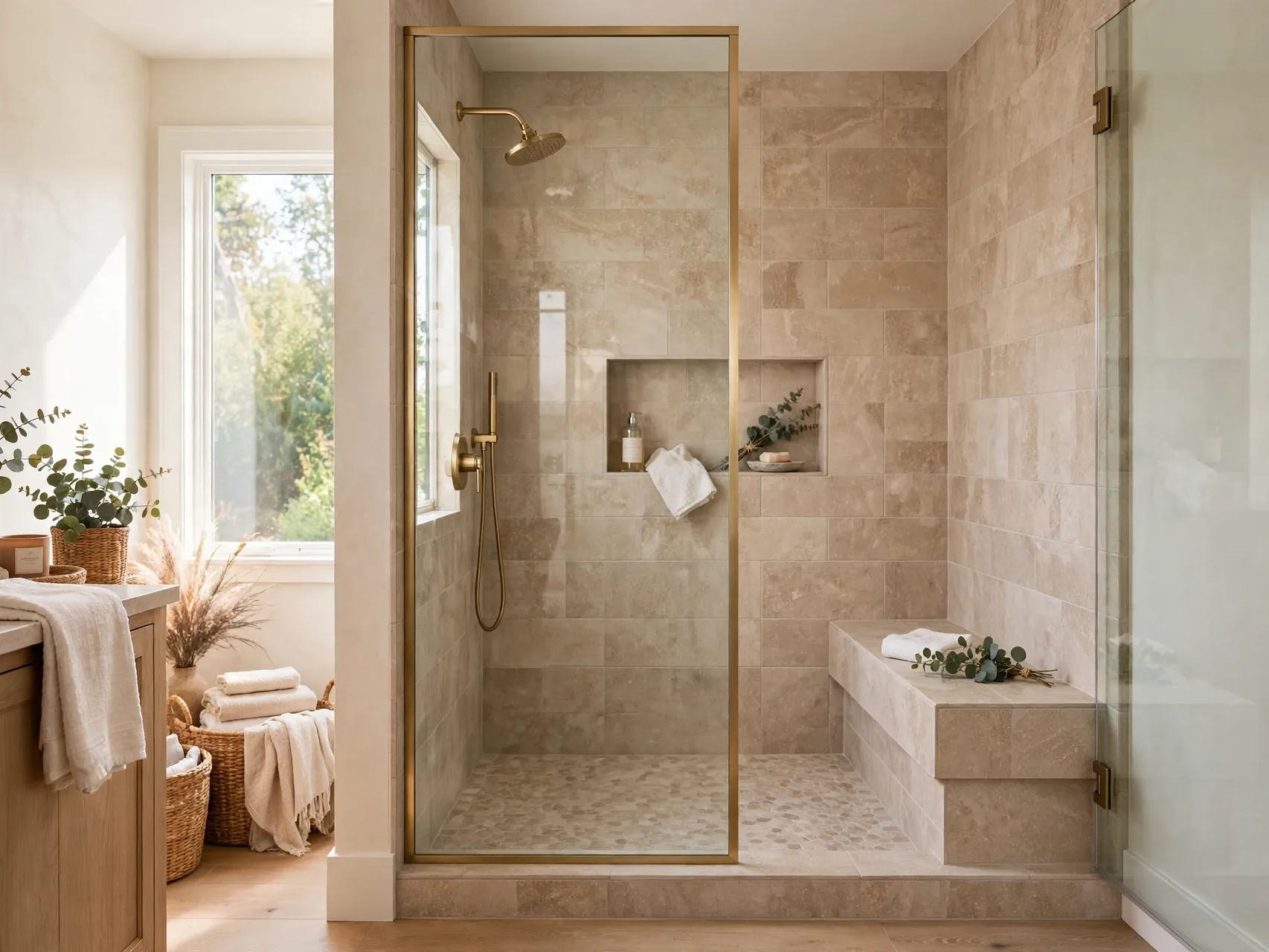
A built in bench adds comfort, shaving ease and a true spa ritual to a walk in shower. Tile it in the same material as the walls for a sculpted look, or use a stone look slab top for a smooth, easy clean seat.
Benches must be built, waterproofed and sloped correctly inside the shower system, so they belong in the professional plan from day one, never as an afterthought. Choose a bench top with a comfortable, not polished slippery, finish. A well built bench is the feature owners say they use most, long after the remodel dust settles.
11. Keep One Tile Everywhere for a Wet Room Feel
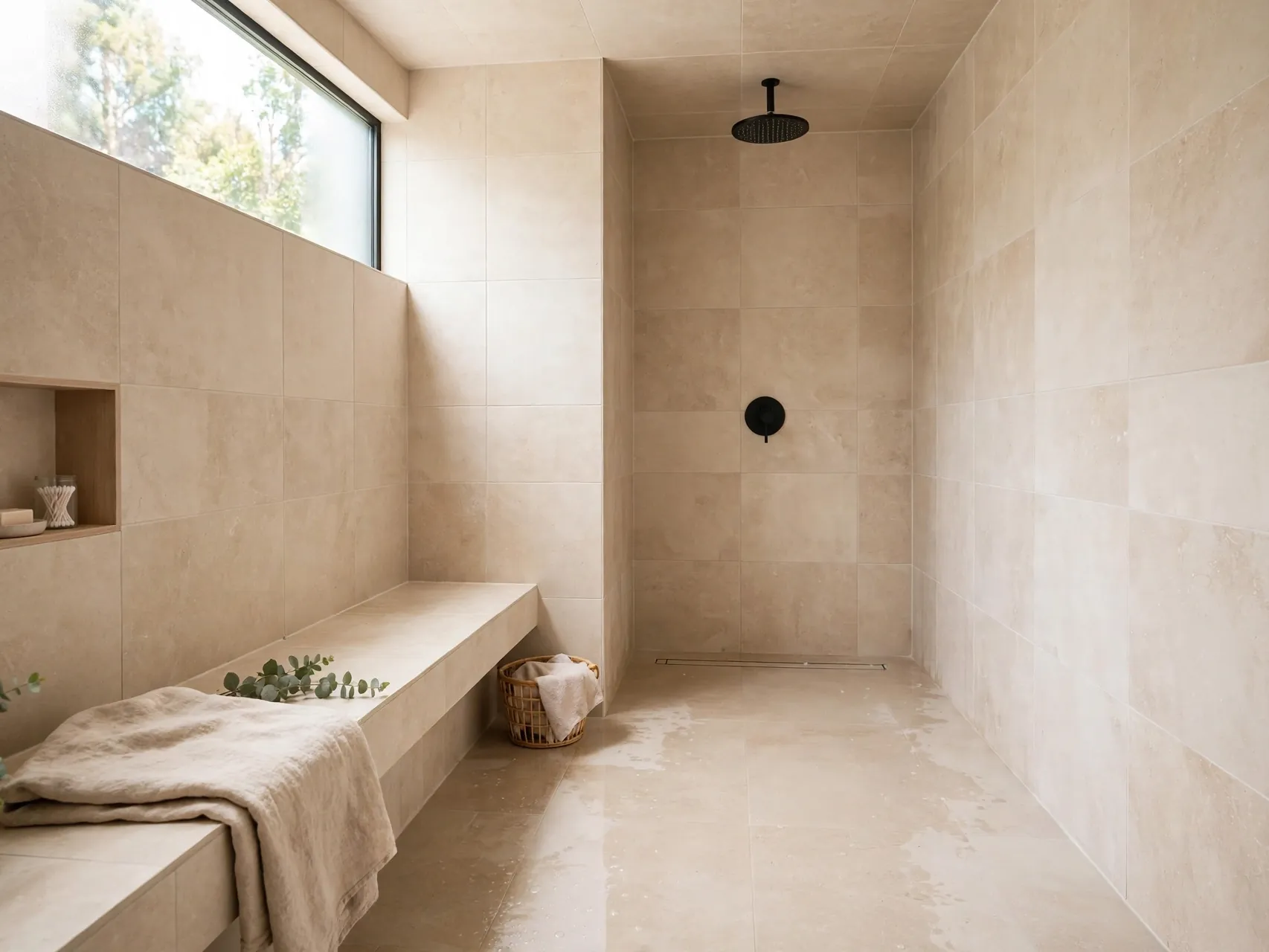
Running the same porcelain tile across walls and the bathroom floor, with a suitable mosaic version inside the shower, creates a seamless wet room calm. Fewer material changes make small bathrooms feel larger and more spa like.
Wet room style builds need whole area waterproofing, correct falls and expert drainage planning, so they are firmly professional projects with local code requirements. Do not assume the wall tile can simply continue across the shower floor: the shower zone still needs floor rated, grippy tile in a size that handles the slope.
12. Choose Warm Wood Look Porcelain, Walls Only
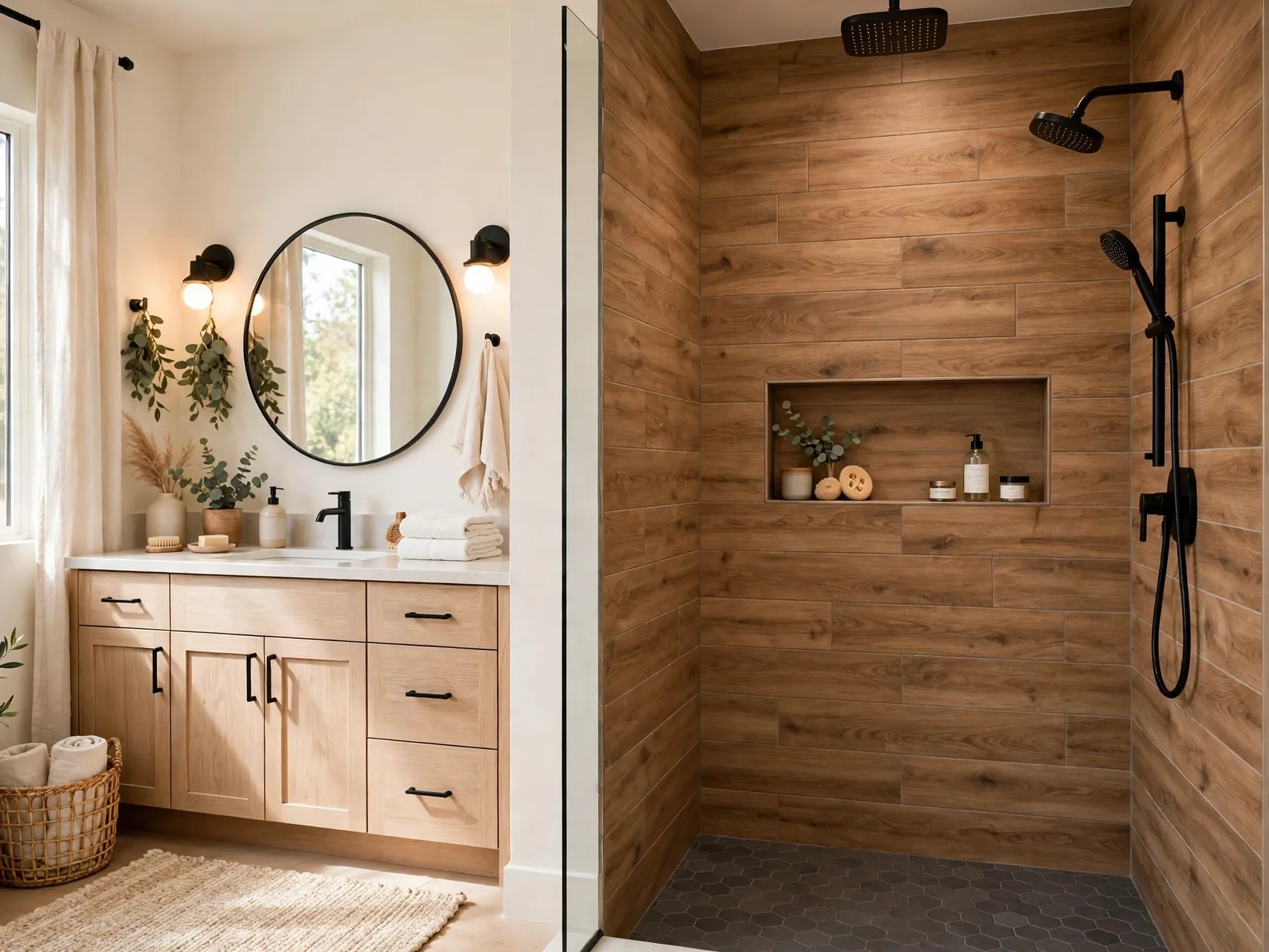
Wood look porcelain planks bring sauna warmth to shower walls without any real wood in the wet zone. Vertical or horizontal planks in a honey or walnut tone pair beautifully with white fixtures and green plants outside the glass.
Keep wood look planks on walls, and choose a dedicated floor mosaic for grip and slope. Real wood has no place inside a shower, however sealed it claims to be. Quality porcelain gives you the complete visual warmth with none of the swelling, rot or refinishing risk, which is why spas themselves so often choose it.
13. Go Moody With Deep Green or Blue Tile

Deep green, ink blue or charcoal tile turns a walk in shower into a cocooning retreat, especially with warm metal fixtures and good lighting. Glossy ceramic reflects light around a dark palette so the space feels rich, not dim.
Dark grout with dark tile keeps the look seamless and lowers visible maintenance. Moody tile shows water spots and soap residue more readily on polished finishes, so matte or satin surfaces are the practical pick. Reserve the drama for walls and keep the floor in a coordinating, floor rated mosaic with reliable wet grip.
14. Use Glass Mosaic as an Accent Band Only
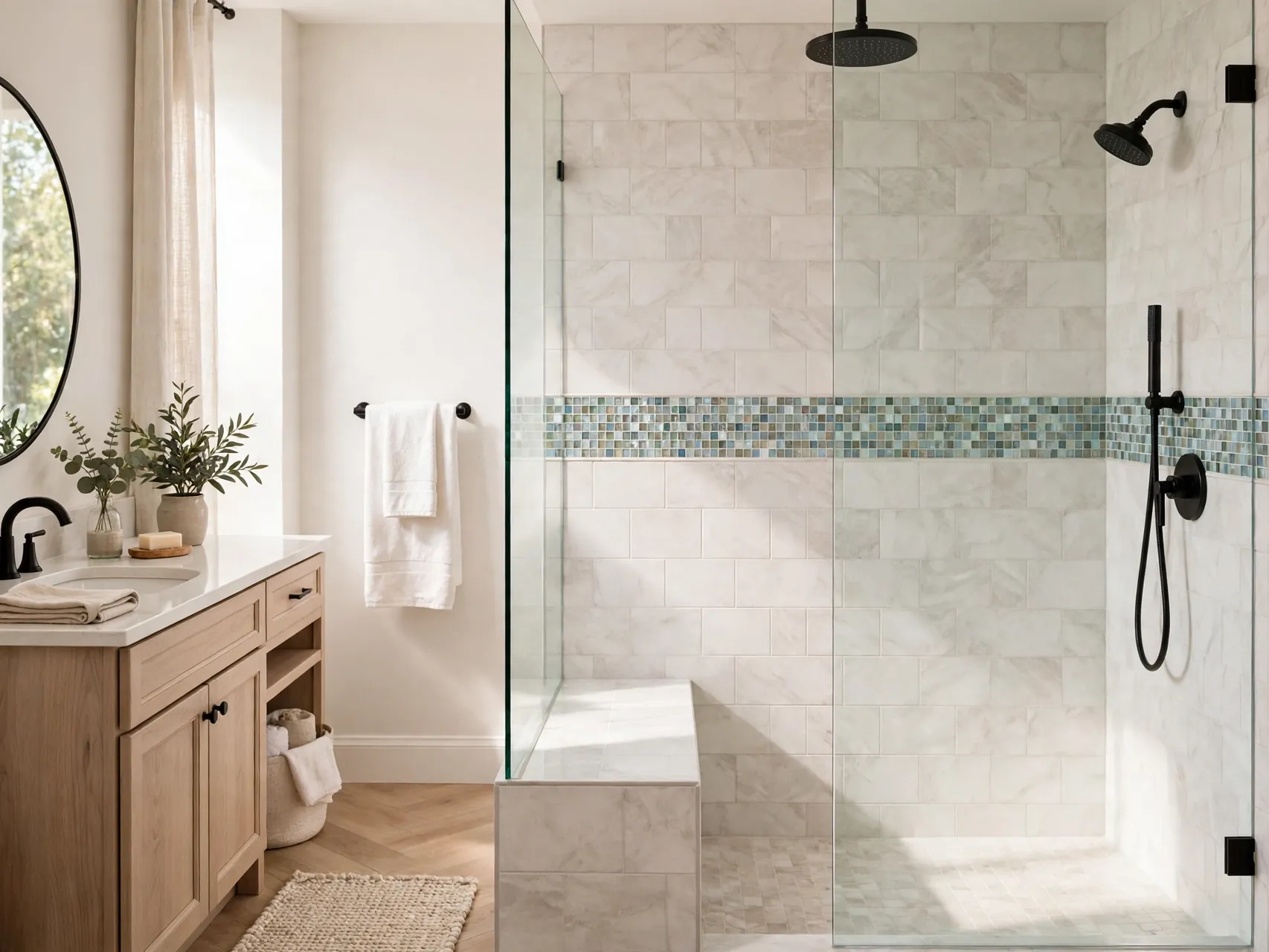
Glass mosaic shimmers beautifully as a vertical accent strip, a niche lining or a narrow band, reflecting light in smaller showers. Used wall to wall it can feel busy and date quickly, so a measured accent is the timeless choice.
Glass tile needs compatible setting materials and careful installation, and smooth glass is not a shower floor material: it can be slippery and is hard to slope. Keep glass on walls, let professionals set it, and enjoy how a single shimmering strip lifts plain large format walls from simple to spa worthy with very little extra tile cost.
15. Try Stacked Stone Look Without Real Stacked Stone
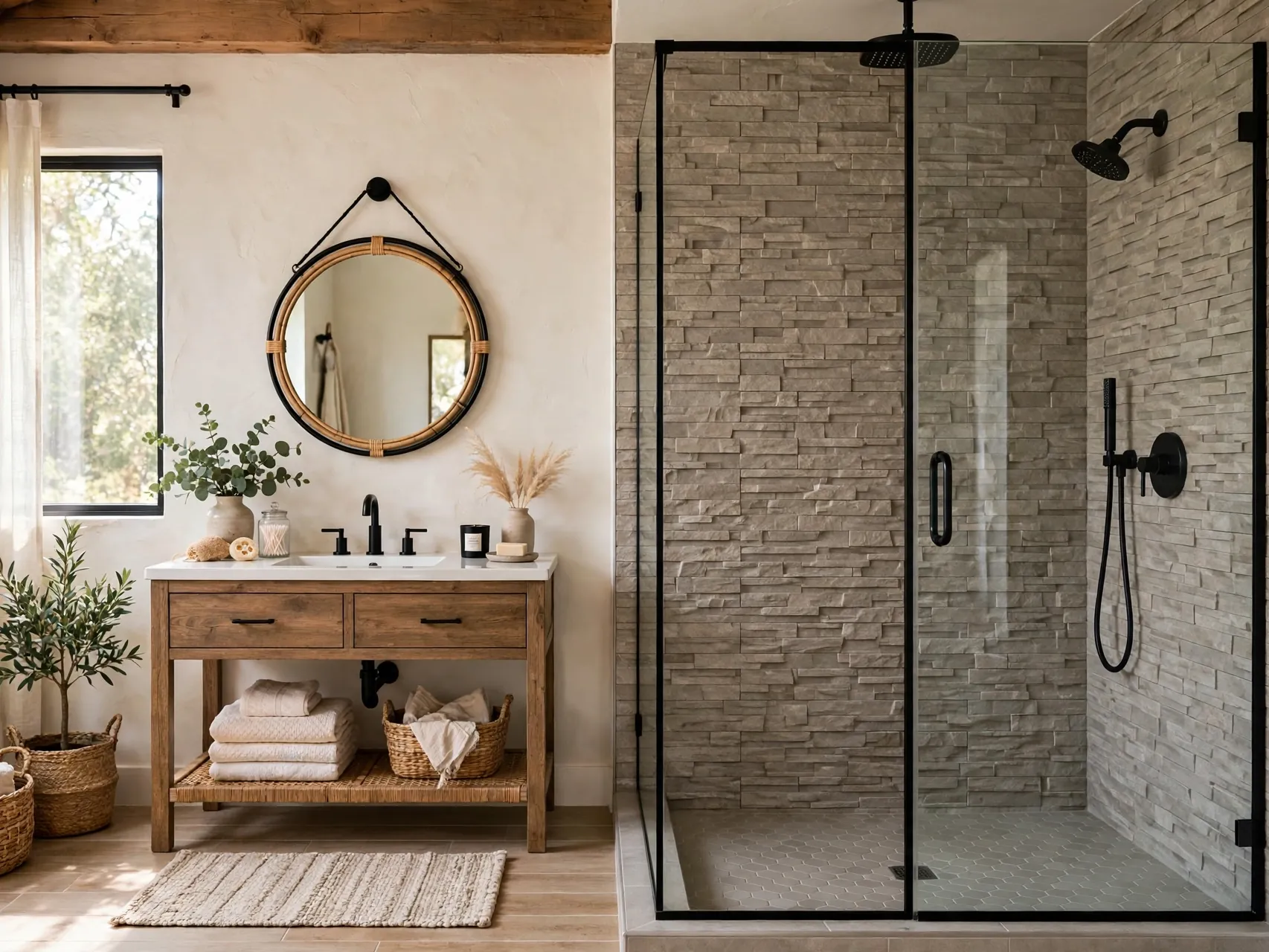
Ledgestone look porcelain panels give the textured, layered wall of a spa grotto in a lighter, more water suitable body. Real stacked stone in a shower traps water and soap in its crevices and is hard to clean, so the porcelain interpretation is the honest recommendation.
Use textured panels on one wall only and keep cleaning in mind even with porcelain: textured surfaces always need a little more attention than smooth ones. Pair with a smooth, easy clean floor mosaic. The contrast of rugged wall and calm floor is exactly the balance real spas strike.
16. Design a Curbless Entry With a Linear Drain
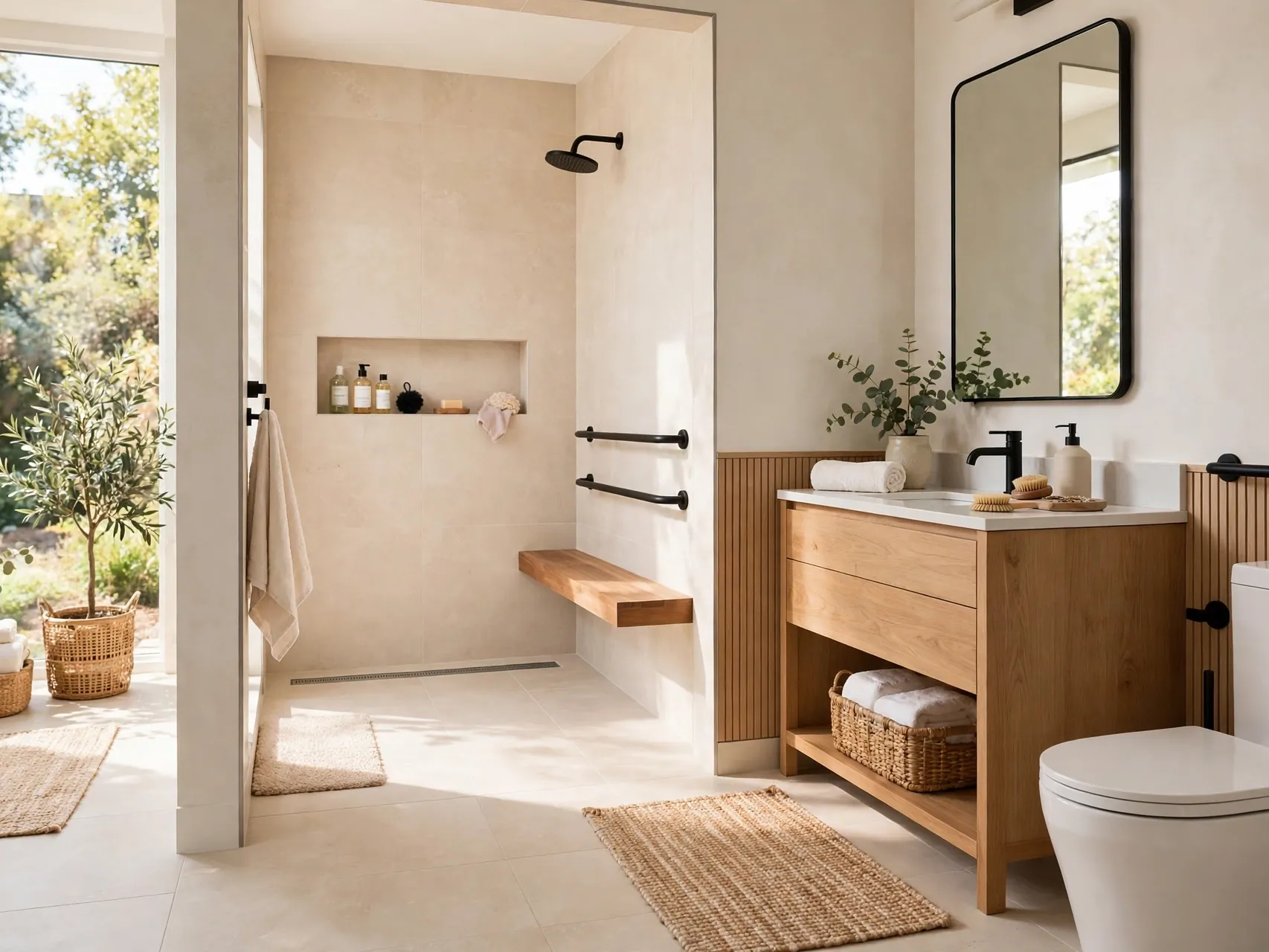
A curbless shower with a linear drain feels open, accessible and unmistakably spa like, and it lets wall tile flow uninterrupted to the floor line. Linear drains also allow larger floor tiles in some professional systems, since the slope runs one way.
Curbless builds are structural work: floor levels, waterproofing continuity and drainage all need licensed professionals and often permits. Never treat curbless as a tile choice alone. Done correctly, it is one of the most future proof and beautiful options here, suiting all ages and mobilities while looking effortlessly luxurious every single day.
17. Match Grout Color to Change the Whole Mood
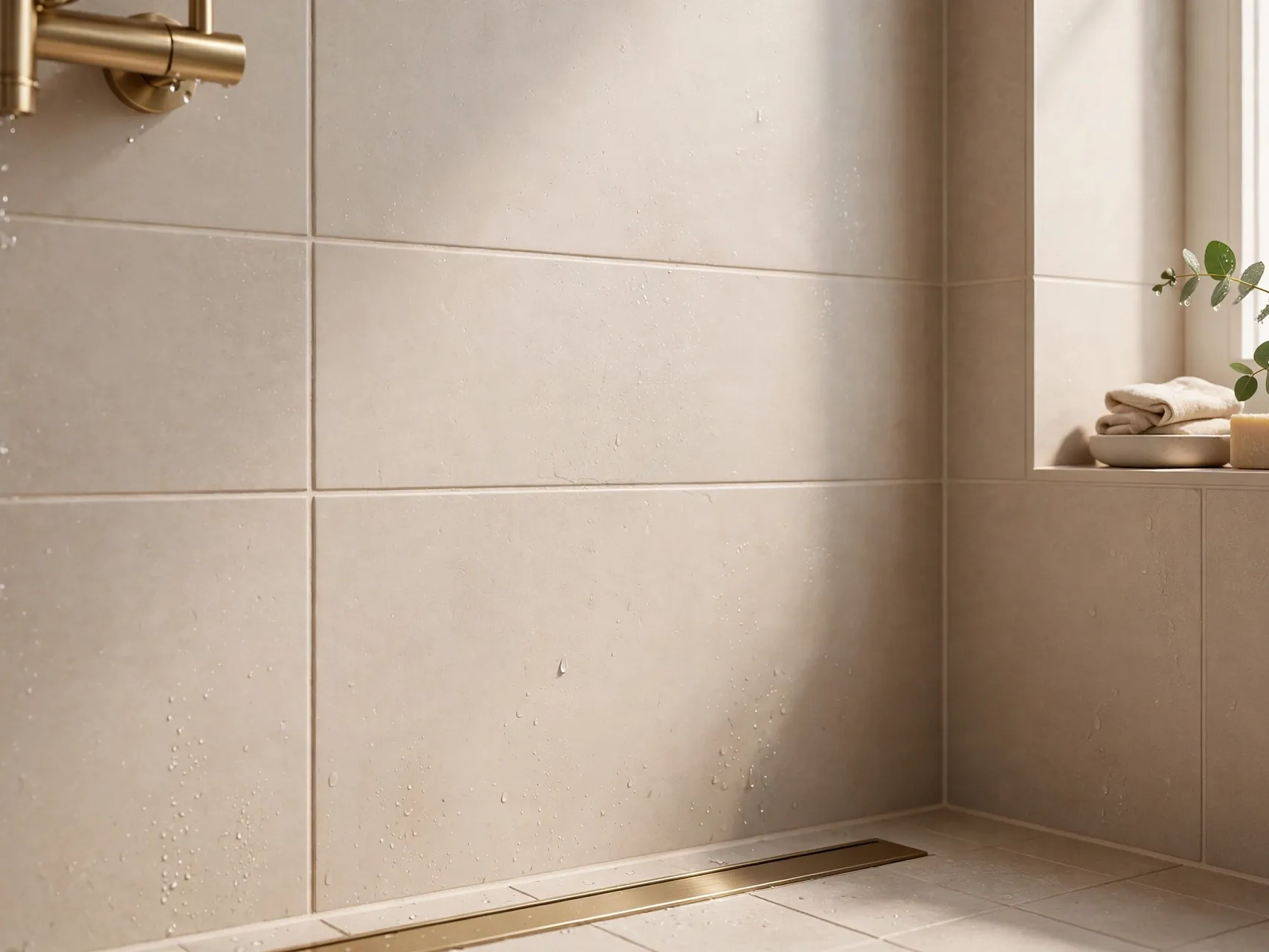
Grout is a design decision, not an afterthought. Matching grout makes tile read as one calm surface, perfect for large format spa walls. Contrasting grout celebrates pattern, ideal for subway, hexagons and herringbone features.
Remember that grout is not waterproof and needs correct installation and care, including sealing where the product requires it. In wet zones many pros use high performance grouts suited to showers: ask your installer what they recommend and why. A grout conversation early prevents the most common shower regret, loving the tile and disliking the finished grid.
18. Add a Vertical Accent Strip to Stretch a Small Shower
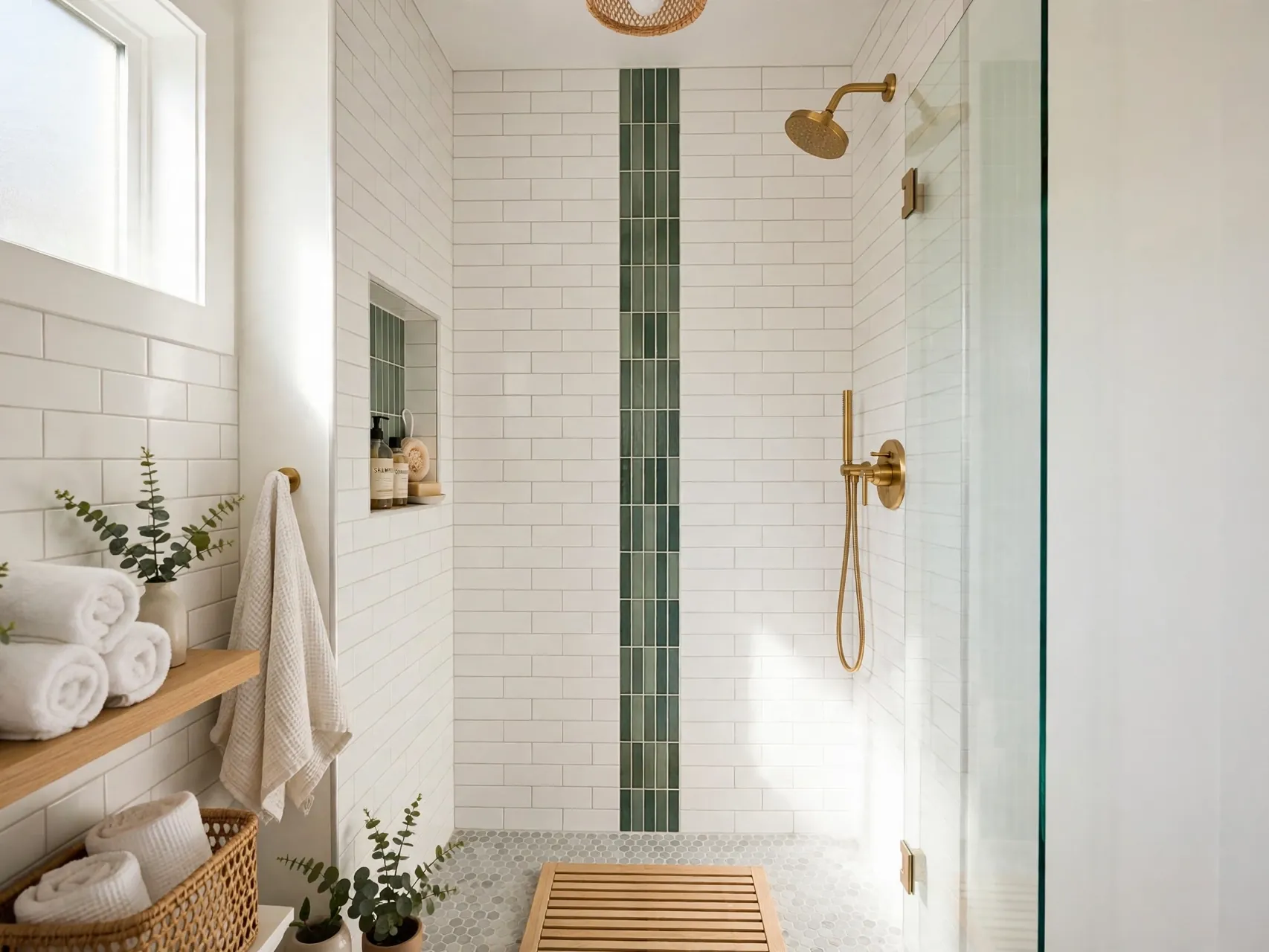
In a compact walk in shower, one vertical strip of mosaic running through large plain walls adds height, focus and a boutique hotel detail without the cost of tiling a whole wall in mosaic.
Run the strip through the niche if your layout allows, for a designed through line. Keep the strip modest in width and the palette tight. Small showers benefit most from restraint: one accent, one calm wall tile, one reliable floor mosaic. That trio, professionally waterproofed and installed, will look spa worthy at a fraction of a full feature wall budget.
19. Choose Matte Stone Look Tile for a Quiet Retreat

Matte stone look porcelain in limestone, travertine or soft sand tones creates the quiet, chalky calm of a European spa. It shows fewer water spots than polished tile and feels serene with wood tones and linen textures outside the shower.
On floors, matte does not automatically mean slip resistant, so always check the maker rating for wet use and choose the mosaic version designed for shower floors. Real travertine and limestone need sealing and gentle cleaners, which is why many owners pick the porcelain interpretation for daily ease with the same visual softness.
20. Plan Lighting and Fixtures With the Tile

Tile only looks spa worthy when light treats it kindly. Plan warm, layered lighting that washes feature walls without harsh glare, and choose fixture finishes that echo your tile palette: brushed brass with warm stone, matte black with white and gray, chrome with cool marble looks.
Fixtures, valves and any electrical work belong to licensed professionals, planned alongside waterproofing rather than after tiling. Bring tile samples to lighting choices and view them wet if you can, since water darkens many tiles. That final coordination is what separates a pretty tile list from a shower that truly feels like a retreat.
FAQ
What is the best tile for a walk in shower floor?
Small porcelain mosaics, such as hexagons or small squares, are the most reliable choice: they follow the slope to the drain, offer many grout lines for grip and are widely available with maker slip ratings for wet floors. Pebble mosaics are a spa favorite too. Always confirm the specific product is rated for shower floors rather than relying on looks or matte finish alone.
Are tile and grout waterproof?
No. Tile and grout are the durable, decorative surface, but the waterproofing comes from the membrane system installed behind them. Grout can absorb water, which is why correct membrane installation by qualified professionals, proper slopes and suitable grout and sealers where required matter so much. A beautiful shower with failed waterproofing will not stay beautiful for long.
Can I use large tiles on a shower floor?
Generally, shower floors need smaller tiles that can follow the slope toward the drain in several directions and provide frequent grout lines for grip. A linear drain with a single direction slope can sometimes allow larger floor tiles in a professionally designed system. Ask your installer to confirm what your drain type, slope and chosen tile rating safely allow before buying.
Is natural stone a good choice for a shower?
Natural stone is beautiful but higher maintenance: marble, travertine and pebbles typically need sealing, pH appropriate cleaners and acceptance of natural variation and change over time. Many homeowners choose stone look porcelain instead for the same visual warmth with far simpler care. If you choose real stone, budget for its upkeep honestly and have it installed and sealed by experienced professionals.
Should I hire a professional for a walk in shower?
Yes, for the core build. Waterproofing, drain setting, plumbing and electrical work should be done by licensed professionals, and many areas require permits and inspections for shower remodels. A confident DIYer might handle demolition or painting outside the wet zone, but the shower system itself is unforgiving: small hidden errors cause expensive water damage. Get the build right and your tile will reward you for decades.
Key Takeaways
- Tile is not waterproofing: The membrane behind the tile does the water protection, so choose installers who lead with waterproofing, not patterns.
- Floors need grip: Choose small, maker rated mosaics for shower floors and check slip ratings instead of trusting a matte look.
- Porcelain does the heavy lifting: Marble, stone, wood and terrazzo look porcelain deliver spa beauty with far less sealing and upkeep.
- One feature is enough: A herringbone wall, a contrasting niche or a vertical accent strip gives focus while calm walls keep the spa feeling.
- Pros for the wet work: Waterproofing, drains, plumbing and electrical belong to licensed professionals, planned before tile is chosen.
- Love these ideas for your home? Save this guide to Pinterest and pin your favorite to try first.