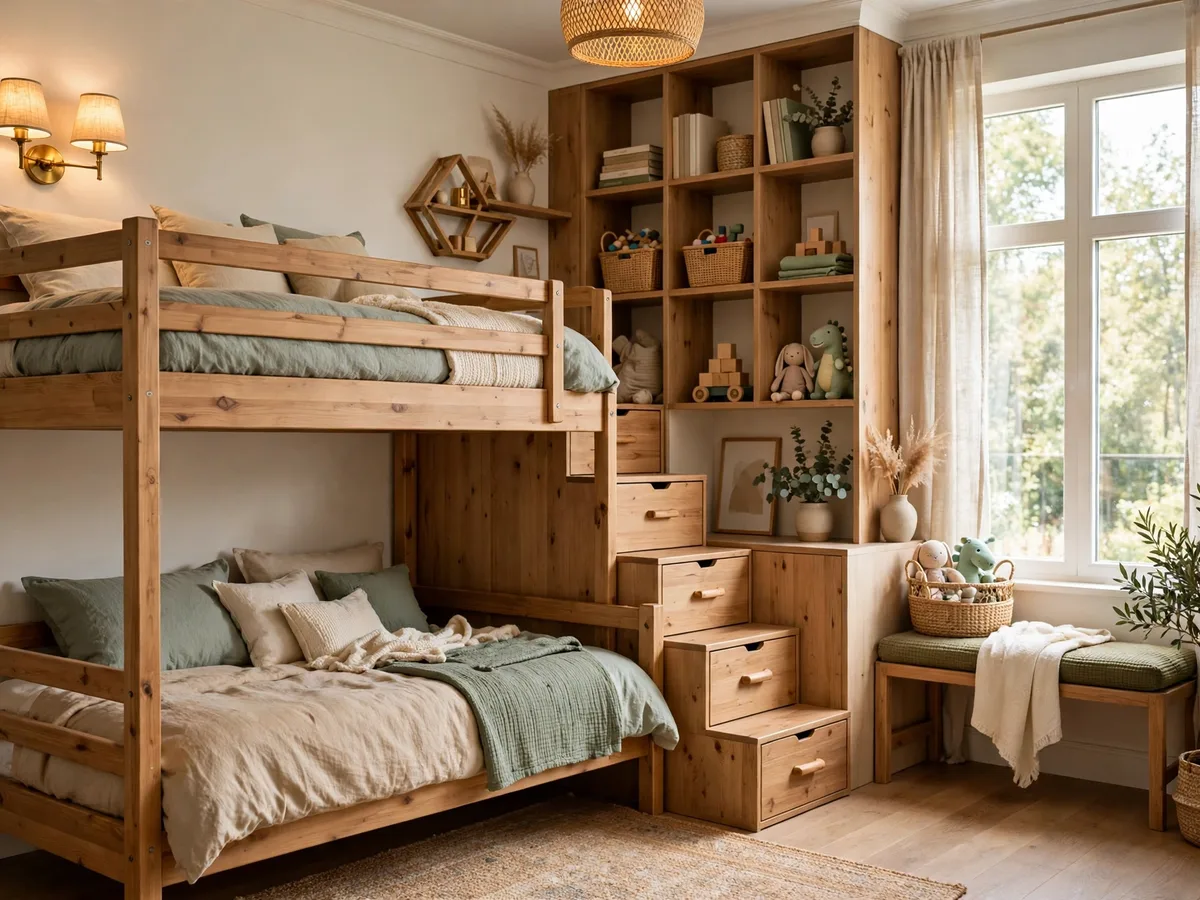
24 Bunk Bed Ideas That Save Space in Shared Kids Rooms
Introduction
Few furniture moves change a shared kids room like stacking the beds. These bunk bed ideas free up a whole bed worth of floor for play, homework, and storage, while giving each child a cozy sleeping spot that feels like their own little cabin.
Style matters, but safety decides everything here.
Read the safety ideas first, even if you skim the styling ones. A beautiful bunk setup that ignores guardrail height or mattress fit is not a bargain at any price, and a safe one can be styled a dozen ways as your kids grow.
Measure your room before falling in love with a layout: ceiling height, door swing, window position, and the floor space the ladder needs. With those numbers in hand, the ideas below will help you choose, style, and use bunk beds with confidence.
1. Choose a Certified Frame and Check the Labels
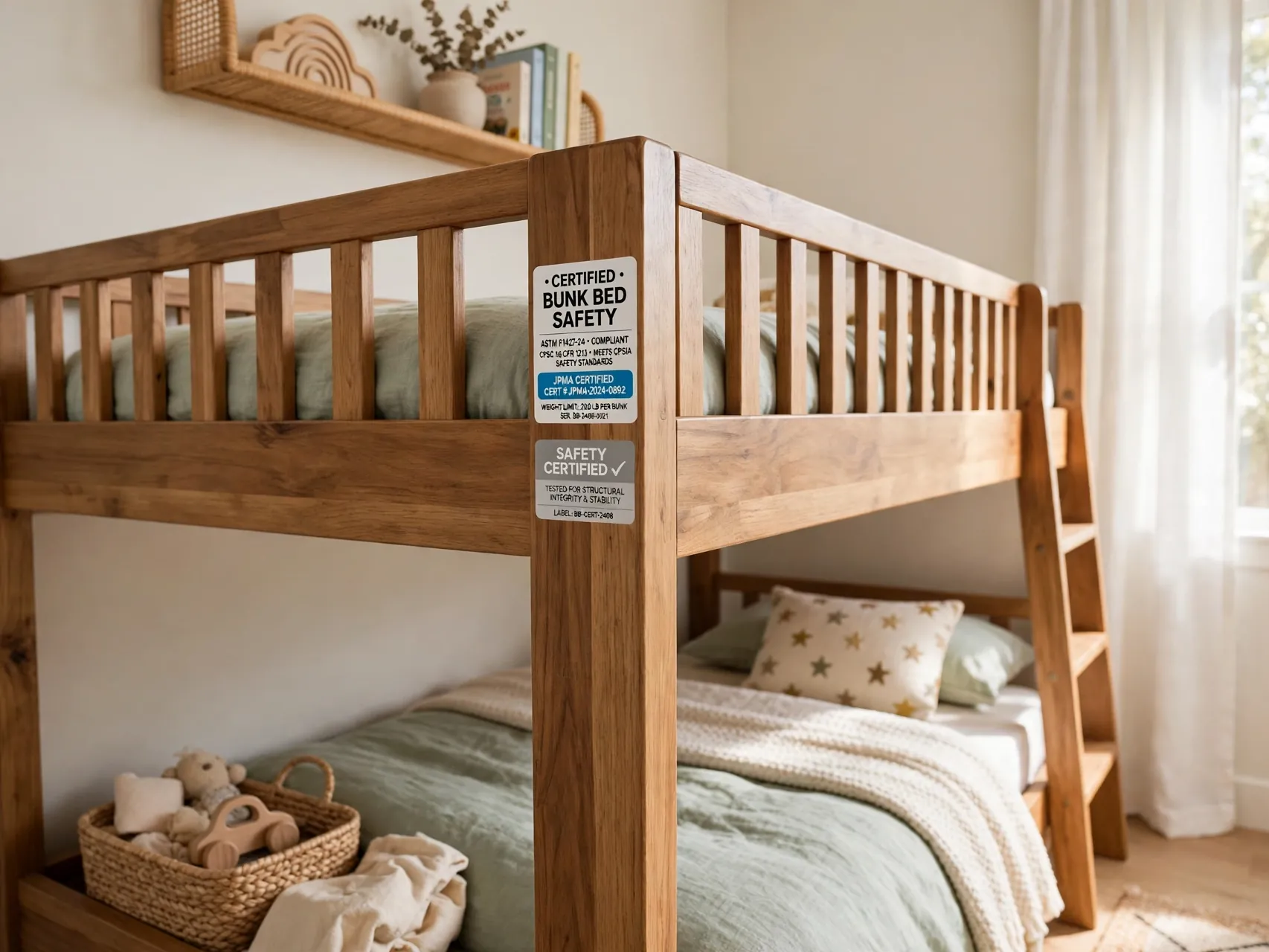
Start every bunk bed search with the labels. Beds that meet the federal standard carry required safety information, including the mattress size to use and the maximum mattress thickness for that frame.
Avoid homemade modifications, mixed parts from different beds, and second hand frames with missing rails, hardware, or instructions. If a frame wobbles after correct assembly, contact the maker rather than improvising a fix.
2. Keep Guardrails on Both Sides of the Top Bunk
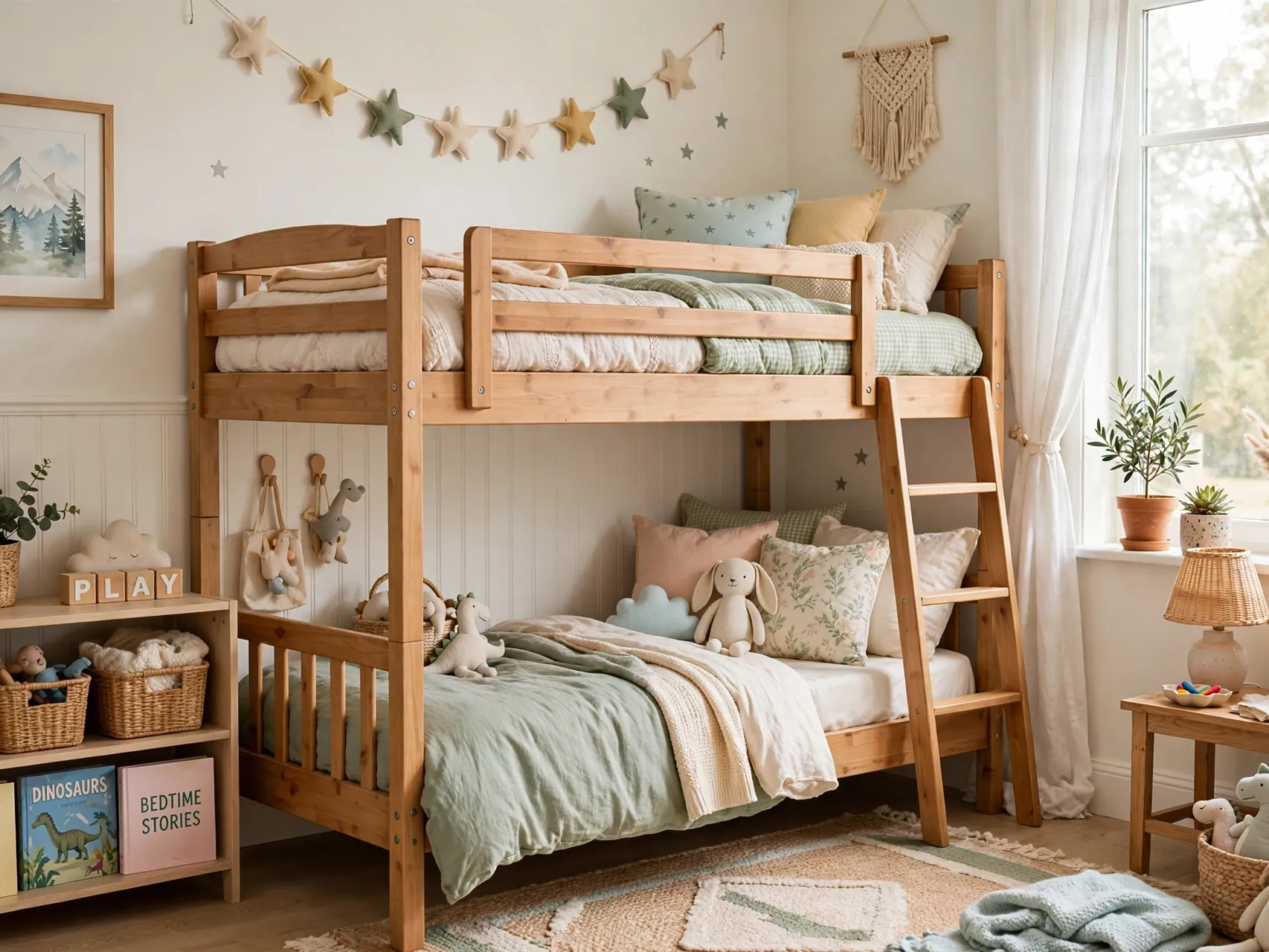
The top bunk needs guardrails on both long sides, including the side against the wall. A wall does not replace a rail, because a child can become trapped in the gap between mattress and wall, which is exactly the kind of opening the federal standard is designed to prevent.
The top of the guardrail must extend at least 5 inches above the top of the mattress, and openings in the structure must stay small enough to prevent entrapment. Check rails whenever you change bedding or mattresses, and never remove a wall side rail to make the bed easier to make.
3. Match Mattress Size and Thickness to the Frame

Use only the mattress size the maker specifies for the frame, so the mattress fits snugly with no large gaps at the sides or ends where a child could become trapped.
The bed label and instructions state the maximum mattress thickness, so measure before you buy and resist the temptation to add a thick topper on the top bunk. Mark the maximum fill line if the frame provides one.
4. Reserve the Top Bunk for Children Six and Older
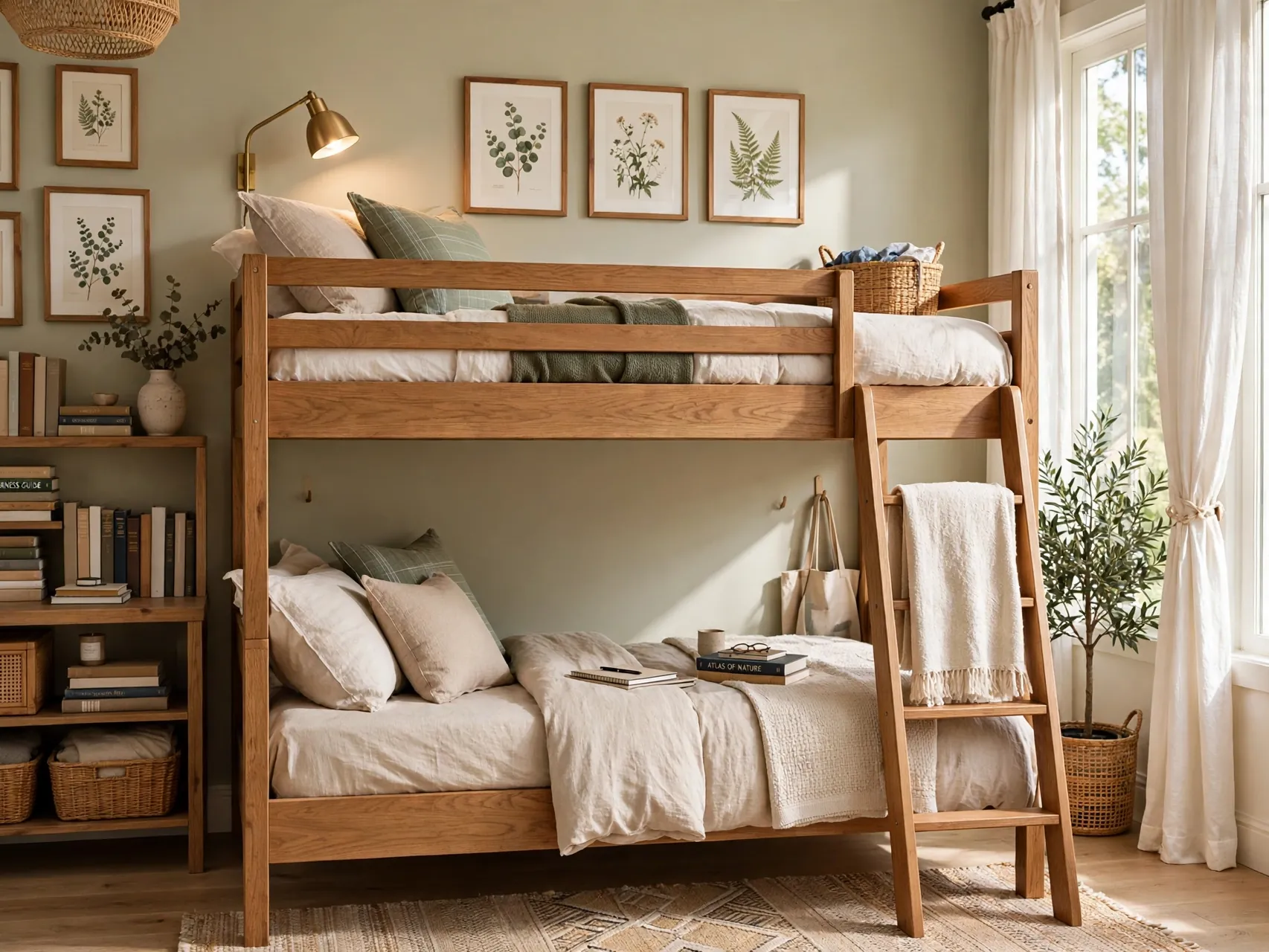
Federal safety warnings are direct on this point: do not allow children under six years of age to use the upper bunk. Younger children lack the coordination and judgment for safe ladder use in the dark, half asleep, which is when most climbs happen.
Give the older sibling the top bunk and make the lower bunk extra appealing for the younger one, with a curtain, a special light, and favorite bedding, so nobody feels the bottom is a consolation prize. Only one person should be on the top bunk at a time.
5. Pick a Sturdy Ladder and Teach Safe Climbing
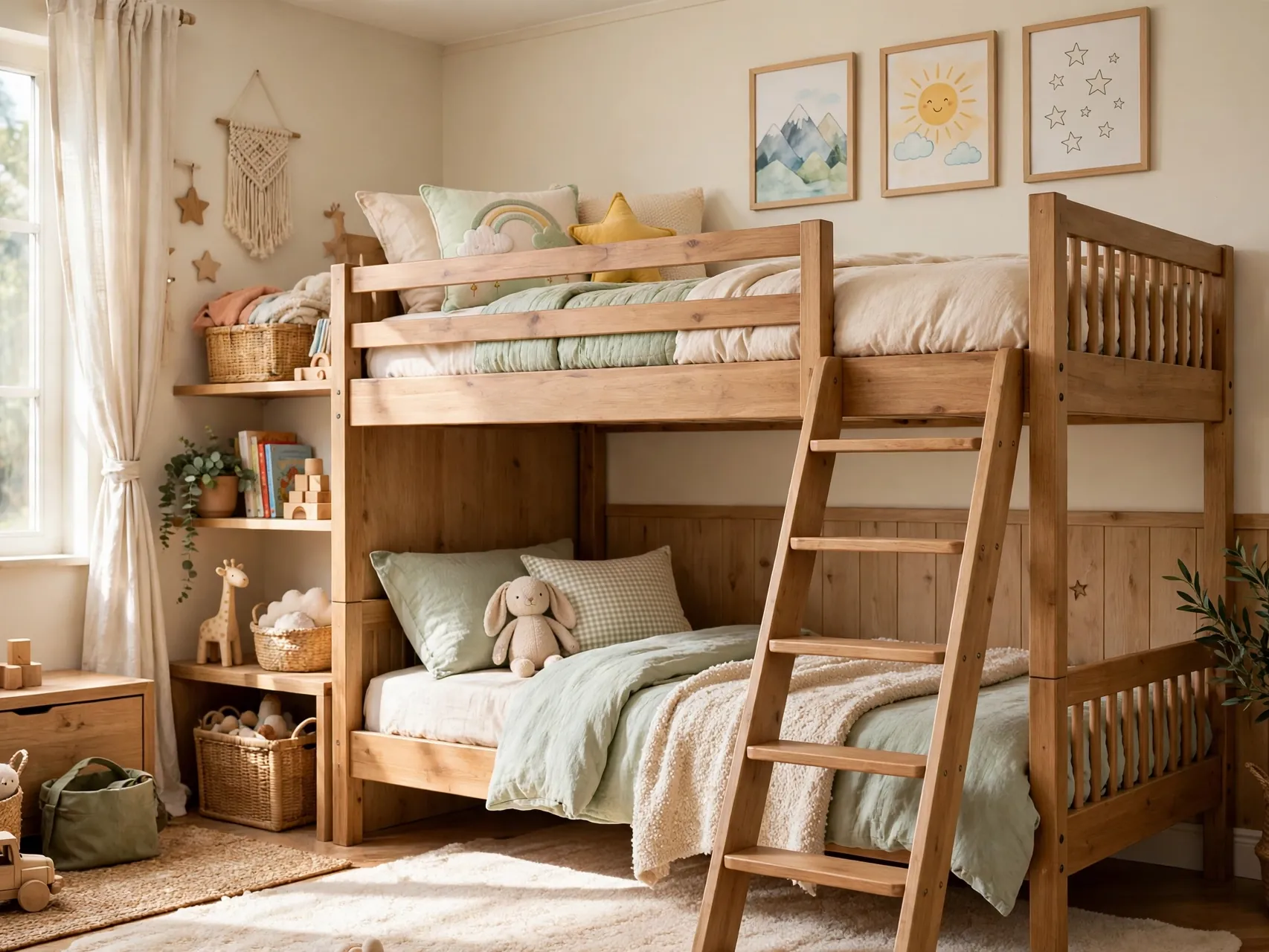
The ladder should be firmly attached to the frame, easy for your child to grip, and positioned so the climb is clear of toys, rugs with curled edges, and furniture corners. Angled ladders and staircase designs can be easier for younger climbers than vertical ones, but only within the maker design.
Teach the house climbing rules from day one: always use the ladder, face the ladder when climbing down, two hands on the rails, no jumping from the top bunk, and no carrying armfuls of toys while climbing. Practice in daylight until it is boring.
6. Ban Rough Play On and Under the Bunks
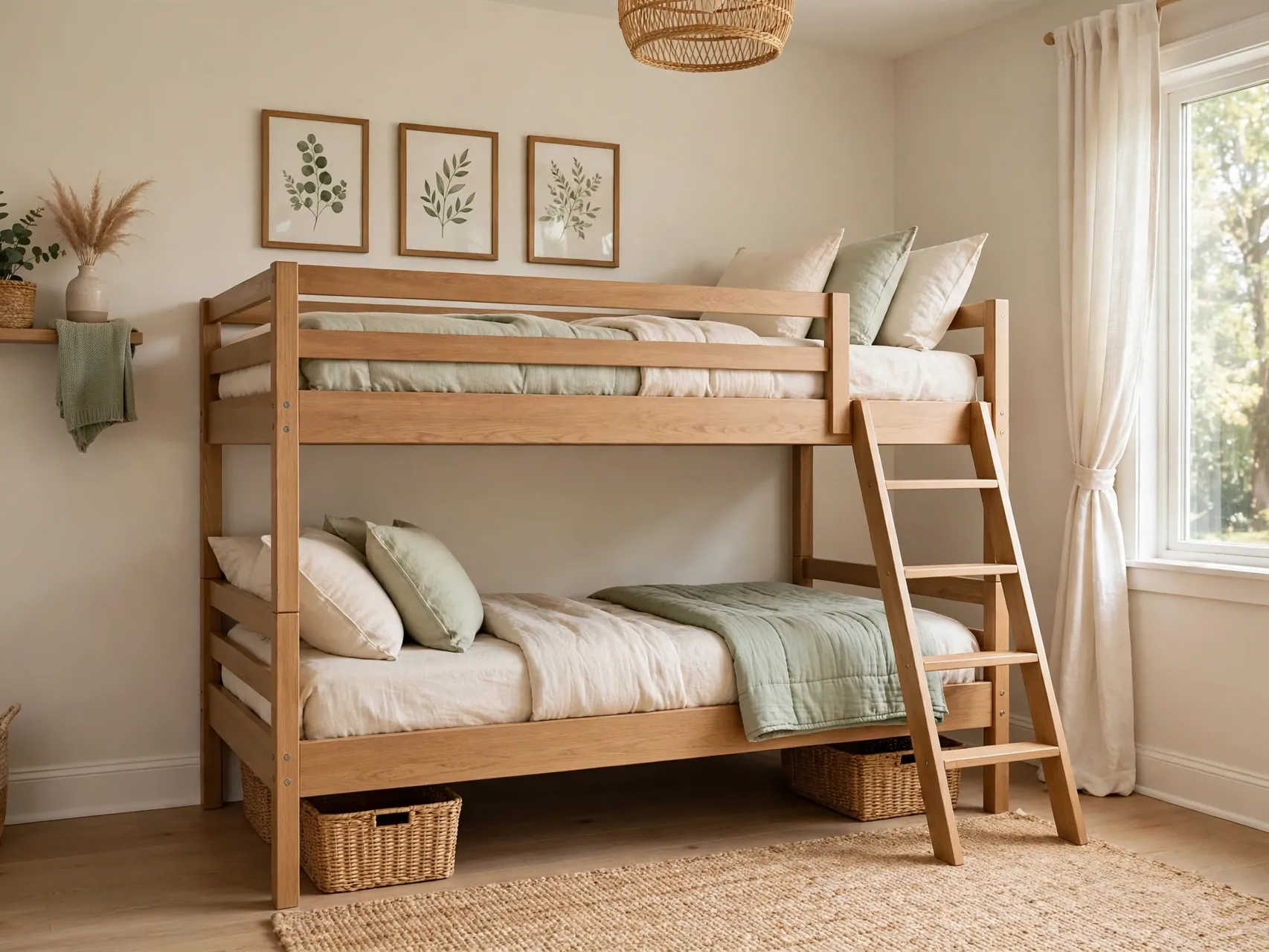
Set the rule early and repeat it often: no horseplay, wrestling, or jumping on or under the beds. The federal safety warnings include this for good reason, since bunks are sleeping furniture, not climbing frames or forts for rough games.
Also never hang belts, ropes, jump ropes, scarves, or similar items from any part of the bed, because items not designed for the bed create strangulation hazards. Keep play zones on the floor the bunks freed up, and let the beds stay the calm territory.
7. Anchor Tall Bunk Frames Where the Maker Directs
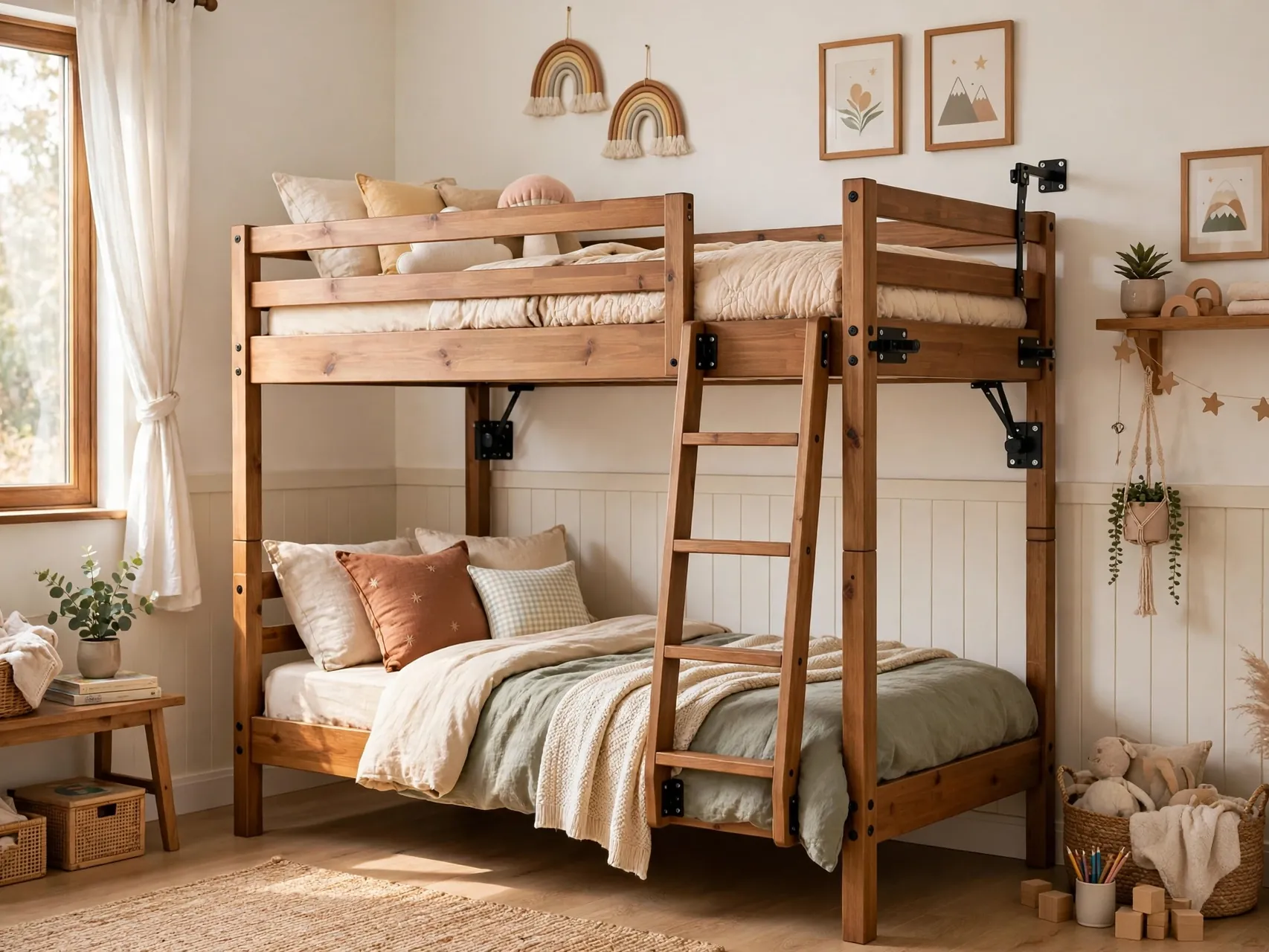
Some bunk and built in designs include wall anchoring as part of correct installation, and where the maker directs anchoring, treat it as required, not optional. Follow the instructions for fixings and wall types exactly, and use a professional installer for built in carpentry if you are not confident.
The same CPSC Anchor It logic applies to the dressers, bookcases, and wardrobes that share the room: anchor them to the wall, store heavy items low, and check fixings when you rearrange.
8. Try a Classic Twin Over Twin Layout
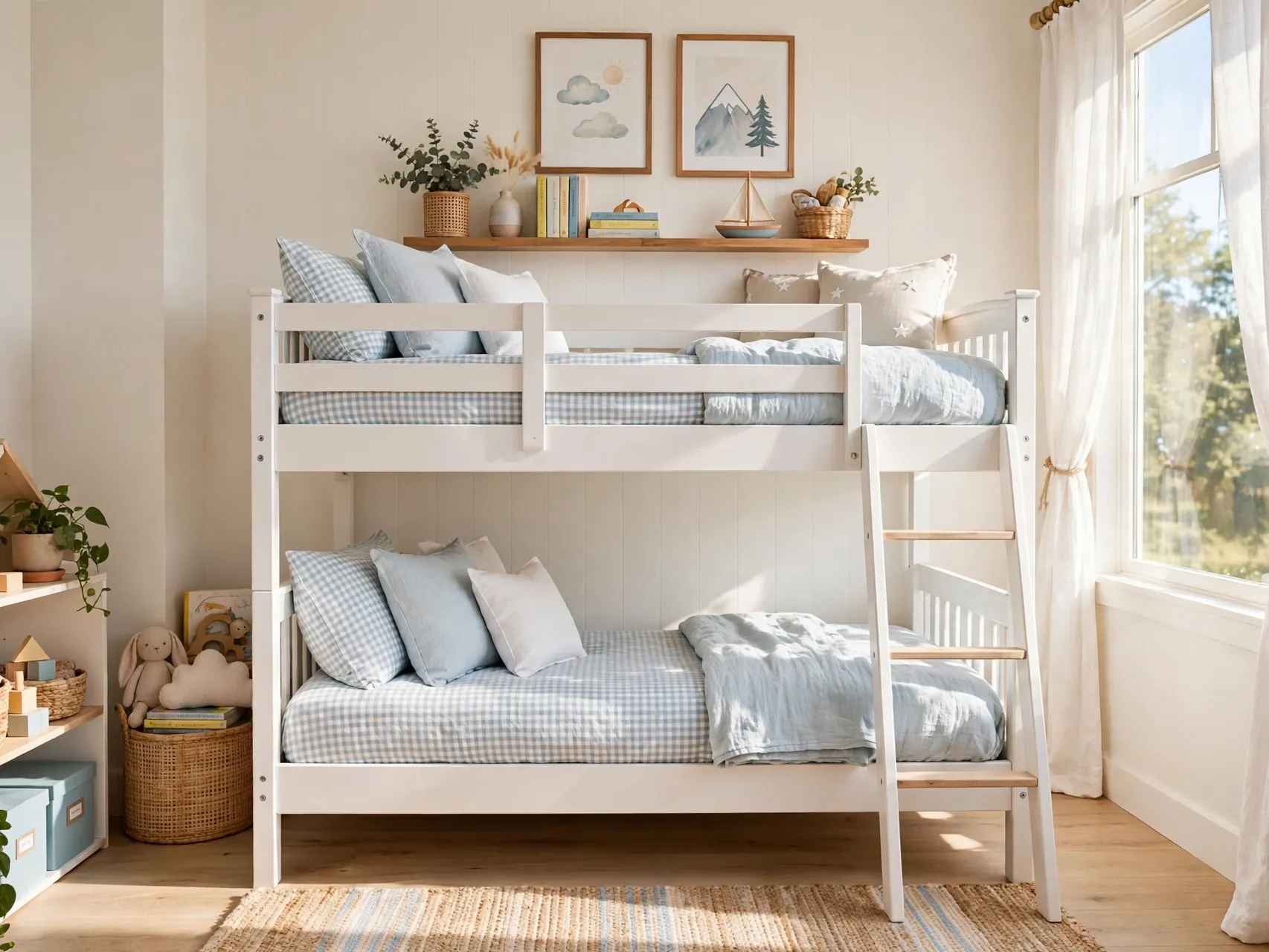
The standard twin over twin bunk is popular because it works: identical sleeping spaces, the smallest footprint, and the widest choice of frames and bedding. It suits siblings close in age and rooms where every inch of floor is spoken for.
Style the two bunks as a matched pair with the same bedding base, then personalize each level with a cushion, throw, and small shelf in a chosen color. Keep the ladder end clear of the door swing.
9. Use an L Shaped Bunk for Corner Rooms
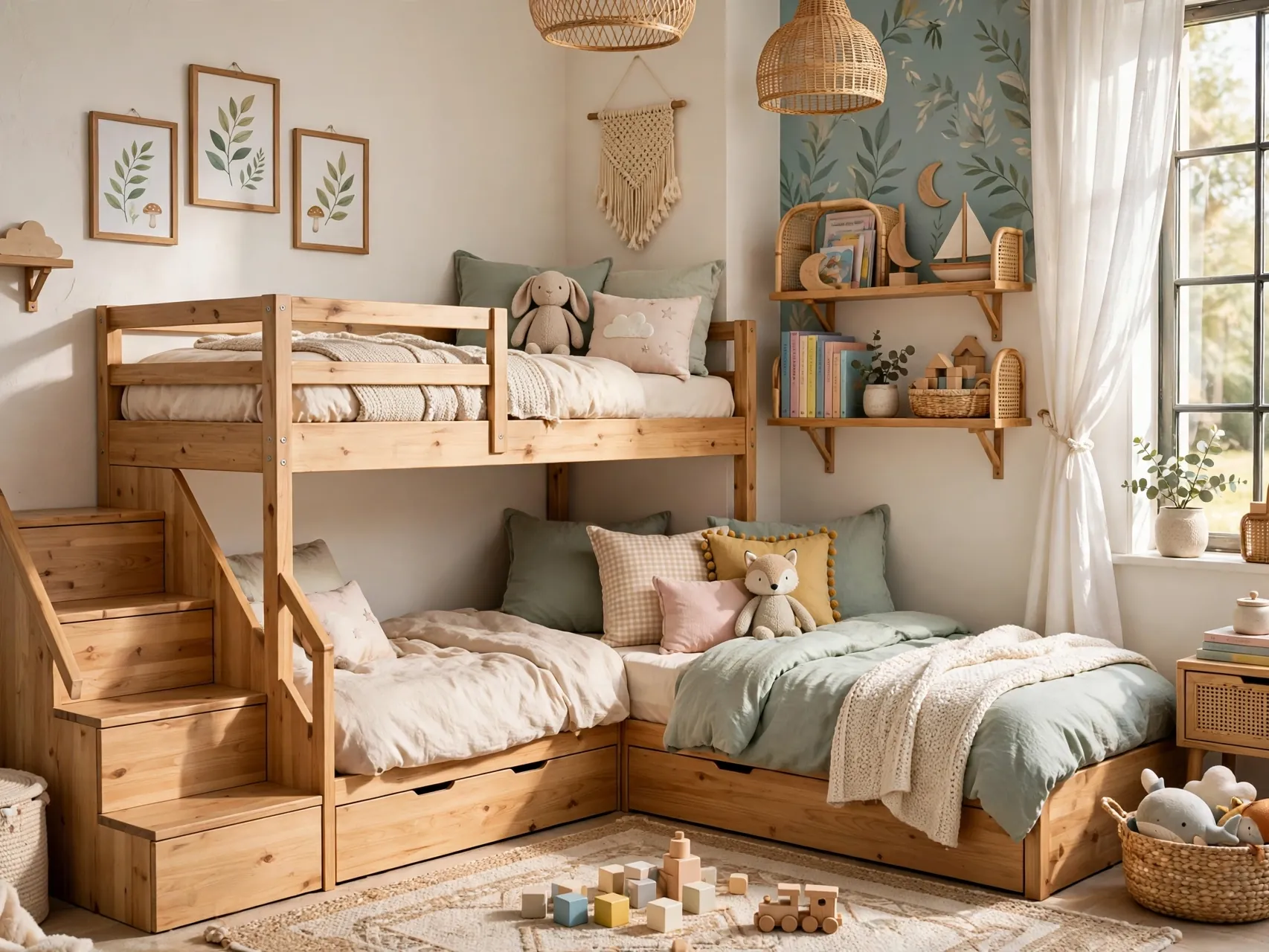
An L shaped bunk places the lower bed perpendicular to the upper bed, tucking the whole setup into a corner and opening a small nook beneath the top bunk for a reading chair, a desk, or toy storage. It feels less like a stack and more like two little rooms.
This layout suits children who want more separation, or siblings with different sleep schedules, since the sleepers are offset rather than directly above one another.
10. Add a Twin Over Full for an Older and Younger Pair
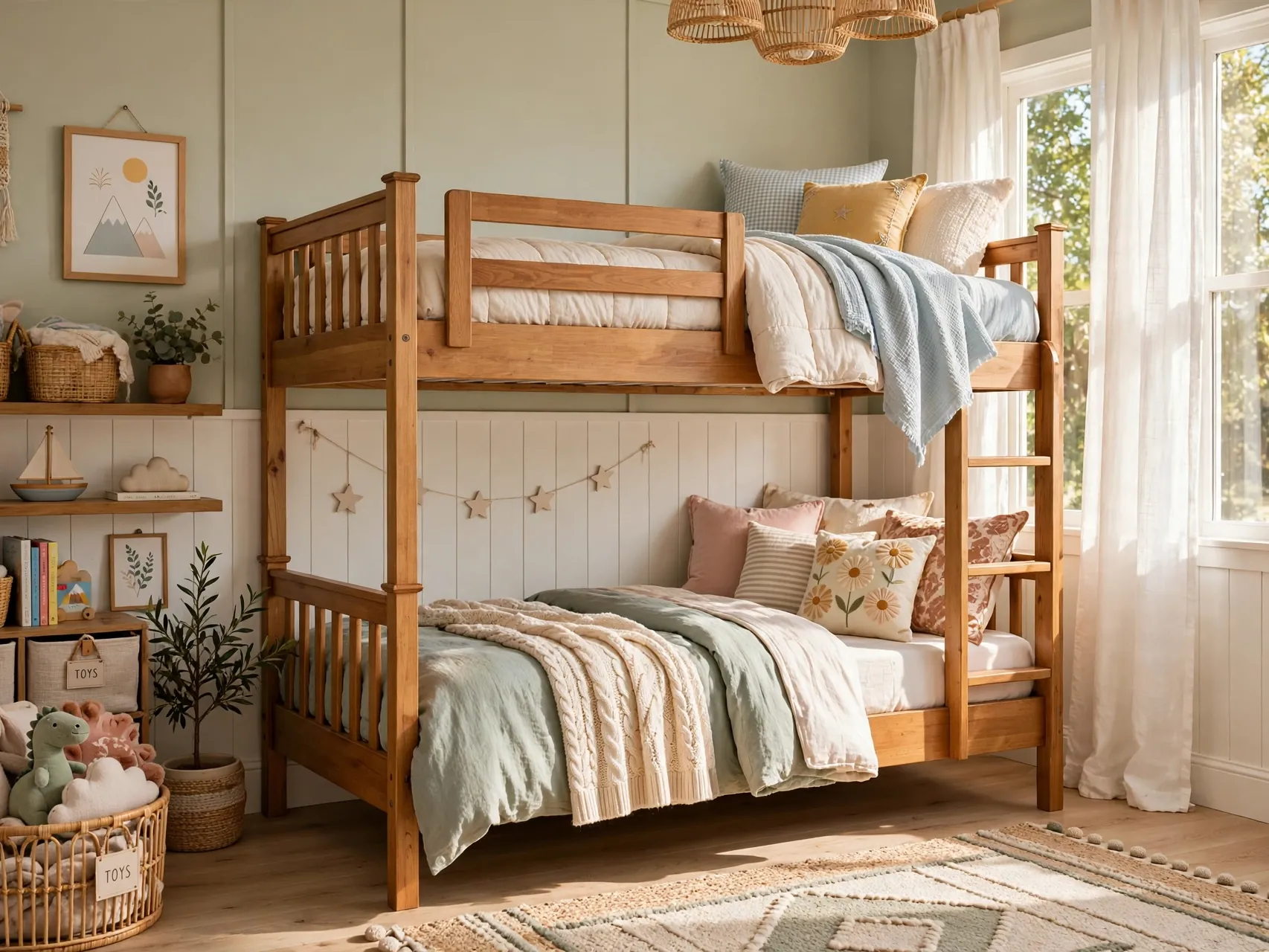
A twin over full bunk gives the lower sleeper a wider bed, which suits an older child, a parent lying down for story time, or siblings who like to read together before lights out. The top stays a standard twin with all the usual guardrail and mattress rules.
Check the frame weight limits and assembly guidance from the maker, and confirm the room can handle the larger lower footprint. Style the full bed with layered pillows so it doubles as a daytime lounge and reading spot.
11. Choose Staircase Bunks With Storage Drawers
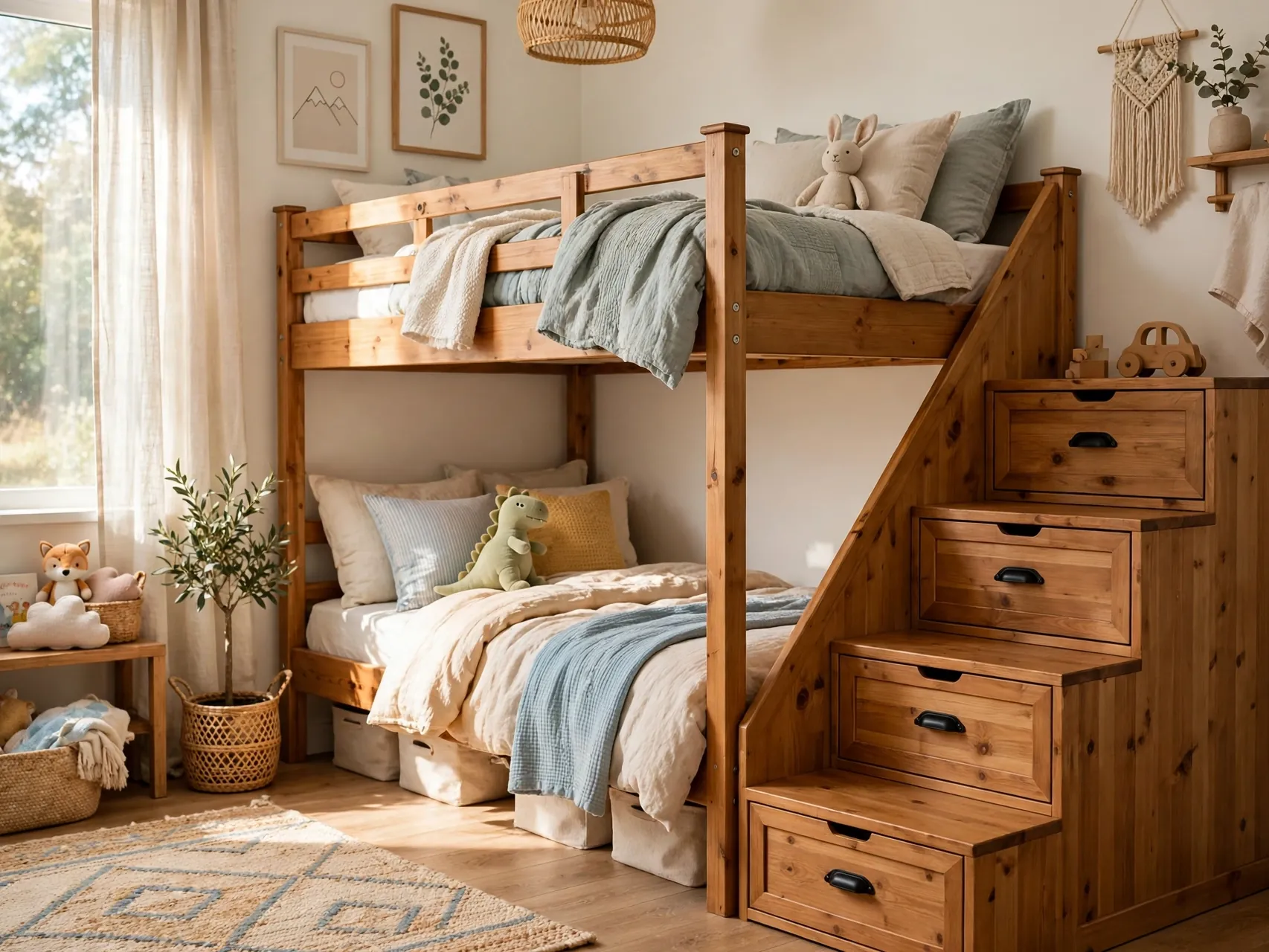
Bunk beds with a staircase instead of a ladder give climbers solid, wide steps, and each step can hide a drawer for clothes, books, or toys. Stairs feel steadier for many children and for parents carrying a sleepy toddler to the lower bunk in the dark.
Measure carefully, because stair units extend the total length of the bed. Keep steps clear of clutter at all times, since a staircase used as shelving stops being safe stairs. Follow the maker guidance for who should use the upper bunk regardless of how easy the stairs feel.
12. Build In Cubbies and a Shelf for Each Sleeper
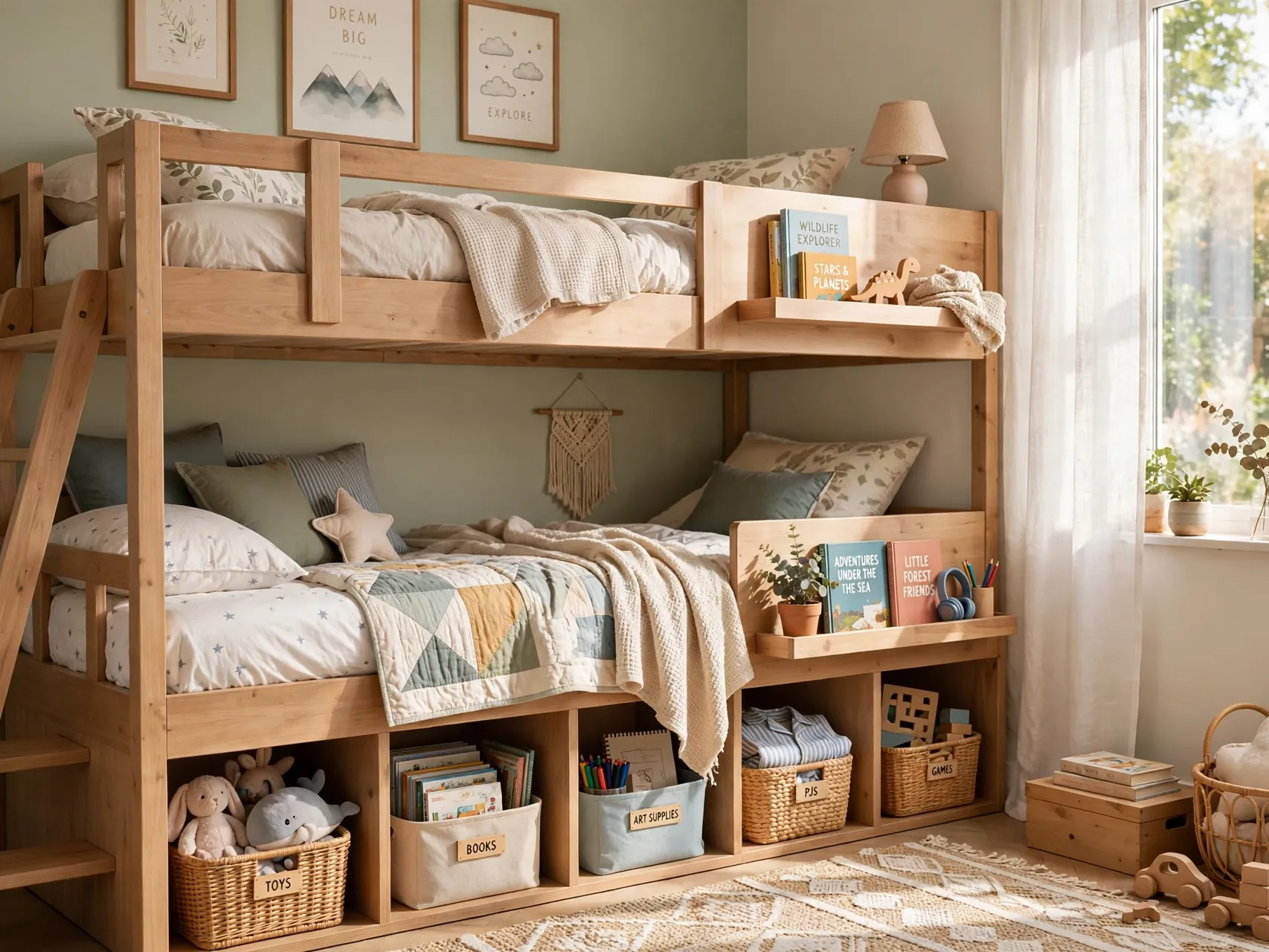
Every bunk sleeper needs a small place for a book, a water bottle, and one treasure, or those things end up in the bed.
Keep shelves small on purpose: a book, a bottle, and a small plush is plenty. For the top bunk, a shelf avoids repeated ladder trips in the dark. Equal cubbies also settle fairness, since each child gets the same personal storage at their own pillow.
13. Add Clip On Lights So No One Wakes the Room
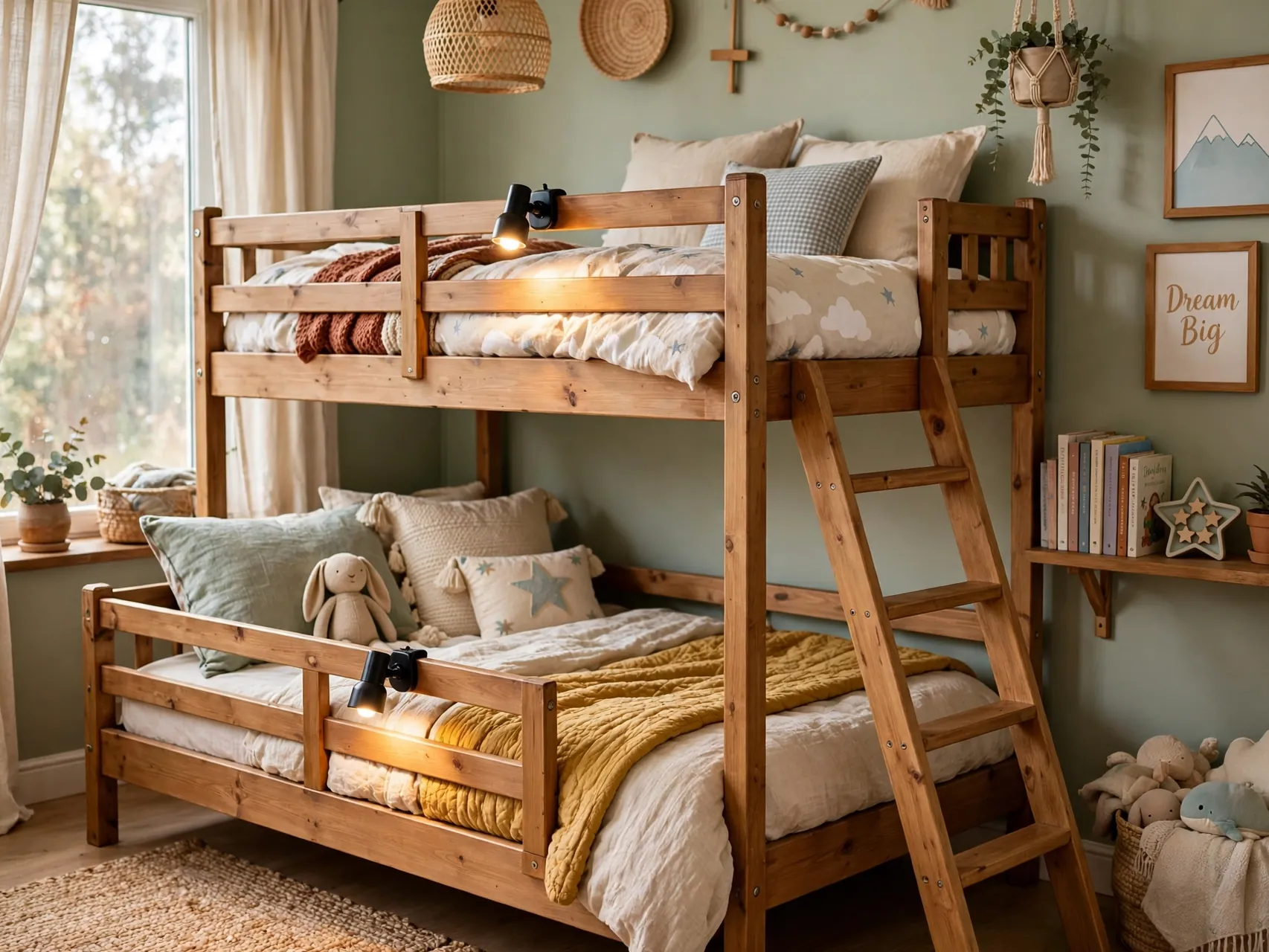
Individual bunk lights let one child read while the other sleeps, which is half the battle in a shared room. Choose low heat LED clip on or wall mounted lights positioned to light the pages, not the room, and keep cords secured and out of reach following maker instructions.
Never drape string lights or fabrics over rails or lights, and keep anything hanging far from the bed structure unless it is designed for that use. Test the light from the other bunk: if the sleeper can see the bulb directly, adjust the angle.
14. Use Curtains on the Lower Bunk for Privacy
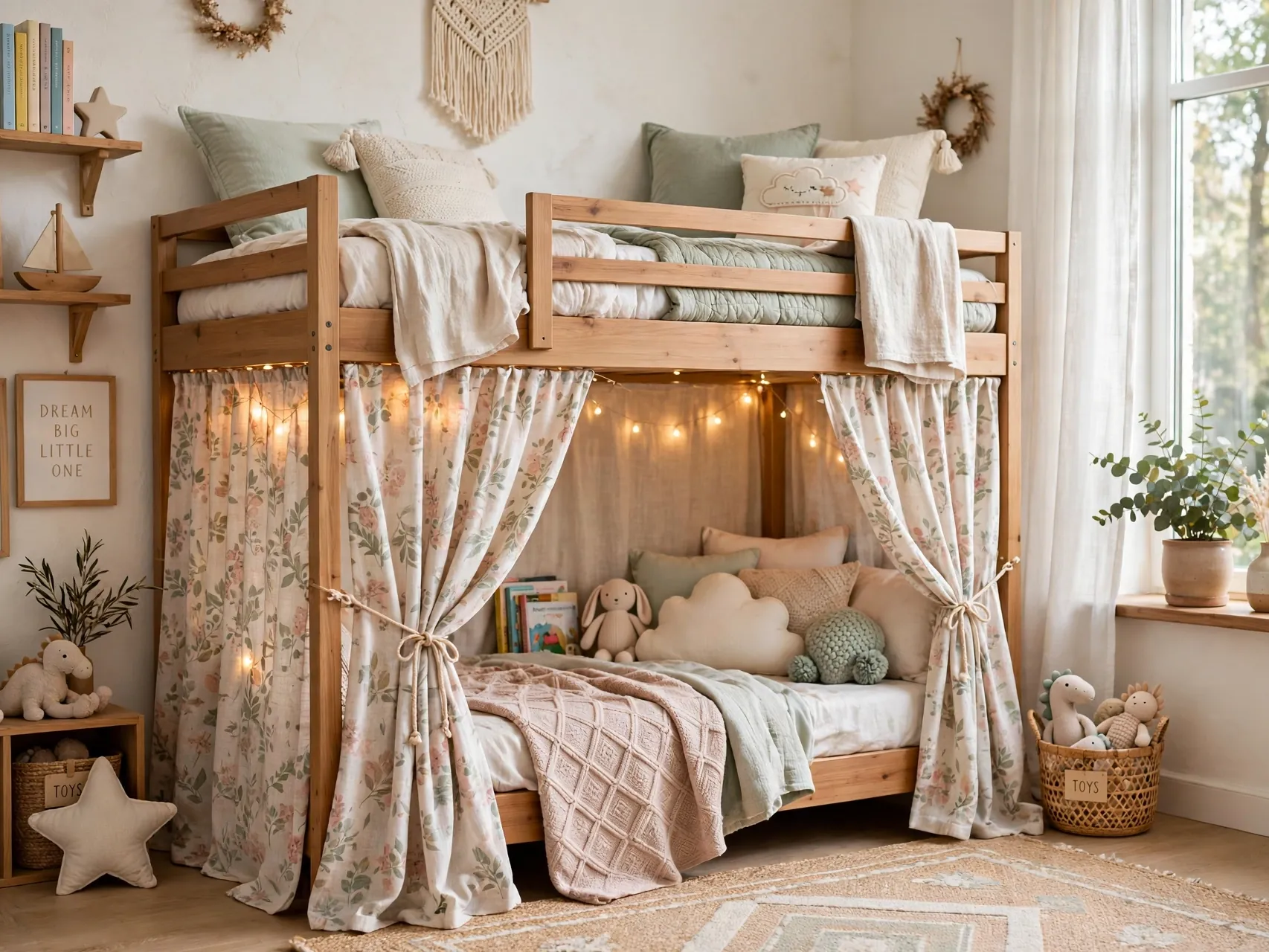
A short curtain across the lower bunk opening gives the bottom sleeper a den like feeling and a sense of privacy that balances the adventure of the top bunk. Use a securely fixed rail or the frame fittings the maker allows, with light, washable fabric.
Keep fabric clear of lights and heaters, and make sure the curtain cannot be pulled down by a climbing child. The lower bunk often becomes the reading fort, the storytelling stage, and the quiet corner of the room once it has a curtain.
15. Pick Low Profile Bunks for Low Ceilings

In rooms with standard or low ceilings, a low profile bunk keeps the top sleeper at a safer, more comfortable distance from the ceiling. The child up top needs enough room to sit up without hitting their head, so measure from the top of the mattress to the ceiling before buying.
Low bunks also suit younger families transitioning into shared sleeping, with shorter ladders and a lower fall height overall, while still following the same age rule for the top bunk. Pair a low frame with light colors and minimal bedding bulk so the room feels airy rather than stacked.
16. Add a Trundle Under the Lower Bunk
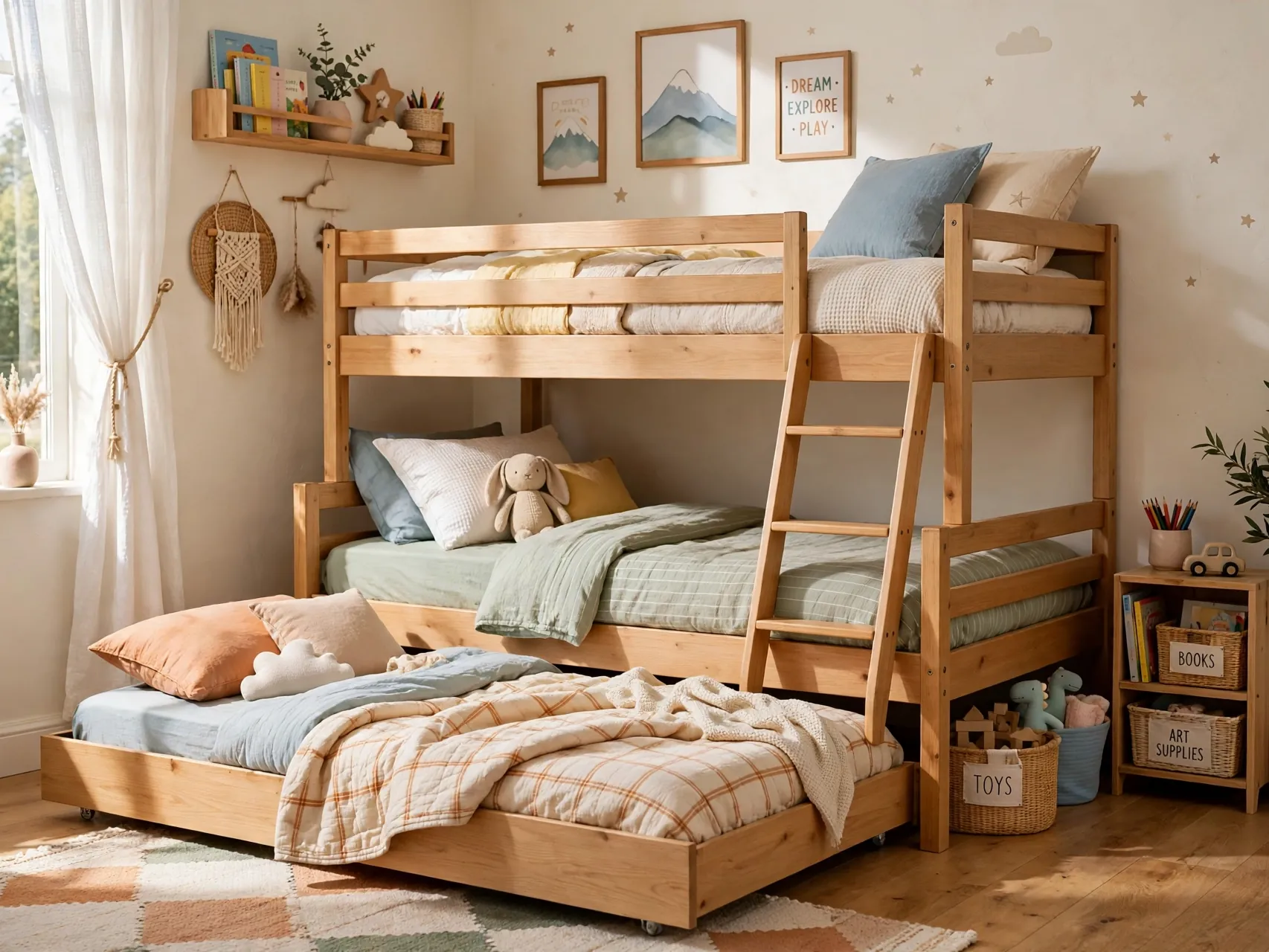
A trundle turns a two child bunk room into a three guest sleepover headquarters without any permanent cost in floor space. It slides out for cousins and friends, then disappears in the morning so the play floor comes back.
Keep the trundle path clear of rugs with thick piles and stored toys, and store its bedding in a labeled bin if the drawer style does not hold it. Teach kids that the trundle is a bed, not a step for reaching the top bunk.
17. Style Each Bunk With Its Own Bedding Color
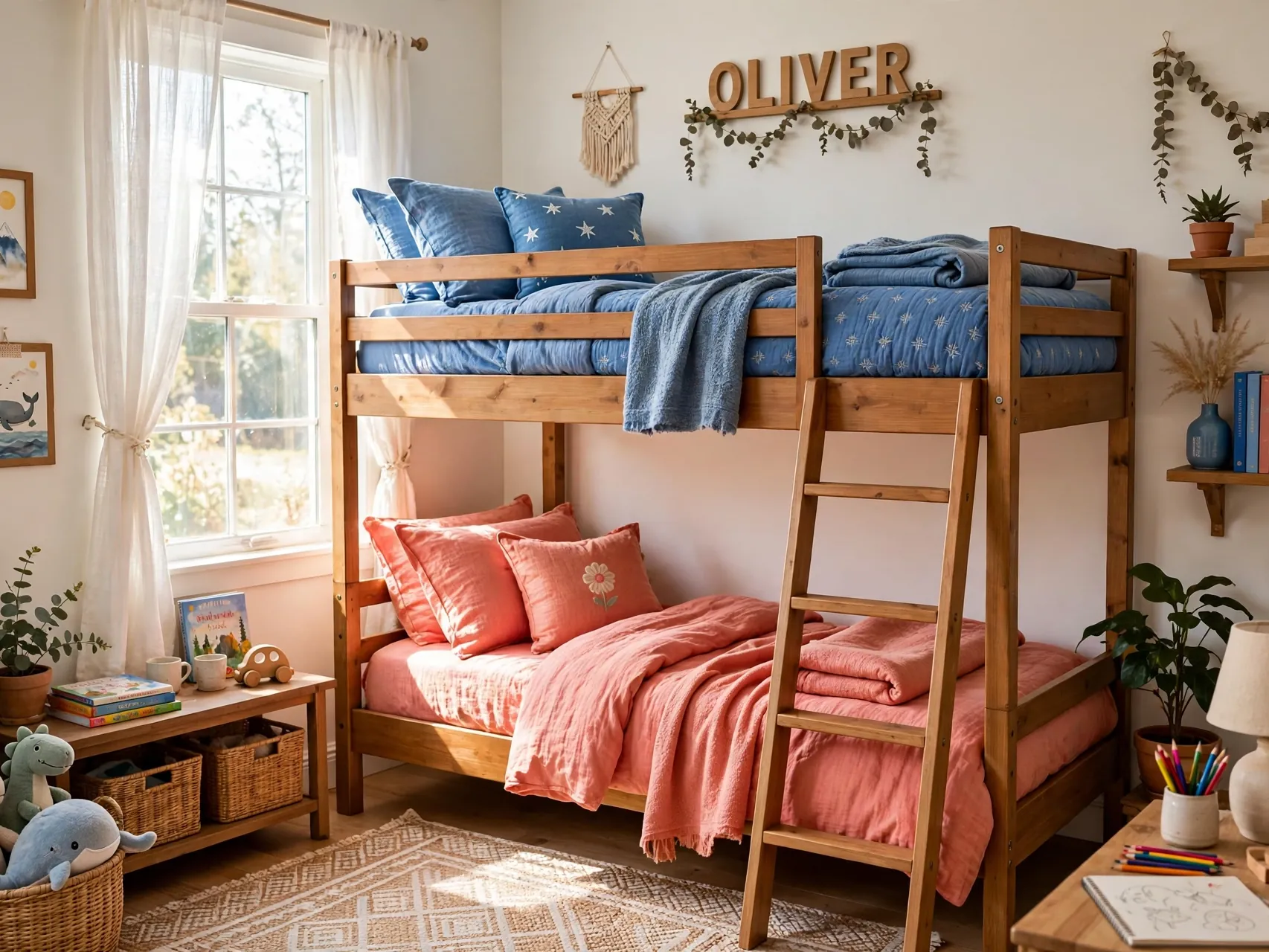
Matching bedding looks tidy in photos, but in real shared rooms, one bedding color per child works better: it marks whose bed is whose, simplifies laundry, and lets each personality show. Keep the same style of bedding in two colors so the room still reads as designed.
Add one shared element across both bunks, like the same throw blanket style or matching pillow shams, to tie the stack together. Let each child choose their color and one cushion.
18. Keep the Floor Around the Ladder Clear
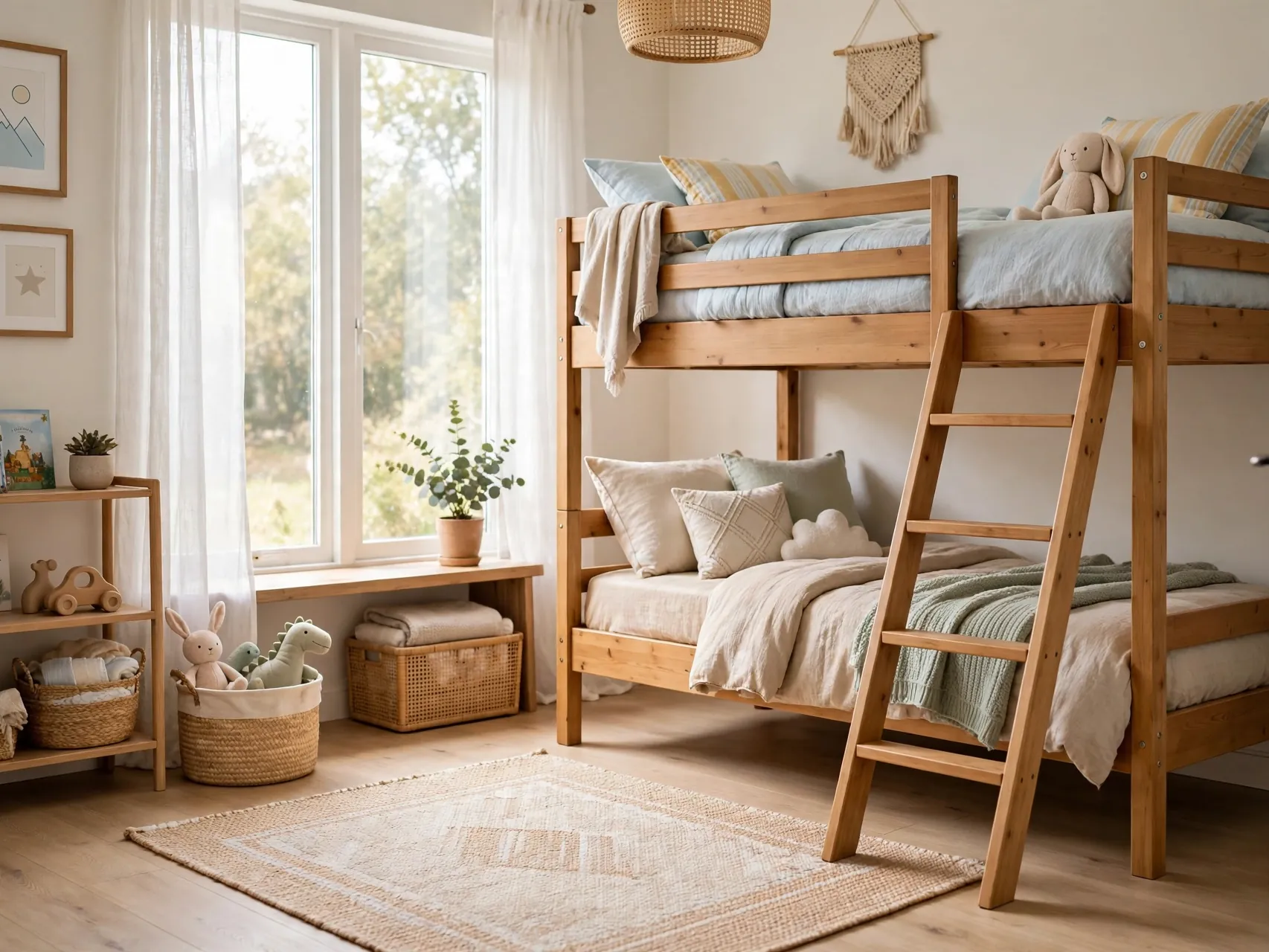
Most bunk bed bumps happen on the floor, not in the bed. Keep the ladder landing zone completely clear: no toy bins, no shoes, no laundry piles, and no rug edges curling into the path.
Do a nightly two minute floor check as part of the bedtime routine, and give the ladder wall a small night light so the landing is visible. This habit costs nothing and quietly prevents the most common accidents.
19. Use a House Frame Bunk for Younger Kids Rooms
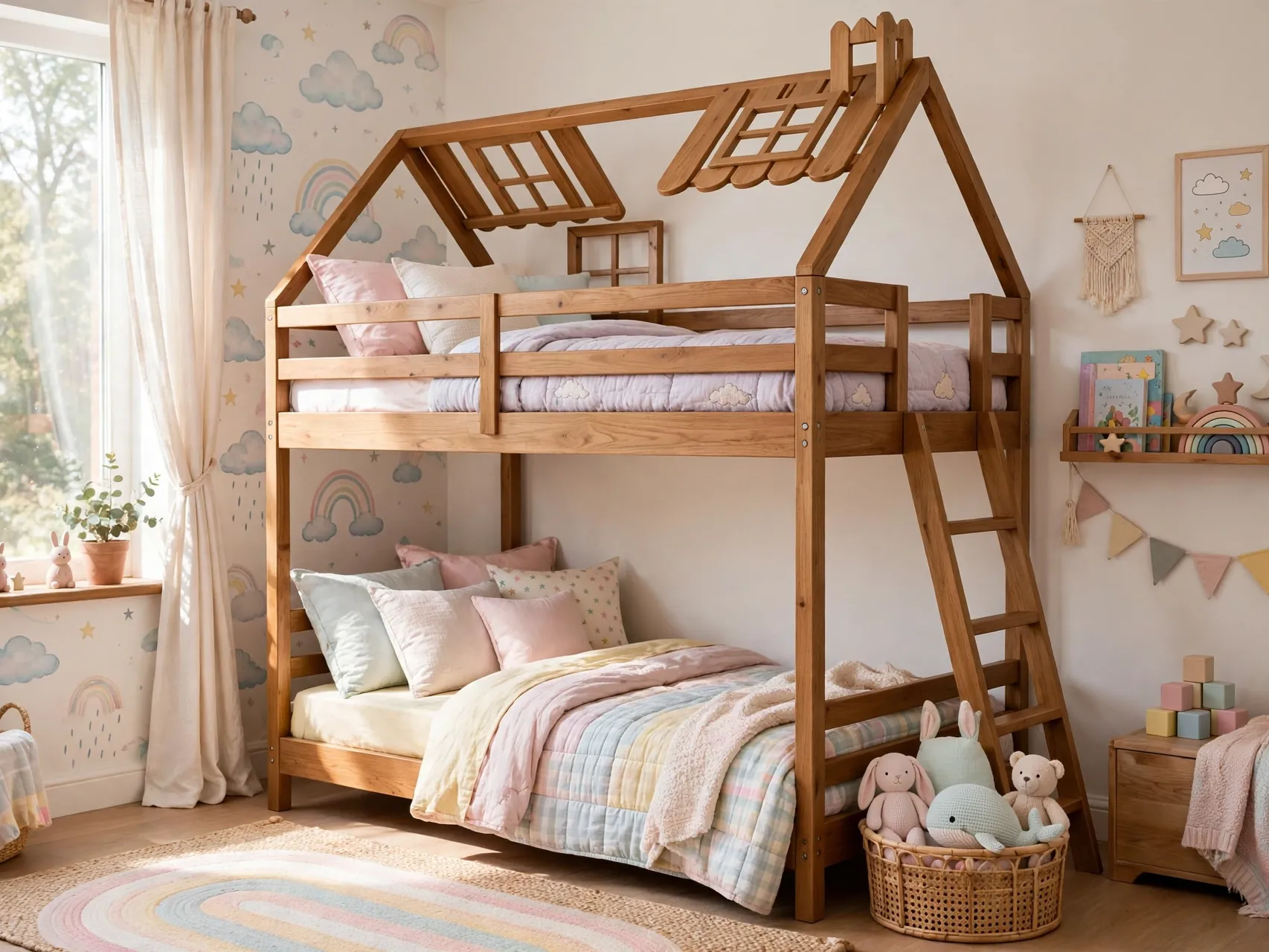
House frame bunks, with their pitched roof outline, turn a bunk into a playhouse and make shared rooms feel magical for younger children.
Style the roofline simply with bedding and perhaps a garland fixed securely out of reach, never draped items a child could pull or tangle in. The lower bunk becomes a story nook, the upper a cloud level bedroom. Whimsy is welcome, but it never outranks the safety checklist in this guide.
20. Add Under Bunk Drawers Instead of a Dresser
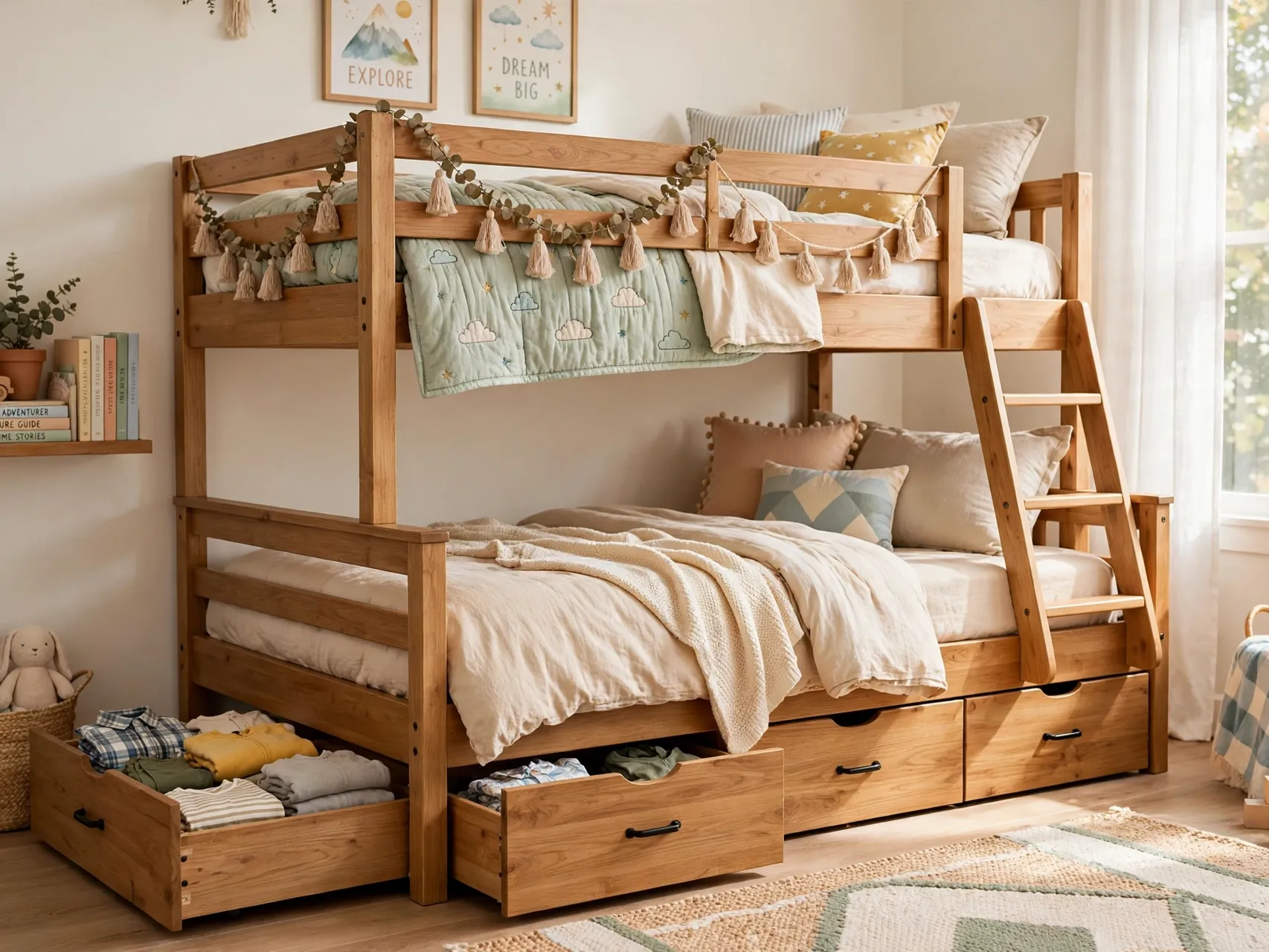
Drawers built or rolled under the lower bunk can replace a whole dresser, which matters in rooms where the bunks already freed the floor for play. Use them for folded clothes, spare bedding, or out of season items, labeled by child or category.
Removing a dresser also removes a tip over risk from the room, though any remaining tall storage still gets anchored to the wall. Choose drawers with smooth runners or wheels that protect the floor, and keep them closed at night so the ladder path stays clear.
21. Paint Built In Bunks to Match the Walls
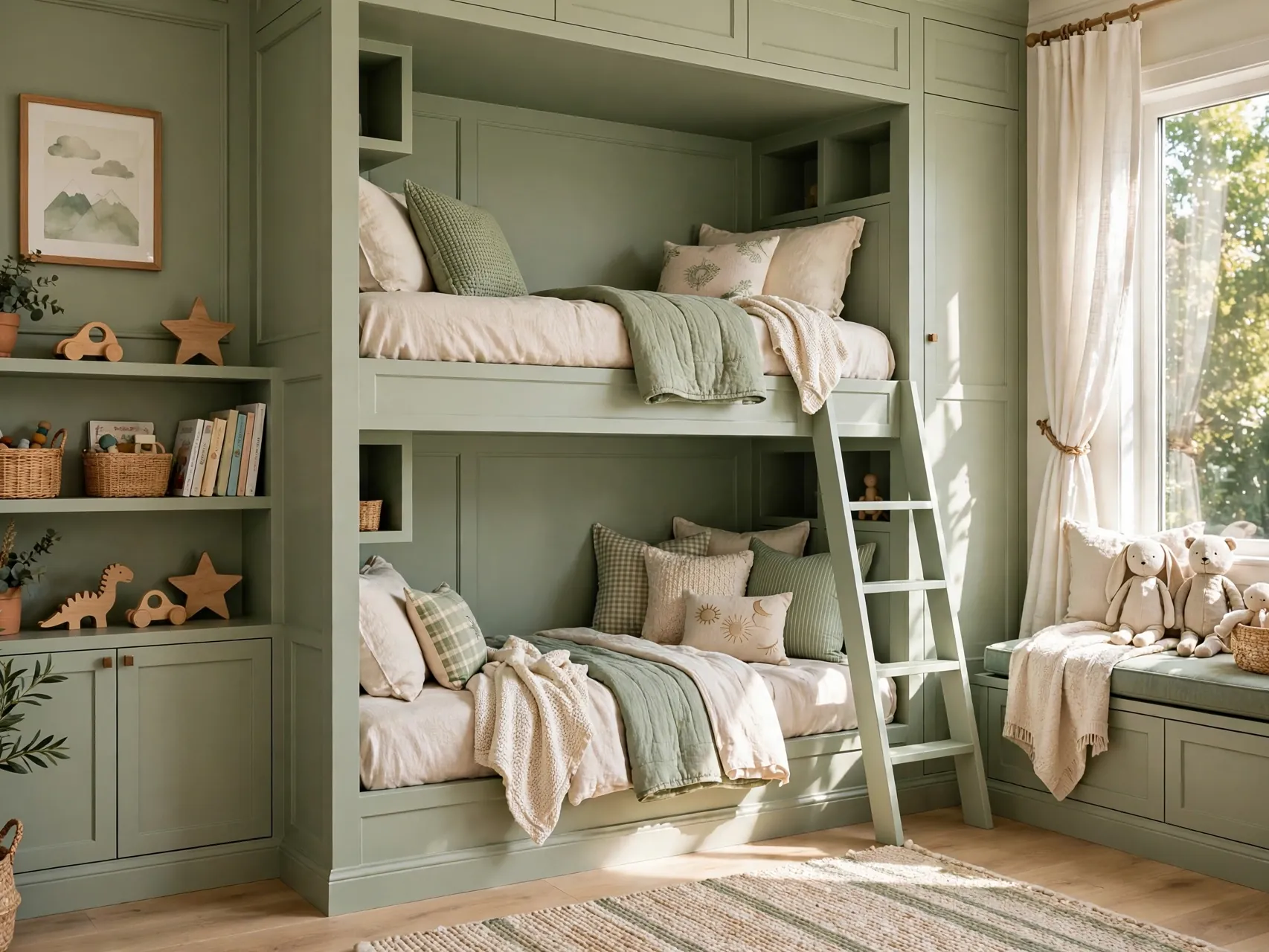
Built in bunks painted the same color as the walls look calm, architectural, and far less bulky than a contrasting frame, which helps small rooms feel bigger. A single color wraps the sleeping wall into one quiet surface, and bedding becomes the color story.
Use durable, washable paint finishes for the frame, since bunk woodwork takes daily knocks, and hire a professional for built in construction and any electrical additions like fitted lights. Add individuality inside each bunk with a different cushion or a small framed print fixed flat and secure.
22. Create a Reading Nook Under a Loft Style Bunk
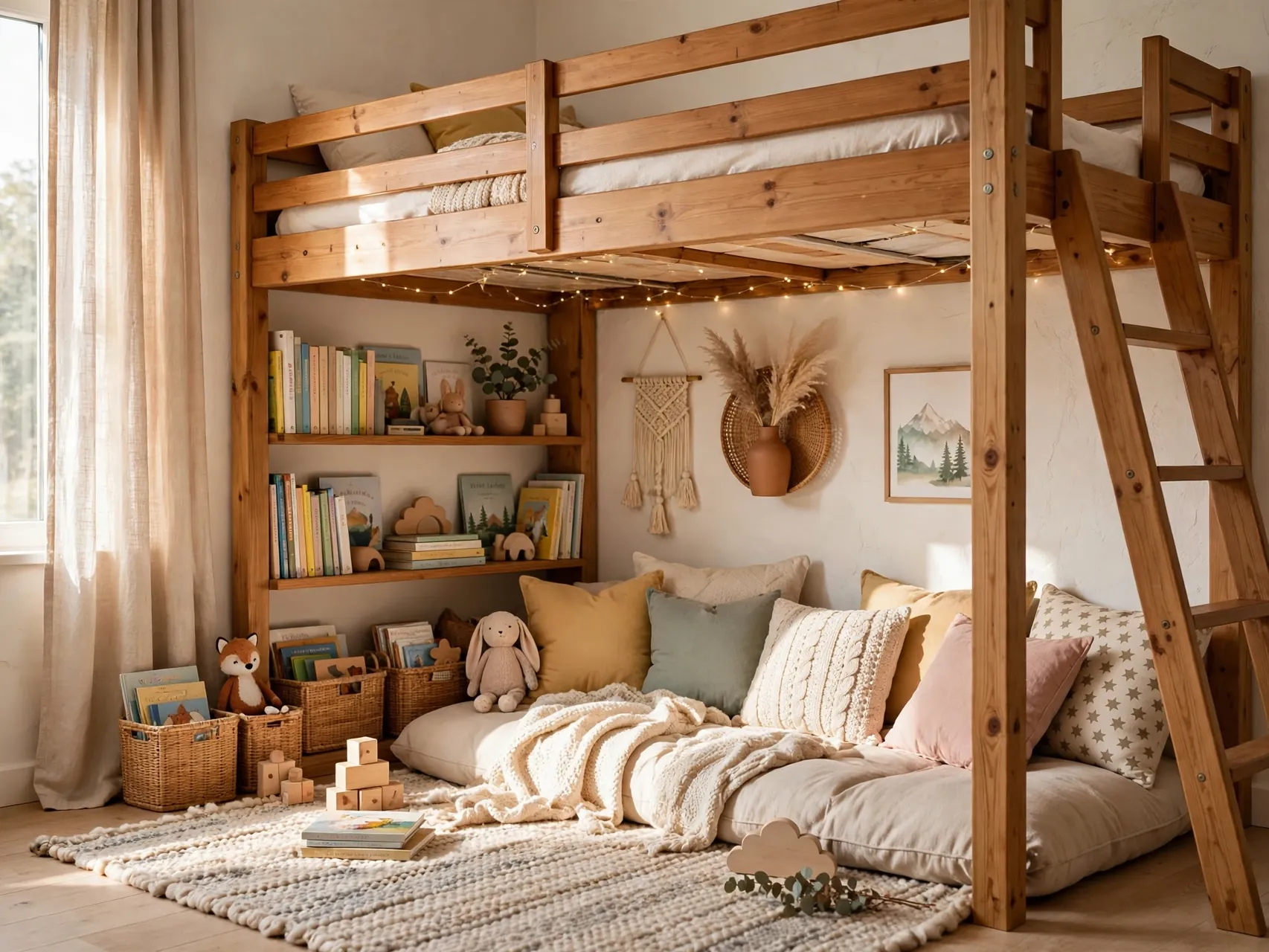
Where one child sleeps in a loft style arrangement within a bunk setup, the space underneath can become a reading nook with a cushion, a small rug, a book ledge, and a lamp. It gives the room a third zone without any extra floor area.
Follow maker age and safety guidance for raised sleeping, and keep the nook free of anything that blocks the ladder or exit path. A nook under a bunk is cozy by nature, enclosed and low, exactly what young readers love.
23. Check Bolts and Rails on a Regular Schedule
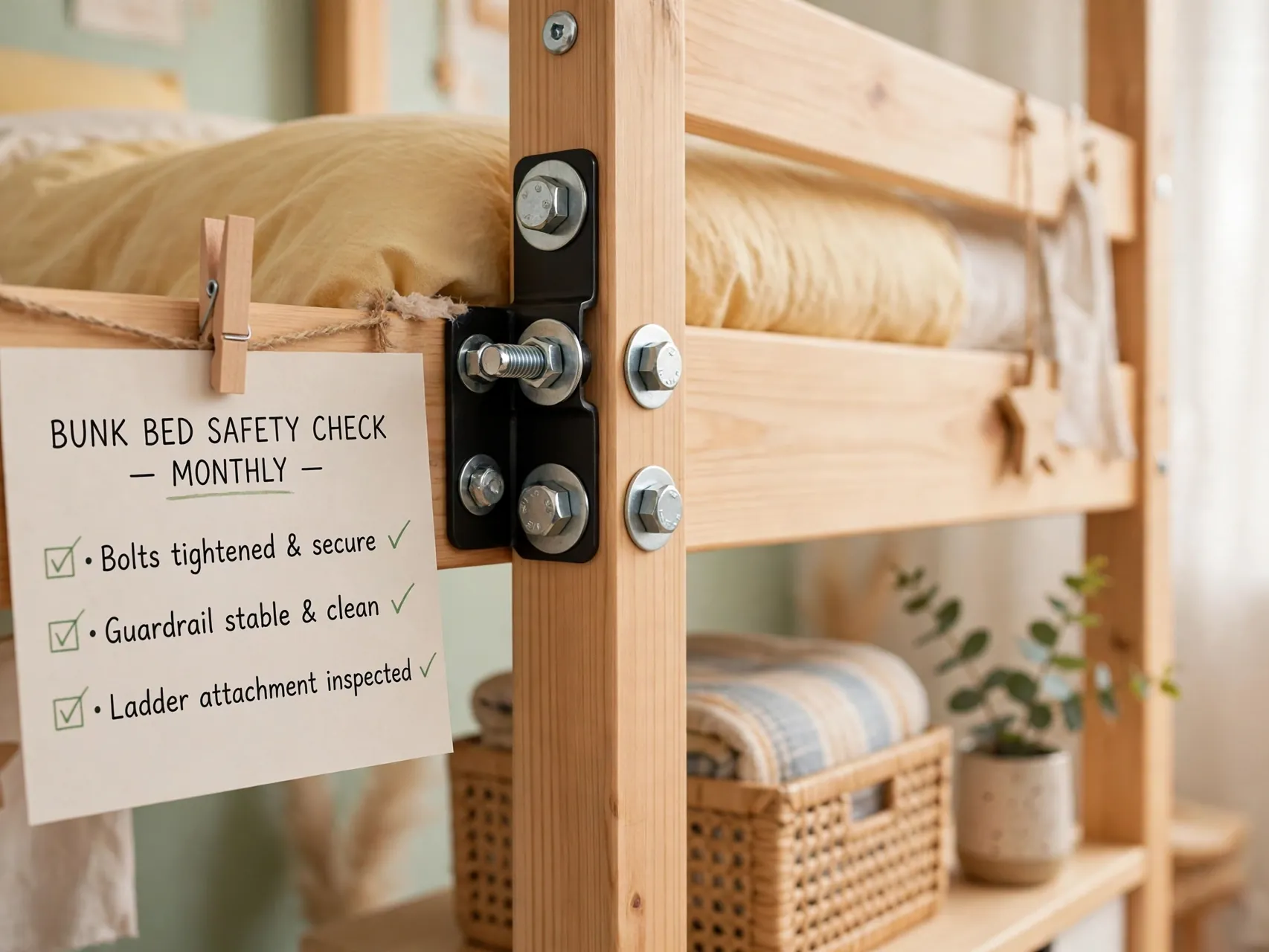
Bunk beds work hard, and hardware loosens quietly over time. Put a simple check on your calendar every few months: tighten bolts and fittings as the maker directs, confirm guardrails are firmly attached, check ladder fixings, and look for cracked or damaged parts.
Also recheck that the mattress still fits snugly and that the guardrail still extends well above the mattress, especially after any mattress change. Keep the instruction manual with your household documents so weight limits and part numbers stay findable.
24. Plan the Exit Path and Night Lighting
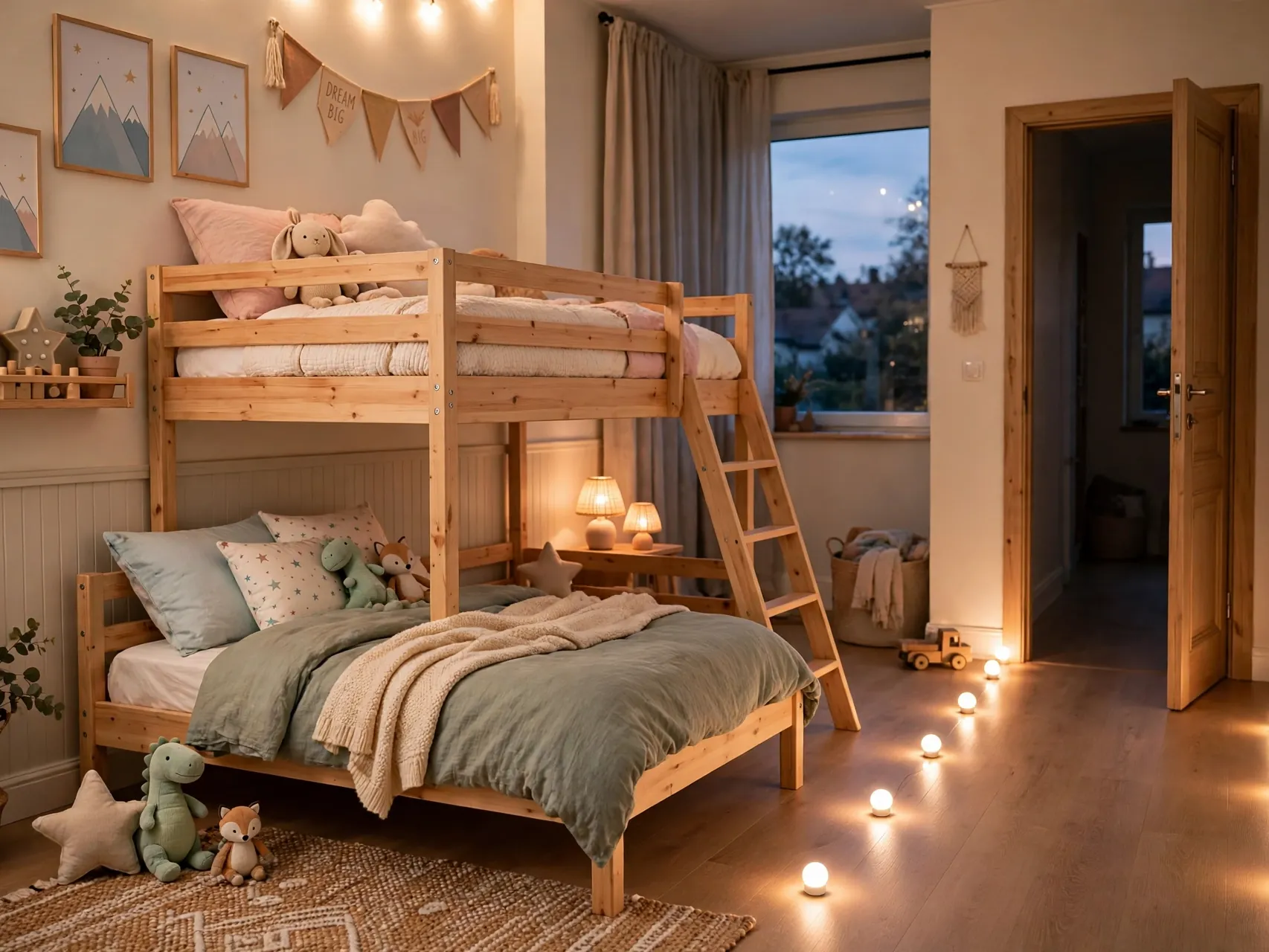
Finish your bunk setup by walking the night route yourself: from each bunk, down the ladder, across the floor, to the door and bathroom. Add low night lighting along that path, keep it clear every evening, and make sure the top sleeper can reach the ladder safely in the dark.
Talk through what to do if a child feels sick or scared at night, and make sure an adult can reach both bunks quickly. This is the least photogenic idea in the list and possibly the most valuable.
FAQ
What are the most important bunk bed safety rules?
Use guardrails on both sides of the top bunk with the rail top at least 5 inches above the mattress, use only the mattress size and maximum thickness the maker specifies, keep children under six off the top bunk, allow only one person up top, always use the ladder, and ban rough play on or under the beds.
What age can a child sleep in the top bunk?
Federal safety warnings state that children under six years of age should not use the upper bunk. Beyond age, judge readiness honestly: your child should climb the ladder confidently facing forward, follow rules about no jumping or rough play, and manage night waking calmly.
How much ceiling clearance does a bunk bed need?
The top sleeper needs enough space to sit up comfortably without hitting the ceiling, so measure from the top of the fitted mattress to the ceiling before buying and compare with maker guidance. Low profile bunks suit lower ceilings.
Can bunk beds work in a very small shared room?
Yes, they are designed for exactly that problem. A twin over twin frees a whole bed footprint for play or a desk. Add under bunk drawers instead of a dresser, per sleeper cubbies and clip on lights, and a trundle for guests.
How do I stop bunk bed arguments between siblings?
Decide the top bunk by the safety age rule first, which removes negotiation, then balance the lower bunk with privacy curtains, its own light, and first pick of bedding color. Give each sleeper equal cubby storage and a personal bedding color, and rotate special privileges like choosing the bedtime story.
Key Takeaways
- Safety is the design brief: Guardrails on both sides, correct mattress size and thickness, and a rail top at least 5 inches above the mattress, every bunk, every night.
- Age rules are non negotiable: No children under six on the top bunk, one person up top, ladder only, and no rough play on or under the beds.
- Stack to free the floor: Twin over twin, L shaped, staircase, and trundle layouts return real play and study space to small shared rooms.
- Each sleeper gets a world: Personal cubbies, clip on lights, and individual bedding colors make shared sleeping feel private and fair.
- Maintain the system: Regular bolt and rail checks, a clear ladder landing, and a lit exit path keep a great setup safe for years.
- Saving space with bunks this year? Save this guide to Pinterest and pin the layout that fits your room.