25 Sage Green Bathroom Ideas That Feel Fresh and Calm
Introduction
Sage is the color of a deep breath: soft, grayed green that brings the feeling of leaves and morning light into the room where the day begins. A sage green bathroom feels fresh without feeling cold, and calm without feeling dull, which is why it suits bathrooms so beautifully.
Sage is also forgiving to work with. It pairs with warm wood, white tile, brass, black, stone, and cream, and it works at every scale, from a fully tiled shower to a single painted vanity or a stack of towels. Few colors offer this much range.
You can start with accessories this weekend or plan sage into tile and paint during a remodel. The ideas below climb that whole ladder, with notes on light, mixing shades, and using bathroom rated paint and finishes in wet areas so the calm lasts.
1. Sage Walls With Crisp White Trim
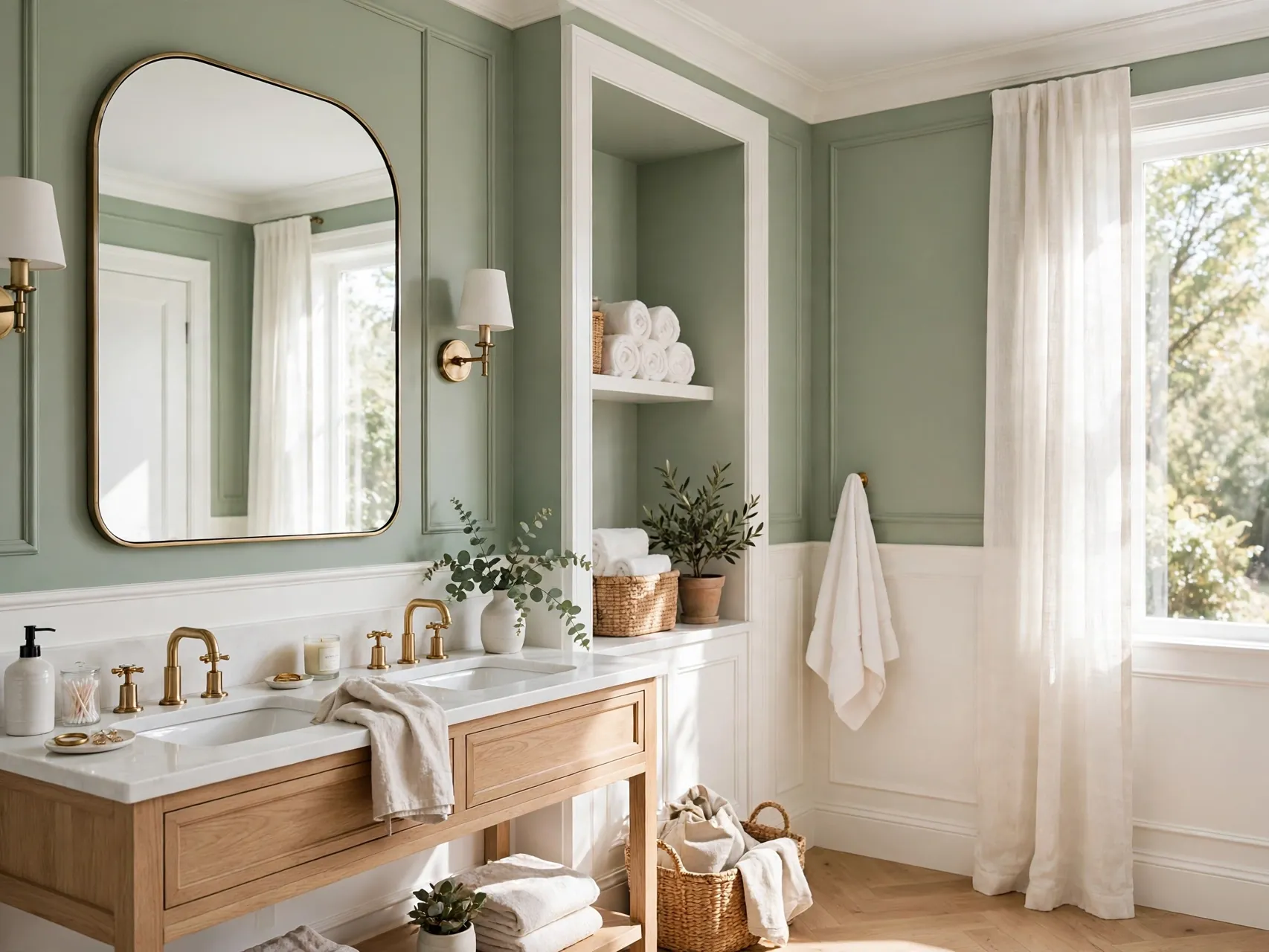
The classic starting point is sage on the walls with white tile, trim, and porcelain setting it off. The green reads soft and leafy against the white, and the room stays bright because the fixtures and tile do the light work.
Use a bathroom rated paint in a finish made for humid rooms, and let it cure fully before steaming up the shower. Test your sage on the wall first: it should look gray green and gentle, not minty. This single change transforms a plain white bathroom into a calm, garden fresh room.
2. A Sage Painted Vanity as the Centerpiece
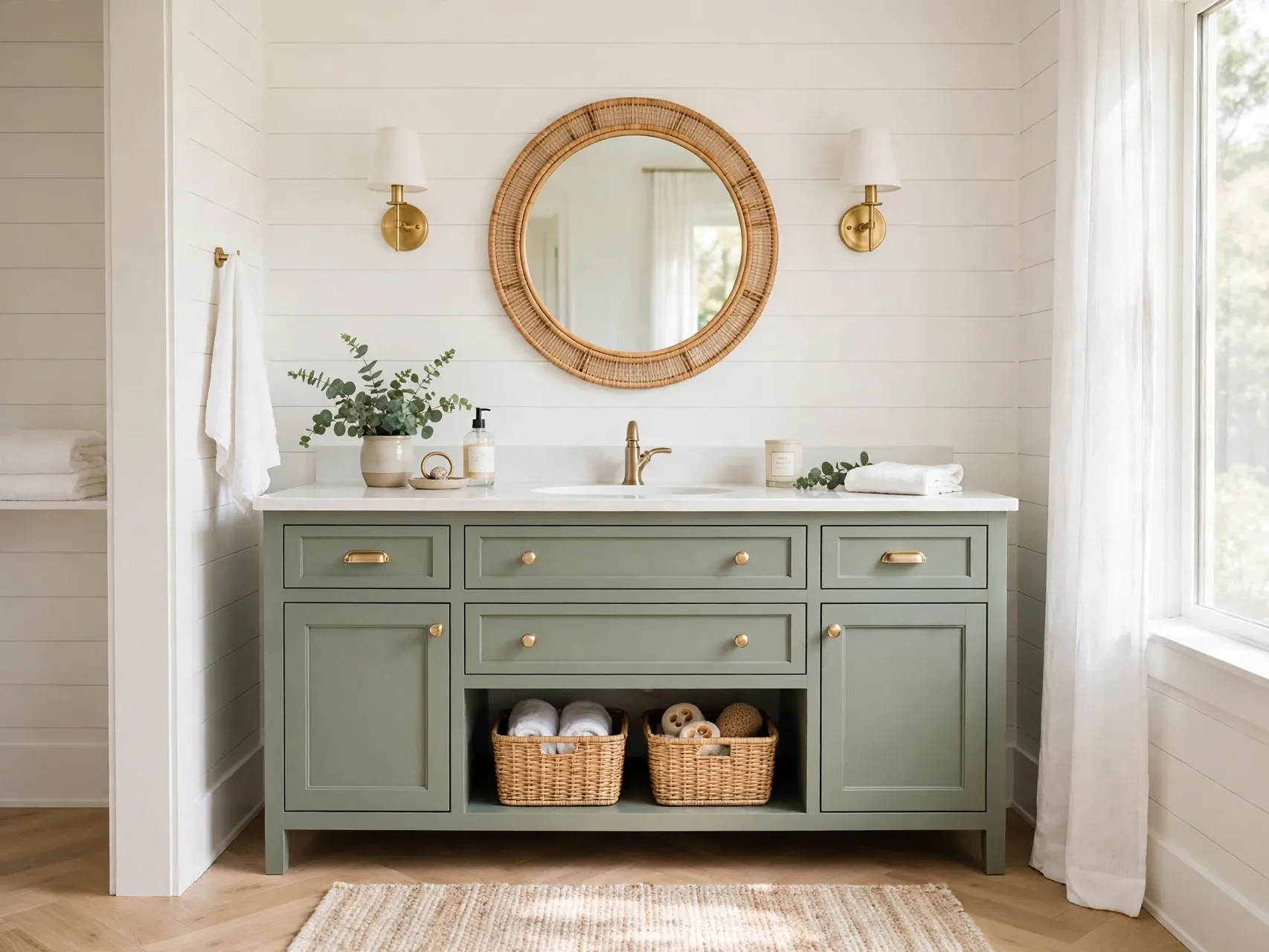
If a whole room of color feels like a leap, paint just the vanity sage and keep the walls warm white. The vanity becomes the gentle focal point, and everything else, mirror, towels, a plant, arranges itself around that soft block of green.
Prepare cabinet surfaces properly, clean, sand, prime, and use a durable paint suited to bathroom moisture, following maker dry times between coats. Brass or black pulls both flatter sage cabinetry. A sage bathroom paint moment this size is a weekend project with a remodel sized payoff.
3. Sage Subway Tile Inside the Shower
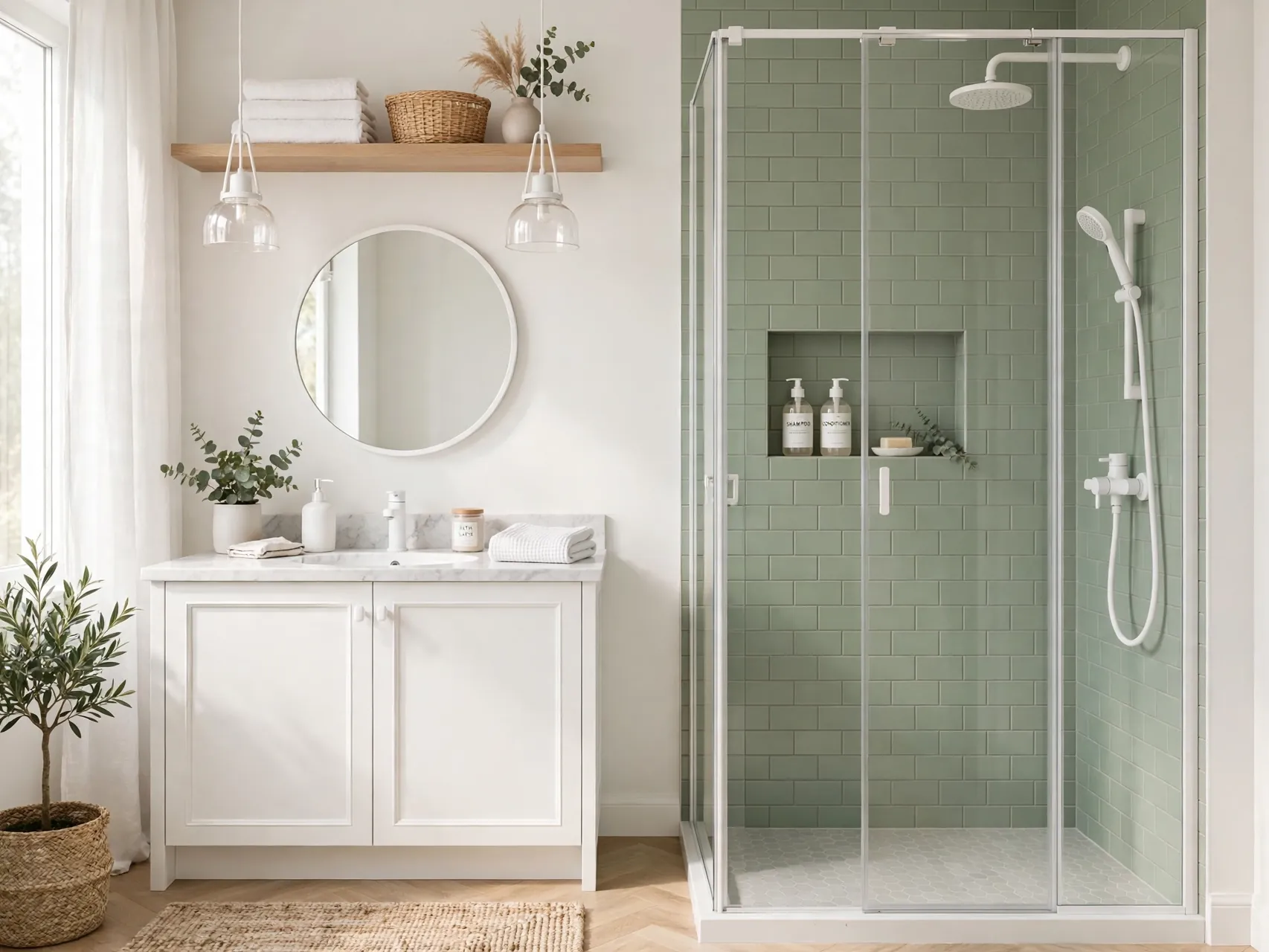
Sage green bathroom tiles turn a shower into the softest part of the room. A classic subway shape in a muted sage glaze, especially with slight variation from tile to tile, feels handmade and calm rather than slick and cold.
Run the tile full height inside the shower for a cocoon effect, and keep the grout soft gray or warm white so the lines stay quiet. Have wet zone tiling and waterproofing done properly, by a professional if the work is new to you.
4. Sage Tile Wainscot With White Above
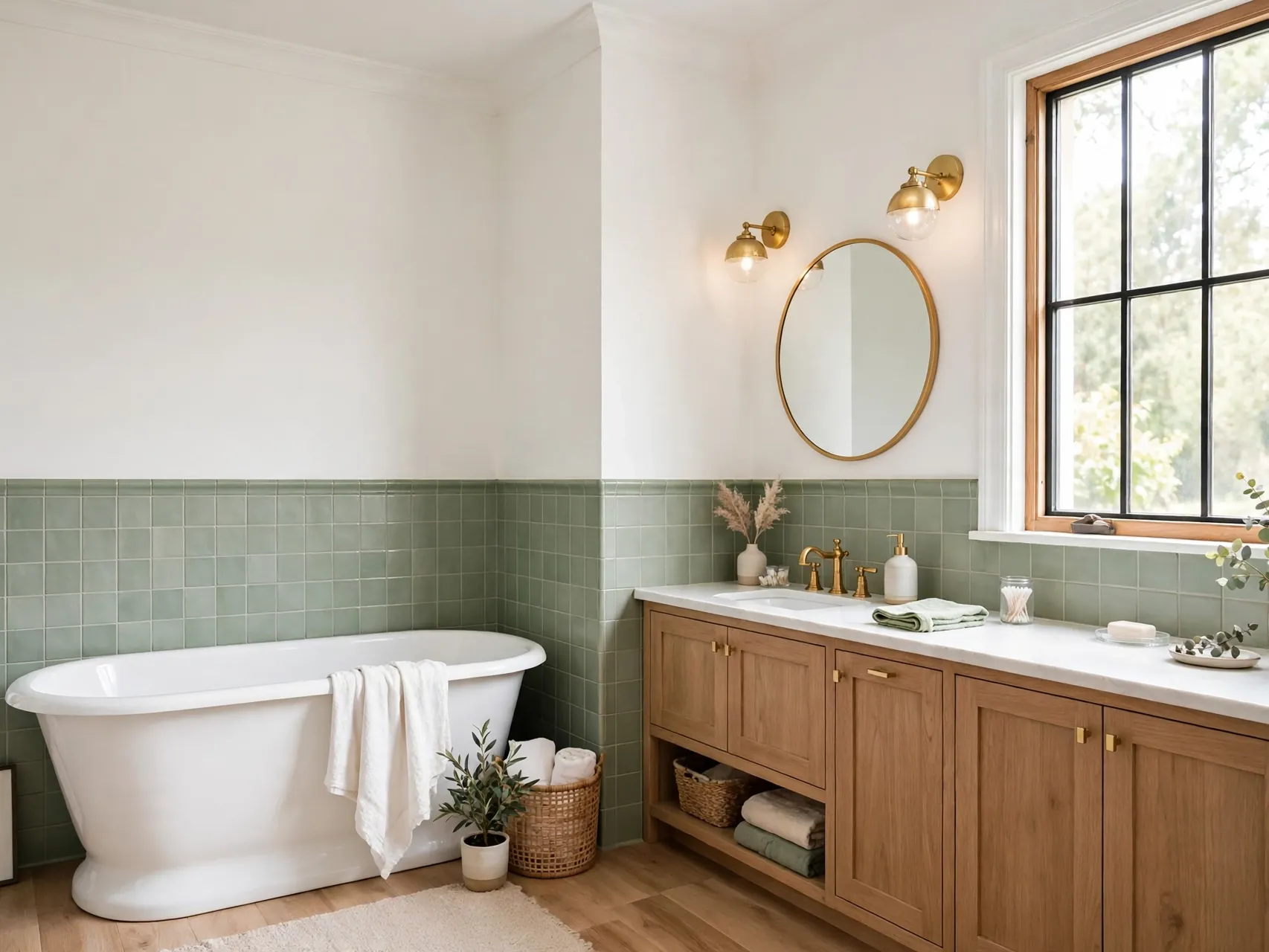
Tiling the lower half of the walls in sage and painting above in warm white splits the difference between commitment and caution. The tile handles splashes at sink and tub height, and the white above keeps the room tall and light.
A simple cap or trim tile finishes the top edge neatly. This layout suits traditional and farmhouse bathrooms especially well, and it lets you use a slightly deeper sage than you might dare on all four walls. It is also a kind way to add color to a small bathroom without darkening its upper half.
5. Mix Several Sage Shades Instead of Matching One

The most collected sage rooms layer several shades of the family: a gray sage towel, a warmer olive sage ceramic, a pale eucalyptus wall. Staying inside one muted family keeps the mix calm while making the room feel gathered over time rather than bought in a set.
Start with your largest surface as the anchor shade, then let smaller pieces wander a step lighter or deeper. If a piece reads bright or blue against the rest, it is outside the family.
6. A Warm Wood Vanity Against Sage Walls

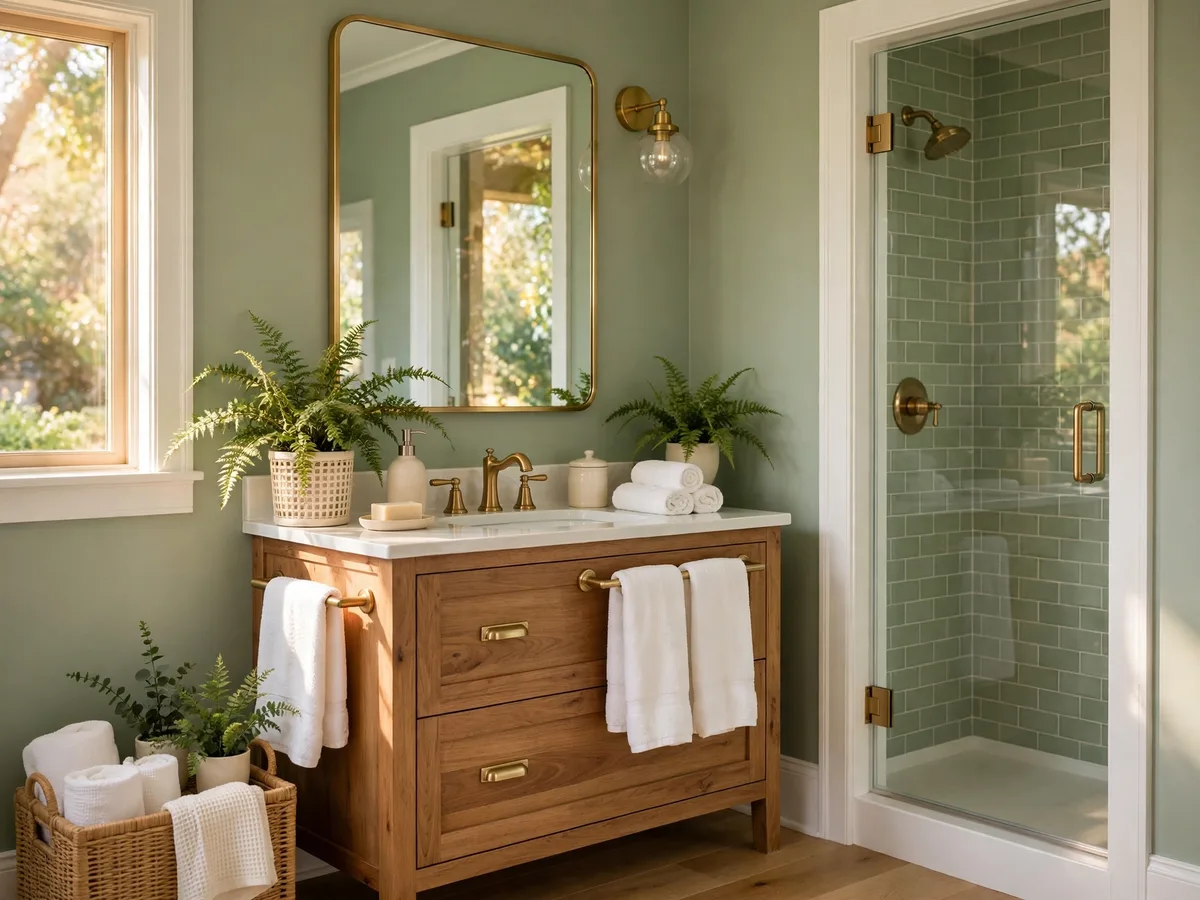
Sage and warm wood are natural partners: the green cools the wood, the wood warms the green, and together they feel like a garden room. A mid tone oak or walnut vanity against sage walls needs almost nothing else to look designed.
Keep the wood finish sealed for bathroom humidity and wipe standing water promptly. White stone or ceramic on top keeps the pairing fresh, and a simple mirror lets the two materials lead. If your vanity is already wood, sage walls are the single change that will make it look intentional and new.
7. Aged Brass Fixtures That Flatter Sage
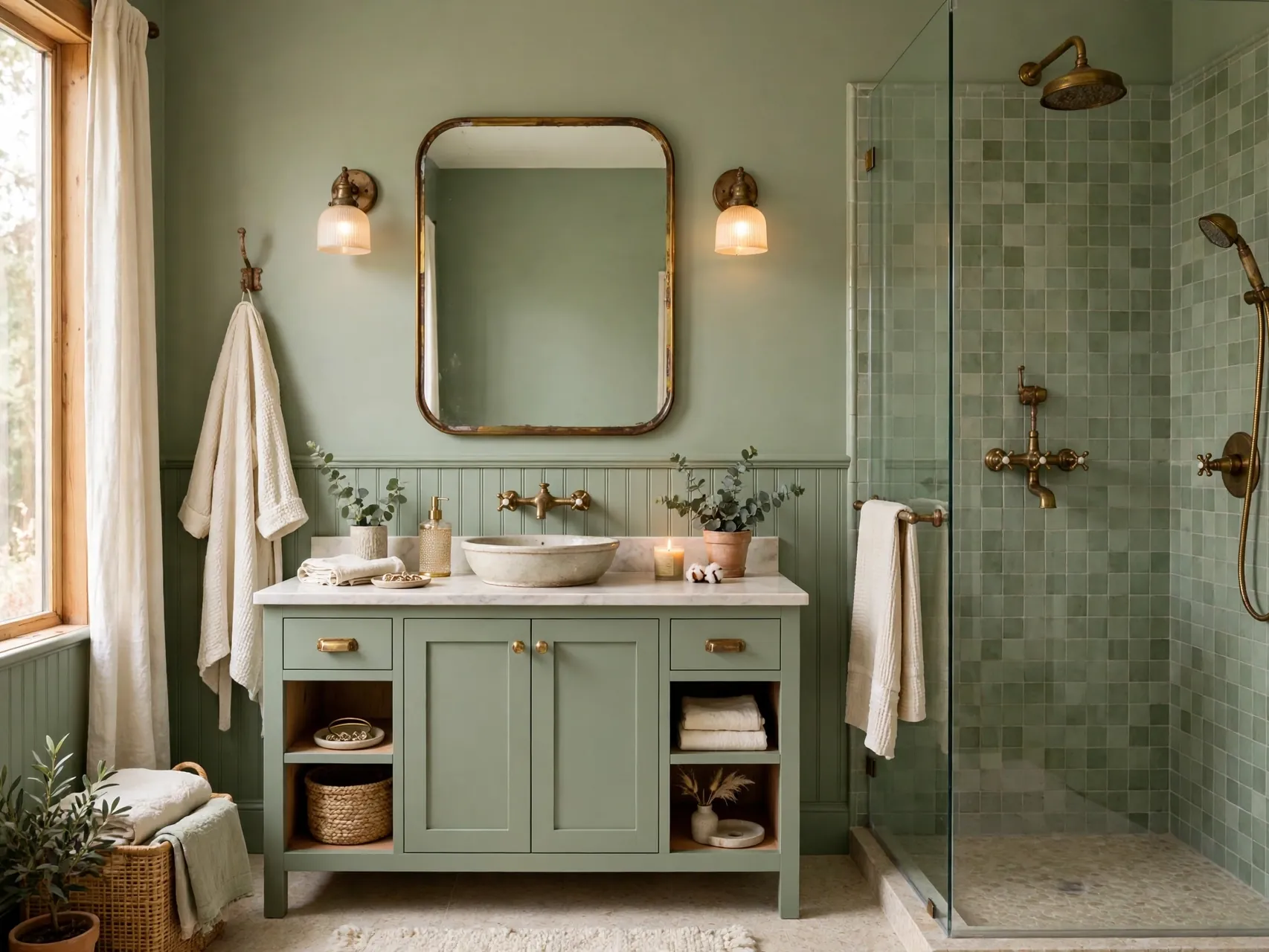
Warm metals bring out the best in sage, and aged or brushed brass is the classic partner. Faucets, pulls, towel bars, and mirror frames in brass give sage rooms a gentle glow, like late afternoon light on leaves.
Keep the brass consistent across the room and let it be the only warm metal. Brass works with both pale and deeper sages, and it bridges sage to warm wood and cream beautifully. If bright gold feels too much, aged and brushed finishes offer the same warmth in a quieter voice.
8. Matte Black Fixtures for a Modern Sage Edge

For a crisper, more current mood, pair sage with matte black. Black faucets, a black framed mirror, and black hooks sharpen the softness of the green and make a small bathroom feel deliberate and graphic in the best way.
This pairing suits modern and organic modern rooms, especially with white tile and light wood. Keep the black pieces few and consistent: faucet, mirror, one light fixture, and hooks is a complete set. The contrast is strong, so let everything else stay pale and quiet around it.
9. A Sage and White Patterned Floor

A patterned floor in sage and white gives a calm room one playful layer. Small motifs, hex tiles with sage accents, or a soft checker pattern in muted tones ground the space and hide everyday dust between cleans.
Keep the pattern colors inside the room palette so the floor feels related, not random, and choose floor tile with a surface suited to wet bathrooms.
10. Sage Towels and Linens as the First Step
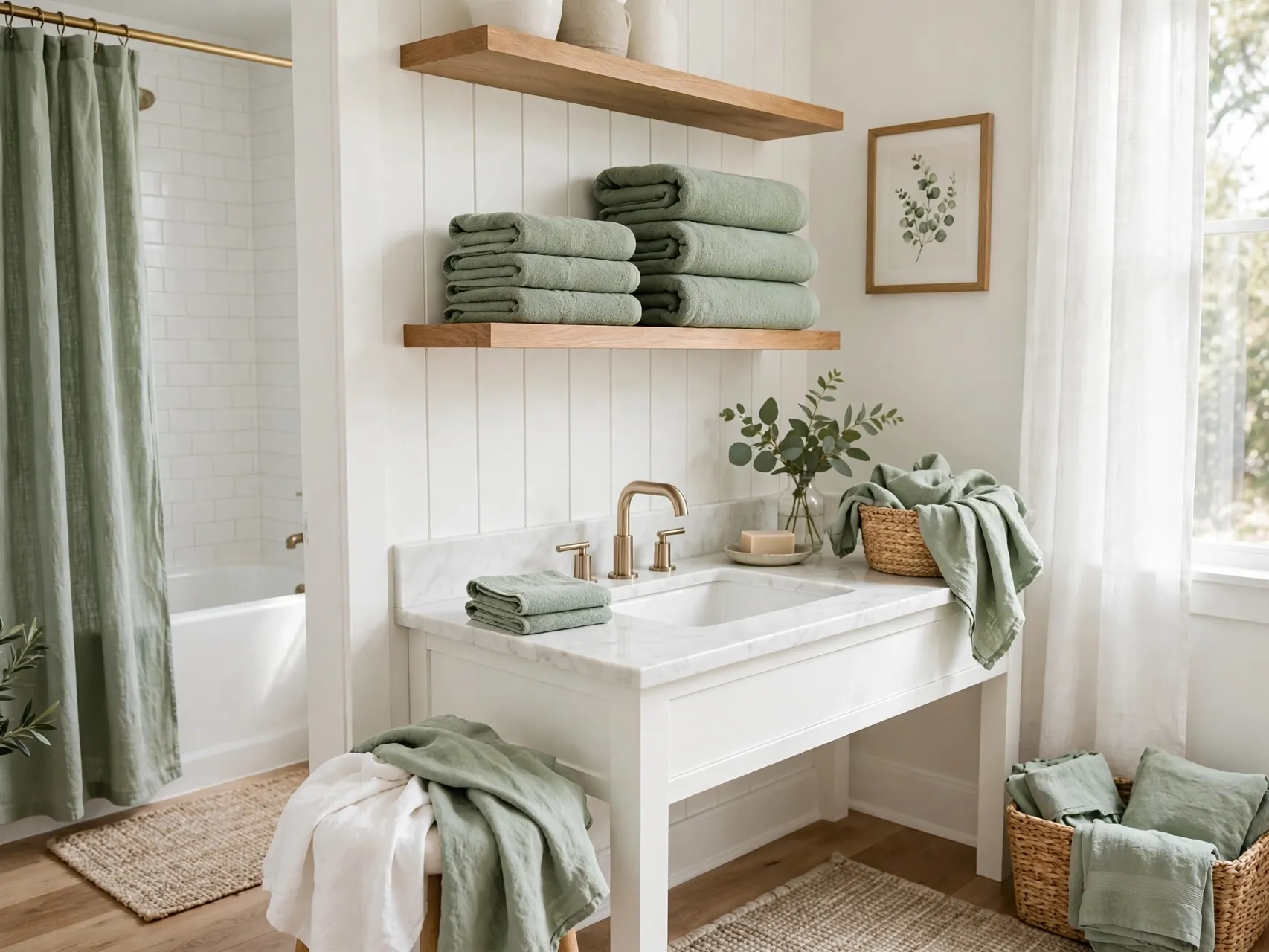
The zero commitment way into this color is textiles: sage bath towels, a sage hand towel by the sink, and a woven bath mat with green in it. Against a white bathroom, the soft color arrives instantly and the laundry decides how long it stays.
Layer two or three sage shades in the linens rather than one flat set, and keep the rest of the textiles cream or white. If you love the mood after a month of mornings, you have your answer for paint. If not, the towels retire to the linen closet with no regrets.
11. A Sage Shower Curtain and Mat for Renters

Renters can build a whole sage moment with a shower curtain, a bath mat, and towels, no paint permission needed. A linen look curtain in sage, hung high and wide, changes the largest surface in a small bathroom in ten minutes.
Choose a curtain long enough to sit cleanly, pair it with a mat in a deeper or paler sage, and add one plant or a wood stool for texture.
12. Plants That Echo and Deepen the Green
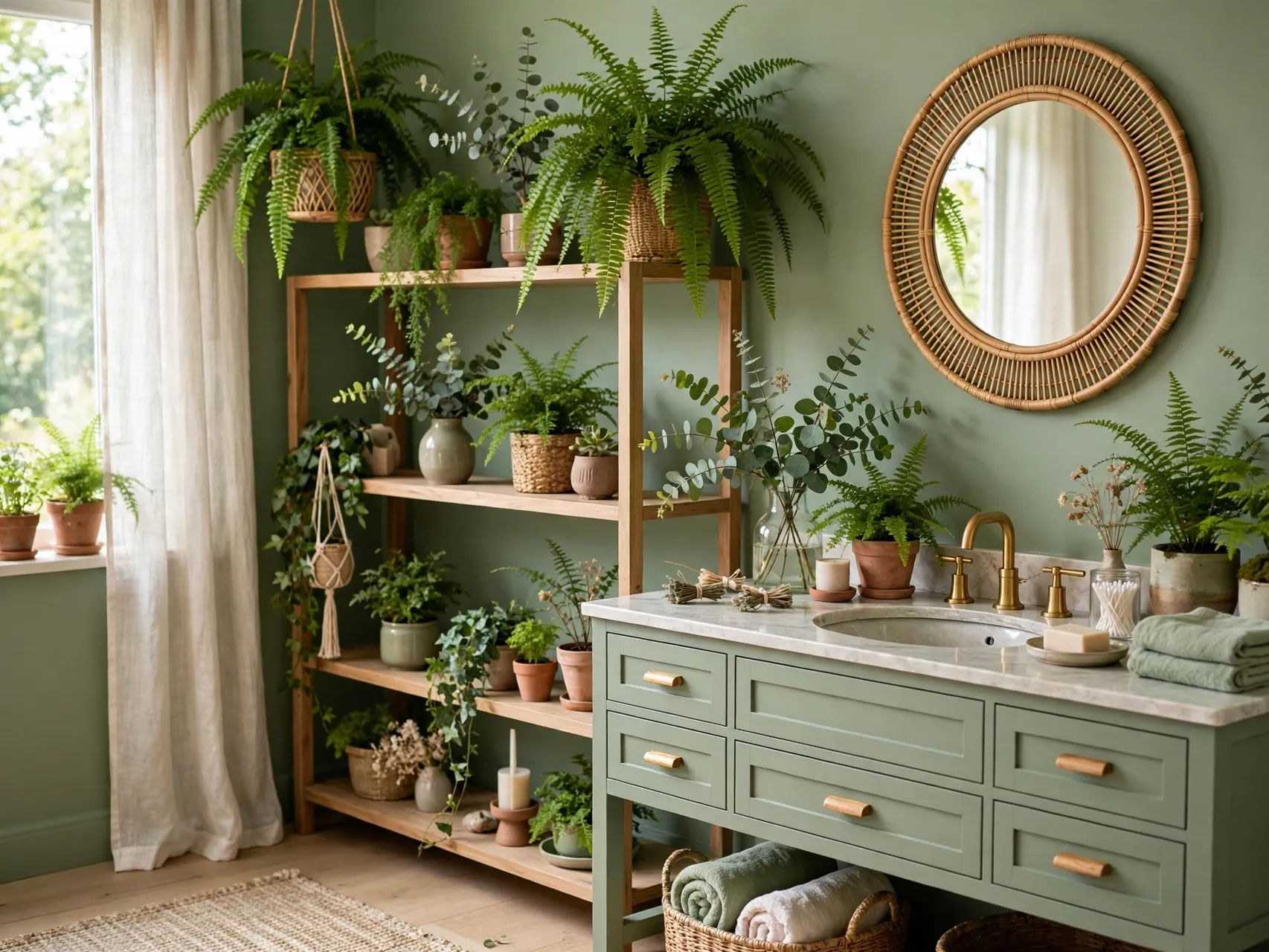
In a sage room, real plants do something lovely: they make the paint color feel like nature rather than decoration. A fern on a stool, eucalyptus in a vase, or a trailing plant on a high shelf layers living greens over the painted one.
Choose plants that suit your light, keep pots stable and out of direct spray, and let faux stems serve in dark rooms. The mix of real leaf tones against sage walls is exactly the layered, collected effect designers chase. One or two plants is plenty; the color is already doing generous work.
13. Sage Ceramic and Glass Accessories on the Vanity

A sage soap dish, a ceramic dispenser, a small green glass vase: tiny hits of the color on the vanity tie a sage room together, or start one in a white bathroom. Group them on a small tray so the counter stays calm and cleaning stays easy.
Handmade look ceramics with slight color variation feel richest against simple white counters. Keep daily clutter in drawers and let these few pieces be the display.
14. A Sage Ceiling for a Soft Cocoon
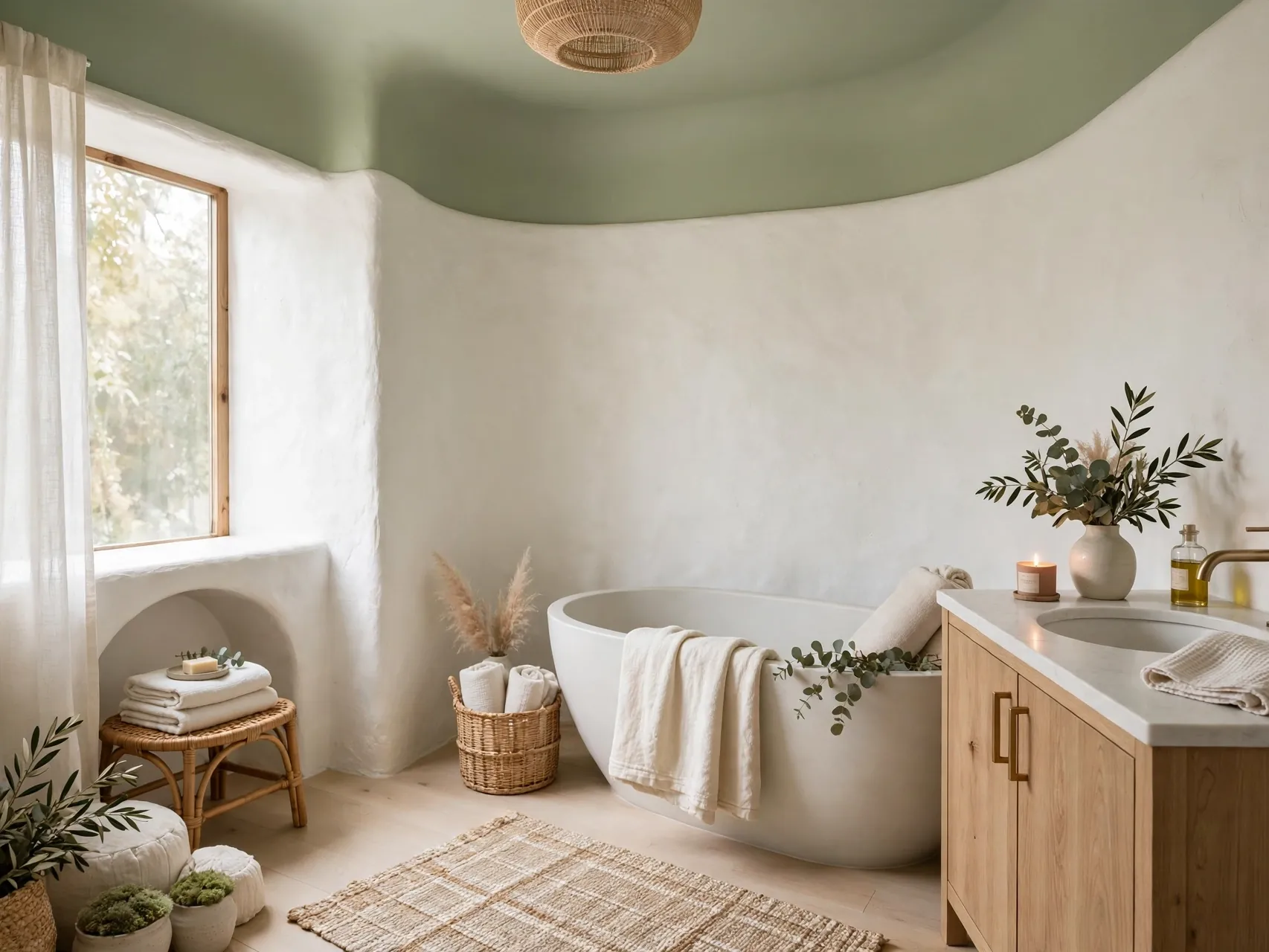
In a small bathroom, painting the ceiling sage while walls stay white or pale creates a gentle canopy effect, like sitting under leaves. It is a bold move that reads surprisingly soft, especially with warm light and white tile below.
Use bathroom rated paint on ceilings in wet rooms, since steam rises straight to it, and let it cure before heavy shower use. This idea suits powder rooms and small baths with plain ceilings that need interest. Sample first and live with the test patch through a full day of light.
15. Sage Hex Floor Tile With White Walls
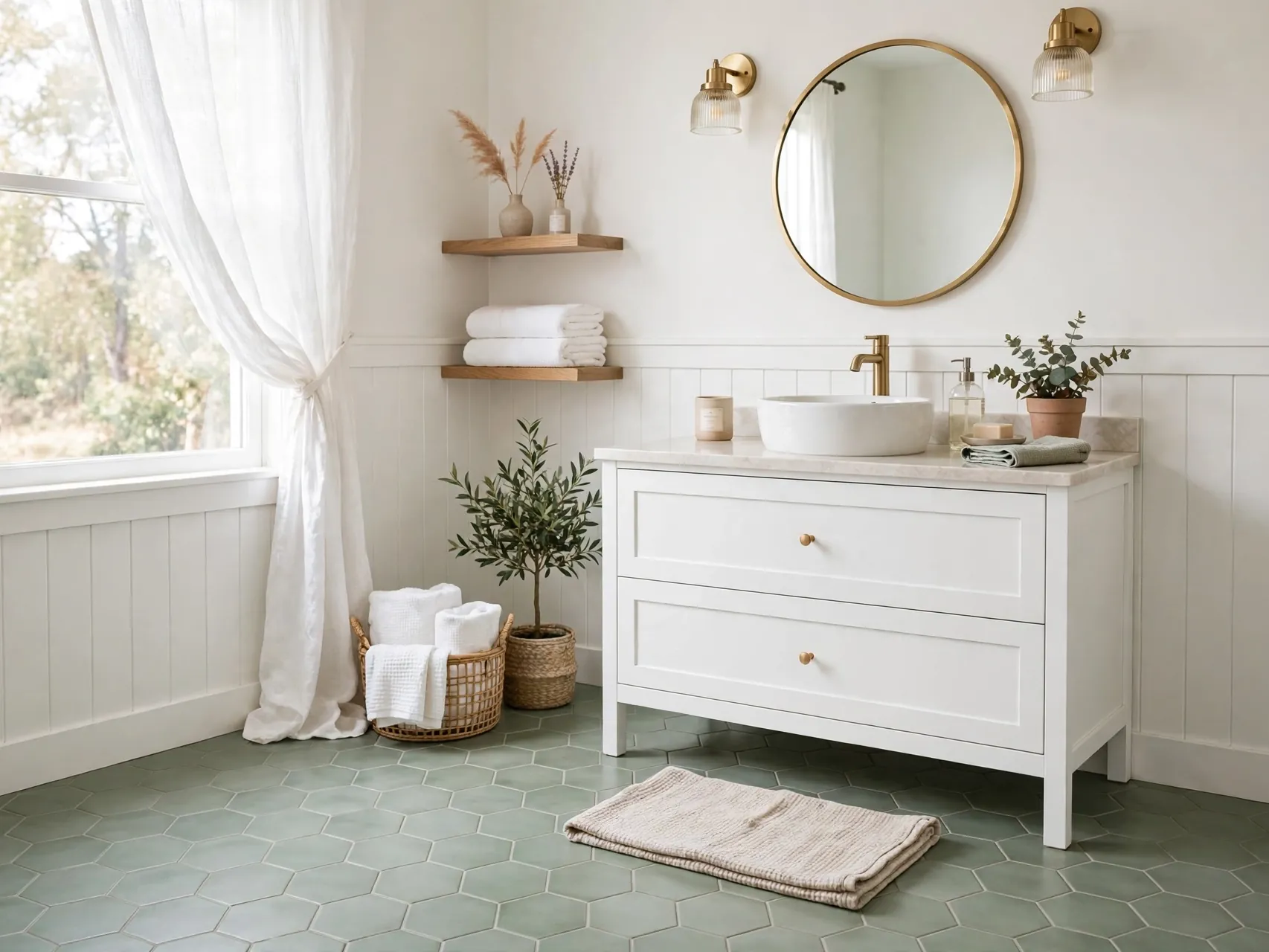
Small hex tiles in sage on the floor give a bathroom vintage charm and a forgiving, grippy surface underfoot. With white walls and a wood or white vanity above, the floor becomes a soft green field that anchors the room without darkening it.
Medium tone grout keeps the pattern gentle and practical. Have floor tiling and waterproofing handled properly, professionally if needed, since bathroom floors work hard against water daily.
16. Cream and Warm Beige to Keep Sage Soft
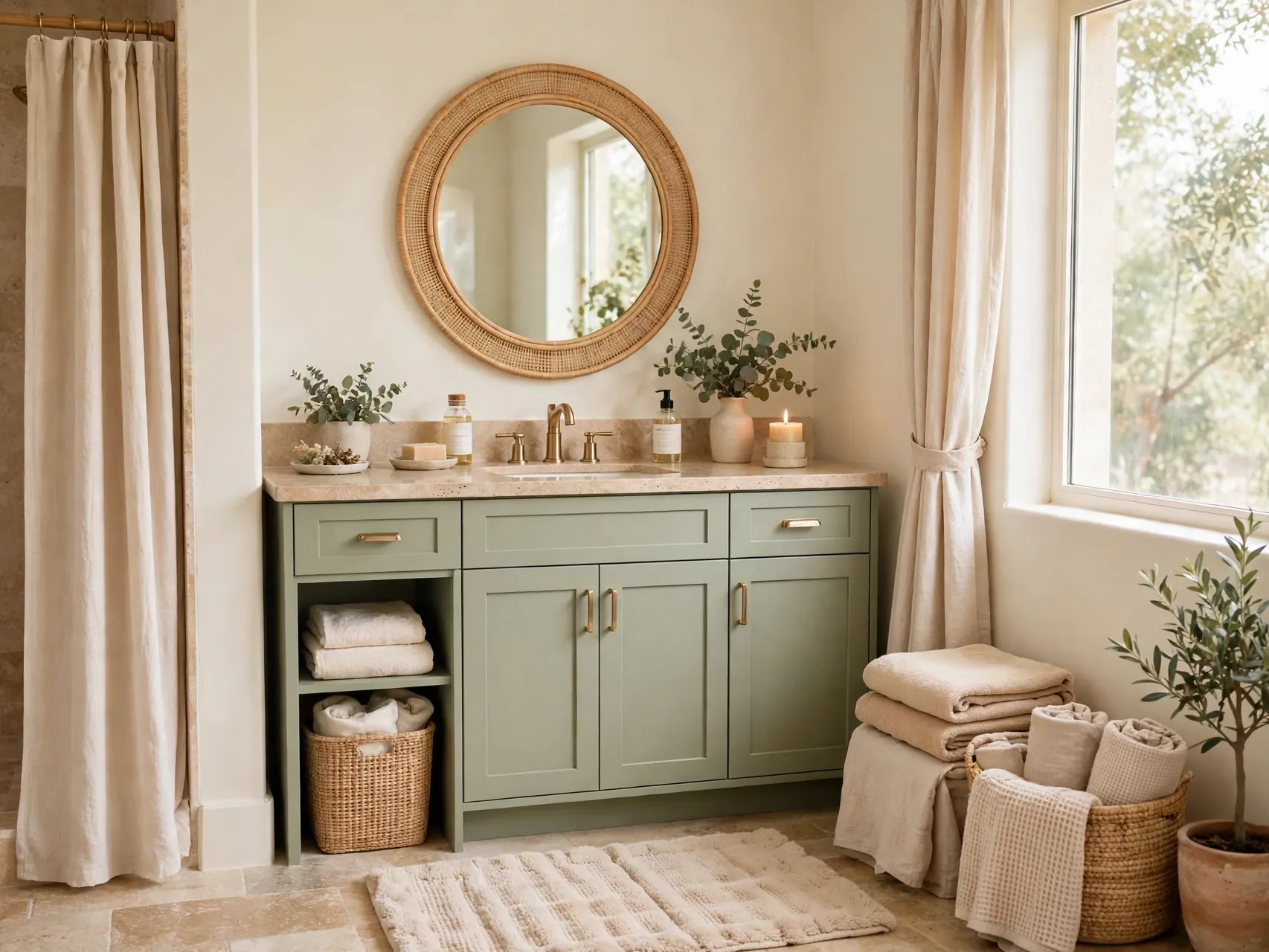
Sage can turn cool and gray beside stark white, and cream is the fix. Warm white walls, beige towels, a natural woven basket, and warm stone tones keep sage in its soft, earthy register, especially in north facing rooms with cool light.
Think of cream as the buffer between sage and everything white and ceramic in the room. A cream bath mat, ivory towels, and a travertine look tray will warm a sage scheme instantly. This palette, sage, cream, wood, and brass, is the calmest combination in the whole green family.
17. A Bolder Sage in a Small Powder Room

Powder rooms are where color courage belongs, and a deeper sage on all four walls of a tiny room feels like a jewel box rather than a risk. Small rooms finish fast, the door closes on the drama, and guests always comment.
Balance a deeper sage with a white pedestal or vanity top, brass fixtures, and one piece of art. Keep the floor light so the room does not cave in.
18. Warm Lighting That Keeps Sage Looking Sage
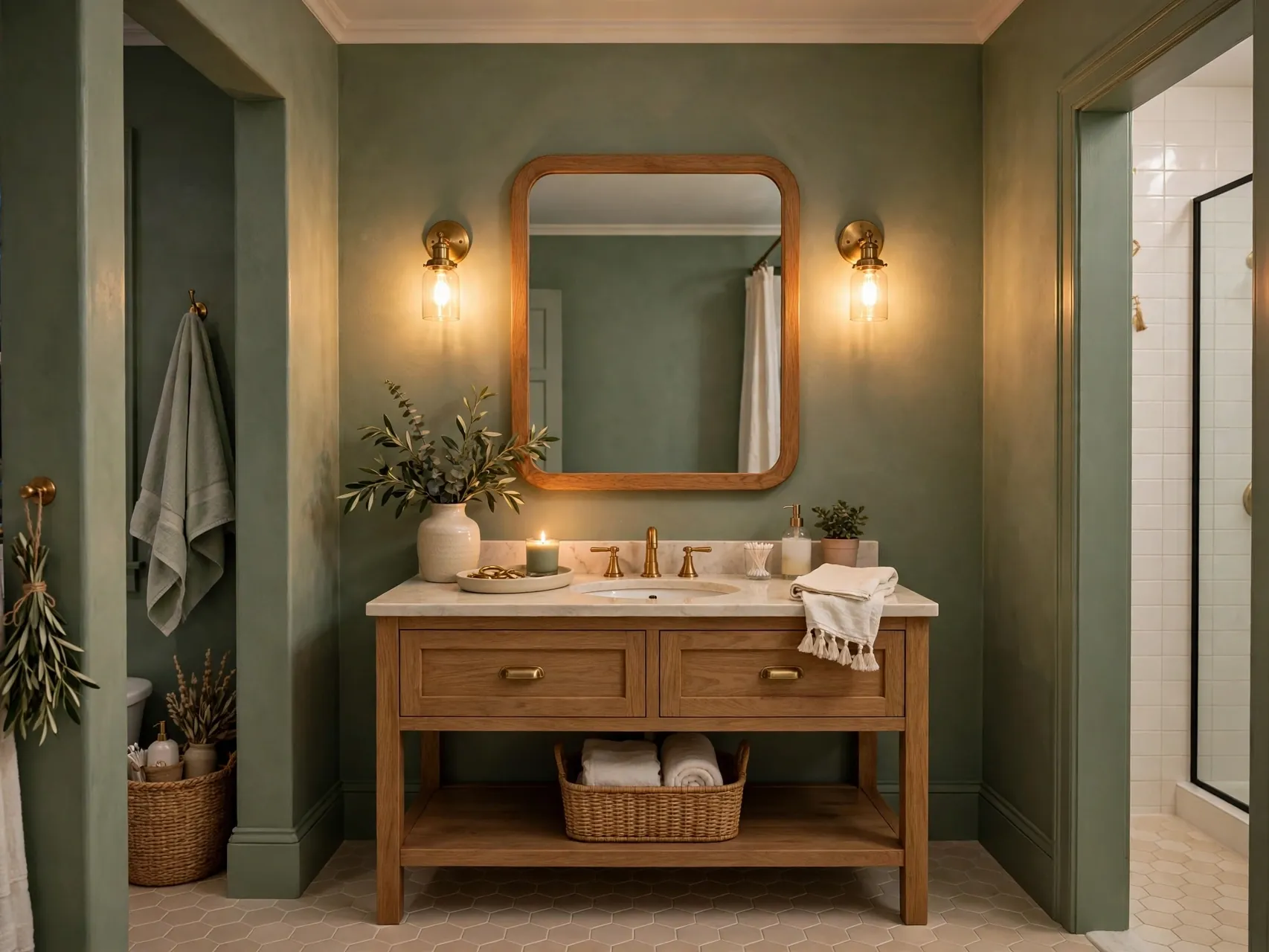
Light can betray this color: cool bulbs push sage toward gray or blue, while warm, diffused light keeps it soft and leafy. Choose warm bulbs at the vanity, frosted or opal shades, and layered light instead of one harsh overhead.
Test your paint and tile samples under the bulbs you actually use, at morning and evening, before committing. A dimmer for evening baths turns sage walls into the calmest backdrop in the house. Lighting is invisible in photos and everything in person, so in a sage room it deserves real attention.
19. Sage With Natural Stone Tones

Sage beside limestone, travertine, or warm marble tones feels like a garden wall: organic, quiet, and expensive in spirit. A stone look counter or floor in warm beige gray gives sage a textured partner that never competes with it.
Real stone needs sealing and gentle care; stone look porcelain offers the mood with easier upkeep. This pairing suits spa style bathrooms best, where texture does the decorating and color stays in one soft voice.
20. A Sage Beadboard Half Wall
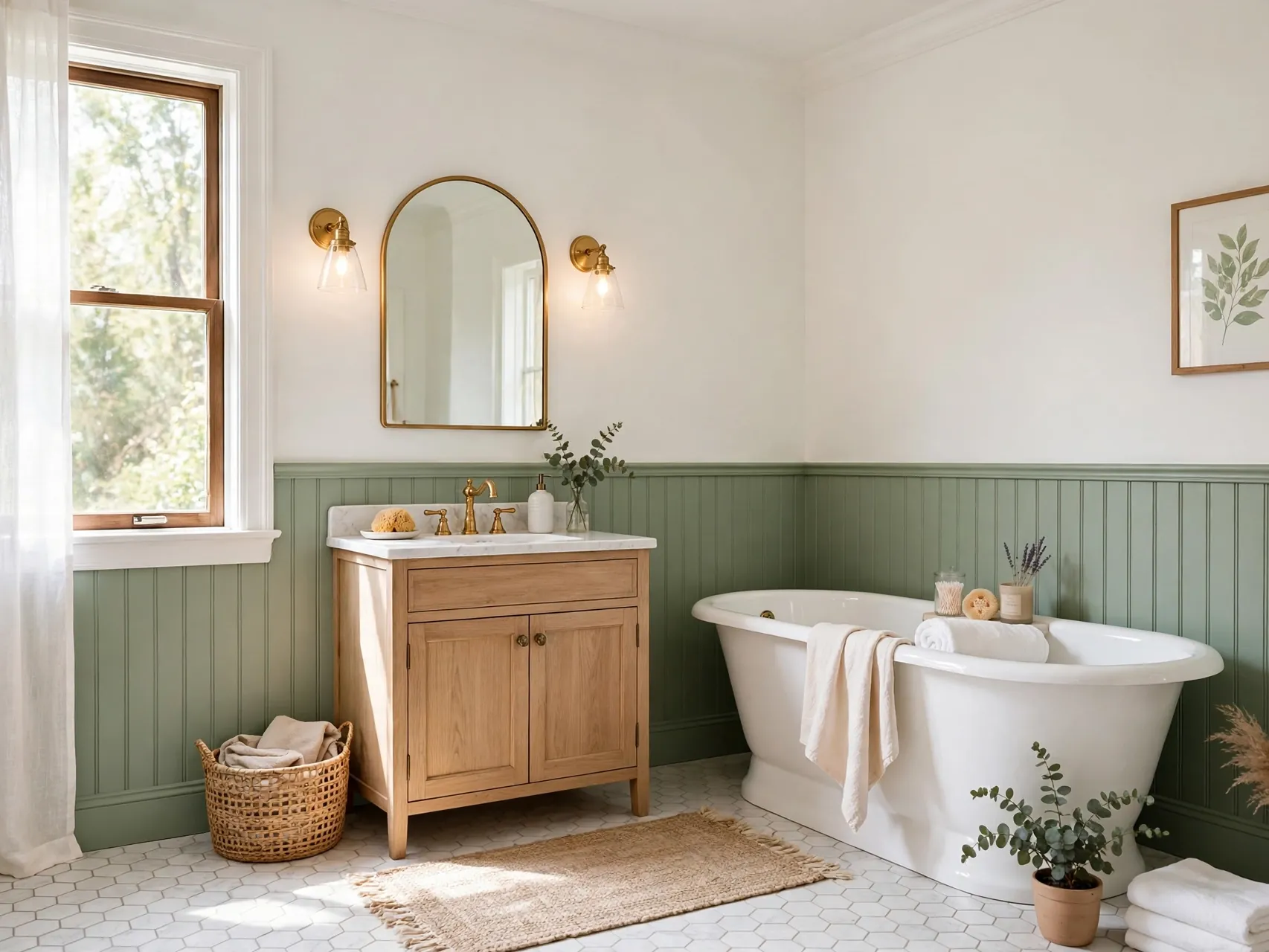
Beadboard painted sage on the lower half of the walls adds cottage texture and a washable, durable surface where splashes land. White above keeps the room bright, and a simple cap rail gives you a ledge for a small plant or framed print.
Use materials and paint suited to bathroom moisture, seal edges well, and ventilate the room so steam does not linger on painted wood. Beadboard suits farmhouse and traditional bathrooms especially, and it is a friendly project scale: one wall or one room, finished in a weekend with careful prep.
21. A Sage Framed Mirror or Medicine Cabinet
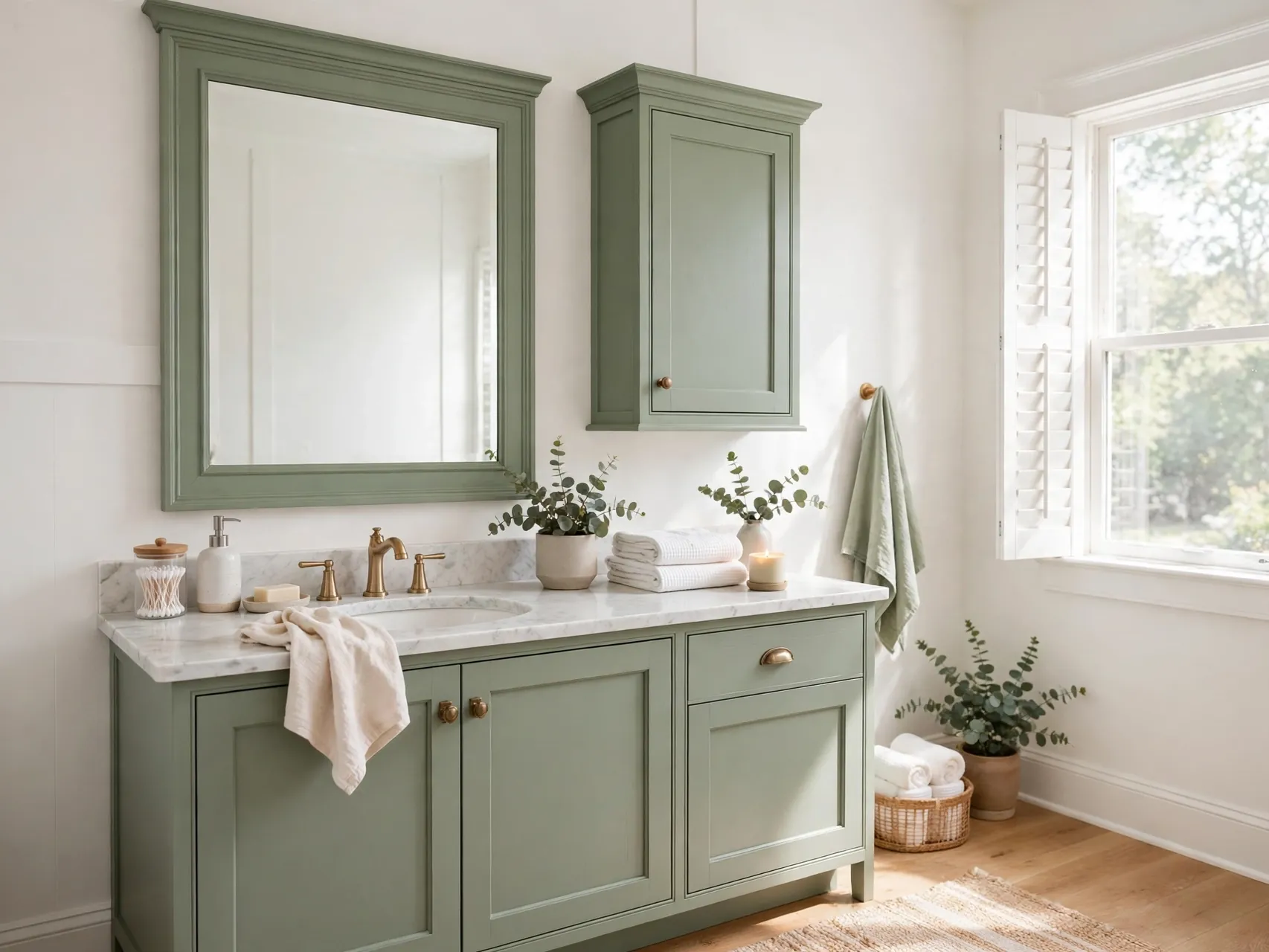
A mirror framed in sage, or a medicine cabinet painted to match a sage vanity, carries the color up the wall in a tailored way. It is a smaller commitment than walls or tile and a smarter one than it looks, because the eye goes to the mirror first in every bathroom.
Paint with a durable bathroom suited finish and let it cure before the mirror meets daily steam. Match the frame shade to another sage in the room, or go one step deeper for gentle contrast. Paired mirrors over a double vanity in sage frames look quietly custom.
22. Clay and Terracotta Accents Against Sage
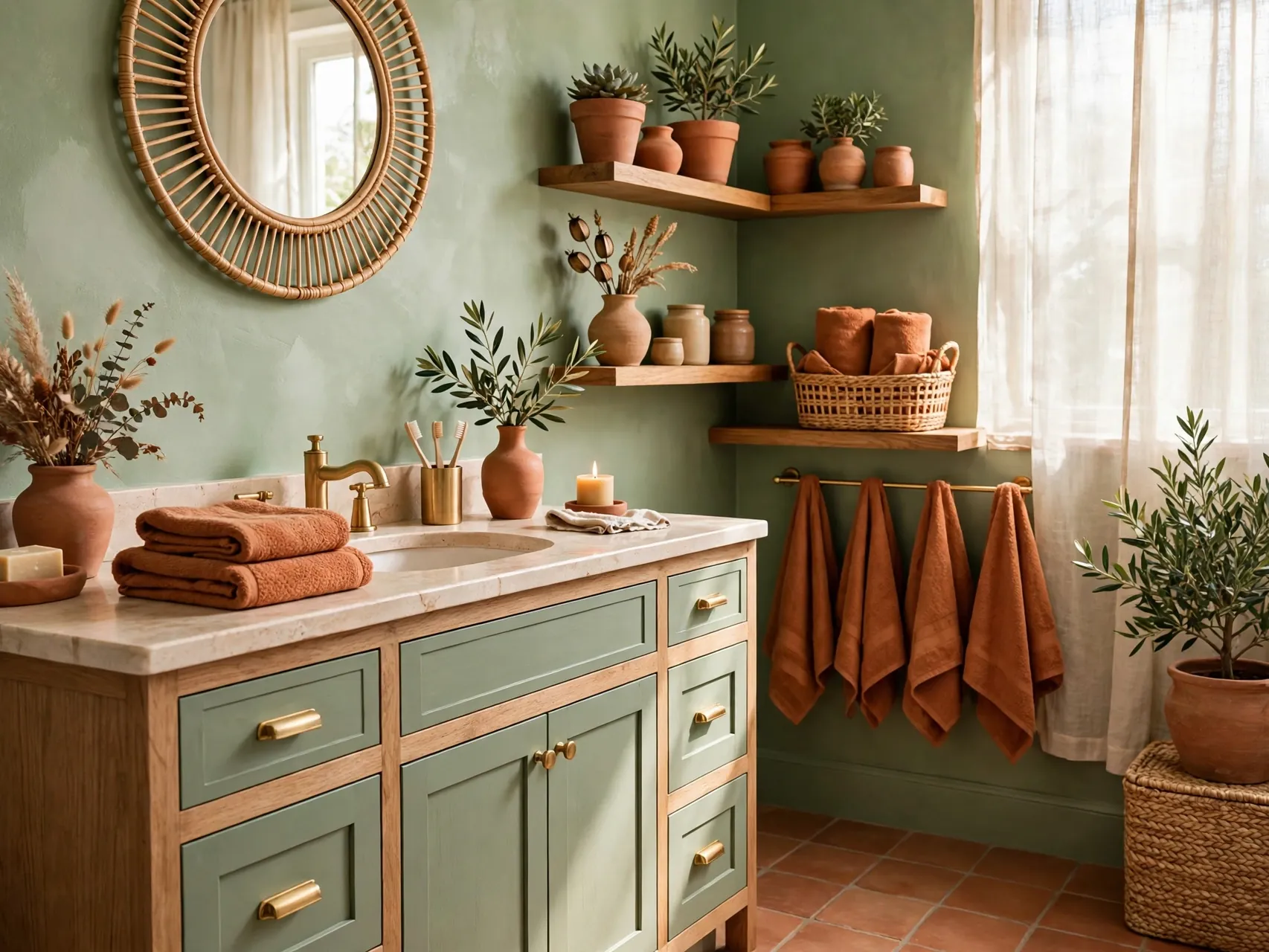
Every soft color needs one warm counterpoint, and clay tones are the most flattering friend sage can have. A terracotta pot, a rust toned hand towel, or a small clay vase warms the green and keeps it from feeling chilly or flat.
Keep these accents few and small: the sage still leads, the clay just glows at the edges. This pairing feels Mediterranean and garden led, lovely with warm wood and cream.
23. Test Sage Paint Properly Before You Commit
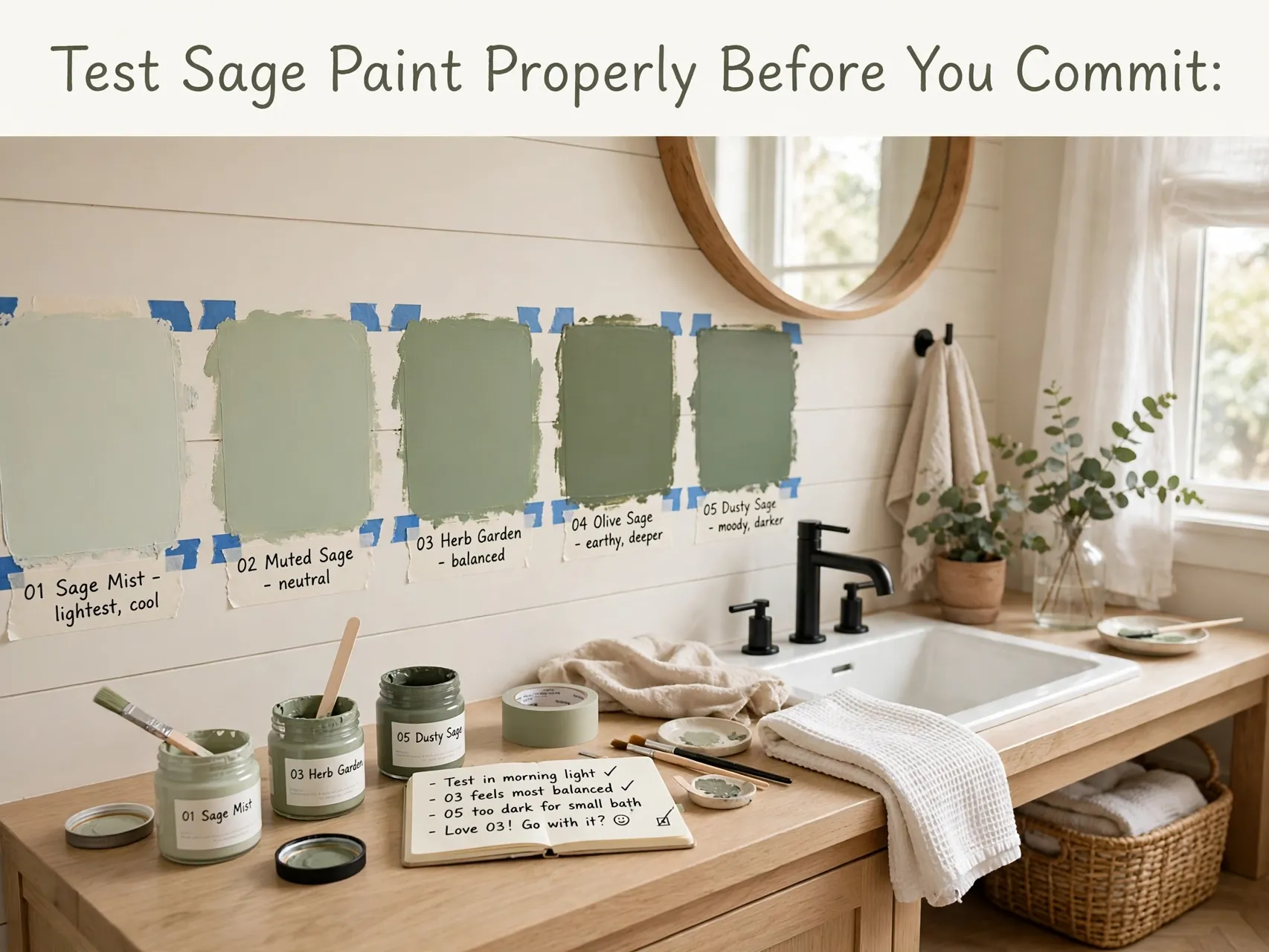
Sage is a shifter: it can read gray in one room, blue in another, and perfectly leafy in a third, all from the same can. Paint large test swatches on two walls, and view them in morning light, evening light, and under your bathroom bulbs before choosing.
In wet areas, confirm you are using a bathroom rated paint or finish made to handle moisture, and follow the maker guidance on coats and cure time.
24. Sage Window Treatments in Natural Linen

A simple linen roman shade or cafe curtain in a sage tone softens bathroom light and carries the color to the window wall, where paint alone often stops. Natural fabric texture keeps the green feeling organic rather than flat.
Choose window coverings suited to humidity, mounted so they stay clear of direct spray, and easy to open for ventilation after showers. Privacy lining matters in bathrooms, so test the fabric against daylight. This soft layer is especially pretty in bathrooms where the window sits over the tub or beside the vanity.
25. The Collected Sage Room, Layered Slowly

The loveliest sage bathrooms are assembled, not installed: sage walls or tile as the base, a wood vanity, cream textiles in mixed sage shades, brass or black fixtures used consistently, one plant, and one warm clay or wood accent to glow against the green.
Build yours in that order, living with each layer before adding the next, and stop the moment the room feels calm rather than the moment the list runs out. Your finished sage green bathroom should feel like morning in a garden, every single day.
FAQ
Does sage green work in a small bathroom?
Yes, beautifully. Pale and mid tone sages keep small rooms feeling open, especially with white tile, a large mirror, and warm lighting. Use sage on the walls or floor and keep the vanity and textiles light, or reverse it with a sage vanity against white walls.
What colors pair best with a sage green bathroom?
Warm whites and creams, natural wood tones, and soft stone grays are the easiest partners. For metals, aged brass warms sage up while matte black makes it feel modern. Small clay or terracotta accents add a gentle contrast. Avoid stark blue whites beside sage, which can make the green look muddy or gray by comparison.
Which finish of sage paint is best for a bathroom?
In general terms, choose a paint made and labeled for bathrooms or high moisture rooms, in a finish that can be wiped clean, and follow the maker instructions for coats and curing time before heavy steam use. Good ventilation matters as much as the paint: run the exhaust fan during and after showers so any finish lasts longer and the room stays fresh.
Should I choose sage tile or sage paint?
Paint is cheaper, faster, and easy to change, so it suits first steps and renters with permission. Tile costs more and belongs to a remodel, but it gives texture, durability in wet zones, and a handmade feel paint cannot copy.
How do I stop sage from looking gray or blue?
Test large swatches in your own light, choose a sage with warm, yellow leaning undertones rather than blue leaning ones, and use warm bulbs at the vanity. Add warm wood, cream textiles, and brass accents, which pull the green back toward leafy. If a sample reads gray on the wall, it will only read grayer across four walls, so keep testing until one stays soft green.
Key Takeaways
- Sage is a ladder, not a leap: Start with towels and accessories, climb to a painted vanity or walls, and save tile for a remodel.
- Mix the family: Several muted sage shades layered together look more collected and forgiving than one exact match everywhere.
- Warm partners keep it soft: Cream, warm wood, brass, and a small clay accent stop sage from turning cold or gray.
- Light decides the color: Warm, diffused bulbs and honest wall testing matter more with sage than with almost any other color.
- Wet areas need the right finish: Use bathroom rated paint and finishes in general terms, follow cure times, and ventilate well.
- Ready for a calmer bathroom? Save this guide to Pinterest and pin the first sage idea you will try.