24 DIY Backyard Playhouse Ideas Kids Will Absolutely Love
Introduction
A diy backyard playhouse does not need to be a miniature mansion to be magical. Give children a door of their own, a window to wave from and a corner that is theirs, and their imagination supplies the rest, from pirate ships to farm stands to quiet reading dens.
This list shares 24 builds for every budget, skill level and yard size, from a no cost cardboard castle to a two story clubhouse with a slide. Safety guidance from the US Consumer Product Safety Commission runs through the ideas, covering surfacing, spacing, guardrails and regular checks.
Start with the spot: level, visible from the house, away from roads and driveways, with room for soft surfacing around it. Then pick a theme your child already loves in their games. Build simple, sand everything smooth, and let the decorating be a family project.
1. Classic Pallet Playhouse With Porch
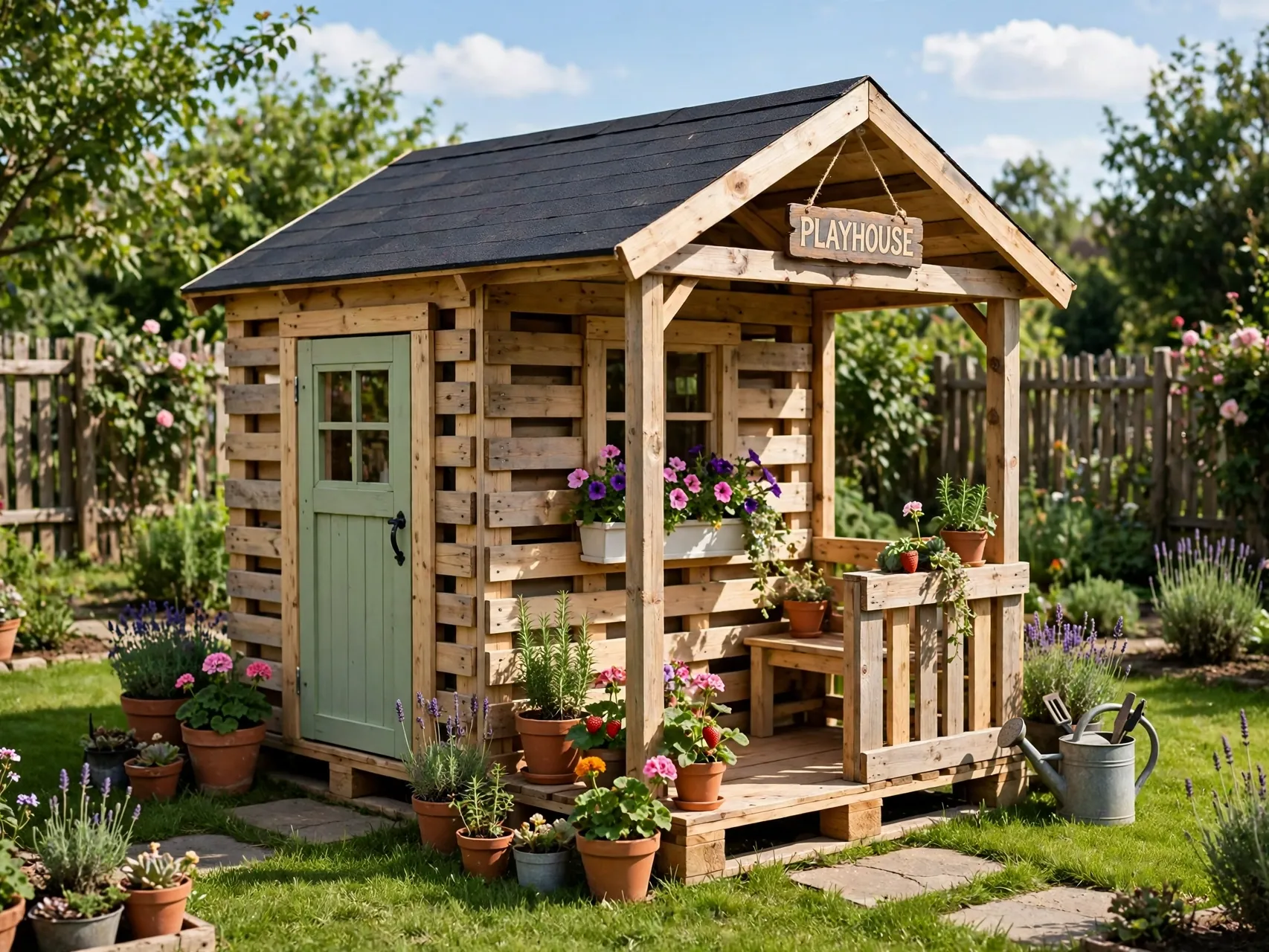
Clean, heat treated pallets make a sturdy little house with a mini porch for a fraction of lumber yard cost. Sand every board smooth, check for staples and splinters, and paint in a color your child picks.
Set the house on a level base with shock absorbing surfacing around it. The CPSC home playground handbook advises protective surfacing under and around play structures, so plan mulch or wood chips at least 6 feet out where kids jump and land.
2. Simple A Frame Tent House

Two plywood or pallet walls leaned into an A frame, joined at the top, create an instant hideaway that folds flat for winter storage. Add a canvas flap door and cushions inside for reading and naps.
Keep the angle stable with a cross brace and rounded edges. This light build suits toddlers best and should sit where an adult can see inside easily. It is a gentle first DIY backyard playhouse project for new builders.
3. Shed Conversion Playhouse
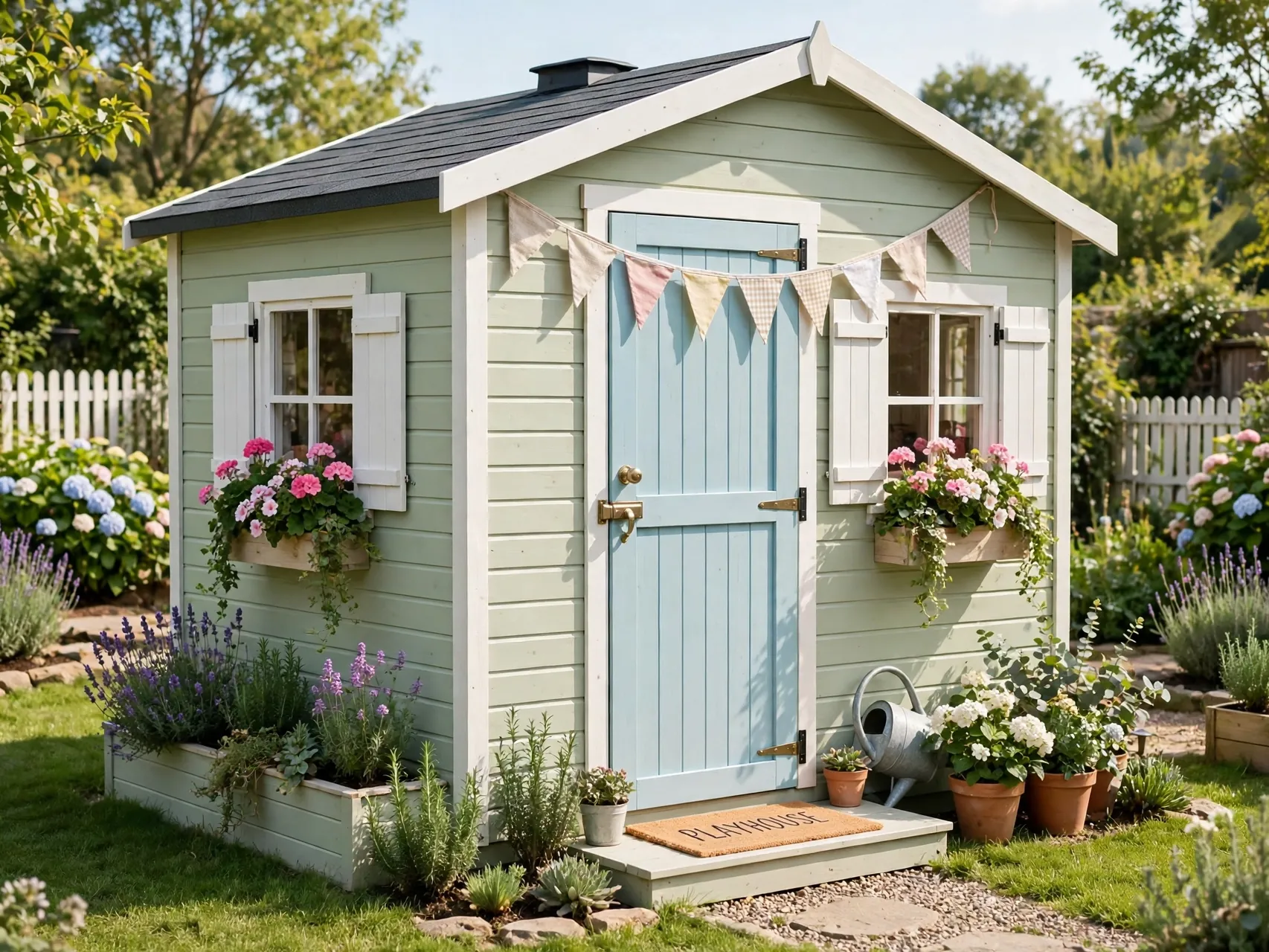
An underused garden shed already has walls, a roof and a door. Clean it out, add safe paint, a child height window or Dutch door, bunting and a small table, and it becomes a playhouse with real shelter.
Check the shed for sharp fixings, old chemical storage and lead paint risks before children use it, and ventilate well. Never store tools, fuel or garden chemicals in a space children play in. Add battery lights instead of wired electrics for simplicity.
4. Tree Stump Cottage With Fairy Door
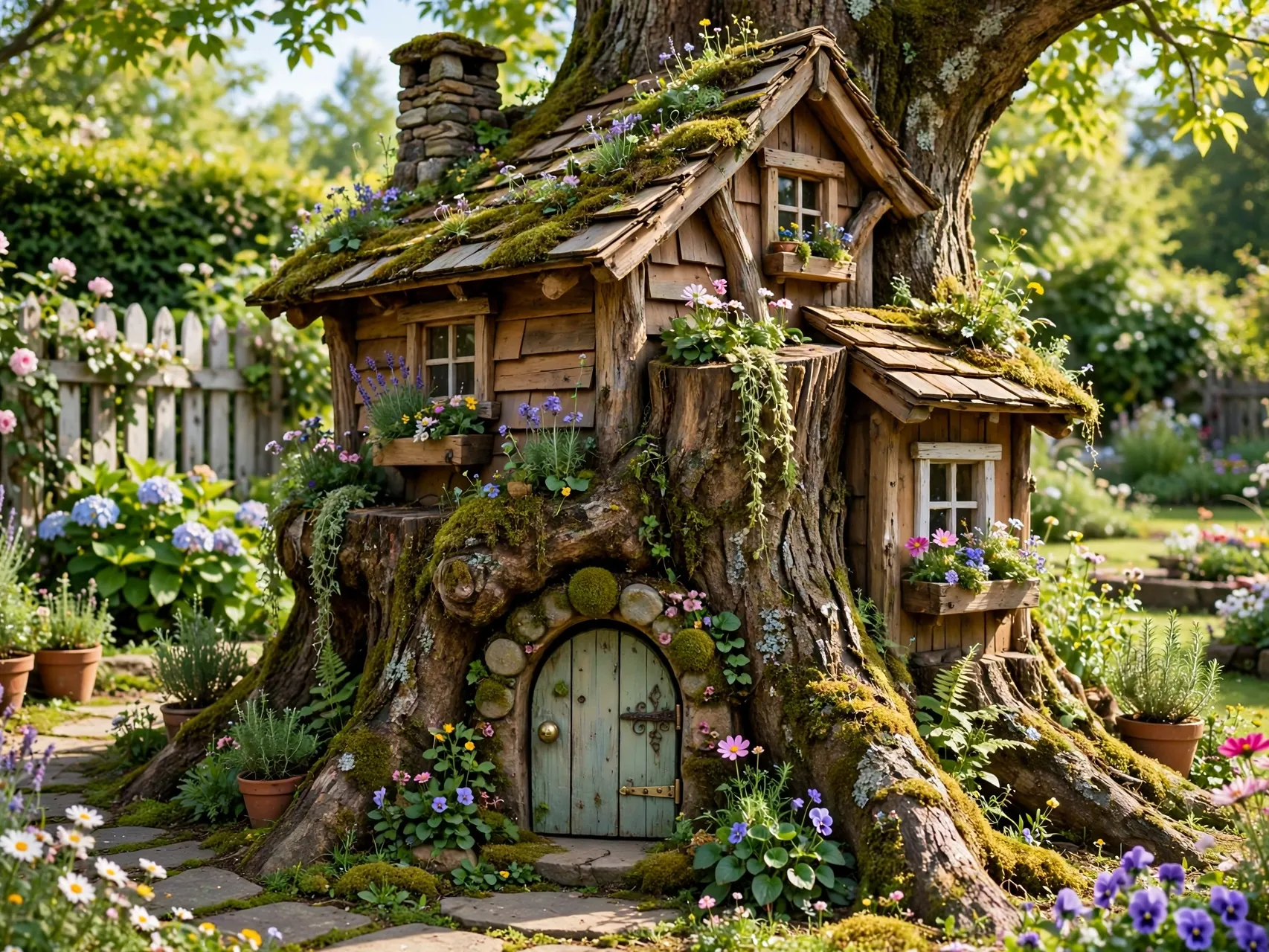
A wide stump or log round base with a tiny roof, painted door and window frames makes a fairy scale cottage for imaginative play. It costs almost nothing and tucks into a border or shade garden corner.
Keep it low and stable, with no climbing height. Seal cut wood to slow rot and check often for insects or soft spots. Small scale houses invite storytelling, tea parties with stuffed friends and quiet solo play outdoors.
5. Canvas Teepee Village
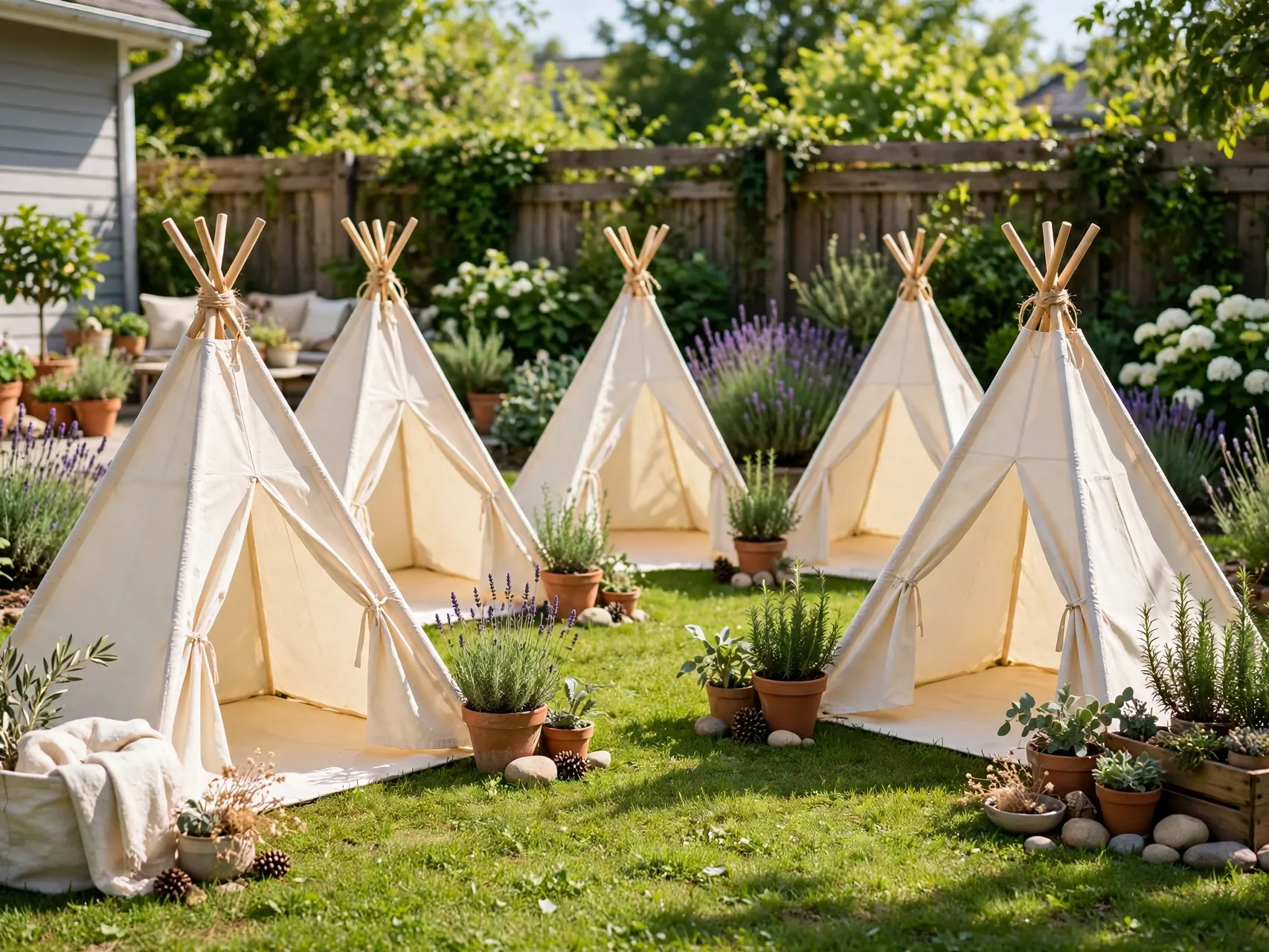
A teepee from poles and canvas or old sheets is the fastest fort in the yard. Lash poles at the top, push feet into soil so the base cannot spread, and leave a wide door gap for easy entry.
Plant beans or climbing flowers at the pole feet in spring for a living cover by midsummer. Supervise young children with any fabric structure and bring cushions in when rain threatens. Group two or three teepees for a village that siblings and friends adore.
6. Mud Kitchen Playhouse Corner
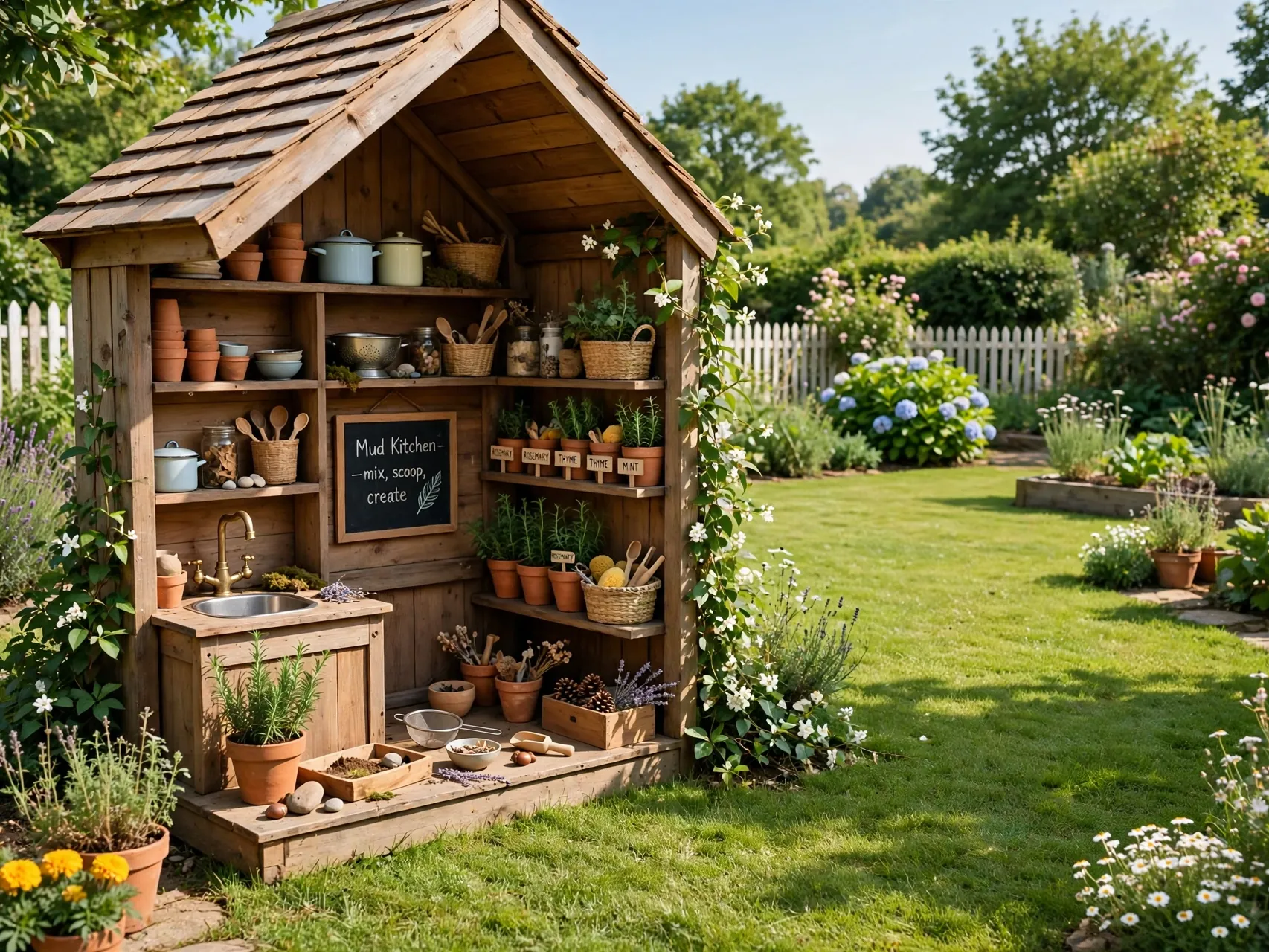
An old bench or pallet counter, bowls, pans and a chalkboard menu turn one wall of a playhouse into a mud kitchen. Add a water bucket and let kids cook leaf soups and petal pies for hours.
Use only non toxic, washable items and check that no small parts suit the ages using it. A mud kitchen needs no building height, so fall risk stays low. It is one of the most loved kids outdoor playhouse ideas for preschool ages.
7. Two Story Clubhouse With Slide
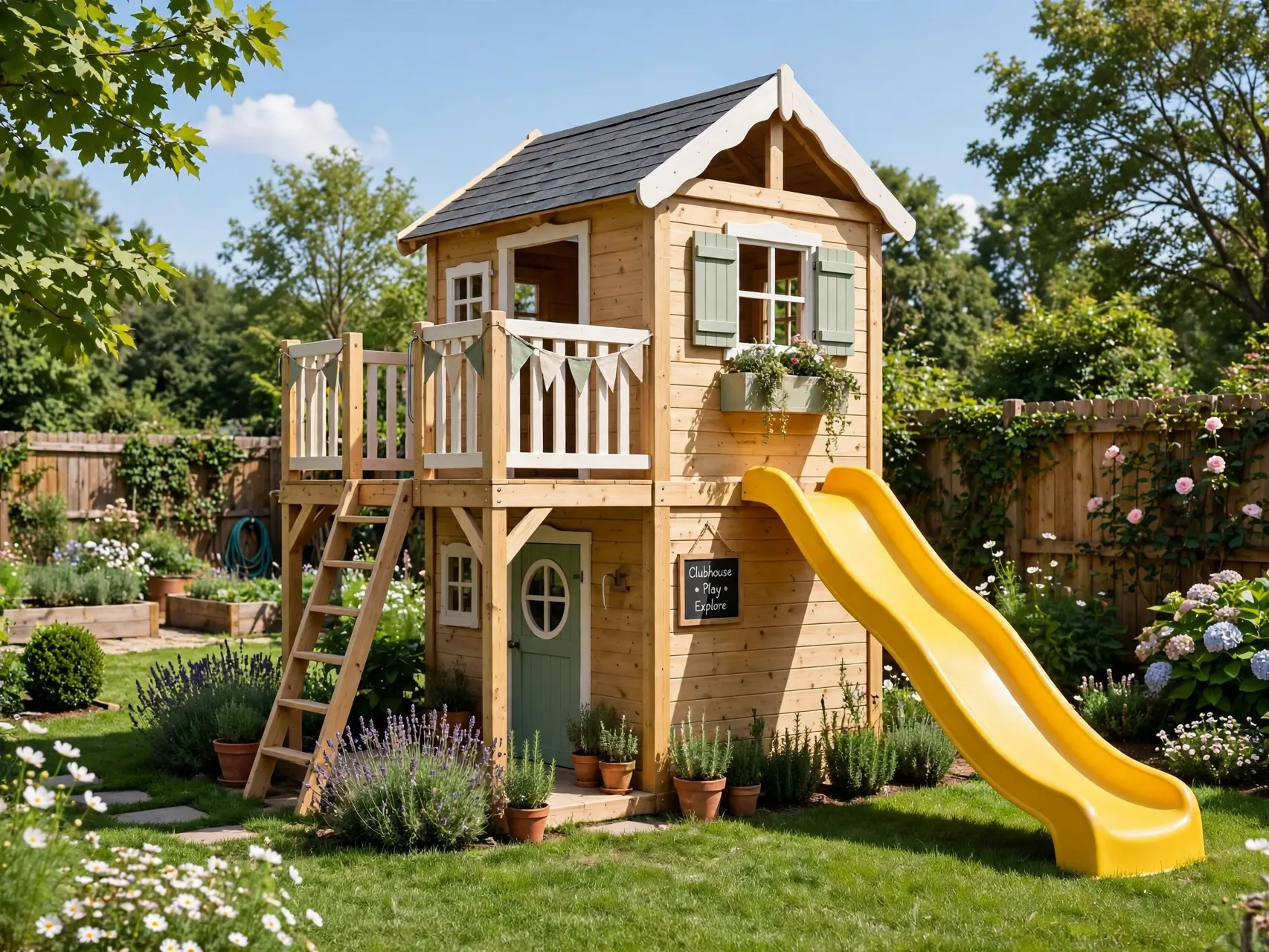
A raised clubhouse with a platform, ladder and slide is the dream build for older kids. It takes real planning, solid posts and guardrails on every elevated edge, with openings sized to prevent head entrapment.
Follow CPSC spacing guidance: openings that could trap a head should be less than 3.5 inches or more than 9 inches, and elevated surfaces need guardrails. Use deep loose fill surfacing below, at least 12 inches of wood chips or similar, and inspect hardware monthly.
8. Playhouse With Climbing Wall

A low climbing panel on one side of the house, with colorful holds and a thick landing mat or deep mulch below, adds active play without a huge footprint. Angle it gently for younger climbers.
Fit holds with proper bolts, round all edges and keep the wall height modest for home use. Teach a no pushing, one at a time rule. Climbing builds strength and confidence, and a DIY playhouse plans approach lets you size it to your child.
9. Cardboard Castle for Dry Days

Large appliance boxes joined with tape and cut with doors and battlements make a castle that costs nothing and sparks huge imagination. Paint it together, add flags, and recycle it when rain or wear wins.
Cardboard houses are indoor or dry day only and need adult cutting for doors and windows. Their charm is the decorating, not durability. Keep one big box in reserve and children will ask to build again and again through the summer.
10. Playhouse and Sandbox Combo
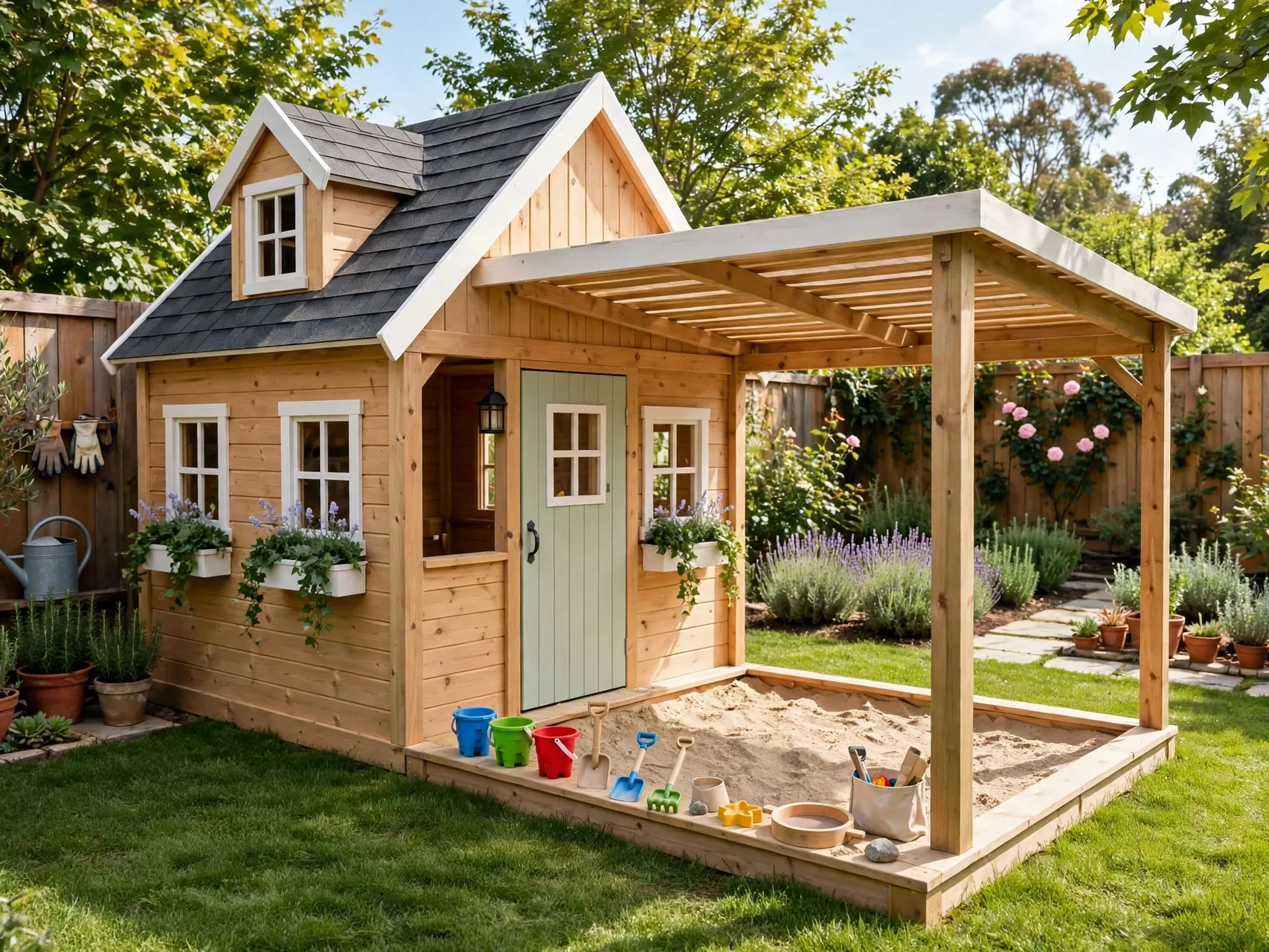
A house with a shaded sandbox porch or a sand pit under a raised floor uses space twice. Kids move between pretend home play and digging, building and burying treasure in one tidy zone.
Cover the sand when not in use to keep it clean and dry, and rake it often. Separate the sandbox from swing or slide landing zones, as CPSC guidance suggests keeping quiet and active play apart. Wash hands after sand play, especially before snacks.
11. Mini Farm Stand Playhouse
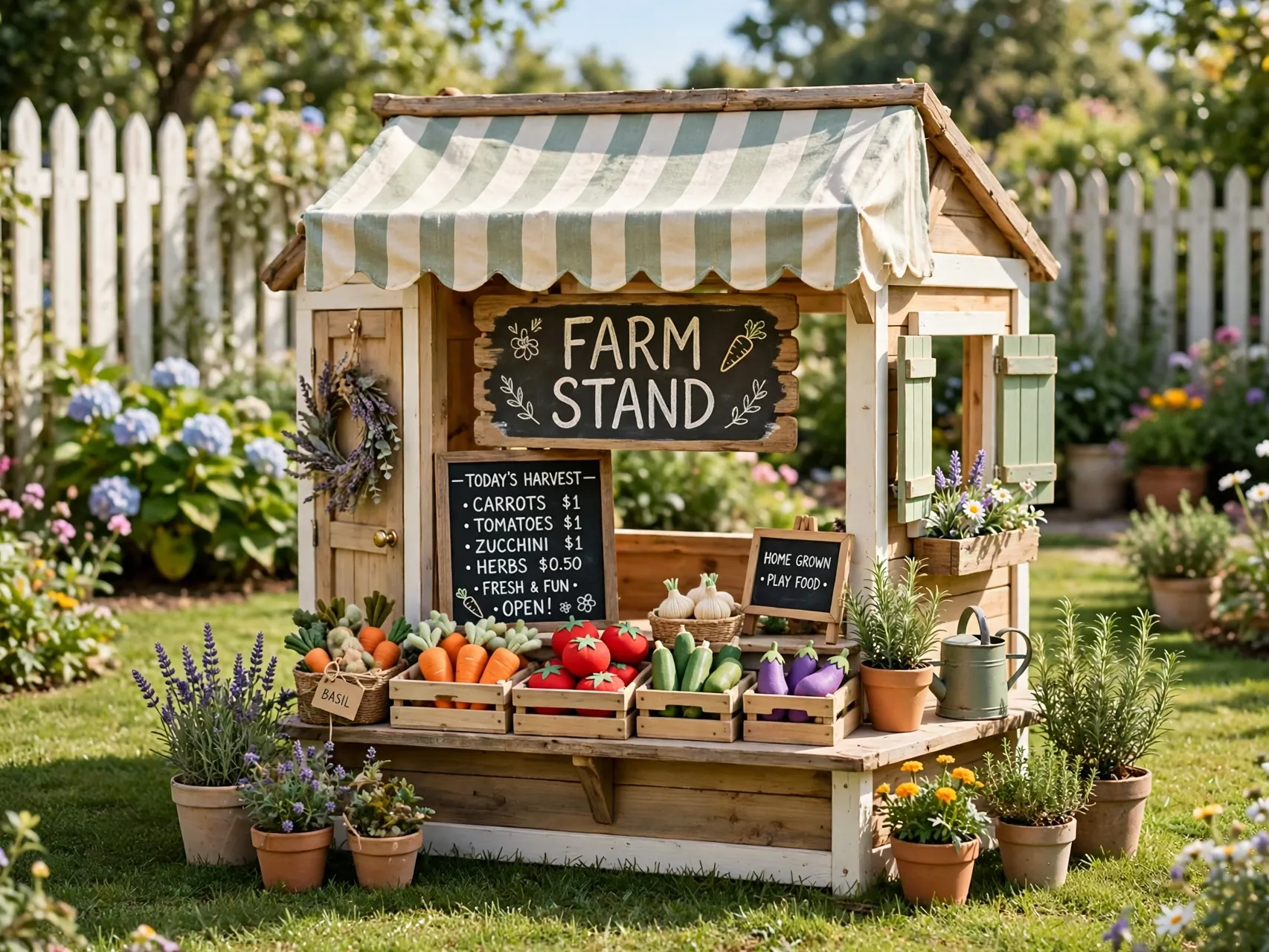
A counter, awning and crates turn a simple house frame into a farm stand for pretend markets. Add play produce, a chalk price board and a bell for customers, and siblings can trade all afternoon.
This theme grows with children, from simple sorting for toddlers to real lemonade or garden produce stands for older kids, with adult help and local rules in mind. A stand front also suits a narrow yard, since play faces outward.
12. Pirate Ship Playhouse Deck

A low deck with a ship wheel, flag and plank style edges sails a thousand pretend voyages. Paint waves along the base boards and add a treasure map corner with a lidded box for props.
Keep deck height low, rails secure and any rope details fixed so loops cannot form. Avoid free hanging ropes, which are a strangulation risk in CPSC guidance. Smooth, splinter free timber matters here, since small hands grip every edge while playing.
13. Playhouse With Reading Loft

A tiny loft nook inside a taller playhouse, reached by wide steps rather than a steep ladder, makes a book hideaway with cushions and a battery lantern. It is the quiet heart of a busy yard.
Guard the loft opening, keep the fall height modest and use deep, soft flooring below. Limit loft use to one or two children at a time and check fixings often. Reading lofts are beloved by older kids who still want a den of their own.
14. Willow Dome Living Playhouse

Flexible willow rods pushed into soil and woven into a dome grow leaves through summer, making a living house that changes with the seasons. It is light, natural and surprisingly sturdy once rooted.
Water willow well in the first season and weave new growth in as it appears. A living dome has no hard edges and no height to fall from, which suits younger children. Leave the door wide and trim inside so stems never poke at eye level.
15. PVC Pipe Playhouse Frame
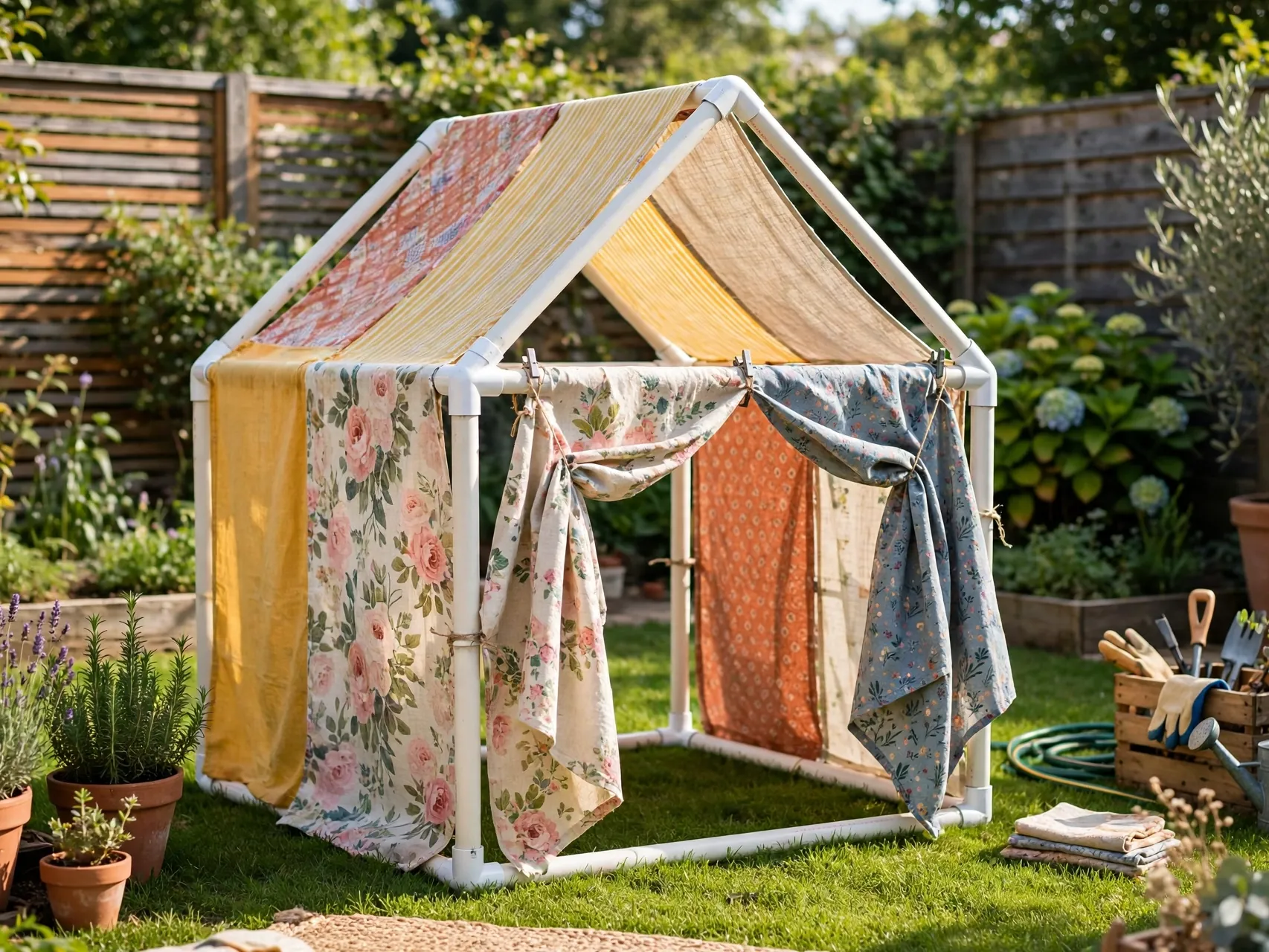
PVC pipes and connectors make a light frame you can cover with fabric, sheets or a tarp for a house that builds in an hour and packs away flat. It is ideal for renters and small yards.
Cap every open pipe end and check joints stay tight, since loose pipes can pinch. Fabric covers should fit without long ties or loops. This flexible option lets you test the best spot for play before committing to a wooden build later.
16. Playhouse With Chalkboard Walls
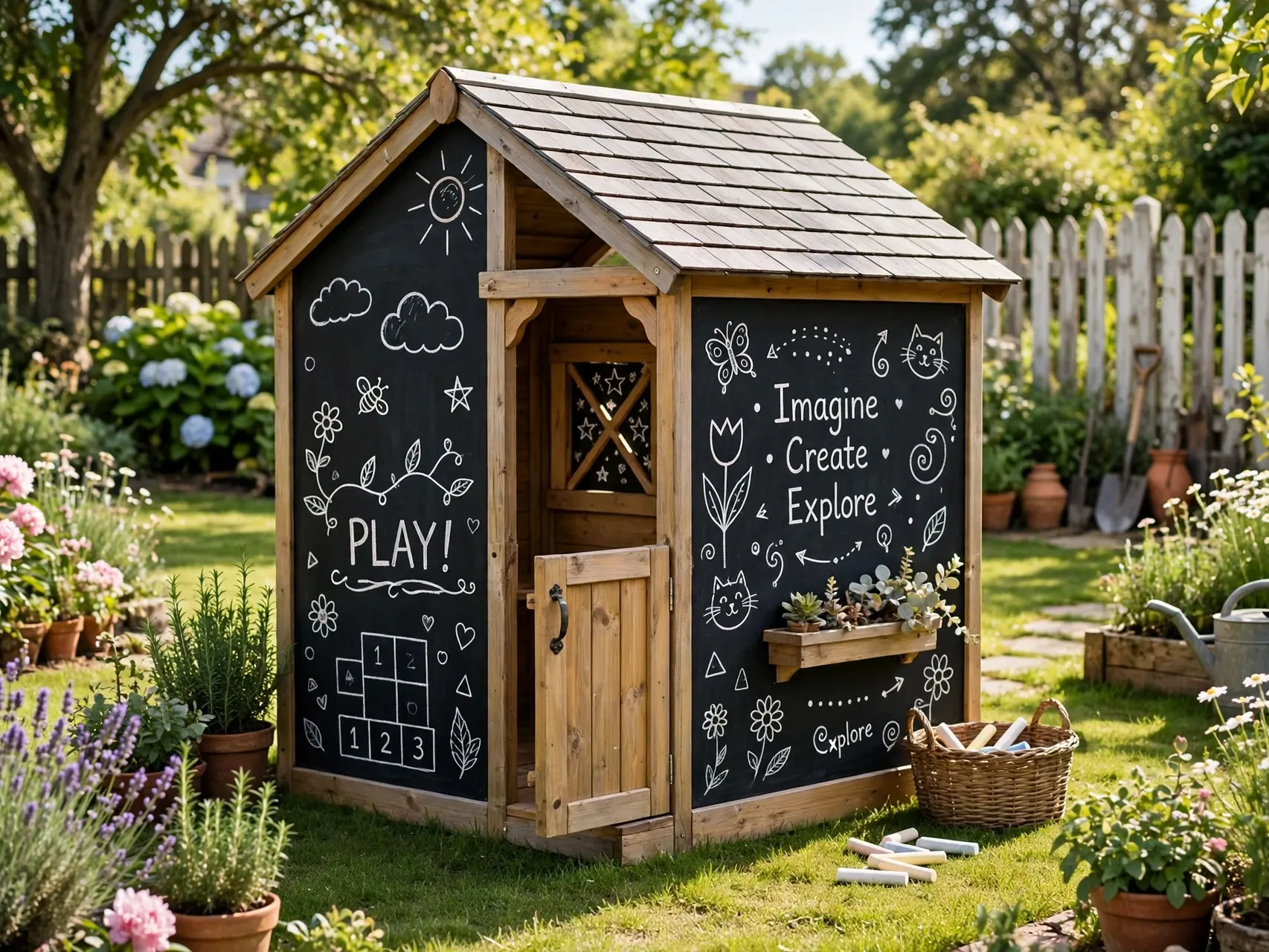
Paint one exterior wall with outdoor chalkboard paint and you add an ever changing art gallery, menu board and school wall in one. Add a bucket of chunky chalk and a brush for cleaning the board.
Use dustless chalk for younger children and keep the board low enough to reach without climbing. Chalk walls invite friends to join in, which makes the playhouse a social hub. Hose the wall down weekly to keep colors bright and the surface smooth.
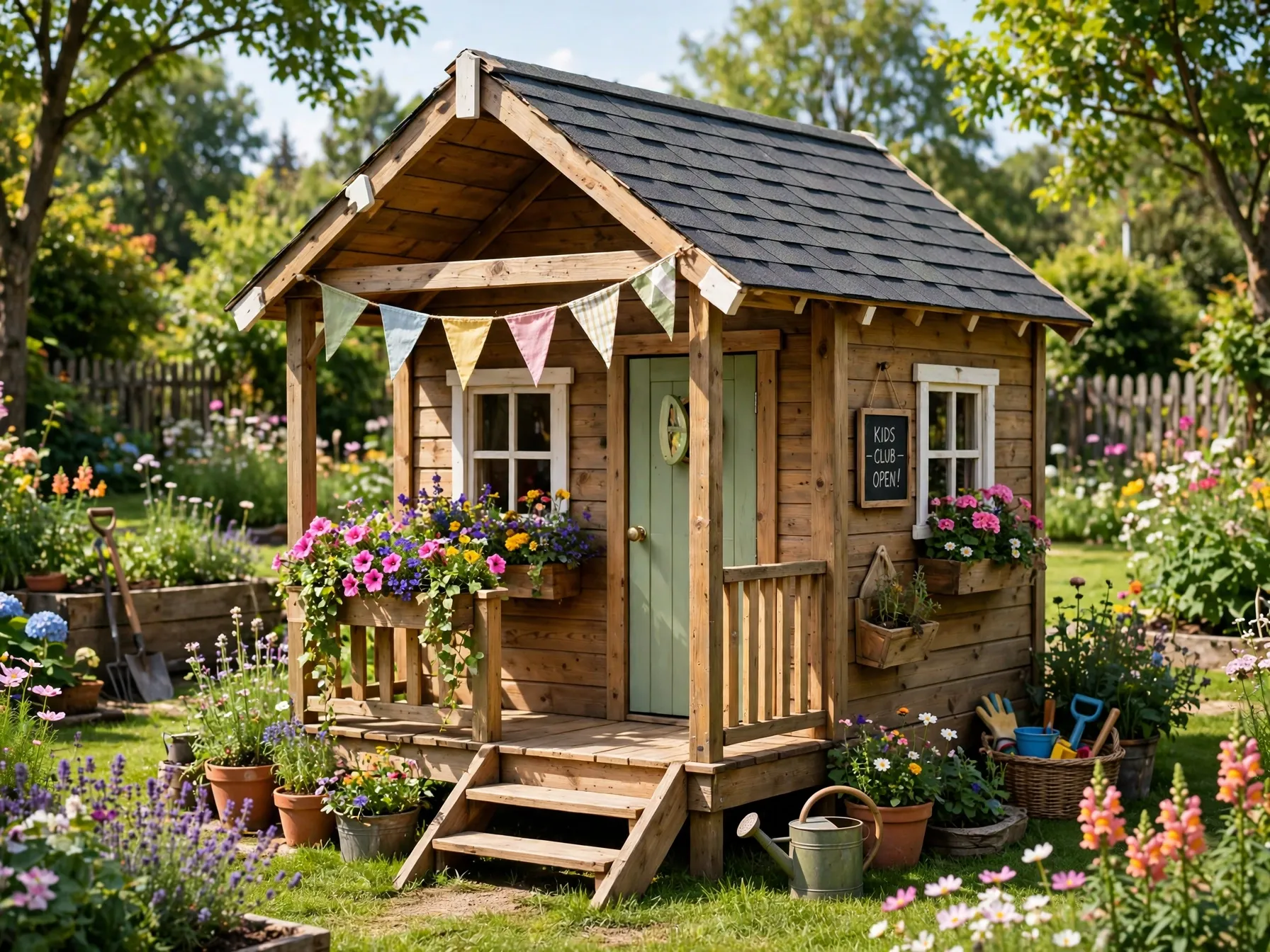
17. Garden Cottage With Flower Boxes
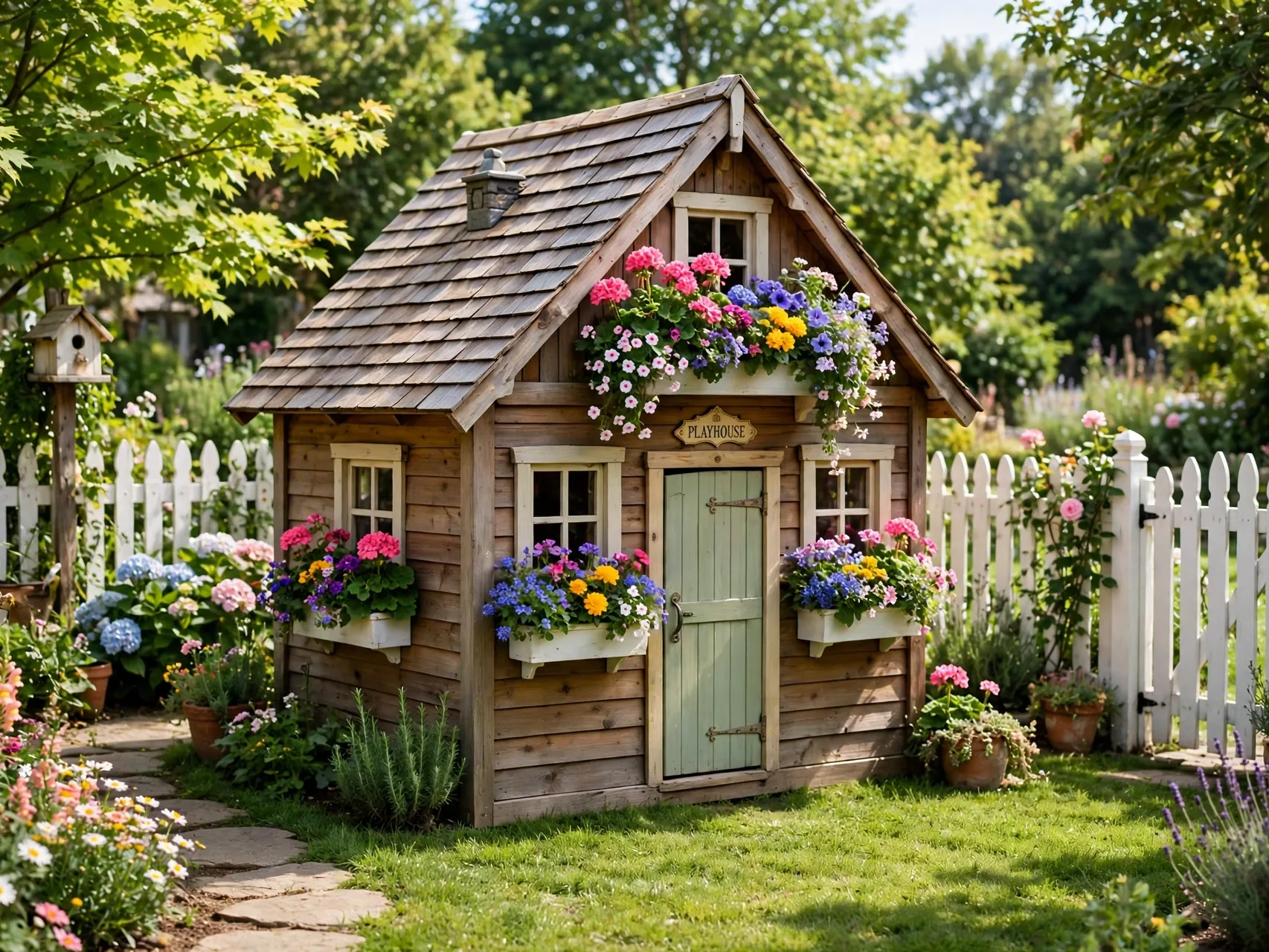
Window boxes, a picket mini fence and climbing flowers give a plain wooden house a storybook cottage finish. Children can water their own flowers and watch bees work the blooms beside the door.
Choose non toxic, child friendly plants and avoid thorny stems near paths and doors. Flower boxes at child height teach care and patience. This is the backyard playhouse for toddlers style many families pick, since it stays low, soft and close to the ground.
18. Playhouse With Swing Arm
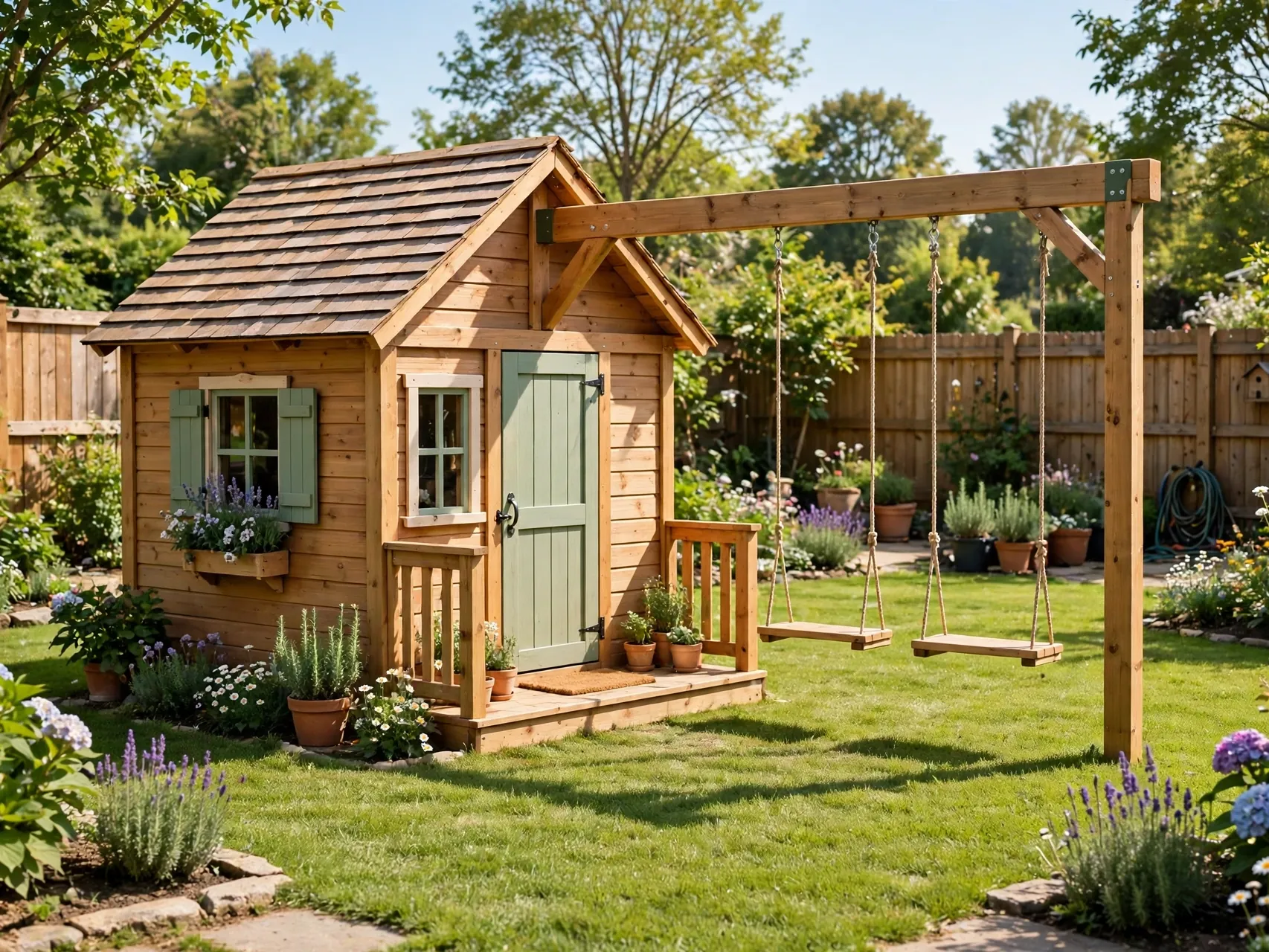
A strong side arm or attached frame holding one swing or a hanging pod chair doubles the fun of a compact house. The house gives shade and storage, the swing gives motion, and both fit one corner.
Anchor the frame to prevent tipping and keep the swing path clear, with surfacing extending in front and behind the swing by twice the height of the top bar, per CPSC guidance. One swing per bay, spaced well from the house wall, keeps play safe.
19. Drive Through Playhouse Garage
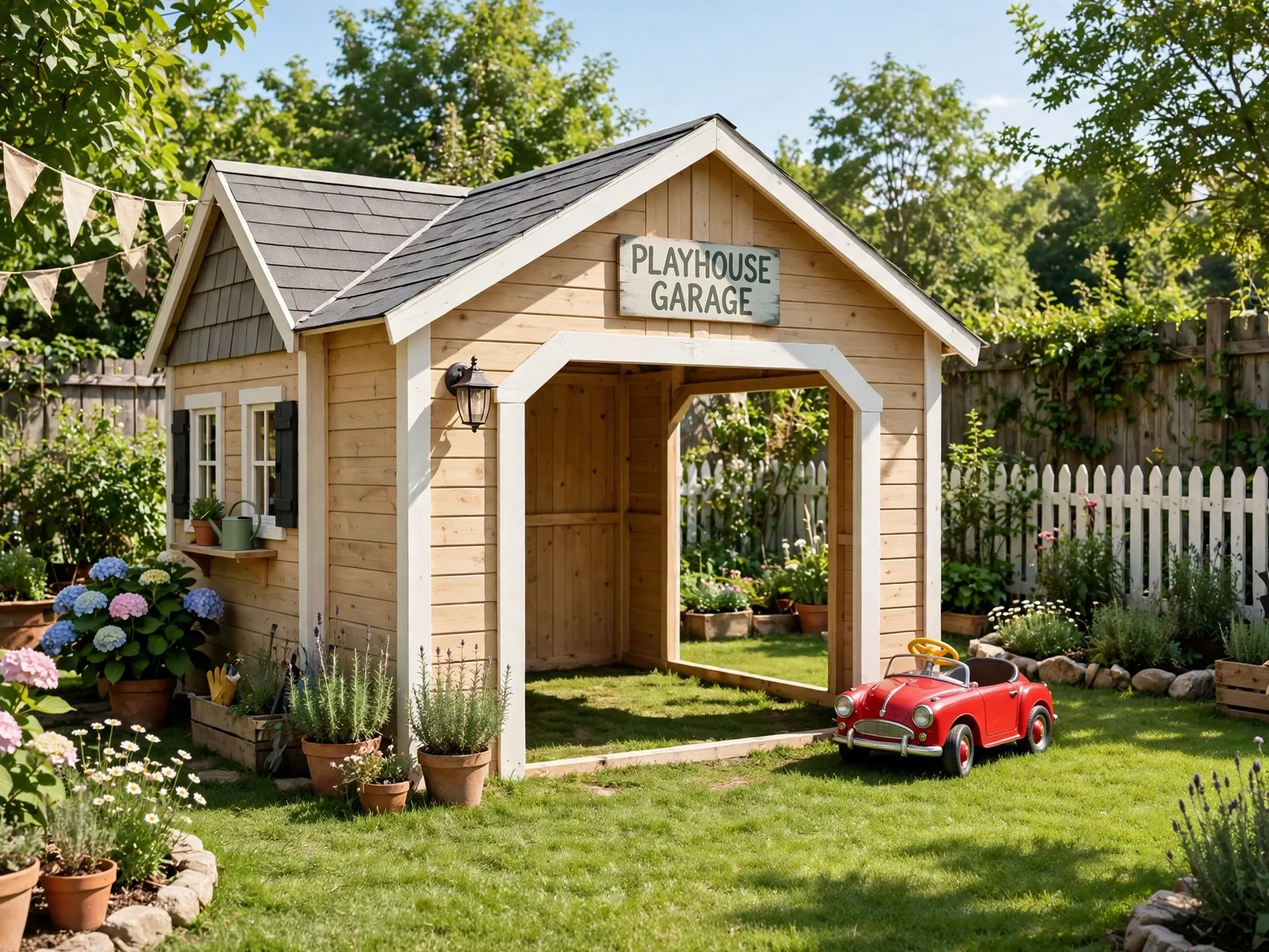
Cut a wide opening at both ends of a simple house and ride on toys can pass through like a garage or car wash, with fabric strips at one end for the full effect. Add painted road markings on a mat outside.
Keep openings smooth and splinter free, and set a one way rule to avoid crashes. This active design suits vehicle mad toddlers and needs no height at all. Store ride ons inside the house at night to keep them dry and tidy.
20. Playhouse Kitchen Diner Theme
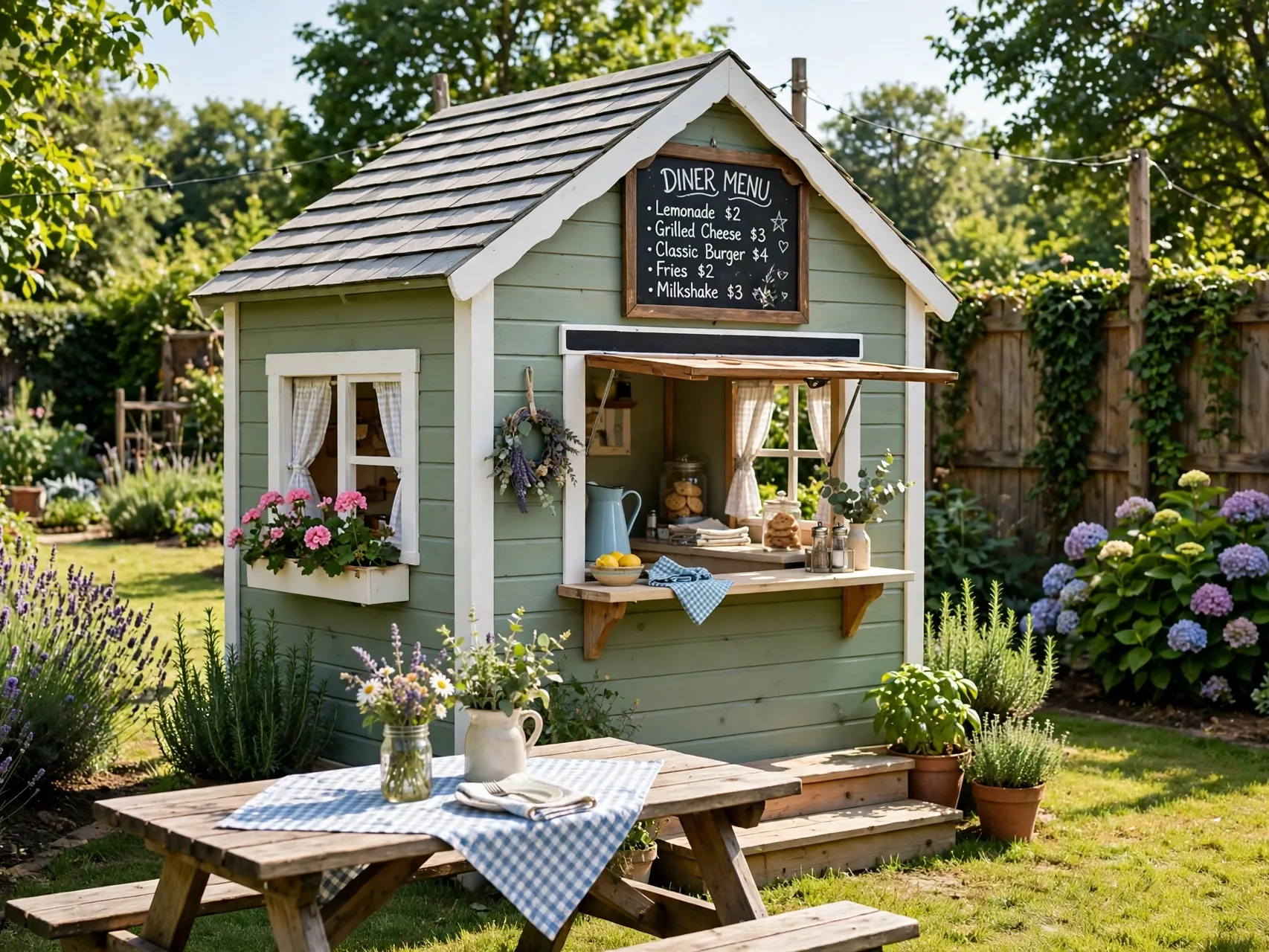
A serving hatch between inside and outside turns the house into a diner, with a counter, menu board and stools on the patio side. Food play is endless, social and easy to join for shy children.
Make the hatch edges smooth and the counter at child height. Add play food that is large enough for the youngest users. Serving games build language and turn taking, and parents get served a lot of imaginary coffee in the process.
21. Nature Observatory Playhouse

Fit one wall with a viewing window, a bird feeder outside and a simple nature shelf for pinecones, stones and leaves. Add binoculars and a notebook and the playhouse becomes a wildlife hide for patient watchers.
Place the house near planting that draws birds and butterflies, with a clear view from inside. This calm theme suits children who prefer quiet play. A roof overhang keeps the viewing window dry so the hide works in light rain too.
22. Playhouse With Slide and Picnic Deck
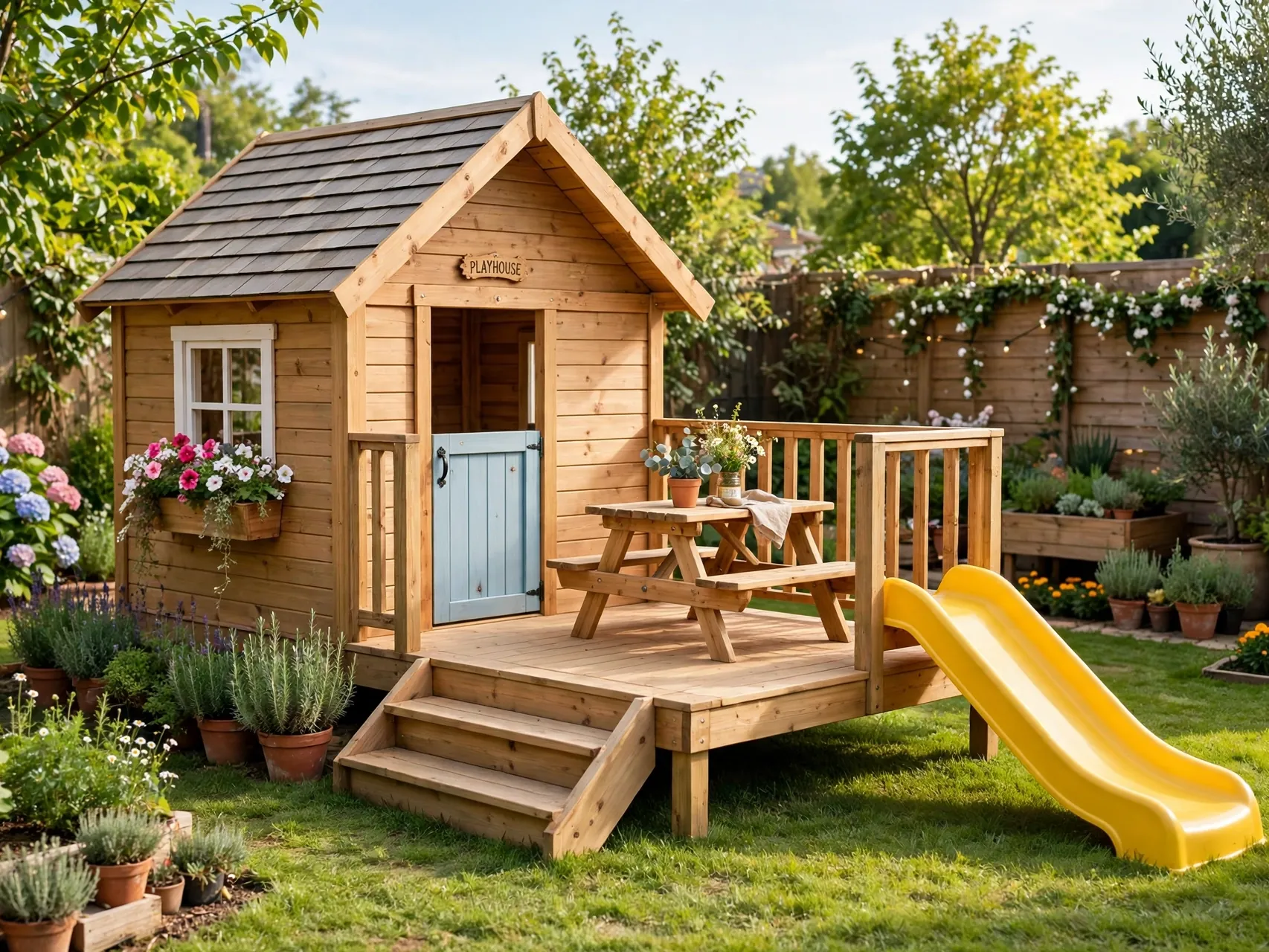
Combine a low slide, a small deck and a child size picnic table and you have a full play base in one build. Lunch, crafts and board games happen on the deck, slides and house play rotate around it.
Keep slide exits clear of the table and walkways, with soft landing surfacing at the base. Choose a slide that faces away from harsh afternoon sun where possible, since hot surfaces can burn skin. Test metal and dark plastic surfaces with your own hand before play.
23. Paint Your Own Playhouse Party Build
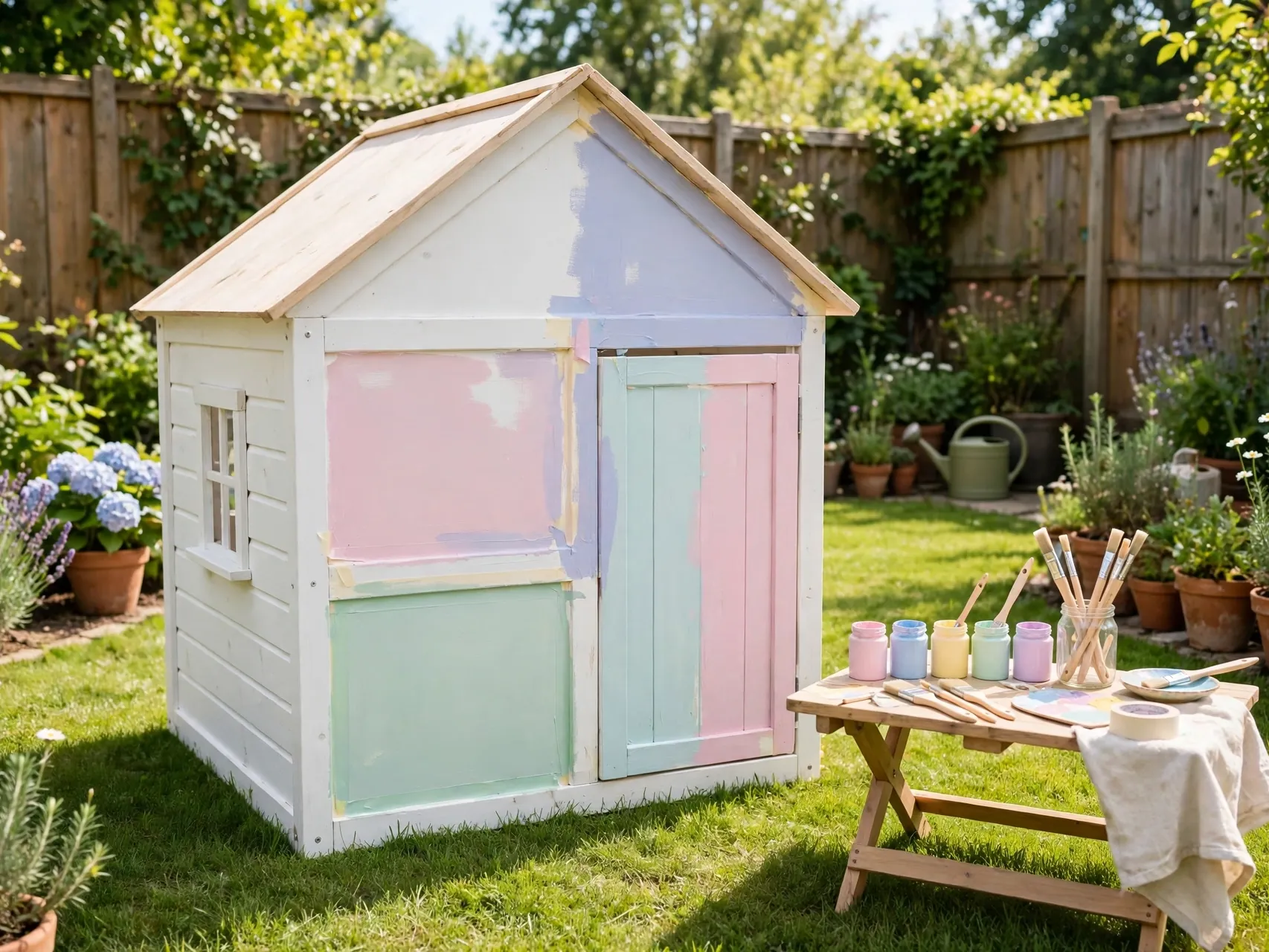
Build a plain, primed house and let children paint panels, handprints and patterns as a party or family project. The finish is joyful, personal and easy to refresh each year with a new theme.
Use exterior, low VOC paints suitable for the material and let coats dry fully before play. Adults should handle any cutting, sanding and structural work. A child painted house is never show home tidy, and that is exactly why families treasure it.
24. Safety Check Corner for Every Build

Whatever design you pick, finish with a safety pass: tighten bolts, cap protruding ends, sand sharp edges, check for trapped head openings and refresh the surfacing until it is deep and even again.
Repeat this check at the start of each season and after storms. CPSC guidance stresses regular inspection and active supervision as the habits that prevent most injuries. A safe DIY backyard playhouse is not a one time build, it is a small routine that keeps the magic going.
FAQ
What is the safest surfacing under a playhouse?
CPSC guidance recommends shock absorbing surfacing such as wood chips, mulch, sand, pea gravel or safety tested rubber mats. Loose fill should be about 12 inches deep and extend at least 6 feet around equipment, with more space in front of and behind swings.
How big should a DIY backyard playhouse be?
For most families, a house around 4 by 6 feet to 6 by 8 feet gives room for two to four children without overwhelming the yard. Toddlers need less space and lower heights than older kids, so size the build to the youngest regular user.
What wood is best for a playhouse?
Use exterior rated, smooth timber such as cedar or pressure treated lumber rated for the job, and avoid old CCA treated wood for surfaces children touch. Sand all edges, seal or paint with child suitable exterior finishes, and use galvanized or stainless fixings outdoors.
Do I need a permit to build a playhouse?
Small, temporary playhouses usually do not need a permit in many areas, but larger or permanent structures, tall clubhouses and builds near property lines may be regulated. Check local rules and HOA guidance before you build anything tall or fixed.
How do I keep a playhouse clean and pest free?
Sweep weekly, air cushions, check for wasp nests under eaves, and store food like items outside the house. Raise the base off damp ground, keep surfacing raked and dry, and close doors at night if your design has them.
Key Takeaways
- Safety shapes the design: Deep surfacing, guardrails and smooth edges come before paint colors.
- Build for the youngest user: Low heights and wide steps keep toddlers safe while older kids still play.
- Themes spark longer play: Kitchens, stands and dens turn a simple box into daily adventures.
- Use what you have: Pallets, sheds, boxes and willow make charming houses on a small budget.
- Inspect every season: Tight bolts, fresh mulch and a splinter check keep the house safe.
- Site it where you can see it: A visible, level spot away from roads and driveways is best.
Save these ideas to Pinterest for later, and pin the playhouse your kids will love most to start planning your build weekend.