20 Cottage Garden Ideas for a Dreamy English Garden Look
Introduction
A cottage garden looks effortless, but the dreamy effect comes from a few simple choices repeated well. The best cottage garden ideas start with layers, soft curves, and plants that are allowed to mingle, spill, and reseed a little each year.
You do not need a country cottage or a large yard. A front border, a side path, or one sunny bed beside a patio can carry the whole look if the planting is full and the edges stay soft.
Start by matching plants to your light and soil, then build height at the back, fullness in the middle, and a low, pretty edge at the front. Add one path, one climbing rose or clematis, and a small place to sit, and the garden starts to feel established surprisingly fast.
Work in drifts of three or more of the same flower rather than single scattered plants. That one habit makes an informal garden read as romantic instead of random, and it helps pollinators find the blooms too.
1. Plant in Three Clear Layers

Layering is the structure behind every good cottage border. Put tall plants such as hollyhocks, delphiniums, and foxgloves at the back, mid-height perennials like peonies, lavender, and daisies in the center, and low edging plants such as alyssum, violas, and creeping thyme at the front.
Keep the layers loose rather than in straight rows. Let a mid-height plant drift forward here and there, and let edging spill onto the path. Matched to your sun and soil first, this simple back, middle, front formula works in narrow beds and wide borders alike.
2. Start With Classic Cottage Garden Plants
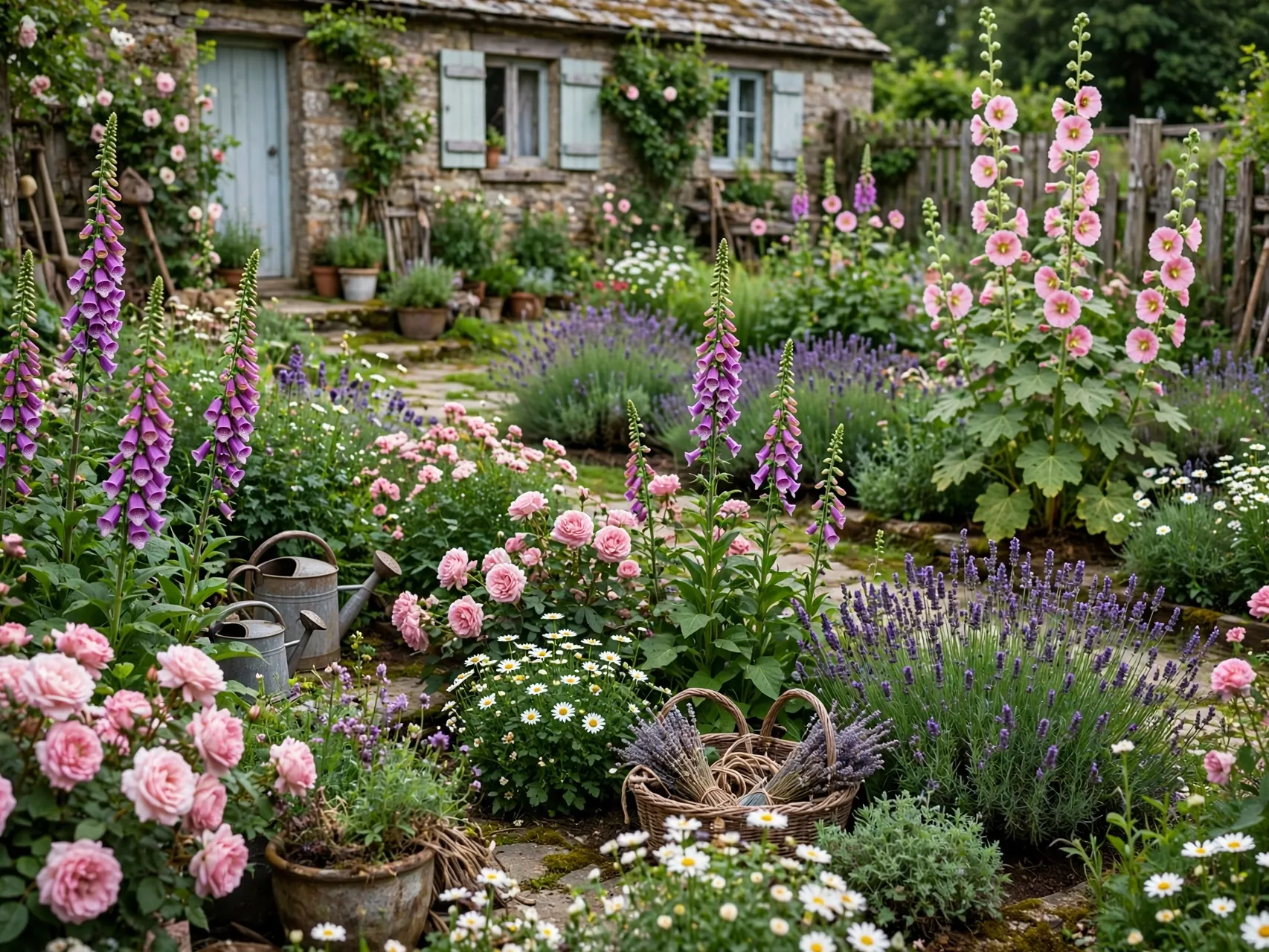
A short list of classics gives you the look without guesswork. Roses, lavender, peonies, hardy geraniums, catmint, and coneflowers form a reliable base, with hollyhocks and foxgloves adding height and old-fashioned charm.
Choose varieties suited to your climate and check mature sizes before you buy. Foxgloves are beautiful but toxic if eaten, so place them with care in homes with curious children or pets. Repeating these core cottage garden plants through the bed ties new plantings together and keeps the garden feeling full even while young plants are still filling in.
3. Add a Curved Path Through the Beds

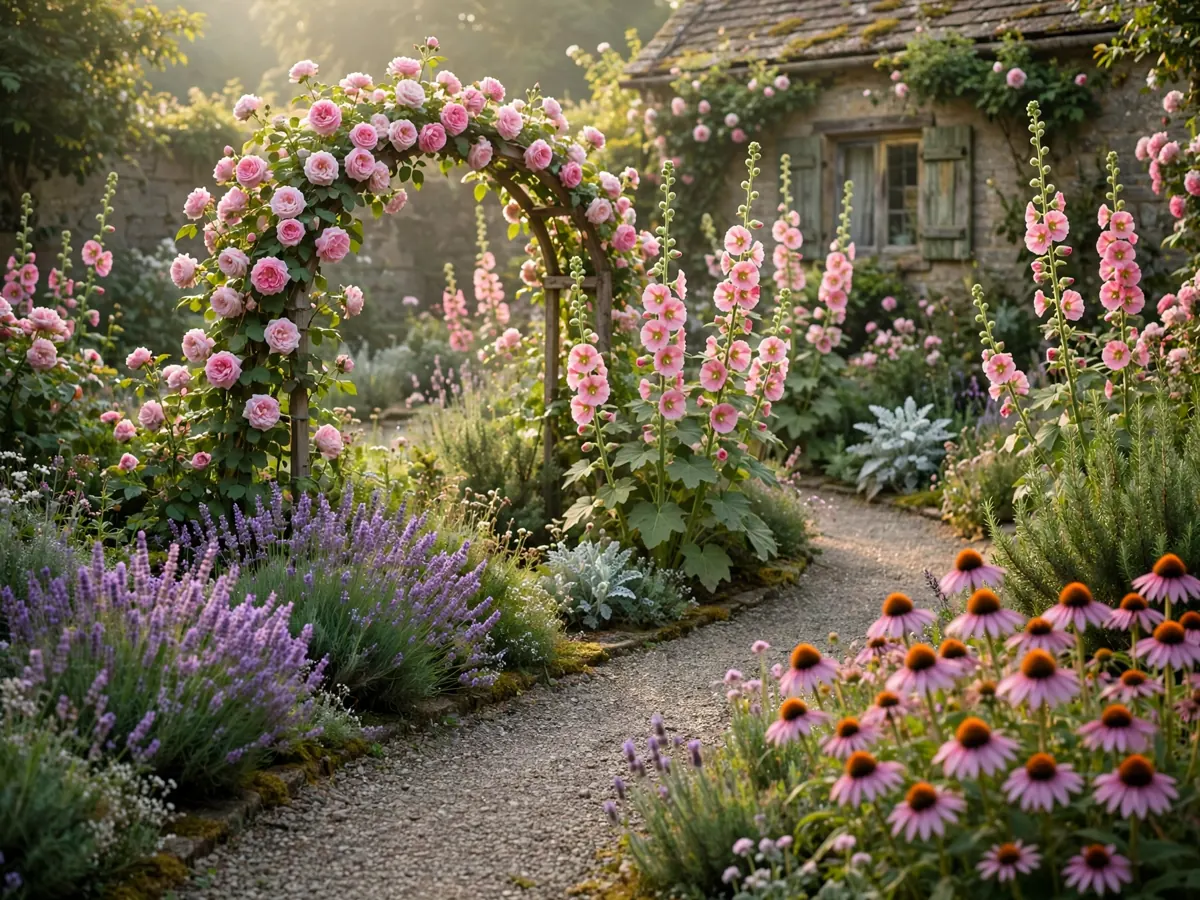
A gently curving path is the fastest way to make a plain yard feel like an english cottage garden design. Use stepping stones, gravel, or brick laid in a soft S shape, and let plants lean in from both sides so the route feels discovered rather than built.
Keep the path wide enough for comfortable walking and for a wheelbarrow. Gravel over a firm base is a forgiving, budget-friendly choice, and a few flat stones at turns give steady footing. Edge the path loosely, because a hard straight line undoes the relaxed mood.
4. Grow Roses Over an Arch or Arbor

A rose over an arch at a gate, path bend, or garden entrance is the signature cottage moment. Choose a climbing or rambling rose suited to your zone, plant it where it gets good sun and air flow, and tie new canes loosely to the support as they grow.
Train canes sideways as well as upward where you can, since that encourages more flowering growth along the stem. Pair the rose with a clematis on the same support to extend the show. Keep the base mulched and watered while the plant establishes, and prune only as your rose type needs.
5. Let Sweet Peas Climb a Simple Trellis
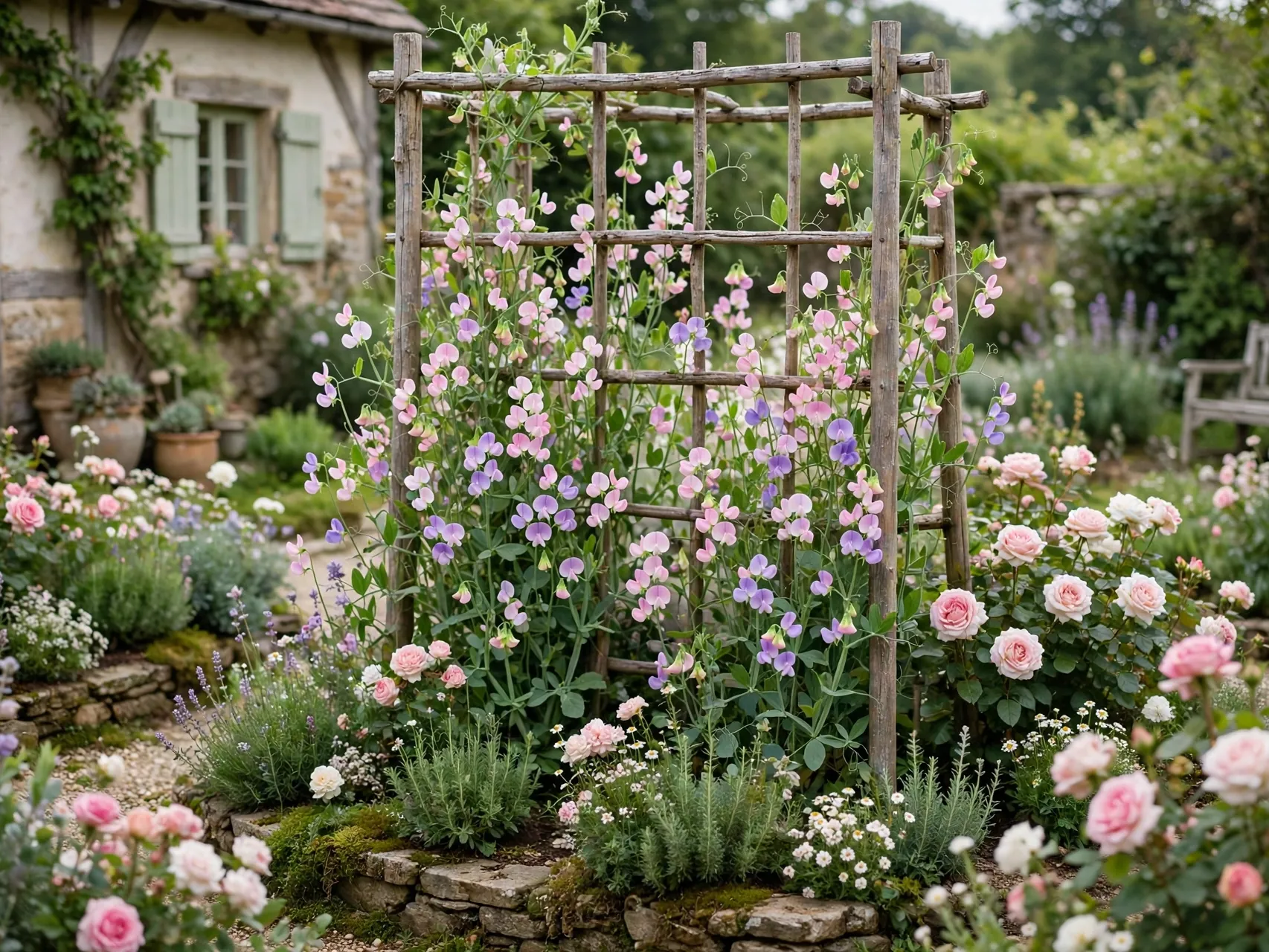
Sweet peas bring fragrance and soft color that few other annuals match. Sow them in cool weather, give them a trellis, teepee, or section of netting to climb, and plant them in rich, moist soil in sun.
Pick the blooms often. Regular picking keeps new flowers coming and stops the plant setting seed too early. Sweet peas dislike heat, so in warm regions start them early and give afternoon shade. A small teepee of bamboo canes in the middle of a border adds height, scent, and that tumbled, romantic look all season.
6. Mix Herbs Right Into the Flower Beds

Traditional cottage gardens were working gardens, so herbs belong among the flowers. Thyme along a path edge, sage and chives in the middle layer, and chamomile or rosemary near a bench add scent, texture, and something useful for the kitchen.
Brush past thyme or lavender on your way through and the garden rewards you every time. Keep mint in a pot sunk into the bed or in its own container, because it spreads hard. Mixing edibles with ornamentals is practical, pretty, and true to how these gardens began.
7. Plant in Drifts for Pollinators
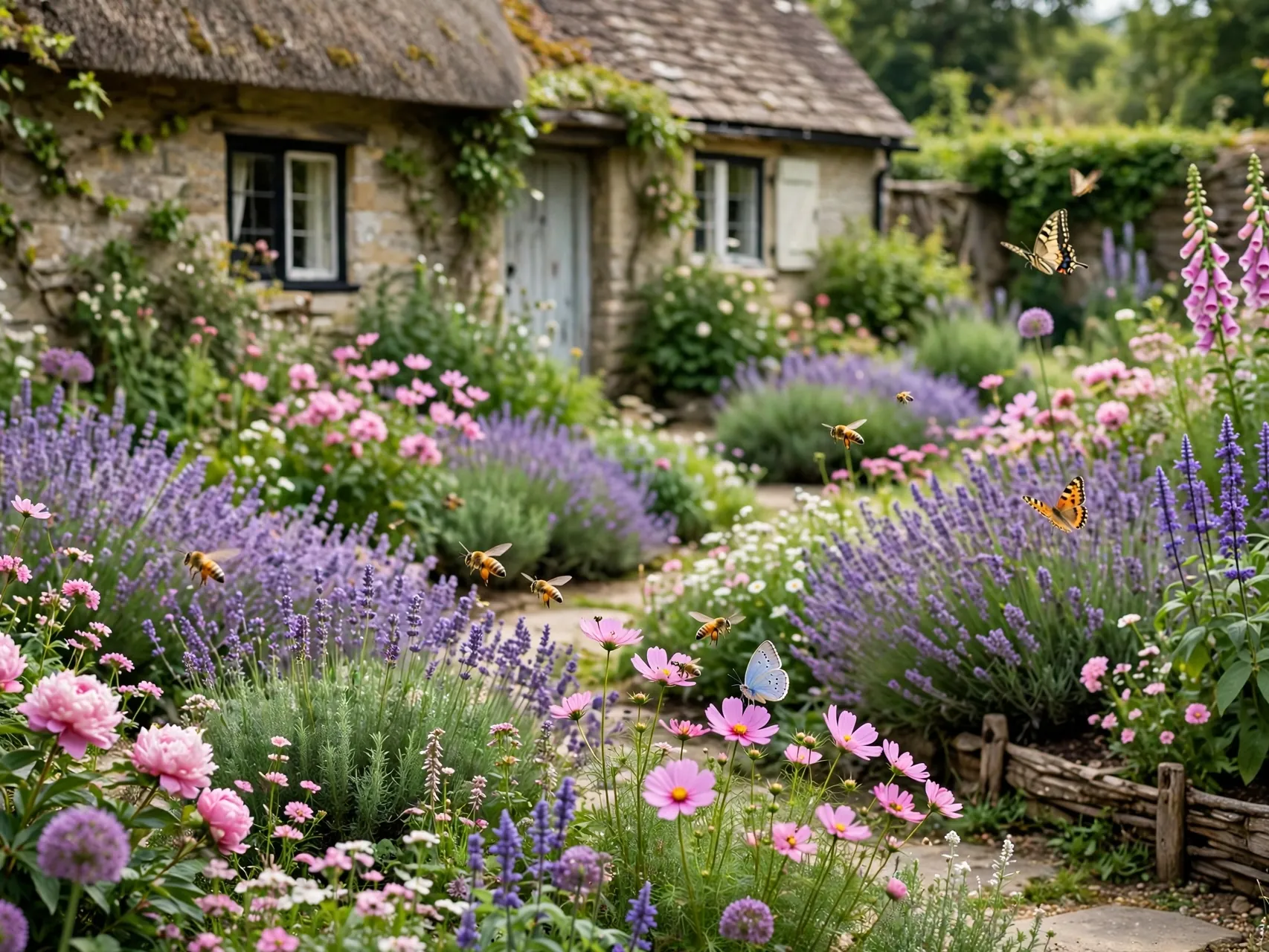
Bees and butterflies find flowers faster when the same plant grows in a block. Extension guidance for pollinator gardens recommends planting in drifts of three or more and choosing a succession of blooms from spring through fall, so something is always in flower.
Try columbine and phlox in spring, bee balm and coneflowers in summer, and asters and goldenrod into fall. Favor single flowers and locally adapted plants where you can, since many double blooms offer little nectar. Add a shallow dish of water with pebbles for safe landing, and skip sprays on open blooms.
8. Tuck in Self-Seeding Annuals
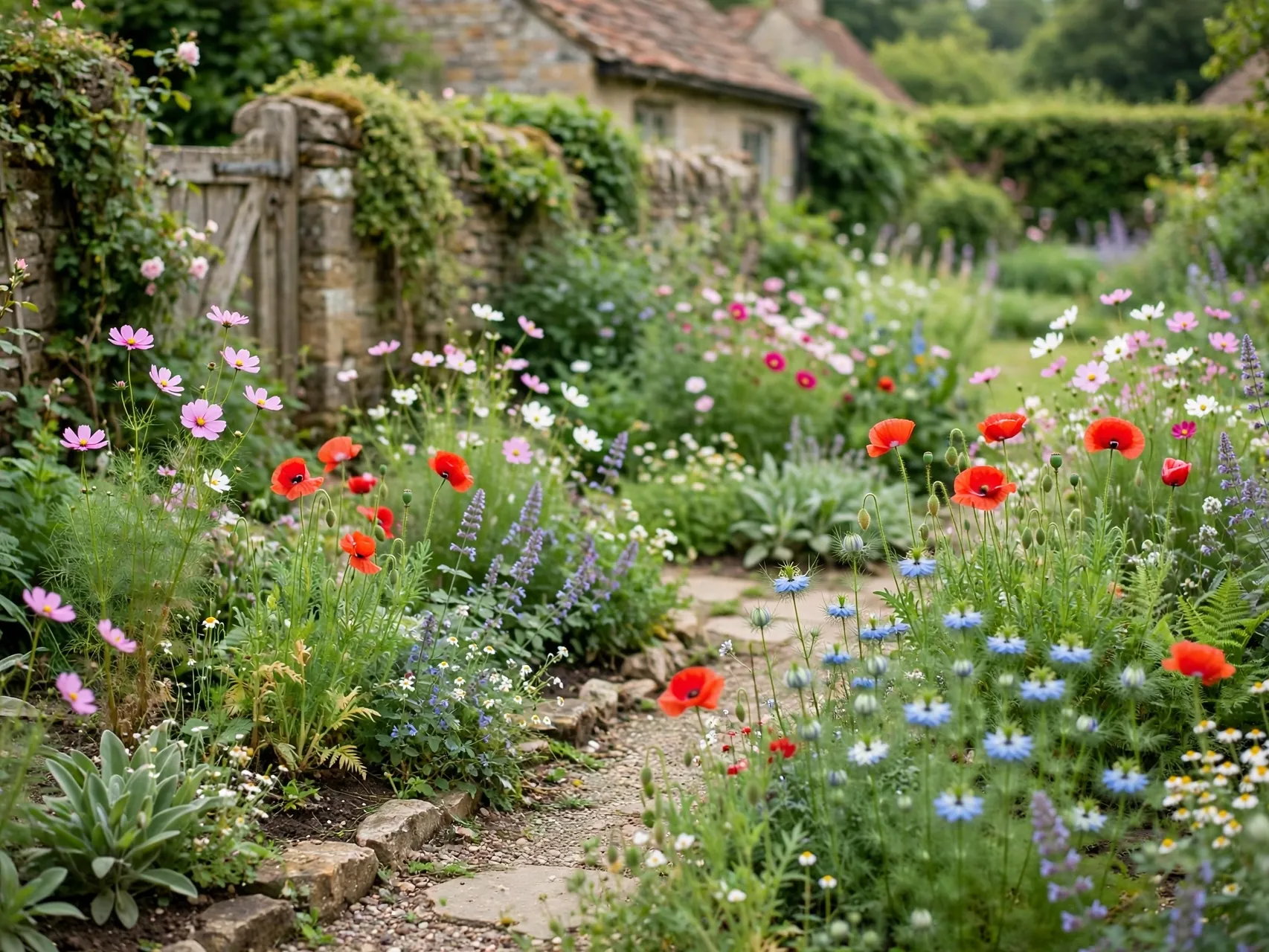
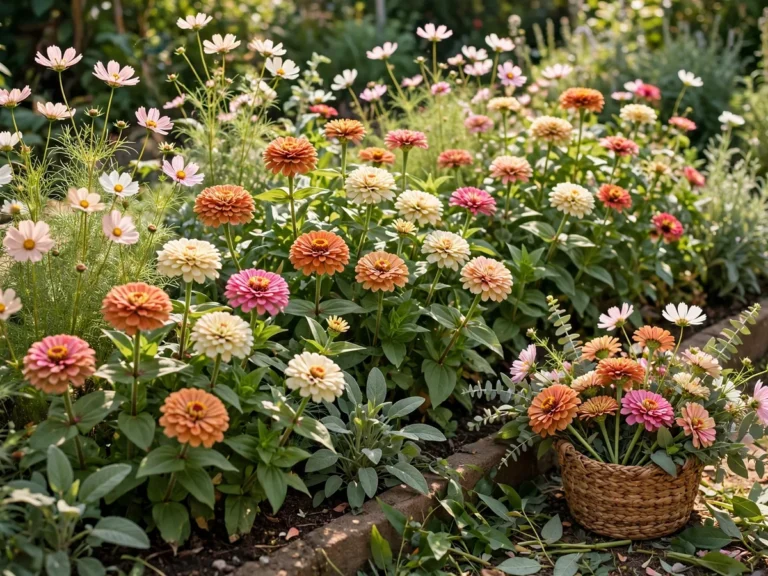
Cosmos, nigella, calendula, and poppies give a cottage garden its happy surprises. Scatter them into gaps in spring, let a few plants set seed at the end of the season, and enjoy seedlings appearing in new spots next year.
Self-seeders soften hard edges and fill spaces while perennials mature. Thin or move extra seedlings rather than letting them crowd young plants, and learn to recognize the seedlings so you do not weed them out by mistake. This gentle editing, not total control, is what keeps the planting feeling alive and a little wild.
9. Use a Picket Fence or Rustic Edge
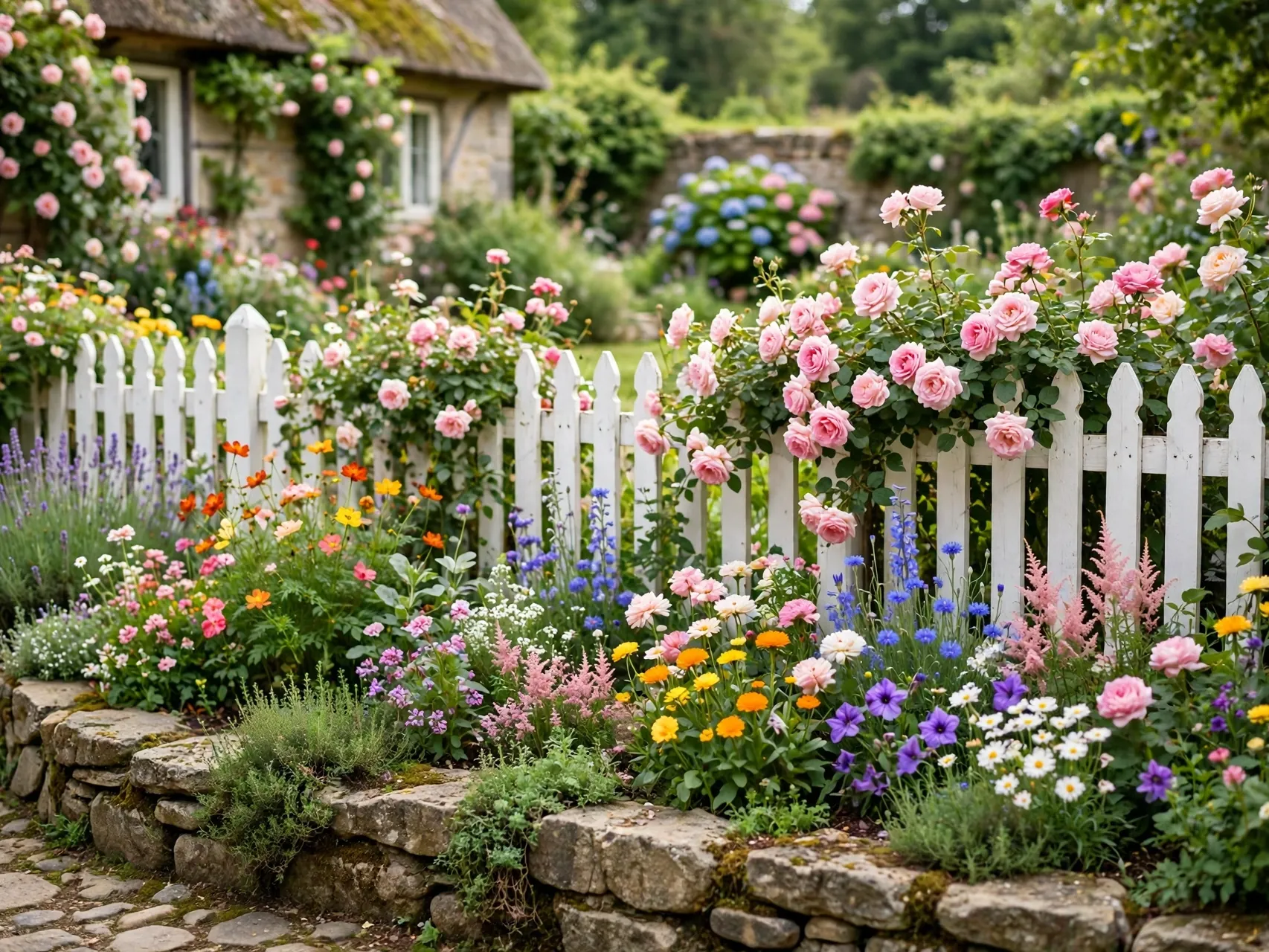
A low white picket fence is the classic frame, but any rustic edge works: low woven hurdles, a simple split rail, or a line of stone. The edge gives the full planting something to spill against and makes the abundance look intentional from the street.
Keep the boundary low so flowers show over it. Plant hollyhocks or roses just inside the fence for height, and let catmint or geraniums soften the base. In a front yard, this one feature turns mixed planting into a clear small cottage garden ideas win that neighbors read instantly.
10. Create a Tiny Seating Nook
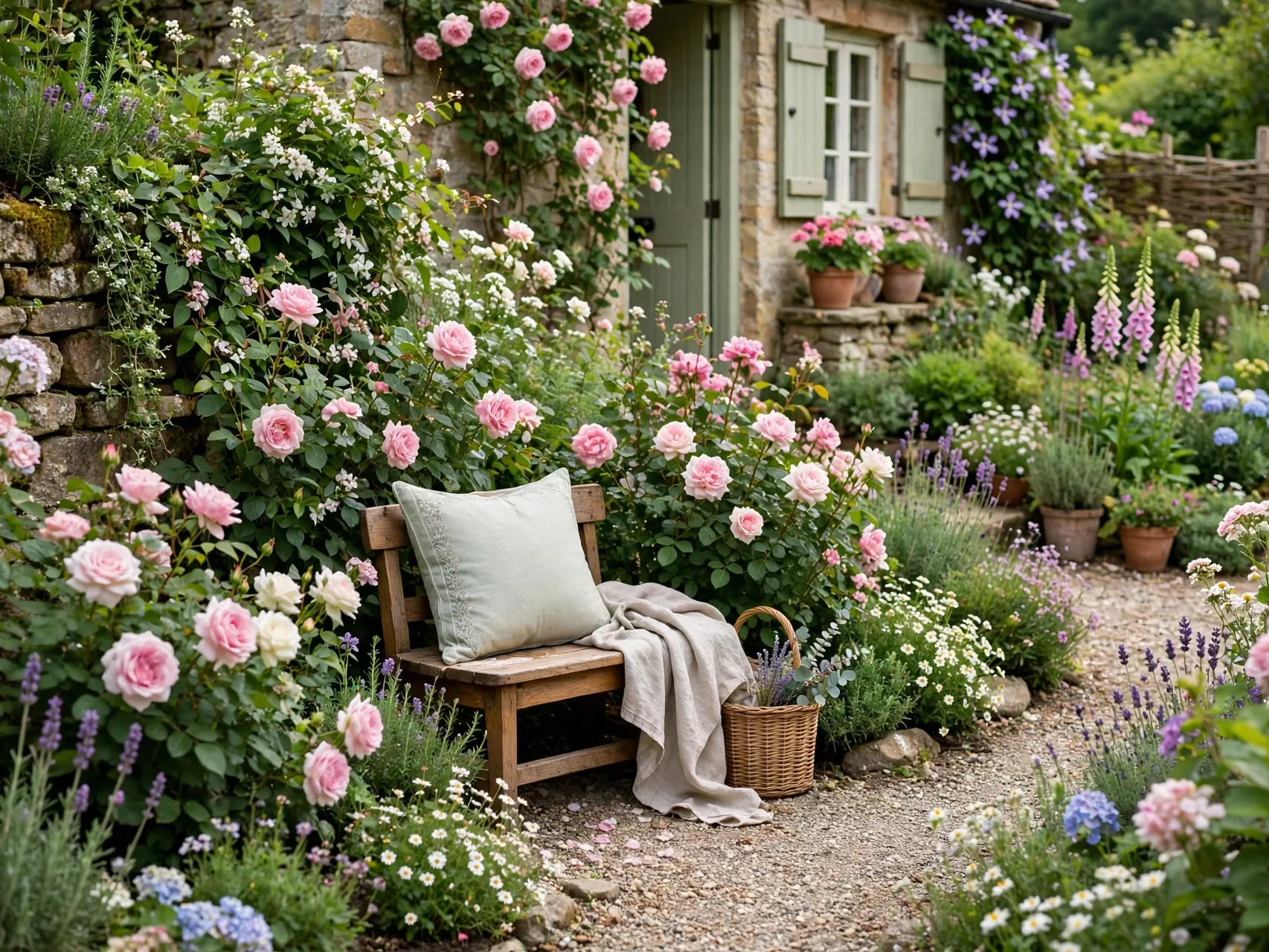
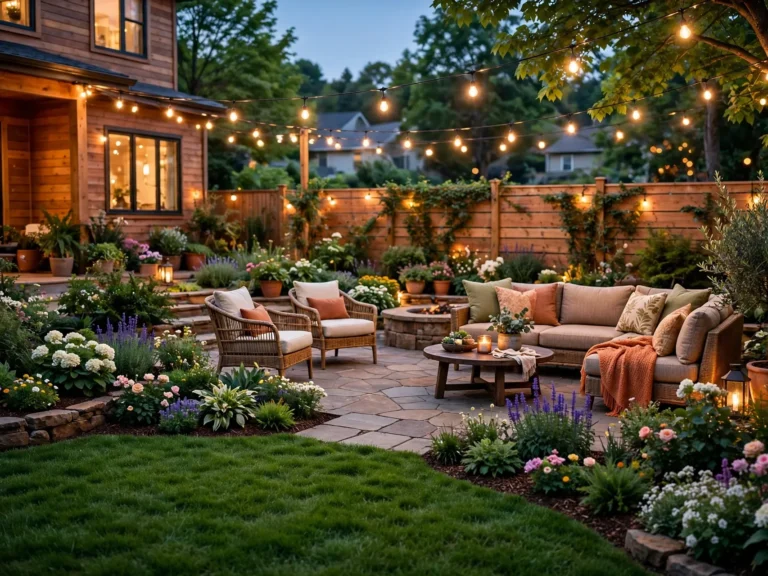
Every cottage garden needs a place to sit inside it, not just look at it. Tuck a small bench, a bistro set, or a single weathered chair into a widened spot beside the path, with scented plants close enough to enjoy.
Lavender, roses, and herbs around a seat make the nook feel enclosed and private even in a small yard. Add a cushion you can carry indoors and a flat stone or two underfoot. Morning coffee in that spot will teach you more about your garden light and visitors than any plan on paper.
11. Add a Birdbath as a Focal Point

A birdbath gives a loose planting a gentle center and brings movement and sound. Place it where you can see it from a window or seat, surrounded by mid-height flowers that offer birds a little cover nearby without hiding predators.
Keep the water shallow and refresh it often, scrubbing the bowl regularly. A stone or concrete bath suits the style best and stays put in wind. In winter, a simple bath still reads as sculpture in bare borders. Small focal points like this stop a full garden from feeling like one undifferentiated mass of green.
12. Soften Walls and Fences With Climbers
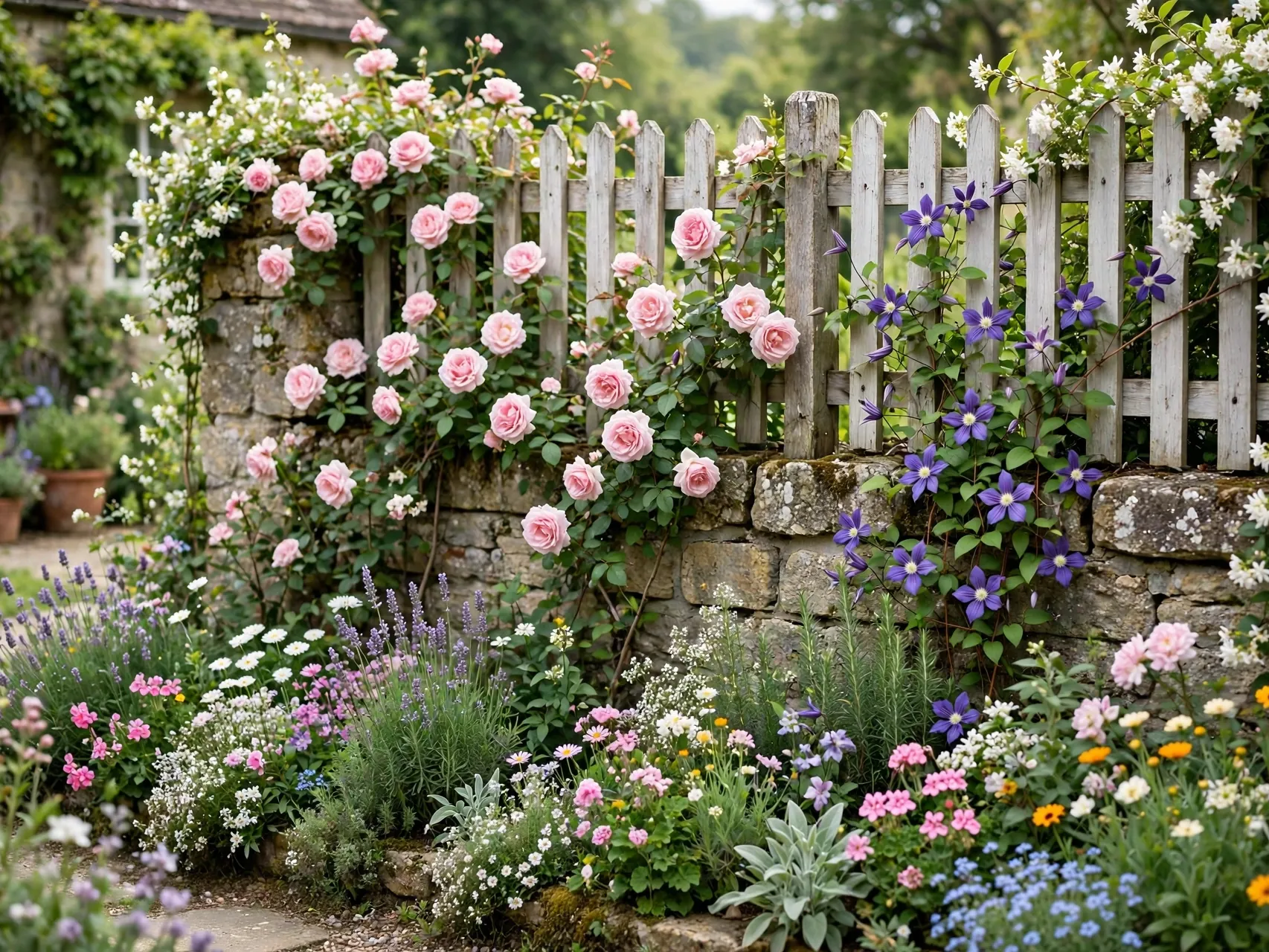
Bare fences and walls make a garden feel boxed in. Clematis, climbing roses, honeysuckle, and star jasmine blur those boundaries and add a second layer of flowers at eye level and above.
Use sturdy wires, trellis panels, or an obelisk where a wall needs protection, and check that vigorous growers suit your space before planting. Combine a clematis with a rose on one support for a longer display. Climbers also shade seating, cool a hot wall, and give birds shelter, which is a lot of work from one narrow planting strip.
13. Build a Year-Round Bloom Sequence

A garden that peaks for three weeks in June disappoints the rest of the year. Plan a relay instead: snowdrops, crocus, and daffodils early, tulips and irises in spring, roses, lavender, and peonies into summer, then coneflowers, asters, and sedum carrying color into fall.
Keep a simple bloom calendar and note gaps as you spot them. Fill a gap with one new drift rather than redesigning the bed. Evergreen structure and ornamental grasses hold the picture in winter. This succession planning is the quiet secret behind the best cottage garden flowers displays you see shared online.
14. Edge Beds With Lavender or Catmint

A repeated low edge pulls a mixed border together. Lavender gives scent, structure, and pollinator value in sunny, well-drained spots. Catmint is tougher, flowers for a long stretch, and spills beautifully over paths and stone.
Plant the edge in a loose rhythm, not a tight hedge, and shear catmint lightly after its first flush to encourage more blooms. Lavender needs drainage more than richness, so avoid soggy soil and heavy winter wet. Either choice perfumes a path every time you brush past, which is one of the small pleasures cottage gardens do best.
15. Add Terracotta Pots and Rustic Containers
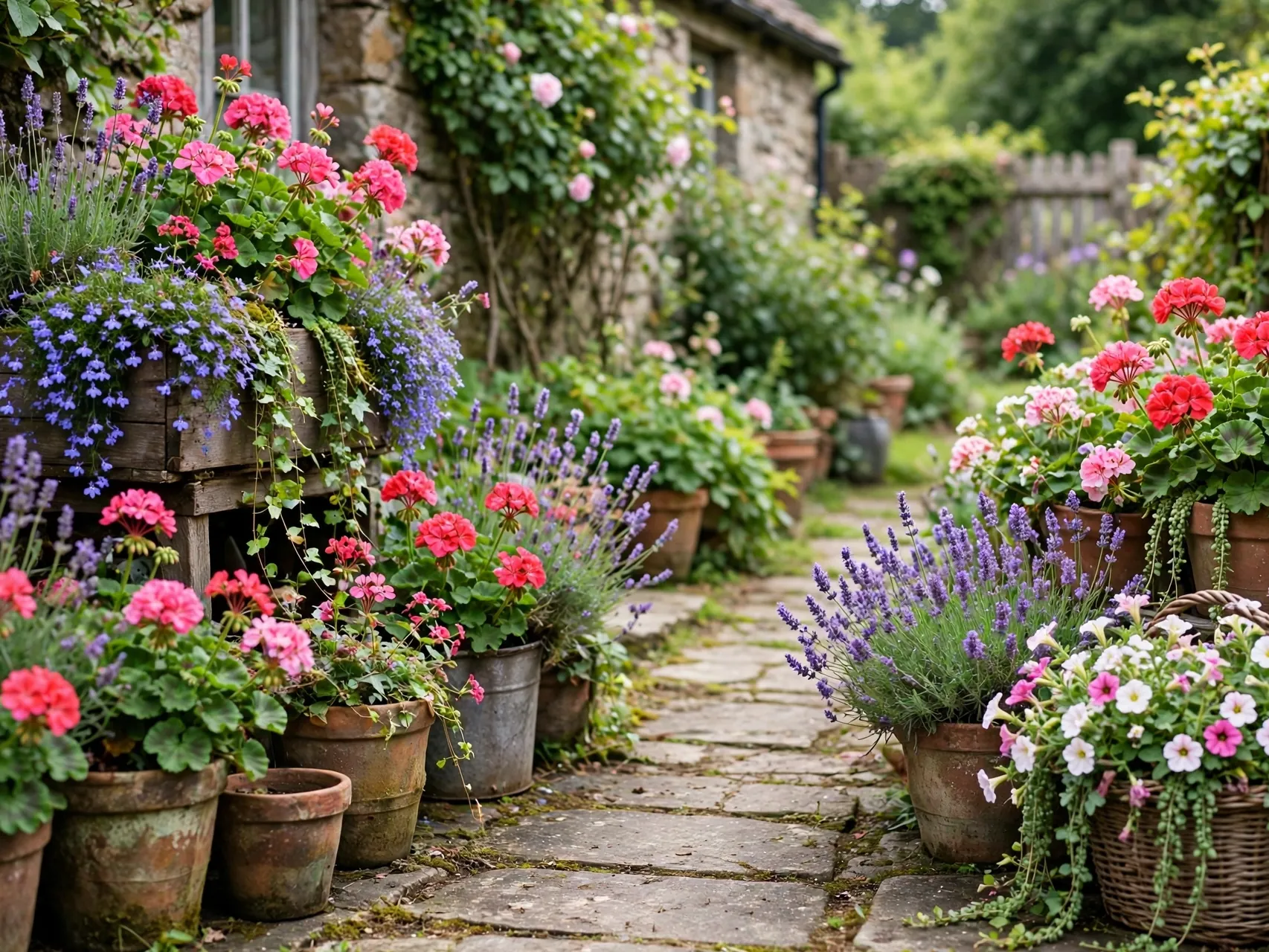
Pots let you extend the garden onto steps, patios, and bare corners where digging is not possible. Terracotta, aged stone, and simple galvanized containers suit the style. Group them in threes, plant them full, and let trailers spill over the rims.
Containers are also the safe home for mint and other spreaders, and a kind way to trial a tender plant. Water pots more often than beds, especially in heat, and raise them slightly for drainage. A cluster by the front door gives renters and small yards an instant cottage welcome.
16. Prepare Soil With Compost First

Full planting only works if the soil can feed it. Before planting, clear weeds, loosen the bed, and dig in generous compost or well-rotted organic matter. On heavy clay, organic matter plus a little grit improves drainage and root growth over time.
Healthy soil holds moisture through dry spells, which closely planted borders need. Top up with mulch after planting to keep roots cool and weeds down, leaving a small gap around stems. Feeding the soil each year with compost usually beats chasing individual plants with fertilizer in this style of garden.
17. Make a Cottage Front Yard Border
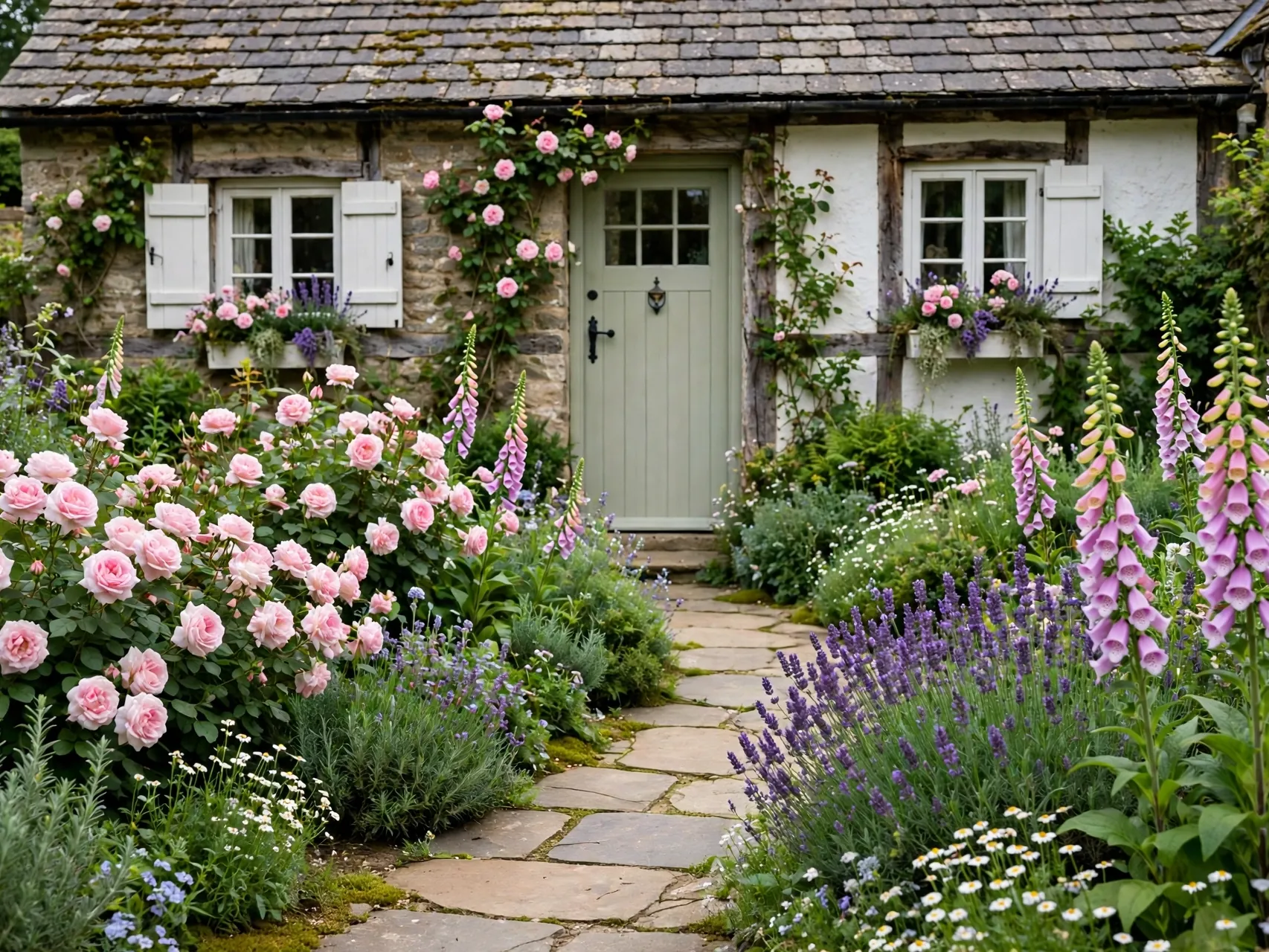
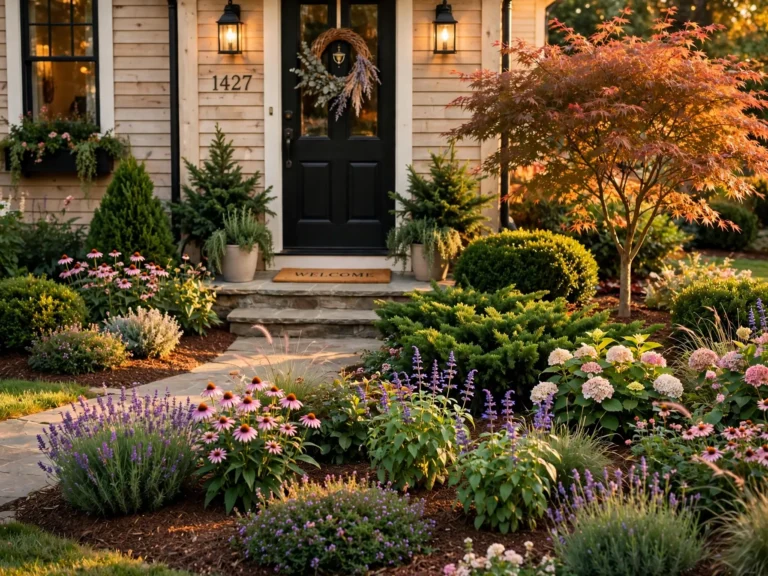
You do not need to give up the whole front yard. One deep border along the house or fence, planted in layers with a picket edge or low stone, delivers the look while the rest stays simple.
Choose tidy, long-flowering plants near the path and taller classics at the back. Repeat two or three colors so the border feels planned from the sidewalk. Check local rules and any homeowners association guidance before replacing lawn, and keep sight lines clear at driveways. A front border is often the most enjoyed planting in the house.
18. Add Height With Obelisks and Tuteurs

Flat beds can look one-note by midsummer. Wooden or metal obelisks, tuteurs, and simple cane wigwams add instant height for clematis, sweet peas, or climbing beans, and they give the eye stopping points through the border.
Place them where a path turns or behind mid-height planting, and anchor them firmly before plants climb. In winter, the structures still give the bare garden shape. One or two supports are usually enough in a small space. More than that and the garden starts to feel like a collection of equipment instead of a planting.
19. Keep Colors Soft and Repeated

Classic cottage palettes lean soft: pink, lilac, white, pale yellow, and lavender, with green doing the quiet work between them. Pick two or three main colors, repeat them in drifts along the bed, and let foliage textures vary instead of adding more hues.
A few deeper accents, like a burgundy rose or purple salvia, keep pastels from washing out. Hot colors can work, but use them in one area rather than dotted everywhere. Repetition is what makes an informal mix photograph like the dreamy gardens you save, rather than a cheerful jumble.
20. Edit Gently and Let It Evolve
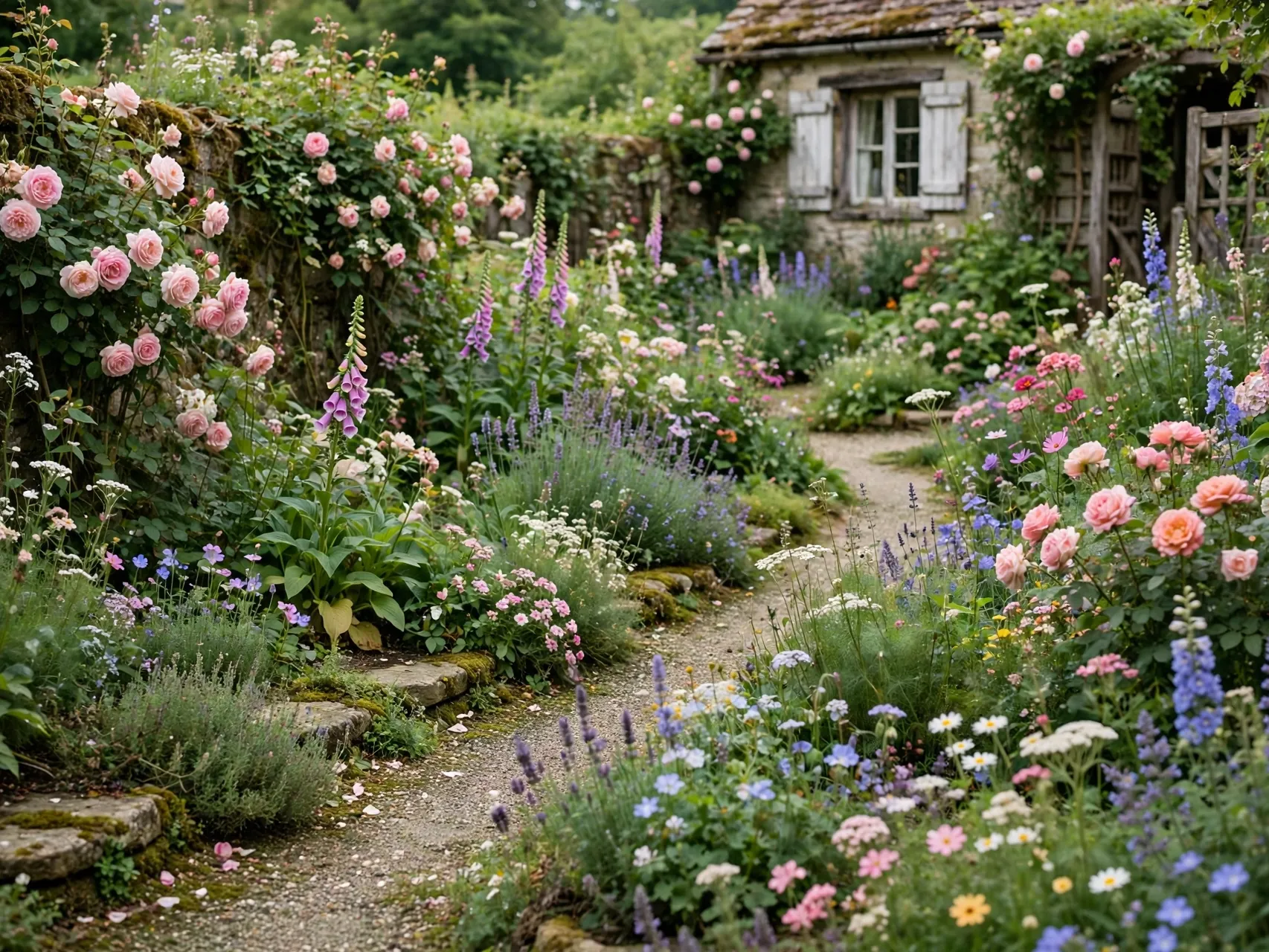
Cottage gardens are tended, not controlled. Deadhead roses and annuals to keep blooms coming, stake tall plants before wind flattens them, divide crowded perennials every few years, and pull seedlings only where they truly crowd something else.
Walk the garden weekly with snips and a bucket. Ten small minutes of editing beats a monthly rescue mission. Let a sunflower stand where it chose to grow and a hollyhock lean a little. That relaxed confidence, backed by good soil and clear layers, is the real english cottage garden design lesson worth copying.
FAQ
What are the best plants for a beginner cottage garden?
Start with hardy, forgiving classics that suit your light and soil: lavender or catmint for edges, hardy geraniums and coneflowers in the middle, and one climbing rose for height. Add cosmos and calendula from seed for cheap, fast flowers while perennials fill in during their first seasons.
How do I start a cottage garden in a small yard?
Begin with one bed rather than the whole yard. Layer tall, middle, and low plants in that single space, add a short curved path or stepping stones, and include one focal point such as a birdbath or small bench. A full, small border reads far more cottage than thin planting spread everywhere.
Do cottage gardens need a lot of maintenance?
They need regular light care rather than heavy work. Closely planted beds shade out many weeds, but you will deadhead, water new plants, divide perennials occasionally, and edit self-seeders. Short weekly sessions keep it pleasant. Choose plants matched to your site to cut watering and pest problems.
Can I grow a cottage garden in shade?
Yes, with shade-suited plants. Foxgloves, hardy geraniums, hostas, astilbe, and columbine handle partial shade well, and a lighter palette of white and pale flowers brightens dim corners. Full dense shade limits flowering, so aim for spots with morning sun or dappled light where possible for the dreamiest effect.
How do I keep a cottage garden blooming all season?
Plant a relay of flowers rather than one big moment. Combine spring bulbs and irises, early summer peonies and roses, midsummer lavender and coneflowers, and late asters and sedum. Plant in drifts, deadhead spent blooms, and keep a simple calendar so you can spot and fill any quiet gaps next year.
Key Takeaways
- Layers first: Tall anchors at the back, full perennials in the middle, and low scented edging at the front create the cottage shape in any size bed.
- Drifts, not dots: Planting three or more of the same flower together looks romantic and helps pollinators find blooms through the season.
- Soft structure helps: A curved path, a low rustic edge, one arch or obelisk, and a small seat give loose planting its dreamy frame.
- Soil and succession: Compost-rich soil and a planned relay from spring bulbs to fall asters keep cottage garden ideas working for months, not weeks.
- Edit, do not control: Gentle weekly deadheading, staking, and seedling edits keep the garden full and relaxed instead of tidy and stiff.
- Planning your own dreamy border? Save this guide to Pinterest and pin the ideas you want to plant first this season.