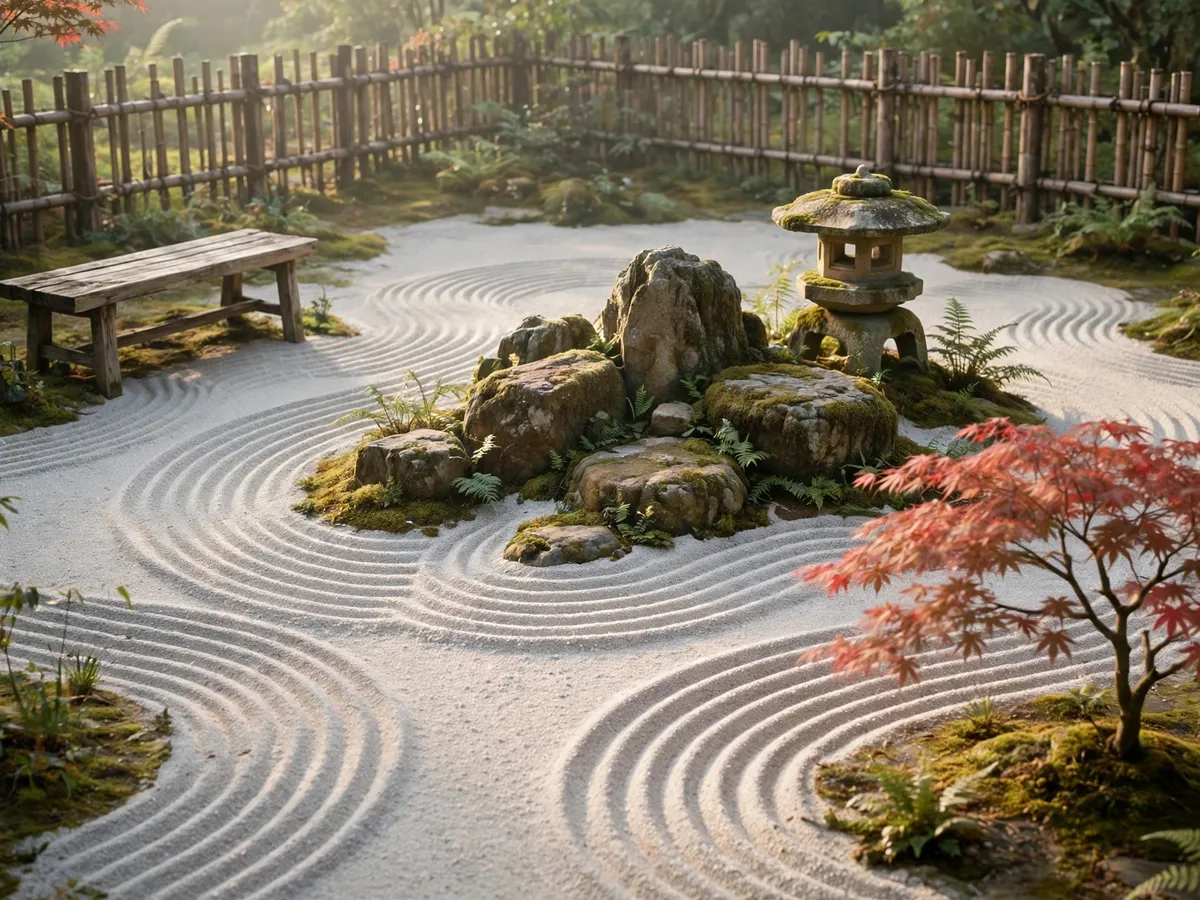
20 Backyard Zen Garden Ideas for a Peaceful Retreat
Introduction
A backyard zen garden does not ask for a big yard or a big budget. At its heart it is a simple composition: gravel or sand, a few well-placed rocks, restrained planting and lots of calm empty space. Traditional Japanese rock gardens use raked gravel to suggest water and stones to suggest mountains or islands, and that quiet symbolism translates surprisingly well to an ordinary American backyard.
You can build a full garden over a season or start with one corner this weekend. The ideas below move from the classic foundations, like raked gravel and rock groupings, to small-space and low-maintenance options such as tray gardens and succulent gravel beds. Each one keeps the same rule in mind: fewer elements, placed with care, beat a yard full of ornaments.
Before you start, watch how light moves across your yard for a day and pick the spot that already feels calmest. Check your USDA hardiness zone before choosing trees or bamboo, and plan for asymmetry. Zen gardens rarely line things up in even rows, and that relaxed imbalance is exactly what makes them restful to look at.
1. Rake a Gravel Sea
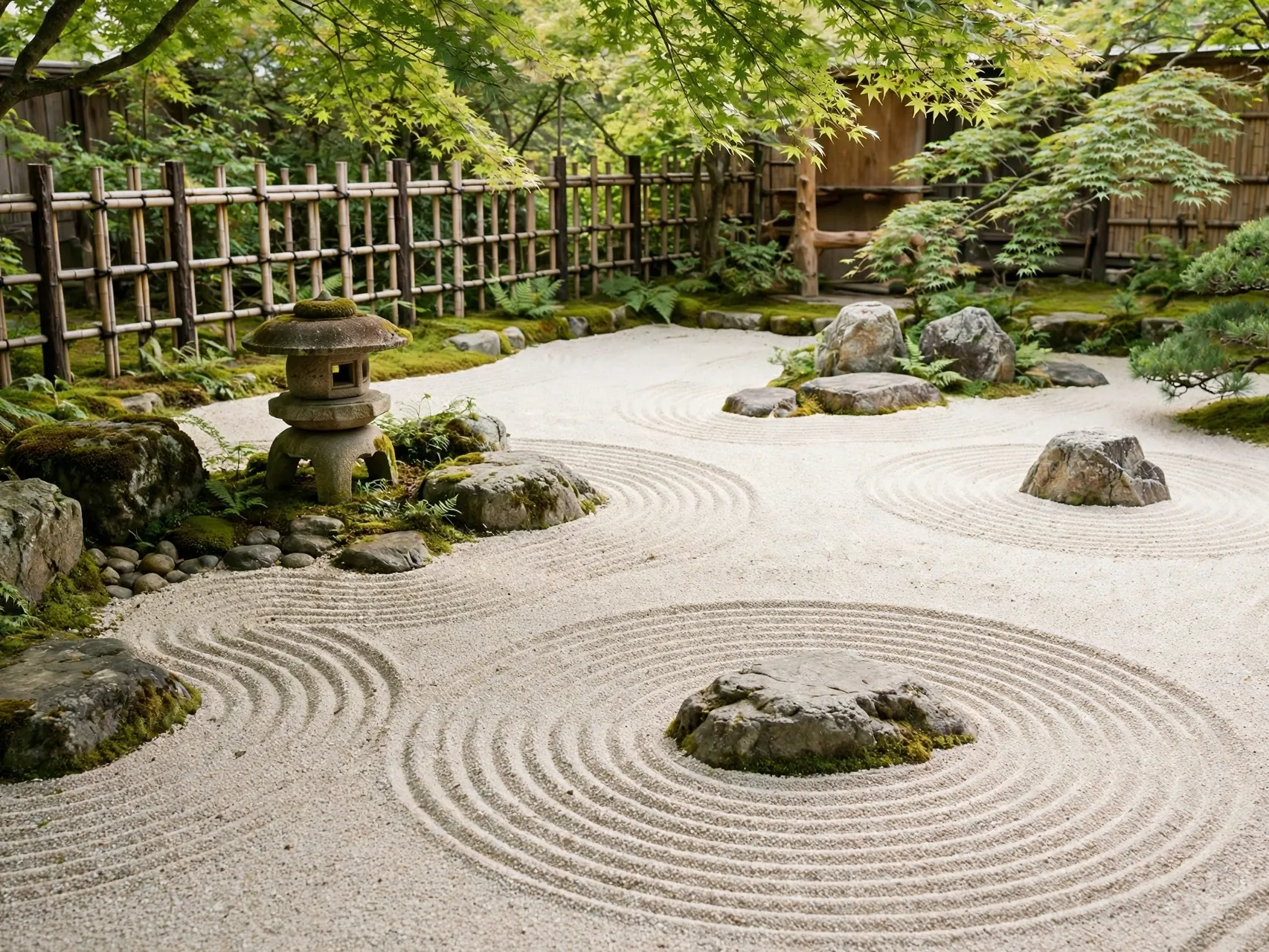
The raked gravel bed is the signature of the dry garden. Spread pale gravel or coarse sand two to three inches deep over landscape fabric, then rake long, gentle waves around your rocks. The lines suggest flowing water, and re-raking them becomes a slow, calming ritual in itself.
Keep the bed edged with timber, stone or metal so gravel stays put and the shape reads as intentional. A simple wooden rake with a wide head makes the wave pattern easy. Leave generous areas of plain raked gravel empty. In zen garden design, that emptiness is not a gap to fill, it is the point.
2. Place Rocks as Islands

Rocks carry the mountains and islands of the scene. Choose three, five or seven stones of different sizes, all from the same rock family so they look related. Bury the base of each stone slightly so it sits like it has always been there, rather than perched on top of the gravel.
Group them asymmetrically, with one dominant stone and smaller companions nearby. Step back and view the cluster from your main sitting spot before you commit. Avoid painted or brightly colored stone, which fights the calm palette. Local stone yards are the most affordable source, and delivery is worth it for larger pieces.
3. Add a Stone Lantern
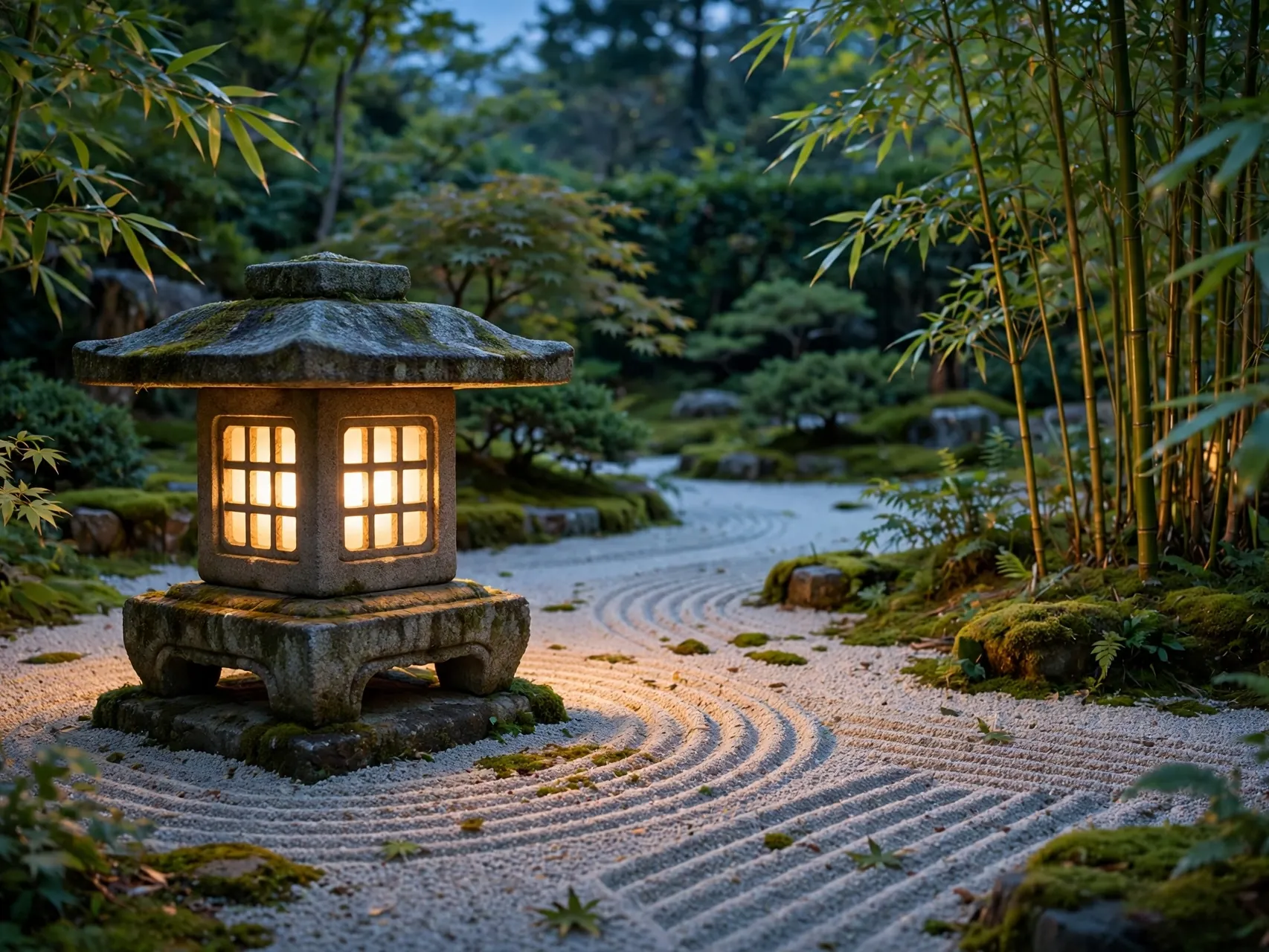
A stone lantern is the classic accent of a Japanese garden, traditionally placed near a path, a basin or a turning point in the view. Choose one lantern only, in weathered concrete or real stone, and let it sit slightly off center in the composition.
Keep the scale modest for a home garden so it reads as a quiet detail, not a monument. If you want evening light, use a solar insert or a battery candle rather than wiring. Never crowd the lantern with plants. A little moss or a low fern at its base is plenty, and the negative space around it does the rest.
4. Install a Bamboo Fountain and Basin

The sound of water changes a garden more than almost any visual element. A simple tsukubai style setup pairs a stone basin with a bamboo spout that trickles water in a slow, steady rhythm. Small recirculating kits make this a weekend project with no plumbing required.
Keep the water moving or refresh it often so the basin does not become a mosquito nursery, and scrub the stone now and then to prevent algae slickness. Place the basin where you naturally pause, near a gate or bench. This is one of the most loved meditation garden ideas because it gives both the eyes and ears something gentle to rest on.
5. Lay a Stepping Stone Path

A stepping stone path slows you down, which is precisely its job. Set flat, irregular stones through the gravel or lawn at an easy walking pace, slightly uneven in spacing so each step asks for a little attention. The path should lead somewhere: a bench, a lantern or a viewing stone.
Set each stone stable and level enough to feel safe underfoot, with the top just above the surrounding surface. Avoid straight lines and perfect grids. Natural stone, large concrete pavers with a stone texture or thick slate pieces all work. Keep grass or moss joints trimmed so the path stays readable through the season.
6. Grow a Moss Carpet Corner

Moss brings the soft, aged feeling that makes a Zen garden look settled rather than newly built. It suits a shaded, moist corner where grass struggles anyway. Moss needs consistent moisture and shade to establish, so this is a choose-the-right-spot idea, not a plant-it-anywhere one.
Buy sheet moss or transplant small patches and press them firmly into prepared, weed-free soil. Mist regularly while it settles in. In dry or sunny yards, swap the look with a low groundcover such as creeping thyme in sun or Irish moss in part shade, and be honest about your conditions. A living green carpet you can keep alive beats the ideal plant that fails.
7. Feature a Japanese Maple

One beautiful tree can carry an entire garden. A Japanese maple offers fine texture, layered branches and seasonal color that shifts from spring green to deep fall reds, all in a naturally sculptural form. Many cultivars stay modest in size, which suits home gardens.
Check the tag for mature height and your hardiness zone before buying, and give it afternoon shade in hot climates where leaves can scorch. Plant it off center, where its canopy can overhang gravel or a path edge. Underplant with nothing but moss or a single rock. Restraint around a specimen tree is what makes it feel like a japanese rock garden focal point.
8. Screen the Boundary With Bamboo

A calm garden needs its edges softened. Rolled bamboo fencing attached to an existing fence or a simple frame instantly hides chain link or weathered boards and gives the garden a warm, natural wall. It is affordable, quick to install and easy to replace in sections.
For living bamboo, stick to clumping types in the ground or grow bamboo in large containers. Running bamboo spreads aggressively through underground rhizomes and can become a serious problem for you and your neighbors. Whichever route you choose, keep the screen plain and uniform. A quiet boundary makes everything inside it feel calmer by comparison.
9. Build a Meditation Bench Nook

Give the garden a destination: a place to sit and simply be in it. A plain wooden bench, a wide flat stone or a low platform in the most sheltered corner is enough. Face it toward your best composition of rocks and gravel so sitting becomes the main activity the garden offers.
Add no cushions in bright colors and no side tables full of objects. A single smooth stone beside the bench for a cup of tea is plenty. If the spot catches morning sun, it will quickly become the best seat in the yard. This is the heart of the backyard zen garden idea, a retreat measured in minutes, not square feet.
10. Start With a Mini Tray Garden

Not every Zen garden needs ground. A shallow wooden tray or wide ceramic dish filled with fine sand, three small stones and a tiny rake makes a complete miniature garden for a patio table, deck or balcony. It is also the cheapest way to test whether the style suits you.
Rake new patterns whenever you pass by. Add one small succulent or a sprig of moss if you like, and stop there. Tray gardens make thoughtful gifts and work indoors on a desk too. For renters and small-space gardeners, this is the most accessible of all japanese zen garden ideas, with zero digging and zero permanence.
11. Sculpt With a Pruned Pine
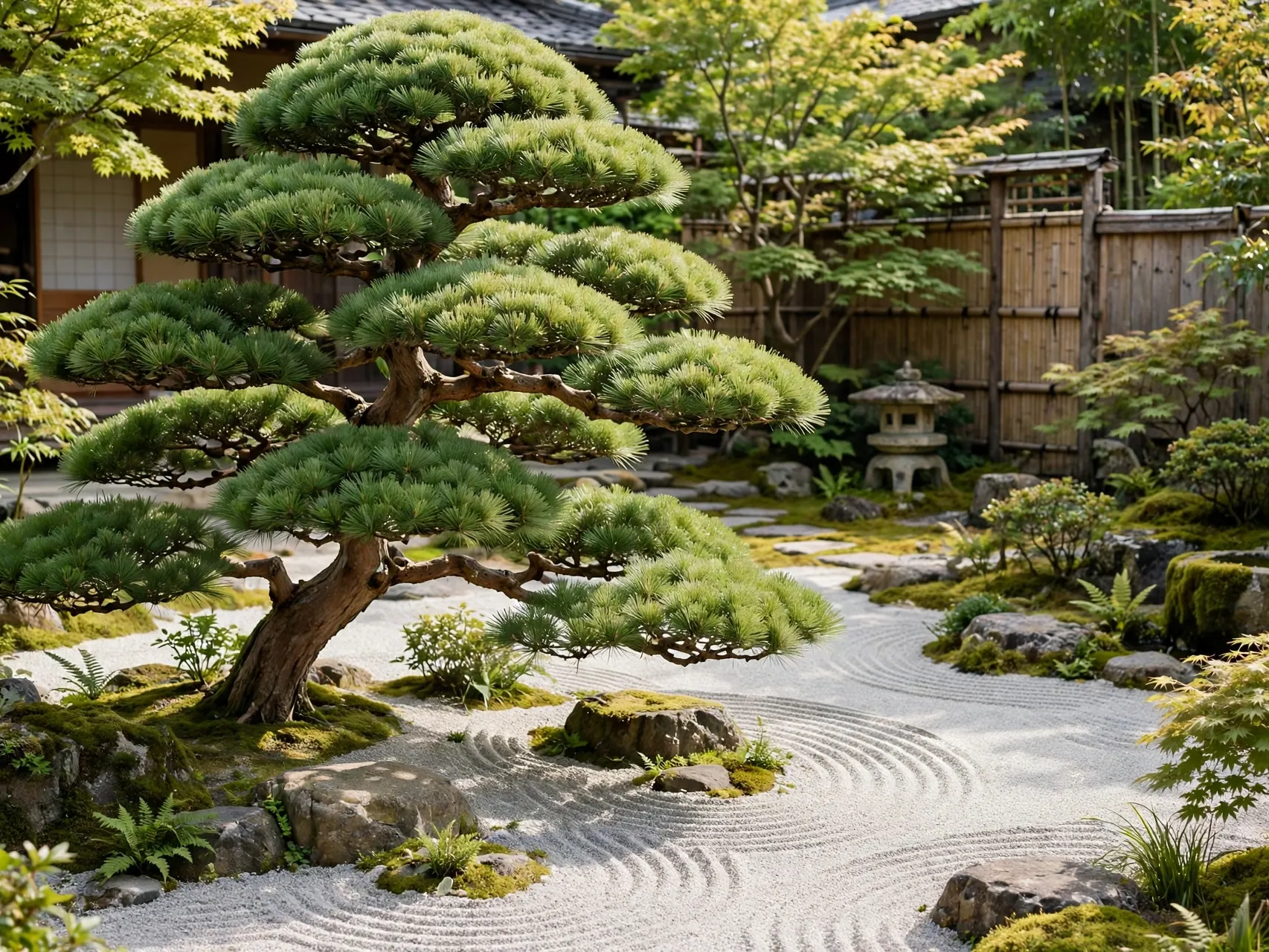
A small pine, pruned to show its branch structure, brings the sense of age and patience that Zen planting is known for. Garden centers sell compact pines suited to containers and small beds. The look comes from selective pruning that opens the silhouette, not from constant shearing into tight balls.
Prune lightly once a year, removing crossing or crowded growth, and never take off more than the plant can spare. If formal pruning feels intimidating, start with a naturally compact dwarf pine and simply keep its shape tidy. One characterful evergreen does more for the scene than a row of identical shrubs ever will.
12. Carve a Dry Stream Bed

A dry stream gives a garden flow without water. Trace a gentle, curving line across the yard with a shallow depression, line it with river rock and pebbles in mixed sizes, and let it pass under a flat stone or toward your gravel bed. It suggests a stream that ran here long before the garden did.
Dry streams also do practical work in many yards by guiding rainwater during storms, though a true drainage problem needs a proper drainage plan, not just decor. Edge the stream with a few larger boulders and one or two grasses. Keep the curve lazy and natural, and resist making it perfectly tidy.
13. Pair Gravel With Succulents
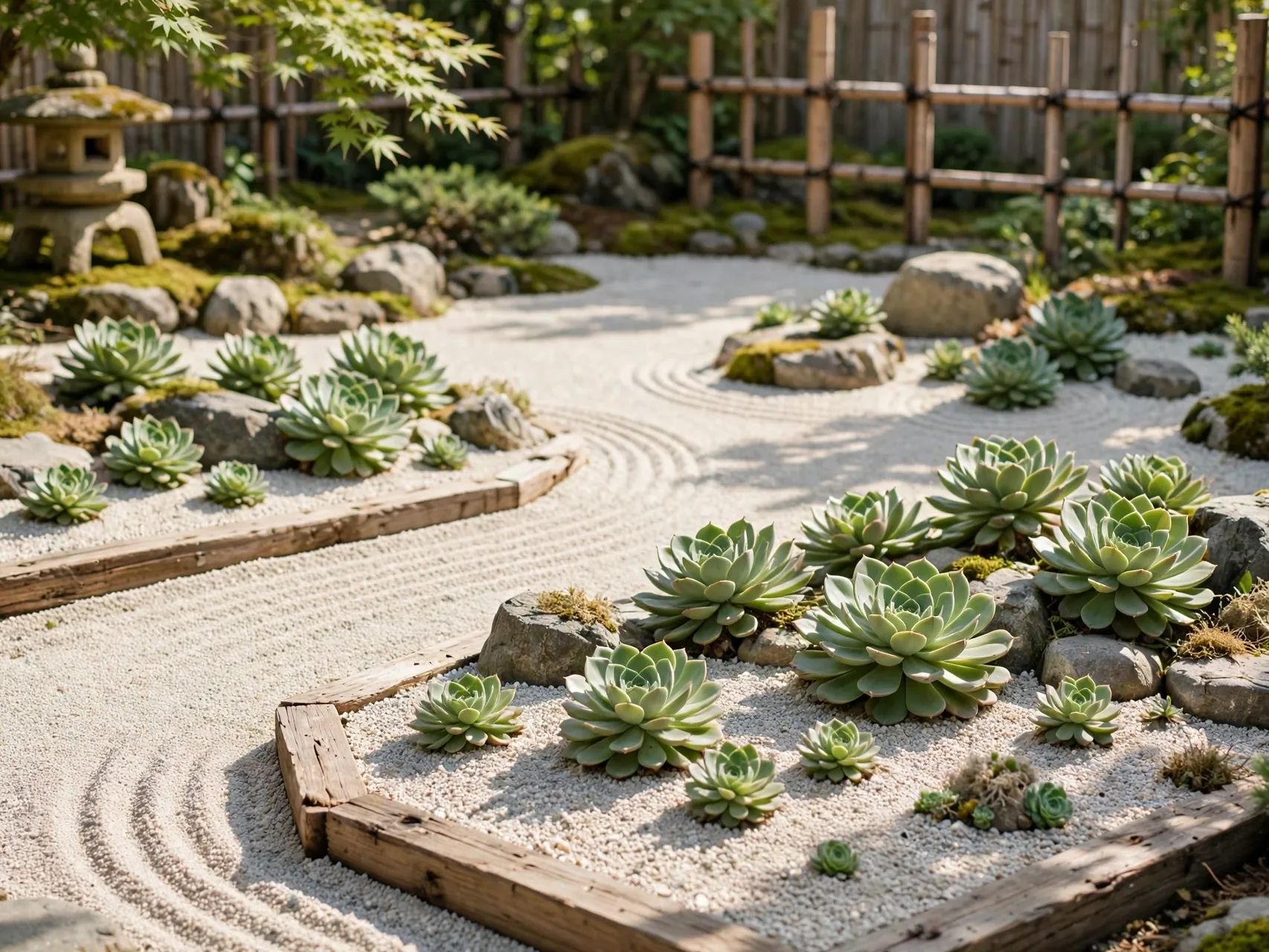
In hot, dry regions, the classic moss and fern palette is hard to keep alive. A contemporary take pairs pale gravel with sculptural succulents, small agaves and ornamental grasses in restrained groupings. The spirit stays the same: simple forms, generous space and a limited color range.
Succulents in gravel need sharp drainage, so raise the bed slightly and use gritty soil beneath the gravel layer. Water deeply but rarely, and choose varieties hardy in your zone or grow them in pots you can shelter in winter. This version asks for very little upkeep once settled, which suits busy owners who still want a calm corner.
14. Set a Small Pagoda Accent
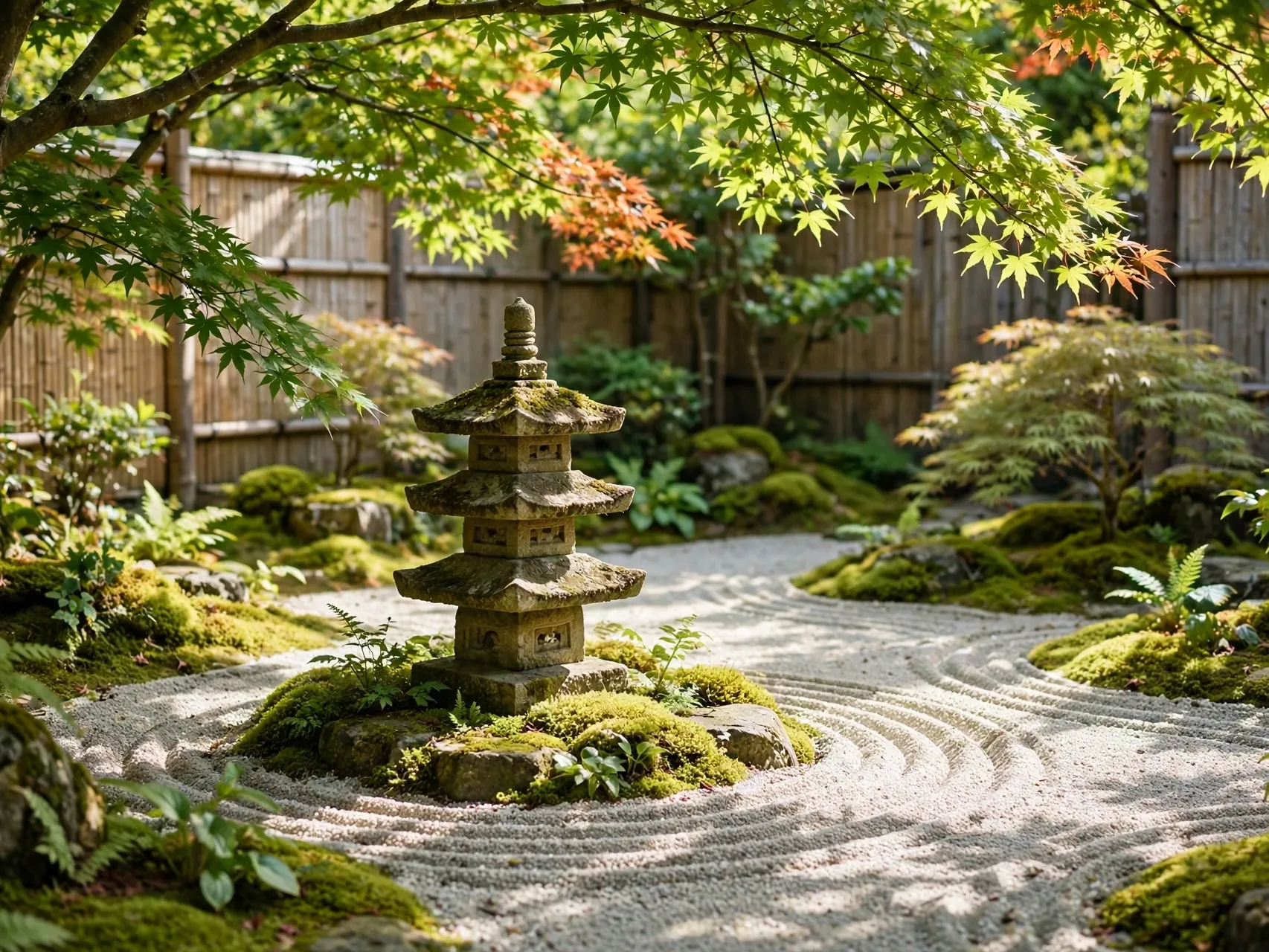
A miniature stone pagoda adds vertical interest and a traditional silhouette in one piece. Place it among rocks or at the edge of a planting, partly framed by a pine branch or fern, so it feels discovered rather than displayed. One pagoda per garden is the rule of thumb.
Choose real stone or aged concrete in gray tones and let weather soften it over time. Avoid sets of matching ornaments marching across the gravel. If a pagoda feels too themed for your taste, a single well-shaped stone with a flat top gives a similar vertical note in a more abstract way that suits modern yards.
15. Plant Ferns for Shade Texture
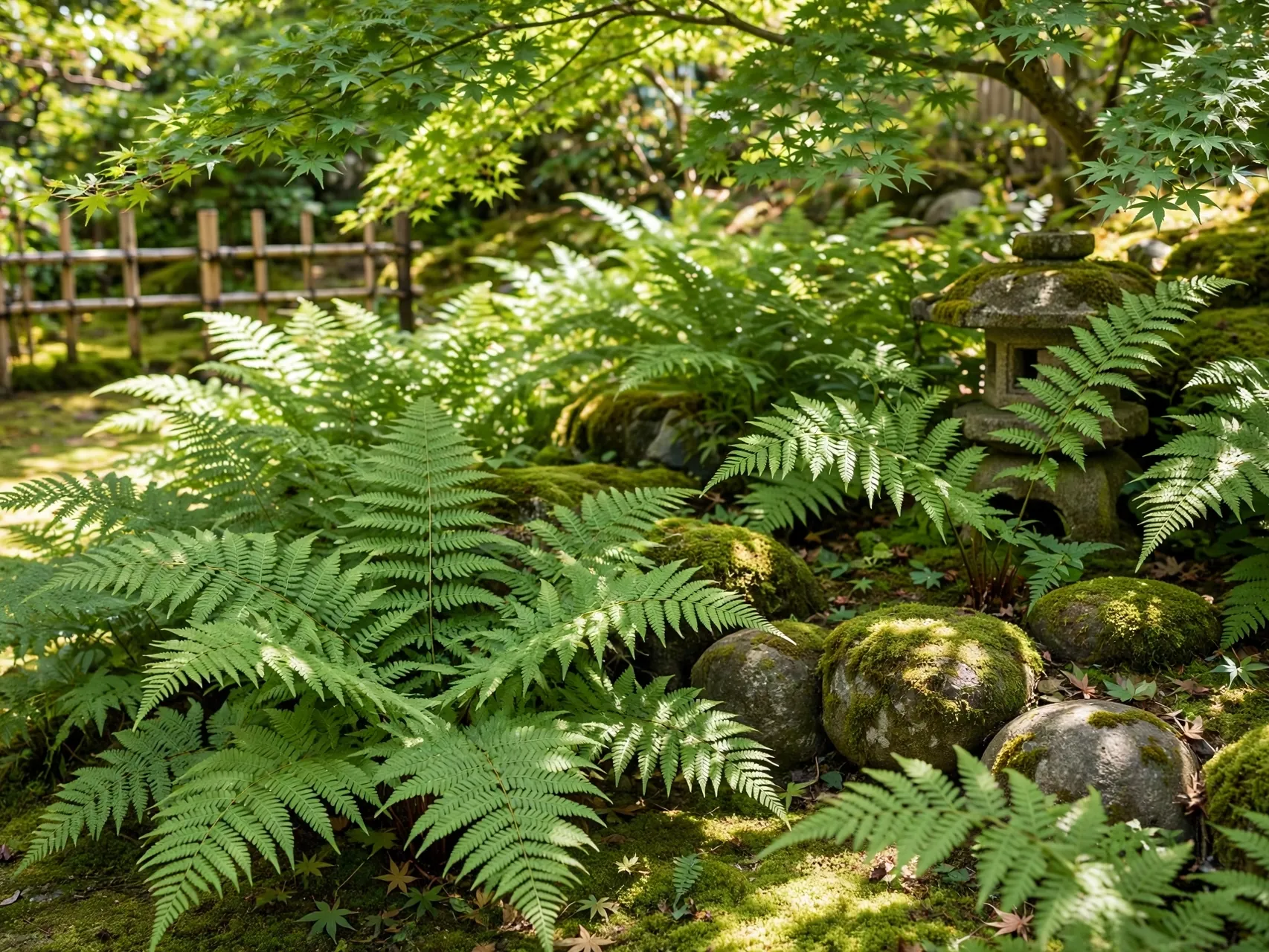
Where the garden is shaded, ferns deliver the layered green texture that Zen planting relies on. Their fine fronds soften rock edges, fill the base of trees and make a shaded corner feel cool and enclosed. Japanese painted fern adds silver and burgundy notes if you want one subtle variation in the green.
Ferns generally want moisture and rich soil, so mulch well and water during dry spells until they settle. Keep the palette to one or two fern types repeated in drifts rather than a collector mix. Repetition reads as calm. A fern-edged path or basin corner is an easy upgrade to an existing zen garden design.
16. Cross With a Simple Wooden Bridge
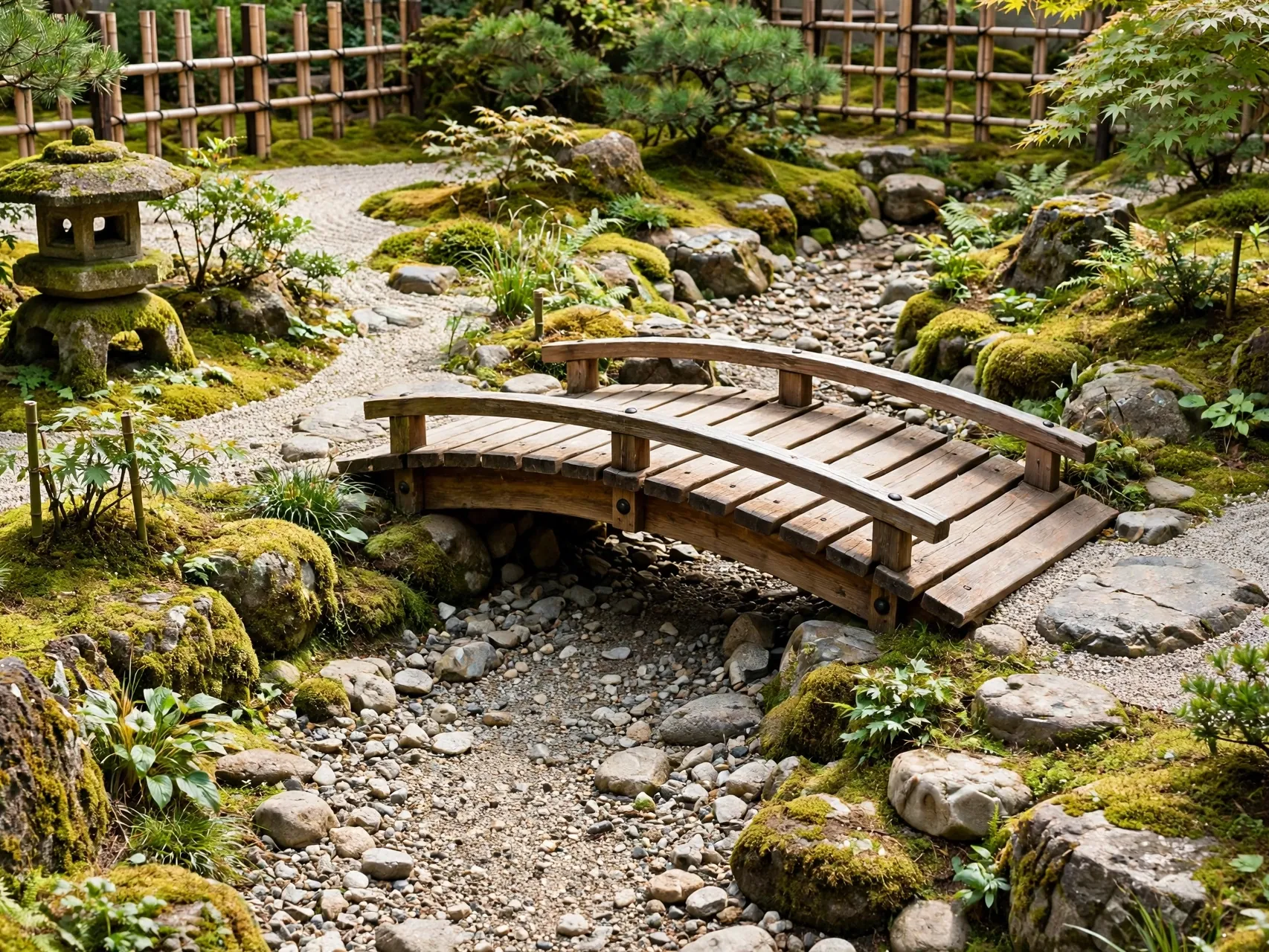
A small arched bridge over a dry stream or gravel sea is a strong traditional gesture, borrowed from larger Japanese stroll gardens. In a home yard, keep it low, plain and unpainted, or use the classic flat zigzag style of boards set just above the gravel.
It does not need to span real water to work, but it does need to be stable and safe to cross, with sound fixings and no wobble. If a bridge feels too large for your space, a single wide plank or a cluster of flat stones at the crossing point gives the same pause-and-cross moment at a smaller scale.
17. Make a Sitting Stone Platform
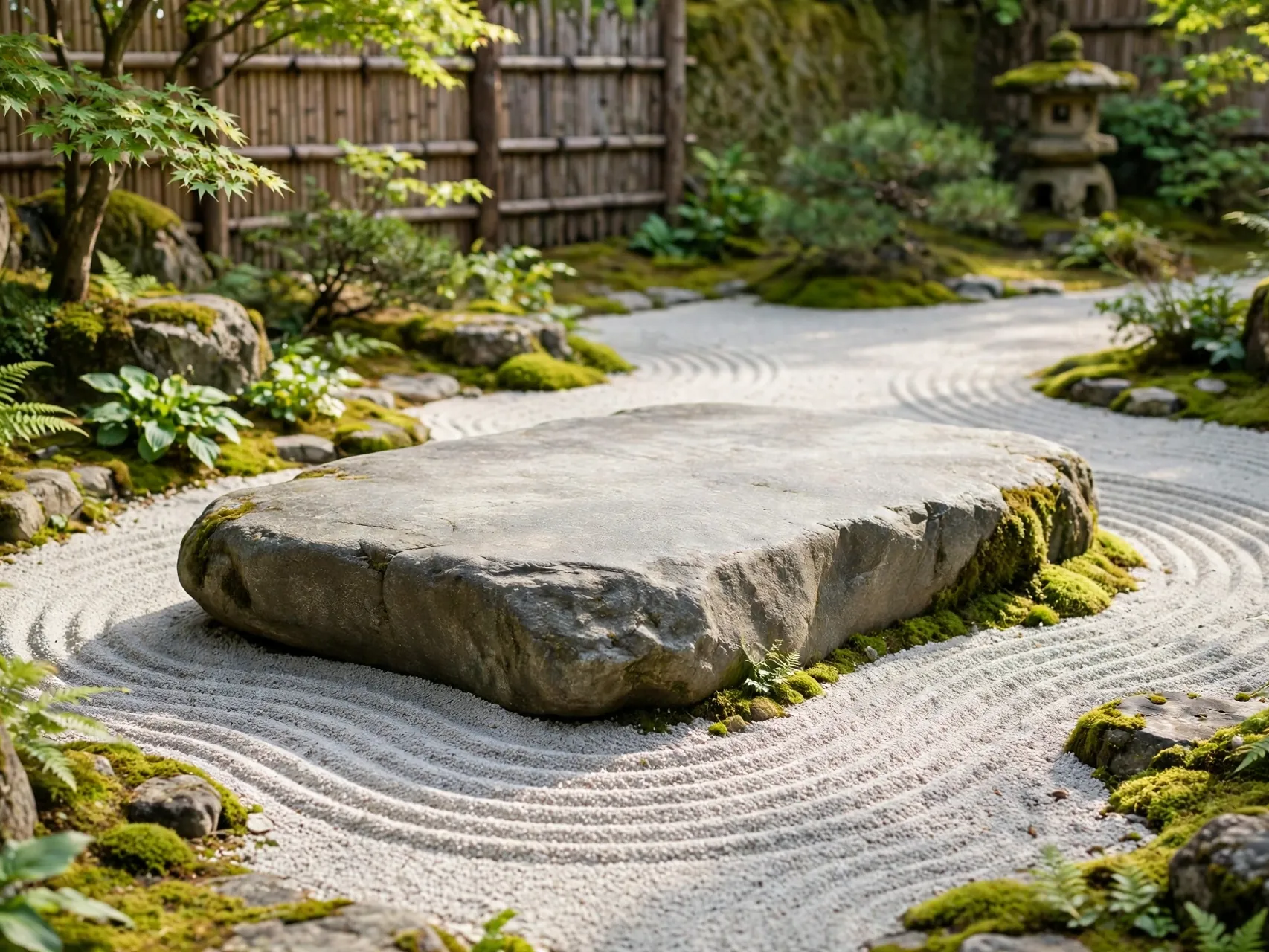
Instead of a bench, some gardeners prefer a platform: a few large flat stones or a low wooden deck square set directly in or beside the gravel. It is a place for morning coffee, stretching or quiet sitting, with the garden arranged as the view in front of it.
Keep the platform small, roughly the size of a yoga mat or two chairs, so it stays a nook rather than becoming a second patio. Leave it empty when not in use. An uncluttered platform signals rest the moment you see it, and it photographs beautifully for anyone building a meditation garden ideas board.
18. Plan Gentle Evening Lighting

A Zen garden at dusk can be the calmest version of itself. Use a few low, shielded lights aimed at a lantern, a tree trunk or a rock face rather than flooding the whole yard. Warm light, placed low, keeps the mood soft and leaves the rest in restful shadow.
Solar path lights are the simplest start, but choose plain designs and space them sparingly. Never line every edge like a runway. One lit focal point plus safe footing on the path is enough. Test the effect from your sitting spot and remove any light that glares in your eyes when seated.
19. Anchor With Evergreen Structure
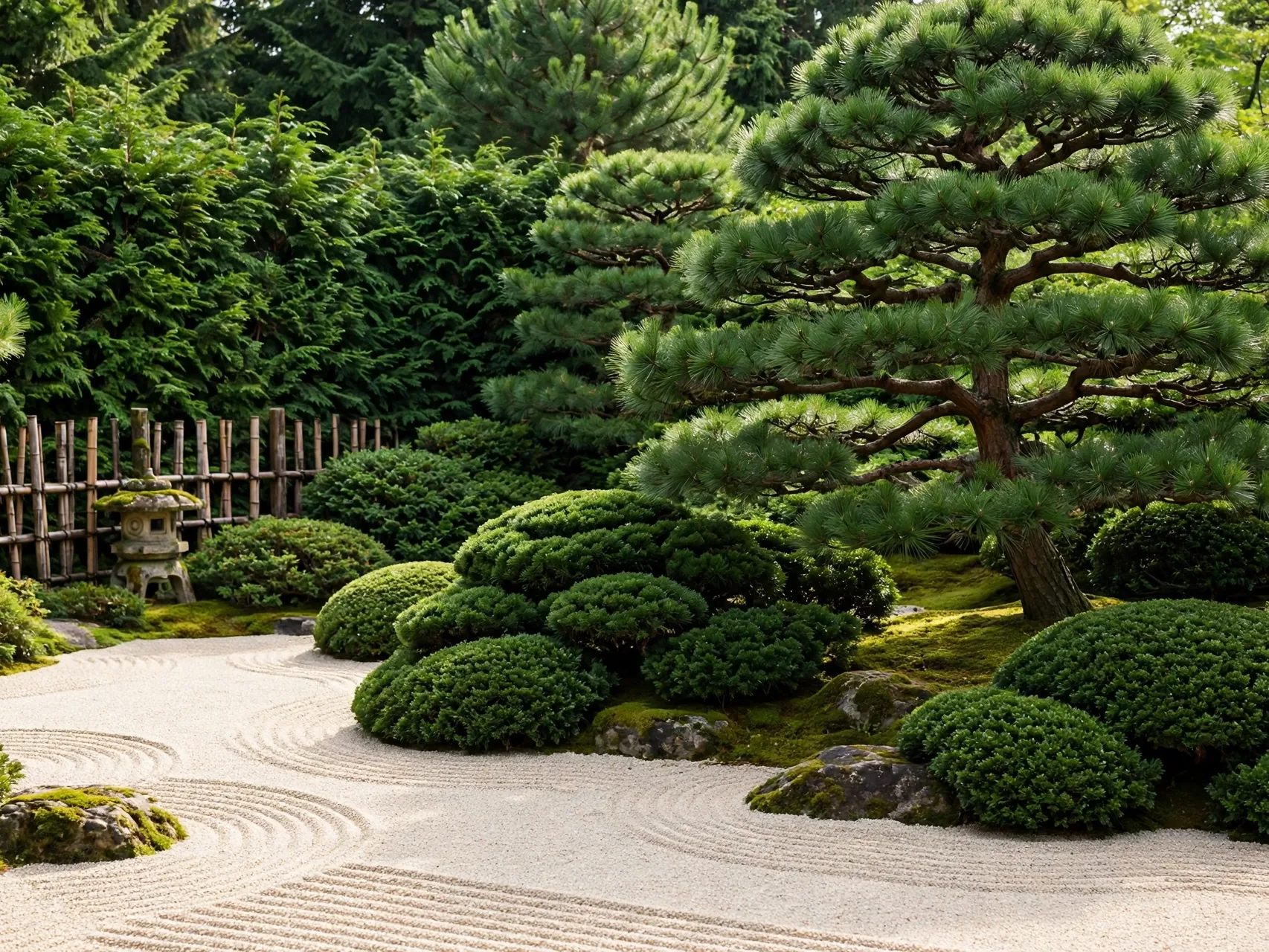
Evergreens hold the garden together in winter when deciduous plants drop their leaves. A backbone of two or three calm evergreens, such as a compact pine, a boxwood left softly shaped or a clump of bamboo in a container, keeps the composition standing in every season.
Place them at the back or corners to frame the gravel and rocks, and prune for openness rather than density. Avoid sharp cones and perfect spheres, which feel formal and busy. Let each plant keep a slightly natural outline. Good structure means your backyard zen garden looks intentional in January, not like a project waiting for spring.
20. Display One Specimen in a Pot

A single beautiful container can act as movable sculpture. Choose one generous pot in matte stone, clay or dark ceramic and plant it with one thing: a small pine, a tuft of ornamental grass or a cluster of bamboo. Set it at a path turn, beside the bench or at the gravel edge.
The pot lets you grow something your soil or climate would not allow in the ground, and you can shift it as the garden evolves. Keep the pairing simple, one pot and one plant, repeated nowhere else. It becomes the full stop at the end of the garden sentence, and a reminder that restraint is the whole style.
FAQ
How much does a backyard Zen garden cost to build?
It can cost very little or a great deal, depending on size and stone. A small corner with gravel, landscape fabric, edging and three rocks is a modest weekend budget project, especially if you collect stone locally. Large boulders, mature specimen trees and stone lanterns are where costs climb, so phase the build and add those pieces over time.
How do I keep weeds out of the gravel?
Lay landscape fabric under the gravel and spread the gravel at least two to three inches deep so light does not reach the soil. Pull seedlings while they are tiny, before roots reach through the fabric. A quick rake each week disturbs new sprouts and refreshes the pattern at the same time.
Can I build a Zen garden in a small or rented yard?
Yes. Start with a tray garden on the patio, or build a small gravel square with containers for bamboo and a pine that can move with you. Use rolled bamboo fencing over an existing fence for an instant backdrop. Nothing needs to be permanent, and the core elements fit into a corner only a few feet wide.
What plants work best in a Zen garden?
Choose few and repeat them: a Japanese maple for a focal tree, compact pines and boxwood for evergreen structure, moss or low groundcover for a green carpet, ferns for shade and clumping bamboo for screening. Match every plant to your hardiness zone and light conditions, and favor plants that stay tidy with light, occasional pruning.
How much maintenance does a Zen garden need?
Less than a lawn or flower border, but not zero. Expect weekly raking and weed checks in the growing season, occasional pruning, leaf clearing in fall and topping up gravel every few years. Most owners find the upkeep itself calming, since it is slow, quiet work rather than mowing and edging.
Key Takeaways
- Gravel and rocks come first: Raked gravel suggesting water and an odd-numbered rock grouping form the classic foundation of the style.
- Restraint is the design: Fewer elements with generous empty space between them always reads calmer than a collection of ornaments.
- Give it a place to sit: A bench, platform or sitting stone turns a pretty scene into a retreat you actually use daily.
- Choose bamboo carefully: Use clumping types or containers for living screens, since running bamboo spreads aggressively by rhizomes.
- Start small if you need to: A tray garden or one gravel corner delivers the effect at any budget and in any size yard.
- Keep water features fresh: Circulate or refresh basin water often so it stays clean and does not attract mosquitoes.
Found your calm corner? Pin this guide to your backyard ideas board on Pinterest and build your retreat one peaceful piece at a time.