25 DIY Garden Hose Holder Ideas That Are Neat and Pretty
Introduction
A tangled hose on the lawn is more than ugly. It kinks, cracks in the sun, trips guests and makes watering feel like a chore before you even start. A good diy garden hose holder fixes all of that, and it can be one of the prettiest little features in your garden.
This list shares 25 builds from scraps and thrift finds to polished pots and copper, for walls, fences, posts and patios. Each idea notes the practical details that matter, like drainage, wide loops, strong fixings and winter care, so your holder works as well as it looks.
Start near the tap, since a holder far from the water source never gets used. Measure your hose length, pick a style that suits your yard and build with smooth, wide supports. Your future self, watering on a warm evening with no tangles, will be glad you did.
1. Wall Mounted Bucket Holder

Screw a sturdy bucket flat side to an exterior wall near the tap and wind the hose around it. Add fender washers behind the screws to spread the load, as Hunker build notes advise, and fix into a solid surface, not siding alone.
The bucket center can hold nozzles and gloves under a simple lid. Paint the bucket to match your trim and this hardworking diy garden hose holder looks tidy from the street and keeps coils off the flowers.
2. Planter Pot Hose Hideaway

A large planter with a hole drilled low in the side hides a coiled hose completely. Thread the end through the hole to the tap, coil the rest inside and rest the sprayer on top, ready to grab.
Choose a pot at least 14 to 15 inches wide so coils sit without tight bends. Always drain the hose before coiling it away, and set the pot in light shade where possible to slow sun damage to the rubber.
3. Pallet Post With Metal Hook

Stand a pallet section or a short post by the tap, sand it smooth and fit a wide metal hose hook near the top. The wood gives a farmhouse look and the wide hook supports coils without sharp kinks.
Seal exterior wood and anchor the post so a heavy, water filled hose cannot pull it over. A small shelf or crate at the base holds spare washers and a hand trowel, turning storage into a neat garden station.
4. Chain and Snap Hook on a Fence
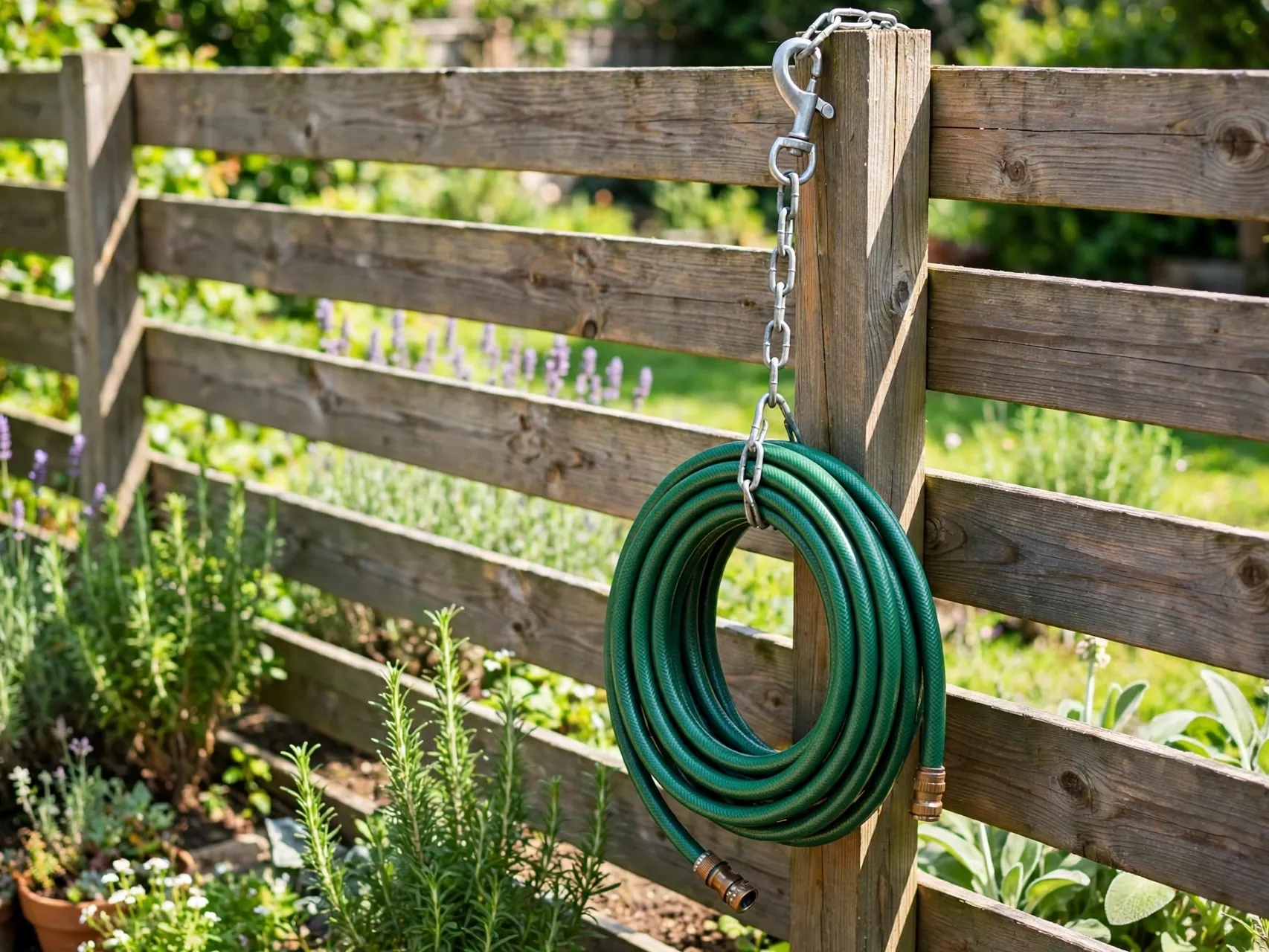
A short length of chain fixed to a fence or wall, with a snap hook at the free end, cradles a coiled hose in seconds. Thread the chain through the coil center, clip it up, and the hose hangs flat and tidy.
Size the chain with a little slack and use screws with heads wider than the links, as House Digest describes for this method. It is cheap, strong and works inside a shed or garage just as well as outdoors.
5. PVC Pipe Wall Reel

Two short PVC arms and a crossbar make a light, rust free reel on a wall or fence post. PVC is easy to cut, cheap to replace and happy outdoors in rain, which suits a first build with basic tools.
Use wide, smooth bends so the hose coils in large loops. Large loops prevent kinks and make the hose last longer. Paint PVC with exterior spray paint made for plastic if you want it to match your fence color.
6. Old Chair Back Hose Rack
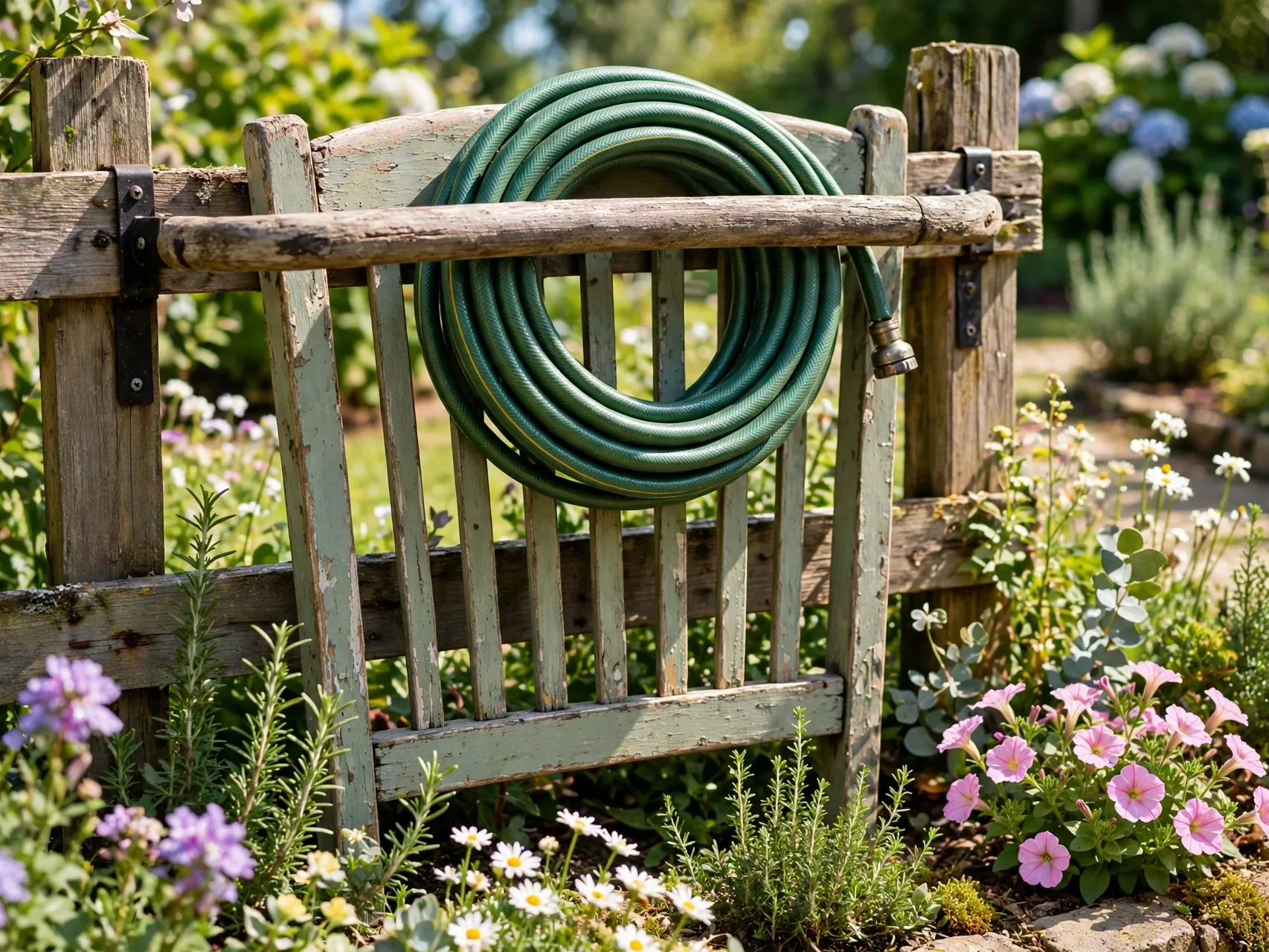
A retired wooden chair back, cut and mounted flat to a wall, gives instant vintage charm as a hose rack. The top rail supports coils and the spindles stop them sliding off sideways in a heap.
Sand and seal the wood well, since old chairs were rarely made for weather. This pretty reuse suits cottage gardens and costs almost nothing if the chair came from a curb pile or a garage clear out at home.
7. Repurposed Tire Wall Holder
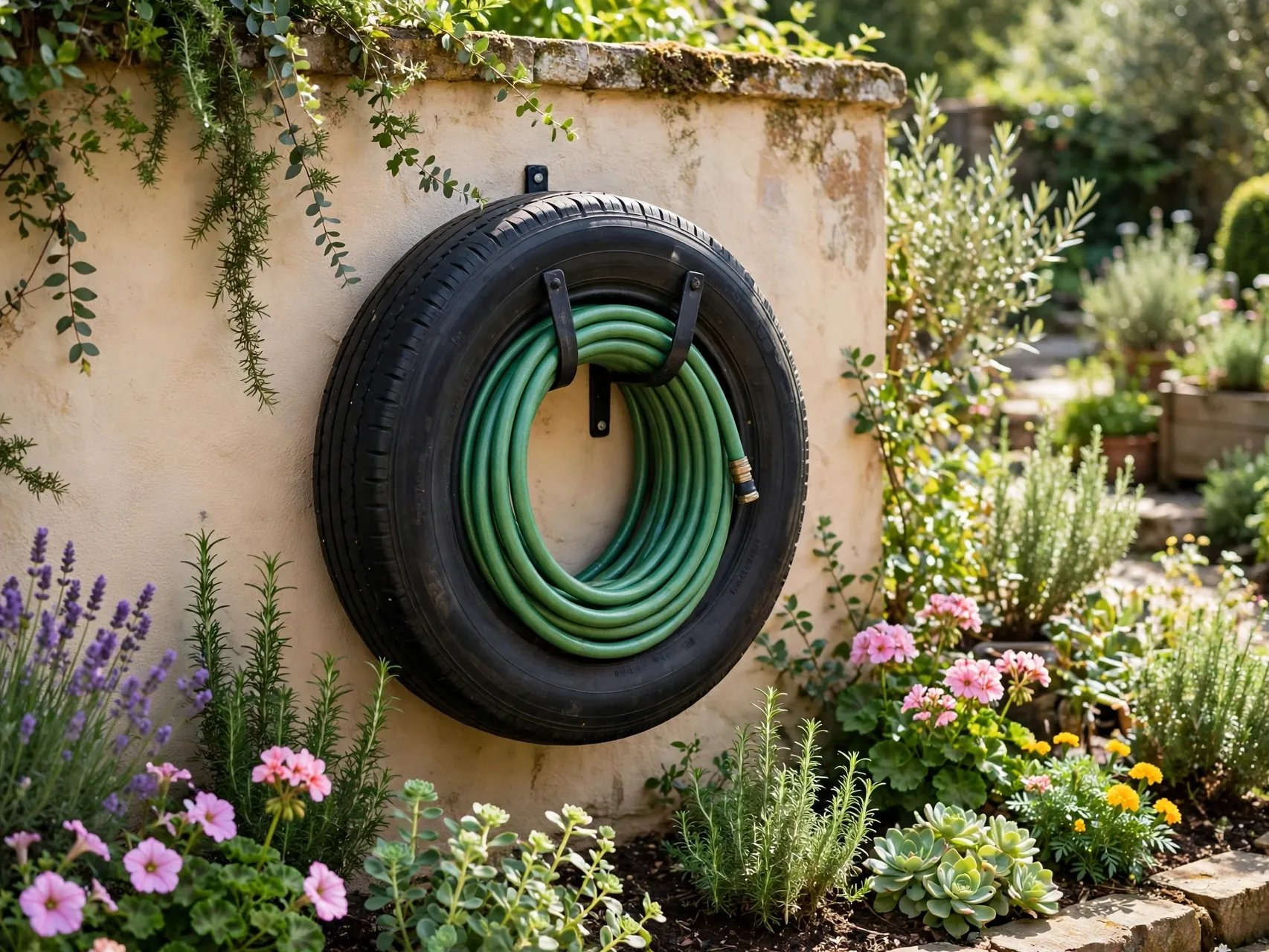
A clean old tire mounted on a strong wall or post makes a deep, round cradle that swallows a long hose. The dark rubber hides dirt and the shape naturally forms neat coils with no sharp edges.
Fix the tire into studs or masonry with serious hardware, since a tire plus a wet hose is heavy. Drill a drainage hole at the bottom so rain cannot pool inside and invite mosquitoes to breed in standing water.
8. Wooden Crate Coil Box
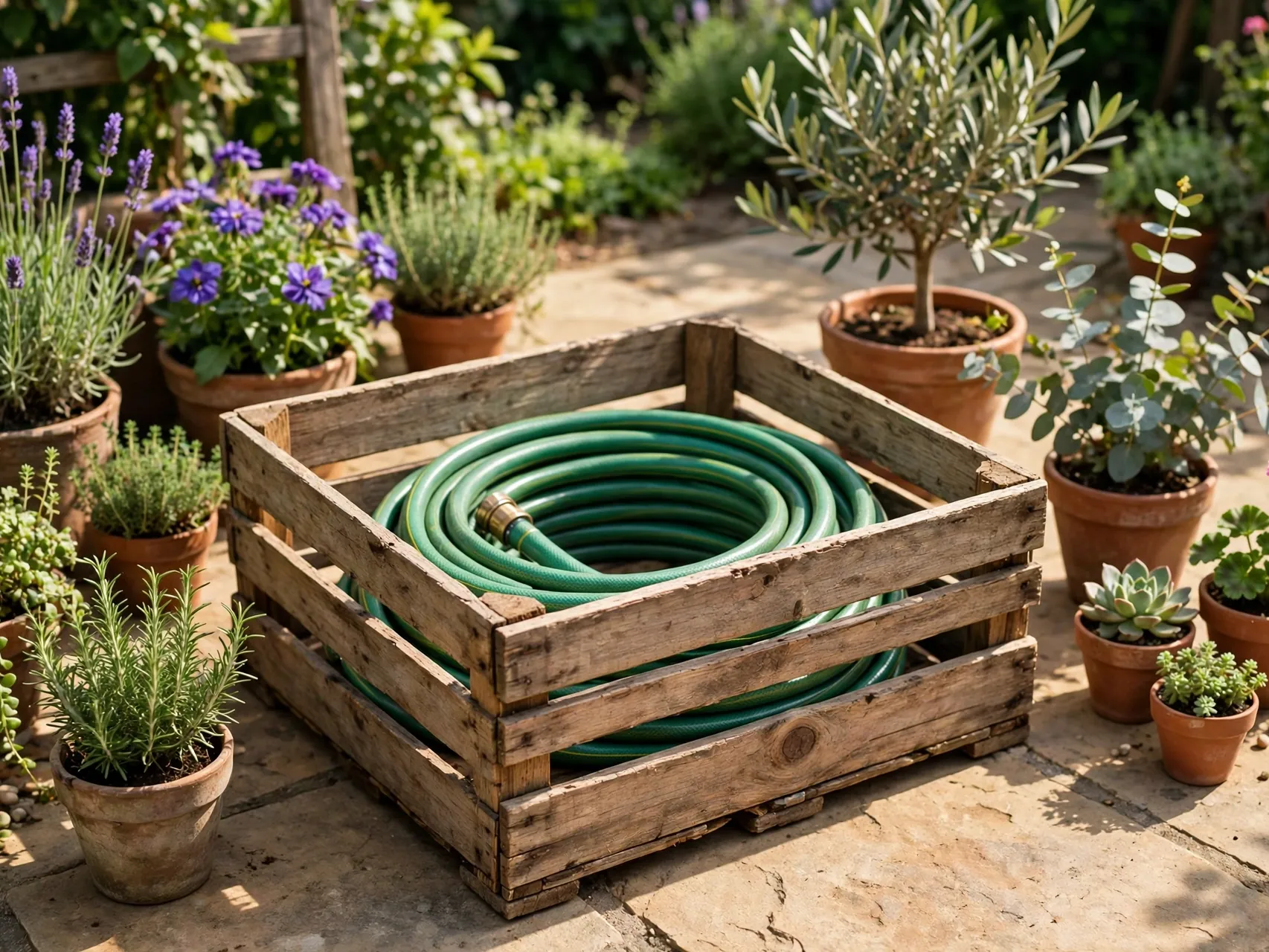
A slatted crate or a simple box with an open front stores a coiled hose at ground level by the tap. Airflow through the slats helps the hose dry, which slows mildew and that sour, swampy smell.
Add a hinged lid to keep leaves and rain out, and line the base with gravel for drainage. Ground level storage suits anyone who finds lifting a heavy coil onto a wall hook hard on shoulders or backs.
9. Standing Post With Finial Top

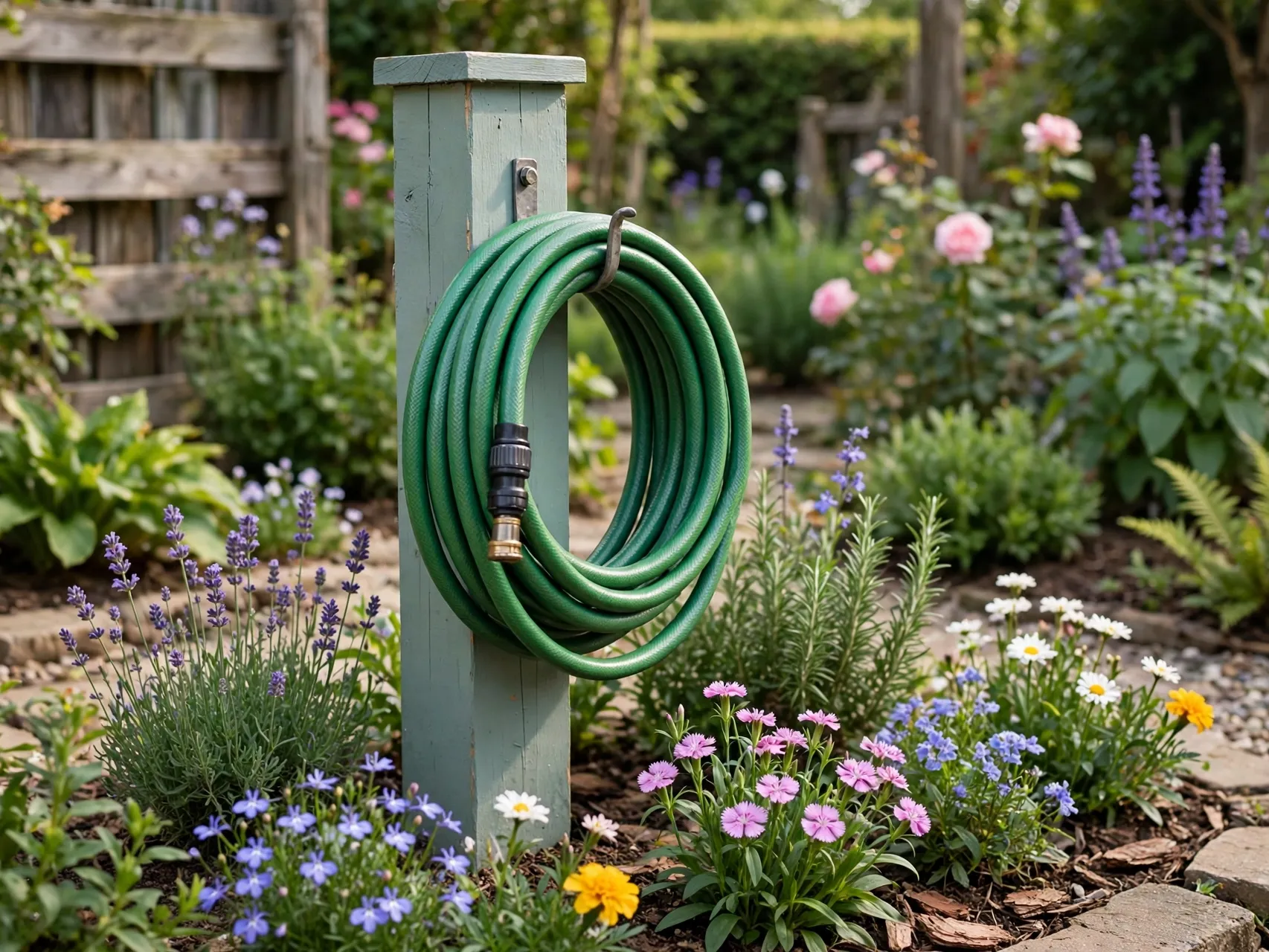
A single landscaping post set in the ground, topped with a solar cap light or a simple finial, becomes a hose stand that looks like garden architecture. Fit a wide hook or a crossarm below the top for the coils.
Set the post deep and firm, following the maker guidance for any setting mix you use. A post holder is freestanding, so it suits renters who cannot fix into walls, as long as the landlord allows a dug post hole.
10. Ladder Style Hose Stand
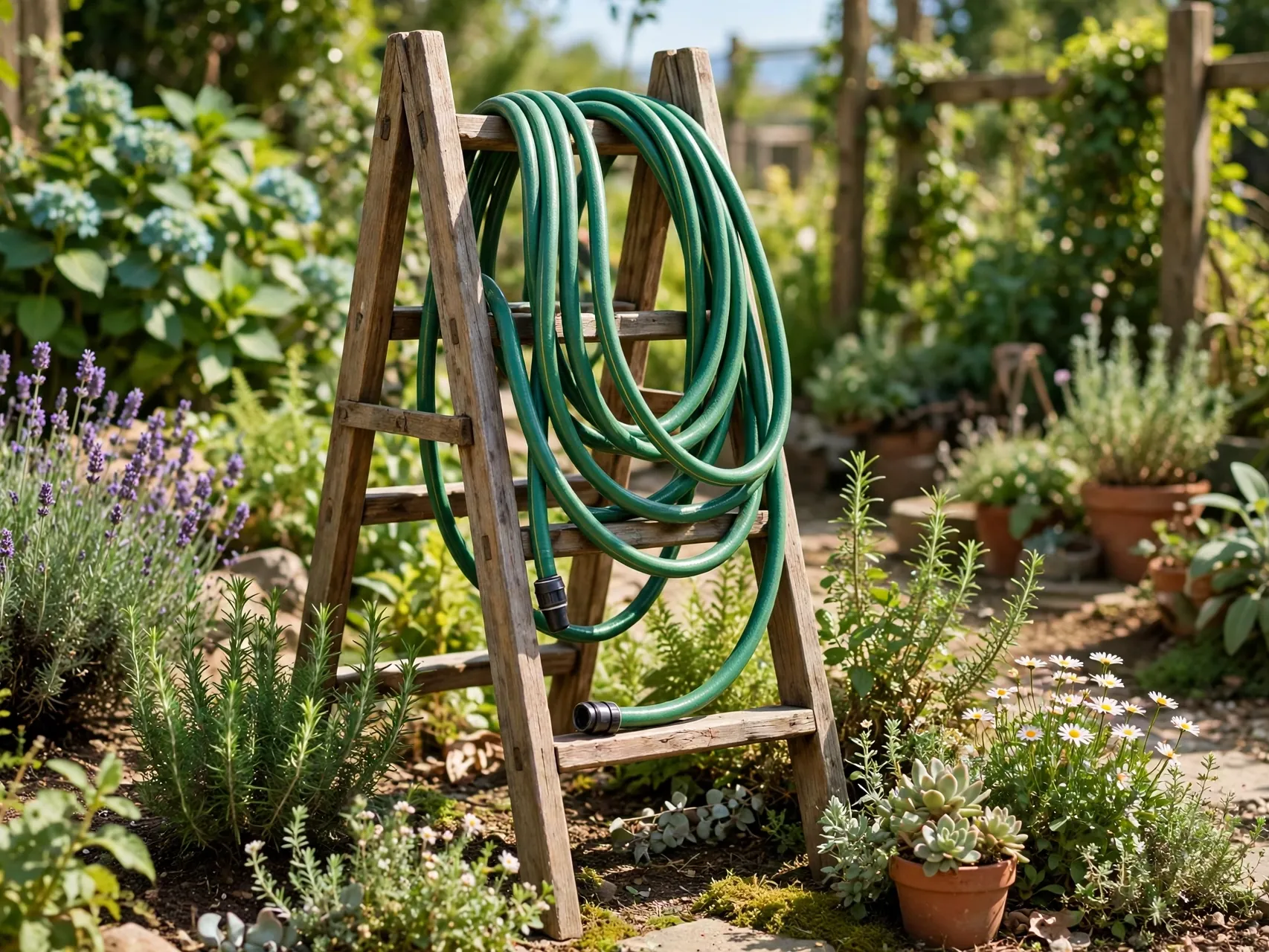
Two uprights with three wide rungs, like a tiny ladder leaning or fixed by the tap, let you drape hose in big, loose loops. The loops drain well and never tangle the way tight coils can on a hot day.
Build it from exterior timber, round the rung edges and seal it yearly. This stand looks especially pretty with climbing beans or a small rose trained up one side in summer, as long as thorns stay clear of hands and hose.
11. Metal Bucket on a Stake
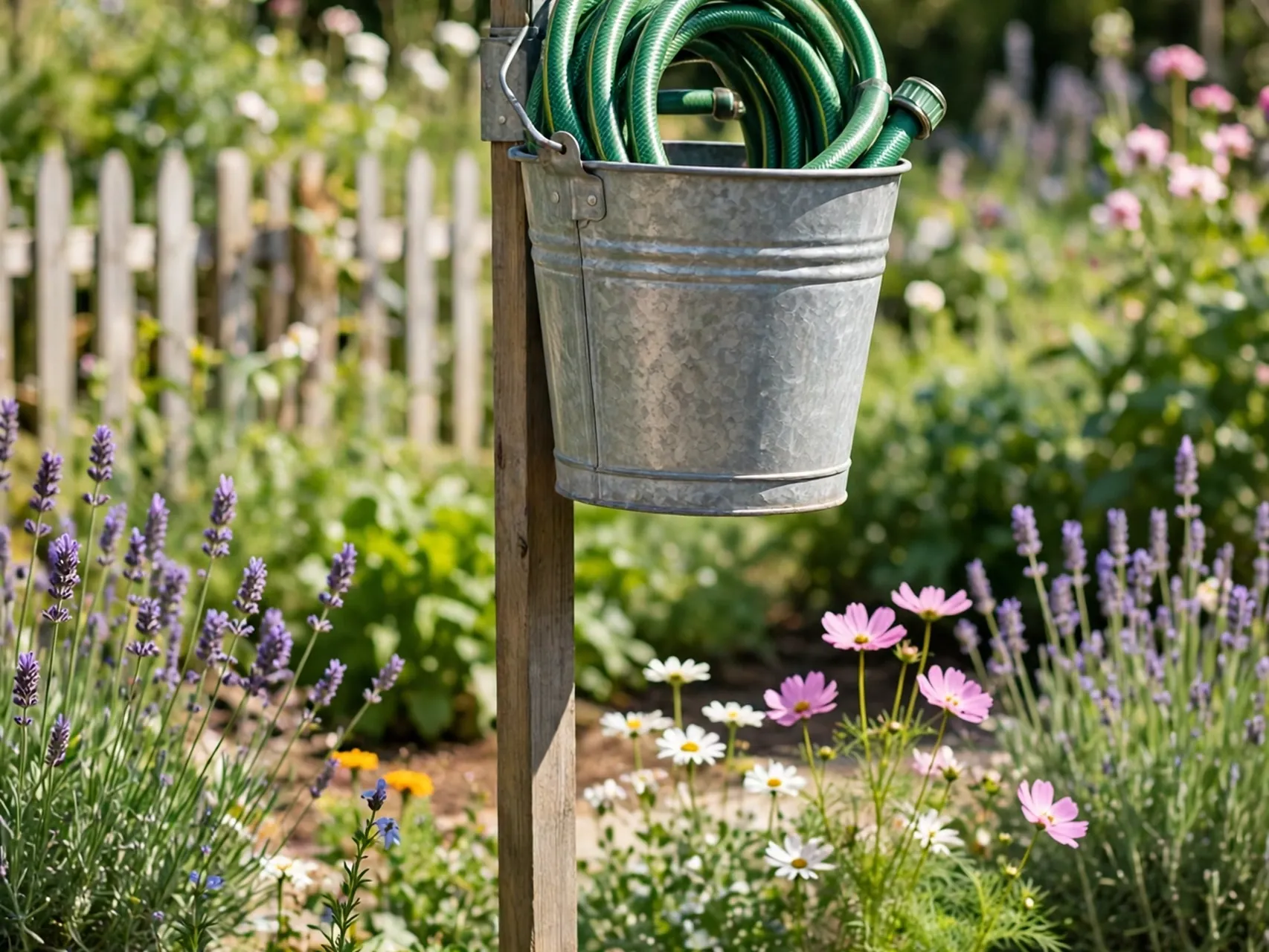
A galvanized bucket fixed to a sturdy stake or short post gives a movable holder you can shift with the seasons. Wrap the hose around the bucket or coil it inside, depending on the bucket size you find.
Galvanized metal shrugs off weather and suits modern and farmhouse yards alike. Add a drainage hole in the base. Stake holders are a kind garden hose storage ideas option for allotments and raised bed areas with no wall nearby.
12. Window Box Style Hose Shelf

A deep, lidded box mounted under a window, styled like a window box with trim and paint, hides the hose in plain sight. From the street it reads as architecture, not storage, which pleases tidy front yards.
Vent the box with small gaps so damp can escape, and keep the lid easy to lift with one hand while the other holds the sprayer. Front yard solutions must also respect any HOA rules about visible storage.
13. Bicycle Wheel Wall Reel

A clean old bicycle wheel mounted on a wall bracket spins as you wind, making a reel with real character. The rim channel guides the hose and the spokes stop coils slipping off the sides as you pull.
Check the wheel is true and rust treated, and mount the bracket into solid fixing points. This playful idea suits bike loving households and starts conversations, while still doing the serious job of keeping loops large and kink free.
14. Terracotta Pot Stack Holder

Stack two or three large terracotta pots, secure them on a central stake and coil the hose around the stack or inside the top pot. The warm clay color suits Mediterranean and herb garden planting beautifully.
Terracotta is heavy and stable but can crack in hard freezes, so move this holder under cover in cold winters. The weight is a plus in windy yards where light plastic reels skate across patios and tip over.
15. Fence Rail Wrap With Rope Detail
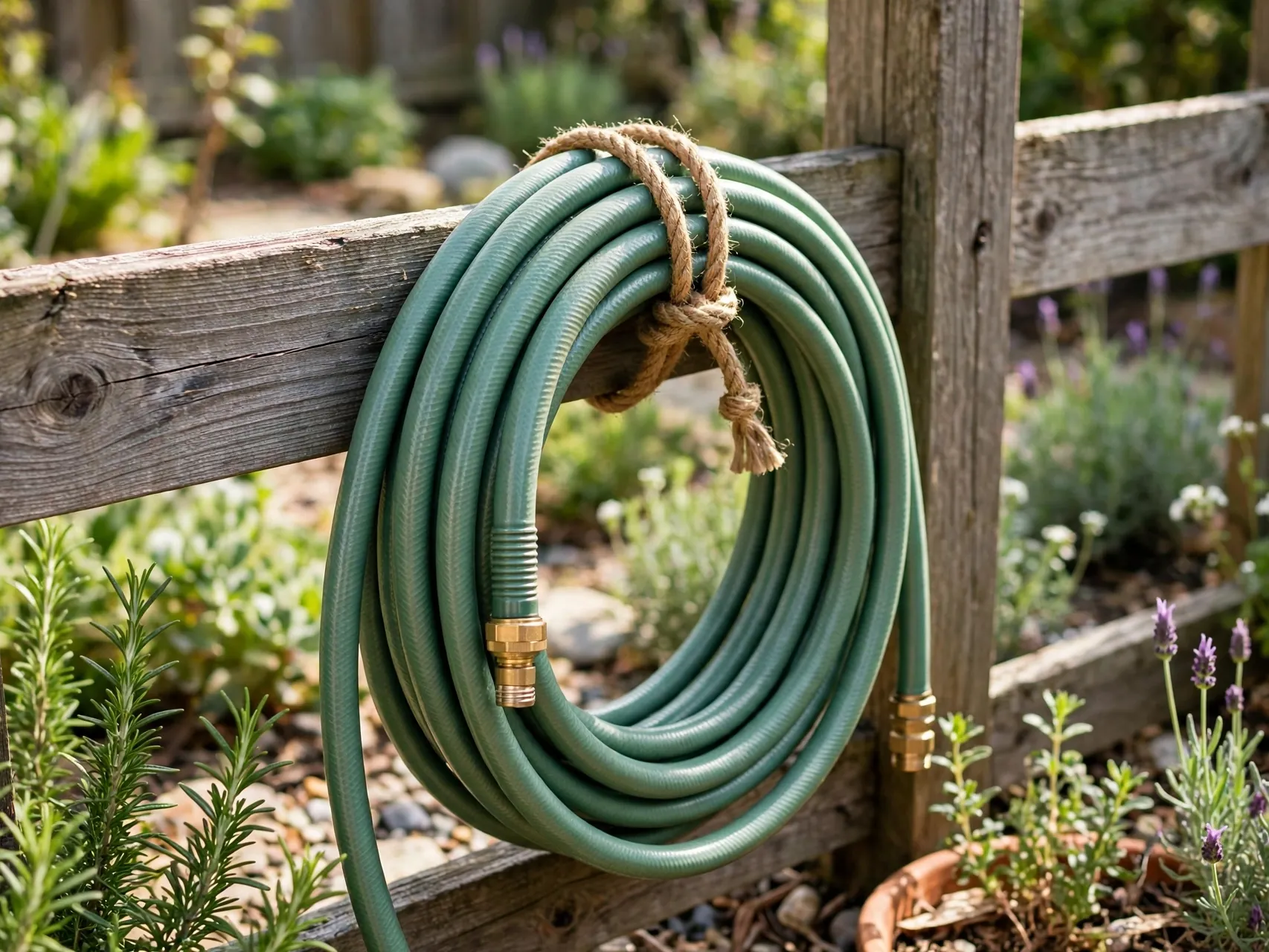
If your fence has a strong horizontal rail near the tap, a pair of large hooks on the rail plus a rope tie for the coil end gives storage with almost no building. Coil, hang, tie, done in under a minute.
Keep coils clear of the ground so mower and trimmer lines never nick the hose. A soft rope tie beats wire, which can cut into rubber over time. This is a fine starter homemade hose reel alternative while you plan a prettier build.
16. Rolling Cart From a Dolly Frame
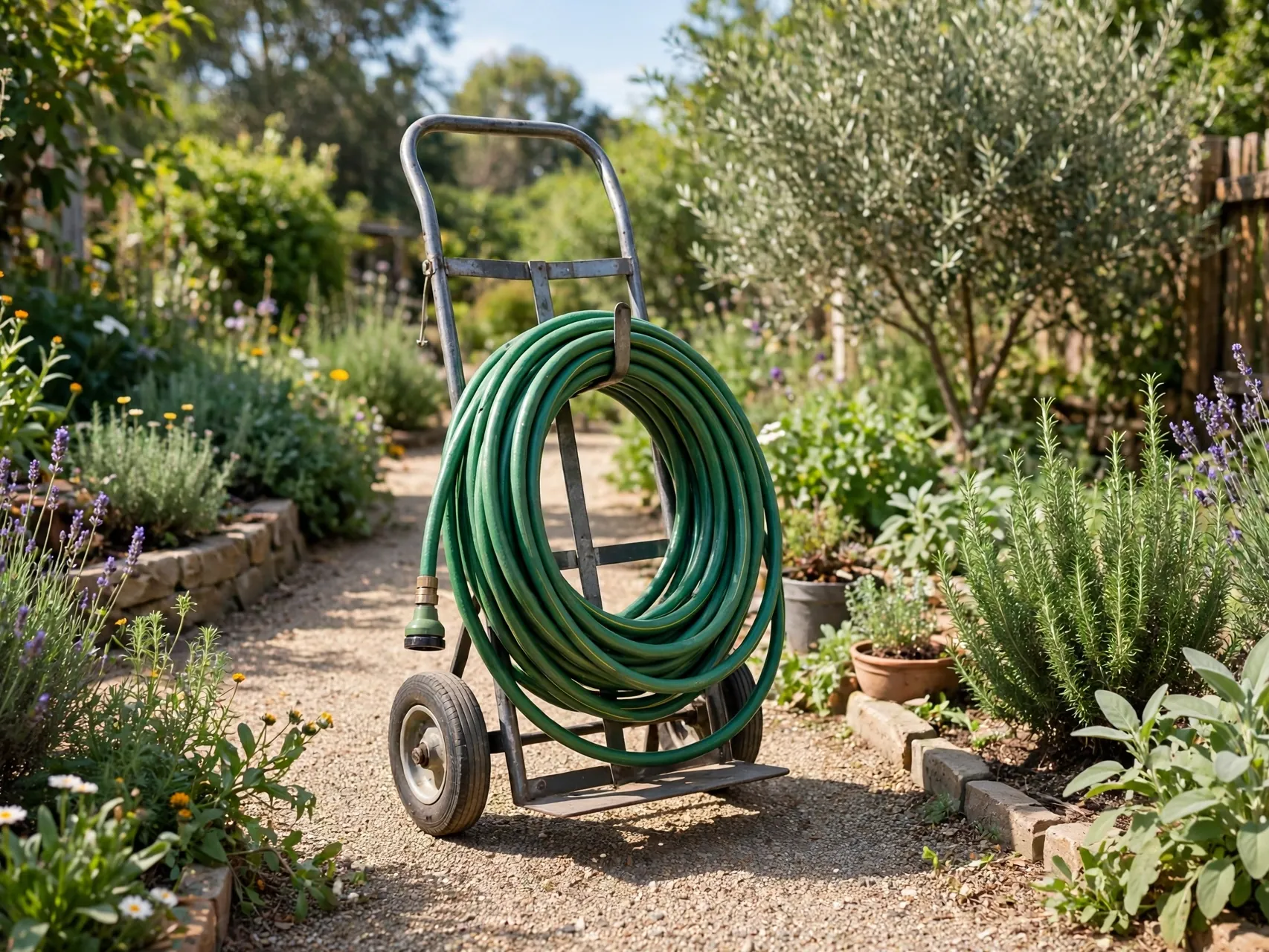
Fix a wide reel or a simple cross frame to a small wheeled dolly and you can roll the hose to beds instead of dragging it. Wheels save lawns, backs and hose life on bigger properties with long runs.
Choose wheels that roll on grass, not just paving, and add a handle at pushing height. Store the cart under cover so bearings and timber stay dry. Mobile storage is the only kind that truly works for very long hoses.
17. Hose Pot With Lid and Drainage

A purpose built look from a tall resin or ceramic pot with a loose lid gives the cleanest finish of all pot ideas. The lid keeps the hose invisible, shaded and cleaner, and guests never guess what is inside.
Drill drainage in the base and a side hole for the tap connection, smooth any sharp drilled edges so they cannot chafe the hose and keep the pot where you can lift the lid easily. This polished option suits patios and front porches best.
18. Rustic Branch Hook on a Post
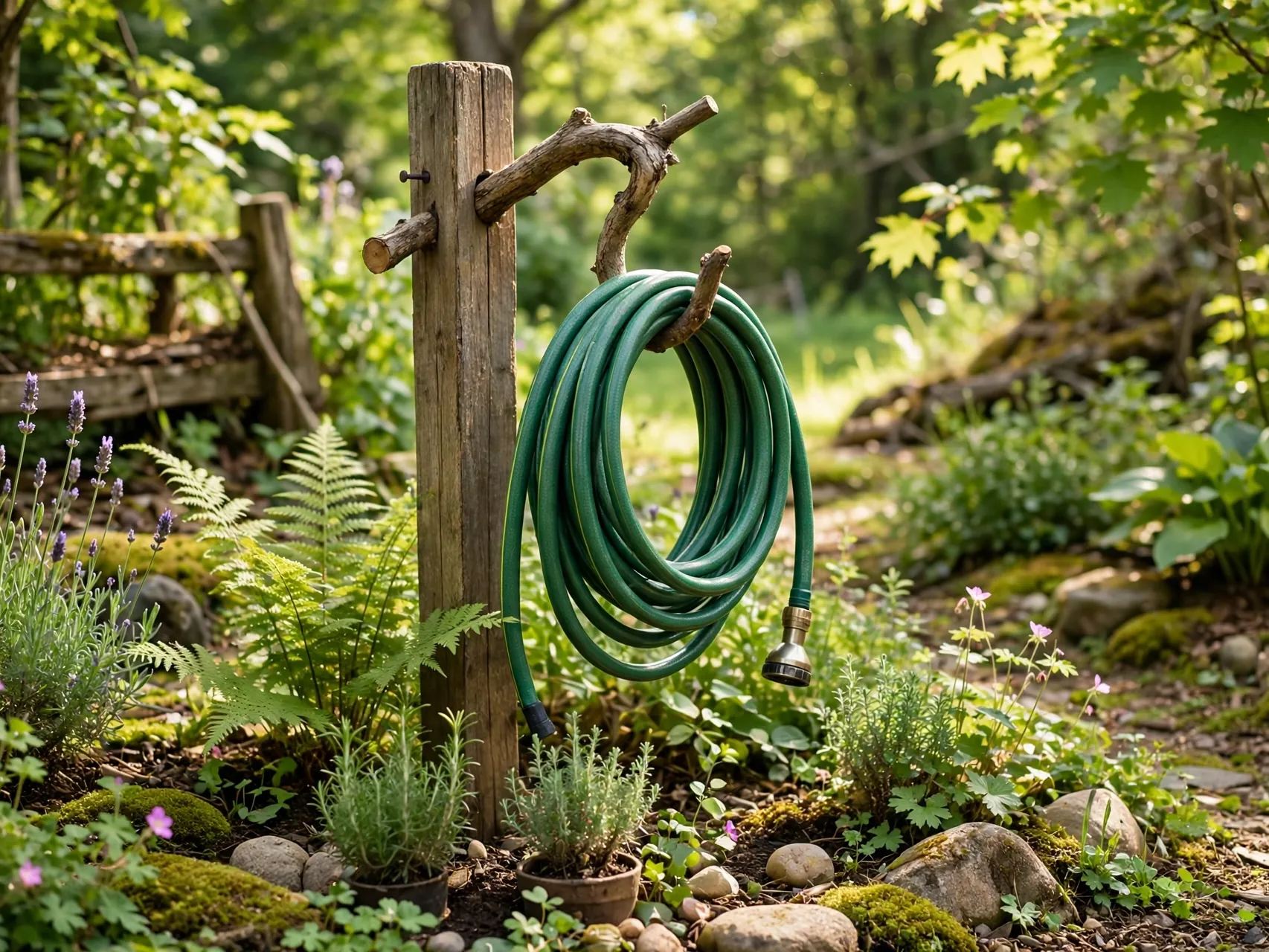
A sturdy, forked branch screwed to a post or tree makes a natural hook that blends into informal, woodland style gardens. The fork cradles coils and the bark texture hides scuffs and dirt from daily use.
Pick hardwood, remove any sharp stubs and check the fixing each season as wood weathers. Keep hose weight modest on branch hooks and use them for shorter hoses. Natural materials need replacing sooner, and that easy swap is part of their charm.
19. Under Bench Hidden Coil
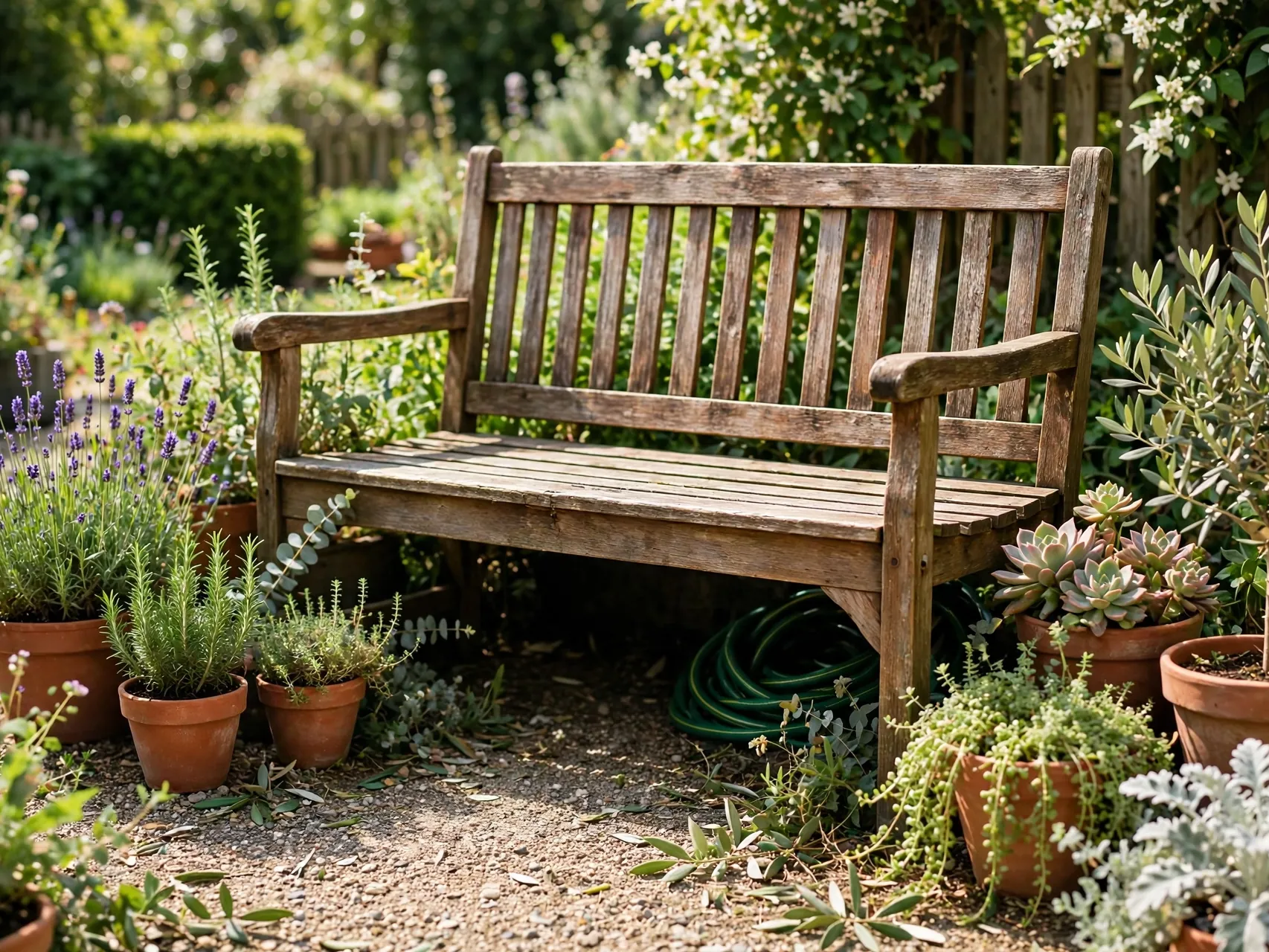
The space under a potting bench or garden bench hides a coiled hose on a low hook or in a crate, shaded and out of sight lines. It is a smart use of dead space in small yards where walls are full.
Keep the bench area swept so grit does not grind into the hose, and coil loosely to fit the height. Hidden storage still needs drainage and air, so never box a wet hose into a sealed space or mildew will move in fast.
20. Painted Post With House Number Charm

Combine hose storage with curb appeal: a painted post by the front tap, a wide hook for the hose and your house number or a small welcome sign above. It looks intentional, pretty and easy for guests to find.
Use exterior paint in your trim color and stainless or coated hardware to avoid rust streaks. A front yard post should be set neatly and kept planted around the base with low flowers so it reads as a feature, not a utility.
21. PVC Ground Stake Spiral
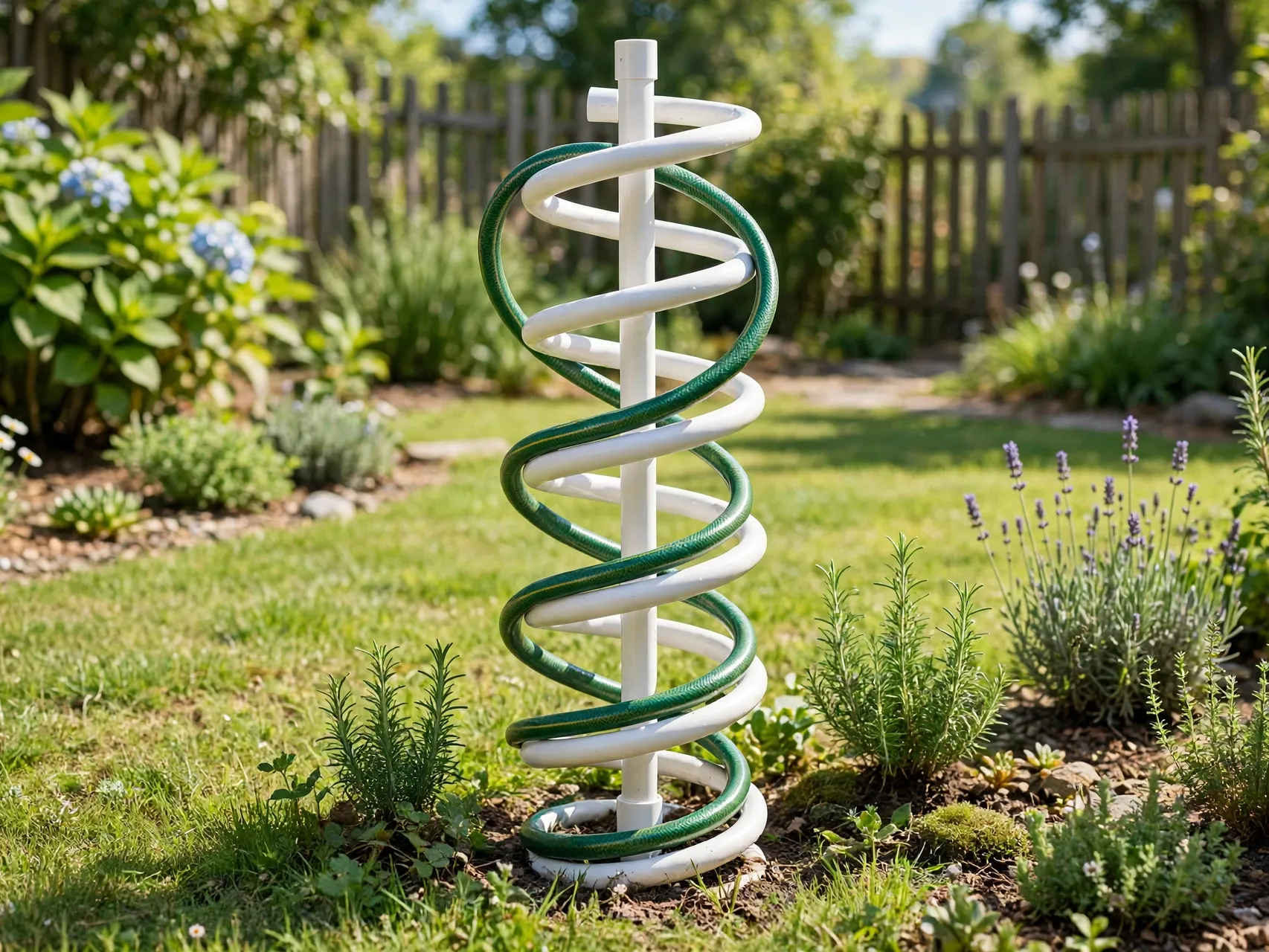
A spiral or zigzag of PVC set on a ground stake lets you wrap the hose in open loops that drain and dry fast. The open design suits humid climates where closed boxes stay damp and hoses go slimy.
Anchor the stake firmly and smooth every cut edge with sandpaper. Light colors reflect heat better than dark pipe in strong sun. This low, simple build is quick to make from offcuts and easy to move when beds change layout.
22. Old Watering Can Cluster Display

For a short patio hose or a soaker length, coil it inside a big vintage style watering can or behind a cluster of cans by the tap. It is storage as decor, best for light hoses used for pots and baskets.
Be honest about capacity: cans suit short hoses only. Trying to force a long hose into a small can creates the tight kinks you are trying to avoid. As a pretty extra by the door, though, this idea charms every visitor.
23. Shed Side Double Hook Station
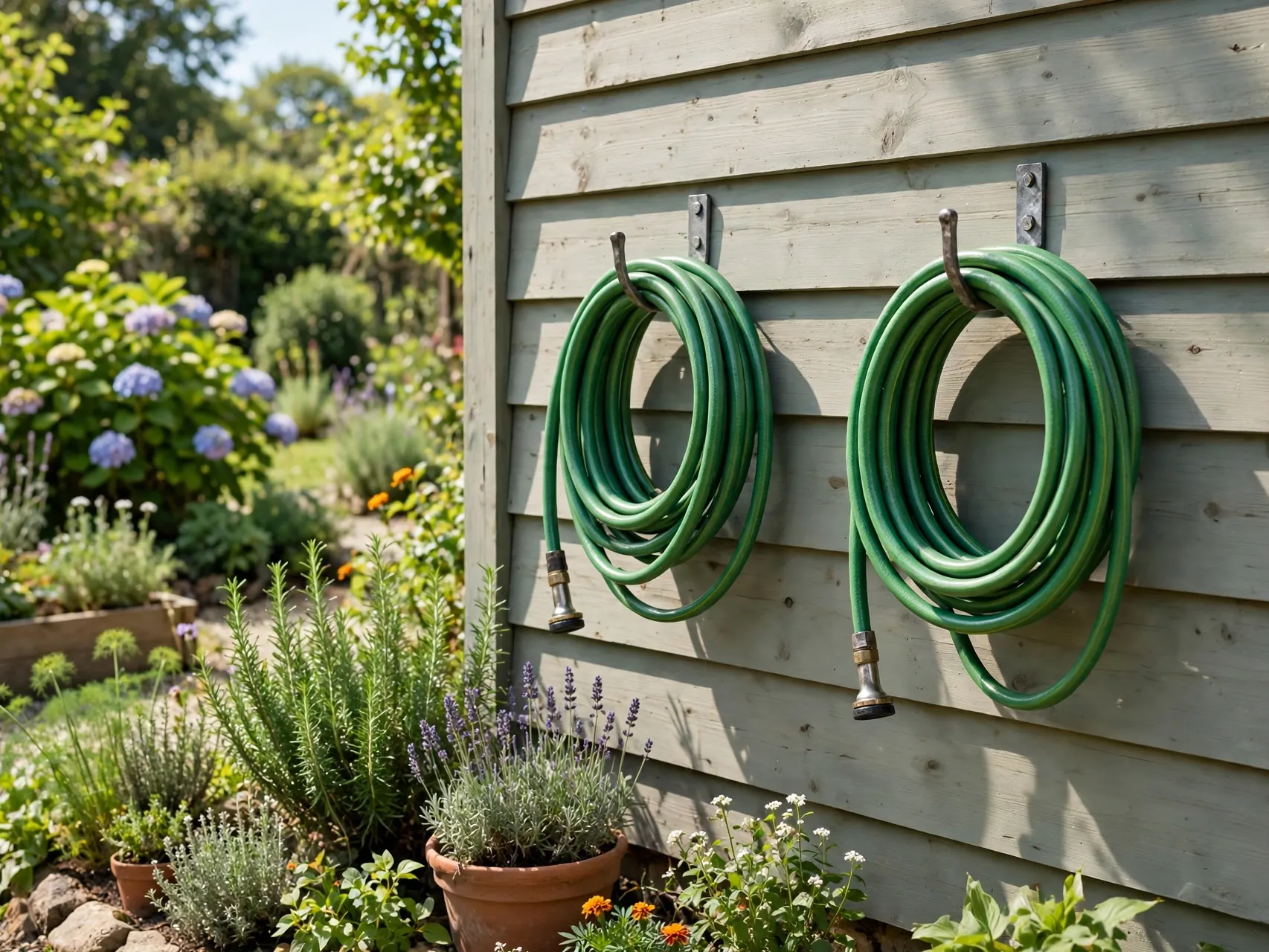
The side wall of a shed is prime storage real estate. Fit two wide hooks at different heights, one for the main hose and one for a short leader hose, plus a small basket for nozzles, timers and spare seals.
Fix into the shed framing, not just thin cladding, and add a simple lean to strip above if rain pours down that wall. A tidy station here keeps the tap area clear and makes watering rounds faster, since everything lives in one grab and go spot.
24. Copper Pipe Holder for a Modern Look
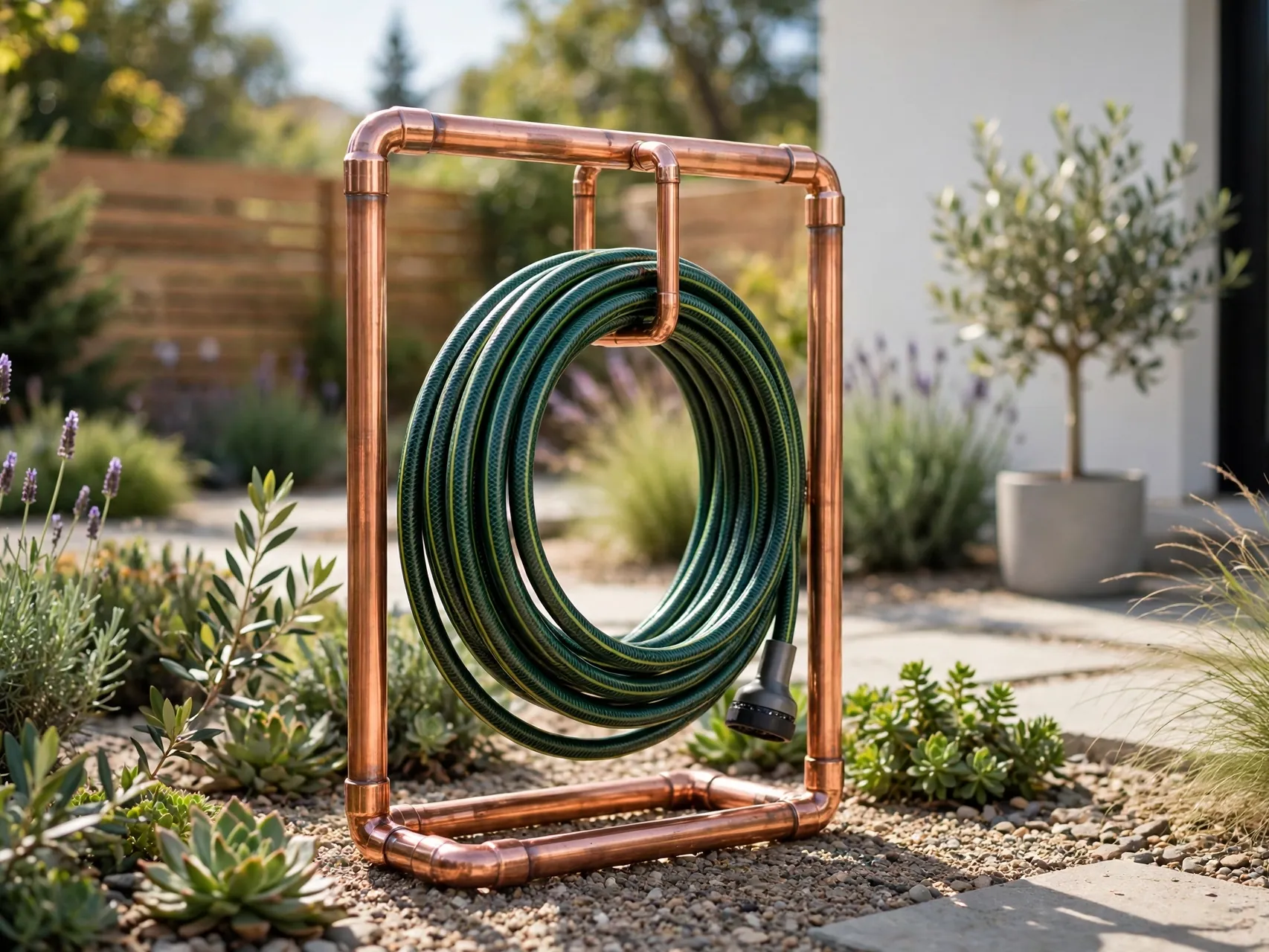
Bent or joined copper pipe makes a slim, elegant wall holder that ages to a soft patina. The smooth, wide curve is gentle on hose rubber and the metal suits modern and classic planting alike once it weathers.
Copper costs more than PVC or timber, so this is a small, jewel like project rather than a budget one. Secure it well, since copper is softer than steel. Keep the design simple: one generous U shape holds a surprising length of hose.
25. Winter Ready Holder With Cover and Drain Routine

The prettiest holder fails if winter splits the hose. Choose or adapt a holder that lets you drain fully, coil large and cover or move the hose indoors or into a shed before hard freezes arrive each year.
In fall, disconnect, drain every section, coil loosely and store out of sun and frost. Inspect washers and couplings while you are at it, so spring starts with no leaks. This routine, paired with any diy garden hose holder above, doubles hose life.
FAQ
How do I stop my garden hose from kinking in storage?
Coil in large, loose loops on a wide holder, never in tight circles on the ground. Drain water first, keep the hose out of harsh sun where you can, and avoid sharp edges or narrow hooks that pinch the rubber into a permanent bend.
Can I leave a garden hose outside all winter?
It is risky in freezing climates. Water left inside can freeze, expand and split the hose or its fittings. Drain it fully, coil it loosely and store it in a shed, garage or covered holder before hard frost for the best chance of a leak free spring.
What is the cheapest DIY hose holder?
A chain and snap hook on a fence, a bucket screwed to a wall, or a pallet post with a wide hook are among the cheapest options, often made from items already at home. The key cost saver is using wide supports you already own.
Should a hose holder be in sun or shade?
Light shade is better where you have a choice, since long sun exposure breaks down rubber and plastic over time. A lidded pot or box gives shade anywhere. If the only spot is sunny, a cover still helps a lot.
How high should a wall hose holder be?
Mount it at a comfortable lifting height, often around waist to chest height, so you are not hoisting a heavy, wet coil overhead. Keep the bottom of the coil clear of the ground so it stays clean and away from trimmers.
Key Takeaways
- Wide and loose wins: Large loops on wide hooks prevent kinks and extend hose life.
- Drain before you store: Empty hoses coil easier, stay cleaner and survive winter far better.
- Fix into structure: Studs, framing or masonry hold weight safely, siding and cladding alone do not.
- Shade helps: Lids, pots and light shade slow sun damage to rubber and plastic.
- Pretty is practical: Paint, pots and posts make storage you are happy to use every day.
- Plan for winter: A fall drain, inspect and cover routine saves a new hose purchase in spring.
Save these ideas to Pinterest for later, and pin the holder that will finally make your hose neat, pretty and easy to use.