22 Balcony Privacy Plants That Grow Fast in Containers
Introduction
A close neighbor, a busy street or the building across the way can make even a pretty balcony feel exposed. Balcony privacy plants fix that in the softest way possible. Instead of a hard wall, you get a living screen that filters light, muffles the view and makes the space feel like a small garden in the sky.
The trick is choosing plants that earn their space in a pot. The best privacy plants for balcony in pots grow tall or climb fast, hold their leaves for most or all of the year, and tolerate the wind, reflected heat and quick-drying soil that balconies are known for. Buying the largest starter plants you can afford speeds everything up.
Before you shop, check three things: how much sun your balcony actually gets, your USDA hardiness zone if plants will overwinter outside, and your building rules and balcony weight limits. Several large pots filled with wet soil are heavy. Spread them along the railing over structural edges where possible, and keep total weight sensible for your building.
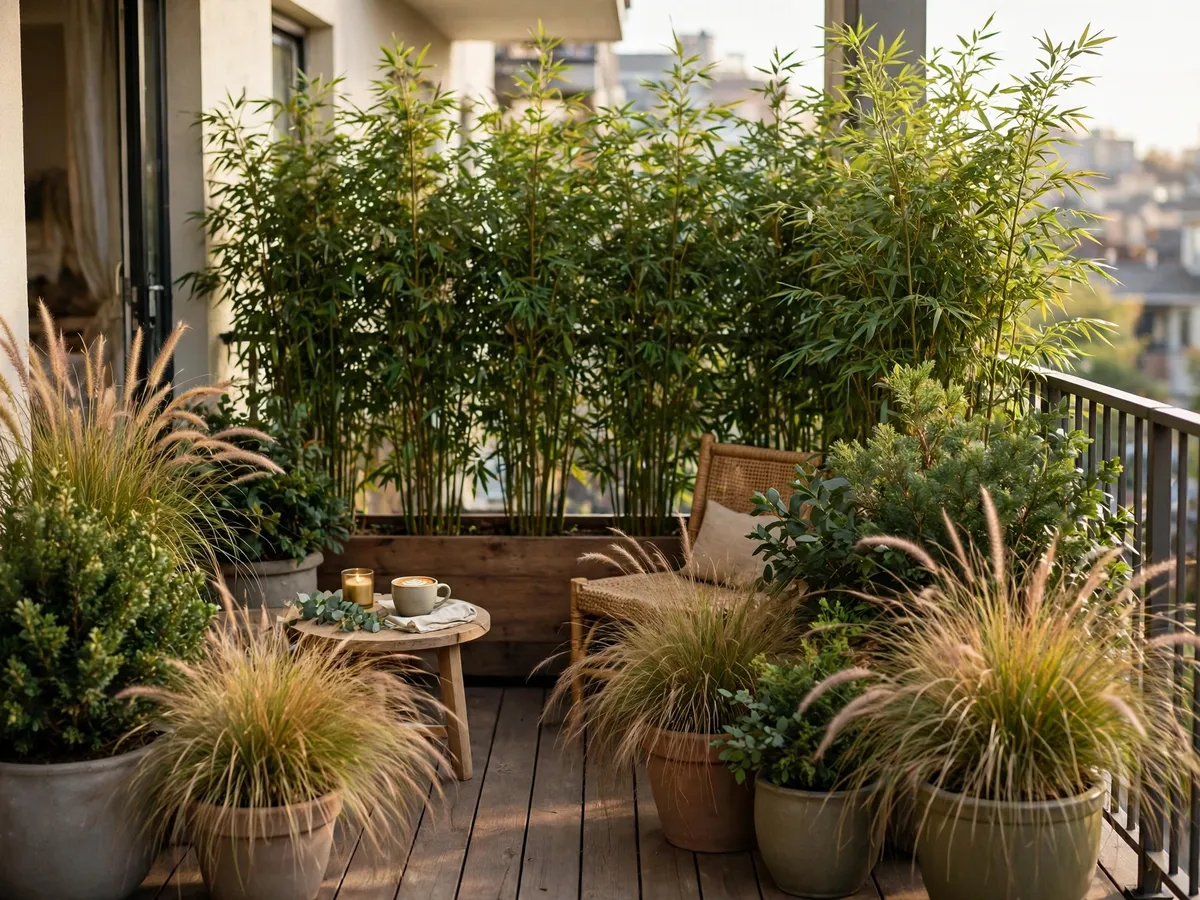
1. Clumping Bamboo in a Long Trough

Bamboo is the fastest route to a tall, dense screen, and containers keep it neatly contained. Always choose a clumping variety rather than a running type. Running bamboo spreads aggressively through underground rhizomes, while clumpers expand slowly from a tight base and behave well in pots.
Plant it in the largest trough or planter your space allows, since bamboo is thirsty and fills out faster with room to grow. Keep the soil consistently moist, especially in wind and heat.
2. Sky Pencil Holly for Narrow Gaps
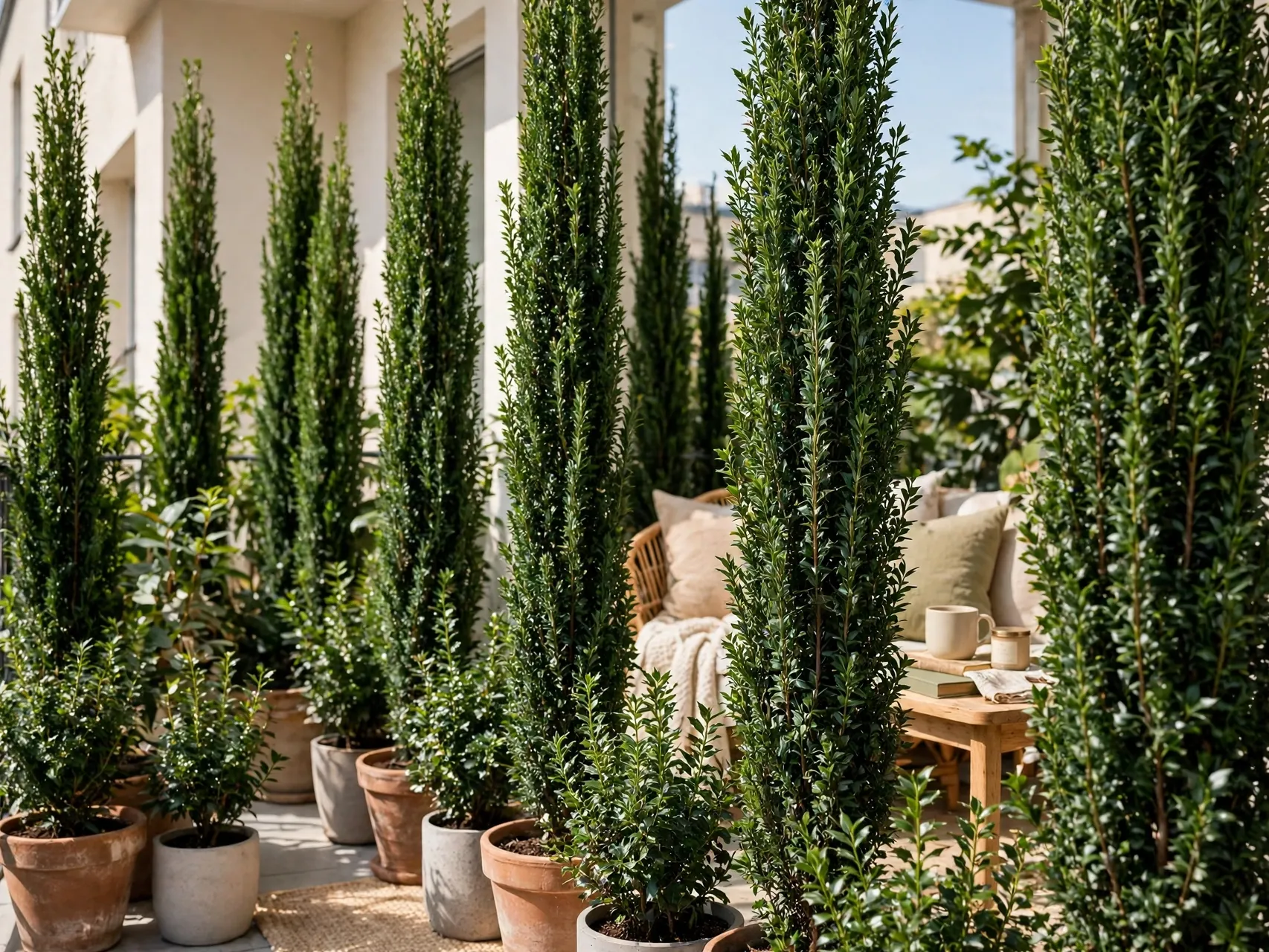
Some balconies need privacy in a strip only a foot wide. Sky pencil holly grows naturally tall and column-narrow, with dense evergreen leaves from base to tip, so it fills a slim gap beside a divider without swallowing your floor space.
It needs no pruning to keep its shape, which suits busy owners. Grow it in a pot at least as wide as the root ball plus a few inches, with drainage holes, and water regularly in summer. As an evergreen it screens in winter too.
3. Star Jasmine on a Trellis Panel

A trellis turns one pot into a whole wall of green. Star jasmine is an evergreen climber with glossy leaves and small, sweetly scented white flowers in late spring and summer. Train it up a trellis panel fixed to the railing or set in a planter box.
It grows at a moderate pace and speeds up once established in a large container with regular watering. Guide new stems through the lattice and tie them loosely until they hold on.
4. Ornamental Grasses for Soft Movement

Tall ornamental grasses give fast, airy privacy with very little fuss. Types such as maiden grass and other upright miscanthus cultivars can reach eye level in a single growing season from a decent sized starter plant, and their plumes extend the show into fall.
Grasses suit sunny, windy balconies where fussier plants struggle, and they ask for just one cut back in late winter or early spring before new growth starts. They do go dormant and lose their screen value in cold winters, so pair them with an evergreen if you need year-round cover.
5. Boxwood for a Trim Evergreen Row

Boxwood is the classic tidy hedge, scaled down for pots. Its small, dense evergreen leaves make a solid green wall at railing height, and it takes light trimming happily if you like a crisp edge. A row of matching pots reads as intentional design, not just screening.
Boxwood grows slowly compared with bamboo or grasses, so buy the biggest plants your budget allows if privacy is urgent. It handles sun and part shade and overwinters in containers in many zones, though pots in very cold areas benefit from shelter against freezing wind.
6. Sasanqua Camellia for Flowers and Cover

If you want your screen to bloom, sasanqua camellia earns a place on the list. This evergreen shrub carries glossy leaves all year and opens pink, white or red flowers in fall and early winter, when most balconies look bare. In a large pot it can reach a useful screening height over time.
Camellias grow at a moderate pace, so this is a beauty first, speed second choice. Give it part shade, acidic potting mix if you can, and steady moisture.
7. Emerald Arborvitae in Matching Pots

The narrow, pyramidal shape of emerald arborvitae makes it a natural balcony screen. Its soft, dense evergreen foliage fills in to a solid wall of green, and a row of three in matching pots instantly looks like a designed hedge rather than a collection of plants.
Choose the largest pots you can manage, because arborvitae in small containers dry out fast and can brown from the inside. Water deeply and consistently, and give plants room so air can move between them. Growth is moderate rather than fast, so start with taller nursery plants.
8. Mandevilla for a Flowering Vine Wall

Mandevilla brings the tropics to a sunny railing. This vigorous vine climbs a trellis or railing quickly in warm weather and covers itself in large pink, red or white trumpet flowers through summer. Few screens feel less like a barrier and more like a celebration.
Treat it as a warm-season plant in most of the US: it thrives in heat and sun, slows in cool weather and cannot take frost. Many gardeners simply buy fresh plants each spring, which is honest, fast privacy for the months you actually live on the balcony.
9. Snake Plant for a Low Modern Screen
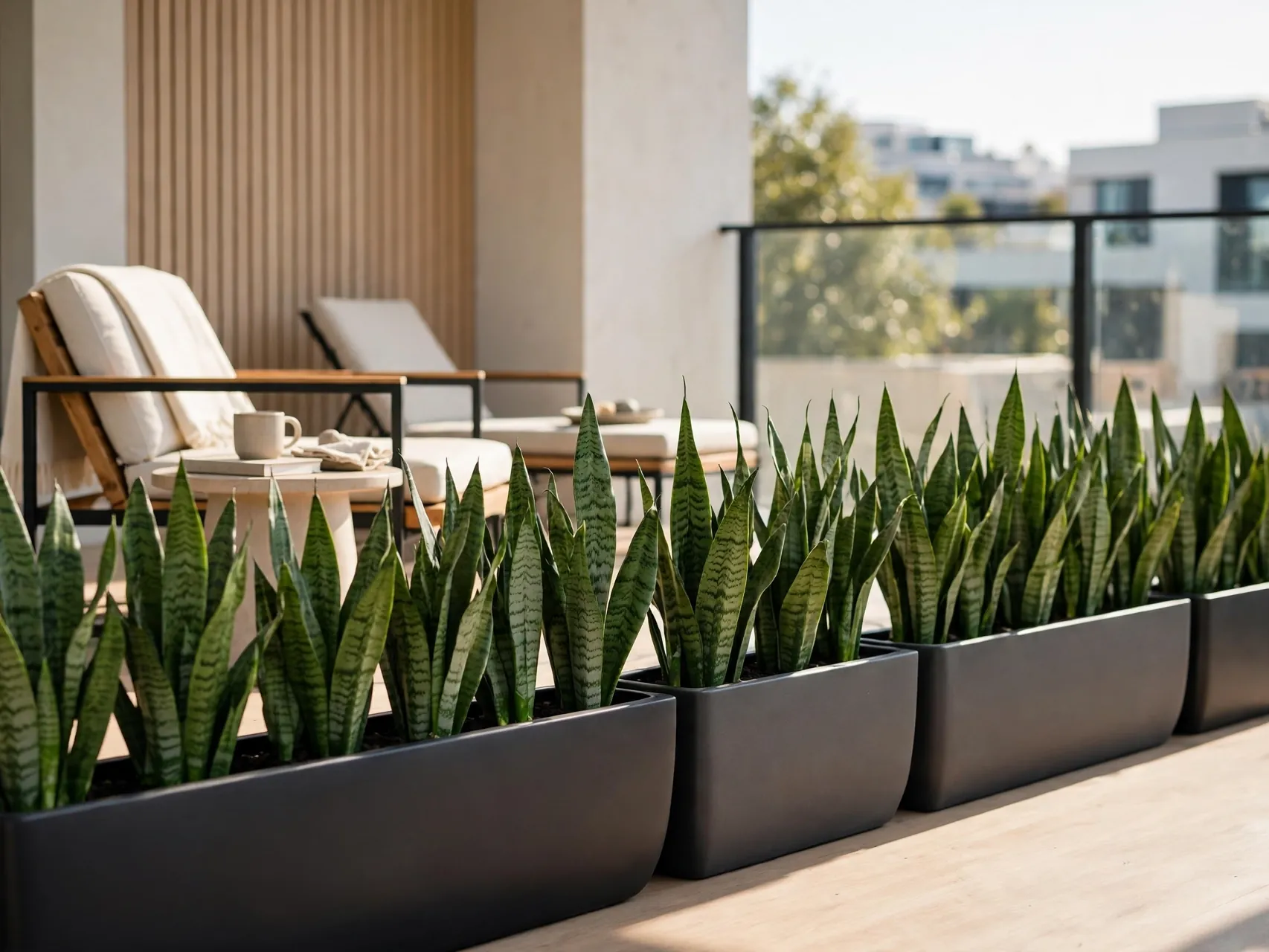
Not every sightline needs a six-foot wall. Along a low glass railing or a divider at sitting height, a row of snake plants gives a sculptural, modern screen with almost no care demands. The upright, patterned leaves block views at seated eye level, exactly where privacy matters most.
Snake plants tolerate drought, low light and neglect better than almost anything on this list, though they grow slowly, so buy mature plants. They are frost tender and in cooler zones work best as a warm-season balcony plant that winters indoors.
10. Climbing Roses Over the Railing

A climbing rose turns a privacy problem into the prettiest feature on the balcony. Trained along the railing or a slim trellis, the canes and foliage break up sightlines while the blooms do the decorating. Choose a repeat-flowering climber sized for containers and give it the largest pot you can.
Roses want at least six hours of sun and regular feeding and watering in pots. They are deciduous in cold climates, so this is a spring-through-fall screen in most zones. Tie canes in as they grow to spread coverage evenly.
11. Spartan Juniper for Tough Conditions

Hot, windy, high-up balconies defeat many plants. Spartan juniper is built for exposure: a narrow, upright evergreen with dense blue-green foliage that shrugs off heat and wind once established. In a row of large pots it forms a rugged screen with a slightly wild, natural outline.
Junipers need full sun and sharp drainage, and they prefer to dry a little between waterings once settled, which suits forgetful waterers. Growth is moderate, so start big.
12. Hibiscus for a Tropical Hedge

Shrub hibiscus in a big pot makes a lush, flowering screen for a sunny balcony. It grows quickly in summer heat, pushing out glossy leaves and large blooms in red, pink, orange or yellow. A pair flanking your seating area feels like a resort cabana wall.
Tropical hibiscus cannot handle frost, so plan to bring it indoors before cold nights or treat it as a seasonal plant in cooler zones. Hardy hibiscus types die back in winter in cold areas and return in summer.
13. English Ivy on a Privacy Panel
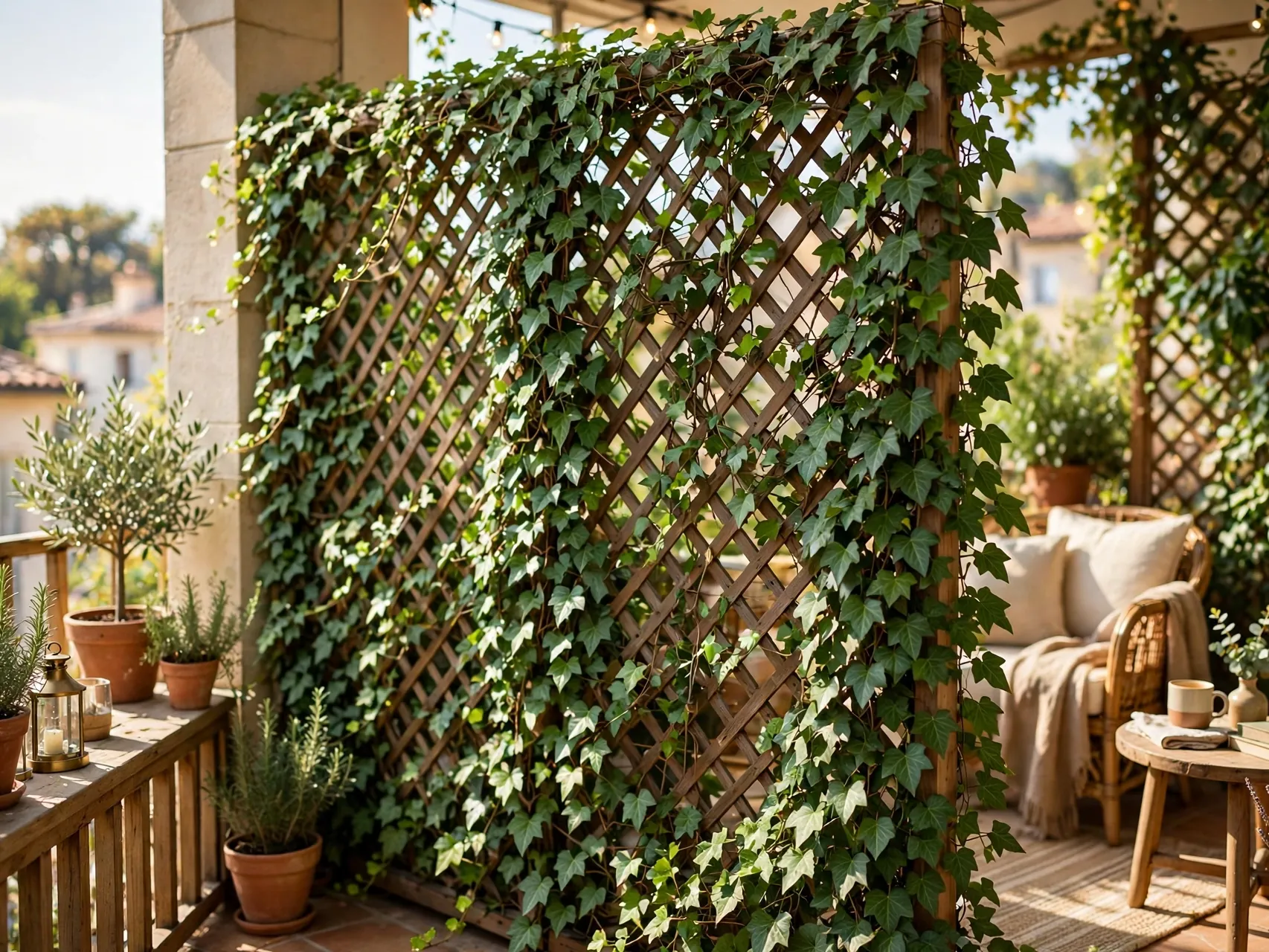
Ivy is the shade answer. Where sun-loving vines sulk, English ivy climbs happily and covers a panel or trellis with dense evergreen leaves. It is one of the quickest ways to green up a north-facing or building-shaded balcony that gets little direct sun.
Grow it in containers and train it on a freestanding panel rather than letting it attach to building walls, which can damage surfaces and upset landlords. Ivy can spread aggressively in the ground in some regions, another reason the pot is its proper home here.
14. Feather Reed and Pampas Style Grasses
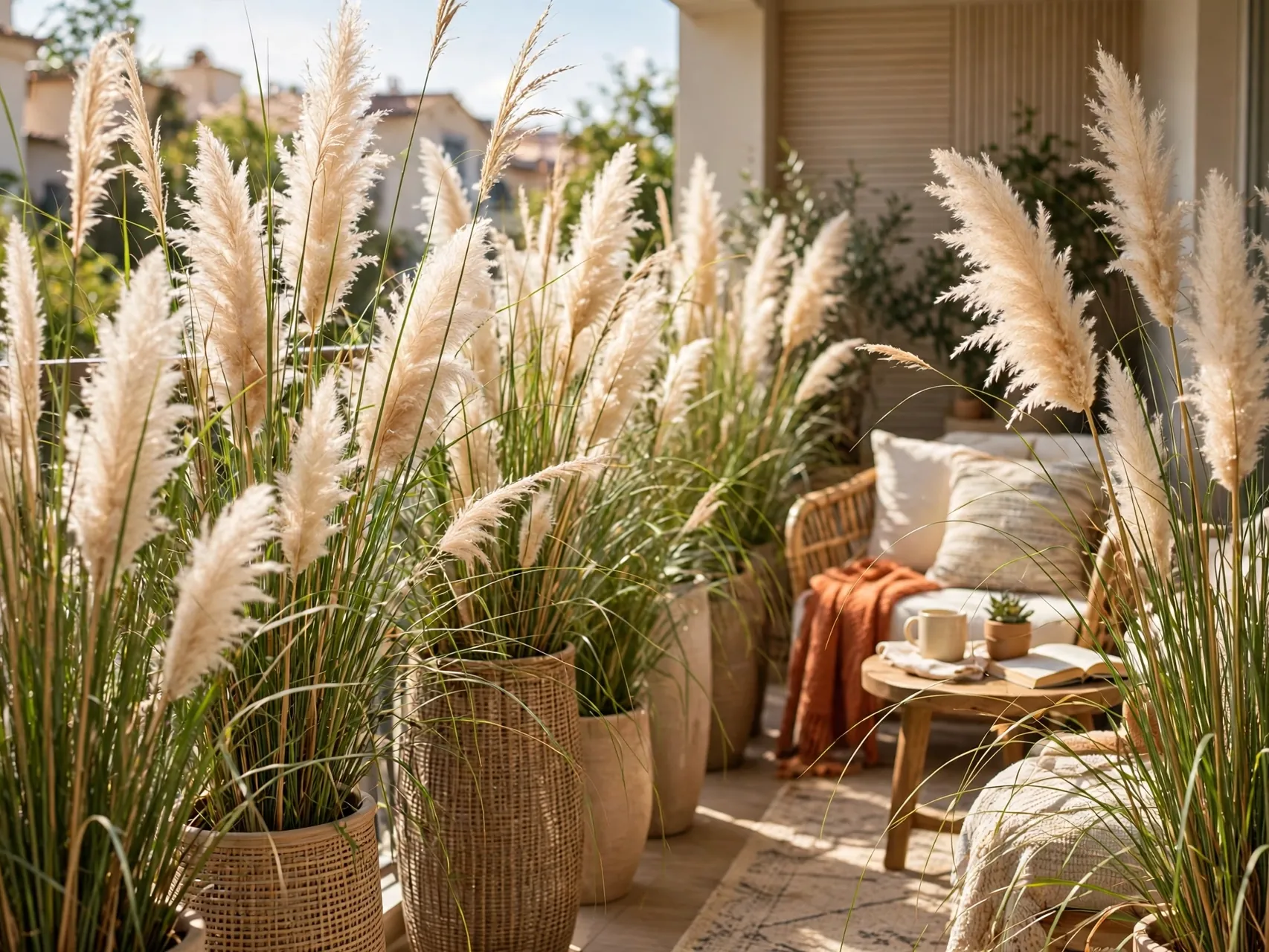
For a lighter, meadow-like screen, mix feather reed grass with other tall, plumy grasses in oversized pots. Feather reed grass stands very upright early in the season, giving height fast, and its wheat-colored plumes hold their shape into winter, extending the screening effect longer than many perennials.
Plant grasses in the sunniest spot you have and water well in their first season. Note that true pampas grass is restricted or discouraged in some areas because it self-seeds, so check local guidance and prefer sterile or well-behaved ornamental alternatives from your garden center.
15. Fatsia for Bold Shade Leaves
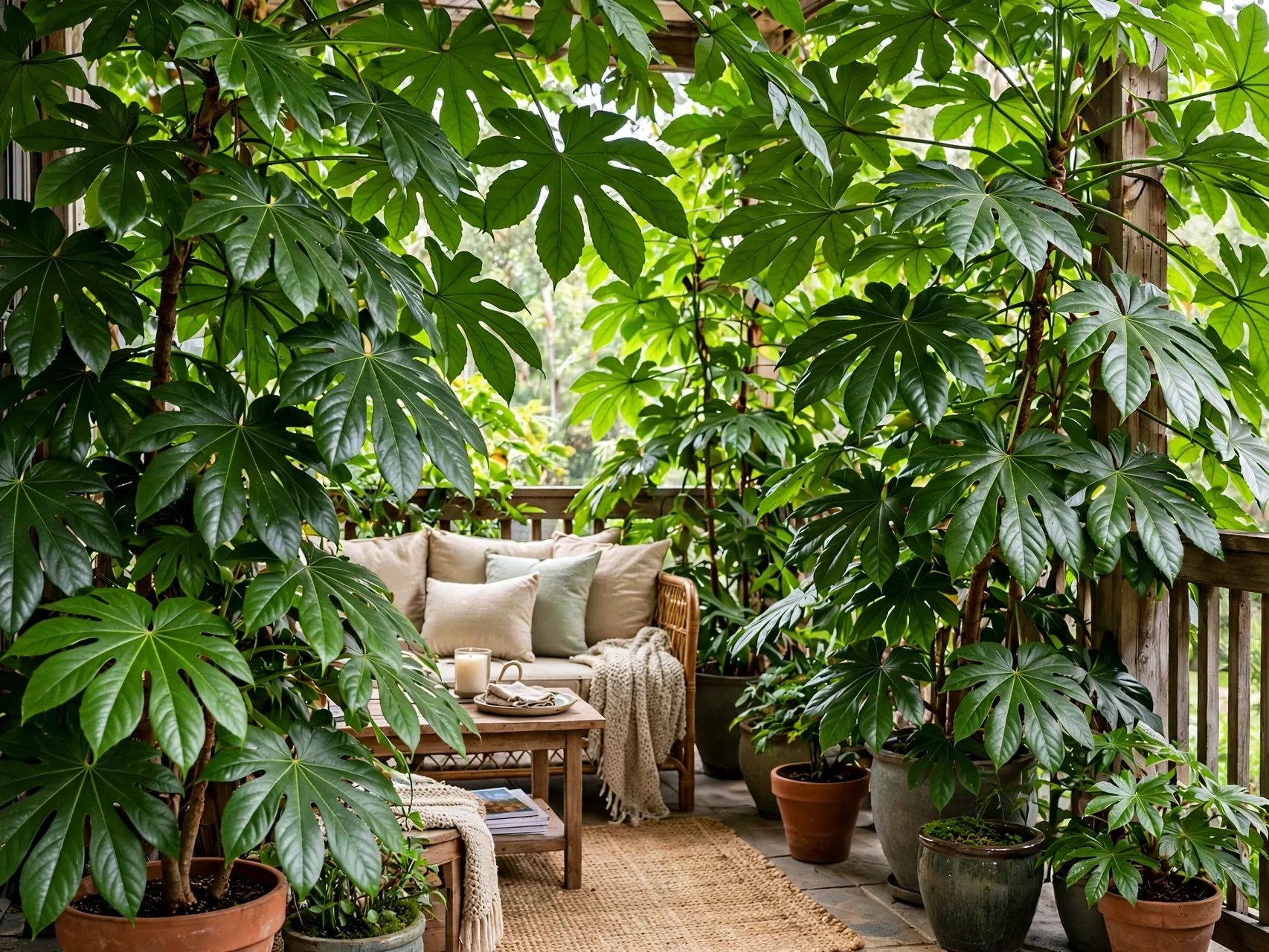
Fatsia japonica, sometimes sold as false castor oil plant, has huge, glossy, hand-shaped leaves that block views brilliantly in shade. One or two plants in large pots can screen a whole corner, and the bold foliage gives a lush, slightly exotic feel that suits modern balconies.
It grows at a moderate pace and prefers part to full shade with steady moisture, making it ideal for balconies that never see direct sun. It is evergreen in mild zones and may need shelter or indoor wintering in colder areas.
16. Dwarf Citrus for Scent and Fruit

A dwarf citrus tree in a handsome pot is privacy you can eat. Planted at the balcony edge, its dense evergreen canopy sits right at eye level where you sit, and the blossom scent in spring is a bonus no screen can offer. Lemons and calamondins are popular container choices.
Citrus needs full sun and regular feeding to fruit well in pots, and in most zones it must winter indoors near a bright window. Growth is steady rather than fast, so buy a well-shaped small tree. Even a single specimen breaks a sightline and gives the balcony a focal point, which is often half the privacy battle.
17. Sweet Viburnum for a Fast Shrub Screen
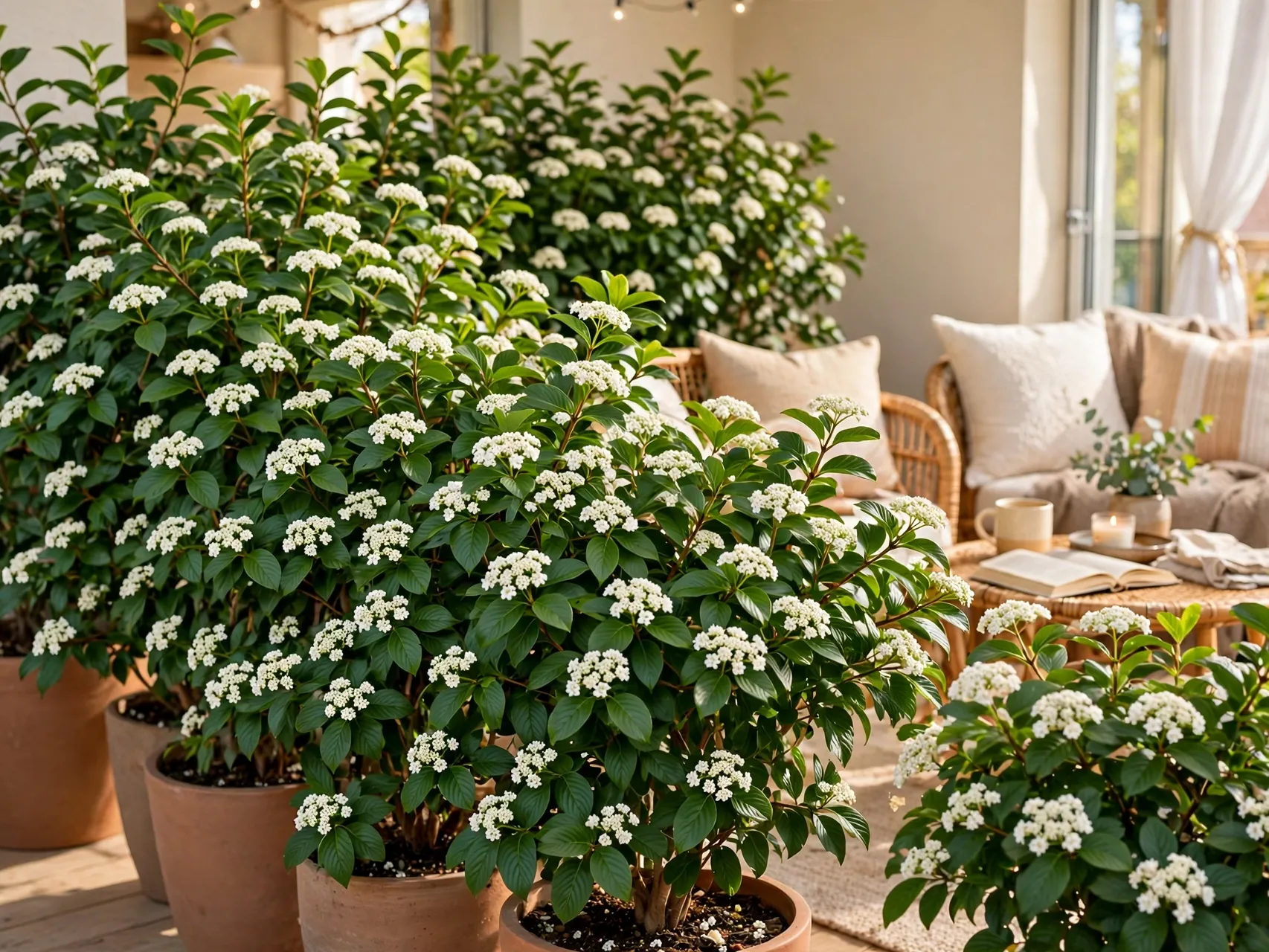
Where winters are mild, sweet viburnum is one of the quickest shrub screens you can grow in a large container. It pushes out dense, glossy evergreen growth fast in warm weather and can be lightly trimmed to a tidy wall shape. Clusters of small white flowers are a spring bonus.
This is a thirsty, hungry plant in a pot, so size the container generously and water faithfully in summer. It suits warmer zones best and may suffer in hard freezes. If your winters are mild and you want shrub privacy in a hurry rather than a vine or grass, this is one of the strongest fast growing privacy plants containers can support.
18. Clematis on a Slim Obelisk

An obelisk in a pot gives clematis height without taking railing space. The vine climbs fast in spring, covers the frame with leaves, then adds a season of showy flowers. It is a good choice when you want privacy at one end of the balcony rather than along the whole edge.
Clematis likes its roots cool and shaded while its top grows into sun, so tuck a few flat stones or a low plant around the base. Most types are pruned once a year, and the right timing depends on the group, so keep the plant tag. In winter the stems thin out, making this a warm-season screen in cold zones.
19. Areca Palm for a Soft Indoor-Outdoor Screen
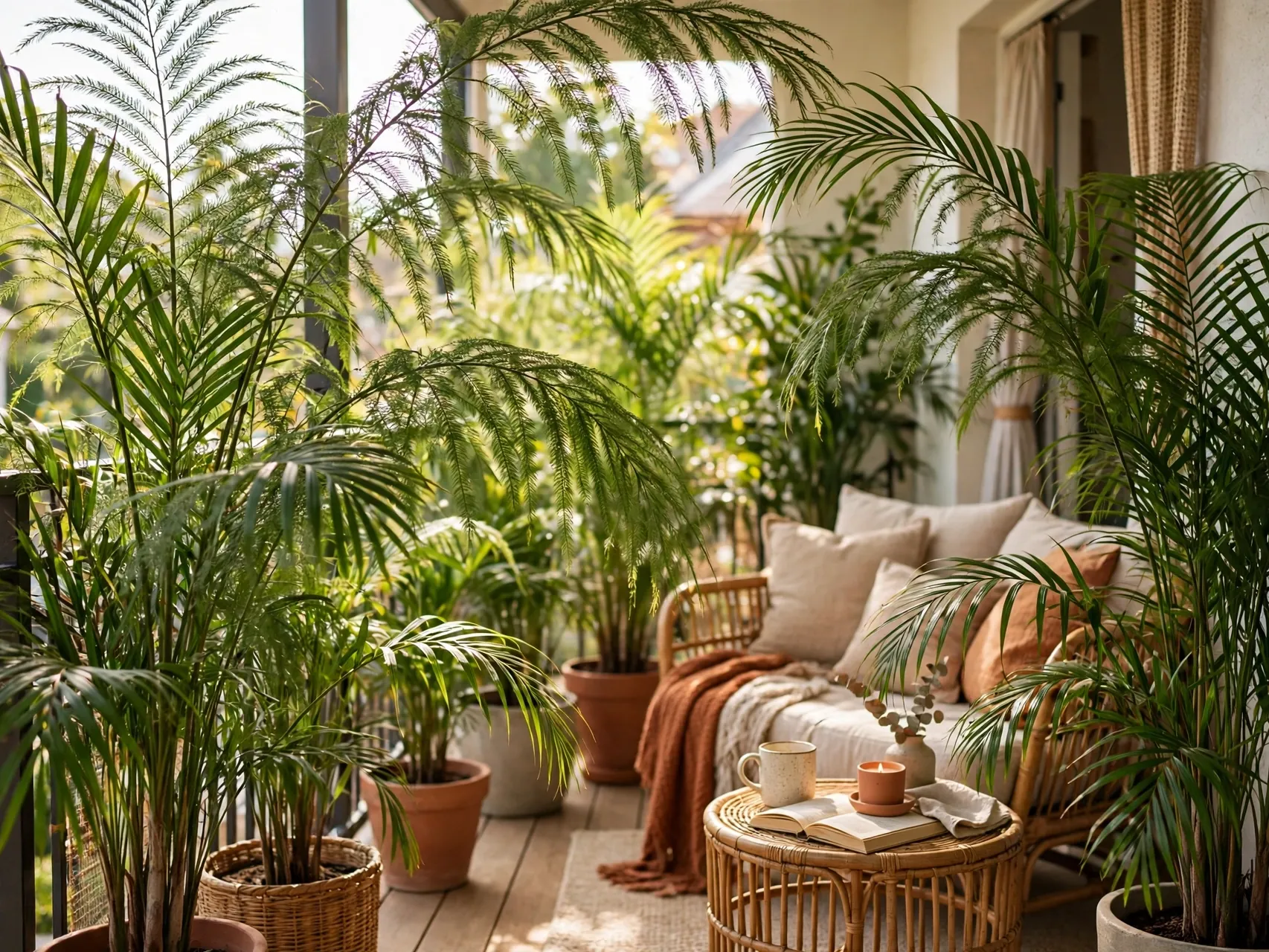
Areca palm gives instant, feathery height the day you bring it home. Its arching fronds filter views gently rather than blocking them completely, which suits balconies where you want separation without losing light. A pair in big pots flanking a chair creates a private reading nook in minutes.
It is a tropical plant, so in most of the US it summers outside and winters indoors near bright light. Keep the soil evenly moist and expect some frond shedding as normal. Because you buy the height ready-made, palms are the fastest privacy on this list, provided you have a sunny indoor corner waiting when the weather turns.
20. A Tall Herb Screen With Lemongrass
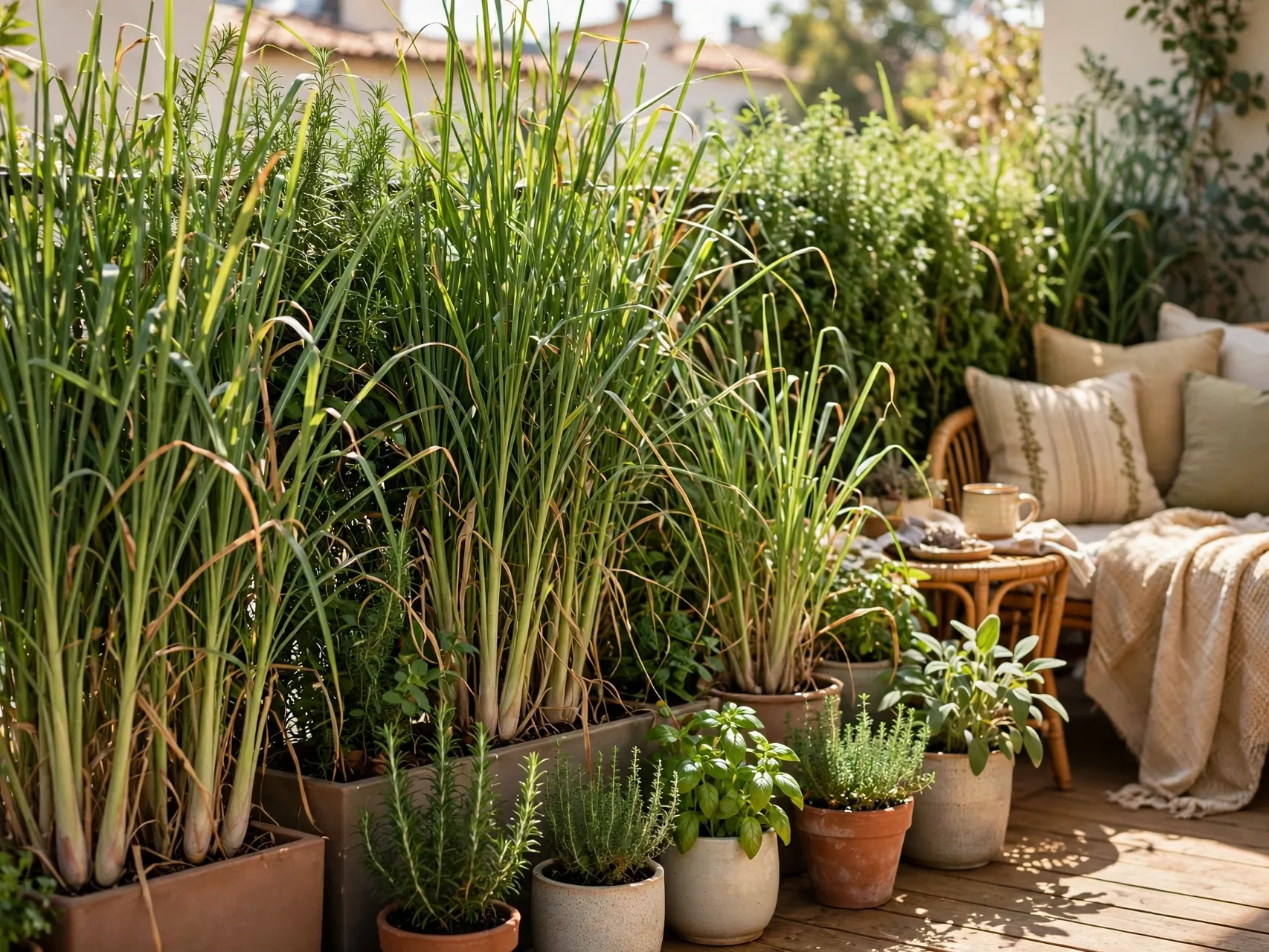
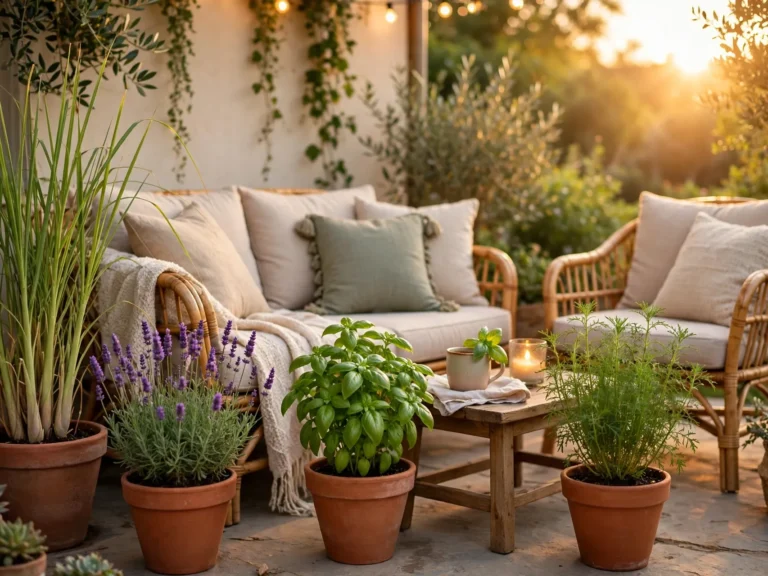
Privacy can smell wonderful. Lemongrass grows into a tall, arching clump fast in summer heat, and rosemary, tall lavender types and fennel can join it in a long planter for a screen you can brush against and harvest from. The movement and scent make the balcony feel like a garden room.
Most of these herbs want full sun and good drainage, and lemongrass is frost tender, so treat it as a seasonal star in cooler zones. Buy lemongrass as plants rather than seed for speed. A herb screen is lower than bamboo, so it works best for seated privacy or combined with a railing-height planter.
21. Fargesia Bamboo for Cold Climates
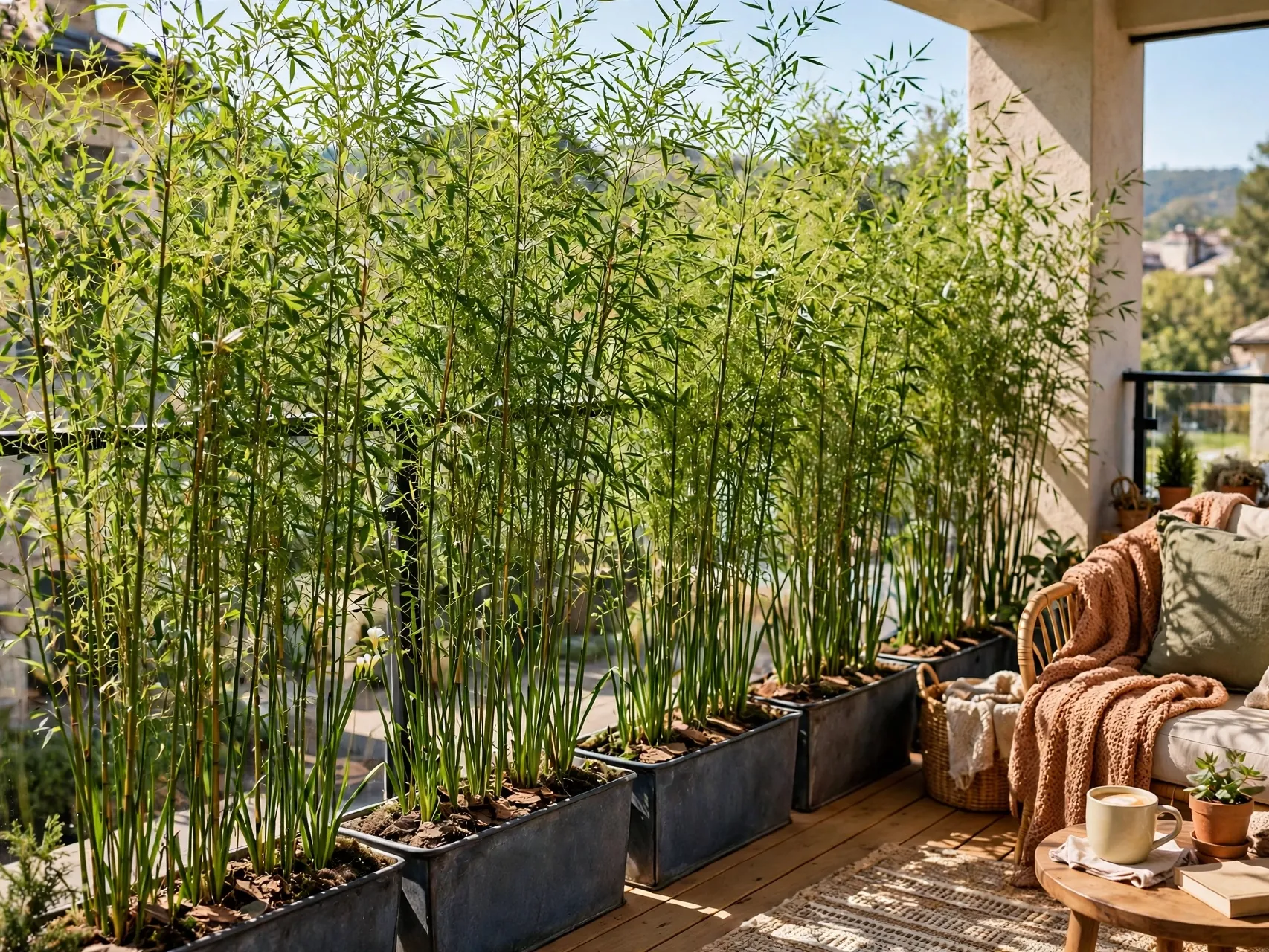
Gardeners in colder zones often assume bamboo is off the table. Fargesia types are clumping mountain bamboos known for handling much colder winters than tropical bamboos, and they keep a graceful, fine-leaved look in containers. Their arching canes make a softer screen than upright types.
Check the specific variety tag for its hardiness rating before buying, since it varies, and give container plants in very cold areas a sheltered spot and mulch over the pot in winter. Fargesia prefers part shade in hot summer areas and steady moisture. It grows a little slower than lowland bamboos but rewards patience with a refined, year-round wall.
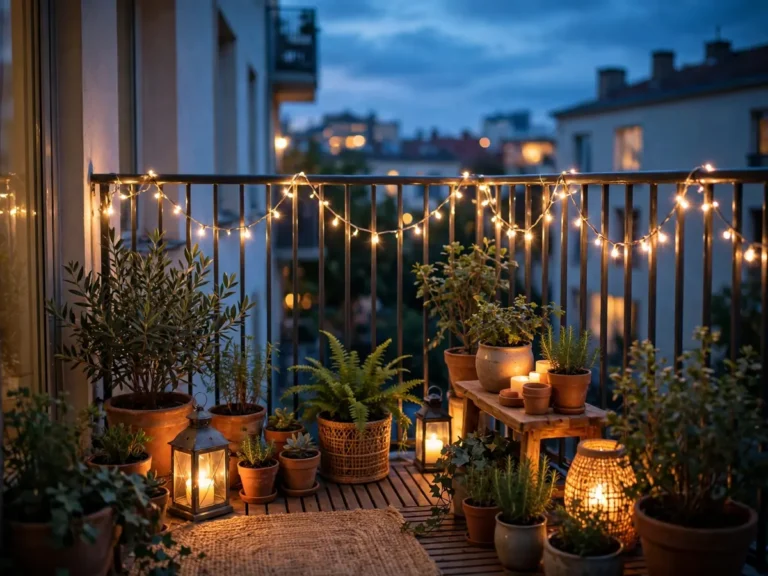
22. A Mixed Planter Wall for Layered Cover
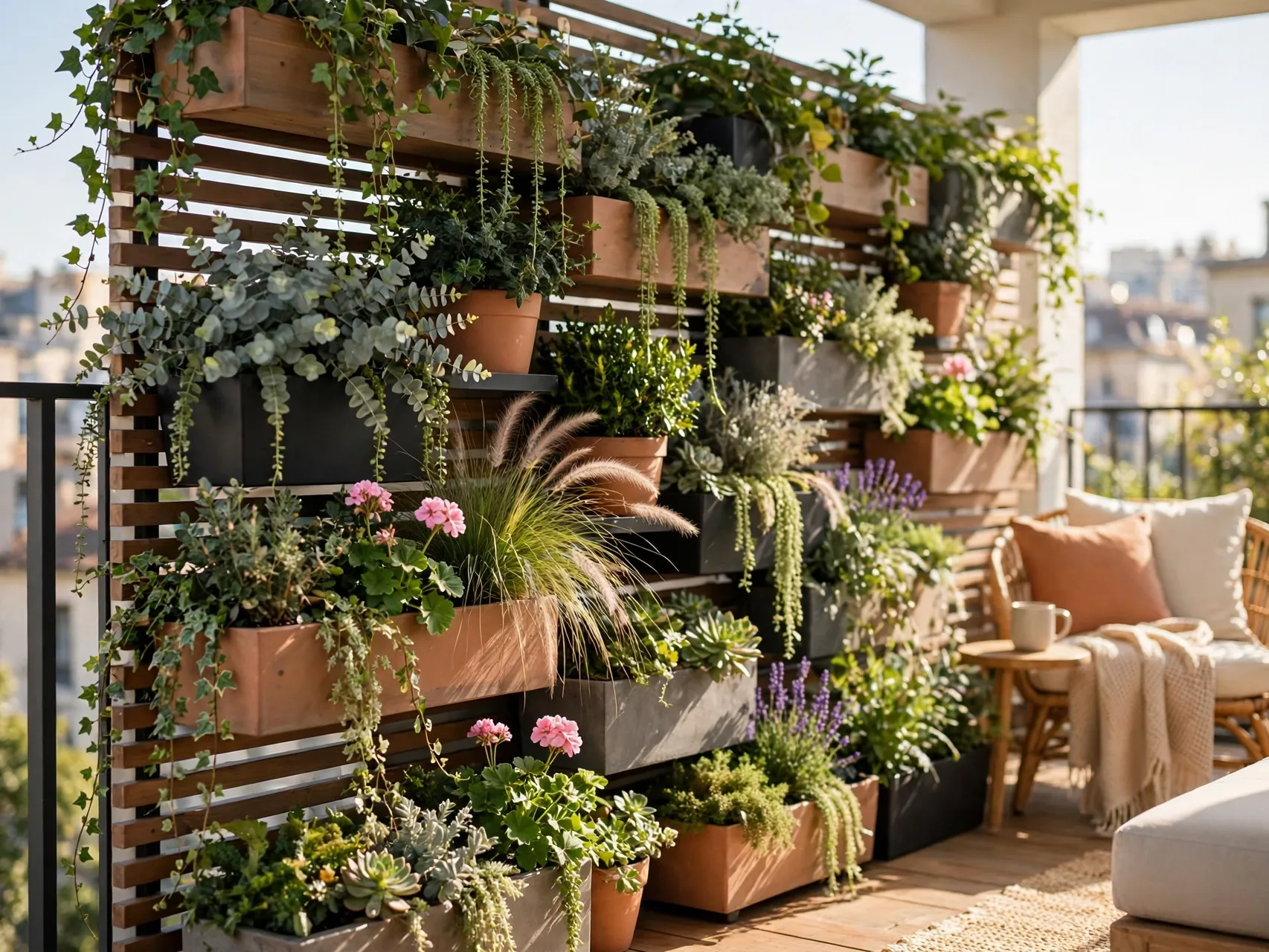
The most natural-looking screen rarely comes from one plant repeated. Build a layered wall instead: tall bamboo or arborvitae at the back, a mid-height shrub like camellia or viburnum in the middle, and grasses or flowering plants at the front edge. Layers close the gaps that single rows always leave.
Keep the whole arrangement in the largest planters you can manage and put the tallest pots on rolling caddies so you can shift them for cleaning or parties. Match watering needs within each pot, not across the whole wall. A mixed privacy plants for balcony in pots setup also survives better, since one struggling plant never leaves a hole in your privacy.
FAQ
What is the fastest plant for balcony privacy in a container?
Clumping bamboo and tall ornamental grasses usually give the quickest height in a pot, often reaching a useful screen size within one growing season when bought as decent sized starter plants. Vines such as mandevilla and star jasmine on a trellis are also fast in warm weather. Buying larger plants is the simplest speed upgrade of all.
How many plants do I need to screen a balcony railing?
Plan on pots sitting close enough that the foliage nearly touches, since gaps at leaf level are what people see through. For most shrubs and grasses that means a large pot every two to three feet along the exposed side. Test your sightline seated, not standing, because seated eye level is where privacy matters most.
Which privacy plants work on a shady balcony?
English ivy on a panel, fatsia, boxwood and star jasmine all handle part shade, and fatsia and ivy manage deeper shade where most flowering plants fail. Snake plants also tolerate low light at lower heights. Avoid grasses, roses and hibiscus in shade, since they need strong sun to grow dense enough to screen.
How do I keep container privacy plants alive through winter?
First, choose plants rated hardy for your zone, since roots in pots get colder than roots in the ground. Move pots against a sheltered wall, group them together and mulch the surface. Tender plants like mandevilla, tropical hibiscus and areca palm should come indoors before frost. Keep watering lightly through winter whenever the soil is dry.
Are there plants I should avoid for balcony privacy?
Avoid running bamboo in the ground and be cautious even in pots, since its rhizomes can escape drainage holes. Skip plants known to self-seed aggressively in your area, such as true pampas grass in some regions, and check local rules. Also avoid very heavy mature trees in large soil-filled pots if your balcony weight limit is unknown.
Key Takeaways
- Clumping bamboo is the speed winner: Always choose clumping types for containers, since running bamboo spreads aggressively through rhizomes.
- Buy height, do not just grow it: Larger starter shrubs and ready-grown palms give privacy this season instead of next year.
- Match the plant to your light: Grasses, roses and hibiscus need sun, while ivy, fatsia and boxwood carry the shady balconies.
- Evergreens screen all year: Holly, arborvitae, camellia and juniper keep working in winter when deciduous vines and dormant grasses do not.
- Layer to close the gaps: Tall plants at the back and softer growers in front make a wall with no see-through patches.
- Check weight and rules first: Big pots of wet soil are heavy, so confirm balcony limits and building rules before you buy.
Building your living screen? Pin this list to your balcony garden board on Pinterest so your plant shopping list is ready for your next garden center trip.