20 Fall to Winter Decor Transition Ideas That Feel Seamless
Introduction
The smoothest fall to winter decor transition ideas share one secret: you are not redecorating, you are editing. Most of what makes your fall rooms feel cozy, the wood, the baskets, the warm lamps and the layered textiles, can stay exactly where it is while a few honest swaps carry the season forward.
Work in stages rather than in one exhausting weekend. First pack away the pieces that only belong to fall, then cool the color palette a little, then add the heavier textures, greenery and glow that winter asks for. Your home keeps feeling lived in the whole way through, never half finished.
Late November is the natural moment for most homes, when pumpkins tire and evenings arrive early. Start with the living room, carry the same palette to the entry and bedrooms, and use these cozy winter decorating ideas to make the whole shift feel calm, connected and easy to store again later.
1. Start With a Clean Slate and Pack Away Fall Only Pieces

Begin by removing the pieces that cannot travel into winter: carved or tired pumpkins, Halloween items, dried corn, autumn leaf garlands and anything printed with fall sayings. Wipe the mantel, shelves and tables clean as you go, so every surface gets a true fresh start.
Pack these pieces straight into one labeled fall bin instead of scattering them through closets. A clean slate stops the slow clutter creep where winter decor piles on top of fall decor, which is the main reason seasonal rooms start to feel crowded and muddled.
2. Keep the Neutral Base and Swap Only the Accents
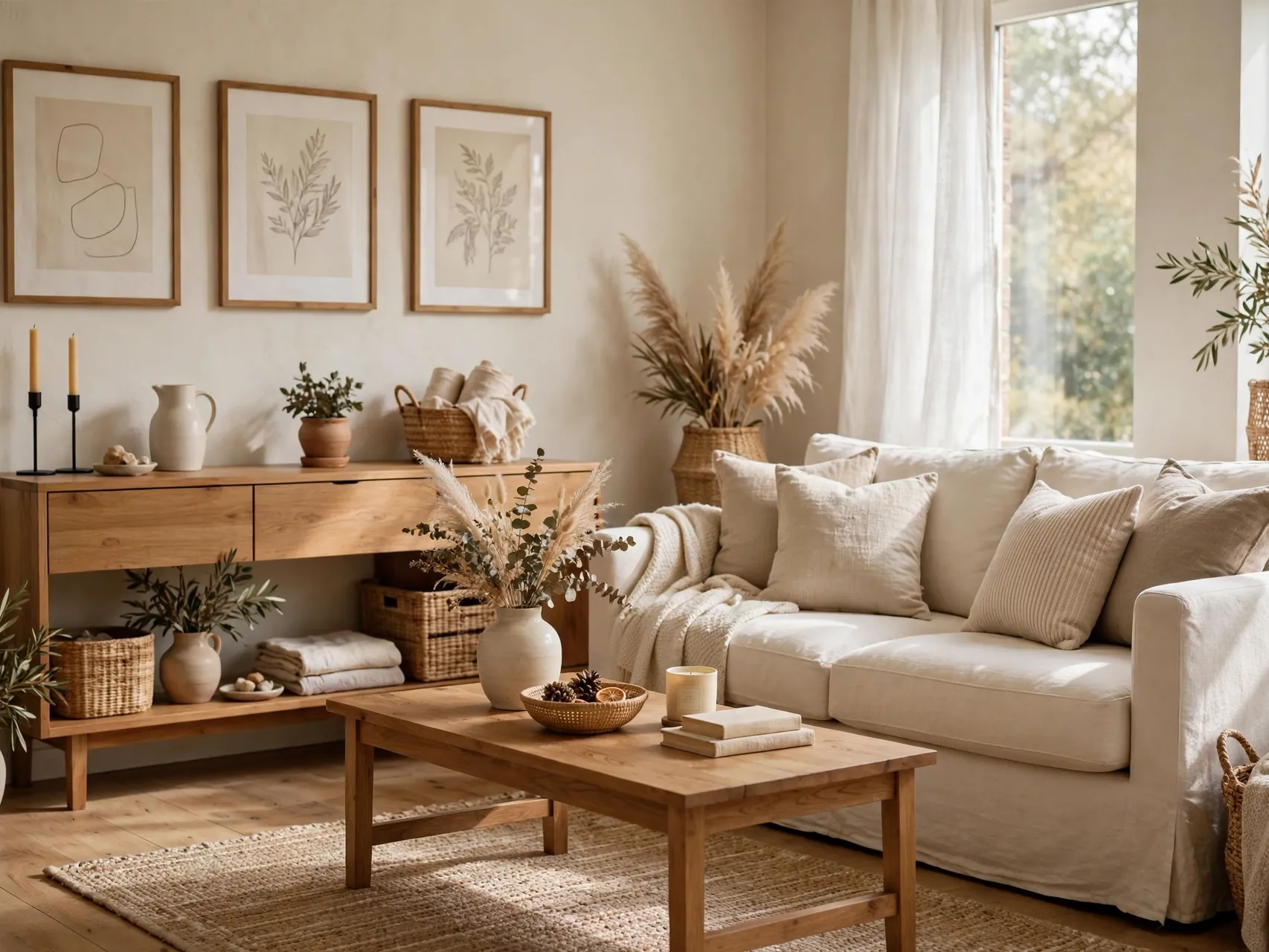
Look at what already works in both seasons: cream sofas, wood tables, woven baskets, plain lamps, simple trays and unpatterned rugs. Promise yourself these stay put. A steady neutral base is what makes a seasonal decor swap ideas list like this one feel affordable instead of endless.
Then change only the small, loud pieces: cushion covers, throws, bowl fillers, wreaths and table accents. When the big pieces stay calm, swapping ten small things refreshes the whole room in an afternoon, and storing the off season set takes one bin instead of a garage corner.
3. Trade Orange and Rust for Cream, Evergreen and Deep Red

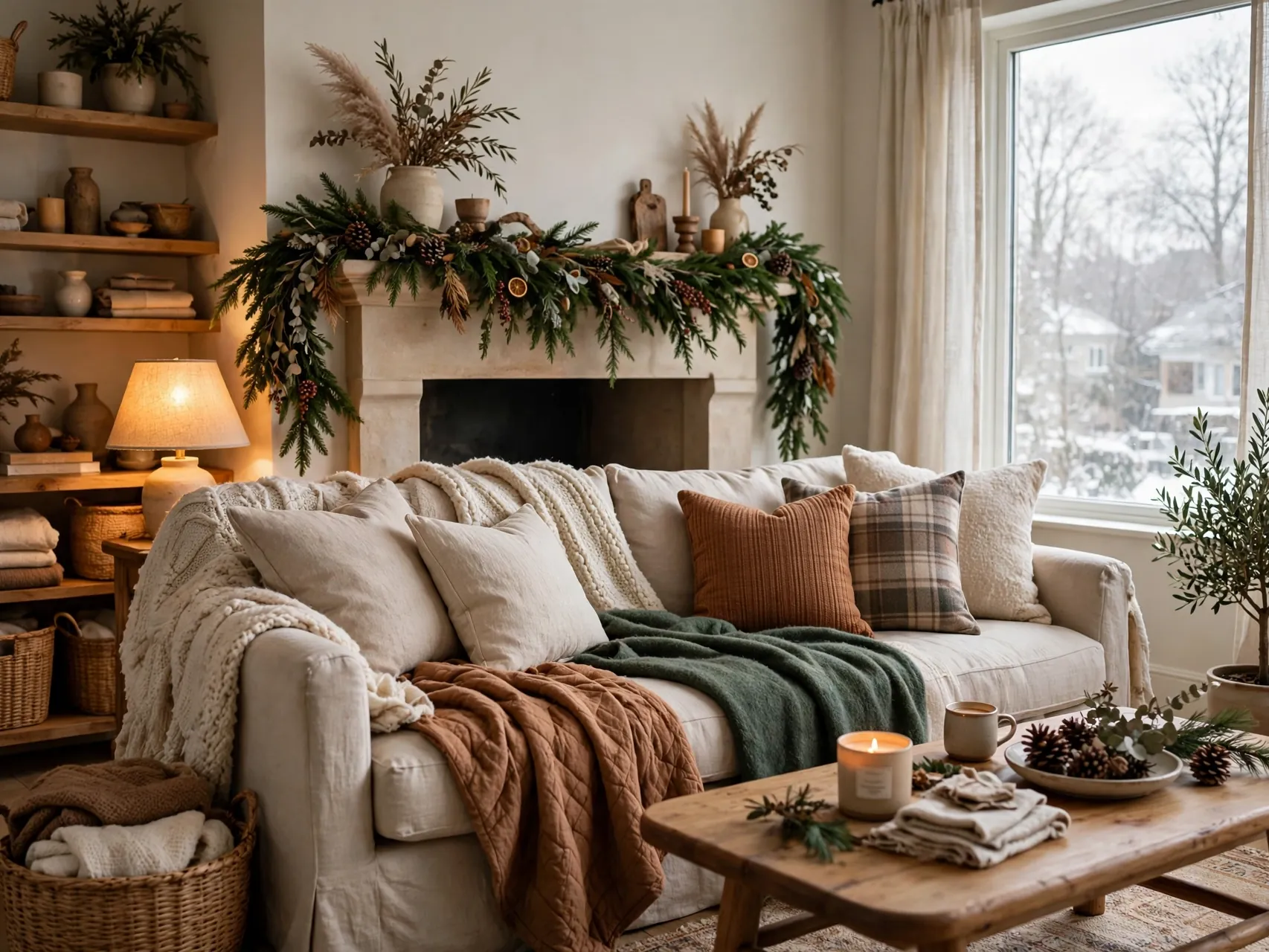
Fall color shouts in orange, rust and mustard. Winter speaks more quietly in cream, warm white, evergreen, deep red and natural brown, with a little navy or charcoal if your rooms lean cool. Ease across by removing the brightest orange first and adding cream, which bridges both palettes.
Keep one warm note so the room does not turn cold: a leather chair, wood tones or a single deep red throw does the job. Repeat your new palette in at least three places per room, cushion, throw and table accent, so the change reads as a plan.
4. Swap Pumpkins for Pinecones and Evergreen Sprigs

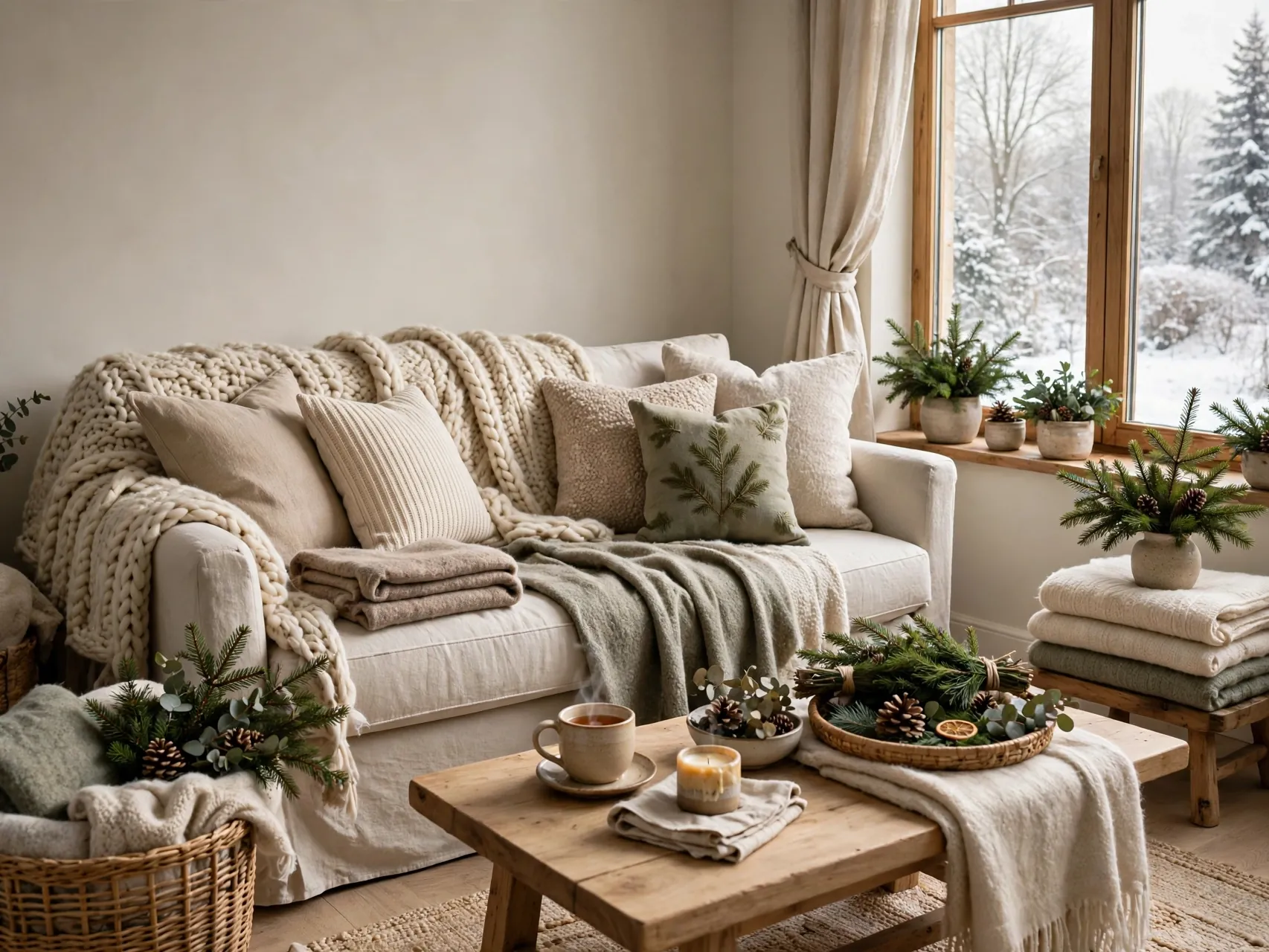
The bowl, tray or basket that held mini pumpkins in October can hold pinecones, evergreen clippings and a few plain ornaments in December. Same container, new contents, and the swap takes about five minutes once you see it that way.
Gather pinecones from your own yard where allowed, brush them clean and let them dry fully indoors before styling them. Tuck short evergreen sprigs between them for color, and keep the arrangement low and loose rather than perfectly arranged, since winter naturals look best a little wild.
5. Layer Heavier Throws in Wool, Velvet and Faux Fur

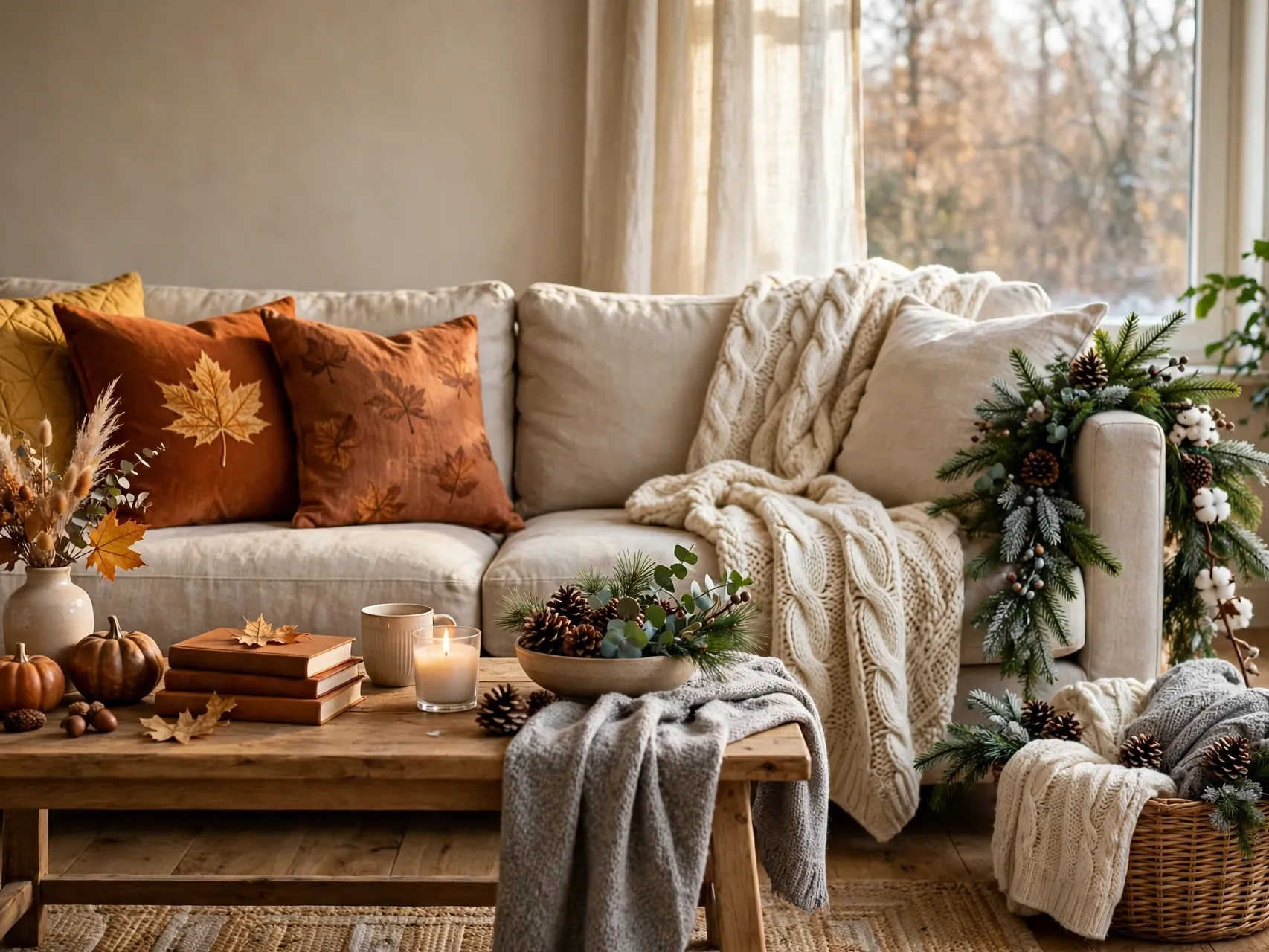
Fall throws warm a room; winter throws need to work harder. Swap light cotton for chunkier, heavier layers: a wool look blanket over the sofa back, a velvet cushion or two, and one soft faux fur throw folded at the reading chair for the coldest evenings.
Layer two thinner throws rather than one heavy piece if your household runs at different temperatures. Keep colors inside your new palette so the extra layers look restful, and store the light fall throws washed and folded, ready for the first cool night next year.
6. Change Pillow Covers to Plaid, Cable Knit and Velvet

Pillow covers are the fastest color change in the house. Keep the inserts, zip off the fall prints, and zip on plaid, cable knit, velvet or plain cream covers in your winter palette. Fold the fall covers flat; a whole season of pillows stores in one small stack.
Mix one pattern, one texture and one plain cover per sofa for a look that feels gathered rather than matched. If you sew even a little, old sweaters and flannel shirts make honest, cozy winter covers with real texture and no shopping at all.
7. Replace the Fall Wreath With an Evergreen Wreath

The door sets the tone before anyone steps inside. Take down the leaf and berry wreath, and hang a simple evergreen, pinecone or eucalyptus wreath in its place, finished with one bow in cream, deep red or plaid that matches your indoor palette.
Use a sturdy hook or hanger rated for the wreath weight, and check that the door still closes freely. If your fall wreath base is plain greenery, save money by swapping only the bow and a few picks; the shape can serve both seasons beautifully.
8. Refresh the Mantel With Garland and Flameless Candles

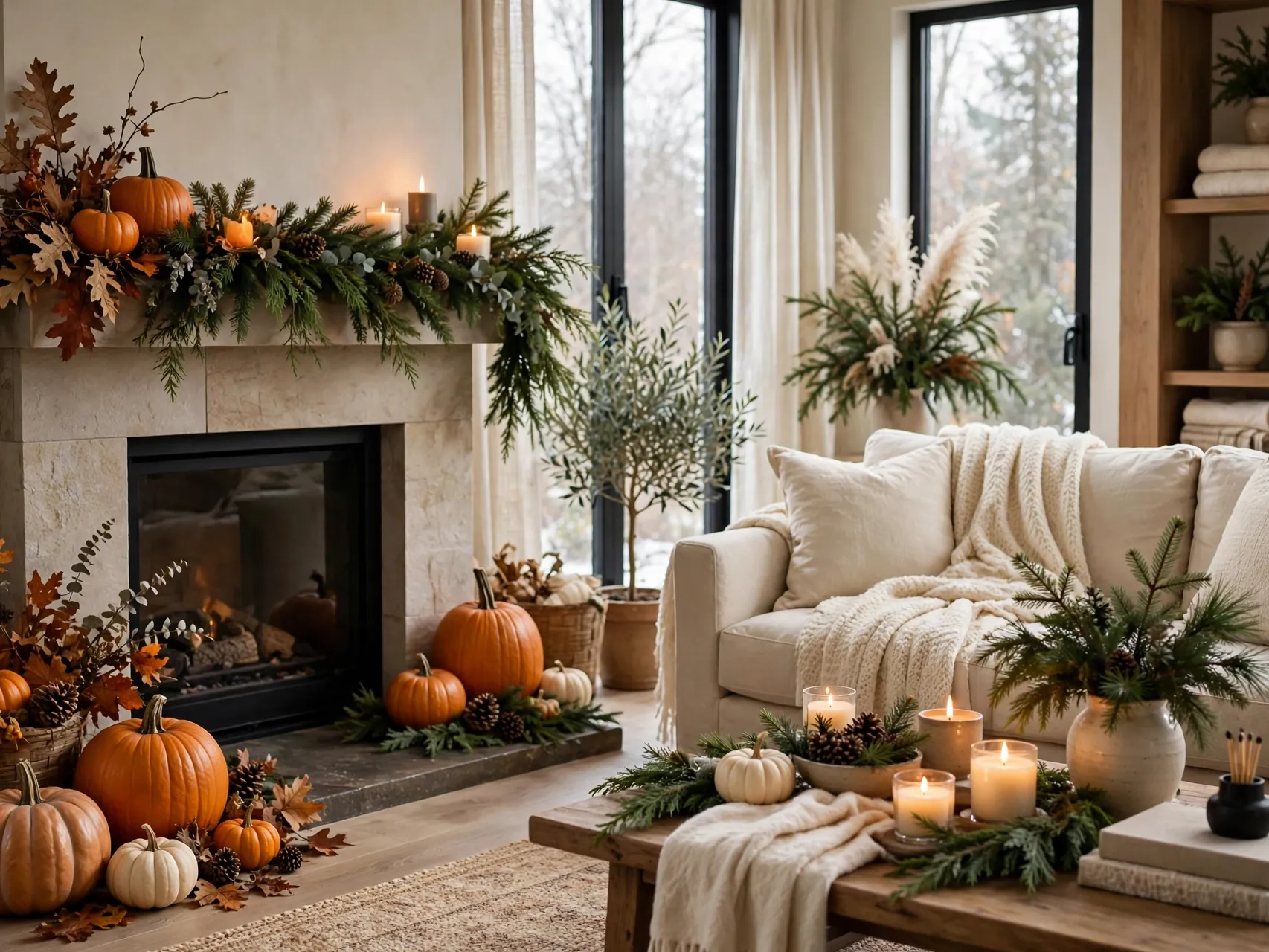
Clear the fall mantel down to the pieces you love, then lay a simple evergreen garland along it, letting the ends trail slightly. Tuck in pinecones, a few plain ornaments or a string of warm battery lights, and step back often while you work, since mantels are easy to overfill.
Choose flameless candles for glow near garlands, stockings and other fabrics. Real candles belong well away from anything that can burn, on sturdy holders, and never left unattended, so the flameless versions earn their place anywhere greenery gathers.
9. Swap Scents From Pumpkin Spice to Pine, Cedar and Vanilla

Scent changes a room faster than sight does. Retire the pumpkin and apple scents, and bring in the winter set: pine, cedar, fir, vanilla and a little cinnamon for baking days. One scent family at a time keeps the house smelling calm rather than like a candle shop.
Use real greenery, a small bowl of cloves and orange, or a stovetop simmer pot watched carefully on the stove for natural fragrance. Keep scents lightest in bedrooms, where your fall to winter decor transition ideas should always protect good sleep first.
10. Add Warm Lighting With String Lights and Lanterns

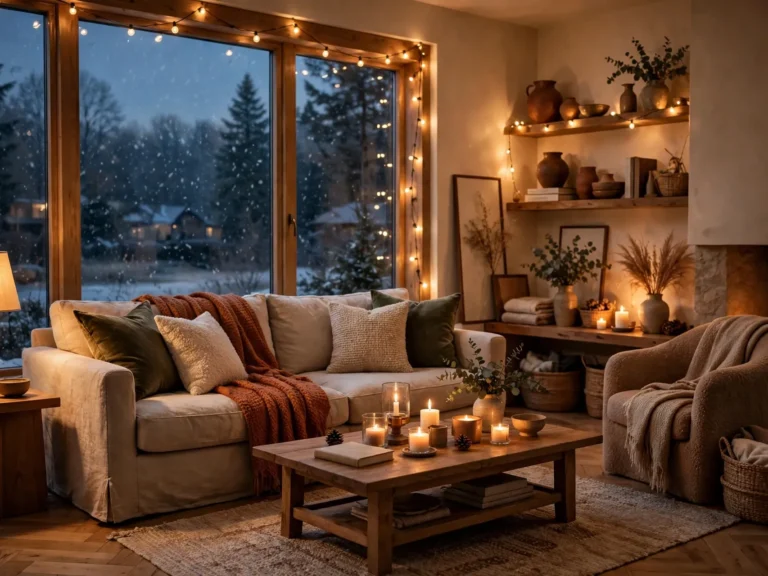
Winter evenings arrive early, so light becomes decoration. Reuse fall lanterns with flameless candles inside, drape one string of warm white lights along a shelf, mantel or window, and move a small lamp into any corner that has gone dark and forgotten.
Check cords and plugs as you set lights out, keep them away from water and heat, and put a few on timers so the glow greets you at dusk without daily fuss. Warm bulbs rather than bright cool ones keep the light feeling like firelight, which is the whole point.
11. Trade Dried Wheat and Leaves for Frosted Branches
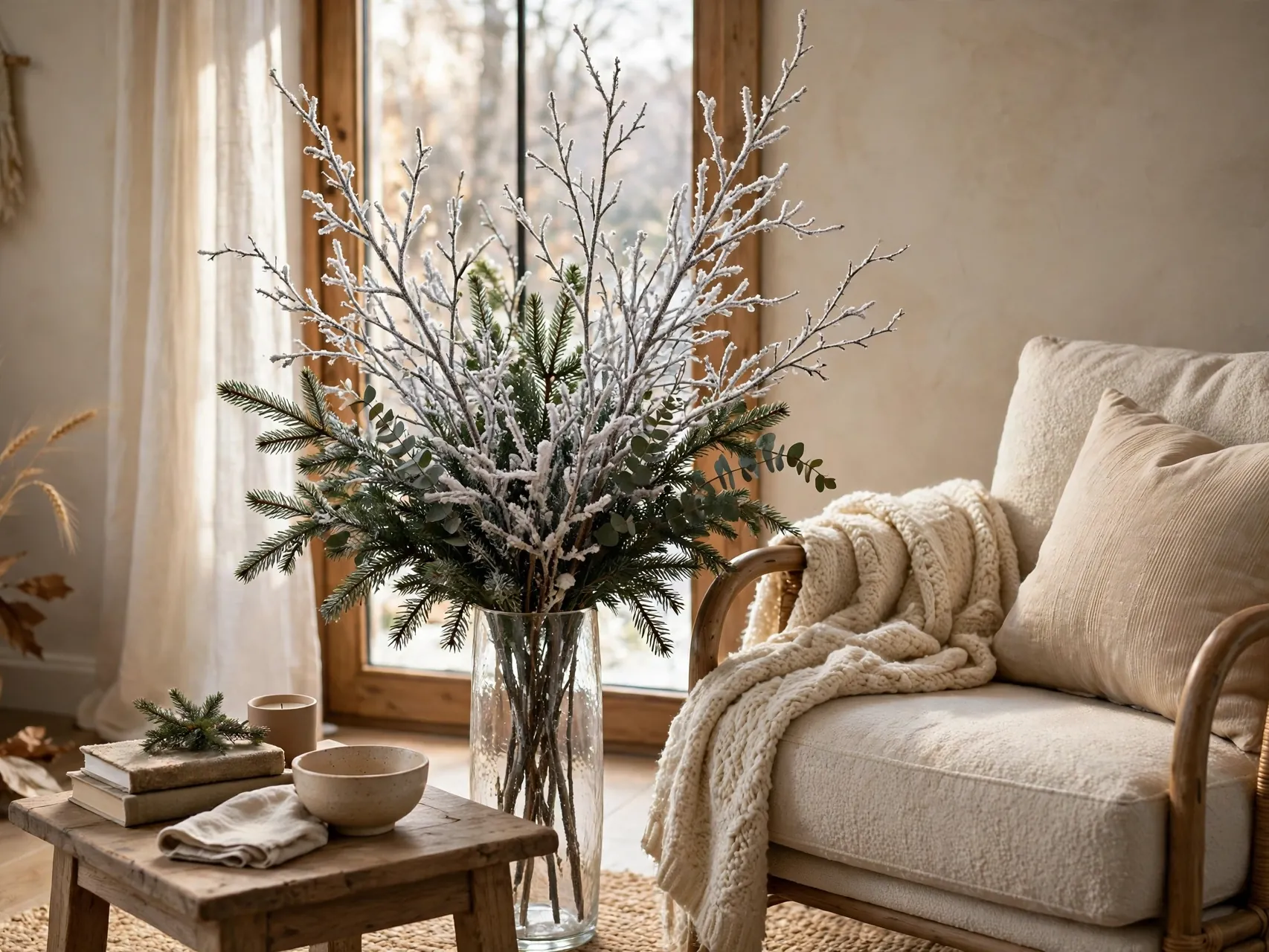
The tall vase that held dried wheat, pampas or autumn branches in fall can hold winter height instead: bare branches, frosted or snowy look stems, or long evergreen cuttings in water. Height near a fireplace, entry table or dining corner keeps rooms feeling styled through the swap.
Balance one tall winter arrangement per room and keep the rest of the surfaces low and simple. Dried fall stems store flat in a long box or bag, labeled by room, so next fall starts with everything already sorted and ready.
12. Layer Rugs and Add Warm Curtains for Cozy Windows

Cold floors and drafty windows undo cozy decor quickly. Layer a smaller, warmer rug over your main rug in seating areas, and swap light curtains for heavier or lined panels that close fully at night, which helps rooms feel warmer and calmer.
While you are at the windows, check for drafts. US Department of Energy guidance in general terms points to sealing cracks around windows and using weather stripping and insulating drapes to cut heat loss, while keeping proper ventilation in mind. Cozy and practical can absolutely be the same project.
13. Update the Table Centerpiece With a Wood Tray and Winter Greens

Give the dining table the same treatment as the mantel. Start with the wood tray or board you already own, then build a low winter center: evergreen sprigs laid flat, pinecones, a few plain ornaments and cream flameless candles in the middle where hands and plates cannot knock them.
Keep the centerpiece low enough for conversation across the table, and easy to lift away in one piece for family dinners. When you transition fall decor to Christmas gatherings, the tray simply gains a bow or a little more red, nothing needs rebuilding.
14. Keep Wood, Baskets and Natural Textures as the Bridge

Wood cutting boards, woven baskets, rattan trays and stoneware bowls belong to both seasons, and they are the bridge that keeps the transition from feeling like two different houses. Leave them out, and let their contents and neighbors carry the seasonal change.
Fill a fall basket of apples with winter greenery and pinecones instead. Lean the same wood board behind a small wreath rather than a pumpkin. When your hardest working pieces stay visible all year, seasonal decorating becomes a shuffle, not a shopping trip or a storage battle.
15. Add Metallic Touches in Brass, Gold or Silver Sparingly

Winter light loves a little shine. Bring out brass candlesticks, a gold toned bowl or silver bells in small doses, grouped where lamplight or window light can catch them: the mantel end, the coffee table tray, the entry console.
Pick one metal family per room and repeat it two or three times so it looks intentional. Too many mixed, scattered shiny pieces read as clutter, while a few calm repeats give winter home decor ideas their quiet, frosted sparkle without a single glittery purchase.
16. Bring in Cozy Bedding Layers for Winter Nights

Bedrooms deserve the transition too. Swap light fall quilts for deeper layers: warmer sheets if your household likes them, a heavier quilt or duvet, and a chunky throw across the foot of the bed in your winter palette of cream, green or deep red.
Keep one lighter layer in the mix so sleepers can adjust through the night. Fold fall bedding away washed and fully dry, and tuck a small evergreen sprig or winter cushion on each bed so the bedrooms feel connected to the rest of the house.
17. Turn the Entry and Porch From Harvest to Winter Welcome

Outside, retire the pumpkins and mums, then reuse the bones: the same planters filled with evergreen branches, the same lanterns with flameless candles, the same bench with a plaid blanket and a plain winter cushion. A new wreath on the door ties the porch to the entry inside.
Clear leaves and debris from steps and walkways as you decorate, and check that outdoor lights work before the darkest weeks arrive. A safe, well lit path is part of the welcome, especially for holiday guests arriving after dark.
18. Add a Hot Drink Station With Cocoa, Tea and Mugs

Claim one counter corner, tray or small cart for winter drinks: cocoa, tea, coffee, a few favorite mugs and a small jar of something sweet. It clears the seasonal drink clutter from the whole kitchen and gives guests an easy way to help themselves.
Style it lightly with one evergreen sprig or a plaid napkin so it joins the decor rather than fighting it. Restock on Sundays, wipe the tray as you go, and this tiny station will quietly become the most loved spot in the winter house.
19. Check Heating, Smoke and Carbon Monoxide Alarms as You Decorate

Decorating day is the perfect reminder for the unglamorous checks. Before garlands go near the fireplace, make sure the hearth is clear, anything that can burn stays well away from heating equipment, and fireplace ashes are handled in a metal container kept outdoors, following general CPSC guidance.
Test smoke and carbon monoxide alarms, keep working alarms outside sleeping areas and on each level, and have fuel burning heating equipment and chimneys inspected by a qualified professional. If you use a space heater, keep it at least three feet from bedding, drapes and furniture, on a level, hard surface, plugged directly into a wall outlet, and off when you leave the room or sleep.
20. Store Fall Pieces by Room So Next Year Feels Easy

Finish the transition by making the next one easier. Pack fall decor by room into labeled bins, living room, entry, table, with a short list taped inside each lid naming what belongs there and anything that broke or needs replacing.
Store textiles washed and fully dry, keep fragile pieces wrapped in the plain paper and linens you already have, and note where the bins live. A tidy ending turns seasonal swapping into a calm hour next year, and your future self will feel as cared for as your winter guests do now.
FAQ
When is the best time to transition from fall to winter decor?
Late November works well for most US homes, after Thanksgiving gatherings and before the darkest, coldest weeks settle in. Let the weather and your calendar lead: if snow arrives early, start with textiles and lighting. A staged swap over two weekends feels calmer than one big decorating day.
Do I need to buy new winter decor every year?
No. A neutral base, real or good faux greenery, pillow covers, throws and bowl fillers carry most of the change, and they all store and repeat for years. Buy slowly and only to replace worn pieces or fill a real gap, like one wreath for a bare door. Your rooms will look more personal for it.
How do I transition without making it look like full Christmas right away?
Stay in the winter layer first: evergreen, pinecones, cream, wood, plaid and warm light, without ornaments, figures or holiday sayings. That look suits late November through the whole winter, and you can add red, sparkle and Christmas specific pieces later in December, room by room, only where you want them.
What colors bridge fall and winter best?
Cream, warm white, natural brown, deep green and muted gold bridge the two seasons kindly, because they sit comfortably beside fall rust and pumpkin tones and still feel right with winter red. Remove the brightest oranges first, add cream and green, and the palette cools gradually instead of changing overnight.
How do I keep the transition budget friendly?
Reuse containers, trays, lanterns and baskets, and change only their contents. Swap pillow covers instead of pillows, gather pinecones and clippings where allowed, move decor between rooms before buying anything, and shop your own storage first with a list. The most seamless transitions usually come from editing, not spending.
Key Takeaways
- Edit, do not redecorate: Pack away fall only pieces, keep the neutral base, and let small swaps carry the season.
- Cool the palette slowly: Trade orange and rust for cream, evergreen, deep red and natural wood, repeated in three places per room.
- Let texture do the warming: Heavier throws, plaid and velvet covers, layered rugs and lined curtains make winter rooms feel truly cozy.
- Reuse the bridge pieces: Wood trays, baskets and lanterns stay out all season, only their contents and neighbors change.
- Decorate safely as you go: Flameless glow near greenery, clearances around heating, and working smoke and carbon monoxide alarms come first.
- Store by room: Labeled bins with a short list inside each lid make next years swap a calm, quick job.
Loved a calmer way to move into winter? Save this guide to Pinterest and pin the idea you will try first.