
25 Tips to Clean House With Pets and Keep It Fresh
Introduction
Living with a dog or cat means living with a little extra hair, a few muddy prints, and the occasional mystery smell. None of that has to take over your home. The secret is not deep cleaning every day. It is building small habits that stop mess before it spreads, so your house feels calm when guests walk in and cozy when it is just you and your pet on the couch.
When you learn how to clean house with pets in a steady, simple way, the work gets lighter each week. A quick vacuum in the right spots, clean bedding, and a smart spot by the door can do more than a whole Saturday of scrubbing. This guide shares 25 practical tips that real pet homes rely on. Pick the first five that fit your routine and build from there.
1. Start With a Simple Daily Routine
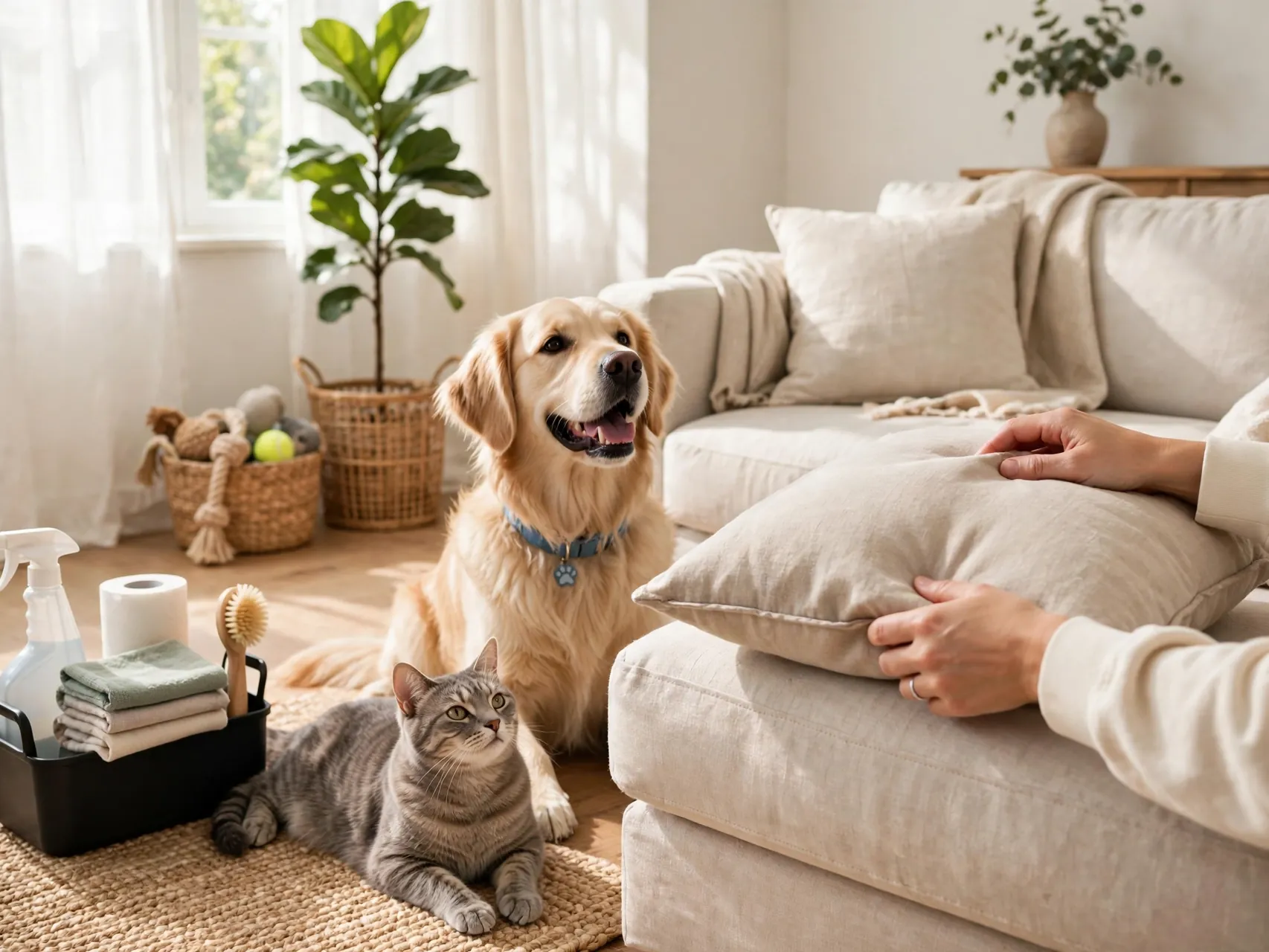
A short daily routine is the backbone of a tidy pet home. Spend ten minutes in the morning or evening doing the same few jobs: a quick sweep where your pet eats, a fast wipe of the entry floor, and a scan for hair on the couch. Small jobs done daily prevent the heavy buildup that makes weekends miserable.
Keep supplies in one caddy so you never waste time hunting for them. Consistency matters far more than intensity when pets live indoors full time.
2. Vacuum High Traffic Spots More Often
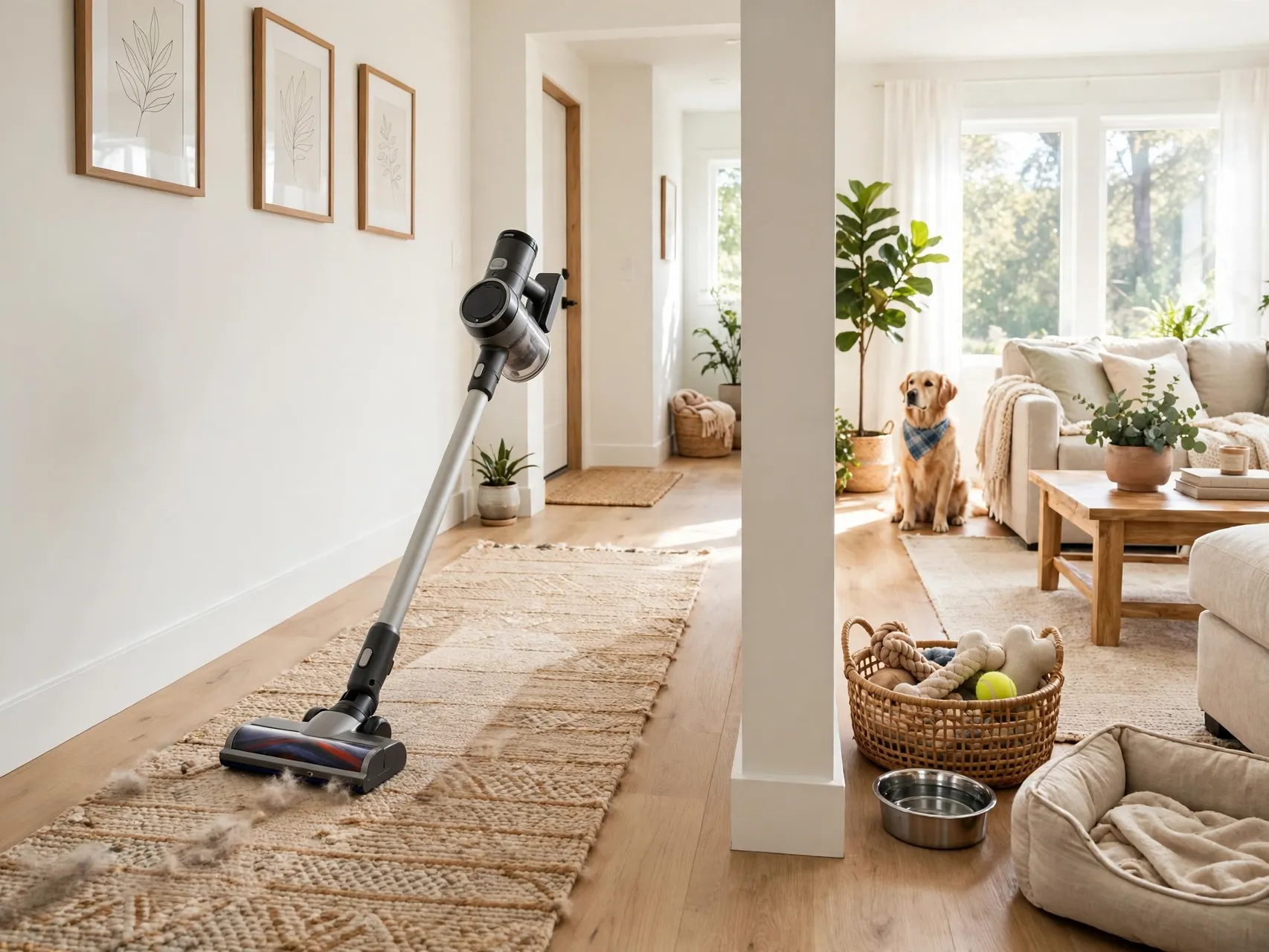
You do not need to vacuum the whole house every day, but the places your pet loves need attention. Focus on the rug by the door, the area around the food bowls, the couch cushions, and the path to the litter box or back door. Hair and grit collect there first.
A vacuum with a HEPA filter helps trap dander as you clean. Go slowly over carpet so the machine can lift hair from deep in the pile. Empty the bin outside into a sealed bag so dust does not drift back inside.
3. Set Up a Paw Cleaning Spot by the Door
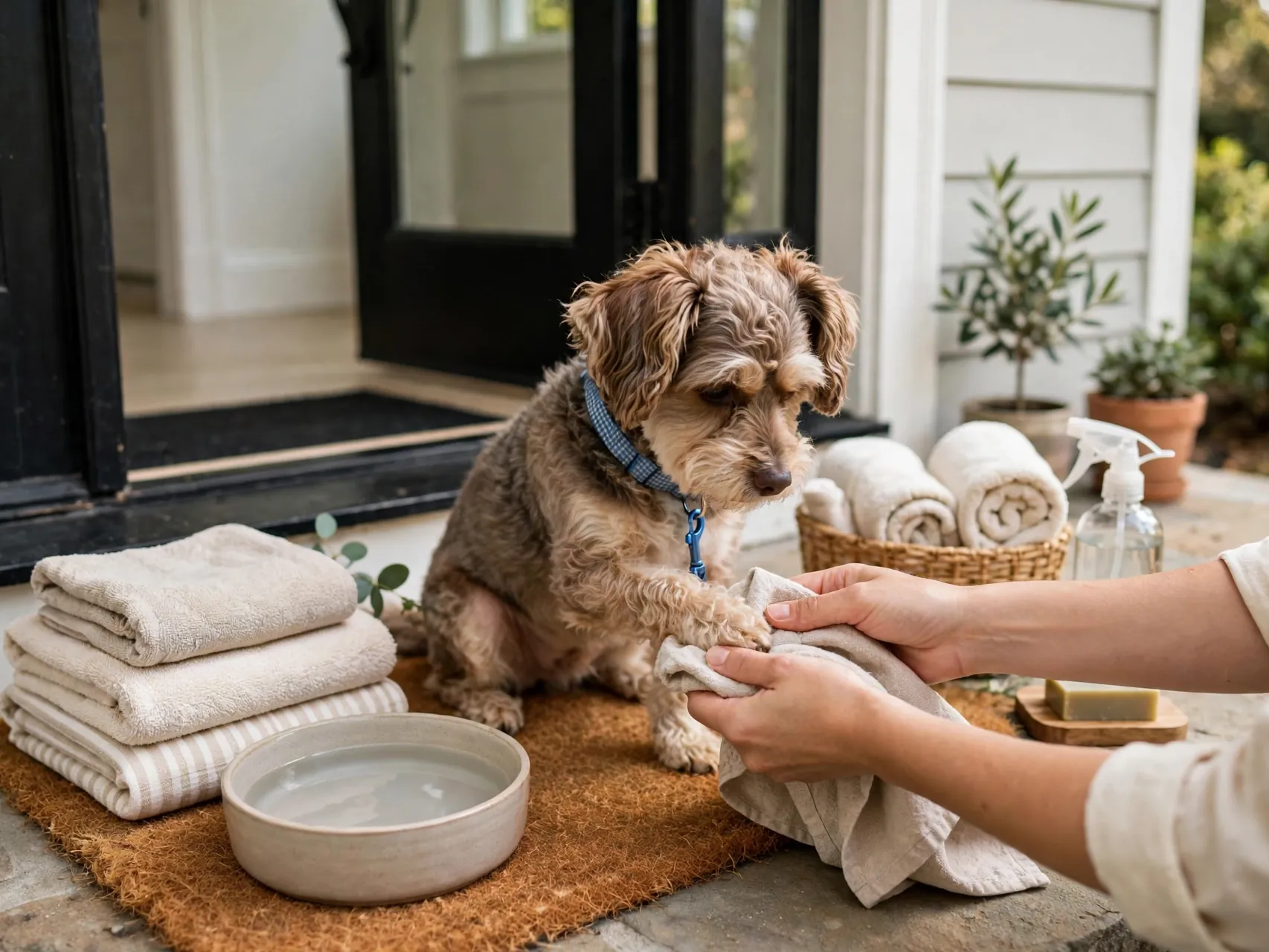
Most dirt enters on four small feet. Place a washable mat inside the door you use most, keep a stack of old towels nearby, and add pet wipes or a small paw cup for muddy days. Wipe paws front to back and between the toes before your dog heads for the rug.
This two minute habit saves hours of mopping later. Hang towels open to dry so they do not turn musty in a pile.
4. Brush Your Pet a Little Every Day

Five minutes of brushing catches loose hair before it lands on your clothes and furniture. Brush outside or on a washable blanket to keep the mess contained, and use a brush suited to your pet's coat type. Long coats need detangling, while short coats do well with a rubber brush.
Regular brushing also spreads natural oils through the coat and lets you spot skin issues early. Less loose hair on your pet means far less hair everywhere else.
5. Wash Pet Bedding Every Week

Pet beds collect hair, dander, skin oils, and outdoor smells faster than almost anything else in the house. Shake the bed outside, remove the cover if it has one, and wash bedding in hot, soapy water when the care label allows it. Dry everything completely before it goes back on the floor.
Keep a second cover so your pet is never without a bed on laundry day. A clean bed alone can change how a whole room smells.
6. Use an Enzyme Cleaner for Accidents
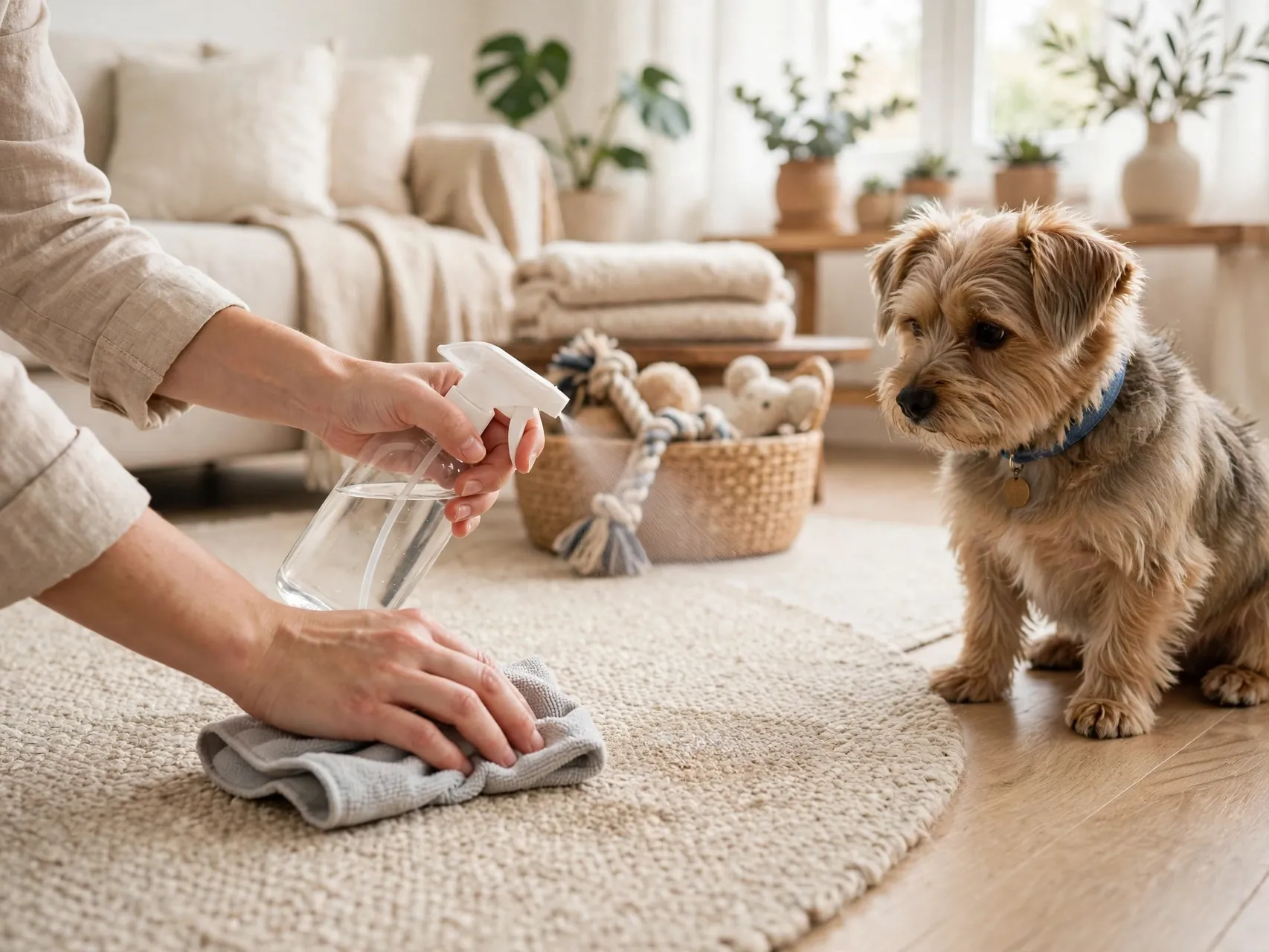
For urine and other organic accidents, an enzyme cleaner made for pet stains works differently from a regular spray. The enzymes break down the organic material that causes odor, instead of just covering the smell with fragrance. Blot the spot first, never rub it deeper, then saturate the area as the label directs.
Let the product sit for the full time on the bottle so the enzymes can work. Keep pets off the area until it dries. For old stains, a second treatment is often needed, especially on carpet padding.
7. Keep the Litter Box on a Tight Schedule
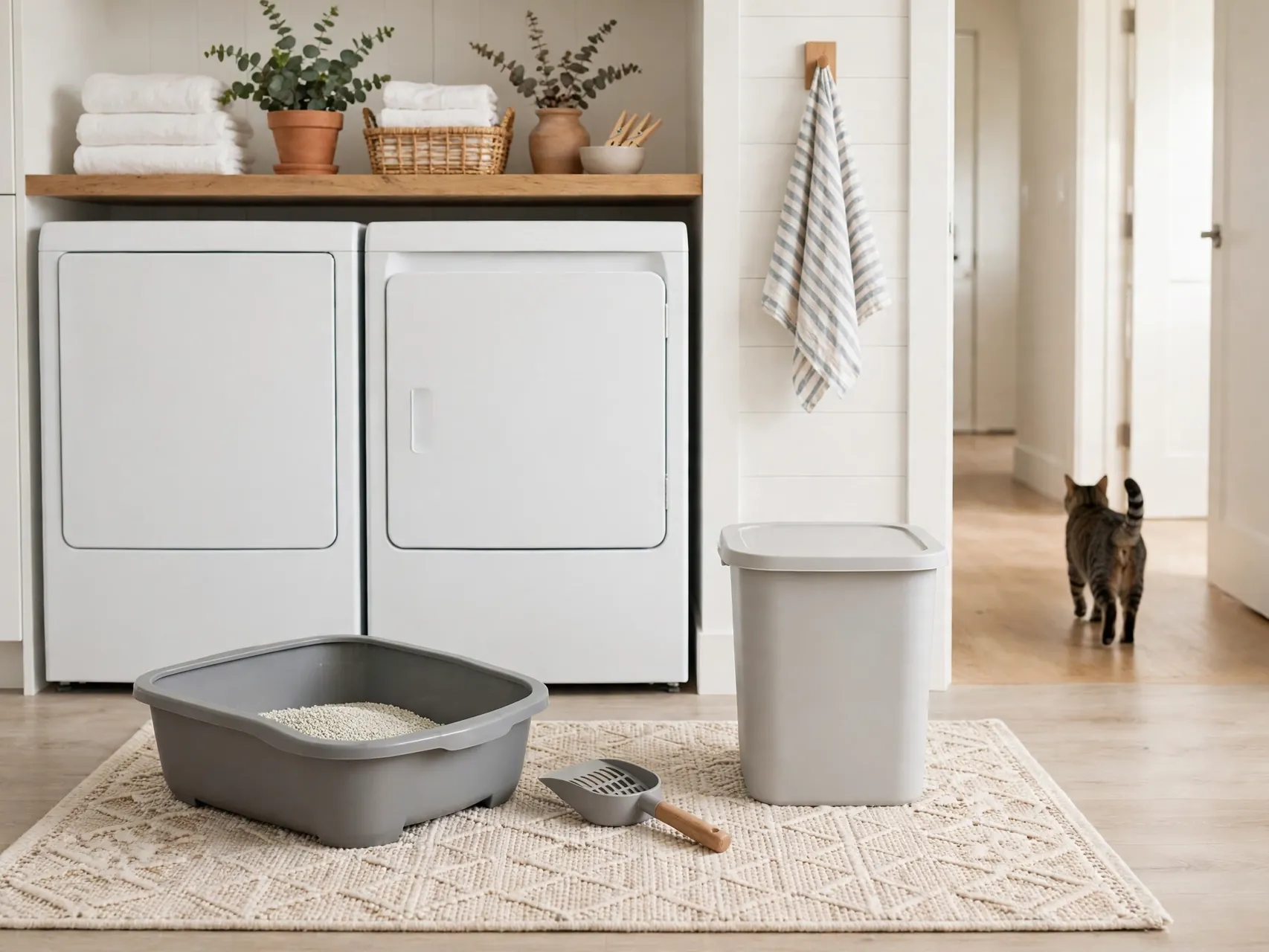
Scoop the litter box at least once a day, and twice if you have more than one cat. A litter mat under and around the box catches stray granules before they travel through the house on soft paws. Wash the box itself with mild soap and water during a full litter change.
If odor lingers despite scooping, the litter may need a full change or the box may need replacing, since plastic can hold smells over time.
8. Wash Food and Water Bowls Daily

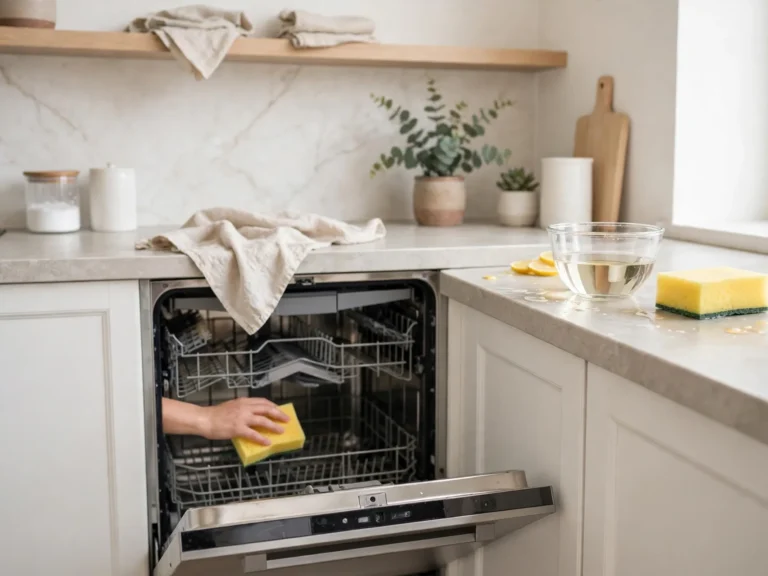
Bowls get slimy fast, and that film holds bacteria and odor. Wash food and water bowls every day with hot, soapy water, or run dishwasher safe bowls through the dishwasher. Stainless steel and ceramic are easier to keep clean than scratched plastic.
Wipe the floor or mat under the bowls too, since splashes and kibble crumbs attract ants and smell sour when damp. A washable feeding mat makes this job take seconds. Clean bowls are better for your pet's health and your kitchen's freshness.
9. Run an Air Purifier Where Pets Rest
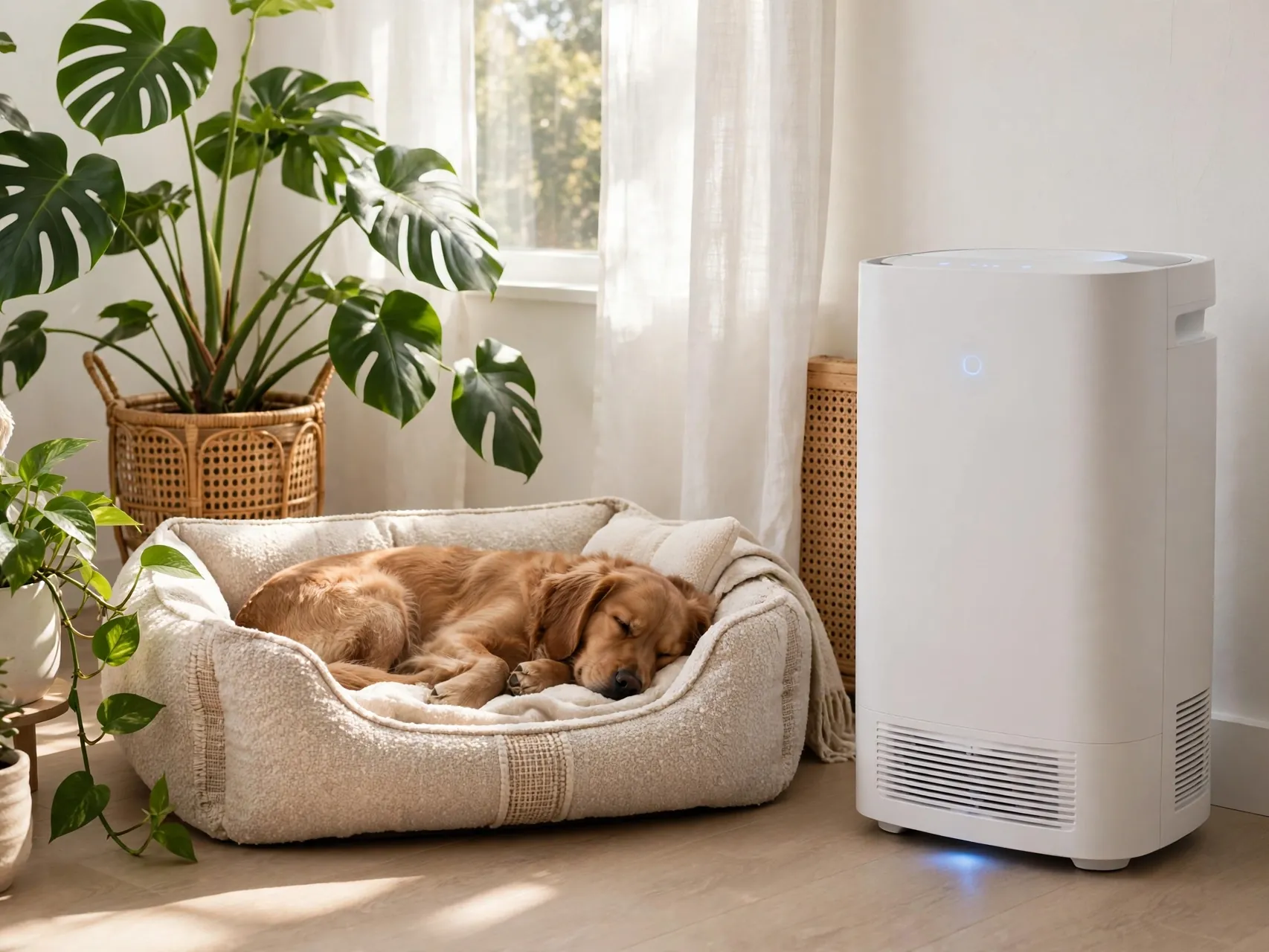
An air purifier with a true HEPA filter can help reduce airborne dander and dust in the room where your pet sleeps most. Place it near the pet bed but not blocked by furniture, and run it on a steady low setting rather than in short bursts.
Change or clean the filters on the schedule the maker recommends, because a clogged filter does little good. A purifier is a helper, not a replacement for vacuuming and washing fabrics. Together, those habits keep the air in a pet home feeling noticeably lighter.
10. Choose Washable Rugs in Pet Zones

A beautiful rug you are afraid to wash will not stay beautiful for long in a pet home. In entries, living rooms, and feeding areas, choose low pile, washable rugs that can go in the machine or be hosed off outside. Shake them outdoors between washes to release trapped hair.
Washable rugs let you reset a room in one laundry load after a muddy week. Choose patterns that hide a little hair between washes.
11. Protect Furniture With Washable Covers

Throws and washable slipcovers are the hardest working items in a pet friendly living room. Drape them where your pet actually naps, not where you wish they would nap. When company comes, pull the covers off and the clean furniture underneath is ready.
Wash covers weekly with the pet bedding load. Choose fabrics like cotton, microfiber, or tightly woven blends that release hair in the wash and do not snag easily. This one habit keeps sofas looking new for years longer.
12. Keep Lint Rollers and a Rubber Broom Handy

For fast touch ups, nothing beats simple tools kept in the right places. Store a lint roller by the door for clothes, one near the couch for cushions, and a rubber broom for sweeping hair off hard floors and rugs. A damp rubber glove also lifts hair from upholstery in seconds.
A two minute pass before guests arrive makes a room look freshly vacuumed.
13. Sprinkle Baking Soda Before You Vacuum
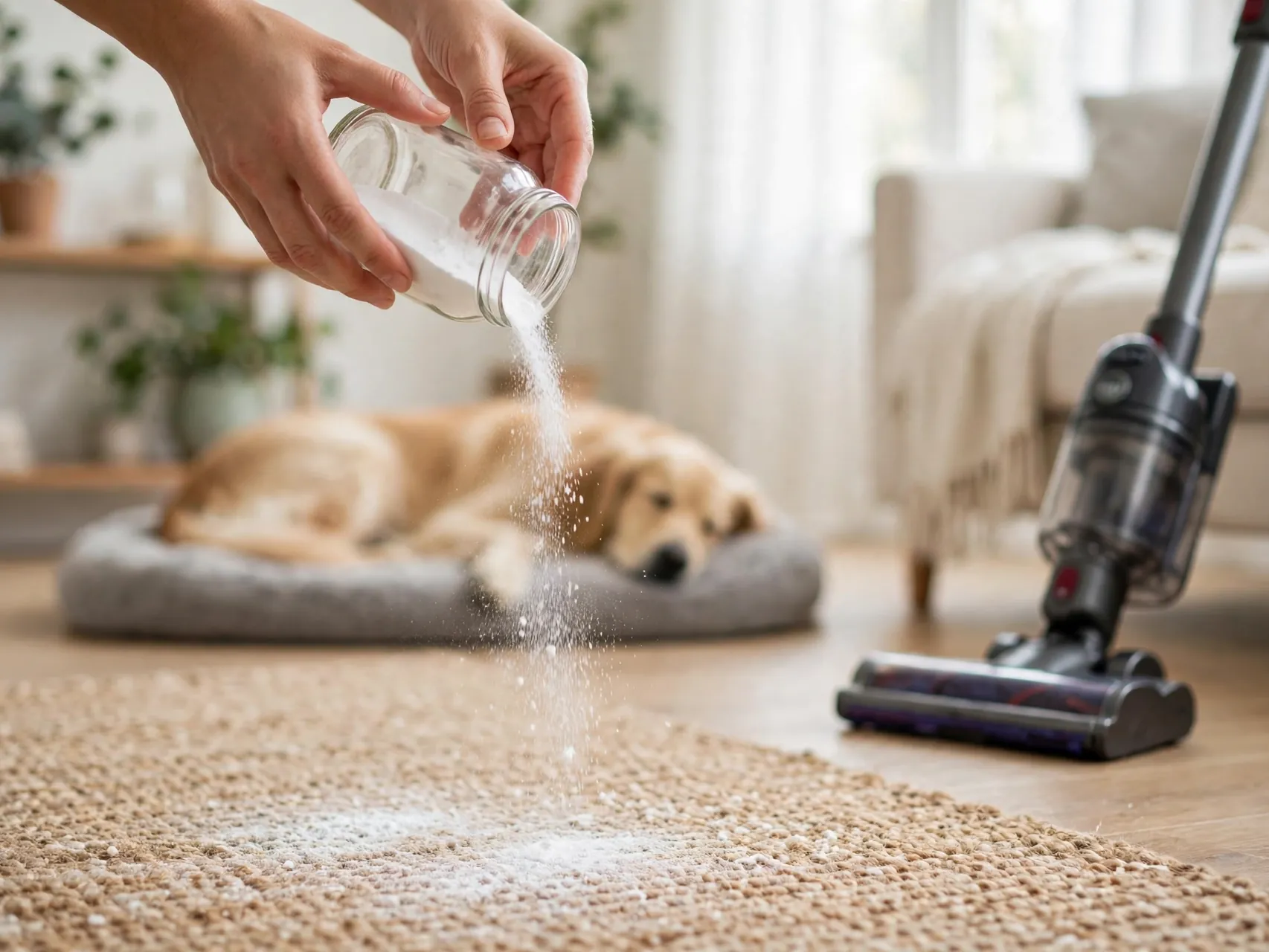
Plain baking soda is a gentle, budget friendly deodorizer for carpets and rugs. Sprinkle a light layer over the carpet, let it sit for 15 to 30 minutes while you tidy another room, then vacuum it up slowly. It helps lift everyday pet smells from the fibers.
Keep pets out of the room while the powder sits, and vacuum thoroughly so no residue stays in the pile. Do not use scented carpet powders heavily around sensitive pets. Simple baking soda, used in moderation, is the safer classic choice.
14. Open Windows for Fresh Air Daily
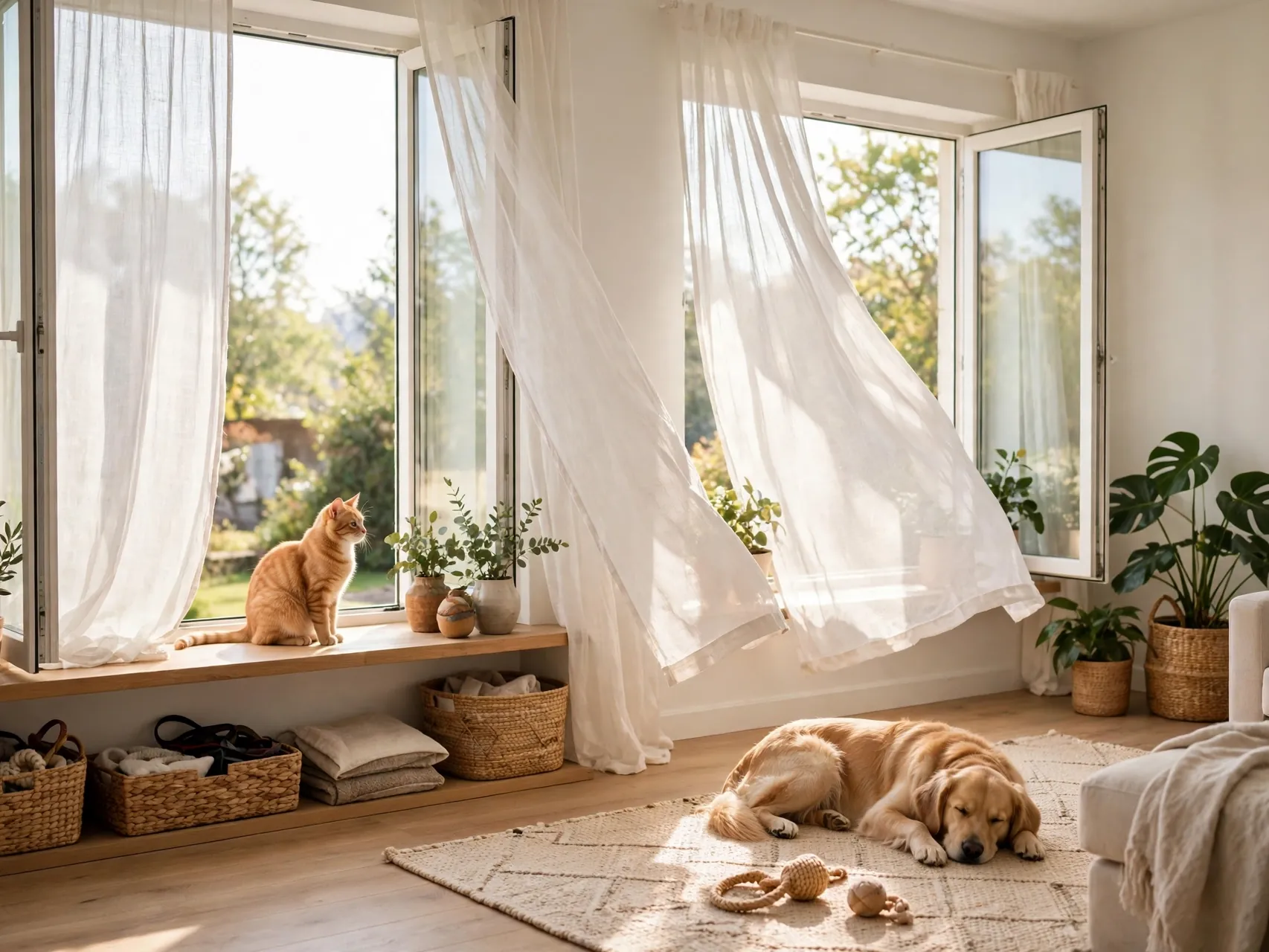
Fresh air does what no spray can do. Open windows for at least 10 to 15 minutes a day when weather allows, ideally on opposite sides of the home to create a cross breeze. Fans help move stale air out, especially in the rooms where pets spend the most time.
Ventilation also helps control indoor humidity, which keeps musty smells from settling into fabrics. After baths, rainy day walks, or litter box cleanups, a short airing out makes a clear difference. Make it part of your morning routine with coffee in hand.
15. Bathe and Groom on a Steady Schedule

A clean pet means a cleaner house. Bathe dogs on the schedule your vet recommends for their breed and skin, since over bathing can dry the coat. Use a pet shampoo, rinse well, and dry fully so damp fur does not add a wet dog smell to your furniture.
Between baths, wipe coats with a damp cloth after muddy outings and keep nails trimmed so they track in less dirt.
16. Wash Toys, Collars, and Leashes
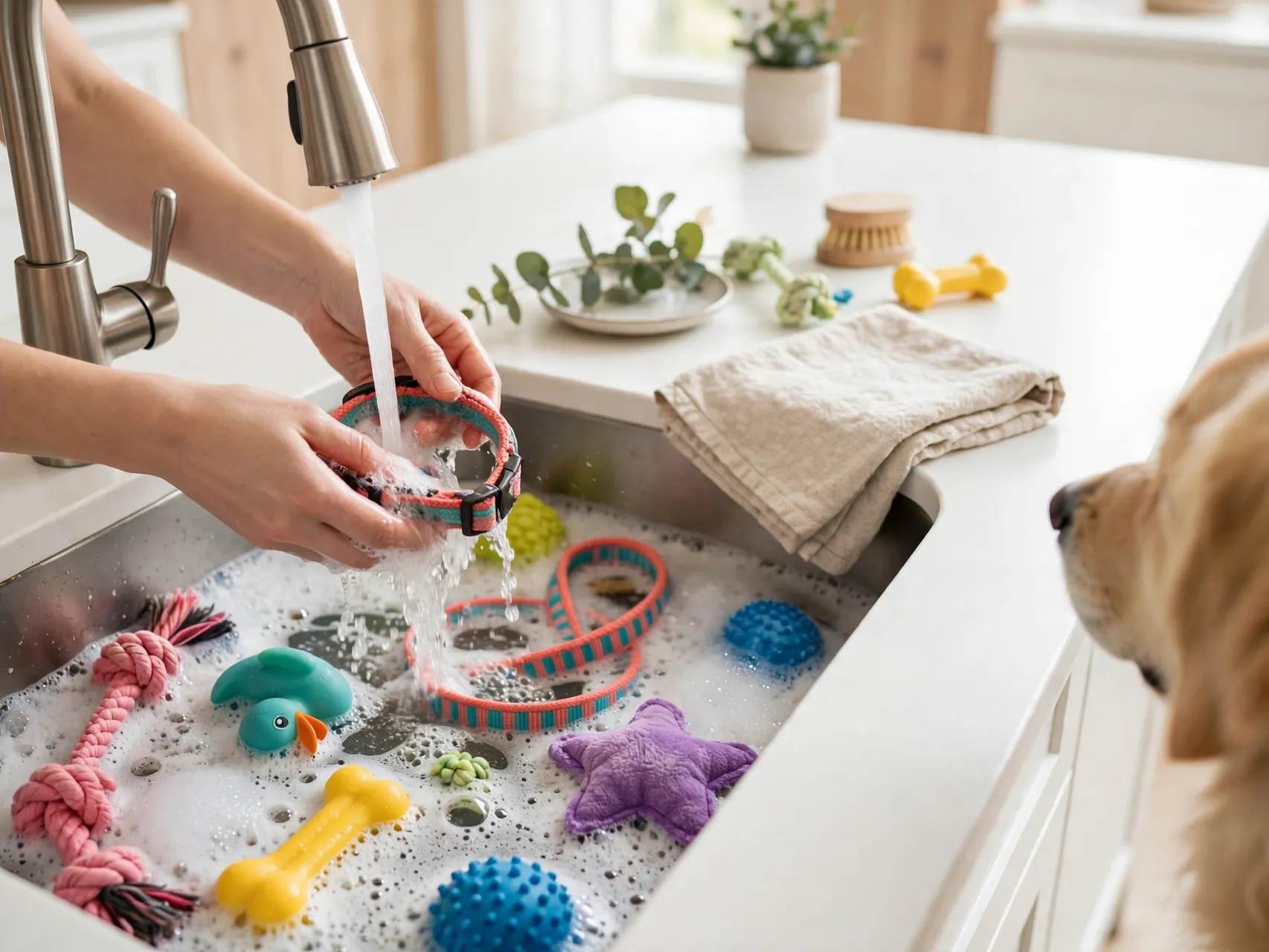
Toys, collars, and leashes carry surprising amounts of dirt and odor. Wash hard toys with hot, soapy water, and check labels to see which ones can go on the top rack of the dishwasher. Launder soft toys in a mesh bag and air them until fully dry.
Wash collars and leashes in warm, soapy water, then rinse and air dry. Replace toys that are cracked or falling apart.
17. Add a Sturdy Mat Under Every Entry

Beyond the paw station, every entry benefits from a two mat system. A coarse mat outside scrapes off grit, while an absorbent mat inside catches moisture. Shake both mats outside several times a week and wash or hose them as needed.
Stopping dirt at the door is the cheapest cleaning strategy there is, and mopping becomes a quick job instead of a rescue mission.
18. Mop Hard Floors With Pet Safe Care

Hard floors show paw prints and dust fast, but they are also the easiest to reset. Sweep or vacuum first so you are not pushing hairy water around, then mop with a well wrung microfiber mop and a cleaner suited to your floor type. Use products with the EPA Safer Choice label when you can, and follow label directions.
Keep pets off the floor until it is fully dry so paws do not pick up residue and track it through the house. Rinse the mop head often, and wash it in the machine weekly during muddy seasons.
19. Read Labels and Choose Safer Products

Pets walk on the surfaces you clean, then lick their paws, so product choice matters. Look for the EPA Safer Choice label, which means the EPA has reviewed the product for safer ingredients for people, pets, and the environment. Store all cleaners locked away or on high shelves.
Avoid leaving puddles of any cleaner where a pet could step or drink. Never mix cleaning products together. If a pet shows signs of exposure to a cleaner, contact your veterinarian or the ASPCA Animal Poison Control Center right away for guidance.
20. Dust Baseboards, Vents, and Fans
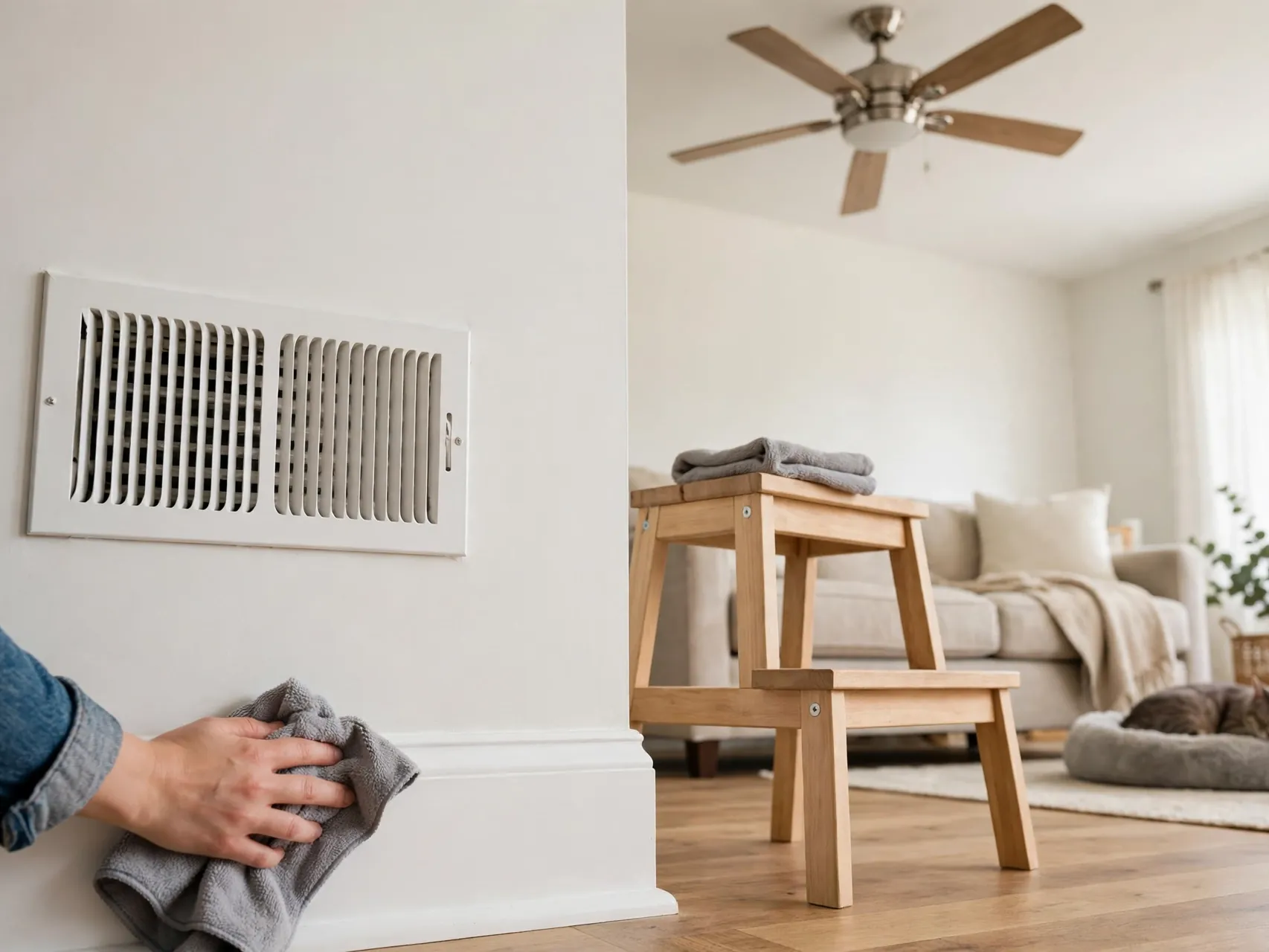
Hair and dander settle in places we rarely look at. Wipe baseboards monthly with a damp microfiber cloth, vacuum vent covers with a brush attachment, and dust ceiling fan blades with an old pillowcase that traps the dust instead of scattering it.
Add this job to the first weekend of each month so it never becomes a huge project.
21. Change Your HVAC Filter More Often

In a pet home, air filters clog faster than the package schedule suggests. Check your filter every month, hold it up to the light, and replace it early if it looks gray and fuzzy. A clean filter helps your system move air well and traps more hair and dander.
Vacuum around return vents when you check the filter. If anyone in the home has allergies, ask an HVAC professional which filter rating suits your system, since a filter that is too dense for the unit can strain it. Steady airflow supports all your other cleaning work.
22. Keep Trash and Recycling Sealed

Pet noses find kitchen trash irresistible, and an open bin spreads odors and mess. Use a can with a tight lid, take food scraps out daily, and wash the bin itself weekly with hot, soapy water. A sprinkle of baking soda in the bottom helps between washes.
Store pet food in a sealed container rather than an open bag, which keeps the pantry fresher and discourages pests.
23. Deep Clean the Couch Monthly
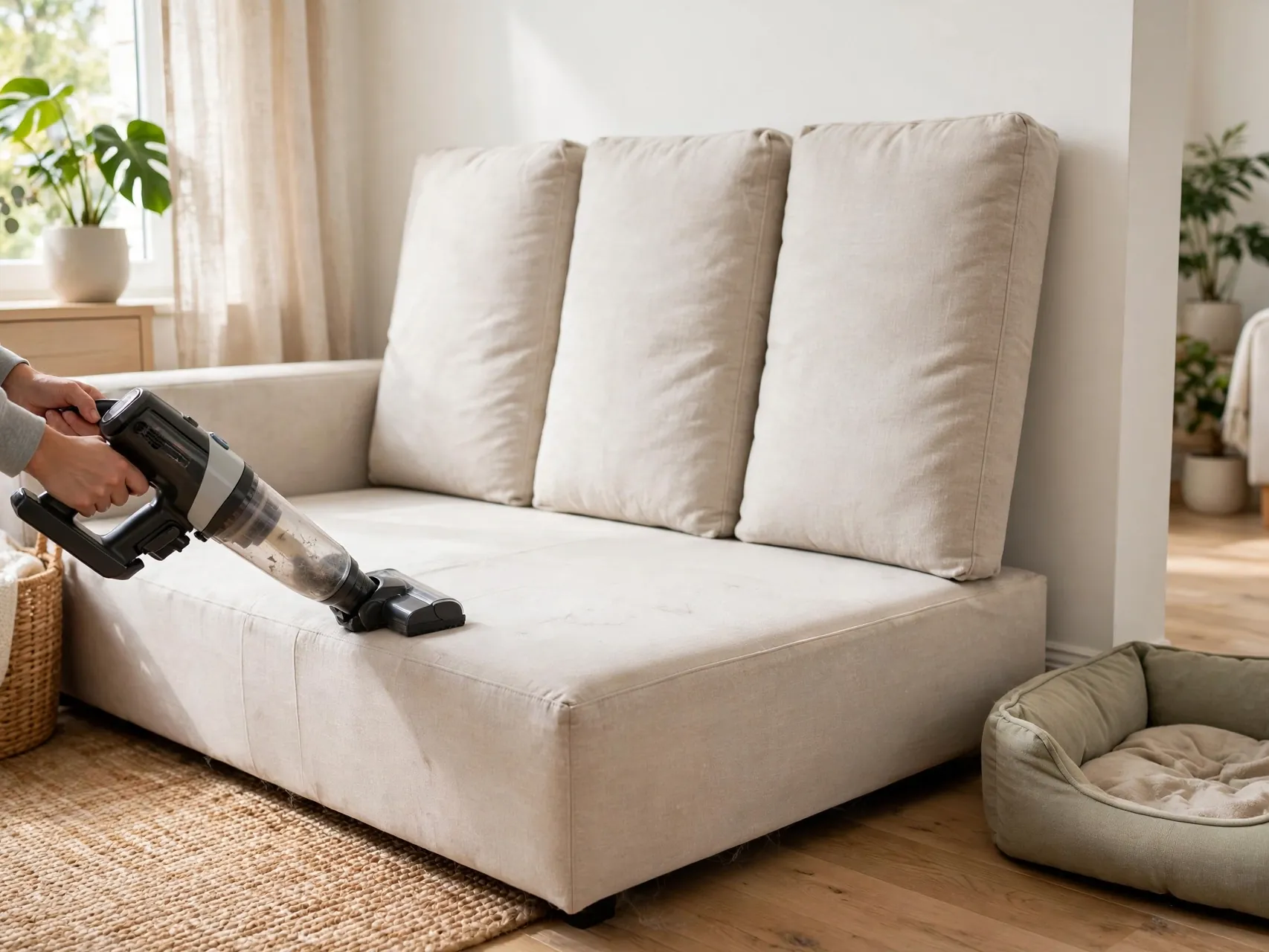
Once a month, give the couch a proper reset. Remove cushions, vacuum every crevice with the upholstery tool, and check for lost toys and treats hiding underneath. Wash removable covers or throws, and let cushions air in sunlight when you can.
For fabric sofas, test any spot cleaner in a hidden area first. This monthly habit stops the deep, stale smell that daily tidying cannot reach.
24. Let a Robot Vacuum Handle Daily Hair
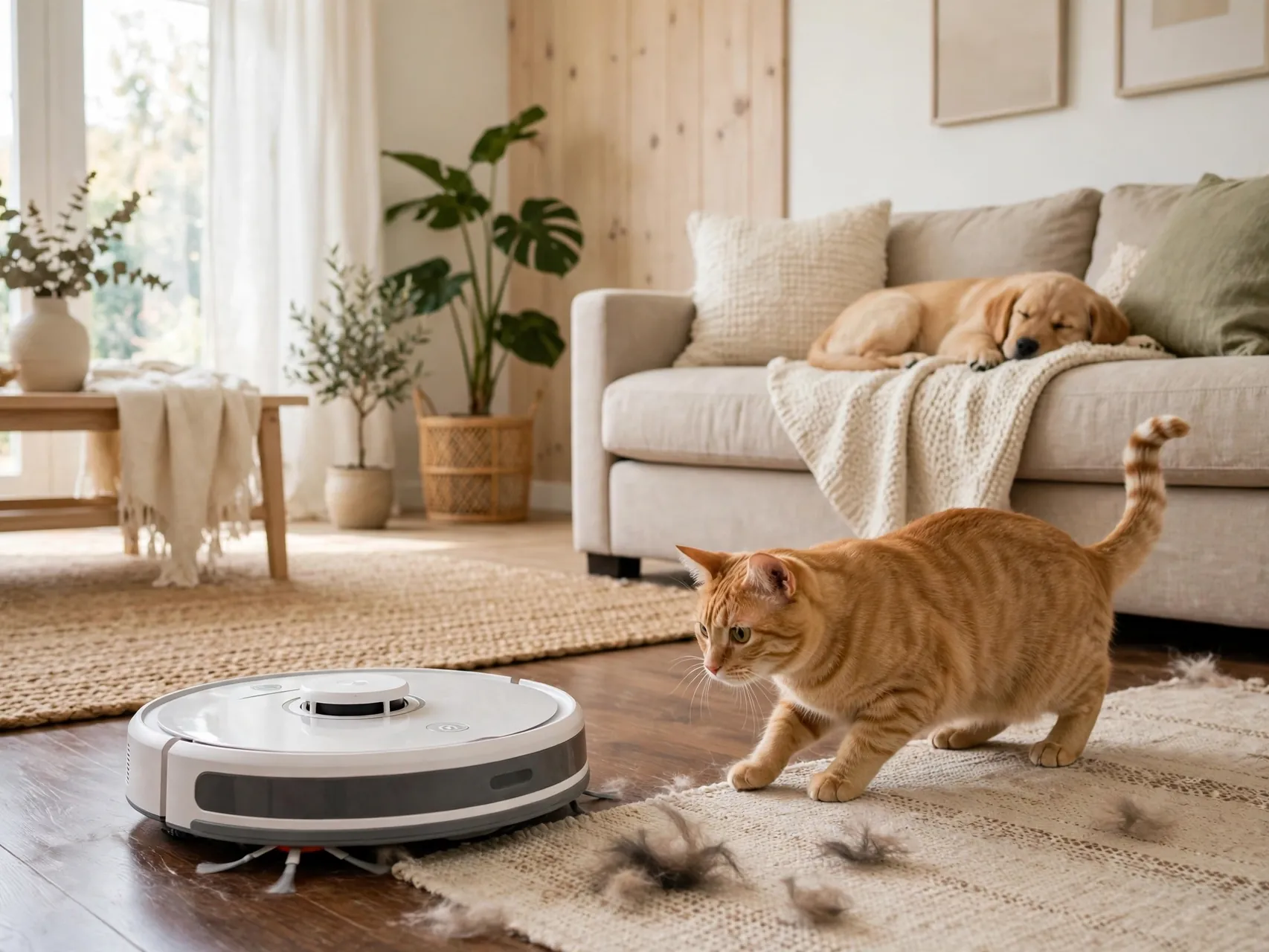
A robot vacuum will not replace deep cleaning, but it is excellent at daily hair control on hard floors and low pile rugs. Run it while you are out or working, after clearing cords, small toys, and pet bowls from its path. Empty its bin often, since pet hair fills it fast.
Think of the robot as a daily helper, while your weekly vacuum handles carpets and edges properly.
25. Finish the Week With a 30 Minute Reset

End the week with one focused reset that brings everything back to baseline. In about 30 minutes you can vacuum main rooms, mop the entry and kitchen, wash pet bedding and throws, wipe bowls and feeding mats, and take out all the trash. Put on music and work room by room.
This rhythm means you never face a house that needs everything at once. If a week gets hectic, protect this reset and skip the extras. A weekly reset routine is what turns good intentions into a home that stays fresh month after month.
FAQ
How often should I vacuum with pets in the house?
Vacuum high traffic areas and your pet's favorite spots two to three times a week, and daily if you have a heavy shedder or allergies in the family. A quick pass over rugs and couch cushions matters more than a perfect whole house clean. Slow passes over carpet lift far more hair than fast ones.
What is the best way to remove pet odor from a house?
Find and clean the source first, whether it is bedding, a rug, or an old accident spot. Wash fabrics weekly, use an enzyme cleaner on organic stains, sprinkle baking soda on carpets before vacuuming, and air the house out daily. Fragrance sprays only cover odor for a short time if the source stays dirty.
Are vinegar and baking soda safe to use around pets?
Used carefully, both are common household staples for cleaning. Keep pets off treated areas until surfaces are rinsed or vacuumed and fully dry, and never let a pet drink cleaning solutions. For any store bought product, follow the label and consider EPA Safer Choice options for everyday cleaning around animals.
How do I keep my house from smelling like dog between baths?
Most dog smell lives in fabrics, not on the dog alone. Wash beds and throws weekly, wipe paws at the door, brush your dog daily, and vacuum soft surfaces often. Open windows for fresh air and run an air purifier in the main living area. If a strong odor suddenly appears, check ears and skin and ask your vet, since health issues can cause new smells.
Can I have a clean house with pets on a busy schedule?
Yes, if you shrink the jobs instead of skipping them. Ten minutes a day on floors and surfaces, a robot vacuum for hair, and a 30 minute weekly reset will keep most pet homes fresh. Focus on the entry, feeding area, bedding, and couch first, since those four spots create most of the mess and odor.
Key Takeaways
- Routine beats intensity: Ten focused minutes a day prevents the buildup that makes pet homes feel overwhelming.
- Stop dirt at the door: Mats, towels, and a paw wipe habit save more cleaning time than any product.
- Wash the fabrics: Weekly washing of bedding, throws, and covers removes most pet odor at its source.
- Clean accidents properly: Enzyme cleaners break down organic stains instead of just covering the smell.
- Choose safer products: Look for the EPA Safer Choice label and keep pets off wet floors until they dry.
- Reset weekly: A 30 minute weekly reset keeps hair, dander, and odor from ever getting ahead of you.
Love these ideas? Save this pin for later and share it with a fellow pet lover who wants a fresher home.