24 IKEA Organization Ideas That Tidy Every Room Fast
Introduction
A tidy home rarely comes from one big makeover. It comes from small, repeatable systems in the rooms that frustrate you most, and that is exactly where IKEA organization ideas shine. The ranges are modular, widely available, and designed to mix inserts, boxes, and rails as your needs change.
IKEA's own US organization guidance leans on the same principles this list uses: shoe cabinets that save hallway floor space, boxes with compartments for small things, hook racks that stop clothes landing on the floor, and drawer boxes that sort by category. Nothing here needs a full renovation or a custom carpenter.
Work room by room and problem by problem. Measure first, buy once, and anchor tall furniture to the wall following the instructions supplied with each product. Product names below refer to long running IKEA ranges, but always check current availability, dimensions, and care instructions on ikea.com before you buy, since ranges and sizes change over time.
Pick the three rooms that annoy you daily and start there. Once one system works, copying the same boxes and labels into the next room is fast, and the whole house starts to feel calmer within a few weekends.
KALLAX Cubes With Labeled Boxes

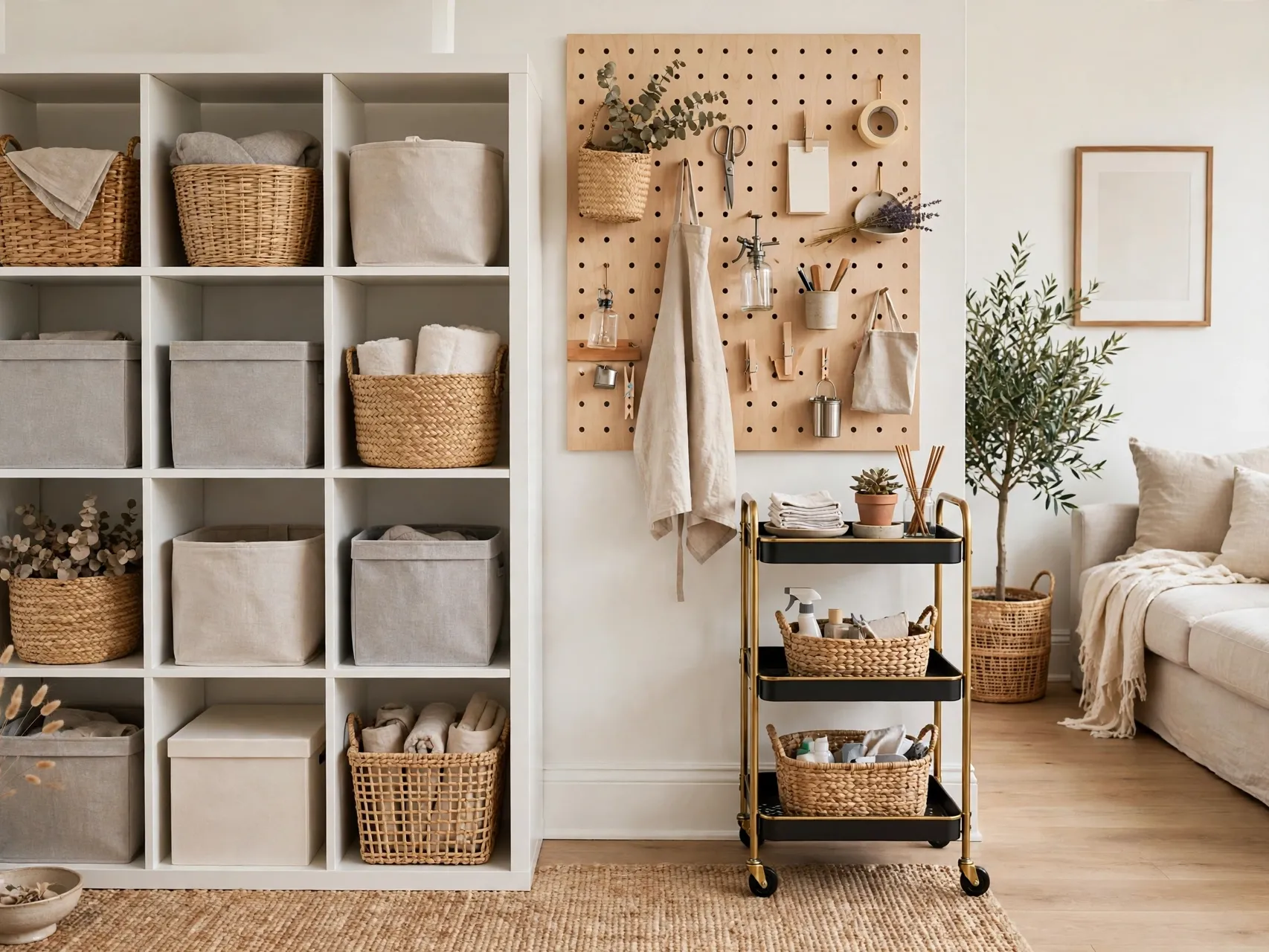
The KALLAX shelf is the workhorse of KALLAX organization ideas because each cube takes a box, basket, door, or drawer insert. IKEA describes the unit as flexible enough to stand upright or lie on its side, so the same frame works as a bookcase, sideboard, or room divider.
Fill lower cubes with labeled boxes for toys, paperwork, or linens, and leave a few cubes open for books and display. Labels matter more than the boxes themselves, since a labeled cube gets refilled correctly by everyone in the house.
TRONES Cabinets in a Narrow Hallway
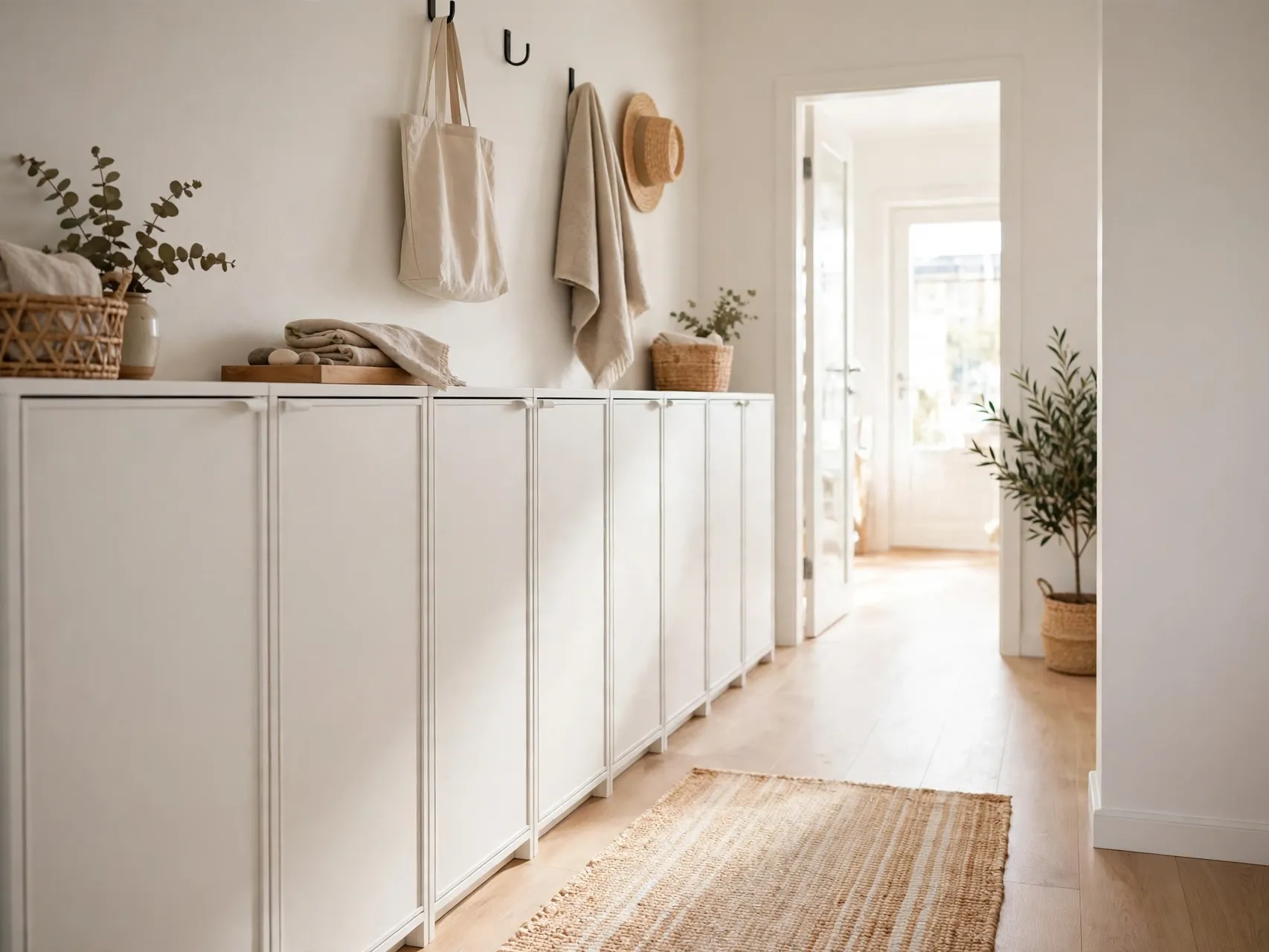
Slim wall cabinets such as the TRONES style solve the hallway problem of storage with almost no floor space. Mounted in a row, they swallow shoes, gloves, dog gear, or cleaning cloths behind clean, flat doors that sit close to the wall.
Top the row with a narrow tray for keys and mail and the hallway gains a landing strip too. Keep the heaviest items elsewhere, follow the wall fixing instructions carefully, and use studs or suitable fixings for your wall type so the cabinets stay secure.
SKADIS Pegboard for Daily Essentials
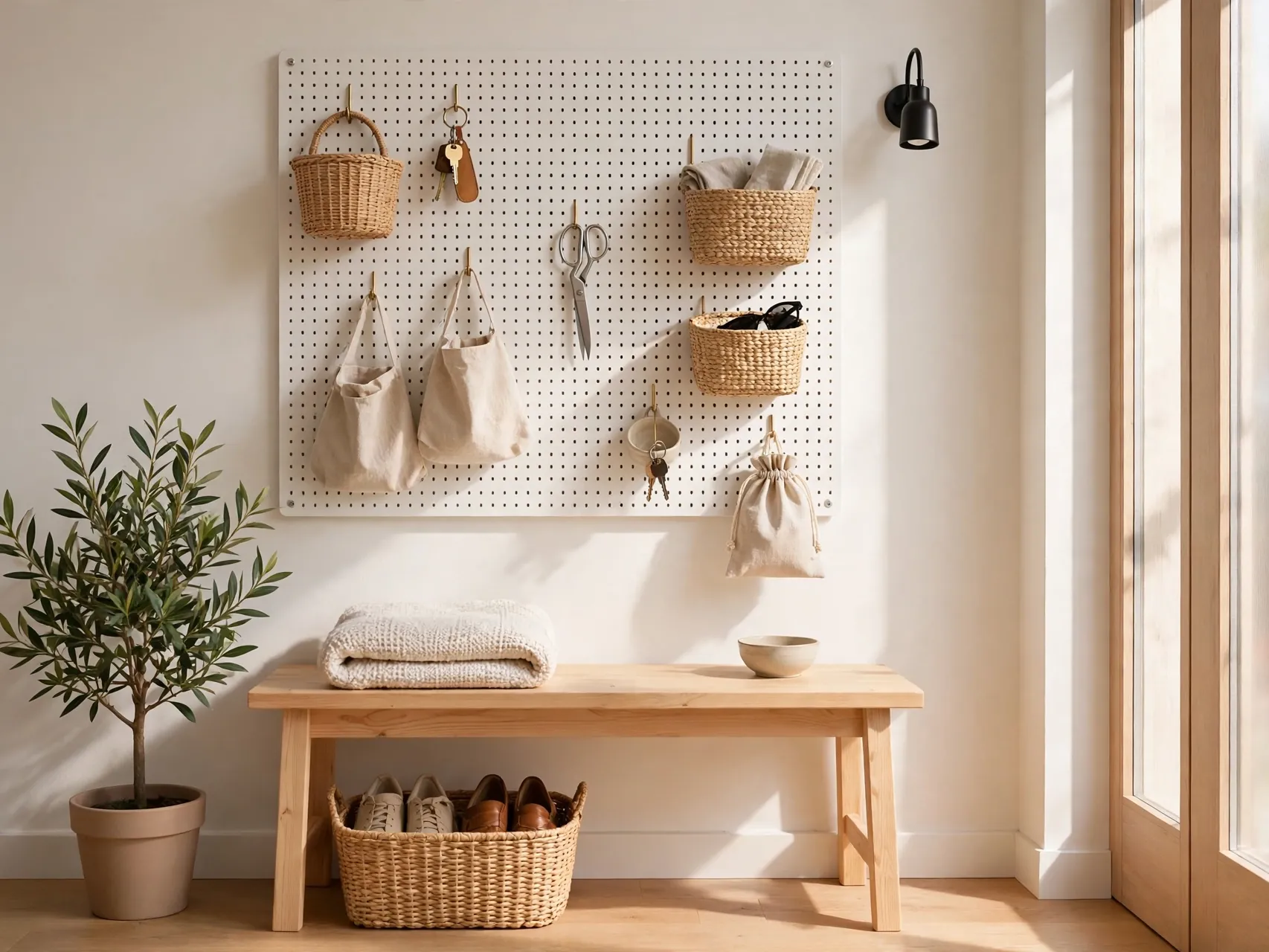
A pegboard turns a blank wall into adjustable storage for keys, scissors, chargers, headphones, and the small tools that usually vanish into drawers. Hooks, clips, and small containers move in seconds, so the board evolves with your routine.
Place one by the front door, one above a desk, or one inside a utility cupboard. The secret is restraint: give the board a clear job, such as entry essentials only, and it stays useful. A board that holds everything quickly holds nothing well.
RASKOG Cart That Moves Room to Room
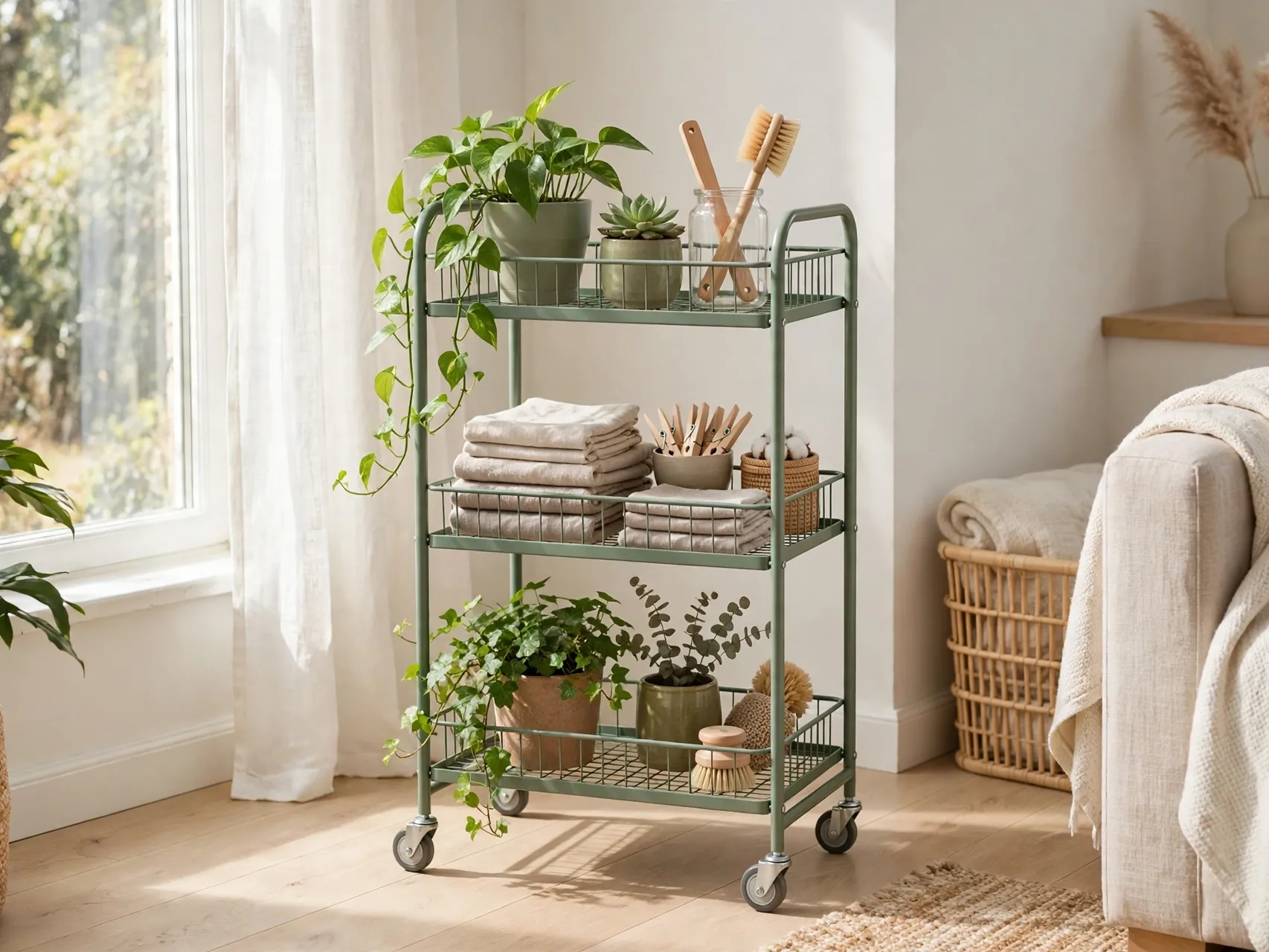
A three tier rolling cart is storage that goes where the mess is. Use it as a craft trolley on weekends, a homework station on school nights, or extra bathroom storage when guests arrive. Assign each tier a job so the cart does not become a junk drawer on wheels.
Daily items belong on top, backup supplies in the middle, and rarely used extras at the bottom. Because the cart needs no installation, it is one of the most renter friendly IKEA storage ideas for home on this list.
BESTA Cabinets as a Floating Media Unit

Wall mounted BESTA style cabinets hide game consoles, remotes, chargers, and board games behind closed doors while keeping the floor clear for vacuuming. A floating run also makes a small living room feel larger, since you can see floor underneath.
Mix closed cabinets with one open section for the items you reach for daily. Keep ventilation and cable access in mind for electronics, following the product instructions, and use a small box inside each cabinet for remotes and cables so doors open onto order, not a tangle.
BILLY Bookcases With Basket Storage

The BILLY bookcase is usually sold for books, but its adjustable shelves suit baskets, boxes, and folded storage just as well. A wall of bookcases with baskets on the lower shelves and books above gives a playroom, office, or bedroom serious storage with a library feel.
Add doors to the lower half if visual calm matters more than quick access. As with all tall units, anchor bookcases to the wall as instructed, especially in homes with children who might climb or pull on shelves.
TROFAST Bins for Toys and Craft Supplies

Stepped frames with pull out plastic bins are a family favorite because children can see, reach, and return their own toys. Shallow bins suit puzzles, crayons, and small figures, while deep bins take blocks, dress up clothes, and sports balls.
Sort by activity rather than by child if toys are shared, and put a picture label on each bin for younger kids. The same system works in a garage or craft room for tools and supplies, which is why many families buy a second frame later.
Drawer Boxes for a Calmer Dresser

Open any messy dresser drawer and the fix is the same: small boxes that divide the space by category. IKEA's own guidance recommends combining containers of different sizes inside drawers so items are easier to find and each box can travel to where a project is happening.
Use one box for socks, one for underwear, one for accessories, and roll or file fold clothes so you see everything from above. This ten minute job per drawer makes mornings faster and stops the single favorite shirt from hiding under a pile.
Hook Racks at Adult and Kid Height

Hooks are the simplest cure for coats and bags on the floor. IKEA's hallway guidance makes the point directly: fit a row of hooks, add clear labels, and remember a second row at child height so kids can hang their own things without help.
Place hooks by the door for daily coats, inside the bathroom for towels and robes, and in bedrooms for tomorrow's outfit. A labeled hook per person in the entry keeps the pile from reforming and makes leaving the house calmer.
Shoe Cabinets That Double as a Console

A closed shoe cabinet keeps the hallway looking like a room instead of a shoe shop. IKEA notes its shoe cabinets can hold up to twelve pairs, and lining up a row multiplies that capacity while the flat top works as a console for keys, mail, and a lamp.
Keep only current season shoes in the cabinet and store the rest elsewhere, or any cabinet overflows. This is the centerpiece of most IKEA hallway organization setups because it hides the biggest daily clutter source in the average home.
Kitchen Rail System for Utensils
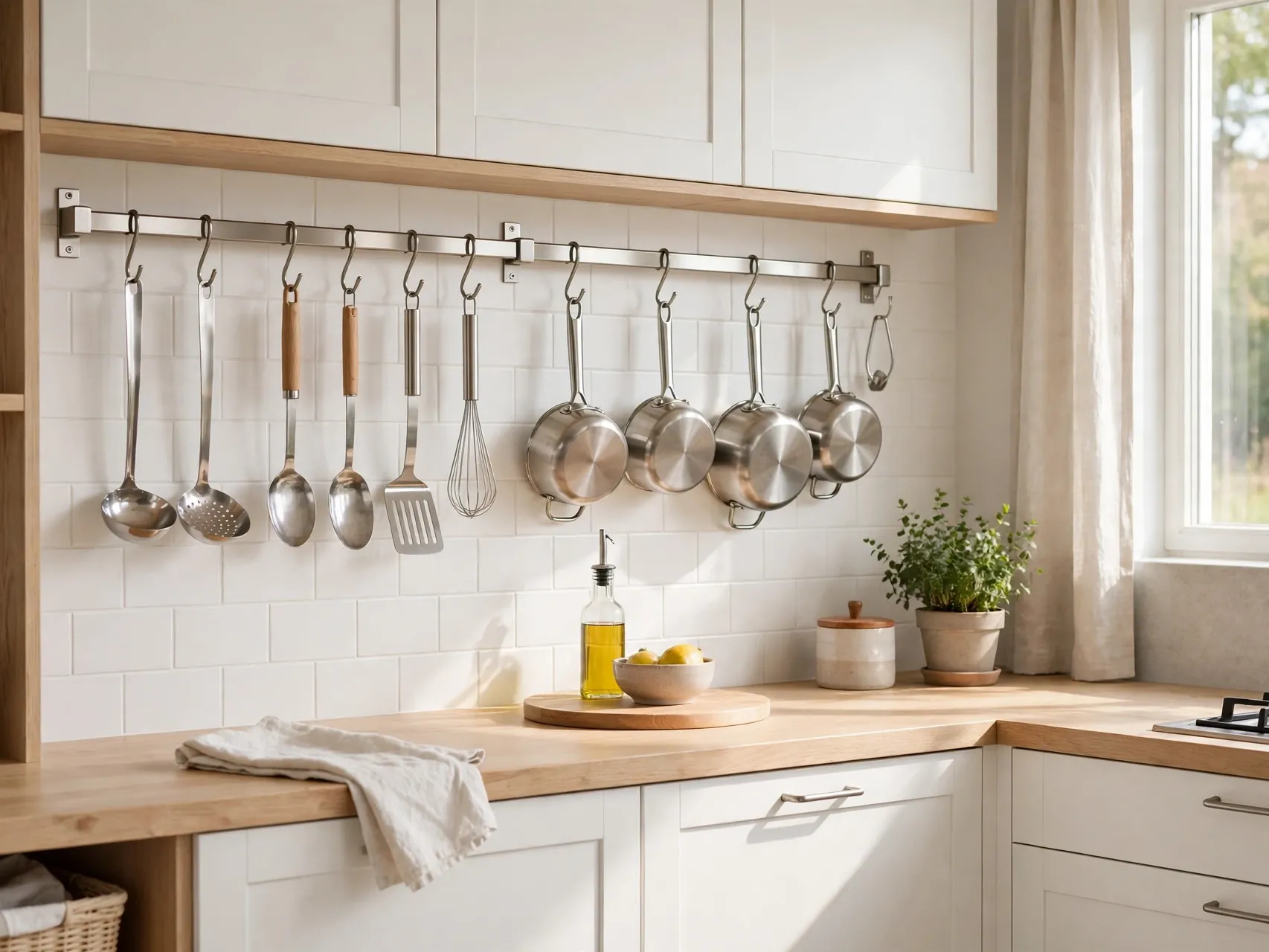
A wall rail with hooks and containers lifts utensils, scissors, and small pans off the counter and out of crowded drawers. Hang only what you use weekly, grouped by task, and the rail stays a tool instead of becoming decoration.
Renters should check what fixings their lease allows, since rails usually need screws into tile or wall. In return, you gain a drawer back and a cooking zone where the spatula is always visible at the moment the pan is hot.
Spice Racks Inside Cabinet Doors
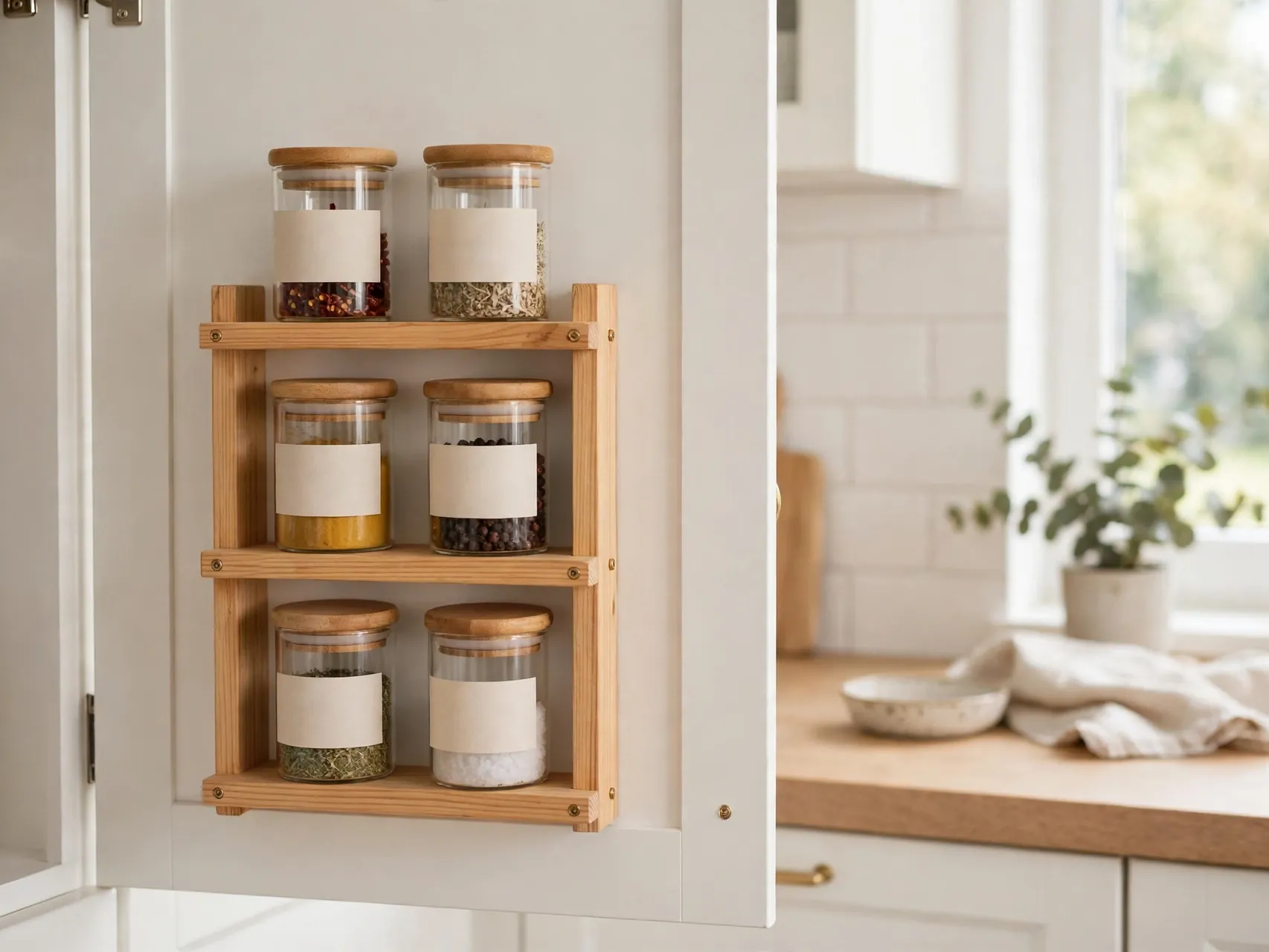
Small wooden spice racks earn a second career mounted inside cabinet or pantry doors, holding spice jars where you can read every label at once. The same racks work in a bathroom cabinet for nail polish, medicines stored per label guidance, or small toiletries.
Door storage uses space that is normally wasted and keeps counters clear. Measure the gap between the door and your shelves before fixing anything, so the door still closes fully with jars in place.
Stacking Boxes for the Linen Closet
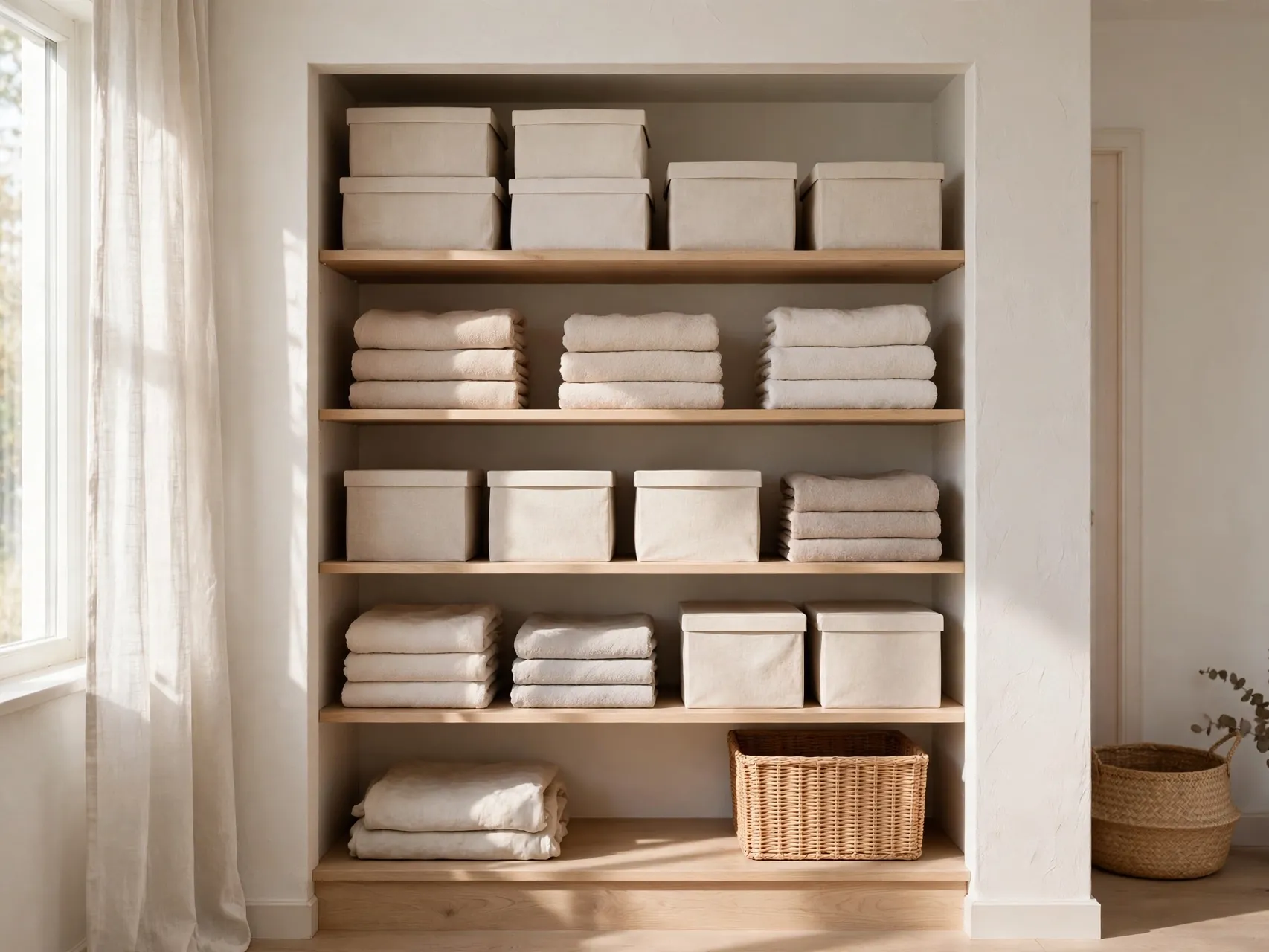
Linen closets descend into chaos because soft items have no edges. Lidded boxes or fabric cubes give towels, sheet sets, and blankets a shape, and stacking boxes use the full height of each shelf. Label by bed size or by room.
Keep one box for guest linens as a complete set, sheet, duvet cover, and towels together, so hosting takes minutes. Store out of season blankets in the highest boxes and everyday towels at eye level where hands reach first.
Under-Sink Baskets and Trays

The under sink cabinet is awkward, full of pipes, and usually a jumble. A small tray or basket for cleaning bottles, a second container for cloths and sponges, and a bin for trash bags turn it into three simple groups that slide out for access.
Measure around the pipes before buying anything, and choose containers you can lift out fully for cleaning day. Keep household chemicals stored according to their labels and away from children, ideally with the cabinet secured if little ones are in the house.
Rolling Cart as a Coffee Station
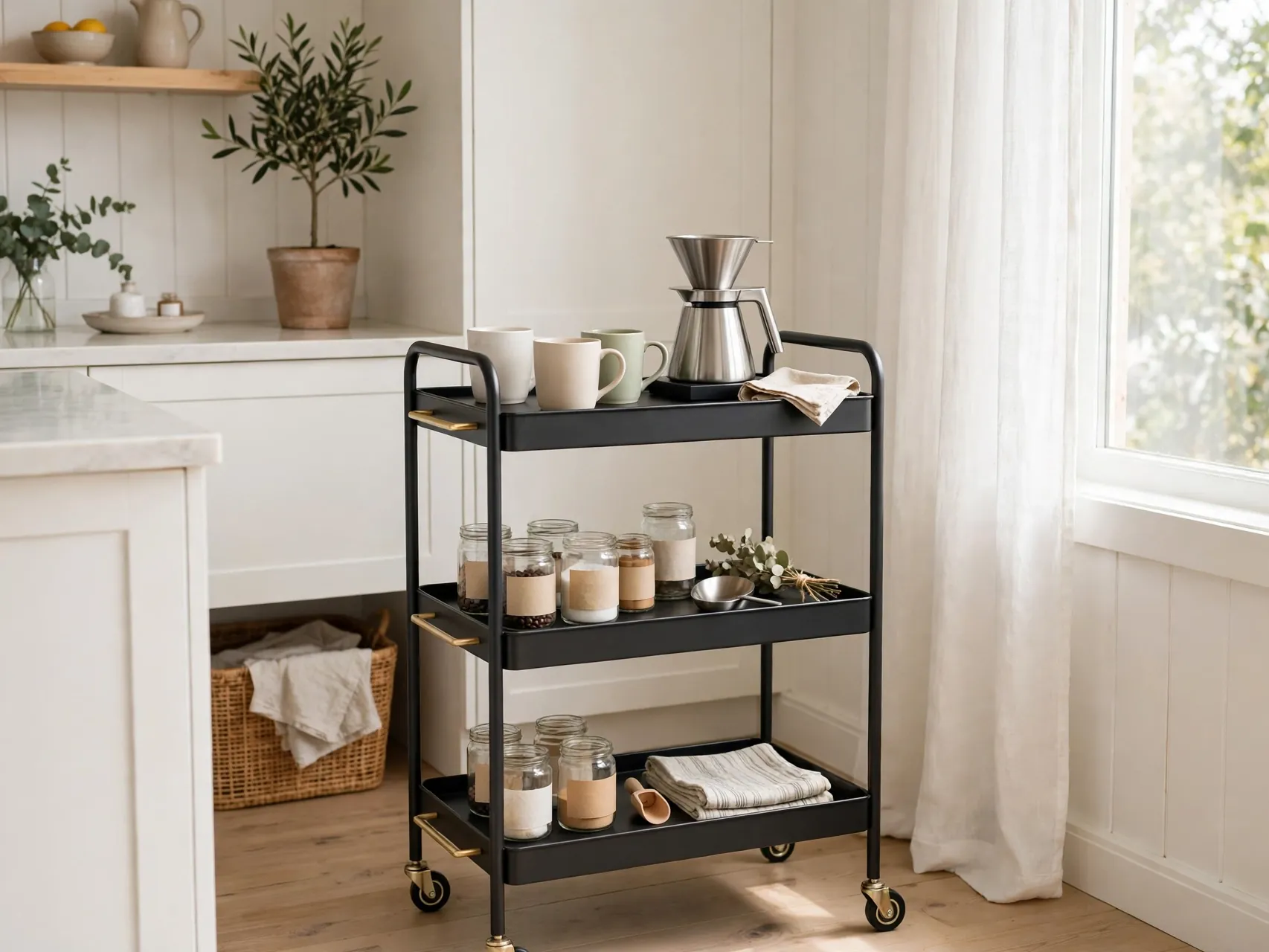
Give the morning coffee routine one compact home. A rolling cart or small two tier shelf holds the machine or kettle on top, cups and pods or filters below, and syrups or tea in a small box on the side. Everything leaves the main counter.
This works in a kitchen corner, a dining room, or even a home office. The cart version moves for guests or cleaning, while a fixed shelf suits a permanent nook. Either way, a dedicated station stops coffee supplies spreading across every worktop.
Open IVAR Shelves for Pantry Overflow
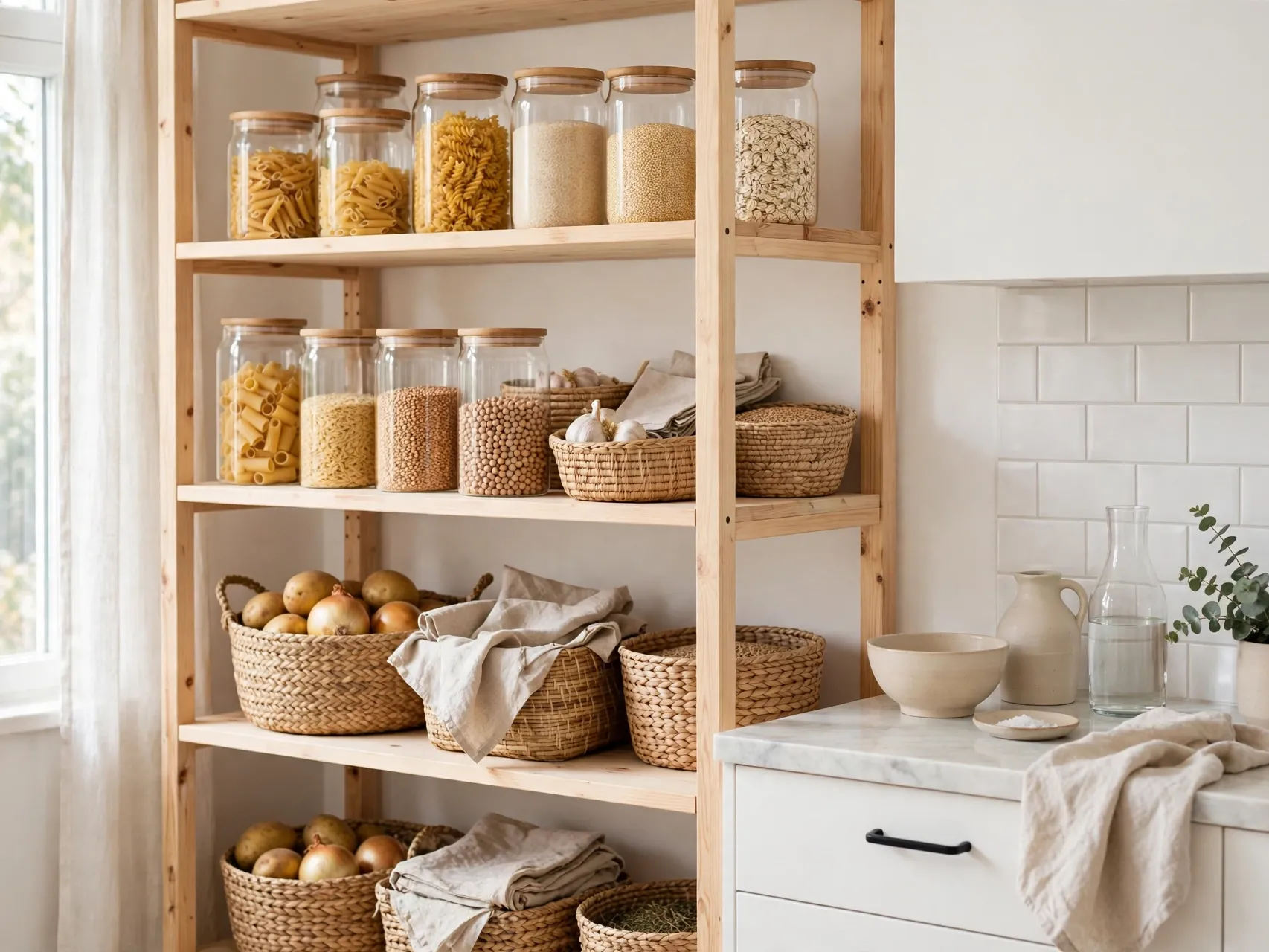
Solid wood open shelving in the IVAR style suits a pantry, utility room, or garage wall where looks matter less than capacity. Adjustable shelves take bulk buys, small appliances, and preserving jars, grouped in boxes or baskets by category.
Open shelves only stay tidy with a system, so assign each shelf a job and label the boxes. Keep heavy items low. This is the overflow storage that lets kitchen cabinets hold only what you cook with weekly, which makes cooking itself easier.
Desk Pegboard for Papers and Chargers

Above a desk, a pegboard with small shelves, cups, and clips holds stationery, chargers, and headphones off the work surface. Add a simple in tray for current paperwork and an out tray for finished items, and paper piles stop forming.
Route cables through one small box so the desk looks calm even while everything charges. This setup suits students and home workers in small rooms especially well, since it uses wall space that a larger desk would otherwise need to provide.
Wardrobe Inserts for Small Items

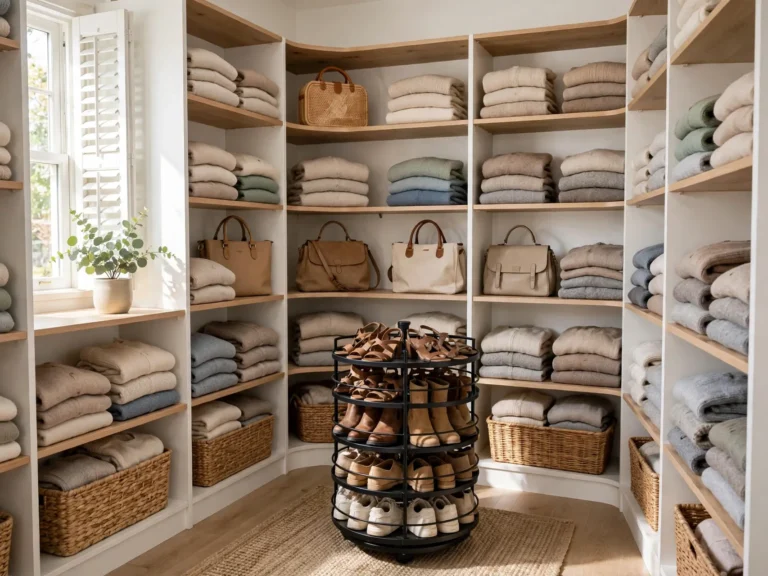
Inside a wardrobe, small inserts, boxes, and hanging organizers separate accessories, belts, scarves, and folded knitwear so the main rail stays for clothes. IKEA's closet guidance suggests exactly this approach: segregate smaller items into groups with organizers and inserts so mornings get faster.
Designate one spot for clothes worn once but not ready for washing, which ends the chair pile in many bedrooms. Keep a small donation bag in the wardrobe too, so anything that stops fitting leaves the house at the next clean out.
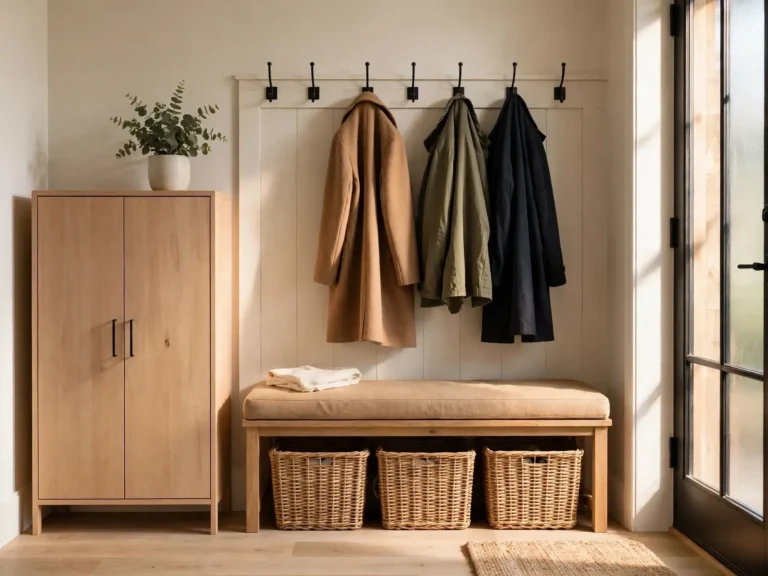
Entry Bench With Storage Below

A bench by the door gives you seating for shoes plus storage underneath in one footprint. Cubbies or baskets below hold footwear, while hooks above handle coats and bags. It is the family entry formula because children can sit, store, and go without adult help.
Add a washable mat under the bench for wet days. If your hallway is too narrow for a bench, copy the system vertically instead, with a shoe cabinet, hooks above it, and a small shelf for keys at standing height.
Bathroom Boxes for Tiny Toiletries
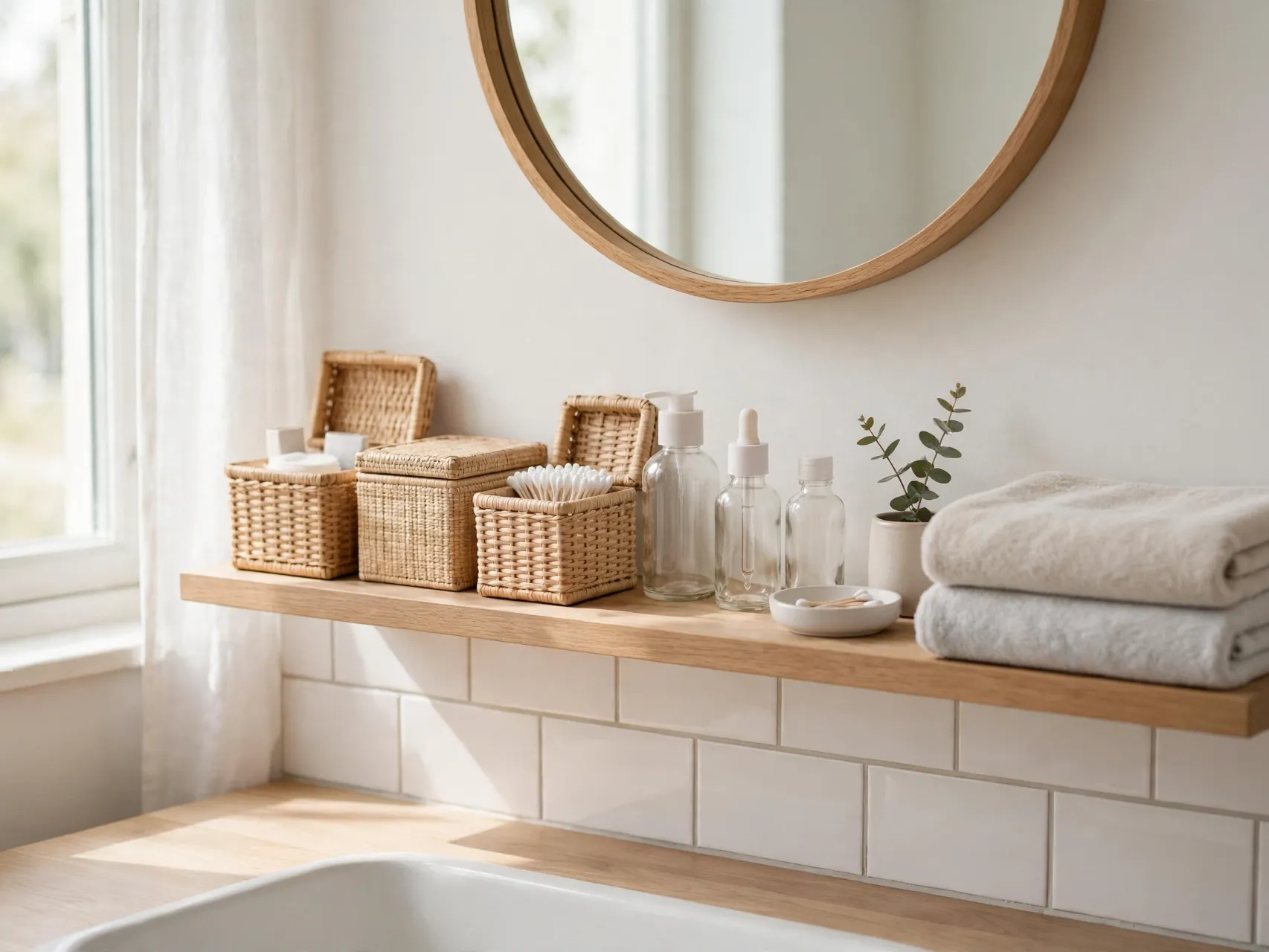
Bathrooms collect small bottles faster than any room. A compartment box for daily jewelry and essentials, baskets for backup toiletries, and a tray that corrals the sink area keep surfaces clear enough to clean in seconds.
IKEA suggests a storage box with compartments and a mirrored lid for the jewelry you wear often, which doubles as a getting ready aid. Store backups together in one labeled box so you stop buying shampoo you already own but could not find.
Laundry Sorters That Fit a Corner

A sorter with two or three sections in a corner of the bathroom, bedroom, or utility space makes laundry day a grab and go job. Label sections for lights, darks, and delicates, and choose a style with removable bags you can carry to the machine.
In small homes, a sorter on wheels can live in a cupboard and roll out on wash day. Sorting as clothes come off, rather than in one big session, is the habit that makes any sorter work, so place it where clothes actually get changed.
Shelf Inserts to Double Cabinet Space

A simple insert shelf inside a kitchen or bathroom cabinet creates two levels where there was one tall, wasted gap. Mugs, glasses, and bowls stack safely, and you can see everything without unloading the front row to reach the back.
Measure the cabinet interior and your tallest item before choosing an insert. This is one of the cheapest IKEA small home storage wins available, and it often delays or removes the urge to buy a whole new cabinet run.
Clear Boxes for Seasonal Storage

Clear lidded boxes make seasonal storage honest: you can see the holiday lights, winter accessories, or beach gear without opening every lid. Stack them in a closet top, garage shelf, or under bed space, labeled by season on the short end.
Keep one box per category and resist overfilling, since crushed items come out needing repair. Add a contents note inside the lid for detailed boxes like decorations. When the season turns, swap the box positions so the current season sits at the front.
A Weekly Reset Basket for Every Room

The final idea costs almost nothing. Place one attractive basket in each busy room as a reset basket. Anything found out of place during the day lands in the basket, and once a week the basket travels room to room returning items to their real homes.
This works because most clutter is homeless, not excessive. The basket gives stray items a temporary home and a weekly route back. Choose baskets you like looking at, keep them small enough to carry in one trip, and empty them fully each week without exception.
FAQ
Which IKEA range is best for a small home?
Modular ranges that accept boxes and inserts, such as KALLAX style shelving, tend to work best because they adapt room to room. Slim wall cabinets suit hallways, rolling carts suit renters, and pegboards suit desks and entries. Measure your space and pick by problem, not by range name, and check current dimensions on ikea.com first.
How do I keep IKEA storage looking tidy, not cluttered?
Use closed boxes for visual calm, keep labels consistent, and leave some space empty on open shelves. Matching box colors within a room make a big difference. Most importantly, give each container one clear job, because mixed containers slowly become junk drawers in any range.
Is it safe to wall mount IKEA cabinets and shelves?
Follow the assembly and wall fixing instructions that come with each product, use fixings suited to your wall type, and anchor tall furniture to the wall as directed. If you are unsure about your wall construction, ask a qualified person for help. Never overload shelves beyond the stated limits in the product information.
What should I buy first on a small budget?
Start with drawer boxes, a hook rack, and shelf inserts, since they fix the messiest daily spots for the least money. Then add one closed storage piece for your biggest clutter source, often a shoe cabinet or a cube unit with boxes. Build gradually so each purchase solves a known problem.
How do I know if a product still exists before planning around it?
Check the product page on ikea.com for your country before you design a whole system around one item, since ranges, sizes, and colors change. Note the dimensions and article details while you shop, and choose backup options from the same range family so the look stays consistent if one piece is unavailable.
Key Takeaways
- Fix one room at a time: Modular boxes, rails, and inserts work best as small systems, not one giant shopping trip.
- Closed storage calms a room: Shoe cabinets, cube boxes, and cabinet doors hide the daily clutter that open shelves display.
- Use walls and doors: Pegboards, hook racks, and door mounted racks add storage without taking any floor space.
- Labels make it stick: A labeled box or hook gets used correctly by the whole household, every day.
- Measure and anchor first: Check dimensions on ikea.com and follow wall fixing instructions for safety and fit.
- Pin these ideas for later: Save this list to your home organization board on Pinterest so your room by room plan is ready to shop.