20 Entryway Shoe Storage Ideas That Hide the Clutter
Introduction
The pile by the front door has a way of growing overnight. One pair of sneakers becomes three, boots lean against the wall, and suddenly guests are stepping around a small footwear mountain before they even say hello. Good entryway shoe storage fixes that first impression without asking you to own fewer shoes or build a bigger house.
The trick is matching the storage style to your space and your habits. A busy family needs grab and go spots that kids will actually use. A narrow apartment hallway needs something slim that keeps the walkway clear. A formal entry might call for closed doors that hide everything completely.
This list mixes closed cabinets, benches, racks, and a few renter friendly tricks, so you can pick the mix that fits your door, your floor space, and your real life. Start with the pairs you wear every day, give those the easiest spots, and let the rest of the ideas handle the overflow.
You do not need to do all twenty. Most tidy entries use two or three of these together, for example a bench for daily shoes plus a slim cabinet for everything else. Measure your wall, count your everyday pairs, and choose from there.
One more habit matters as much as the furniture itself: a two minute reset each evening. Shoes that land in their spot at night never become the pile you trip over in the morning. Pair any idea below with that tiny routine and the entry stays calm on busy weekdays, on muddy weekends, and when unexpected guests knock. The best system is simply the one your household will use without thinking about it.
Slim Tilt-Out Shoe Cabinet
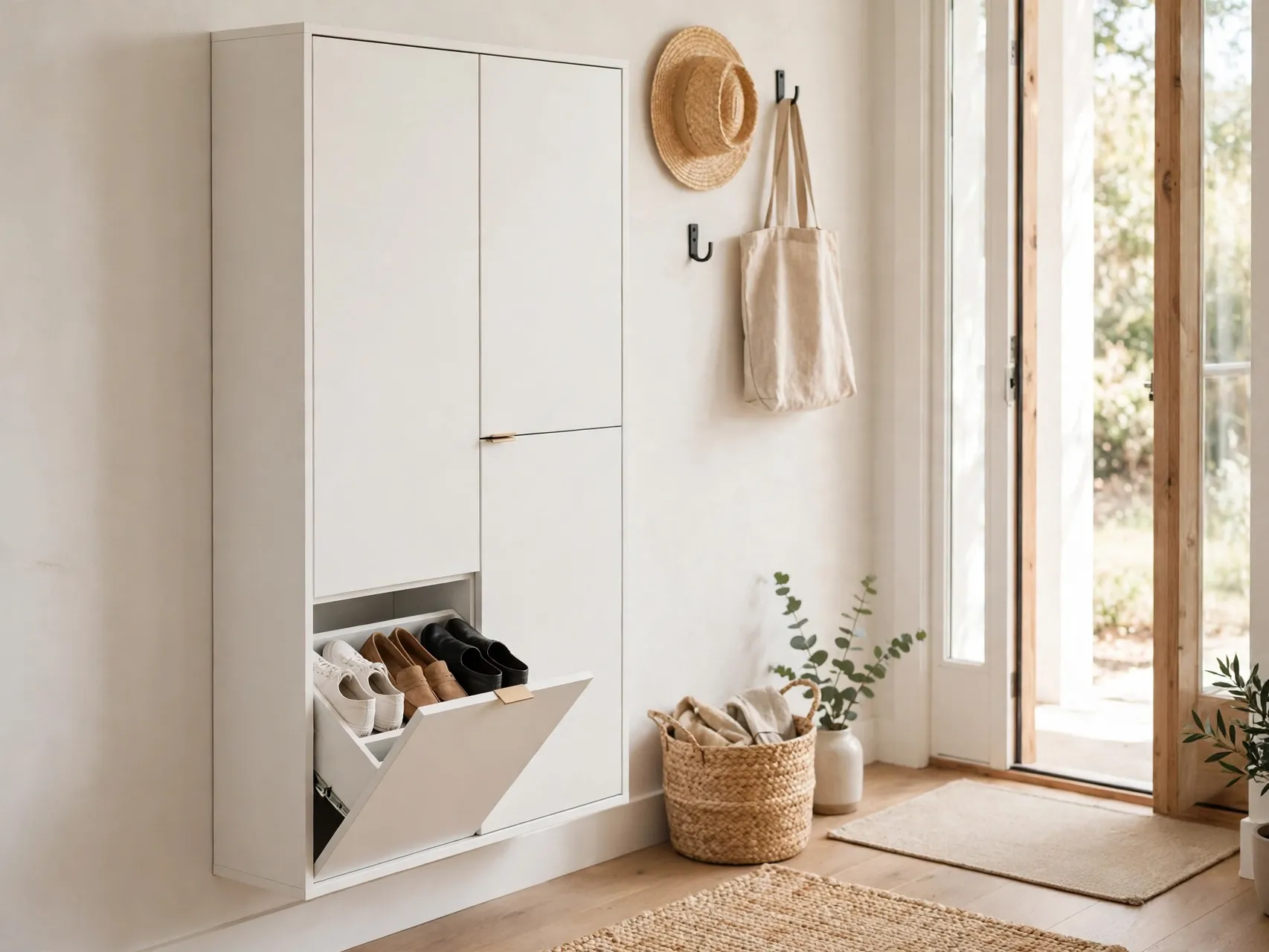
A tilt-out cabinet is the classic answer for a narrow hall because the doors tip open, hold shoes inside, and close flat again. IKEA notes on its US organization ideas page that its shoe cabinets can hold up to twelve pairs while saving floor space, which shows how much fits in a shallow unit.
Keep the top surface working too. A small tray for keys, a bowl for sunglasses, and one plant turn the cabinet into a proper landing spot. Because the doors hide everything, this is the strongest pick when your entry opens straight into the living room.
Storage Bench With Hidden Cubbies

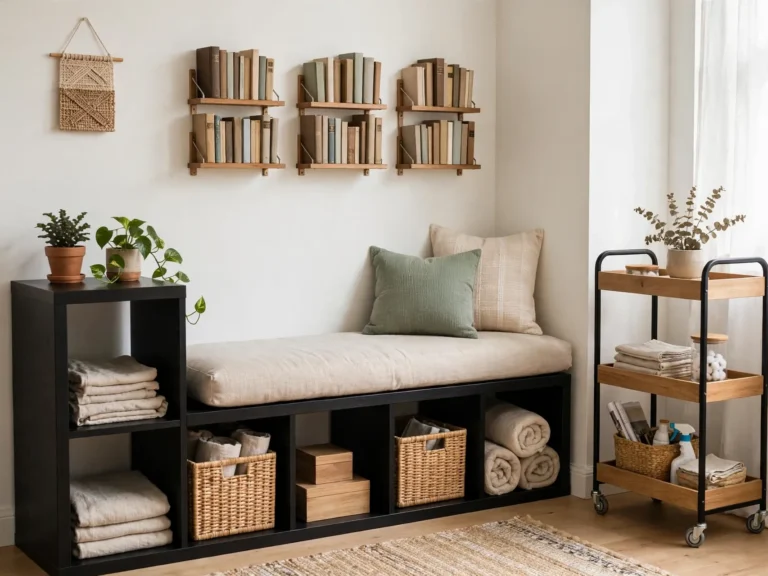
A bench gives people a place to sit while they pull boots on, and the cubbies underneath keep pairs off the floor. Choose open cubbies for speed on school mornings, or add baskets inside the cubbies if you want the shoes fully out of sight.
Measure the cubby height before you buy. Sneakers fit in shorter openings, while ankle boots need more room. A cushioned top makes the bench feel like furniture rather than storage, and it earns its space in even a small entry.
Low Open Rack for Daily Pairs

Sometimes the simplest shoe storage bench entryway alternative is a low, open rack that holds only the shoes in current rotation. Two tiers are usually enough for a couple or a small family if you are strict about what earns a spot.
Place a washable mat under the rack to catch dirt and damp soles. Open racks air shoes out well, which helps with odor, but they show everything, so keep this option for a mudroom corner or a closet rather than a formal front hall.
Tall Narrow Shoe Tower

When floor space is tight, go up instead of out. A tall, narrow tower uses a single square foot or so of floor and stacks pairs vertically, which suits studio apartments and tight corners beside the door.
Anchor any tall unit to the wall for safety, especially in homes with small children. Put the pairs you wear most at waist height, off season styles at the top, and heavier boots on the lowest shelf so the tower stays steady and easy to use.
Wall-Mounted Drop-Down Bins
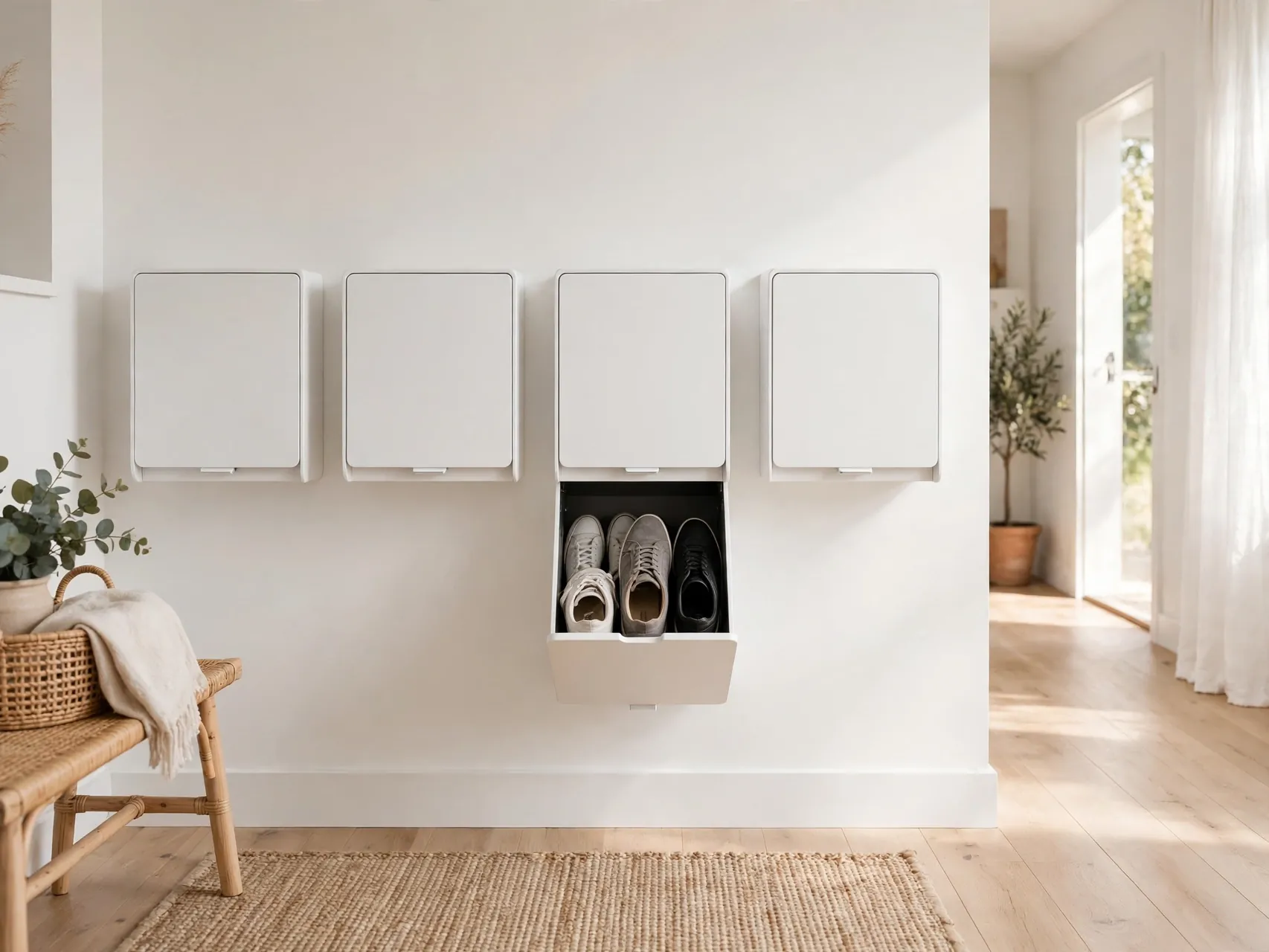
Wall-mounted bins, such as slim shoe cabinets that fix directly to the wall, keep the floor completely clear for vacuuming and make a small hall feel bigger. They work well behind a door or along a wall where a freestanding unit would block the swing.
Because each bin holds a limited number of pairs, many households line up two or three in a row. Paint or choose a finish that matches your wall color and the row reads as paneling rather than storage, which keeps the look calm.
Under-Bench Rolling Crates
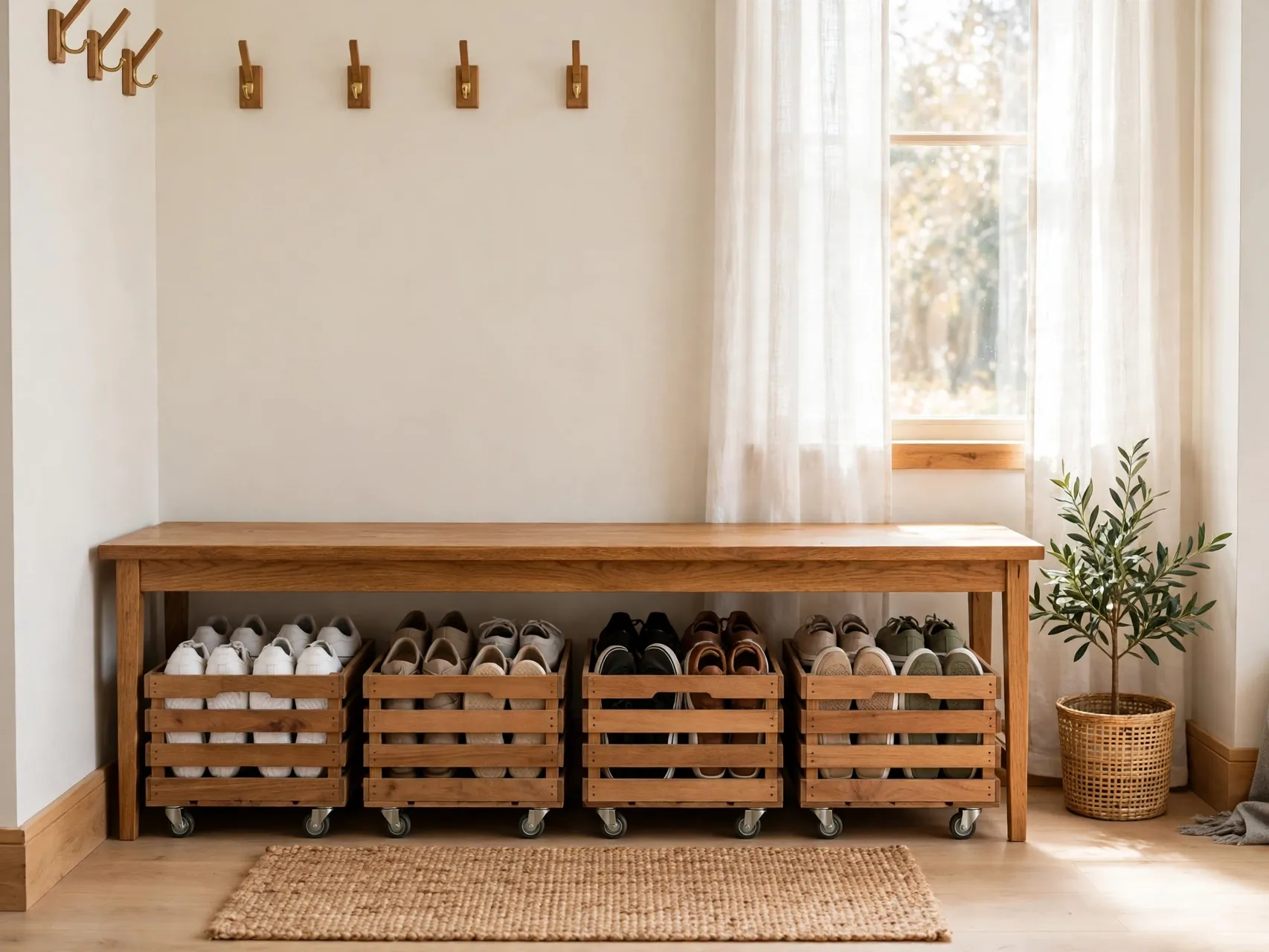
If you already own a bench, the empty space beneath it is free storage waiting to happen. Rolling crates or low bins slide out for choosing shoes and slide back to hide the mess, and kids find the roll out motion easy and fun.
Assign one crate per person if space allows. That small rule ends the morning argument about missing shoes, because each person is in charge of their own bin. Choose crates with smooth wheels so they do not scratch wood floors.
Over-the-Door Pocket Organizer
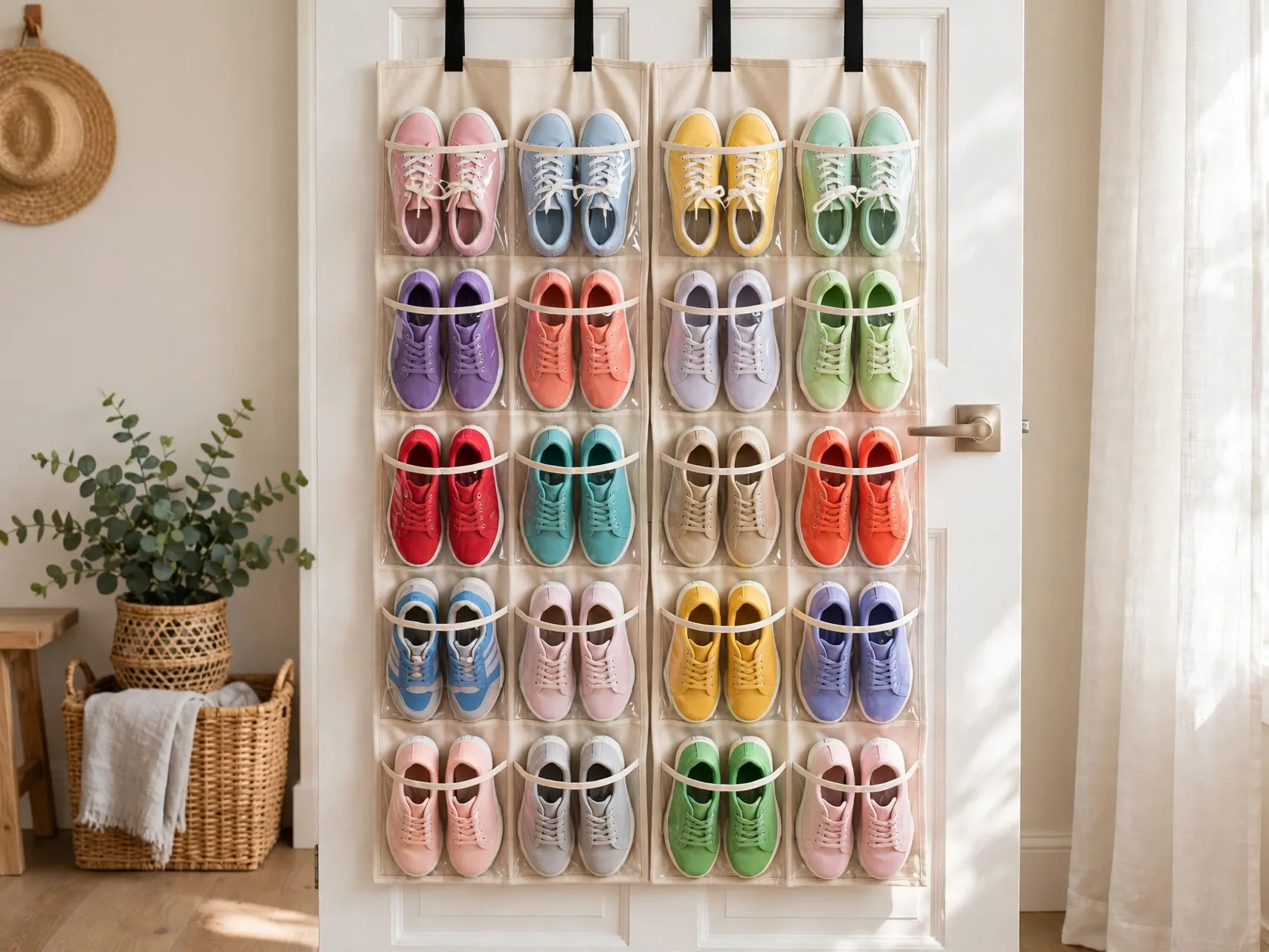
The back of a closet door is storage space most homes ignore. A hanging pocket organizer holds flats, sandals, sneakers, and kids shoes without using any floor at all, which makes it a favorite small entryway shoe storage trick for renters.
Pick a sturdy canvas or heavy fabric version rather than the thinnest plastic, since pockets carry real weight. Reserve the top pockets for lighter pairs and use the lower pockets for gloves, scarves, or dog leashes so the whole door works as one tidy station.
Corner Shoe Stand
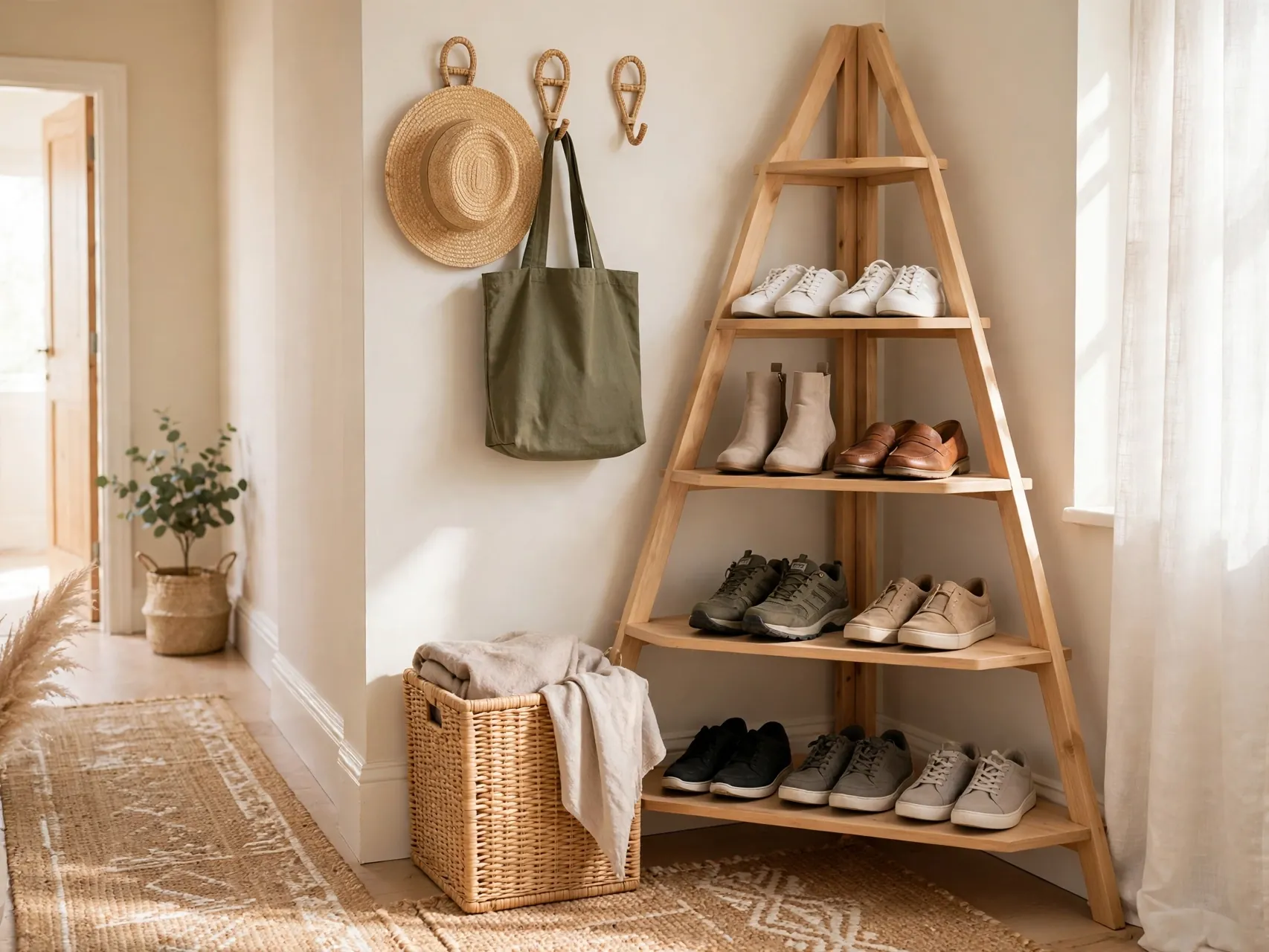
Corners beside the front door collect clutter because nothing else quite fits there. A corner stand with angled or tiered shelves turns that dead triangle into a neat home for four to six pairs.
Round or triangular designs sit flush into the corner, so nothing juts into the walkway. This is a good budget move for a first apartment: small footprint, low cost, and a clear improvement the day it arrives. Add a wall hook above it for bags and the corner becomes a mini drop zone.
Ladder Shelf for Shoes and Bags

A leaning ladder shelf offers several open tiers in a footprint that stays shallow at the base. Shoes go on the lower rungs, while the top shelf can hold a basket for mail or a folded throw.
Ladder shelves suit relaxed, casual entries and renters who cannot drill many holes, since most styles simply lean and fix with a single safety strap. Keep the display edited. A ladder looks charming with neat pairs in a row and messy very quickly if it becomes a dumping ground.
Floating Shelves Above the Baseboard Line

Floating shelves mounted low on the wall hold shoes in a clean line and free the floor beneath them. Two short shelves often fit a household's daily pairs, and the gap below makes sweeping simple.
For a boutique look, reserve floating shelves for your nicest pairs and store everyday trainers elsewhere. Match the shelf finish to your trim color so the shelves blend in. This idea pairs well with a mirror above, which bounces light and gives you a last check before leaving.
Basket Row on a Low Console

A row of matching baskets on or under a low console hides shoes while looking like decor. Woven textures warm up an entry, and lids hide everything completely for the tidiest finish.
Label each basket by person or by shoe type, such as sneakers, flats, and kids. Labels sound fussy until the first busy morning, when they save real minutes. Measure your largest pair before buying baskets, since boot shapes need taller sides than ballet flats do.
Boot Tray With a Raised Rack
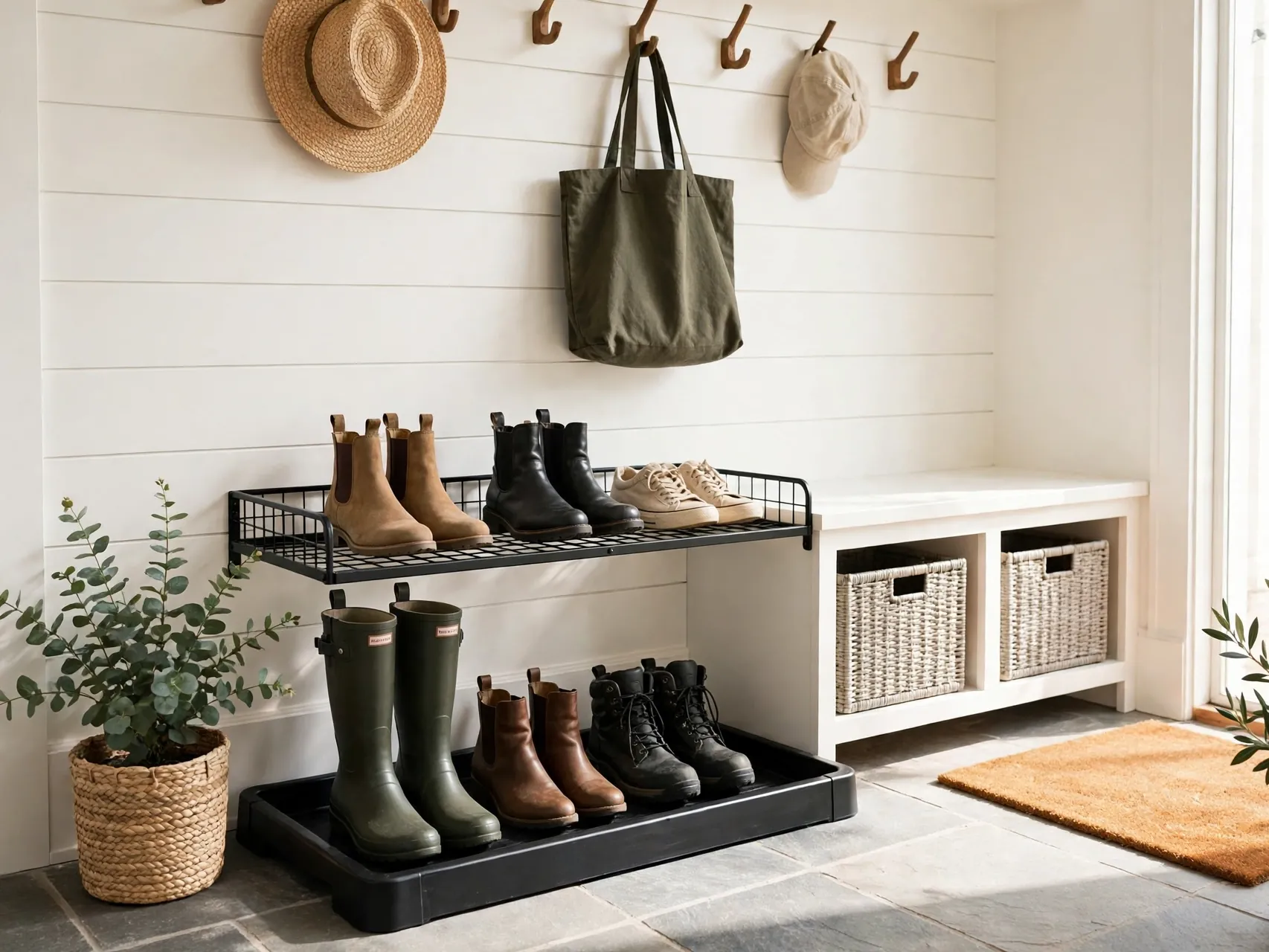
Wet weather needs its own plan. A boot tray catches melting snow and muddy soles, and a raised rack or slatted insert inside the tray lifts shoes so they dry instead of sitting in puddles.
Keep the tray beside the door during wet months and store it away in summer if space is tight. This is not glamorous storage, but it protects your floors and stops damp shoes from being carried through the house. Pair it with a closed cabinet nearby for dry pairs.
Closet Rod Shelf for Entry Shoes

If your entry has a coat closet, one low shelf added near the floor of the closet turns it into shared shoe storage. Shoes stay behind a closed door, close to the coats and bags they travel with.
Use the vertical space above the shelf for a hanging organizer or hooks. IKEA's closet organization guidance makes the same general point: segregate smaller items into groups with boxes and inserts so everything is easy to see and grab. A small battery light inside the closet makes early mornings easier.
Stackable Clear Shoe Boxes
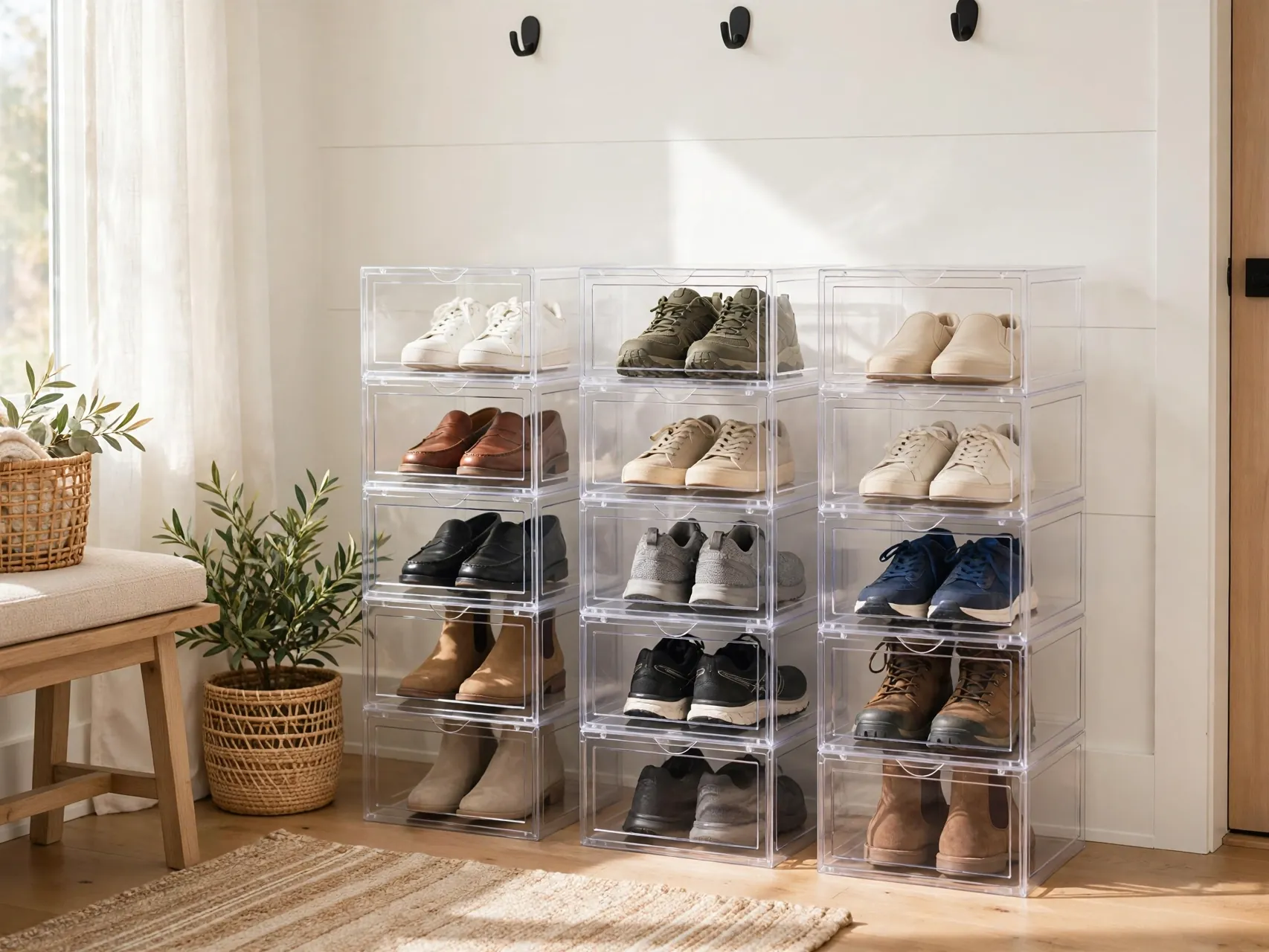
Clear stackable boxes protect special shoes from dust while keeping them visible, and they stack into whatever shape your space allows: a column in a corner, a row under a bench, or a block inside a closet.
This system works best for shoes you wear weekly rather than daily, since opening a box adds a step. Keep one box per pair so stacks stay stable. For a uniform look some people prefer solid boxes with a label on the front, which hides visual clutter in an open entry.
Pull-Out Drawers Under the Stairs Landing

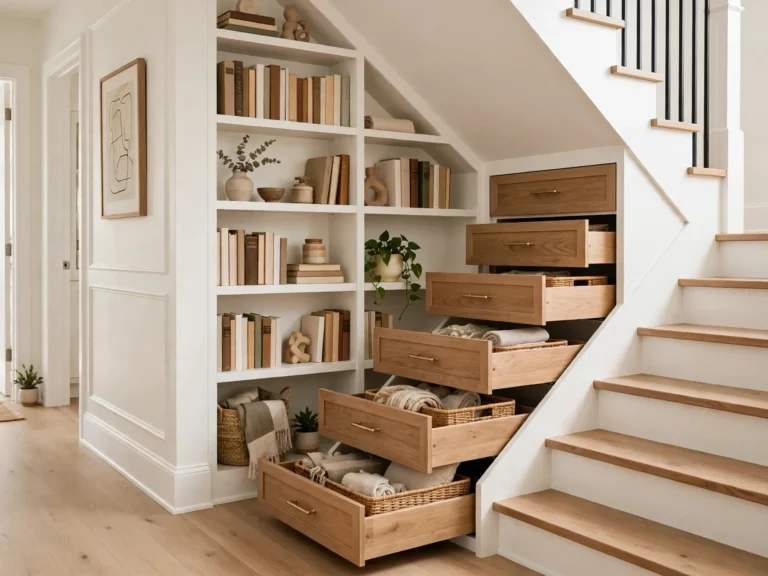
Homes with stairs near the entry often have a triangle of wasted space underneath. Pull-out drawers built into that slope hold a surprising number of pairs, sorted by person or season, and disappear completely when closed.
This is a carpentry project rather than a quick buy, so it suits a renovation or a handy weekend with careful measuring. Soft close runners make drawers feel high end and keep fingers safe. Even one deep drawer at the lowest point handles bulky winter boots well.
Peg Rail With Hanging Shoe Bags

A simple peg rail or pegboard on the entry wall creates flexible storage that changes with the seasons. Hang fabric shoe bags, baskets, or individual pairs by their heels from sturdy pegs, then rearrange whenever your routine changes.
Paint the board the same color as the wall for a built in feel, or choose a contrasting color to make it a feature. This idea shines in family entries because kids can reach low pegs themselves. Hooks and rails are also an IKEA hallway staple for stopping clothes piling up on the floor.
Vintage Dresser Turned Shoe Chest

A small secondhand dresser makes charming entryway shoe organizer ideas come to life: drawers hide shoes completely, and the top works as a console for keys, mail, and a lamp. Shallow top drawers suit flats and sandals, deeper drawers take sneakers and boots.
Paint the dresser to match your trim or keep the wood for warmth. Adding drawer dividers or small boxes inside stops pairs sliding around. This is a sustainable choice too, since it gives old furniture a new job instead of buying new storage.
Two-Tier Bench With Boot Space Below

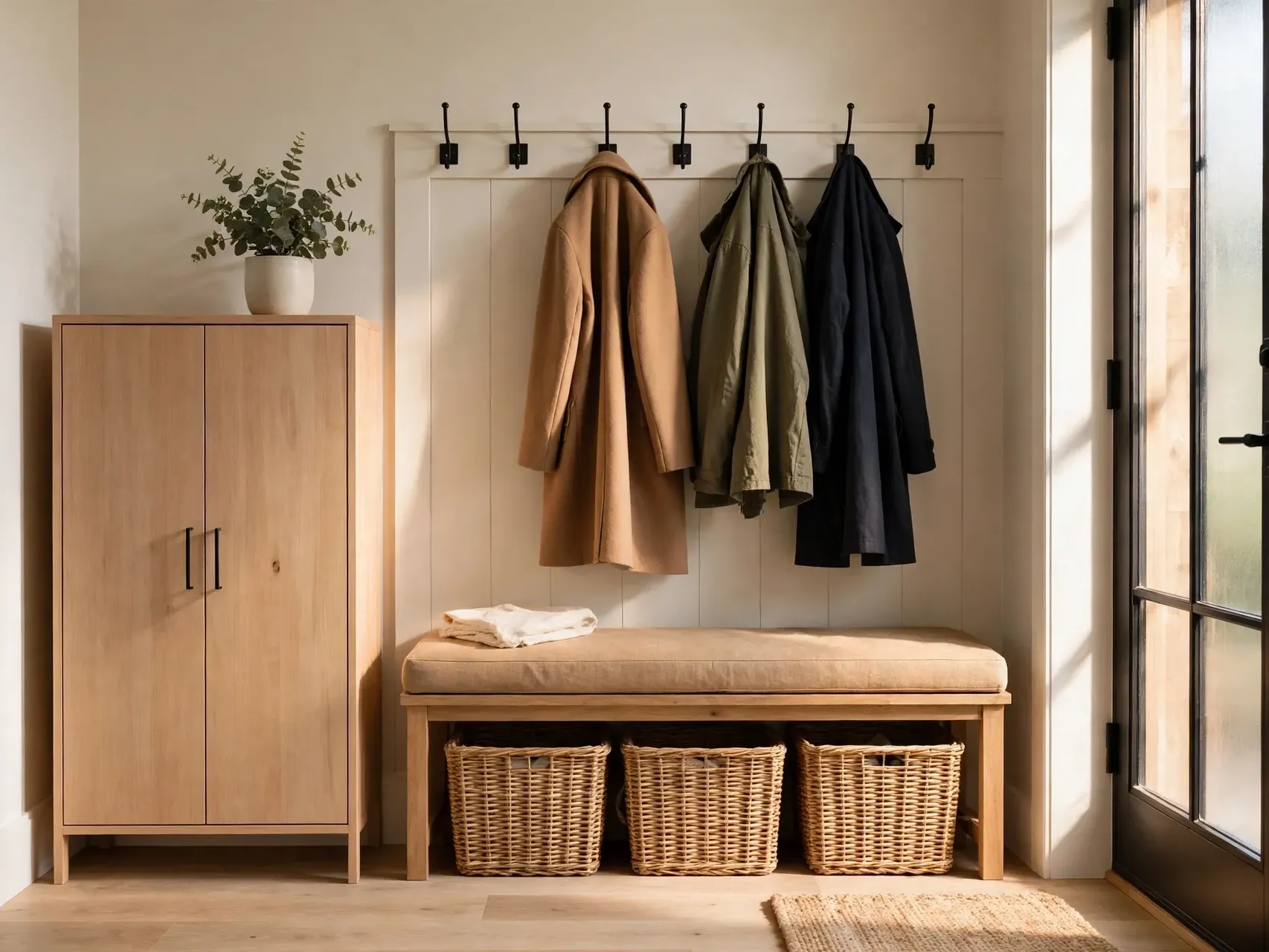
Some benches are built with a low shelf and open floor space beneath, which creates a natural split: everyday shoes on the shelf, tall boots standing below where they have room to stay upright.
Boot shapers or rolled magazines inside tall boots help them keep their shape while stored. Position this bench on a washable rug in wet climates. The sit, store, and go routine in one piece of furniture is why benches remain the hardest working entry buy for families.
Labelled Cubbies for Each Family Member
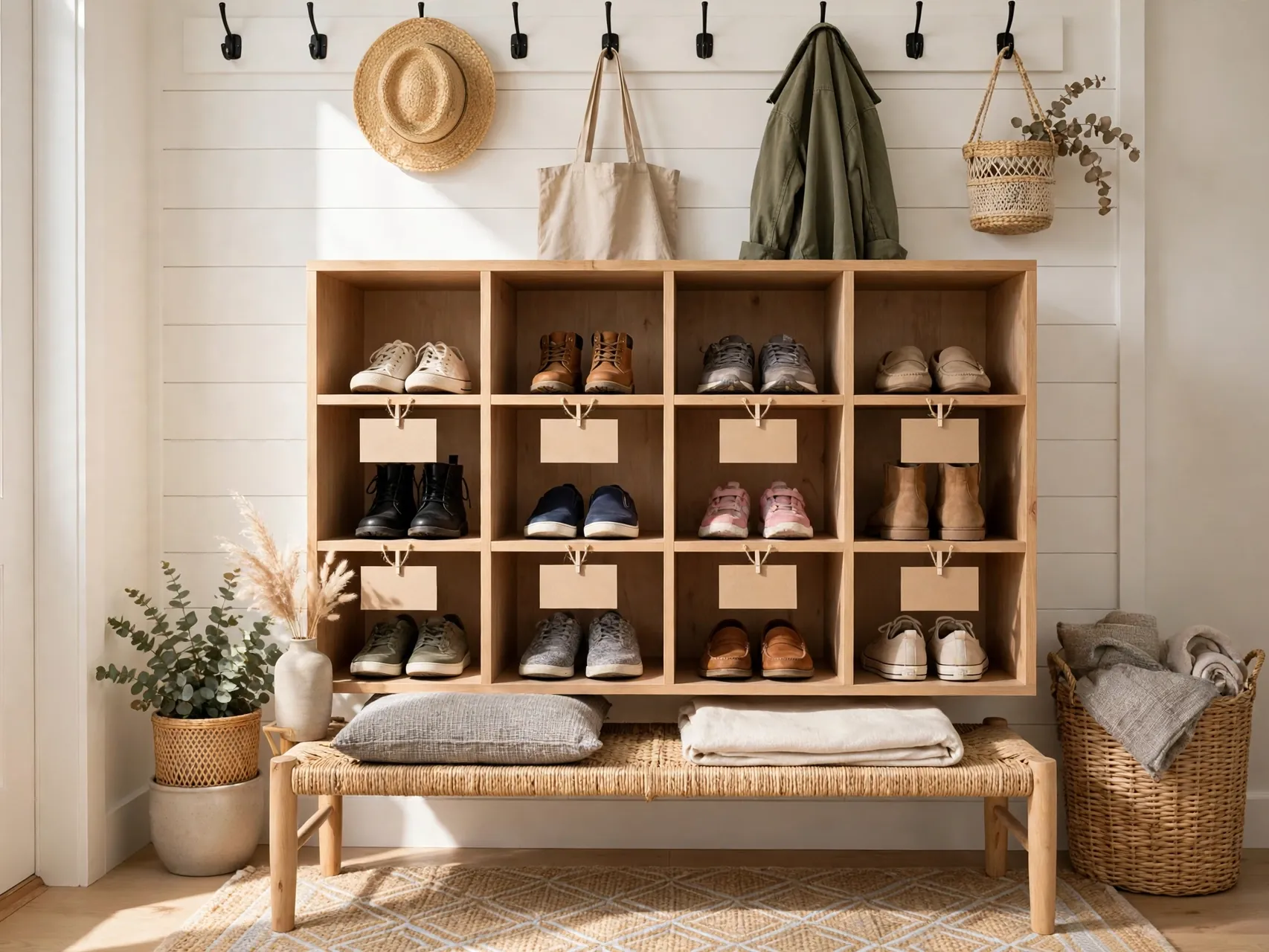
A cubby unit where every person owns one square ends most entry arguments. Shoes, gloves, and a hat all live in one labeled spot, and anything that does not fit goes back to the bedroom closet. That limit is the system.
Put names or simple picture labels at kid height so younger children can manage their own cubby. A quick Friday tidy of each cubby stops slow clutter creep. This works in a mudroom, a hallway niche, or inside a wide closet with the doors removed.
Seasonal Rotation Bin by the Door
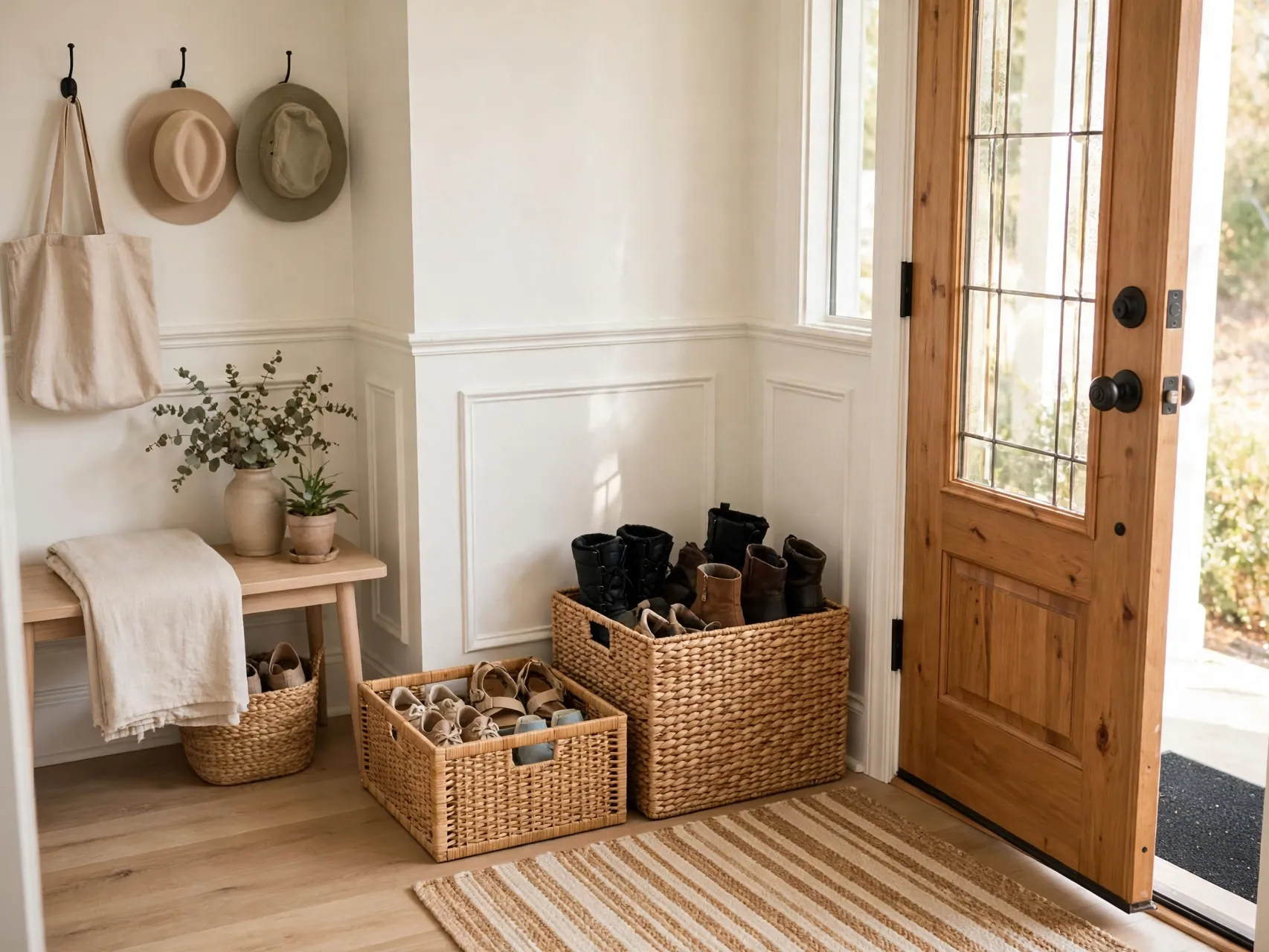
Not every pair deserves entry space all year. A lidded bin in a closet, garage, or under bed spot holds the off season set, while the entry keeps only what the current weather demands. Swap the contents when the season turns.
Rotation keeps any slim shoe cabinet for hallway use realistic, because cabinets only fail when we ask them to hold twelve months of footwear at once. Add a note on the bin listing what is inside, and wash shoes before storing them so they come back fresh next season.
FAQ
How many pairs should entryway storage hold?
Aim to keep only daily and weekly pairs at the door, usually two to three pairs per person. Store the rest in bedroom closets or a seasonal bin. When entry storage holds a limited, honest number, any system stays tidy instead of overflowing within a week.
What is the best shoe storage for a very narrow hallway?
Choose a slim tilt-out cabinet or wall-mounted bins, since both keep a shallow profile and clear floor space. Measure the depth with the door open before buying, and leave enough room for the front door swing and comfortable walking past the unit.
How do I stop entryway shoes from smelling?
Let shoes air out on an open rack or tray before putting them into a closed cabinet, and rotate pairs so the same shoes rest a day between wears. Washable insoles, cedar inserts, and a quick wipe of the cabinet interior also help keep odors down.
Are open racks or closed cabinets better?
Open racks are faster for kids and busy mornings and help shoes dry, but they show visual clutter. Closed cabinets look calmer and protect shoes from dust. Many homes use both: an open bench or rack for daily pairs and a closed cabinet for everything else.
What can renters use without drilling holes?
Try over-the-door organizers, freestanding racks, benches with cubbies, basket rows, and stackable boxes. These add real storage with no wall damage. If you do mount one small item, check your lease first and keep any fixings minimal and easy to fill later.
Key Takeaways
- Start with daily pairs: Give the shoes you wear most the closest, easiest spots and move the rest out of the entry.
- Go slim in narrow halls: Tilt-out cabinets and wall-mounted bins hide clutter without blocking the walkway.
- Make furniture do two jobs: Benches, dressers, and consoles should seat, surface, and store at the same time.
- Give kids their own spot: Labeled cubbies, low pegs, and personal crates turn tidying into a simple habit.
- Rotate by season: A storage bin for off season shoes keeps any entry system from overflowing.
- Pin these ideas for later: Save this list to your home organization board on Pinterest so your favorite entryway setup is ready when you shop or build.