20 Suitcase Side Table DIY Ideas With Vintage Charm
Introduction
A vintage suitcase already has the two things a great side table needs: a flat top for your book and lamp, and hidden storage inside. That is why a suitcase side table diy project is one of the most satisfying thrift flips you can finish in an afternoon. The case brings the story and the patina, and you just bring the legs.
The one build rule that matters sits underneath every idea in this list. A suitcase shell is too thin to hold leg screws on its own, so fit a piece of plywood inside the base and anchor the legs into that board. It takes ten extra minutes and it is the difference between a table that wobbles loose in a month and one that stays solid for years.
Choose a hard sided case with a flat lid, check that it sits level, and clean it well before you start. Test the finished table on a flat floor, keep heavier items stored low inside the case, and place it where toddlers will not try to climb it. A suitcase table is a side table, not a step or a seat.
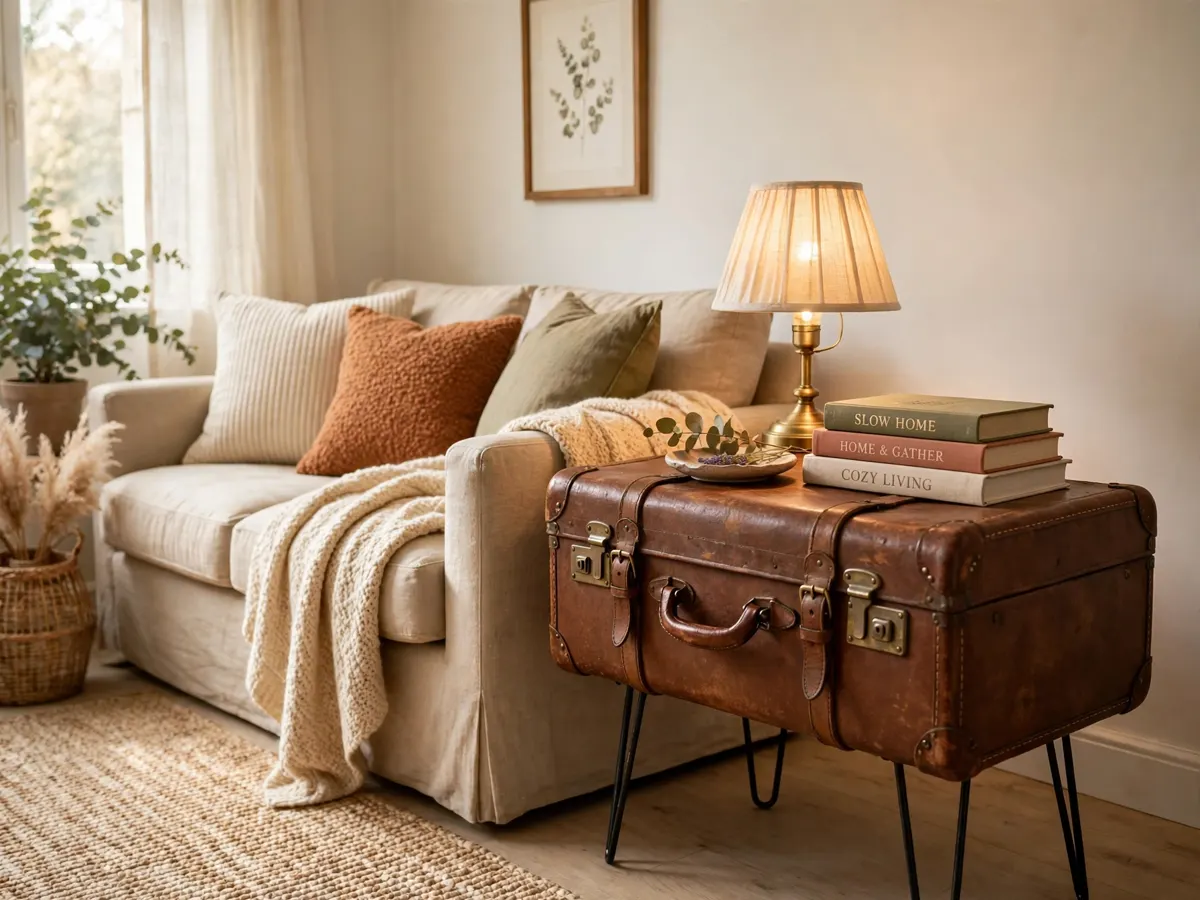
1. Classic Hairpin Legs on a Hard Shell Case
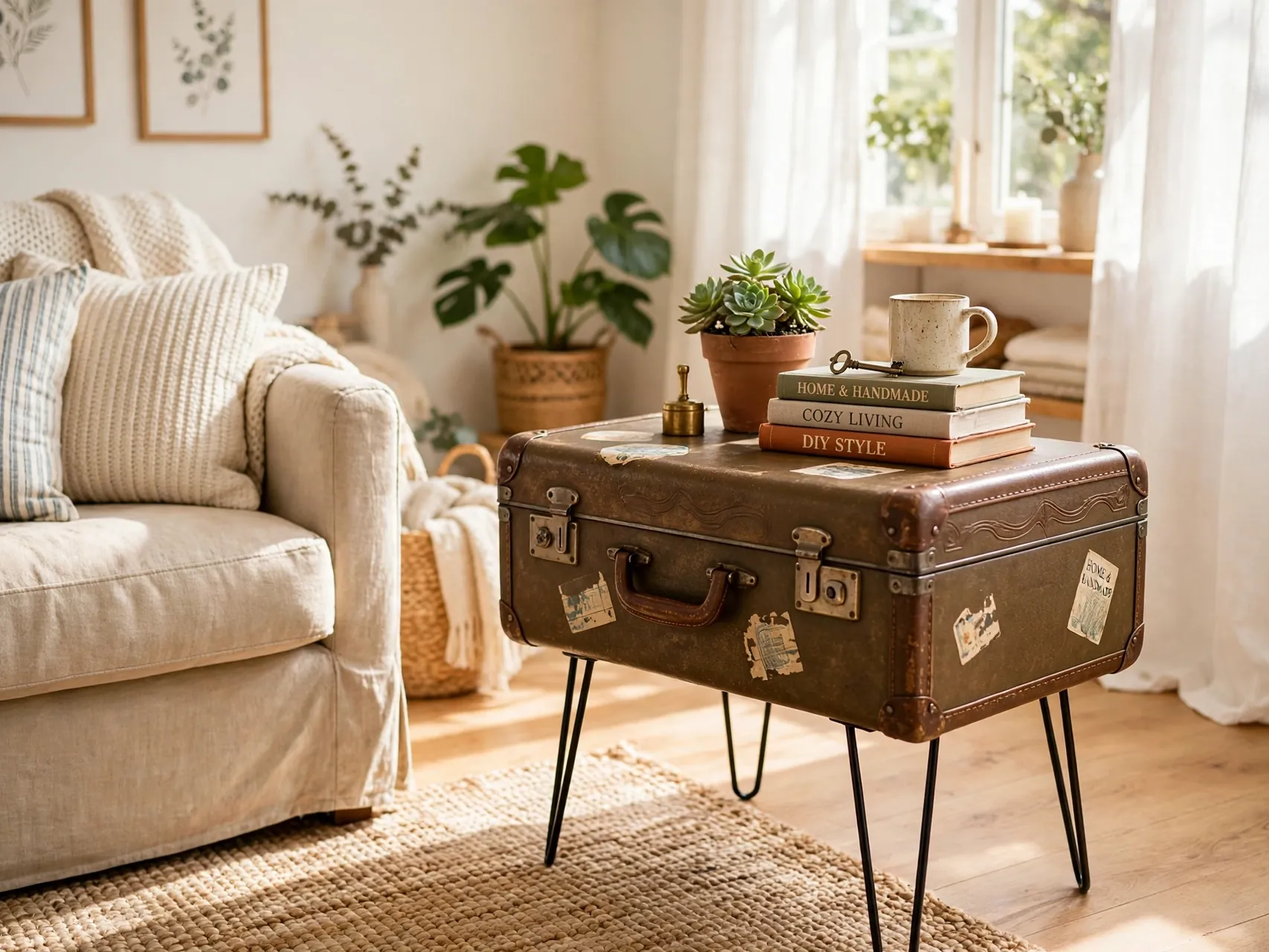
This is the starter build most people picture: a flat lidded hard shell suitcase on four steel hairpin legs. Cut a plywood board to fit snugly inside the base, set it in place, then mark the leg plates through the bottom and screw the legs into the board so every thread bites into wood, not thin shell.
Hairpins keep the look light and let a patterned or leather case stay the star. Sit the finished table beside a sofa or reading chair, add felt pads under the feet, and check it stands level before you style the top with a lamp and a small stack of books.
2. Stacked Suitcase Tower With No Legs at All
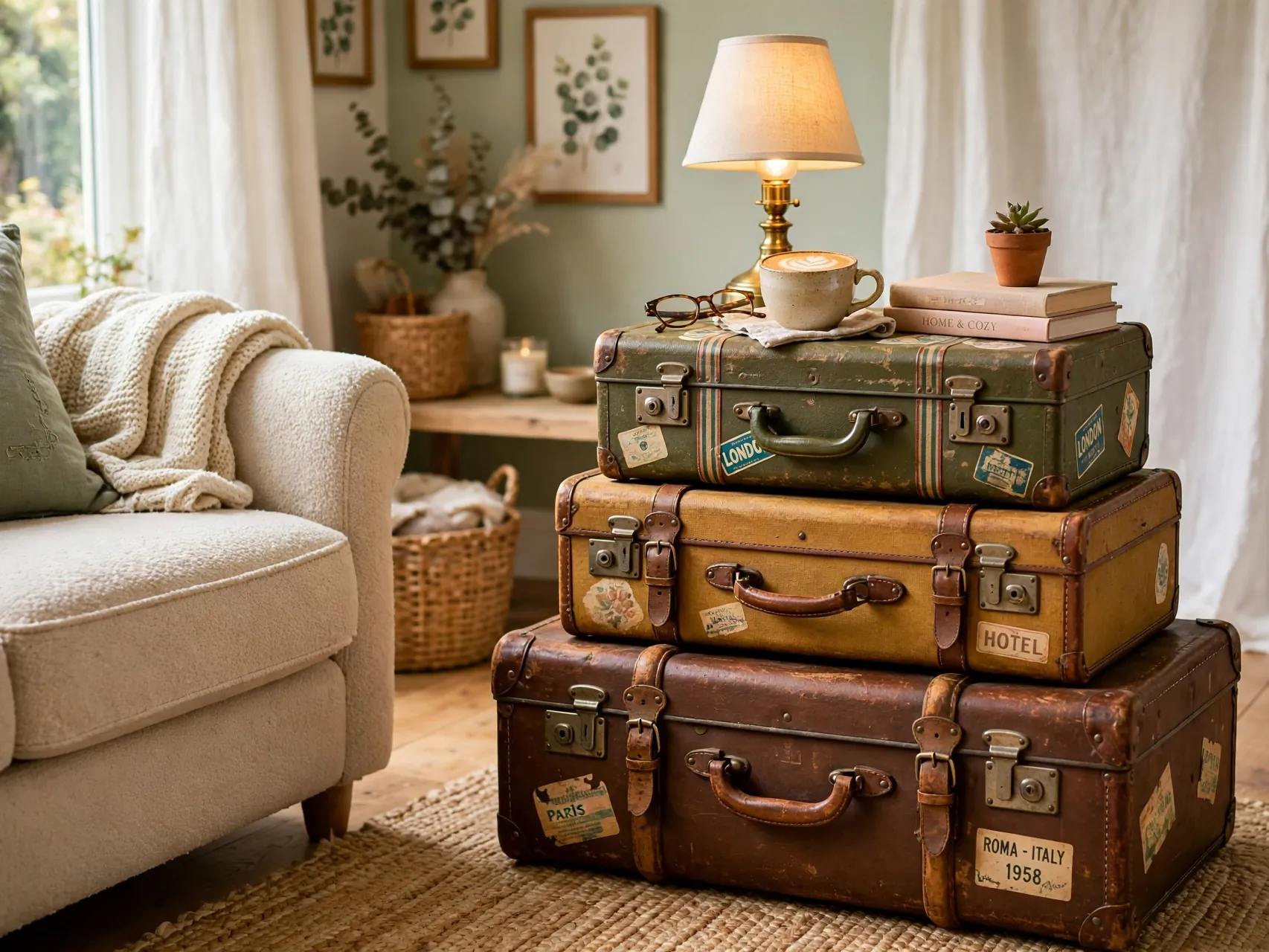
A stacked suitcase table skips hardware entirely. Stack two or three cases largest at the bottom, line up the handles on the same side, and the pile itself becomes the table. Fill the lower cases with books, blankets, or board games so their weight anchors the stack.
This is the friendliest version for renters because nothing gets drilled. Keep the stack on a level floor against a wall, avoid making it taller than it is wide, and lift cases off one at a time rather than pulling a middle case out. Styled with a plant and a framed photo on top, it reads like collected travel history.
3. Mid Century Tapered Legs for a Retro Nightstand

Angled wooden legs salvaged from a tired thrift store table give a plain case instant mid century character. Angle each leg plate so the legs splay gently toward the corners, pre-drill so nothing splits, and use short screws that stay flush inside the case so stored linens never snag.
As a suitcase nightstand diy, this height works beautifully beside a bed: lamp on top, reading glasses and chargers tucked inside the case. A blue, cream, or mustard case looks especially right on warm wood legs, and a light sanding plus oil brings tired salvaged legs back to life.
4. Suitcase on a Luggage Rack Base
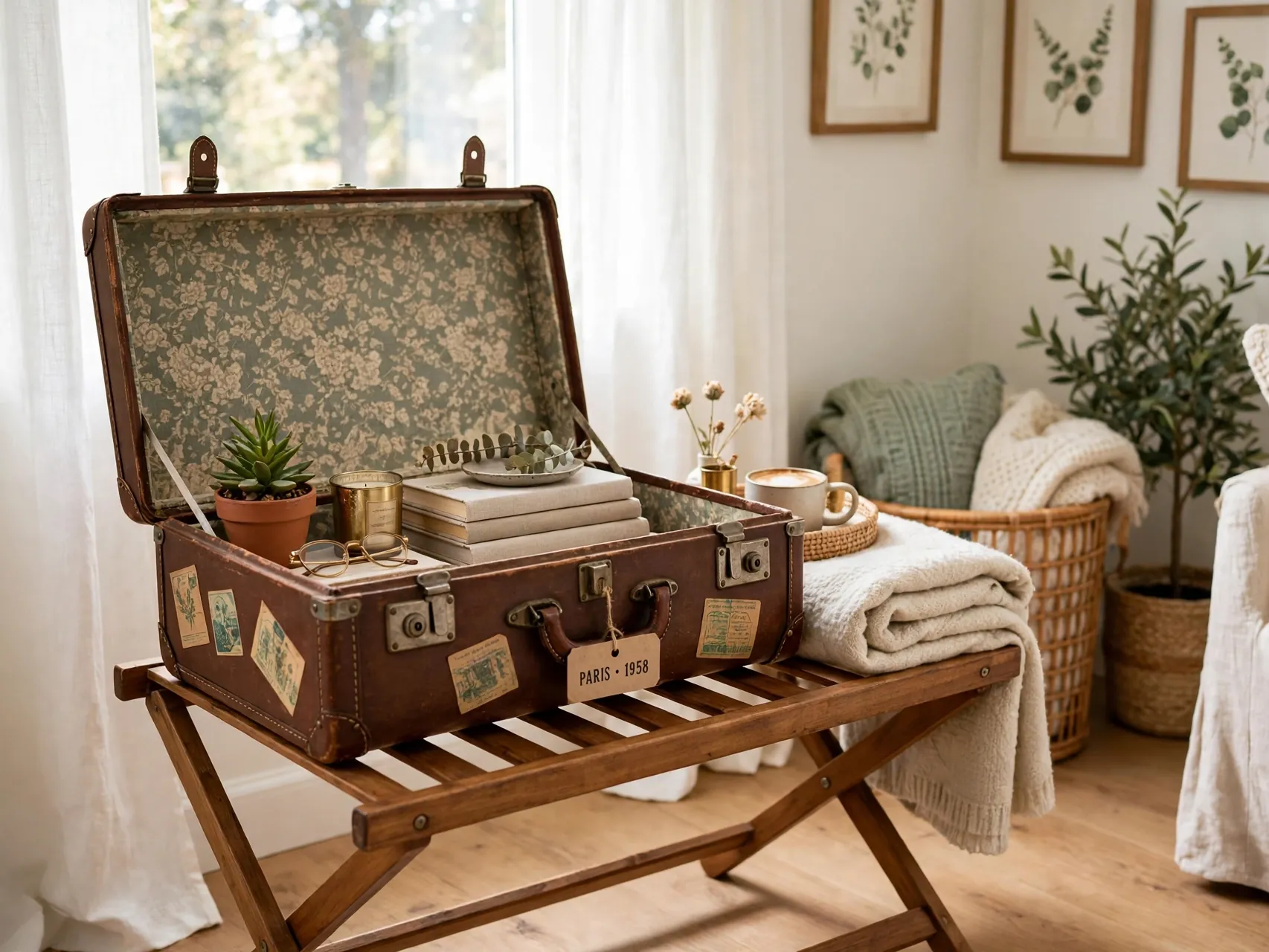
A folding luggage rack, the kind hotels use, makes a clever ready made base. Set a closed suitcase across the straps and you have a guest room table that folds away flat when family leaves. For a permanent version, screw through the rack straps into the plywood board inside the case.
This pairing suits a spare room perfectly because guests can still open the case to store their things. Choose a rack in wood or black metal to match your room, keep the case centered so the weight spreads evenly, and test the straps for wear before trusting them with a full case.
5. Painted White Suitcase for a Cottage Look
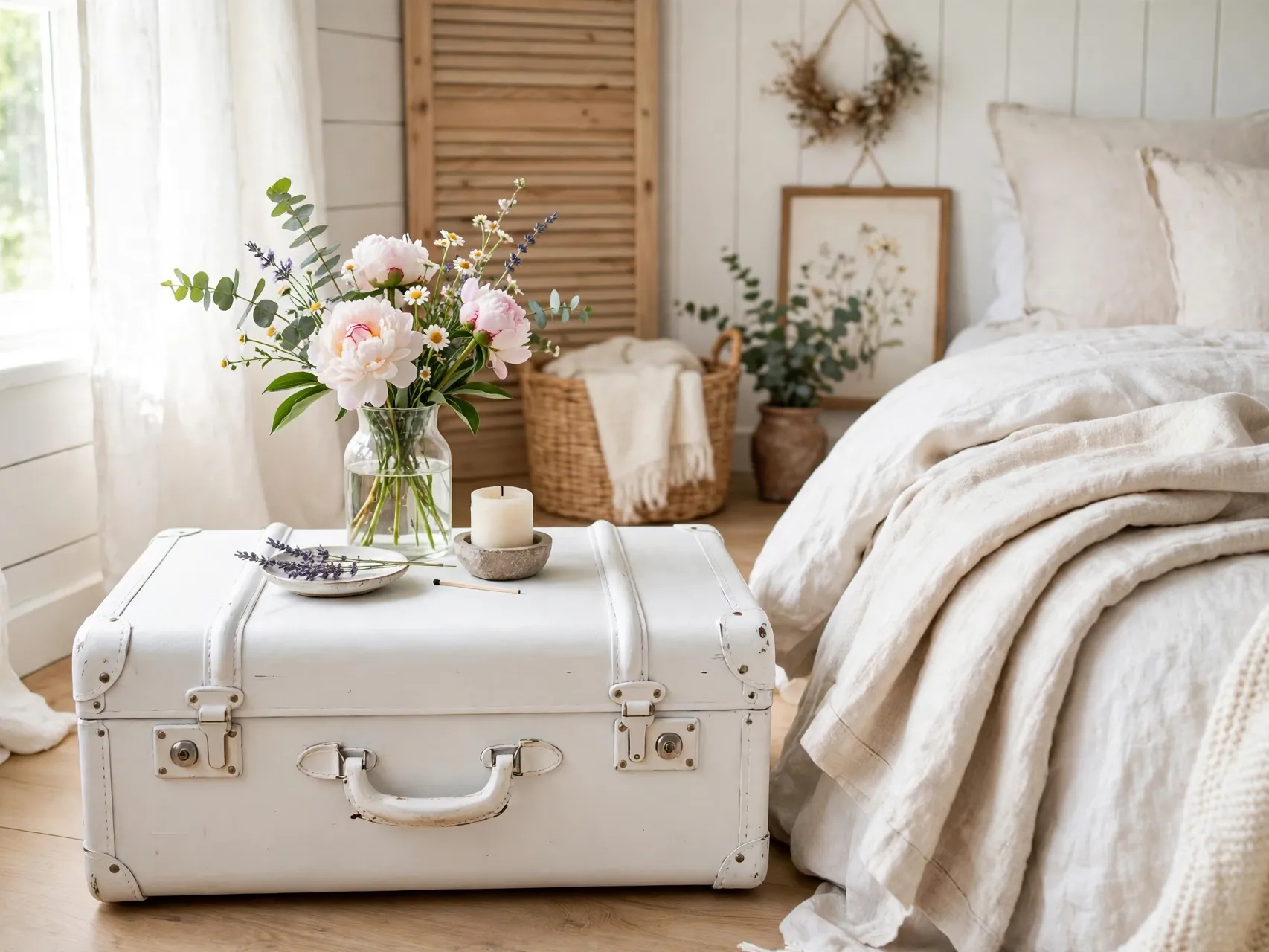
A scuffed case in a sad color is a perfect paint candidate. Clean it, scuff sand glossy vinyl lightly, wipe it dust free, and use a bonding primer before two thin coats of paint. Crisp white or soft cream turns almost any case cottage pretty and lets the original latches and stitching show as texture.
Paint the legs to match for a calm, one color piece, or leave them natural wood for contrast. Keep paint off the latch hardware with tape, let everything cure fully before stacking books on top, and style with a linen runner and a small vase for that airy vintage charm.
6. Two-Tone Stained Stack With Bun Feet
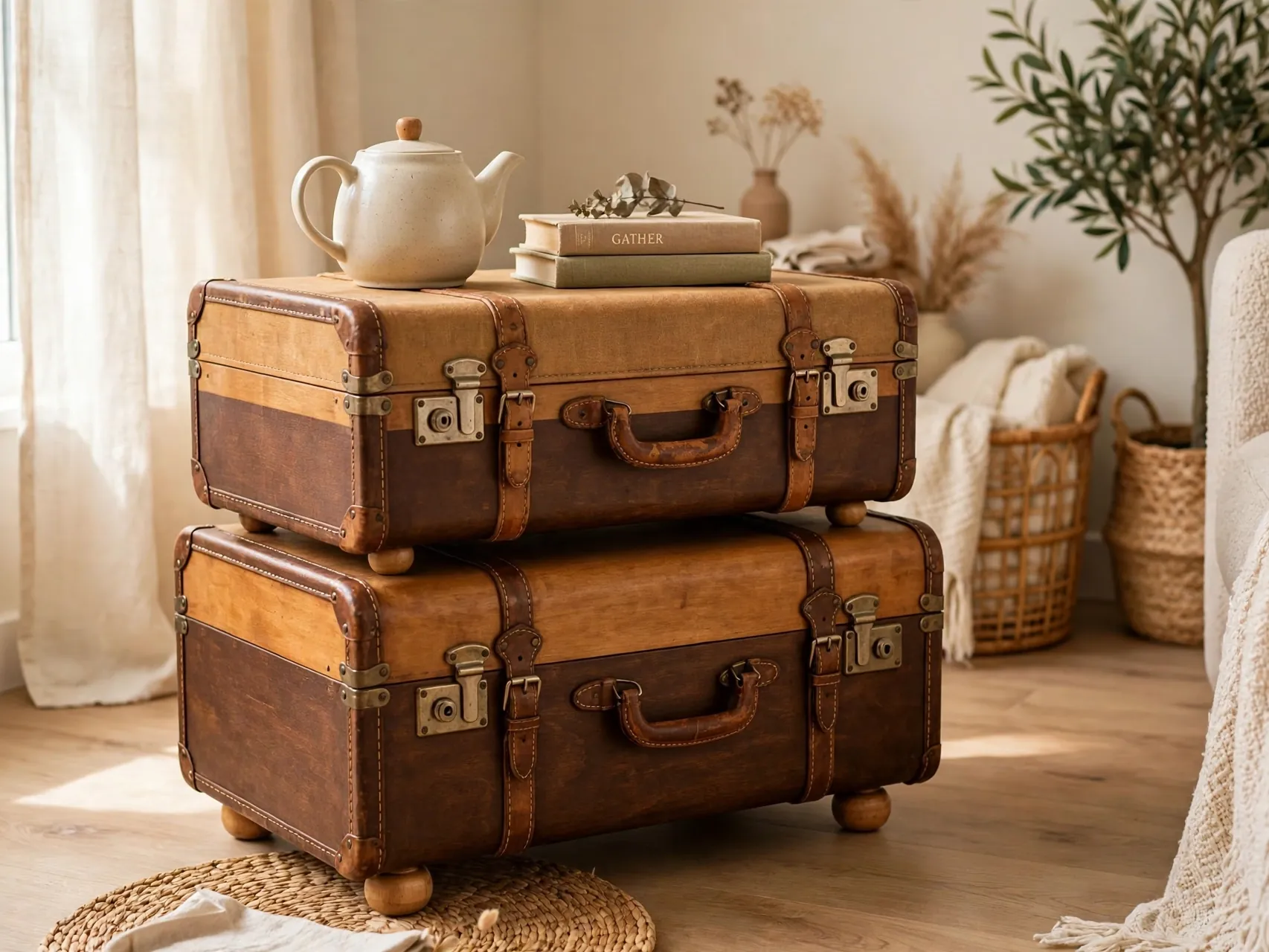
Short bun feet lift a case just enough to look like real furniture while keeping the profile low and sturdy. Screw the feet into the plywood board inside the bottom case, then stack a second, smaller case on top. A gel stain rubbed over vinyl or leather toned cases deepens and evens the color beautifully.
Work the stain in small sections and wipe back so hints of the original color peek through, which keeps the vintage story visible. This low, wide build is one of the steadiest in the list, making it a good pick for a living room spot beside a well used sofa.
7. Open Suitcase Table With a Display Inside
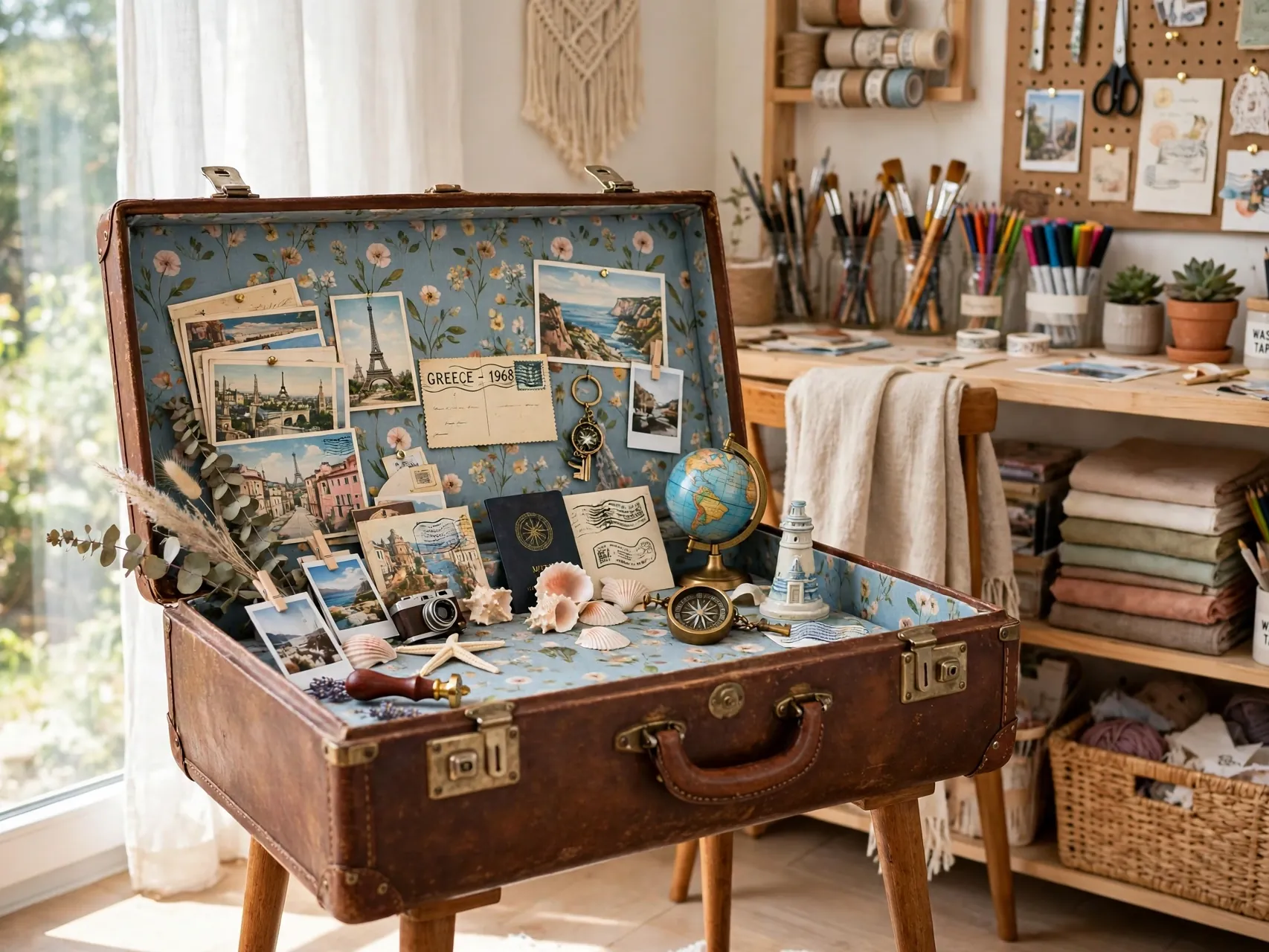
Instead of closing the case, leave it open and style the inside. Prop the lid at a soft angle, line the base with fabric or pretty paper, and arrange travel postcards, a small plant, or a collection inside. A piece of clear acrylic or glass cut to sit across the open base can turn it into a usable top.
Keep anything fragile out of a busy walkway version of this table, and choose the display version for a quiet corner or entry where it works as art. It is the most personal idea here, because the inside of the case tells your own travel story.
8. Train Case Mini Table for a Tiny Corner
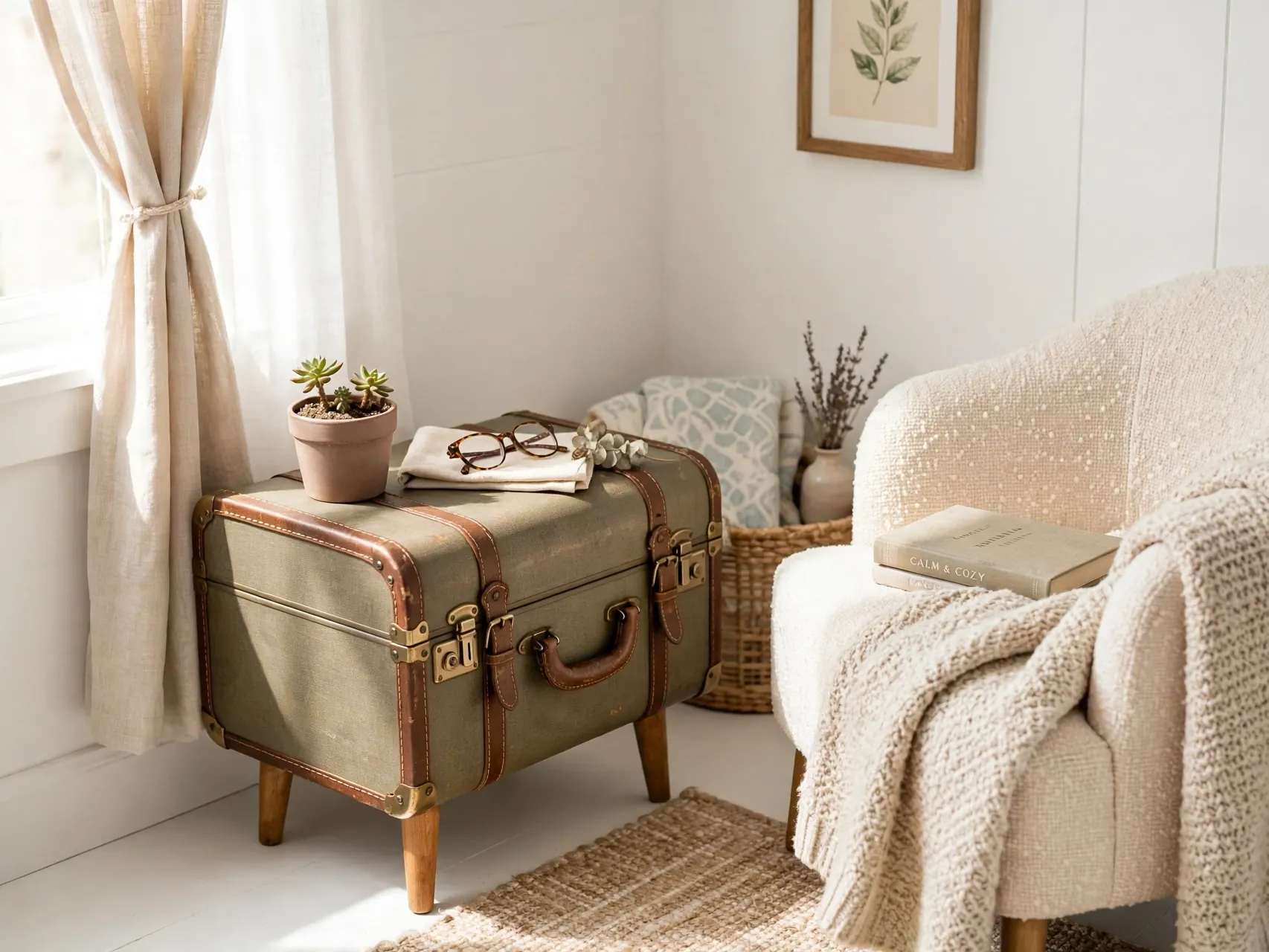
A small train case or vanity case makes a sweet mini table for a tight corner, a dorm room, or beside a low lounge chair. Short legs or even sturdy wooden blocks suit its smaller scale, and the plywood board rule still applies, just cut smaller.
Inside, a train case holds remotes, coasters, or craft supplies right where you sit. Because it is light, add felt pads and place it where it will not get knocked often. A pair of train case tables flanking a daybed looks charming and gives guests on both sides a spot for a drink.
9. Leather Suitcase With Brass Legs for a Study
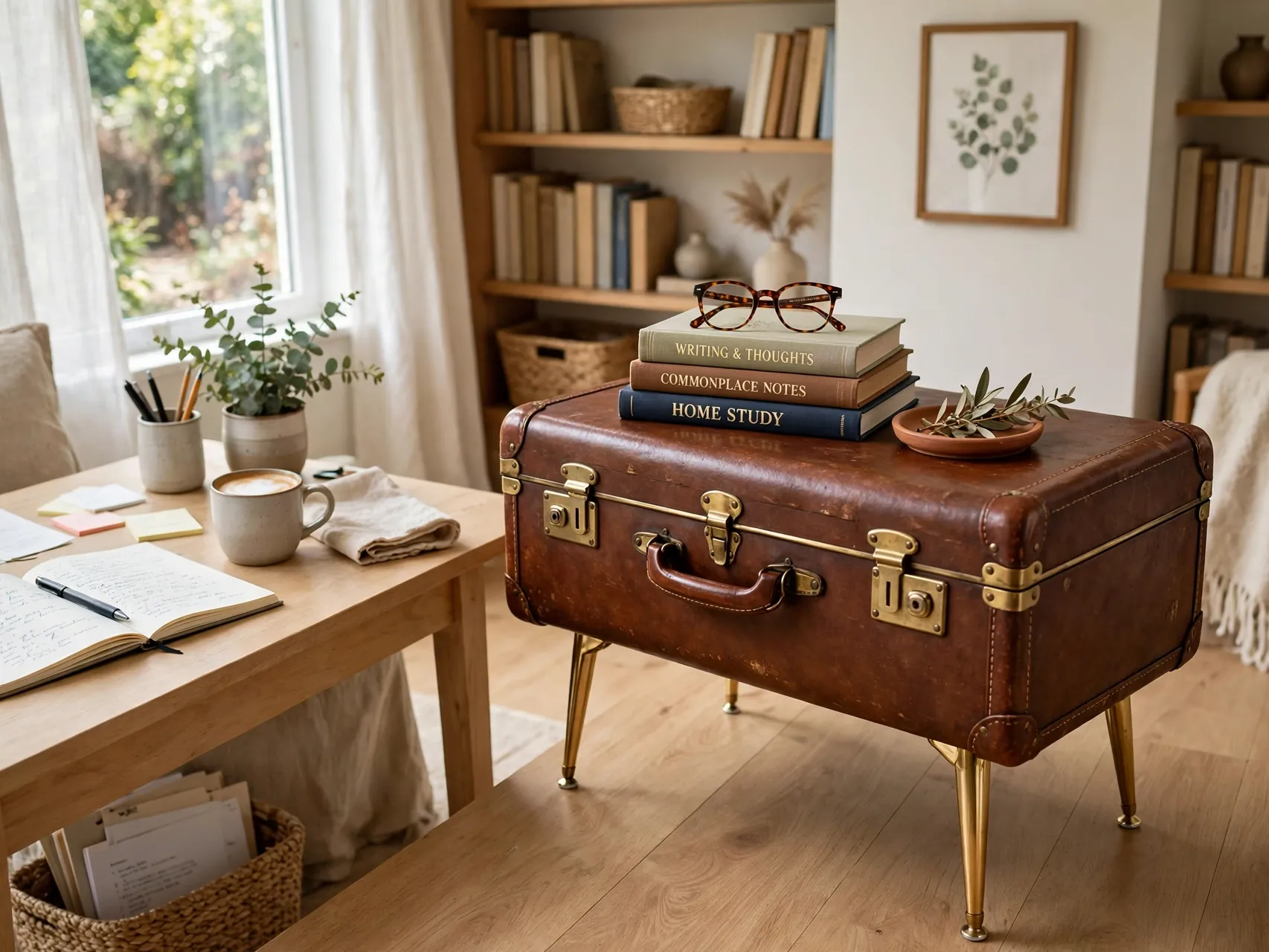
A worn leather case on slim brass or gold toned legs feels made for a study or reading nook. The warm metal picks up the tones in aged leather and old buckles, and the whole piece reads collected rather than crafted. Condition the leather first so it glows instead of looking dry.
Keep the plywood board hidden inside and let the case stay closed and classic from every angle. Style the top with a brass lamp, a magnifying glass, or a stack of cloth bound books. Store maps, letters, or journals inside and the table quietly becomes the memory keeper of the room.
10. Suitcase Table With a Tray Top
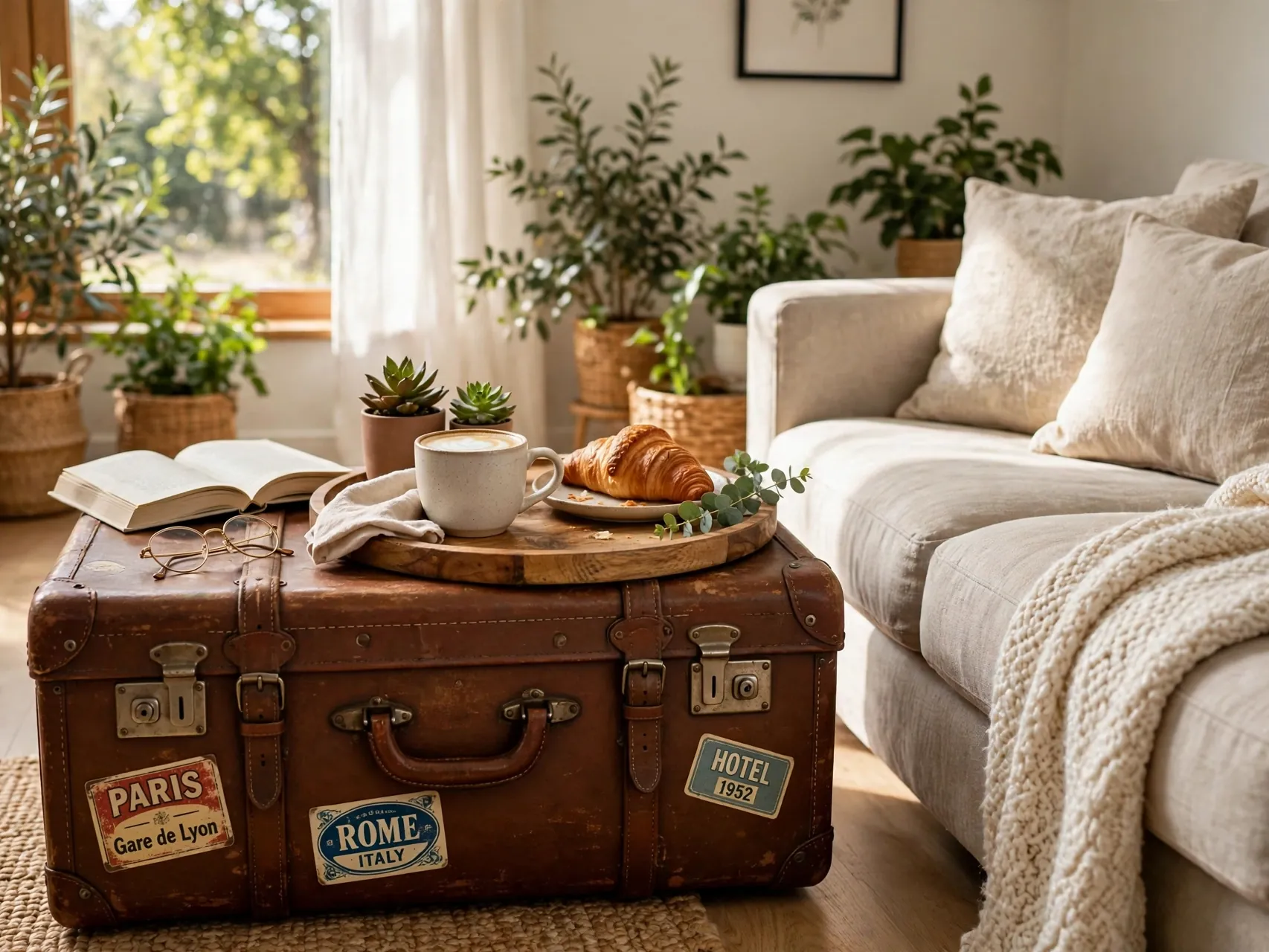
If your favorite case has a slightly rounded or uneven lid, set a serving tray on top and call it the design. The tray creates a flat, steady surface for drinks, corrals small items, and lifts off when you want to open the case for storage.
Choose a tray a little larger than the case top in wood, metal, or woven rattan to suit your style. This trick also protects a delicate painted or fabric covered lid from cup rings. It is a forgiving first project because nothing about the top has to be perfect for the table to work well every day.
11. Fabric Covered Suitcase for a Soft Bedroom Touch
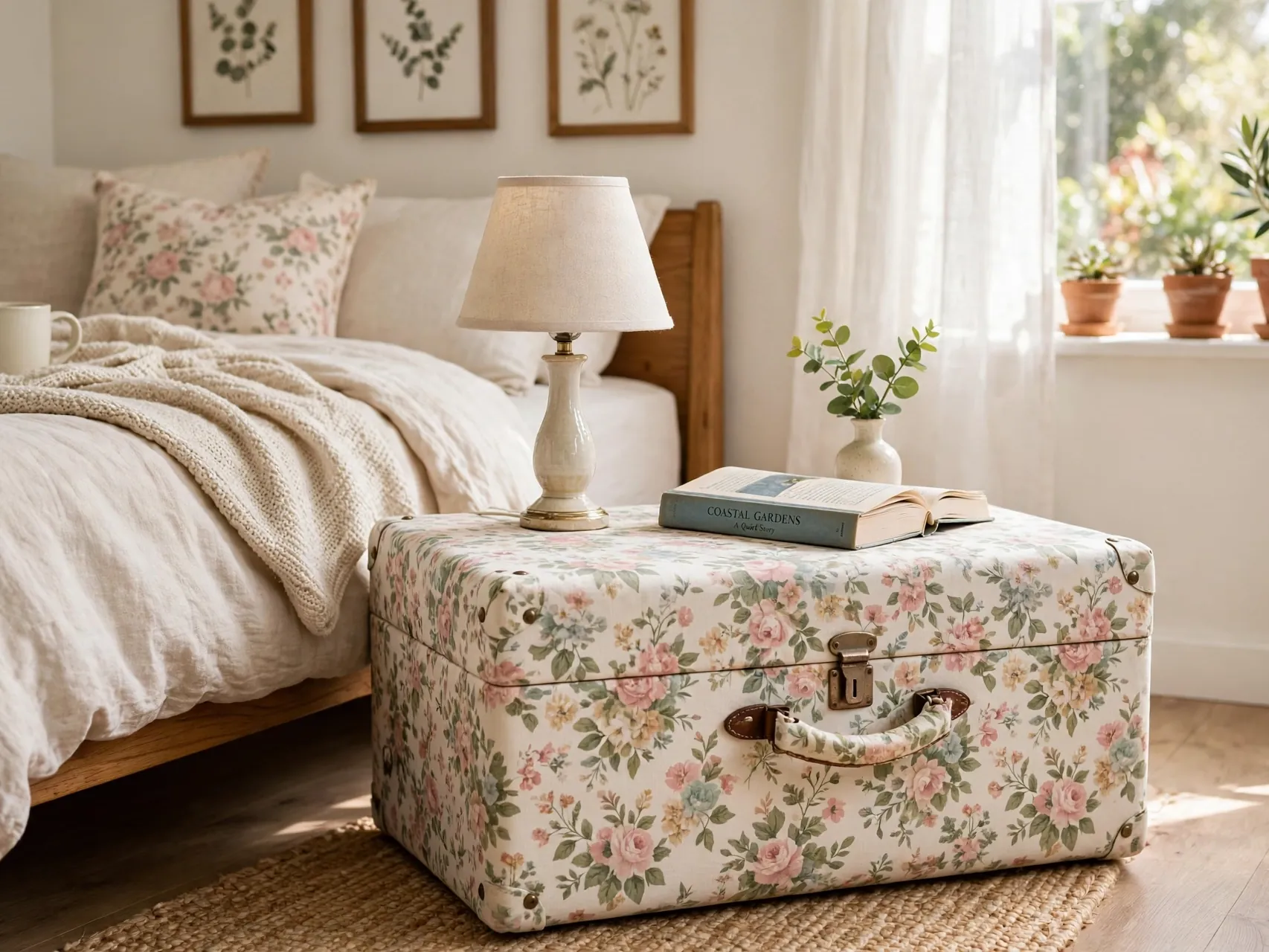
A plain case wrapped in fabric becomes soft bedroom furniture. Cover the outside with linen, ticking stripe, or a faded floral using spray adhesive and careful folded corners, working one side at a time. Keep fabric clear of the latch so the case still opens and closes smoothly.
Mount the legs through the plywood board before covering the base if you want the cleanest finish, or cover first and attach legs through the fabric with the plates on the outside. Beside a bed, this soft version stores spare throws beautifully and pairs with upholstered headboards and layered bedding without adding another hard surface to the room.
12. Decoupage Map Suitcase for Travel Lovers

Old maps, atlas pages, or printed travel posters decoupaged across a case turn it into a conversation piece. Tear or cut the paper, apply it in overlapping sections with decoupage medium, smooth bubbles as you go, and seal the finished surface with extra coats so it wipes clean.
Maps hide a multitude of scuffs, so this is the perfect rescue for a case too marked to paint neatly. Keep the paper off hinges and latches, let each layer dry before adding the next, and finish the legs in a quiet color so the cartography stays the focus of your vintage suitcase table.
13. Tall Single Case on a Pedestal Leg
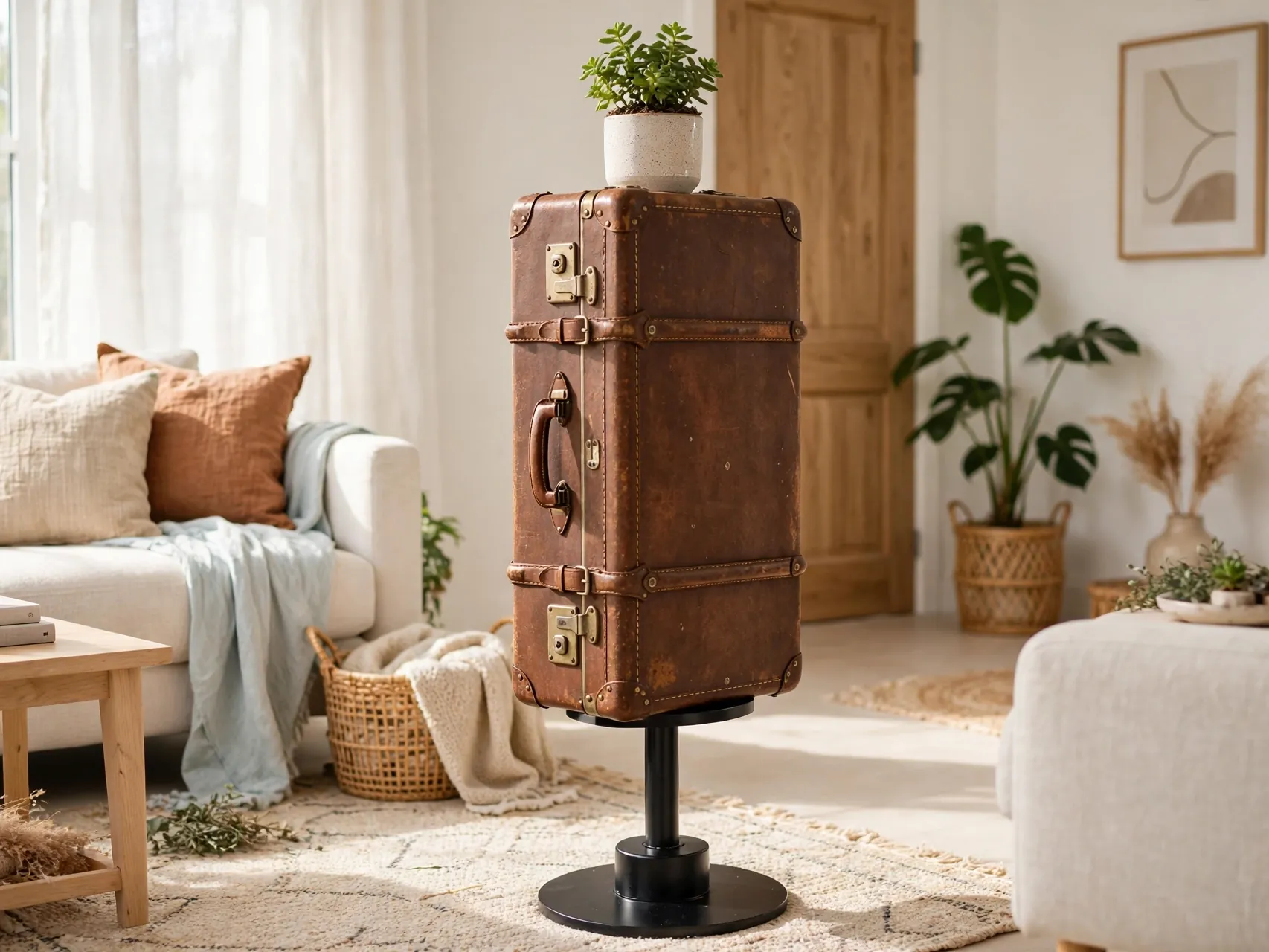
One central pedestal leg, like the base of a small cafe table, gives a suitcase a sculptural look and frees up floor space around it. Build the pedestal with a round plywood disc at the top and bottom of a sturdy turned leg or column, then screw the top disc into the board inside the case.
Because a single leg carries everything, this version needs the widest, heaviest base you can give it, and it belongs in a low traffic corner. Test it with a gentle push from several sides before styling, and keep the top load light: a small lamp, a book, a cup at most.
14. Suitcase Coffee Table for the Living Room

A large, flat case on short wide legs scales up into a coffee table with serious storage. Short legs keep the height right for a sofa, and the wide footprint keeps it steady. Inside, it swallows board games, photo albums, and the blanket collection that never fits anywhere else.
Choose the strongest case you can find for this job and reinforce the base board across the full width. Add a tray for drinks, keep heavy decor low and centered, and remind the household that it is a table, not a footrest or a seat. In a small living room, this one piece replaces a table and a storage ottoman at once.
15. Chalk Painted Case With Stenciled Details
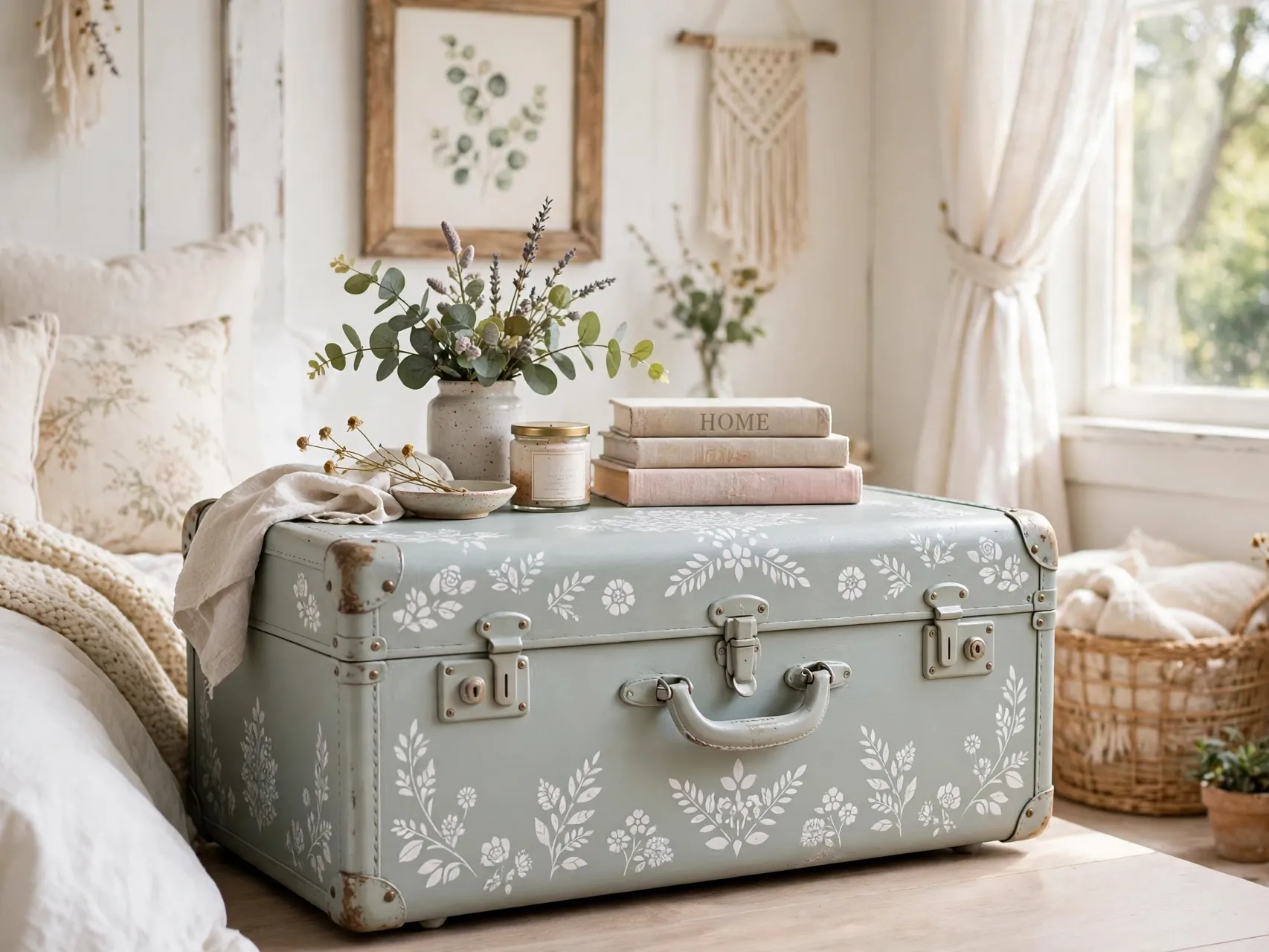
Chalk style paint grips many case materials with minimal prep and gives that matte, hand painted finish vintage lovers want. Add a stenciled number, a simple laurel, or a faux travel label in a contrasting color once the base coat dries, then seal with wax or a matte topcoat.
Distress the edges lightly with fine sandpaper so the original color shows at the corners and handle, which keeps a painted case from looking brand new. Stencils also let you personalize a gift build, perhaps with a wedding date or a family name, making this an especially thoughtful handmade present.
16. Guest Room Welcome Table With Storage Inside
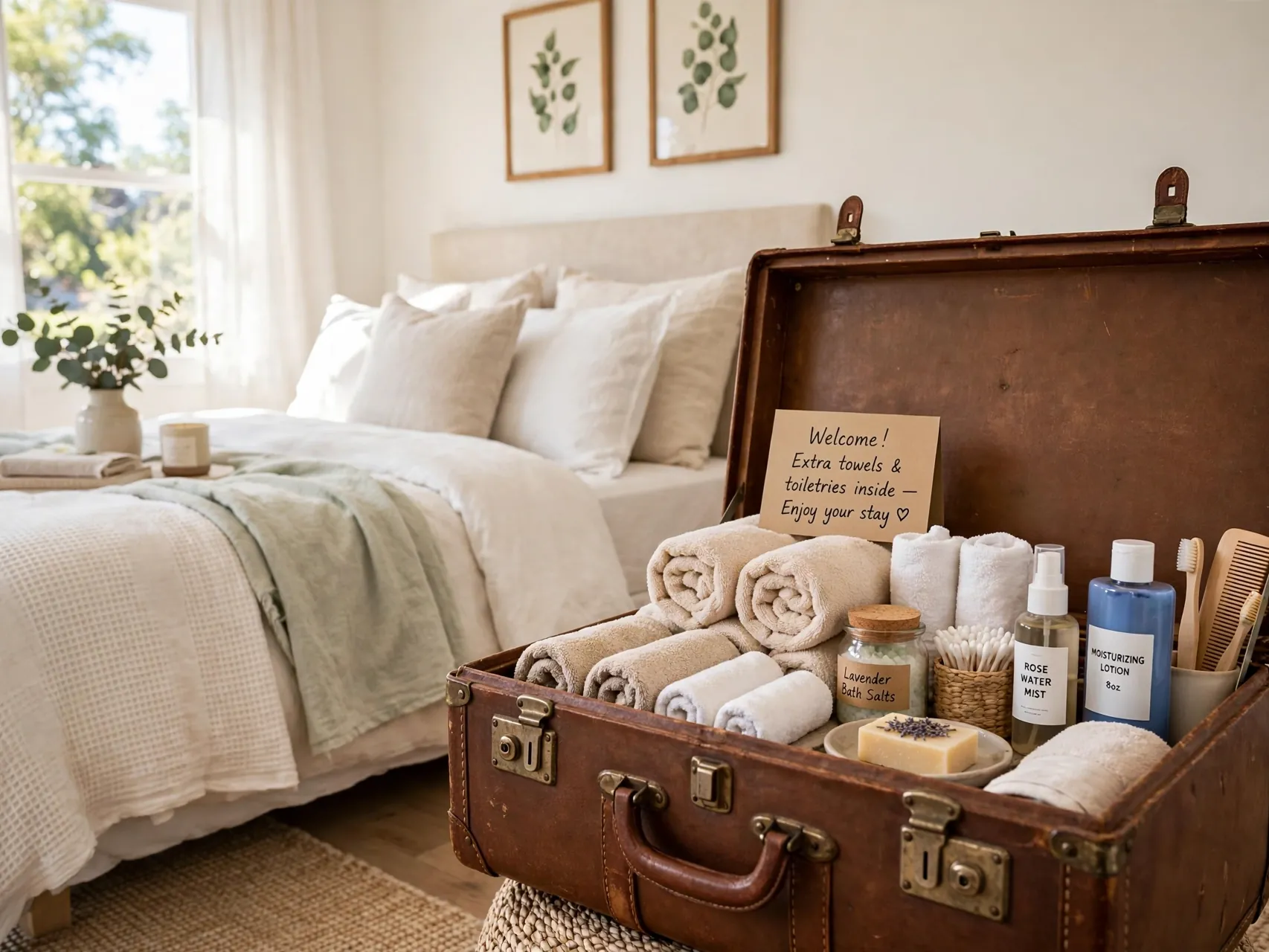
In a guest room, a suitcase table can work double duty as the welcome station. Set it beside the bed, and stock the inside with spare towels, a water carafe glass set on top, the Wi-Fi password in a small frame, and a few local treats.
Guests get storage, a nightstand, and a charming story in one piece of furniture. Choose legs that bring the top to a comfortable bedside height and keep the inside contents light so the case stays easy to open. A small note inside the lid turns the whole setup into the kind of hosting detail people remember and photograph.
17. Kids Room Suitcase Table in a Playful Color
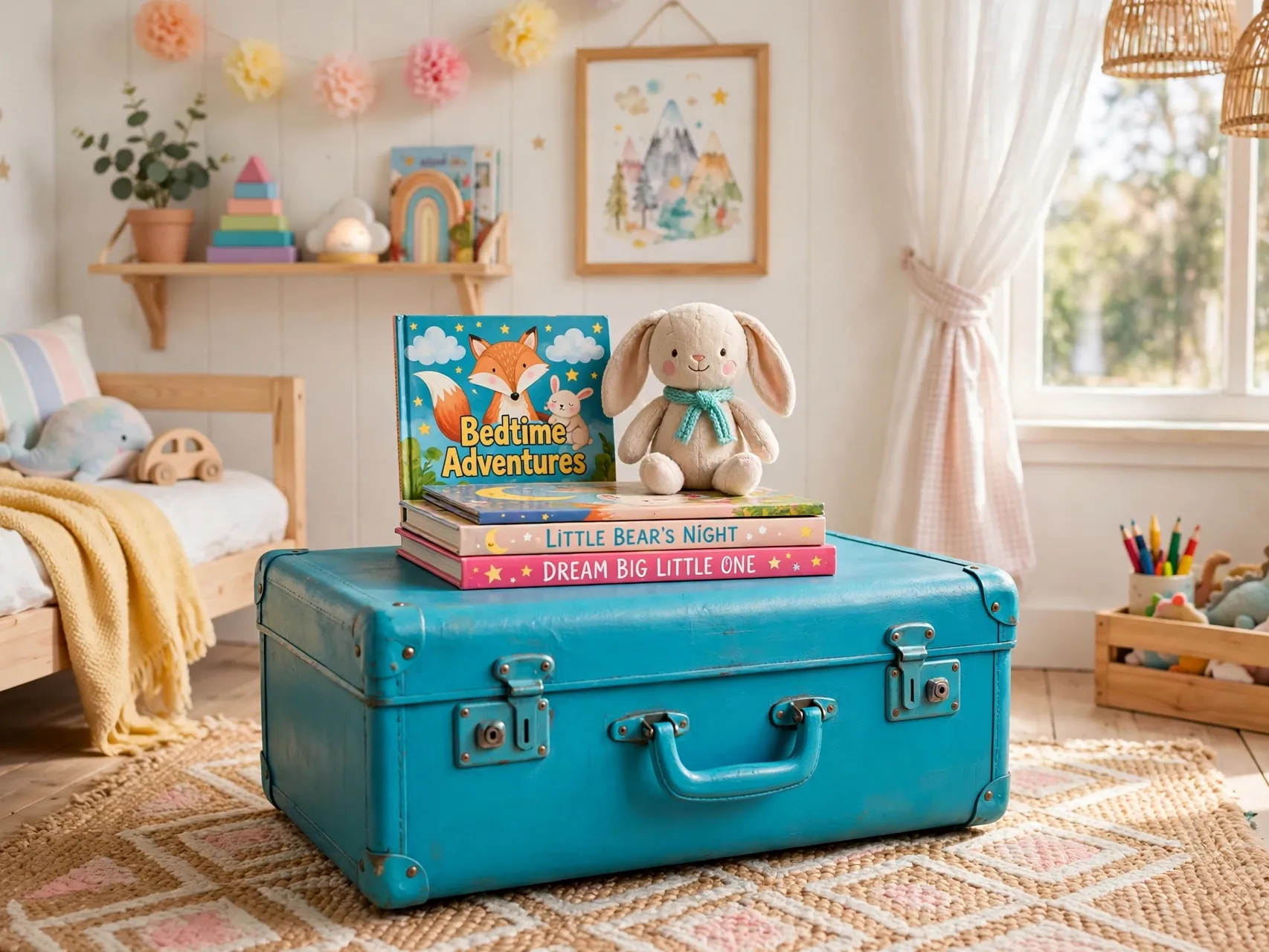
A sturdy case painted a cheerful color makes a delightful kids room table for a reading corner or beside a small bed. Keep the build low, wide, and especially steady, choose short legs over tall ones, and round any sharp corner with a file and touch up paint.
Store picture books or dress up pieces inside so the table earns its floor space. Place it against a wall, check it weekly for any loosening, and set a clear family rule that it is never for climbing, sitting, or standing. With those basics handled, it becomes the most loved little furniture piece in the room.
18. Entryway Suitcase Table With a Mirror Above
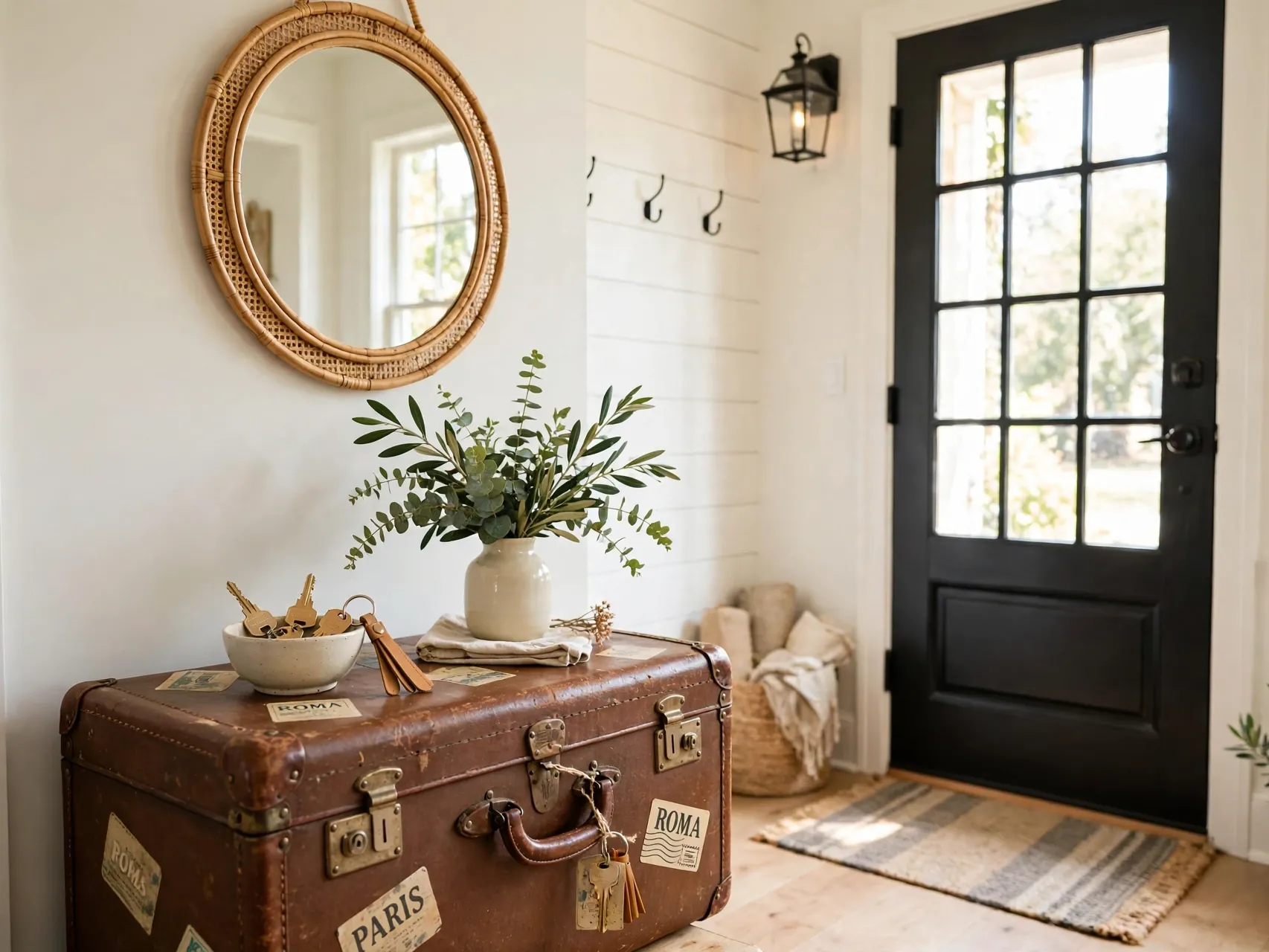
An entryway gains instant character from a suitcase table under a round mirror. It catches keys and mail on top, and hides gloves, dog leashes, and spare tote bags inside the case, which is exactly the clutter an entry needs to swallow.
Pick a case deep enough to be useful but slim enough to keep the walkway clear, and anchor the styling with a small bowl and a plant. Because entryways get bumped, choose a steady leg style, push the table fully against the wall, and check that the lid, when opened, does not block a door swing.
19. Patio Friendly Suitcase Table With Sealed Finish
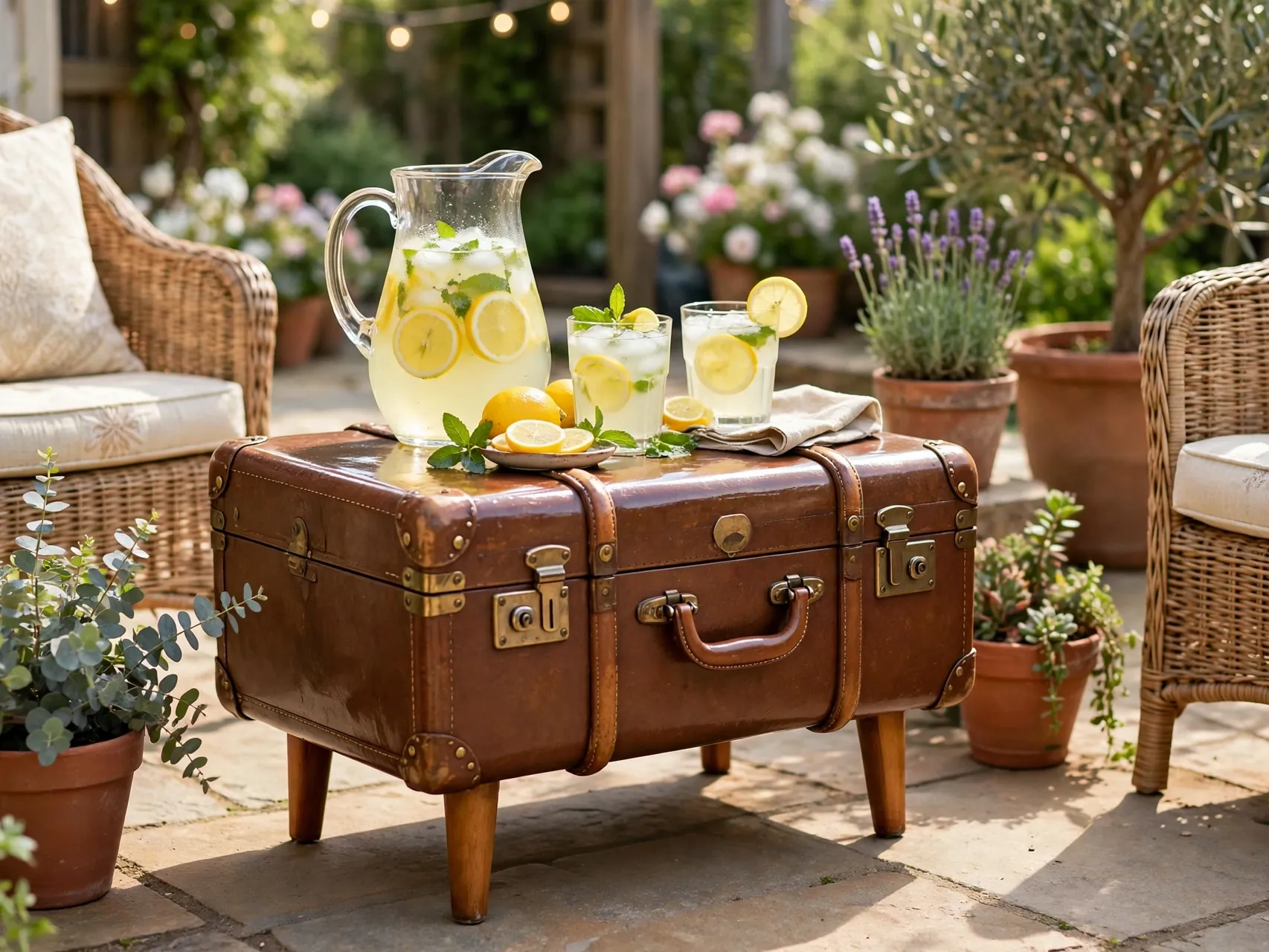
On a covered porch, a suitcase table adds charm between two chairs. Choose a hard shell case, seal painted or papered surfaces with an exterior rated clear coat, and use metal legs that tolerate humidity. Bring the case inside during harsh weather, because vintage materials were never made for rain.
A covered spot out of direct sun protects colors from fading, and felt pads should swap for rubber feet outdoors. Store citronella candles, coasters, and a lighter inside so porch sitting stays easy. Treat this as seasonal furniture and it will reward you with many summers of compliments.
20. Heirloom Suitcase Preserved as a Tribute Table
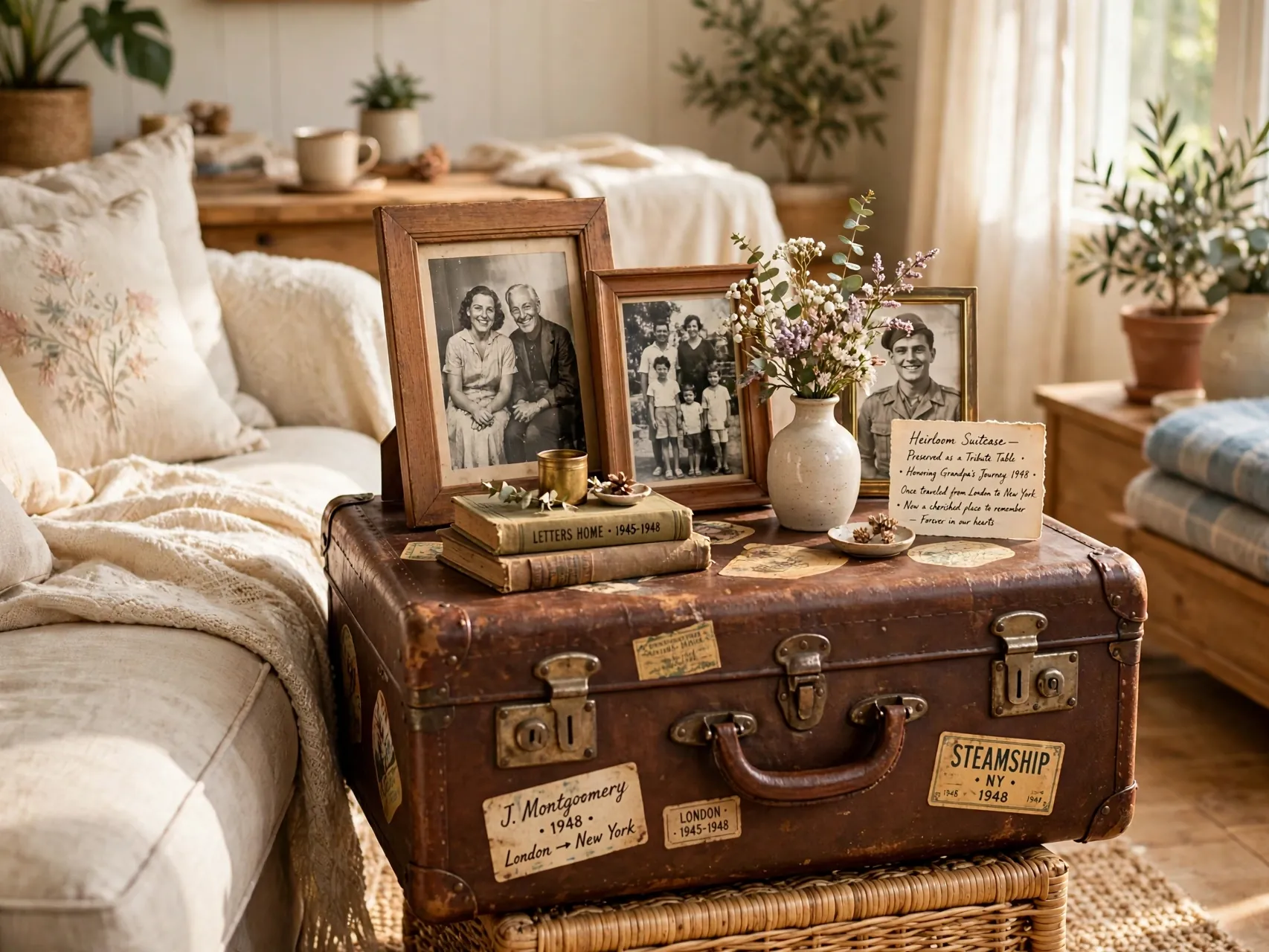
Sometimes a case belonged to a parent or grandparent, and the goal is preservation, not a makeover. Skip paint entirely. Clean gently, condition leather if that is the material, and mount the legs with the plywood board method, which adds support without altering the visible exterior.
If drilling feels wrong for a true heirloom, use the no-drill stacked method or set the case on a luggage rack instead. Tuck a note about its owner inside the lid, store family photos within, and let the table hold memory as well as a lamp. It is the most meaningful suitcase table with legs you will ever build, precisely because you changed it the least.
FAQ
How do I attach legs to a suitcase so they do not pull out?
Fit a plywood board inside the base of the case first, then screw the leg plates or hairpin legs through the case bottom into that board. The thin shell alone cannot hold screws, which is why legs mounted without a board work loose. Use screws short enough to stay hidden inside and check tightness after the first week of use.
What kind of suitcase works best for a side table?
Look for a hard sided case with a flat lid, a sound frame, and working latches. Flat tops hold lamps and drinks steadily, and a sturdy shell handles the leg mounting best. Soft sided and heavily slanted cases can work with leveling tricks, but a flat, firm case makes a far easier first project.
How tall should a suitcase side table be?
Aim for the top to sit roughly level with the arm of the sofa or the top of the mattress beside a bed, so reaching a drink or book feels natural. Leg length plus case depth makes the total, so measure your furniture first and choose legs to land in that comfortable zone.
Can a suitcase table really hold storage and stay stable?
Yes, if the weight sits low and inside the case. Books and blankets stored in the base actually steady the table. Keep the top load light and centered, place the table on a level floor, and never let children climb, sit, or stand on it. Test any new build with gentle pressure before daily use.
How do I stop a stacked suitcase table from sliding?
Fill the lower cases so their weight anchors the stack, align handles and edges, and place the stack against a wall on a level floor. A piece of non slip shelf liner between cases adds quiet grip. Keep the stack no taller than it is wide and lift cases off one at a time.
Key Takeaways
- The plywood board is the secret: Legs anchored into a board inside the base stay tight, while screws in a thin shell alone always work loose.
- Flat and hard sided wins: A flat lidded hard shell case makes the steadiest, easiest vintage suitcase table for your first build.
- Stack for zero tools: A weighted stack of cases gives renters a no-drill table with the same hidden storage.
- Style it like furniture: Match the top height to your sofa or bed, add felt pads, and keep the top load light and centered.
- Steady and supervised: Build low and wide for kids spaces, test every build, and keep suitcase tables for books and lamps, never for climbing.
- Found your perfect thrift store case? Save this guide to Pinterest and pin the leg style you want to try first.