23 Hot Tub Privacy Ideas for a Relaxing Backyard Escape
Introduction
A hot tub only relaxes you if you can actually unwind in it. When the neighbors deck, an upstairs window or a busy street looks straight into the water, most soaks end early. The right hot tub privacy ideas fix the sight lines without turning your yard into a box.
This guide covers 23 ways to screen a spa, from a pergola with curtains to living walls of evergreen and grass. Each idea notes the practical side: wind, leaf drop, service access and cost level, because the prettiest screen fails if a technician cannot reach the equipment panel.
Before you build, check local fence height limits, setback rules and HOA guidelines, and keep every structure clear of the tub electrical disconnect. Hot tub circuits need GFCI protection and a disconnect within sight and at least 5 feet from the inside wall of the tub under the National Electrical Code, and wiring belongs to a licensed electrician.
Start by standing in the tub and looking out. Screen only the angles that can see in, and leave the best view, usually the sky and your own garden, wide open.
1. Pergola With Adjustable Louvers

A pergola with louvered roof panels blocks views from upstairs windows, which a fence alone cannot do. Tilt the louvers open for stars on clear nights and close them against overlooking windows or light rain.
Build posts on solid footings outside the tub footprint and keep the structure clear of electrical runs. Louvered kits cost more than plain pergolas, but the overhead control is the one upgrade second story neighbors make necessary. This is the anchor hot tub enclosure ideas choice for exposed yards.
2. Pergola With Outdoor Curtains
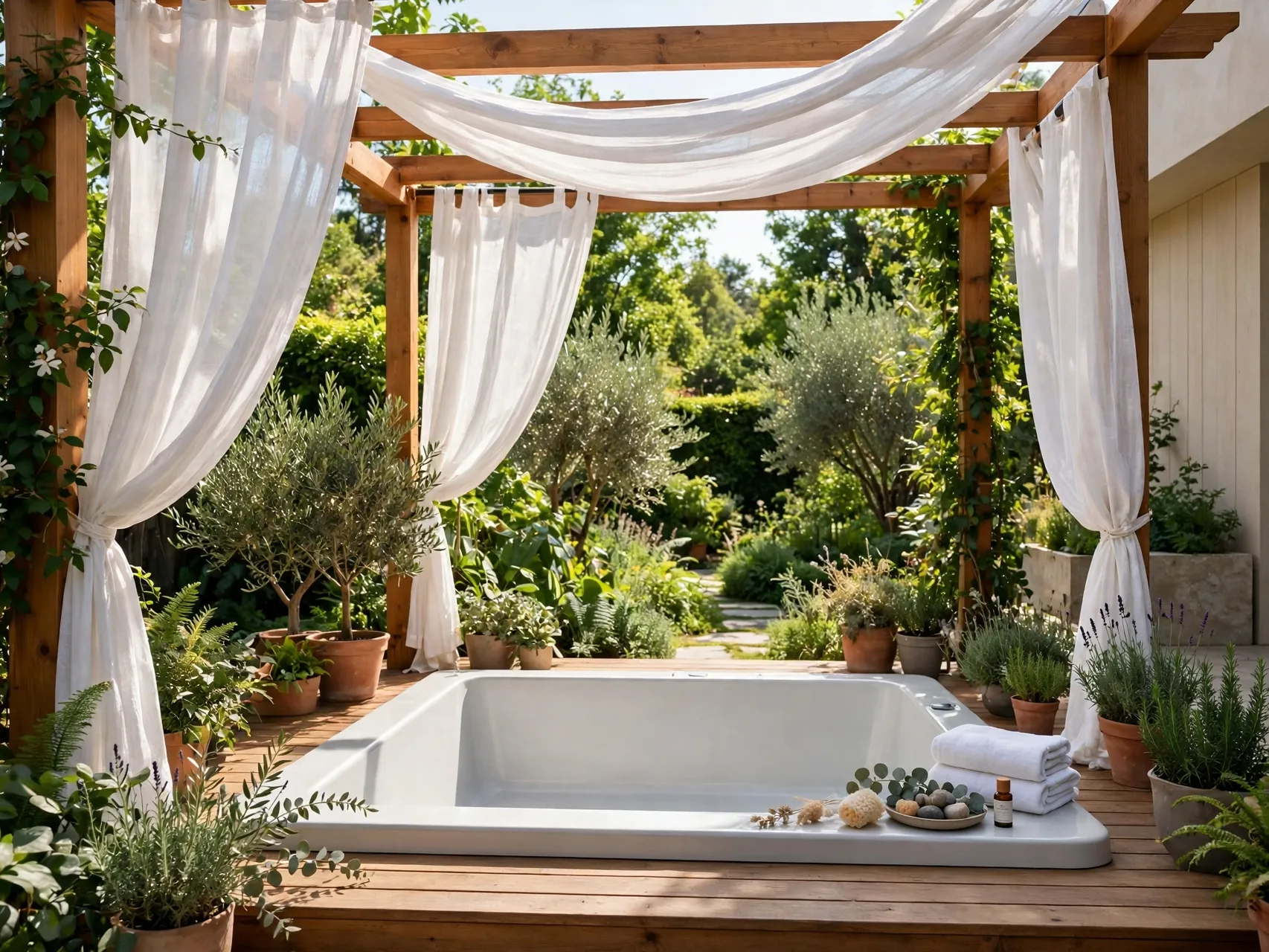
Hang outdoor curtains from a simple pergola frame and you get privacy you can open and close in seconds. Draw the panels on the neighbor side, leave the garden side open, and tie them back when the yard is empty and you want the full view.
Choose outdoor rated fabric, rust resistant rings and a rod or cable mounted into solid framing. Add bottom weights or tie downs for windy nights. Curtains soften the whole space, turning a screened corner into something that feels like a small resort cabana.
3. Slatted Wood Privacy Wall
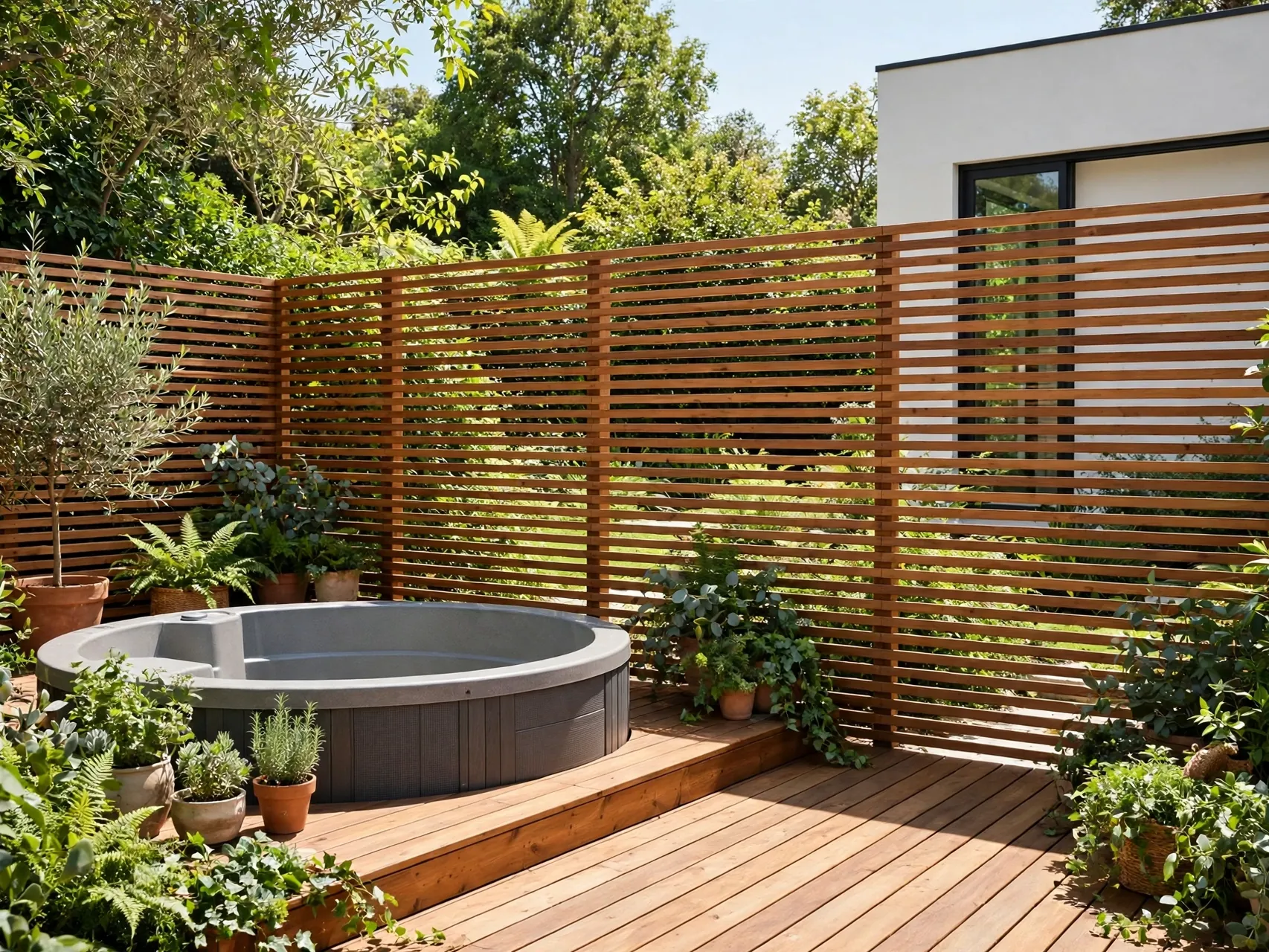
Horizontal or vertical slats with narrow gaps block direct views while letting air and filtered light through, so the soak area never feels sealed. Cedar and composite both work, and a slatted wall on one or two sides is often all a yard needs.
Leave the equipment side of the tub fully accessible and keep wood finishes maintained so splinters stay away from wet feet. A hot tub privacy screen built as a slatted wall also gives you a clean backdrop for hooks, a towel rail and low planting.
4. Freestanding Privacy Screen Panels

Ready made panels in aluminum, composite or wood are the fastest screen you can buy. Set them on the exposed sides, anchor them against wind as the maker directs, and you have privacy the same weekend the tub arrives.
Freestanding panels suit renters and anyone still deciding on a permanent layout, since they move when the yard plan changes. Check panel height against local fence rules if the screen stands near a property line. Powder coated finishes handle spa humidity better than bare softwood.
5. Rolling Screen on Locking Casters
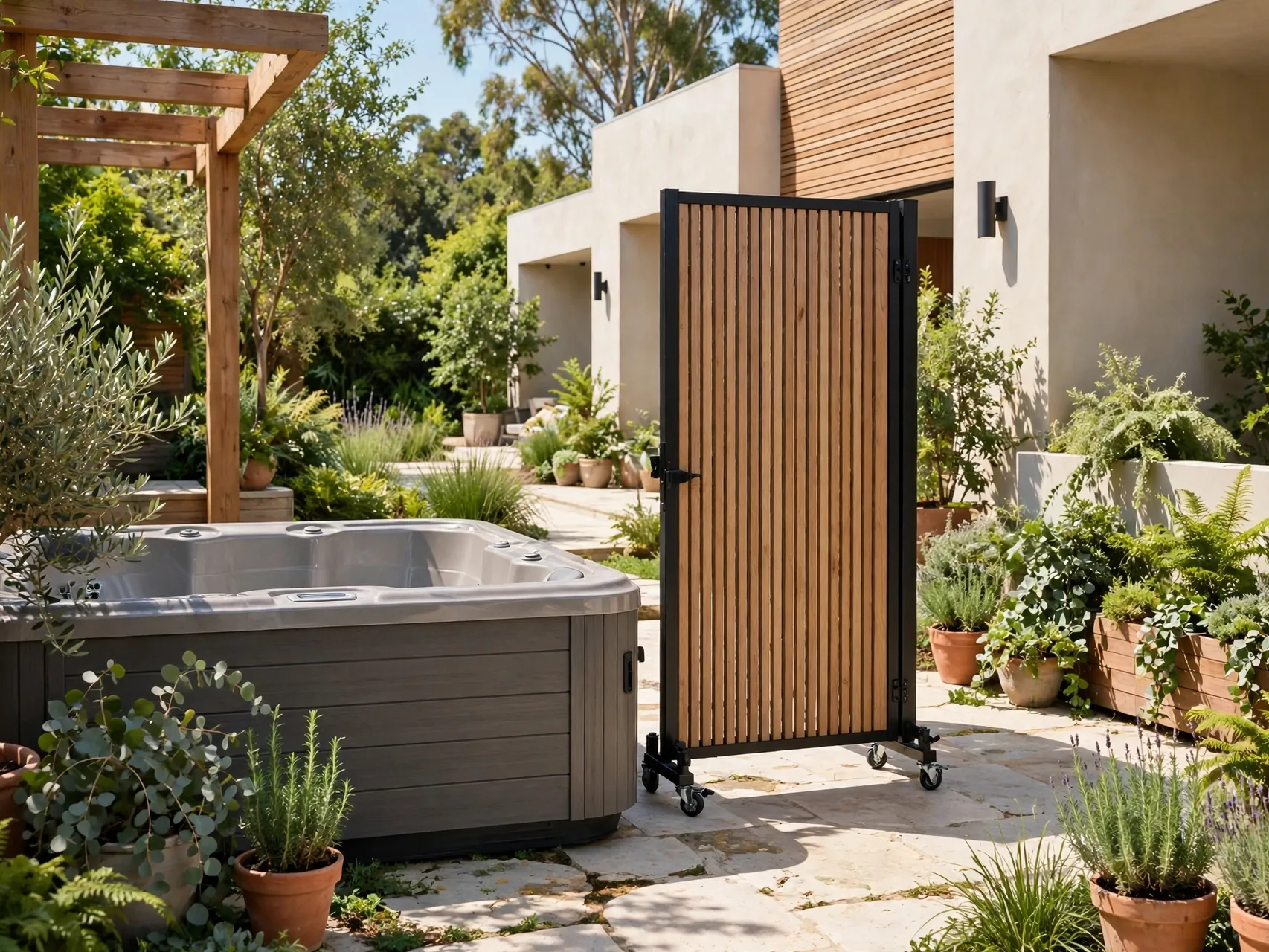
Mount a light screen panel on locking casters and privacy becomes adjustable furniture. Roll it to block the low evening sun or a neighbor gathering, then roll it aside for cleaning, cover lifting and full sun soaks.
Use this on level patios and decks only, and lock the wheels every time. A rolling hot tub privacy screen is ideal for small yards where a fixed wall would crowd the walkway, and it stores flat against a fence in winter if your climate closes the spa season.
6. Lattice Panels With Climbing Vines
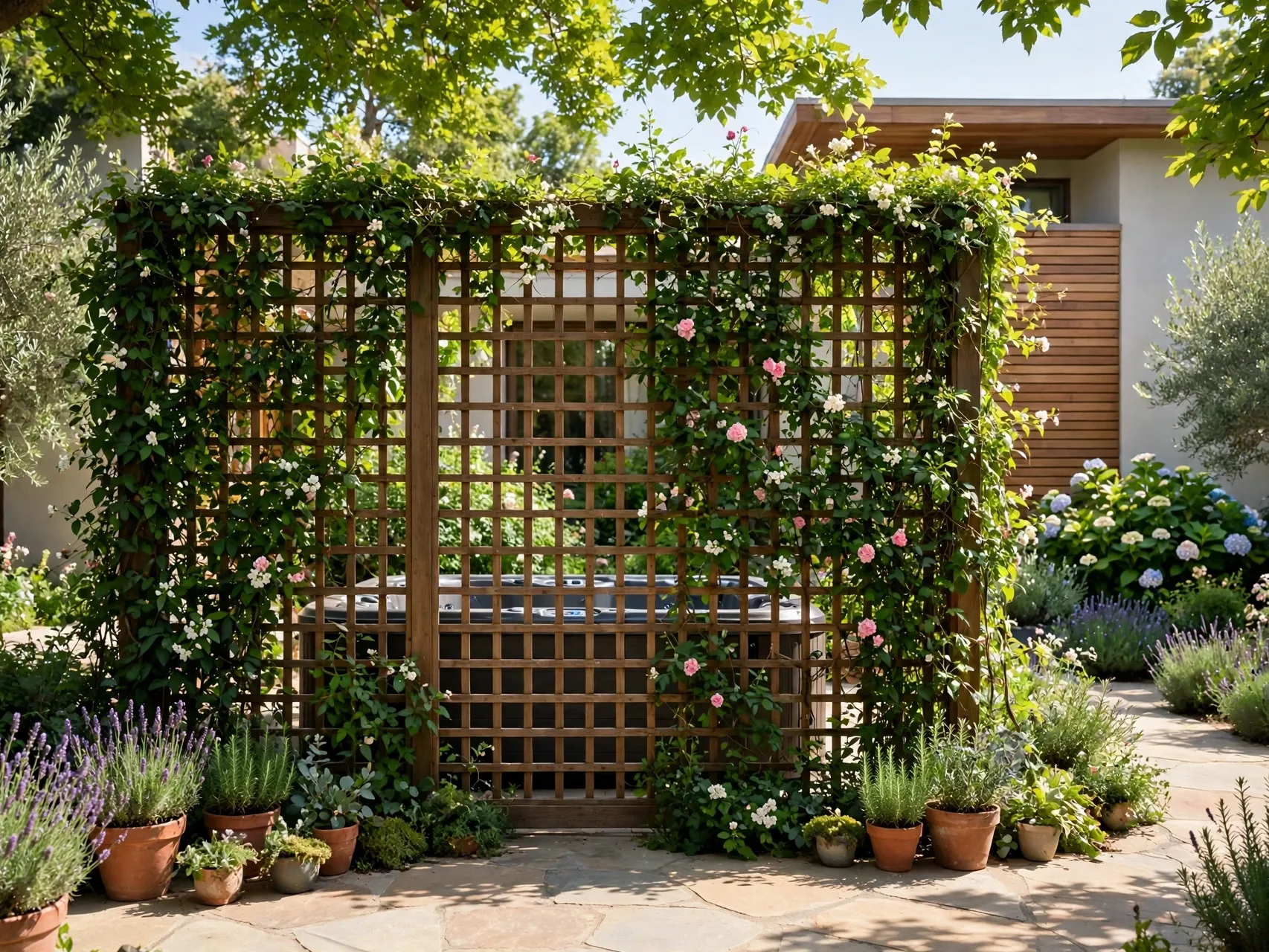
Lattice framed in a proper border, topped with a cap rail and planted with vines, gives dappled privacy that improves every year. Choose vines suited to your zone, train them up the panel, and keep growth trimmed back from the tub cover and equipment.
Lattice alone is see through at glancing angles, so plant densely or back it with outdoor fabric for the first seasons. Keep leaves out of the water with a cover habit and a skimmer nearby. The finished look is cottage soft and blends into any garden style.
7. Evergreen Hedge Living Wall

A hedge of upright evergreen shrubs gives true year round privacy landscaping for hot tub zones, since it never drops its screen in winter. Plant a single species in a row for a clean wall, set plants with room to reach mature width, and keep the row a comfortable distance from the tub shell.
Ask your nursery for varieties suited to your zone with roots that behave near patios. Leave a clear working gap behind the hedge line on the equipment side. A hedge takes time to fill in, so pair it with a temporary screen for the first two seasons.
8. Tall Ornamental Grasses in a Row

Ornamental grasses grow fast, move beautifully in evening light and screen a tub from late spring through fall. Plant a row of a tall, upright variety along the exposed side, in ground or in a long raised bed, and cut the old growth back in early spring before new shoots rise.
Grasses give soft, partial privacy rather than a solid wall, which suits yards where a fence already handles the low angles. They drop little debris into water compared with trees, a real plus near a spa. In winter the screen thins, so northern yards may layer grasses in front of evergreens.
9. Large Planters as Movable Green Walls

Oversized planters filled with a tall shrub, grass or a small multi stem tree make green walls you can rearrange. Line three or four along the open side of the patio and you can shift the screen as sun, wind and seasons change.
Use planters with drainage and saucers that you empty, and choose containers heavy enough, or filled enough, to stand steady in wind. This is the most flexible backyard hot tub privacy trick for decks and patios, since nothing is built in and everything can move for service day.
10. Bamboo Screen Roll on a Frame
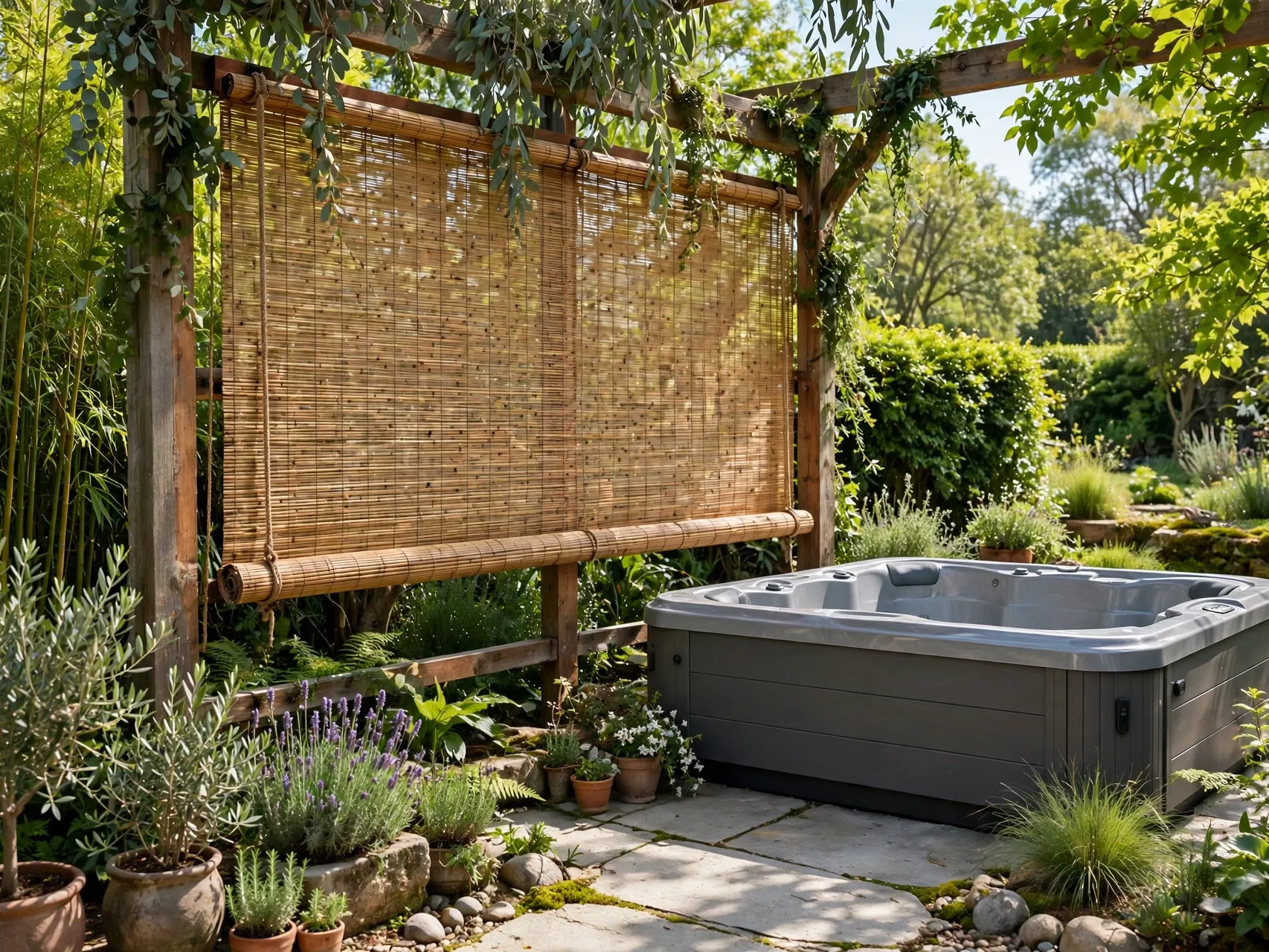
Rolled bamboo or reed screening wired to a simple frame gives quick, warm toned privacy at low cost. Mount the roll on posts or an existing railing, seal cut edges, and expect to refresh or replace it every few seasons in wet climates.
Bamboo reads casual and tropical, which suits spa plantings well. It filters views rather than blocking them completely at night when backlit, so layer it with planting if your neighbors sit close. Keep the frame sturdy: a sagging roll looks tired fast, while a taut, level one looks designed.
11. Frosted Glass or Acrylic Panels
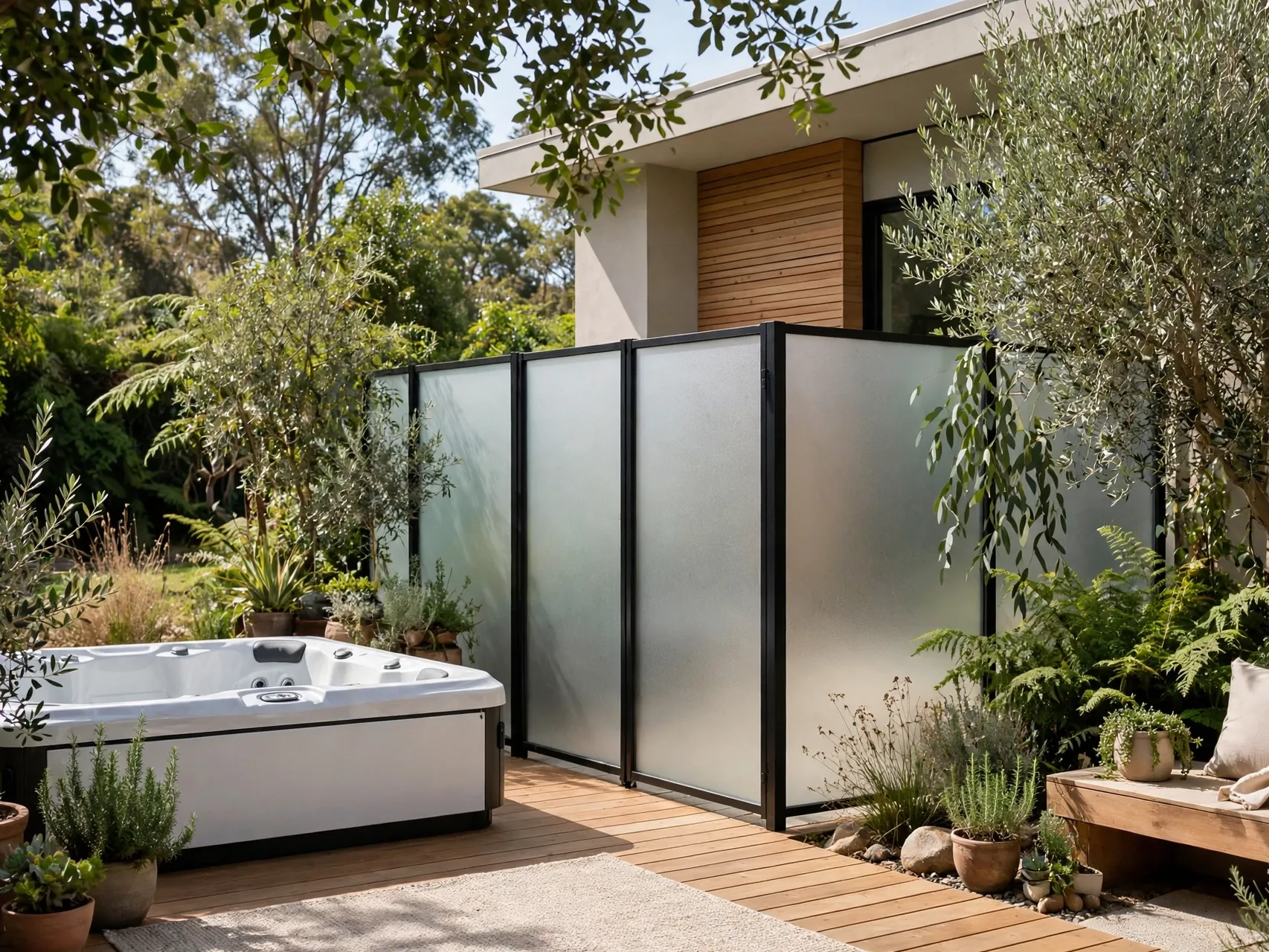
Frosted panels block sight lines completely while passing soft light, which makes small yards feel larger than wood walls do. Modern spas pair beautifully with this clean look, especially beside contemporary decking and pale stone.
Use panels rated for outdoor use, mounted in proper frames with room for expansion, and rinse them as you would any glass near treated water. Frosted panels give privacy day and night, a rare trait, since backlit planting screens can turn into silhouettes after dark. Keep one side open or lower for airflow on hot nights.
12. Shade Sail for Overhead Privacy
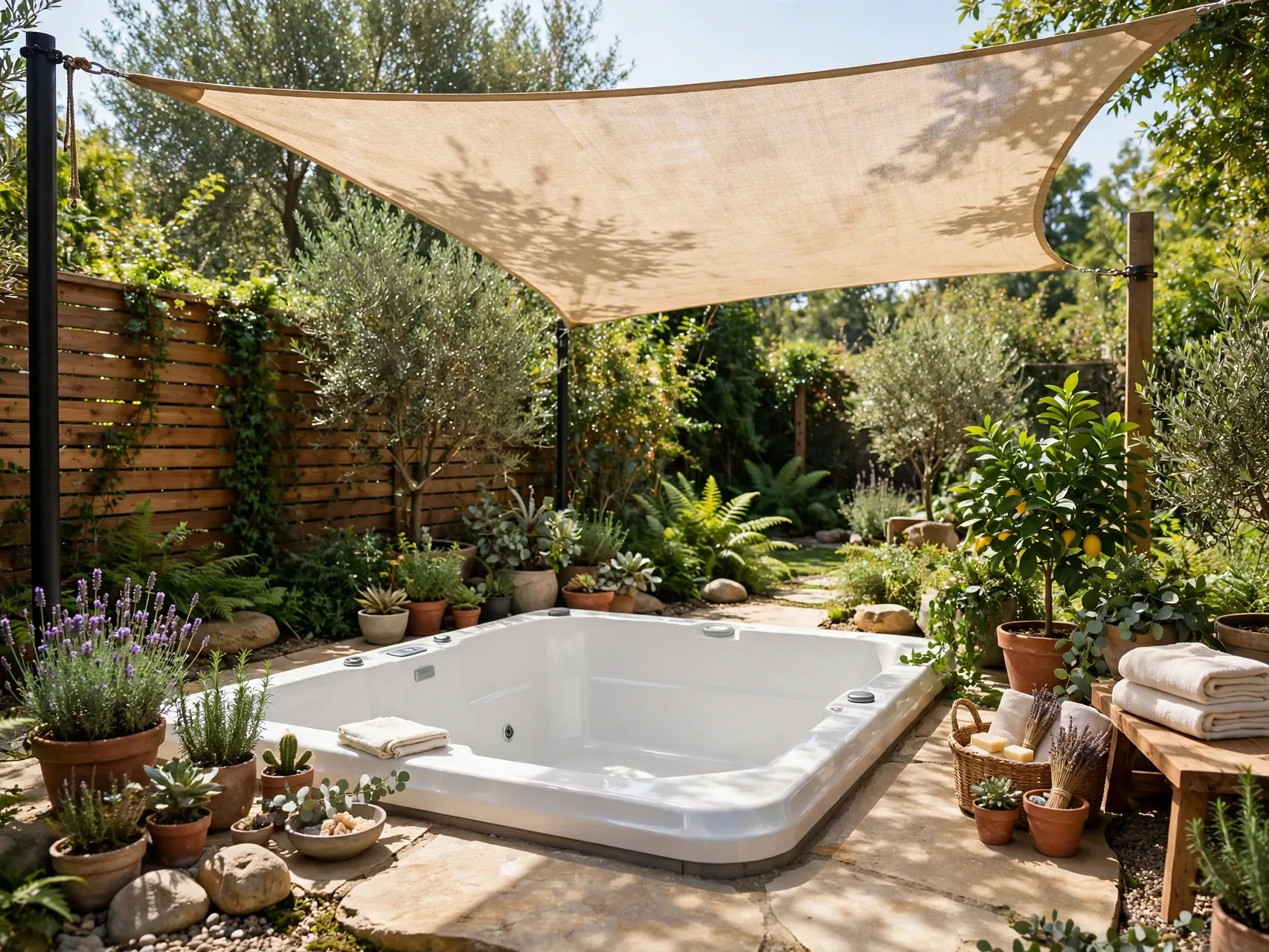
When the only eyes above you belong to a tall house next door or your own second floor, a shade sail solves the angle a fence cannot touch. Anchor it to rated posts or solid structure with proper tension hardware, and slope it so rain runs off.
A sail also cuts glare and keeps light debris out of the water. Take it down before snow loads or storm winds if the maker advises it. Combined with one side screen, a sail gives a tub a true room feeling with almost no footprint on the ground.
13. Gazebo With Drapes and a Roof
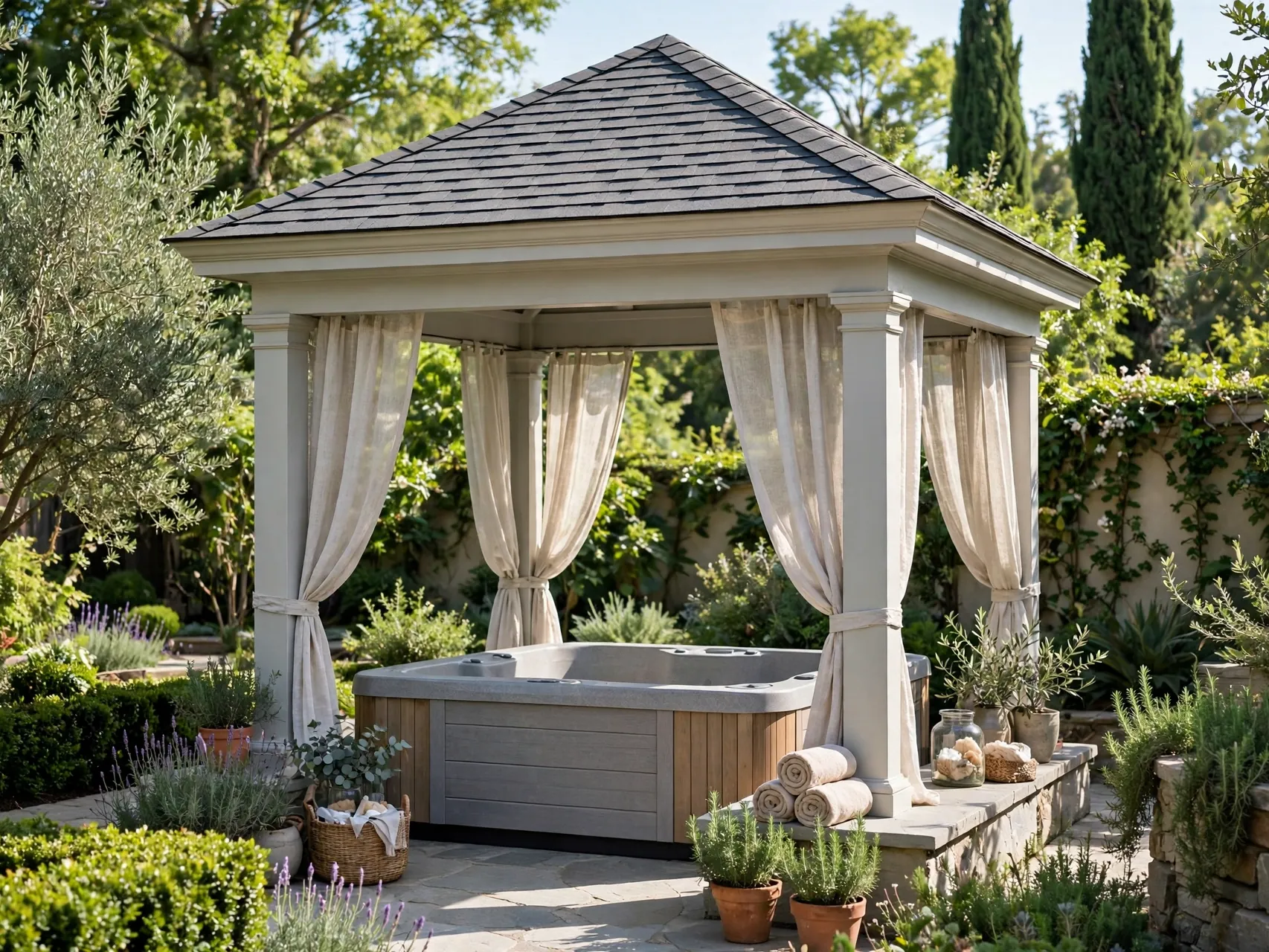
A gazebo is the full room option: roof overhead, drapes on the sides and a defined spa zone that works in light rain. Kits in wood, metal or vinyl fit many budgets, and the roof solves overhead privacy completely.
Confirm the structure size against local permit rules, anchor it properly and keep drape fabric clear of heaters and lighting. Leave full clearance to lift and remove the tub cover, the detail buyers forget most. A gazebo suits yards where the tub is the main event and deserves a permanent home.
14. Corner Placement Against House and Fence
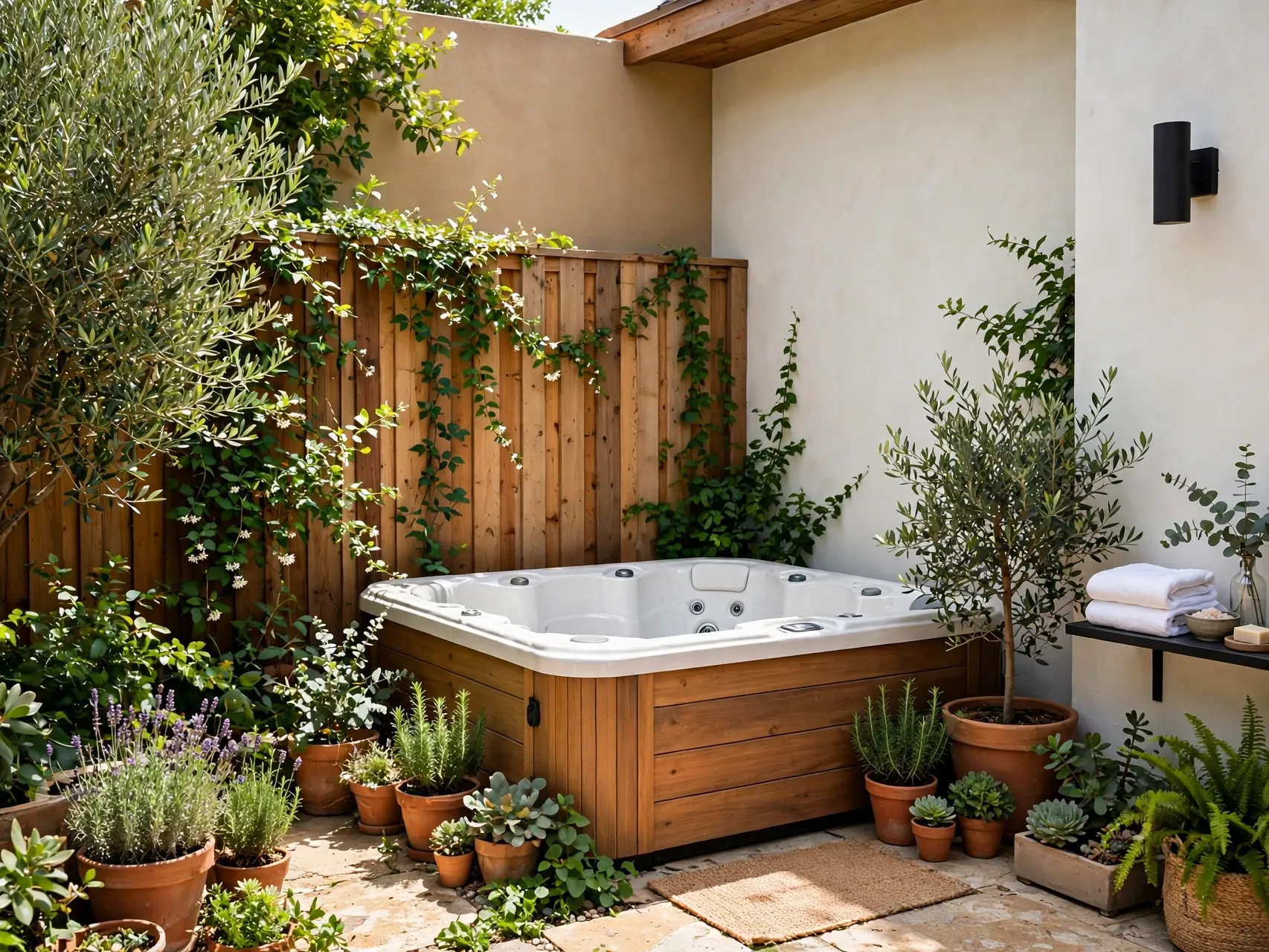
Sometimes the best screen is the building itself. Tucking the tub into a corner formed by the house wall and a fence gives two private sides for free, leaving only one or two angles to screen with a panel or planting.
Check the downsides before committing: sound reflects in corners, steam needs an escape route, and the route from door to tub should stay short and well lit for winter use. Keep the required electrical clearances and service access exactly as the maker and code direct, even in a cozy corner.
15. Tuck the Tub Into a Deck Corner
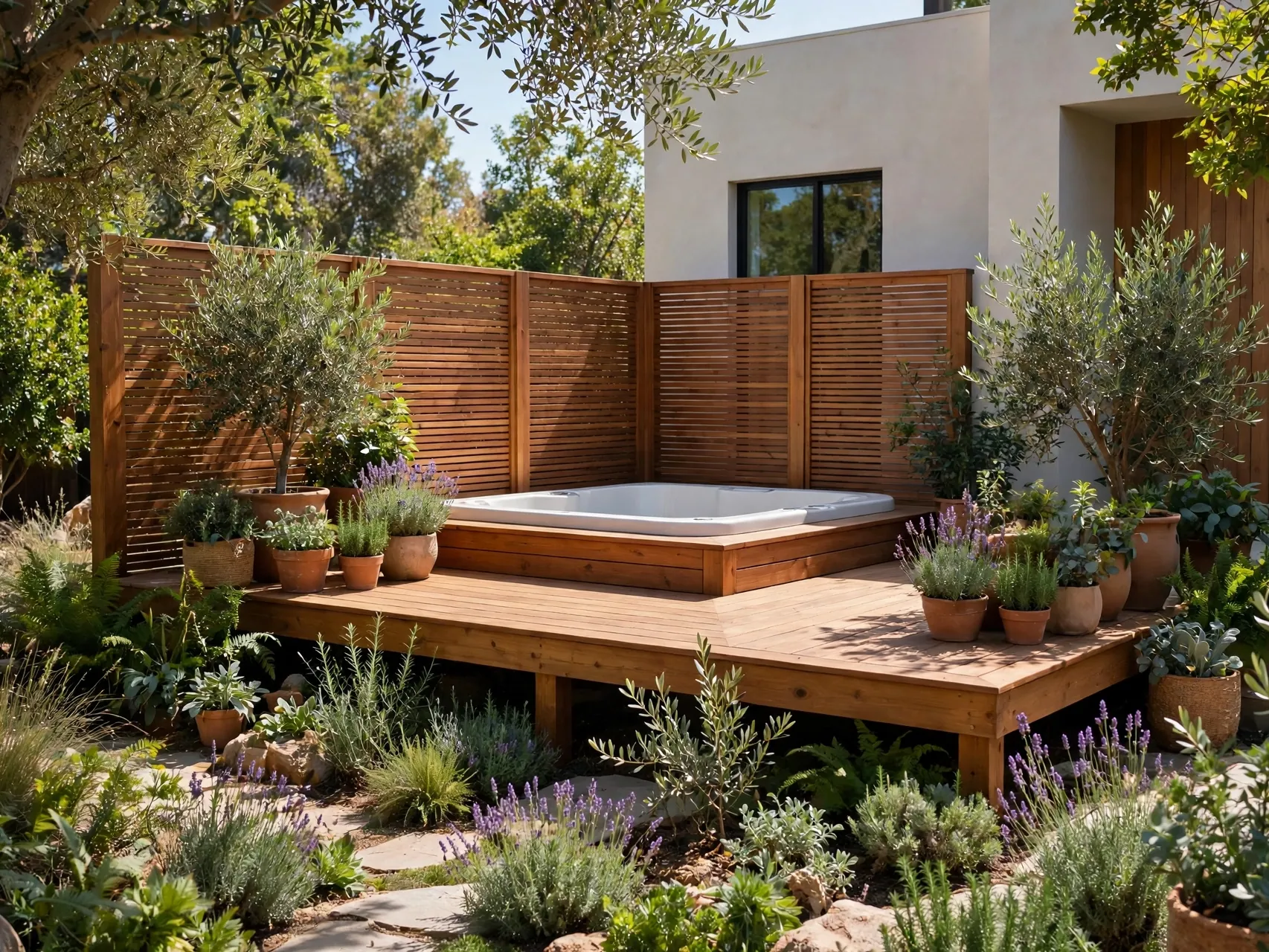
A deck corner with a railing screen, a planter run or a short slatted return wall turns open deck into a spa nook. Building the tub partly into the deck also shortens the climb in, which older soakers appreciate.
Deck work around a heavy, water filled tub is structural work. Have a qualified builder confirm load support, and design an access hatch for the equipment bay from day one. Done well, the corner feels built in and calm. Done cheaply, it traps service problems under boards, so plan the hatch before the first board goes down.
16. Stone or Block Backdrop Wall
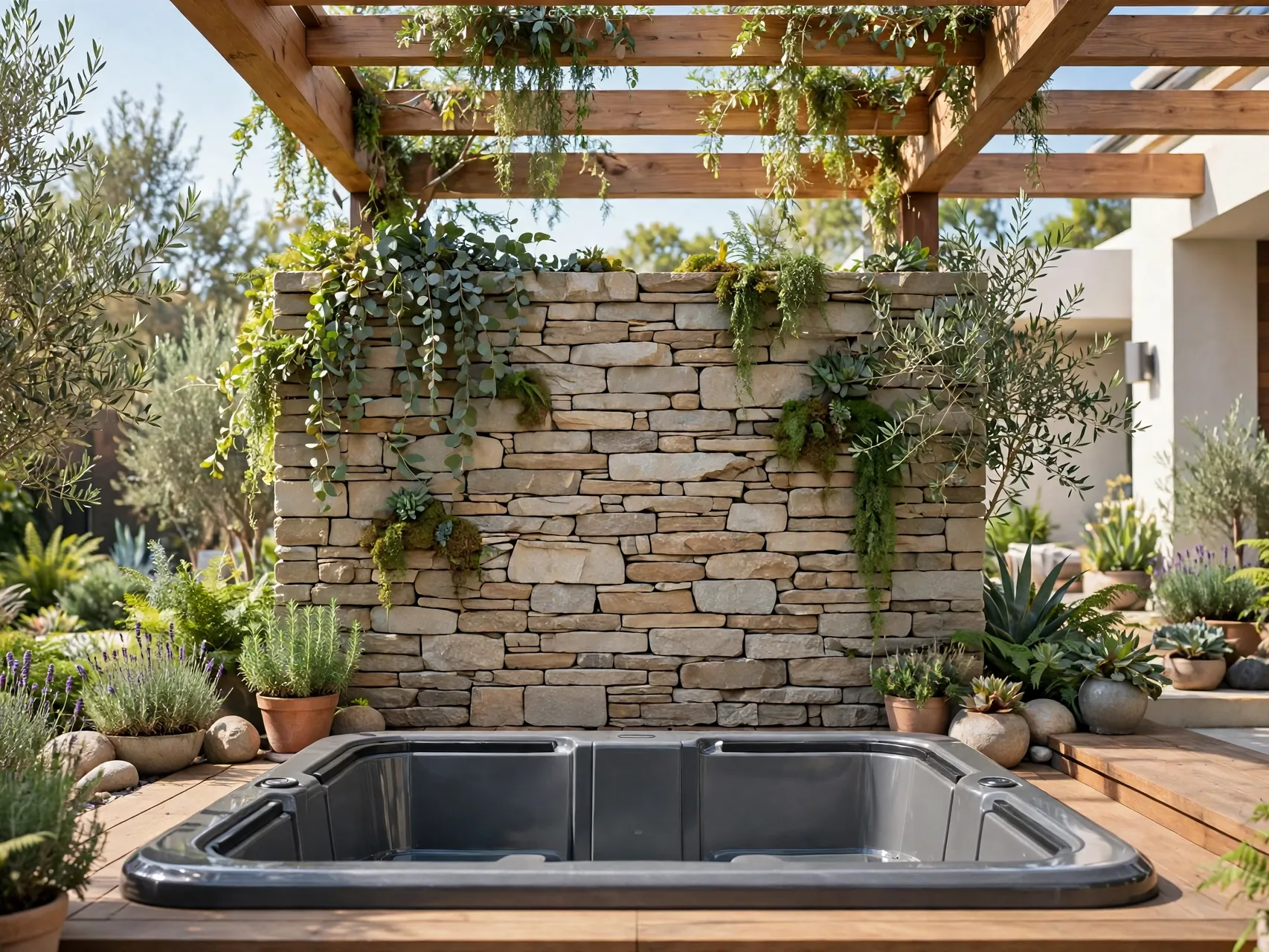
A low stone or block wall behind the tub blocks ground level views, stores heat from afternoon sun and gives plantings a handsome backdrop. It pairs naturally with a seating ledge, a waterfall style feature or a run of grasses in front.
Any wall near water and wiring needs proper footings and drainage, and feature pumps or lights belong on GFCI protected circuits installed by a licensed electrician. Keep the wall height within local fence and structure rules, or build it as a planter wall, which some codes treat differently. Check first, build once.
17. Outdoor Curtains on a Cable System

No pergola? Run a stainless cable between two posts or from house to post, and hang full length outdoor curtains on rings. The cable costs little, disappears visually and lets panels stack neatly to one side when open.
Add a turnbuckle to keep tension, mount eye bolts into solid framing and choose fabric that drains and dries fast. This is among the cheapest full height hot tub privacy ideas that still looks tailored, and renters can often adapt it to an existing covered patio with no new posts at all.
18. Reed or Willow Fencing Overlay
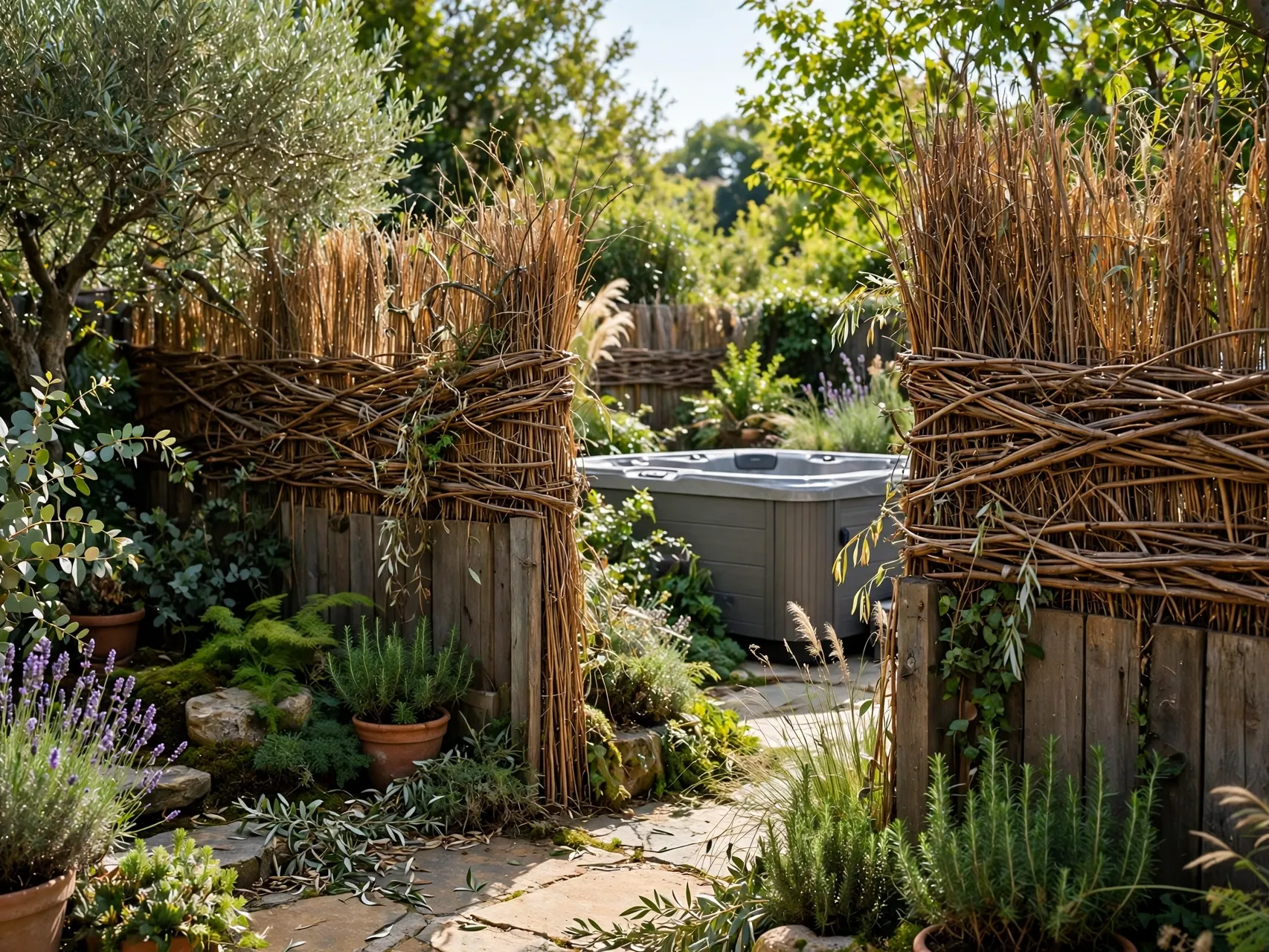
Thin reed or willow rolls zip tied over an existing chain link or open railing instantly soften the ugliest view in many yards. The overlay is cheap, light and fast, which makes it a smart first layer while hedges mature.
Expect a shorter life than lumber or composite, and plan on replacing sun brittle sections every few seasons. Because the material is airy, wind passes through instead of pushing on it, a quiet advantage on exposed lots. Layer planting in front and the fence line disappears into the garden within one season.
19. Trellis With Fast Annual Vines
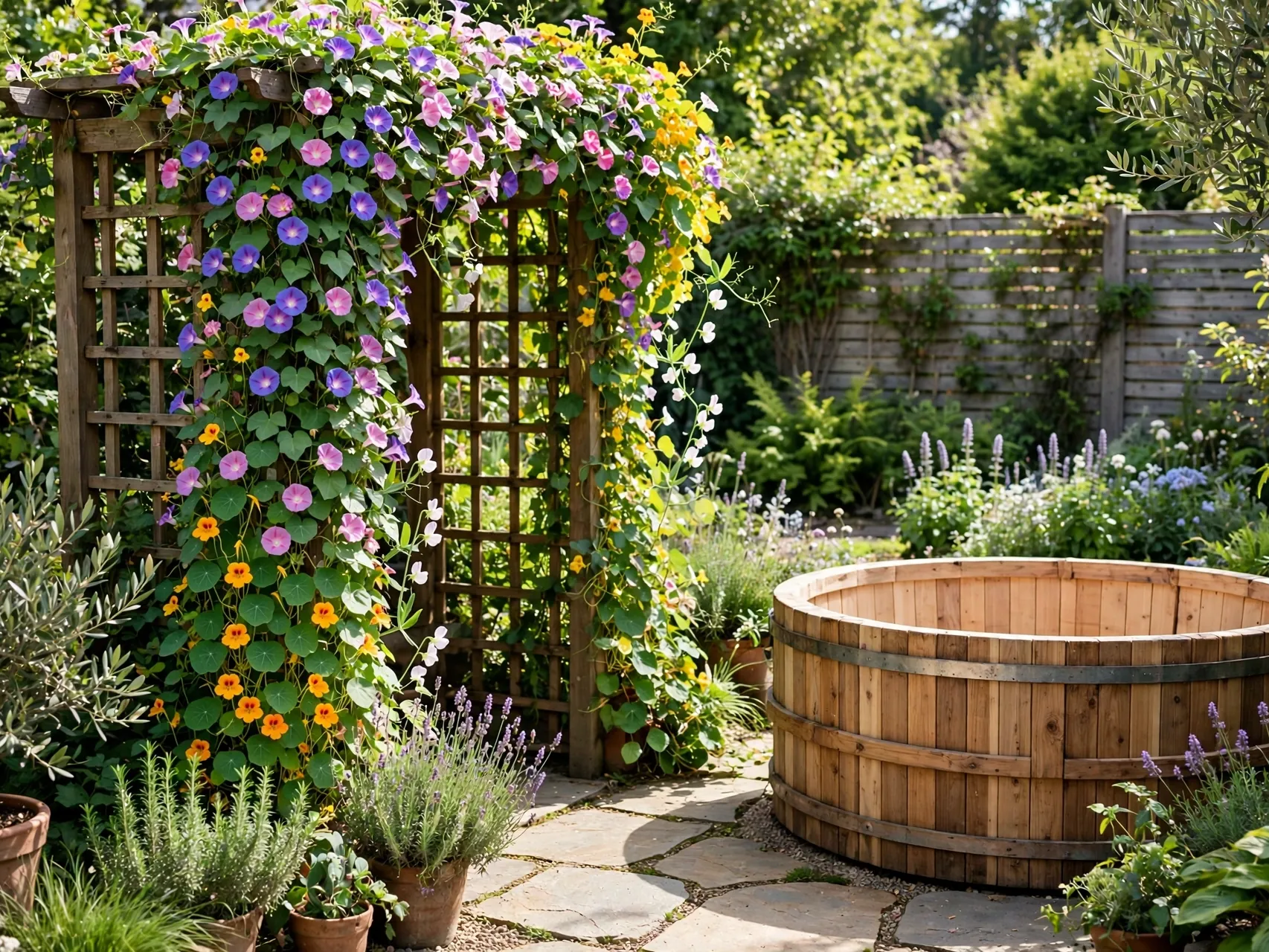
A sturdy trellis plus fast annual vines gives a green screen in a single summer at seed packet prices. Morning glory, black eyed Susan vine and similar climbers race up netting or a panel and flower while they cover.
Annual screens die back in winter, so cold climate soakers need an evergreen or panel backup for year round use. Keep vines trimmed off the cover lifter and equipment door, and pull spent growth in fall so it does not mat into the trellis. For summer heavy use, few screens feel prettier from inside the water.
20. Layered Planting Beds at Two Heights

Layered beds screen better than a single row because eyes cannot slip between plants at two depths. Set a back row of upright evergreens or tall grasses, then a front row of medium shrubs or broad perennials, all in a bed wide enough for roots and for you to garden from behind.
This is privacy landscaping for hot tub areas at its best: soft, alive and better every year. Keep the bed edge a step away from the tub so trimmers and hoses stay clear, and mulch well to keep mud splash off the shell after rain.
21. Pop Up Gazebo With Sidewalls for Renters
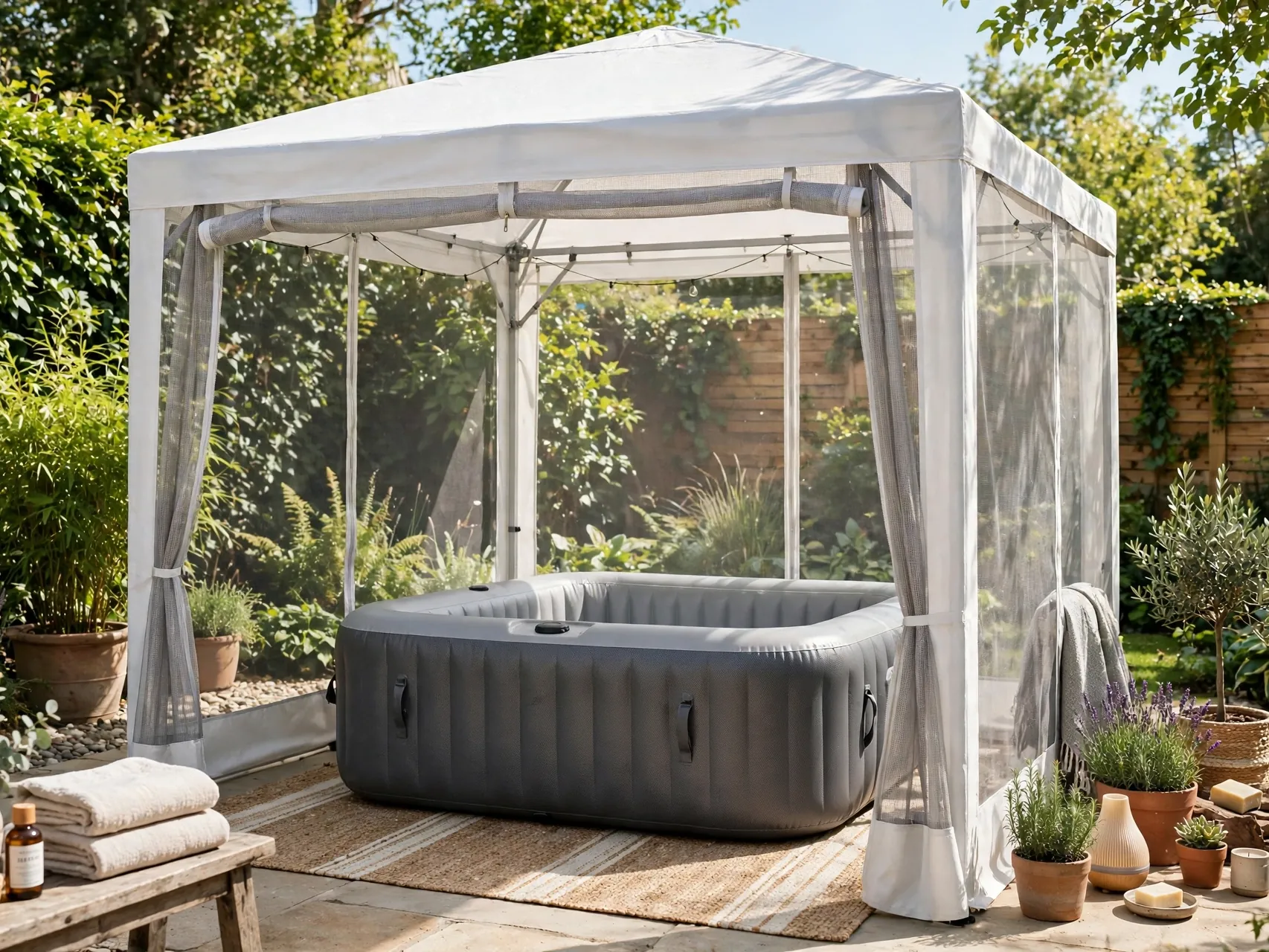
A pop up gazebo with removable sidewalls gives renters and inflatable spa owners an enclosure with zero building. Set it on a level base, anchor the legs as directed, and add walls only on the sides that need them.
Take it down ahead of strong wind and snow, since light frames are not storm structures. Keep any heater or lighting well away from fabric and follow the spa maker rules for covered use and ventilation. For a first season of soaking, this low cost room tells you exactly where a permanent structure should go later.
22. Feature Wall That Blocks the View

A garden feature placed between the tub and the main sight line does double duty: a fountain wall, an outdoor fireplace back or a tall art panel blocks the view while giving soakers something beautiful to look at.
Keep water features and fire features at safe distances from the tub and its wiring, with all electrical work GFCI protected and professionally installed. Sound helps privacy too, since gentle water noise masks voices both ways. This is the splurge idea that turns screening into the best looking part of the yard.
23. Low Glare Lighting and Path Plan
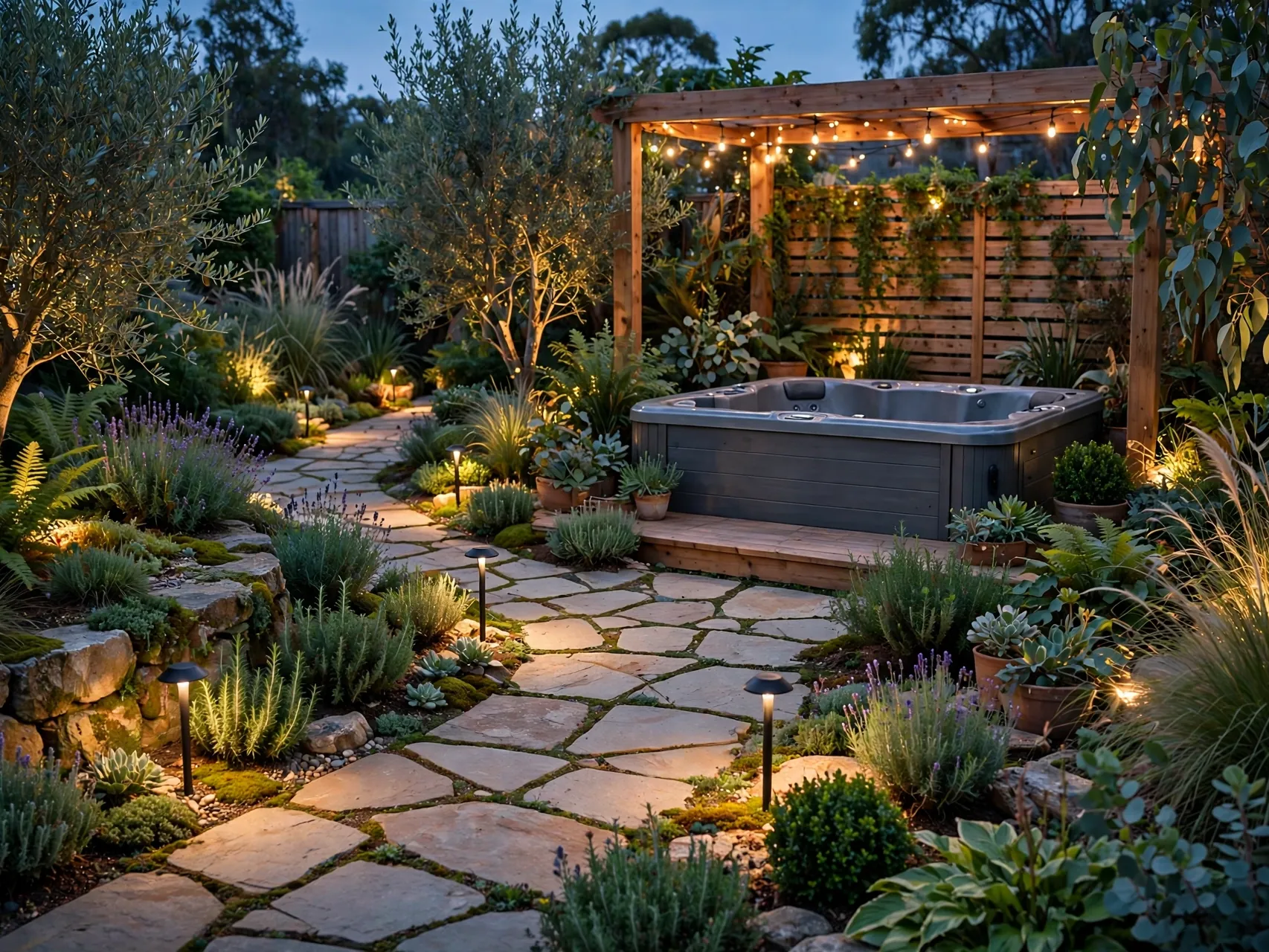
Privacy is partly about light. Bright floods aimed at the tub make soakers feel displayed after dark and spill glare into neighbor windows. Swap them for low, shielded path lights, a dim fixture by the steps and motion sensor lighting that only runs when someone approaches.
Light the route from the house door, the steps into the tub and the cover area, and leave the water itself softly lit by the spa light. A calm lighting plan is the finishing layer on every other hot tub enclosure ideas project, and it keeps night soaking safe as well as private.
FAQ
What is the cheapest hot tub privacy idea that actually works?
Outdoor curtains on a cable between posts, a reed fencing overlay on an existing fence and freestanding panels are the lowest cost options that give real, same day privacy. Planting costs less over time but takes seasons to fill in, so many owners pair a cheap instant screen with young plants.
How tall should a hot tub privacy screen be?
Tall enough to block the actual sight lines into the water, which often means about seated eye level from the viewing side, commonly in the 5 to 6 foot range for ground level neighbors. Overhead views from upper windows need a pergola, sail or gazebo instead of a taller wall. Check local fence height limits and HOA rules before building.
Which plants give year round hot tub privacy?
Upright evergreen shrubs and small evergreen trees keep their screen in winter, while ornamental grasses and vines are summer only in cold zones. Choose plants rated for your zone, mind mature width and root behavior near patios, and leave clear access to the tub equipment panel. A nursery visit with your yard measurements beats guessing from photos.
How do I keep privacy screens from blocking hot tub service?
Leave the full equipment side of the tub open and reachable, with the access panel able to come off and a technician able to kneel and work. Use movable panels, planters or curtains on that side instead of fixed walls, and never let planting grow tight against vents or the disconnect. Service access is a safety and warranty issue, not just convenience.
Can renters add hot tub privacy without building anything?
Yes. Freestanding screens, large planters, curtains on an existing covered patio and a pop up gazebo with sidewalls all add privacy with no permanent build. Confirm your lease and any HOA rules first, keep everything clear of the electrical disconnect, and choose options you can take with you when you move.
Key Takeaways
- Screen the sight line, not the yard: Stand in the tub, find the angles that see in, and cover only those.
- Overhead needs overhead cover: Upper windows call for a pergola, shade sail or gazebo, not a taller fence.
- Keep service access open: Equipment panels, vents and the electrical disconnect must stay fully reachable at all times.
- Layer fast and slow: Pair an instant screen or curtain with evergreen planting that matures into the permanent wall.
- Mind water and leaves: Choose planting and panels that drop little debris into the water and are easy to skim around.
- Check rules first: Fence height, setbacks, permits and HOA guidelines decide what you may build, so verify before buying.
Ready to plan your soak zone? Save this pin to your backyard board on Pinterest so you can find these privacy ideas again before your next project weekend.