
20 Camper Privacy Ideas for Inside and Outside Your RV
Introduction
Campgrounds are friendly places, and that is the problem. Your neighbor's camp chairs may be ten feet from your window, your awning faces their awning, and inside the rig, the bedroom, bunks, and bathroom all share one narrow hallway. Good camper privacy ideas solve both sides of the wall: what people can see in, and how your own family gets a little space from each other.
Start with windows, because they are the biggest privacy gap in most RVs. Then add one outdoor screen or awning layer so your morning coffee feels private. Finally, add one indoor divider or curtain so rainy days inside do not feel like everyone is living in one room with no doors.
Most are shades, curtains, screens, and habits you can set up in an afternoon.
1. Add Reflective Window Tint for Daytime Privacy

Reflective or mirror tint on camper windows lets you see out during the day while people outside mostly see a mirrored surface. It also cuts glare and some heat, which helps in sunny, open campgrounds where shade is scarce.
Know the limit before you rely on it: at night, when your lights are on inside, the effect reverses and people outside can see in more easily. The reference guide at DIY Cozy Living makes the same point. Treat tint as a daytime layer, and always pair it with shades or curtains you close after dark.
2. Swap Flimsy Pleated Shades for Blackout Roller Shades

The thin pleated day and night shades fitted in many campers gap at the edges, stick, and let silhouettes show at night. A blackout roller shade closes that gap with one smooth pull and gives the window a cleaner, more finished look.
Measure the inside of each window frame carefully, because RV window sizes are rarely standard, and check that the valance or cabinet above has enough depth for the roll. A wipe clean blackout fabric handles dust and kitchen splashes well. Roller shades are a core part of camper window privacy because they work for both light and privacy at once.
3. Layer Light Curtains Over Your Shades

A soft curtain over a shade gives you a third option between wide open and fully blacked out. During the day you can close the sheer or light cotton panel for privacy while daylight still filters in, so the camper does not feel like a cave.
Use short, lightweight panels that clear counters, heaters, and the stove, and keep fabric well away from burners and open flame at all times. Tension rods and adhesive or no drill hardware suit many RV windows. The layered look also softens the hard, boxy feel of camper interiors.
4. Use Static Cling Privacy Film on Bathroom and Door Windows

Frosted privacy film is perfect for the small windows where you never need a clear view: the bathroom window, the entry door window, and a window beside a bunk. It blocks the view in both directions while still letting soft light through.
Static cling film needs no adhesive, so renters of an RV, borrowed campers, and anyone who may change their mind can remove it cleanly. Cut it slightly oversized, apply it to clean, wet glass, and trim the edges. For the entry door, film also removes the odd feeling of a clear window at eye level.
5. Make Insulated Window Covers for Night and Storage

Reflective insulated covers that press or snap inside the window frame give total privacy at night, help with heat in summer and cold in winter, and darken the sleeping area for better rest. Many owners cut them to size for each window and label the back so setup is fast.
Store the set flat under the mattress. Covers are useful in storage too, because they stop anyone seeing inside and protect fabrics from sun.
6. Hang a Ceiling Track Curtain Between Living and Sleeping Areas

A flexible ceiling track with a curtain is the closest thing an RV has to a closing door between zones. Parents can read and talk in the living area while kids sleep behind the curtain, or one person can dress in the bedroom end with real privacy.
Choose a track made for curved or straight runs and a curtain light enough to glide easily. Keep the curtain clear of heaters and vents, and check ceiling material before fixing anything, because RV ceilings vary. This is one of the most loved how to add privacy to a camper ideas for families sharing one small rig.
7. Add Curtains to Each Bunk for a Private Pod

Bunk curtains turn an open sleeping shelf into a small private pod. Each child, teen, or guest gets a space to read, change a shirt, or just be alone for twenty minutes, which matters a lot on a long trip in close quarters.
A short tension rod, a track, or even a well placed set of removable hooks can hold a light panel per bunk. Keep fabric away from bunk lights and heaters, and choose breathable material so the bunk does not get stuffy at night. Matching curtains also make the hallway look tidy and calm.
8. Upgrade Bathroom Privacy With a Better Latch and a Fan Habit

RV bathroom doors are thin, gaps are common, and the lock is often more of a suggestion. A simple, properly fitted latch that shows the bathroom is occupied prevents the classic awkward door swing, and a small door sweep or trim can close a light gap at the bottom.
Pair the hardware with a habit: run the bathroom fan or a small sound source during use. Sound privacy matters as much as visual privacy in a rig where the bathroom sits beside the dinette. A hanging organizer on the inside of the door keeps toiletries private and off the tiny counter too.
9. Set Up a Pop Up Privacy Tent for Changing and Outdoor Showers

A tall pop up privacy tent gives you a changing room and an outdoor shower stall beside the camper. It is invaluable at beaches, trailheads, and boondocking spots where the whole family returns sandy or muddy at once and the indoor bathroom is too small for changing.
Stake or weight the tent according to its instructions, because light tents travel in wind. Place it on the door side of the rig, close to the outdoor shower if you have one. When packed, most fold flat and ride in a storage bay, making this one of the easiest RV privacy ideas to add.
10. Drop a Mesh Screen From Your Awning

An awning mesh screen slides into the open track on many awning rollers and hangs to the ground, creating a shaded wall you can see out of that is hard to see into. It turns an exposed patio into a semi private outdoor room for coffee, reading, and naps.
Stake the bottom edge on grass or weight it as the maker directs on hard surfaces. The mesh also softens wind and low sun. Measure your awning width and drop before ordering, because both vary. This screen is the outdoor centerpiece in the DIY Cozy Living camper privacy guide, and for good reason.
11. Add Awning Side Panels for a Full Screen Room

Side panels close the open ends of the awning and complete the screen room effect. With the front mesh and two sides in place, neighbors see shapes and shade, not your table, your laptop, or your pajamas at breakfast.
Choose panels made for your awning type or use a full screen room kit designed to fit under it. Ventilation still matters, so mesh sides beat solid tarps in hot weather. A screen room also keeps some bugs off your seating area, which makes the private space one you actually use in the evening.
12. Stand Portable Folding Screens Where You Need Them

A folding outdoor privacy screen goes wherever the problem is: between your chairs and the next site, beside an outdoor cooking table, or at the edge of your rug to mark your space. Unlike fixed solutions, you can angle it for morning or evening sun and for the direction of foot traffic.
Pick a screen that folds flat for storage and can be staked or weighted in wind. Indoors, a smaller folding screen can shield a dressing corner in a larger motorhome. RV Trader lists pop up screens among its core privacy tools because they set up in seconds and need no installation.
13. Install RV Skirting to Block Views and Weather Under the Rig

RV skirting closes the open gap under the camper, so storage bins, hoses, and the underside of the rig are out of sight, and nobody can see straight through under your home to the other side. It also helps with wind and cold under the floor during longer stays.
Fabric skirting is portable and suits travelers, while rigid panels suit seasonal spots. Follow the maker instructions for fitting around steps, hoses, and slide outs, and keep required vents and access points clear. Skirting is as much about feeling settled and unexposed as it is about insulation.
14. Use Potted Plants and Camp Furniture as a Soft Boundary
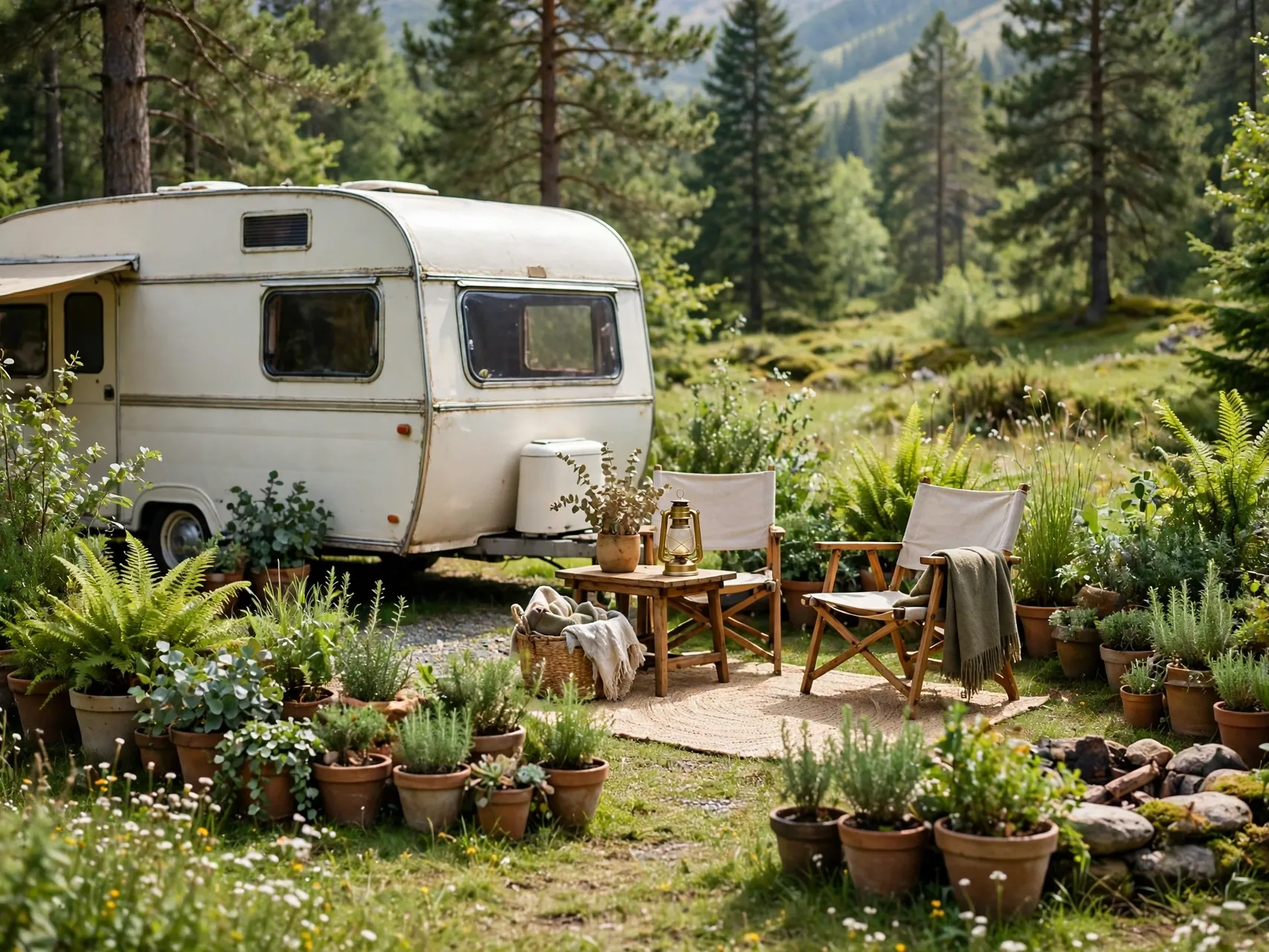
A row of potted plants, a storage bench, and chairs arranged with their backs to the road create a gentle edge that says this space is in use, without a wall or a fence that a campground may not allow. It is the friendliest form of RV privacy screen ideas: green, movable, and welcoming.
Travel with two or three sturdy pots you can group in different ways, or buy a plant locally on longer stays. Keep plants and furniture inside your site lines and clear of hookups and walkways. A soft boundary also gives kids and pets a clear visual home base.
15. Park and Arrange Your Site for Privacy From the Start

The cheapest privacy is choosing how you sit on the site. Where rules and hookups allow, angle the rig so the door and awning face away from the busiest neighbor or the road, and place your chairs behind the camper or beside a slide out that blocks the view.
Use the rig itself as the screen: a seating area on the far side of the camper is hidden from the site next door. Put the picnic table between you and foot traffic. Five minutes of thinking at check in saves a week of feeling watched, and it costs nothing at all.
16. Soften Sound With Curtains, Rugs, and Door Seals
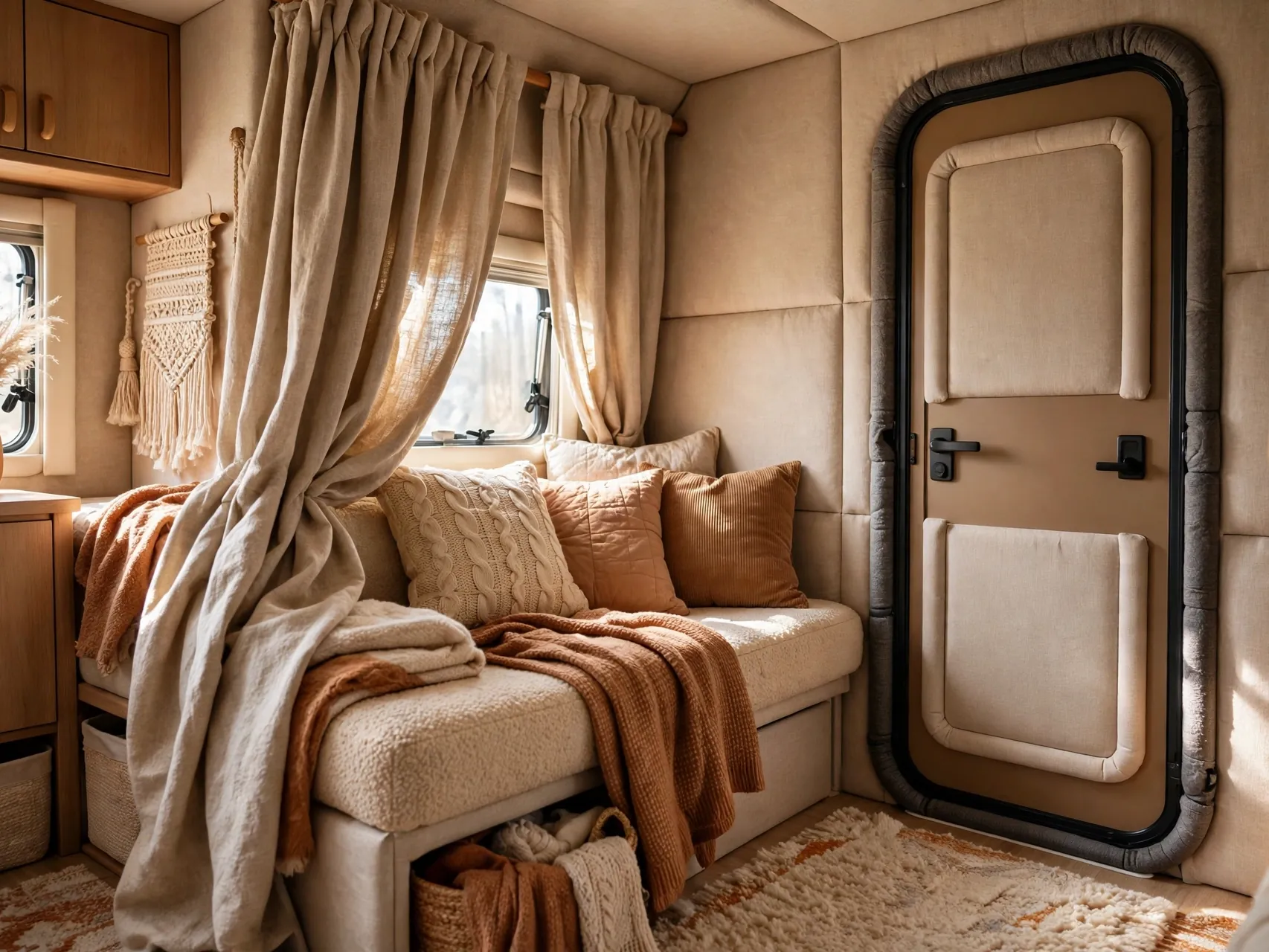
Privacy is also about what neighbors can hear, and what you can hear of them. Heavy curtains, a thick outdoor or indoor rug, cushions, and bedding all absorb sound inside a hard surfaced RV. Weather stripping and a door draft stopper reduce sound, light, and drafts leaking around the entry door.
Be honest about the limits: soft materials reduce noise, they do not soundproof a camper. Still, the difference between voices carrying clearly and voices muffled is the difference between feeling exposed and feeling at home, especially at night in a quiet campground.
17. Run a Fan or White Noise Inside for Sleep Privacy
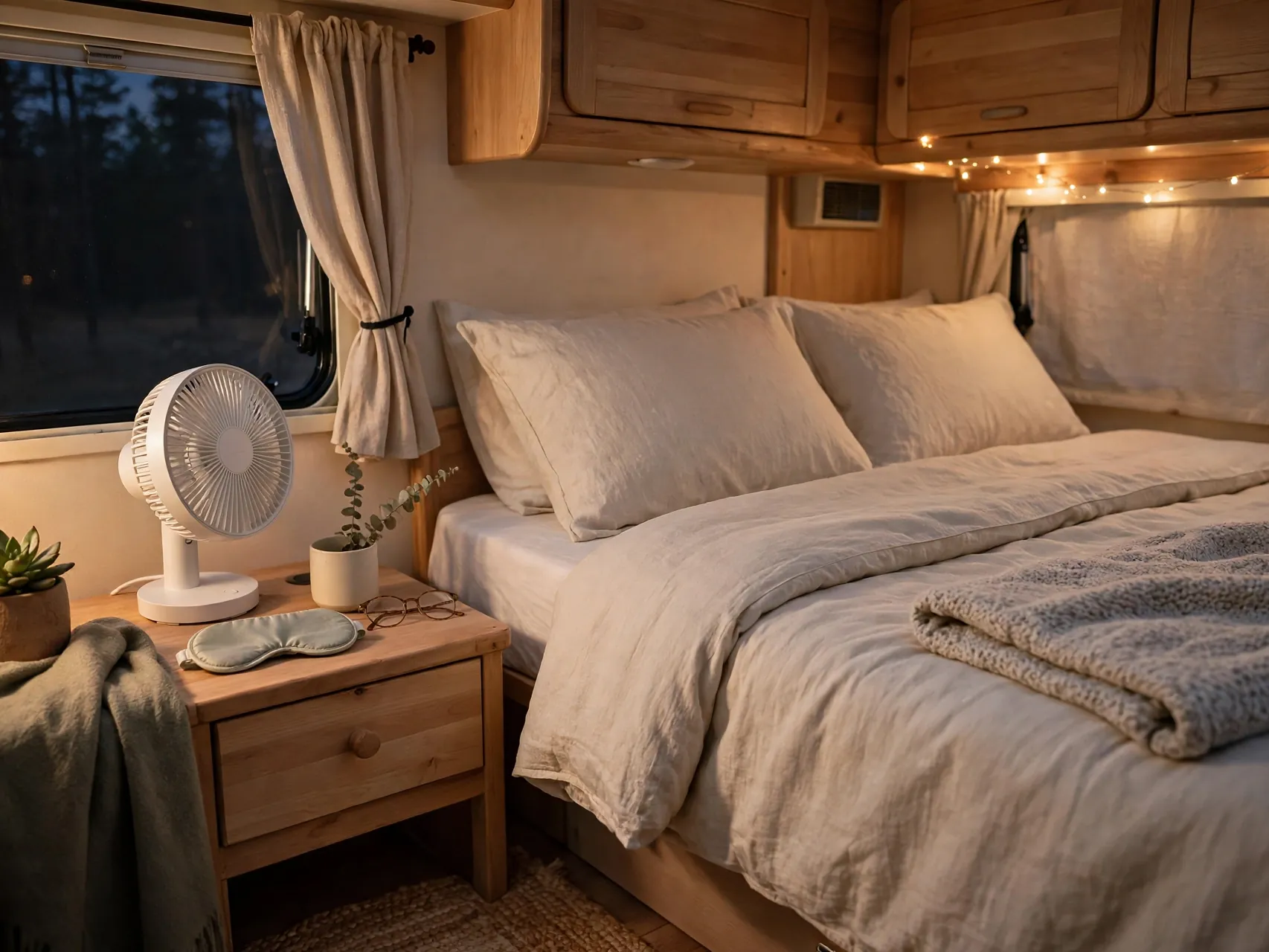
A small fan or white noise app masks outside sounds and covers inside sounds at the same time. Conversations, a restless sleeper, or a midnight bathroom trip become far less public when there is a steady background sound in the rig.
Place the fan or speaker between the sleeping area and the door or bunks for the best effect. Keep volume low and steady rather than loud. Many families find this one habit improves sleep more than any other item on this list, because campground noises, doors, voices, early departures, fade into the background.
18. Cover Skylights and Vents for Dark, Private Sleep

Skylights and roof vents pour light into the bedroom area at sunrise and can leave the shower skylight feeling exposed in some setups. Vent cushions and blackout covers made for RV vents block that light, add insulation, and complete your nighttime privacy.
Choose covers that fit your vent size and can be removed easily for ventilation when you want air flow. Never block a vent that must stay open for a heater or appliance, always follow the appliance and RV maker guidance. With windows and vents covered, the rig finally gets properly dark for sleeping in after dawn.
19. Create a Private Lounge Corner Behind the Rig
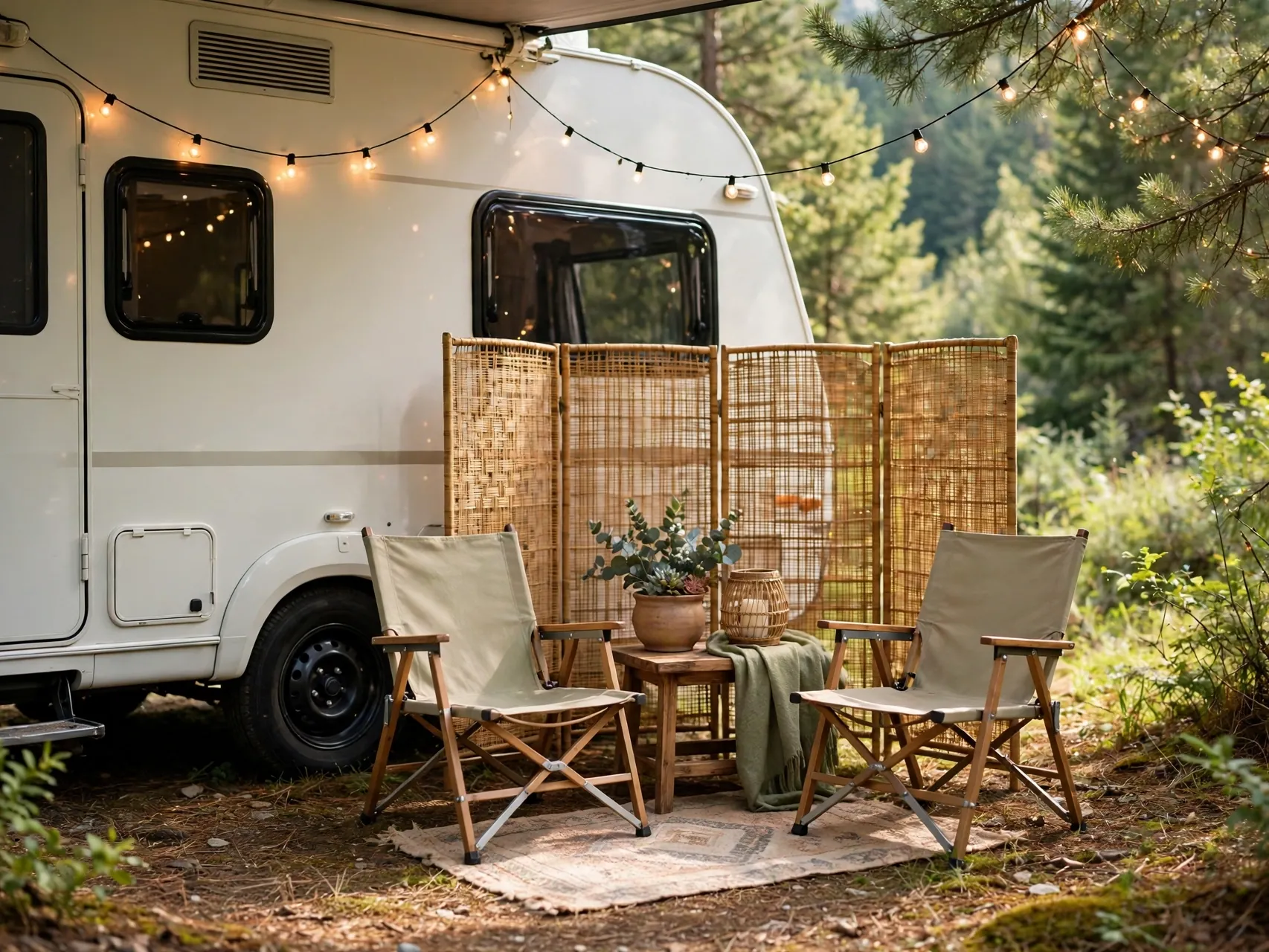
The space behind the camper is often the most private ground on the whole site. A chair or two, a small table, a rug, and a portable screen or canopy with a sidewall turn that forgotten strip into a reading, work, or morning coffee retreat away from both neighbors and family.
Habitatista suggests exactly this kind of outdoor retreat for shared RV living, with a screen, rug, and small lights to mark the spot. Keep the setup light enough to move if the sun or wind changes. One true alone spot prevents most small space friction on long trips.
20. Agree on Simple Privacy Signals With Your Travel Crew

The best physical setup still needs a few shared rules. Agree that a closed bunk curtain means knock and wait, headphones mean do not disturb unless it matters, and everyone gets some alone time each day, even if it is a walk or the lounge corner behind the rig.
Privacy in a camper is partly screens and shades, and partly respect. Families who talk about space needs early almost always have a calmer trip.
FAQ
How can I get privacy in a camper at night when tint stops working?
Close shades or curtains on every window after dark. Reflective tint works by light balance, so interior lights at night make it easier to see in from outside. Blackout roller shades, layered curtains, and insulated window covers give reliable nighttime privacy, and they also darken the rig for better sleep.
What is the best privacy solution for sitting outside the RV?
An awning mesh screen with side panels creates the most complete outdoor room and is hard to see into while you can see out. Add a portable folding screen where the awning does not cover, arrange chairs on the far side of the rig, and use plants or a bench as a soft boundary inside your site lines.
How do families create privacy inside a small camper?
Divide the space with a ceiling track curtain between living and sleeping areas, add a curtain to each bunk, and fix the bathroom latch so the door truly closes. Sound habits help too: a fan or white noise, soft furnishings, and agreed signals like a closed curtain meaning knock first.
Will privacy film or tint damage RV windows?
Static cling film is removable and is a low risk option for most glass. Adhesive films and tint should be checked against your window type before installation, because some RV windows are acrylic or have coatings, and makers may limit what can be applied. When in doubt, test a small corner or choose cling film and shades instead.
How can I add privacy without drilling or permanent changes?
Use static cling film, tension rod curtains, insulated covers that press into window frames, pop up privacy tents, folding screens, and awning mesh that slides into the existing awning track. All of these pack away for travel and leave the camper unchanged, which suits rentals, borrowed rigs, and anyone who trades campers often.
Key Takeaways
- Windows first: Tint helps by day, but blackout shades, curtains, films, and covers are what make a camper private at night.
- Build an outdoor room: Awning mesh, side panels, and one portable screen turn an exposed patio into a space you can relax in.
- Divide the inside kindly: A ceiling track curtain, bunk curtains, and a real bathroom latch give everyone a door they can close.
- Sound is privacy too: Soft furnishings, door seals, and a fan or white noise keep conversations and sleep from being shared with the site.
- Use the site itself: Park angle, the rig as a screen, and a lounge corner behind the camper are free privacy most people overlook.
- Saving ideas for your next trip? Pin this guide to your small spaces board on Pinterest and work through one idea per campsite until the rig feels like home.