21 RV Bedroom Organization Ideas for a Tidy Tiny Space
Introduction
An RV bedroom has to do a lot in very little space. It is a closet, a dressing room, a reading nook, and the place where phones, glasses, and laundry all land at the end of the day. Good RV bedroom organization is not about buying a pile of bins, it is about giving each small category a home that stays put while you travel.
The ideas in this guide work from the bed out. Start under the bed, then fix the bedside, then the overhead cabinets and closet, and finish with the daily habits that keep the room calm between stops. Every solution is light, low profile, and secured for travel days.
Measure before you buy anything. RV cabinets and closets vary a lot, and a bin that is half an inch too tall will rattle, jam, or end up stored at home. Write your measurements on your phone, shop with them in hand, and test one organizer before you buy a full set.
Keep weight and safety in mind too. Store heavier items low and toward the center of the rig, keep exits and vents clear, and secure anything that could slide or fall when the road gets rough. A tidy bedroom should also be a safe one.
1. Use Under Bed Bins for Off Season Clothing

The space under an RV bed is the largest hidden storage in the bedroom, so treat it like a dresser drawer. Flat, lidded bins that slide easily hold off season clothing, extra shoes, and spare linens where they stay clean and out of sight.
Sort by category, not by person alone, so you can find a sweater without emptying the whole space. Label the end of each bin that faces out. If your bed lifts on struts, keep the bins light enough to move safely, and never prop a heavy platform with anything but its proper support.
2. Add a Bedside Caddy Where Nightstands Do Not Fit
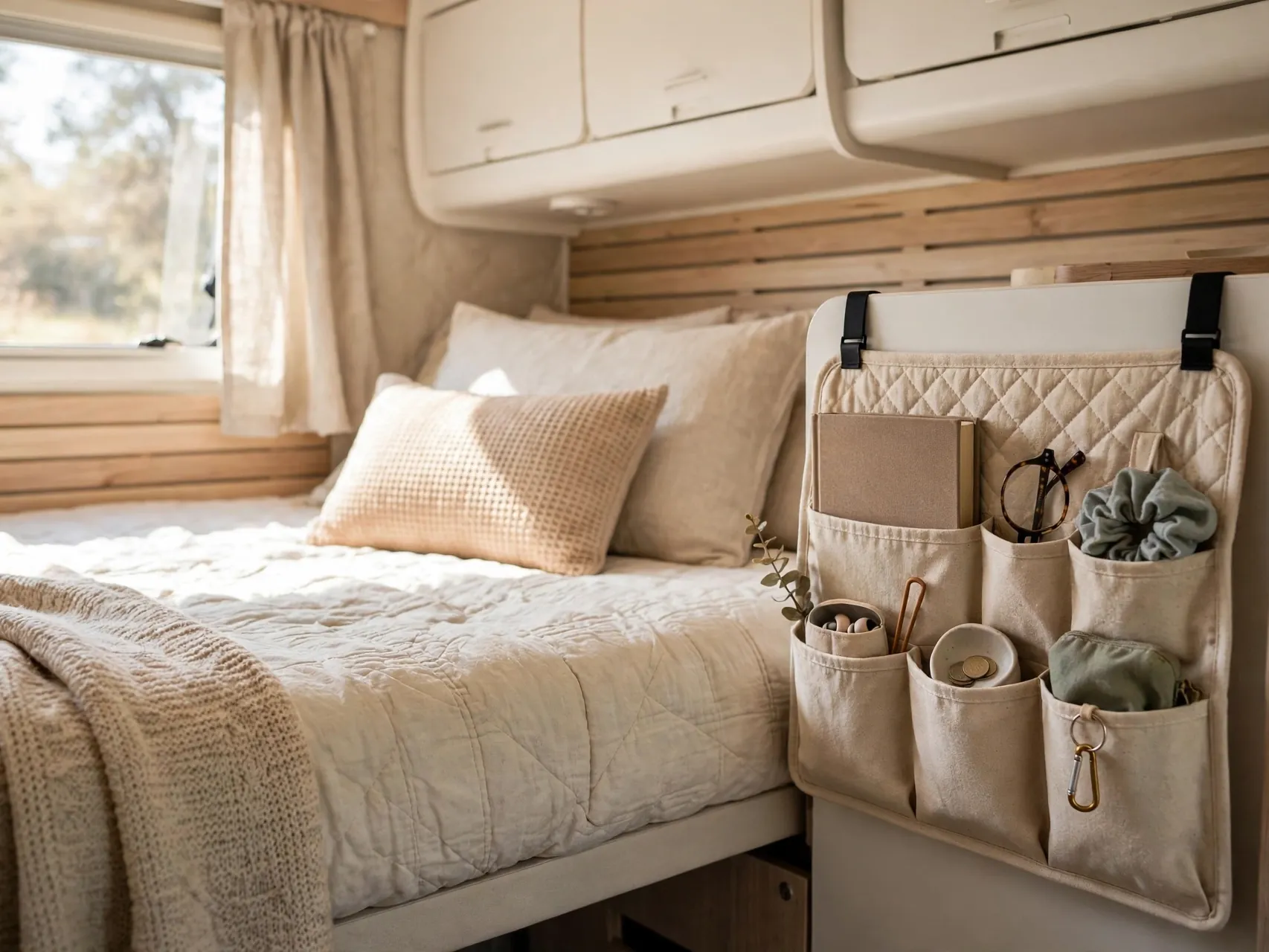
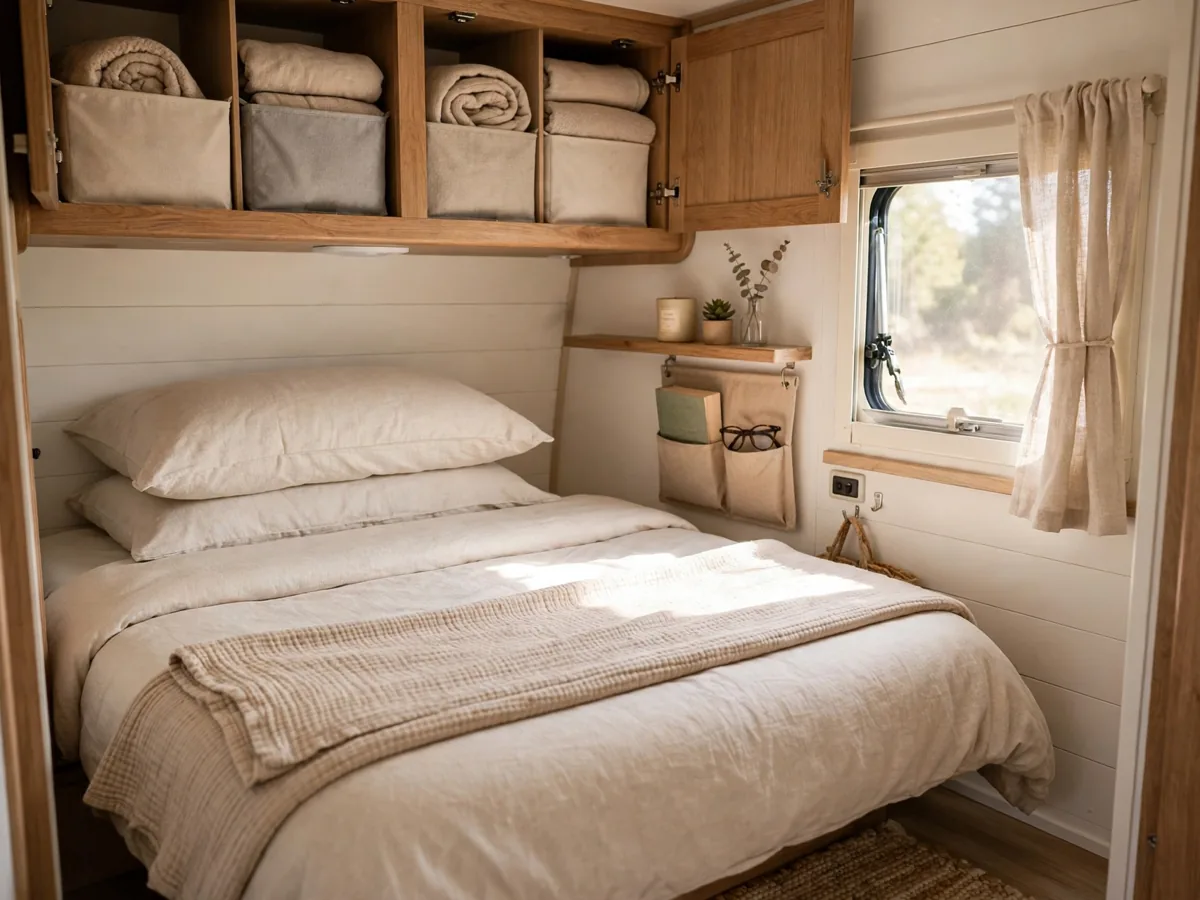
Most RV bedrooms have no room for a nightstand, so a bedside caddy does that job on the wall or mattress edge. Fabric pockets hold a phone, glasses, book, lip balm, and remote within reach, without anything rolling onto the floor at night.
Choose a caddy with several pocket sizes and attach it securely so it does not swing while you travel. Keep only nightly items in it. When the caddy becomes a junk drawer, empty it weekly and return extras to their real homes in cabinets or drawers.
3. Use Collapsible Cubes in Overhead Cabinets

Overhead cabinets are deep and awkward, and loose items vanish into the back. Collapsible fabric cubes turn each cabinet into simple pull out bins, so you can lift down sleepwear, chargers, or undergarments as one tidy unit.
Label each cube by category and keep the same cube in the same cabinet every trip. Cubes also protect cabinet contents from shifting and clattering on the road. When a category is empty between trips, the cube folds flat and stores inside another, saving space at home too.
4. Switch to Slim Non Slip Hangers
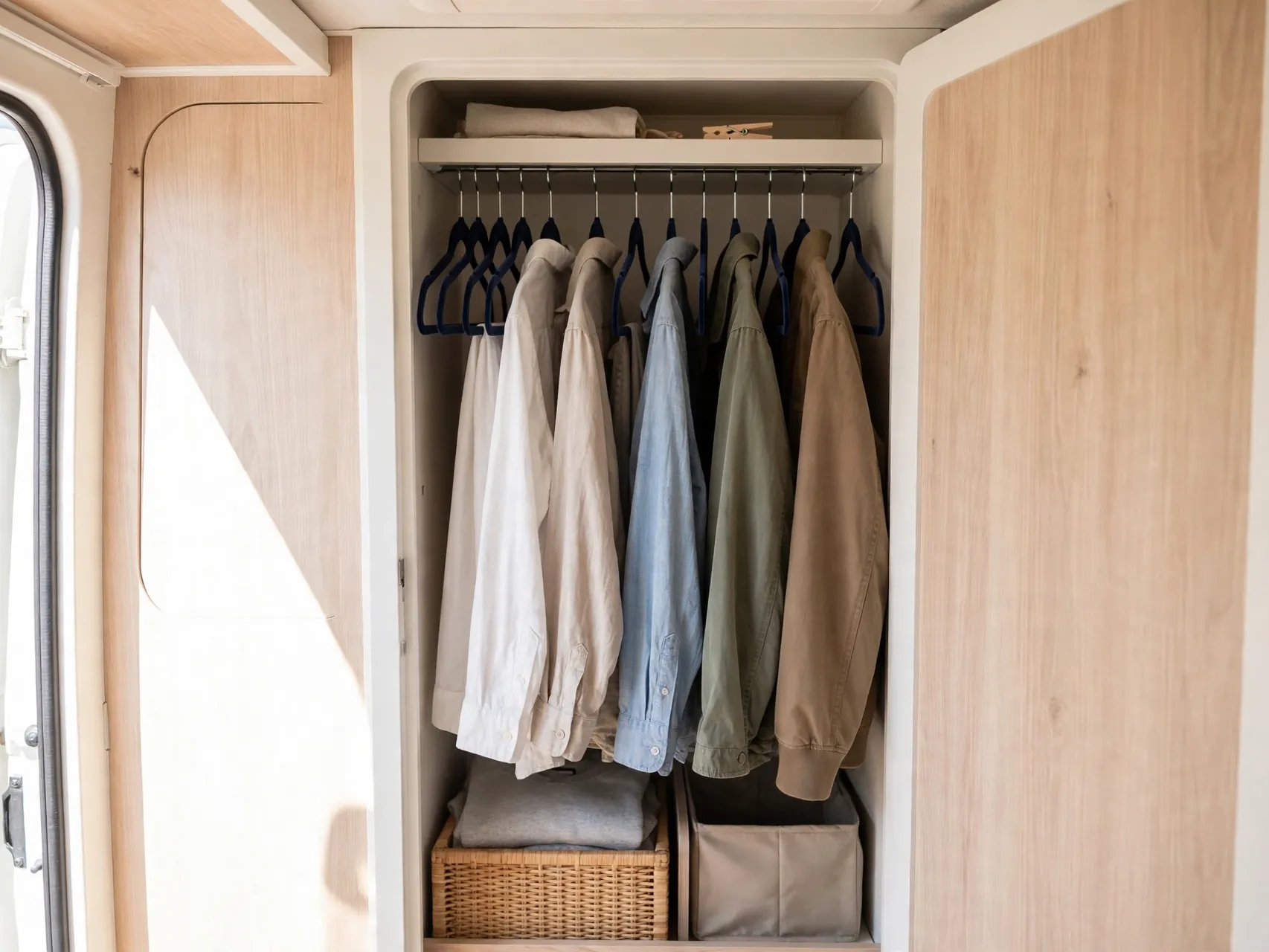
Bulky hangers waste the scarcest space in an RV bedroom, the closet rod. Slim non slip hangers hold more clothes in the same span, keep shoulders in shape, and stop garments from sliding into a heap during travel.
Cascading or multi garment hangers can double hanging room for light items, but test the weight on your rod first and keep heavy coats low or folded. Face all hangers the same way, group clothes by type, and leave a small gap so air can move and fabrics stay fresh.
5. Roll Clothes in Drawers and Add Dividers

Rolling soft clothes saves drawer space and makes every piece visible at a glance, which matters when drawers are shallow. Pair rolling with simple dividers or small boxes so socks, tees, and workout clothes do not merge into one tangled layer.
Roll by category and stand rolls upright like files, so you can pull one item without disturbing the rest. Keep the top drawer for daily items and lower drawers for less used pieces. Refold and reroll on laundry day at camp, it takes five minutes and resets the whole system.
6. Hang a Clear Over the Door Organizer

A clear over the door organizer turns a flat door into storage for shoes, accessories, toiletries, hats, and small travel items. Clear pockets mean you can see what you have, which prevents buying duplicates of things already on board.
Trim the organizer to fit your door if needed, and pad or secure the hooks so they do not rattle or scratch while driving. Keep heavier items in the lowest pockets and lighter items up high. This is also a kind home for kids items in a bunk area or family floor plan.
7. Install Small Hooks for Robes Hats and Bags

A few well placed hooks hold the items that otherwise live on the bed, robes, hats, bags, and tomorrow outfit. Adhesive hooks suit renters and newer rigs where drilling is not welcome, while screwed hooks hold more weight when the wall structure allows.
Place hooks where items will not block a walkway, window shade, or cabinet door. Give each person one or two hooks only, so the wall does not become a second closet. On travel days, move hanging items into the closet or onto the bed so nothing swings or falls.
8. Use Vacuum Bags for Extra Bedding and Towels
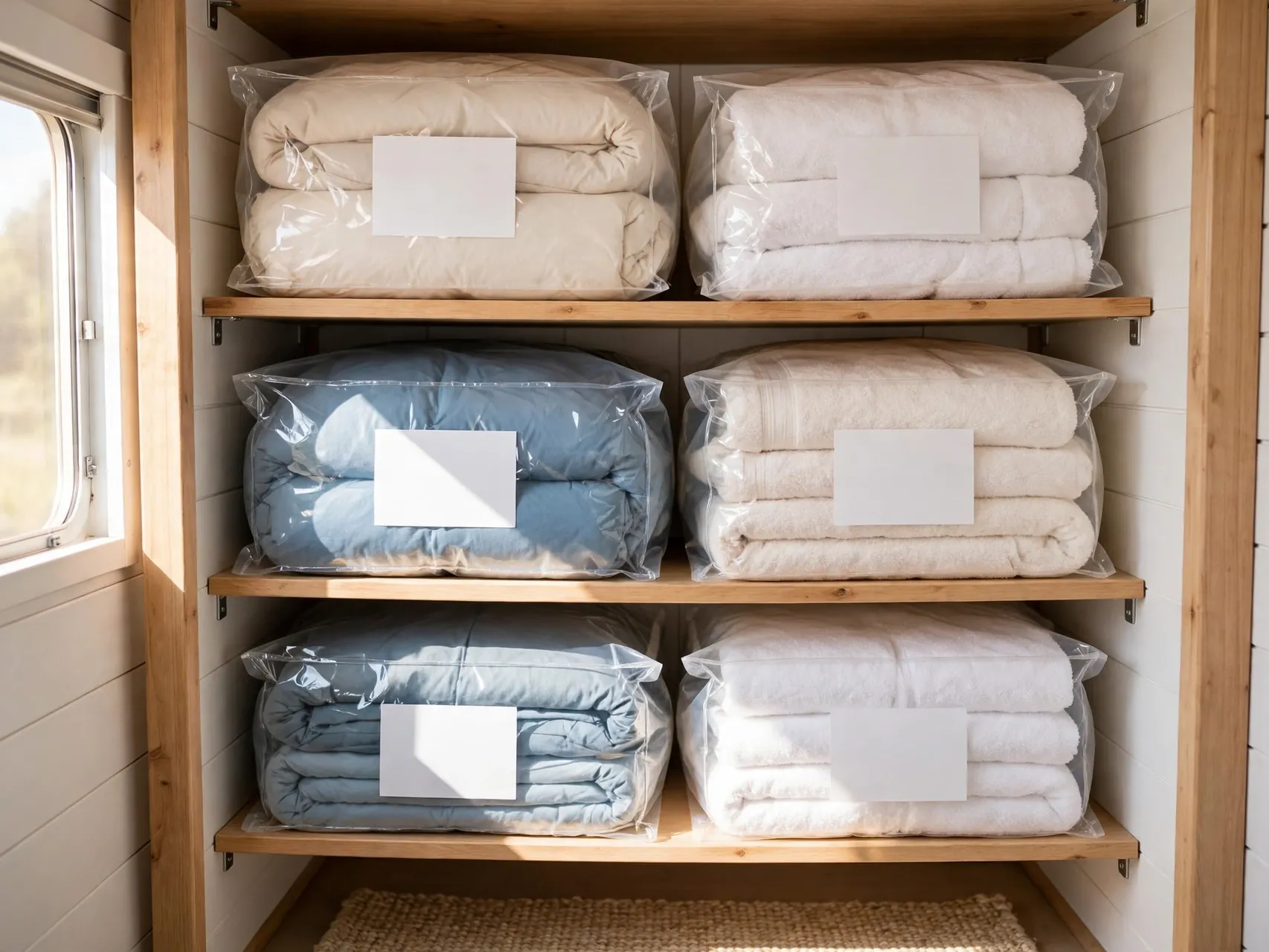
Extra blankets, guest bedding, and bulky towels shrink dramatically in vacuum bags, which frees cabinet space for daily clothes. Store the sealed bags under the bed or in the least used overhead cabinet, labeled by contents and size.
Keep one light blanket unsealed for chilly nights so you do not have to open a bag for a small need. Follow the bag maker directions, avoid overfilling, and check seals before a long trip. This system is ideal for seasonal swaps, heavy winter layers out in summer, light layers out in winter.
9. Add a Slim Shelf Above the Headboard

The wall above the headboard is often empty, and a slim shelf there can hold books, a small clock, glasses, and lightweight decor. Keep the shelf narrow so it does not crowd sleep, and choose light materials made for the space.
Secure the shelf properly for travel and store only light, soft, or well contained items on it, nothing heavy or breakable above a pillow. Add a small rail or lip if the design allows. Under shelf lighting on a battery or adhesive strip can double as a gentle reading light.
10. Label Every Bin and Basket Clearly
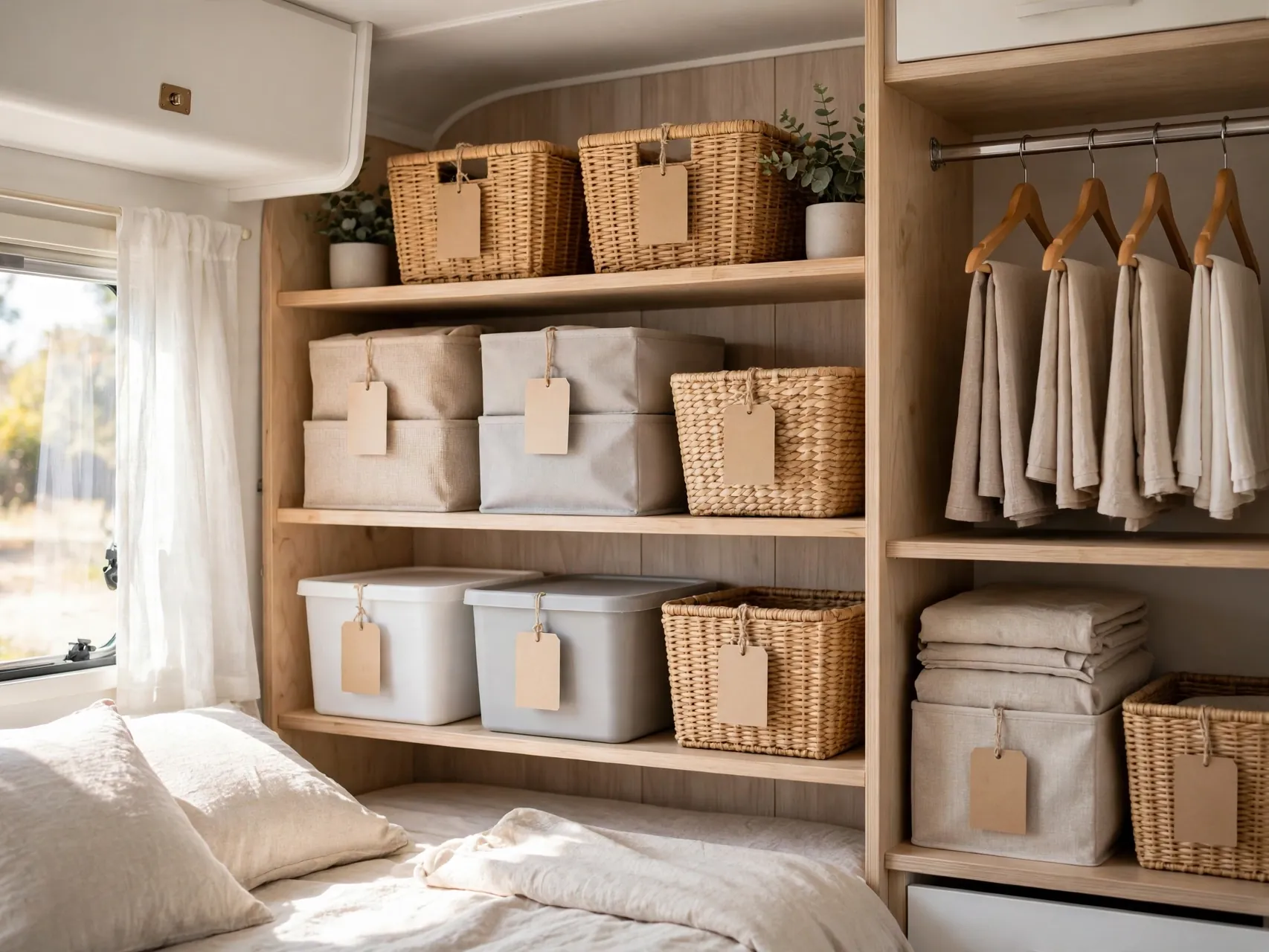
Labels are what turn storage into a system your whole travel party can follow. A bin labeled sleepwear, chargers, or first aid gets refilled correctly, while an unlabeled basket becomes a mystery box within two trips.
Use simple printed labels, tape and marker, or picture labels for kids. Label the side that faces out when stored, not the lid you only see from above. Review labels each season, since RV storage categories change as your trips change. Clear labels also make packing and unpacking at home much faster.
11. Use Tension Rods to Create Extra Closet Shelves
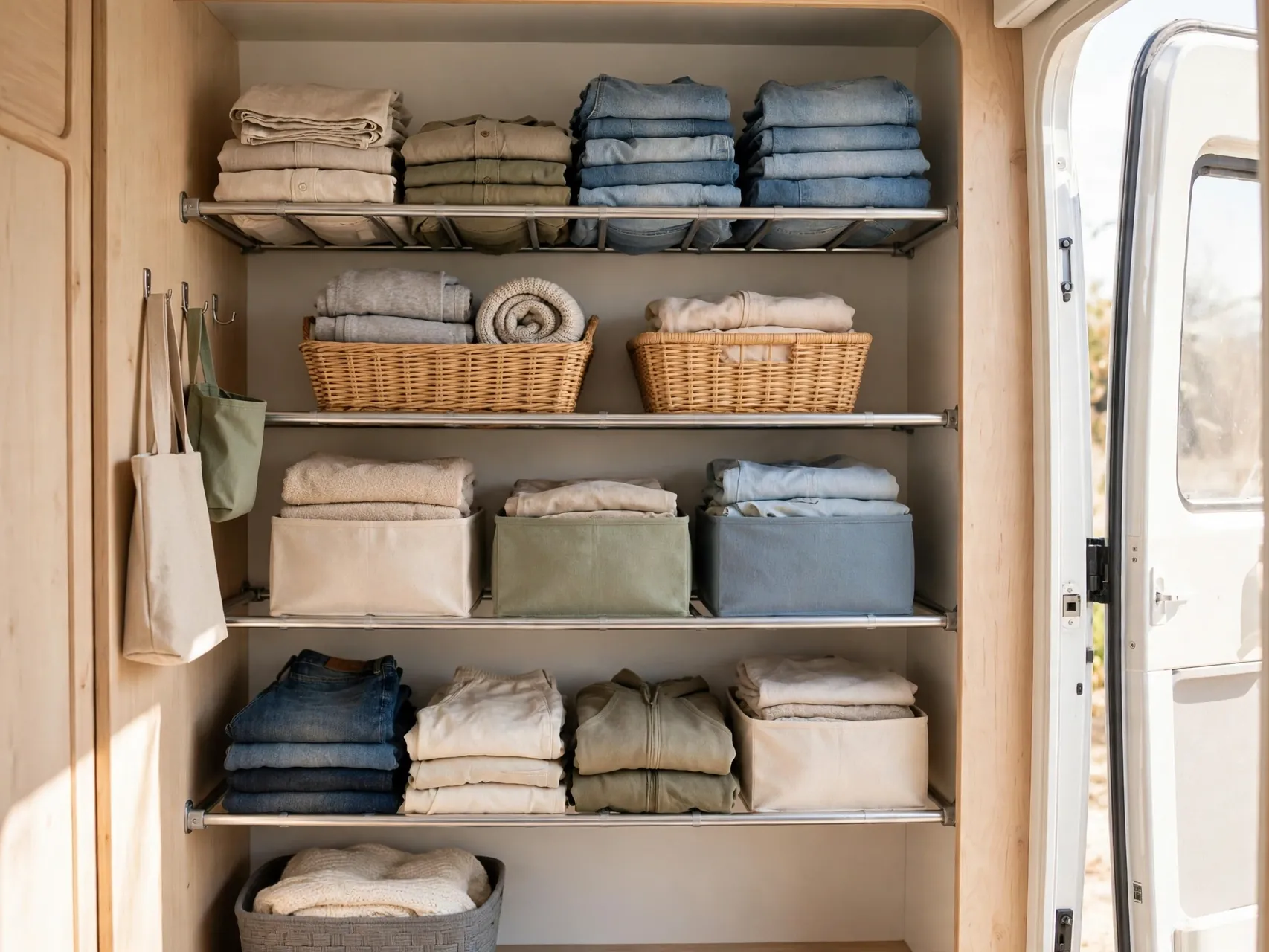
A tension rod placed across a tall closet section can create a second hanging level for short items or act as a divider that keeps folded stacks upright. Inside cabinets, a small rod can stop bottles and boxes from tipping during travel.
Measure carefully and test the rod under load before a trip, since a loose rod will drop everything at the first bump. Rubber ends grip better than smooth ones. Use rods for light duty jobs only, and remove or secure them if your closet layout changes often.
12. Keep a Small Catch All Basket by the Bed
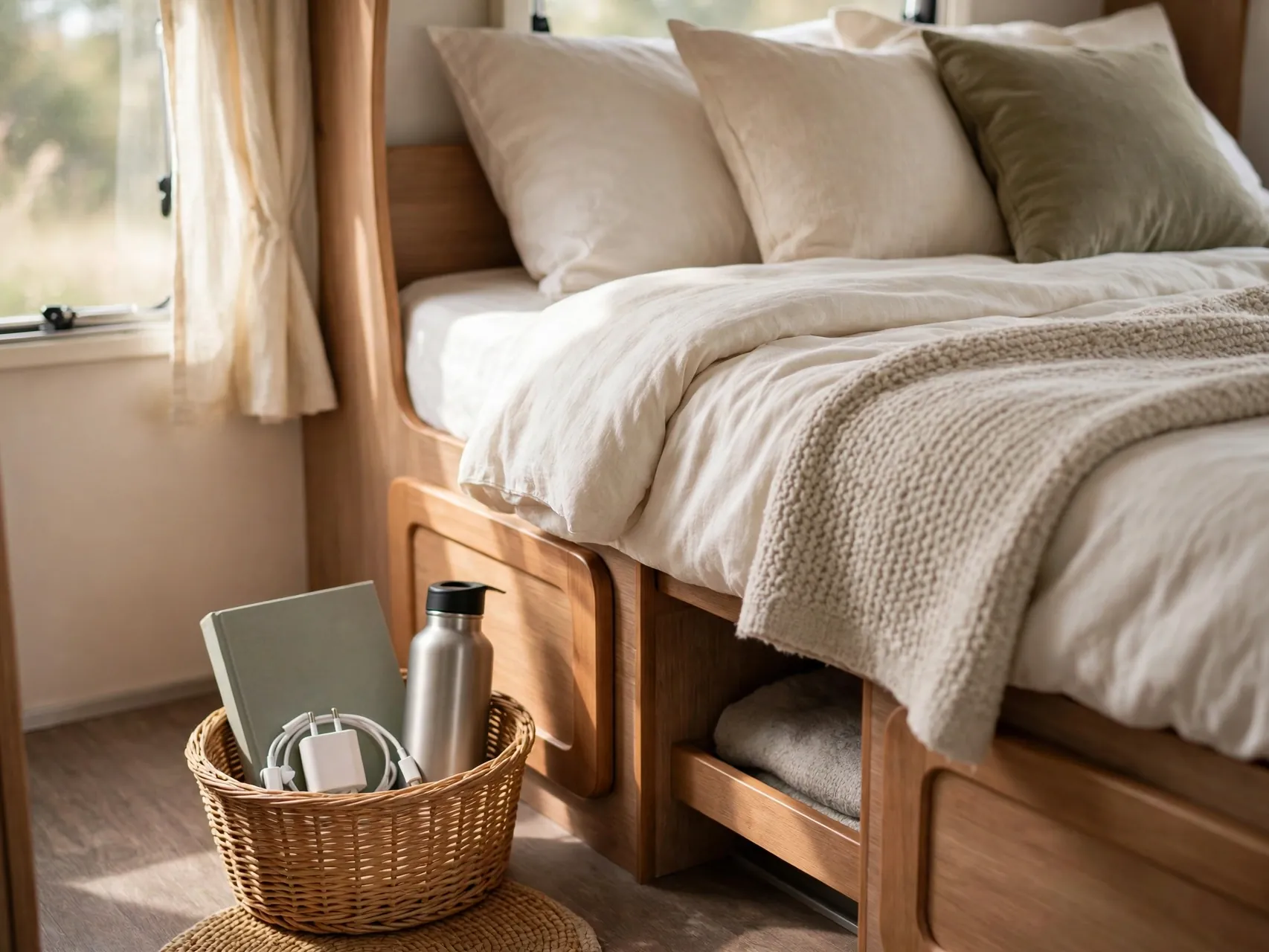
A small basket by the bed catches the day end clutter, jewelry, hair ties, coins, and the book you finished, before it spreads across every surface. It gives the bedroom a reset point that takes seconds to use.
Choose a basket just big enough for one day of bits, not a week. Empty it during your morning tidy, returning each item to its bin, drawer, or hook. A catch all only works when it is emptied often, otherwise it becomes the clutter it was meant to prevent.
13. Store Shoes in a Hanging Shoe Organizer
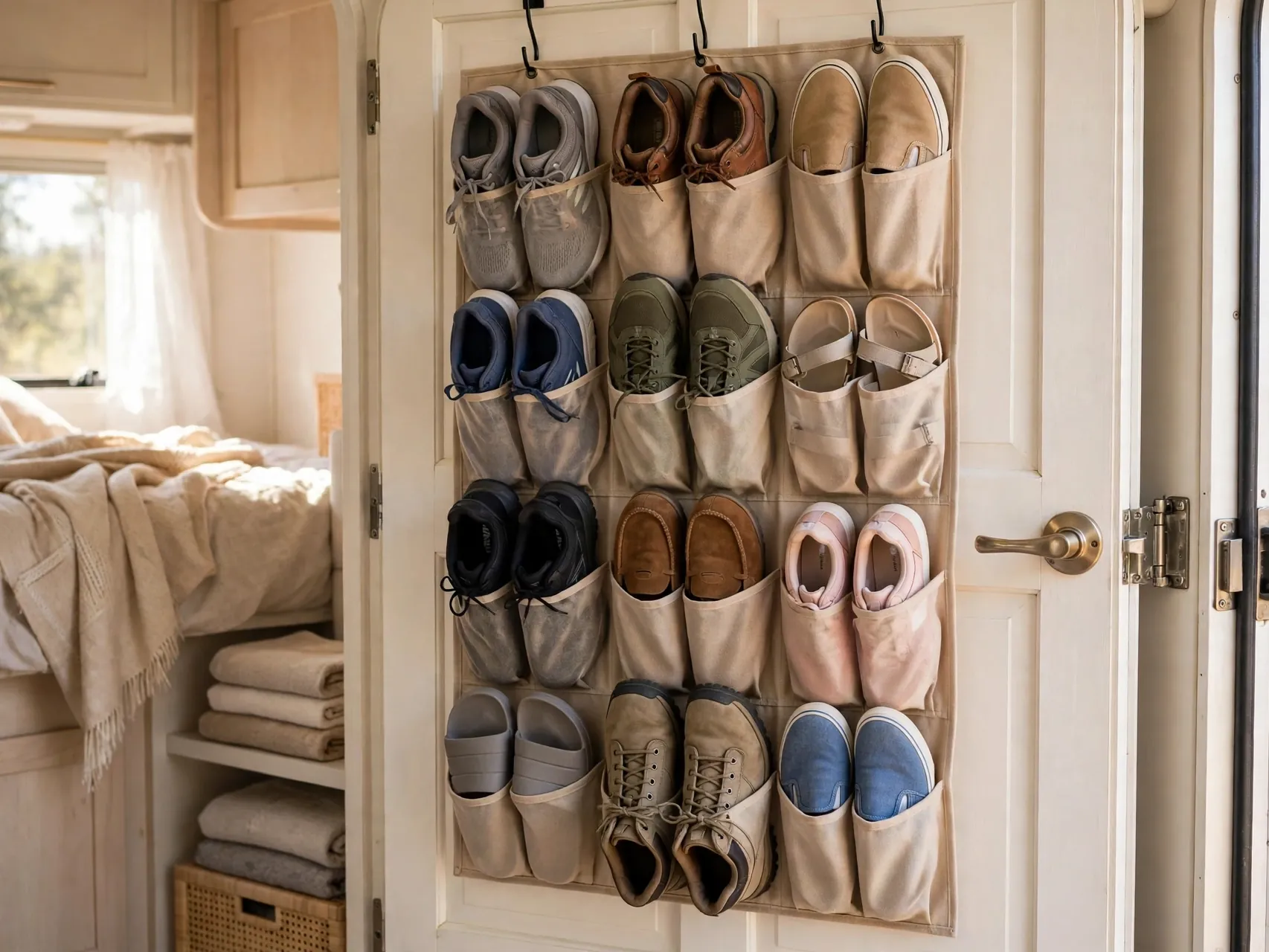
Shoes eat floor space and bring in campground dirt, so get them off the bedroom floor. A hanging shoe organizer on a closet door or wall, a slim rack at the foot of the bed, or a bin by the entry keeps pairs together and contained.
Limit each person to two or three pairs on board, everyday shoes, sandals, and one pair for hiking or dressier stops. Brush soles before storing, and keep a small mat by the RV door so most dirt never reaches the bedroom at all. Store boots separately in a bay if space allows.
14. Use Drawer Organizers for Socks and Small Items
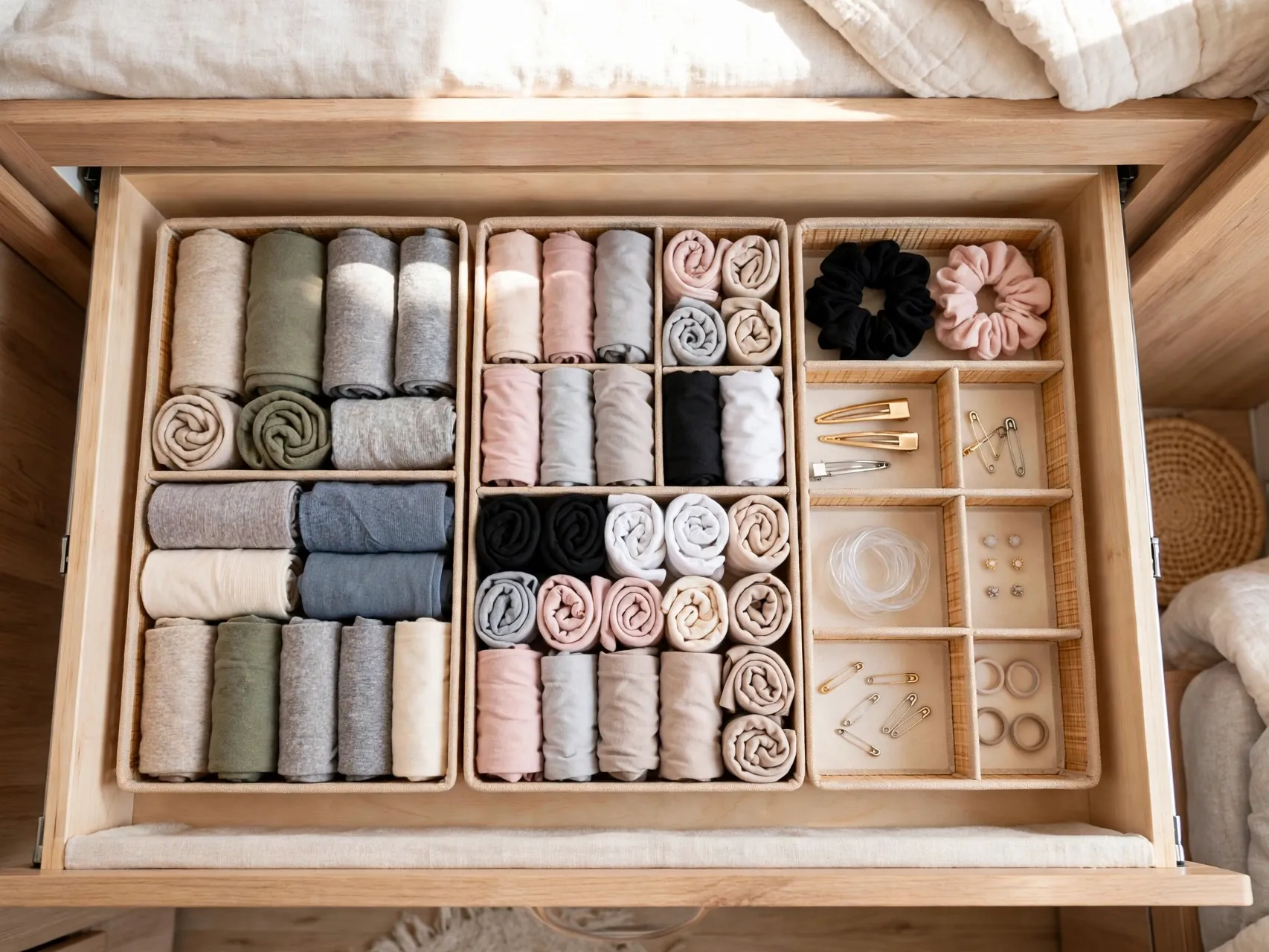
Small items are the first to turn an RV drawer into a jumble. Compartment organizers for socks, underwear, belts, and accessories keep each category in its own cell, so you can dress in dim morning light without digging.
Measure drawers before buying inserts, or make simple dividers from small boxes cut to fit. Keep like with like and give bulky items their own drawer rather than crushing them into small cells. When an organizer is full, that category is full, which is a helpful limit in a tiny bedroom.
15. Add Magnetic or Adhesive Lights Inside Cabinets
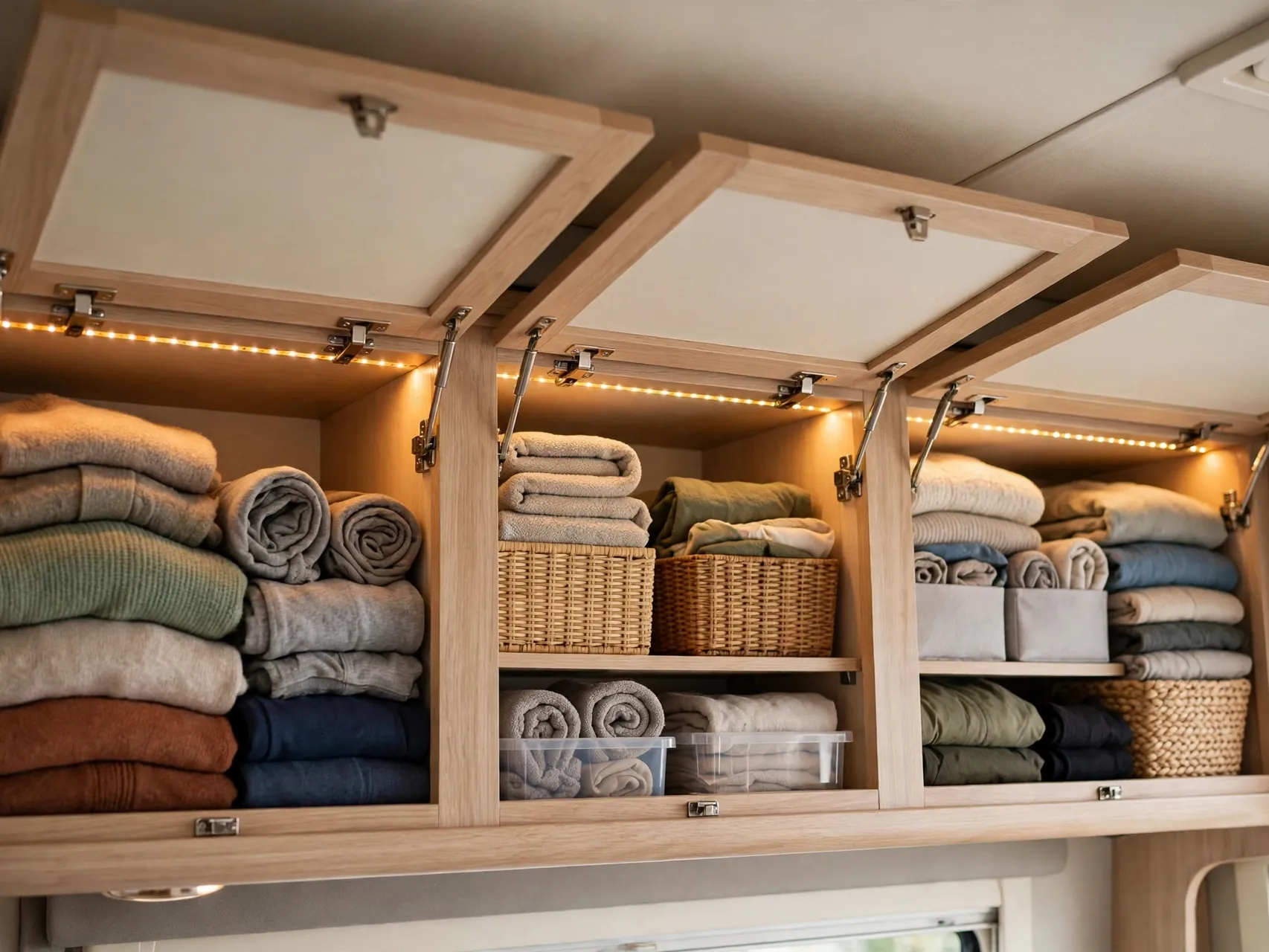
A small battery light inside a dark overhead cabinet or closet changes how usable that space feels. Adhesive or magnetic lights with motion sensing turn on when you open the door, so you can find a charger or sweater without waking a sleeping partner.
Choose rechargeable styles to cut battery waste, and mount them where they will not be knocked off by bins. Keep one small flashlight in the bedside caddy as backup. Good light also helps you spot leaks, pests, or spilled items early, before they become bigger problems on the road.
16. Keep Laundry in a Slim Collapsible Hamper

Laundry needs a contained home or it will claim the shower, a corner, and finally the bed. A slim collapsible hamper that fits in the closet, beside the bed, or in the shower between uses keeps worn clothes separate and contained.
Line the hamper with a washable bag you can carry straight to the camp laundry or home machine. Keep a small stain stick in a caddy pocket for camp meals and hikes. On long trips, do a small load mid trip rather than letting laundry outgrow its one slim home.
17. Use the Inside of Closet Doors for Accessories

The inside face of a closet door is free, flat storage for scarves, belts, jewelry, and caps. Small adhesive hooks, a hanging accessory organizer, or a slim mirror with hooks behind it can hold a surprising amount without touching shelf space.
Keep door storage light and flat so the door still closes cleanly and nothing swings against hanging clothes. This is a good home for items you wear often but that tangle easily in drawers. Check adhesive products in heat, since warm cabinets can soften some adhesives over time.
18. Create Zones for Sleepwear Day Clothes and Layers
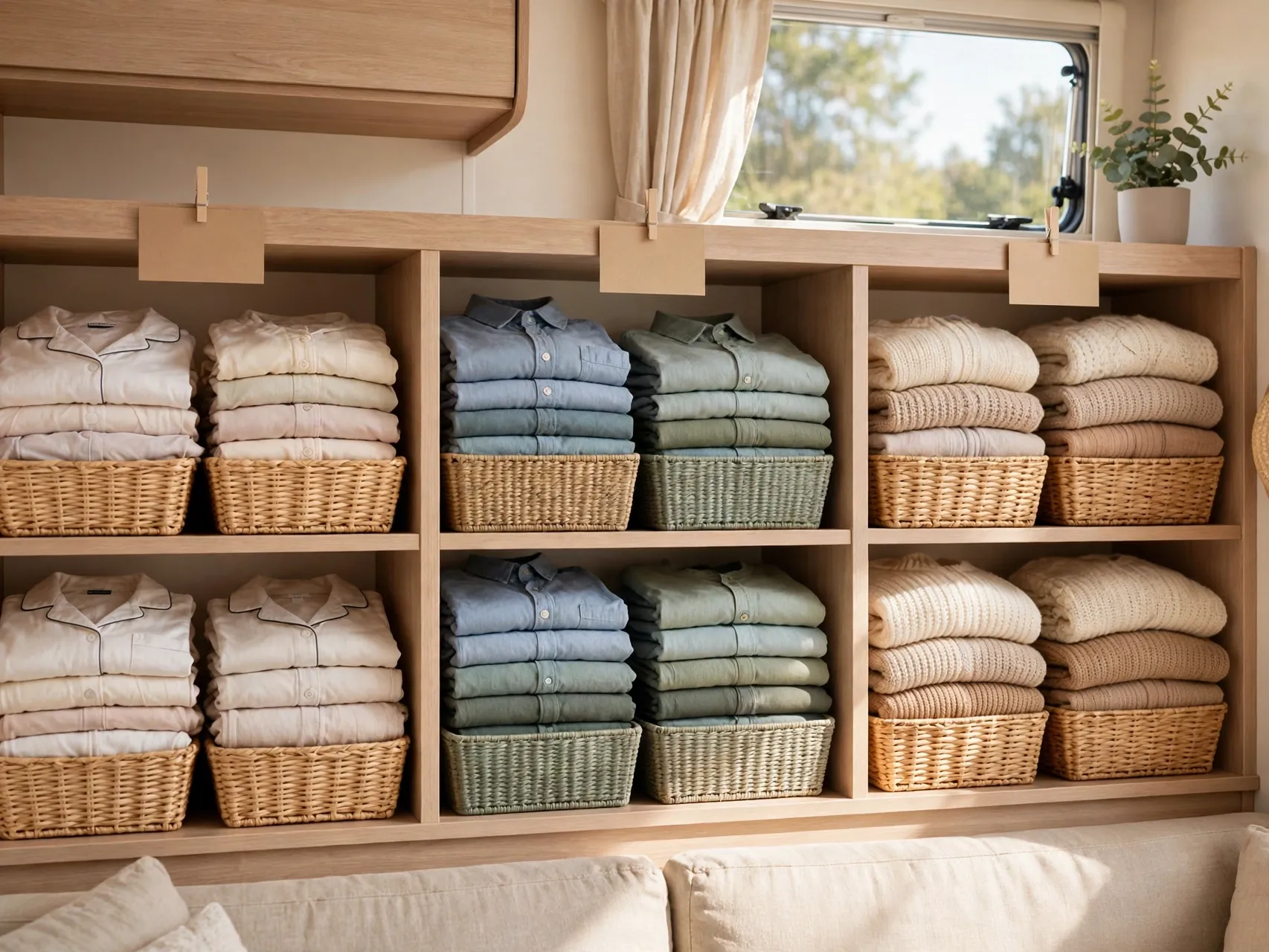
Zones keep a tiny closet working. Assign one cabinet or cube to sleepwear, one area to day clothes, and one to layers and weather gear, and keep the zones in the same place every trip, even if the contents change with the season.
Put daily zones within easy reach and occasional zones higher or deeper. Tell travel partners where each zone lives, a tidy system only one person understands will not survive a family trip. A quick zone check on packing day shows what is missing before you leave the driveway.
19. Pack a Travel Tray for Jewelry and Watches
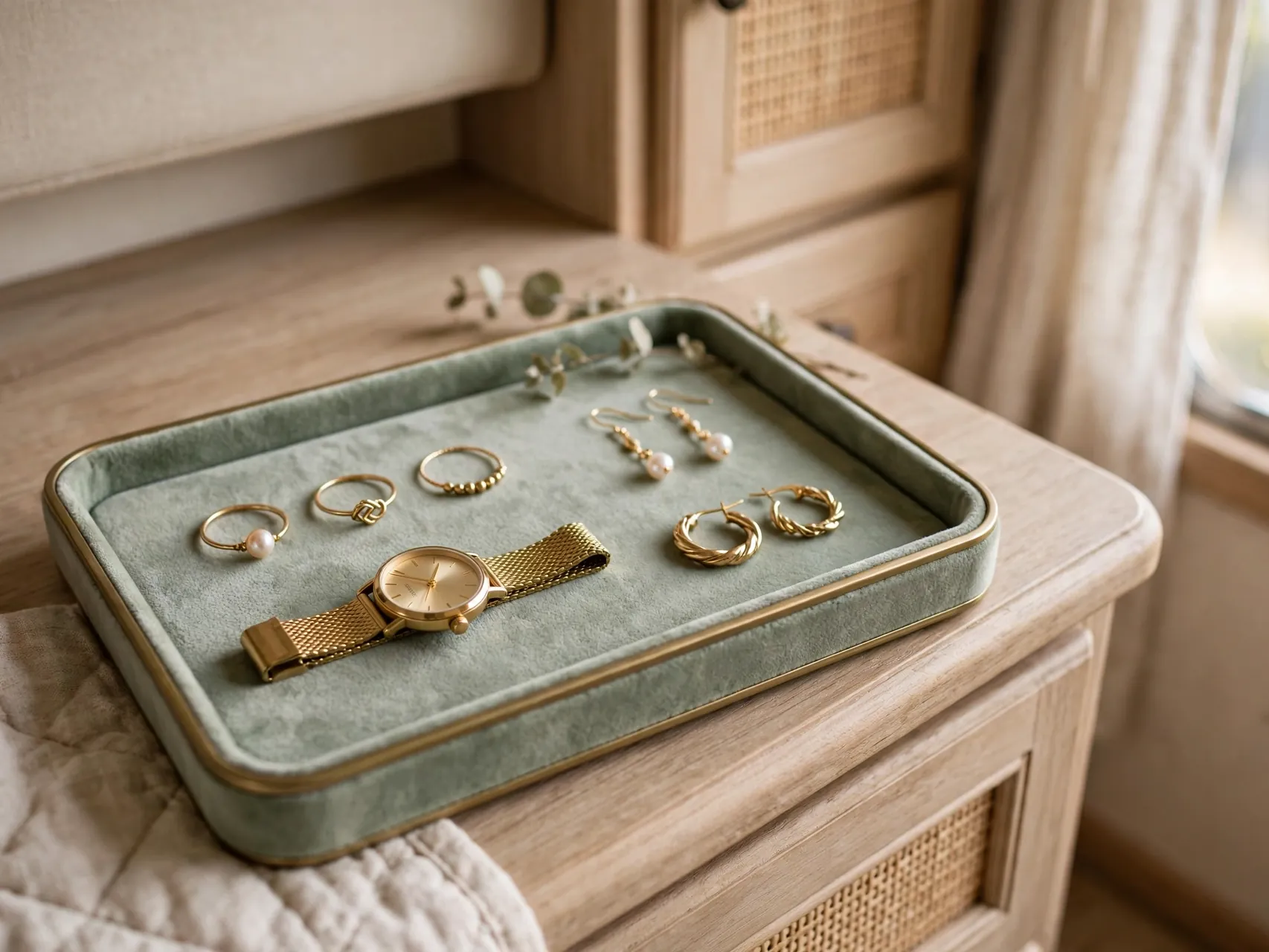
A small flat tray or zip case for jewelry and watches prevents tangled necklaces and lost earrings in bedding. Keep it in a drawer organizer or bedside caddy, and make a habit of putting pieces on the tray before sleep, never on the mattress or shelf edge.
For travel days, close the tray or case and store it inside a labeled bin so nothing spills if the rig hits rough road. Keep only the pieces you will wear on this trip. Valuable items are safer in a consistent, discreet home than scattered across tiny surfaces.
20. Use Bunk and Corner Nets for Soft Items
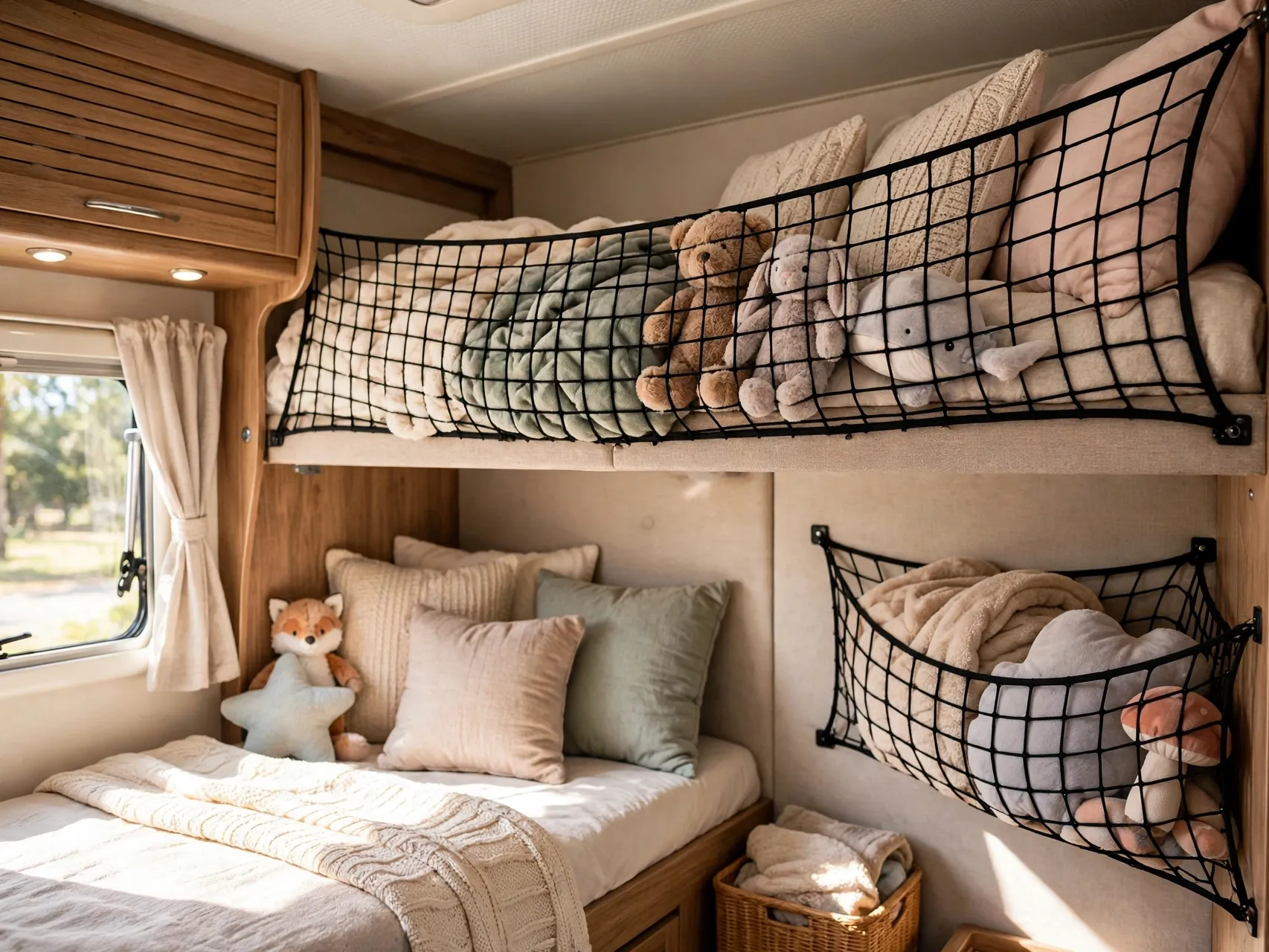
Cargo nets in bunks, corners, and above the bed hold soft items that do not stack well, stuffed animals, hoodies, pillows, and light blankets. Nets keep these pieces visible, ventilated, and off the sleep surface, which is especially helpful in kids bunk areas.
Mount nets securely following the maker guidance, and keep them for light items only. A net by each bunk gives kids ownership of their small space and a clear rule for what fits. If it does not fit in the net or their cube, it does not come on the trip.
21. Do a Five Minute Reset Every Night
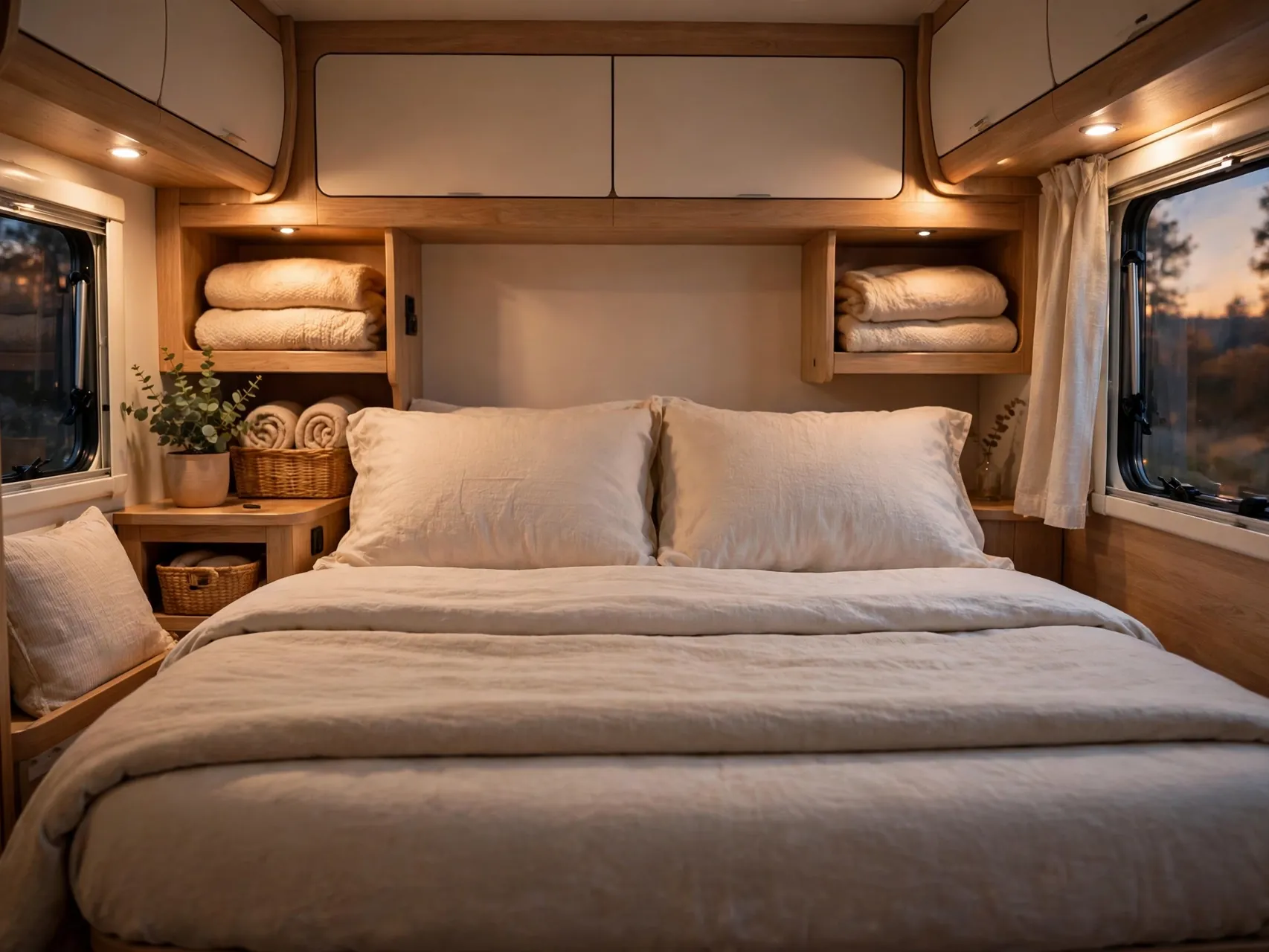
The best system fails without a tiny daily habit. A five minute reset before bed, clothes to hamper or hooks, shoes to their organizer, bins back in cabinets, surfaces clear, restores the bedroom and makes mornings in a small space feel calm.
Make the reset part of your camp routine, after dishes and before lights out. Put on music, set a timer, and let everyone handle their own zone. You will sleep better in a clear room, find things faster at dawn, and start travel days without a frantic hunt for keys, glasses, or a missing shoe.
FAQ
How do I organize an RV bedroom with no closet?
Use the same zones without the rod. Collapsible cubes in overhead cabinets become your closet, a hanging organizer on the door holds folded and small items, and under bed bins handle bulky pieces. A slim shelf and bedside caddy replace drawers. Limit clothes to what fits those homes, and roll everything so each cube works like a visible drawer.
What should I store under an RV bed?
Store flat, occasional items, off season clothing, extra bedding in vacuum bags, spare towels, and shoes you do not wear daily. Use lidded, labeled bins that slide easily and keep heavier bins low and centered. Avoid storing anything you need every morning under a heavy lift up platform, and never store hazardous or heavy loose items where they can shift in travel.
How do I stop cabinets from becoming a jumble on the road?
Contain everything. Cubes, bins, and dividers stop loose items from migrating, labels keep categories separate, and a small light makes the right bin easy to find. Pack cabinets full enough that items do not have room to tumble, using soft goods to fill gaps. Do a quick cabinet check after your first drive of a trip and adjust what moved.
How many clothes should I pack for RV trips?
Pack for your laundry plan, not for every possible outfit. For most trips, a week of mix and match pieces in a tight color palette covers daily wear, sleepwear, and layers, with laundry mid trip on longer stays. If a piece does not fit your cube, drawer, or hanger limit, leave it home. A capsule approach makes a tiny bedroom feel twice as large.
How can kids keep a bunk area tidy?
Give each child one cube, one net, and one hook, and make those the whole system. Their clothes live in the cube, soft items in the net, and their robe or bag on the hook. A nightly five minute reset with a timer keeps it fun and fast. Picture labels help younger kids return items to the right home without help.
Key Takeaways
- Work from the bed out: under bed bins, a bedside caddy, then overhead cubes covers most RV bedroom clutter.
- Contain every category: cubes, dividers, and labels stop small items from migrating while you travel.
- Use flat, forgotten surfaces: door backs, closet doors, and the wall above the headboard add storage with no floor space.
- Keep weight low and secure: heavier items belong low and centered, and nothing loose should be able to slide or fall.
- Limit by the container: when a cube, drawer, or shoe organizer is full, that category is full, which keeps packing honest.
- Reset nightly and share the system: a five minute tidy keeps the room calm, so pin these RV bedroom organization ideas to your Pinterest camping board and rebuild the same tidy bedroom at every stop.