24 DIY Pumpkin Wreath Ideas for a Gorgeous Fall Front Door
Introduction
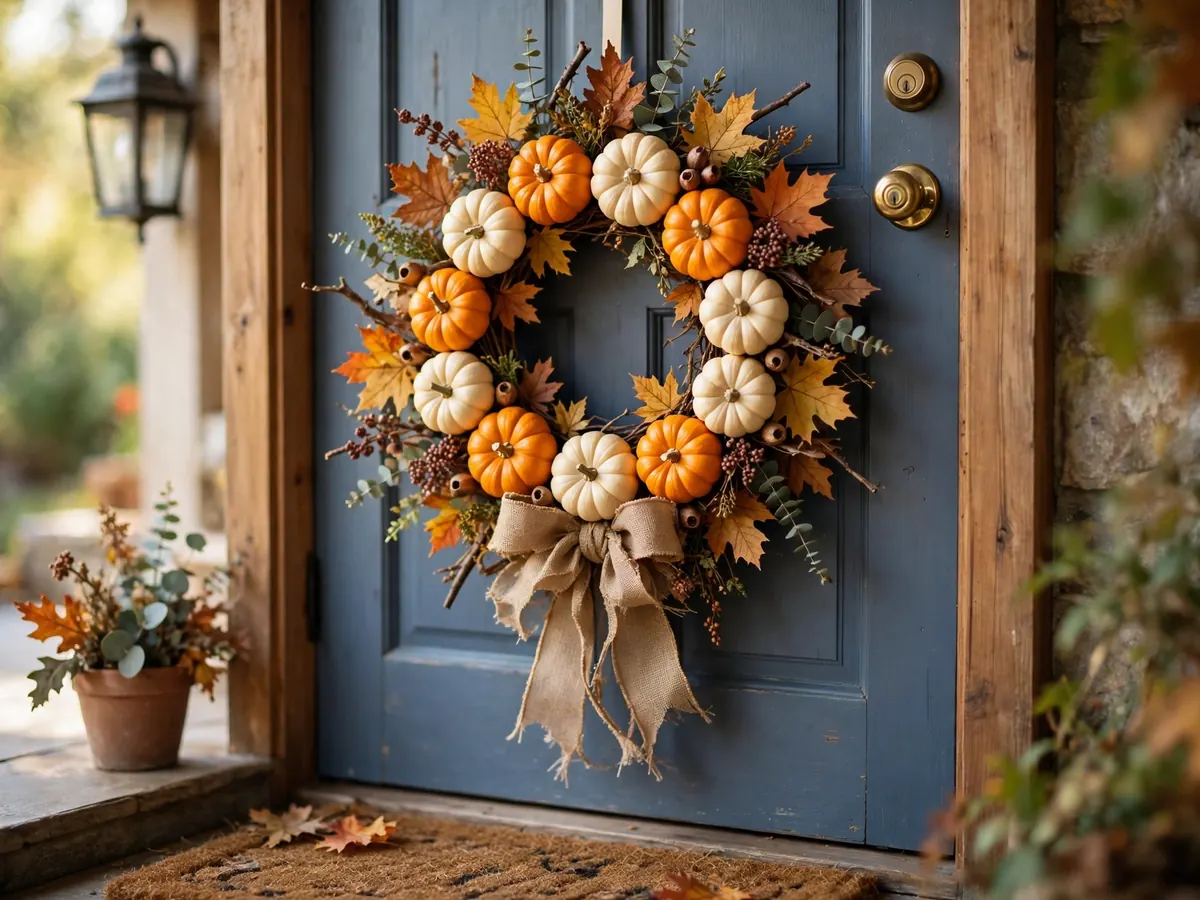
A pumpkin wreath does two jobs at once. It says fall before anyone reaches the steps, and it gives you a project you can finish in an afternoon with supplies you may already own. The best diy pumpkin wreath ideas start with a simple base, a pumpkin shaped wire form, a grapevine circle, or even a flat wood slice, and build from there.
Work in layers. Wrap or cover the base first, add foliage second, place your pumpkins third, and finish with a bow or a wrapped stem. Lay everything out before you glue or wire anything down, step back, and adjust the balance from a few feet away.
Choose faux materials for a covered porch and save delicate paper, fabric, and dried pieces for doors sheltered from rain and direct sun. Adults should handle the hot glue gun, work on a protected surface, and let each section cool before you hang the wreath and test its weight on the hook.
1. Wrap a Pumpkin Form in Cream Fabric for a Soft Farmhouse Look

Start with a pumpkin shaped wire form and strips of cream jersey, an old T-shirt, or lightweight sweater fabric. Wrap each curved section tightly, overlapping the strips so the metal disappears, and secure the ends at the back with glue. The fabric stretches into soft ridges that read clearly as a pumpkin.
Wrap the stem in jute twine, add a small burlap bow at the top, and tuck in two or three faux leaves. This neutral version suits almost any door color and pairs well with cream pumpkins and mums already on the porch.
2. Build a Burlap Ruffle Pumpkin With Big Loose Loops

Push wide burlap ribbon up through a pumpkin wire form, twist, and push it through the next opening to form loose ruffles. Keep working around the form until the whole pumpkin looks full and gathered. Burlap holds its shape outdoors better than most fabrics and gives instant rustic texture.
Finish with a short piece of driftwood or a wrapped toilet paper tube covered in twine for the stem. Add one plaid bow and a few acorns at the top, and keep the rest simple so the ruffles stay the star.
3. Cover a Grapevine Wreath With Mini Pumpkins All the Way Around
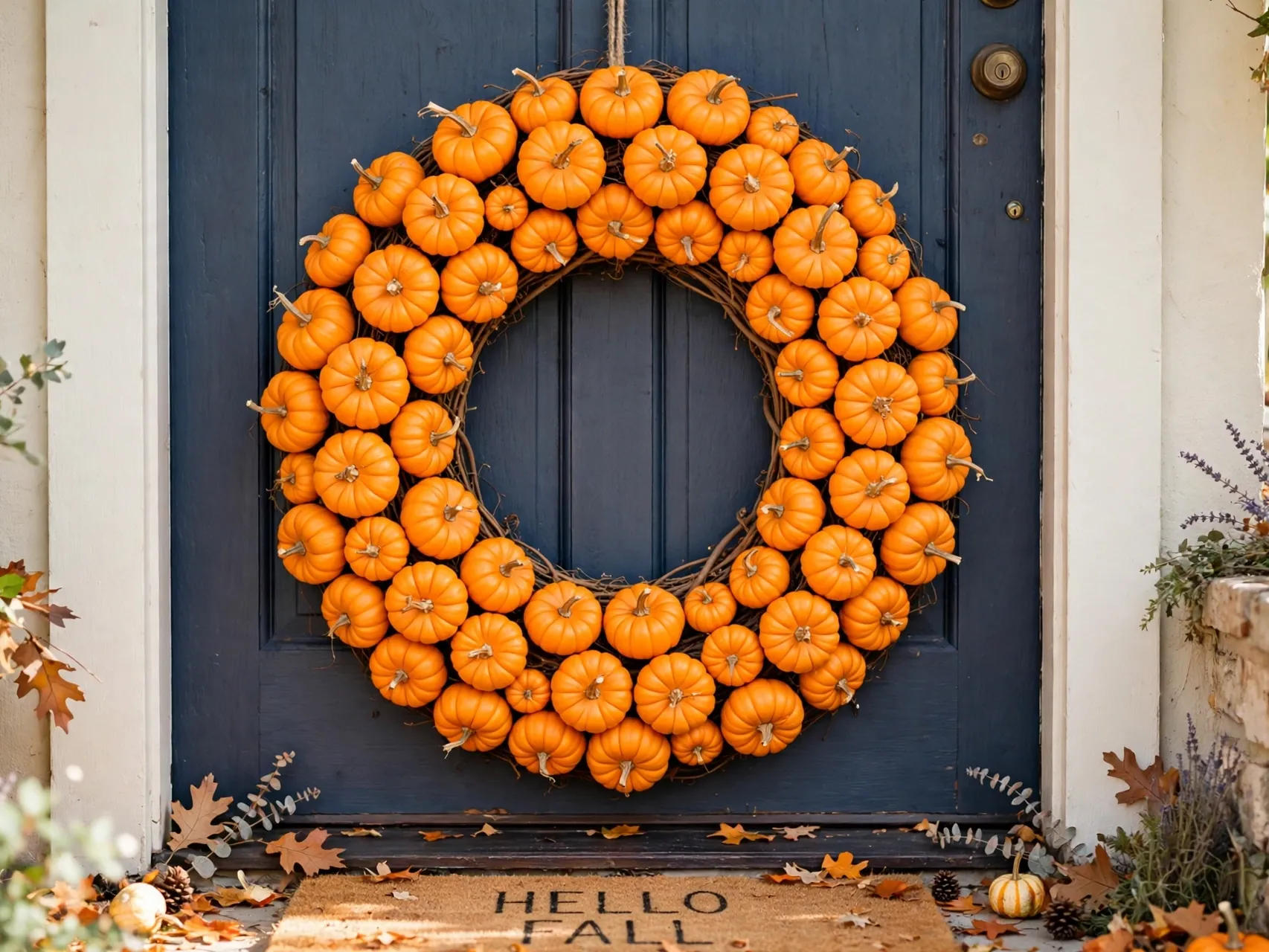
A grapevine base plus a ring of small faux pumpkins is the classic full look. Wire each mini pumpkin to the vine by its stem or a floral pick pushed into the base, alternating orange, cream, and pale green so the color moves around the circle instead of clumping.
Fill gaps with small leaves and berry sprigs tucked between the pumpkins. This wreath is heavier than most, so hang it on a sturdy hook, check that the door still opens freely, and bring it inside during strong wind.
4. Go Asymmetrical With a Cluster on One Side Only

Leave most of a grapevine or twig wreath bare and build one generous cluster at the lower side. Group three pumpkins in different sizes, add leaves and a bow, and let a short trail of foliage fade out along the base. The empty space is part of the design.
This is one of the easiest pumpkin wreath ideas for fall for beginners, because you need fewer supplies and the placement forgives mistakes. It also suits modern doors, where a full ring of orange can feel like too much.
5. Make a White Pumpkin Wreath for a Calm, Neutral Door

White and cream pumpkins on a pale greenery base create a quiet wreath that works from early September through Thanksgiving. Mix matte and slightly glossy finishes so the all light palette still has depth, and add eucalyptus or dusty miller style leaves for soft contrast.
A thin sage or taupe ribbon woven through the base ties the colors together. This version photographs beautifully in bright light and looks especially good on dark doors, where the pale pumpkins stand out without shouting.
6. Add Sunflowers for a Bright Harvest Welcome
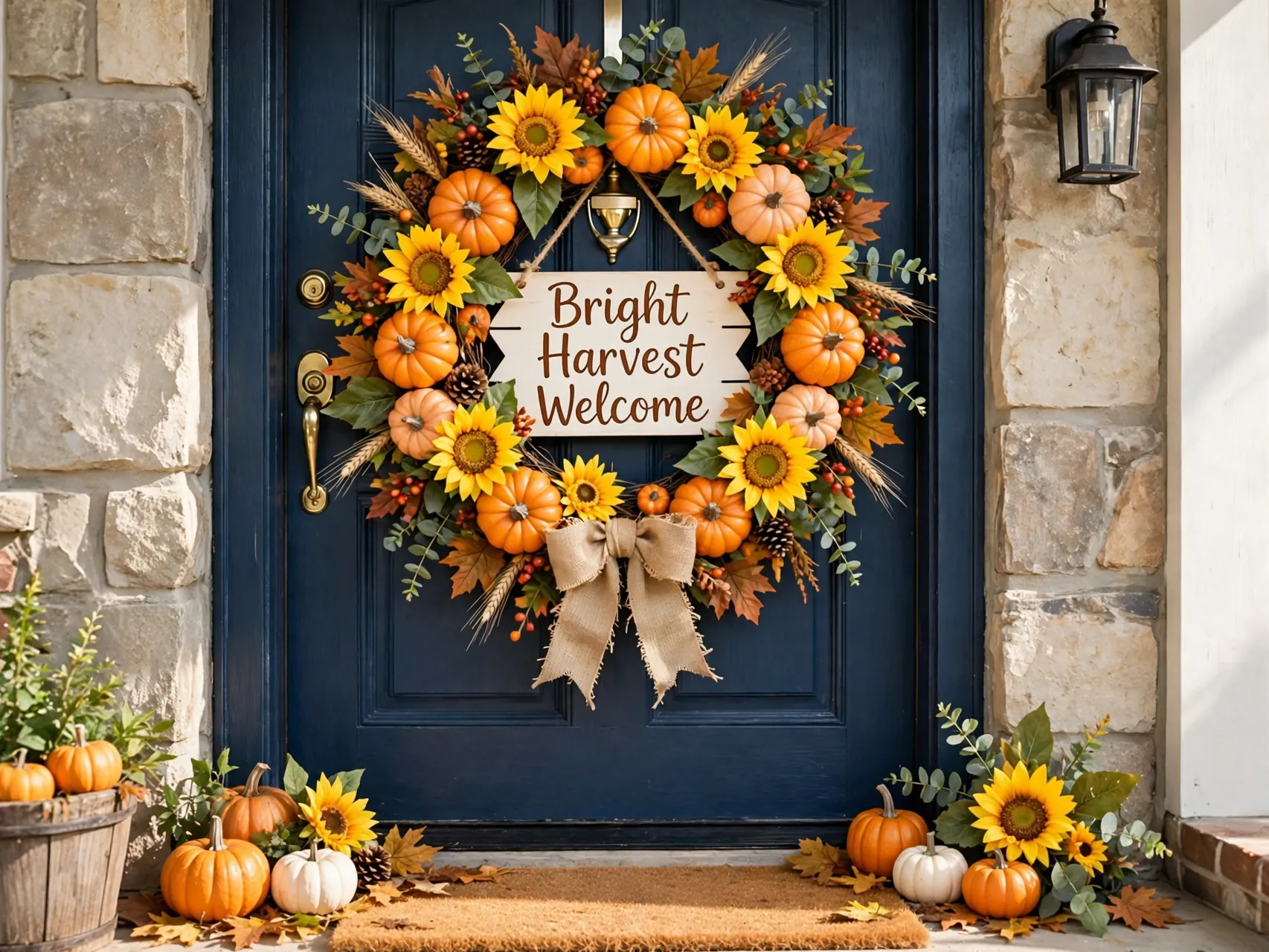
Tuck two or three large faux sunflowers among mini pumpkins on a foliage base and the wreath turns cheerful in seconds. Place the flowers first at uneven points, then fill around them with pumpkins and leaves so nothing lines up in a stiff row.
Sunflowers carry a lot of yellow, so keep the bow simple in burlap or black and white check. This is a happy choice for homes that want fall color before the leaves outside have even started to turn.
7. Layer Plaid Ribbon Through a Pumpkin and Leaf Base

Weave wide plaid ribbon in loose loops through a wreath of faux leaves and small pumpkins. Pinch the ribbon at intervals and wire each pinch to the base, letting the loops puff out between attachment points. The pattern adds farmhouse warmth without extra objects.
Match the plaid to a porch pillow or a doormat for a pulled together entry. Because ribbon fades in strong sun, this version lasts longest on a covered porch or a door that gets mostly morning light.
8. Use Dried Wheat and Grasses for a Golden, Natural Wreath

Bundle dried wheat, grasses, and a few cream pumpkins around a straw or grapevine base for a wreath that glows in late afternoon light. Wire small bundles in one direction so the stems overlap like shingles and the base stays hidden.
Keep this wreath under cover, since dried materials shed and soften in rain. It pairs naturally with a straw bale, a lantern, and real pumpkins on the steps, giving the whole entry one golden, harvested feeling.
9. Paint Mini Pumpkins in Muted Sage, Rust, and Terracotta

If bright orange fights your house colors, paint faux mini pumpkins in sage, rust, terracotta, and mustard before wiring them on. Matte craft paint softens the plastic shine and lets you build a palette that matches your door, shutters, or porch furniture.
Let painted pumpkins dry fully before handling them, and keep the painted pieces as decor only. A muted wreath feels calm and current, and it carries through the whole fall season instead of reading as Halloween only.
10. Make a Tiny Pumpkin Wreath for a Pantry or Interior Door

Scale the idea down with a small grapevine base and five or six miniature pumpkins for a pantry door, a kitchen wall, or the side of a hutch. Small wreaths bring fall into rooms that never get seasonal decor, and they take minutes to make.
Hang it from a ribbon over the top of the door or on a small removable hook. Indoors, you can safely use delicate touches here, like paper leaves or a fabric bow, that would not survive outside weather.
11. Lean a Flat Pumpkin Wreath on the Mantel Instead of Hanging It

A flat backed pumpkin wreath made on a wood slice or foam half form can lean on the mantel against a mirror or framed print. Build it lighter than a door wreath, with pumpkins glued rather than wired, and keep the back smooth so it sits steady.
Keep it well away from any flame. If you style candles nearby, use LED pillars and keep real candles at least 12 inches from the wreath and anything that can burn, and never leave a burning candle unattended in the room.
12. Add Pinecones and Berries for a Woodland Pumpkin Mix
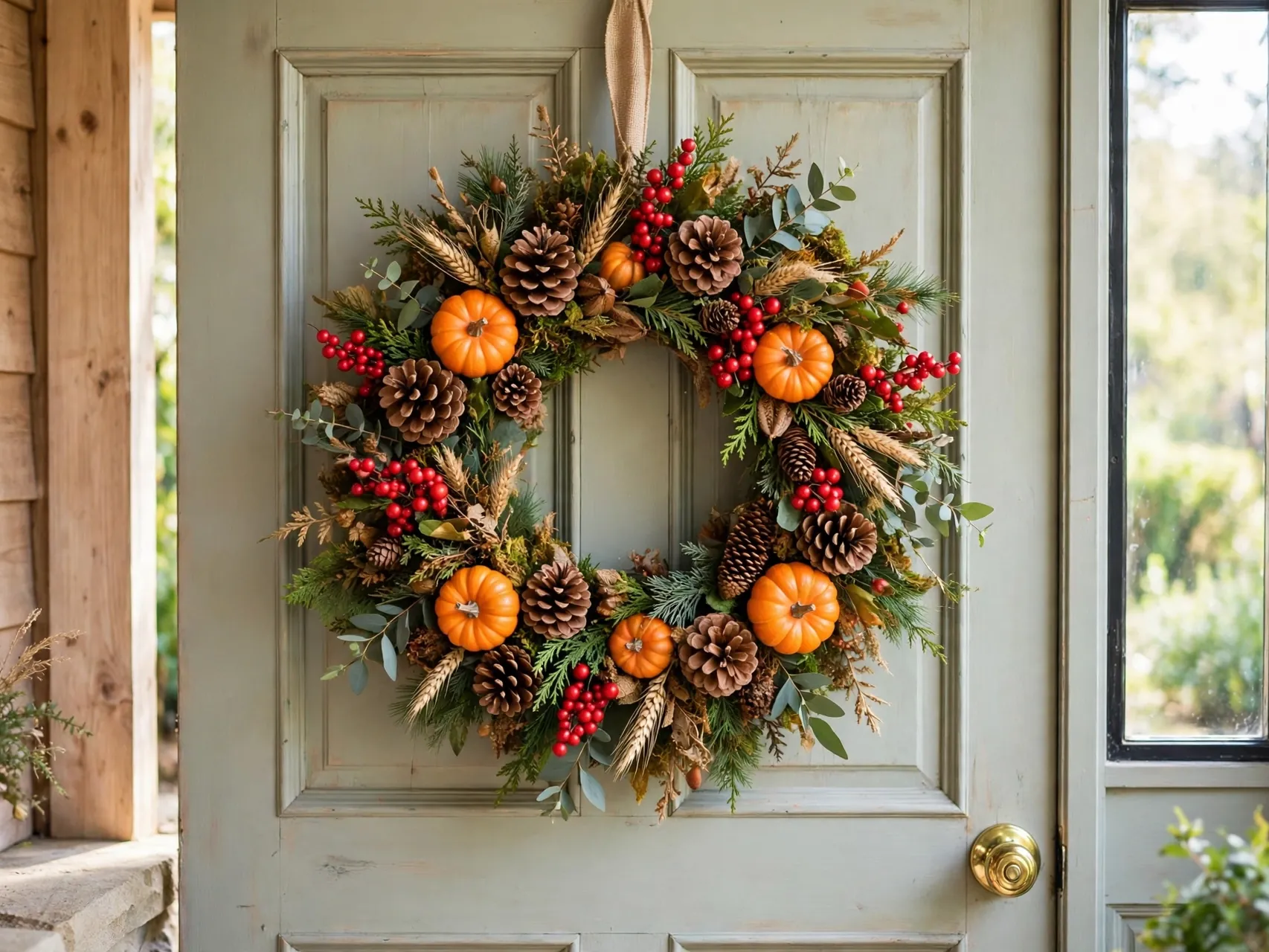
Mix clean, fully dry pinecones and faux berry sprigs between mini pumpkins on a twig base. The cones add deep brown texture, the berries add small pops of red, and together they push a simple pumpkin wreath toward a gathered woodland feel.
Rinse foraged cones and let them dry completely outdoors before crafting, and check them for insects. Wire cones through their lower scales instead of relying on glue alone, because cones are heavy and doors move often.
13. Wrap the Whole Form in Orange Yarn for a Cozy Knit Effect

Wind chunky orange yarn around and around a pumpkin shaped form until every wire is covered, then add a green yarn or felt stem. The result looks soft and handmade, almost like a knitted pumpkin, and it is a gentle project to do while watching a movie.
Yarn belongs indoors or under a deep porch roof, away from rain. Hang this one on an interior door, a nursery door in fall colors you love, or above a reading corner where its soft texture can be appreciated up close.
14. Build a Pumpkin Wreath From Wood Slices and a Painted Center

Arrange wood slices in a pumpkin outline on a flat backing board, paint the center slices soft orange, and leave the edge slices natural. Add a short branch as the stem and a few felt leaves. The weight and grain make this wreath feel crafted rather than bought.
Because wood is heavy, hang it on a wall stud hook indoors or on a strong door hanger, and check the backing screws before the season starts. Seal painted areas if the wreath will live on a covered porch with humid air.
15. Tuck Eucalyptus Around Velvet Pumpkins for a Soft, Elegant Mix

Velvet pumpkins in blush, sage, and cream wired onto silvery eucalyptus make the dressiest wreath in this list. The matte fabric and cool leaves suit formal entries, dining rooms, and doors painted in deep green or black.
Velvet and faux eucalyptus dislike rain, so treat this as a covered porch or indoor wreath. Store it in a box with tissue between the pumpkins so the velvet pile does not crush flat over winter.
16. Make a Candy Corn Colored Wreath for a Playful October Door

Work in three bands of color, cream at the top, orange in the middle, and yellow at the base, using small pumpkins, yarn pompoms, or wrapped fabric sections. The candy corn reference is unmistakable and kids love spotting it from the sidewalk.
Keep the bow plain white or black so the bands stay readable. After Halloween, this wreath can move to a playroom or classroom door, where its bright, silly energy still fits through Thanksgiving week.
17. Use Real Mini Pumpkins on a Fresh Wreath for a Short, Special Display
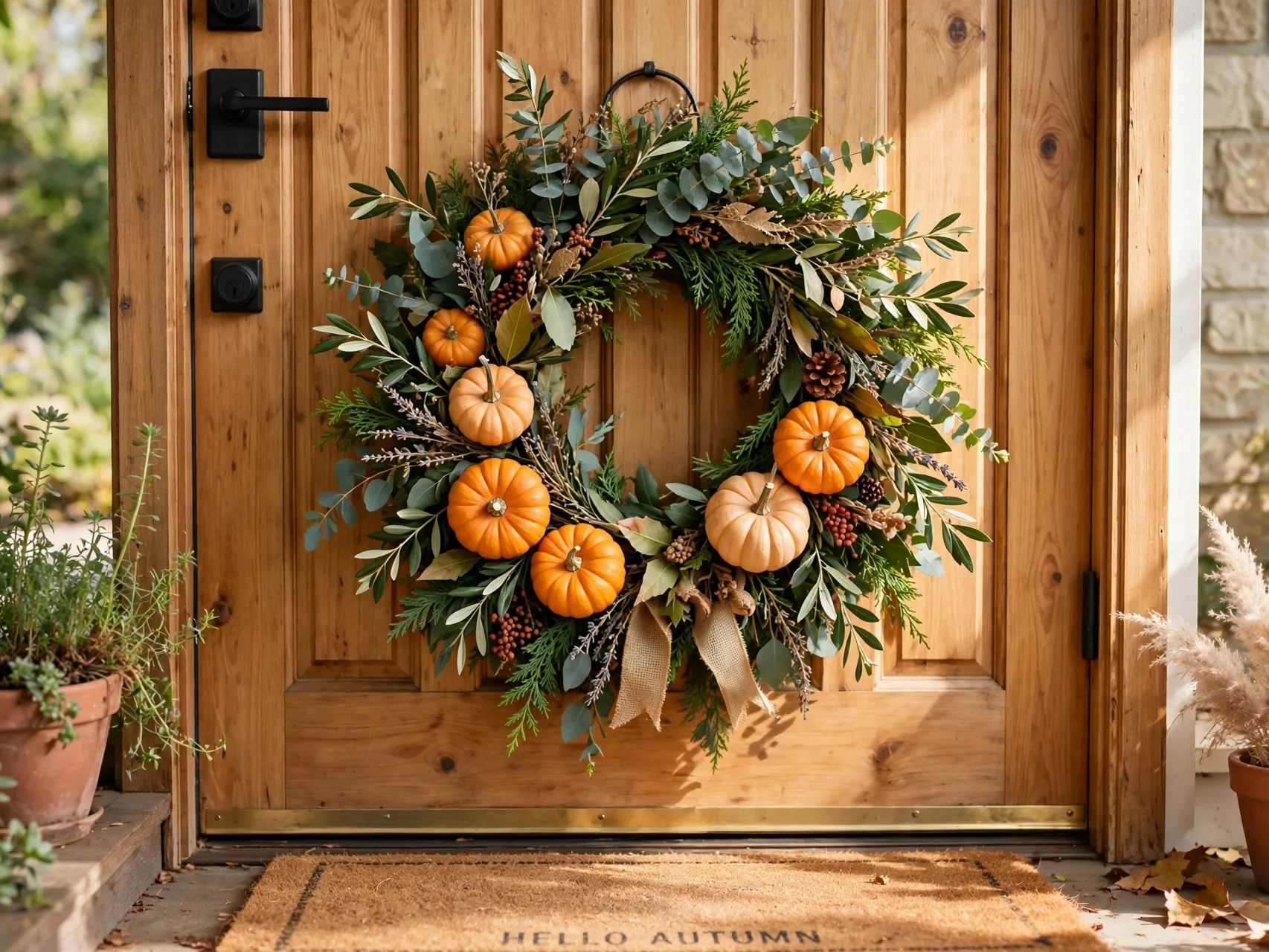
For a party weekend, wire real mini pumpkins and fresh leaves onto a grapevine base for a wreath with genuine weight and color. Skewer each pumpkin on a sturdy floral pick first, then wire the pick to the vine so nothing rolls or drops.
Real produce has a short life outdoors. Make this wreath a day or two before your event, hang it in shade, and compost the pumpkins once they soften. Never leave real pumpkins rotting on a door, since they stain paint and attract insects.
18. Add a Hand Lettered Wood Sign to the Center

Hang a small wood sign in the open center of a pumpkin wreath with a word like Gather, Welcome, or Hello Fall painted or stenciled on it. Wire the sign at two points so it hangs level and does not swing against the door every time it opens.
Keep the lettering large and simple so it reads from the street. A sign also solves the empty middle problem on large wreaths, giving the eye a resting point among pumpkins and leaves.
19. Make a Book Page and Pumpkin Wreath for a Vintage Touch

Roll pages from a damaged, unsalvageable old book into cones and glue them in a ring on a cardboard base, then set two or three small cream pumpkins in the center. The aged paper adds quiet vintage texture that suits libraries, studies, and homes with antique furniture.
Paper stays indoors, away from moisture and any flame. This is a thoughtful way to reuse a book that is already falling apart, and the neutral palette lets it hang from September well past Thanksgiving.
20. Cluster Pumpkins at the Bottom With a Big Bow on Top
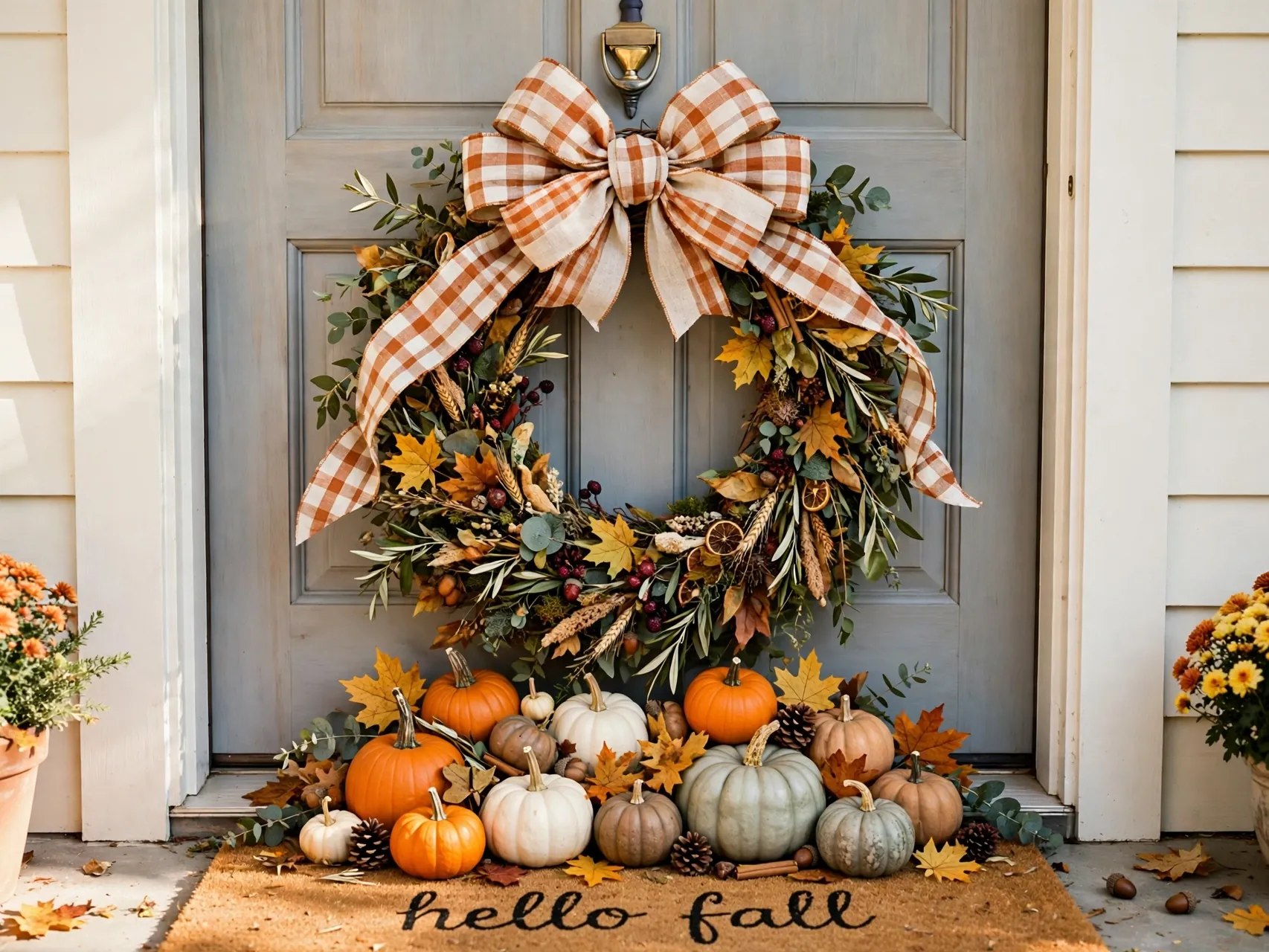
Build the weight low. Wire a full cluster of pumpkins, leaves, and berries across the bottom third of a grapevine wreath, leave the upper sides mostly bare vine, and finish with one large bow at the top where the hanger sits.
This layout hangs straight more easily than a top heavy wreath, and the bow hides the hook. Try wired ribbon so you can reshape the loops each year after storage flattens them.
21. Go Monochrome With All Orange Pumpkins in Different Sizes

One color, many sizes. Fill a wreath entirely with orange pumpkins, from tiny gourds to one medium centerpiece pumpkin, and let size and shadow create the interest. Mix a few matte and a few glossy finishes so the single color does not go flat.
Add one contrasting stem wrap in deep green or burlap to break the orange at the top. This bold, simple wreath is the fastest full look to assemble, which makes it ideal for a last minute fall pumpkin wreath diy weekend project.
22. Make a Half Wreath on a Modern Metal Hoop

Attach pumpkins, leaves, and dried grasses to just the lower half of a thin brass or black metal hoop. The clean circle and the busy cluster balance each other, giving a modern wreath that suits minimalist homes and apartment doors.
Use floral wire rather than glue on metal, since glue pops off smooth hoops when doors slam. A hoop wreath is light, stores flat in a shallow box, and works as wall decor above a console when the door needs a break.
23. Add Faux Lambs Ear for a Soft Green Contrast
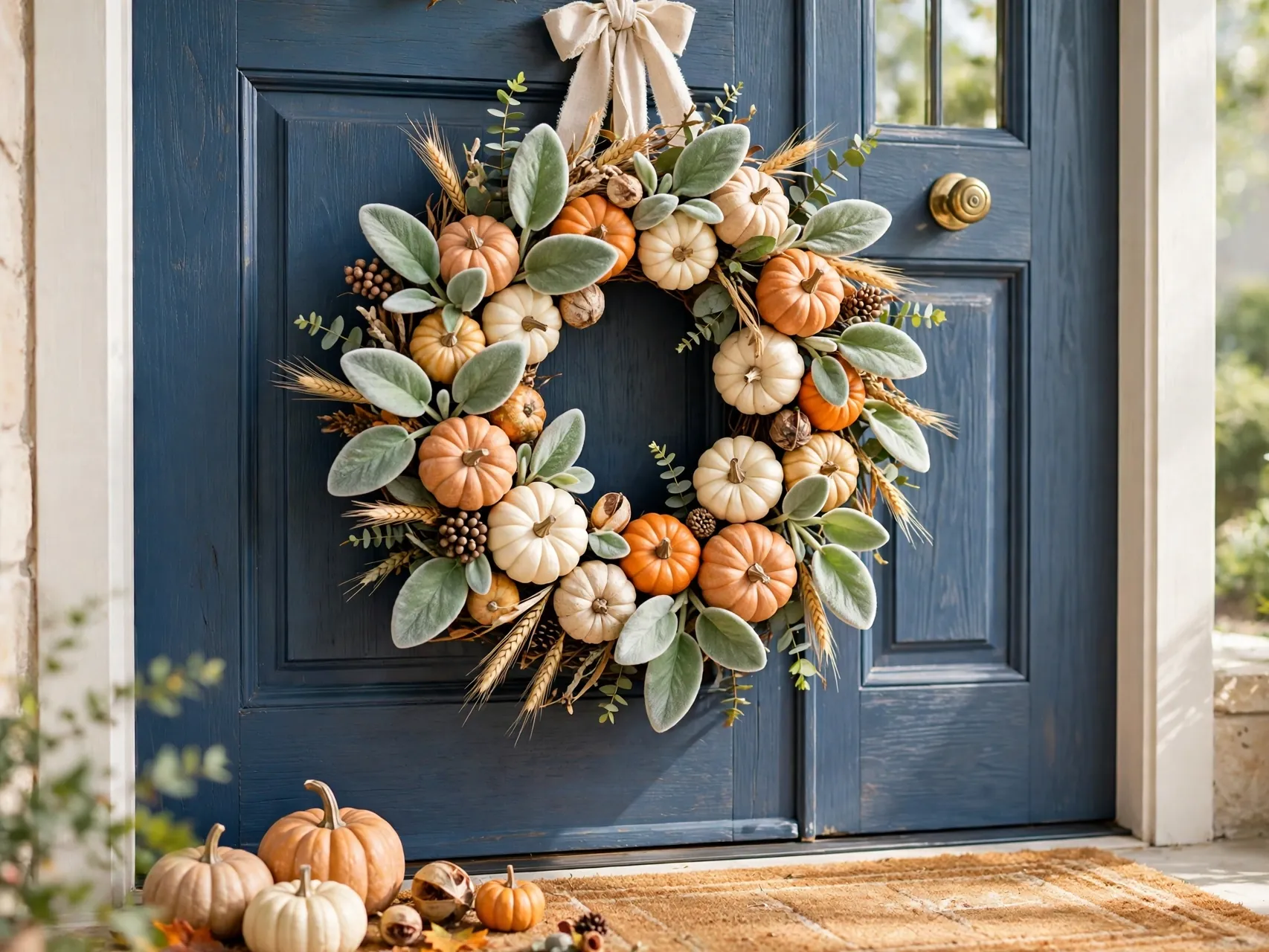
Soft, silvery lambs ear leaves tucked behind orange pumpkins cool the whole wreath down and add a farmhouse softness that regular fall leaves cannot. Wire short stems around the base first, then set pumpkins on top so the fuzzy leaves peek out like a collar.
This pairing suits white, gray, and sage doors especially well. Because the leaves are the quiet element, you can use brighter pumpkins here without the wreath turning loud.
24. Finish With a Wrapped Stem, Raffia, and a Door Hanging Check
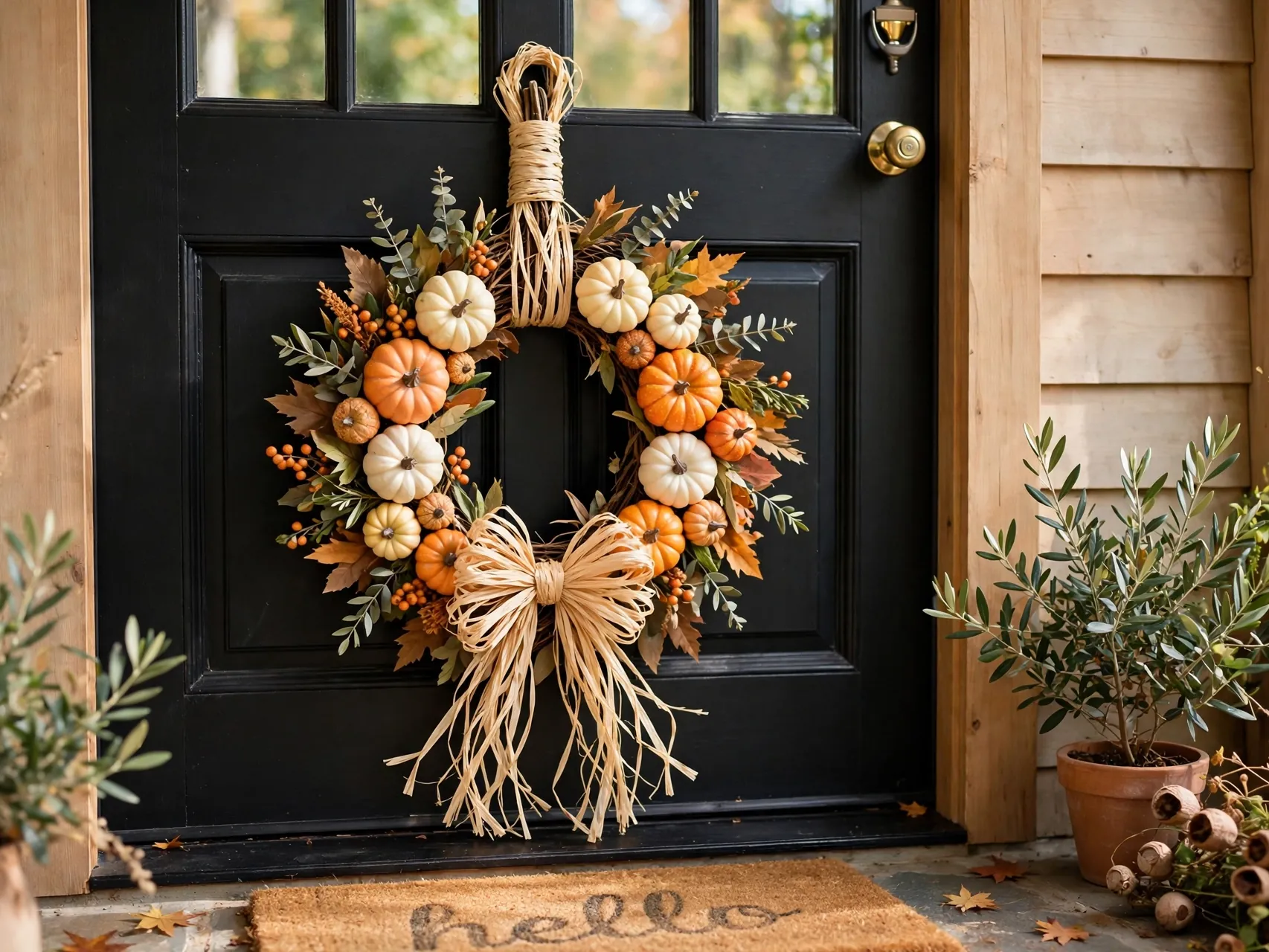
Whatever style you choose, the stem sells the pumpkin. Wrap it in twine, burlap, or green ribbon, add a loose knot of raffia at its base, and tuck one curled vine tendril made from wire wrapped in floral tape beside it.
Before you call it done, hang the wreath and open and close the door several times. Check that nothing knocks, that the wreath hangs level, and that the hanger does not scratch the door finish. A homemade pumpkin door wreath that survives daily use is the real goal.
FAQ
What is the best base for a DIY pumpkin wreath?
A pumpkin shaped wire form is easiest if you want the pumpkin outline itself, while a grapevine wreath is strongest for heavy mini pumpkins and works for round designs. Foam forms suit light, glued materials indoors. Match the base to the weight of your decorations and where the wreath will hang.
How do I keep a pumpkin wreath from damaging my door?
Use an over the door hanger with padding, a ribbon hung from a removable hook on the inside of the door, or a magnetic hook on a metal door. Avoid nails on rented doors, and add felt pads where the wreath back touches the paint so daily movement does not scuff it.
Can a DIY pumpkin wreath stay outside all fall?
Faux pumpkins, grapevine, burlap, and wire based wreaths handle a covered porch well. Fabric, yarn, paper, velvet, and dried materials need shelter from rain and strong sun. Bring any wreath inside during storms, and expect real pumpkins to last only a few days as a special occasion display.
How do I store a pumpkin wreath for next year?
Shake off dust, reshape ribbon loops, and store the wreath in a large box or wreath bag in a cool, dry place. Keep heavy wreaths flat rather than hanging by their hook all year, and place tissue around velvet or fabric pumpkins so they do not crush.
How heavy can a front door wreath be?
It depends on the hanger and the door, so always test yours. If the door strains, swings oddly, or the hanger bends, move some pumpkins to a grapevine base with wire instead of glue, or split the design into a smaller wreath plus pumpkins on the steps. When in doubt, lighter is kinder to hinges and paint.
Key Takeaways
- Base first, beauty second: A pumpkin wire form, grapevine base, or hoop decides how much weight your diy pumpkin wreath can carry and how long it will last.
- Layer in order: Cover the base, add foliage, place pumpkins, then finish with a bow and a wrapped stem for a result that looks planned.
- Match materials to the spot: Weather tough supplies belong on exposed doors, while fabric, paper, velvet, and dried pieces need a covered porch or an indoor wall.
- Wire beats glue outdoors: Doors move and weather changes, so wire heavy pumpkins and pinecones on instead of trusting glue alone.
- Test the hang: Open and close the door, check the level, and protect the paint before you call the project finished.
- Love one of these looks? Save this guide to Pinterest and pin the pumpkin wreath you want to make this weekend.