23 Ways to Fix Yard Drainage and Stop Standing Water
Introduction
Puddles that linger for days, soggy side yards, and mud tracked into the house all point to the same problem: water has nowhere good to go. Learning how to fix yard drainage starts with watching where water collects, where it comes from, and how long it stays.
Most yards need a combination, not a single miracle product. Simple steps like extending downspouts and filling low spots solve many cases, while swales, French drains, and catch basins handle bigger flows.
Work from the house outward, keep water moving away from the foundation, and never send your runoff onto a neighbor property. Check local rules before regrading near property lines, and call 811 before any digging so underground utilities can be marked.
If water sits against your foundation, enters a basement or crawl space, or smells like sewage, skip the DIY steps and call a drainage professional or plumber first. Those signs can point to problems that yard fixes alone will not solve.
1. Map Where Water Stands After Rain

Before buying pipe or soil, watch a real rainstorm. Note where puddles form, how deep they get, and how long they last. Take photos at set times and mark problem spots with small flags once the ground dries.
Water that clears within a day is often just slow soil. Puddles that stay for two days or more need a real fix. This map stops you treating the wrong spot, since the low point is not always where water starts.
2. Check the Grade Next to Your Foundation

Soil beside the house should slope away from the foundation, not toward it. A common guide is about 1 inch of drop per foot for the first several feet, or roughly a 5 percent slope over the first 10 feet, so rain sheds away instead of soaking in beside walls.
Use stakes and a level string line to check the fall. Settled soil, old mulch, and planting beds often create reverse grade over time. Correcting this slope protects the foundation first and is the foundation of all other yard drainage solutions in this list.
3. Extend Every Downspout Away From the House
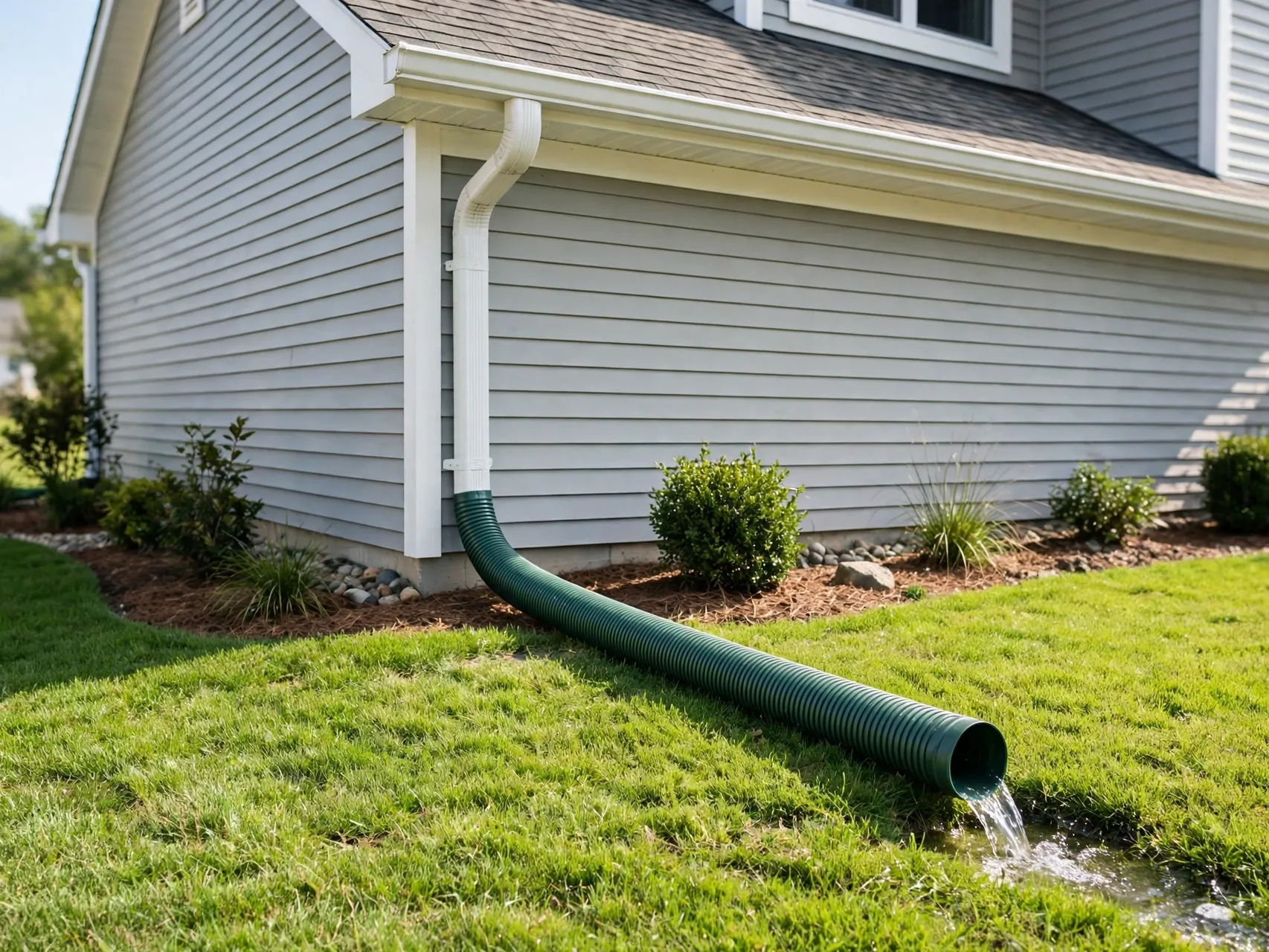
A downspout that dumps roof water at the foundation can overwhelm even good soil. Add extensions that carry water several feet away to a spot where it can spread out, soak in, or enter a planned drain, well clear of walls and walkways.
Above-ground extensions are the cheapest first fix. Buried extensions look cleaner but need a safe outlet and a steady fall. Keep outlets where they will not create ice on paths in winter or erosion in beds. Clean gutters at the same time, since overflowing gutters defeat every extension you add.
4. Fill Low Spots in Thin Layers

Small dips in a lawn often need only added soil. Build the spot up in thin layers, about half an inch at a time, using a mix of topsoil and fine sand, rake it level with the surrounding grade, and let grass grow through before adding the next layer.
Filling in stages avoids burying and killing the lawn under deep soil. For a bare or larger low area, fill, tamp lightly, reseed, and keep the seed moist. Remember that raising one spot moves water elsewhere, so watch where the next puddle forms after rain.
5. Aerate Compacted Lawn Soil

Foot traffic, mowers, and play compact soil until rain sits on top instead of soaking in. Core aeration pulls out small plugs and opens channels for water, air, and roots, which is one of the simplest ways for how to improve yard drainage in an otherwise well-graded lawn.
Aerate when soil is moist but not muddy, usually in the growing season for your grass type. Leave the plugs to break down on the surface. Pair aeration with overseeding in thin areas, because a thicker lawn absorbs and slows water far better than bare, packed ground.
6. Amend Heavy Clay With Compost
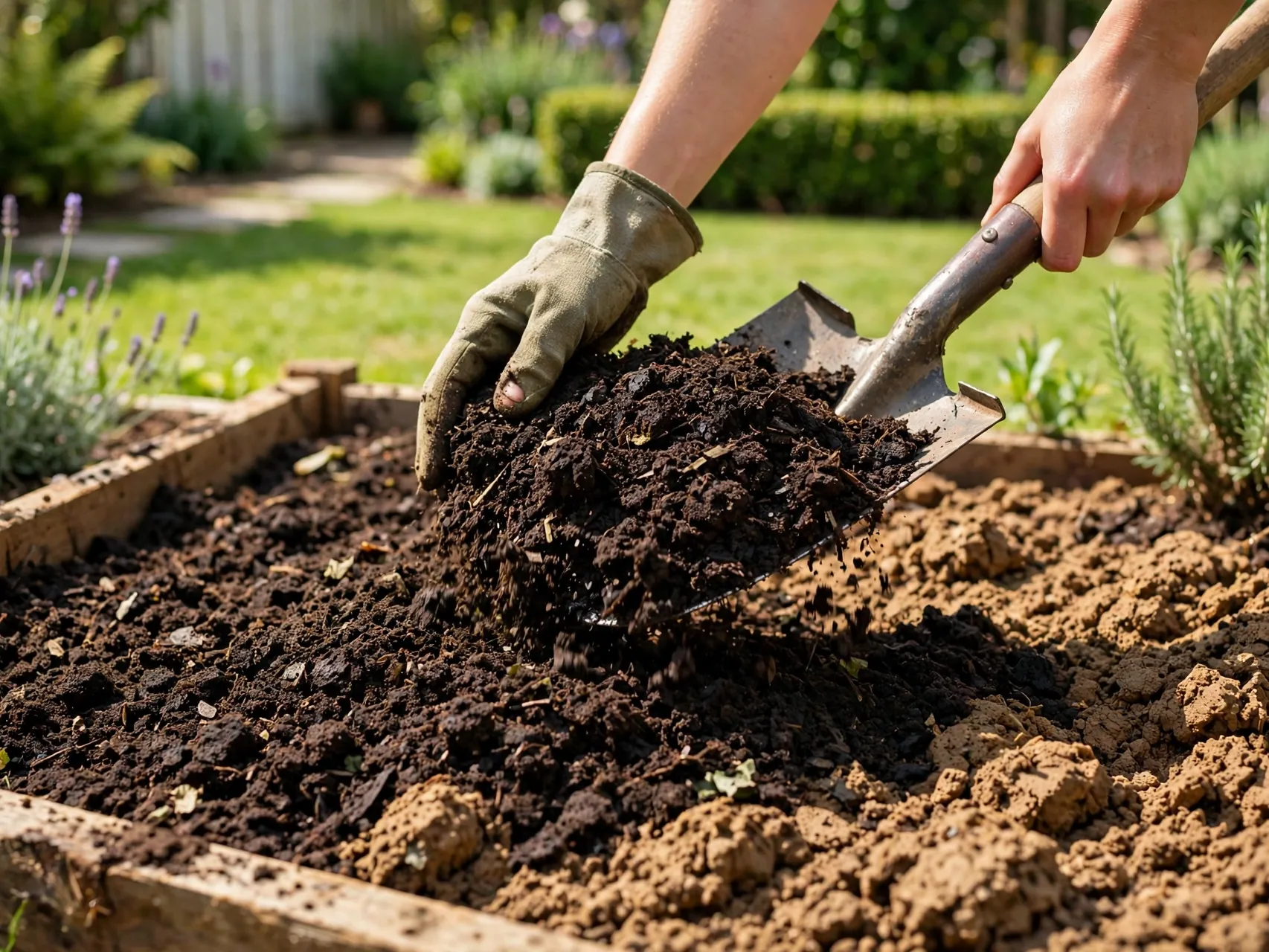
Clay soil drains slowly because its fine particles pack tight. Working compost into beds and topdressing lawns with a thin layer of compost over time improves structure, helps water move through, and feeds the soil life that keeps it open.
Avoid the myth of fixing clay with a little sand alone, which can create an even harder mix. Organic matter, applied repeatedly in modest amounts, is the reliable route. In planting beds, compost plus mulch often turns a soggy corner plantable, especially when you also choose plants that tolerate periodic wet feet.
7. Regrade the Yard in the Worst Areas

When a whole section slopes the wrong way, surface fixes will not hold. Regrading reshapes the soil so water flows to a swale, drain, or safe discharge area. Small areas can be done with shovels, rakes, and a wheelbarrow. Larger jobs suit a contractor with grading equipment.
Check permits and property-line rules before moving significant soil, and never raise your grade so water is pushed onto a neighbor lot. Call 811 before digging. If the slope problem involves a shared line or a street drain, talk with your local public works office first.
8. Dig a Shallow Grassed Swale
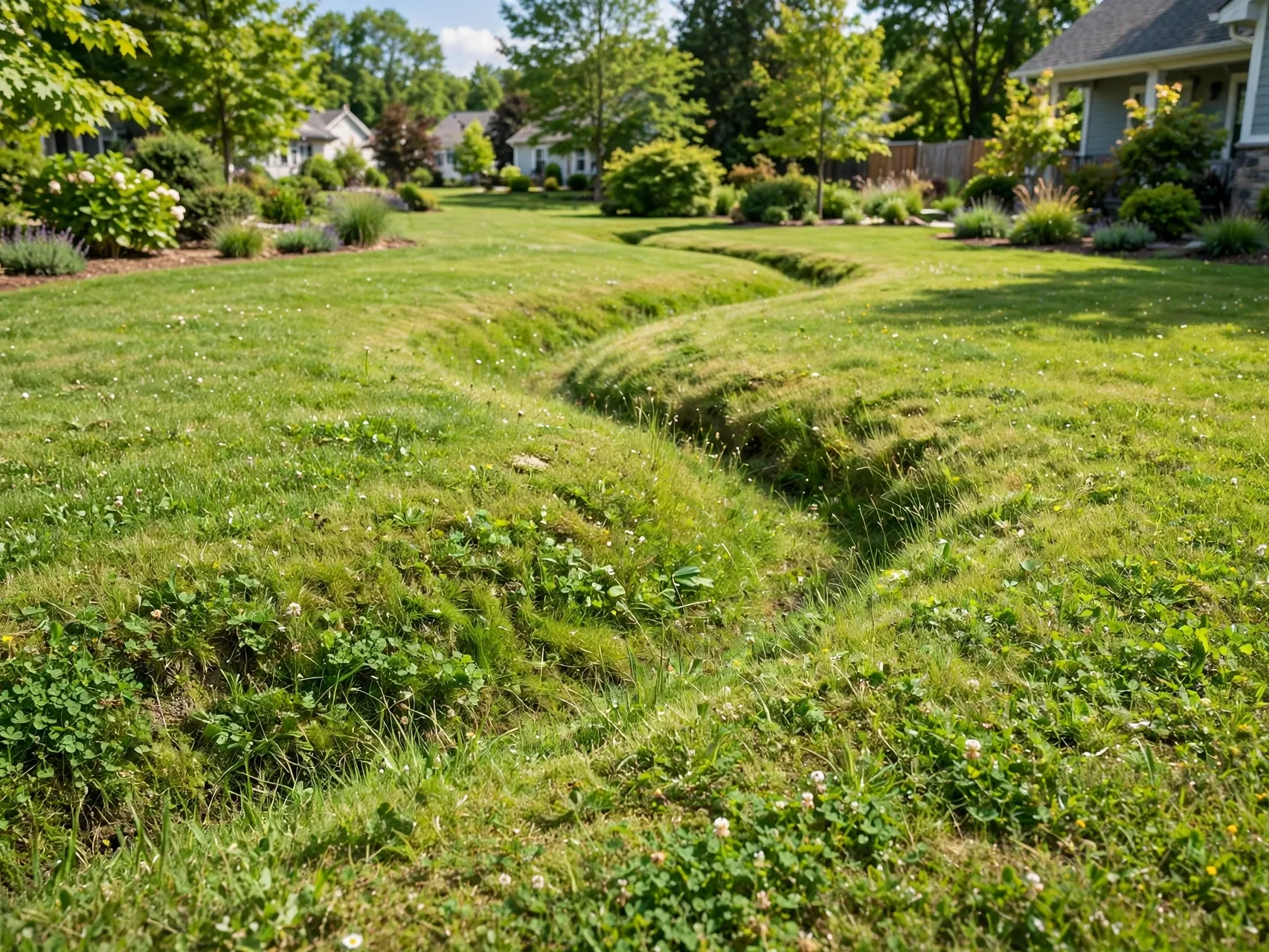
A swale is a wide, shallow channel that guides water slowly across or away from a yard. Grassed swales slow runoff, allow some infiltration, and filter sediment as water moves, which is why the EPA lists vegetated swales among its stormwater practices.
Keep the channel gentle, with a steady downhill fall and wide, mowable sides. Seed or sod it promptly so roots hold the soil, and keep grass at a moderate height. A swale needs room, so it suits larger yards better than tight side lots where a buried drain fits more easily.
9. Install a French Drain in the Soggy Zone
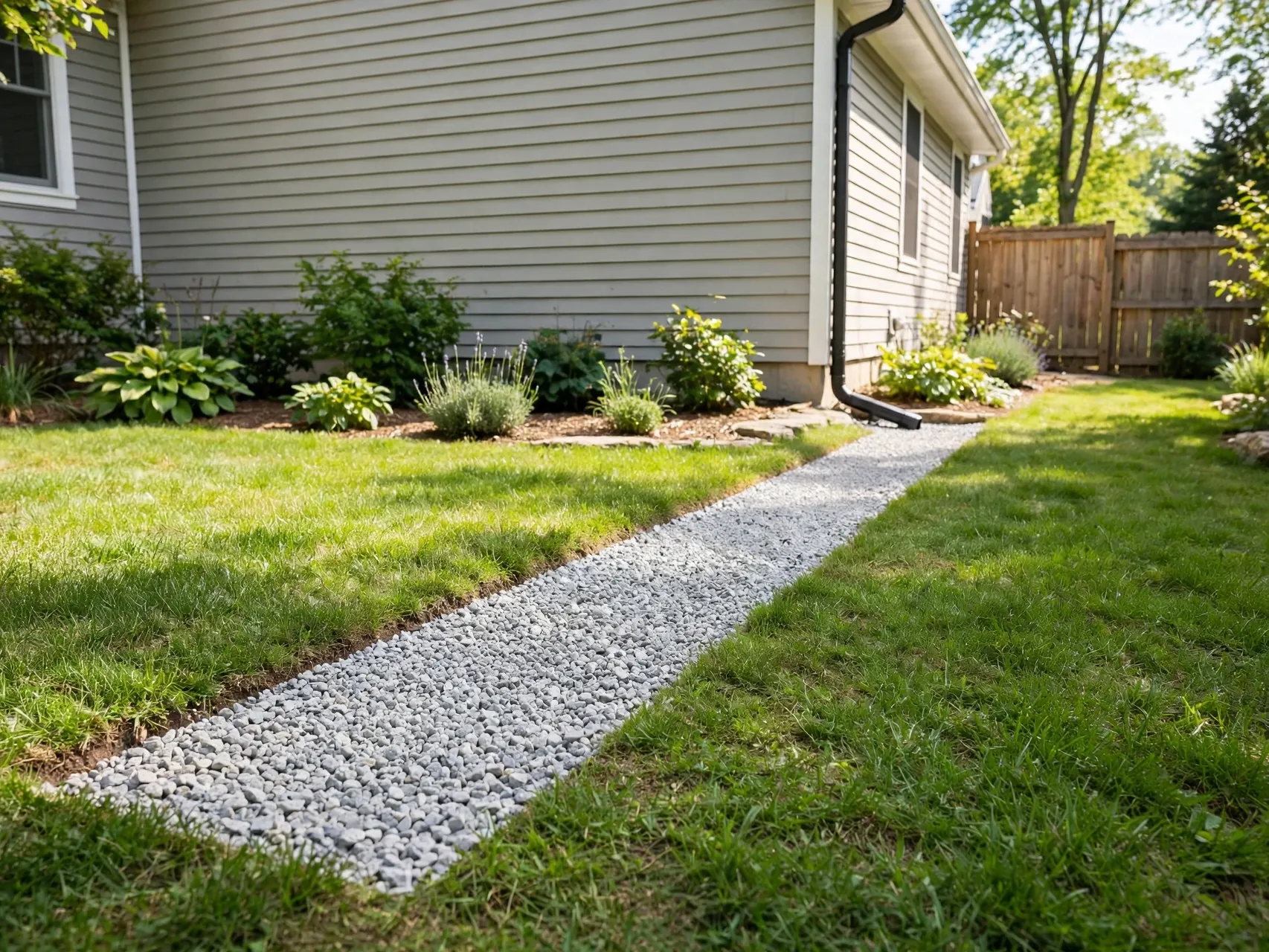
A french drain for yard problems is a gravel-filled trench with a perforated pipe that collects groundwater and carries it to a safe outlet. Dig the trench across the uphill side of the wet area, line it as your design requires, keep a steady slope of about 1 percent or more, and discharge to daylight or another approved outlet.
Call 811 before digging and check local rules for where drain water may go. A French drain with no fall or no real outlet will sit full and fail. For long runs, near foundations, or where digging is deep, hire a drainage contractor.
10. Add a Catch Basin at the Low Point

Where surface water collects in one clear spot, a catch basin can collect it and send it through buried solid pipe to an outlet. Set the grate flush with the surrounding grade so water actually flows in, and connect it with pipe laid at a steady fall.
Basins catch leaves and sediment, so choose a design you can open and clean. A basin works best paired with good grading that directs water toward it.
11. Use a Channel Drain Across a Patio or Driveway Edge

Hard surfaces shed water fast, and it often sheets toward a garage, patio, or house wall. A channel drain is a long, narrow grate set into the paving edge that intercepts that flow and pipes it away before it pools or seeps indoors.
Keep the grate clear of leaves and grit, since a blocked channel overflows exactly where you least want water. Channel drains need a proper outlet with fall, just like any drain. On driveways that slope toward the house, this fix is often essential rather than optional, and installation may suit a contractor.
12. Build a Dry Well for Roof Runoff
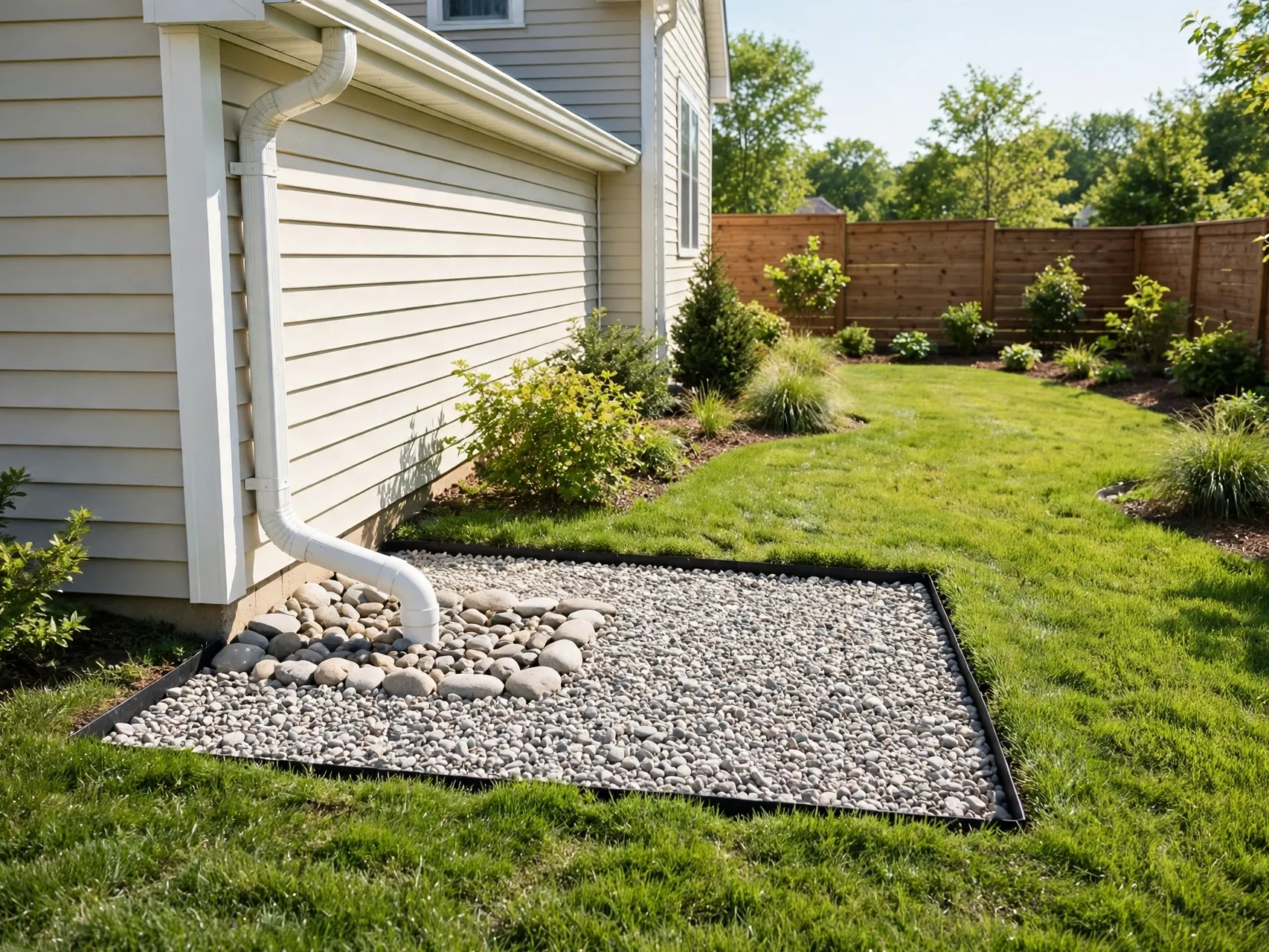
A dry well is an underground pit, usually filled with gravel or a manufactured chamber, that holds runoff temporarily and lets it soak into surrounding soil. It can work well for downspout water where soil below the surface is more permeable than the topsoil.
Dry wells fail in tight clay with no permeable layer, so test your soil drainage first and size the well for your roof area and local rules. Some areas regulate dry wells or require permits. Keep dry wells away from foundations, wells, and septic systems by the distances your local code specifies.
13. Plant a Rain Garden in the Wet Spot
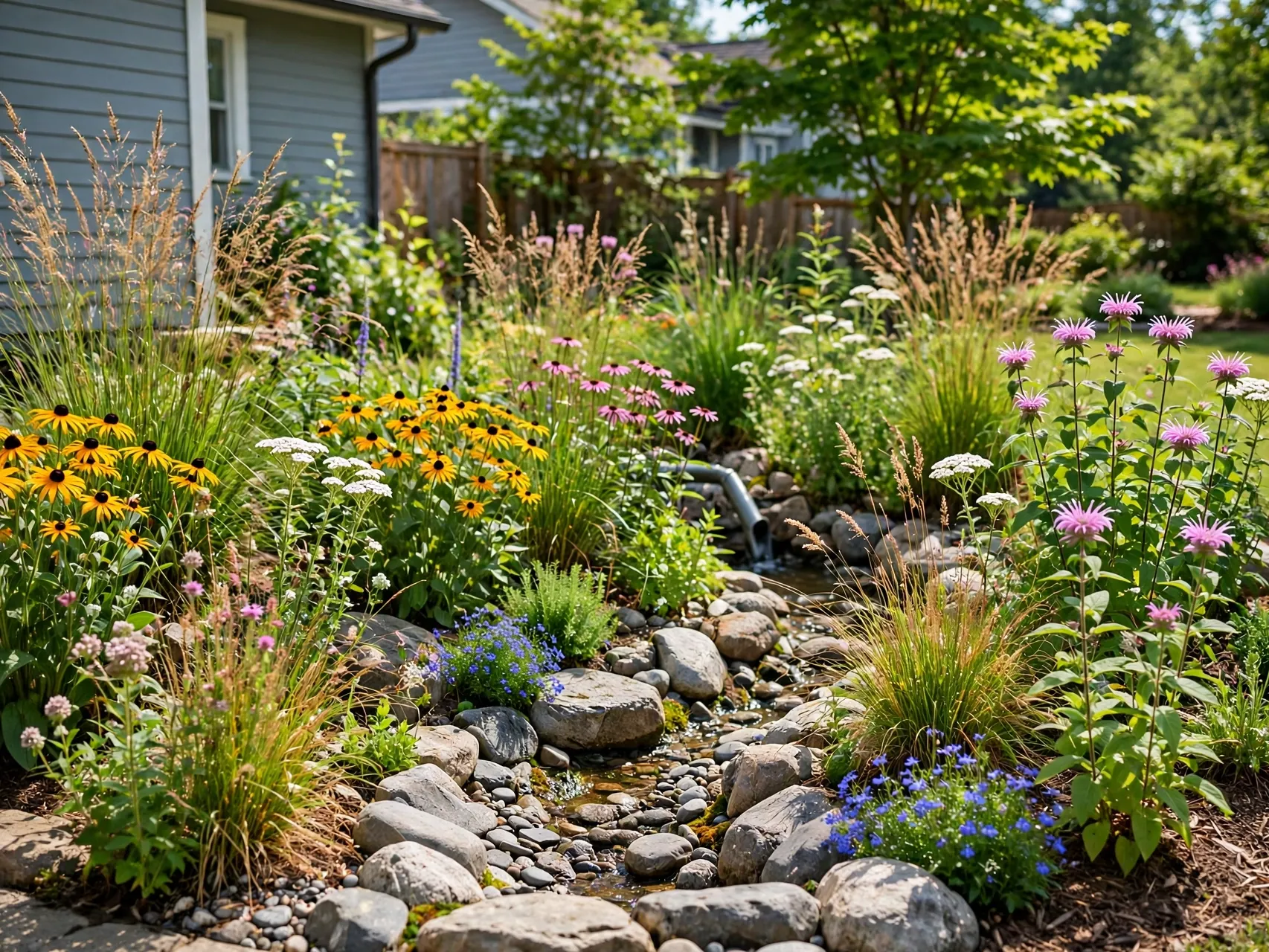
Instead of fighting one damp low area, turn it into a rain garden: a shallow planted depression that collects runoff, lets it pond briefly, then filters it through soil and roots. The EPA describes small bioretention areas, or rain gardens, planted with grasses and wildflowers for exactly this job.
Choose native or adapted plants that tolerate both wet and dry spells, since the garden floods after storms and dries between them. Keep rain gardens a safe distance from foundations and septic systems, and check local stormwater guidance for sizing and any rebate or permit rules in your area.
14. Add a Dry Creek Bed for Looks and Flow

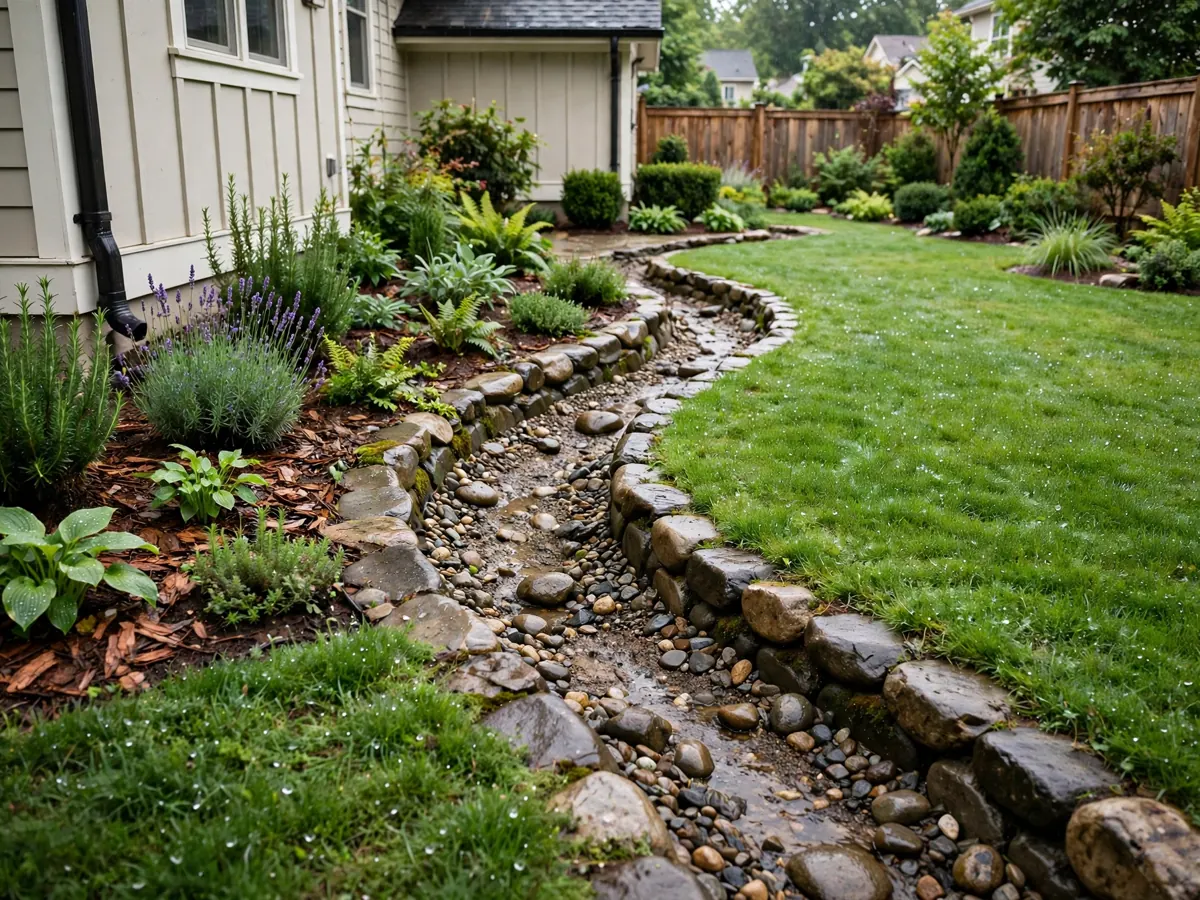
A dry creek bed is a stone-lined shallow channel that looks like a garden feature and works like a swale during storms. Lay it along the natural low line, use a mix of larger rocks at the edges and smaller stone in the center, and give it a clear start and end point.
The bed slows water, reduces erosion, and keeps the route visible so it does not get planted over or filled in. It still needs a safe outlet. A pretty channel that dumps water at a fence or foundation only moves the problem.
15. Break Up a Slope With Terracing

On a slope, water gains speed, erodes soil, and dumps at the bottom. Low terraces, level planting shelves, or a series of small retaining edges slow that flow and give water time to soak in where plants can use it.
Keep terrace walls low for DIY work. Taller retaining walls can need engineering, drainage behind the wall, and permits, and a failing wall is dangerous. Plant each level densely so roots hold the soil. If your slope sheds water from a neighbor property above, coordinate kindly rather than damming the flow at the line.
16. Replace a Muddy Path With Permeable Materials

A path that is always muddy is telling you water crosses or sits there. Rebuild it with permeable materials such as gravel, stepping stones set in gravel, or permeable pavers over an open-graded base, so rain soaks through instead of puddling on top.
Crown the path slightly or slope it to one side toward a planted area. Edge it to keep gravel in place. Permeable surfaces are part of broader standing water in yard fixes because every square foot that absorbs rain is a square foot that does not send runoff toward your house or beds.
17. Install a Pop-Up Emitter at the Outlet
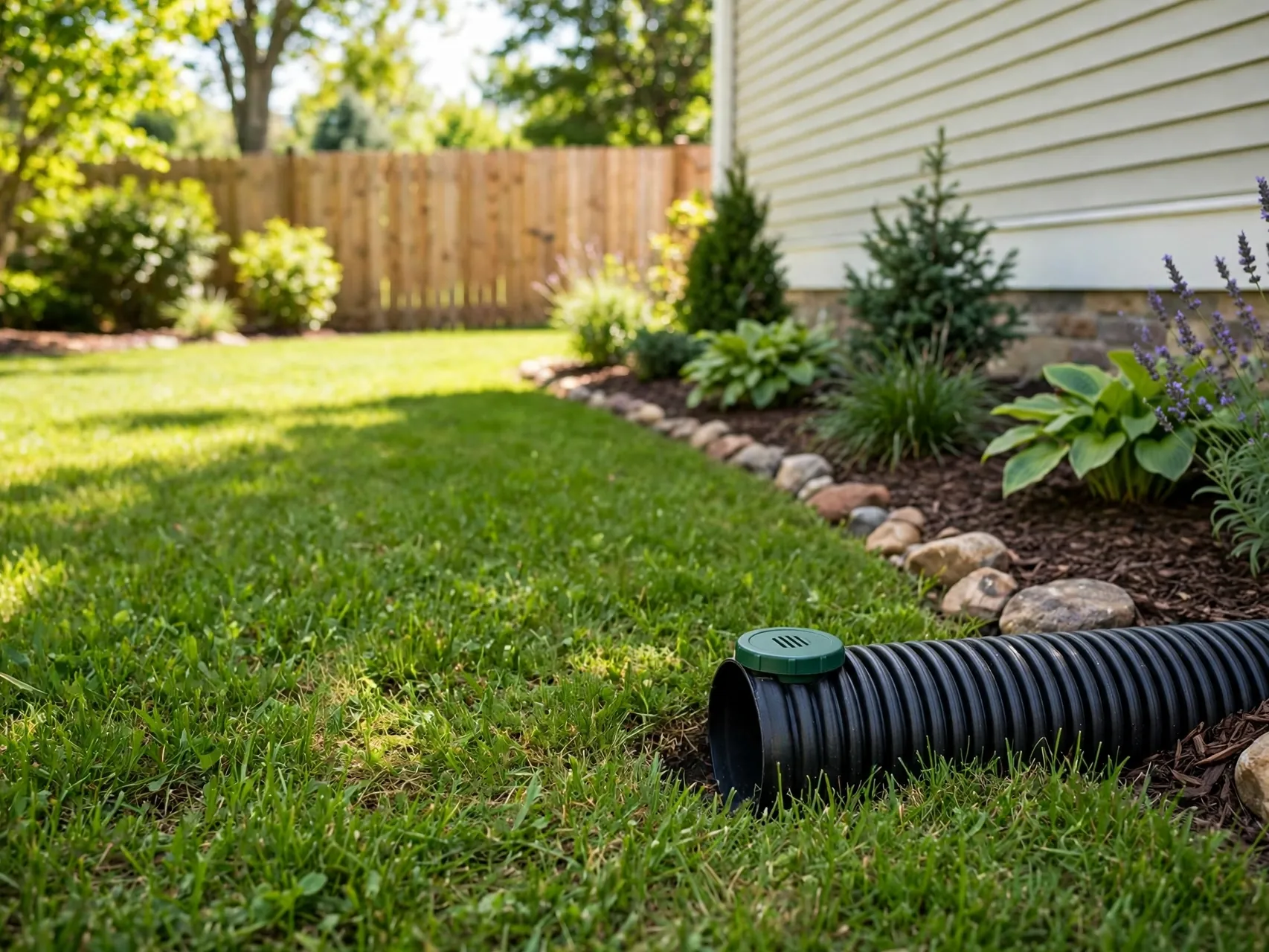
Buried drain lines need a good ending. A pop-up emitter sits flush in the lawn, lifts when water flows through the pipe, and closes when flow stops, keeping out most debris and critters while letting the system discharge onto a safe area.
Place the emitter where discharged water can spread and soak in without crossing paths, flooding a neighbor, or returning to the same low spot. Keep grass trimmed around it and check that it opens freely after storms. In cold climates, make sure the line can drain fully so trapped water does not freeze in the pipe.
18. Grow a Thicker, Deeper-Rooted Lawn

Thin lawns shed water. Thick grass with deep roots slows runoff, holds soil, and helps the surface dry after rain. Overseed bare patches, mow at the higher end of the range for your grass type, and water deeply but less often to encourage deeper roots where your climate allows.
Fix the underlying cause first if a patch stays wet, since seed will rot in standing water. In persistently damp corners, consider replacing lawn with ground covers or a planted bed suited to moist soil rather than reseeding the same failing spot every year.
19. Mulch Beds to Slow and Soak Runoff

Bare bed soil crusts over and sheds water. A layer of organic mulch, usually 2 to 3 inches and kept away from stems, softens rain impact, slows flow, and helps beds absorb water where plants need it. Mulch also reduces the splashing and erosion that expose roots.
On a slope, shredded bark or wood mulch knits together better than large chips that float and wash away in heavy rain. Refresh mulch as it breaks down, since that breakdown is what steadily improves the soil and its drainage beneath your plantings over the seasons.
20. Redirect Water With a Berm and Swale Pair

Where runoff enters from higher ground, a low planted berm uphill with a shallow swale at its base can intercept water and guide it around a garden, patio, or play area to a safer route.
Keep berms broad and low so they look like planting, not a levee, and never build one that blocks your neighbor drainage or pushes water toward their house. Property-line drainage is a common source of disputes, so check local rules and talk with neighbors before reshaping shared edges. Call 811 before digging the swale portion.
21. Keep Gutters, Grates, and Outlets Clear

Many drainage systems fail from neglect, not design. Clear gutters and downspout screens, lift catch basin grates and remove sediment, flush accessible drain lines, and check that pop-up emitters and daylight outlets are not buried by mulch or blocked by roots and leaves.
Do this check each spring and fall, and after big storms. A single mat of leaves or sediment-filled basin can flood an area that was working perfectly.
22. Use a Rain Barrel to Cut Roof Runoff
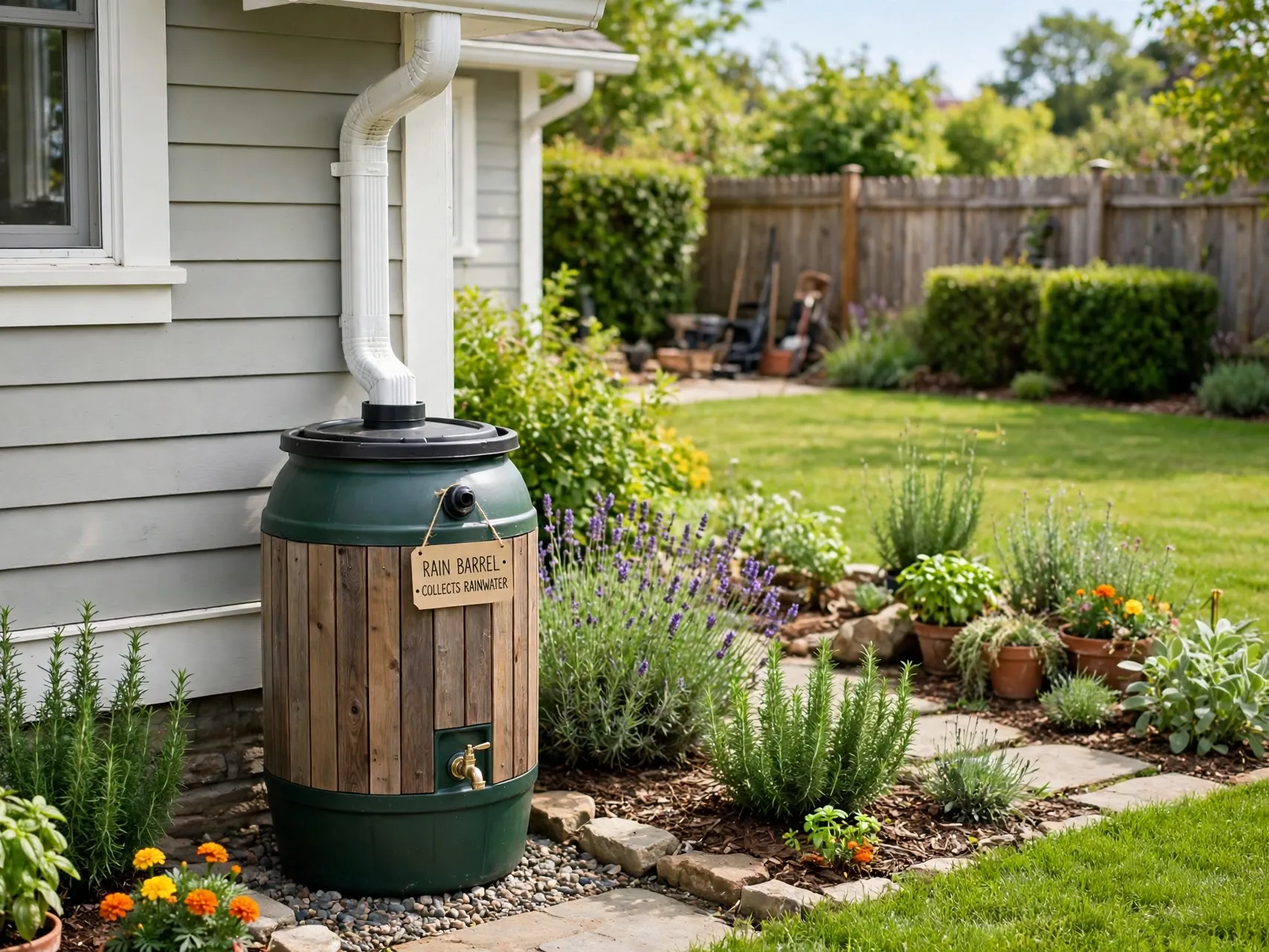
A rain barrel under one downspout will not drain a yard, but it reduces the surge that overwhelms a wet corner during storms and stores water for dry spells. Fit a screen to keep out mosquitoes and debris, and plan the overflow route carefully so excess water goes to a safe planted area, not the foundation.
Check local rules, since some areas regulate rainwater collection or require specific overflow handling. Place the barrel on a level, sturdy base. In freezing climates, drain and disconnect it for winter so ice does not crack the barrel or fittings.
23. Know When to Call a Drainage Professional

Call a pro when water touches the foundation regularly, enters a basement or crawl space, causes cracks, mold, or musty odors indoors, or when the wet area smells like sewage or sits over a septic field. Those cases can involve foundation waterproofing, broken sewer or water lines, or a high water table, not simple surface drainage.
Get quotes that name the outlet, slope, and materials, and ask about permits. A good contractor explains where your water will legally go. Knowing your limits is part of learning how to improve yard drainage safely and for good.
FAQ
How long should water stand in a yard after rain?
Most lawns should absorb or shed normal rain within about a day. Small puddles after a heavy storm that clear by the next day are usually minor. Water that remains for two days or more, returns in the same spots, or kills grass signals a drainage problem worth fixing with grading, soil work, or a drain.
Is a French drain the best fix for every wet yard?
No. A French drain works when groundwater or soggy soil needs collecting and carrying to an outlet with steady fall. It does little for water that simply ponds on a badly graded surface, and it fails without an outlet. Many yards do better with regrading, a swale, extended downspouts, or a rain garden first.
Do I need a permit to fix yard drainage?
It depends on your city or county and the scale of work. Small soil and planting fixes usually need none, while regrading near property lines, connecting to a street drain, building taller retaining walls, or installing dry wells may need permits or approval. Always call 811 before digging, and check local rules before changing how water leaves your lot.
Can I drain water into my neighbor yard or the street?
Generally, you should not direct concentrated runoff onto a neighbor property, and many places restrict discharge to streets or storm drains without approval. Spread water on your own lot where it can soak in, or use an approved outlet. When in doubt, ask your local public works or stormwater office before connecting any pipe.
When is standing water a foundation emergency?
Treat it seriously when water pools against foundation walls after most rains, seeps into a basement or crawl space, or comes with cracks, sticking doors, or musty indoor odors. Keep gutters and downspout extensions working as a first step, then call a foundation or drainage professional. Persistent foundation water can damage the structure if ignored.
Key Takeaways
- Diagnose before digging: Map puddles, check foundation grade, and fix downspouts first, because the cheapest yard drainage solutions solve many yards.
- Give water a legal route: Every swale, French drain, and basin needs steady fall and a safe outlet on your own property, never a neighbor yard.
- Call 811, check rules: Contact 811 at least two to three business days before digging, and confirm permits for regrading, dry wells, walls, or street connections.
- Use plants as drainage: Rain gardens, grassed swales, thick lawns, and mulched beds slow runoff and help soil absorb water between storms.
- Maintain the system: Clear gutters, grates, basins, and outlets each spring and fall so the fixes you installed keep working year after year.
- Dealing with a soggy yard this season? Save this guide to Pinterest and pin the fixes that match your yard before the next big rain.