22 Small Attic Room Ideas That Work With Low Ceilings
Introduction
A sloped ceiling is not a flaw to hide. Handled well, it is exactly what makes an attic feel like a retreat instead of a spare room. These small attic room ideas work with the low edges, the knee walls, and the one tall ridge instead of fighting them.
The rules are simple. Keep furniture low, put storage in the slopes themselves, use the tallest part of the room for standing and dressing, and let the low corners do quiet jobs like sleeping, reading, and storing. Light colors help, but layout helps more.
Before you buy anything, measure the ceiling height at the ridge, at the knee wall, and where you plan to stand. Sketch where a person can stand upright, and plan the room around that honest map.
Paint Walls and Ceiling the Same Light Color

When walls and ceiling share one light color, the eye stops reading the slope as a separate low lid and reads the whole room as one calm shell. Warm white, pale cream, or the softest gray all work well in attic light.
Choose a washable finish, since attic ceilings sit close to hands and heads. Paint the beams the same color too if you want a cleaner look, or leave natural wood beams as the one feature in an otherwise quiet room.
Measure the exact spot twice before ordering, because attic angles forgive nothing.
Put the Bed Under the Highest Point
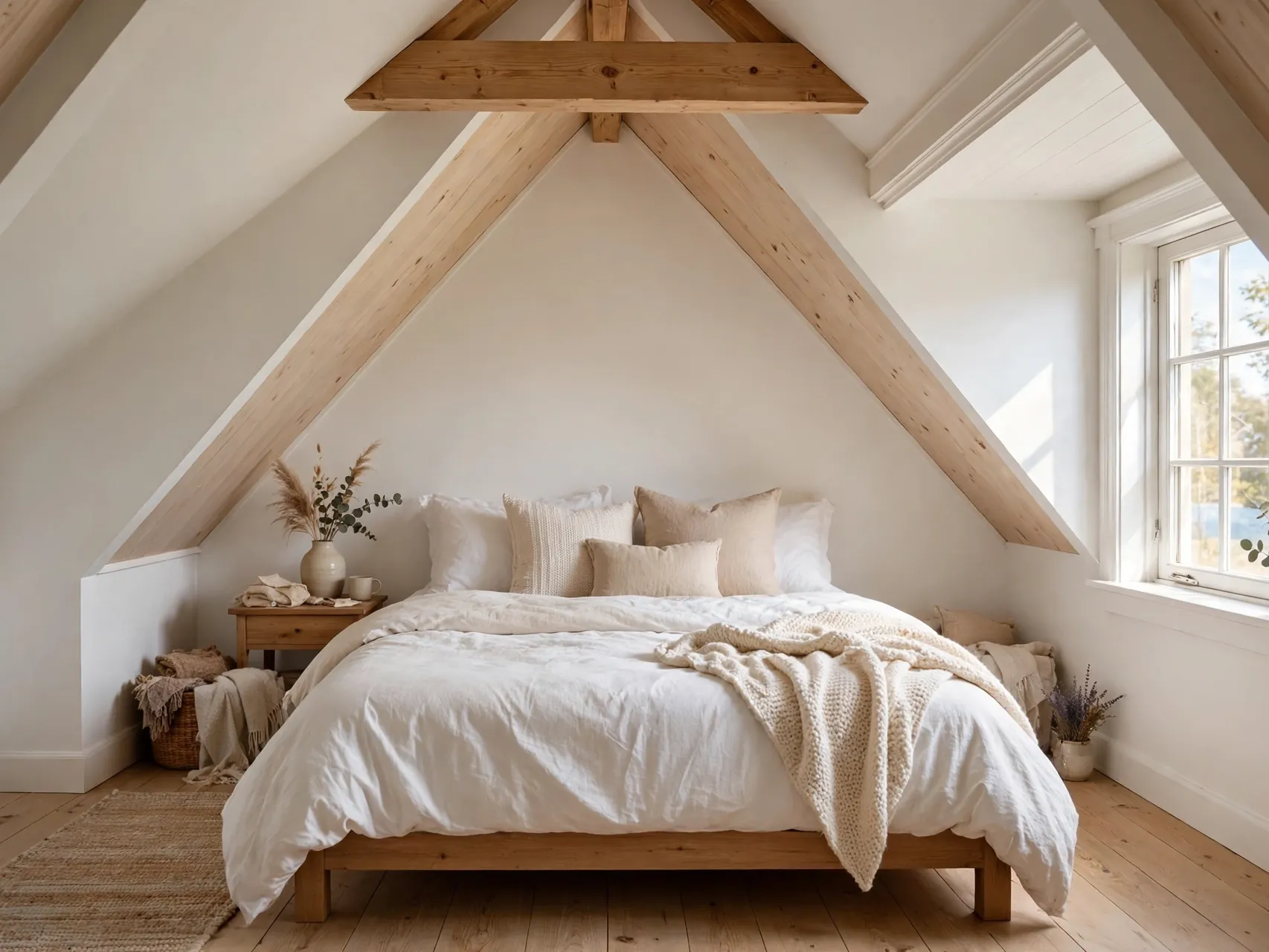
The bed is the one piece you use lying down, but you still need to sit up and get in and out comfortably. Placing the bed along the tallest wall, with the headboard on the high side, keeps mornings easy and safe.
Leave enough space on at least one side for a small nightstand or wall shelf. If two people share the bed, check that both sides have a safe path out that does not require ducking under the lowest slope.
Live in the room for a week between changes and the right next step usually becomes obvious.
Choose Low Profile Furniture Everywhere

Platform beds, low dressers, floor cushions, and short bookcases respect the room you actually have. Every tall piece in a low room makes the ceiling feel lower, because your eye measures the gap between the furniture top and the slope.
Before buying, compare the furniture height with the wall height where it will stand, not with the ridge height. A dresser that fits under the slope with a hand of space above it will always look and work better.
A small attic rewards restraint. Two good pieces beat five almost right ones every time.
Build Storage Directly Into the Eaves
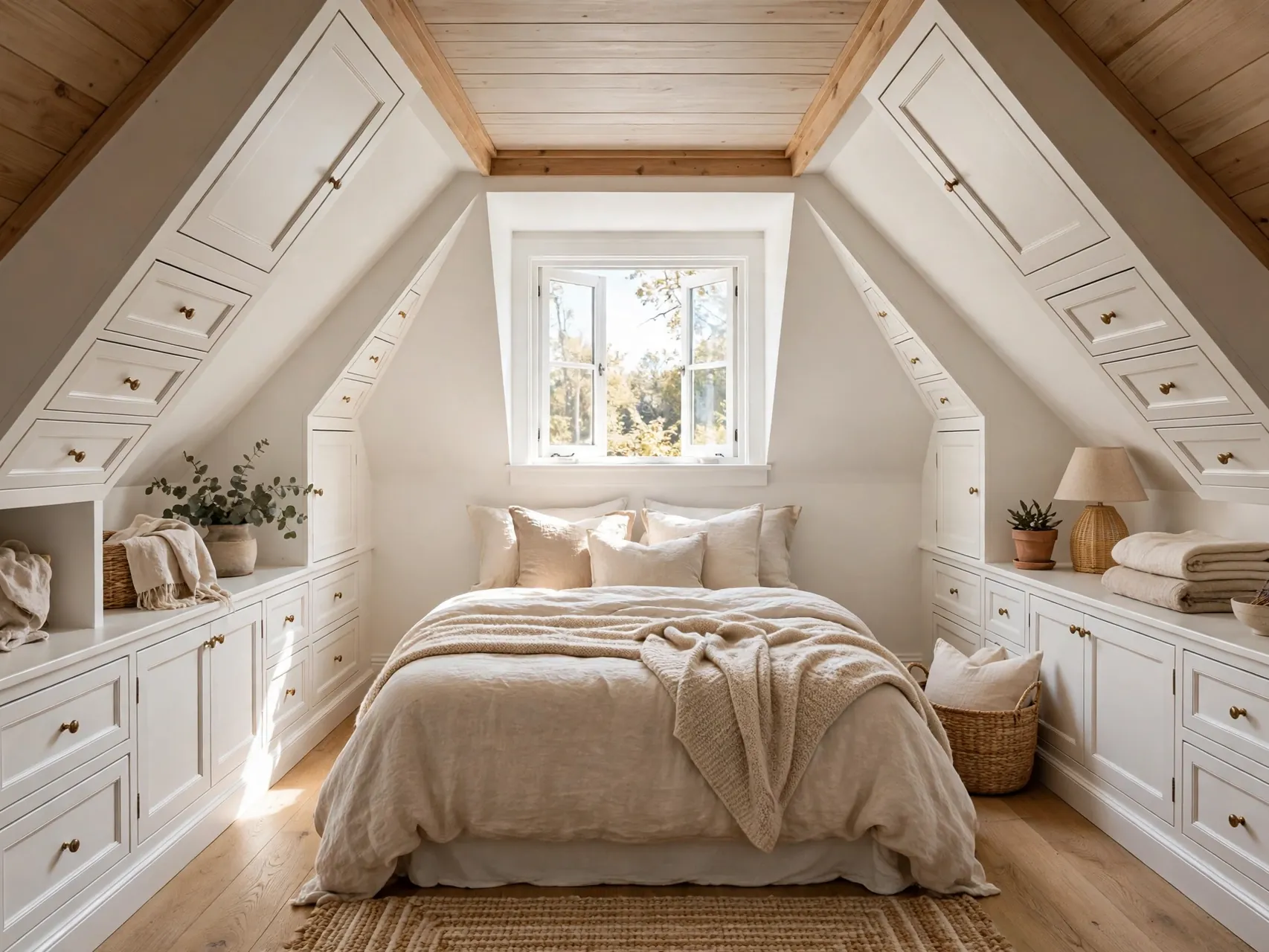
The triangular voids behind knee walls are the biggest wasted space in most attics. Simple framed openings with doors, or drawers built into the slope line, turn that dead volume into storage for bedding, luggage, and seasonal clothes.
If built in work is beyond your budget or skills, slide labeled bins and low boxes into the eaves behind a curtain or low doors. The principle is the same: the lowest space stores, the highest space lives.
Photograph the room from the doorway to judge it the way guests and family actually see it.
Slide Low Drawers Under the Slopes

Where the ceiling drops, a row of low drawers or a long low dresser follows the slope and gives you the storage a wardrobe cannot. This is the heart of practical attic storage ideas for sloped ceilings that work in real rooms.
Use these drawers for folded clothes, craft supplies, or toys, and keep daily items nearest the tall end. Add simple labels inside the top drawer edge if several people share the room, and the system stays tidy.
Keep a tape measure and your room sketch on your phone for every shopping trip.
Turn Knee Walls Into Hidden Cupboards
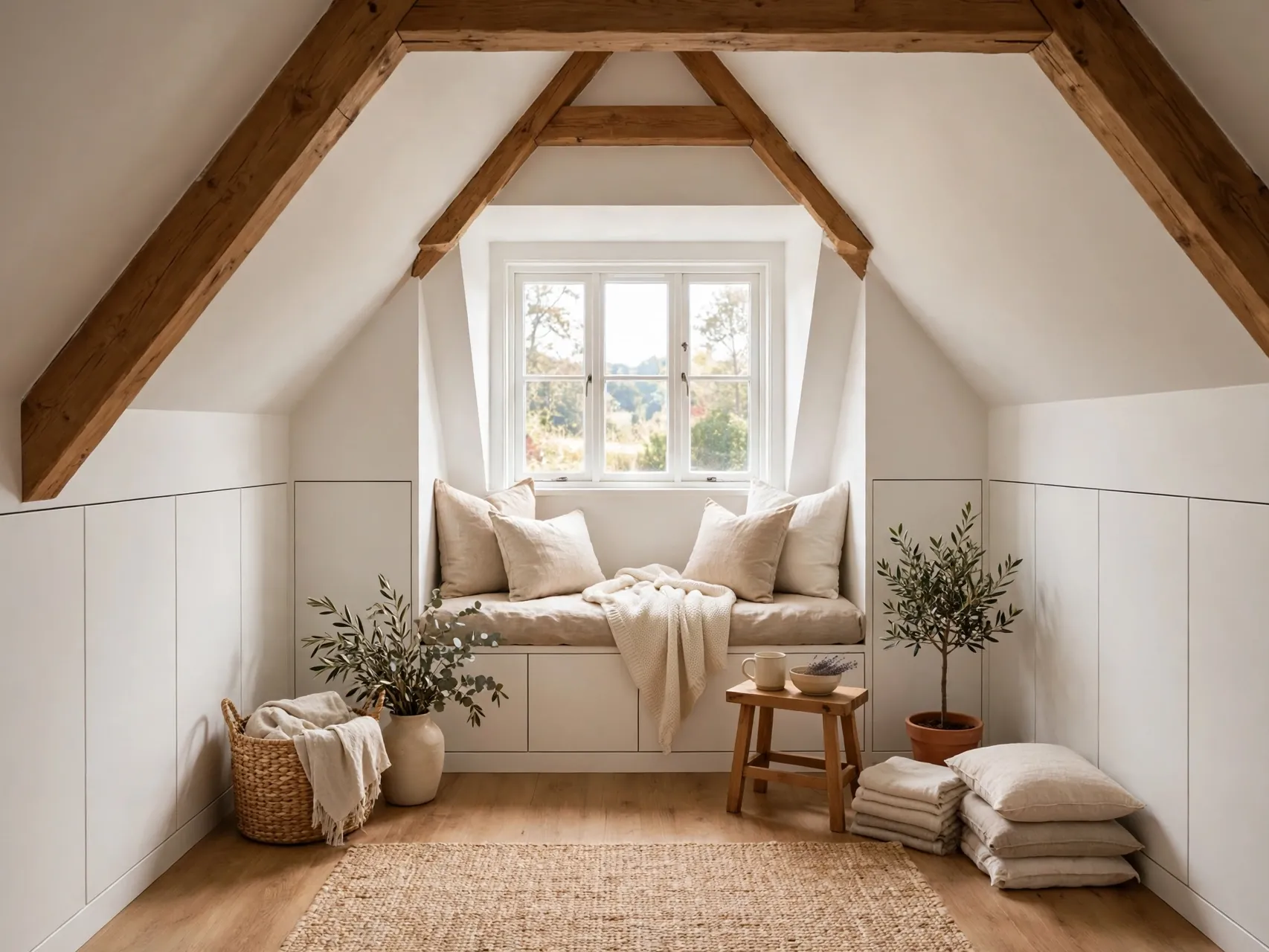
A knee wall with a flush door or two becomes a cupboard for the things attics collect: holiday decorations, spare chairs, files, and out of season clothing. Because the doors sit flat, the room keeps its clean lines.
Fit cupboards with a light inside or use a battery light you can switch on easily, since eaves spaces are dark. Store heavier items nearest the door so nothing has to be dragged from the far dark corner.
Measure the exact spot twice before ordering, because attic angles forgive nothing.
Choose a Daybed That Earns Its Space
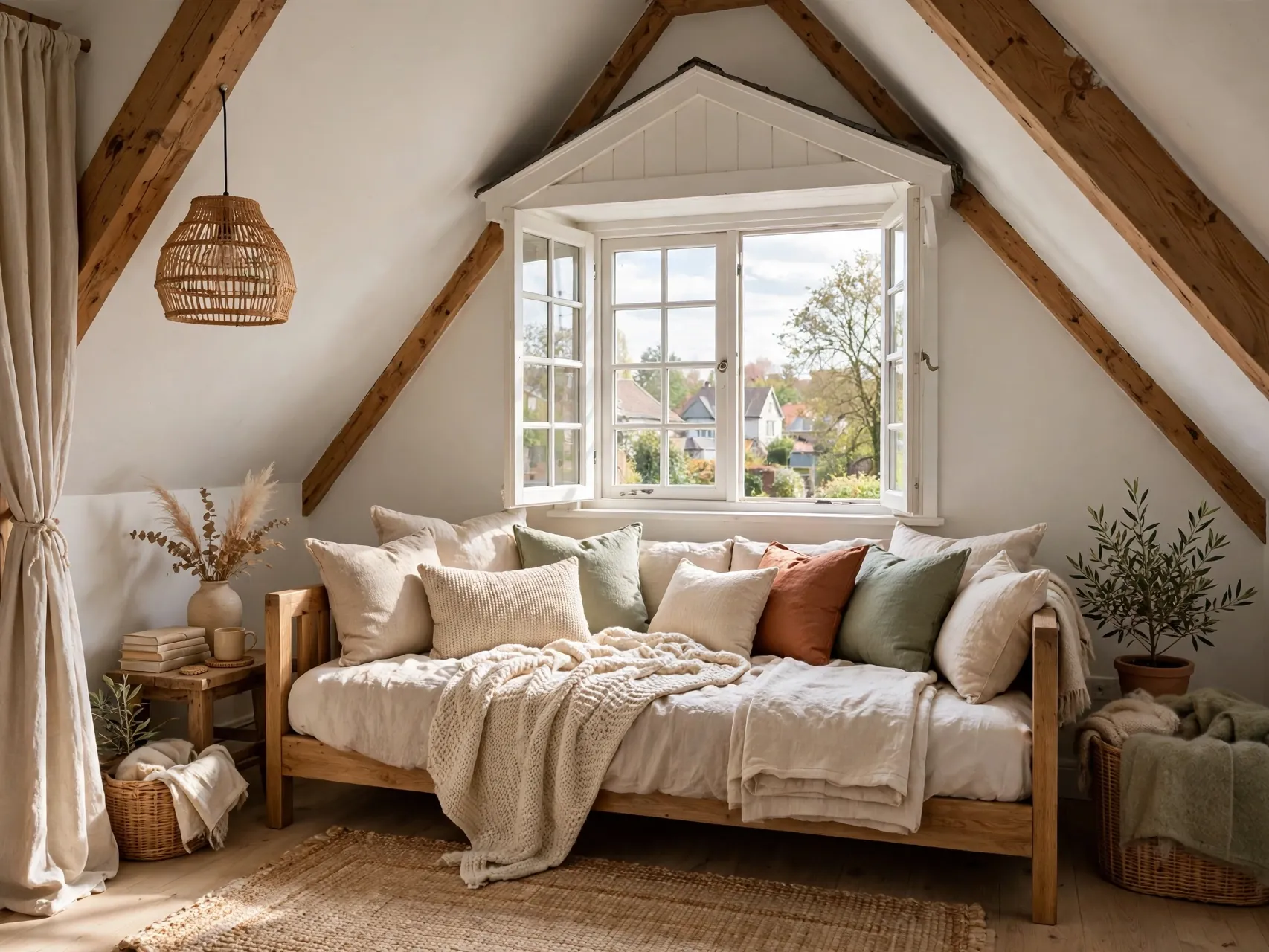
A daybed along the long wall works as a sofa by day, a single bed by night, and, with a trundle or deep drawers below, a guest bed or storage bank as well. In a small attic, that flexibility is gold.
Dress it with firm cushions along the wall so it reads as seating, not as an unmade bed. A daybed also suits the low wall perfectly, since its back runs along the slope instead of standing against it.
Live in the room for a week between changes and the right next step usually becomes obvious.
Tuck a Reading Nook Into the Lowest Corner

The corner where the ceiling nearly meets the floor is too low for standing furniture, which makes it perfect for a floor cushion, a low armchair, and a small pile of books. Add a wall mounted reading light at sitting height.
A soft rug and one throw complete the nook. This is the spot children claim instantly and adults use for quiet calls and morning coffee. Low corners stop being problems when they get a job this appealing.
A small attic rewards restraint. Two good pieces beat five almost right ones every time.
Fit a Small Desk Beneath a Dormer Window
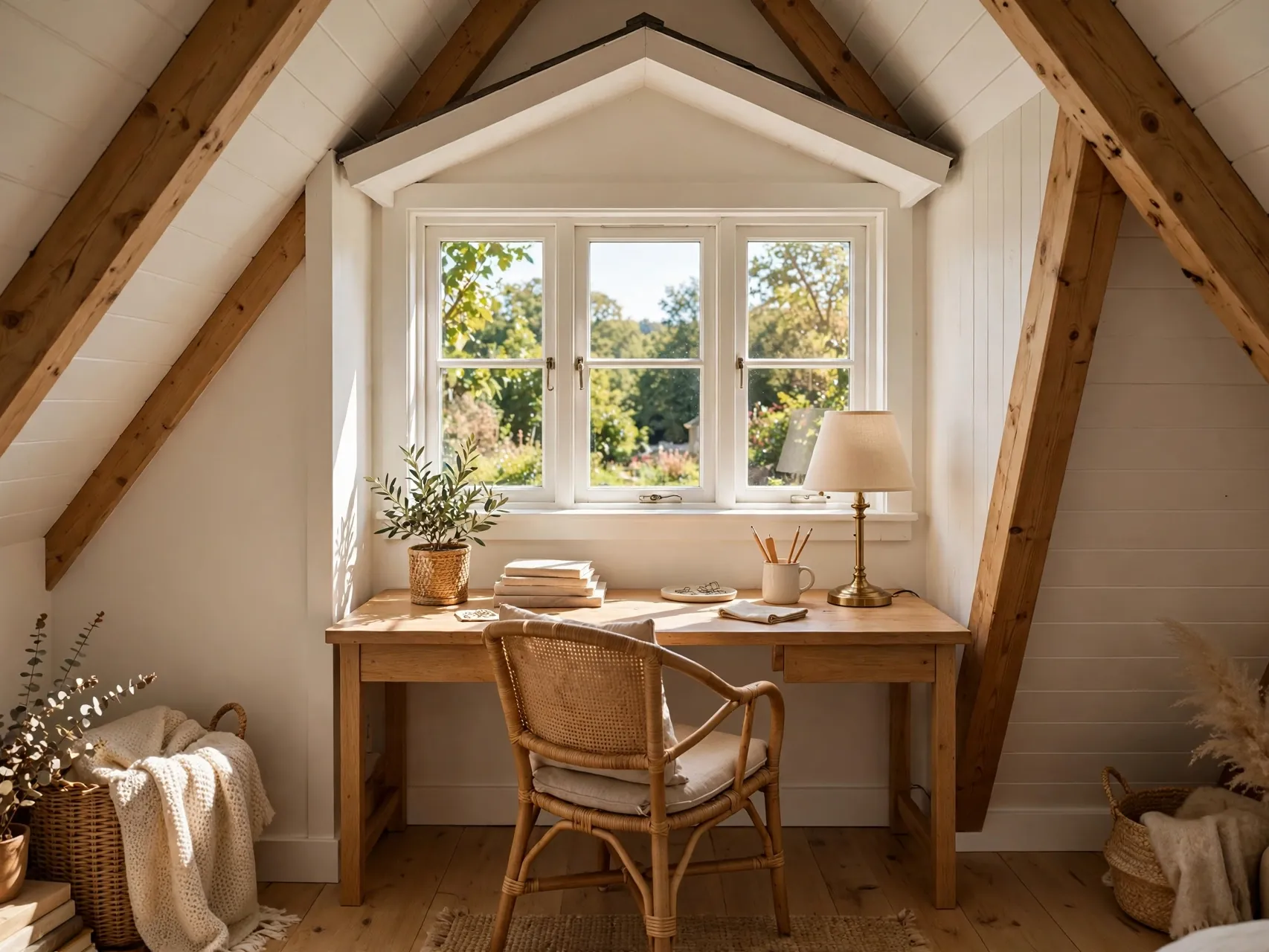
A dormer gives you headroom and daylight in one package, which makes it the natural home for a compact desk. A narrow desk, a chair that tucks fully under it, and one wall shelf cover most study and work needs.
Face the desk toward the window if the view is pleasant, or sideways if glare hits your screen. Keep the desktop shallow and clear. In an attic, a calm desk corner makes the whole room feel purposeful.
Photograph the room from the doorway to judge it the way guests and family actually see it.
Light the Room With Sconces and Wall Washers
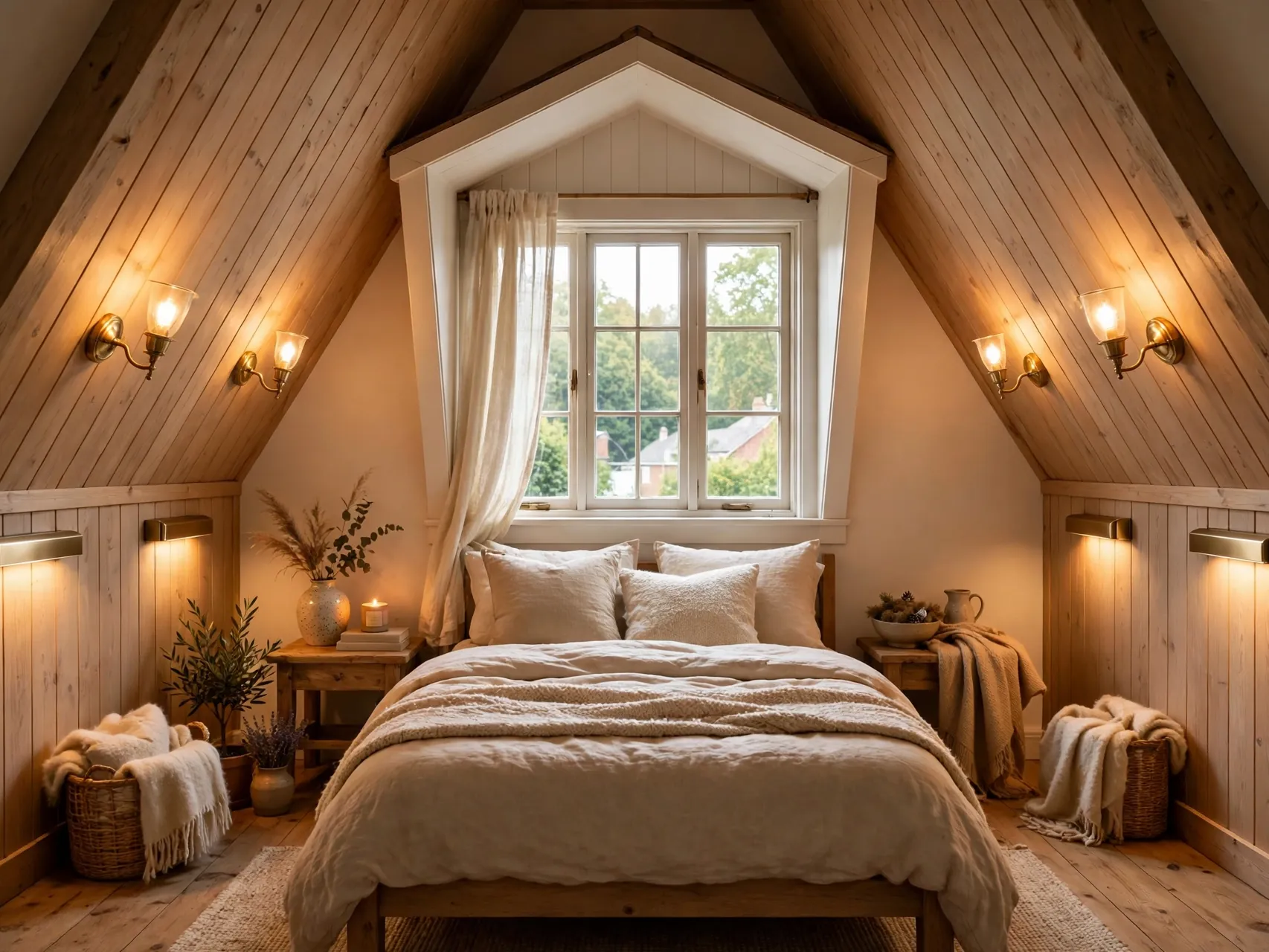
Pendant lights and tall floor lamps steal headroom and draw attention to the ceiling height. Wall sconces, low table lamps, and strip lights along the ridge or shelves wash the room in light without hanging into it.
Put lights on dimmers where you can, and use warm bulbs for evening coziness. Battery or plug in sconces suit rooms where adding new wiring is not practical. Layered low light is what makes attics feel snug rather than cramped.
Keep a tape measure and your room sketch on your phone for every shopping trip.
Ground the Floor With One Light Rug

A single light toned rug in the center of the room lifts the whole space and defines the living zone under the ridge. It also softens sound, which matters in attics where footsteps carry to the rooms below.
Choose a low pile rug that doors can clear and that vacuums easily. Leave a border of floor visible. If the attic is a bedroom, place the rug so you step onto it from the bed on cold mornings.
Measure the exact spot twice before ordering, because attic angles forgive nothing.
Keep Window Dressings Short and Simple
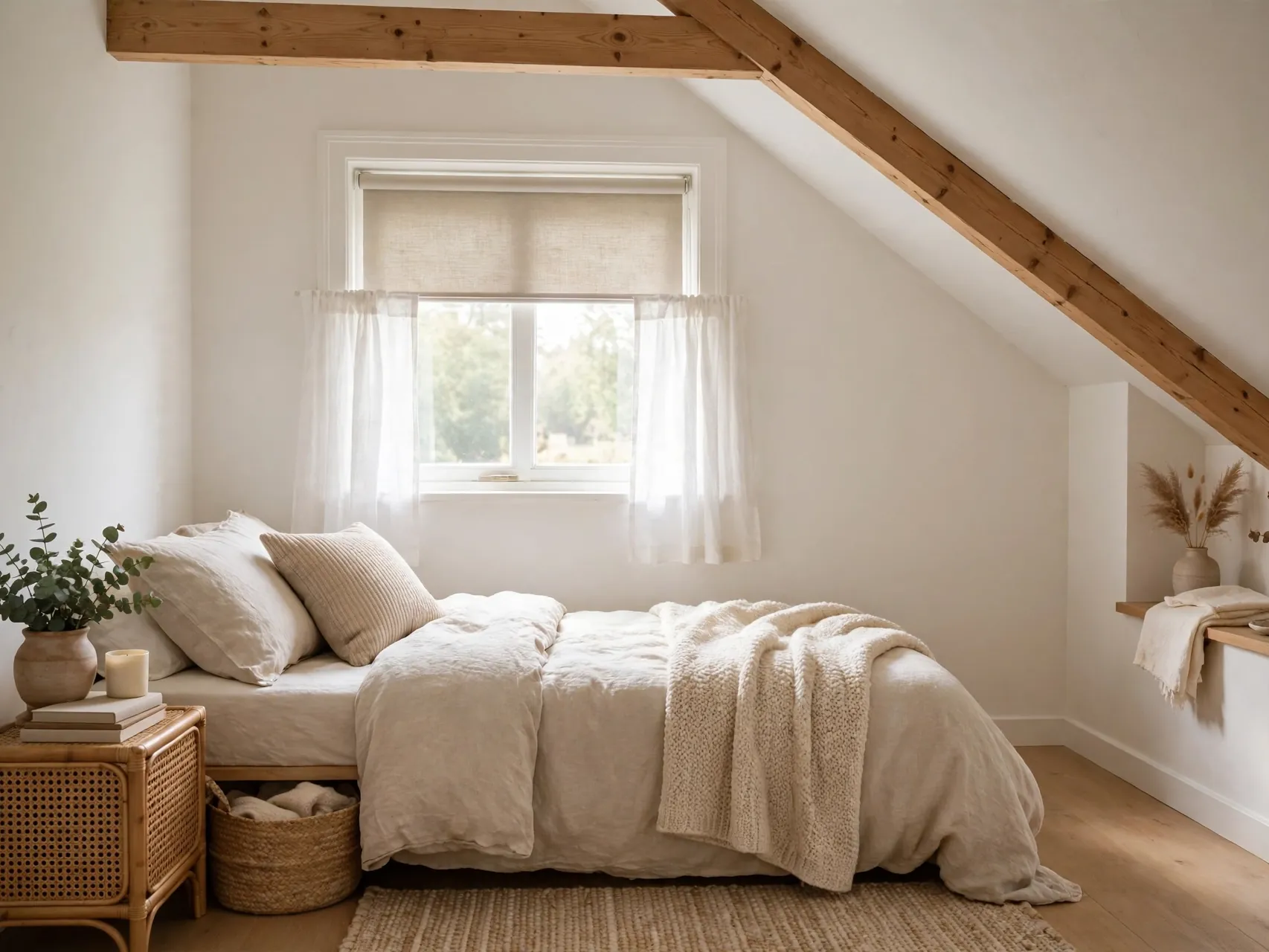
Heavy floor length drapes fight with sloped walls and swallow light. Simple blinds, short curtains, or shades fitted inside the window frame keep attic windows neat and let the architecture stay the feature.
For bedrooms, choose blackout lining so early summer light does not end your sleep at dawn. On skylights, use the shade type made for that window and check it opens easily, since you will adjust it daily.
Live in the room for a week between changes and the right next step usually becomes obvious.
Add a Dressing Area With Low Hanging Rails

A full wardrobe rarely fits an attic, but a low rail along a knee wall, a short dresser, and a mirror on the tallest wall make a complete dressing area. Hang everyday clothes on the rail and fold the rest.
Keep the rail to current season items so it never becomes a jumble. A small bench or stool gives you somewhere to sit while dressing and a surface for the next day outfit, all within the low zone.
A small attic rewards restraint. Two good pieces beat five almost right ones every time.
Create a Play Zone Where Headroom Is Low

Children are the perfect height for the low end of an attic. Put the play kitchen, the book corner, and the toy storage where adults cannot stand comfortably, and keep the tall center free for grown ups supervising.
Use soft mats, low open bins kids can reach, and rounded furniture in this zone. As children grow, the same low area converts naturally into homework storage, a reading corner, or a teen lounge edge.
Photograph the room from the doorway to judge it the way guests and family actually see it.
Set Aside a Calm Corner for Yoga and Breathing

Attics are quiet, separated, and naturally calm, which suits a small practice corner. A mat stored rolled in the eaves, a floor cushion, and one shelf for a candle free setup or a small speaker is all you need.
Keep the corner permanently clear, even if it is tiny. A space that is always ready gets used, while a space that needs clearing first quietly becomes storage. Morning light through a dormer makes this corner the best seat in the house.
Keep a tape measure and your room sketch on your phone for every shopping trip.
Use Mirrors to Spread Daylight Around

Attics often have one good window and several dim corners. A mirror placed to catch that window light and throw it across the room brightens the low side without any building work or extra lamps burning all day.
Choose one larger mirror on the tallest wall rather than several small ones. Keep the frame light in tone. Mirrors also help a dressing area feel complete and make a small attic bedroom feel twice its width.
Measure the exact spot twice before ordering, because attic angles forgive nothing.
Install Shallow Shelves That Follow the Slope

Standard bookcases waste the slope. Shallow shelves cut to run along the low wall, stepping down as the ceiling drops, give you display and book storage that looks built for the room, because it is.
Keep the lowest shelves for storage boxes and the eye level ones for books and objects. Secure any shelving properly for its load, and stop each run before it crowds the standing zone in the middle of the room.
Live in the room for a week between changes and the right next step usually becomes obvious.
Pick a Compact Guest Setup That Folds Away
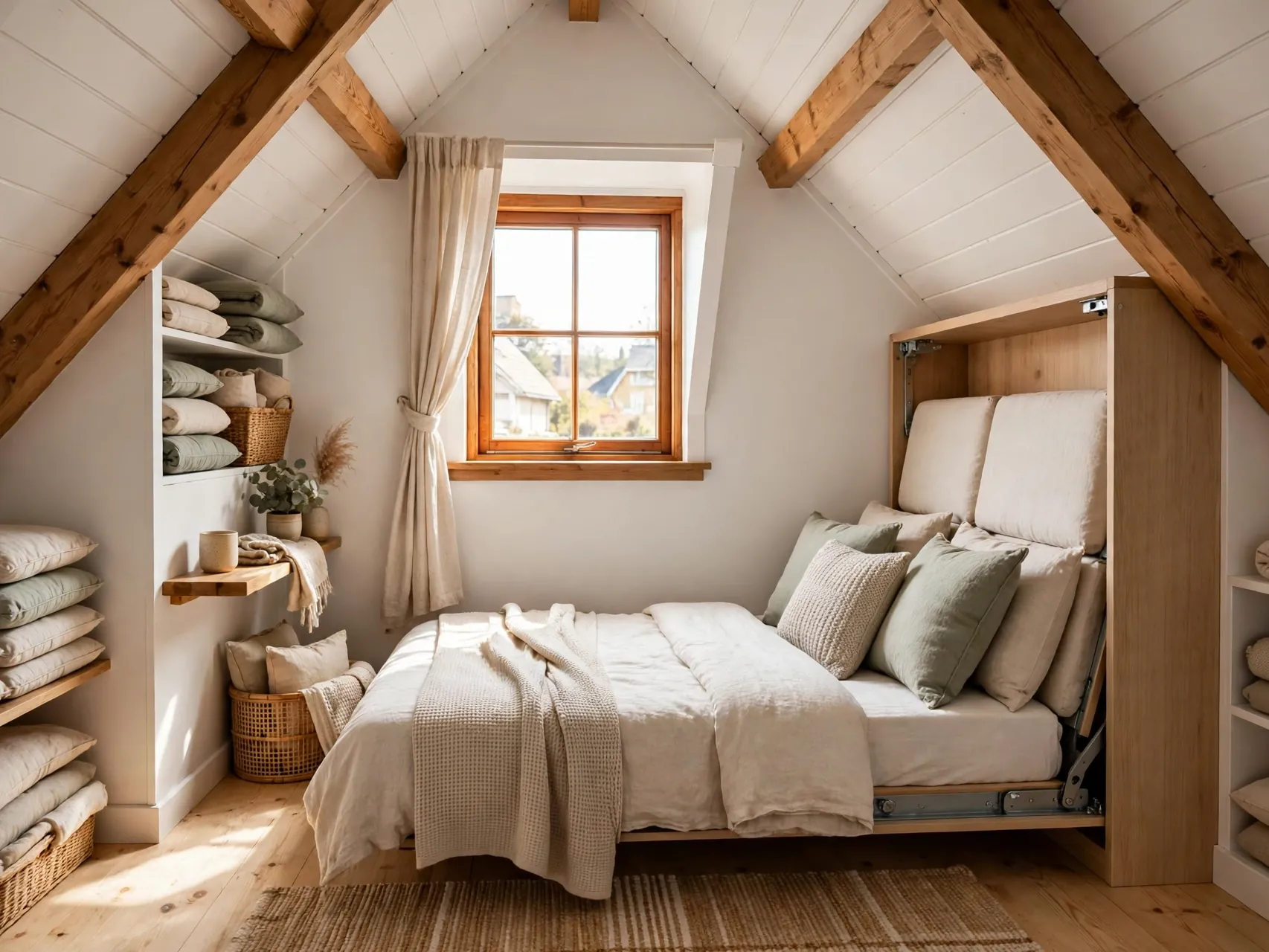
If the attic hosts guests, choose pieces that reset fast: a daybed or a quality sofa bed, folding side tables, and bedding stored in the eaves cupboard. Guests get a real room, and you get your space back the next morning.
Add the small kindnesses: a carafe of water, a spare charger, and a hook for clothes. Because the room is small, tidy and thoughtful beats large and fancy every single time for overnight guests.
A small attic rewards restraint. Two good pieces beat five almost right ones every time.
Add Texture With Textiles Instead of Tall Decor

When you cannot decorate upward, decorate in layers at low level. Linen bedding, a woven throw, cushions in two or three fabrics, and a textured rug give a cozy attic room ideas feel without a single tall object.
Repeat the same small palette of fabrics across the bed, the reading nook, and the desk chair so the room feels designed as one space. Textiles also absorb sound, which helps an attic feel calm and private.
Photograph the room from the doorway to judge it the way guests and family actually see it.
Keep the Color Palette Tight and Calm

Small sloped rooms show every color clash at once, because you can see the whole room from the door. Limit the palette to one light base, one mid tone for furniture and textiles, and one accent used sparingly.
Test paint on the slope itself, not just the wall, since angled surfaces catch light differently and can look a full shade darker or lighter. Live with the samples for two days of changing light before committing.
Keep a tape measure and your room sketch on your phone for every shopping trip.
Improve Airflow With a Low Fan and Ventilation

Attics run warm in summer and stuffy in winter. A low profile ceiling fan fitted only where headroom and the manufacturer guidance allow, or a quiet floor or tower fan, keeps air moving without eating the room.
Open windows or vents when weather allows, and check that any skylight shades and seals work properly. Comfort decides whether an attic room gets used daily or slowly turns back into storage, so airflow is a design feature, not an afterthought.
Measure the exact spot twice before ordering, because attic angles forgive nothing.
Style the Stair Landing as Part of the Room

The top of the attic stairs often becomes a dumping strip. Treat it as the room entry instead: one hook rail, a small console or basket, and the same colors as the main room so arrival feels intentional.
Keep the landing and stairs clear for safe passage at all times, and never store items on the steps themselves. A tidy threshold sets the tone, and the whole attic stays calmer when the first three feet are under control.
Live in the room for a week between changes and the right next step usually becomes obvious.
FAQ
What is the best use for a small attic with low ceilings?
Sleeping, reading, guest stays, and quiet work suit low attics best, because they happen sitting or lying down. A bedroom, a reading retreat, a child playroom, or a compact office all use the tall center for moving and the low edges for furniture and storage, which matches how the room is shaped.
How do I make a low attic ceiling feel higher?
Paint walls and ceiling one light color, keep furniture low, light the room from the walls rather than the ceiling, and limit the palette. Together these remove the visual line where the ceiling starts, which is what makes the room feel taller even though nothing has moved.
Where should storage go in a sloped ceiling room?
In the slopes themselves. Drawers and cupboards built or placed along the knee walls and eaves use the lowest volume, which cannot hold standing furniture anyway. Keep standing height for people and daily movement, and let every low corner handle storage, sleeping, or sitting.
What furniture should I avoid in a small attic?
Avoid tall wardrobes, high bookcases, pendant lights, and bulky four poster or tall headboard beds. They collide with the slope visually and physically. Low platform beds, short dressers, daybeds, and shallow shelves made for the slope will always work better in these rooms.
How can I keep an attic room comfortable in summer?
Improve airflow first with fans suited to the space and working window shades, especially on skylights. Light colored bedding and blackout lined shades help bedrooms. If you are renovating, ask a qualified professional about insulation and ventilation for your roof type, since requirements vary by home and climate.
Key Takeaways
- Work with the slope: Tall center for standing, low edges for sleeping, sitting, and storage.
- One light color: Painting walls and ceiling the same shade removes the low lid effect.
- Store in the eaves: Drawers and cupboards along knee walls turn dead space into the main storage.
- Stay low: Platform beds, daybeds, and short furniture keep a small attic bedroom ideas layout feeling open.
- Light from the walls: Sconces and low lamps add glow without stealing headroom.
- Pin these ideas for later: Save this list to your attic makeover board on Pinterest before you start measuring.
Planning an attic transformation? Pin this list to your small rooms board on Pinterest so every measurement and idea stays in one place.