25 Garage Organization Ideas That Finally Clear the Mess
Introduction
Most garages do not fail because they are too small. They fail because everything lands on the floor first and gets a real home later, and later never comes. The garage organization ideas that actually stick all do the same thing: they give every category one clear place, lift storage off the floor, and keep the car and the walking path sacred.
Start by accepting that your garage does several jobs at once. It is a parking space, a workshop, a sports locker, a garden shed and a seasonal storage unit in one room. Once you plan for those jobs separately, the mess starts to make sense, and so does the fix.
The 25 ideas below run in a useful order. The first few are about sorting and zoning, the middle ones build storage on walls and ceilings, and the last few keep the system alive. You do not need all 25 in one weekend. Pick the sorting ideas and two or three storage ideas, and the floor will already look different.
Start With a Full Empty Out and Sort
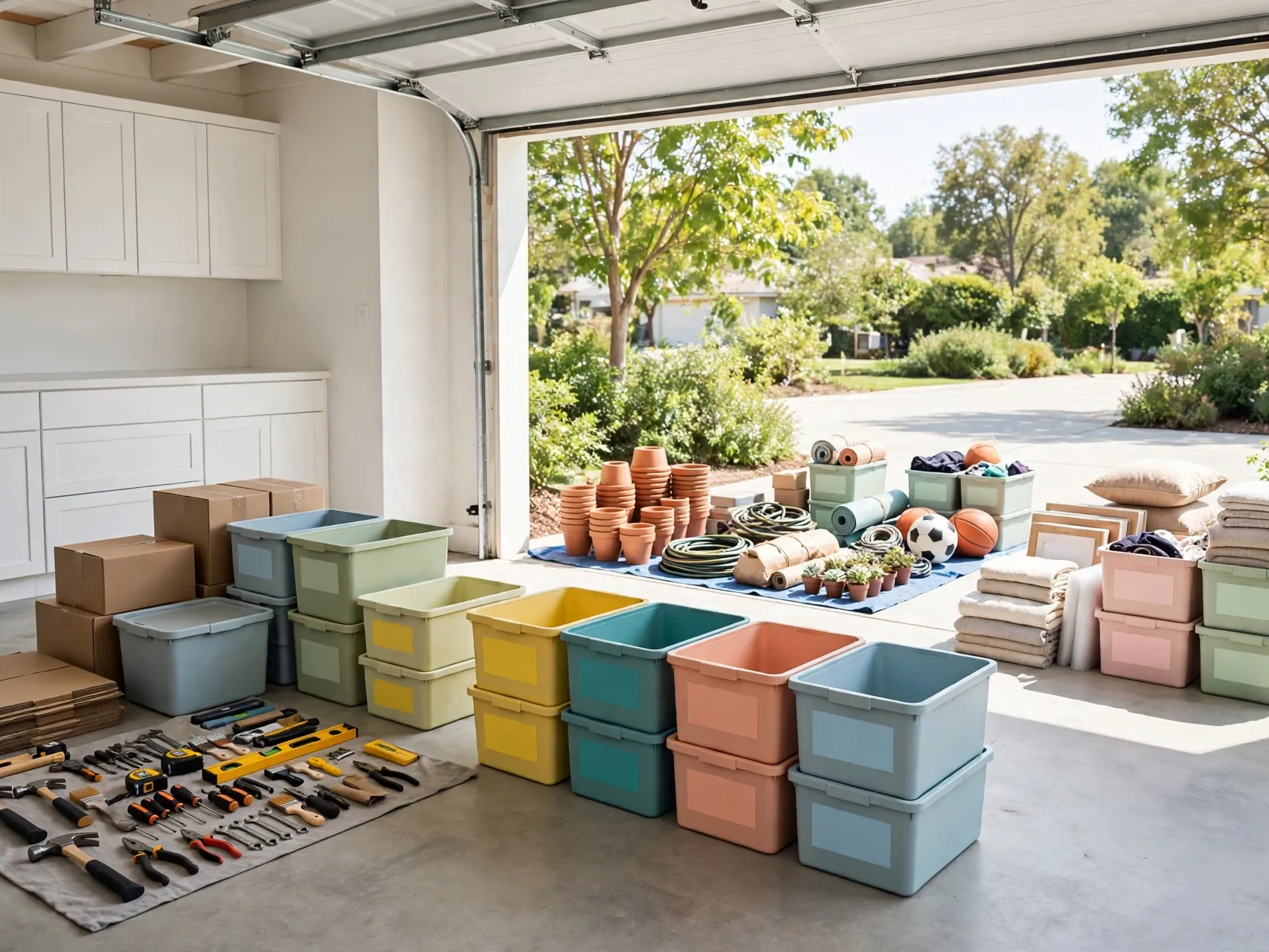
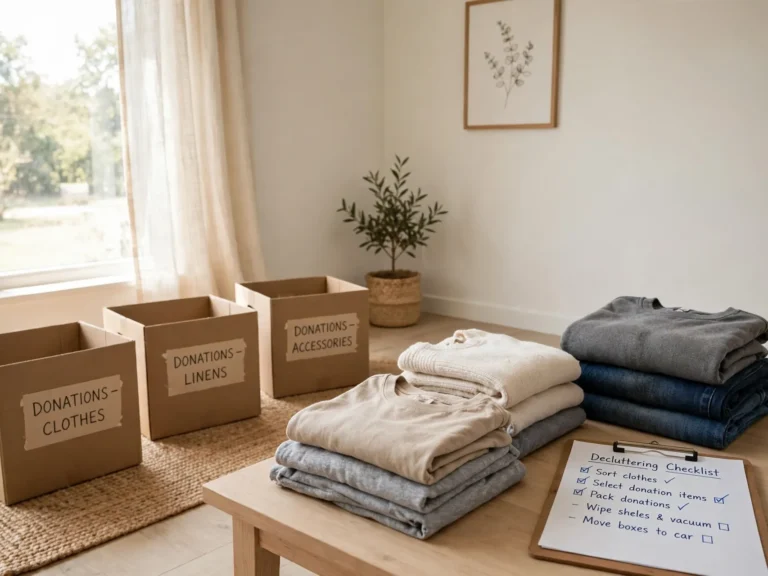
Pull everything out by zone, not by handfuls from the middle of a pile. Work one wall or one corner at a time and sort into four groups: keep, donate, sell and toss. Broken tools, dried out paint and outgrown toys can leave right away, which shrinks the job before you spend anything.
Sorting first also tells you what storage you truly need. Buying bins before this step usually means organizing things you should have let go.
Split the Garage Into Clear Zones

Give each activity its own stretch of wall or floor. A practical split for most families looks like this:
- Car zone, kept completely clear so doors open freely
- Tools and projects zone, near the workbench
- Sports and play zone, easy for kids to reach
- Garden zone, near the outside door
- Seasonal zone, high or deep storage for rarely used items
Zones stop the slow creep where a bike ends up in front of the tools and holiday bins block the mower.
Move Storage Up the Walls First

Floor space is the most valuable space in a garage, and the walls are usually the most wasted. Wall rails, track systems and simple hooks lift brooms, cords, folding chairs and sports gear into the empty band between shoulder height and the ceiling. Heavy items stay low, between knee and shoulder height, where lifting them is safe.
Anchor wall systems into studs and follow the load rating on the packaging.
Hang a Pegboard Tool Wall You Can Rearrange
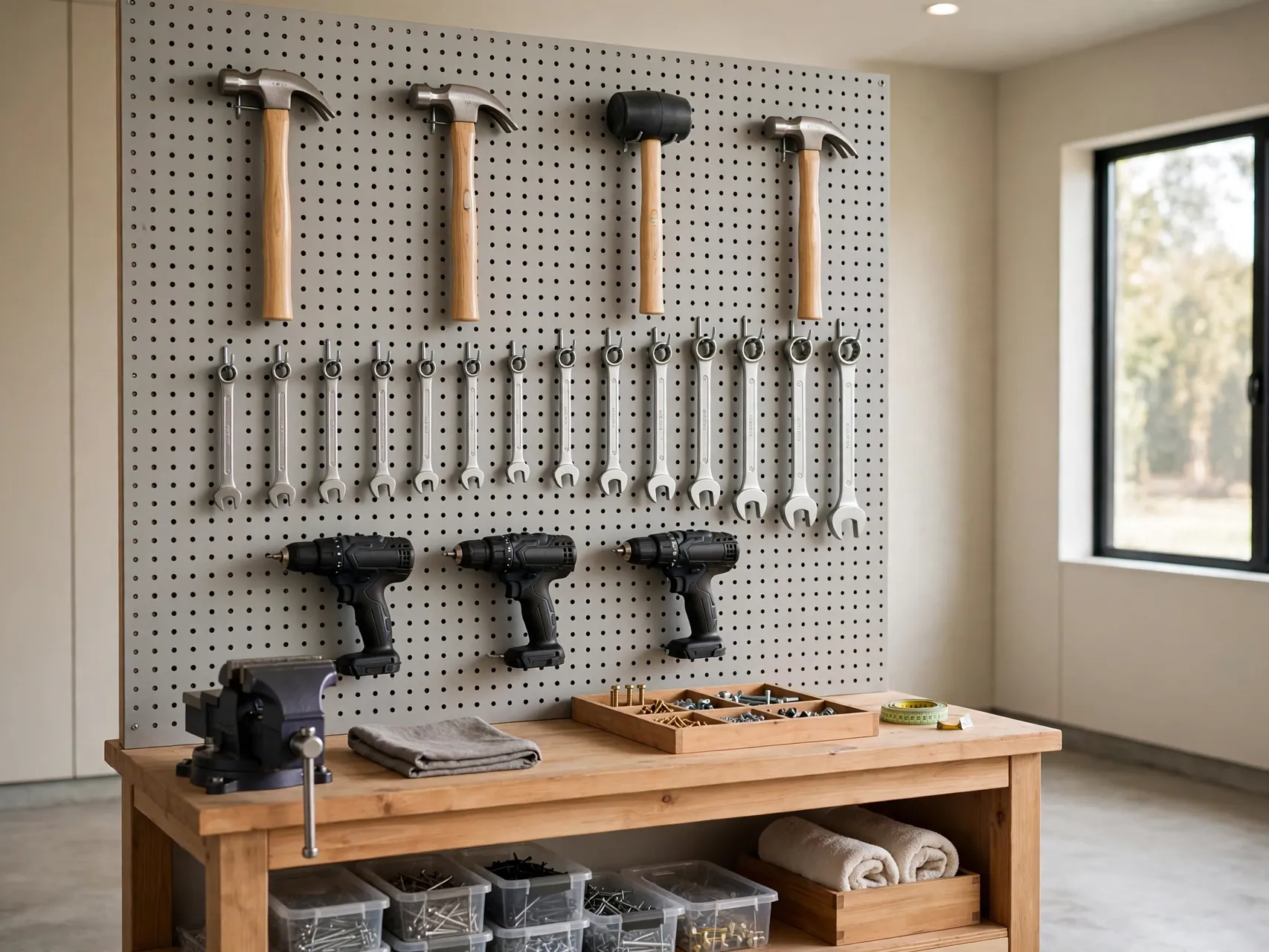
A pegboard above the workbench keeps hand tools visible, reachable and off the work surface. Hang the tools you use most at eye level: hammer, tape measure, level, pliers and a small selection of screwdrivers. Trace the outline of each tool on the board if you share the garage, so everyone can see where things return.
Pegboard works because it changes with you. Hooks, baskets and small shelves move in seconds when your tool collection changes. Leave some empty holes on purpose.
Add Sturdy Shelving Along One Wall
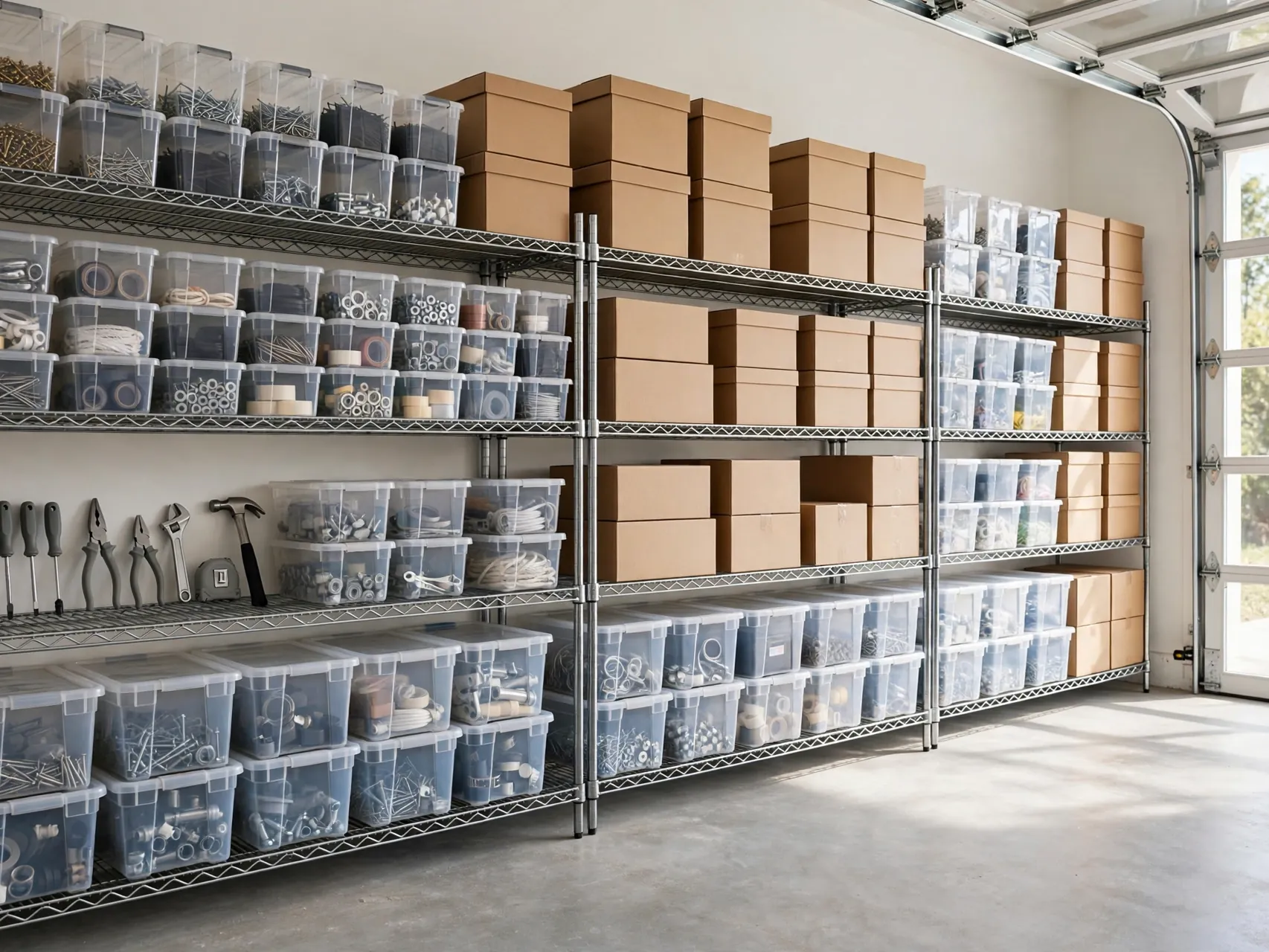
One run of strong shelving along a side wall does more than scattered small shelves everywhere. Choose adjustable shelves so tall bins, paint cans and smaller boxes each get a shelf height that fits. Put the heaviest items on the lowest shelf and lighter, rarely used boxes at the top.
Leave the bottom shelf a little higher off a damp floor if your garage gets wet, and keep a clear label on the front edge of each shelf.
Use the Ceiling for Seasonal Bins
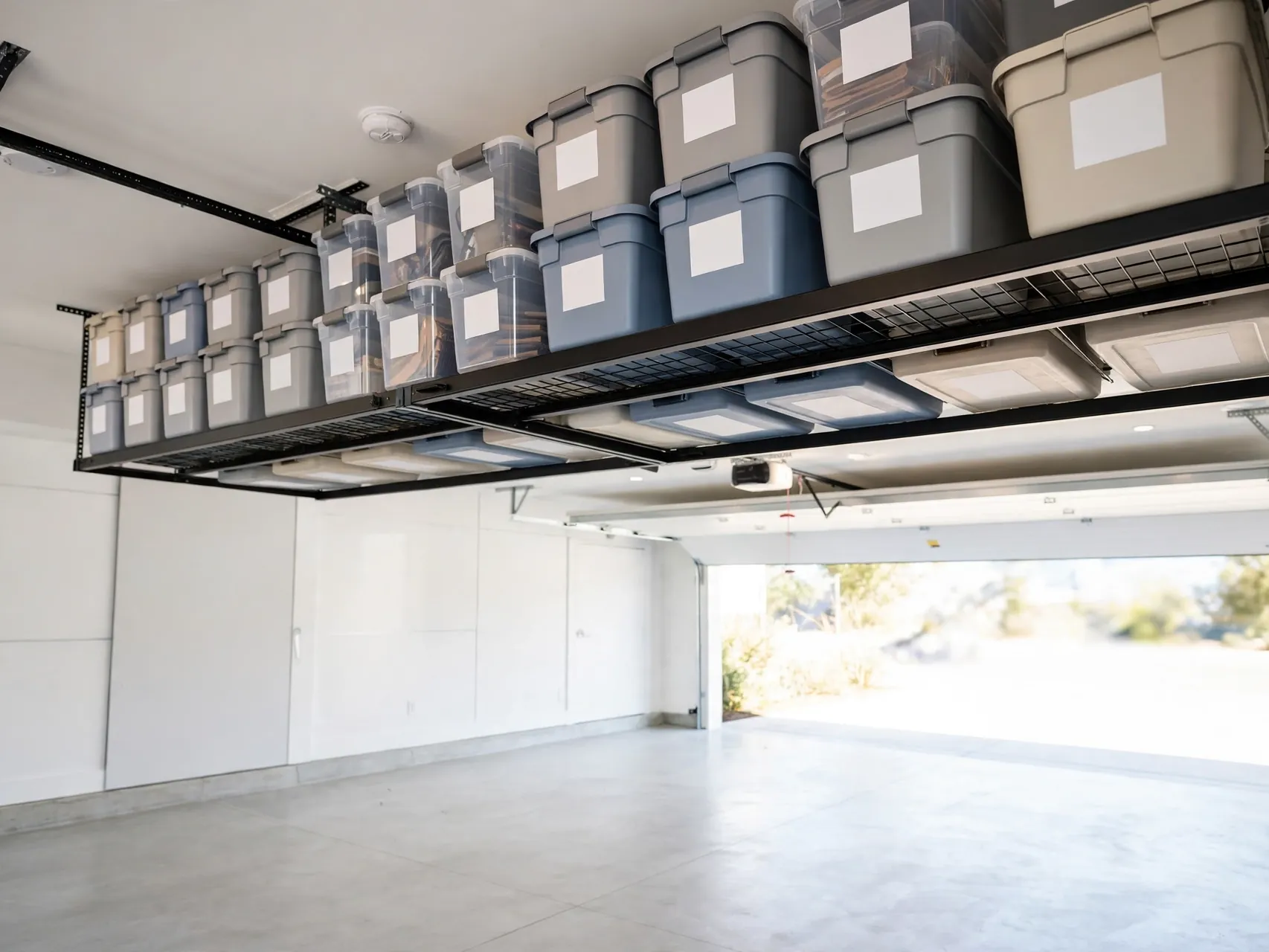
Overhead racks are ideal for the things you touch twice a year: holiday decorations, camping gear, coolers and out of season sports equipment. The ceiling is dead space in most garages, and moving seasonal bins up there frees whole shelves for weekly items.
Mount ceiling racks into joists, never into drywall alone, and respect the weight limit the maker states.
Park Bikes on Wall or Ceiling Hooks
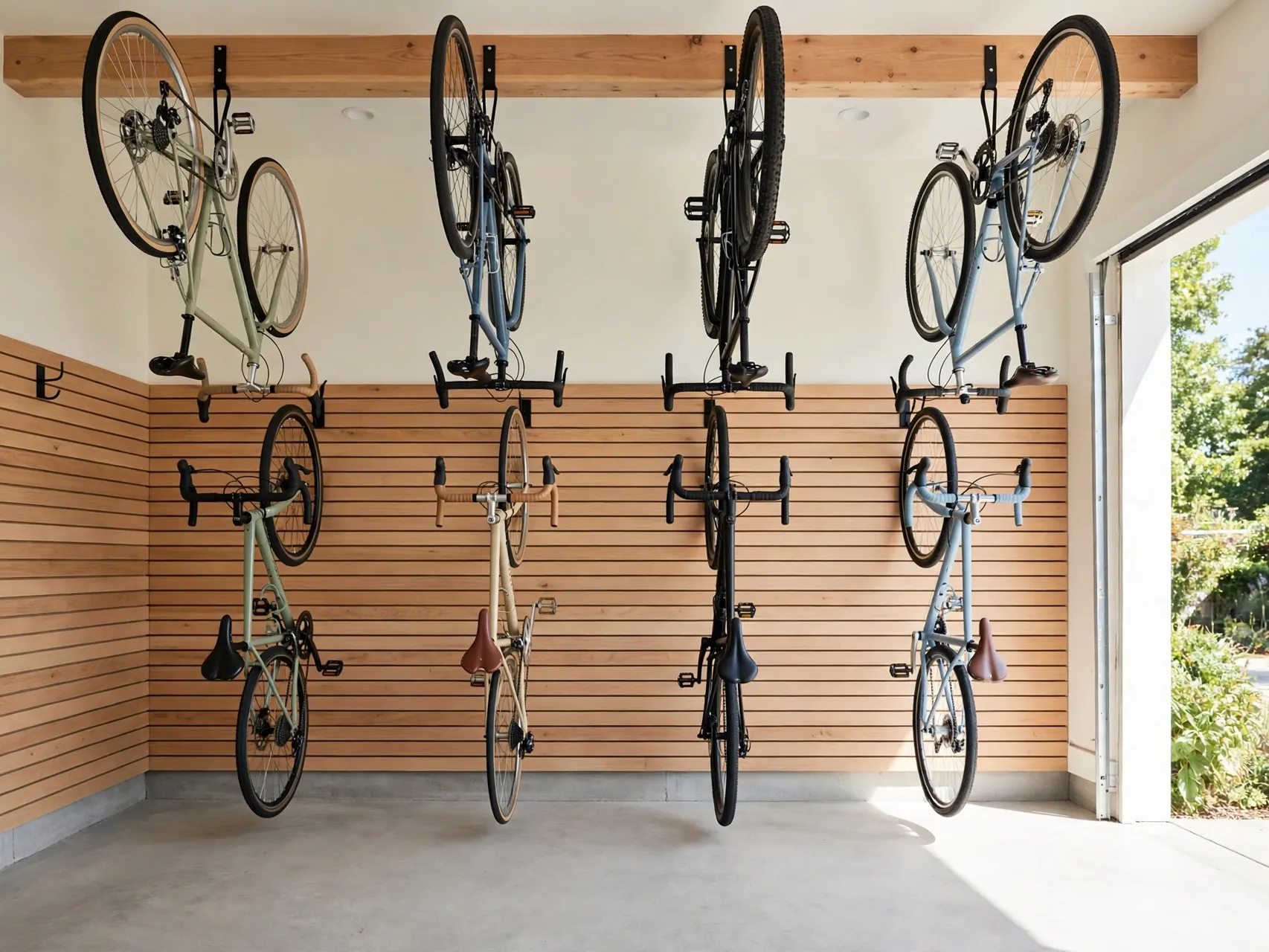
Bikes leaning against each other eat floor space and fall over in a tangle. Vertical wall hooks lift each bike by its front wheel so a row of bikes fits in a narrow strip. Families who ride daily should keep bikes near the door at floor level on a simple rack instead, because the best system is the one nobody avoids using.
For rarely used bikes, ceiling hoists or high hooks work well through winter.
Corral Balls and Sports Gear in One Bin Tower

Loose balls roll under cars and sports bags breed in corners. One tall mesh bin, a bungee ball holder on the wall, or a simple three tier rack gives sports gear a single home kids can actually use. Open containers beat lidded ones here, because a child will toss a ball into an open bin and leave it beside a closed one.
Place this zone near the outside door, at a height younger kids can reach on their own.
Build a Simple Workbench With Storage Below

A workbench gives projects a home that is not the car hood or the floor. It does not need to be fancy: a sturdy bought bench or two sawhorses with a solid top will do for sorting, repairs and potting. What matters is storage below it, in drawers or bins, for the tools and supplies that belong to that bench.
Keep the top clear by rule.
Give Long Handled Tools a Tall Wall Rack

Rakes, shovels, brooms and trimmers are awkward in bins and dangerous leaning in corners. A wall rack with spring clips or individual hooks holds each handle upright in a few inches of wall space. Group garden tools together and cleaning tools together, so you grab the right handle without unloading the whole row.
Mount the rack where the tools are used: garden tools near the outside door, brooms near the house door.
Switch to Clear Bins With Big Labels

Cardboard boxes hide contents, soak up moisture and collapse under weight. Clear plastic bins with lids protect what is inside from dust and let you see it without opening three boxes first. Add a large label on the end anyway, because clear bins turn murky in dim light and stacks hide their contents.
Keep bin sizes consistent so they stack neatly and shelves can be planned around them.
Create a Drop Zone by the House Door

The few feet beside the door into the house handle more daily traffic than the rest of the garage combined. Put a boot tray, a few hooks and a small shelf there for the things that travel in and out daily: work boots, dog leash, reusable bags, umbrellas and sports bags for tomorrow.
Keeping this zone small is the trick. It is a landing pad, not a storage unit, so anything that sits there for a week gets moved to its real zone.
Store Chemicals Locked, Labeled and Away From Heat
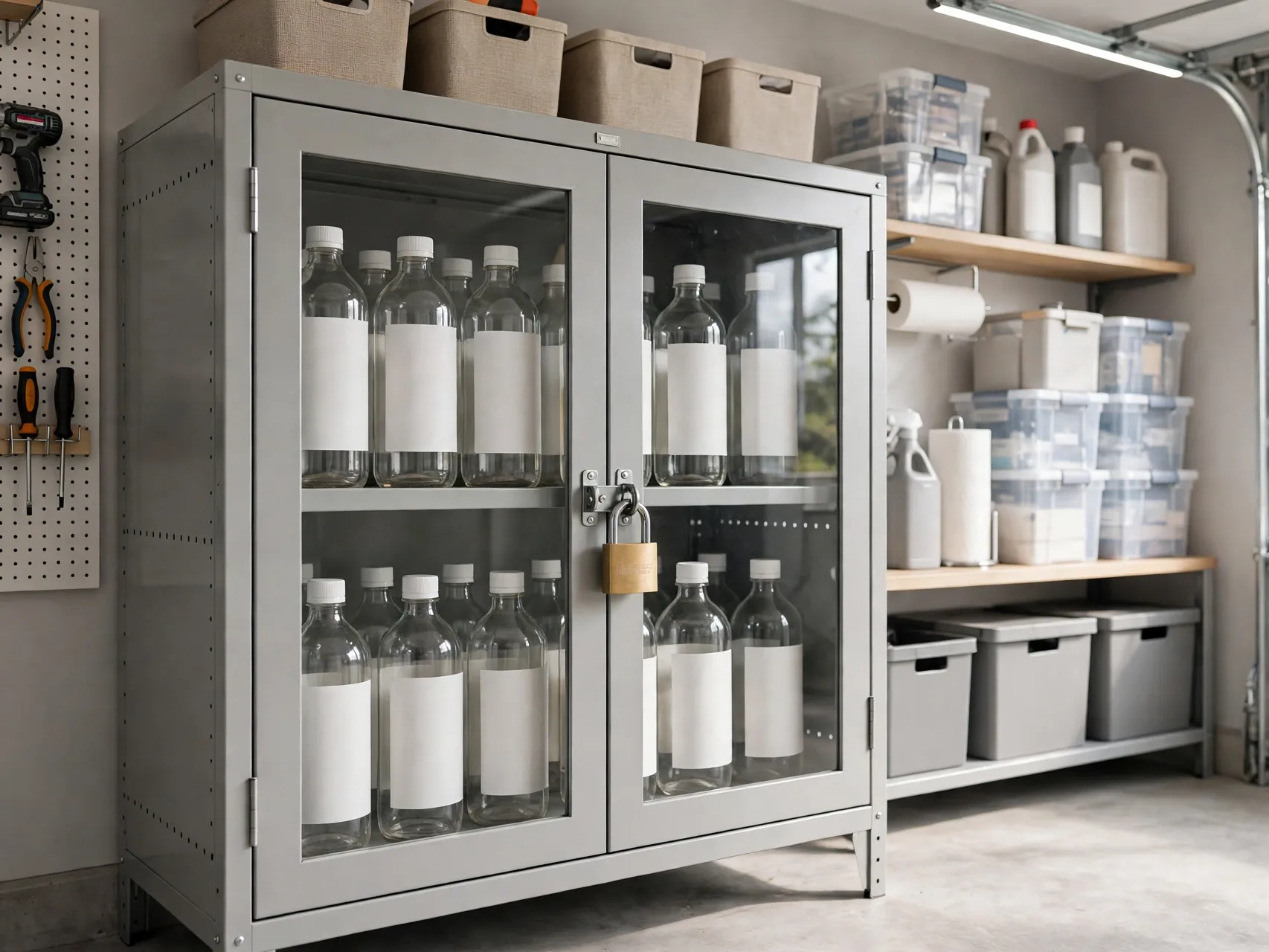
Paint, solvents, fuel and garden chemicals need stricter rules than everything else in the garage. The U.S. Fire Administration advises following the label instructions, keeping products in their original containers, storing them out of reach of children and pets, and keeping anything flammable away from the home, out of direct sun and away from open flames or heat sources. Never mix products.
A lockable metal cabinet is a sensible home for these items, away from water heaters and furnaces.
Keep Small Hardware in Divided Drawers

Screws, nails, bolts, hooks and batteries disappear into coffee tins and junk drawers. A divided small parts organizer with clear drawers puts each size in view and ends the habit of buying duplicates you already own. Label each drawer by size or type, and keep one drawer for the odd leftover parts from furniture kits.
Mount the organizer on the wall near the bench or stand it on the bench end. Hardware storage only works if it sits where repairs happen.
Roll in a Tool Chest That Moves With the Job
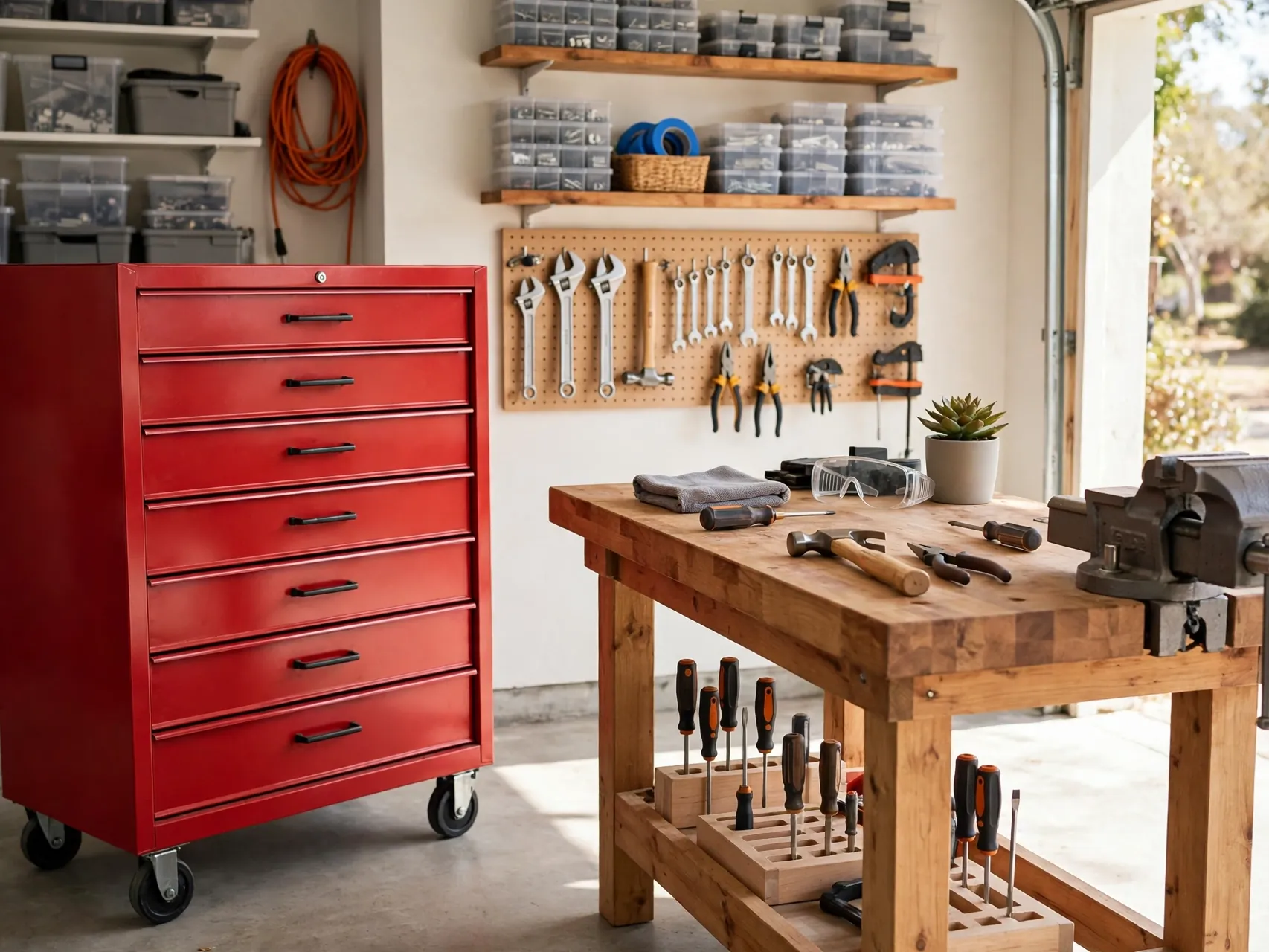
A rolling tool chest suits garages where projects happen in the driveway as often as at the bench. Roll it out, work, and roll it back into its parking spot under a shelf or beside the bench. Drawers keep sockets, wrenches and power tool accessories separated in a way open shelves cannot.
Choose a chest you can fully open in its home spot, with drawers that do not block a walking path or a car door.
Use the Space Above the Garage Door

The wall space above the garage door is often tall, empty and forgotten. A long shelf or a set of racks there holds long, light, rarely used items: spare lumber, PVC pipe, a step ladder laid flat, or bins of seasonal decor. Because access needs a ladder, this is storage for things you fetch a few times a year at most.
Check the door clearance carefully before installing anything, and watch the door open fully through its whole travel.
Hang Ladders Flat Against the Wall
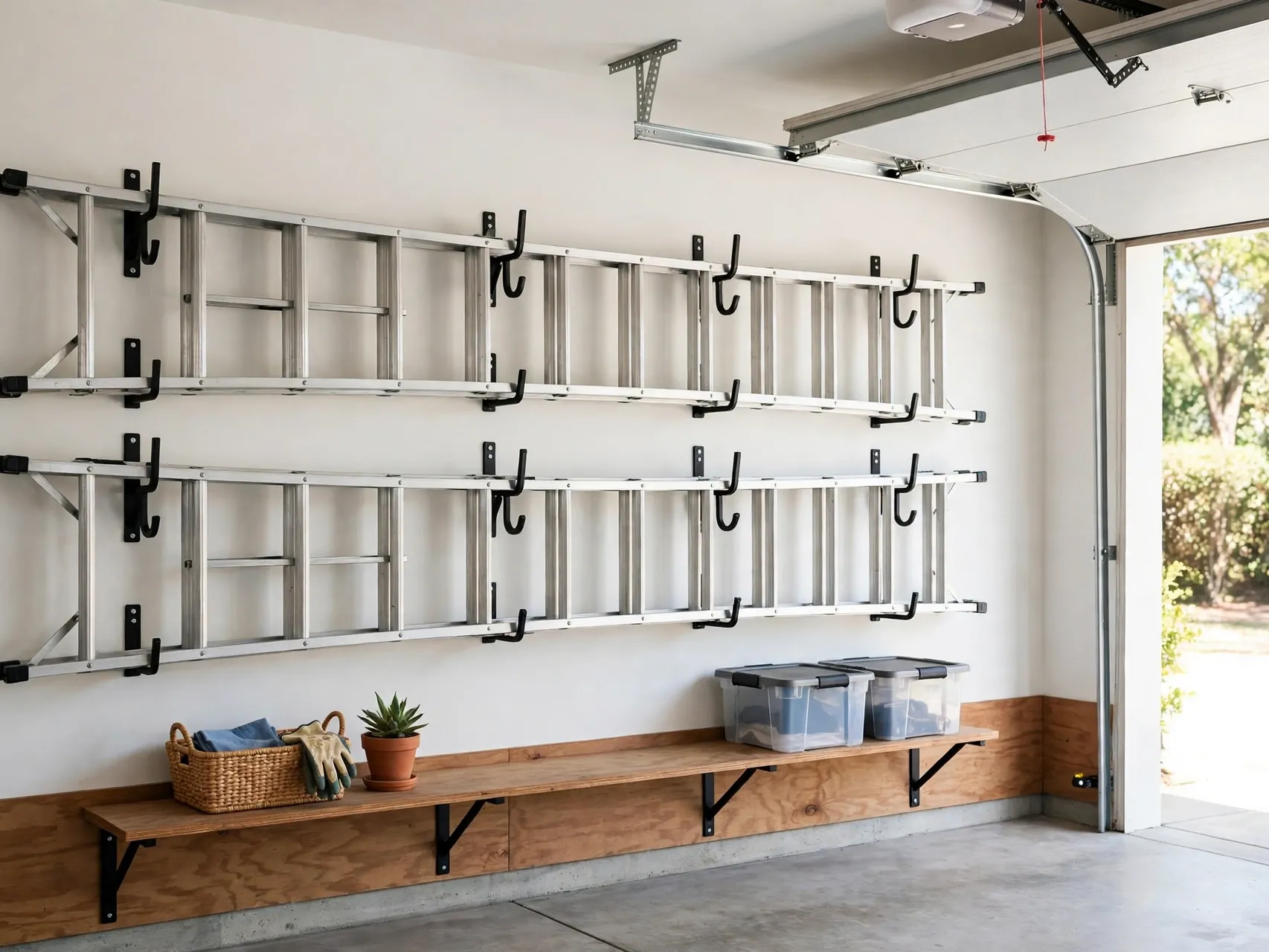
A ladder leaning in a corner is a trip hazard and a falling hazard. Flat wall brackets hold a ladder tight against the wall, off the floor and out of the walkway, often in the narrow space beside shelving where little else fits. Extension ladders can also ride on ceiling hooks if wall space is gone.
Hang the ladder you use for gutters and bulbs somewhere you can reach without moving three other things.
Set Up a Garden Station Near the Outside Door

Garden supplies scattered between the garage, shed and porch waste time every weekend. Claim one shelf unit or bench section near the outside door for pots, hand tools, gloves, seeds and a caddy of frequently used supplies. A wall rack beside it holds the long handled tools from the earlier idea.
Add a Folding Table for Projects and Sorting
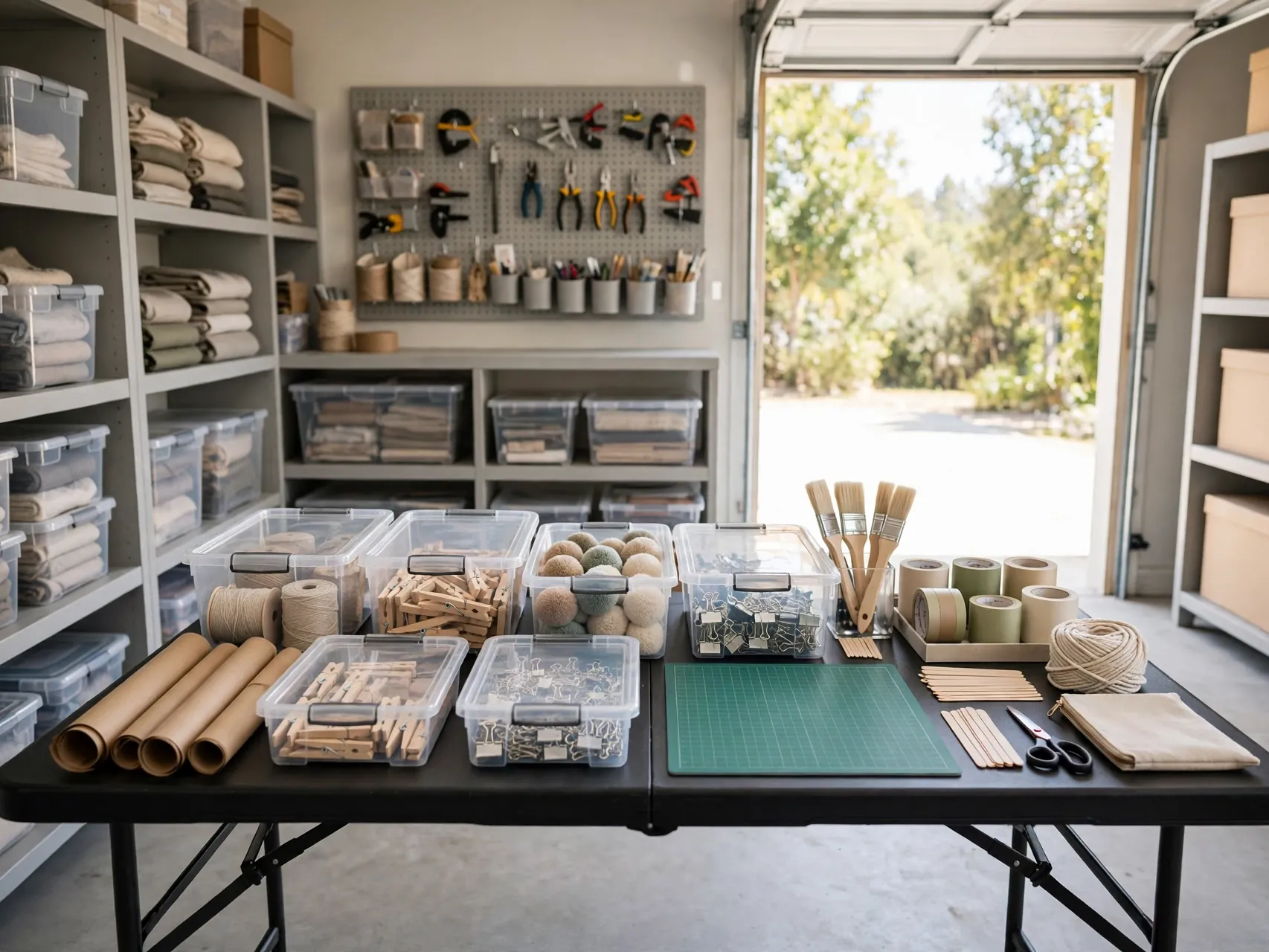
Not every garage has room for a permanent second bench, but most have room for a folding table that appears when needed. Use it for sorting during a cleanout, for holiday decorating, for packing the car or for a project that needs spreading space. When the job ends, the table folds flat against the wall.
The rule that keeps this idea working is simple: the table is never storage. Nothing lives on it overnight.
Protect the Floor With Mats in Work Zones
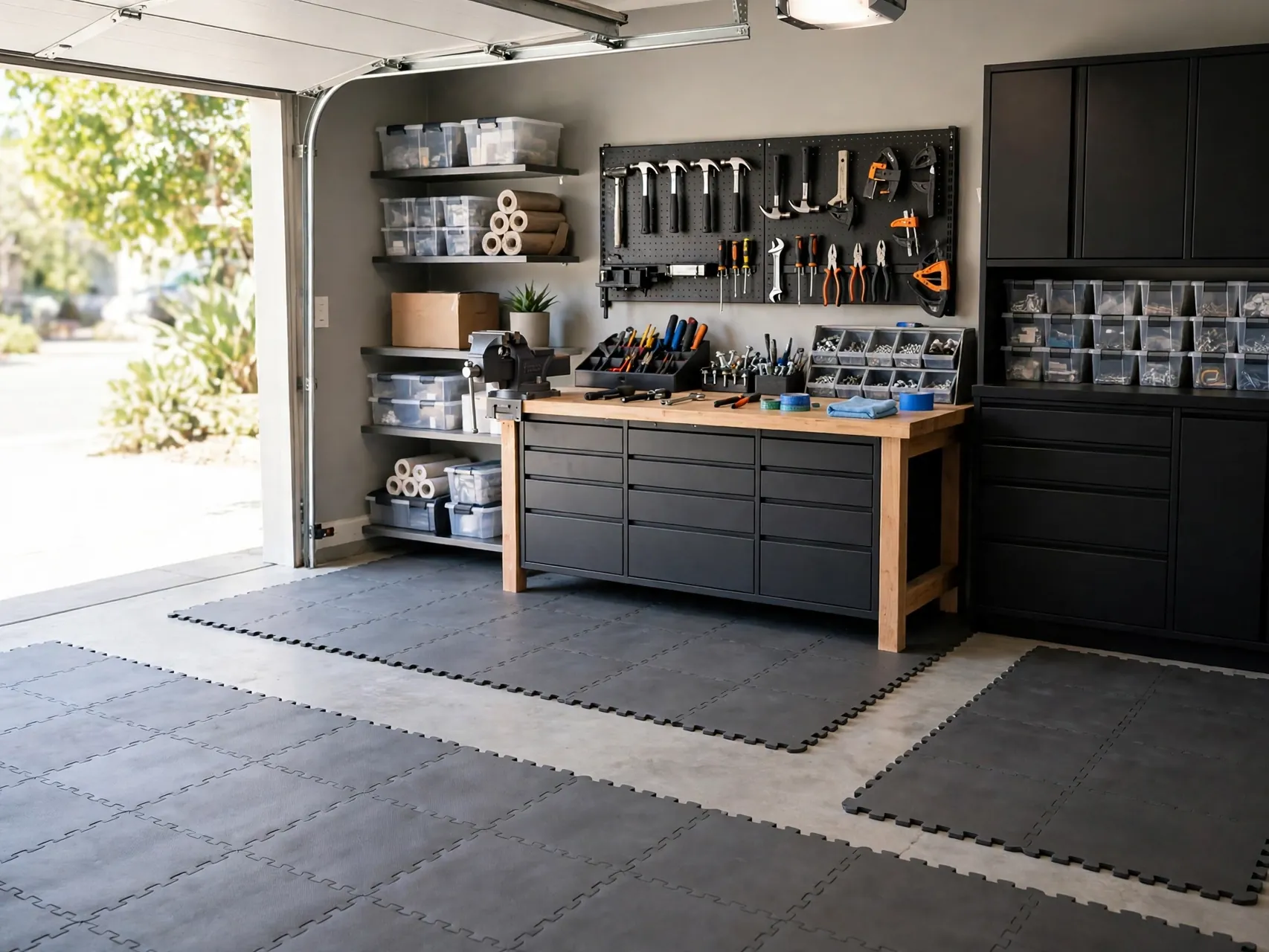
Interlocking foam or rubber mats under the workbench and in front of shelving make long jobs easier on feet and knees, and they catch small screws before those screws roll under the car. Mats also mark work zones visually, which helps the whole family see where projects belong and where parking begins.
Choose mats you can lift and sweep under, and skip them anywhere a car tire needs to roll daily.
Keep Recycling and Trash in One Tidy Corner

Recycling, returnable cans and workshop trash drift across garages without a home. Put bins for each in one corner near the outside door, sized to your local collection rhythm, with lids if animals visit your bins. Broken down cardboard goes flat in a vertical slot or behind the bins, not in a growing pile beside them.
A tidy waste corner matters more than it sounds. Much of the visual chaos in a garage is packaging, empty boxes and things waiting to leave.
Store Car Care Supplies Together by the Parking Spot
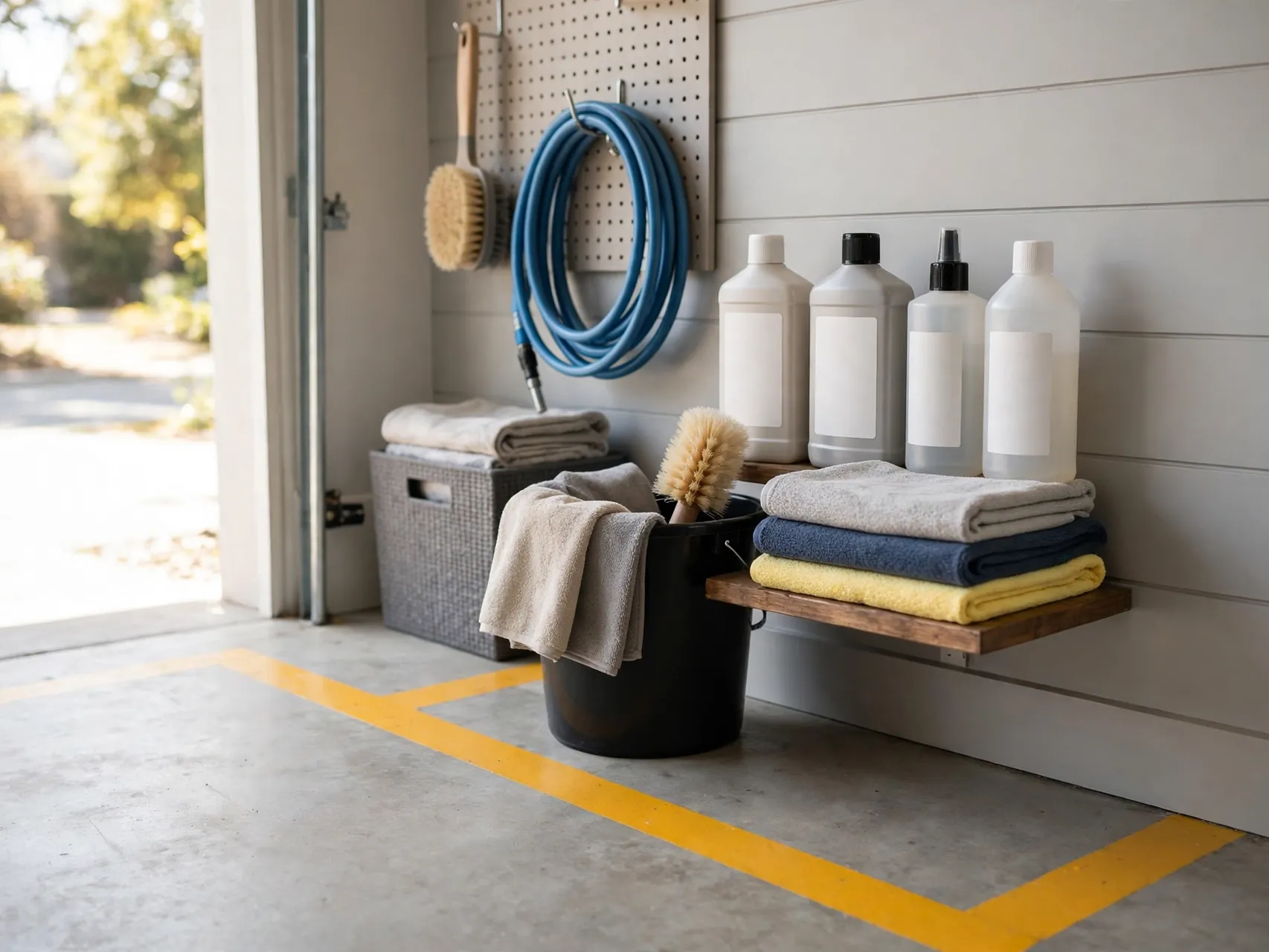
Car wash supplies, jumper cables, a tire gauge, ice scraper and basic fluids belong together near where the car actually parks. One shelf section, a wall cabinet or a single bin on a low shelf keeps them reachable without crossing the whole garage with a bucket.
Keep fluids upright, capped and in their original labeled containers, and move anything flammable to the locked chemical cabinet instead of an open shelf.
Light Every Zone So Nothing Hides

Dark garages invite piles, because a corner you cannot see feels like a corner that does not count. Bright overhead lighting plus a light over the workbench and drop zone changes how the whole room behaves. Motion sensor lights near the doors help when your hands are full of groceries or gear.
Good light is also a safety upgrade: you can read chemical labels, spot a spill and see a ladder on the wall.
Leave a Clear Path and a Parking Outline
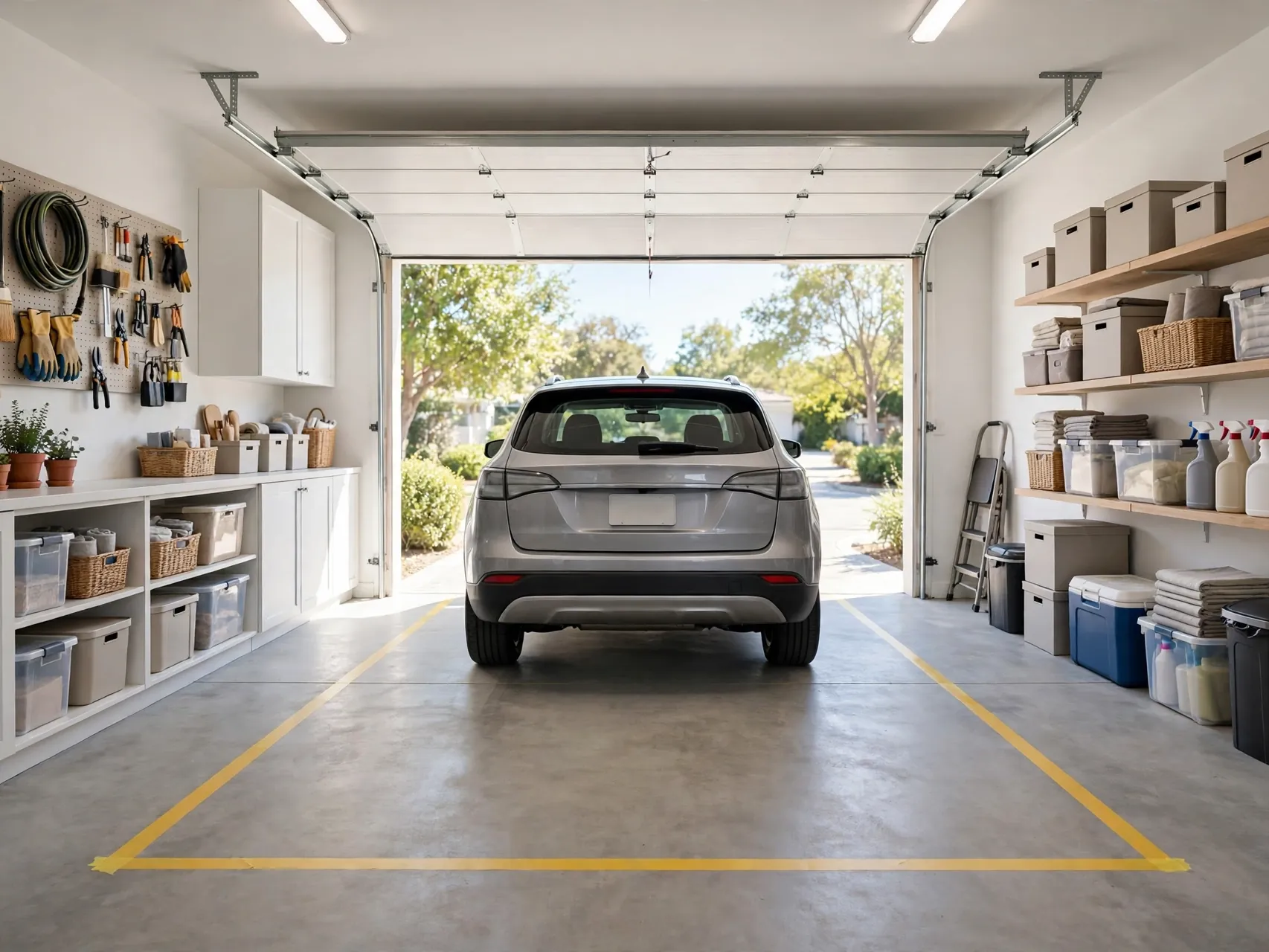
Decide the walking paths and protect them like furniture. A clear path from the house door to the outside door, and from each car door to the house, should stay empty at all times. Some families paint or tape a simple outline where the car parks, which shows at a glance when bins or bikes creep into the space the car needs.
Test the result with the car inside, doors open, and a person carrying a laundry basket walking through.
Finish With a Monthly Ten Minute Reset
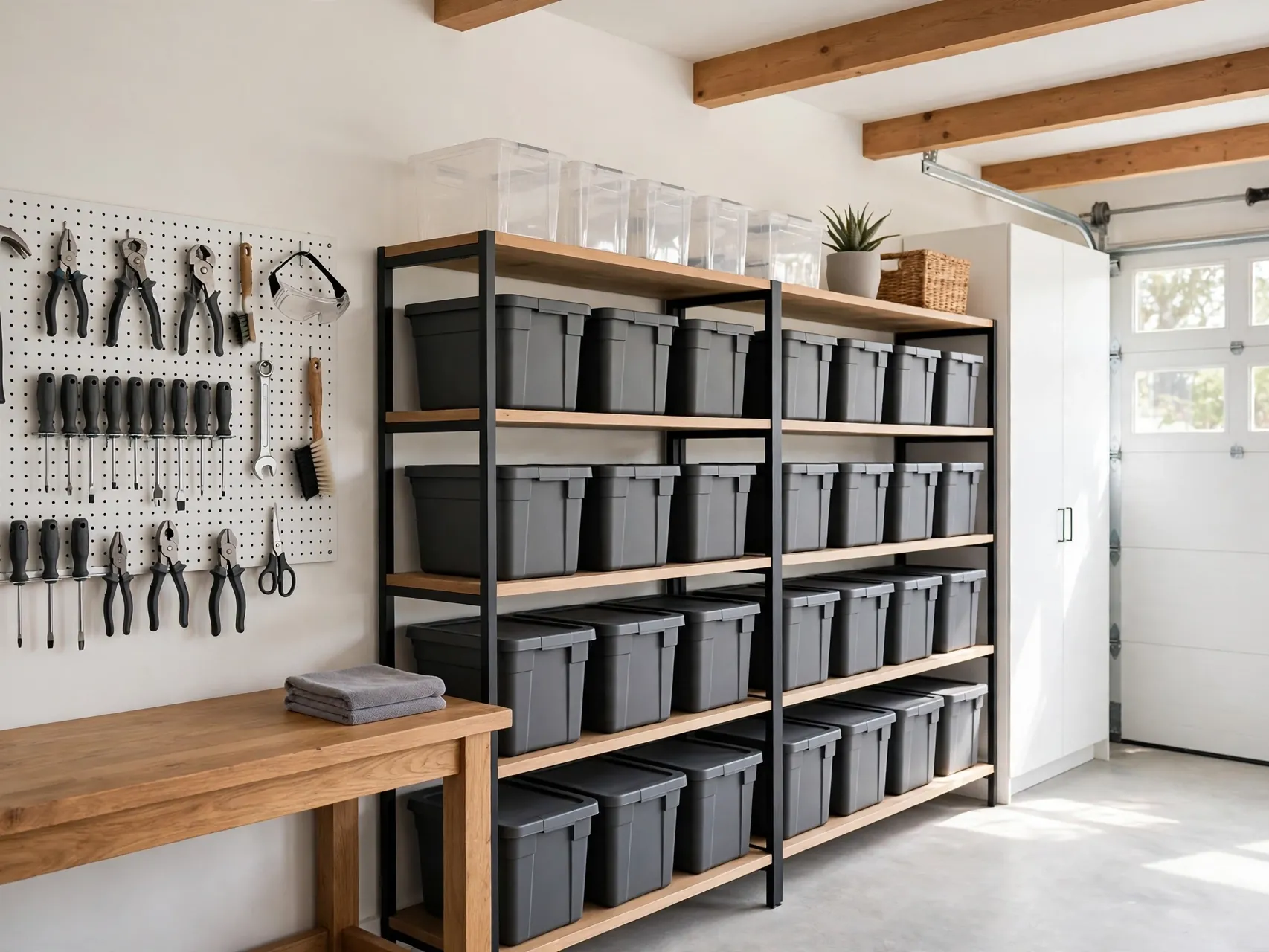
No garage stays organized by itself, because garages receive everything a house rejects. A short monthly reset keeps small drift from becoming another full cleanout. Put stray items back in their zones, break down boxes, sweep the paths and check that nothing has migrated in front of the chemical cabinet or electrical panel.
Once a season, do a slightly bigger pass: return borrowed tools, check bins for things nobody used, and confirm seasonal gear is ready to rotate.
FAQ
What is the first step in organizing a garage?
Sort before you buy anything. Empty one zone at a time, group items into keep, donate, sell and toss, and let go of broken and outgrown things first. Sorting shows you how much storage you actually need, which prevents the common mistake of buying shelves and bins that end up organizing clutter you never wanted to keep.
How do I organize a garage so the car still fits?
Plan the parking space first and treat it as untouchable. Move storage up the walls and ceiling, keep heavy and daily items along the side walls, and leave clear paths from the car doors to the house door. Outlining the parking spot with tape or paint helps everyone see when stored items start creeping into it.
What should not be stored in a garage?
Follow product labels first. Chemicals and flammable products need original containers, distance from heat sources and direct sun, and storage out of reach of children and pets, per U.S. Fire Administration guidance. Paper records, photos, upholstered furniture and anything badly damaged by heat swings or damp usually belong in the house instead.
What is the best storage for a small garage?
Vertical storage wins: wall rails, a pegboard, one run of adjustable shelving and an overhead rack for seasonal bins. Clear, uniformly sized bins with large labels keep shelves readable. In a small garage organization plan, every item kept on the floor should have to justify itself, starting with the car.
How much does garage organization cost?
It depends entirely on how much you build versus buy, and this article makes no fixed price promise because product prices vary. The sorting, zoning, labeling and reset ideas here cost nothing. Costs rise with shelving units, cabinets and overhead racks, so start with one wall, use it for a month, and expand only where the system proves it needs help.
Key Takeaways
- Sort and zone first: Storage bought before sorting just organizes clutter, so empty, group and edit before spending.
- Lift it off the floor: Walls, pegboards and ceiling racks free the floor for the car and for safe walking paths.
- One home per category: Sports gear, garden tools, hardware and car care each get a single zone everyone can remember.
- Treat chemicals differently: Original containers, locked storage, away from heat and sun, and local hazardous waste collection for disposal.
- Label like a stranger will use it: Clear bins and big labels keep the system working for the whole family, not just its creator.
- Reset monthly: Ten minutes of putting things back beats a full weekend cleanout twice a year.
Love these ideas? Save this post to Pinterest so you can find it later, and pin your favorite garage setup to your home organization board before you start.