24 Ways to Kill Weeds Naturally Without Harsh Chemicals
Introduction
You can have a tidy garden without reaching for harsh sprays. The most reliable ways to kill weeds naturally are not secret potions. They are timing, removal, heat, shade, and competition, used consistently before weeds set seed.
Different weeds need different treatment. Young annual weeds die easily with boiling water, a hoe, or mulch, while deep-rooted perennials such as bindweed and dandelions need repeated removal that starves their roots over time. Matching the method to the weed saves you weeks of wasted effort.
A word of honesty about homemade sprays: vinegar and salt are often shared as harmless, but extension services warn they burn any plant they touch, rarely kill established roots, and can damage soil, especially salt, which lingers until it leaches away. This guide puts those methods in their proper, limited place.
Work a little and often. Ten minutes of pulling after rain, a fresh layer of mulch in spring, and never letting a weed flower will do more by midsummer than any single weekend blitz.
1. Hand Pull Weeds After Rain
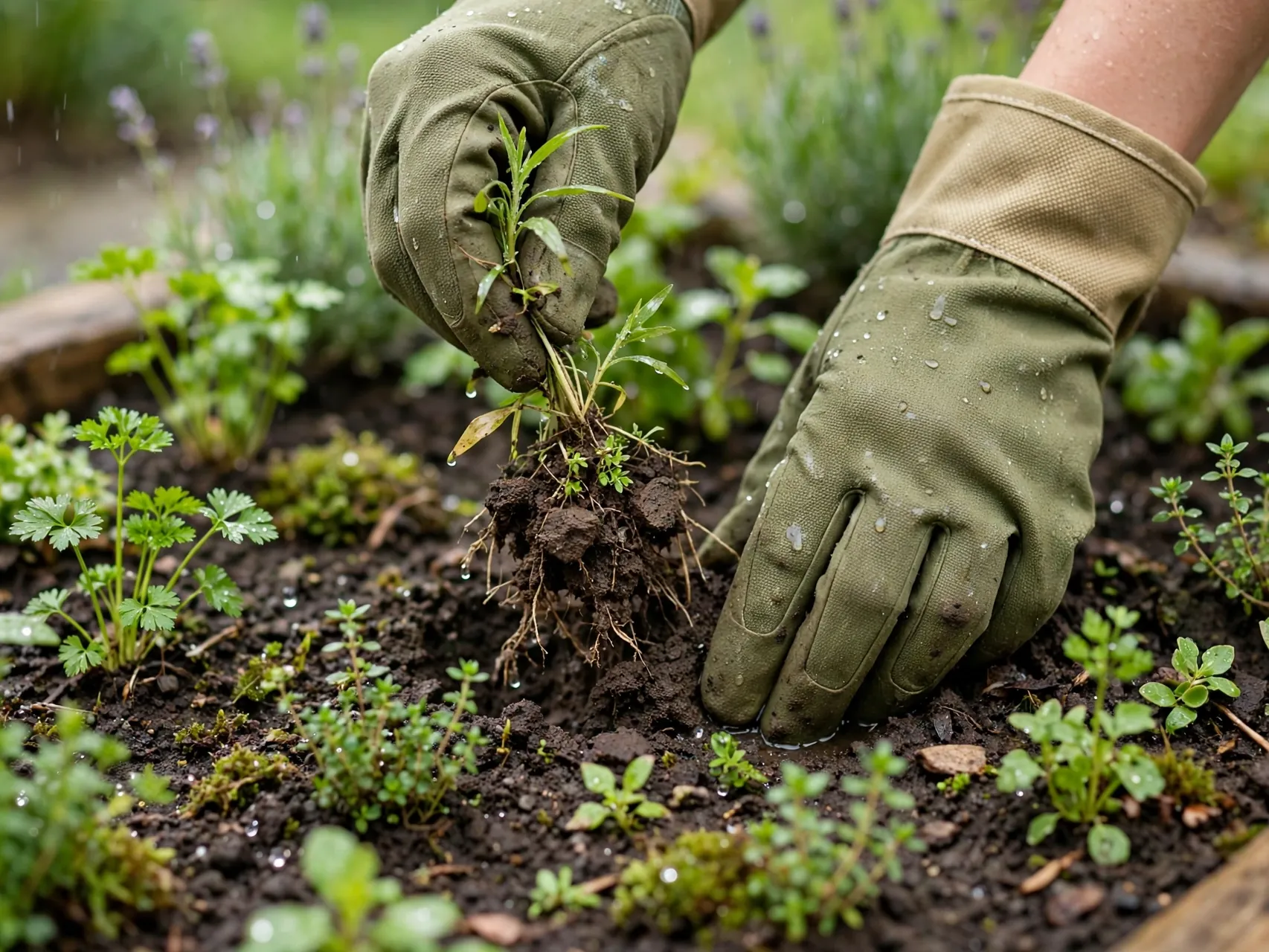
Pulling is still the most precise natural weed killer there is: your hands. After rain or a deep watering, soil loosens and roots slide out whole instead of snapping at the crown, which matters because many weeds regrow from a broken root tip left behind.
Grip low at the base, pull slowly, and shake soil back into the bed. Work when weeds are young, before stems toughen. A kneeling pad and a bucket beside you turn it into a quick daily habit.
2. Dig Out Taproots With a Narrow Tool
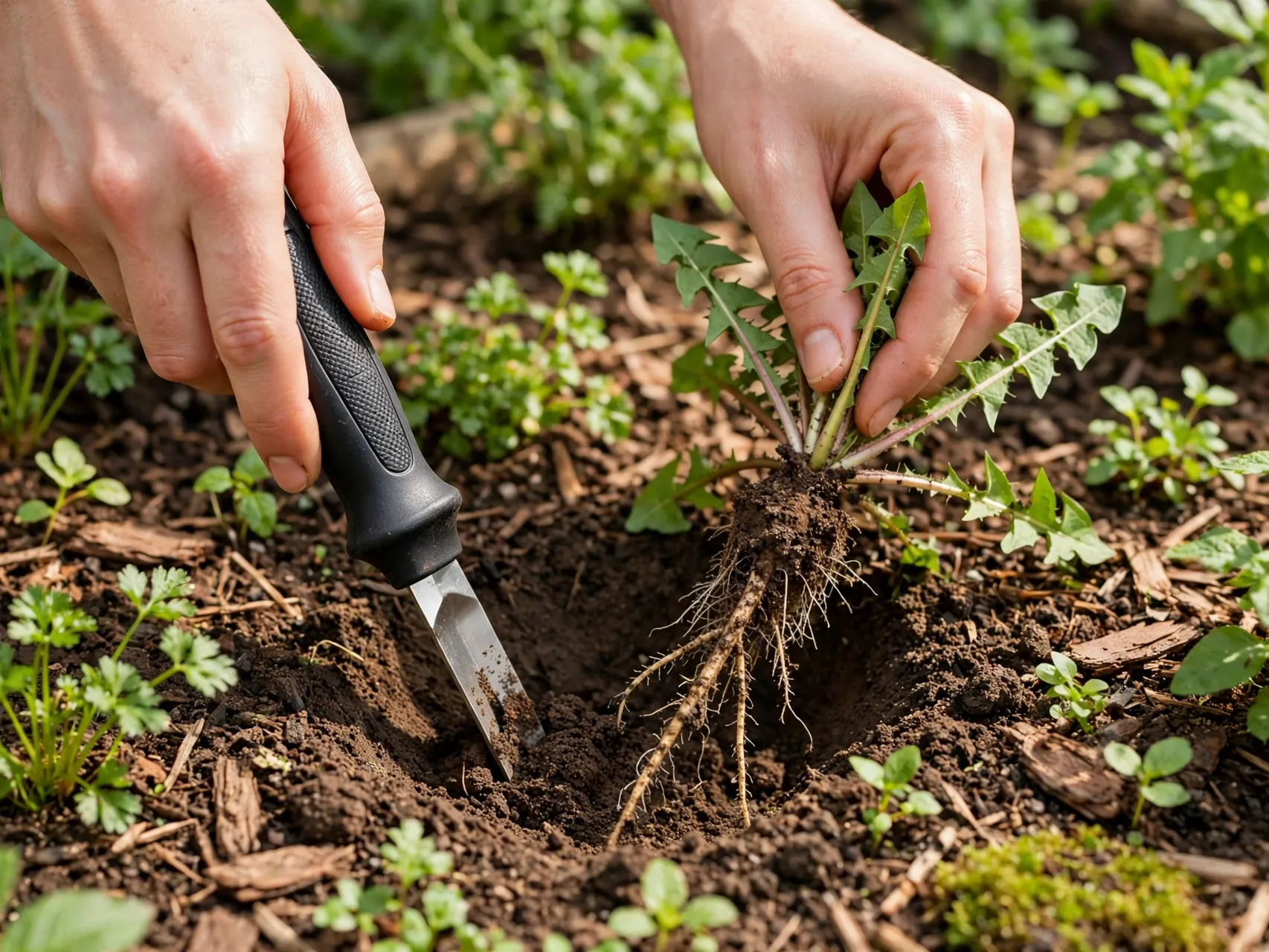
Dandelions, dock, and thistles store their energy in a deep taproot, and pulling the top off alone just schedules a comeback. Slide a narrow dandelion weeder, old knife made for garden use, or a forked taproot tool down beside the root, loosen, then lift the whole root out.
Go deep rather than fast. Getting most of the taproot weakens the plant even if a small piece remains, and repeat visits finish it. Fill and firm the hole afterward so you do not leave a perfect planting pocket for the next wind-blown seed.
3. Hoe on a Dry, Sunny Morning

A sharp hoe is the fastest tool for crowds of young annual weeds. Use a stirrup or scuffle hoe just below the soil surface to slice seedlings from their roots, then leave them on top to dry out in the sun.
Timing is everything. Hoe on a dry morning so the cut weeds wilt and die rather than re-rooting in damp soil. Keep the blade shallow to avoid bringing fresh weed seeds to the surface or disturbing plant roots. Weekly hoeing of vegetable rows and bed edges stops annual weeds before they ever flower.
4. Pour Boiling Water on Weeds in Cracks
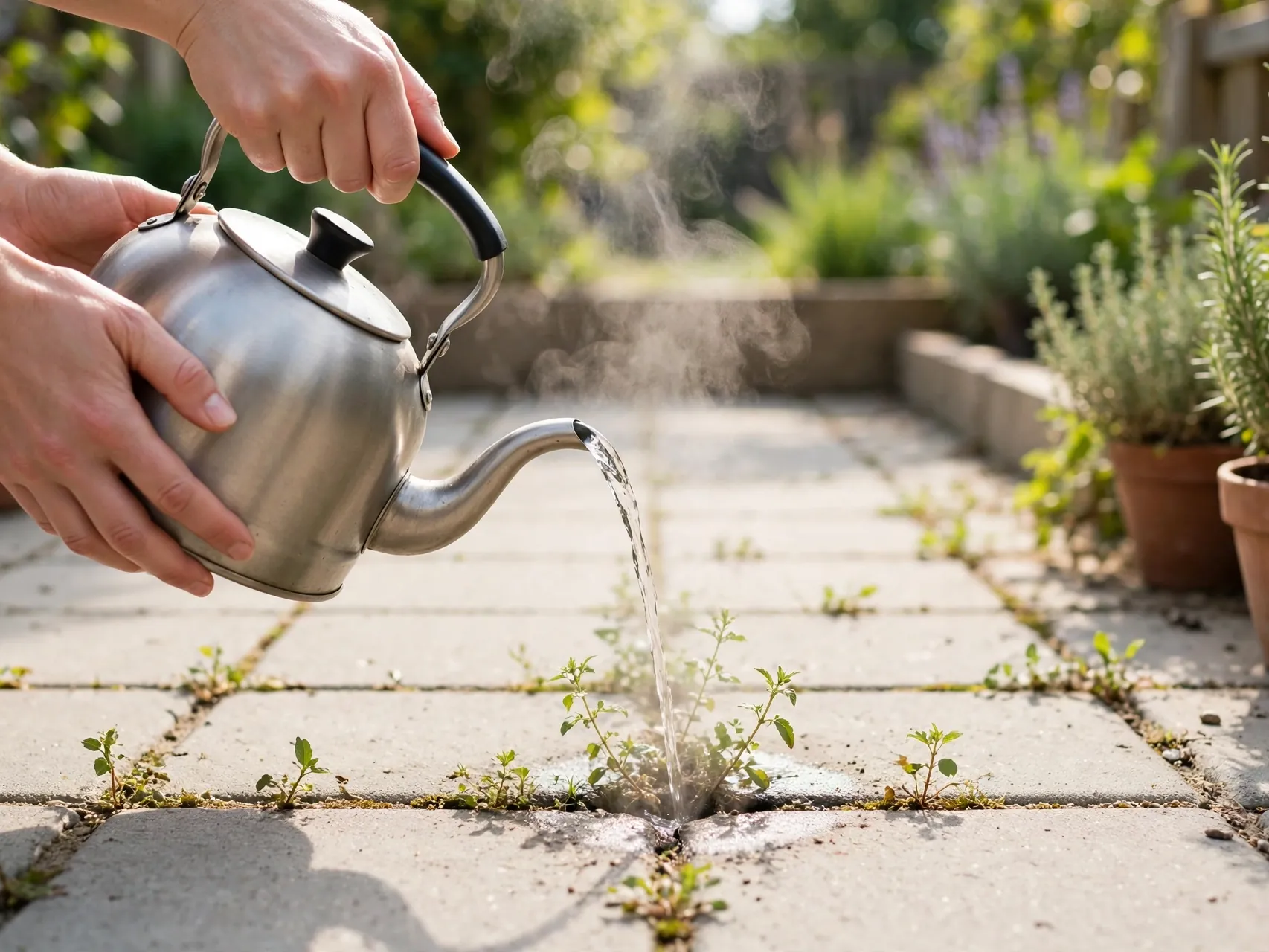
Boiling water is perfect where no wanted plant is nearby: driveway cracks, paver joints, gravel paths, and along fence lines. Pour a slow, steady stream from a kettle directly onto the crown and leaves. The heat bursts plant cells and the weed wilts within hours.
Repeat on stubborn or larger weeds a few days later. Keep the kettle low and pour carefully to protect your feet and nearby grass, since boiling water burns any foliage it touches. This is the safest spray-free spot treatment for paving in the whole list.
5. Smother Beds With a Thick Mulch Layer

Mulch kills weeds by darkness. A layer of organic mulch about 2 to 4 inches deep, such as shredded bark, straw, or composted wood chips, blocks light so seeds cannot germinate and small weeds starve. Keep mulch a little away from stems and trunks to avoid rot.
Refresh the layer as it breaks down, since thin spots are where weeds return first. Mulch also holds moisture and improves soil as it rots, so beds need less watering. For how to get rid of weeds without chemicals in ornamental beds, good mulching is the closest thing to a permanent answer.
6. Sheet Mulch New Beds With Cardboard

Starting a bed over weedy grass? Lay overlapping cardboard over the area, wet it thoroughly, then cover it with compost and mulch. The cardboard smothers existing growth, blocks light, and rots away as soil life improves beneath it, with no digging and no spray.
Remove tape and staples first, overlap edges well so no light leaks through, and plant through small cuts for larger plants, or wait a season for the cleanest start. Sheet mulching is slow but nearly effortless, and it is the best first move for a new cottage-style border.
7. Solarize Soil With Clear Plastic in Summer

Solarization uses summer heat to do the killing. Mow or clear the area, water the soil well, then stretch clear plastic tightly over it, sealing the edges with soil or stones. Leave it for about 4 to 8 weeks during the hottest, sunniest part of summer.
Trapped heat raises soil temperatures enough to kill many weed seeds, young weeds, and some soil pests in the top layer. It works best in full sun and warm climates, and the bed is out of use while it cooks, so plan it between crops. Use clear plastic, not black, for the strongest heating effect.
8. Use a Flame Weeder on Gravel and Paving

A flame weeder passes a propane flame quickly over weeds so the heat bursts their cells. You are wilting, not cremating: a brief pass that turns leaves glossy and limp is enough, and the roots of young annuals then die because they cannot feed themselves.
Use flame only on gravel, paving, and bare ground, never near dry mulch, wooden fences, or during drought or fire restrictions. Follow the tool maker safety instructions, keep water nearby, and check local burn rules first. Perennial weeds will resprout and need repeat passes, so budget your effort honestly.
9. Cut Weeds Before They Set Seed

One ignored weed can scatter seed for years of future pulling. If you have no time for a full clear-out, at least deadhead the problem: cut or pull flower heads before they ripen, and bag seeding weeds rather than composting them at home, since most home piles do not get hot enough to kill seeds.
This habit changes your garden within a season. Fewer seeds means fewer seedlings to hoe next spring. Stopping reproduction is the highest-value ten minutes in natural weed control.
10. Use Vinegar Spray Only as a Careful Spot Treatment

Vinegar is a contact burner, not a root killer. Extension guidance is clear: acetic acid damages the foliage it touches, household strength works mainly on very young weeds, stronger horticultural vinegar can injure skin and eyes and needs gloves and eye protection, and established weeds usually regrow from their roots.
If you use it, spray precisely on a calm, sunny day, only on weeds in cracks or bare spots away from wanted plants, and expect repeat applications. Never spray on a windy day near beds or lawns. This homemade weed killer caution matters: natural does not mean harmless to your other plants.
11. Keep Salt Out of Beds and Lawns
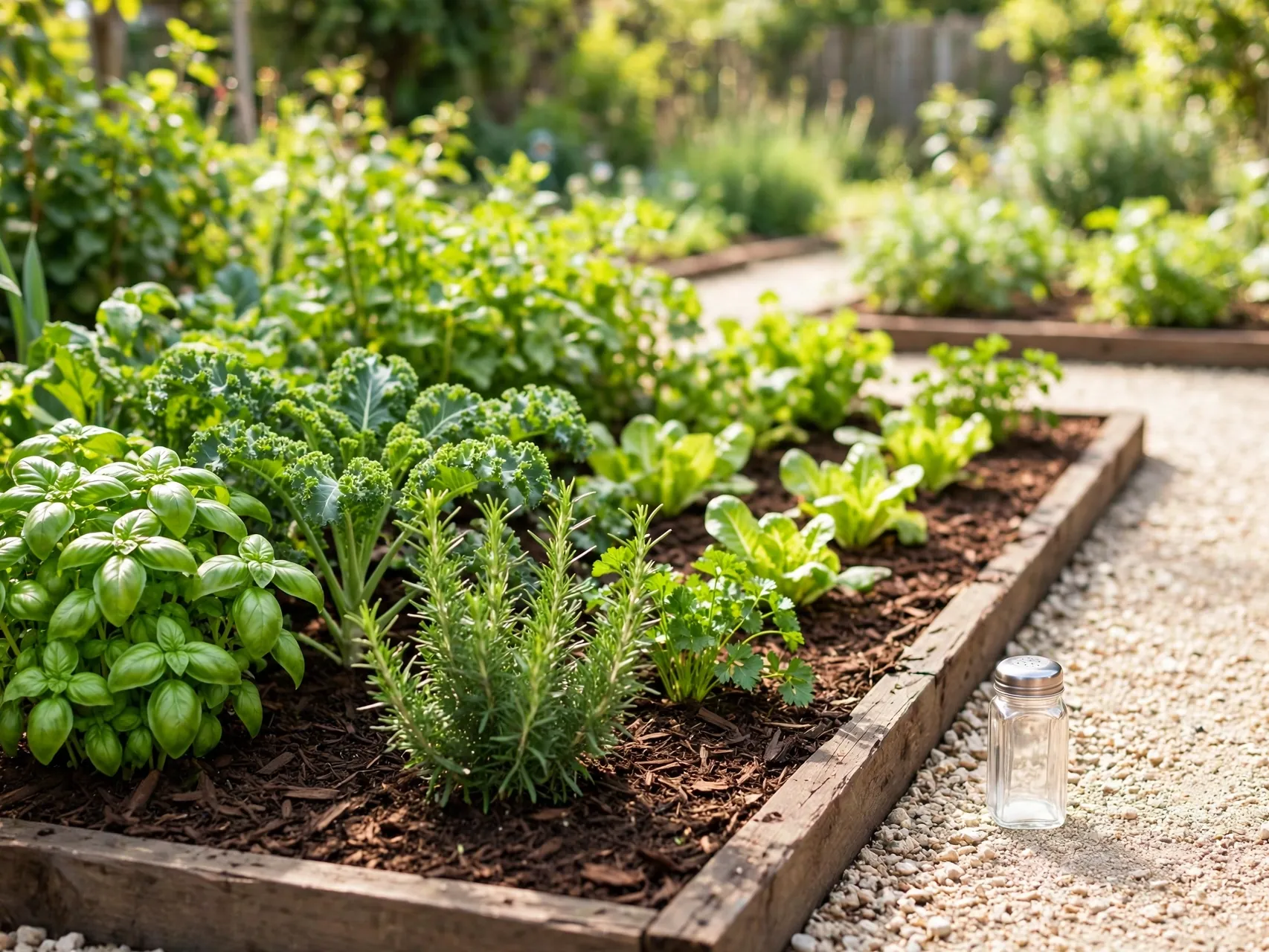
Salt is the ingredient extension services warn about most. It dehydrates plants, but it also stays in the soil until water leaches it away, reducing fertility, harming soil organisms, and preventing future plants from growing well in that spot. Repeated use can leave a patch where almost nothing thrives.
Reserve any salt use, if you use it at all, for the center of paving cracks where you want nothing to grow, ever. Never use salt mixes in flower beds, vegetable gardens, or lawns. Boiling water and flame do the same spot job without salting your soil for seasons to come.
12. Try Corn Gluten Meal as a Pre-Emergent

Corn gluten meal is used as a natural pre-emergent, applied to lawns in spring and fall to reduce germination of some annual weed seeds, including crabgrass. Results in studies and home use are mixed, and it works as prevention over seasons, not as a cure for weeds already growing.
Apply it to an established lawn, not newly seeded areas, since it can also reduce grass seed germination. Think of it as one supporting layer in a thick-lawn strategy, not a stand-alone fix.
13. Crowd Weeds Out With Ground Covers

Bare soil is an open invitation, so plant the space instead. Dense ground covers such as creeping thyme, hardy geraniums, liriope, or low sedums shade the soil, block germination, and compete for water and nutrients, leaving weeds very little room to start.
Weed carefully while the cover establishes, then let it close ranks. Ground covers are the long-game answer for slopes, under shrubs, and between stepping stones, where pulling is awkward. Choose a cover suited to your sun and foot traffic, and the bed will largely weed itself within a couple of seasons.
14. Grow a Thick Lawn That Shades Out Weeds
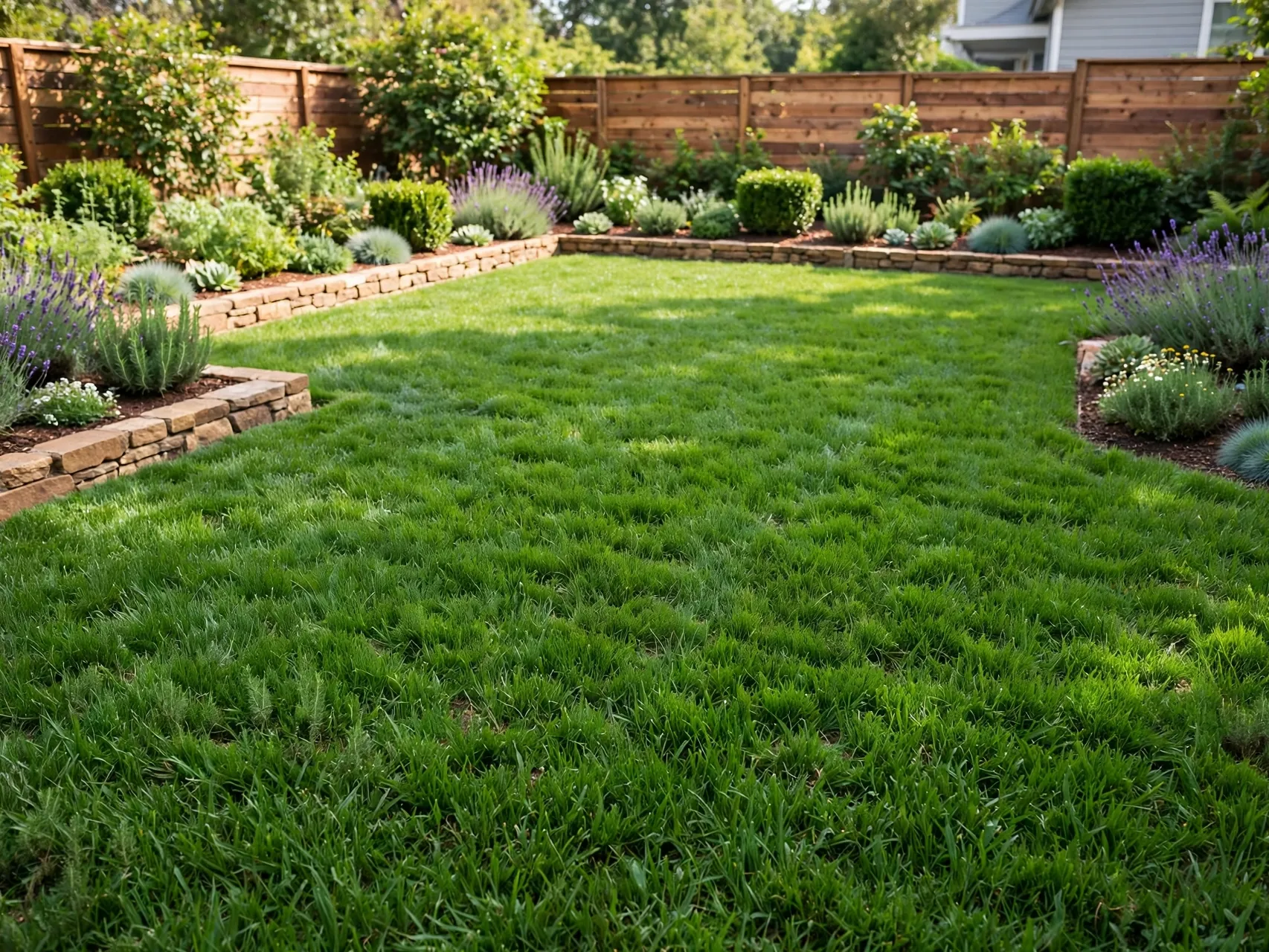
In lawns, the grass itself is the weed control. Overseed thin patches in the right season, mow at the higher end of the recommended range so blades shade the soil, and water deeply but less often to favor deep grass roots over shallow weed roots.
Fill bare spots quickly, since crabgrass and other annuals colonize gaps first. Feed based on a soil test rather than habit, because over-fertilizing can feed weeds too. A dense lawn will not remove established dandelions, but it stops most new weeds from ever getting started, which is how lawns stay clean naturally.
15. Edge Beds to Stop Grass Creeping In

Many bed weeds are really lawn grass on the move. Cut a clean edge or install edging that goes below soil level to block creeping grass roots and rhizomes, then refresh the edge a few times a year so the barrier stays real.
A simple spade-cut trench edge works well and costs nothing, which is why traditional gardens used it. Keep the trench clear of soil bridges that grass can cross. Good edging turns a weekly rescue job into light maintenance and makes mulched beds look finished at the same time.
16. Use Landscape Fabric Only Where It Fits
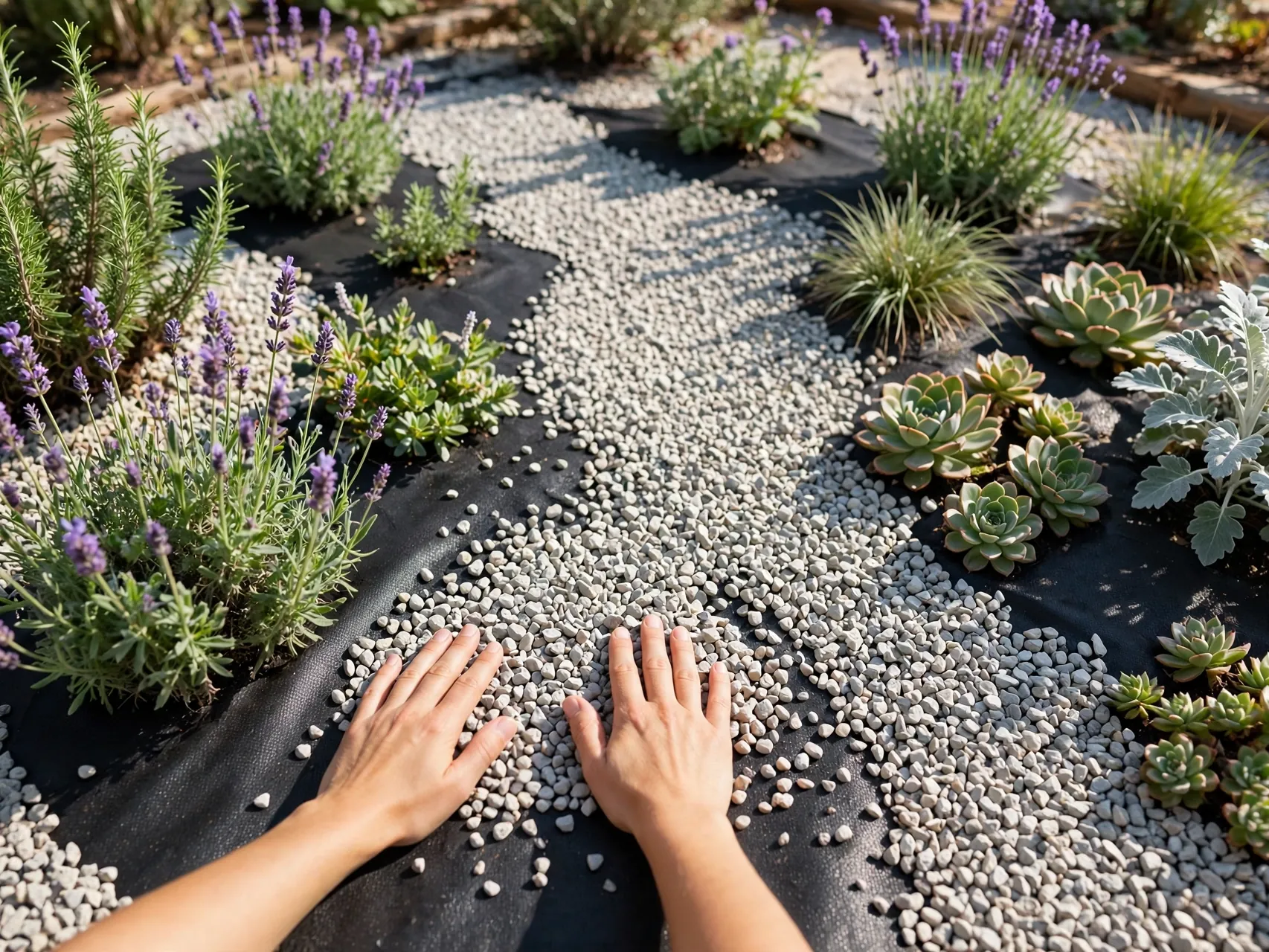
Landscape fabric can suppress weeds under gravel paths and stone areas, where no planting is planned. Under planting beds it is less helpful long term: mulch and soil build up on top, weeds root into that layer, and fabric can hinder water, air, and soil improvement where roots need them.
If you use fabric, pin it flat, overlap seams, and cover it fully. For planted beds, cardboard and organic mulch usually serve better and rot into the soil.
17. Deprive Perennial Weeds by Repeated Cutting

Bindweed, couch grass, and horsetail spread by tough underground systems that one pulling will not defeat. The natural strategy is starvation: remove every top growth as soon as it appears, again and again, so the roots spend stored energy without ever refilling it through leaves.
This takes a season or more of discipline, and honesty matters here, because these are the hardest weeds in any garden. Dig out root networks during bed renovations where you can, working on moist soil, and never rototill through them, since chopping roots into pieces can spread them further.
18. Water Plants, Not the Whole Bed

Overhead watering wets every weed seed between your plants. Switch the habit: water at the base with a can, soaker hose, or drip line so moisture goes to crop and flower roots while the surface between plants stays comparatively dry and less welcoming to germination.
This works especially well with mulch, which keeps targeted water in the root zone longer. Water in the morning so foliage dries quickly. Over a season, dry surface soil between plants means noticeably fewer seedlings to hoe, with no extra product bought and nothing sprayed at all.
19. Cover Bare Soil With Living Mulch
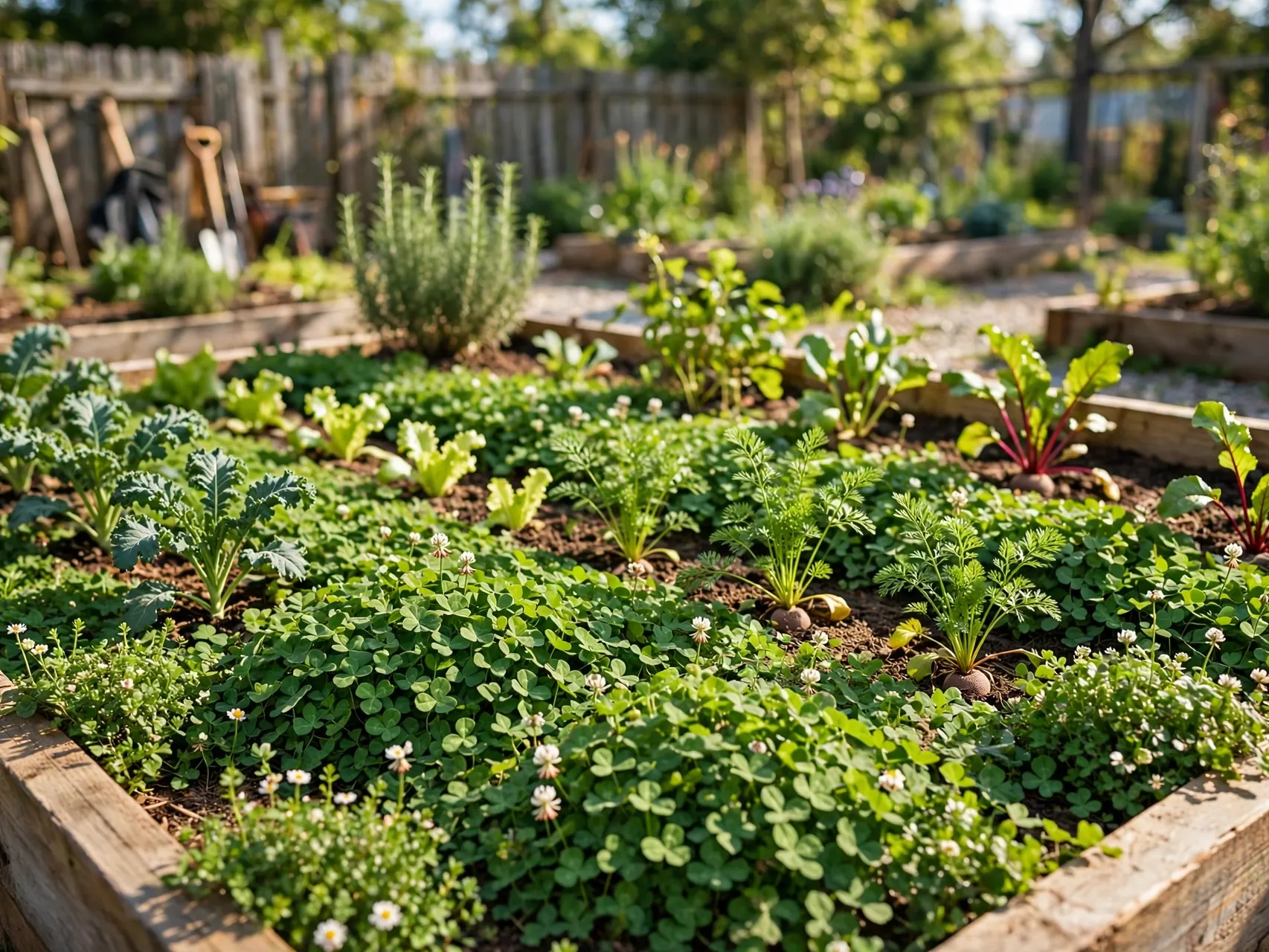
Between vegetable rows and around fruit, a low living cover such as clover can shade soil, block weed germination, and add green matter back to the bed. In ornamental areas, low spreading plants do the same job with flowers included.
Choose a living mulch that will not outcompete your main crop, and keep it trimmed back from stems. Covered soil also erodes less in heavy rain and stays cooler in heat.
20. Steam or Boil Small Patches in Pots and Trays
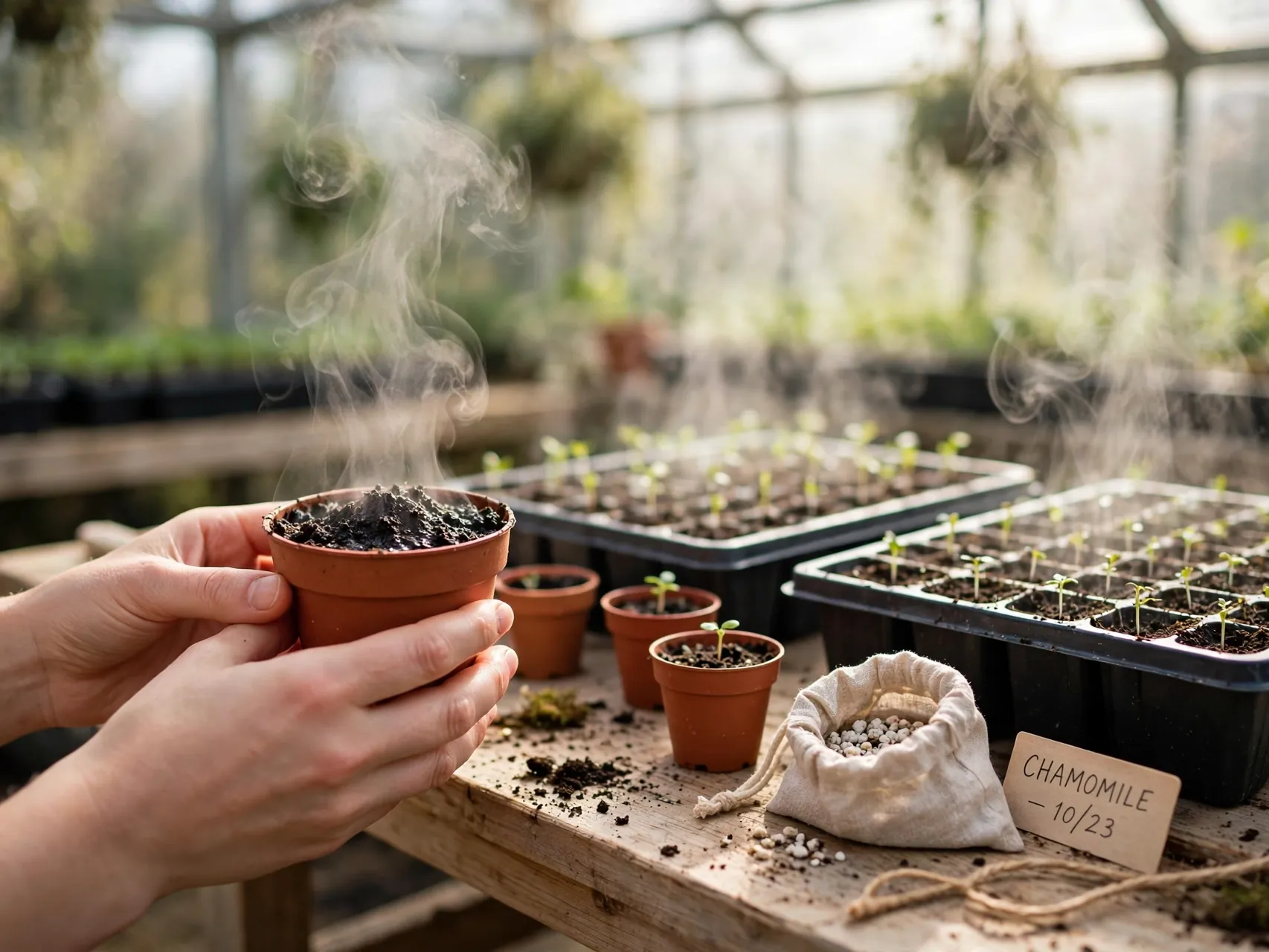
Weeds and moss in pots, gravel trays, and greenhouse corners respond well to careful spot heat. A kettle of boiling water poured slowly over a weedy pot surface or path tray kills young growth without any residue, which matters around seedlings and edibles.
Let pots drain and cool before handling, and keep boiling water away from stems of plants you want to keep. A hot wash for seed trays and tools before reuse also stops old weed seeds spreading.
21. Mulch Paths With Wood Chips or Straw
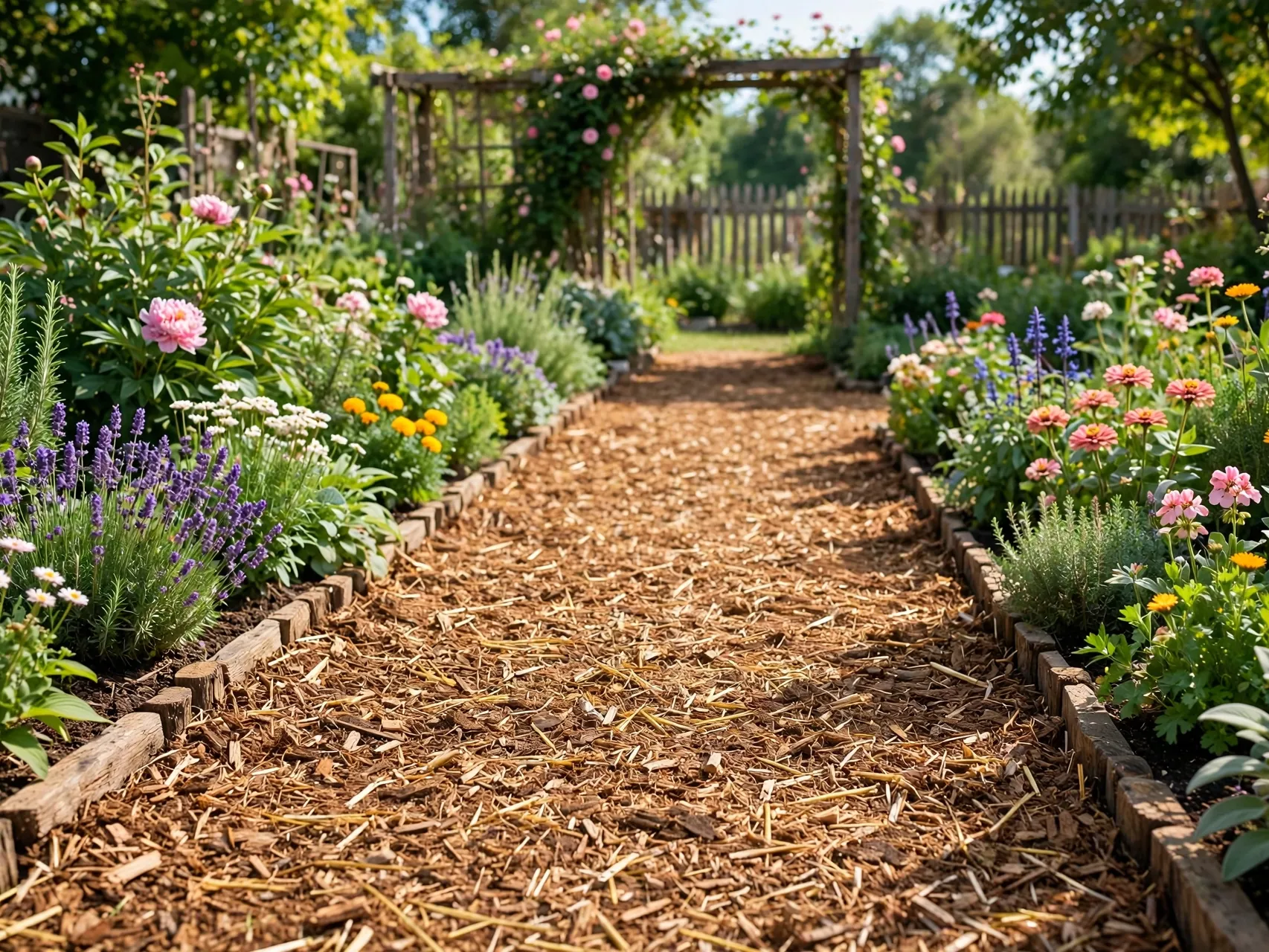
Garden paths grow weeds enthusiastically because they get light, moisture, and no competition. A deep layer of wood chips or straw over cardboard on paths blocks light, gives you clean footing in wet weather, and slowly improves the ground beneath.
Top up path mulch when it thins, usually once a year. Keep a firm edge between path and bed so chips stay where they belong.
22. Work at the Right Growth Stage

Every method in this list works better on young weeds. Seedlings with two small leaves pull, hoe, and scorch in seconds, while the same plant a month later has a root system that shrugs off contact treatments and needs digging.
Build a weekly five-minute scan into your routine during the growing season, ideally after rain for pulling and before a dry morning for hoeing. Catching weeds at the thread stage is the real secret behind gardens that look effortlessly clean. It is not better products. It is earlier, smaller interventions, repeated calmly.
23. Protect Pollinators While You Weed

Natural methods are kinder to bees and butterflies than broad sprays, but care still matters. Avoid applying any treatment, even vinegar, to plants in open flower where pollinators are feeding, and leave some harmless flowering weeds in out-of-the-way corners if your garden has room, since early blooms feed emerging bees.
Cornell pollinator guidance favors chemical-free gardening wherever possible. Hand removal, mulch, and competition, the core of this guide, fit that advice perfectly.
24. Build a Simple Seasonal Weed Routine

Tie it together by season. In spring, mulch beds, edge lawns, and hoe seedlings weekly. In summer, deadhead every weed before it seeds, spot-treat paving with boiling water, and solarize any empty bed. In fall, pull perennials while soil is moist, overseed thin lawn, and refresh mulch.
Keep a short list on your phone of your three worst weeds and where they live. Attack those first each session. Routines beat heroic efforts because they stop seeds, starve roots, and keep soil covered all year, which is how you truly kill weeds naturally for good.
FAQ
What is the fastest natural way to kill weeds?
For weeds in paving cracks and gravel, boiling water is fastest and leaves no residue. For beds, a sharp hoe on a dry morning clears young annual weeds quickly. Deep-rooted perennials are never a one-visit job: they need digging out or repeated cutting over weeks to starve their roots, whichever method you choose.
Does vinegar really kill weeds permanently?
Usually not permanently. Vinegar burns the foliage it touches, and household strength works mainly on very young weeds. Established weeds with strong roots typically regrow, so repeat applications are needed. Stronger vinegar needs gloves and eye protection, and any vinegar can damage wanted plants it drifts onto, so use it only as a careful spot treatment.
Is it safe to use salt as a weed killer?
Extension services advise against salt in beds and lawns. Salt stays in soil until leached away, reduces fertility, and harms the soil organisms your plants depend on, so ground treated repeatedly may grow little for a long time. If salt is used at all, limit it to paving cracks where nothing should ever grow, and prefer boiling water instead.
How do I stop weeds from coming back without chemicals?
Prevention does the heavy lifting: keep soil covered with mulch, ground covers, or living plants, edge beds against creeping grass, remove every weed before it sets seed, and grow thick lawn and planting so weeds get no light or space. A short weekly session at the seedling stage prevents most regrowth problems.
Are natural weed methods safe around vegetables and pets?
Hand pulling, hoeing, mulch, boiling water on paths, and solarization are all residue-free and well suited to food gardens. Keep boiling water and flame tools away from wanted plants, and store any vinegar product as you would a cleaning chemical, out of reach. Wash produce before eating, as you would after any garden work.
Key Takeaways
- Match method to weed: Hoe and scorch young annuals, dig taproots out whole, and starve perennials with patient, repeated cutting over a season.
- Cover every inch: Mulch 2 to 4 inches deep, ground covers, living mulch, and thick lawn block the light weed seeds need to start.
- Respect the spray cautions: Vinegar burns any plant it touches and rarely kills roots, and salt lingers in soil and harms fertility, per extension guidance.
- Never let weeds seed: Cutting flower heads before they ripen is the highest-value habit for how to get rid of weeds without chemicals long term.
- Little and often wins: A weekly five-minute scan, timed after rain for pulling and before dry mornings for hoeing, keeps gardens clean without harsh products.
- Ready for a calmer weeding routine this season? Save this guide to Pinterest and pin the methods that fit your beds, paths, and lawn.