20 Small Home Gym Ideas That Fit in Any Tight Space
Introduction
You do not need a spare room, a garage, or a wall of machines to train well at home. These small home gym ideas build a complete setup in a bedroom corner, a living room edge, or the space behind a sofa, using gear that folds, rolls, or hangs on a wall.
The principle is footprint honesty. Every item must earn its storage spot, work for several exercises, and disappear fast when the room goes back to normal life. Adjustable, portable, and wall stored gear wins in tight spaces every time.
Start with a mat, one strength tool, and a place to put them. Add pieces only when a real gap appears in your training. Check your floor type and building rules before heavy gear, spread loads sensibly, and lift with control so floors and neighbors stay happy.
Claim One Corner and Call It the Gym

Give your workouts one defined corner, even if it is only the size of a mat. A named spot builds the habit, keeps gear from migrating around the home, and tells everyone else in the house where the training zone begins.
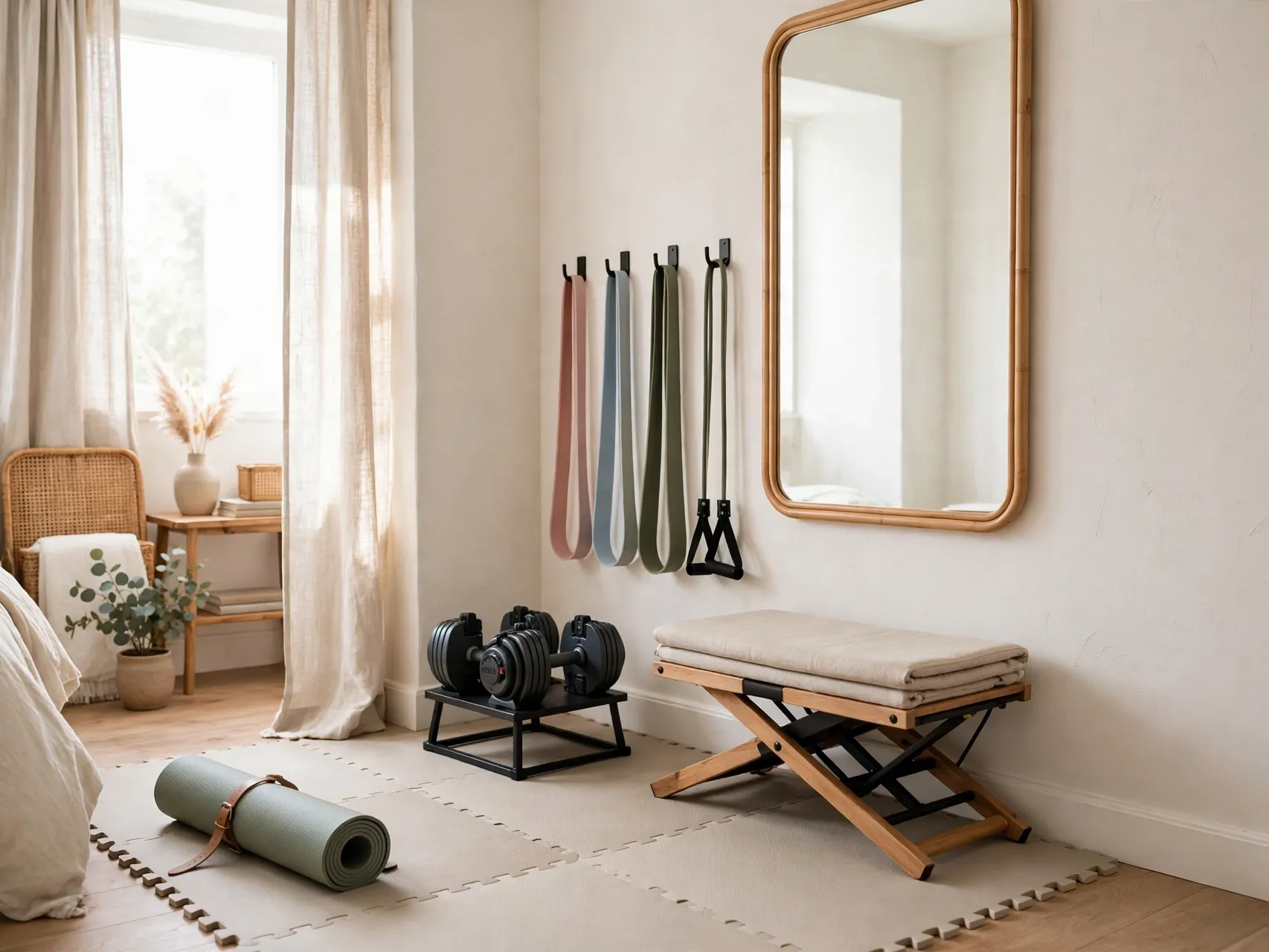
Mark the corner with your mat and one storage piece. When the corner looks intentional, with the mat rolled in place and gear stacked neatly, you are far more likely to use it on tired days than a pile of equipment in a cupboard.
Put everything back in its spot straight after the session and the next workout needs zero setup time.
Lay Interlocking Mats to Protect the Floor

A square of interlocking foam or rubber mats protects flooring, softens noise, and gives your joints a kinder surface. It also visually defines the gym, which helps a shared room switch modes the moment you step onto it.
Choose mats thick enough for the training you do and keep the square only as large as your corner allows. Wipe them down after sweaty sessions. In rentals, mats are the simplest way to show the floor the respect your deposit deserves.
Start with ten honest minutes on busy days. A corner this easy to use makes consistency simple.
Start With Adjustable Dumbbells Only

One pair of adjustable dumbbells replaces a whole rack of fixed weights, which is why they anchor most compact home gym equipment lists. They cover presses, rows, squats, lunges, and carries from a storage footprint smaller than a shoebox shelf.
Store them on a sturdy stand or a low, solid surface that can take the full load, never on a wobbly table. Spread heavy gear sensibly rather than concentrating it in one small point, and avoid dropping weights, which protects both the floor and the equipment.
Put everything back in its spot straight after the session and the next workout needs zero setup time.
Add Resistance Bands With a Door Anchor
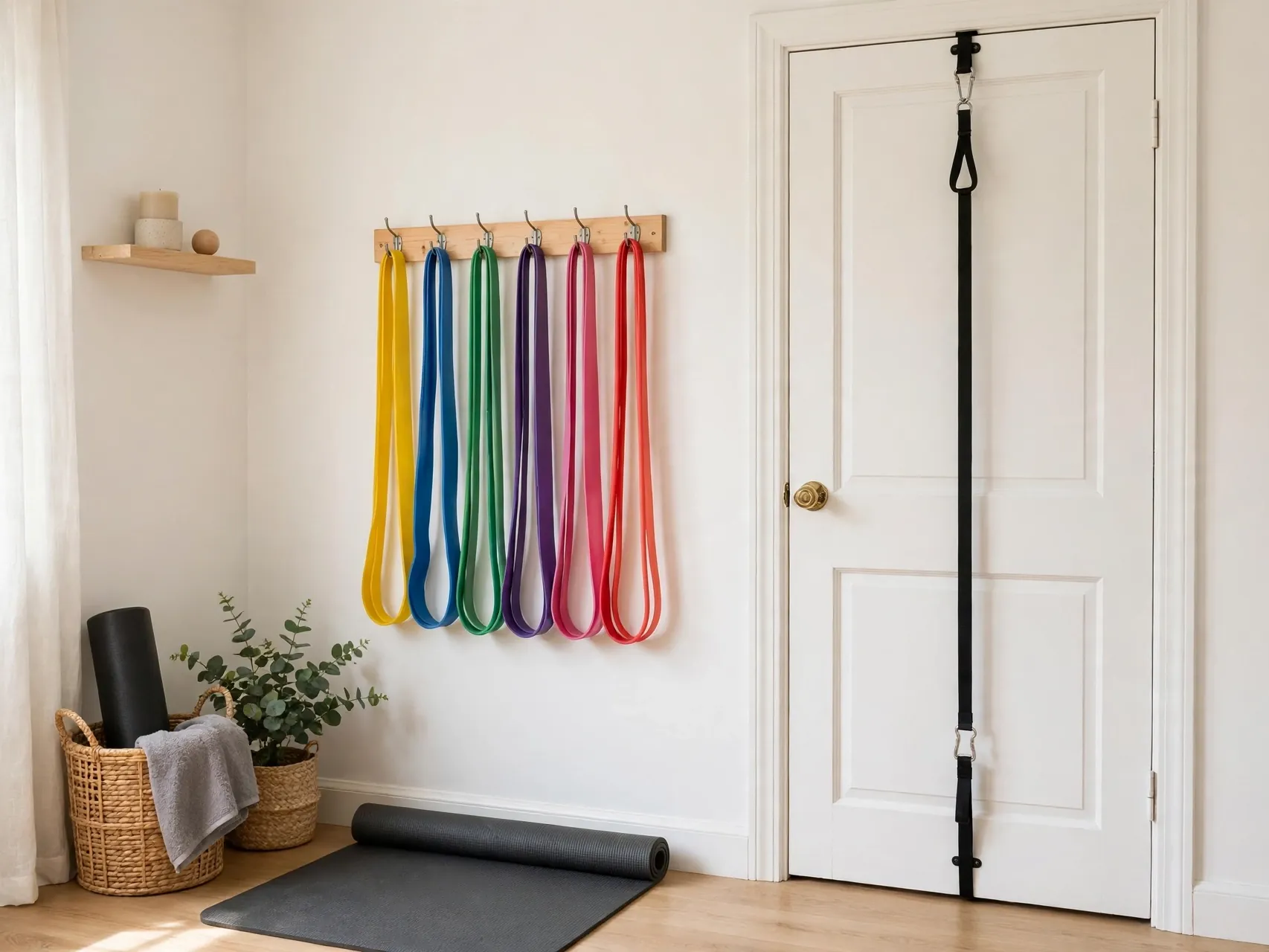
A set of bands with handles, loops, and a door anchor gives you rows, presses, curls, and leg work for the price and storage size of a lunchbox. Bands are also the quietest strength tool you can own.
Inspect bands before each use and retire any with nicks or tears. Anchor them exactly as the maker instructs, on a door that closes fully and will not be opened mid set. Stop using any anchor setup that slips or damages the door.
Start with ten honest minutes on busy days. A corner this easy to use makes consistency simple.
Choose One Kettlebell You Can Grow Into
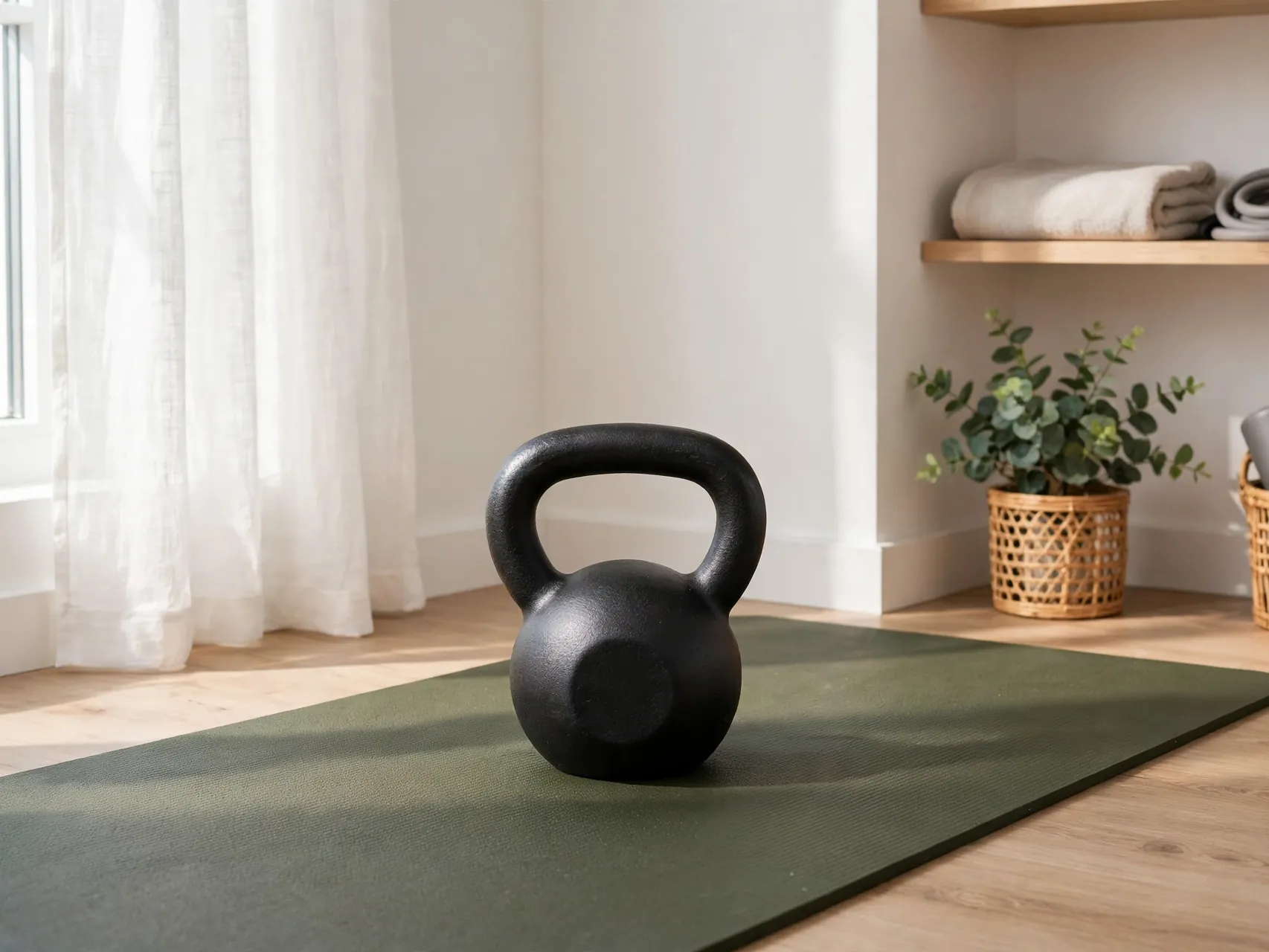
A single kettlebell handles swings, deadlifts, presses, and carries, and it stores in one square foot of corner. Pick a weight you can lift with good form today, not the weight you hope to use someday.
Learn the basic movements with light practice first, ideally following qualified instruction in person or from a reputable program. Keep a clear arc around you when you swing, and never train over flooring you cannot afford to mark.
Put everything back in its spot straight after the session and the next workout needs zero setup time.
Roll Out a Mat That Stores in Seconds

Your mat is the gym floor, the stretching studio, and the signal that training has started. Choose one thick enough for floor work on your surface, and store it rolled in the corner or hung on a wall hook.
A mat that is annoying to store stops being used, so pick its home before you buy it. Wipe it down regularly per its care instructions, especially in shared rooms where it doubles as a play or reading surface.
Start with ten honest minutes on busy days. A corner this easy to use makes consistency simple.
Mount Storage on the Wall Not the Floor
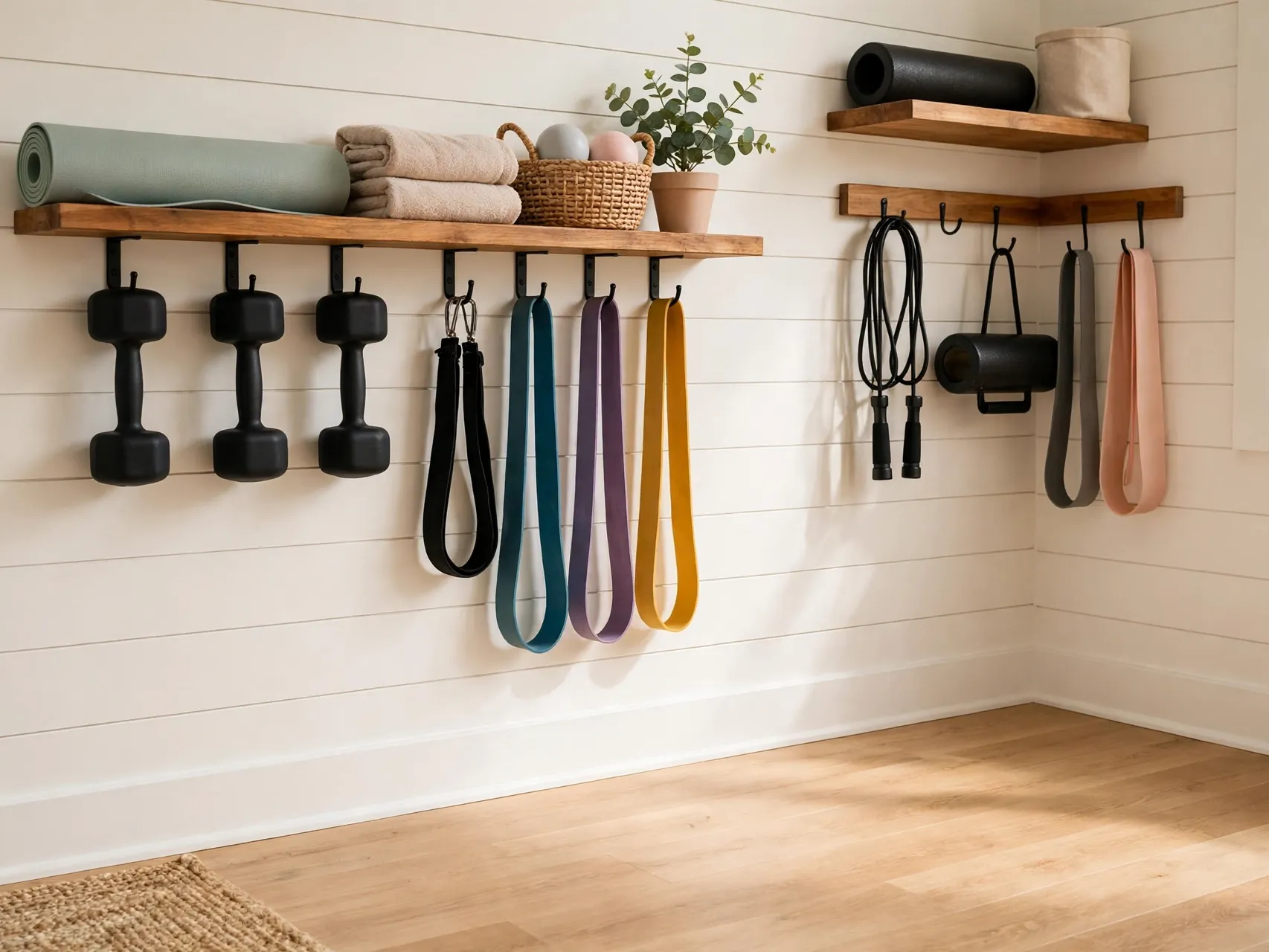
Wall hooks, a small pegboard, and one high shelf hold bands, ropes, and rollers where they take zero floor space. Vertical storage is the single biggest space saver in any apartment gym setup ideas plan.
Fix storage into studs or with fixings rated for the load, and keep heavy items low or on the floor instead of overhead. A wall that is organized at a glance makes a six foot gym corner feel like a real facility.
Put everything back in its spot straight after the session and the next workout needs zero setup time.
Use a Doorway Pull Up Bar With Care
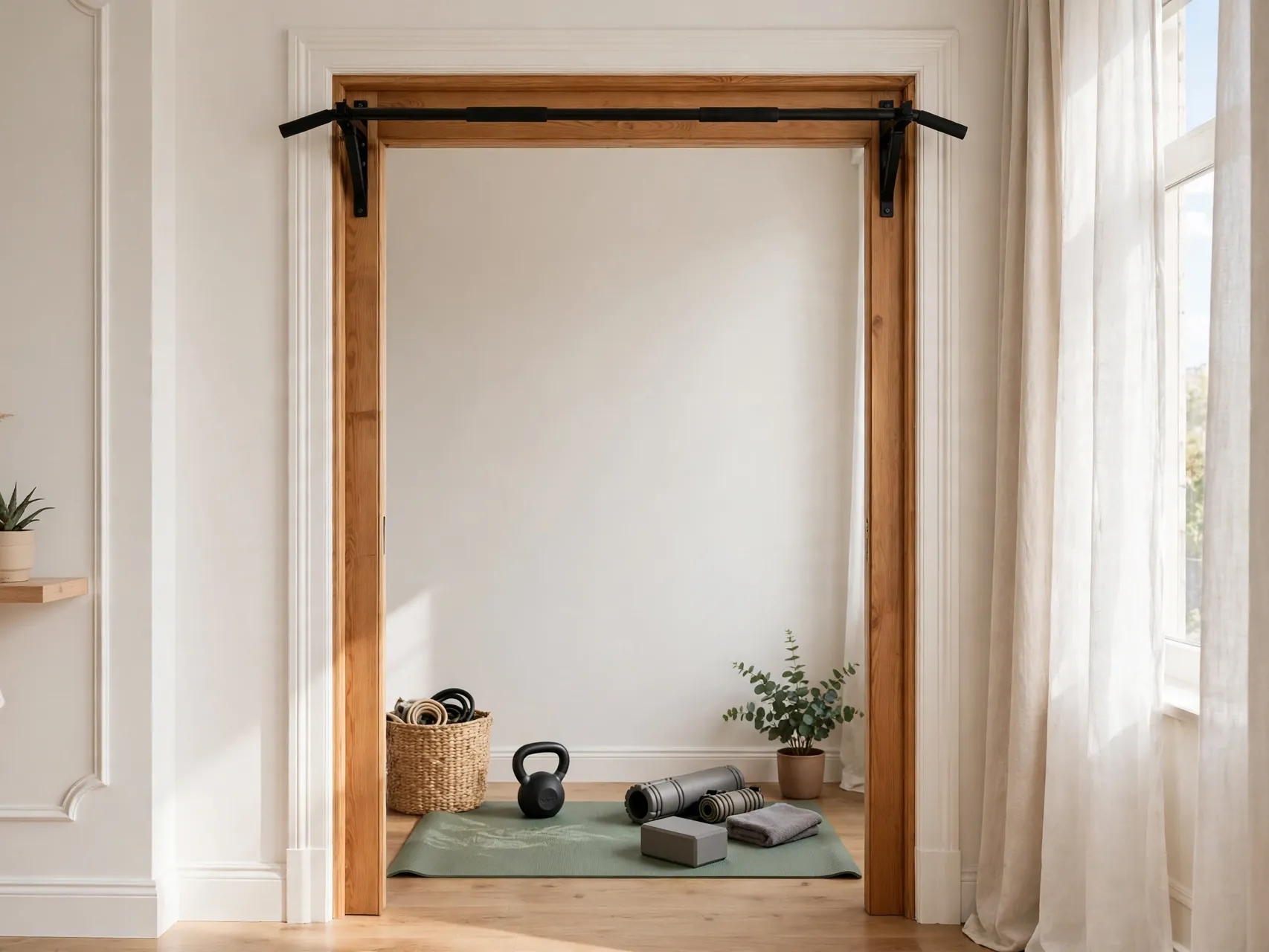
A doorway bar that fits without screws can add pull ups, hangs, and band anchor points to a corner gym. Fit it exactly to the maker instructions and check the door frame is sound and within the stated size and weight limits before every use.
Test the bar gently before trusting it with your full weight, and remove it if the frame shows any strain or damage. If your frame is old, narrow, or you are unsure, skip this tool. Bands and dumbbells cover the same muscles safely.
Start with ten honest minutes on busy days. A corner this easy to use makes consistency simple.
Pick a Folding Bench That Slides Away
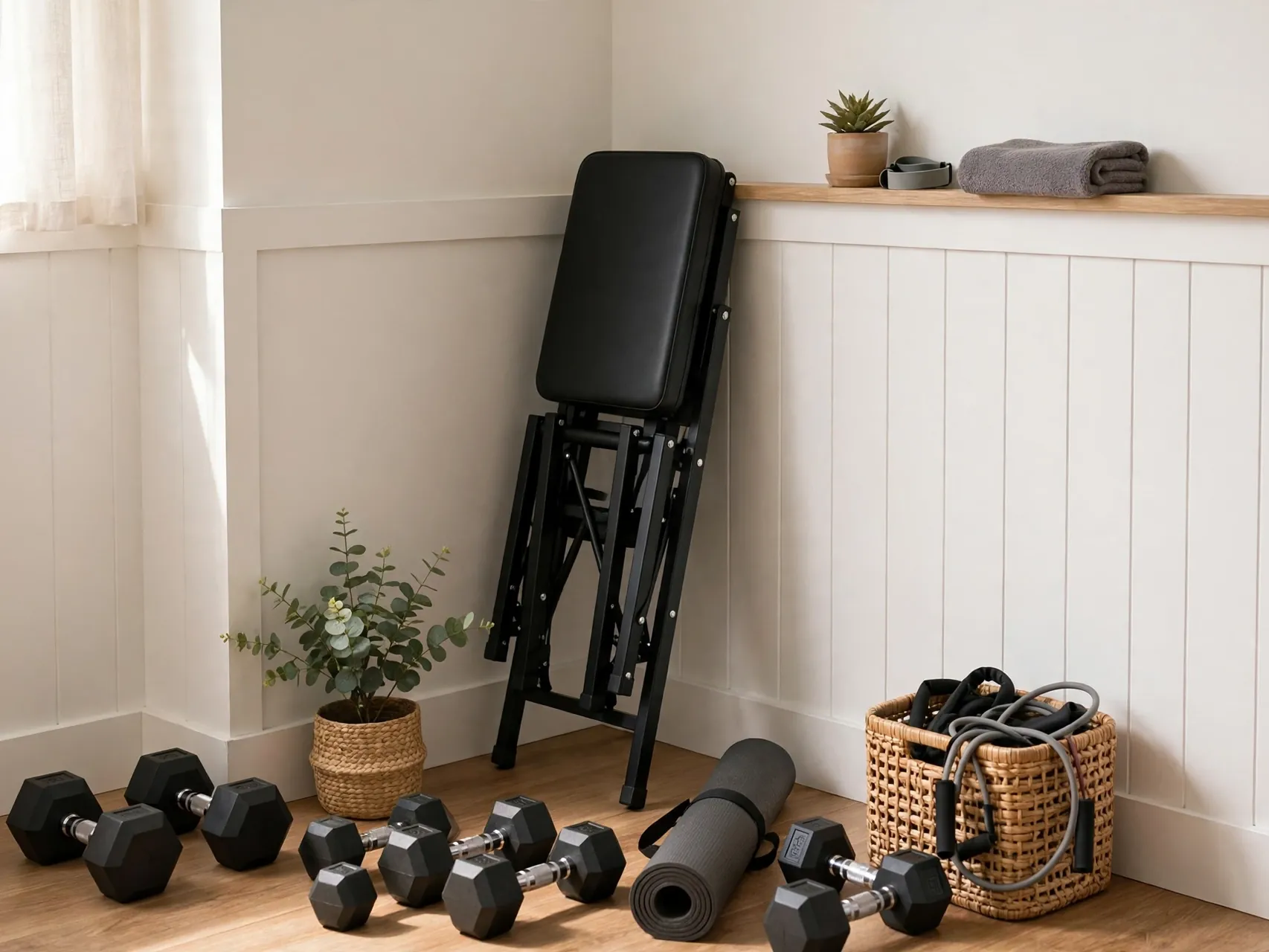
A flat folding bench unlocks step ups, presses, dips, and split squats, then slides under a bed or behind a door. Choose one rated comfortably above your body weight plus the weights you will press on it.
Check locking pins and hinges before each session and set the bench on your mats, not on a rug that can slide. A bench that stores in ten seconds is a bench that actually gets used four times a week.
Put everything back in its spot straight after the session and the next workout needs zero setup time.
Add a Compact Cardio Option That Folds
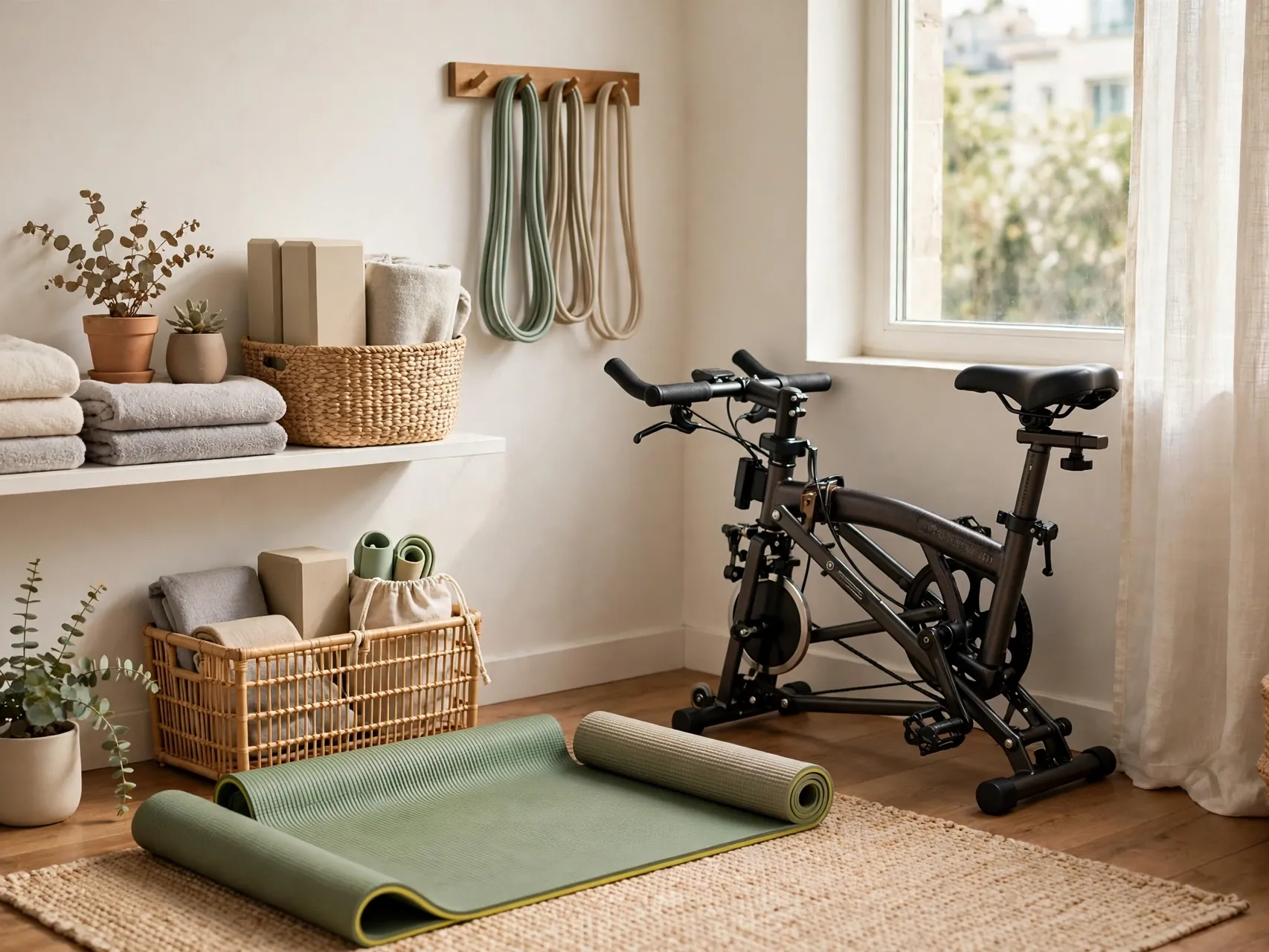
If cardio machines appeal to you, choose the folding kind: a bike that rolls into a corner, a rower that stands upright, or a small treadmill that folds flat. Measure its stored size first, not just its footprint in use.
Keep the machine on a mat to protect the floor and cut vibration noise. Follow the maker guidance for moving and storing it, since folding mechanisms have pinch points. In many small homes, a jump rope used outdoors covers cardio for free.
Start with ten honest minutes on busy days. A corner this easy to use makes consistency simple.
Use a Walking Pad Under a Desk
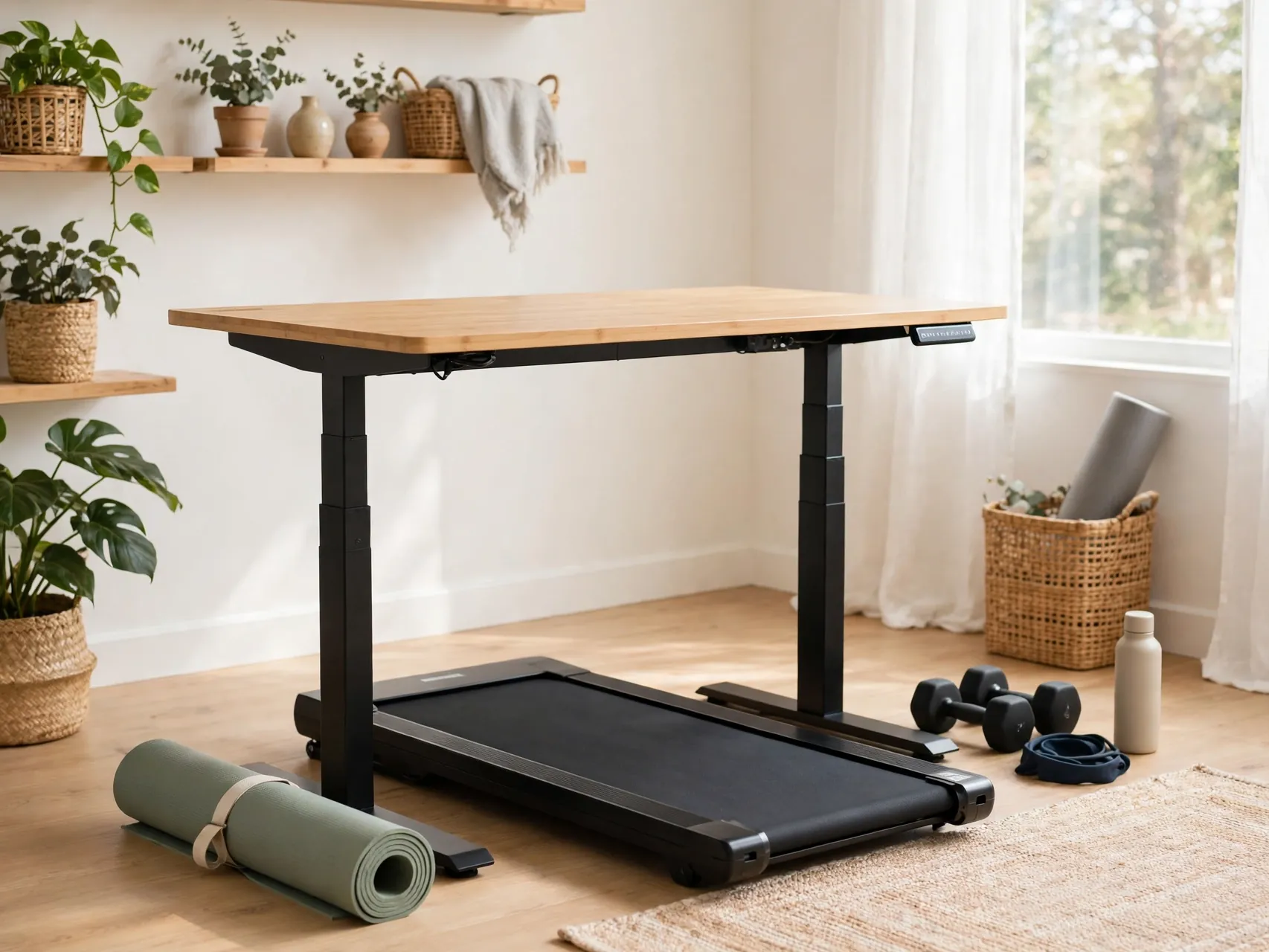
A slim walking pad under a standing desk turns work hours into gentle movement and stores flat under a sofa afterward. It suits small bedrooms and offices where a full treadmill would dominate the room.
Set it on a hard, level surface and keep its cord clear of your feet and chair wheels. Start with short, slow sessions and normal work shoes with good support. This is background movement, not a replacement for your focused training corner.
Put everything back in its spot straight after the session and the next workout needs zero setup time.
Keep a Suspension Trainer on the Door
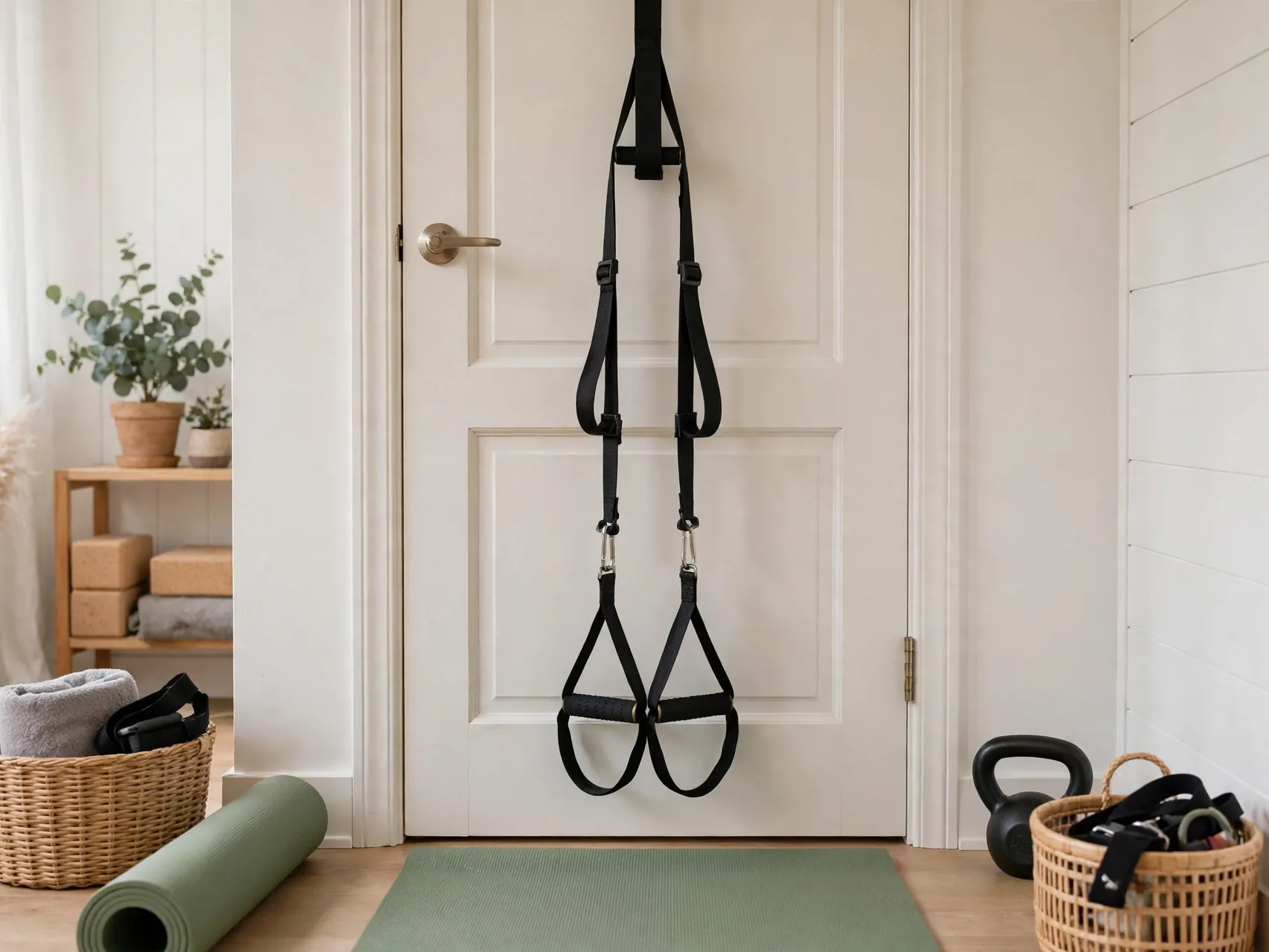
Straps that anchor over a sturdy door give you rows, push up variations, dips, and core work with body weight alone, then roll into a drawer. They are a favorite for travel and tiny flats alike.
Anchor only on a strong door that closes toward you per the maker instructions, lock or warn others not to open it, and inspect straps and buckles regularly. Keep your body angle modest until the setup and your strength both prove reliable.
Start with ten honest minutes on busy days. A corner this easy to use makes consistency simple.
Store Small Gear in a Bench or Ottoman

A storage bench or ottoman at the foot of a bed or along a wall swallows bands, rollers, ankle weights, and towels, then works as seating and a step. Hidden storage is what keeps a bedroom gym from looking like a gym.
Choose a piece sturdy enough for sitting and keep the heaviest items at the bottom. This is the ideal home gym in small bedroom compromise: training gear fully present, bedroom fully calm, and nothing on show but furniture.
Put everything back in its spot straight after the session and the next workout needs zero setup time.
Add a Mirror for Form Checks

A mirror on the wall of your corner helps you check squat depth, row posture, and press alignment without a training partner. It also makes the corner feel larger and reflects light into the room.
Use mirror tiles or a lightweight mirror fixed securely per its instructions, positioned so you can see your full body from your mat. Never lean a loose heavy mirror where it could slide during a workout. Form feedback prevents more injuries than any accessory.
Start with ten honest minutes on busy days. A corner this easy to use makes consistency simple.
Set Up a Small Fan and Good Airflow
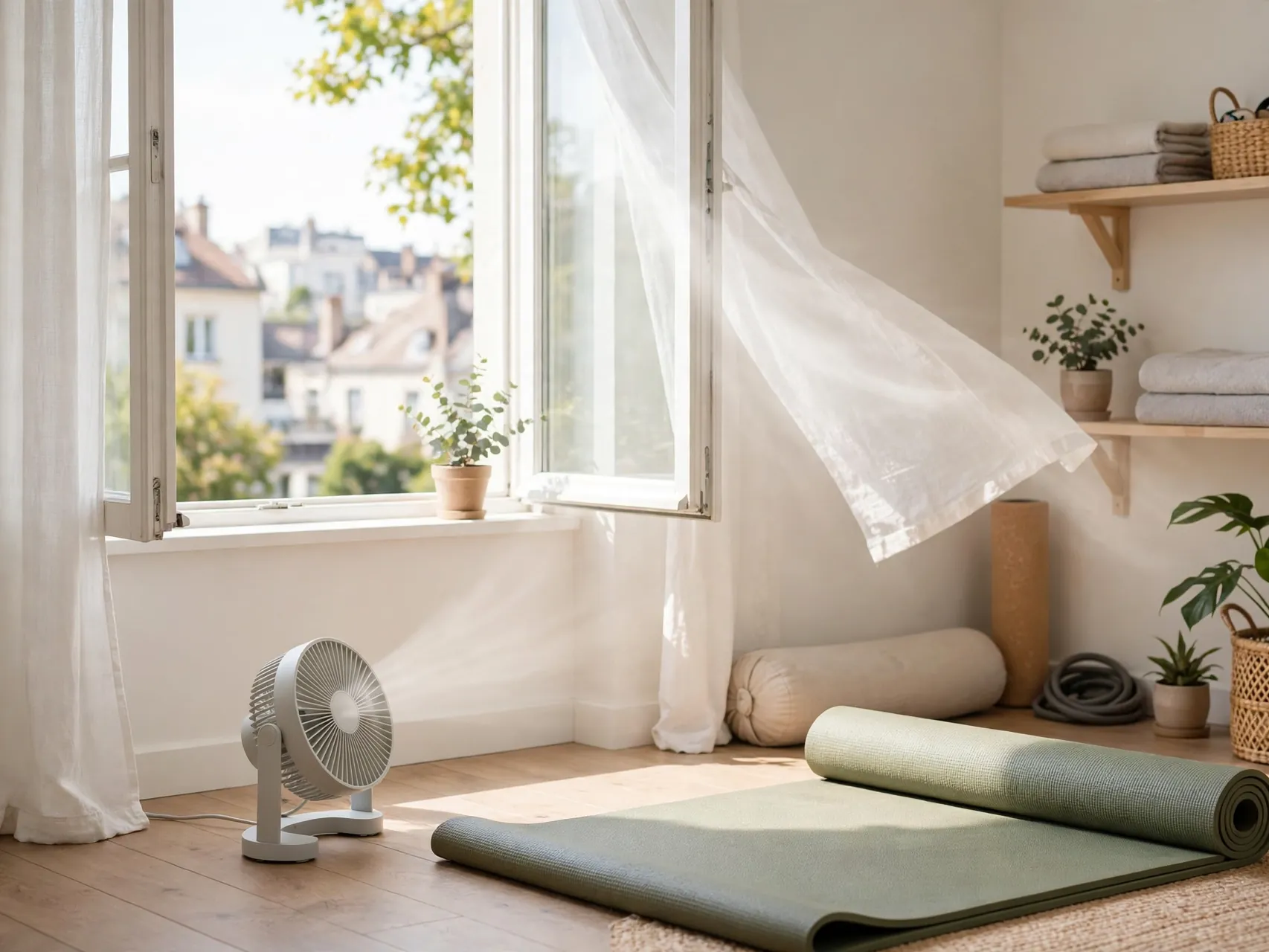
Small rooms heat up fast during training. A compact fan pointed across your corner, plus an open window when weather allows, keeps sessions comfortable and stops the whole room feeling like a sauna afterward.
Position the fan where its cord cannot cross your training area. A small towel station beside the fan, one for you and one for the mats, keeps a tight gym feeling fresh rather than feral by the end of the week.
Put everything back in its spot straight after the session and the next workout needs zero setup time.
Use a Tablet Stand for Follow Along Classes
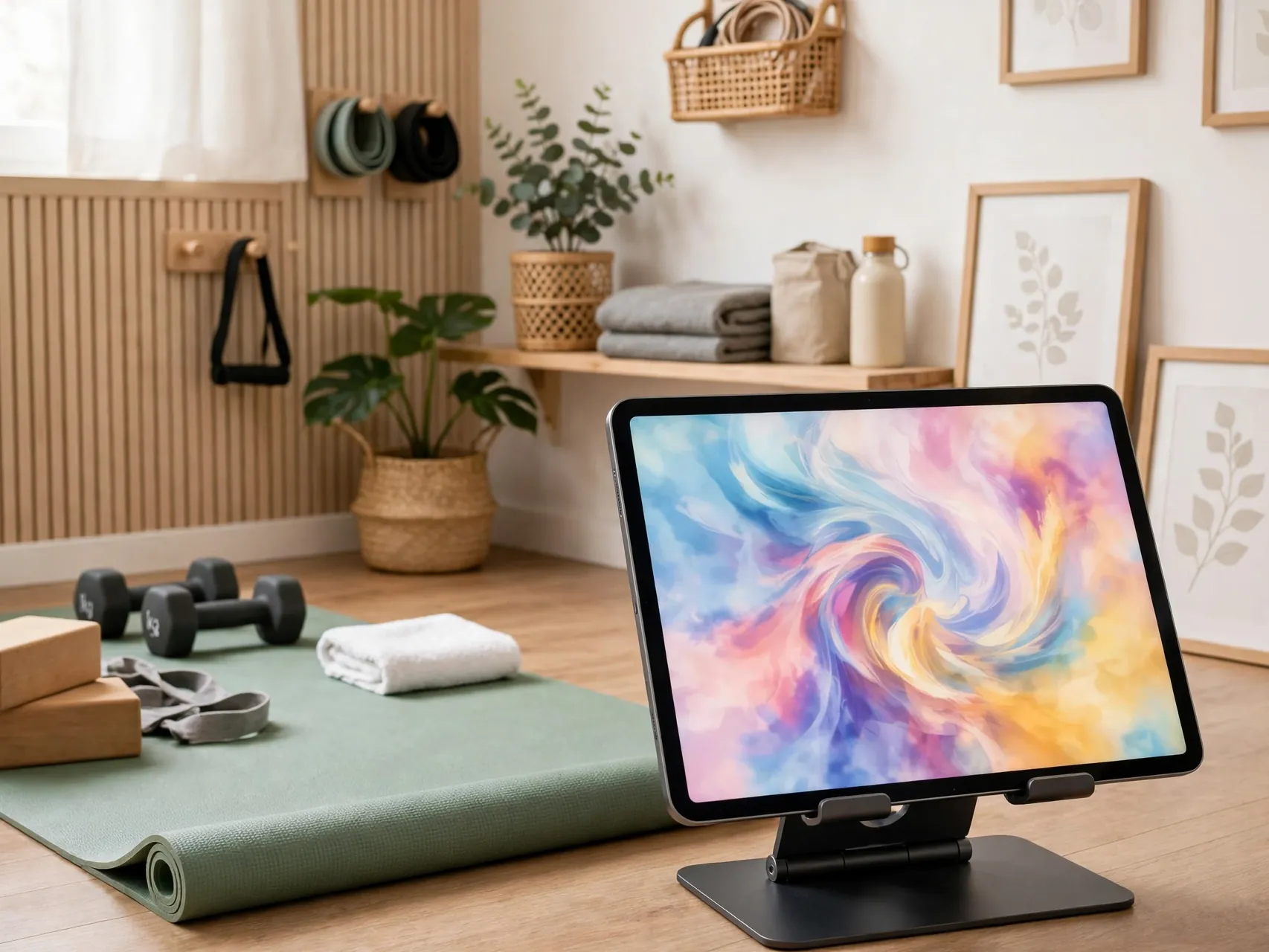
A simple stand or a small wall shelf for a tablet or phone puts follow along classes at eye level and keeps your screen off the floor, safe from stray dumbbells and water bottles.
Queue your workout before you start so there is no scrolling gap mid session. Many free and paid programs are designed for small spaces and minimal equipment, so filter for those and save a week of sessions in advance.
Start with ten honest minutes on busy days. A corner this easy to use makes consistency simple.
Protect Downstairs Neighbors With Quiet Choices
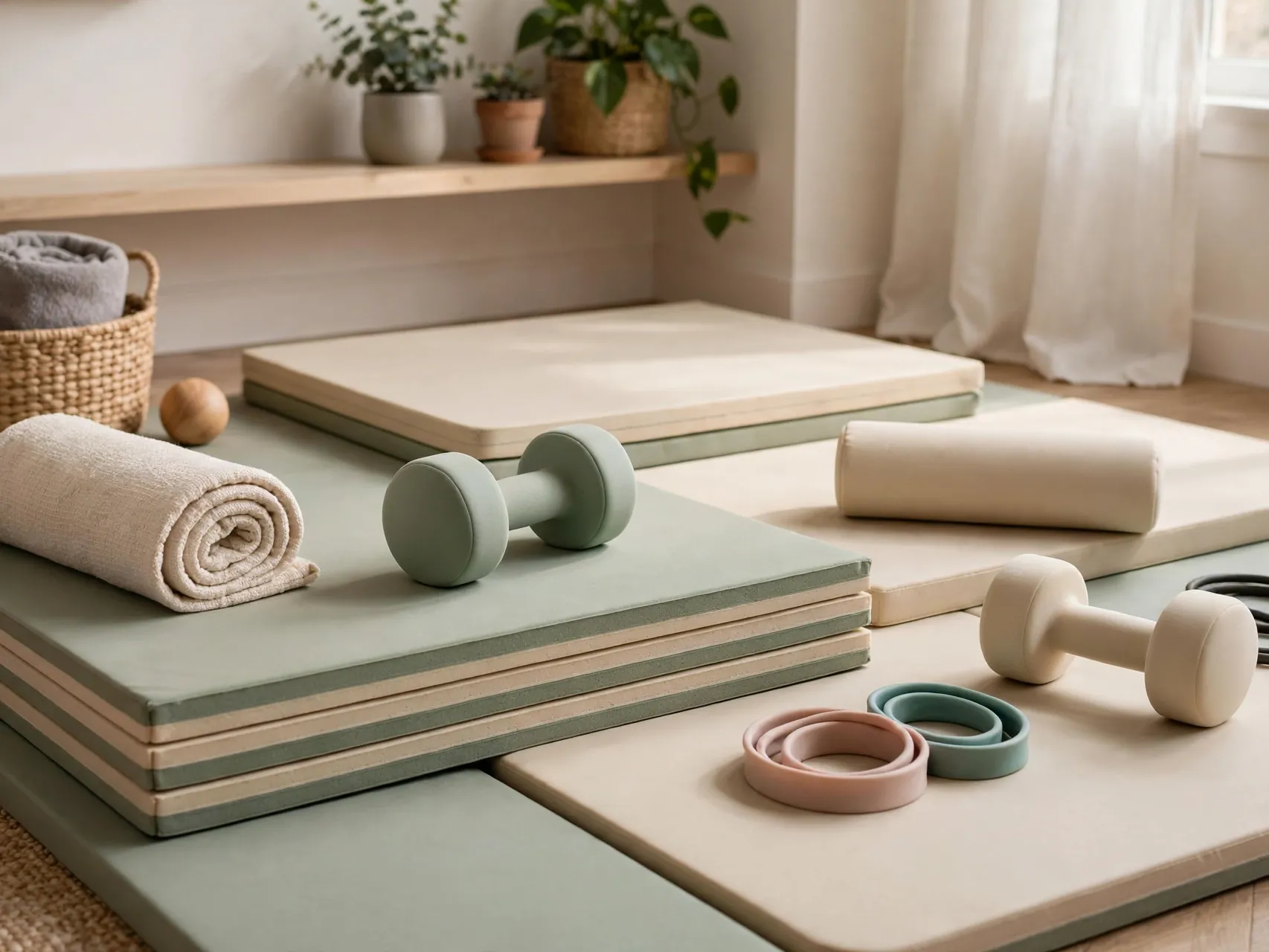
In apartments, noise decides whether a home gym survives. Train on thick mats, lower weights with control instead of dropping them, swap jumping moves for step based versions, and keep late sessions low impact.
If you lift heavier, talk to a knowledgeable coach or your building about floor suitability, and consider a platform that spreads load where space and rules allow. Being a considerate training neighbor in a small space workout area ideas setup costs nothing and buys peace.
Put everything back in its spot straight after the session and the next workout needs zero setup time.
Create Zones Even in Six Feet of Space

Even a tiny corner works better in zones: mat zone for floor work, wall zone where gear hangs, and a clear step back zone for standing lifts. Your body learns the layout fast and sessions flow without shuffling furniture.
Use the edge of your mat square as the boundary and return every item to its zone as you finish each exercise. In a shared room this discipline is the difference between a gym corner and a growing gear spill.
Start with ten honest minutes on busy days. A corner this easy to use makes consistency simple.
Keep a Simple Cleaning Kit Beside the Gear
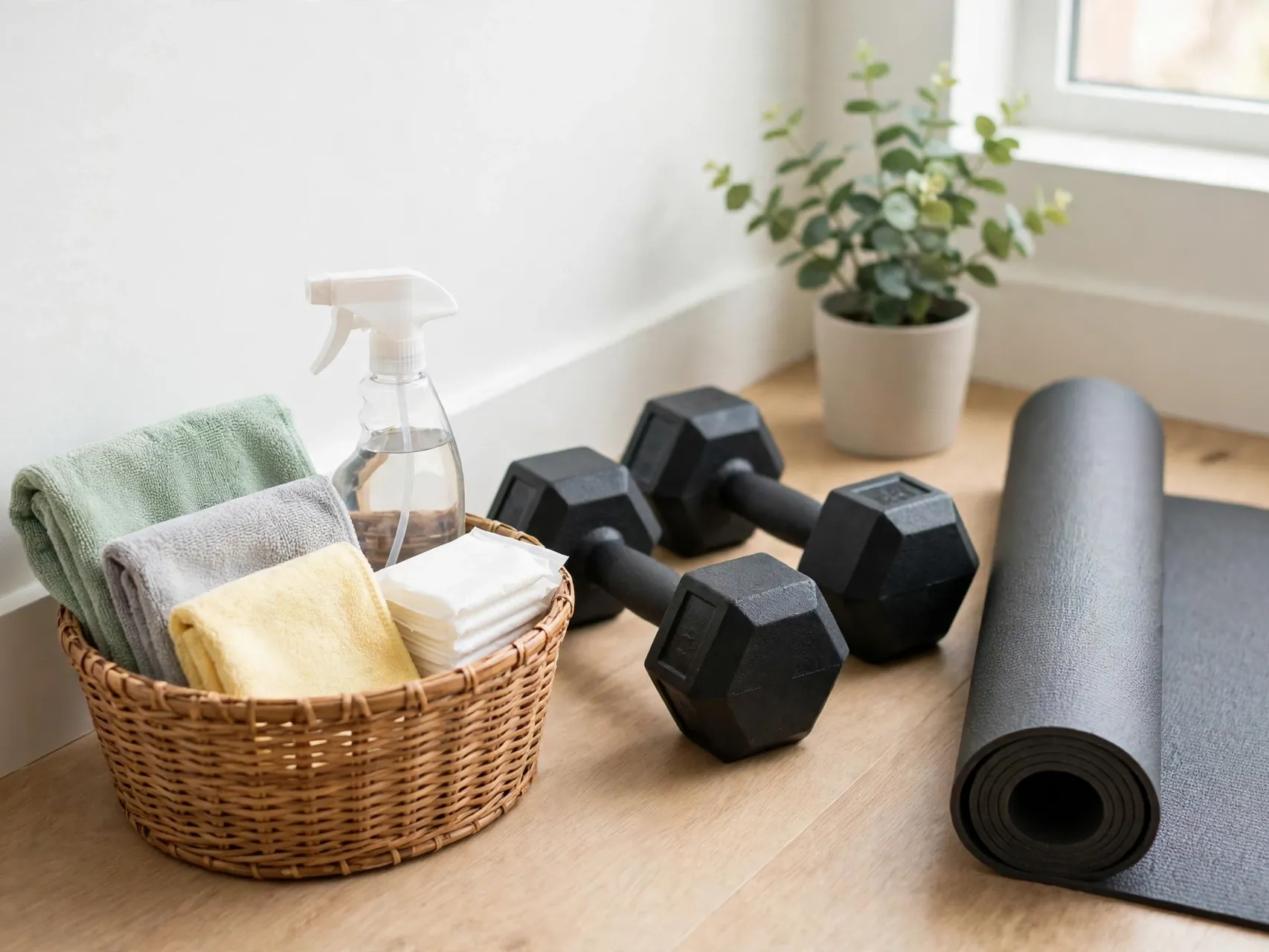
Sweat and shared rooms do not mix for long. A small caddy with a spray cleaner suitable for your equipment, two microfiber cloths, and a hand towel lives in the corner and takes thirty seconds to use after training.
Wipe dumbbell handles, bench surfaces, and mats, and wash cloths weekly. Clean gear invites the next session, protects finishes and grips, and keeps a bedroom or living room gym welcome in the home instead of tolerated.
Put everything back in its spot straight after the session and the next workout needs zero setup time.
Make the Space Inviting Enough to Reuse

The best small gym is the one you walk into willingly at six in the morning. Add one poster or print you love, a small speaker for music, and light you like, even if it is just a lamp moved across the room.
Keep the corner tidy enough to start in under a minute. Motivation fades, but a ready, pleasant, honest little corner keeps working long after January. That is the whole secret behind every lasting home gym, at any size.
Start with ten honest minutes on busy days. A corner this easy to use makes consistency simple.
FAQ
How much space do I really need for a home gym?
A mat sized corner is enough for effective training with bands, adjustable dumbbells, and body weight work. Roughly the space of a large yoga mat plus standing room covers most movements. Measure the clearance your exercises need, especially overhead presses and kettlebell swings, rather than counting equipment footprints alone.
What equipment should I buy first for a small gym?
Start with a good mat, one pair of adjustable dumbbells or a band set with a door anchor, and wall storage. That trio covers strength, floor work, and tidy storage. Add a kettlebell, a folding bench, or a suspension trainer only when your program shows a real gap.
How do I protect my floor from weights?
Use thick interlocking mats under your training area, store heavy items on sturdy low surfaces that spread the load, and lower weights with control instead of dropping them. For heavier lifting, ask a qualified professional or your building about floor suitability, since capacity varies by construction and no mat makes an unsuitable floor suitable.
Can I train quietly in an apartment without bothering neighbors?
Yes, with deliberate choices. Thick mats, controlled lifting, low impact cardio swaps, and reasonable training hours handle most noise. Avoid dropping weights entirely. If you plan heavy barbell work, an apartment corner is rarely the right venue, and a local gym session may serve you better.
How do I keep a bedroom gym from ruining the bedroom?
Hide the gear. A storage ottoman, wall hooks, and a rolled mat in the corner keep every trace out of sight in under two minutes. Choose storage furniture that matches the room, keep the corner boundary strict, and clean equipment after sessions so the room always smells and feels like a bedroom first.
Key Takeaways
- One corner is enough: A mat sized zone with wall storage can hold a complete, serious setup.
- Buy adjustable and portable: Dumbbells that change weight and bands that roll away beat fixed machines in tight rooms.
- Protect the floor: Thick mats, spread loads, and controlled lifting keep floors and deposits safe.
- Train quietly: Low impact swaps and no dropped weights keep apartment gyms neighbor friendly.
- Hide it fast: An ottoman and hooks return a home gym in small bedroom to a calm bedroom in minutes.
- Pin these ideas for later: Save this list to your home gym board on Pinterest before you buy your first piece.
Building your corner gym this weekend? Pin this list to your fitness board on Pinterest so your gear list and layout stay in one place.