23 Staircase Wall Decor Ideas That Turn Heads Upstairs
Introduction
The staircase wall is the largest, most seen wall in many homes, and often the emptiest. The right staircase wall decor turns that tall, angled surface into a story that unfolds as you climb, greeting guests at the entry and rewarding you on every trip upstairs.
Safety comes before style on stairs, always. Never block or narrow the stair path or the handrail, anchor heavy frames securely into studs or rated fixings, and keep every piece of decor off the stair treads. Choose flat, secure, lightweight options in busy homes, and keep the stairs themselves well lit.
With those rules set, the wall is yours. Gallery walls, color, molding, mirrors, and lighting can all work beautifully on a slope. Use paper templates to plan, step back often to check the view from below and above, and build the look in an afternoon or a weekend.
1. Build a Classic Gallery Wall That Follows the Slope

The timeless choice is a gallery wall that climbs with the stairs. Lay your frames on the floor in a stepped arrangement, trace paper templates, and tape them to the wall to test spacing before you hang anything.
Mix photos and art within one frame finish for cohesion. Anchor every frame securely, with heavier pieces fixed into studs where possible, and keep all frames flat to the wall and well clear of the handrail. A staircase gallery wall rewards slow planning with a daily, personal exhibition.
2. Hang One Oversized Statement Piece at the Landing

Landings offer a flat, full height wall that can carry one large piece beautifully. A single oversized print, textile, or canvas gives the staircase a calm focal point and a place for the eye to rest between flights.
Hang the piece securely with fixings rated for its weight, centered at standing eye level on the landing. Keep the landing floor and the stair path completely clear around it. One confident piece often looks more expensive and more peaceful than a wall of small, competing frames.
3. Paint the Stair Wall in a Deep, Confident Color
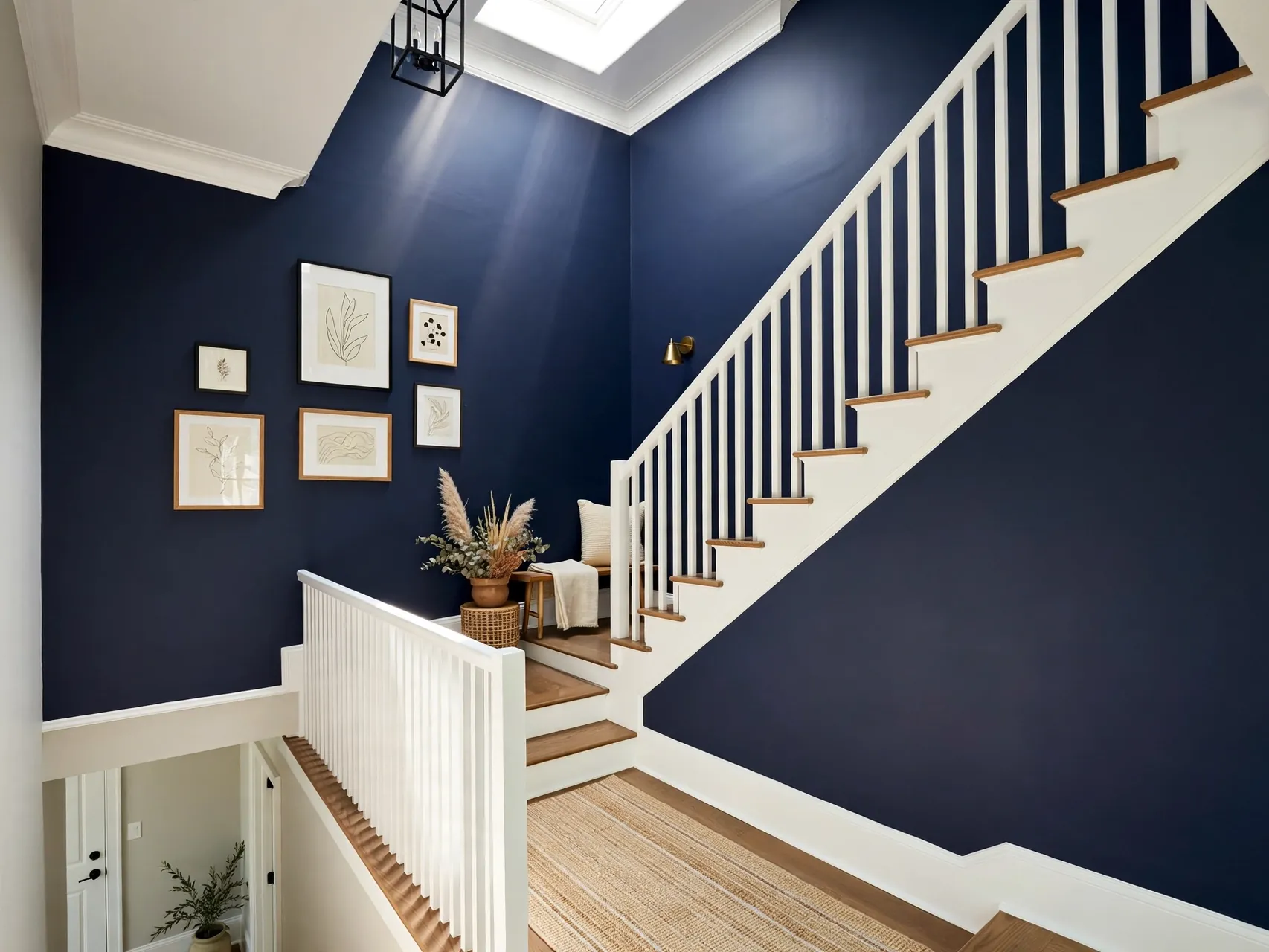
Paint is the boldest stair wall decorating idea with the least risk to safety, because it adds nothing to bump, fall, or catch. A deep green, warm navy, charcoal, or terracotta on the stair wall creates drama and makes lighter frames and trim glow against it.
Test the color on a large area and view it in morning and evening light, since stairwells collect light from many directions. Paint the wall only, keeping treads, risers, and the handrail clear and in good condition.
4. Add Wainscoting or Board and Batten Up the Slope

Trim work gives a stair wall the architecture it usually lacks. Wainscoting, board and batten, or simple picture frame molding installed along the slope adds shadow, rhythm, and a custom finish.
Measure the angle carefully, locate studs and any hidden wires or pipes before fixing, and keep every profile flat to the wall with nothing protruding into the walking path. This is a weekend project for confident DIYers, and a handyman friendly one for everyone else.
5. Use Wallpaper for Pattern on the Tall Wall

Wallpaper turns height into an asset. A botanical, stripe, or subtle geometric pattern on the stair wall draws the eye upward and gives the whole entry a designed backdrop. Vertical stripes emphasize height, while small patterns feel gentle on a long slope.
Choose paste or peel and stick products suited to your wall, test removable options first if you rent, and follow maker directions for preparation so seams behave on a tall surface. Keep paper flat and fully adhered, with no lifting edges near the handrail.
6. Install Picture Ledge Shelves Only Where Width Allows

On a wide staircase or a landing wall, shallow picture ledges let you layer frames and small art and swap them without new holes.
Fix ledges into studs, keep displayed pieces light and stable, and avoid ledges entirely on narrow stairs. When the width is truly there, a ledge gallery is flexible and renter friendlier than a dozen nails. When in doubt, hang frames flat instead and keep the passage generous.
7. Add Sconces or Picture Lights for a Lit Gallery Feel
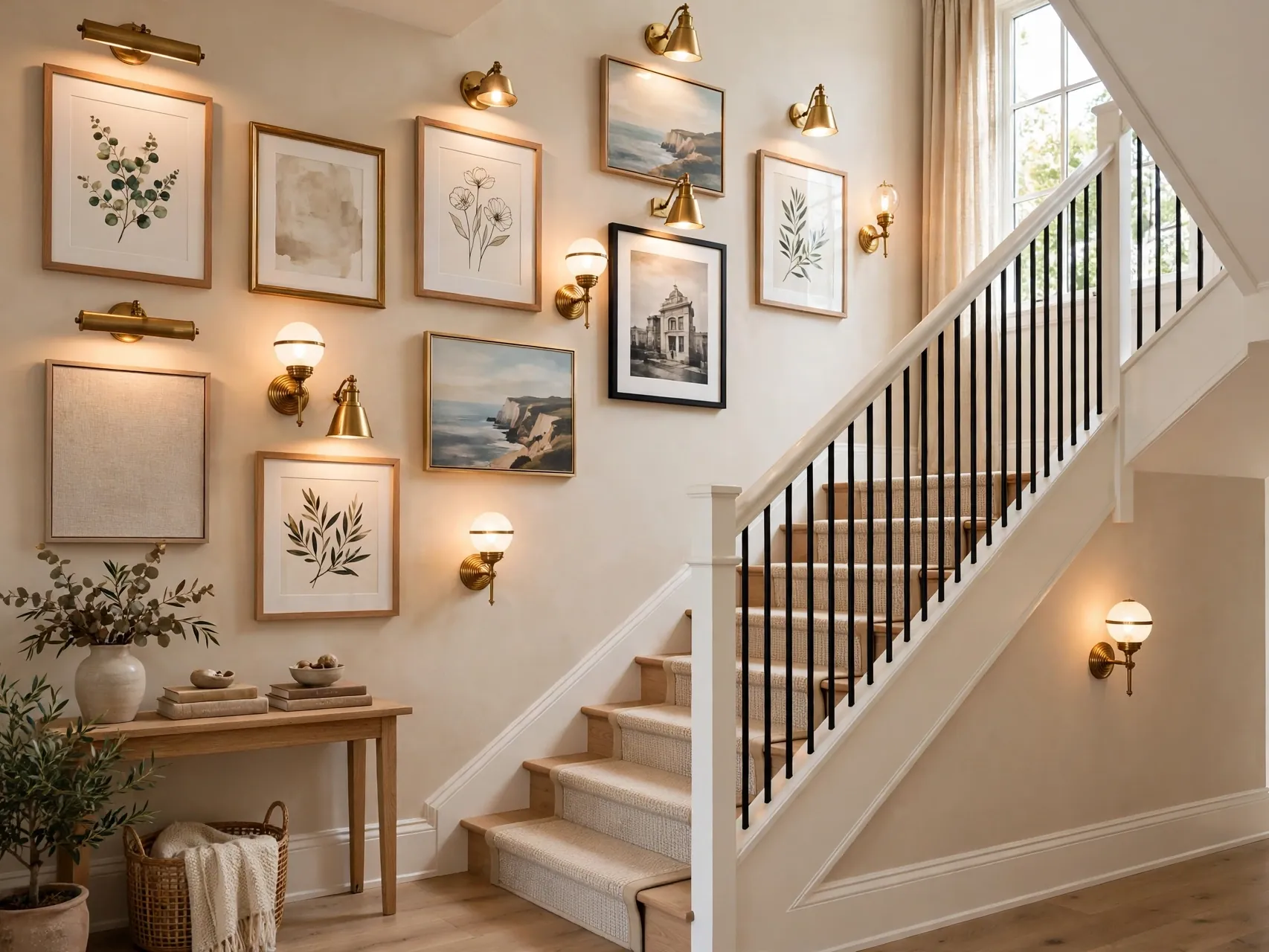
Stair walls often suffer from dim, uneven light. Wall sconces spaced along the slope, or small picture lights over key frames, add safety and gallery polish at once. Brighter, even light on stairs helps everyone see treads clearly, which matters more than any decor effect.
Have new hardwired lighting installed by a licensed electrician, and choose battery or plug in picture lights only as the maker directs, with cords secured and completely out of the walking path. Never run cords across treads.
8. Create a Family Photo Timeline Up the Stairs
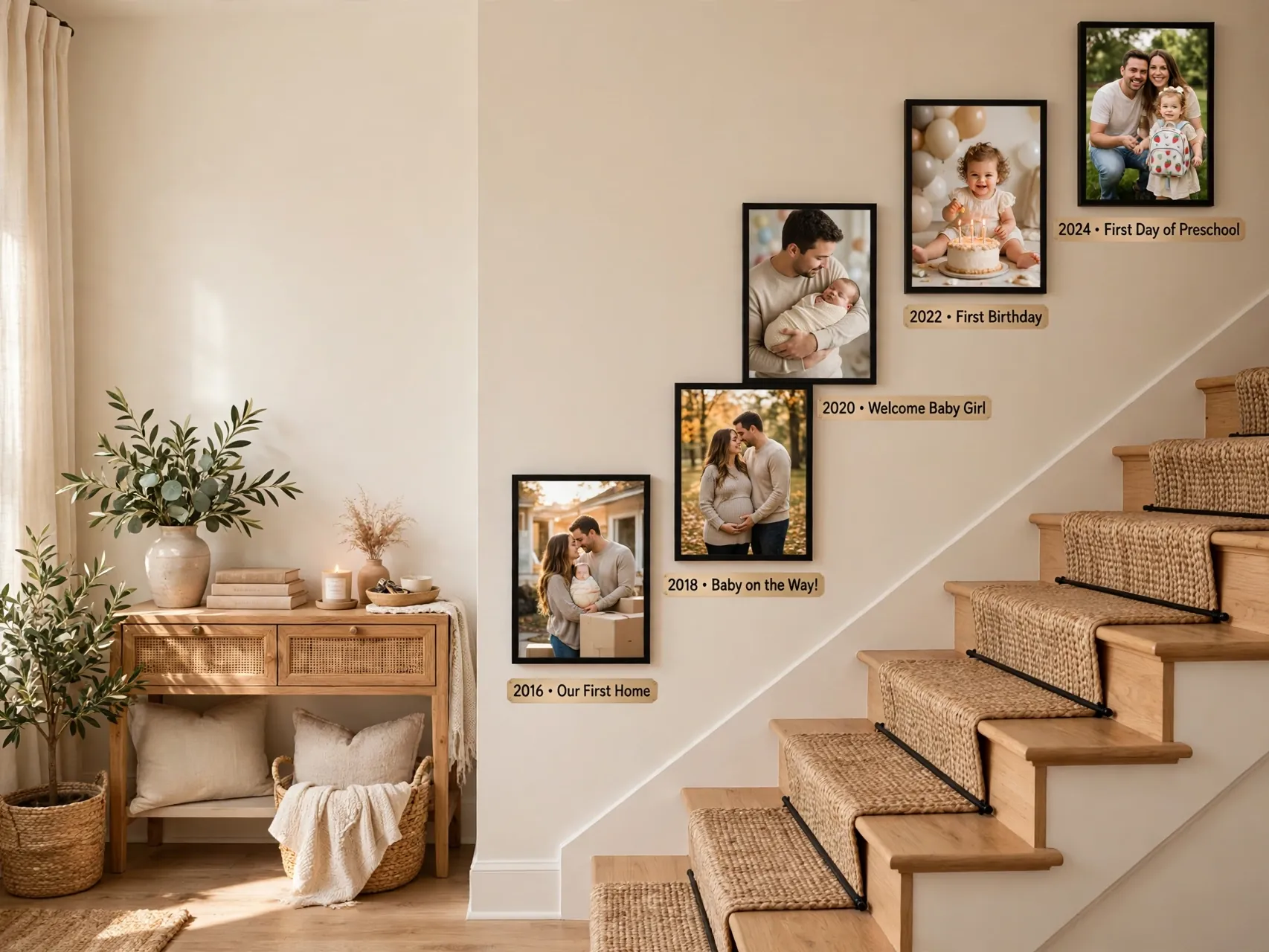
Let the climb tell your story: arrange family photos from earliest at the bottom to newest at the top. Matching frames keep a timeline calm, and black and white prints can unify photos from different decades and cameras into one graceful series.
Use copies rather than irreplaceable originals in a high traffic zone, and hang each frame securely and flat. Leave comfortable spacing so the story breathes, and add new frames at the top as years pass.
9. Try a Two Tone Paint Split That Climbs the Wall

A horizontal color split that steps or angles up the wall adds design without a single object. Paint the lower section in a deeper, scuff friendly tone and the upper in a lighter shade, divided by the handrail line or a simple trim strip.
Use painter tape and a level to map the line, testing the angle against the slope before committing. Keep paint off treads and handrails except for proper refinishing done safely with the stairs out of use while finishes dry. Two tone paint is affordable, reversible, and strikingly modern.
10. Hang a Large Mirror to Borrow Light on a Landing
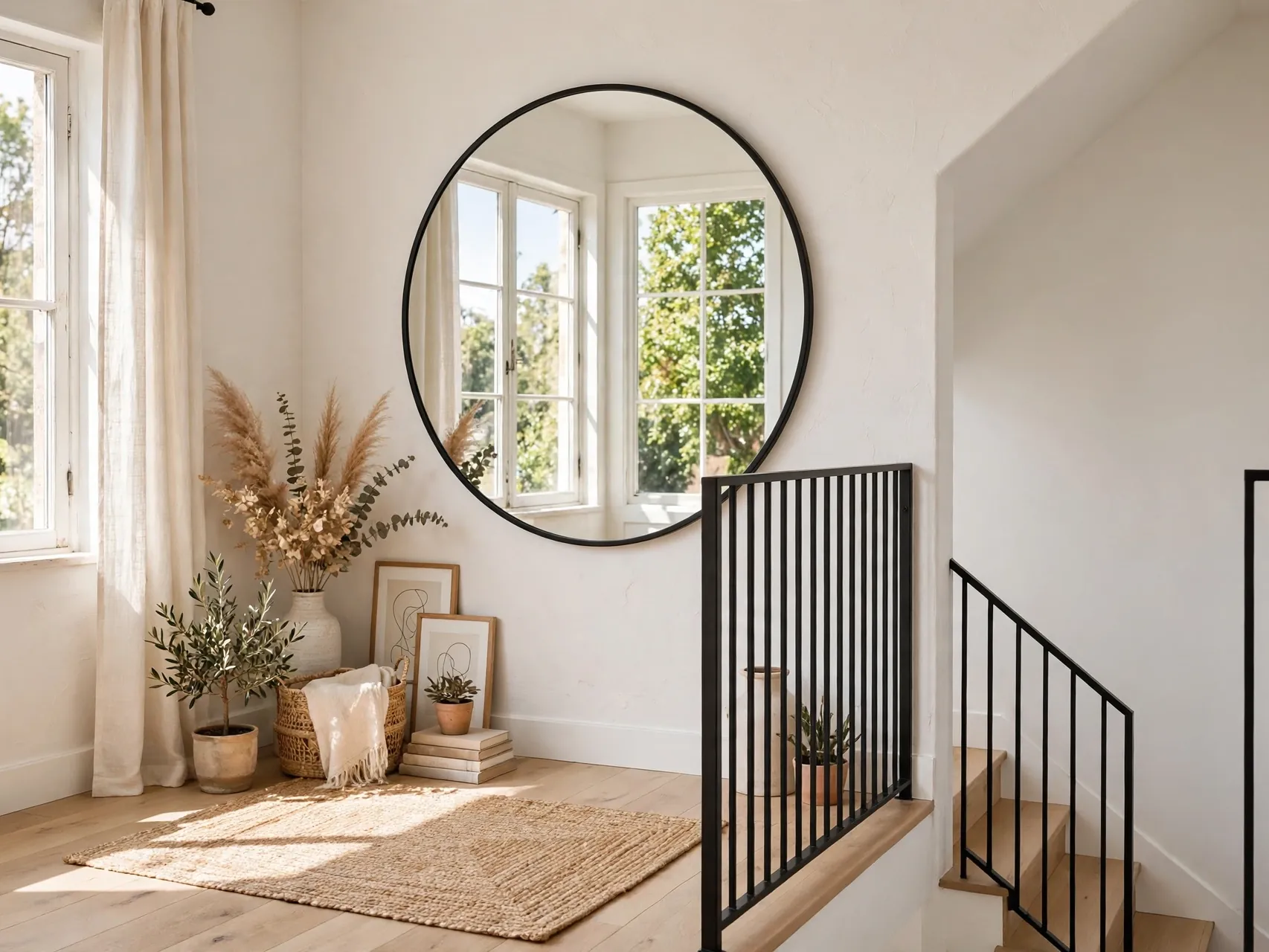
Dark stairwells benefit hugely from a mirror, especially on a landing opposite or near a window. A large mirror bounces daylight up the flight and makes the turn feel spacious. Choose a frame that suits your home and glass that is appropriate for a high traffic area.
Mount it with hardware rated for its full weight, ideally into studs, and never lean a heavy mirror where it could be knocked. Position it to reflect light and a pleasant view, not the clutter of the hall below.
11. Display Woven Baskets or Textile Art Flat on the Wall

Woven wall baskets, a quilt, or a macrame hanging adds texture and softness that framed art cannot. These pieces are generally light, which suits stair walls well, and their handmade feel warms modern and rustic homes alike. Group baskets in a loose, stepped cluster that echoes the slope.
Hang textiles from secure fixings that hold them flat and close to the wall, with nothing dangling into the walking path or over the handrail. Keep fabrics away from direct heat sources.
12. Build a Botanical Print Series in Matching Frames
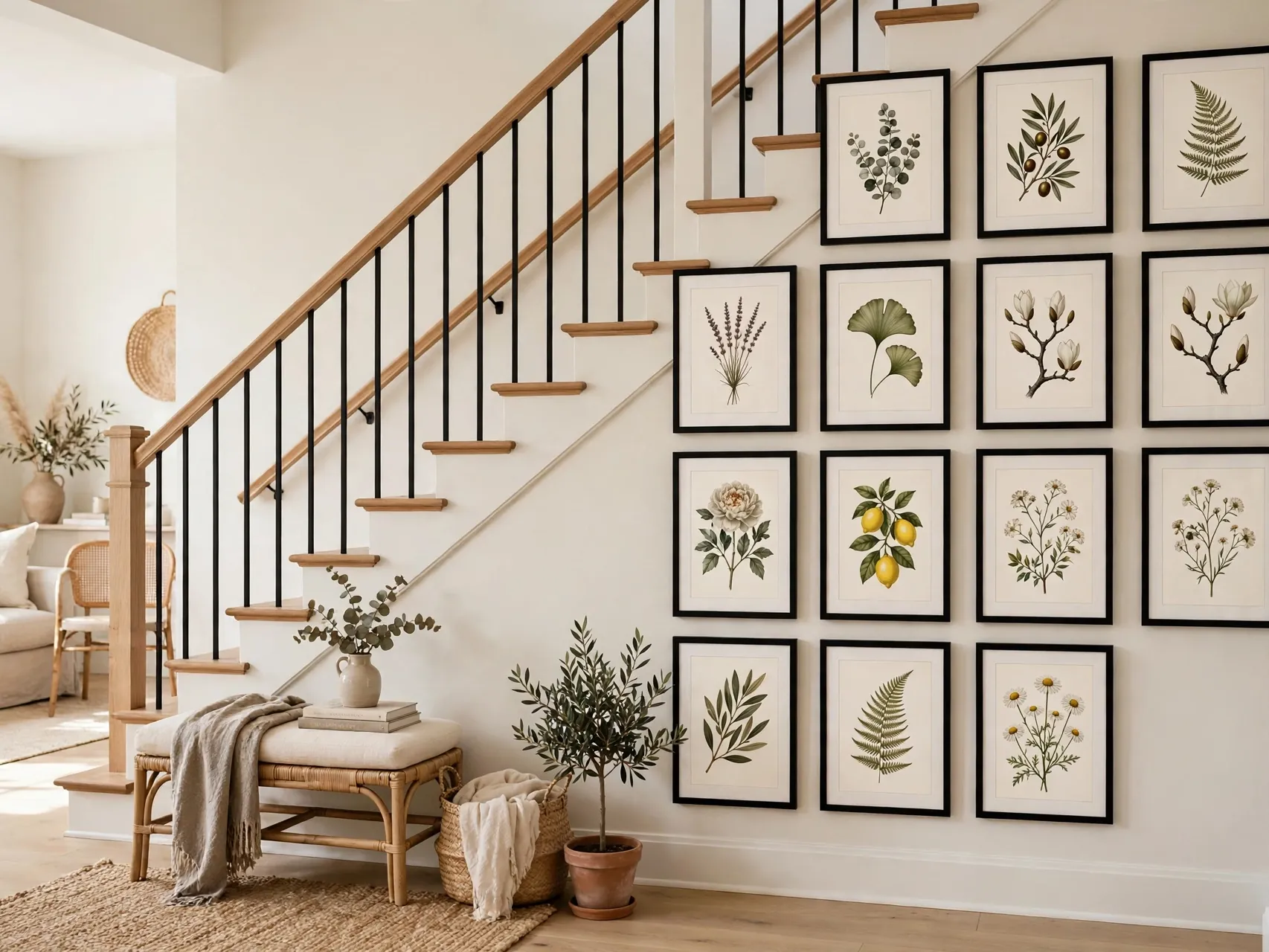
A set of botanical, landscape, or architectural prints in identical frames creates calm rhythm on a long wall. Even spacing and a shared mat style make the series feel like one artwork in chapters, guiding the eye upward step by step without visual noise.
Prints are light, affordable to frame, and easy to swap seasonally if you enjoy change. Hang each frame on secure fixings and check alignment from the bottom of the stairs, where viewing angles reveal wobbles invisible up close.
13. Add a Stenciled Pattern or Painted Mural Accent
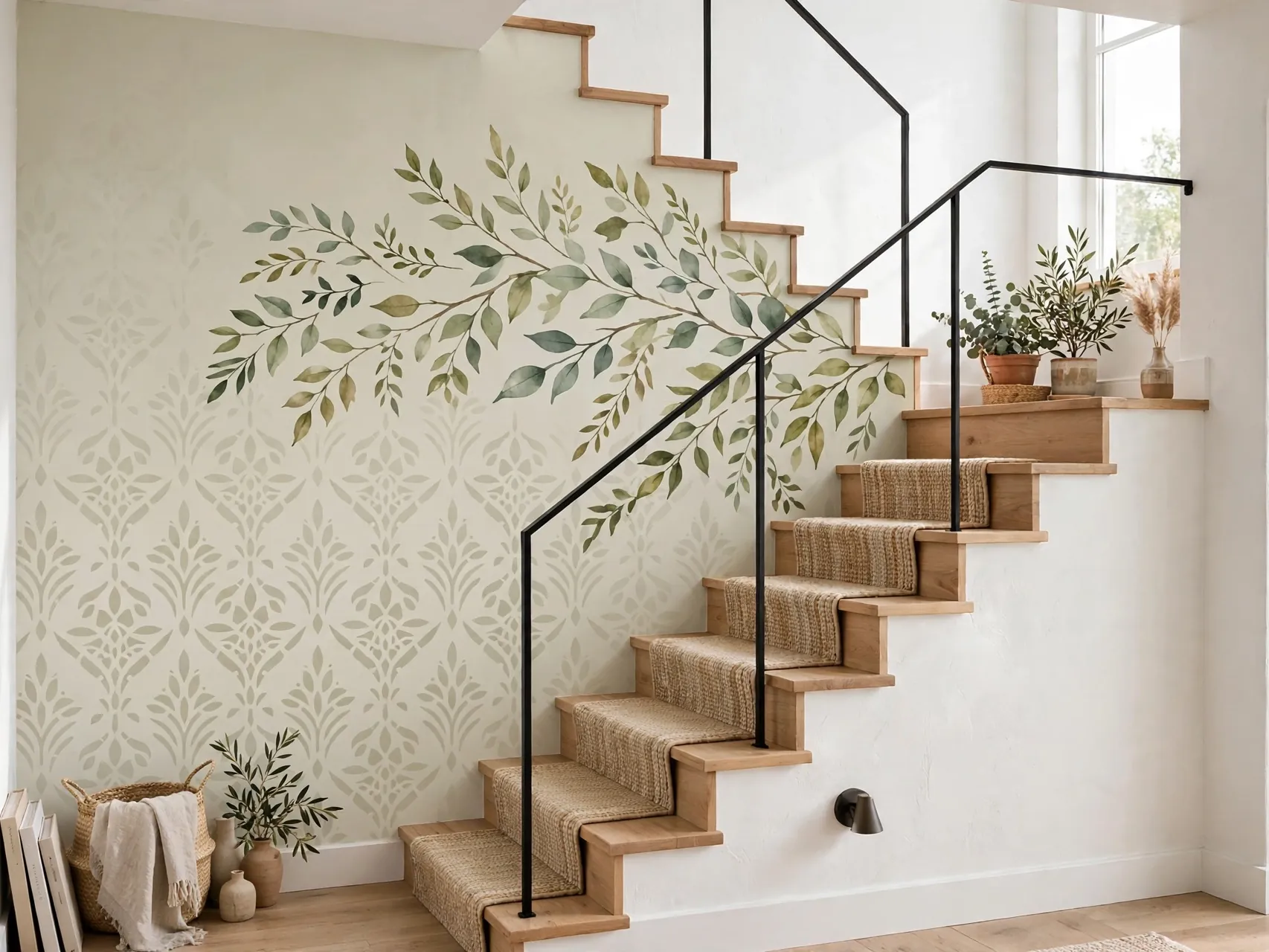
If wallpaper feels like a commitment, a stencil or simple hand painted motif gives pattern with paint alone. A repeating stencil climbing the wall, a painted arch at the landing, or a soft ombre wash that deepens as you descend can all be done with patience and good tape work.
Practice the stencil on board first, keep the design flat with no raised elements, and protect treads and rails with coverings while you work, removing everything before the stairs return to use.
14. Install Shallow Floating Shelves on the Landing Wall Only

The flat landing wall can hold what the sloped wall should not: a pair of shallow shelves for small plants, books, and objects. Keeping shelves on the landing preserves full clearance on the flight itself, where protruding shelves can catch hips, shoulders, and carried items.
Fix shelves into studs, load them lightly, and place nothing where a falling object could land on the treads below the edge. Style with stable, low pieces rather than tall or top heavy ones.
15. Use Removable Decals or Peel and Stick Art for Renters

Renters can decorate the slope without a single hole. Vinyl decals, peel and stick shapes, and removable art tiles applied to a clean wall create pattern, quotes, or scattered motifs that follow the stairs. Test any product in a hidden area first and remove it as the maker directs.
Keep decals flat with edges fully pressed, especially where hands and shoulders pass, and choose designs that do not need to wrap the handrail or treads. Removable options are also perfect for kids rooms hallways and seasonal looks, because a whole new scheme can go up in an hour.
16. Frame a Collection: Maps, Postcards, or Kids Art
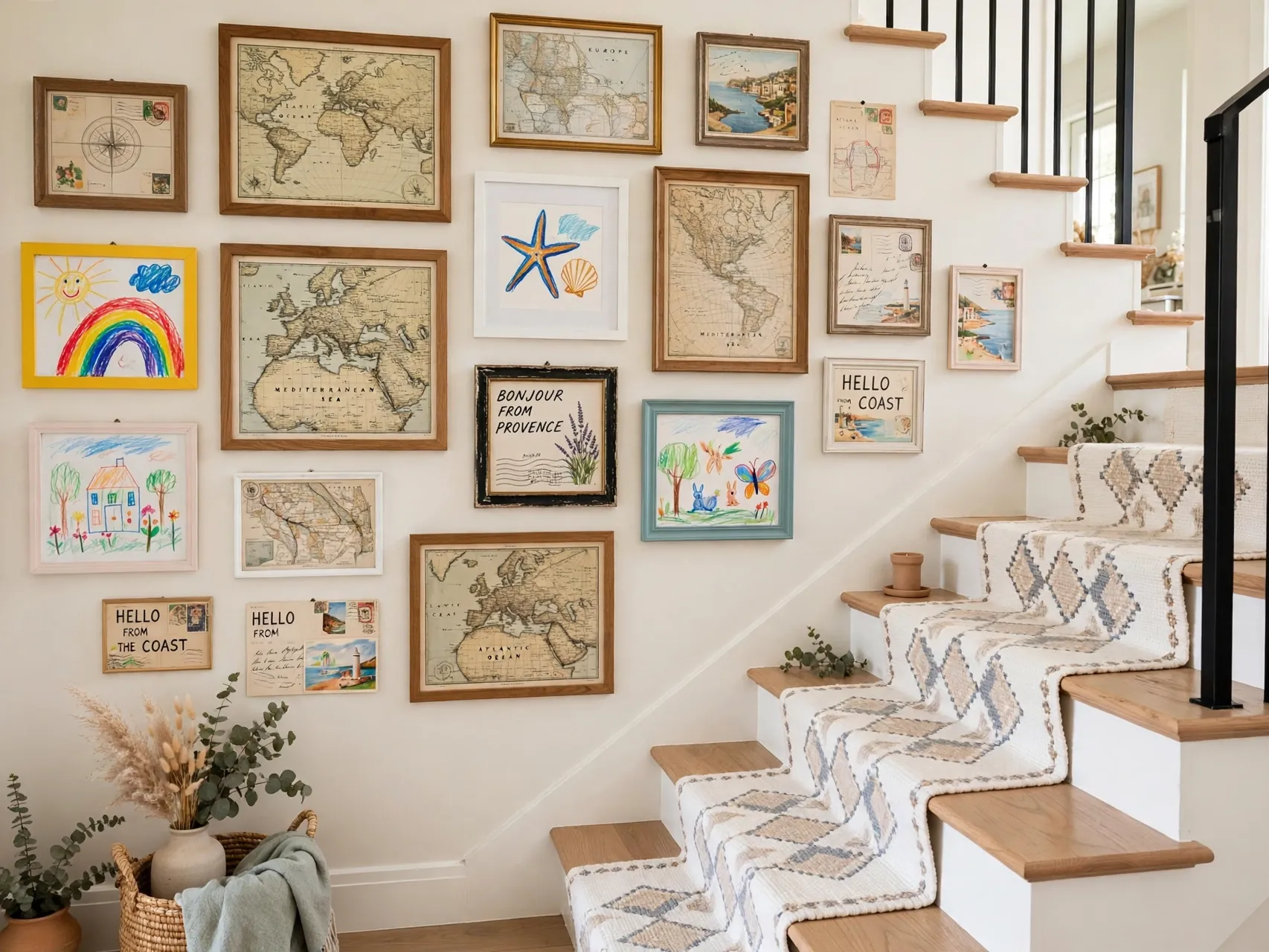
A staircase is a natural home for a collection. Framed maps from trips, vintage postcards, sheet music, or rotating children art in matching frames turns the climb into a small museum of your life. One frame style keeps even a quirky collection looking intentional and calm.
Use copies for precious pieces, hang everything securely and flat, and leave a few empty slots in the plan so the collection can grow. Collections start conversations better than almost any purchased art, and the stairs give them the long, slow viewing they deserve on the way up and down.
17. Add Architectural Salvage: Shutters, Windows, or Grilles
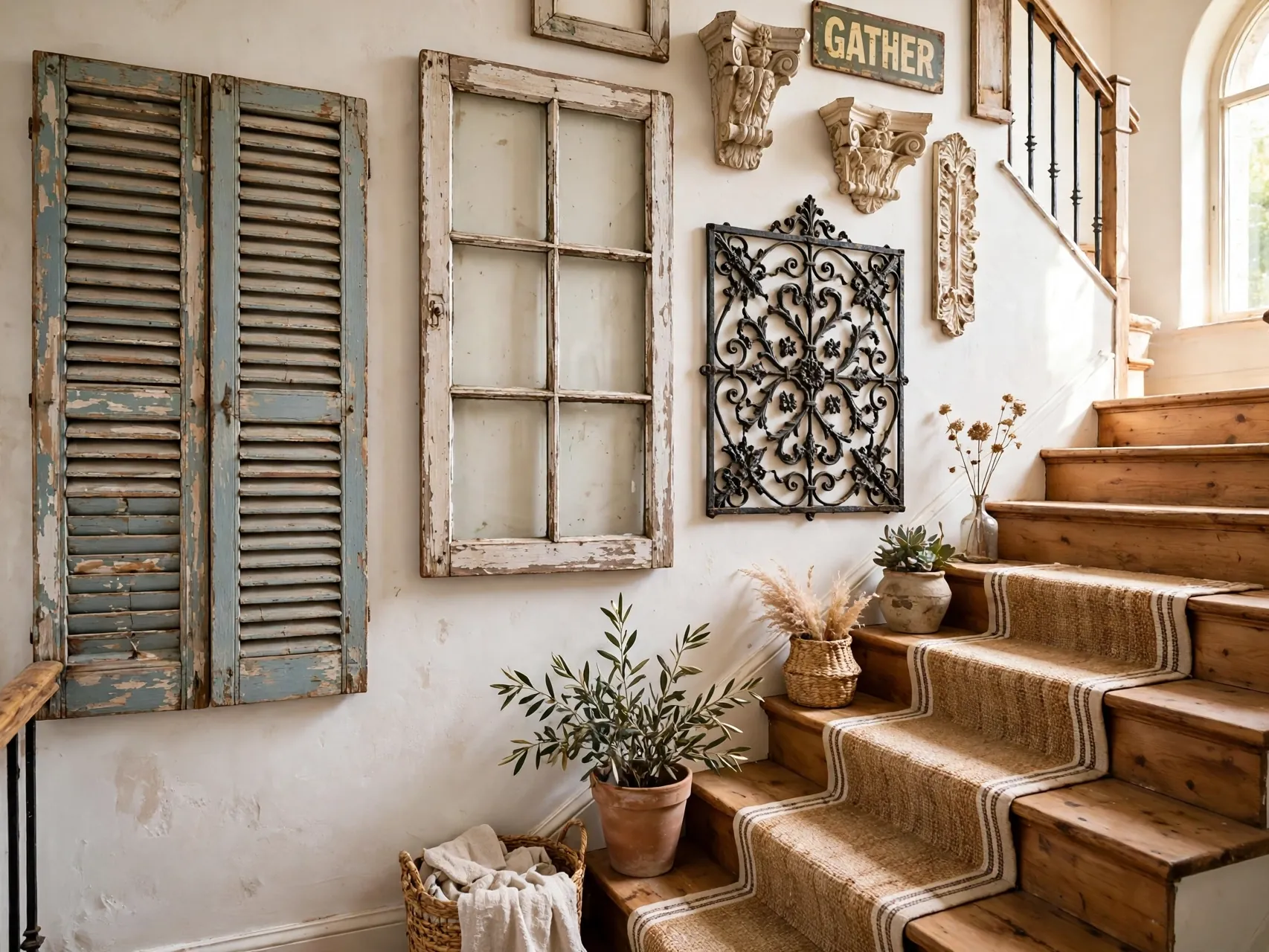
A pair of old shutters, a salvaged window frame, or a decorative grille hung flat can give a stair wall instant character. These pieces suit farmhouse, cottage, and eclectic homes, and their flat profiles work well on a slope when mounted properly and kept clear of the handrail.
Check salvaged pieces for stability, clean them thoroughly, and test old painted finishes of unknown age for lead before sanding, following safe guidance. Fix heavier salvage into studs with rated hardware. One characterful piece per flight is plenty, letting its texture and history do the talking.
18. Light the Stairs Themselves With Safe, Professional Options
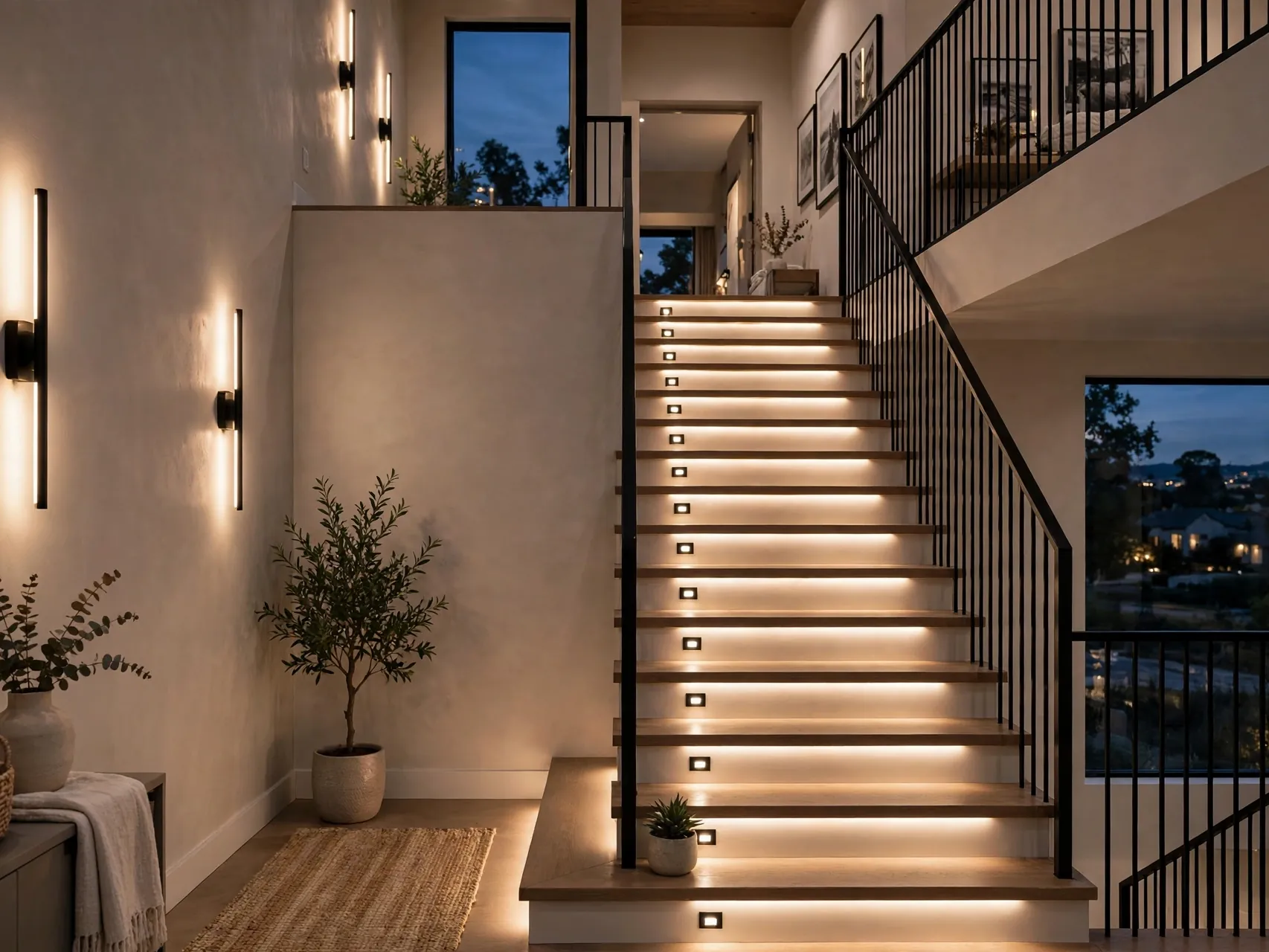
Decor that helps you see the stairs is the smartest decor of all. Options include recessed step lights installed by an electrician, or handrail underside lighting fitted as the product directs, never with loose cords or anything that changes the grip of the handrail. Keep the rail fully graspable along its whole length.
Even without new fixtures, simply replacing dim bulbs with appropriate brighter ones in existing stair lights, as the fixture maker allows, transforms safety and mood. Never place candles, lanterns, or any objects on treads for effect. Lit stairs plus a decorated wall is the complete, responsible picture.
19. Try a Monochrome Photo Wall for a Calm, Modern Climb

Restrict the palette to black, white, and gray for a gallery that feels serene and modern. Monochrome photos, line drawings, and charcoal sketches in black or pale wood frames unify easily, even when the subjects vary from family portraits to landscapes to abstract shapes.
This restraint suits busy households because the wall never looks chaotic, even with many frames. Keep spacing consistent, hang securely, and let one slightly larger piece anchor the middle of the flight. A monochrome staircase gallery wall photographs beautifully, which your Pinterest heart will appreciate every time you share it.
20. Hang a Seasonal Garland on the Wall, Never Blocking the Rail
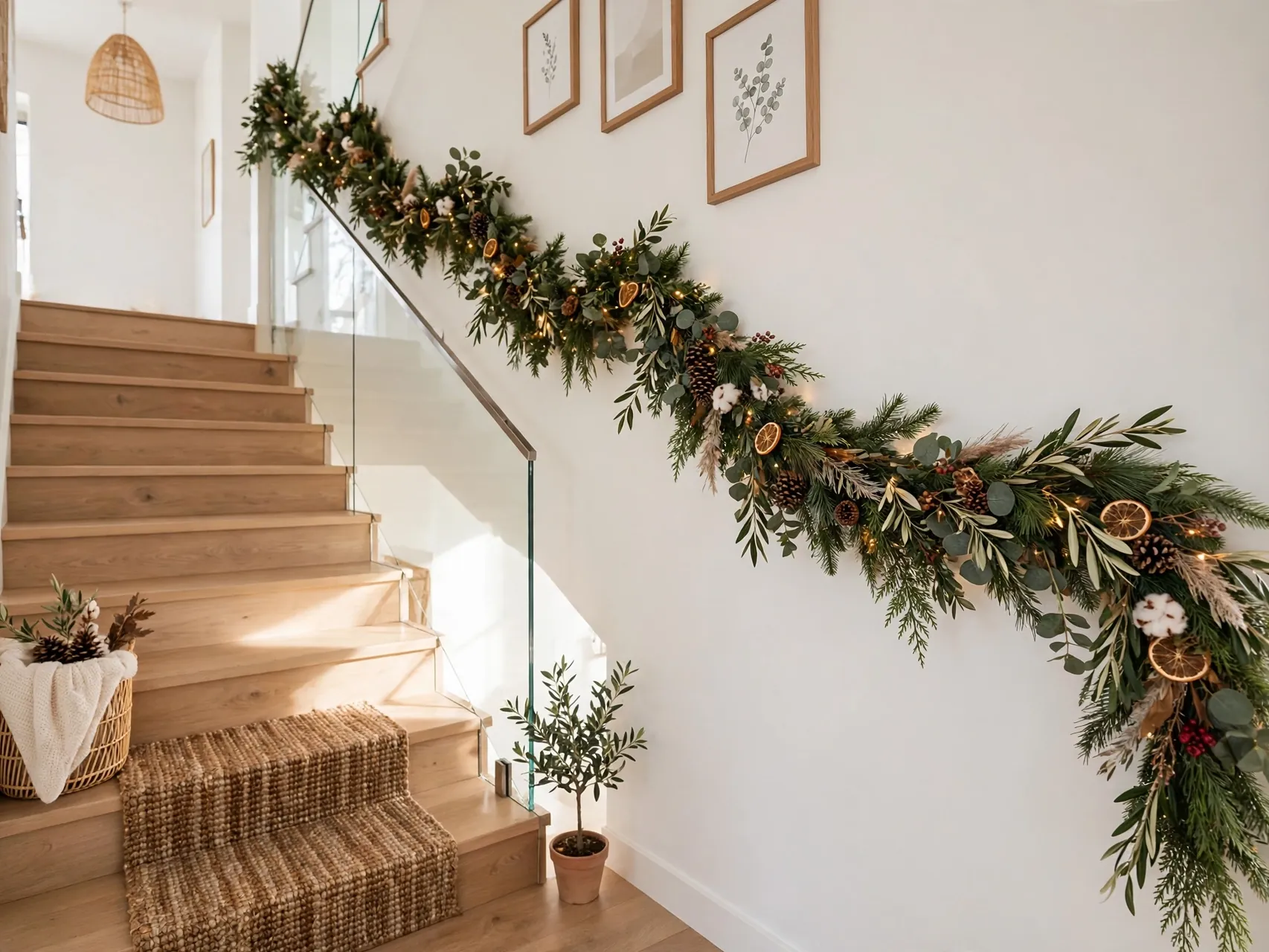
Seasonal cheer belongs on the wall plane, not wrapped over the handrail where hands need a full, secure grip. A garland swagged along wall hooks above frame height, a wreath on the landing wall, or paper decorations fixed flat can mark holidays without touching the rail, the treads, or the walking path.
Use secure fixings, keep battery packs and cords tucked completely off the stairs, and remove decorations promptly when the season ends. Guests should admire your staircase, not negotiate it. Festive and safe are fully compatible when the wall does the decorating and the rail stays clear.
21. Create a Reading Moment With Art and Light at the Top

The wall at the top of the stairs often faces a small landing or hall nook. Style it as a tiny destination: one beautiful piece of art, a warm light, and, if width truly allows, a small chair beside the wall, never on the stair path. This gives the climb a rewarding finish.
Keep the nook furniture fully out of the walking route and the top step completely clear, since the top of a flight is no place for obstacles. A finished top landing makes the whole staircase feel planned, like a chapter that ends well instead of a wall that simply stopped.
22. Use Consistent Frames and Spacing for Instant Polish
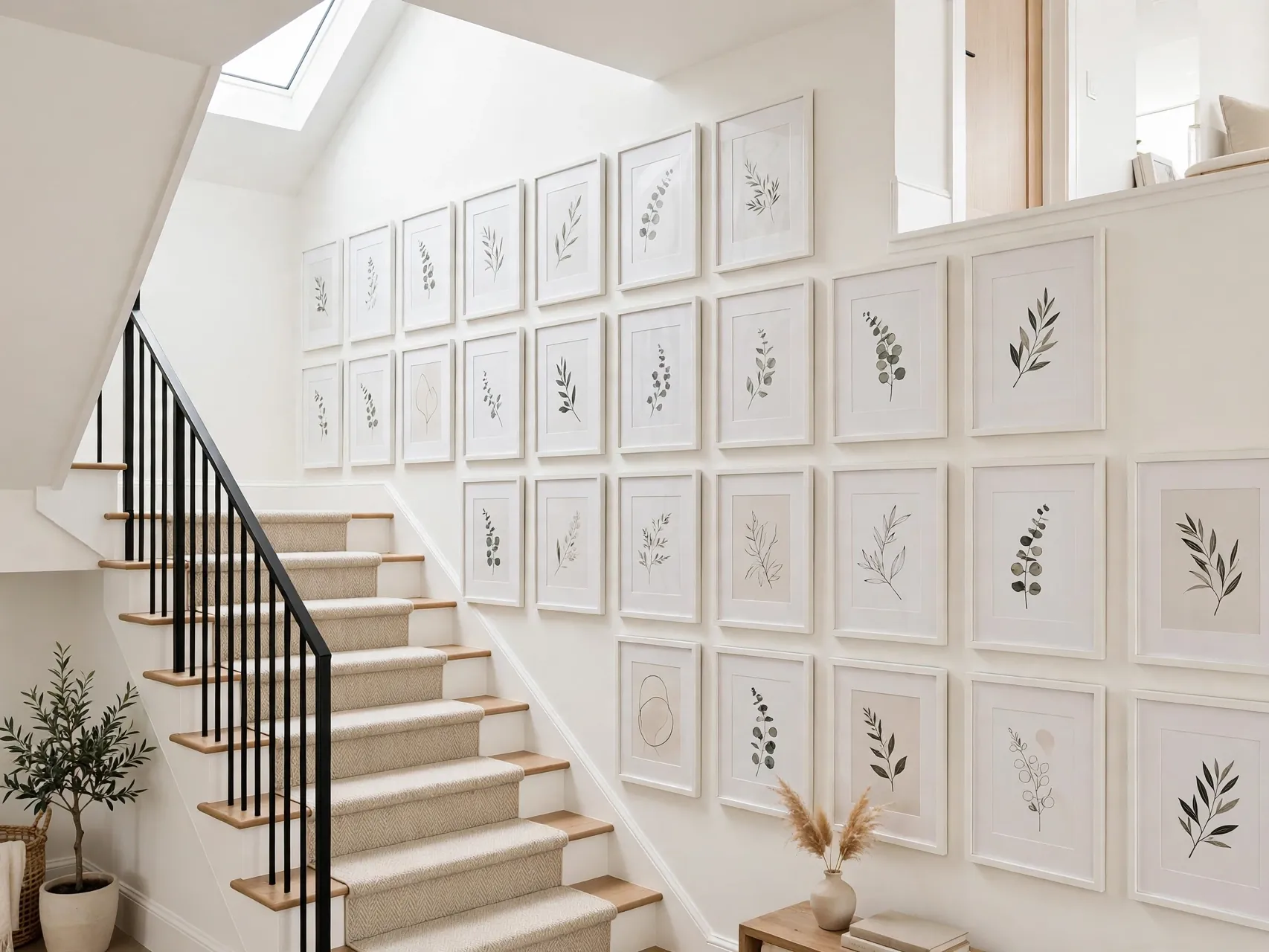
Whatever you hang, consistency is the cheapest polish. Choose one or two frame finishes, repeat mat sizes where you can, and measure the same gap between every piece. Consistent spacing along a slope takes patience with templates and a level, but it is what separates styled from scattered.
Stand at the bottom and the top to judge the whole composition, because stair art is seen in motion and from odd angles. Adjust before final fixing. When frames march in rhythm, even simple prints and family snapshots look like a curated staircase wall art ideas feature in a magazine.
23. Finish With a Safety Walk: Fixings, Clearance, and Light
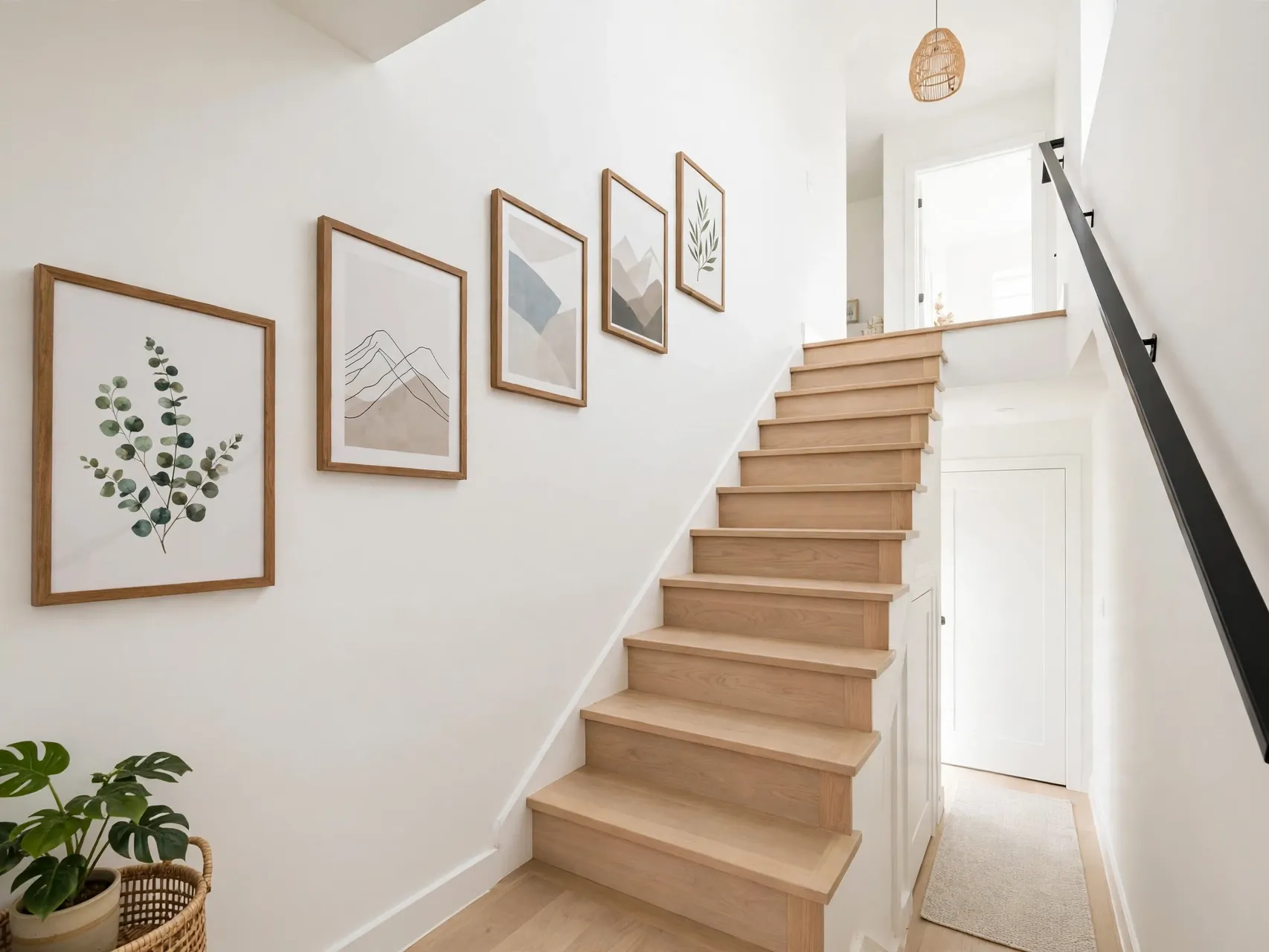
Before you call the project done, walk the stairs slowly as a safety inspector. Check every frame is solid on its fixings, nothing protrudes into the path, the handrail is fully clear and graspable, treads are completely empty, and the lighting shows each step clearly at night as well as by day.
Wiggle test heavier pieces gently, confirm nothing rattles with stair vibration, and recheck fixings after the first weeks of use. Keep a small level and spare fixings with your tools for quick corrections. Beautiful staircase wall decor should pass this walk every single time, for every guest who climbs.
FAQ
How do I hang a gallery wall on a staircase safely?
Plan with paper templates that follow the slope, keep consistent spacing, and fix every frame securely, with heavy pieces anchored into studs or rated fixings. Choose lightweight frames, keep everything flat to the wall and clear of the handrail, and keep all decor off the treads. Test the layout from the bottom of the stairs before final hanging, since that is the main viewing angle.
What decor should I never put on or near stairs?
Never place objects on stair treads, block or wrap the handrail so it cannot be gripped fully, or hang heavy, unsecured, or protruding pieces over the walking path. Avoid leaning mirrors or frames on landings where they can be knocked, loose cords across stairs, and candles on steps. If a piece could fall, trip, or distract on the stairs, it belongs on a different wall.
How high should pictures hang on a staircase wall?
A common approach is to keep the center of each piece at comfortable eye level for the step it hangs beside, following the slope with consistent spacing. Paper templates let you test this from real standing positions on the stairs before drilling. Exact heights vary with ceiling and frame sizes, so judge the full stepped line from below rather than following one fixed measurement.
Can renters decorate a staircase wall?
Yes, with flat and removable choices: peel and stick decals tested first, removable art tiles, lightweight frames on approved removable fixings within their limits, and painted ideas only with written permission. Focus on the landing wall for a statement piece. Always keep the handrail and treads completely clear, whatever products you use, and photograph the wall before you start.
What is the easiest staircase wall decor for beginners?
Paint is the simplest start: a deep color, a two tone split, or a stenciled accent adds major impact with nothing to hang. Next easiest is a small series of matching framed prints planned with templates. Both keep the stairs fully clear, need no special fixings beyond secure basics, and can be completed in a weekend with results that look professionally planned.
Key Takeaways
- Safety rules every idea: Never block or narrow the stair path or handrail, anchor heavy frames securely, and keep all decor off stair treads.
- Plan on paper first: Templates that follow the slope and consistent spacing are the secret behind every polished staircase gallery wall.
- Paint is the safest drama: Deep color, two tone splits, and stencils transform the wall with nothing to bump or fall.
- Light the climb: Sconces, picture lights, and brighter existing fixtures make stairs safer and the decor shine.
- Finish with a safety walk: Solid fixings, a fully graspable handrail, empty treads, and clear lighting, checked every time.
- Ready to make your climb the prettiest part of the house? Save this guide to Pinterest and pin the first idea you will try.