24 DIY Outdoor Curtains Ideas for Privacy and Shade
Introduction
A wall gives privacy, but it also gives a bill, a permit headache and a view of lumber. Fabric gives you the same screened feeling in an afternoon, and you can open it whenever you want the yard back. That flexibility is why diy outdoor curtains are the hardest working project on a patio.
This guide covers 24 ways to make and hang them: fabric choices from painter drop cloths to outdoor canvas, hanging systems from tension rods to cable wire, and the wind and care fixes that keep panels looking good past the first storm.
Measure your opening first and decide how much privacy you truly need. A west facing dining spot may want heavy shade panels, while a porch screening one neighbor can float on sheers.
Use outdoor rated fabric and rust resistant hardware, keep fabric clear of grills, heaters and fire features, and plan to secure or remove panels before strong wind.
1. Drop Cloth Panels With Clip Rings
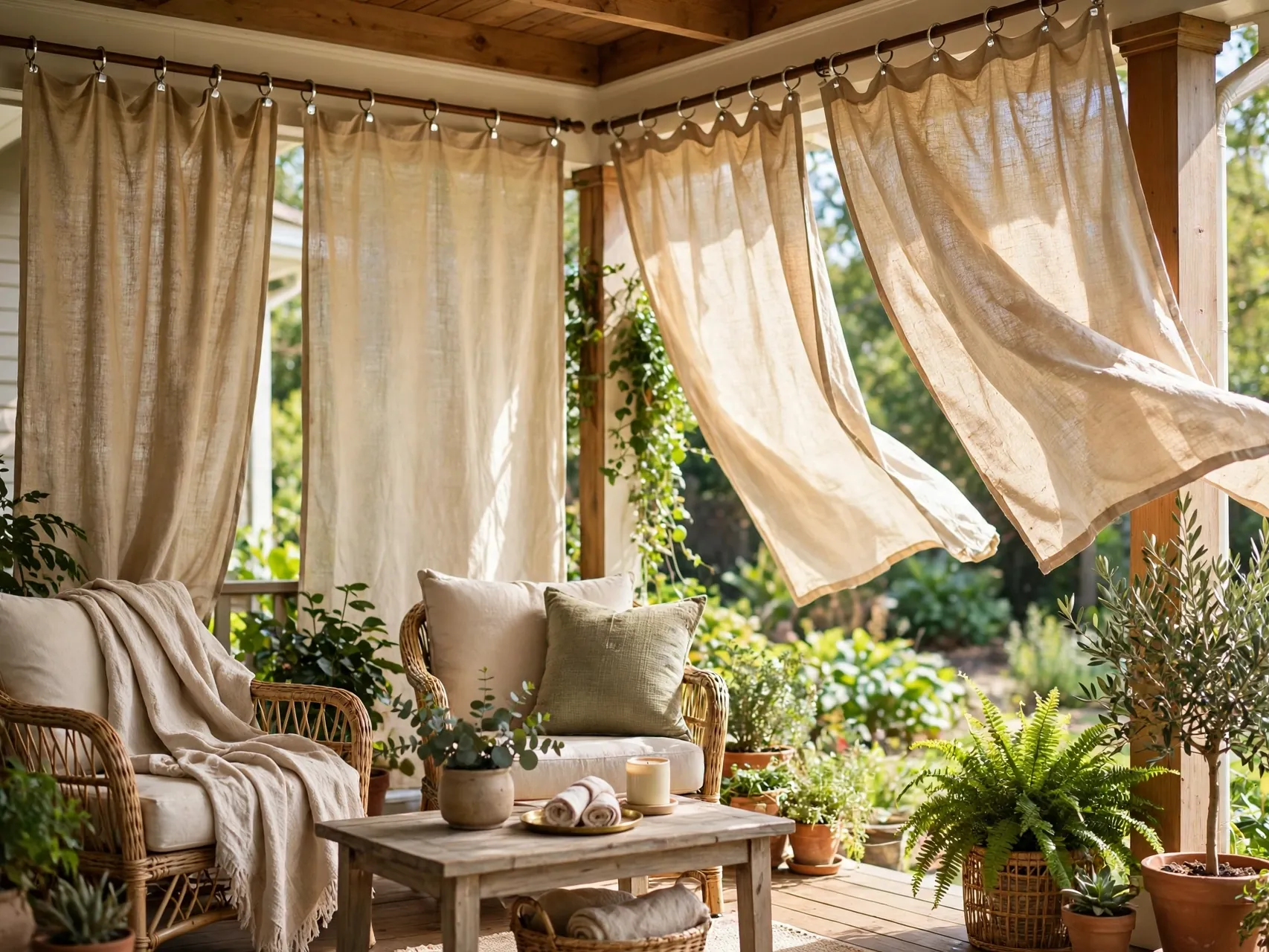
Painter drop cloths are the classic starting panel: cheap, wide, sturdy cotton canvas in a warm neutral that suits almost any house. Wash and dry a new cloth first, since cotton shrinks, then hang it with clip rings on a rod or cable. No sewing is required.
The trade off is weather. Cotton holds water and can mildew if it stays damp, so let panels air dry fully after rain and bring them in for long wet spells. For a covered porch, these cheap outdoor curtains look far more expensive than they are.
2. Outdoor Fabric Panels With Grommets

Solution dyed outdoor fabric is the step up for uncovered spaces. It resists fading and sheds water better than cotton, and it comes in colors and stripes that read as real design. Add grommets along the top with a simple hand tool and hang from S hooks or rings.
Hem or use fabric tape on raw edges so wind does not fray them in a month. This is the panel to choose for a pergola that stays dressed all season, since the fabric handles sun that would bleach cotton pale by August.
3. Sheer Voile Panels for Filtered Light
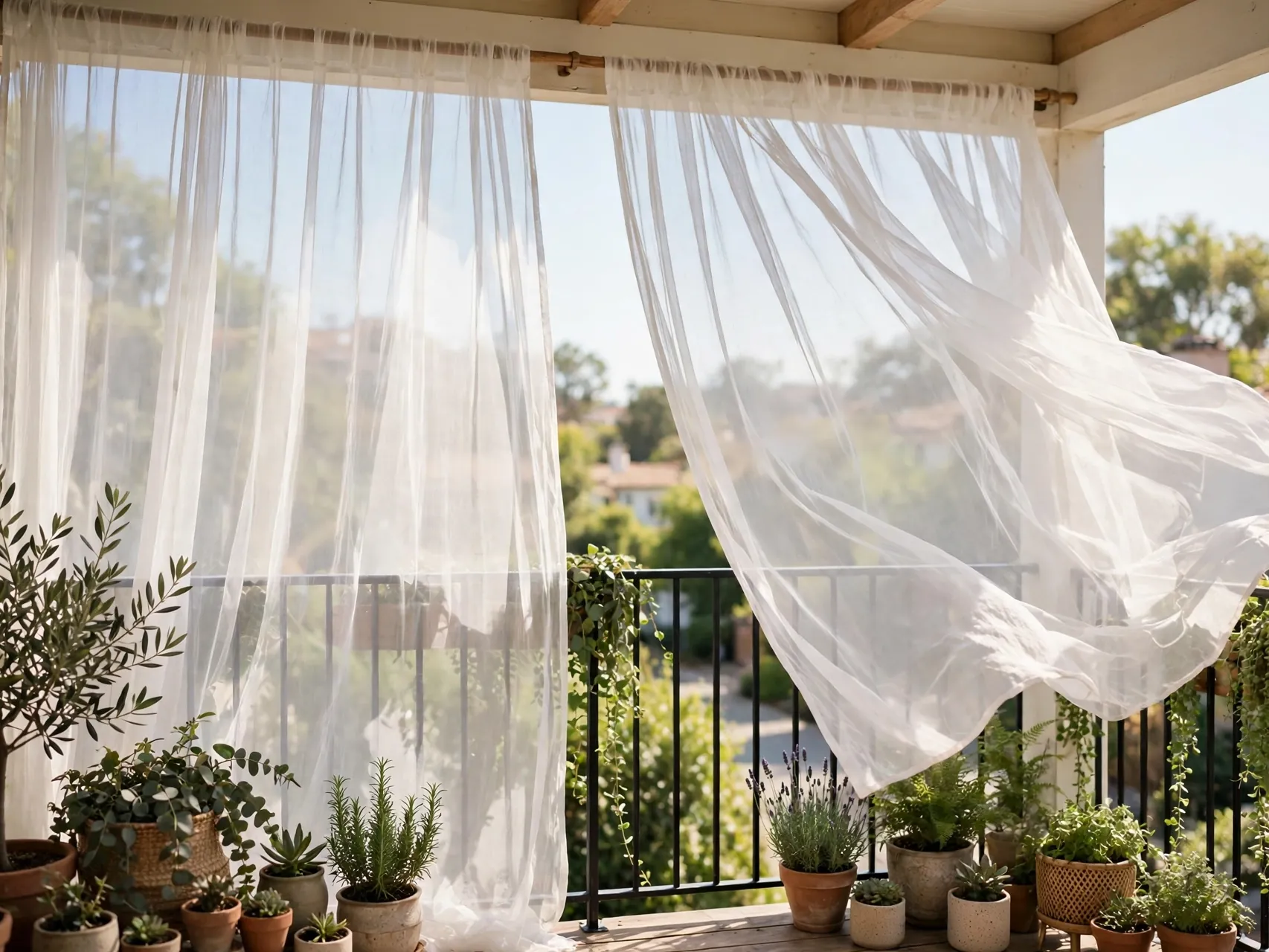
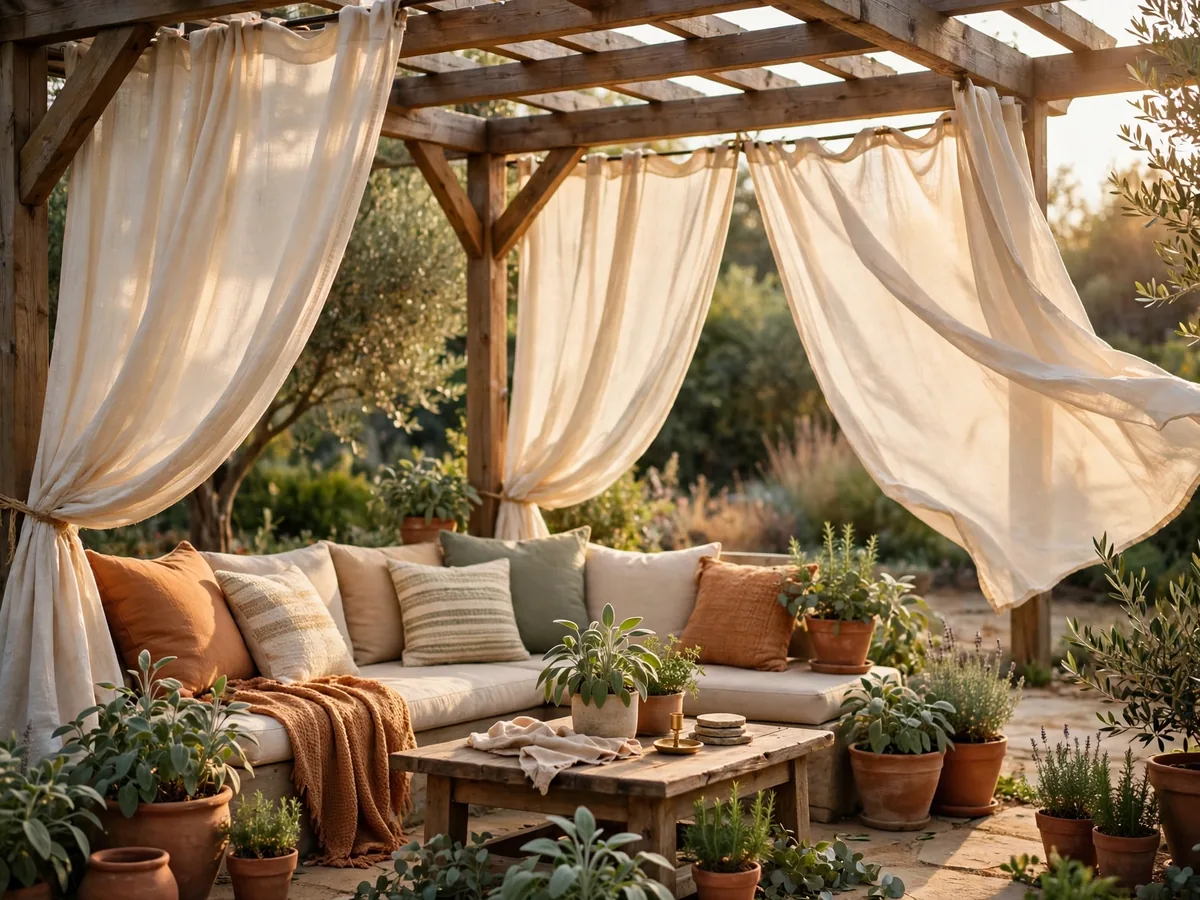
Sometimes the goal is not to hide, but to soften. Outdoor sheer panels filter harsh sun, blur the view from the street and move beautifully in a breeze, all while keeping the porch bright and airy.
Sheers give gentle privacy by day. At night, with porch lights on behind them, they can silhouette figures, so pair sheers with a solid panel on the most exposed side if evening privacy matters. Layering a sheer in front of a solid panel also gives you three settings: open, filtered and fully screened.
4. Shower Curtain Panels for Wet Zones

Waterproof shower curtains and liners make surprisingly good diy patio curtains beside pools, outdoor showers and uncovered decks where rain hits hard. They are inexpensive, sized generously and sold in prints that look nothing like a bathroom once they hang at full length outdoors.
Hang them with rust resistant rings on a rod or cable. Mildew resistant types earn their keep in humid climates. Because the material is light, add bottom weights or tie downs, or the first gust will sail them over the rod.
5. Twin Sheet Panels for Budget Porches
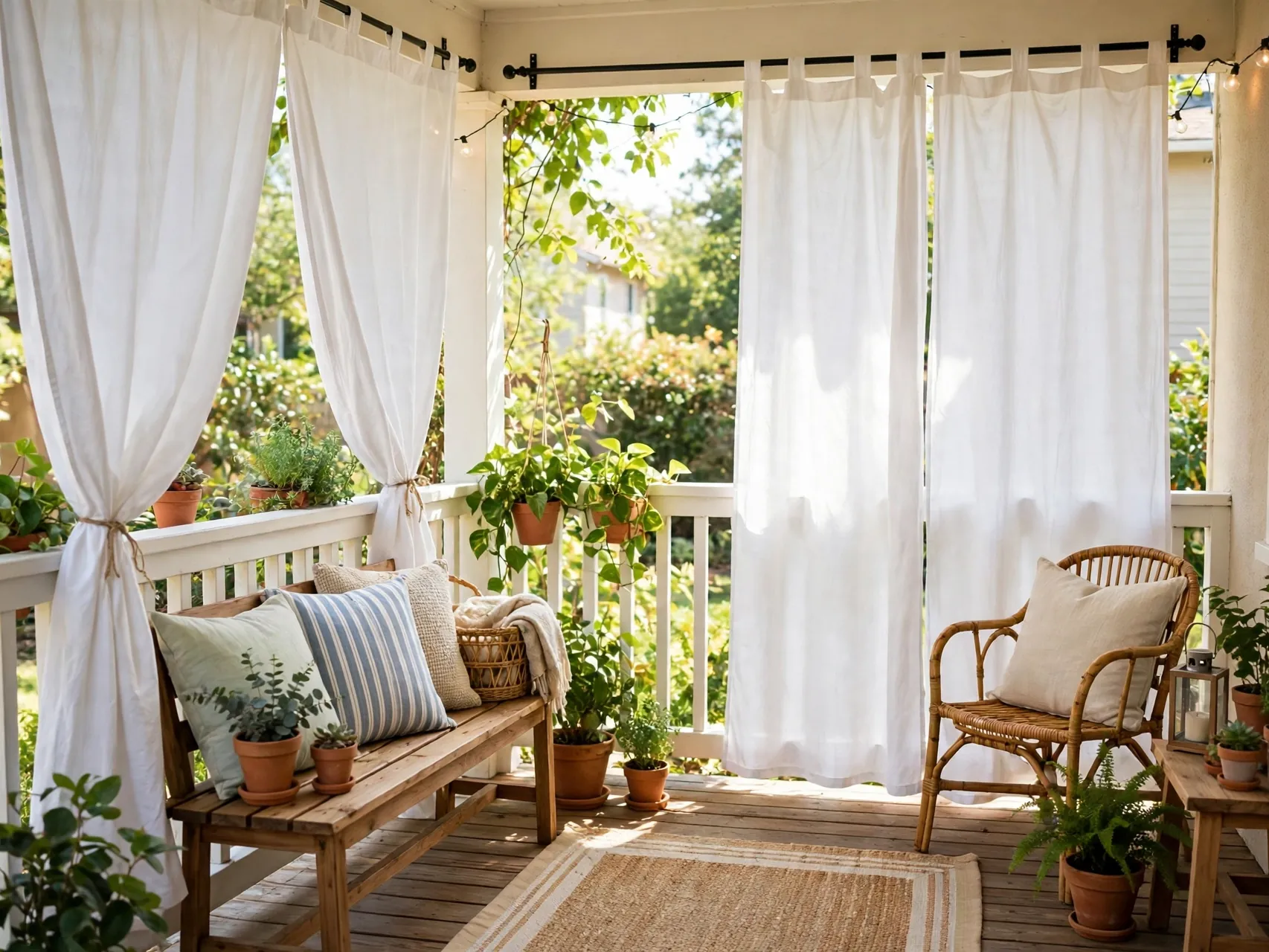
A twin flat sheet is already the right width for many porch openings, already hemmed on the sides and soft enough to drape well. Add clip rings or sew a simple top pocket, and a sheet becomes a breezy panel in minutes.
Cotton sheets fade and weather faster than outdoor fabric, which makes them a smart one or two season trial before you invest in better cloth. Choose white or a pale solid for a classic porch look, and keep a spare set so a laundry swap never leaves the porch bare.
6. Burlap Panels for Rustic Shade
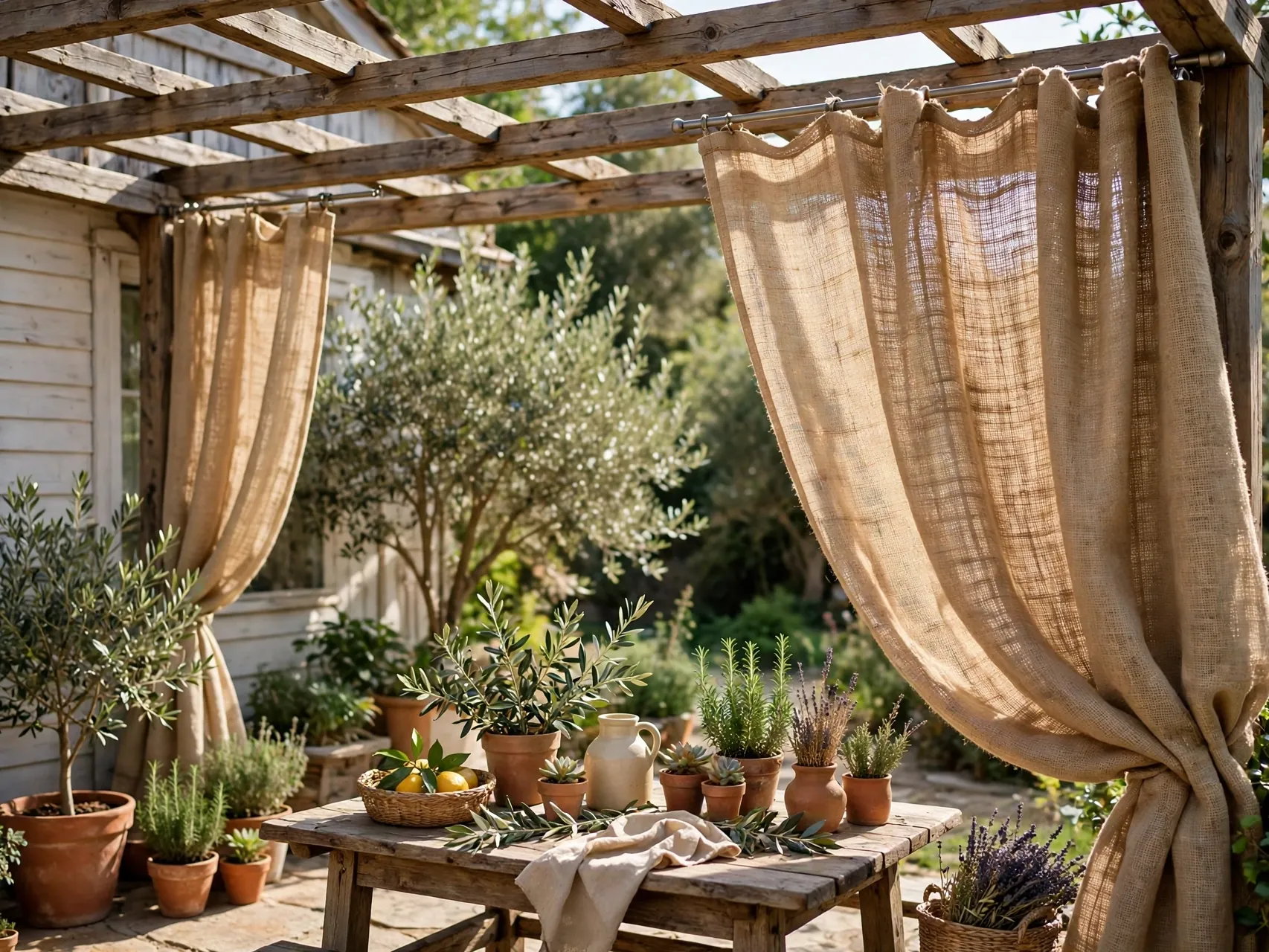
Burlap brings texture that suits farmhouse and garden settings, breaks up hard sun and costs very little by the roll. Its open weave filters light rather than blocking views completely, so it works best where a fence already handles true privacy and the curtain handles glare.
Burlap frays and ages fast outdoors. Hem edges with tape or stitching, expect a season or two of life and compost the worn panels. The slightly rough, sun warmed look is the point here, a shade layer that feels like it grew with the garden.
7. Canvas Tarp Panels for Heavy Shade
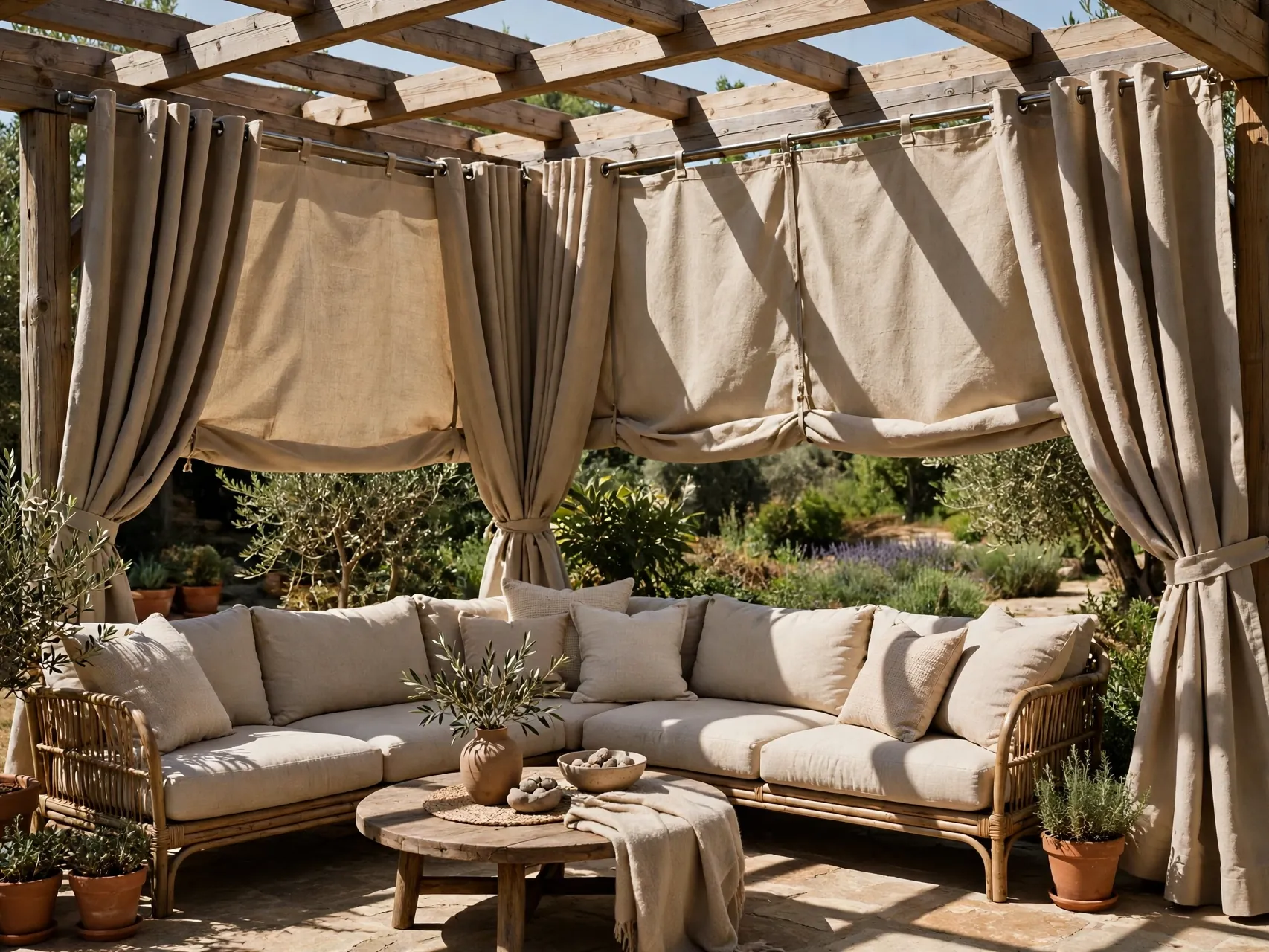
When a west facing patio bakes all afternoon, a canvas tarp panel delivers the heavy shade lighter fabrics cannot. Hang it on the sun side only, with grommets on a cable or rod, and roll or tie it up on mild days.
Heavy panels catch wind like sails, so secure top and bottom or remove them before storms. The reward is a dining area that stays usable at six in the evening in July. Choose light colors to reflect heat rather than absorb it into the space behind the curtain.
8. Tension Rod Setup Between Posts
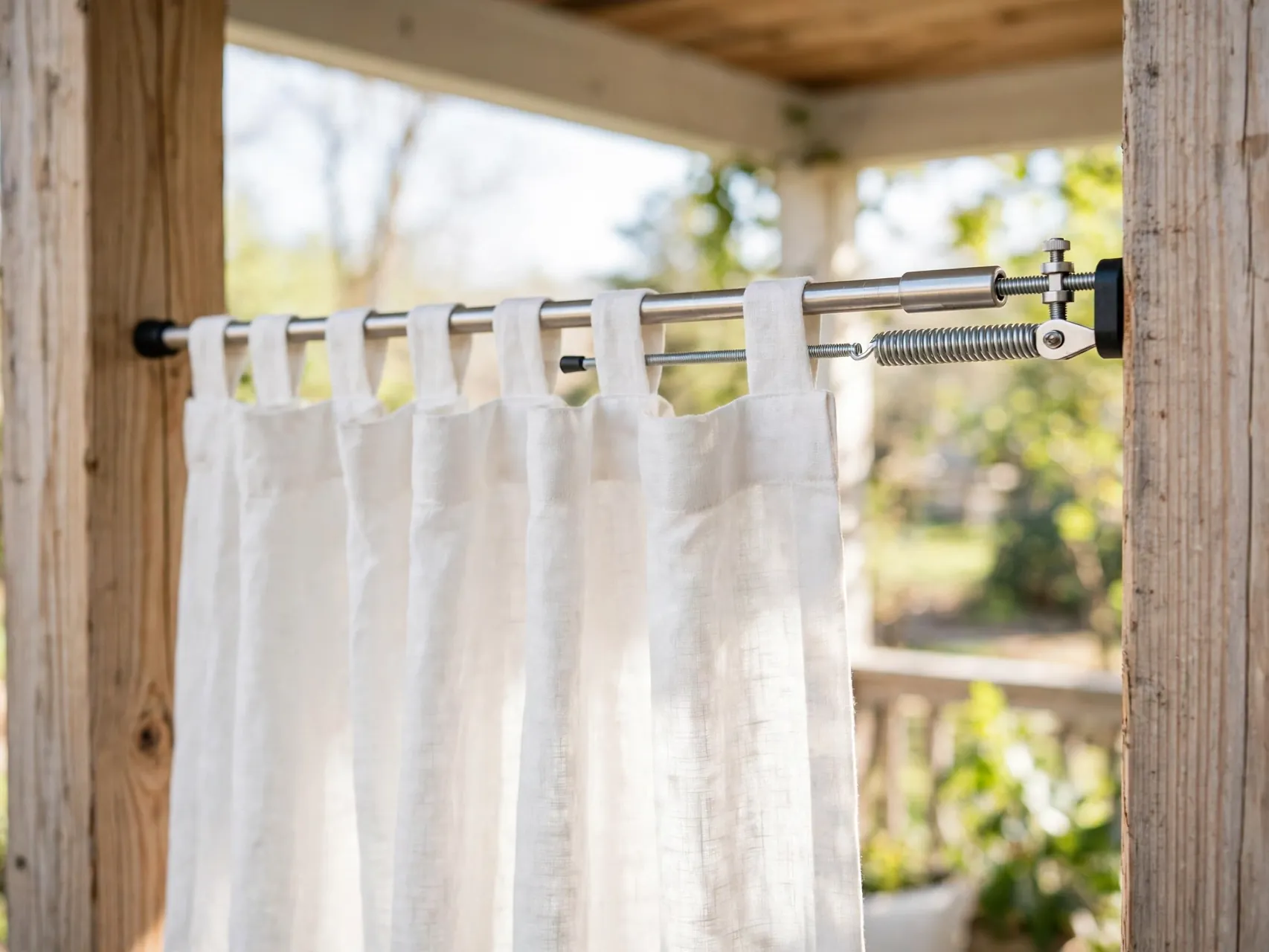
A tension rod squeezed between two porch posts or walls hangs curtains with no drilling at all, which makes it the top renter friendly system. It suits light to medium panels and openings of modest width, where sag will not be a problem.
Add a center support for wide spans, and test the fit before a windy day tests it for you. Because nothing is screwed in, this is also the fastest seasonal setup: rods up in spring, panels stored in fall, and no holes to explain to a landlord ever.
9. Galvanized Pipe Rod With Flanges

Galvanized pipe threaded into floor flanges screwed to posts makes a rod that will outlast the house paint. It handles heavy canvas, spans wide openings without sag and suits the industrial farmhouse look many porches already wear.
Use exterior screws into solid wood, cap open pipe ends and wipe the pipe down before hanging light fabric, since new galvanized metal can carry an oily film. This is the permanent system for porch curtains for privacy that you open and close daily for years.
10. Cable Wire System With Turnbuckle

A stainless cable run through eye bolts, tightened with a turnbuckle, is the cleanest looking way to hang panels on a pergola or between posts. The line nearly disappears, panels glide on rings or clips and the hardware costs little.
Leave the turnbuckle only partly extended at install so you can retighten as cable stretches in the first weeks. Mount eye bolts into solid framing, never just trim. Cable is the system most ready made outdoor curtain ideas quietly copy, because it looks custom while staying completely do it yourself.
11. PVC Pipe Rod on Hooks
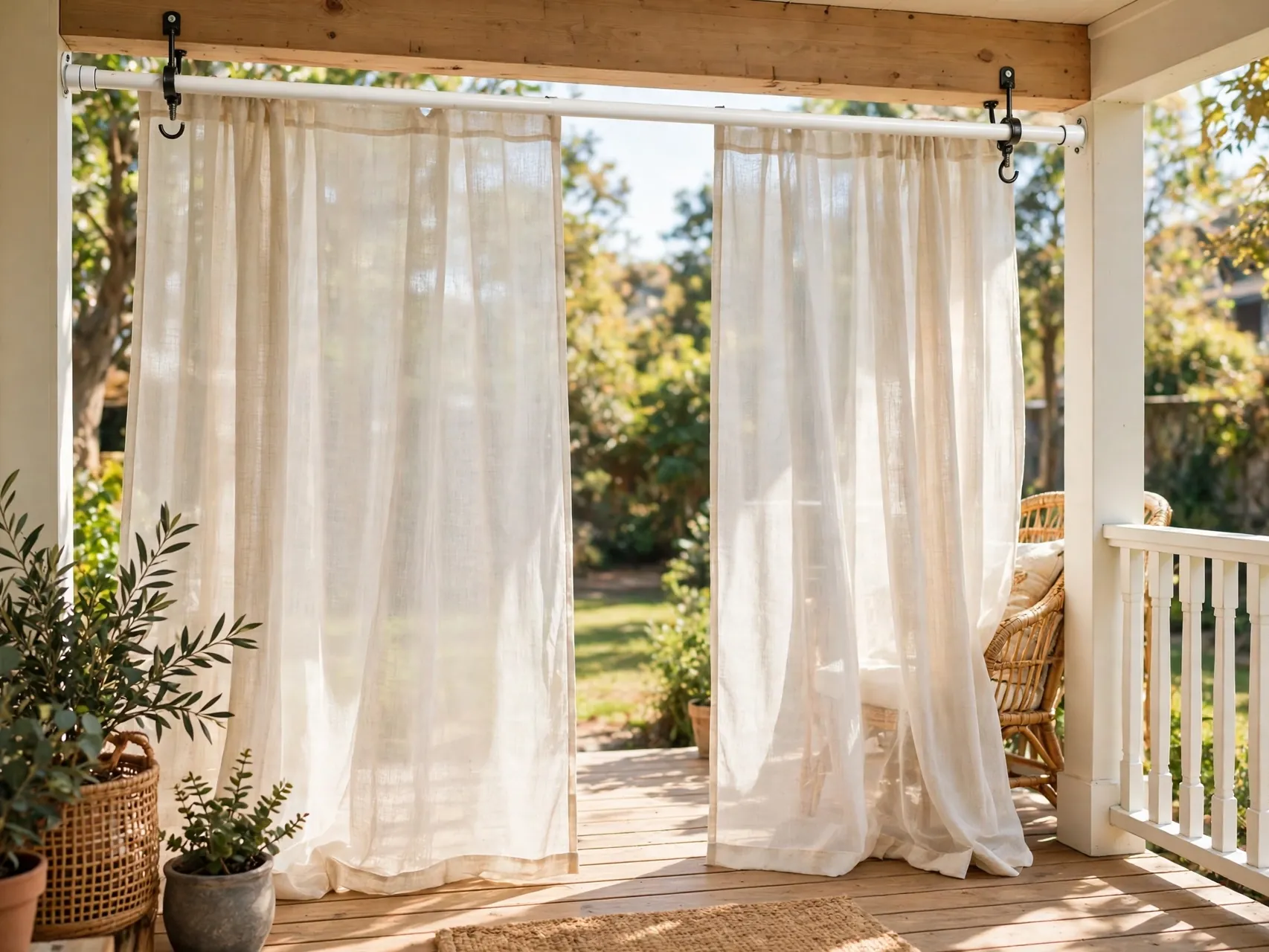
A length of PVC pipe rested in large hooks or brackets is the lowest cost rod that still slides panels smoothly. It is light, weatherproof and easy to cut to size with a hand saw, and end caps finish it neatly.
PVC flexes on long spans, so keep runs shorter or add a middle hook, and choose a diameter that looks in scale with the posts. Paint it if the bright white clashes with your porch. For a first curtain project on a tight budget, PVC lets you spend the money on fabric instead.
12. Rope Hang With a Casual Look
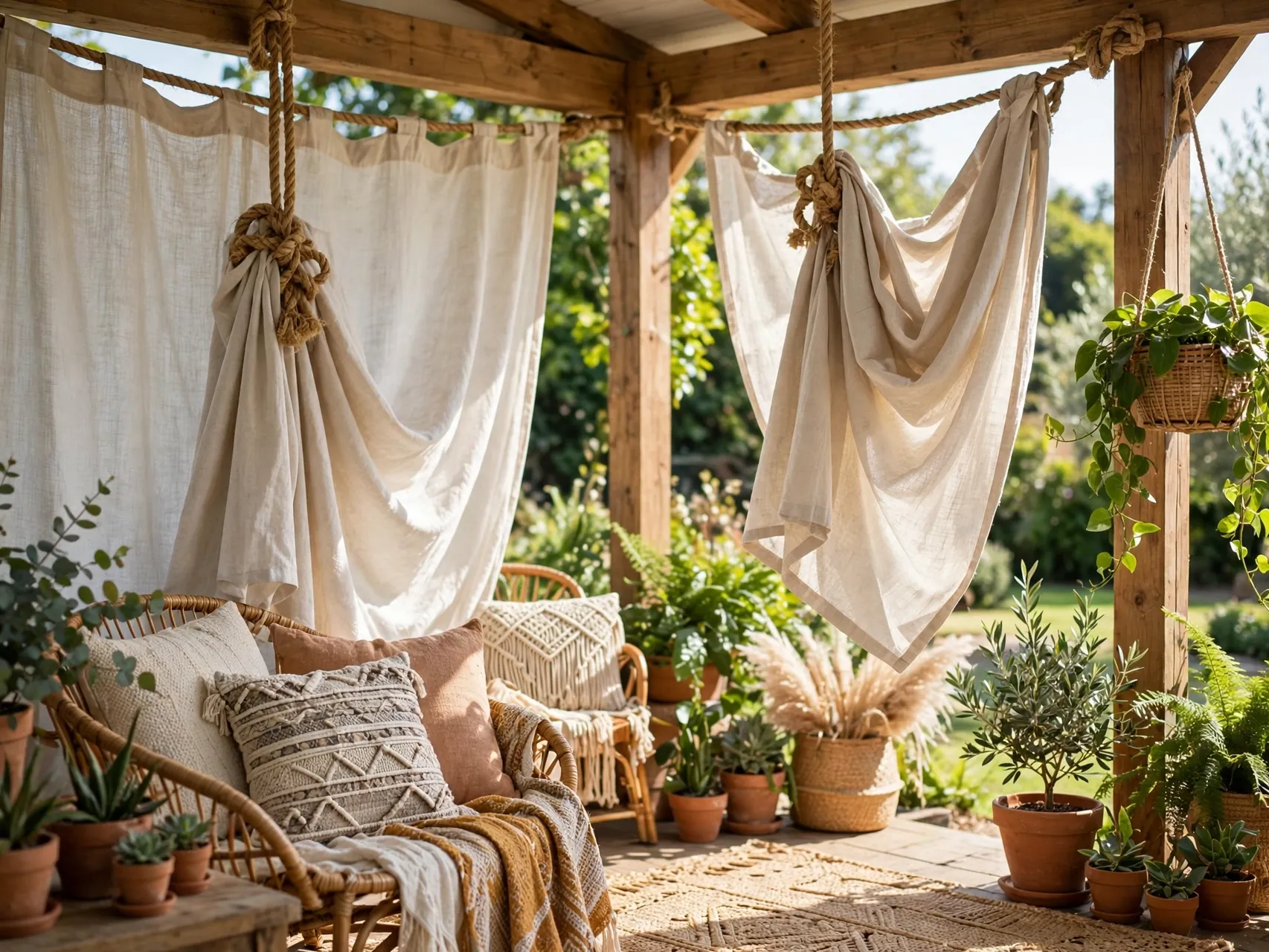
Thick rope strung between eye bolts gives curtains a coastal, laid back hang and costs almost nothing. Thread panels on with large grommets or clip rings, tie the rope off with proper tension and expect a gentle natural sag that suits the style.
Rope stretches when wet and loosens over a season, so plan a mid summer retie. Natural fiber rope ages outdoors, while synthetic rope lasts longer and keeps its color. This is a look first system, perfect for a garden pergola where perfect tension matters less than charm.
13. Layer Curtains Over Reed Screening

Reed or bamboo screening fixed to a railing or frame gives constant soft screening, and a curtain hung in front of it adds the adjustable layer. Together they solve the backlit problem: solid reed stops silhouettes at night, and the curtain handles sun and extra privacy by day.
This layered approach is ideal on a deck railing that faces a close neighbor. Each layer is cheap, and you can replace the tired one without rebuilding the other. It is one of the most practical diy outdoor curtains combinations for small lots.
14. Tie Backs From Rope and Tassels
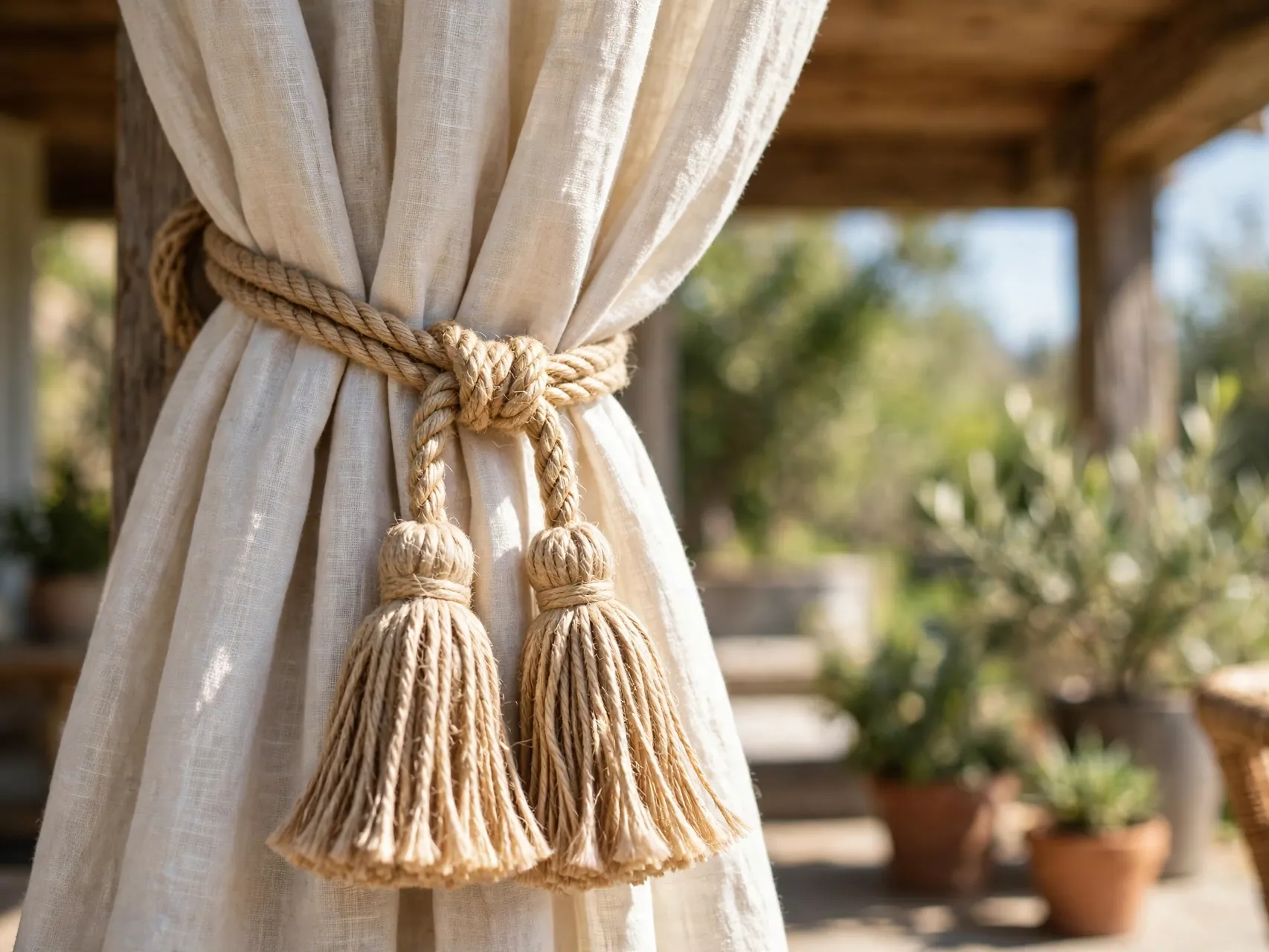
Curtains spend half their life tied open, so the tie back is half the look. Simple rope loops, tassel ties or a hook and ring set in the post hold panels in a neat swag and keep fabric off the floor and out of plant pots.
Set tie back height at about two thirds down the post for the most graceful drape. Matching tie backs across every post make a budget setup look planned. Keep a spare set of ties in the outdoor storage box, since small hardware is the first thing wind and guests misplace.
15. Weighted Hems With Washers or Chain

A light panel in a steady breeze spends its day horizontal. Sewing washers into the hem, clipping on drapery weights or threading a light chain through the bottom pocket keeps panels hanging straight and stops the constant flapping that wears fabric out.
Weights also help panels stack neatly when tied back. Do not overdo it on tension rod or rope systems, which have weight limits. Test one panel on a breezy day before weighting the whole set.
16. Hook and Loop Tie Downs for Wind

For exposed sites, hook and loop straps or snap ties that fasten the panel edge to the post give you a storm setting. Panels pinned top and bottom cannot billow, tear rings or slap siding all night.
Make tie downs part of your weather routine: when a storm warning lands, walk the porch, strap panels down or take them off the rod and store them dry. Five minutes of prevention saves a set of curtains. Quick release clips shine here, since a panel you can unhook fast is a panel that survives.
17. Two Tone or Stenciled Panels
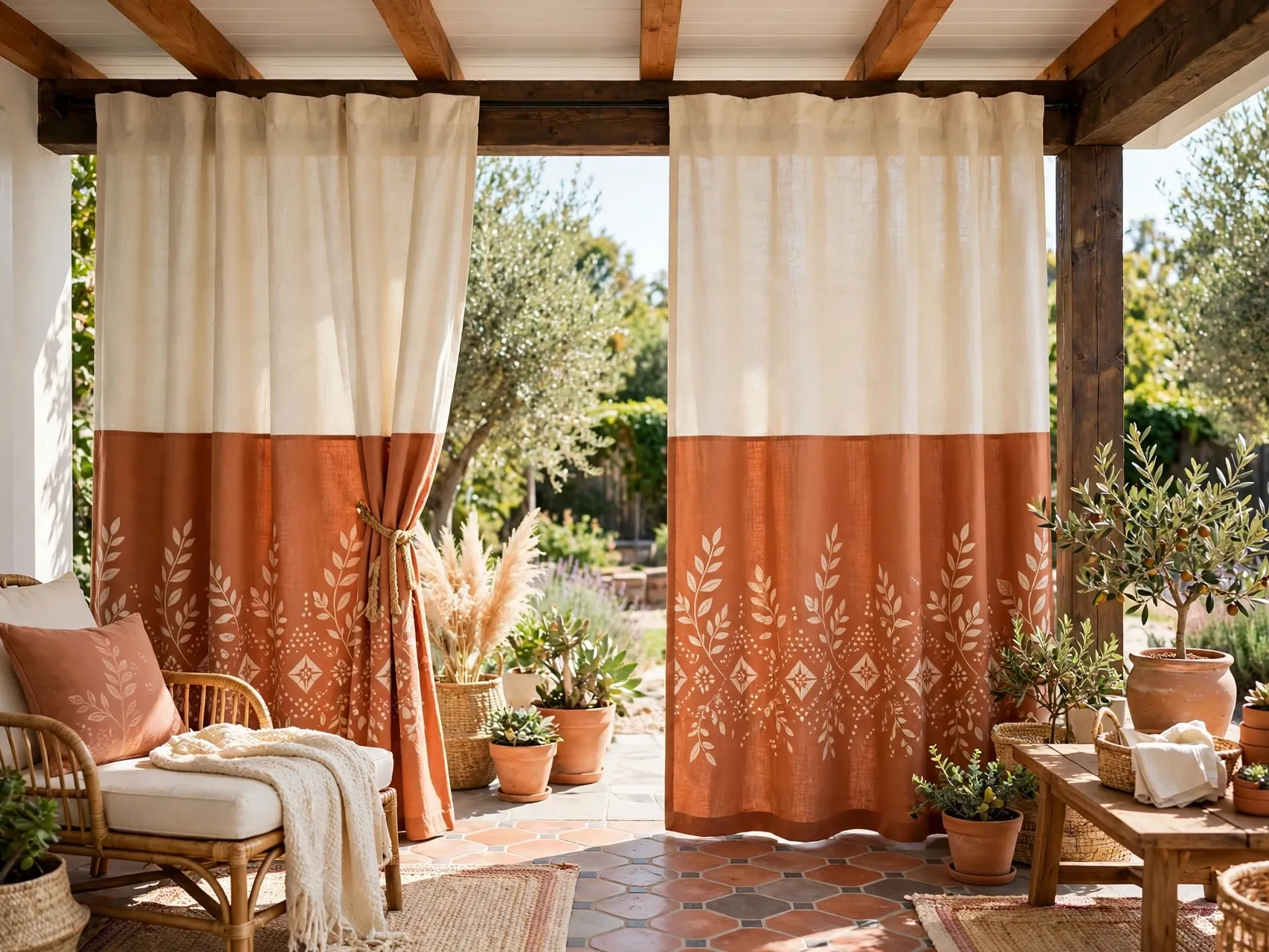
Plain panels are a blank canvas. A stenciled border, a dipped dye band at the hem or a contrasting lower panel made from a second fabric turns hardware store cloth into a designed feature that matches your cushions and rugs.
Use exterior fabric paint or a stencil with light coats so the design does not crack when the panel moves. Test on a scrap first. One decorated panel on the street facing side may be all the pattern a porch needs, with plain panels doing the quiet work behind it.
18. Dyed Drop Cloths in Your Palette

If drop cloth beige fights your house color, dye the cloth. Fiber reactive or all purpose dyes made for cotton can take canvas to sage, slate, terracotta or navy, which instantly ties a cheap panel to a considered color scheme.
Dye before cutting or hemming, wash dyed cloth alone for the first cycles and expect outdoor sun to soften any color over time. That gentle fading is part of the charm of fabric outdoors. Keep the dye lot note with your supplies so a replacement panel can come close later.
19. Macrame Accent Panel for the Entry Side

One macrame or knotted rope panel at the entry side of a pergola adds craft and texture without closing the space in. It filters light in moving patterns and works as a partial screen where guests arrive, while solid curtains handle the neighbor side.
Buy the cord for outdoor use, since indoor cotton cord mildews and weakens outside, and cut strands generously because knots consume a lot of length. A single handmade panel among plain ones gives the whole setup a focal point, the same trick designers use with one patterned cushion.
20. Pergola Curtains on All Four Sides
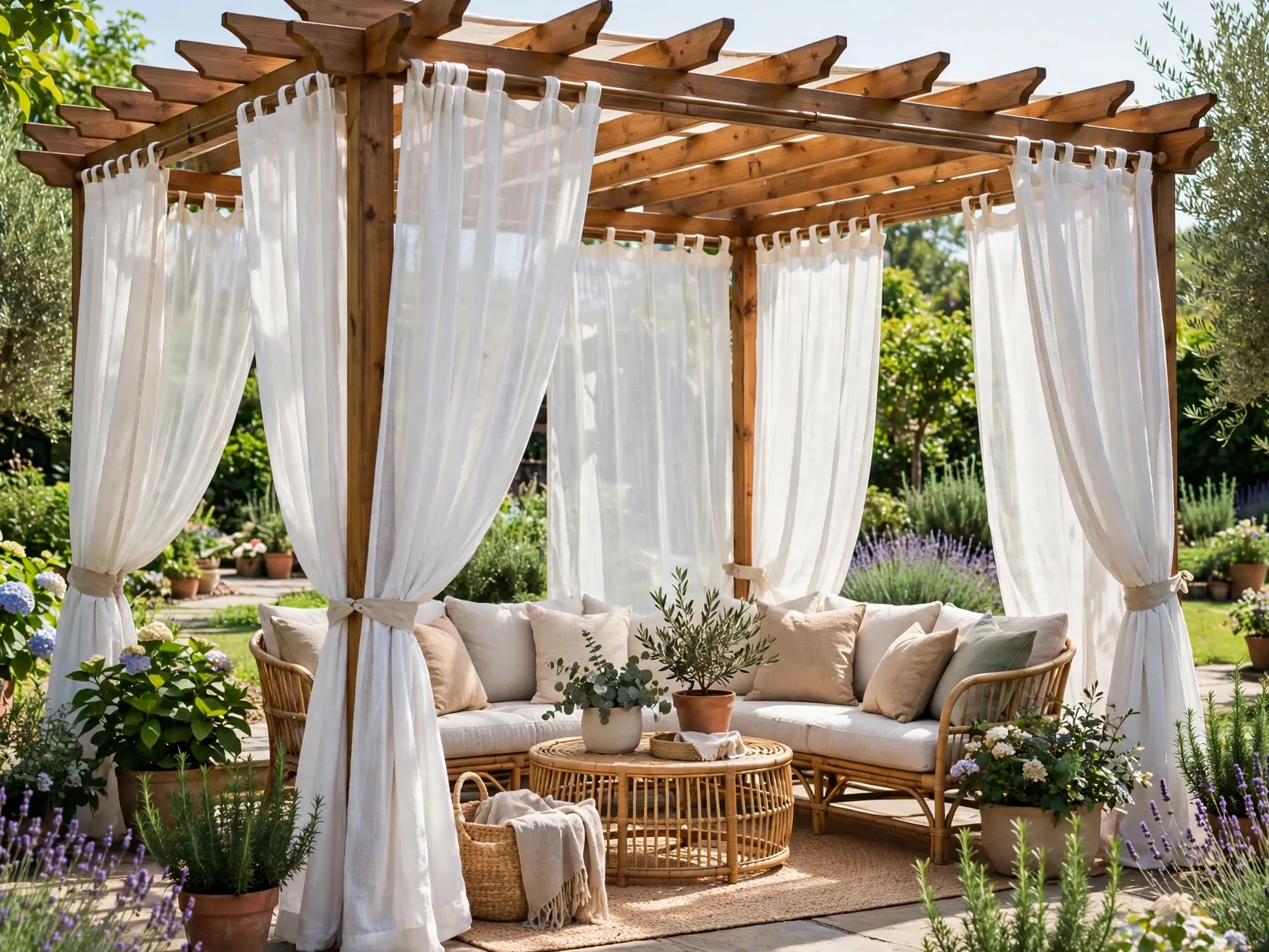
Dressing all four sides of a pergola creates a true outdoor room you can tune by the hour: west panels closed against evening sun, north panels open to the garden, everything tied back on a calm morning. It is the fullest version of diy patio curtains and the one guests remember.
Budget honestly for four sides of fabric and hardware, and choose one fabric throughout so the room feels unified. Anchor the pergola itself properly first. Curtains add wind load to a structure, and a frame that was fine bare may need better footings once it wears sails.
21. Porch Corner Curtains for One Private Nook
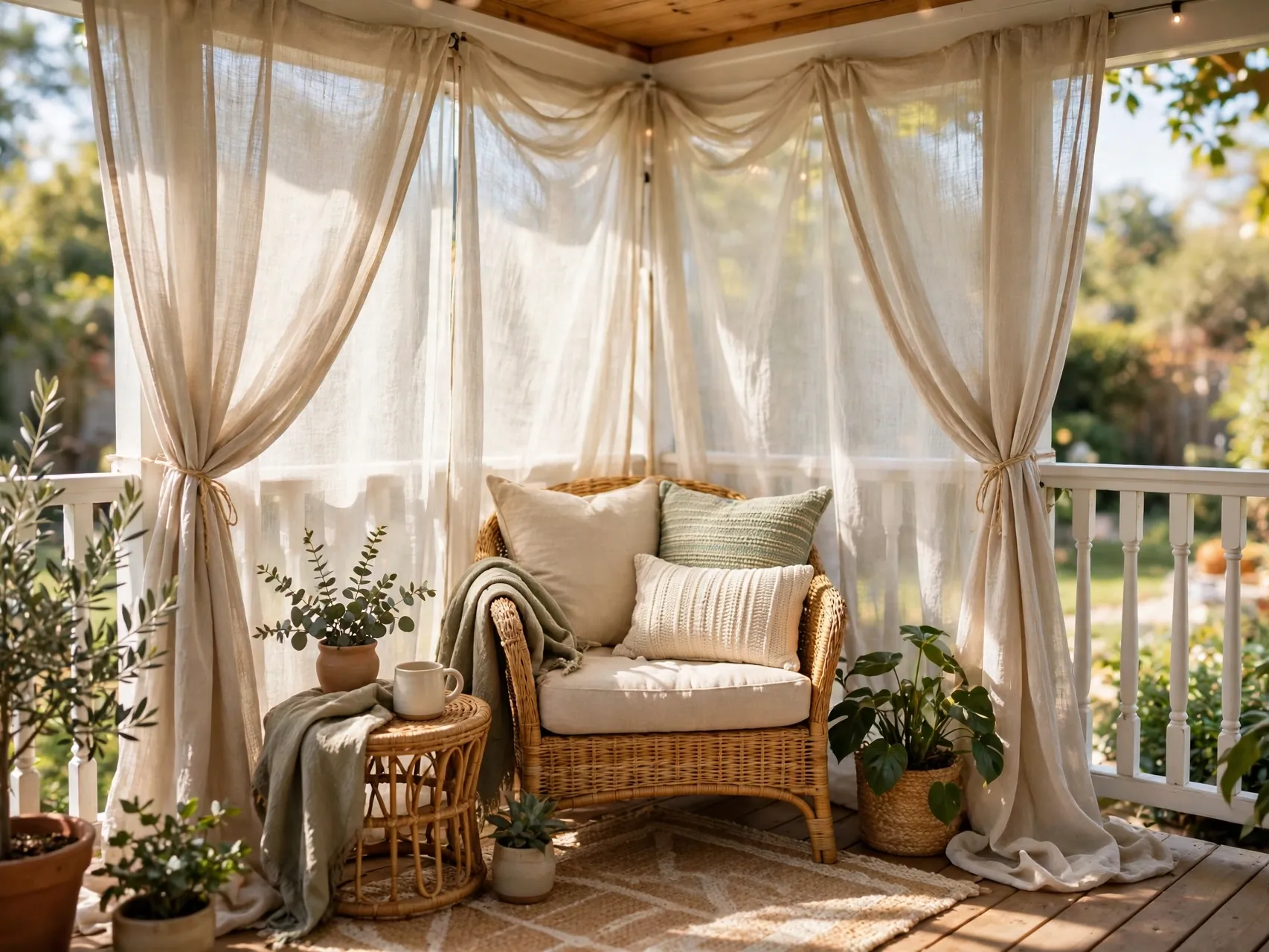
You do not have to curtain the whole porch. Two panels meeting at a corner, around one chair and a side table, create a private reading nook for the price of a single project, leaving the rest of the porch open for family traffic.
This is the smart first step for renters and the undecided: live with a nook for a season and you will know exactly which other sides, if any, deserve panels. Corner nooks also block the one sight line from a single neighbor window without darkening the whole porch.
22. Balcony Curtains With Clamp Hooks

Apartments and condos often ban drilling, hooks in the structure and anything over the railing line. Clamp on hooks, tension rods inside the balcony frame and curtain clips answer all three limits, hanging panels that come down without a trace at move out.
Check your lease and building rules on balcony items and colors before buying fabric, since some buildings regulate what shows from the street. Keep panels inside the railing height where required. A small, rule abiding setup that you actually install beats a grand plan that management removes.
23. Seasonal Swap: Light Sheers and Heavier Panels
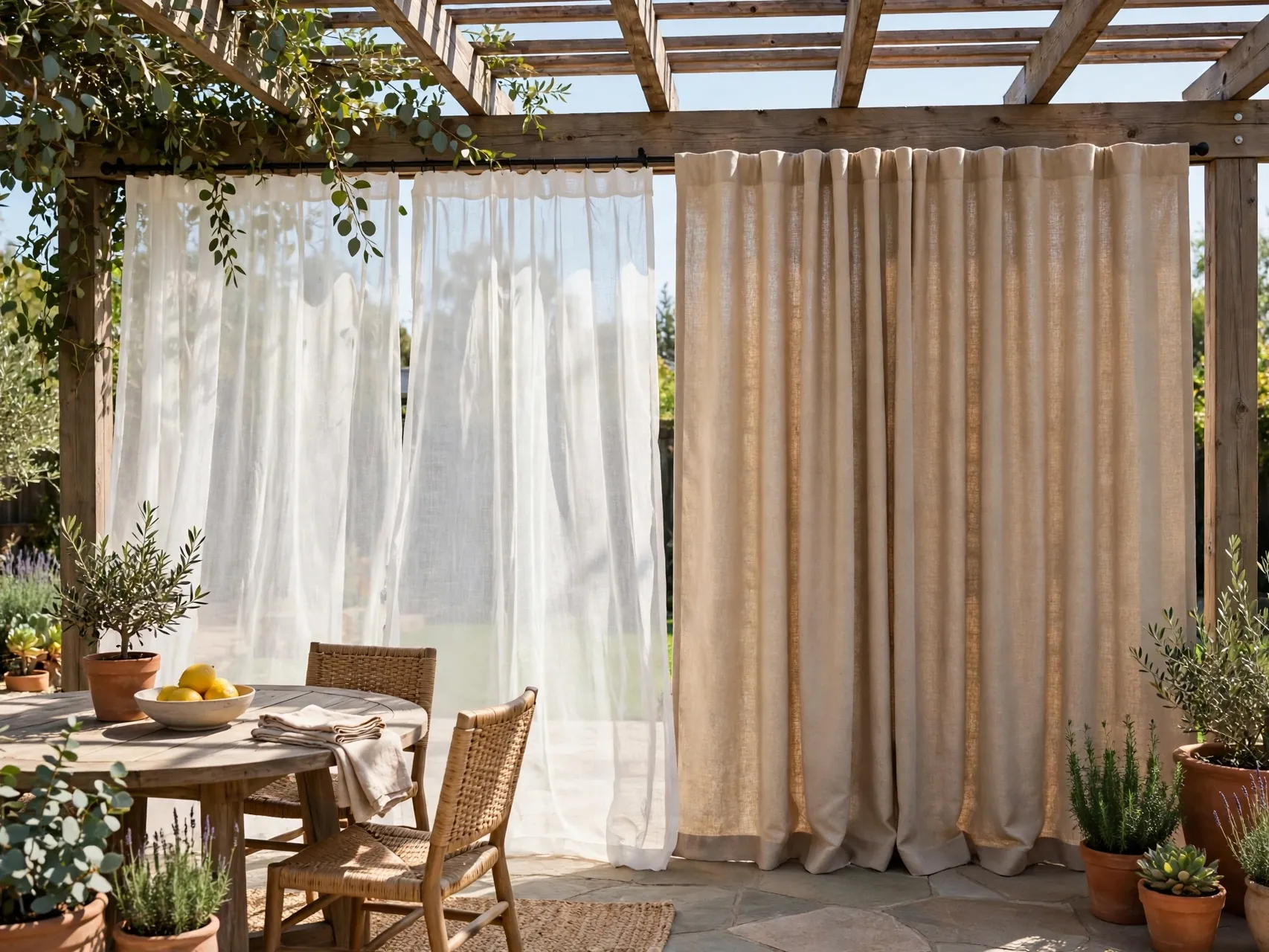
One rod, two wardrobes. Hang sheers in spring when light is welcome and breezes are soft, then swap to heavier canvas or outdoor fabric for high summer shade and again for cozy fall evenings. The swap takes twenty minutes and makes the porch feel newly decorated twice a year.
Store the off season set clean, fully dry and folded in a breathable bin, never sealed damp in plastic. Swapping also rests each set, so both last longer.
24. Wash, Dry and Store Care Routine

Curtains fail from neglect more than from weather. Shake panels out weekly in pollen season, spot clean spills early and wash sets as the fabric label allows, usually a few times a season for cotton and once or twice for outdoor synthetics.
The rules that matter most: never store fabric damp, let cotton drop cloths air dry completely after rain to limit mildew, and treat spots promptly with a mild cleaner. End the season with clean, dry panels in breathable storage and your diy outdoor curtains will open next spring looking ready, not retired.
FAQ
What is the best fabric for diy outdoor curtains?
For uncovered spaces, solution dyed outdoor fabric lasts longest against sun and rain. For covered porches, cotton canvas drop cloths give the best look per dollar. Shower curtains suit wet zones like pool decks. Match the fabric to how much weather actually reaches your panels, and check the care label before buying.
How do I stop outdoor curtains from blowing around?
Add weight first: washer or chain weighted hems and clip on weights calm most panels. Then give wind an answer for bad days, with tie backs for normal breezes and hook and loop tie downs or quick removal for storms. A panel that can be secured or taken down in five minutes survives seasons that destroy fixed fabric.
Can I hang outdoor curtains without drilling?
Yes. Tension rods between posts, clamp hooks on balcony frames, hooks over existing pergola beams and cable clipped to existing eye points all avoid new holes. These renter friendly systems suit light to medium fabric best. For heavy canvas on a wide span, a screwed pipe or cable system is the safer long term choice.
How do I prevent mildew on outdoor curtains?
Choose mildew resistant fabric for humid or uncovered spots, let panels dry fully after every rain, keep air moving around stored fabric and never bin a damp panel. Wash with a mild cleaner at the first sign of spots, test any stronger cleaner on a hidden area and rinse well so residue does not attract dirt.
Do I need a permit or HOA approval for outdoor curtain posts?
Curtains on an existing porch or pergola rarely need approval, but new tall freestanding posts can fall under fence or structure rules, and some cities and HOAs limit height or require a permit. Balcony rules in condos are often stricter. A quick check of HOA guidelines and local rules before building posts saves a teardown later.
Key Takeaways
- Start with drop cloths: Clip ring canvas panels give a high end look for the lowest cost on covered porches.
- Match fabric to weather: Outdoor synthetics for open pergolas, cotton canvas for covered spots, waterproof panels for wet zones.
- Pick the right hang: Tension rods and clamps for renters, pipe or cable with a turnbuckle for permanent, wide spans.
- Plan for wind: Weighted hems, tie backs and quick tie downs keep panels neat and unbroken through storm season.
- Dry is everything: Panels that dry fully after rain and store clean and dry resist mildew and last for years.
- Check the rules: Leases, HOA guidelines and local height rules decide post and balcony options, so verify before building.
Love a softer patio? Save this pin to your outdoor living board on Pinterest so you can find these curtain ideas again before your next porch refresh.